
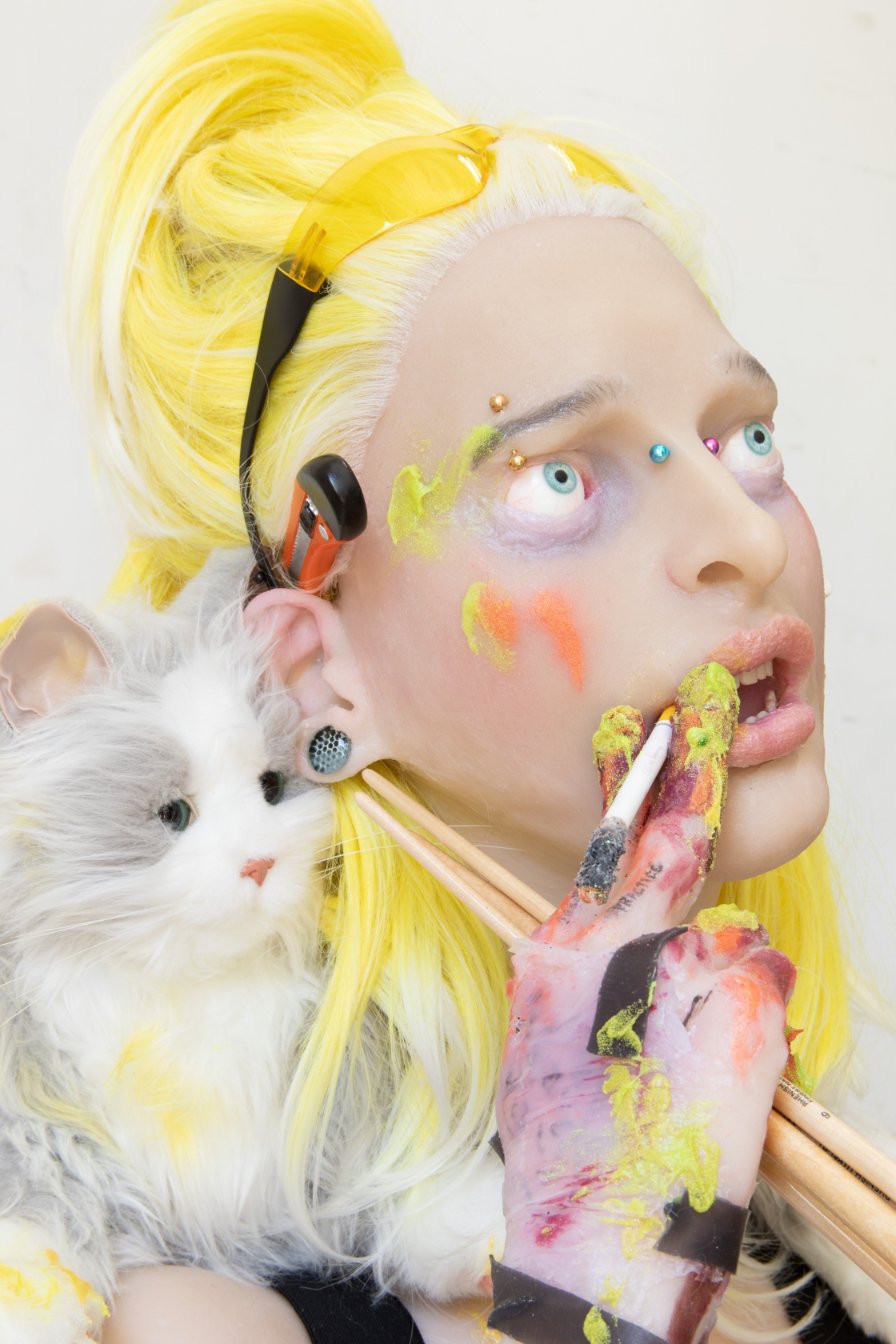
Cajsa von Zeipel, A theory of feline aesthetics, 2021.
interview by Jeanette Mundt
Cajsa von Zeile is a Swedish artists whose work explores themes of the human body, identity, and the complex interplay between the organic and the synthetic. Known for her larger-than-life sculptures, von Zeipel merges traditional and contemporary art forms to create surreal, often uncanny figures that challenge perceptions of the body. Her distinctive use of materials–ranging from fiber-glass to fabric–imbues her works with a sense of both fragility and resilience, while her exploration of gender and bodily transformation invites reflection on the fluidity of identity in the modern world. Through her art, von Zeipel creates a space where the boundaries between the real and the imagined, the human and the artificial, blur and merge. In a conversaition with painter Jeanette Mundt, Zeipel discusses the shapeshifting materiality of her sculpture practice.
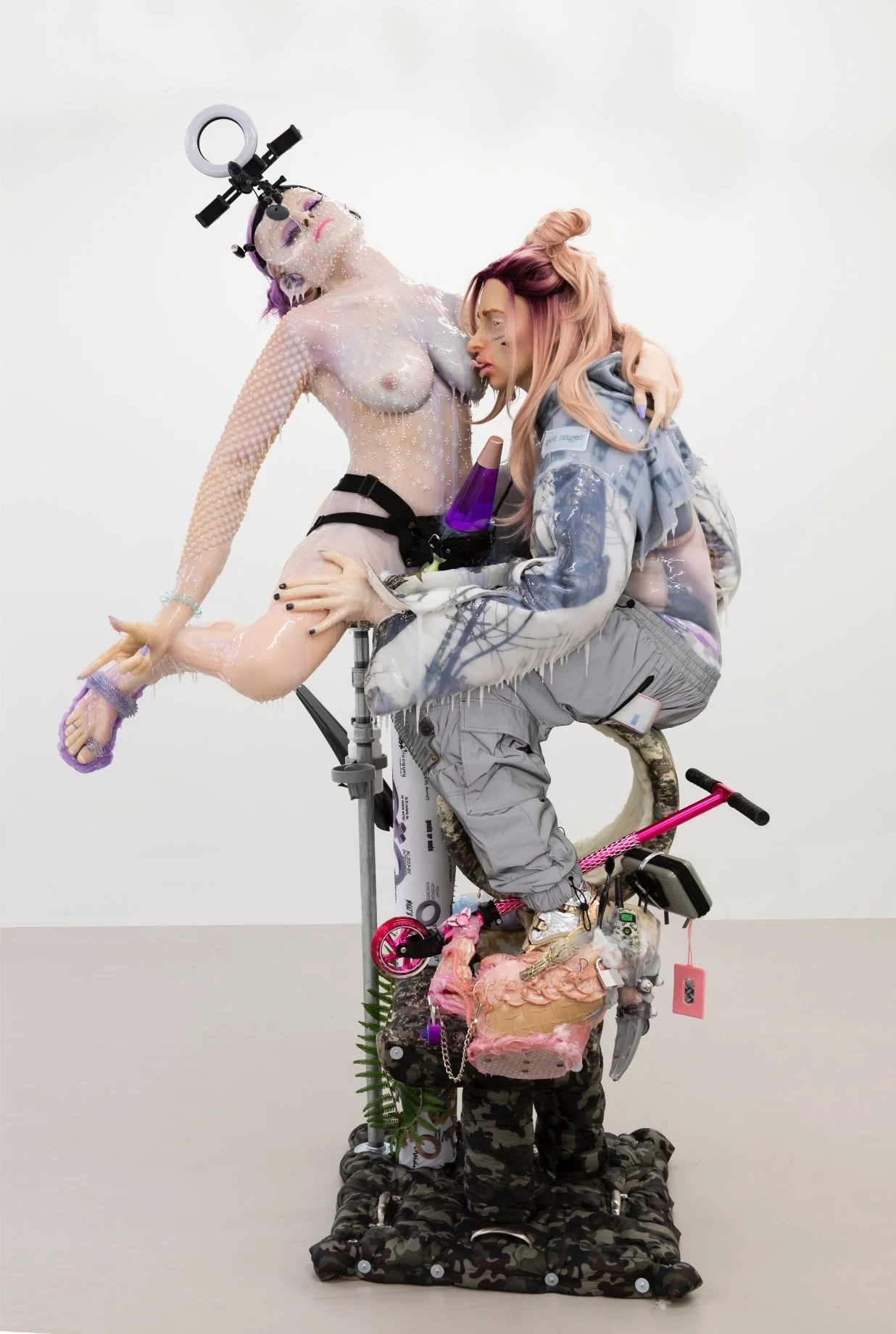
Cajsa von Zeipel, Aqua Aura, 2020.
Jeanette Mundt: So, we're going to talk about desire. I'm just going to jump right into it. When we were chatting a couple of times recently, we discussed how you began your practice really in plaster, and then you shifted to silicone, and now you're moving back to plaster.
Cajsa von Zeipel: This is true.
JM: Can you talk about those shifts?
CVZ: I started plaster back in school. So that's fifteen years ago. God. Fifteen years ago I took my masters. I'm getting old. In my last year of school I found plaster and I became pretty obsessed with it and started making larger than life figurative sculptures. In getting to know one's hand I think that after clay, plaster is the go to as a natural second step of 3D making. What I really love about it is that it's such a living material. When it sets, it burns. It has this anger. It's aggressive enough that it actually can burn you if you touch it while it's setting. And then it calms down and for the next coming days it's cold until it finally dries and it becomes very classy, clean, traditional. But not to forget, it is fragile too, plaster cracks when it is abused in contrast to silicone, it just bounces back, couldn't care less. What a survivor, and at the same time it's used as implants in our bodies.
JM: How did you find the silicone? What made you start experimenting with it?
CVZ: I had the silicone in my studio for years because I use it to make molds, to cast stuff. I was using it to cast clay into plaster, and for the longest time I was using this kind that had a very distinct turquoise color, so was never something that I considered as a final material in itself. Then I switched to a translucent one and I was like, this is gorgeous. All of a sudden I thought that my molds were more interesting than the sculpture that I got out of it, so then I started to pour silicone into the molds. It was also because I wanted to try to make sculptures that resembled sex toys. I was doing a show at Arcadia Missa in London and it was when she had her space in the middle of Soho on Brewer Street where there are a lot of sex shops. I wanted to do this kind of dildo ish inspired work.
JM: So funny.
CVZ: A pandemic and a child later, the plaster is back in my studio. At first I was kind of scared of it, like, oh my God no, I'm stepping backwards. You know, after having the biggest break in my practice ever.
JM: How long was the break you took?
CVZ: I went into the studio to make a project when my daughter was three months old, but it was painful. I was like, what am I doing here? I tried again after a couple of months, but there were still angry and resentful vibes and it was hard because the previous three years had been such a shift for me where I had really enjoyed going to the studio. So, after a solid year of frustration popping in and out of the studio I figured I needed a longer break and had six months basically totally off.
JM: Wow.
CVZ: Another frustrating element was that I couldn't see a big difference in my work while my life had changed so radically. I'm not sure what I expected. I just wished for something I didn't know yet I guess. So I think that I returned to plaster to kind of shock myself, but at the same time revisit something familiar. It's like hanging out with an old friend, I really know her. We used to be besties and then we had a falling out and now we accidentally ran into each other again, probably in a pretty tense dinner setting, too small to avoid one another, and ended up having a jolly good time. What takes most time in my studio is the decision making and sometimes it's just tortuous because I'm getting frozen in between a thousand ideas. So to get going I just start mixing material. Because then you have maybe fifteen minutes until that batch is wasted material and then you just have to act.
JM: It's really funny how literal the role of desire played in your decision to shift from plaster to silicone because you were “playing” with sex toys, often made from silicone. Also desire is woven throughout your work: you work so intuitively, reacting to your materials, your frustrations and impulses or desires as you go. On top of this, you have the seductive quality of the materials themselves - the plaster and the silicone, seductive in different ways; and then you have the works themselves that are riddled with motifs or elements of what we are taught to desire culturally, for instance the skinny, elongated, sexualized bodies you have rendered in plaster. Then you have the works in silicone and with that comes all of the sex toys, the rubbery, lubricant, fleshy suggestions. You can go far with those suggestions, so desire functions literally, as well as metaphorically and psychologically throughout your practice.
CVZ: Yeah, I think you're right. It's something I understand clearly, but it's also something that I've always kind of struggled with to some extent. I feel that such a raw human emotion like desire, in a white cube setting can embarrass people and significantly influence how something is perceived. It’s funny that when people are met with their own desire, they kind of look down at the work sometimes, meanwhile what's really happening is them confronting their own attraction.
JM: You have the perhaps awkward experience of feeling desire as you approach the work. It might immediately make one or myself feel uncomfortable because I'm like, oh my God, I'm suddenly horny for that silicone figure or whatever. Then it shifts quickly as you notice so many different iterations of desire all occurring simultaneously. And, on top of the silicone and the bodies and the positions of the bodies, and the play between disgusting and seductive, there are also the many objects in your work that are highly desirable on a base consumer level. The core, the “I want that” feeling. You are pointing to these many manifestations of desire, the push and pull of wanting, so that I, as the viewer, have to work to see it all and experience it all. And that's good art, right?
CVZ: Yes. I think also the amount of objects planted into the works has been kind of an unhinged desire from my side as the creator, where I felt like I was so tired of the idea of restricting myself. The question that comes to you when something is done or not, you know? So many times I'm like, okay, this is probably when I stop - but I just want to keep going. It's kind of like the front page of a newspaper with different stories sharing space. It’s like a snapshot of time, but it doesn't mean one clear thing. It gives space to all of these different parallel happenings.
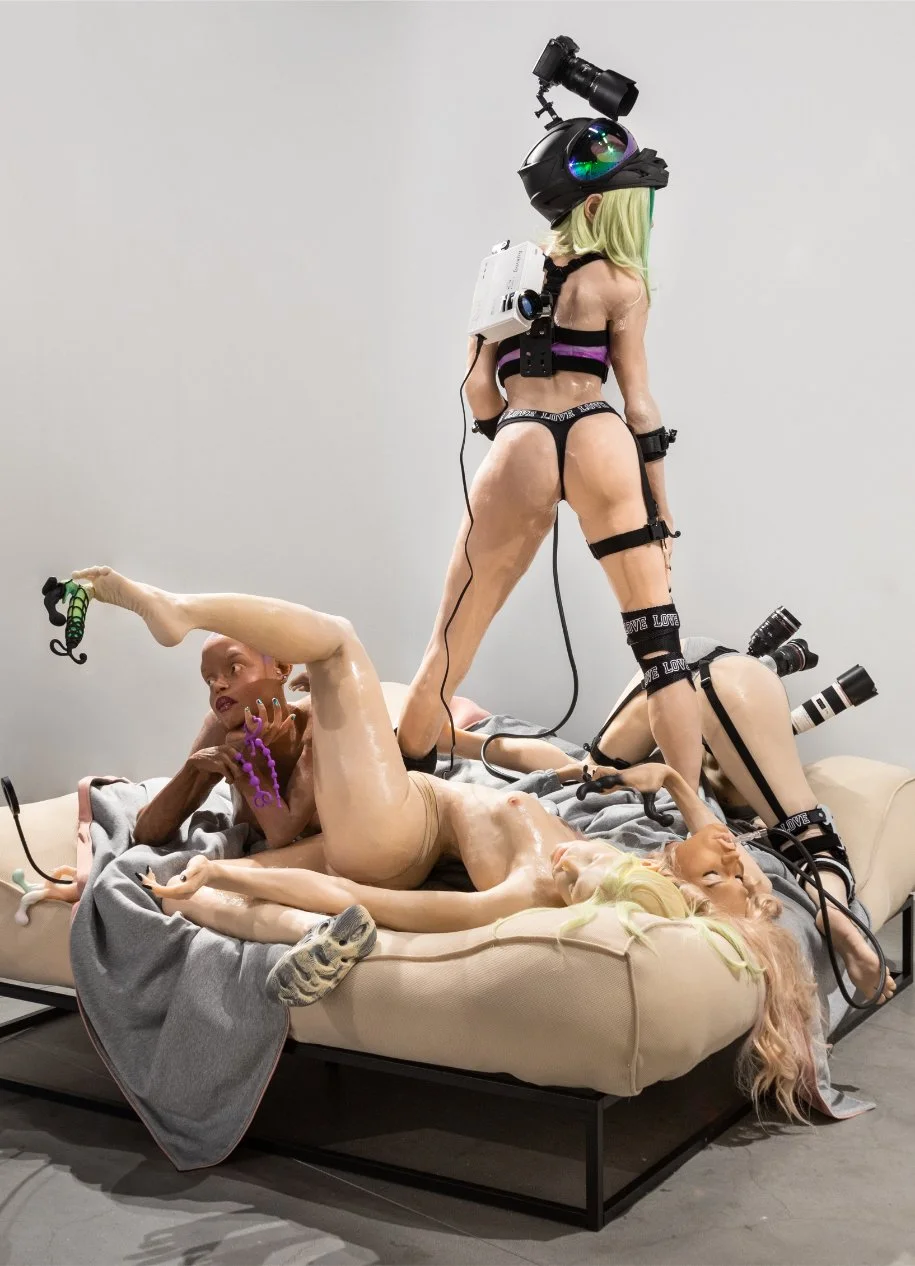
Cajsa von Zeipel, Post Me, Post You, 2020.
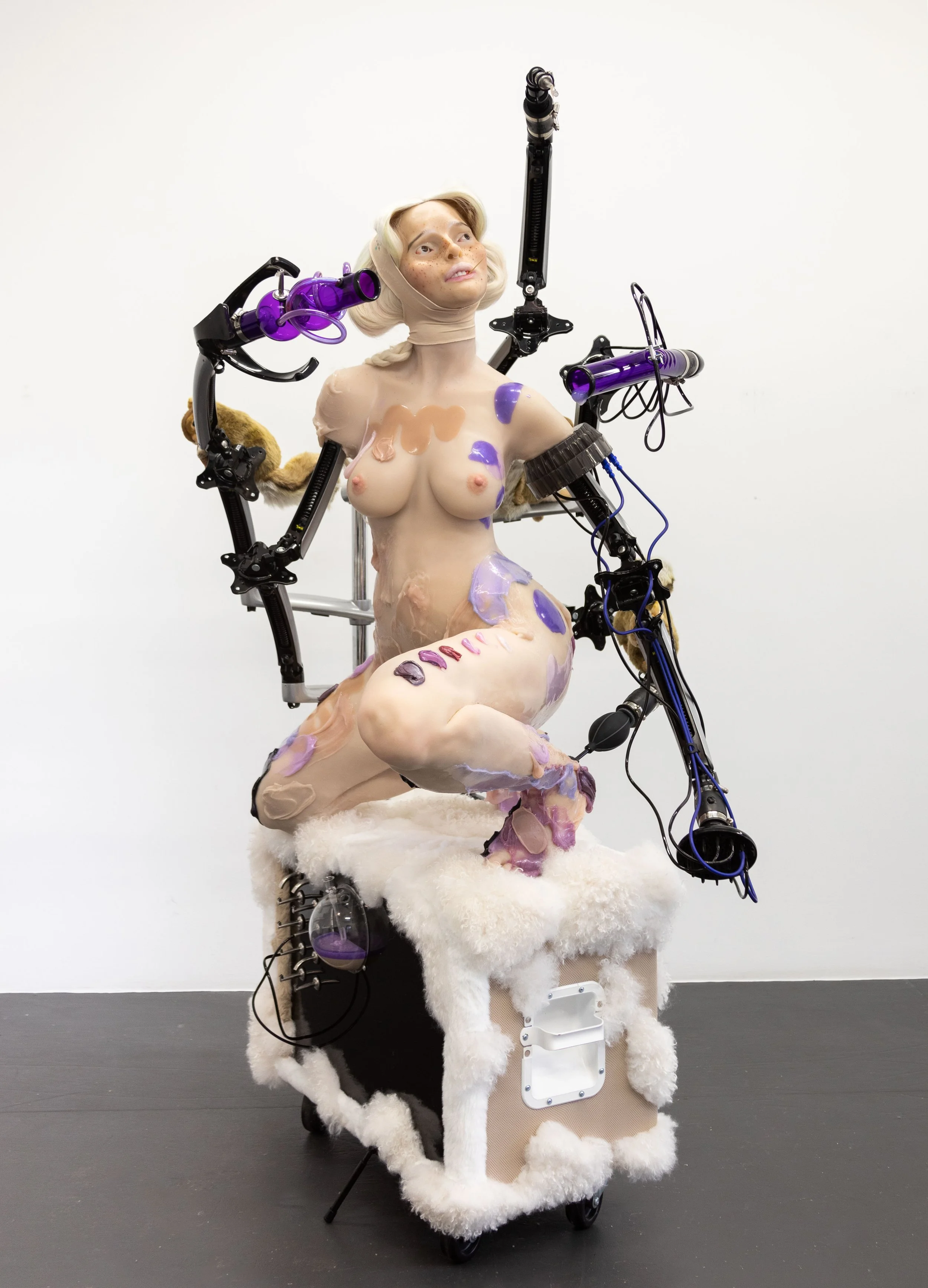
Cajsa von Zeipel, Double Dose of Zen, 2021.
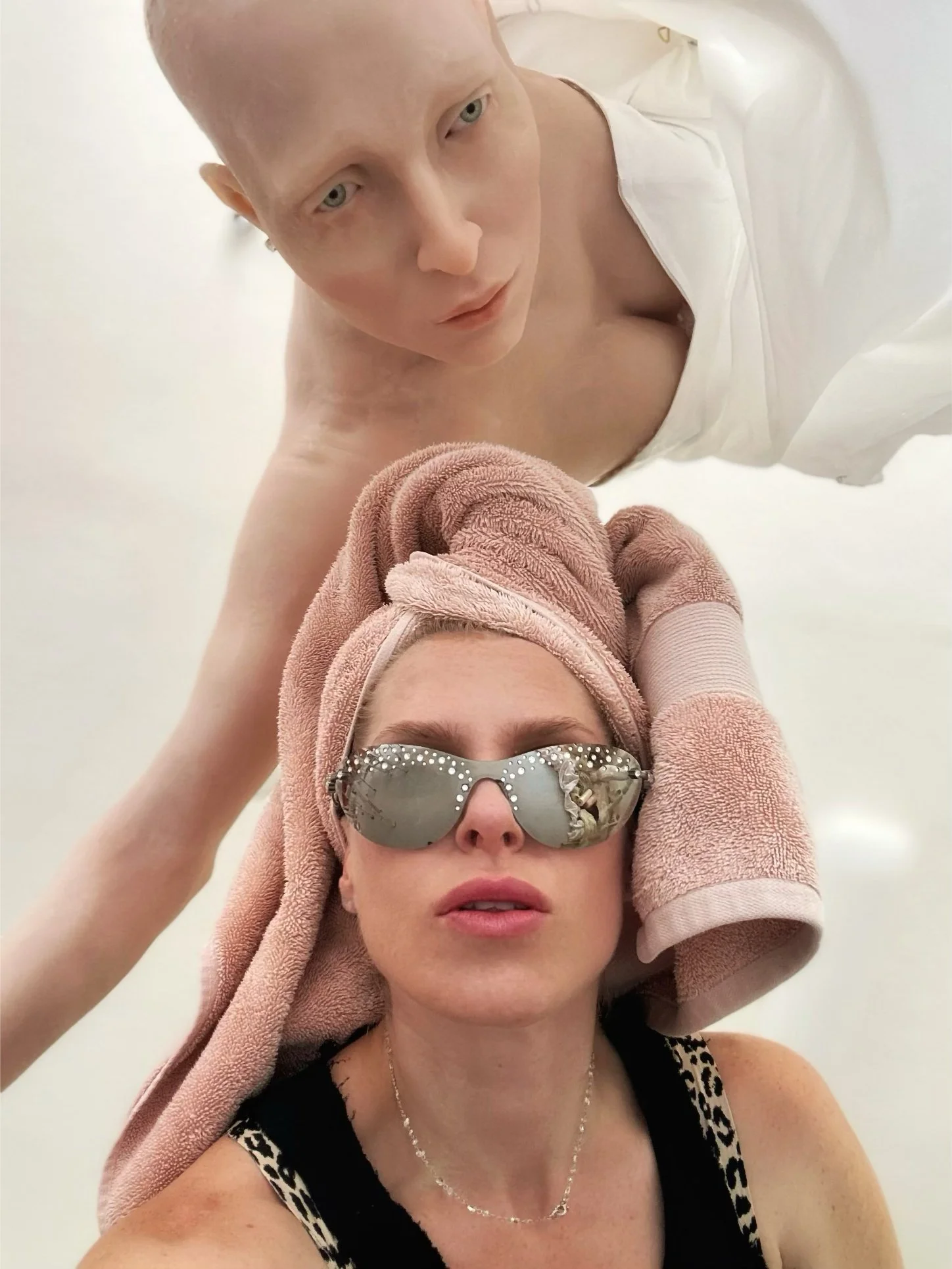
JM: That makes sense. There's so much happening in each of the works. I also see a parallel between what silicone is used for in our daily lives and your decision to completely get rid of restraint while using it, because it kind of is made for that lack of restraint? It was designed for sealing and lubrication and insulation, all of which, in place, can allow other actions to proceed without restraint, right? Like picking up really hot pans. And of course its use in augmenting the body, which you can do without restraint. So that's fantastic. How does the decision making happen as you move back into plaster?
CVZ: It's very different. It's kind of like when you realize as an artist that the material itself has such a huge impact on what it wants to do, you know? In the early stages of the work the new plaster bodies kind of want to go in different directions. It's almost like, there are different planes of gravity or something - like the torso wants to go backwards while the legs go forward while the head is pulled down - like gravity is not going in one direction anymore. Some methods that I've been working with in the silicone I apply now in plaster. It’s quite a big change from my earlier plaster work, though, not because I want to stay away from that, but because I want to see progress. For example, pressing objects into the plaster, I haven't solved that. I can't use that as a method right now.
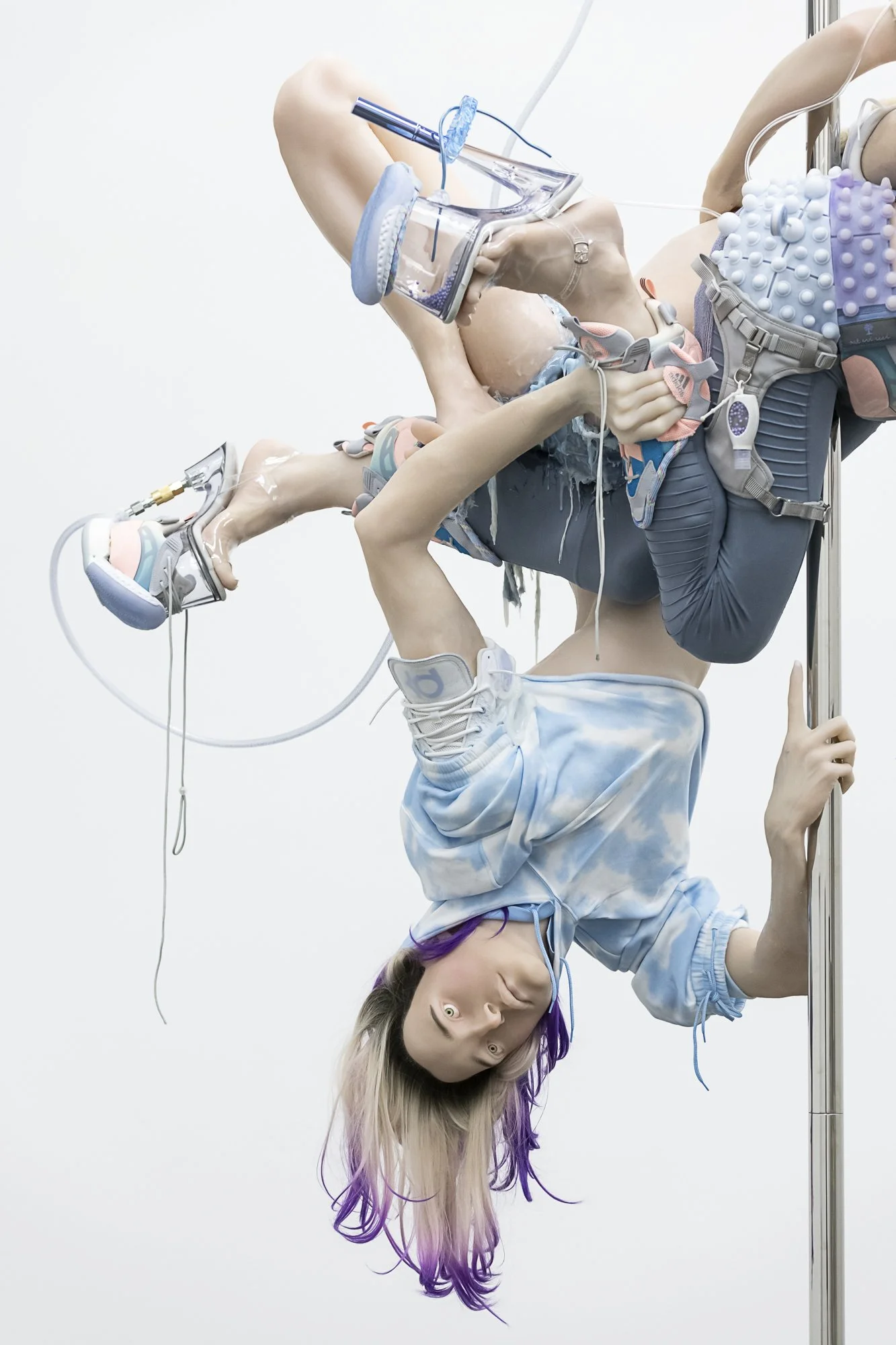
Cajsa von Zeile, X plus X equals x, 2021.
Image credits courtesy of the artist and Company Gallery, New York.
Photographer: Christopher Insulander
JM: That makes sense. Ok on another note about themes of desire. Have you ever sculpted a penis in your work?
CVZ: I think just one, and that was enough. I was like, this is no fun.
JM: I have an artist friend who has used images of gay porn in his paintings before. And then one time in the studio, we were talking about it and excited about the work and he thought what happens if I try this with hetero porn. And when he made the painting with hetero porn we were just appalled. The humor, the desire, the play of power, the confusion of gaze, the elements that made the homosexual porn work so well in the painting were absolutely gone. We just simultaneously said, "this is horrible, just get rid of this.” Because all of sudden we're staring at these power dynamics that are so concrete in our everyday lives, that we experience so negatively with such regularity. That's what makes me think of the play of desire and power in your sculptures. The bodies, the power that's distributed between them shifts so much as you interact with the sculpture. So you don't have a clear power dynamic that suddenly makes the desire feel scary or horrifying.
CVZ: I'm so happy that you said that. Yeah. You never know. And I think for me, of course, it has a big impact also that I'm queer woman artist creating female looking bodies. That makes a big difference then if they were put in the context of a hetero environment.
JM: Yeah, completely. But that also plays into what you were talking about earlier with the desire, like the viewer's desire, suddenly making them uncomfortable. There are certain norms that your work really pushes back against because it is this queer language, a language that works to subvert heteronormativity. It’s not a straight desire.
CVZ: Yeah. But it's confusing, maybe, because it’s femme. It's as confusing as a femme lesbian, you know? That is something that all the works share. They all kind of share an identity for a really long time since I'm working with multiple characters at once. Like right now in my studio, for instance, I have a mattress where I have just heads lying around. Then whenever a body is more or less done, I start to try out the different heads, like who belongs to what, you know? So this girl, she tried on everything. They're kind of like teenagers developing really fast, like trying on every different style for a few hours, maybe days. And then all of a sudden I'm like, okay, you're this.
JM: That's amazing. You will experience that in real life soon enough too, with your daughter growing up.
CVZ: Yeah, I know I can't wait.