
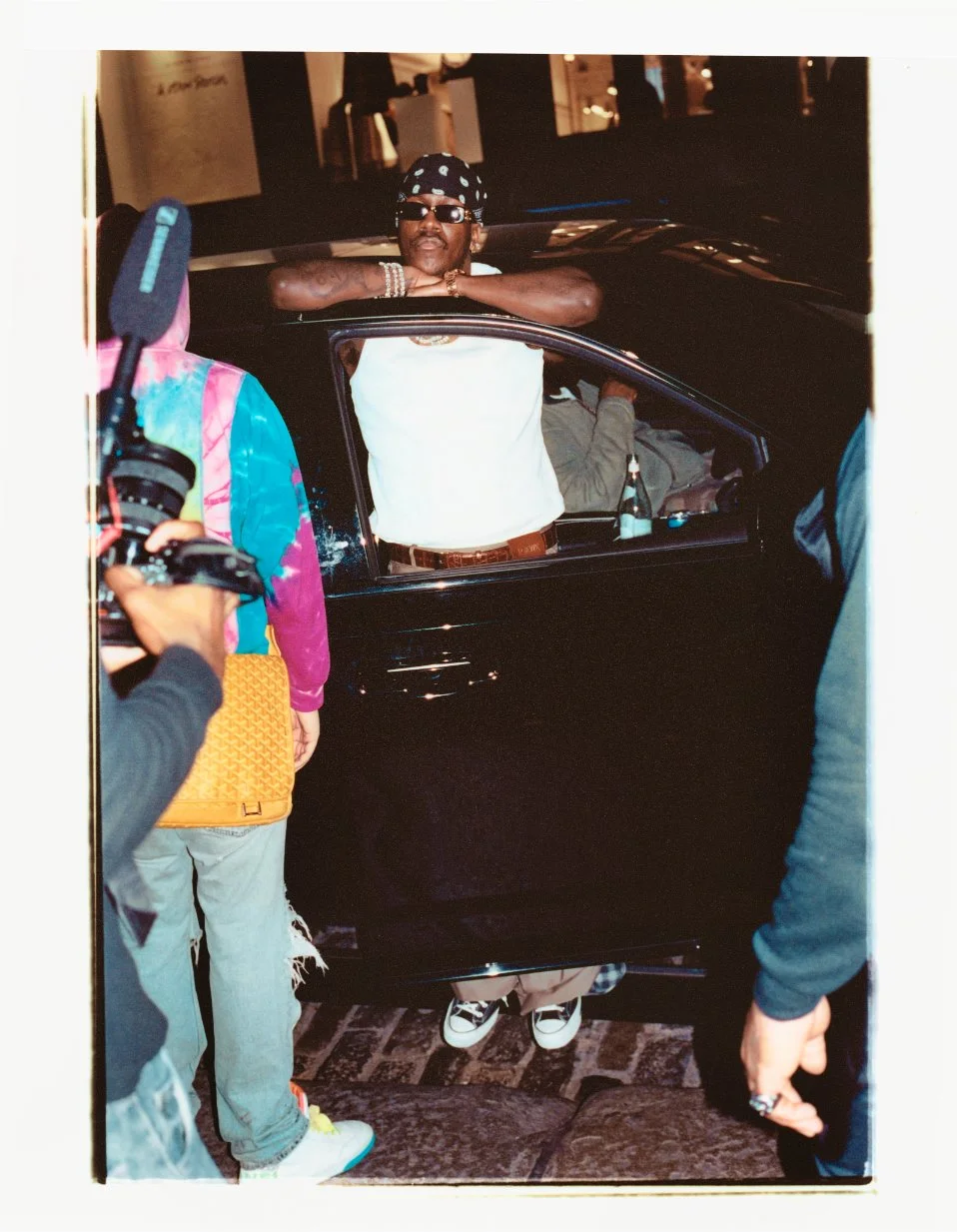
interview by Christelle Oyiri
photography by Jesper D. Lund
Lil Yachty—born Miles Parks McCollum in Atlanta, Georgia—crashed onto the scene a decade ago with bubblegum trap melodies and a renegade spirit, rewriting rap’s rules through playful chaos, genre-bending sound, and a cold refusal to fit any archetype. His albums have gone multi-platinum, with songs streamed in the billions. Paris-based artist and curator Christelle Oyiri, known for her sharp, culture-warping lens as Crystallmess, sits down with Yachty to discuss image and influence in a hypervisible age.
CHRISTELLE OYIRI: Hey, what’s up?
LIL YACHTY: I’m chilling. I’m chilling. I’m in LA. You in New York?
OYIRI: Yep. Do you live there?
YACHTY: No, I live in Atlanta, but I started making my last album, Let’s Start Here, in New York. And then I started working with No I.D. and a couple other producers, so I switched to LA, but I usually record albums in New York. I mixed that album with Tommy Elmhirst and it took six months because I would come in, he’d play me mixes, and he would just completely rearrange my songs. It’s like, bro, you’re supposed to mix the song; not just completely change it, but that was his thing. I heard he did that a lot with Frank [Ocean] and I heard they would get into it a lot ’cause he’d just add his own 808. I love Tom. He’s expensive as fuck, but he is good. And I love New York, man. There’s almost nothing I love more than sitting on a bench on a sunny day, and just people watching, but also just meeting people. I like New York because people are more prone to be like, “Yo bro, I love that album,” and they’ll keep going about their day. Versus being weird, like following you or sneaking pictures. In Atlanta, I don’t really go outside as much.
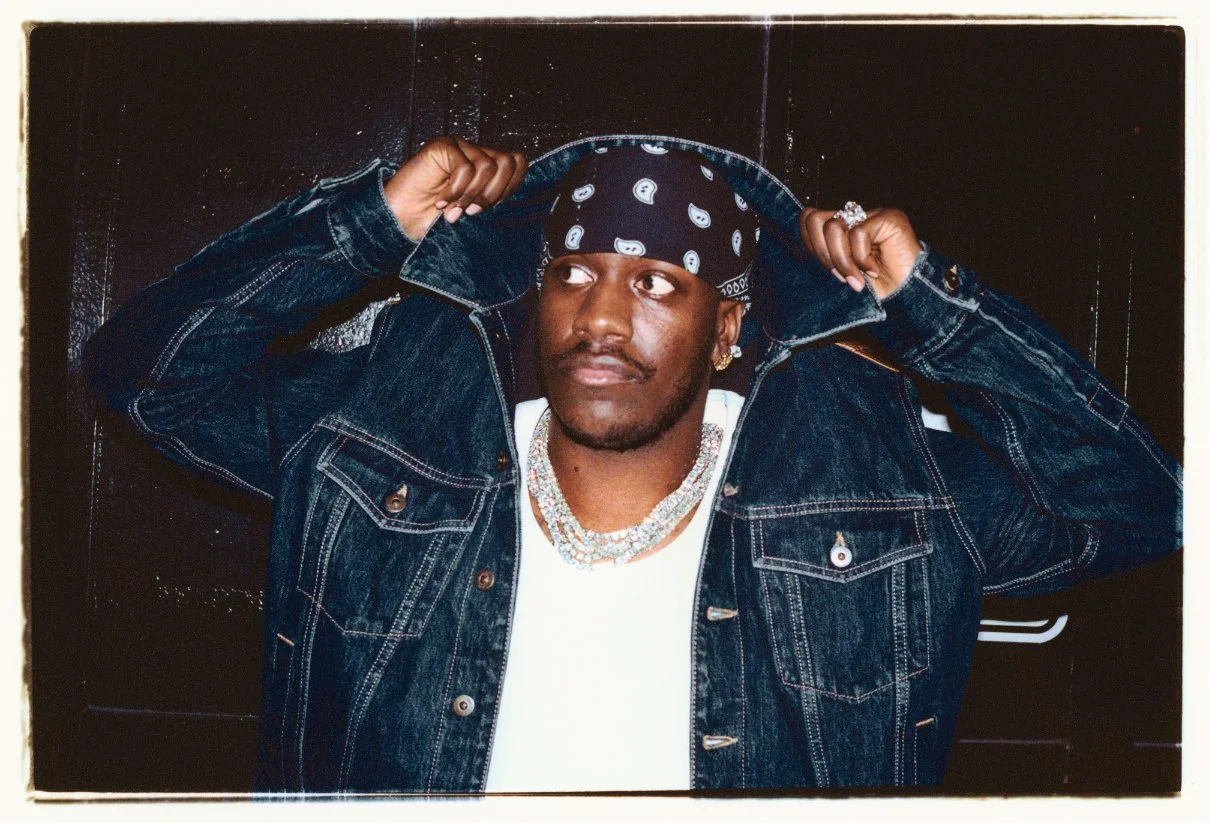
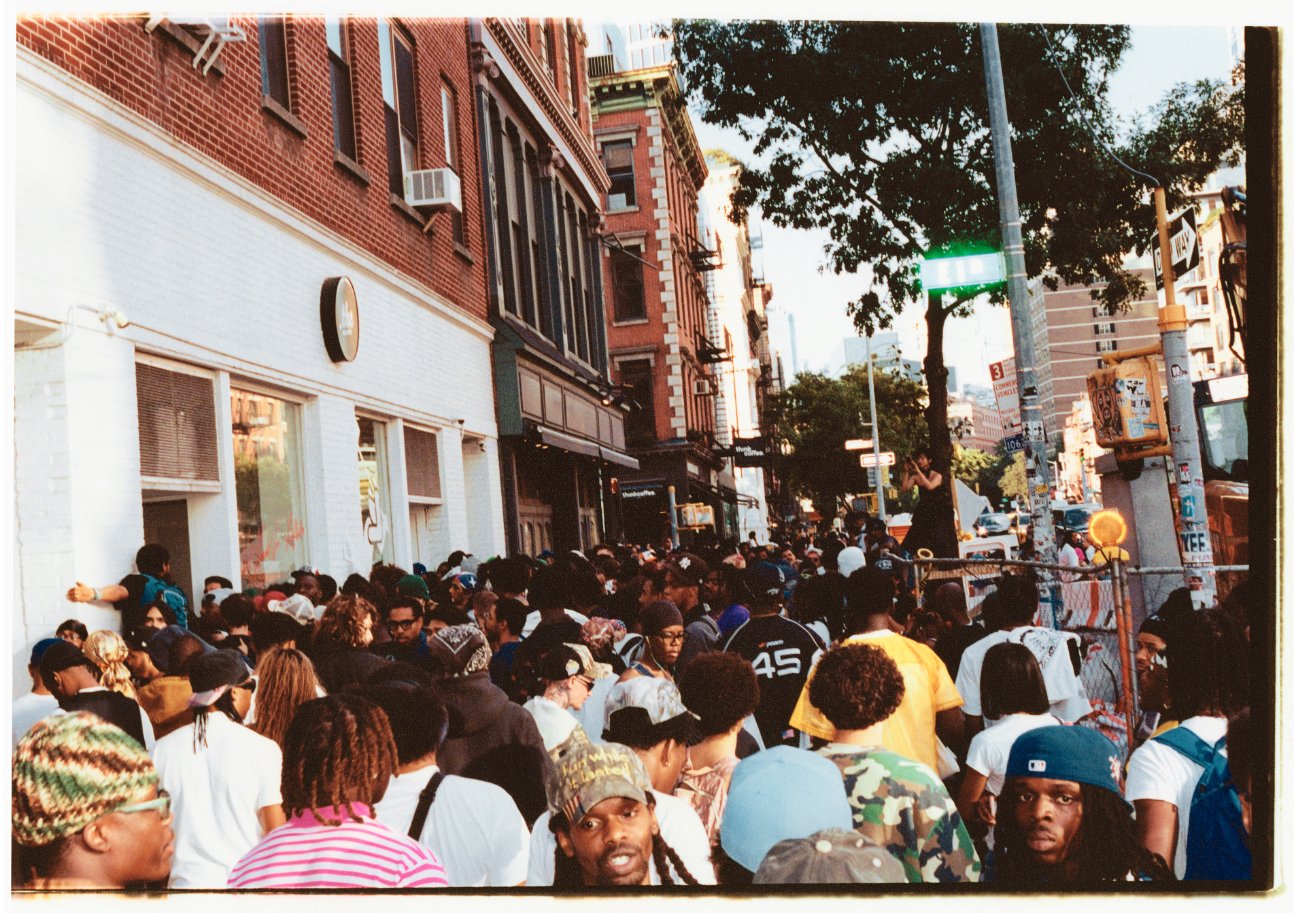
OYIRI: It’s very suburban in a way. It’s a homebody type of city. But you also have a complex relationship with New York. You’ve openly challenged New York culture multiple times. And you know that because you're smiling ear to ear right now. (laughs) Whether it’s about New York’s fashion sense, which I thought you were a bit misunderstood.
YACHTY: A hundred percent!
OYIRI: Or whether it’s about the Sugarhill Gang comment. Do you think that people reacted a certain way because you were wrong?
YACHTY No. I wasn’t wrong. And actually, what happened after that was a whole discourse on Twitter about old rappers having wack verses. I saw it all day. All these weak-ass old verses started going viral for being garbage. It’s still trending right now, but people hate me, so they made what I said a problem.
OYIRI: Do you think it’s about people hating you? Or do you think it’s about the fact that you’re challenging what is seen as cultural authority, and you’re exposing how fragile this narrative is? Because I don’t necessarily think that The Sugarhill Gang was trash. They were gangsters, essentially, just rapping.
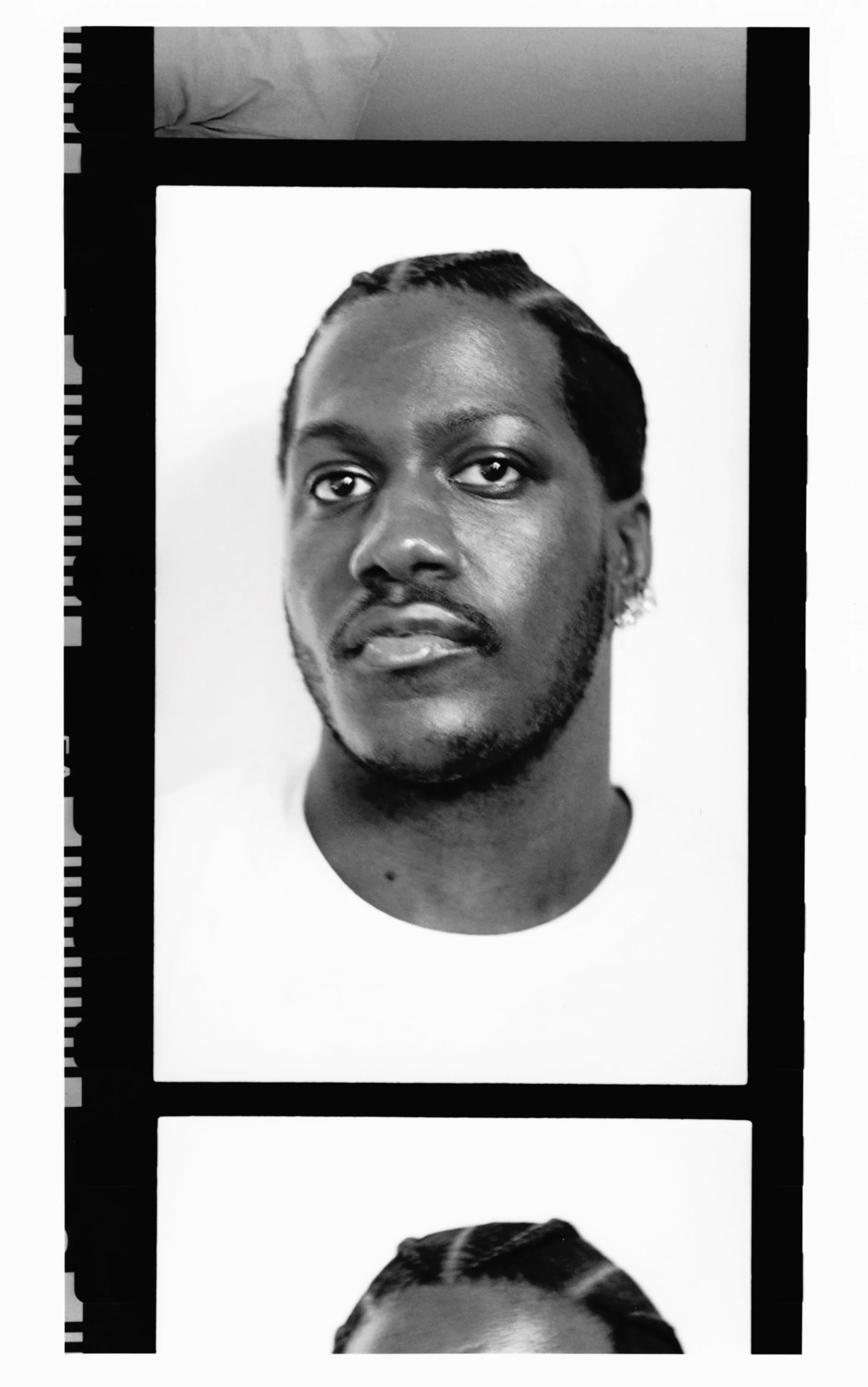
YACHTY: I also don’t think they were trash. I was kind of trolling, but people be sensitive. And it be fake woke. Capital F-A-K-E woke. They wanna sit so high and mighty. Also, bro, a lot of people on the real, and I know this, they don’t know me, right? Especially if you older, you don’t keep up with me. You ain’t following my career. I feel like a lot of people don’t even know, like, when it come to rapping, I really get down. You know what I’m saying? And I was a little aggressive with my comment, but it’s like, come out-rap me then, right? You supposed to have that confidence as a rapper. We rappers, you know what I’m saying?
OYIRI: You have to have that bravado, yeah. And you’ve grown up in the public eye. When you first came out, you were seventeen. Do you think people have ever seen you for who you are? Or do you think they’re always projecting another identity onto you?
YACHTY: There’s two sides, right? I used to feel like I only got hatred. And then around Michigan Boy Boat and Let’s Start Here, I started to get respect as a rapper and as an artist. People started to defend me. Now I get love and I don’t ignore it. I appreciate it. So I don’t wanna say they don’t see me. I have such a community that stands by me and supports me and I fuck with those people. People show me so much love everywhere in the world.
OYIRI: It also comes from the fact that the people are in the know now that you’re also a very good A&R. You mentioned Michigan Boy Boat, which was released a little bit before the mainstream break of the Detroit/Flint sound. Since you’re often at the forefront of what’s gonna be popping before everybody jumps on the wave, I wanted to ask what you think is the next wave for rap? Because last year, we heard a lot of discourse on rap not streaming as much, people being tired of rap, other types of regional sound being more popping than rap, et cetera, et cetera. Where do you think rap is heading?
YACHTY: To be honest, (sighs) I can’t quite call it right now. Like, I’m paying attention and it’s interesting, man. The day before yesterday, I watched a PlaqueBoyMax Song Wars…
OYIRI: …Oh, I watched it too, with 63OG.
YACHTY: I watched it, and man, I didn’t know anyone. I don’t know where we’re going next, but there are so many guys that are trying things. And you still got Playboi Carti, you still got Uzi and YoungBoy doing his thing, and you got Tyler still in it. And Drake’s about to drop, you know? So, it’s still there and I still pray that Frank is coming. So, we still have the creatives who understand and are trying to do something new.
OYIRI: I feel like you were often framed as somebody that was rejecting tradition. That’s how you were introduced to the scene, right?
YACHTY: Interesting.
OYIRI: In a punk way. You came through with your red hair and everybody was pissed off at you. You were literally a kid and people saw you as somebody who was rejecting the way things were done back then.
YACHTY: Which wasn’t even the case. I just had an opinion. It started with me saying I felt like Biggie was overrated, you know? That was the first thing I said as a kid that really drove people insane. I’m from the South. I didn’t hear Biggie. It wasn’t what my father played. My father played Dutchavelli, OutKast, Ludacris, you know what I’m saying? I fucked with Soulja Boy, Lil B, iLoveMakonnen, and shit like that. No one’s ever shied me away from saying what I think, and no one ever could, because I’m unapologetically me, and I mean no harm.
OYIRI: Do you feel like you said that because you were challenging the New York bias in hip hop?
YACHTY: I wouldn’t say I was challenging. I was a child. I was talking from personal experience, not from truth or fact. From personal experience, Biggie was overrated to me. And that’s ’cause I was a kid and I hadn’t heard him, but Biggie is amazing. I don’t regret it, though. It shaped the trajectory of my career. I’m such a firm believer that everything happens for a reason.
OYIRI: There’s this whole cultural phenomenon of streamers broadcasting their life 24/7. I know that you’ve participated on some streams, like most rappers today, to promote and connect with younger folks. Do you think rap is becoming less about music and more about who can stay visible the longest? And what is your opinion on streamers and surveillance in general?
YACHTY: I’ll say this. I love that the next generation has made a way to be successful that fits their means. I never hate on success. Especially not Black creators. The taste level is changing. To say, for better or for worse is not for me to say, but it is changing. It’s visibly changing and the culture, when it comes to hip hop, is a double-edged sword. We are giving too much power to the opinion of certain streamers. I wish people challenged themselves to have their own opinions. That’s where we’re having problems.
OYIRI: Yes, because when your generation came through, y’all submitted to the opinion of the media powers that be, like radio personalities, journalists, magazines. And it’s good that streamers can empower themselves without having to go through institutions. They can be their own bosses, and I think that’s what you’re championing. But we’re the first generation that wakes up and completely pores over other people’s thoughts from the moment that we wake up to sundown. So, I think it’s responsible to ask people to take one hour in your day and listen to your own thoughts.
YACHTY: I think longer than one hour, but yes.
OYIRI: There’s so much noise that it’s hard for people to listen to their own thoughts and own their opinions.
YACHTY: I don't think it’s hard. I think that if you wanted to, you could. It’s easier to listen to someone else’s opinion. Easier to shapeshift. A lot of people don’t have their own balls.
OYIRI: But don’t you think that it’s hard because you’re an artist and the purpose of an artist is to be an individual, to be inclined in world-building? An artist is supposed to be a leader.
YACHTY: Yeah. But that's not always the case. It’s in you. You can’t make it. It’s from birth, you know, and it’s a lot of pretenders. At the end of the day, it can be in anyone, it comes natural to artists, but it’s in anyone. You ain’t gotta be an artist to have your own opinion. Sometimes, we get put in a chokehold by social media. And nowadays it’s such a negative place. Everything nowadays is either the best thing ever or the worst thing ever. There’s no in-between. The culture either says, “We love this,” or “This is fucking shit. Don’t ever do this again.” Any time something’s bad, everybody’s shitting on it.
OYIRI: It’s true. There’s less and less place for nuance. I wanted to talk to you about in-betweenness. The sound that you’re developing with Concrete Boys has an important soulful element that is super elegant to it, and at the same time, it includes more of a trap-driven sound. Where do you envision your next sound?
YACHTY: Well, for myself, I’m working on some shit, and it’s super cool and I’m feeling it and I think that a lot of the fans will be happy. Every time I drop anything, I always see these two specific comments. And so I’m gonna try my best to deliver those things. Unfortunately, things take time. When I made Let’s Start Here I was at arguably one of the lowest points of my career.
OYIRI: How so?
YACHTY: Well, I just wasn’t getting booked and I wasn't performing. So, I didn’t have a lot of money coming in. I was about to have my first child, so I was nervous as fuck. But I also had a lot of freedom, because nobody was checking for me. Now I got all these shows and these fucking campaigns and songwriting for all these people. I never have a big window to really work.
OYIRI: You’re also very prolific. And you always step out your comfort zone. You did a psychedelic rock album, you did a podcast, you’re also an A&R. You’ve been working with other people. You’ve been giving people your juice. You’re a father. And you face challenges with being known as a label boss. And at least you’re transparent about it instead of trying to appear perfect. What did you learn from that specific time?
YACHTY: You can’t go harder for someone than they go for themselves. I also learned that when someone is giving you red flags, don’t ignore it. I’ve always been a loving and caring person. I’ve always over-extended. I learned that it probably wasn’t best for me to go into business with my friends.
OYIRI: Maybe do more boundary work?
YACHTY: Maybe. Not really. Boundaries for what? I did what I was supposed to do. You can’t control how people react. You can’t control people’s ulterior motives. You gotta move at your own risk, you know? You just shouldn’t expect. If I’m gonna do something with somebody, it’s outta the kindness of my heart, but never because I expect something out of someone. Nothing is promised.
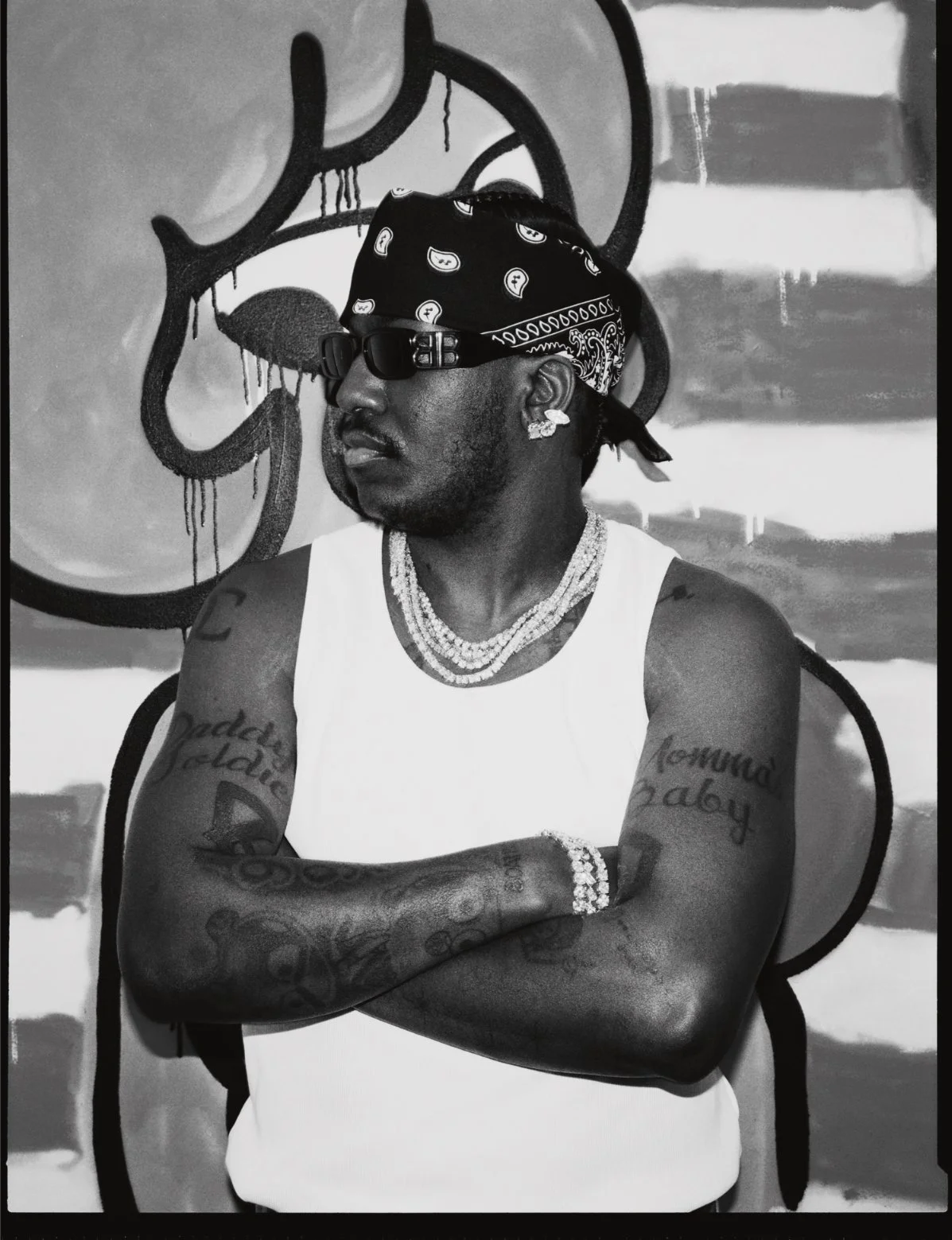
OYIRI: We saw each other at the Loewe show and the Loewe team was telling me about how precise you were with what you wanted to wear, and how they didn’t have to put much together. You came with your own sense of style and with a really good level of taste. What is your experience of fashion as a Southerner? How do you cultivate this sense of fashion?
YACHTY: It’s one of the biggest things, right next to music. I grew up watching my mother get dressed for work every night. My mother loves clothes. My father loves clothes. It’s just in my blood. My sister loves clothes. The mother of my child loves clothes. My kid loves clothes. It’s just a fantastic way to express yourself. Either it’s in you or it’s not. You either got it or you don’t. I’ve been blessed to be in a position where I can afford to indulge heavily, and that’s what it is.
OYIRI: You mentioned your kid several times in the interview. How do you find the balance between fatherhood, a personal life, and work? And did fatherhood change your perception of the world?
YACHTY: It’s really hard because it’s never the right time for anything. I try to really grind out during these young years that she won’t remember. But it is hard to balance a personal life, a work life, and fatherhood. And I’m not perfect. I’m learning and I’m trying to be better. But it’s amazing. There’s nothing like being a father, having a daughter. The bond and the connection. For real. My daughter’s so sweet and crazy. I don’t just live for me anymore. It eliminated a lot of ego. You know, I think before I make certain decisions that could put my family at risk. I’m just more conscious.
OYIRI: How do you deal with fame? When I was in high school, Gaga released The Fame Monster, which is arguably her best album. We don’t even give enough props to this album. I’m sure you would love it.
YACHTY: The Fame Monster. Imma listen to it.
OYIRI: Are you sometimes yearning for anonymity? Just for a few days?
YACHTY: Sometimes. Like when I was in the ER with the mother of my child and they stole a picture of us and TMZ leaked to the world that I was having a child. In that moment, I really did wish that this wasn't a thing.
OYIRI: That moment was robbed from you.
YACHTY: Yeah, but otherwise, no man, I like being who I am. I know how to control it. If I want to be seen, I go to this place. If I don’t want to be seen, I don’t go to that place. That’s why I don’t do fashion. You know, that was the second show I ever been to in ten years. I was never there. I never went to parties. It wasn’t my thing because I don’t fake kick it. It’s just not my thing. If I like you, I like you. If I don’t, I don’t. I don’t really care to mingle. Most people who do fashion can’t even dress at all. They got stylists and all that.
OYIRI: Are you a no-stylist type of person?
YACHTY: I’ve never had a stylist. I’m not the flyest nigga, but I’m a fly nigga, you know what I’m sayin?
OYIRI: I love the humility.