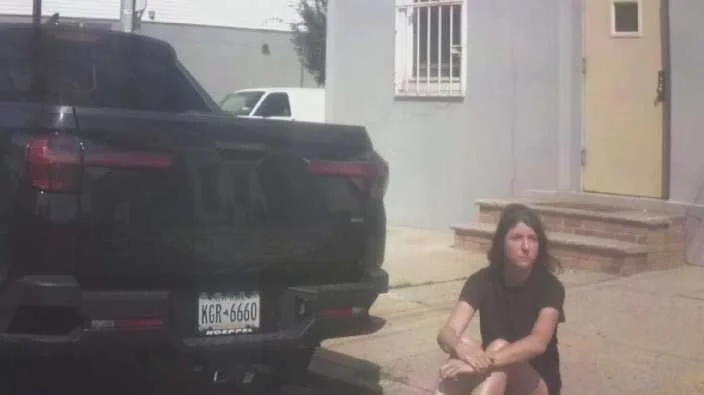
Turning the gaze of surveillance back on itself, Weist used Motorola's vehicle-tracking network to produce self-portraits and interventions captured not by a photographer, but by the automated systems that monitor everyday life.
interview by Oliver Kupper
In her latest work, artist Julia Weist turns the machinery of surveillance back on itself. After obtaining a private investigator’s license in New York, Weist used the same tools and databases available to investigators, law enforcement, and corporations to examine the hidden systems of data collection that shape everyday life. What began as an investigation into the infrastructures of privacy, identity, and power became a real-life confrontation with the state when she was called in for questioning by the New York Department of State to clarify why an artist would need a PI license in the first place.
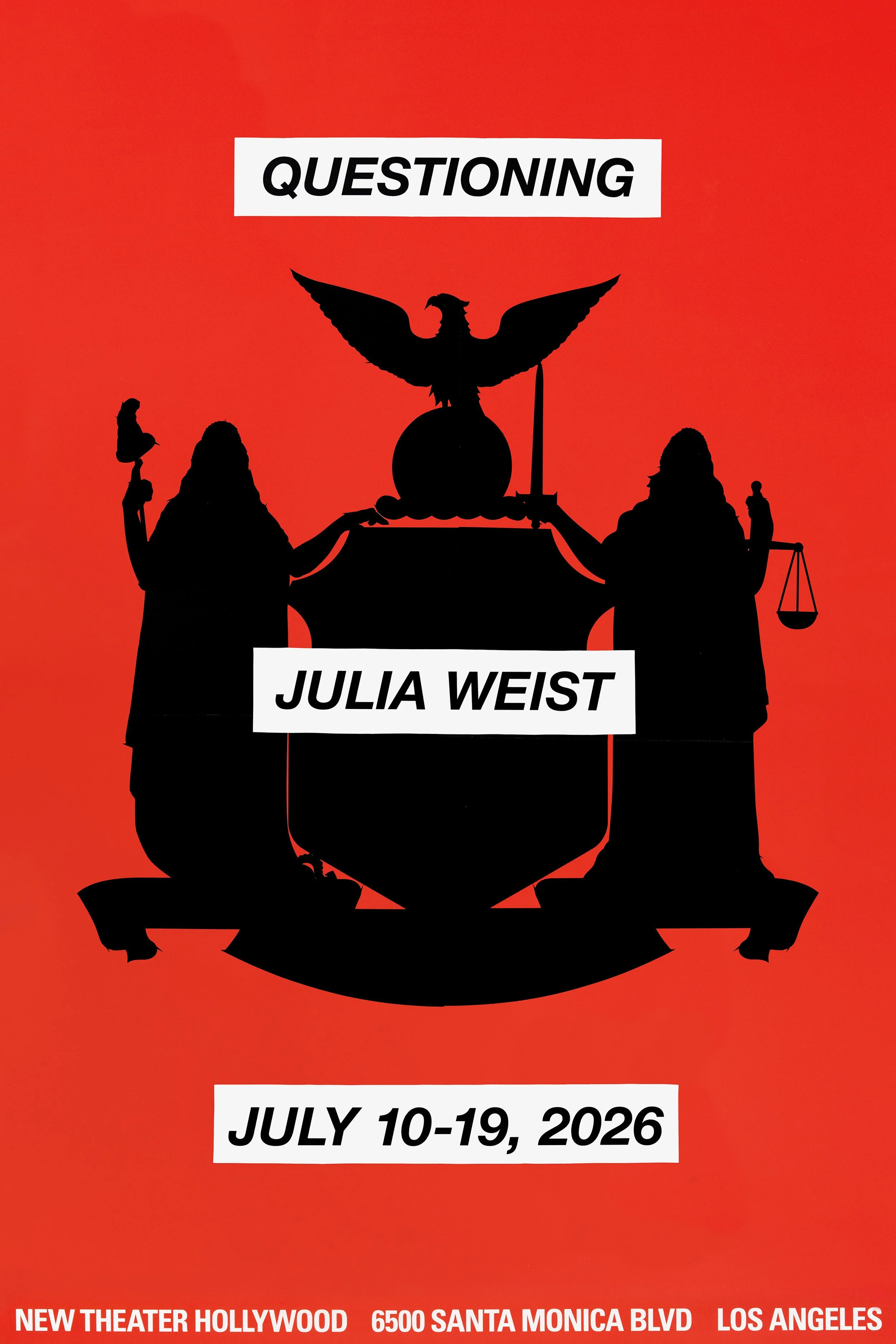
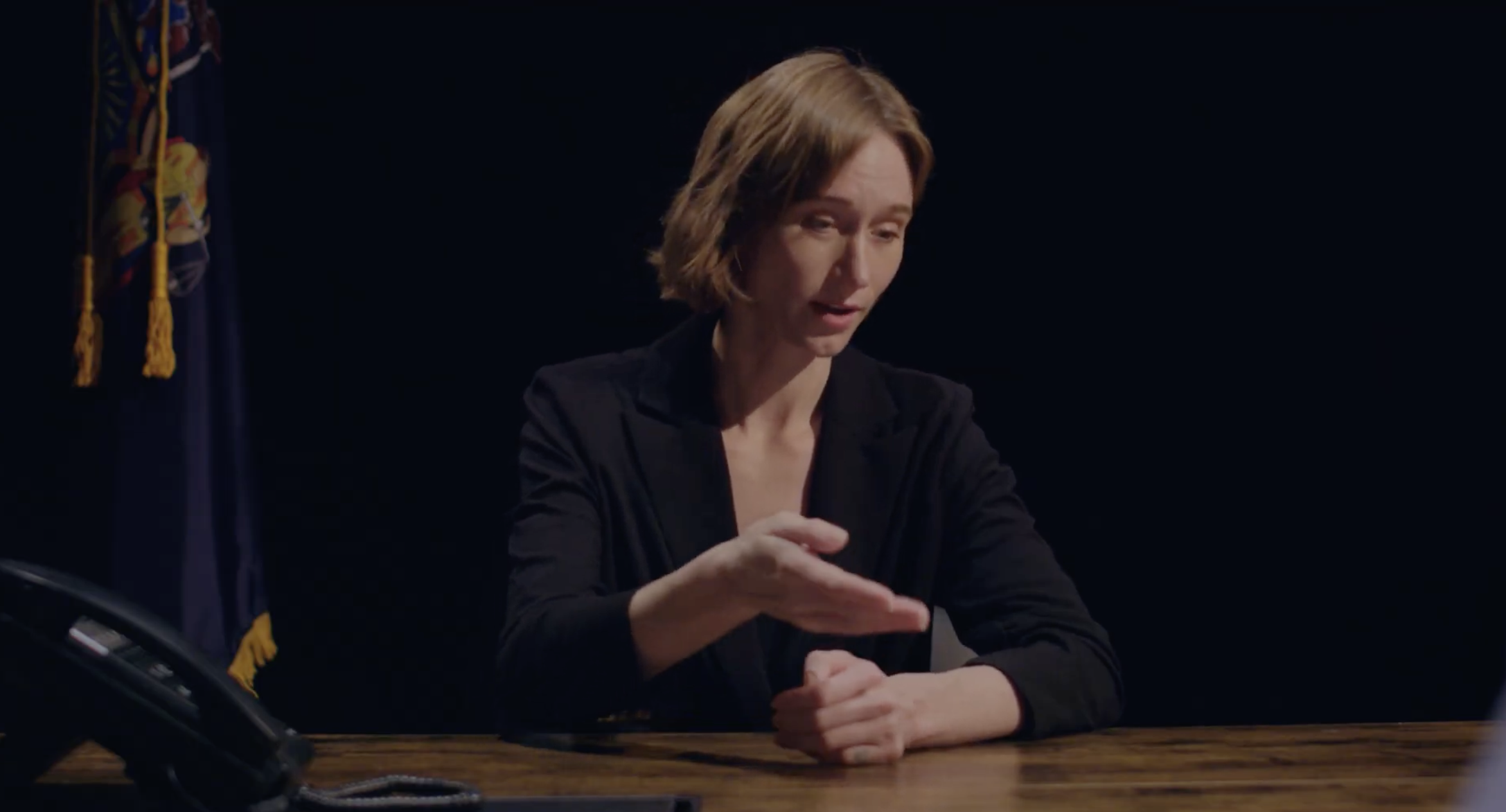
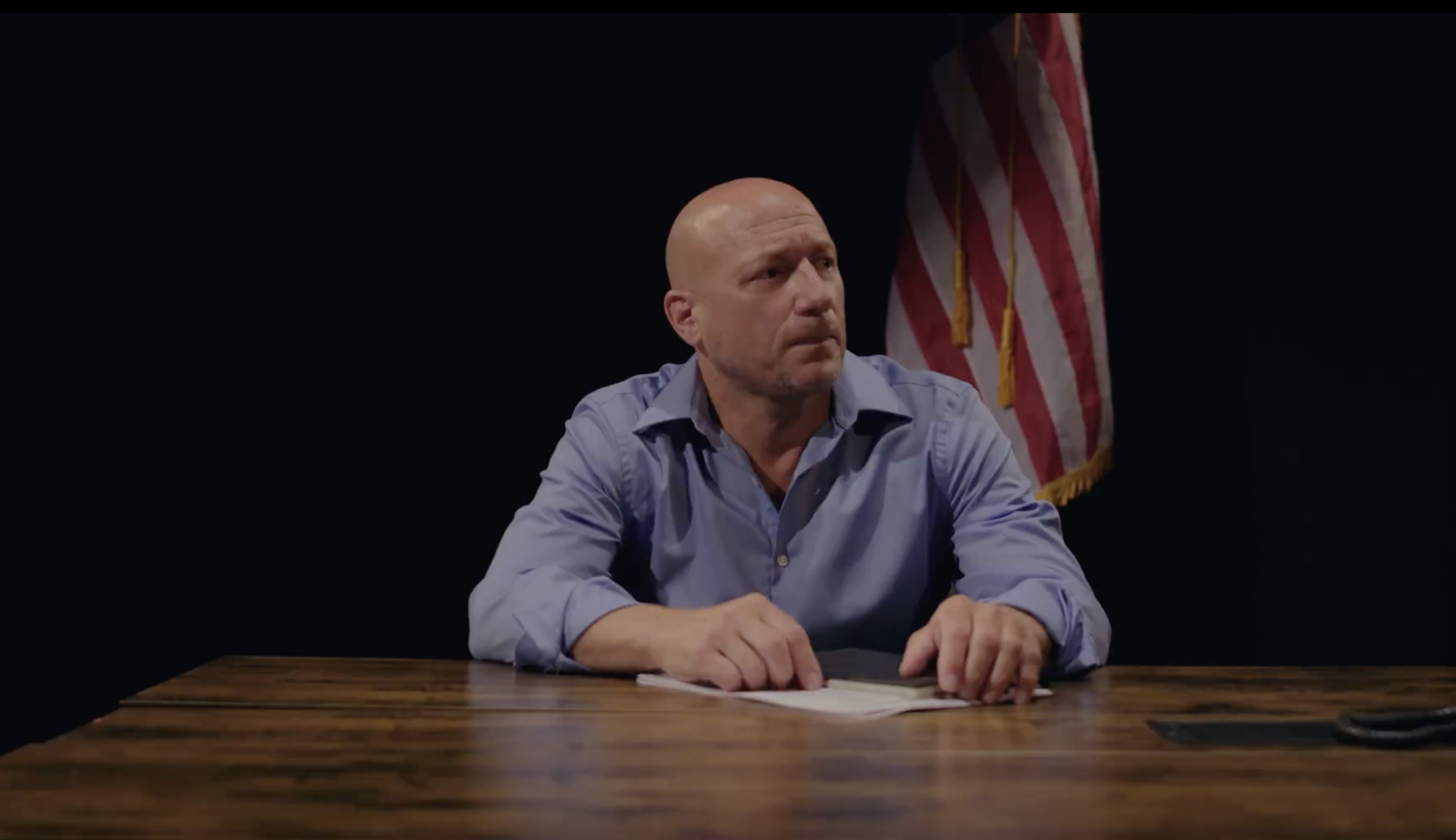
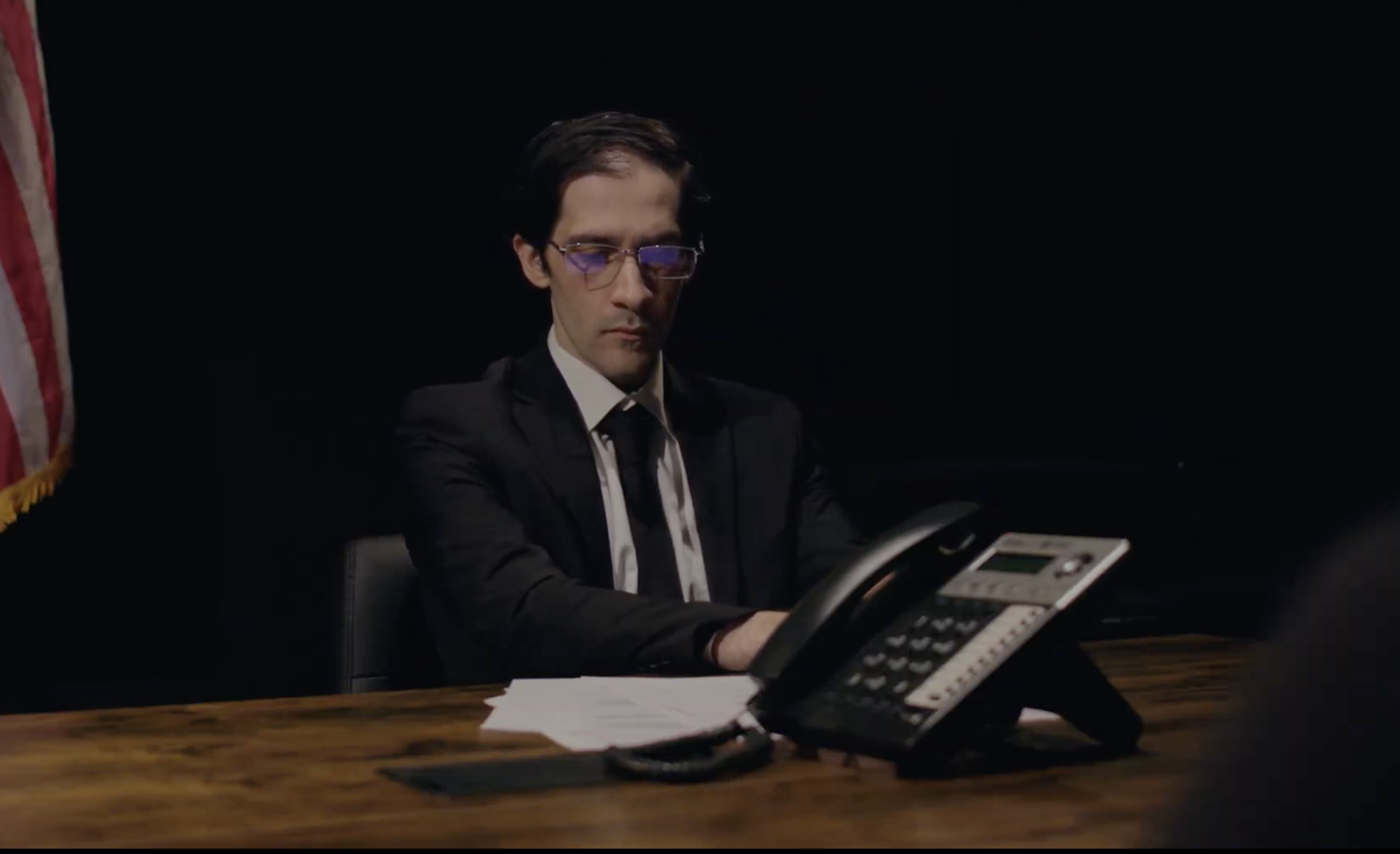
The resulting work, Questioning, transforms that interrogation—an encounter between an artist, government officials, and the invisible architecture of surveillance—into a live performance that examines the legal gray areas, ethical contradictions, and personal stakes of being watched in a data-driven society. Blurring the boundaries between documentary, theater, and conceptual art, Weist reveals how easily the systems designed to observe us can themselves become objects of scrutiny. A performance of Questioning is currently on view at New Theater through July 19.
OLIVER KUPPER: We are living in a strange time. As trust in journalism—its ethics and practices—continues to erode, it increasingly feels as though artists are being called upon to become investigators, examining the world in ways that journalism once did.
JULIA WEIST: I had never really considered how someone becomes credentialed as a private investigator. Part of the motivation came from wondering whether a journalistic impulse could exist outside of journalism itself—something that isn't discipline-specific but can move into the art world, manifest as artworks, while still emerging from a desire to uncover a story or piece of information that hasn't been seen before. When I looked into it, I realized that almost anyone can apply. Of course, not everyone is approved, but there isn't an initial barrier that prevents you from submitting an application. I thought that was fascinating. Even if I were denied, the denial itself could become generative because you can appeal the decision and appear before an administrative judge, who essentially has to determine whether your career aligns with the standards they've established for the profession.
KUPPER: Early in your career, you worked as both a librarian and an information scientist. When did those systems of visibility, bureaucracy, and institutional control evolve into the foundation of your artistic practice?
WEIST: Library and information science gave me a sustainable way to sharpen my research skills while earning a paycheck. I studied at Cooper Union, where I met Max Pitegoff and Kalla Henkel, who now run New Theater. After graduation, I made a lot of work about libraries and archives, though I was always interested in broader questions like the ones you mentioned. At first, I was interested in the mechanics of library systems—actually, I shouldn't downplay that because I made several projects examining collection development policies: how libraries decide which books belong on the shelves, by what standards, and when a book has literally outlived its shelf life. But over time my focus expanded beyond libraries to systems more generally. I became interested in how institutions create policies that regulate information and data, but also how they govern our lives, shape civic life, and construct social order. Bureaucracy is an incredibly powerful tool that can be redirected through loopholes and procedural gaps toward entirely different ends—ideally in the spirit of public good and generosity.
KUPPER: You published a book during that period. Can you talk a little about that project?
WEIST: As I was researching library collection policies, I started collecting books that had been discarded because they were inaccurate, outdated, or simply unpopular. I became interested in the emotional life of failed literature—or maybe not failed literature exactly, but books that had survived physically while losing their cultural relevance.
I wrote the first three chapters of a romance novel and deliberately submitted it to publishers like Harlequin and Tor, expecting rejection. I received exactly the rejection letters I hoped for and exhibited them alongside the installation as evidence that I had participated in the very system I was documenting.Then a curator saw the rejection letters and said, "Why don't we actually make the book?" I loved that idea because instead of failing before the process even began, I could complete the entire cycle and eventually arrive at the rejection I was really interested in: the moment the book itself would be discarded from library collections. It became an extraordinarily long project. It took about five years to find an independent publisher, write the book, publish it, get it into libraries, and then simply wait for it to be removed from their collections. That kind of duration has become a hallmark of my practice. If a project requires ten years to fully unfold, I'm comfortable with that.
KUPPER: Would you consider that a form of performance?
WEIST: I get that question a lot, and my answer is always no. Artists like Marina Abramović or Tehching Hsieh are capable of sustaining truly durational performances. I'm not. I'm too sincere. I care too much about what I'm doing to maintain that kind of distance. I think my heart would explode.
KUPPER: There's something interesting there that almost mirrors the way AI absorbs and categorizes information. Looking back, do you feel you were anticipating this moment? Artists often have that kind of prescience, whether they recognize it or not. Did you sense that organizing information itself would become such a defining force in contemporary life?
WEIST: I actually think my work moves in the opposite direction. I always try to work at a deeply human scale. Of course, I'm fortunate to have collaborators and institutional support. I work with a gallery and PR, and there are many people who contribute to these projects. I'm not pretending they happen in isolation. But I always want the work to remain imaginable—to feel like something another individual could also undertake if they devoted themselves to it. Even on projects involving billions of data points, I processed the material manually. I didn't use computational tools to sort, filter, or categorize it. That decision was very intentional because I think that's one of the things artists are uniquely positioned to offer: a human perspective. Something emotionally legible because, ultimately, everyone understands what it means to experience the world as a single person.
KUPPER: I want to talk about your project involving the FBI undercover agent in the art world. Your practice has moved through a number of distinct projects—from the viral billboard to increasingly deep investigations into legal systems and institutional loopholes. It feels as though each work has brought you closer to the kind of investigative practice you're engaged in now. Can you talk about that project? Who was this FBI agent, and what exactly was he doing in the art world?
“Bureaucracy is an incredibly powerful tool that can be redirected through loopholes and procedural gaps toward entirely different ends—ideally in the spirit of public good and generosity.”
WEIST: His name is Robert K. Wittman. He's retired now, and I assume he was given permission to discuss his work before retiring because he wrote a book about it. He founded the FBI's Art Crime Team and spent his career investigating everything from stolen Vermeers to forgeries, illicit trade in protected cultural objects, even cases involving prohibited materials like eagle feathers incorporated into artworks. Really, anything that fell within the sphere of art crime.
When we first started talking, I wasn't entirely sure where it would lead. I simply asked if I could interview him. Around the same time, I also interviewed someone who had worked undercover for the CIA in the art world, as well as a British intelligence officer who unfortunately passed away not long after our conversation. What surprised me was how much our conversations revolved around authenticity. We kept returning to the question of what makes a persona believable. For an undercover agent, convincing people you are who you claim to be is literally a matter of life and death. Robert said something that has stayed with me ever since: for an undercover identity to be convincing, it has to be true.
That idea shifted something for me. It suggested that we all move through the world by emphasizing different aspects of ourselves depending on the situation. When I'm sitting in the interrogation that this performance is based on, I'm still myself, but I'm inhabiting the version of myself that makes sense in that particular room. As artists, we're constantly moving between different worlds. We don't become different people—we simply foreground different parts of ourselves. That realization became surprisingly important to the work. Practically speaking, he also shared methods and strategies that ended up informing my own process. Beyond that, it was simply fascinating to collaborate with someone outside the art world who nevertheless understood it so intimately.
KUPPER: Your practice—and especially the way you construct these investigations—makes me think of Lynn Hershman Leeson, particularly Roberta Breitmore. Do you see yourself working within that lineage? Is constructing a persona an important part of your practice?
WEIST: I actually think of myself more in the lineage of artists who engage institutions rather than simply critique them. Artists like Gala Porras-Kim or Cameron Rowland are important reference points for me. Triple Canopy has an unpublished mission statement—which I guess I'm now sharing publicly—that says: critique with actionable intent. That phrase has always resonated with me. For me, the persona isn't the point. The action is the point. The persona exists only to make the action possible—or as effective as it can be.
KUPPER: That's interesting. It almost seems as though your conversations with the FBI agent ultimately became an investigation into yourself.
WEIST: In some ways, yes. That project coincided with a major shift in my life. After spending most of my adult life in New York City, I moved to a small town in upstate New York. Suddenly, I found myself surrounded by people for whom my practice—which doesn't involve going into a studio every day and making paintings—was genuinely difficult to understand. Living in a major art center, it's easy to forget how frictionless that environment can be. Everyone already speaks the language.
I actually think that's to our detriment. We're not often challenged to explain what we're doing in ways that are accessible or legible to a broader public. The work I admire most can move people regardless of whether they're part of the contemporary art world. But artists who remain inside those cultural centers rarely have to test their ideas against people outside that ecosystem. Moving upstate forced me to do that. It was incredibly productive for my practice, and I'm deeply grateful for the community I found there. But it was also a moment of real insecurity. That project became a way of working through those questions for myself.
KUPPER: Questioning seems to be a constant thread throughout your practice—questioning systems, institutions, even yourself. That brings us to your current project. It begins with you becoming a licensed private investigator. I'm curious why it was important for you to obtain the license yourself rather than simply hire a private investigator or use publicly available tools. Why did you need direct access?
WEIST: Primary sources have always been central to my practice. That's one reason I'm so drawn to archives. Even though they're mediated through conservation, curation, and stewardship, they still present the possibility of encountering the thing itself. The process of moving through original material is just as important to me as whatever artwork eventually emerges from it.
The private investigator license offered a similar opportunity. I'd spent years thinking about public collections—libraries, archives, publicly accessible information—but I became increasingly interested in the opposite category: restricted information. There are databases that only private investigators, law enforcement, and certain corporate investigators—like insurance fraud divisions—can access. For example, I can run a license plate and see where that vehicle has been over the previous thirty-six months. Most people don't even realize data like that exists because we've never seen it. It's invisible to us—not just inaccessible, but almost unimaginable. I wanted to understand the visual character of that hidden information. Data isn't abstract. It's often photographic. Those license plate searches, for example, include actual images documenting where those cars have been. Entering that world gave me access to a visual language that almost no one outside those professions ever encounters.
KUPPER: What was the process of getting this license? Is it a complicated process to obtain one?
WEIST: Yeah, it's extensive, as it should be. I took an exam, I was fingerprinted, and they ran an FBI background check on me. I provided a huge amount of documentation about the work I had done contractually and financially—tax records, agreements from previous projects, and other materials. I also had to get character witnesses and people who could verify my professional experience in an affidavit format. It was a long process. Then I was approved, and the project at hand came about when I submitted my renewal, because the license is only valid for a two-year term. In the intervening two years that I had the license, the work I was doing with it became public. I had a solo exhibition, there was a lot of press around it, and that information eventually made its way onto the radar of the New York Department of State, which set off a series of events that happened afterward.
KUPPER: Did you talk to other private investigators during this process?
WEIST: Yeah, I did. It was really important to me that I understood the field—not just through the perspective of an artist who was interested in the material I would gain access to, but as someone who understood the profession and the industry itself. So I actually paid a PI to let me interview him, ask him questions, and use him as a resource. I also worked on a couple of real cases using my PI access. I contributed to situations involving people in my life to understand what it was like to do something purely from the perspective of a private investigator, rather than immediately transforming it into an artwork.
KUPPER: Are you allowed to discuss any of the cases you worked on?
WEIST: I'm not allowed to talk about the specifics based on the agreements I made, but I can say that in one case, someone was involved in litigation, and I gathered material that was ultimately used in court. I want to be clear that I can participate in and be critical of these systems. I would not participate in our criminal justice system without transforming it into something that I felt provided some interpretation or analysis of that system and its flaws. But in this case, it was about experiencing the process firsthand—understanding the steps that are taken, and the role private investigators play in allowing the criminal justice system to function as it typically does.
The thing I learned was something we all already know: financial resources change the outcome of litigation. If you can afford to hire a private investigator, the kind of material you can bring forward can change the outcome of a case. It's important to see that and talk about it, because those are the stakes. And that exists alongside all the other concerns around surveillance, privacy, and the ways this license intersects with American society and the criminal justice system.
KUPPER: What were you first uncovering? What were some of the things you were searching for, prompting, or investigating? What did you initially start looking for?
WEIST: I started by looking at my own information—searching myself everywhere. I got access to my own license plate information, my own name, and my Social Security number. Then I used the legally permissible purposes under federal law for accessing this kind of sensitive, non-public information to search for myself in ways that the industry has provided blanket access to, which they call wildcard searches. For example, I have a certain make and model of car, and it’s legal under federal law for me to see everyone who has that same make and model of car within a geographic region because the search is technically being conducted on myself. So you’re using the parameters of a legitimate target, but the system allows you to cast a much broader net. It’s the same approach—using yourself as the subject—but it pulls in an extensive amount of third-party data, all within the statutes that are currently in place in our country. That was important for me to show: we do have a legal framework, but it’s a framework that has a lot of holes in the net.
“There are the tools themselves, and then there’s the information that they pull back. The thing that surprised me about the tools is that they do much more than they’re intended to do.”
KUPPER: What were some of the things that shocked you, or that you learned about this pervasive, ubiquitous surveillance world that we live in now?
WEIST: I think there are two ways to look at it. There are the tools themselves, and then there’s the information that they pull back. The thing that surprised me about the tools is that they do much more than they’re intended to do. The creators of those tools actually see that as a feature, as a benefit. For example, you can search in the license plate field for any text that is visible in public, and you can receive results for that. So lawn signs, bumper stickers, or people walking down the street wearing clothing with text on it can all potentially be found through a license plate lookup.
KUPPER: Wow.
WEIST: The other thing—which wasn’t something I wouldn’t have expected, but was fascinating to see in such specificity—was the financial incentive behind things that surround us every day. For example, if you’re at a mall and you put your business card into a bucket to win a free car, the way that money is made is that those business cards, and the information attached to them, are actually worth more in aggregate than the car itself because that data can be sold to brokers. It’s moments like that where you can actually see the financial structures behind things we’ve accepted as completely innocuous.
KUPPER: What are some of these platforms? Are they created by companies like Palantir that build this kind of software for searching license plates and other information?
WEIST: It’s actually companies you already know. LexisNexis, which most people associate with academic research, has a subsidiary that provides services for enforcement bodies and private investigators. TransUnion, the credit bureau, is another example. There are private companies that specialize entirely in this space, but there are also companies you might not expect. Motorola Corporation, for example, is split into two separate businesses. The telecommunications company is now its own entity, but Motorola Solutions is a separate company that produces tools for police departments and private investigators.
KUPPER: It’s scary that these tools are out there—that people are being captured in this way, especially within the context of a democratic system. It’s absolutely terrifying. I’m curious about some of the loopholes you used to reveal this information.
WEIST: One loophole, for example, is that unlike California, New York is a one-party consent state for recording. While that can be used in potentially nefarious ways in certain contexts, in the case of my interrogation with the state, it was what allowed me to create an audio record of that exchange. That’s a regionally specific loophole that became integral to the project. Some of the other ones are more technical. There’s a licensing law that says no one is allowed to display someone else’s private investigator license. Essentially, the intent is to prevent someone from falsely presenting themselves as a licensed investigator when they aren’t. But the law never says anything about reproductions.
So I exhibited my private investigator license by creating a perfect, down-to-the-perforated-edge photographic copy, which I then printed on the thinnest photo paper available on the market, made by Red River. It was something that was really toeing the line—the gallery was in possession of and displaying what appeared to be my PI license on the wall, but legally it was a reproduction, and that specific act was not expressly prohibited in the language of the law.
KUPPER: So when you went to renew your license, it prompted an investigation by the Department of State. Did you get a call or a letter? How did they contact you to say, “We want to speak with you about this”?
WEIST: I got a call from a deputy. He didn’t identify himself as such, but I later learned that he was the deputy chief investigator for the Department of State. He asked me to come to a government building in Albany, but he didn’t say that I was under investigation or that I would be interviewed with their lawyer present. Their lawyer made it sound like there were just some outstanding questions that needed to be resolved bureaucratically. There’s a lot of paperwork involved with the process, so I assumed I was going to submit additional documents, sign something, or go through another administrative step. Then he followed up by email with an address and a time, and I arrived that day. I started an audio recording on my phone as soon as I got there—because I assumed that whatever was happening would be interesting, but I definitely didn’t anticipate where it was going. I thought I was going to have an interesting conversation with a bureaucrat, similar to some of my earlier projects, where I was asking provocative questions about the definition of an artist. On my application, I had actually written “artist/investigator.” But it turned out to be something much more serious.
KUPPER: It was essentially a ruse to get you in a room to talk about why an artist would need a private investigator license.
WEIST: I think it was a strategy where they were hoping to catch me more unaware, so that I would be off guard and potentially share information I wouldn’t have shared if I’d had more time to prepare. But I don’t think that’s what happened.
KUPPER: What would the punishment have been?
WEIST: At the end of the production, there’s a prolonged exchange where you can hear them essentially trying to get me to say that I had accessed information I wasn’t legally entitled to see about my neighbors. As I mentioned earlier, there are federal laws governing when and how you can access this kind of sensitive data. So I don’t think the primary purpose of their pursuit was necessarily to file criminal charges, but they were exploring that avenue—to see if I would say something that could trigger a potential misuse case in that sphere.
KUPPER: Was there any point where you started to become nervous or worried?
WEIST: I was definitely nervous at the beginning. Then, as we started talking, it became so rich and complex that I forgot myself a little bit. You can hear in the production, in the section where they’re essentially trying to get me to say something that wasn’t true—that I had incorrectly accessed data or illegally accessed information—that I push back quite forcefully. The tone changes there. It moves from an intellectual debate into something a little more combative. But after that somewhat heated round of questioning, they understood that I was saying I had not done the thing they suspected I may have done.
KUPPER: Did you already have an idea that this was going to become, essentially, a play?
WEIST: My intention, basically 30 seconds into the interrogation, was that it was going to become a video artwork that appropriated the video they were making of me. They had their own recording, and I knew that through the Freedom of Information Act I could request a copy and exhibit it as is. So, in the moment, I thought—similar to staging that photograph for the surveillance camera—I was creating a composition. Everything I said, the way my body was positioned, all of those elements would become part of the artwork. But then, once the case was dropped and I submitted a Freedom of Information Act request, they didn’t provide the video. I appealed, they denied the appeal, and then I appealed that denial. Eventually, they certified in writing that the video could not be found after a diligent search.
KUPPER: Of course.
WEIST: So that was the moment when I thought, “Okay, well, I guess I need to remake this video because I have the audio.” I can have actors lip-sync it and record that. I can use my powers as an artist to replace the thing they are withholding without cause—in a way that potentially reveals the absurdity of the situation. Under FOIA, you’re only allowed to withhold a government record if you provide a specific, legally valid reason, and they didn’t do that. They simply said they couldn’t find it.
KUPPER: Is this the final form of the project, this play? Or are you going to renew your license? What’s the future?
WEIST: I’m all set through 2027, so we may approach that question then. But the play is one version of the work. We’re also video-recording it and producing a very lush 4K video that replaces their probably low-resolution digital recording. That will be another iteration of the work that exists in parallel with the play.