
In 2012, shortly before I lost my mind and committed myself to writing fiction, I was sitting at a pal’s apartment in San Diego, waiting on him to shower and ready himself for a night out, when I picked up a copy of the Vice fiction issue. I flipped through the magazine’s pages looking for something of interest. A story titled “Whores I Have Loved” immediately resonated with me. I understood the sentiment completely. I read with ferocious curiosity as the writer sermonized on the dangers of falling in love with prostitutes in locations foreign and remote. Prior to reading the piece, I didn’t think it possible for a work to exist that was so honest, tender, and vulnerable about a subject so fraught with moral pitfalls.
The next day I ordered the writer’s debut novel, How to Sell, and read it over a weekend. The Monday following, I sent him some sort of hysterical, fanboy email. For whatever reason, he responded, encouraging further correspondence. Over the next couple years, I forced upon him countless drafts of various manuscripts I’d scribbled out. He continued to be inordinately kind to me.
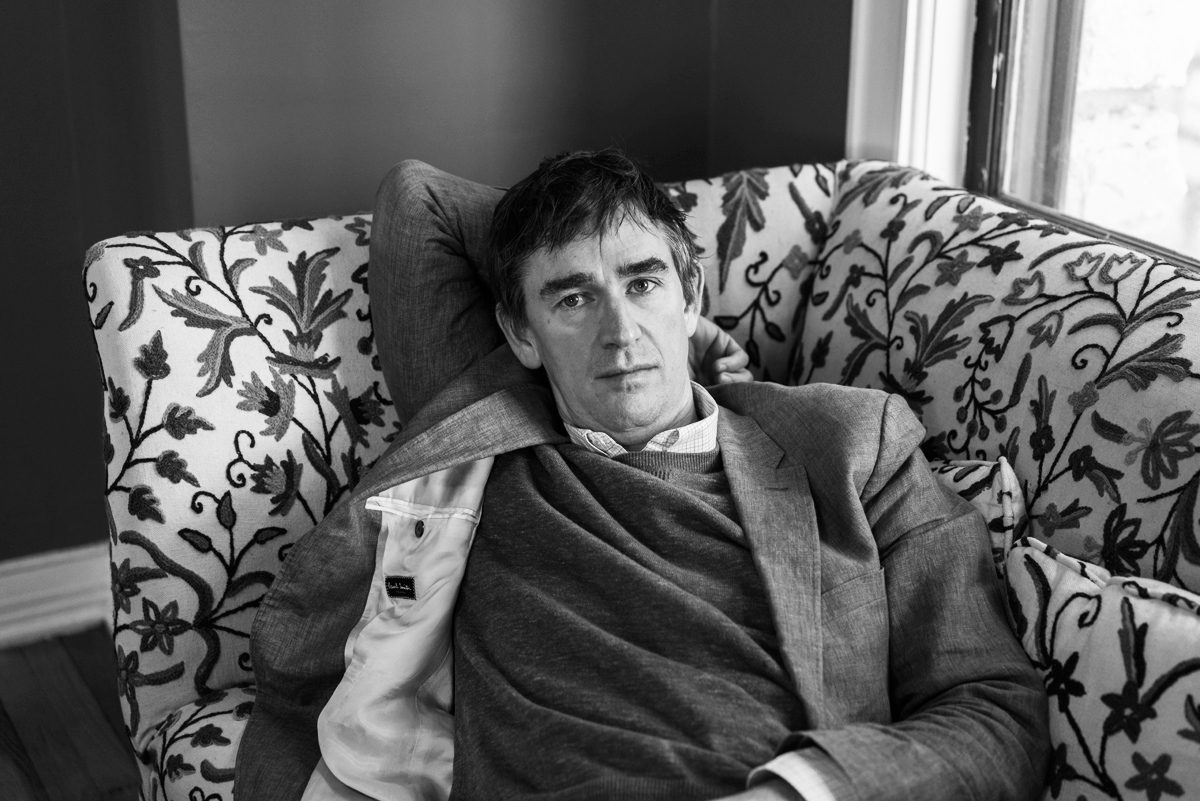
Now I have my own novel, High in the Streets, published. This has somehow granted me license to make further demands of my unknowing mentor’s time. When the opportunity to chat with him about writing and life for Autre Magazine arrived, I jumped at the chance.
This G-chat conversation occurred for me at 2:00am on July 19, 2016 in Budapest, Hungary, my new home, as of last week (long story). Clancy Martin was typing away in the comfort of his home office in Kansas City, at the much more reasonable hour of 6:00pm.
MATTHEW BINDER: Thank you for taking the time to do this with me.
CLANCY MARTIN: My pleasure, sir. Thank you!
BINDER: I don’t have any specific format to work from. I figure we can just fire off some questions at each other and have a dialogue.
MARTIN: Sounds good, brother M. I'll let you lead.
BINDER: I read Amie’s book on the plane the other day. It’s fantastic. When I finished, I thought to myself, wow, Clancy and Amie (Barrodale) must really benefit from having each other to share their work with.
MARTIN: We do. We also have similar styles, as you may have noticed. She wrote some of the best sentences in Bad Sex. Literally wrote them. I think I helped some with You Are Having a Good Time. Especially in encouraging her not to give up on stories that I could see were terrific, or not killing a story that was already great. It’s very helpful to us that we share an aesthetic. We tend to like the same writers. Though she’s much broader in her taste than I am. We both loved High in the Streets immediately. I rarely like living writers, sigh. I’m getting old.
BINDER: That’s really fantastic to hear, thank you.
MARTIN: So, what’s your new novel about? Will it include a setting in Budapest, I hope? Although of course the terrific Garth Greenwell, a friend of ours, has cornered the market on Eastern Europe lately....
BINDER: The novel I’m writing now actually has nothing to do with Budapest. It takes place in the near future, maybe 2030, and it’s about a doctor who gets displaced by technology.
MARTIN: Oh yes, I remember you mentioning something about that. I like that idea. In part because it is inevitable, and in part because I teach a class called Money, Medicine, and Morals, and it would be nice to have a cool novel to use in the class. Don’t make it x-rated so that I can use it.
BINDER: I was going through some of our old correspondence today. Seems I’ve been harassing you since 2012. In one early email I sent, I explained that it was early in the morning and that I was writing from the airport on my way to break up an engagement. Well, I'll tell you how the story ends. I did end up breaking up an engagement, moved across the country, experienced the most life-affirming/painful six months of my life, then she left me for an orthopedic surgeon, whom she married and now has kids with. I believe they moved to Alaska.
My question is, why have you put up with all my nonsense over the years?
MARTIN: Ha! I could see your talent. Plus you’re a genuinely likable guy. Plus, most importantly maybe, we share this belief that the best stories are ruthlessly honest, in some way or another. We try our best to be fearless in our stories. For me, it’s because I’m so cowardly in real life. The Wizard of Oz always made me cringe when I was a kid, not just because the munchkins were so creepy, but because I knew, in my heart, that I was the cowardly lion, but didn’t want to admit it.
BINDER: The first thing I read of yours was in Vice. It was called something like All the Whores I've Loved Before. It was the most honest and brave thing I’d read from a contemporary writer. I wasn’t even writing yet, but I was totally moved by it and so I contacted you.
MARTIN: That’s an example of a story that is entirely invented that nevertheless manages to try to tell the truth. It got me into a lot of trouble with my exes, because they assumed it was true, and not a word of it was. But there was truth it it...I know what it means to start to fall in love with someone whom you’ve paid to have sex with you. It’s a strange mysterious thing. I remember a woman from many years ago, in Mexico, when I was about 29. There was something.
BINDER: I’ve written two manuscripts and am now working on a third. Every time I do this, I drop everything: jobs, girlfriends, etc. But you have a totally full life: wife, kids, you’re an esteemed professor. When do you find the time?
MARTIN: Well, I drop everything, too, except my family and my teaching. I drop pretty much all of my other writing. It’s one of the nice things about being a professor. You are paid to write. If I write four to six hours a day, five days a week, I can usually get some real work done. Not always, but usually. And I have time for that.
BINDER: I drop everything and still don’t commit nearly that much time to the writing. I don’t have it in me. I’m amazed if I can be alone with my computer for three hours. Most of that time I’m distracted by playing guitar, or eating, or reading about sports.
MARTIN: Once I start it’s very hard for me to get up. I don’t know why, but I find it easy to sit at the computer, writing, for long stretches. Bodily laziness I suppose. But if I get distracted by something, I have trouble getting back to it, and like all of us, sometimes I have trouble with the sitzfleisch part, as Maxwell Perkins advises Fitzgerald among others. Clancy: sit your ass down.
But I think it’s so wise if a person can do it the other way. I admire my friend Jon Franzen because he never took the easy way out of the professor. He just stuck with the writing until it hit. I admire everyone who does it that way, I admire that bravery.
BINDER: Since I’ve been in Budapest I’ve written about 1000 words per day. I’m feeling pretty good about that.
MARTIN: 1000 words a day is twice as much as Hemingway and 1/5th as much as Trollope. Sounds like a good number to me.
BINDER: I don’t have the luxury of being a professor. I can’t teach a thing. I tried once and was fired in six weeks’ time.
MARTIN: I think most really talented writers hate to teach and struggle with it. Take it as a badge of honor that you were fired. Keep doing it the way you are. That’s the true, noble path. Kierkegaard: “Purity of heart is to will one thing.” Damn straight.
BINDER: Why’d you make Brett a girl? Did you think readers would find her bad behavior more sympathetic than if she were a guy?
MARTIN: I think people would have liked her more if she were a guy, actually, and maybe liked the novel more. She would have made a very interesting vulnerable guy. It may have been a mistake. But I made her a woman so that my daughters wouldn’t read it and think, Oh, this is a very thinly disguised version of our dad, man he was a creep. They may think that anyway, but I wanted plausible deniability.
BINDER: I got a message the other day from the girl who I loosely based the character Tessa on. She was less than pleased with me. Her fiancé was even less pleased. I assume you draw some of your characters from real life. How much trouble have you gotten in?
MARTIN: Well, you know how it is...you just keep reminding people that it’s fiction. I was very worried about my big brother’s reaction to the Jim character in How to Sell. And he was still in the business then. But he just loved the novel. He’s a very cool older brother. Woody Allen is very good on this subject. I guess it’s the same with movies. It’s mostly the former romantic partners who get really upset. And fair enough.
BINDER: It’s very good that we get to hide behind this thin veil of fiction.
MARTIN: Is your doctor based on someone you know? I find it useful to combine several people into one character.
BINDER: Both my father and brother are doctors. I’m sure I’ll draw some inspiration from them. However, I essentially write to impose my personality on the world, so anything I write will ultimately be based on me.
MARTIN: Yes, very helpful to have doctors in the family. Also for research and technical stuff. I have a hero who is in my current novel who is an animal collector, and what I wouldn’t give to be good friends or related to a couple of animal collectors. But yeah, I agree, we import our cockamamie world views through these people. So combining people while schizophrenically carving up ourselves....
BINDER: I called my father the other day, and he was so happy to hear from me since I hadn’t been in touch since I left the country, and then I went straight into some technical questions about medicine and he almost hung up on me.
MARTIN: Are you writing stories and nonfiction, too, or just the new novel?
BINDER: Now that I’ve started the novel, I’ll just be working on that until it’s done.
MARTIN: Ha! Yes, that’s the thing. People start to worry that they are material. You feel a little betrayed and used. Not to keep mentioning Franzen, but that’s a funny thing he said to me recently. “I’m grateful whenever someone puts me in a novel because I know I’ve got it coming.”
I think it’s wise to put everything else aside and just dive into that novel. Novels are the thing, anyway, once they’ve got their hook in you. They’re so much more fun to write.
BINDER: Do you enjoy the act of writing? Do you look forward to actually sitting down and doing the work? I mean, there are so many other things to do in the world, why write?
MARTIN: I enjoy it very, very, very much when I’m doing it. It’s exactly like exercise for me. I love it while I’m doing it, it makes me feel so much better about myself and life after the day’s done (most days), it helps me with anxiety and depression, and it is hugely satisfying. Making myself do it regularly is hard.
And, Flaubert said it best. Writing is like sex. First you do it for your own pleasure, then you do it for the sake of a few friends, and finally you do it for money.
BINDER: I actually dread sitting down to do the work. I’m always afraid that I’m all used up. I have no faith in my abilities. However, it always ends up working out, and then I feel wondrous for the rest of the day. Then, the next day, I experience the whole cycle of dread and wonder again.
MARTIN: Yes, we all feel that way. My mentor Diane Williams says that no matter how long you do it, you’ll feel that way. Used up, no good, worthless, best work behind you. And then, you know—she uses a canvas as a metaphor—start painting, and painting over, and completely covering up and starting again, and eventually something will emerge.
And of course you hope that maybe you could actually write something good. Yes, sitzfleisch, that’s the hard part. I think having no internet and just sitting there in front of the damn thing is a good discipline. Amie writes most of her first drafts on a typewriter, because the internet interferes.
BINDER: The other day, I did a panel in NYC with two much more established writers. There were questions about craft and process and all that business. Both the other writers had these wonderful responses about metaphysics and other things I didn’t understand. When asked about what I do, I said, “I drink and then I write.” And then I realized that was your line, and I gave you credit!
MARTIN: Ha! Thanks. Those complicated answers about how one writes...I’m a tiny bit suspicious of them, I admit. I don’t think of the process in that way. I don’t think of it as puzzle-making. You can’t search for the perfect metaphor. “Thoughts come when they will, not when I will” (Nietzsche). But, of course, everyone has her own method.
BINDER: A lot of your best writing is about the guilt, humiliation, jealousy that comes along with the bad things you’ve done under the influence. I know my own bad behavior is the best source material. I understand that you’re sober now. Has that changed your writing?
MARTIN: I often worry that my work is not as good now that I no longer drink. I was still drinking when I wrote How to Sell, though only at night, when I wasn’t writing. But not drinking is more important than writing, so that’s that, if I have to make the choice. Hopefully, I don’t have to make that choice. To me, Bad Sex is the better book. Less forced, less contrived. But I’m just one reader.
And Lord knows, it doesn’t take drinking to get me into trouble. My poor ole brain is stuffed full of bad behavior. The more I try to investigate it, the more troublesome it becomes.
BINDER: But if you had to choose between peace and contentment or writing amazing books, which would you choose?
MARTIN: I don’t expect peace and contentment. I won’t get it. That’s not a viable option for me. But if I had to choose between my family and writing great books, I’d choose my family without even thinking about it. I love books, but they’re just books. Your family: well, they’re people. No comparison, you know? You can love a book, but it can’t love you back. You? Many of our heroes died alone and broke. I think maybe it was lucky for us...but not so lucky for them. Speaking of alcoholics: Being in that log cabin with the shotgun: no thank you. Bukowski made the right choice: stick with Linda and the wine diet.
BINDER: I’m not sure, I struggle with it. I’ve never been any good at compromise, which I’m told is essential to forging healthy human connections. I’m just starting to figure out this writing business, and when I’ve done it well it gives me more pleasure than any of my relationships. I’m hoping at some point I grow up and that changes.
MARTIN: Yeah, I hear you. That’s a very honest response. I do think I felt differently twenty-two years ago, before my eldest daughter was born. But your children sneak up on you. You have that child and you realize: no matter what else I do, I will never do anything that compares with this kid. I know that’s a cliché, but it’s true. That said, I think it’s a false opposition. Many, many of my heroes had families. Dostoevsky.
BINDER: Also, I have the hardest time finding a woman and sticking with the relationship. The thing about choosing just one is that you have to eliminate all the others. Besides, at this point in my life, I’m not even sure what sort of woman I’d be compatible with. Who could tolerate me?
That said, there are a couple women out there whom I loved dearly, then lost, and now they’ve moved onto other men who treat them better, and I’m totally heartbroken. But is it enough to change my behavior? Probably not in the short run.
MARTIN: Well, I had the same problem with settling down, very clearly. And with heartbreak. Another great quotation from Diane Williams: “It’s all material.” That’s always worth remembering. Now I never want another woman in my life. But it took a lot of time. And yes, sometimes they do sneak up on you in just that way (children). It is a momentous decision. I’ve been writing about it lately. To mention Diane Williams, yet again, her stuff about her children is breathtaking. Lydia Davis is very good on kids too.
BINDER: At some point I hope a child sneaks up on me because I don’t think I could ever consciously choose that for myself. I’d have to be thrown into it. I’m almost positive I’d be glad it happened. At least, I hope I’d be man enough to be a good dad.
MARTIN: Tough to write well about children. Very, very brave. And you’d be glad it happened, trust me. But I do have a lot of friends who’ve consciously chosen not to have kids, for defensible reasons. I think they’re missing out, but everyone knows that having children doesn’t make you happier. Life doesn’t make you happier. Sex doesn’t make you happier. Love doesn’t make you happier. Knowing yourself doesn’t make you happier. Art doesn’t make you happier.
BINDER: Maybe at some point I’ll really want it. I’ve wanted every other goddamn thing in this world. Why not children? Raising, loving, loathing, fearing for your kids is an essential part of the human condition, right?
I’m missing out!
MARTIN: I completely agree. Especially about raising, loving, and fearing. (And maybe loathing your teenager.) Ok, Matt, I’m enjoying this immensely but have to run.
BINDER: This has been great. Thank you again!
Clancy Martin is a writer and philosophy professor who lives in Kansas City, Missouri, with his wife the writer Amie Barrodale. Matthew Binder is a former wastrel of the highest order. A cold list of his past behaviors would qualify him as a bastard in anybody's book. His work has drawn comparisons to Bret Easton Ellis, Norman Mailer, and James Salter. Intro text and interview by Matthew Binder. Follow Autre on Instagram: @AUTREMAGAZINE