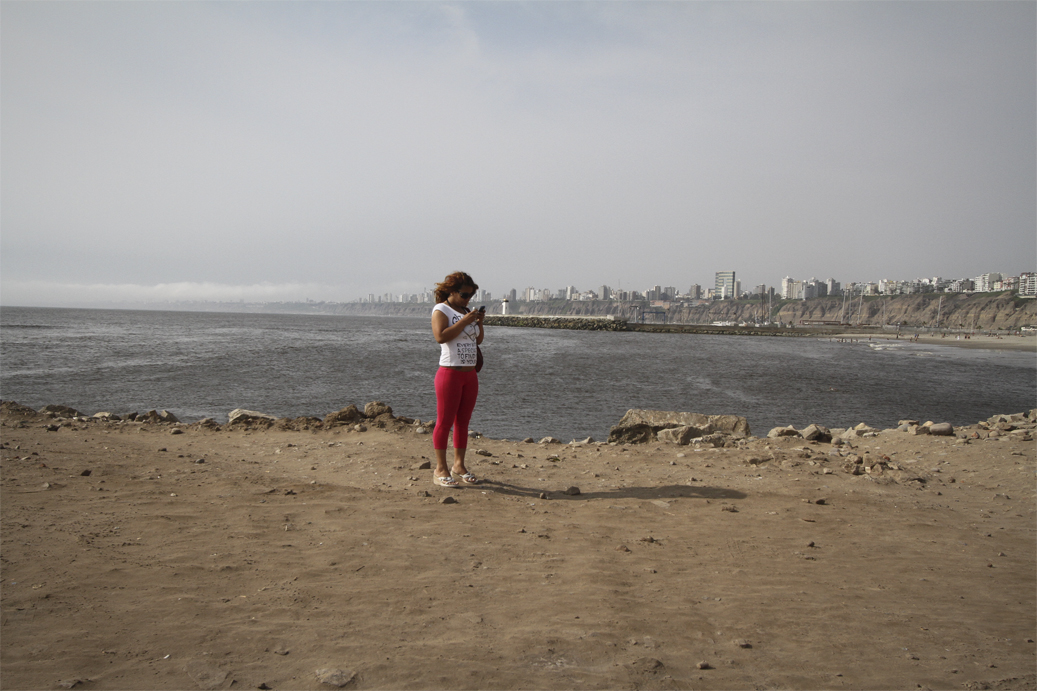
"Playa Los Yuyos, Lima: una prueba perfecta cont. Ectoplasm enters in the messianic guise of the perfect proof, the ultimate ghost-effect, visual and haptic, a new monstrance at the very edges of the sensorium and its modern prostheses―it exceeds photography (it cannot be properly photographed) it exceeds touch (it can be touched but only with grave danger) — it can barely be seen — emergent like a spider’s web cocooning the medium in a sticky veil, a prophylactic balm to salve the wounds of materialism, Casaubon’s key to all mythologies."
You could say that, unbeknownst to us, some sort of kismetic spirt is colluding with our lives, telling us when to go when we don't exactly know the direction or telling us what to say when the words aren't quite there. You could also say that a certain sense of wanderlust is innate and inexorable–the eternal wondering about magical, faraway places that seem entirely painted by daydreams and travel writers before us. And when you combine these two forces, one more corporeal and the other a tad more phantasmagorical–two forces conceivably as tightly wound as the double helix of our genetic code–it is a catalyst for something else altogether. Tarrah Krajnak, a documentary photographer who was born in Peru in 1979 in an orphanage run by the Missionary Sisters of the Sacred Heart and grew up in Ohio, and Alexander Keefe, an ex-professor who studied Sanskrit and Indian Studies at Harvard Universities, and a freelance writer for publications such as Artforum and Bidoun magazine, crossed paths in Burlington, Vermont and the rest, as they say, was history. Their online travel diary, called Keefjnak–an amalgam of their surnames–is a collaborative effort to document the world around them on their journey in the great tradition of travel documentation. A great travel writer such as Ernest Hemingway and any scholar of his would admit that his fantastical stories of seafaring adventures and bullfighting would not hold the same weight without his extensive real life adventures. On Keefjnak, Tarrah Krajnak's somber, yet liberating photographs of a dream-like South America are supplanted with Alexander Keefe's brilliant, poetic text and historical minutia to paint a portrait of the same kind seething wanderlust that all great adventurers share in order to remind us that life is happening to us whether we like it or not.
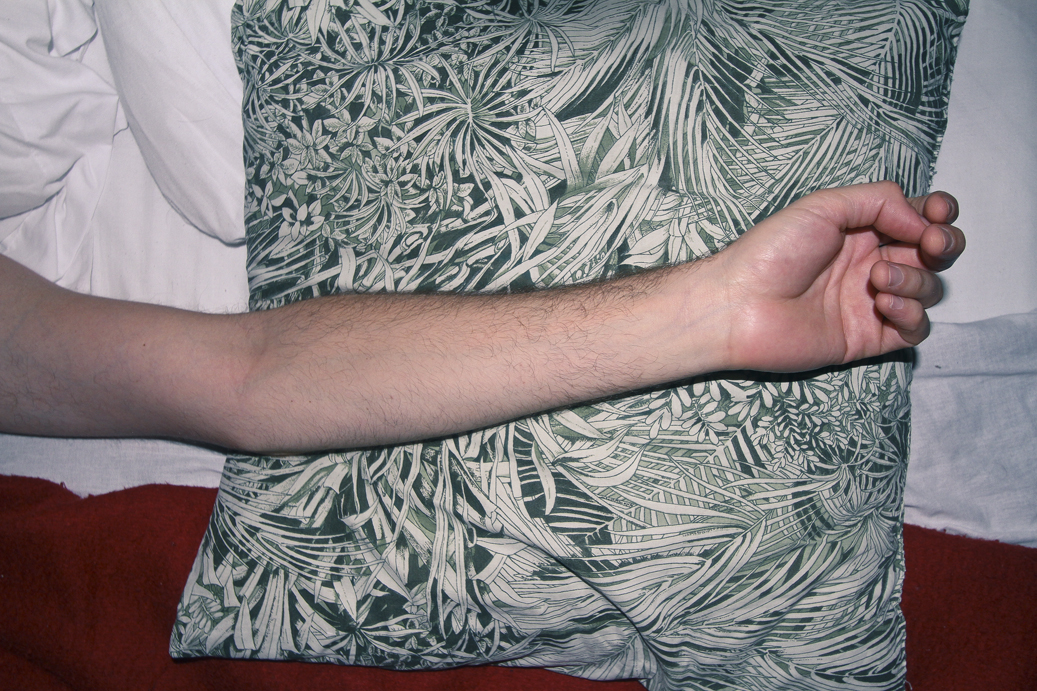
Barranco, Lima: the perfect proof cont. And so there is always an anxiety about the nature of their evidentiary claims, the proofs offered by photography and recorded sound in the late 19th and early 20th centuries required not just display but performance, hypnosis, and scripting… argument to fend off the lurking potential for disbelief and “ridicule.”
What is the Keefjnak project? Keefjnak is the project that Tarrah and I started as a daily photo/text blog... kind of a shared project while we were traveling around the world for six months working on other stuff. We made a portmanteau of our two last names and thought it sounded cool. We also liked that it was the only Keefjnak on the internet: a tabula rasa to do with whatever we wanted. We weren't really sure what we wanted to do with it, so that was appropriate. We just knew we didn't want to do a typical travel blog...
How did you two meet? We met when our paths crossed in Burlington, Vermont. Neither of us is from there, but Tarrah was living and teaching there at UVM for five years. I spent a couple years there as a kind of break from life in New Delhi, India, where I'd been living and working for several years previously. We hit it off.
Where did your journey start from? It started when we left Omaha where we were staying for a few months while Tarrah did a residency at the Bemis Center.
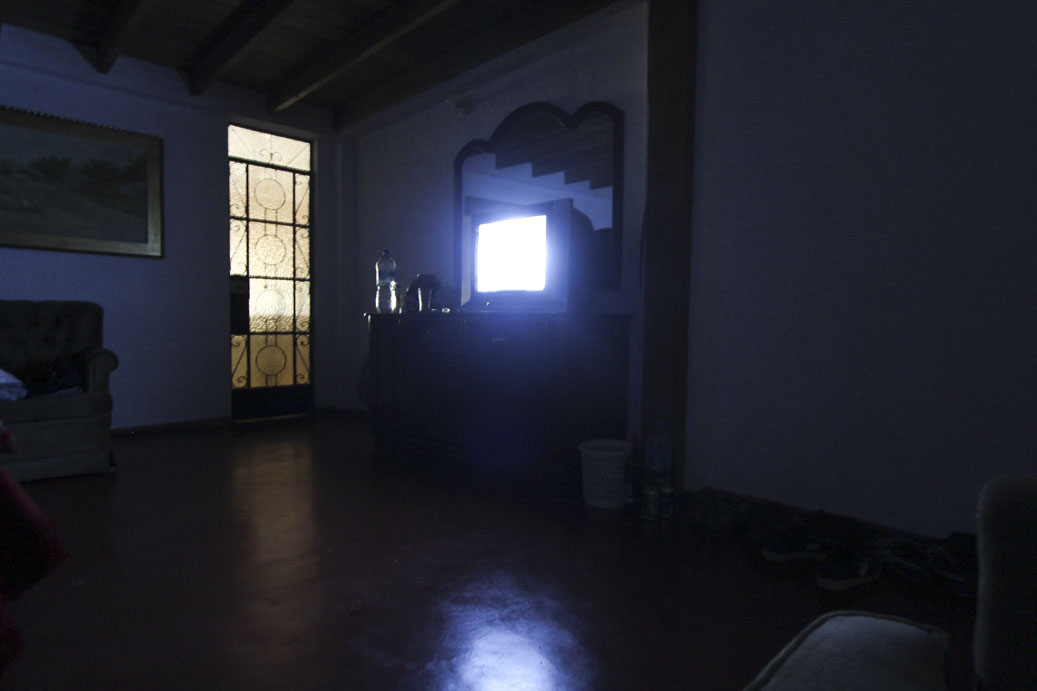
“Like the radio, it picks up voices from beyond the vibrations of the human senses but unlike the radio, the broadcast comes from a world which is tuned to rarer vibrations than our own, stepped down, or transformed, to us through ether by the agency of this ectoplasmic substance.
You mentioned that you post your photos and Alex posts his writing without consultation, is it safe to say that your photos and his text are a representation of how a visited place affected you both? Actually there is some consultation... But it is pretty low-key and usually takes the form of a quick editorial suggestion. Sometimes I'll show her a text that I'm considering and say "should I cut that part out?" She almost always says "yes" to that question for some reason... Ha! But I like it. I think of the texts for Keefjnak as the product of a kind of reductive rather than additive process. As for the photos, if she's stuck on deciding between a couple of them, she asks which I think is better for the blog. As for the question of representation, I don't know if that is really what the text and photos are doing. The photos are taken onsite in the various places we go so at least on some level they have to be tied to place. But I think that in the same way that my texts and Tarrah's photos sometimes converge and seem to speak directly to each other, and sometimes diverge and seem to operate independently, that our trip and itinerary works the same way. That is to say, sometimes our location and trip enter into dialogue with the texts and photo in a direct or explicit way, other times not at all. We always wanted the Keefjnak project to be not-obvious and kind of dry, stingy and austere, even cold. We don't want the text, photo and trip to be engaged in some big long group-hug and we don't want people viewing/reading the blog to feel that way either!
Any harrowing stories thus far from your travels or a experience that stands out the most? Tarrah got food-poisoning from a salad in Wisconsin and then ended up getting an upgrade on a flight from Chicago to Mexico City to first class so she could be closer to the bathroom and puke in luxurious comfort while I sat alone in the back of the plane wondering what was going on. At one point in my ambien-fogged semi-sleep I heard a flight attendant ask over the intercom "Is there a doctor on the plane?" I was worried. Then it turned out it was for someone else.
What's next? Well we are in Lima until late January working on a couple projects: Tarrah is shooting portraits of elderly nuns from the Catholic order called the Missionary Sisters of the Sacred Heart. They are German and have lived here in Lima at a convent in the back of a hospital for some 50 years. They also happen to run the orphanage that Tarrah was adopted from, which is how she got interested in the project. Some related work that she did in Reading, Pennsylvania at a retirement home for the missionary nuns is on her website: really affecting portraiture, some of it pretty harrowing, some more beatific. I'm working on writing an article on early video art for Bidoun magazine, a long-term writing project of mine that is being funded by Creative Capital and the Warhol Foundation. After Peru, we're making our way to India to work collaboratively on a project related to video art and the Indian space program in the 70s. I'm preparing by collecting stamps related to Indian telecommunications satellites.
Stay tuned to Keefjnak to follow Tarrah Krajnak and Alexander Keefe's journey. Text by Oliver Maxwell Kupper & Abbey Meaker for Pas Un Autre. All photos and captions Copyright © 2011 Tarrah Krajnak and Alexander Keefe.