FRED HERZOG: PHOTOGRAPHS
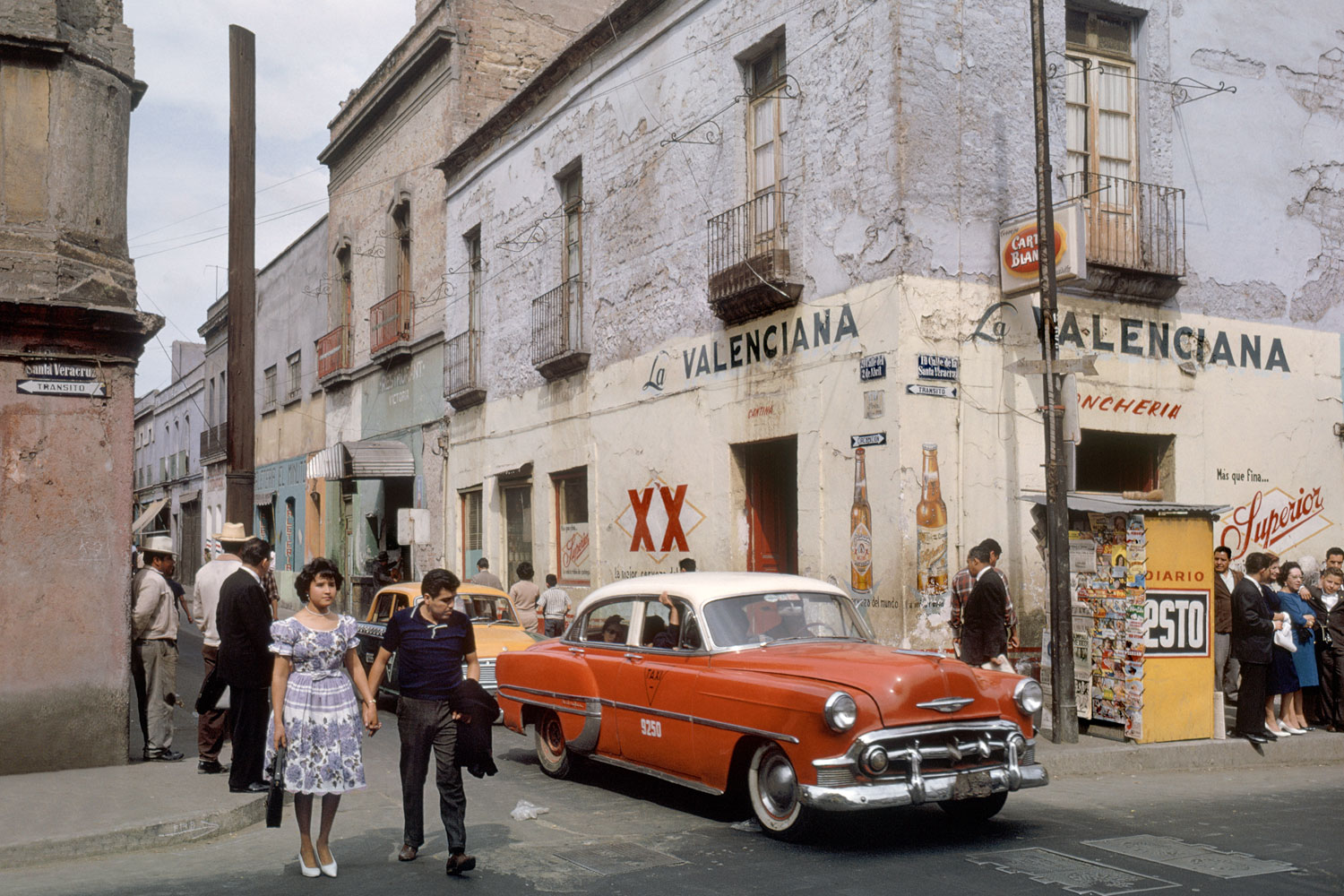 Herzog: Mexico City with Chevy, 1963
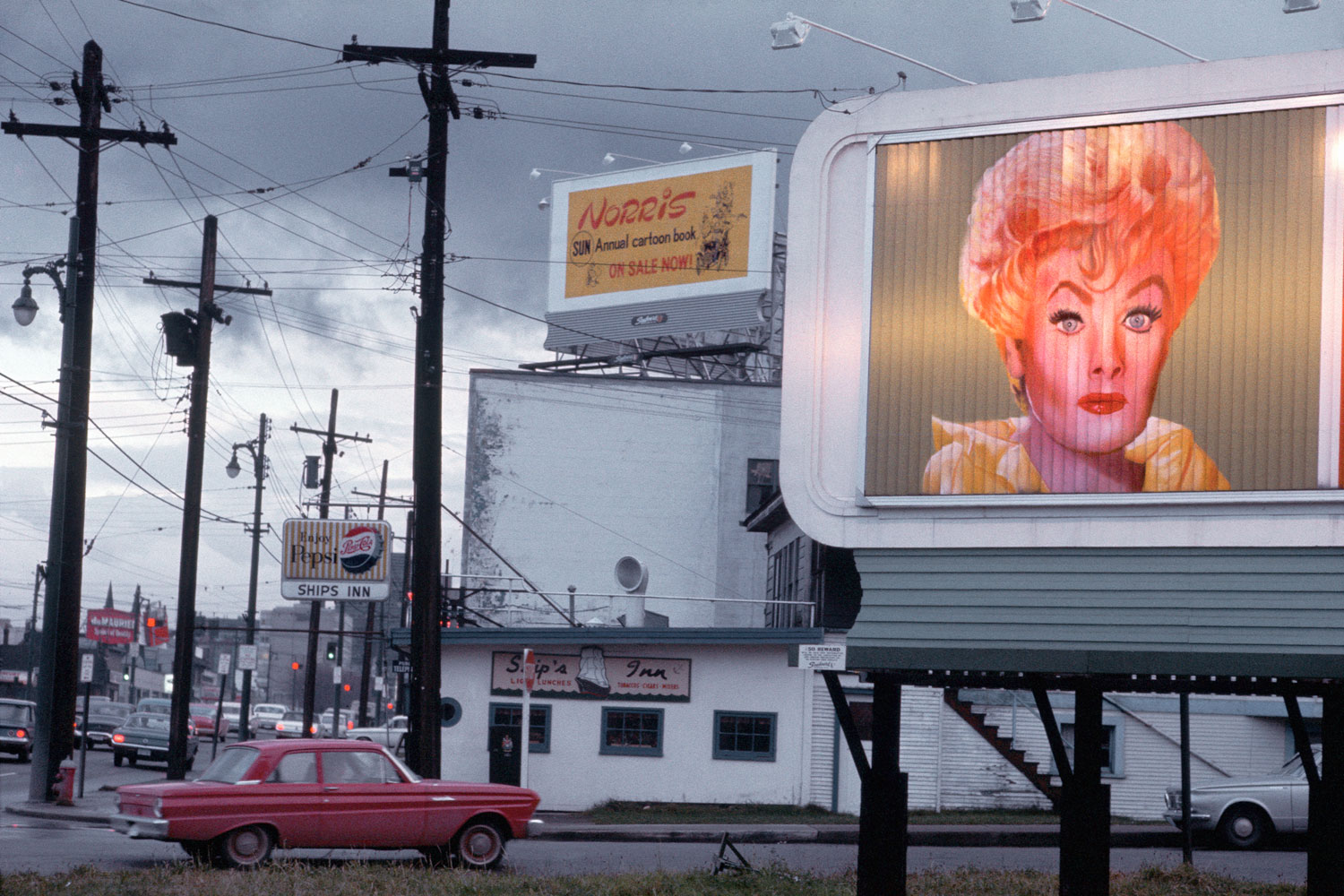 Hezog: Lucy, Georgia, 1968
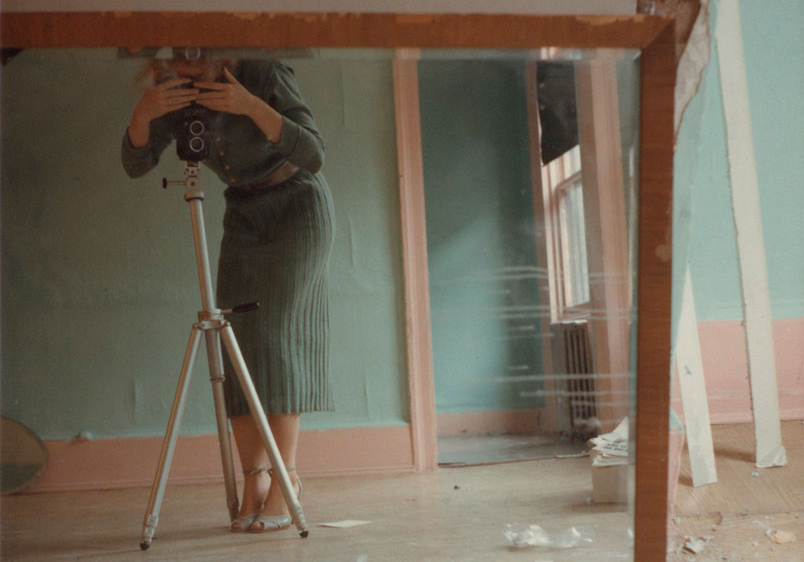
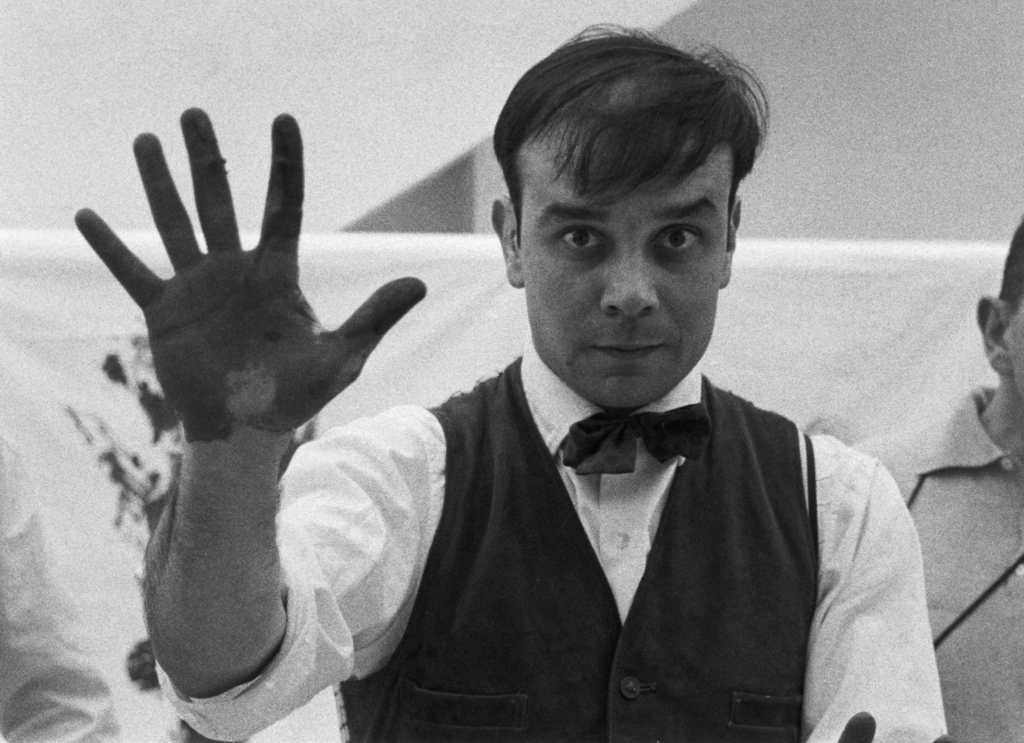
The definitive book about the stunning oeuvre of a pioneer of colour photography—Vancouver's Fred Herzog.For more than five decades, Fred Herzog has focused his lens on street life, and his striking colour photographs—of vacant lots, second-hand shops, neon signs and working-class people—evoke nostalgia in an older generation and inspire wide-eyed revelation in a younger one. The images that we now consider iconic once relegated Herzog to the margins: his bold use of colour was unusual in the 1950s and ’60s, a time when art photography was almost exclusively associated with black-and-white imagery. Fred Herzog has worked with Kodachrome slide film for over 50 years, but only in the past few years has technology allowed him to make archival pigment photographic prints of exceptional colour and intensity. Fred Herzog: Photographs, a new book out now by Douglas & McIntyre, showcases this innovative artist’s impressive collection in a beautifully crafted volume.
Black Gospel
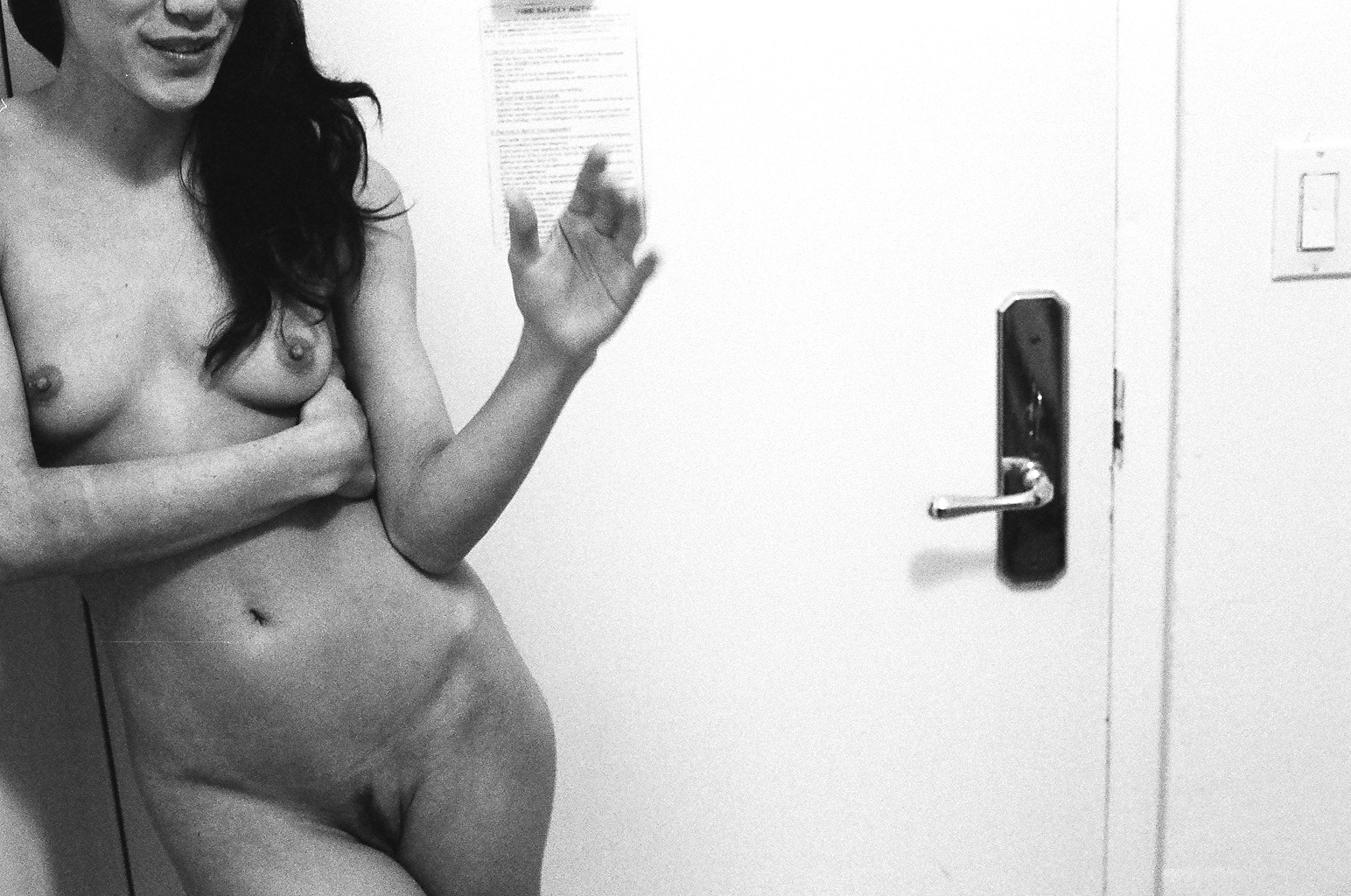
Photograph by Kevin Hayes
ED WOOD'S SLEAZE PAPERBACKS
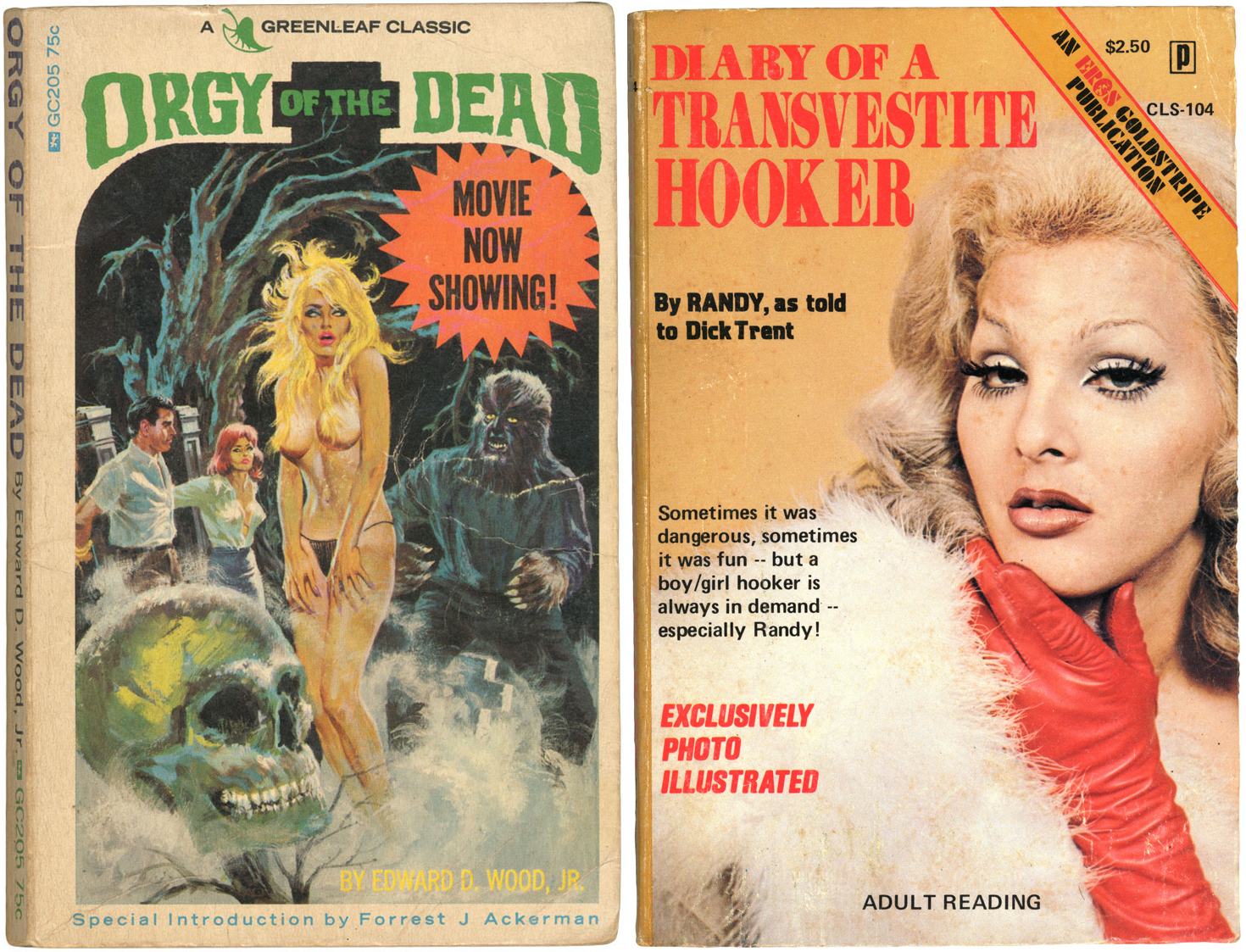
45_014-randy-trent-dick-as-randy---diary-of-a-transvestite-hooker---levels---885_ed_wood_sleazy_paper_backs
"LET ME DIE IN DRAG!" Ed Wood, cinema auteur of the ultimate b-grade weird in the Hollywood miasma of sleaze and degradation, best known for his films Plan 9 from Outer Space or Glen Or Glenda, was also a writer of dirty books. Next week in New York a collection of Wood's rare X-rated fiction will be on display in New York at the Boo-Hooray gallery in New York City. The antiquarian mystique surrounding Edward Davis Wood Jr.’s career as an author of pornographic pulp fiction is legend. He wrote under a variety of pseudonyms, books were published and re-published under different titles, and occasionally under different author names. Multiple authors would share the same pseudonym, and the companies that published the titles weren’t the kind of operations that kept any kind of records, nor paid royalties, nor really existed in the manner that most are to expect of book publishers. His descent into alcoholism and poverty was mirrored by the publishers that employed him. Towards the end of his life he wrote pornography with decreasing amounts of the strange flourishes of his eccentric personality. He died in 1978 of an alcohol-induced heart attack. His friends say the porn killed him. Ed Wood's Sleaze Paperbacks will be on view at the Boo-Hooray Gallery in NYC from November 2 to December 1.
Youth and Beauty: Art of the American Twenties

imogen_cunninham_nude_brooklyn_museum_art_of_the_20s
How did American artists represent the Jazz Age? The exhibition Youth and Beauty: Art of the American Twenties at the Brooklyn Museum brings together for the first time the work of sixty-eight painters, sculptors, and photographers who explored a new mode of modern realism in the years bounded by the aftermath of the Great War and the onset of the Great Depression. Throughout the 1920s, artists created images of liberated modern bodies and the changing urban-industrial environment with an eye toward ideal form and ordered clarity—qualities seemingly at odds with a riotous decade best remembered for its flappers and Fords. Artists took as their subjects uninhibited nudes and close-up portraits that celebrated sexual freedom and visual intimacy, as if in defiance of the restrictive routines of automated labor and the stresses of modern urban life. Reserving judgment on the ultimate effects of machine culture on the individual, they distilled cities and factories into pristine geometric compositions that appear silent and uninhabited. American artists of the Jazz Age struggled to express the experience of a dramatically remade modern world, demonstrating their faith in the potentiality of youth and in the sustaining value of beauty. Youth and Beauty will present 140 works by artists including Thomas Hart Benton, Imogen Cunningham, Charles Demuth, Aaron Douglas, Edward Hopper, Gaston Lachaise, Yasuo Kuniyoshi, Luigi Lucioni, Gerald Murphy, Georgia O’Keeffe, Alfred Stieglitz, and Edward Weston. Youth and Beauty: Art of the American Twenties is on view until January 29, 2012 at the Brooklyn Museum.
The Mexican Suitcase
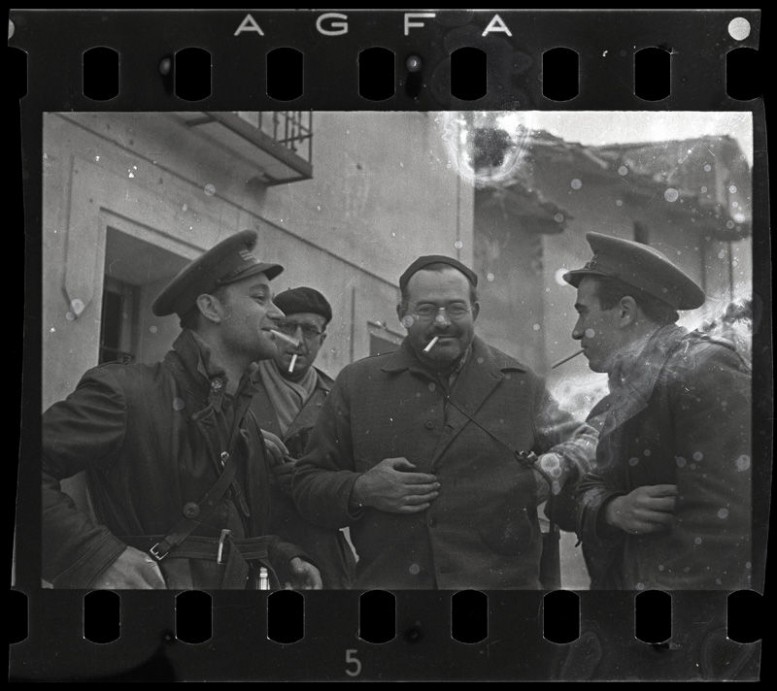 Robert Capa, [Ernest Hemingway (third from the left), New York Times journalist Herbert Matthews (second from the left) and two Republican soldiers, Teruel, Spain], late December 1937
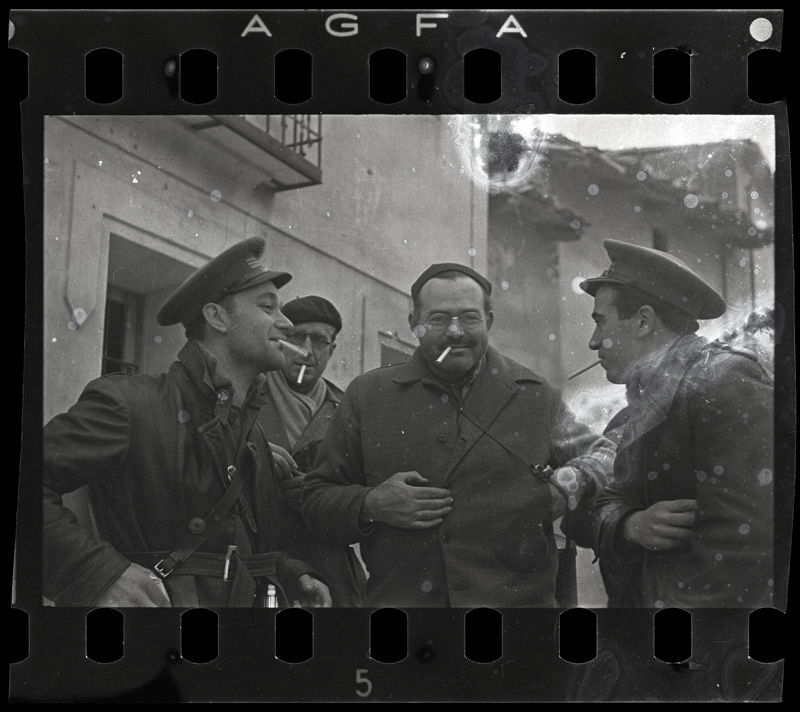
The Mexican Suitcase will for the first time give the public an opportunity to experience images drawn from this famous collection of recovered negatives. In December 2007, three boxes filled with rolls of film, containing 4,500 35mm negatives of the Spanish Civil War by Robert Capa, Gerda Taro, and Chim (David Seymour)—which had been considered lost since 1939—arrived at the International Center of Photography. These three photographers, who lived in Paris, worked in Spain, and published internationally, laid the foundation for modern war photography. Their work has long been considered some of the most innovative and passionate coverage of the Spanish Civil War (1936–1939). Many of the contact sheets made from the negatives will be on view as part of the exhibition, which will look closely at some of the major stories by Capa, Taro, and Chim as interpreted through the individual frames. These images will be seen alongside the magazines of the period in which they were published and with the photographers' own contact notebooks. On view now at the Museu Nacional d'Art de Catalunya until January 15.
Watch Alexander McQueen's Short Film for the Autumn/Winter 2011 Scarf Collection
Alexander McQueen presents a short film created by Paris-based director/photographer Babette Pauthier, featuring Alexander McQueen’s Autumn/Winter 2011 seasonal scarf collection. Visit the Alexander McQueen online Scarf Boutique.
[BOOKS] LORIS AZZARO

A new book, coming soon by luxury publisher Assouline, takes a look at the life and legacy of French fashion icon Loris Azzaro. Creatively fearless, Azzaro designed fashions that embody the nocturnal sensuality of the sixties and seventies, making him the go-to couturier for royalty and celebrity alike.
Dogtooth
A hyper-stylized mixture of physical violence and verbal comedy, Dogtooth, directed by Yorgos Lanthimos, is a darkly funny look at three teenagers confined to their parents’ isolated country estate and kept under strict rule and regimen — an inscrutable scenario that suggests a warped experiment in social conditioning and control. Terrorized into submission by their father, the children spend their days devising their own games and learning an invented vocabulary (a salt shaker is a “telephone,” an armchair is “the sea”) — until a trusted outsider, brought in to satisfy the son’s libidinal urges, plans the seeds of rebellion by trading VHS tapes for sexual favors.
The Empire of Death
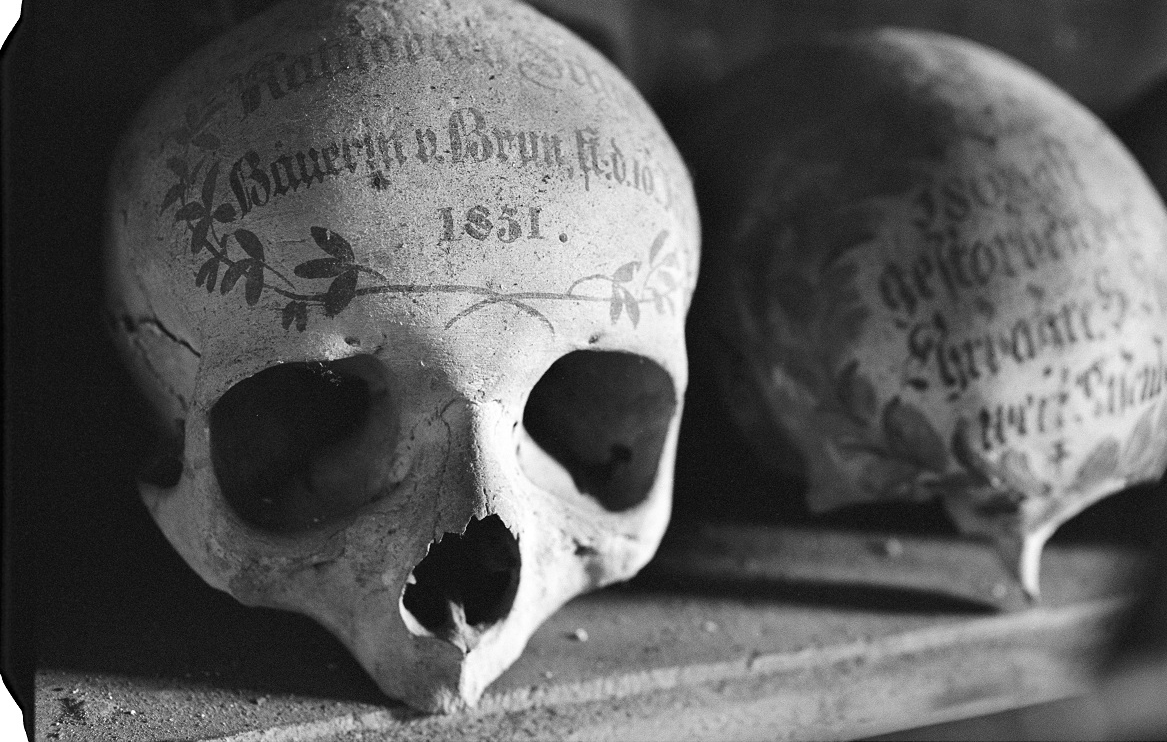
Tonight in Glendale, California – Paul Koudounaris discusses his new book The Empire of Death: A Cultural History of Ossuaries and Charnel Houses. Paul Koudounaris takes the reader on an unprecedented international tour of macabre and devotional architectural masterpieces in nearly 20 countries. This is the first book to bring together the world's most important charnel sites, ranging from the crypts of the Capuchin monasteries in Italy and the skull-encrusted columns of the ossuary in Évora in Portugal, to the strange tomb of a 1960s wealthy Peruvian nobleman decorated with the exhumed skeletons of his Spanish ancestors. Illustrated with specially taken photographs of sites rarely open to the public and forgotten archive images of others long destroyed, this mesmerising, shocking and deeply moving book is an essential memento mori for our modern age. Tonight, October 27, at the Brand Library Recital Hall – 1601 West Mountain Street – Glendale, California.
[TOKYO FASHION WEEK] Fur, Fur
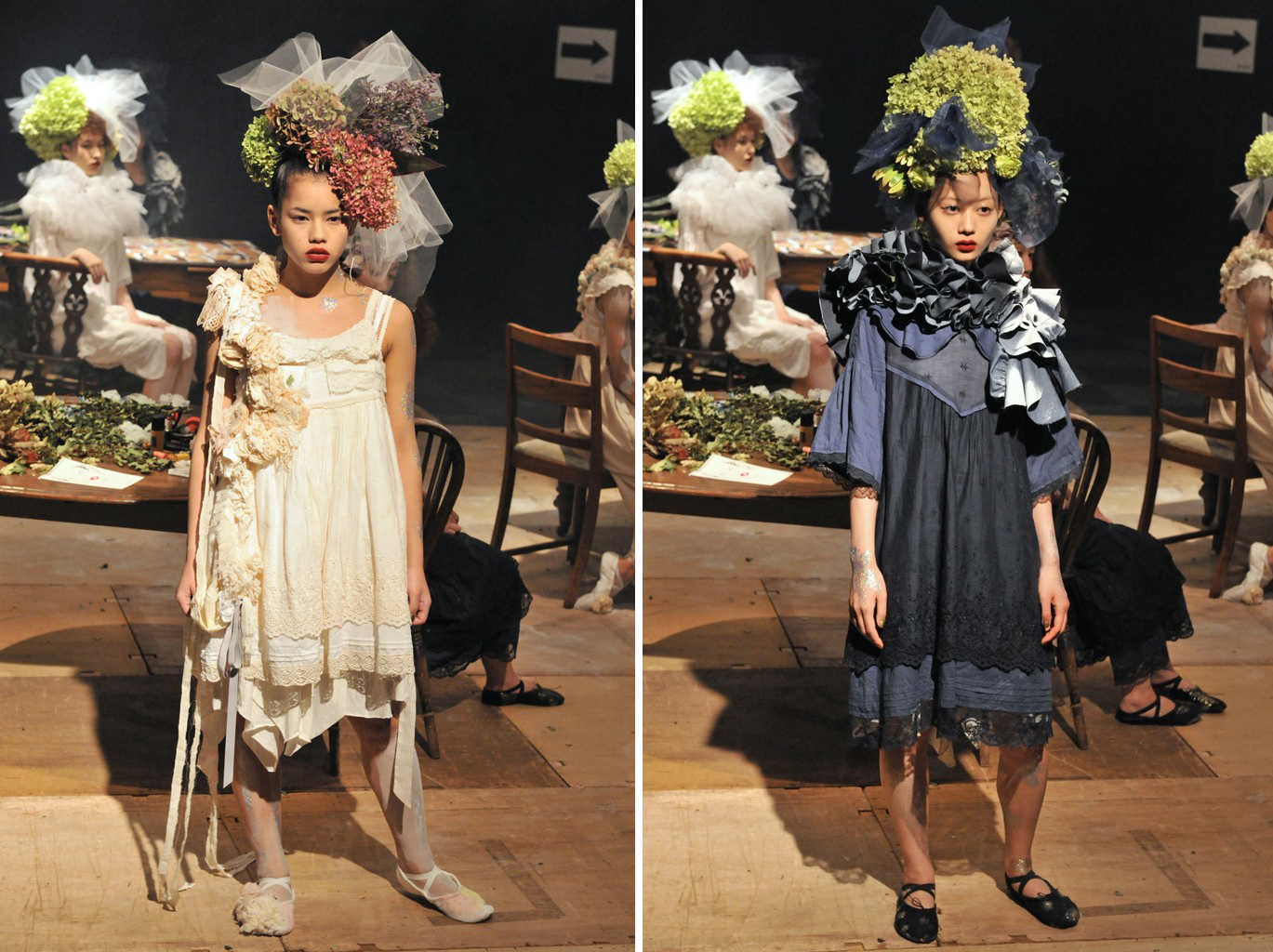
Japanese label Fur, Fur showcased their 2012 Spring/Summer collection on the runway at Laforet Museum Harajuku. Named after creator Aya Furuhashi, Fur, Fur began in 2005 under the name Fur. The label was first centered around “action painting and handmade creation”. It broadened focus in 2006, when it was launched as an independent fashion brand. The name was changed to Fur, Fur in 2008. The Fur, Fur 2012 S/S Collection show at Japan Fashion Week was not a traditional runway show, but rather an exhibition where live models sat around tables wearing conceptual outfits.
Mummy, I’m scarrred!
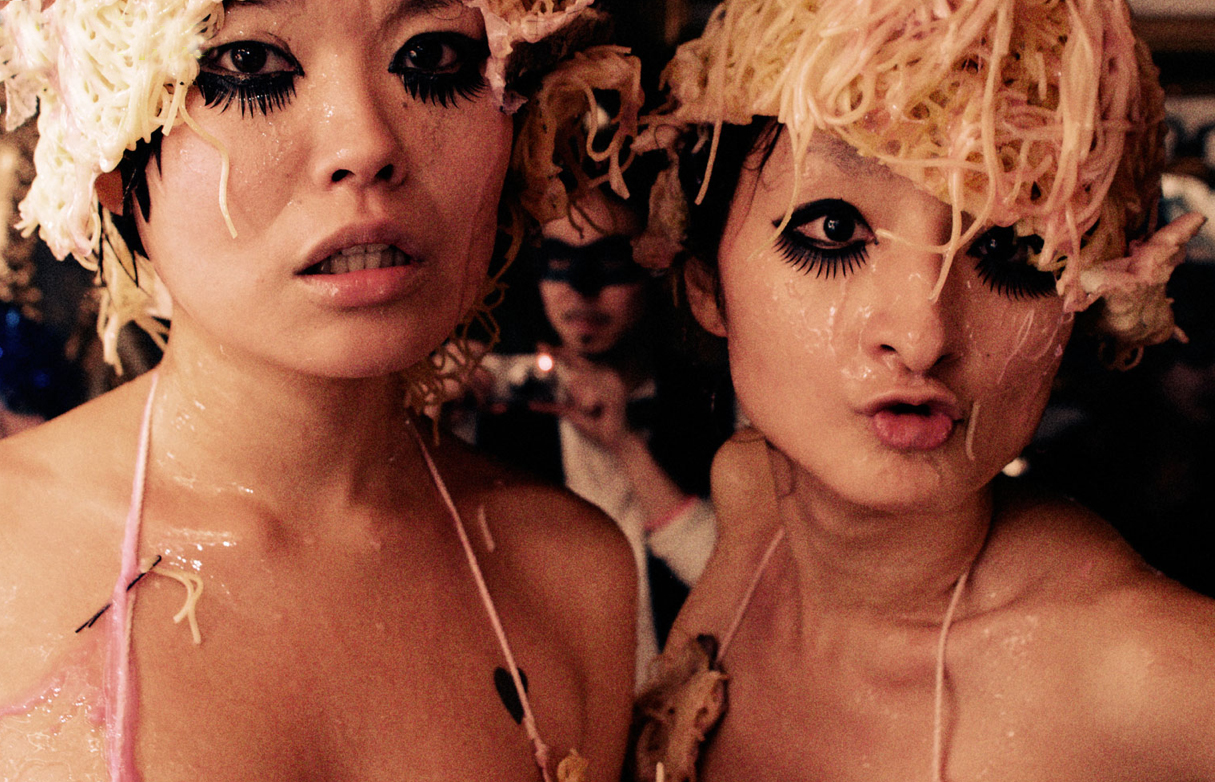
Japan electro-pop sensation Trippple Nippple will perform
Tokyo – Art Gig 2 – with the theme Mummy, I'm Scarrred, by curator Shai Ohayon: "The ghosts themed art happening will be presented at an abandoned hospital in Hatsudai, Shibuya ward, Tokyo. The hospital, which has been abandoned now for a few years, is still intact with the original furniture, equipment and fixtures and is usually let to film crews to shoot on location. We are intending to use the basement of the hospital which consists of a large furnished room in the center of the basement for performances, while the interconnected rundown rooms and corridors will be used as exhibition spaces. We intend for the exhibition rooms and the corridors to be left pitch-black and visitors will be instructed to bring torches (flashlights) to negotiate through the space. The venue is truly creepy and surreal. We aim to present some 15 local and international artists along with music and performance art pieces and transform the entire venue into an improvised art gallery. Artworks will include pieces of many disciplines and site-specific installations, using the walls, the hospital beds, old equipment, decaying tatami rooms, old kitchen and morgue. Artists are asked to present works that reflect their practice and that deals directly with their notion or understanding of the theme. Attendance to the event is free-of-charge to the public and visitors will be encouraged to explore the space, engage with the artworks and to enjoy the array of performances that will be featured as part of the event. As we did in the last event, we will have at the end of the night also a raffle with gifts from a variety of art and culture related organisations and businesses. In addition, with the proximity of the event to Halloween we will also host a costume competition in collaboration with Impossible Project." On view this Sunday, October 30. www.artgigtokyo.com
American Gangbang
american_gangbang_sam_benjamin
After attending Brown University, life led Sam Benjamin to Santa Cruz, California, where he first conceived of his pornographic destiny. He would create “feel-good” erotic films - adult movies that actually had some sort of plot - and sell them on eBay, garnering a modest fame for his efforts, revolutionizing a dying genre, and making a small killing in the process. Benjamin worked in porn for three years – became rich – spent a summer living inside a porn mansion in Malibu – found porno love – broke his heart – aged – burnt out – quit the biz – escaped to Southeast Asia – fasted – got boils all over his body – cleared his head – atoned for his sins – returned home – applied to graduate school. Now Benjamin has written and just published a memoir on the Simon & Schuster imprint Gallery Books, about his life in the porn business entitled American Gangbang: A Love Story. "In whip-smart, lyrical prose, Benjamin traces his three-year immersion into the world of Hollywood's bleak, screen glow–lit doppelganger: the southern California sex industry. His rapid ascent from the dingy storefront rental of a starving artist to the multimillion-dollar Malibu villa of a full-fledged porn producer confronts him with the uncomfortably alluring realities of America's strangest industry: gun-toting actors, high on terrible, drug-induced potency; giggling actresses battling internal demons in wobbly heels and pink fishnets; the insatiable consumer demands to sink ever lower, more exploitative, nastier. The result is the titillating, dramatic chronicle of a young man who invites the deepest, most troubling parts of himself to rise to the surface in order to get a good look at them—only to find that what he sees makes his world seem suddenly very small."
Raki BCN
Raquel Fernandez, a.k.a. Raki BCN, a Bacelona born designer, now based in Berlin, presents the label's Spring/Summer 2012 collection with a stop motion fashion film directed by June-Louis. See film after the jump.
MURDER AND MANSLAUGHTER: AN EXHIBITION ABOUT LIFE
MURDER_AND_MANSLAUGHTER_AN_EXHIBITION_ABOUT_LIFE
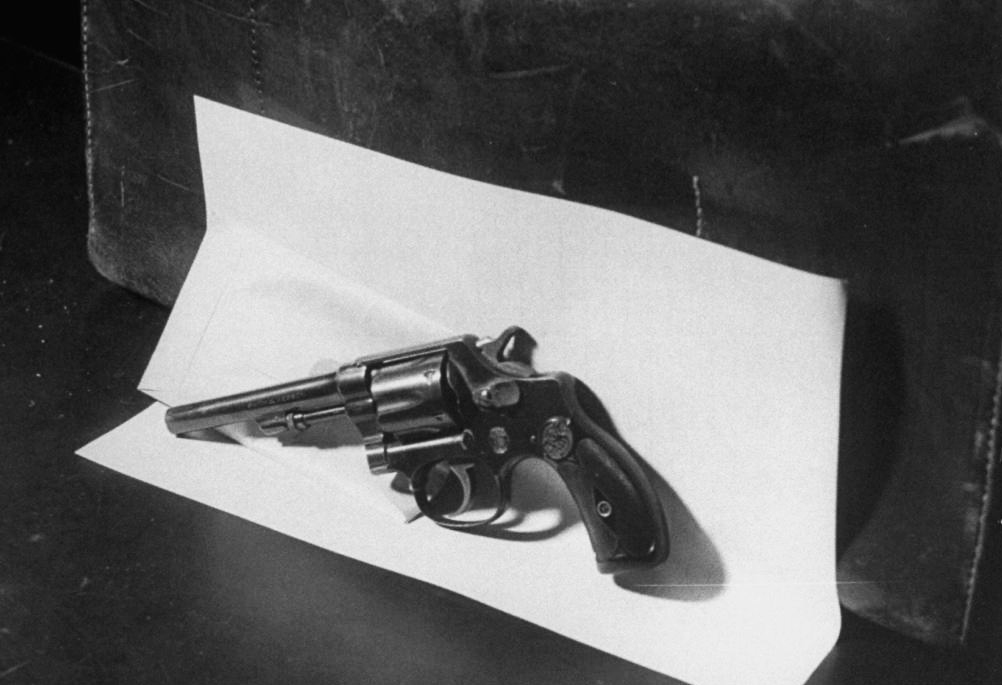
The commandment “Thou shalt not kill” is a value deeply rooted in our culture. And yet murder and manslaughter are committed every day, everywhere in the world. Whether in the media, in films or in literature, we are continually confronted with descriptions of capital crimes, real or invented, which bring us face to face with taboo or extreme areas of human behavior. On the one hand, these stories satisfy a widespread morbid curiosity and craving for sensation. On the other, they encourage discussion within society about how to deal with murderers and other killers, and about the causes of the crime. On view now at the Historisches Museum Bern, an exhibition entitled Murder and Manslaughter. An Exhibition About Life– 15 separate display areas, you can learn more about the subject of murder and manslaughter: the topics range from the question of the value of human life via murderous gods, war, terrorism, killing sprees, and spectacular murders and murderers, to detection and the problems of punishment and prevention. Exhibits from the Historisches Museum Bern and from the collections of a number of very different institutions at home and abroad have been combined with photographs, excerpts from documentary and feature films, texts, audios, sounds and music, to encourage reflection. The exhibition “Murder and Manslaughter” illuminates the phenomenon of violent crime in its different dimensions, in history and today. The subtitle: “An Exhibition about Life” sets the tone: “Murder and Manslaughter” is life-affirming. In the face of testimony from the past and the present, you will become more aware of the value of life.
Stand & Deliver

Stand & Deliver at the Gen Art Fresh Faces fashion show - Los Angeles.
Tobias Zielony: Manitoba
Tobias_Zielony_Manitoba_2
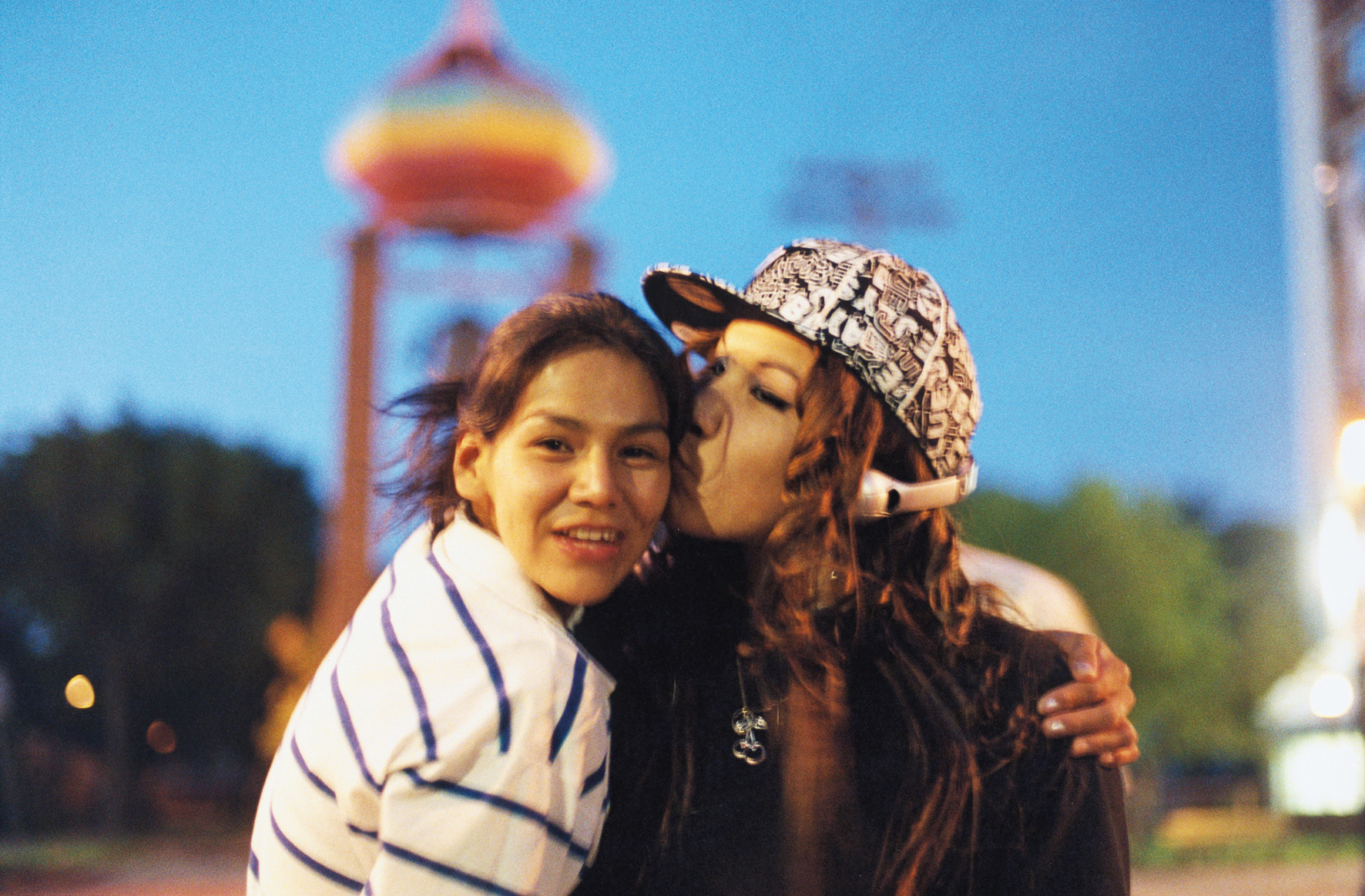
On view at the MMK ZOLLAMT – Tobias Zielony's “Manitoba” is a series of works capturing the lives of teenage gang members of Native American origin in their urban surroundings in Winnipeg, the provincial capital of the Canadian state of Manitoba. In the tradition of the classical photojournalistic feature, Zielony makes use here of various pictorial genres, presenting individual portraits and group photos in which the gang members pose, as well as views of the architecture and landscape in Winnipeg and on a reservation. Apart from his subjects’ globalized dress codes and gestures, what interests the artist most are the specific regional histories of the Native Americans in their socio-economic context. Likewise to be shown at the MMK Zollamt, the film The Deboard (2008) is dedicated to the story of a gang member’s withdrawal from his gang. The term “deboard” refers to the exit ritual a person must subject himself to before he can begin a new life as a free man. In his film, Zielony impressively combines coarse-grained black-and-white scenes of the ex-convict’s environment with the subject’s own account of his withdrawal from the gang.The exhibition will be accompanied by a catalogue documenting the artist’s working process. Tobias Zielony: Manitoba will be on view at the MMK Zollamt from November 12 to January 15.
Cecil Beaton: The New York Years

From the 1920s through the ‘60s, Manhattan’s artistic and social circles embraced British-born photographer and designer Cecil Beaton (1904-80). Opening today, Cecil Beaton: The New York Yearsbrings together extraordinary photographs, drawings, and costumes by Beaton to chronicle his impact on the city’s cultural life. Beaton’s relentless energy and curiosity spurred him to pursue new fields, from fashion and portrait photography to costume and scenic design for Broadway, ballet, and opera, and to put his own aesthetic stamp on each of these endeavors. Cecil Beaton: The New York Years is on view at the Museum of the City of New York until February 20, 2012.
Glenn Ligon: AMERICA
glenn_ligon_america