
Interview by Summer Bowie
Photography by Damien Maloney
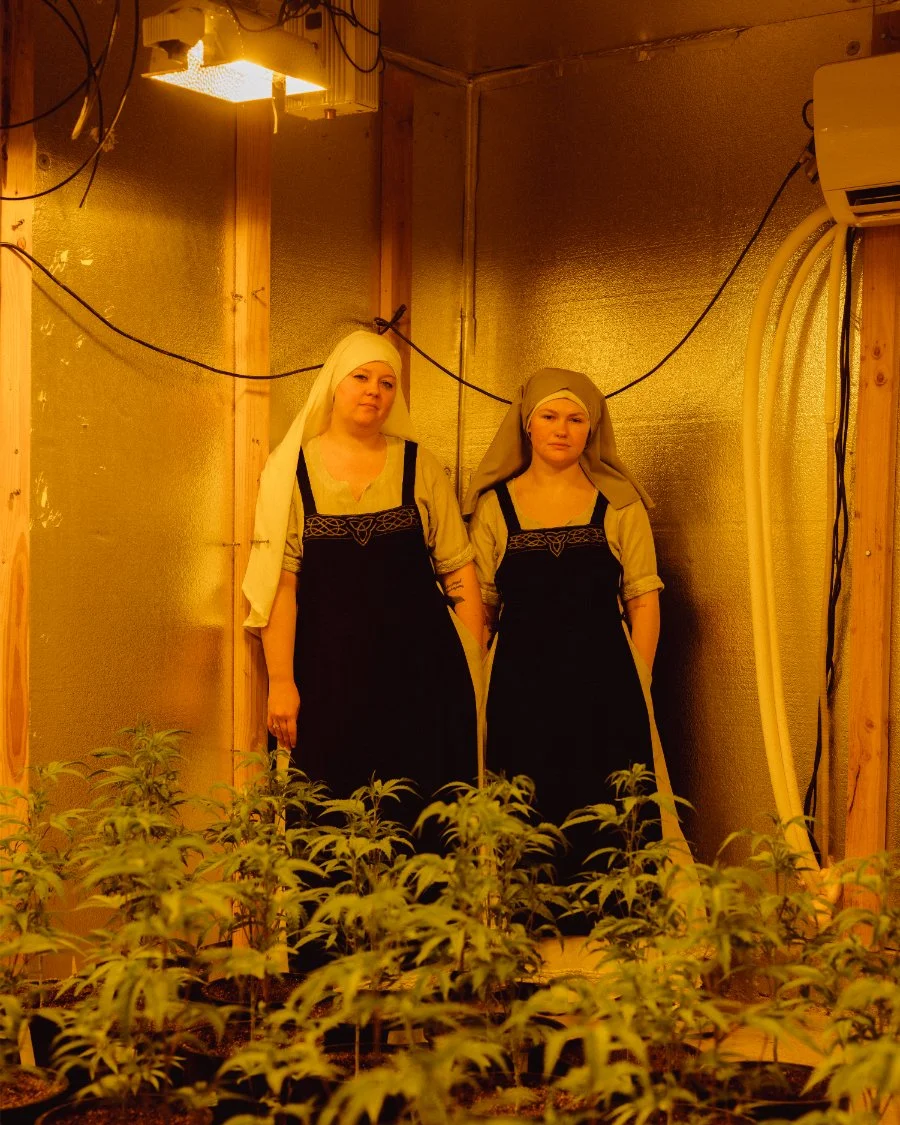
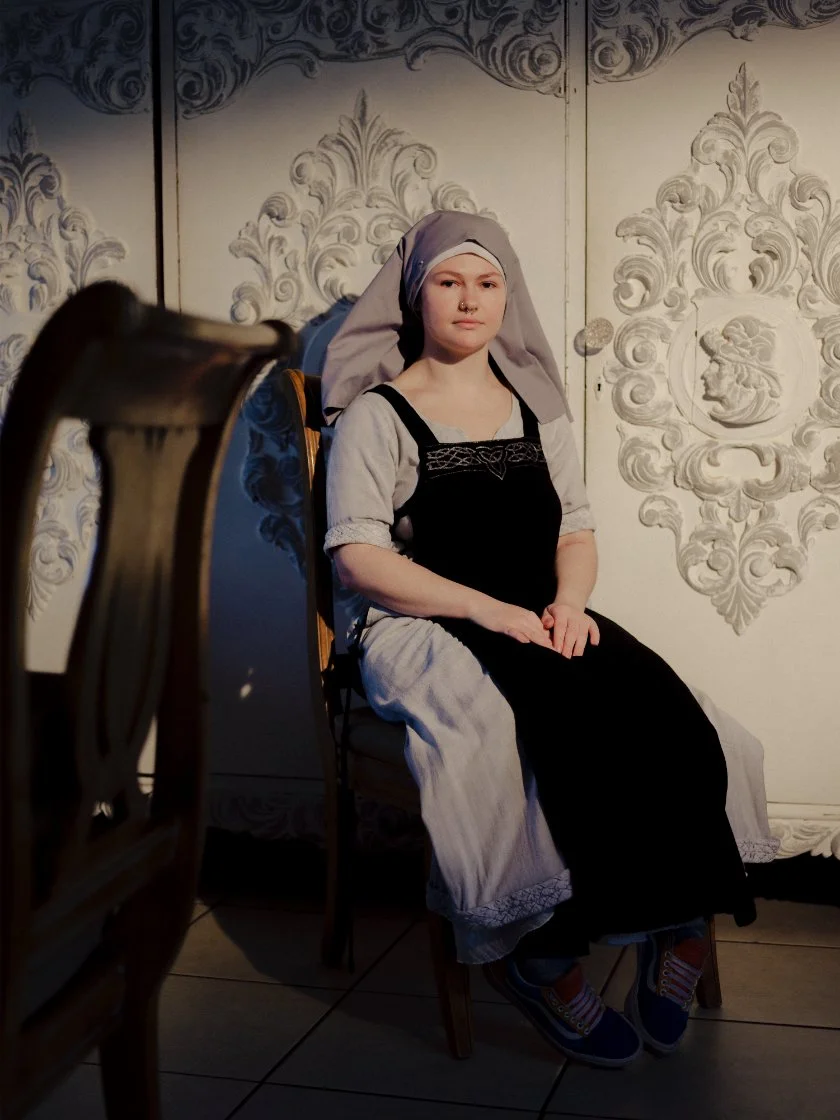
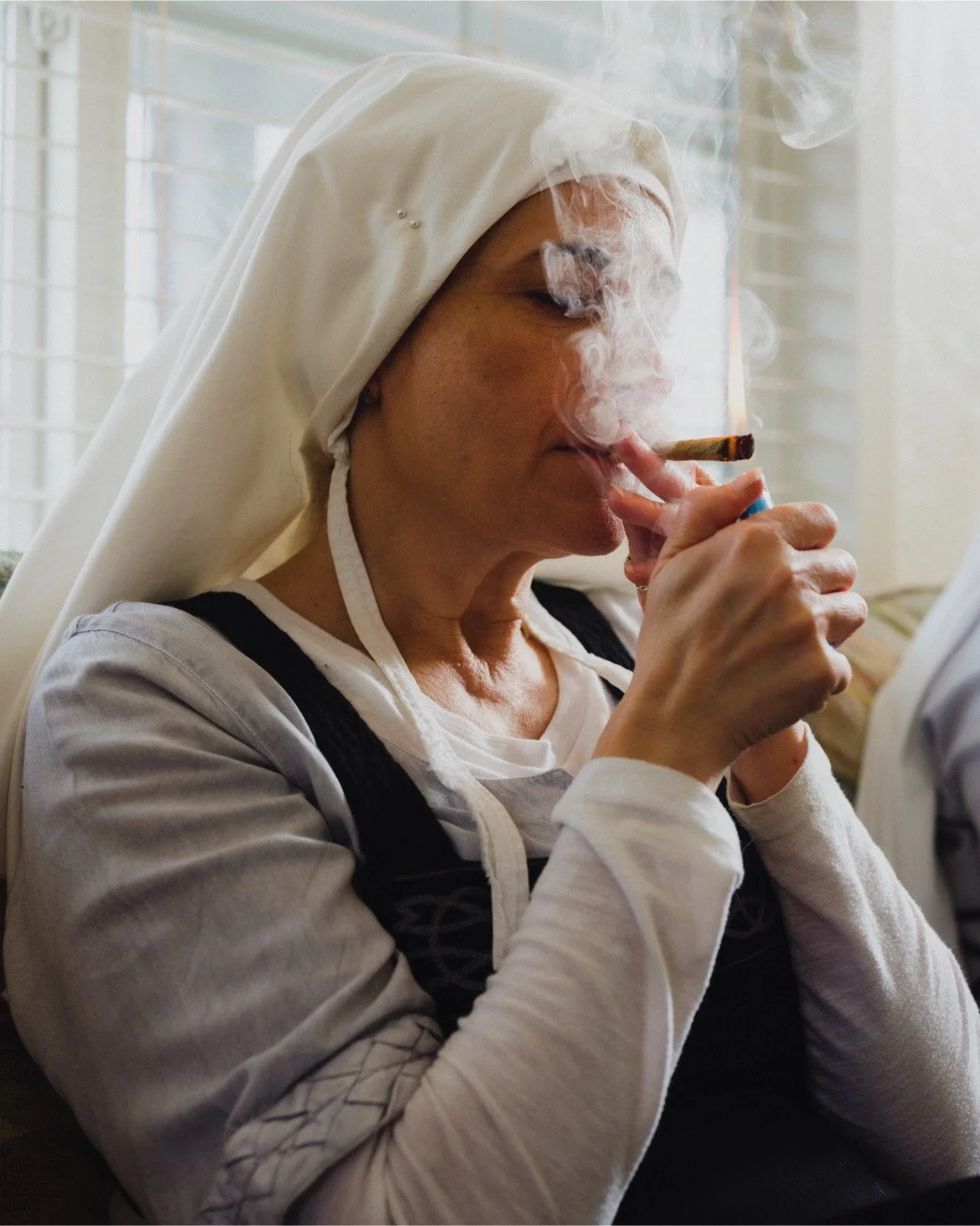
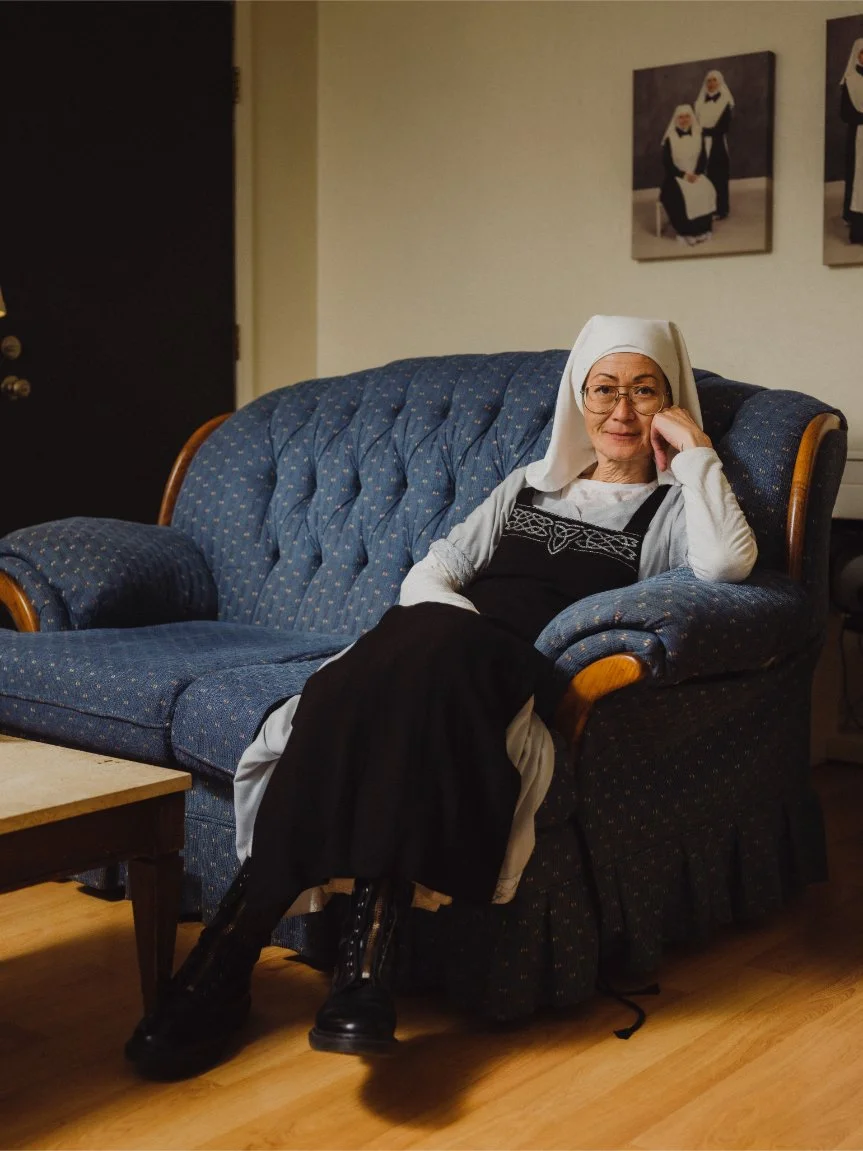
Located in the impoverished, but agriculturally rich Central Valley, Sisters of the Valley is a nondenominational sisterhood whose mission is to bring the healing powers of plant-based medicines to the world. During the Harvest Moon of 2014, Sister Kate, originally a Reaganite Republican who transformed into a liberal anarchist, activist nun after discovering the medicinal powers of weed, developed their first line of cannabidiol teas and tinctures. Inspired by the Beguines of medieval Europe who formed semi-monastic communities but did not take formal religious vows, the Sisters of the Valley abide by their own spiritual order, which includes wearing the traditional habit worn by nuns, praying together, and respecting Mother Nature. Their products, which are all made according to the moon cycle, are shipped globally to anyone seeking to heal their suffering.
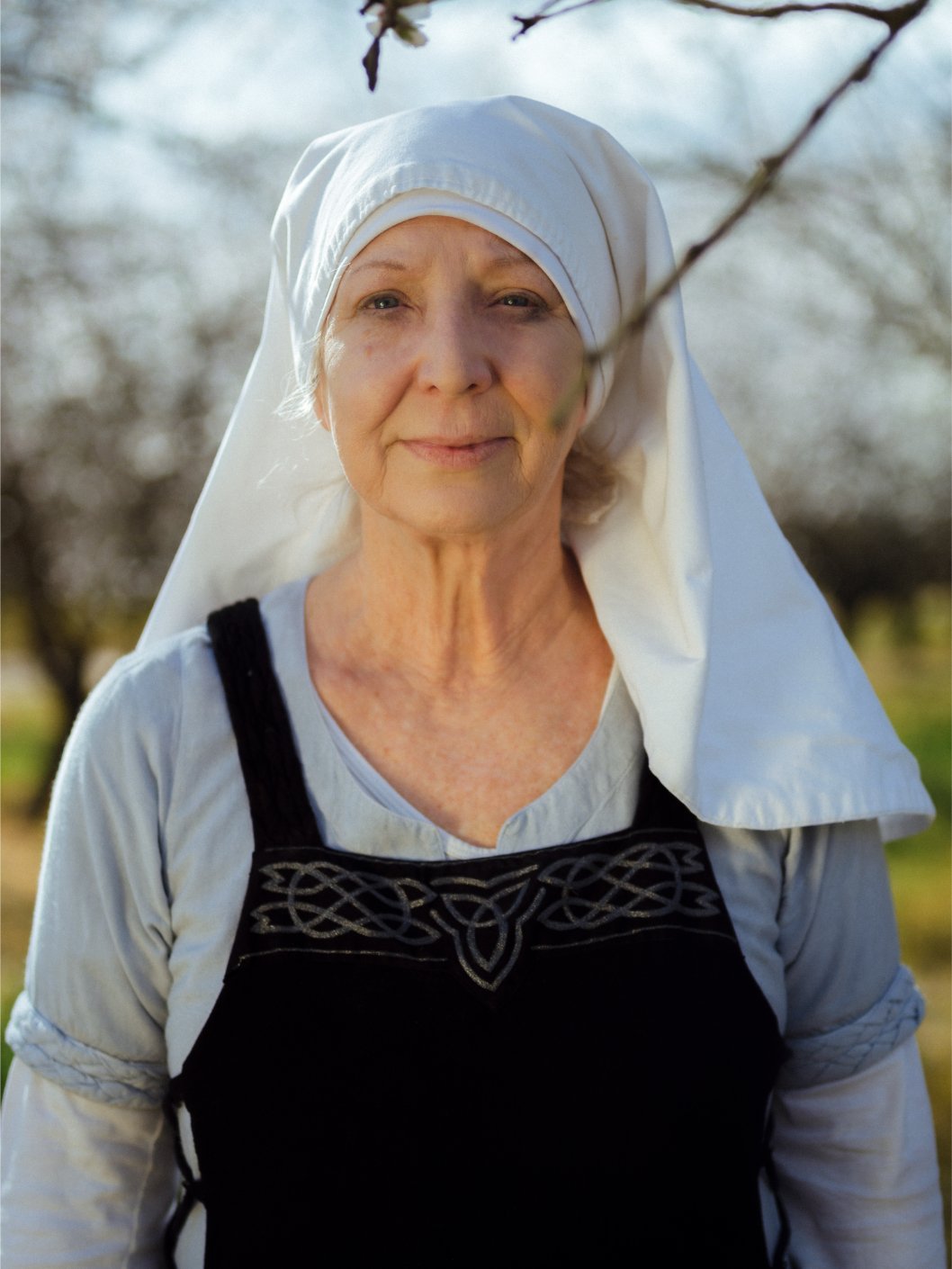
SUMMER BOWIE: So, how does a Reagan-voting, suburban mom become a gun-toting weed nun in the Central Valley?
SISTER KATE: (Laughs) Well, I would say a long journey of being shit on. That would be my short answer. The longer answer is that it was a journey of realization that I was living in a bubble, that my attitudes toward the poor were formed by propaganda, that there is no safety net, and that even good, hard working people end up with nothing by a turn of the circumstances in our society, which offers them no help.
BOWIE: Your life story thus far really has attested to the fact that you can work hard to build a nest egg for yourself and it can all be taken away from you without any legal recourse.
KATE: Exactly, and no help from the system. There are some ridiculous rules that stack the deck against you. We live in a very transient society now, and the rules in the courts for custody don't consider that. There's no safety net for those like us who have moved around a lot. And also, my journey of living in the Netherlands where, yes, they pay very high income tax, but they don't pay for a hospital bill. In fact, the hospital gives them bus fare if they need it on the way out. They don't pay for their children's education. They don't pay for care in their old age. Over there, capitalism and socialism live side-by-side in a very happy way like we do with our Postal Service and our transport services. They also don't have the same pushback from a corporate oligarchy that has to gain from us not having these things. So yeah, it was all of that that made me go, "Oh my god, I voted for Ronald Reagan. I was part of the problem.”
BOWIE: Right. We can clearly see the way that trickle down economics got us to where we are now. I'm curious about your first experience with cannabis. What was that like and how old were you?
KATE: I was very afraid of it. My first marriage lasted less time than the Iran Contra affair, but he was a weed smoker, and I remember visiting him in his apartment for the first time in Chicago. I got there before he got home and his roommate was rolling weed at the kitchen table, so I locked myself in the bedroom because I was pretty sure he was gonna rape me after he smoked that joint. That's how stupid I was. I had also bought into the alcohol culture in those days. I bought into a lot of the things that were fed to me. Three or four years later, while I was working in the corporate world, I experienced smoking weed in a new setting and realized that this was much better for me than alcohol. It was always a recreational thing to me then. But then, when I went through menopause, I was living in the Netherlands having hot flashes, and I was an emotional, crazy woman. So, I go to see my doctor and he says, "Have you ever smoked weed?" And I said, "Yes." And he goes, "Well, you're not smoking enough," (laughs) "You need to smoke a whole joint before you go to bed and lay off the alcohol and caffeine." And then, my symptoms went away. I don't know if that would work for everybody, but for me it worked. So, at the age of like forty-five, I started to really have renewed interest and respect for the plant.
BOWIE: Do you consider the farm a utopia in some way? And how do you feel about utopian thinking?
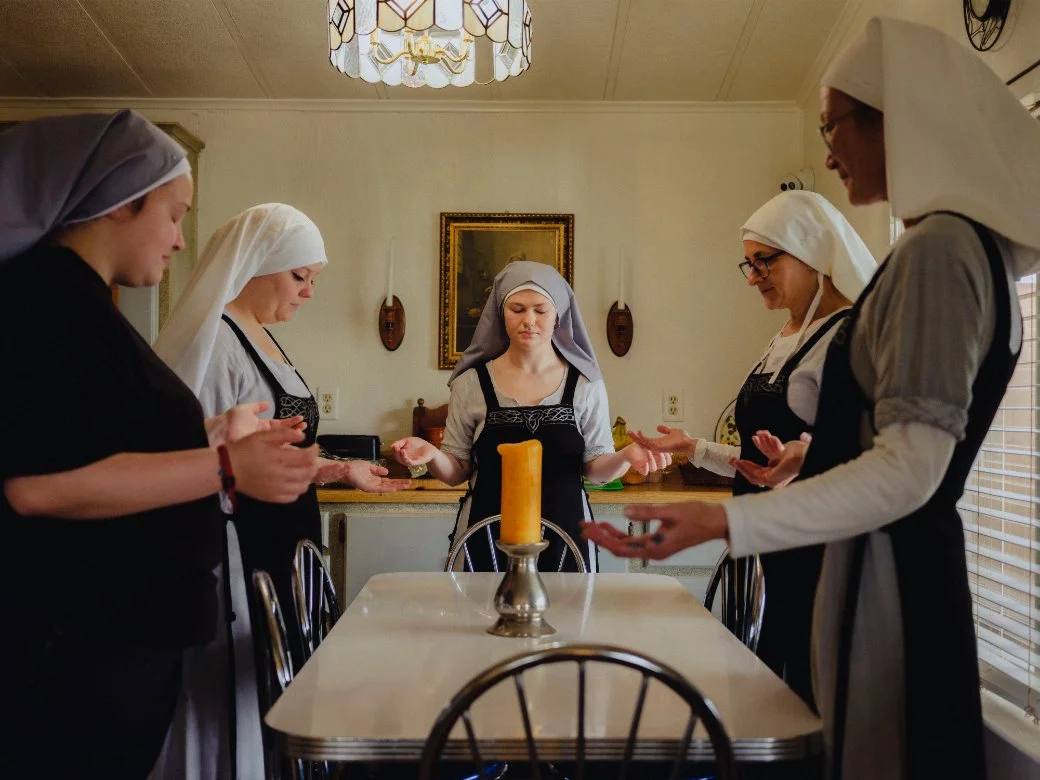
KATE: Well, some moments it's a utopia and sometimes it's hell (laughs). It's like everything else in life. I'm a very practical person, so I consider utopian thinking to be kind of insane. What I'm aiming for is a monastic style of life without the dogma: the quiet, the contemplation, the meditation, the people living by a code of some sort, together in harmony without there having to be a scary god or a religious bent to anything that we do. Though, we do follow the cycles of the moon. And we make our medicines in a spiritual environment. But, we don't try to export our dogma or our religion. We don't care if people know or understand that side of us. It's for our own healing. So in many ways, I feel like I have achieved something close to a utopia on Earth, which would be a compromised utopia. But, I feel like it's succeeded because we have achieved so much harmony. And we have done that through a persistent, diligent effort in following the rules that we set up.
BOWIE: What do those rules entail?
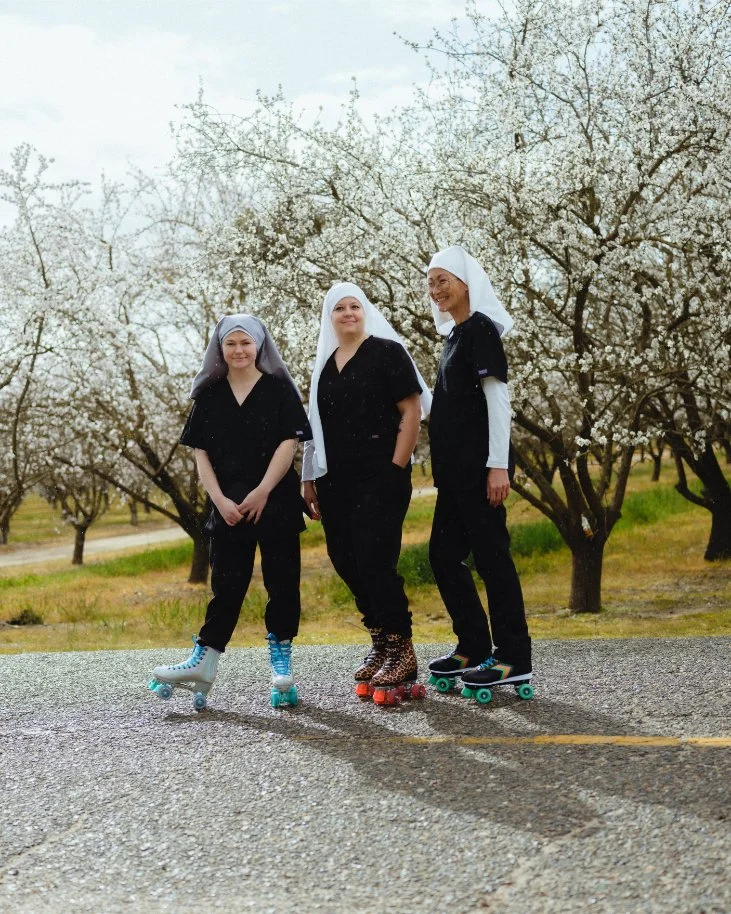
KATE: Well, you're allowed to have a difference of opinion. Sometimes people trigger people without even knowing it. Those things are allowed to happen, but you have to mend it. We have a 3-to-5-day rule. Like if it was really bad, they get five days, but they have to talk about it and resolve it. We also have a no surprise rule. You're not allowed to keep secrets or things that are gonna surprise us. I'm talking about secrets that are gonna impact everybody. Like, you've been planning to leave for three months and you decide to tell us the day before. We like to plan our lives. We don't like to be rushed. You see something, you know something, you report something. If there's a burst pipe flooding out back, you don't walk past it without telling anybody. You'd be surprised how many people live in their own worlds and don't understand that when you live in a community, you have an obligation to keep your eyes and ears open for the enclave.
BOWIE: Can you talk a little bit about your Beguine ancestors—who they were and why they're so important to the Sisters of the Valley?
KATE: The Beguines are timeless, and I even know some Catholic nuns who agree with me on this. There is no point in time that they began. But, we know from historical evidence that the Beguines operated probably as early as the 600s. They were women who lived together, worked together, prayed together on farms, and identified their enclave by their clothing. They served the castle in the town with medicine, soaps, textiles, and they were known for their excellence. If you look them up today, though, you are only going to find information from the 1300s forward. The Catholic Beguines. You have to really dig to find out about the pre-Catholic Beguines because they originally were not Catholic. They didn't affiliate with any religion, but those that survived had to turn Catholic at the point of the sword of the Inquisition. They were religious scholars who studied all religions. They would not affiliate themselves with any one religion and they could make or break a priest or pastor in town because they were so well respected. So, we are set out to emulate them. We want it to be known that we do it in a spiritual environment and we wear a uniform to identify our enclave, but we don't export any dogma, and neither did they. They farmed, they provided medicine, they were spiritual, but they didn't have a message to preach to the people.
BOWIE: And you grew up in the Catholic religion. What was that experience like?
KATE: It was good. I was born in 1959, so it was in the mid '60s and there were six of us kids. My parents were part of the home and school, and very active with the church. They were both scout leaders. So, it was normal for us to be very involved; to be sent on errands to the convent or to the rectory. It was normal that we'd be called on when the teachers or the nuns needed help for something. It was very interesting to me, very enriching. I loved the nuns. I loved how one could be sick and another one would just take her place, and no one missed a beat. I loved how they stood for excellence and they stood for their work. There were some I was scared of, but I just had a good experience. We had thirty blind kids in our school and one of the sisters translated all their books to braille. Their mission was to get the blind kids studying with the sighted kids. And so, I grew up with that as well.
BOWIE: I'm curious about your vow of chastity. I understand that it's not forbidden to have intimate relationships, but that they're privatized. Can you talk about the importance of that?
KATE: We live in a world where sexuality is just squandered all over the place, in my opinion. The energy of healing and the energy of seduction are opposite energies. We're in a meditation to be in touch with our mothers, to make them proud of us, to have them guide us through this process of making medicine by the cycles of the moon—the same way they did. Most of the elders sisters here are celibate and are devoted completely just like if we were Catholic nuns. But there's no requirement on anybody because we think intimacy is important and a very healing part of life. We would never want to deny our sisters the ability to participate in something that can be quite nourishing and healing to the soul. But, the relationships and the sexual activities are kept far away from the enclave and the brand. So, as I say to the cats when I hear them screwing, "If Sister Kate isn't getting any, no one gets any."
BOWIE: Many of you in the enclave come from all different parts of the world. How did you find one another?
KATE: People like you (laughs). If it wasn't for the media, we probably wouldn't have found each other. If you ask Maria she'll say she saw a Facebook post and then Sophia will say that she saw a news report. And then, they reached out to me, which started a long, organic dialogue, and multiple trips to the farm where we made medicine together. We're so small and we've grown so slowly because we're not gonna do a nun-in-a-kit thing, which people have so disgustingly suggested. We have to get to know them and then we have to figure out how they're gonna start commerce in their part of the world.
BOWIE: The politics around legalized cannabis in California is pretty tricky because each county has its own rules. Where are the sisters in this fight?
KATE: We've always ignored the county rules and it's pretty much how we've survived. When we started doing this in 2015, they considered CBD the same as cannabis and it was totally outlawed, but I kept doing it. And then, I was harassed by the police, but I was doing everything by the book. I was paying every cent of tax. Recently our Drug Czar admitted to the Dutch media who were here interviewing him that they've tried every way to shut me down and there's no way. And that's because we're very diligent. We don't care what the county says, but we care very much about paying our state tax, our payroll tax, and having a bookkeeping team. We have everything sewn together and clean so that no one can accuse us of doing any wrongdoing. In the eight years we've been doing this, they went from outlawing it completely to saying, "It's allowed, but only on quarter acres and only in particular cities," to saying, "You have to have twenty acres," to "Okay, you can do it on a quarter acre." I would have whiplash if I tried to keep up with the county. They quit hassling us five years ago and that's where we are.
BOWIE: I've always found it so interesting the way that the federal government raids farms in states where cannabis is legal, but they also collect income taxes.
KATE: Exactly. And I was in a fortunate position because I do keep such a control of the numbers that the last time the sheriff visited, I reminded him and his guy on the way out that we pay enough taxes in a year to pay for both of their salaries. I think that's important because if you're playing in their system, they're gonna find a loophole to shut you down. That's why we don't take cash sales ever. Our poor postman, if he wants a $10 tin of salve, we're like, "Sorry, you have to do a PayPal transaction or something, because we won't take cash." Because we know that's where they'll try to get you.
BOWIE: A lot of cultivators use pesticides and other fertilizing chemicals that aren't very natural. How do you approach things like nitrogen enrichment and pest control?
KATE: As naturally as we can. We order boxes of ladybugs and put other plants that attract pollinators around them. That way we don't have to use any chemicals. In fact, we do regular clean green testing with our lab, which is quite expensive. About a year ago, we determined that we had a bad crop and about 40% of our products failed. It was a real crisis where we had to pull products off the shelf because they all had mercury and lead. So, even though the lab scientists said, "Yeah, but it's not in harmful amounts." We're like, "Yeah, but any mercury and lead is not cool. We don't want it in our products." I've been testing the soil since I moved to this farm and it's never been there before. It might have been from the droughts, but it was in the water. So, we had to put in a system at the well to clean it out, because we want to make sure that we're not doing harm in delivering medicine. That's really the realm of the pharmaceutical companies.
BOWIE: Can you talk about your visit to the Tule Mountain Native American reservation and how their connection to the natural world inspired what you're doing now?
KATE: That was incredibly powerful. I was delivering cannabis to patients in 2014 when I received a special invitation. Once a year, members of tribes from Alaska to Mexico make this pilgrimage to Tule Mountain Reservation. So, I was invited into circles with these elder medicine makers and I was overcome with the fact that they weren't sharing their information. They were gonna die with a lot of medicinal knowledge because they felt there were no young girls walking the Red Road. This is the way they've always worked. So, I told them that I have this Sisterhood, and I work with the medicine, and with your permission, I'd like to take this knowledge with me and walk kind of a Pink Road. They all thought that was hilarious, and that started a conversation that has been going on for twelve years. This year we were honored to be on their route to Alcatraz. So, we fed them on the way there and back, and sent medicine with them to give away. There's nothing official about it, but we're connected.
BOWIE: Can you explain the significance of the Red Road?
KATE: The Red Road is working with Native traditions. I would have to spend a lifetime with them to truly understand it, but it is about honoring and taking care of the women. What we ended up with here in Fresno is a diversity of tribes that came together for survival reasons, because the Trail of Tears ended here. So, Fresno has become a hub for many of the tribes. The Red Road is also about taking care of the land. For example, before they take down a tree, they pray and they need to understand that that tree wants to come down and needs to come down. We only have trees taken down by the Natives because they have a whole spiritual ceremony around it. We have huge respect for that. The Beguines organized and made their medicines by the cycles of the moon, and so did the Native Americans of this land in the year 800. We're trying to honor all of them in what we do.
BOWIE: What is it about cannabis specifically? What are its greatest healing virtues?
KATE: For some people, cannabis can take the anxiety that renders them completely dysfunctional and make them functional again. I don't know if that's called healing. The new science on mushrooms is that they have the power to rewire the circuits in your brain, and mushrooms have the capacity to heal, whereas cannabis is more of a survival tool that helps mitigate symptoms. I can smoke a joint and mitigate my anxiety, but what I'd really like to do is not have that anxiety. I'd really like to have a brain that manages its own anxiety. I'm talking about both functional mushrooms and psilocybin mushrooms. They all contribute to this and you don't need to have a trip. You can either microdose the psilocybin or introduce a combination of six functional mushrooms, like we have in our mushroom coffee.
BOWIE: What are the six varieties of mushroom that you use in your coffee?
KATE: Yes, we use cordyceps, chaga, lion's mane, turkey tail, shiitake, and reishi. Then, we also add ashwaganda, turmeric, and ginger root, which all add to mood stabilization.
BOWIE: Is there anything you feel is misunderstood about your mission that you would like to correct for the public record?
KATE: Yes. We say we do a million in sales and then the editors in the media turn that into a million in profit. That's insane. We are not magicians. A million in sales means we're lucky if we can preserve $90,000 in profit. And we've been about half that since the pandemic, so we're climbing our way out.
BOWIE: Lastly, Do you have any advice for other women who want to start their own businesses and/or healing communities?
KATE: I would say that women should be bold and know that there's an awful lot of funding available in certain states. There's microloans and other funds that are available to both women and men where you can start a cottage industry on somebody else's money with low interest, and there's more money now for minorities than ever. So, I would recommend that they look for those resources. And there are resource centers available to aspiring business owners. I think the only way to heal the world is to have women owning and running more stuff. So, I highly encourage women to follow their passion and not hide from anything. Most businesses fail from procrastination. The owner gets a notice from the Employee Development Department of California and they don't wanna open it, so they leave it on their desk for two months. My advice to anybody starting a new business is get in touch with your most proactive self. Don't let any problem deter you from facing it head on, so no uglies grow. Put everything in place so you don't have any surprises.