
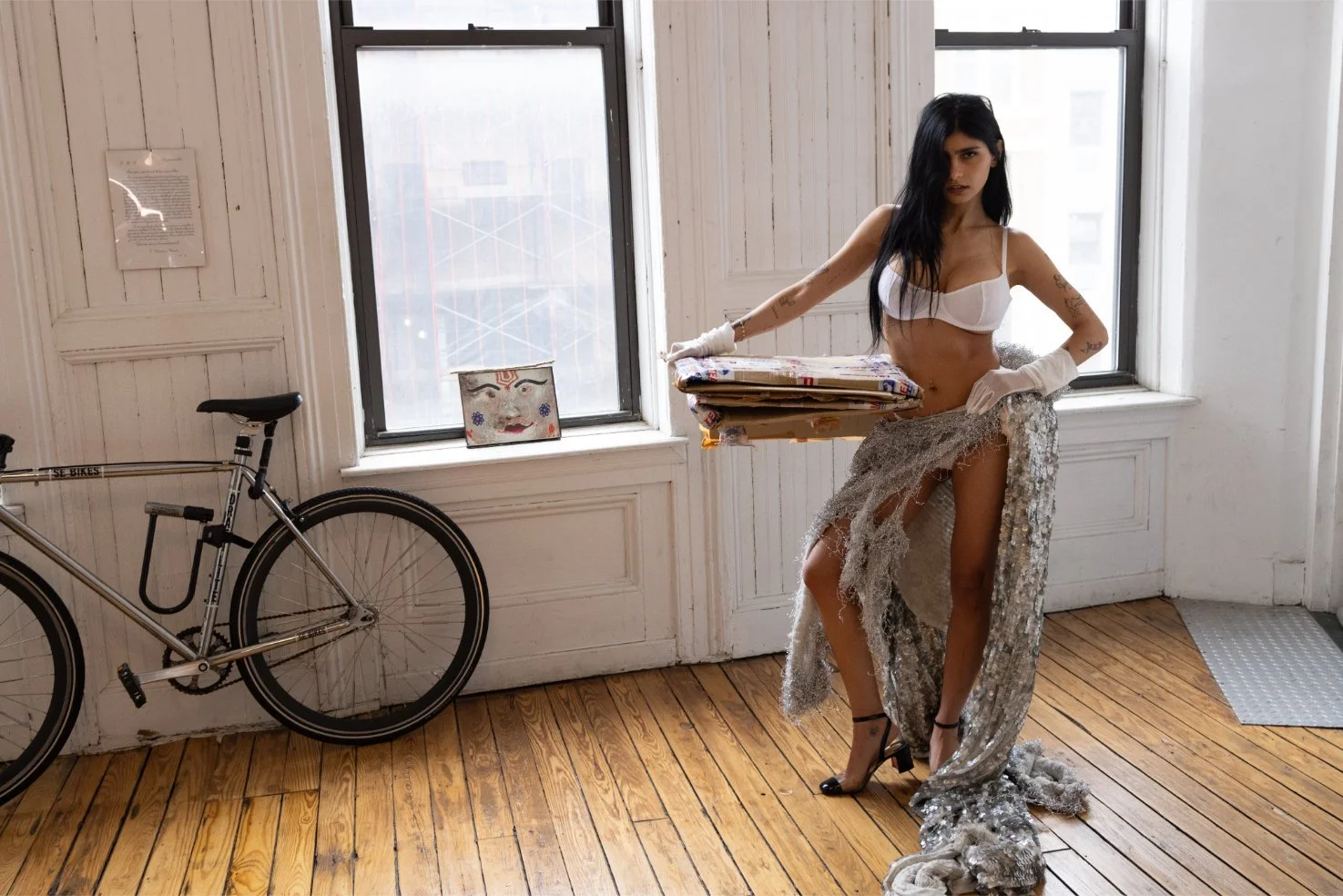
bra COU COU INTIMATES
skirt MISS CLAIRE SULLIVAN
gloves and shoes STYLIST’S OWN
Avatar, muse, model, activist, influencer, crush, object of desire, and subject of relentless fascination, Mia Khalifa, whose real name is Sarah Joe Chamoun, has always navigated the delicate space between the zeitgeist and an inescapable paradox. As an icon of desire, she has become a holographic projection of society’s deepest anxieties surrounding race, power, beauty, and female bodily autonomy. As a figure of fascination, she has channeled her immense social influence to boldly confront human rights abuses, political repression, cultural stereotyping, and the exploitation inherent in the adult entertainment industry. In 2023, Khalifa was invited to speak at the Oxford Union–one of the world’s most esteemed platforms, founded in 1823–where she engaged in a powerful discourse on reclaiming her narrative, shifting the conversation from objectification to empowerment. Born in Beirut in 1993 and raised in a conservative Christian household, Mia Khalifa’s understanding of shame and politicized sexuality is profoundly shaped by her own tumultuous journey. Her perspectives are not just personal–they are forged in the crucible of cultural conflict, navigating the intersection of religious conservatism and the fiercely contested terrain of self-determination and sexual expression. In 2023, alongside Sara Burn, a former Virgil Abloom collaborator, Khalifa started the jewelry label, Sheytan (Arabic word for devil). In the following interview, Khalifa and Burn discuss navigating public and private persona, desire as a multi-faceted force beyond sex, and creative legacy.
Interview by Sara Burn
Photographs by Nick Sethi
SARA BURN: This issue revolves around the subject of "desire." I'm interested in the concept and your thoughts on desire. How would you define desire? Is it primarily physical, emotional, intellectual, or something else entirely?
MIA KHALIFA: I think it's everything. I believe desire is—you can't do anything in life without it. It's a big driving force. It's synonymous with having a drive. But there’s also a desire to accomplish something, reach a milestone, or create something. It's definitely not just a sexual thing.
BURN: Yeah. I agree. Are there any films or music that really capture the essence of desire in a way that resonates with you personally?
KHALIFA: I don't know if it resonates with me personally, but I, Tonya, is very much about desire. So are movies like In the Mood for Love, Brokeback Mountain, and even The Dark Knight Rises. All of those movies portray multifaceted aspects of desire.
BURN: What I love about Ang Lee, Craig Gillespie, David Cronenberg, Gaspar Noe, and Lynch even, is their work often explores the darker, more complex aspects of desire. I guess there's a refusal to sanitize desire in those movies. I wonder if there's a particular scene that you felt really stayed with you because it captures something that's uncomfortably true about the nature of wanting.
KHALIFA: In The Dark Night, there was a scene with two ferries—one carrying civilians and the other transporting prisoners—both are rigged with explosives. Each boat has a detonator that can blow up the other, and the Joker gives them a choice: if one boat destroys the other by midnight, that boat will be spared; otherwise, he will detonate both. It was a moral dilemma. But the tension is just as high in a moment like that as in Brokeback Mountain before everything builds up to where they accomplish what they want. I think the two characters in Brokeback Mountain are interesting because one of them really understands his desire and his own want.
BURN: And the other one has never been faced with it before. It's brand new, which is, I guess that's what makes that so charged and powerful that there's almost an imbalance, but a complete equal to their want, if that makes sense.
KHALIFA: Totally.
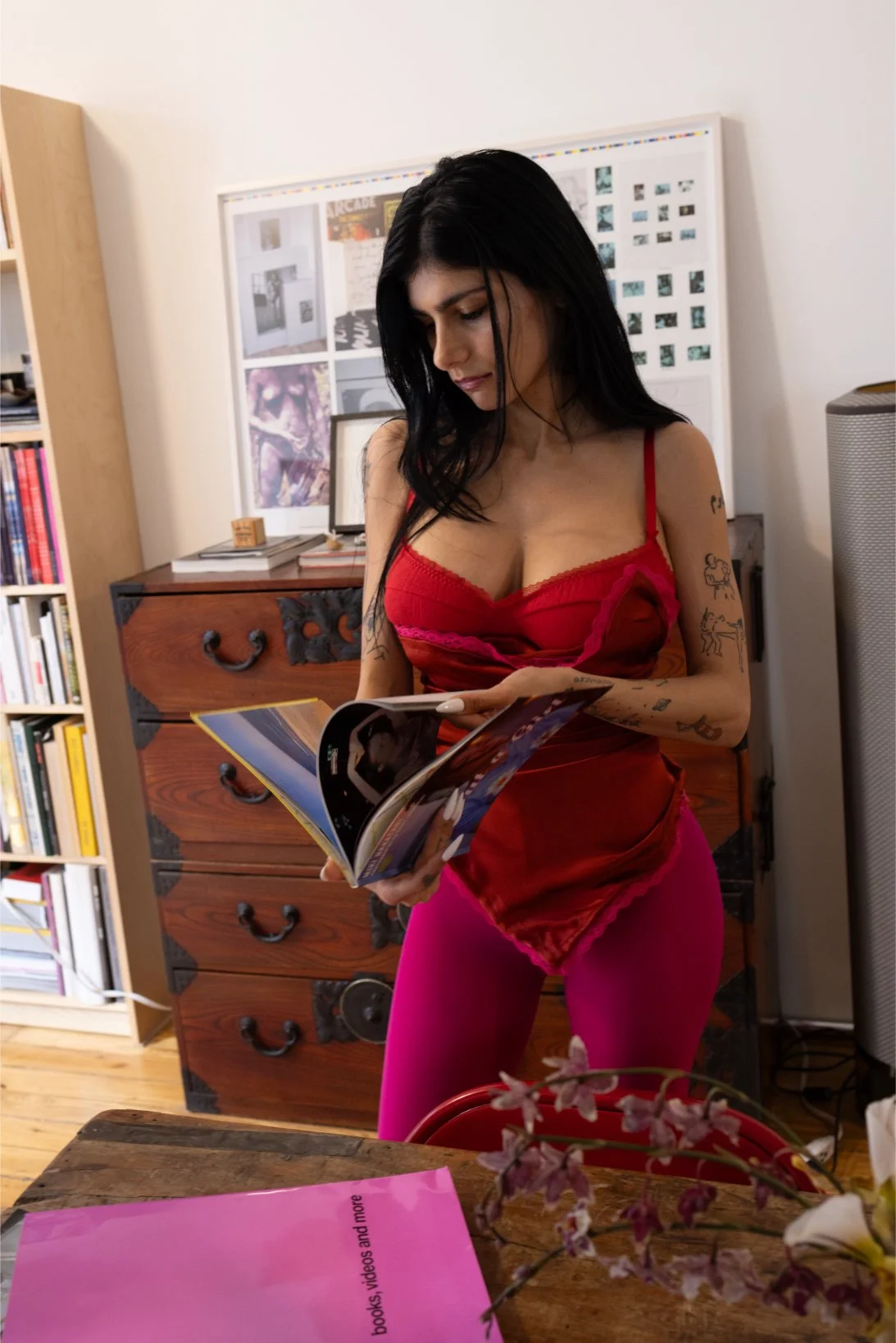
bra COUCOU INTIMATES
wire bustier MISS CLAIRE SULLIVAN
stalkings FALKE
BURN: I like seeing portrayals of desire that aren't pretty or convenient. It doesn't have to be this beautiful scripted thing. In that sense, it doesn't necessarily have to follow the rules. Are there any films or scenes that you find especially powerful in the portrayal of longing or obsession?
KHALIFA: Let's see. Oh, my God, there's so many…
BURN: … It's so hard to be put on the spot because immediately everything swims into one big soup.
KHALIFA: Exactly. What movie doesn't have a dramatic element of obsession? So, at that point, you're just asking me my favorite dramatic scene in a film.
BURN: I know we've discussed this before: the Phantom Thread, the most romantic portrayal of utter devotion.
KHALIFA: Yeah, that and American Psycho. So many come to mind. It's very hard just to pick one because, at the end of the day, that's what everything is about. I don't think there's a good film or good piece of art in history that doesn't reflect a form of desire in a way.
BURN: We recently saw Vanessa Raw's works at the Rubell. I found them really powerful, not only in terms of the scale of the works but also of the subject matter. I don't think I've seen unfiltered female desire portrayed in that way before.
KHALIFA: I mean, there was so much for your eyes to take in. The size of them and the amount of detail that's in them, you really, really get lost. What's happening in the paintings is the last thing you notice. You really feel like you're stepping into a universe. Many of the paintings depict the jungle or wilderness, so it almost feels like you are in some kind of atrium within the museum. It feels like you've stepped into a courtyard, and you're taking in all of nature, and then you realize, Oh, my gosh, these women are unapologetically expressing their desire for each other. It's really, really beautiful. Her art is so layered, and the sensuality is one of the last things you notice.
BURN: Yeah, you're so right.
KHALIFA: I love the way that it was laid out, specifically in that room. There's enough space to feel like a breath of fresh air. It also feels like it's an intimate corner of her mind. There's one piece that wraps around you. She has thought about the subject enough to make a room full of art depicting desire in as many different ways as she can, and that's so beautiful. The desire shines through on every level: the desire to connect with nature, the desire to connect with women, and the desire to connect with yourself. There are women touching themselves in the paintings, even if they're not specifically part of the main scene. It's so amazing. I love her work so much.
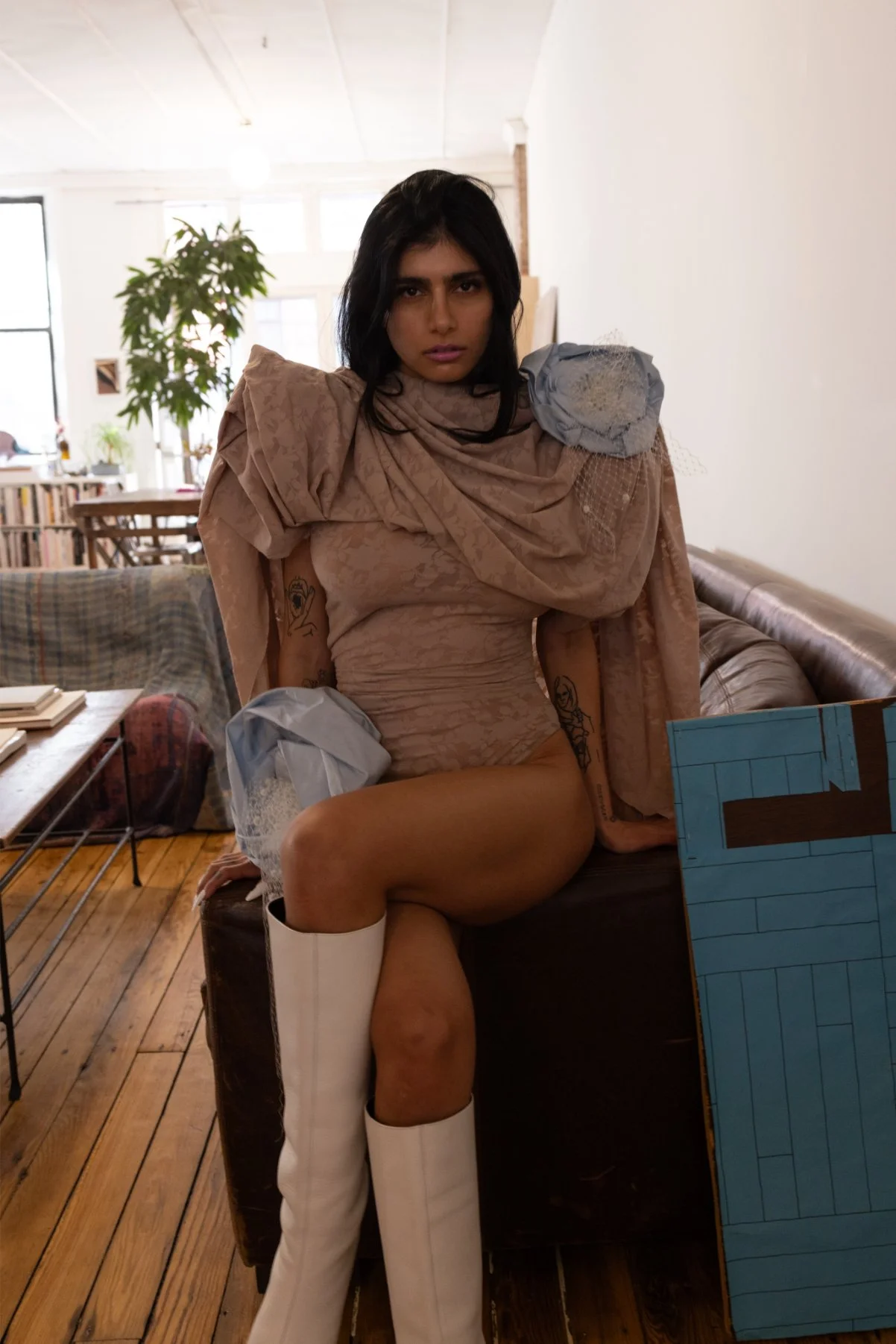
floral bodysuit MISS CLAIRE SULLIVAN
boots BY FAR, COURTESY OF EMCEE STUDIOS
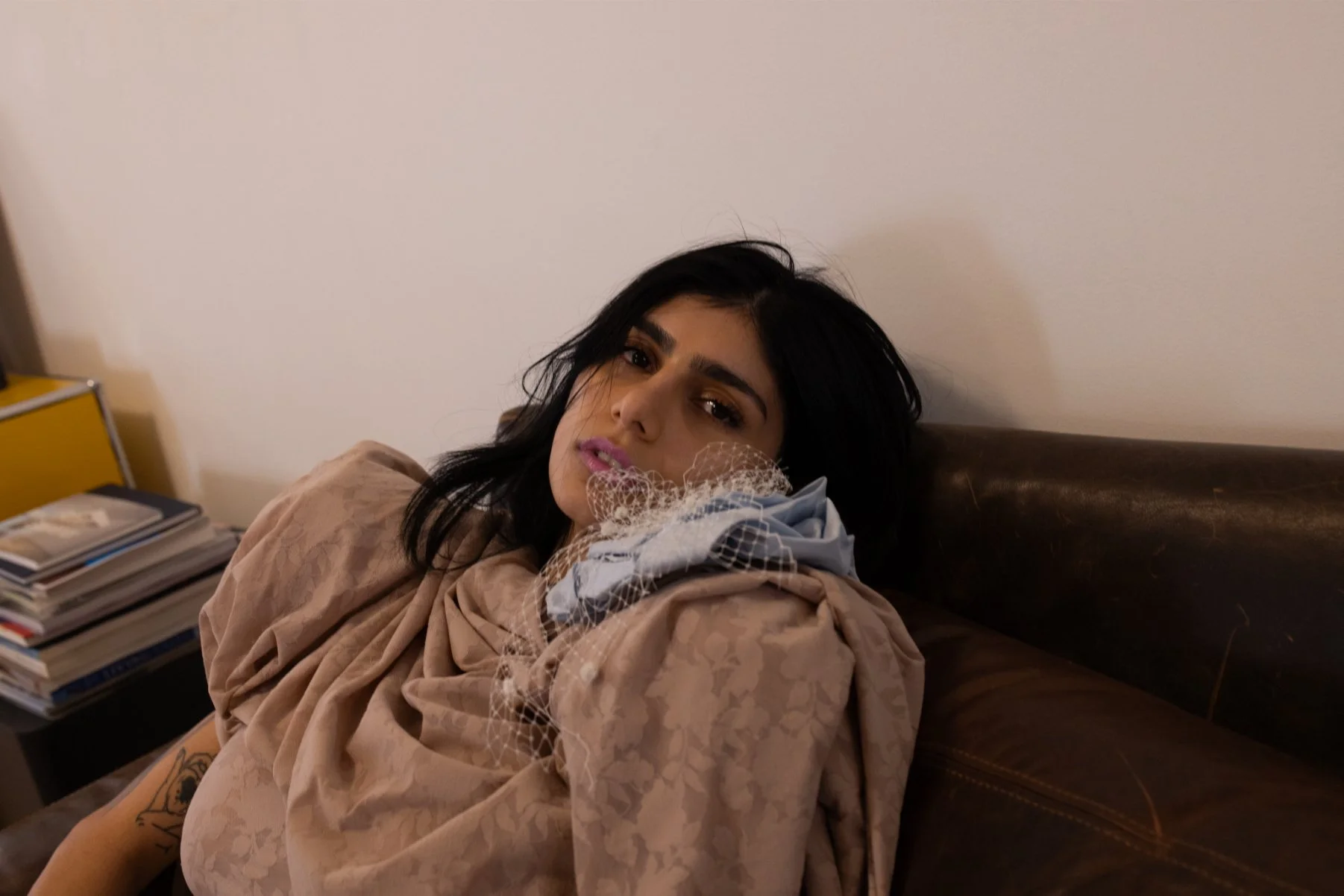
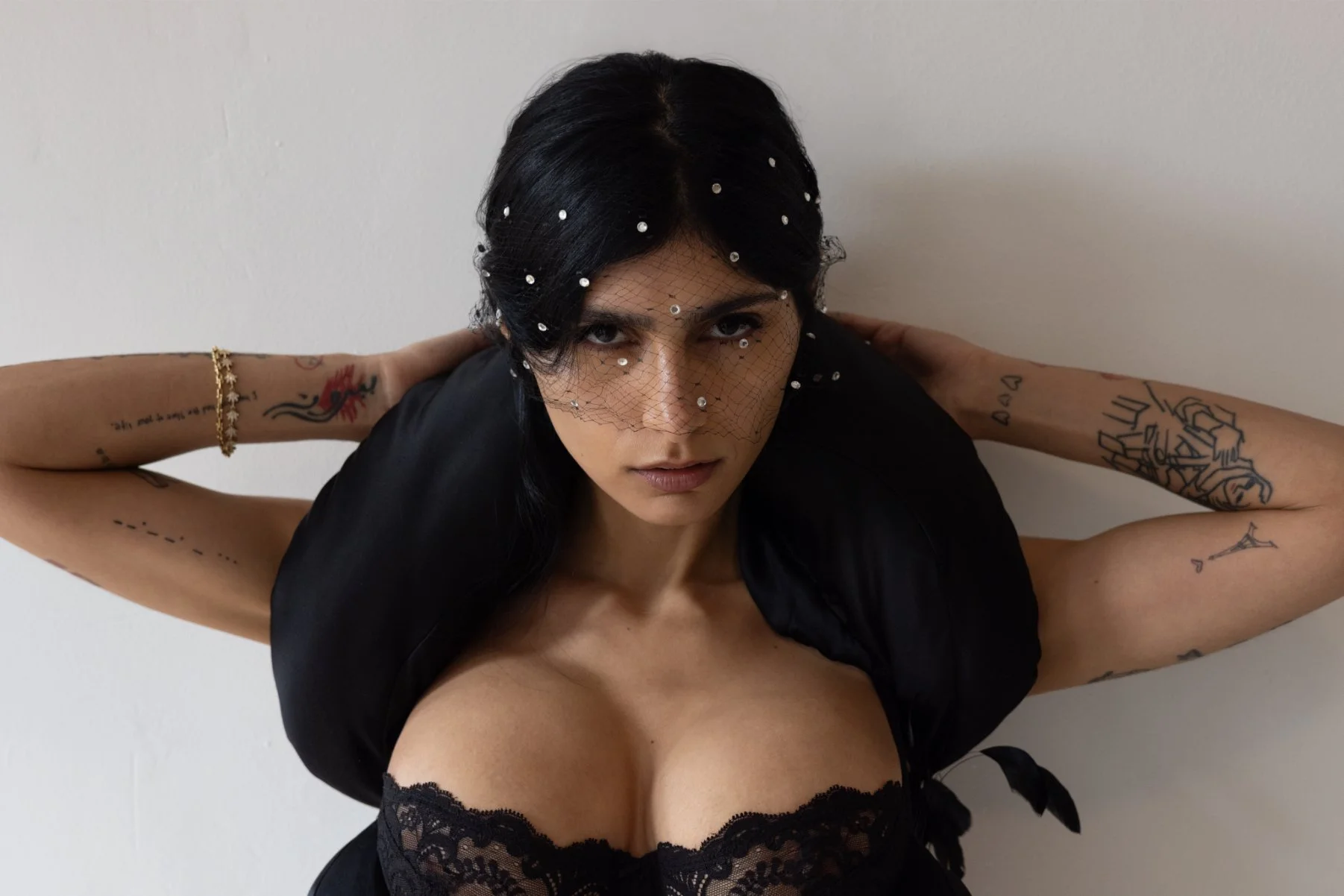
shoulder bustle MISS CLAIRE SULLIVAN
lace bra DEBORAH MARQUIS
feather bra MISS CLAIRE SULLIVAN
veil STYLIST’S OWN
bracelets SHEYTAN
BURN: Do you think there are any aspects of desire that you feel are unrepresented in contemporary culture?
KHALIFA: We talk a lot about how things were better back in the day, but that's something very nice about living in this day and age. I feel like so many different facets of desire are much better represented than before. It grows more and more every day. I love that I don't feel I have anything new to add. I have something to contribute to something that I already feel a part of, which is great to feel that way.
BURN: Yeah, I think it's also that level of acceptance—the nuance of different people's reality of what they find desirable or is publicly accepted. I think that's really refreshing. You don't need to hide anything in brown paper bags any longer. You can put it on the internet.
KHALIFA: Yeah, exactly. And it's totally fine.
BURN: You're quite unusual in that you work predominantly alone without a team, a PR, a publicist, or the typical entourage that surrounds public figures of your caliber. You create the majority of your content yourself. Is this independence a conscious choice to maintain complete control of your narrative?
KHALIFA: Yeah, I think the idea of personal narrative makes it hard to bring anyone else into the process because it’s just that—personal. Your story is yours, your choices are yours, and what you share is entirely up to you. There’s no one saying, “You should do more of this” or “Maybe don’t say that.” Not having a traditional team, to quote David Lynch, gives us a lot of opportunities to go dreamy—which means we end up on a lot of creative sidequests. Spiritually, it’s been incredible. Financially… not so much!
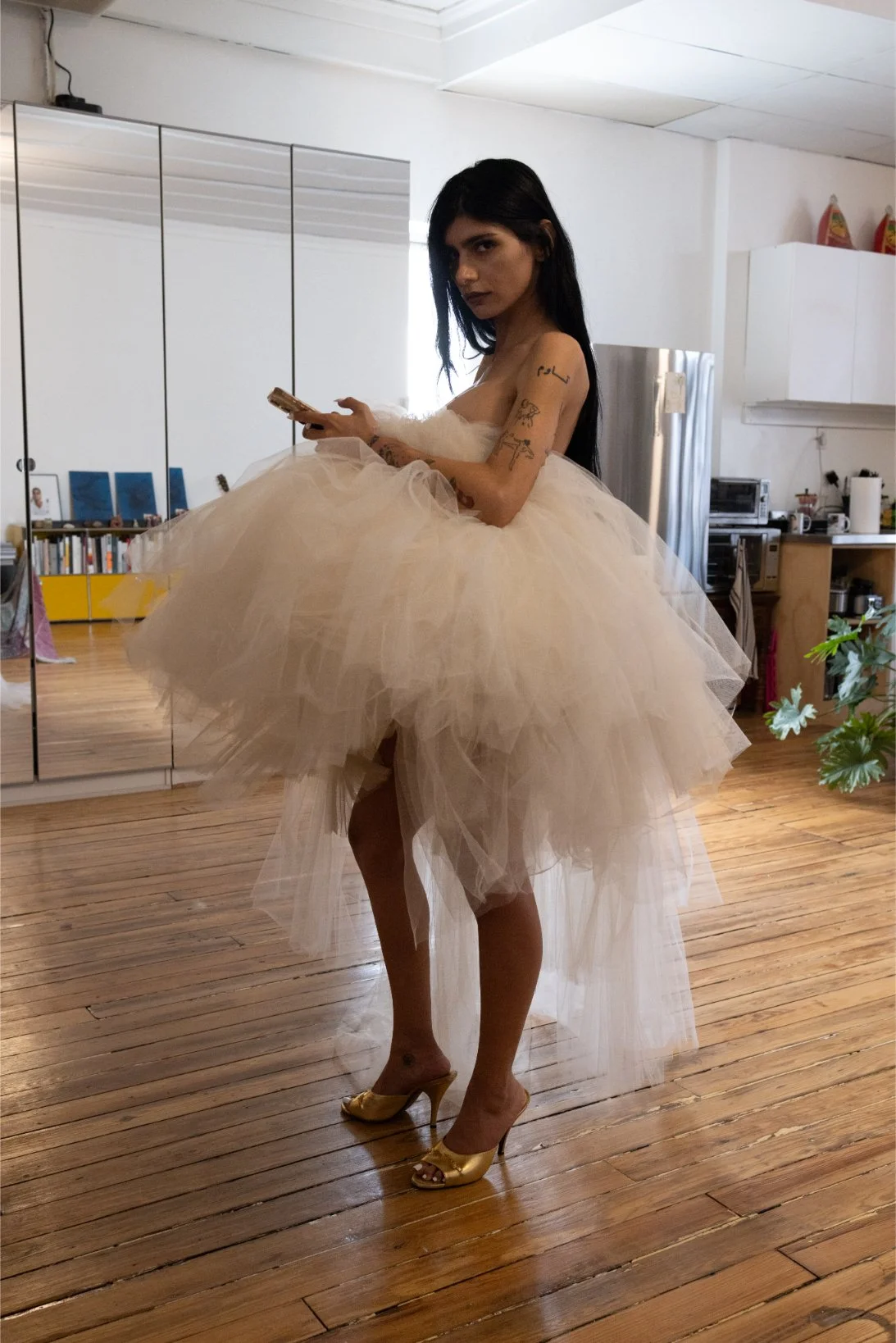
tutu dress MISS CLAIRE SULLIVAN
shoes STYLIST’S OWN
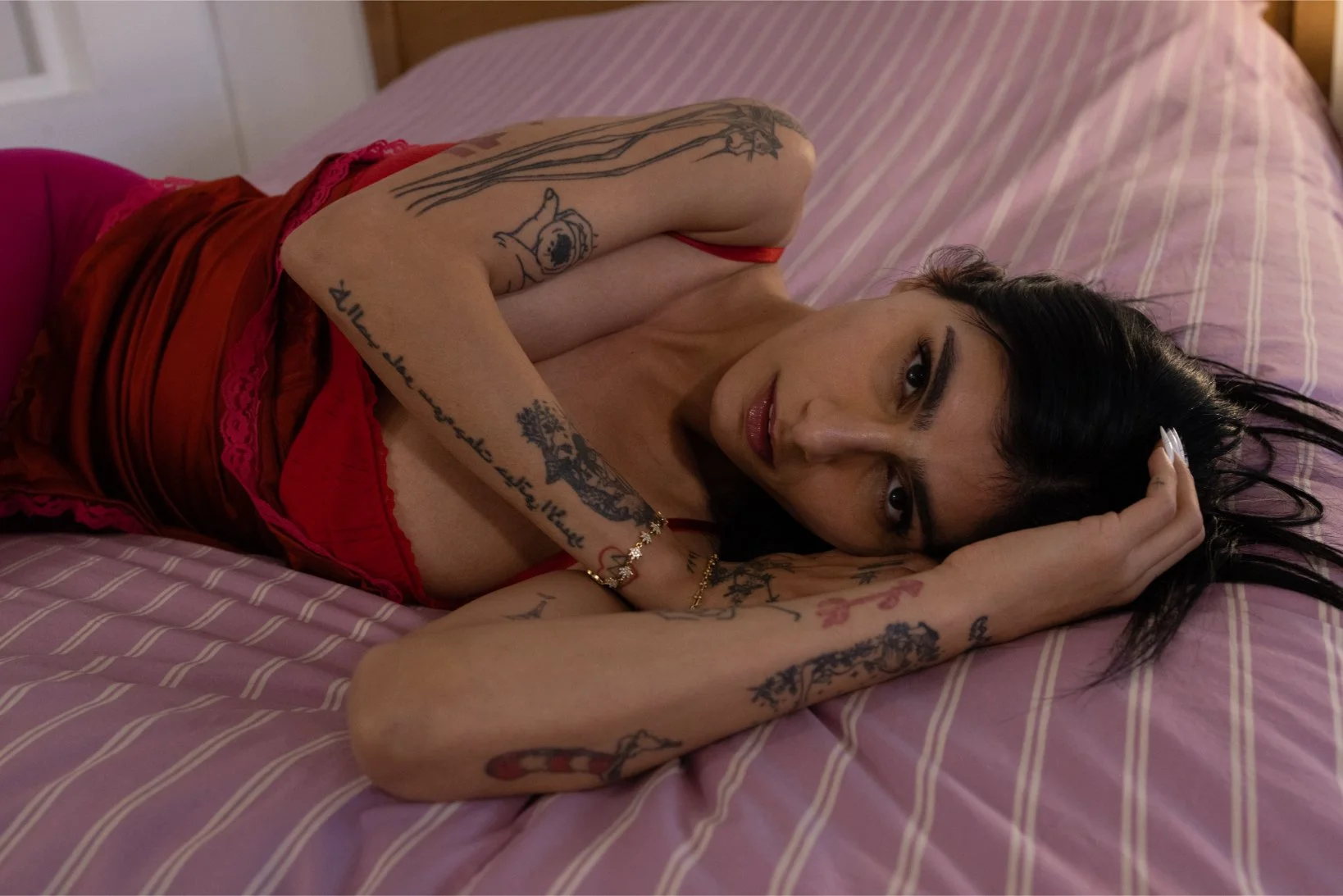
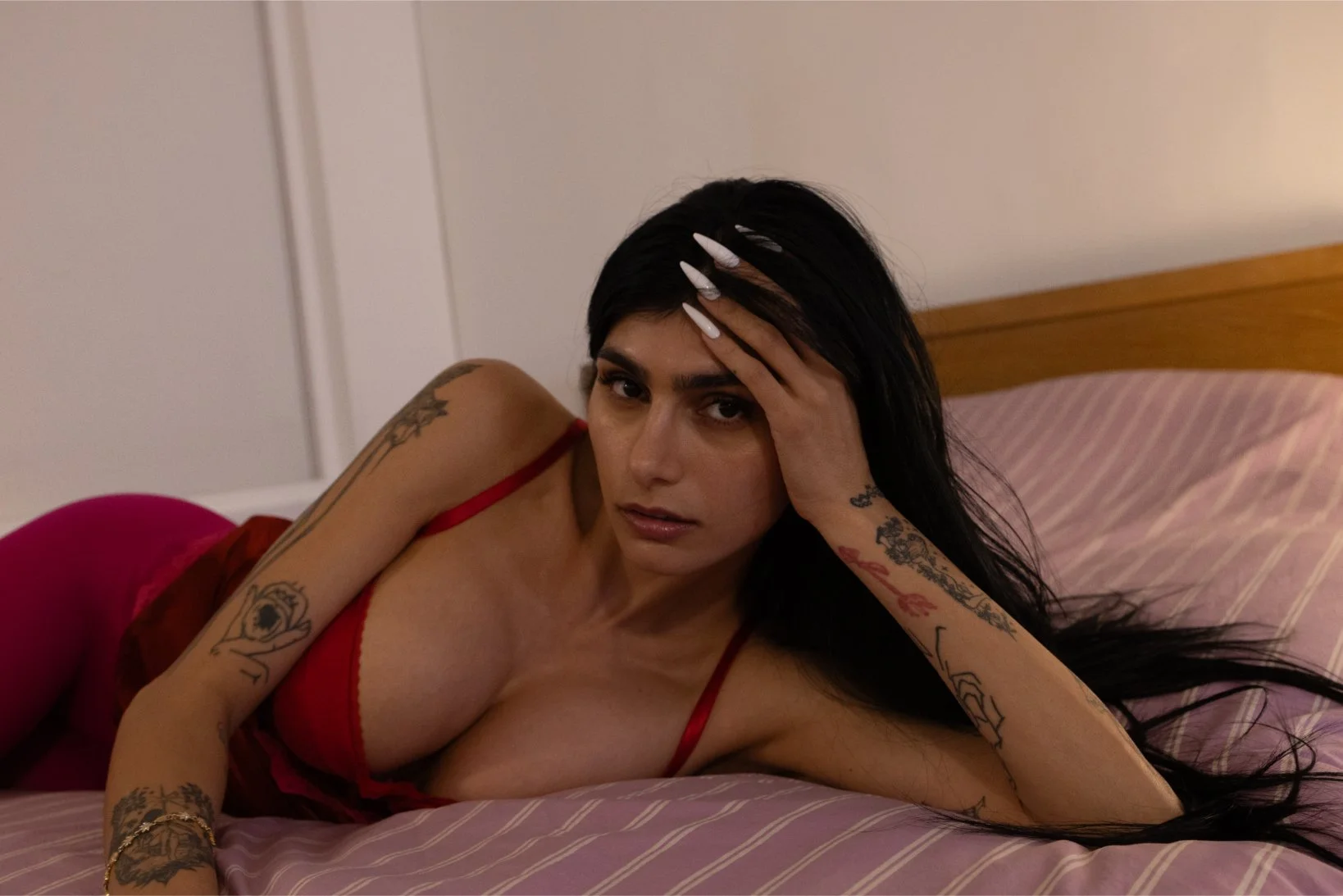
bra COU COU INTIMATES
wire bustier MISS CLAIRE SULLIVAN
bracelets SHEYTAN
stockings FALKE
BURN: Your success is built from the fact that you're not answering to anybody, and you don't have an agenda as such.
KHALIFA: That's exactly it.
BURN: Most people in the public eye that have your level of platform have an agenda.
KHALIFA: Yeah, they're much more of a commercial vessel than I am. And it's not that I don't want to be. That's why it's a little difficult to answer that question because that's been a goal of ours to get there. I would totally be up for having a global agent; I want to work in scripted and non-scripted media and branch out.
BURN: It's unusual to have your caliber of engaged audience and audience who desire your image and thoughts. Your visibility is unique. It's quite easy to put lots of people in boxes. You don't really have a specific category—other than being 100% honest.
KHALIFA: To quote Tina Fey, “Authenticity is dangerous and expensive.” You have to learn to shut your fucking mouth.
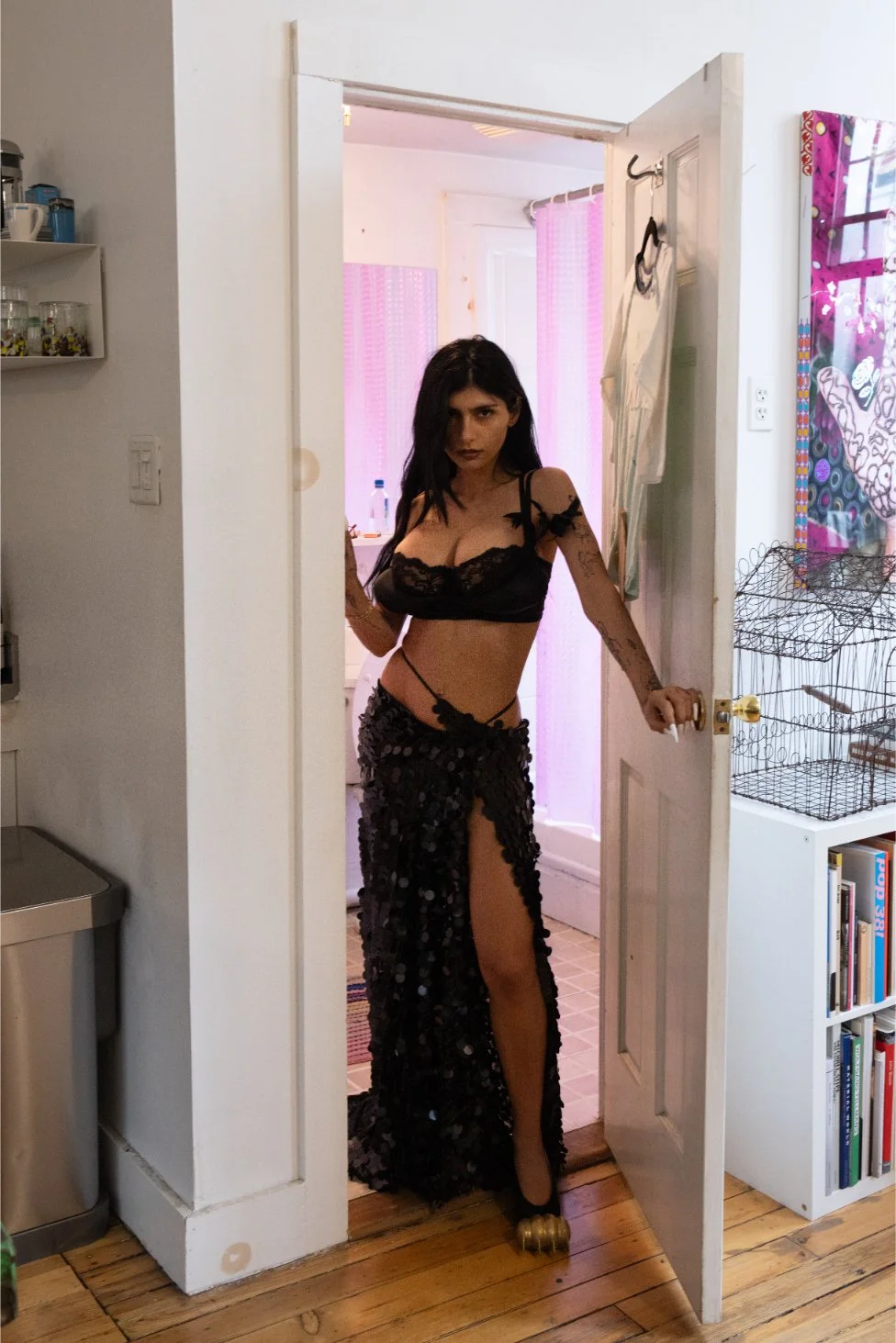
lace bra DEBORAH MARQUIT
leather bra MISS CLAIRE SULLIVAN
sequin skirt MISS CLAIRE SULLIVAN
shoes WOMEN’S HISTORY MUSEUM
BURN: Having millions of people regularly engage with your work creates an experience few will ever know. How has your understanding of what it means to be seen changed over time? Has this awareness of your audience become integrated into your creative process, or do you find ways to create from a space that feels separate from the public gaze?
KHALIFA: Completely. I've opened my mind and my world. I know where I want my visibility to be and how I want to be seen; it makes it a lot easier to deal with the anxiety of not wanting to be perceived. I feel like I'm creating more outside of the public gaze than I am for the public gaze. The different creative areas I've been welcomed into that I otherwise wouldn't have been exposed to are very empowering and very validating.
BURN: Anything specific?
KHALIFA: There are just different subcultures and different types of people, like Linder Sterling and Sofia Prantara, all of the people you've introduced me to, and the types of art you've shown me.
BURN: I guess what I'm trying to ask in this question is, how has your understanding of what it means to be seen changed over time? You've always been seen. You know you've got an audience, a captive audience.
KHALIFA: What's changed is my relationship to it. My relationship to being seen is a lot less a relationship of recoil and discomfort. I've produced and done a lot of work that I'm really proud of. I have experienced firsthand so many people coming up to me, and that being the first thing they mention, or what they know me from, or how they were exposed to me. And so my relationship with being seen is not one where I'm constantly battling with shame.
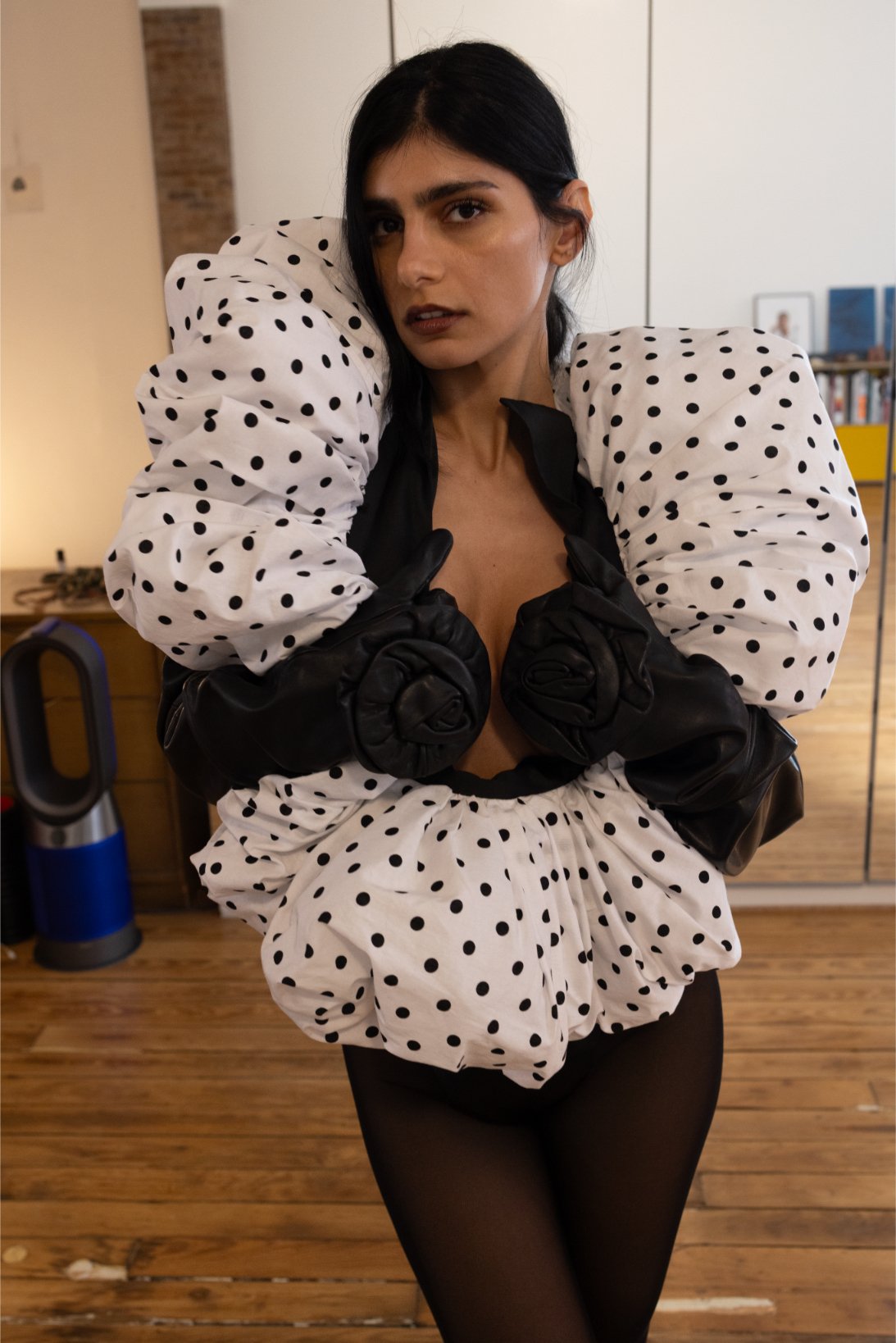
full look MISS CLAIRE SULLIVAN
gloves STYLIST’S OWN
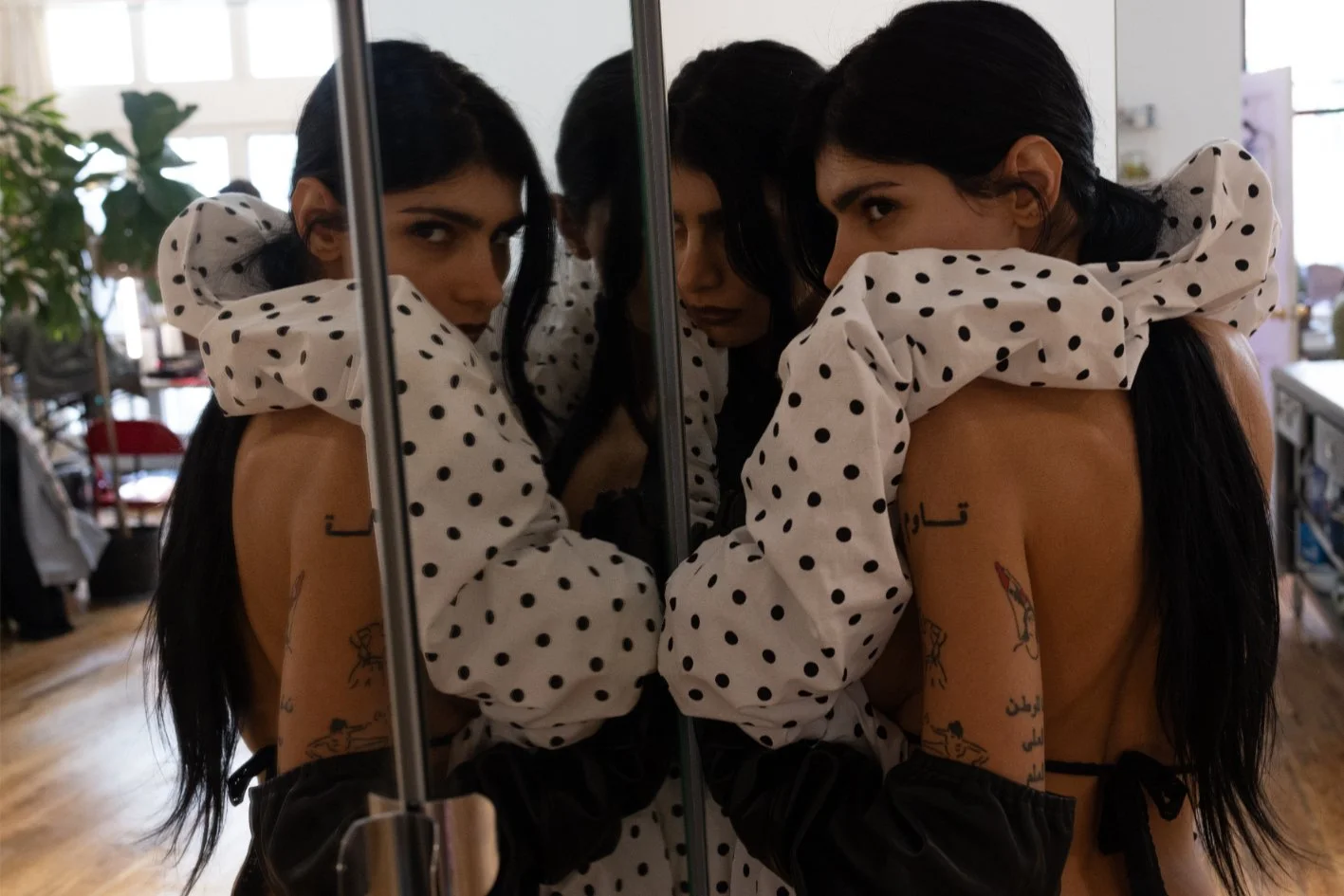
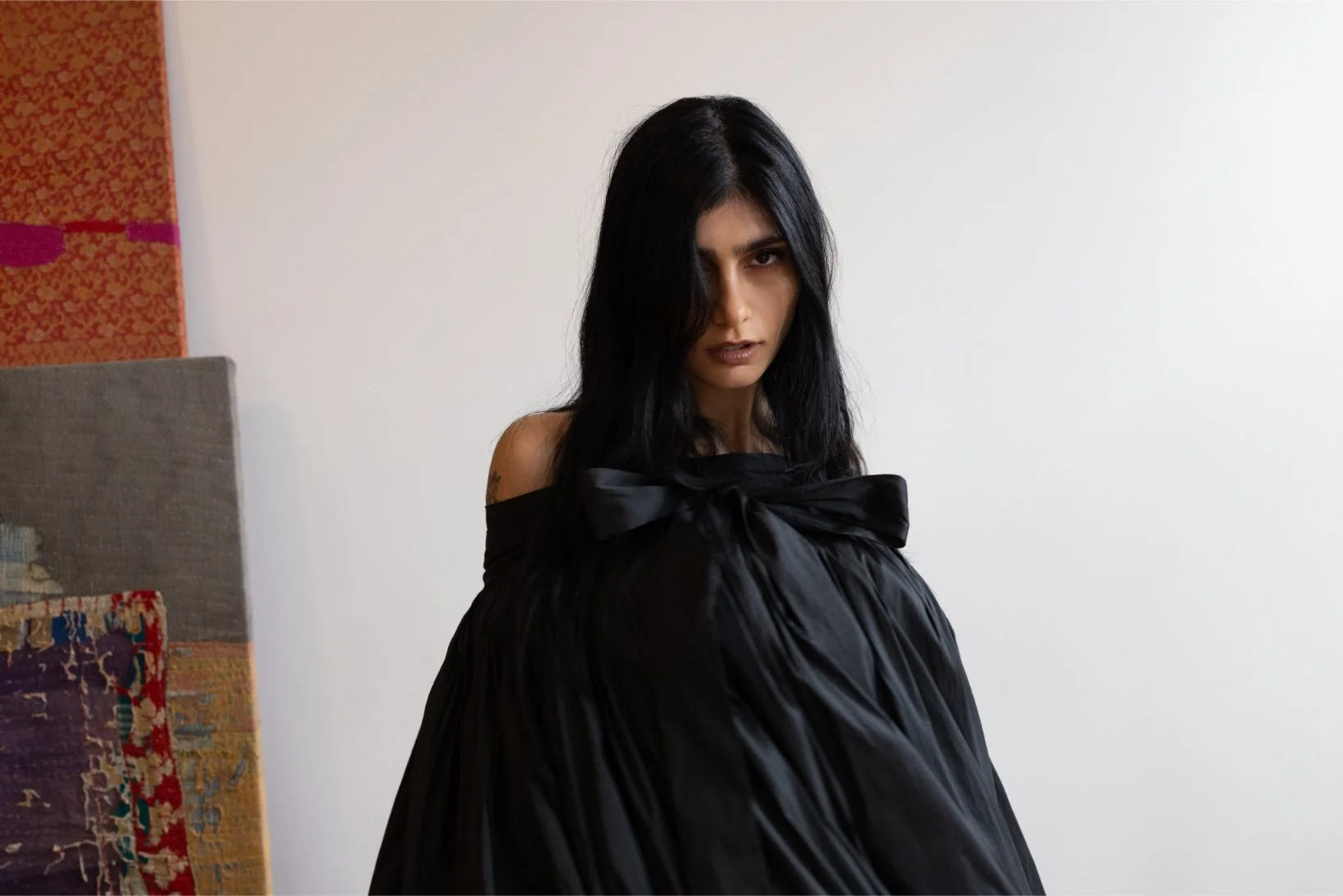
pouf dress MISS CLAIRE SULLIVAN
BURN: Your work moves fluidly between pin-up and intellectual depth, two qualities society often sees as mutually exclusive. How do you navigate this duality in your creative expression?
KHALIFA: I don't really navigate it. I think it's just inherent and a part of it. I feel like everything that I have control over has a touch of both or one or the other. It's not something that I think about. In my creativity, the intellect comes across as the creativity, inspiration, references, and the little cherries on top.
BURN: Do you make images that you never share? Do you create work that's just for yourself without any intention of anyone seeing it?
KHALIFA: Yeah, I did that Loewe and flower set of images, and I wasn't even planning on ever selling it. I was sitting on it for a month before I even showed it to you, and you were like, “Oh, my god, you need to share this.” Then I still sat on it for a year and still never shared it. I just took a couple of pictures in the mirror really quickly. There was no planning. I experiment a lot, but some work gets scrapped—that’s out of my control, which is why it never gets seen.
BURN: Do you have any aspirations to sit behind the camera? If yes, who or what would you like to photograph?
KHALIFA: I like photographing memories. I'm very interested in being behind the camera. It's fun. There are many images I would want to capture.
BURN: Do you think you would shoot a campaign with the right team?
KHALIFA: Yeah, I absolutely would. That's a great idea.
BURN: Photographers often tell me how much they enjoy working with you. There seems to be a particularly powerful exchange that happens when you're in front of someone else's lens.
KHALIFA: First, I feel we need to caveat it by saying they might just be saying that because you're my manager. They're like, "Yeah, we love her." Great. No, I'm kidding.
BURN: Often, you will show up to a shoot and they'll be like, "Oh, they only want to do three pictures," and they'll end up doing 29 pictures.
KHALIFA: Well, I’m really proud of myself for not taking any of it for granted. Even my dermatologist was like, “Oh, what have you been up to?” and I was so excited to tell her, “Oh my god, I just got back from Fashion Week! I saw the Dsquared2 show, I saw this, I walked in that.” And she goes, “And you’re not tired?” I was like, “Oh my god, I’m exhausted—but it was so much fun.” Then she literally stopped, mid-injection, and said, “Wow. I have so many models come in here rolling their eyes. I’m so glad you’re not jaded.” That really stuck with me. The difference is, for them, it’s a job. For me, it’s a privilege. It’s not the same. I’m usually not being paid to do it. Plenty of women are born 5’11, stunning, and for them, modeling is the easiest or most logical career path—but they might hate it. It’s a toxic, hyper-competitive industry. It’s not kind. They’re not being given VIP treatment everywhere they go, the way I am. So our experiences are completely different. The same applies on a set. I know how the industry treats models, and I also know how it treats talent or celebrities. Most celebrities show up because they’re contractually obligated—on a press tour, doing something they’re probably rolling their eyes at. Meanwhile, I’m just so genuinely grateful to be in the room, doing whatever it is I get to do, every single time.
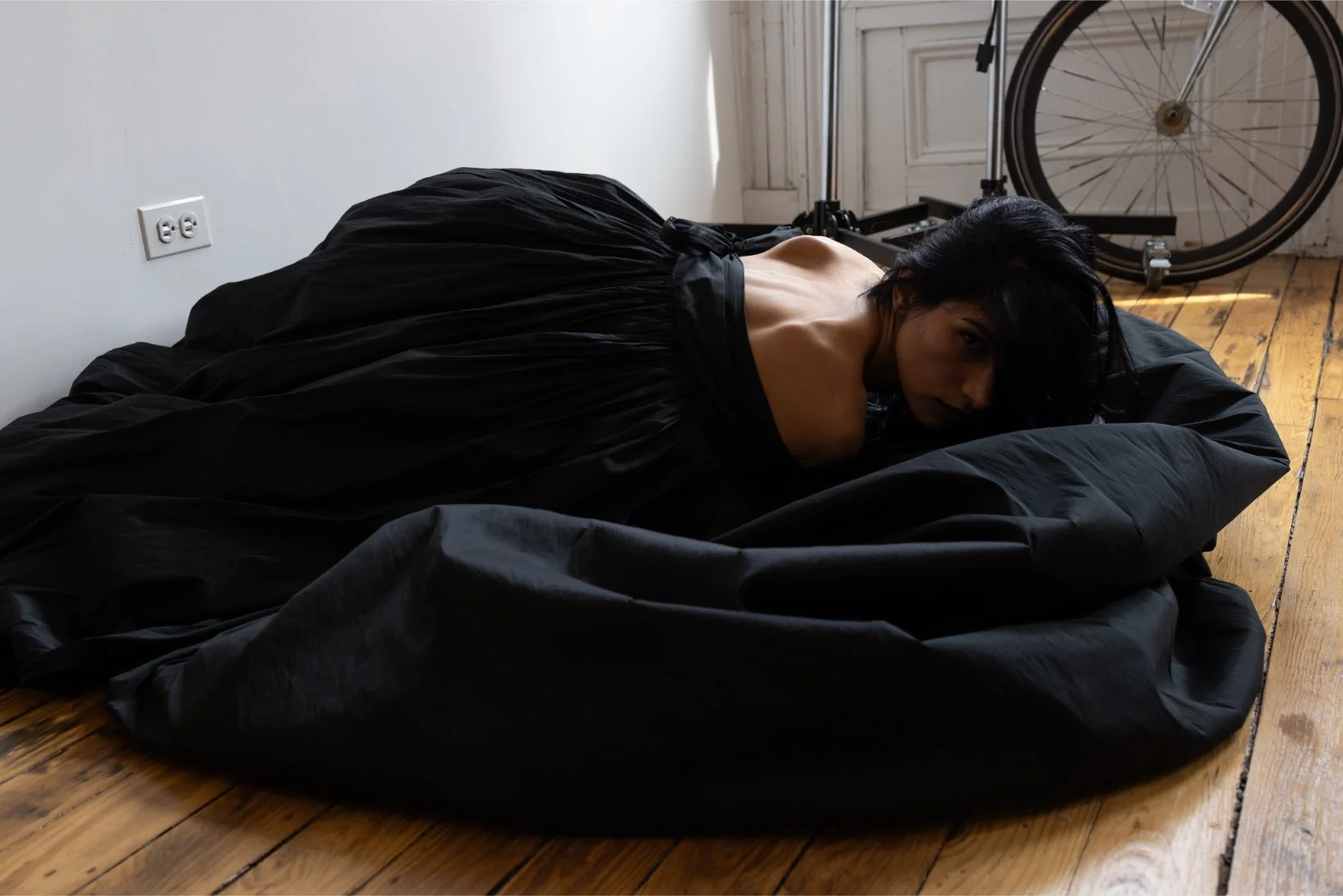
pouf dress MISS CLAIRE SULLIVAN
BURN: Has becoming a subject of desire changed how you experience your desires?
KHALIFA: Yes, it holds me back from making some jokes. I have to be very careful because the first thing people want to do is correlate me to that. I also have to be careful about my phrasing and the things that I share. It very much has.
BURN: Does being desired amplify or complicate your relationship with wanting?
KHALIFA: No, I feel very comfortable with my desires and with advocating and speaking for them.
BURN: There are plenty of discussions about the male gaze in visual culture. You seem to play with, and sometimes subvert that dynamic. How conscious are you of the various gazes that you have when creating content? And do you find power in challenging them?
KHALIFA: Every platform has its own gaze. Instead of trying to be the same for everyone, I feel like that's a nuance that you have to understand and cater to.
BURN: Is there a particular context or environment where you most enjoy the sensation of being desired? Is it different in professional settings versus personal ones?
KHALIFA: "Would love to have you there," is infinitely better than "We cordially invite you to." I think what feels the best is a friend saying, "Oh, we'd love to have you there, " whether it's a dinner or a trip or anything, rather than a brand or professional invitation.
BURN: Has there been a defining moment in your career where you felt truly seen and desired in a way that felt empowering rather than objectifying?
KHALIFA: Being asked to talk at Oxford.
BURN: Yes! Tell me more about how you felt on the day?
KHALIFA: The number of women who told me they really valued my opinion and stance, and even just being invited felt amazing. Being there and speaking to everyone there was incredible.
BURN: It was a really powerful moment. There was supercharged energy in the room. You could really feel that. Sometimes, you feel it on an individual level when someone might come up to you and say, this particular thing has meant a lot to me and has made a difference in my life. Being in a room with hundreds of people that felt like that, you could really feel it.
KHALIFA: It was truly one of the most magical moments of my life.
BURN: Beyond your public persona and work, what deeply satisfies your own desires? Are there forms of fulfillment or expression that might surprise people who think they know you through your public image?
KHALIFA: I feel so fulfilled traveling or being at home with my cats. I am very seldom bored.
BURN: It's so true.
KHALIFA: You will never hear me say, I'm bored. My desires can range anywhere from wanting to go to Japan to ordering in from my local bagel spot and putting on a movie. Both of them fulfill me equally. I'm being very honest in saying that. They both fulfill me equally. My desires are very well-satiated.
BURN: Is there a legacy or conversation about desire that you're consciously trying to leave for those who will come after you?
KHALIFA: I don't know about consciously, but I hope what I leave behind is the example that it doesn't matter how many doors are slammed in your face—if they slam them hard enough, they'll turn into a revolving door eventually.
BURN: Is there anything that you wish someone had told you earlier?
KHALIFA: I feel like I have already been told everything I wish I had been told. But did I have the tools to receive it and actually put it to use? No, it wouldn't have mattered. With everything worth knowing, you need to be ready to receive and be ready.
BURN: If you could offer insight about desire to someone just beginning to explore their own relationship with wanting or being wanted, what would it be?
KHALIFA: Manifest everything. Just envision it, literally. That's another reason why I'm never bored. I daydream. I will let myself go in, check out there, and check in here. Just leave and fantasize. Fantasize every microscopic detail, the color of your toes that day, the smell, every microscopic moment. It's like reading a book or watching a movie from memory. You can do it. Just spend your time falling into the depths of your desires.