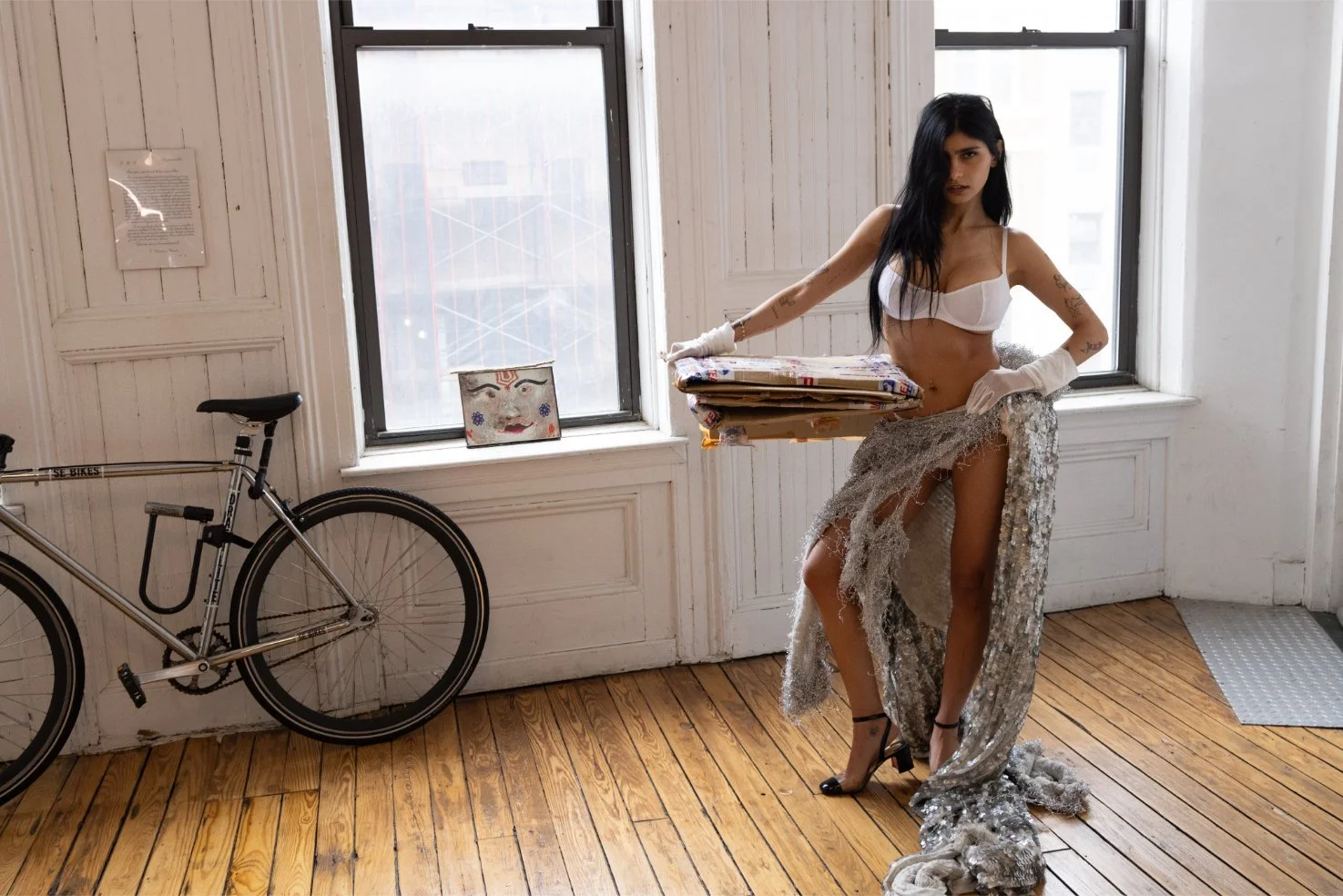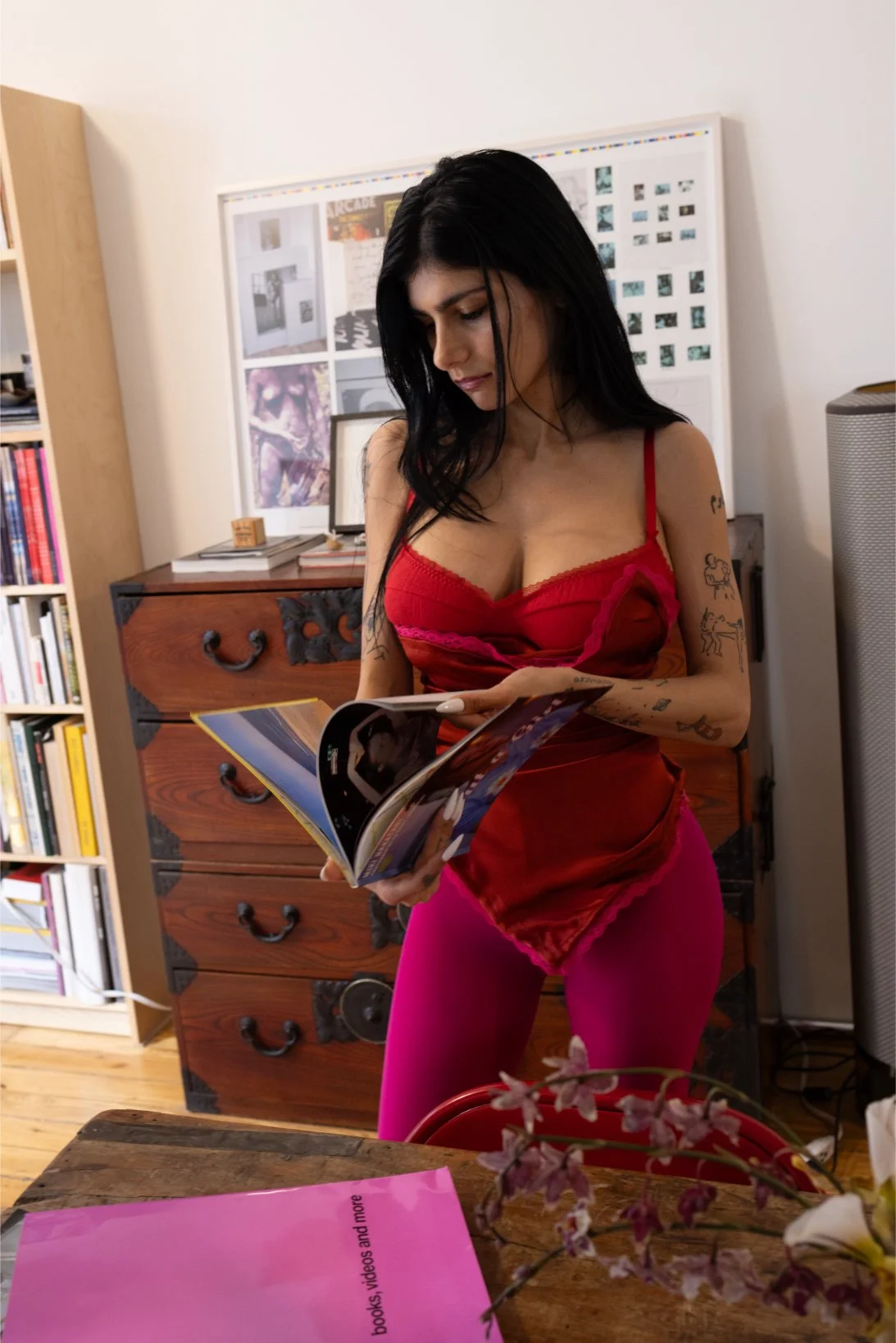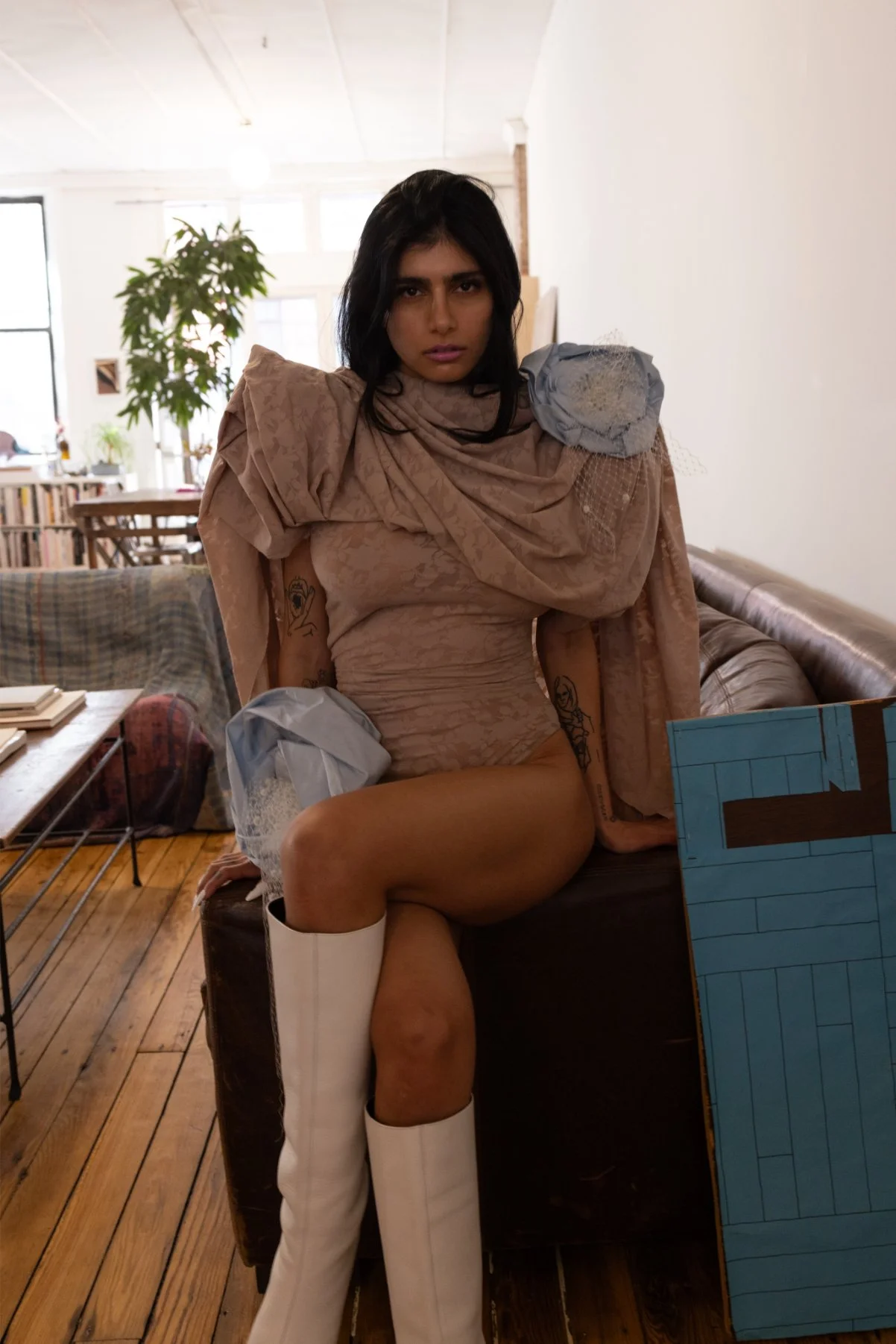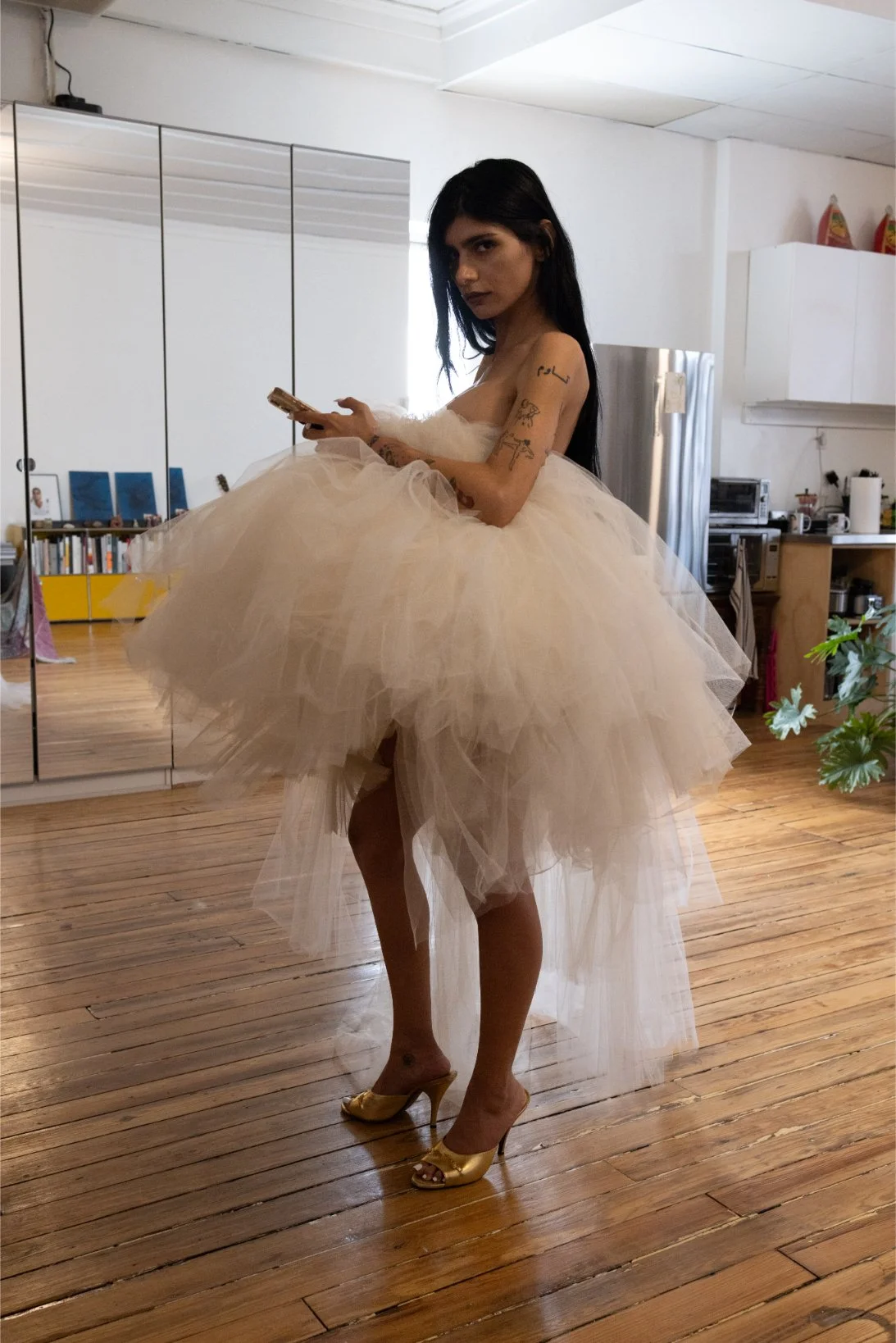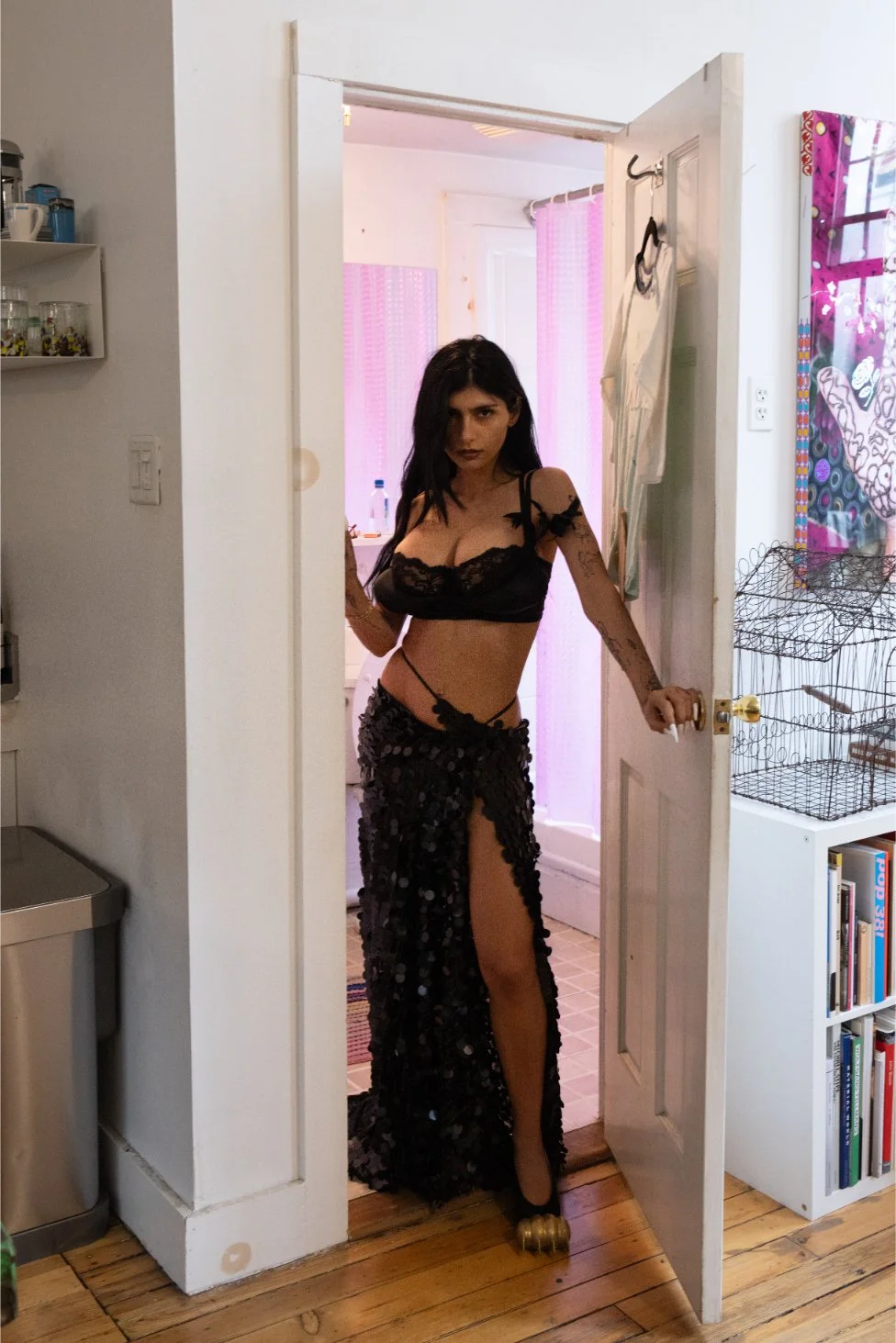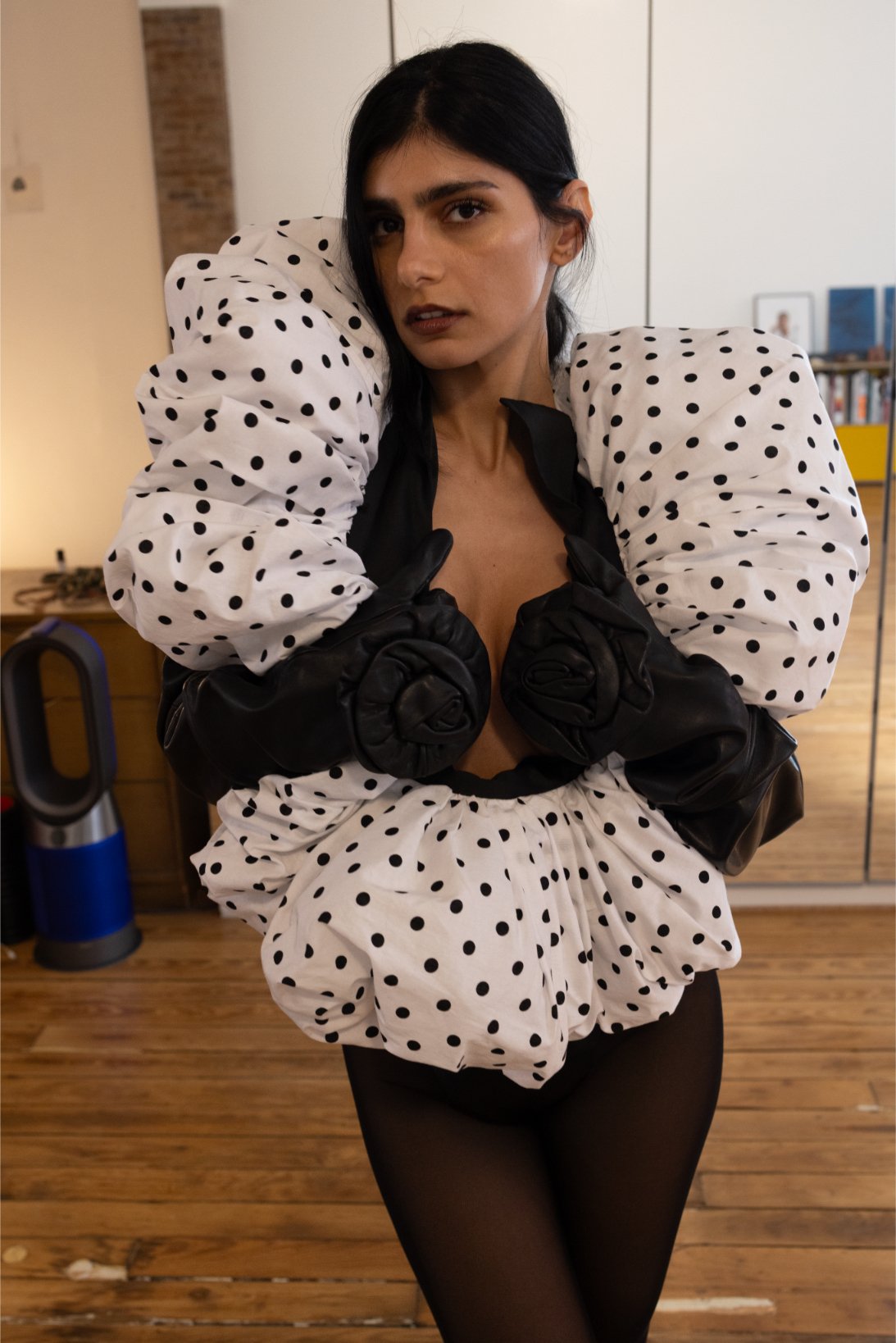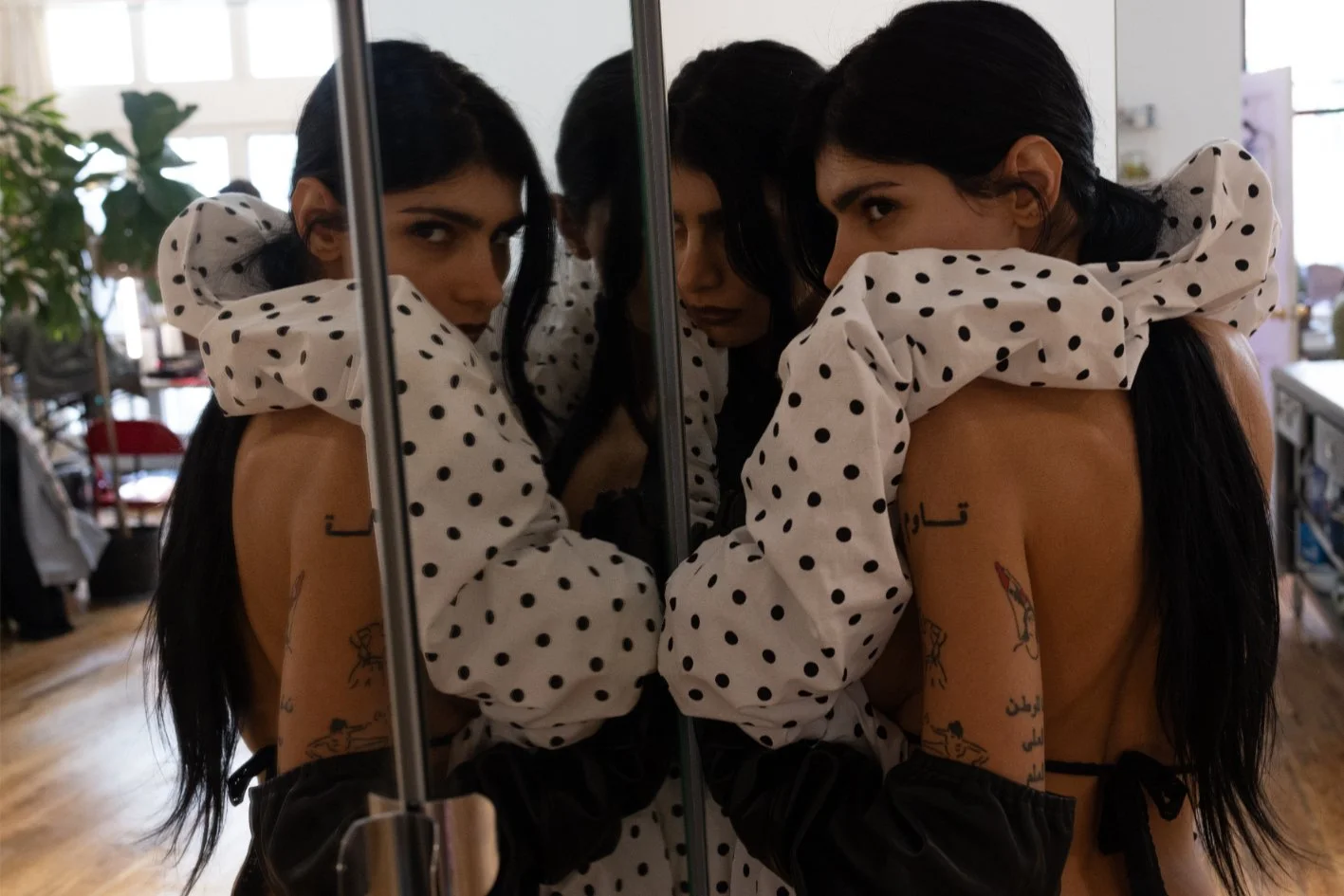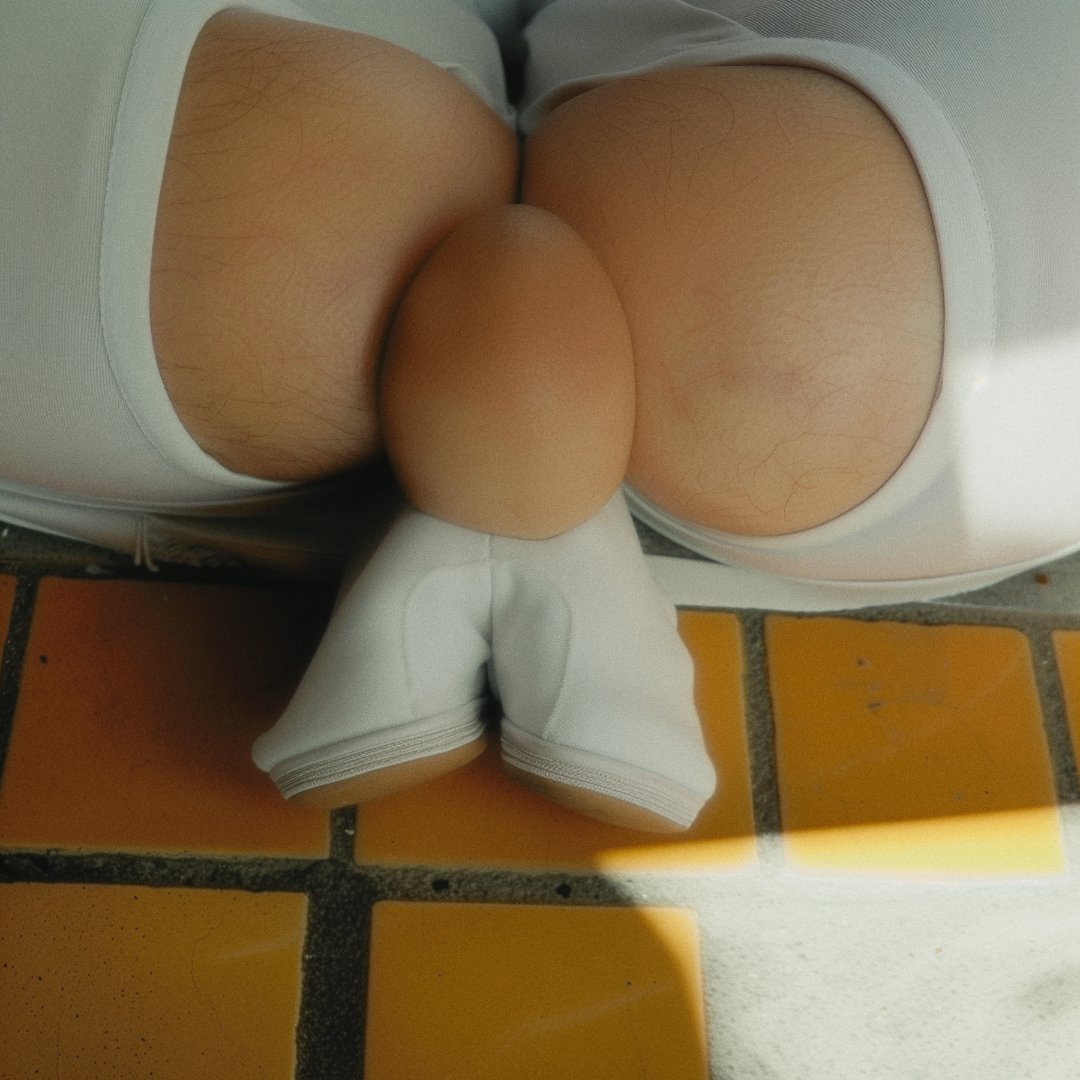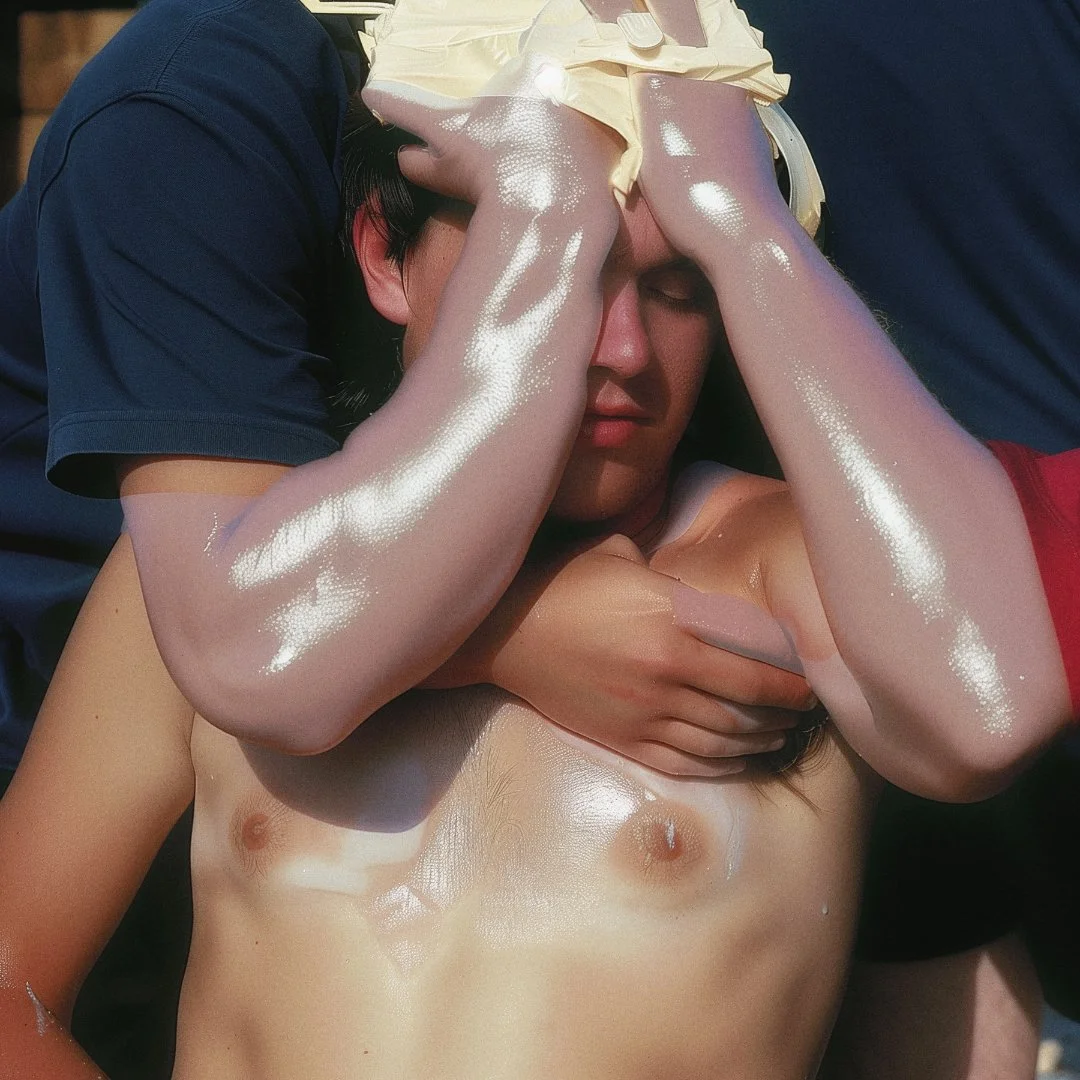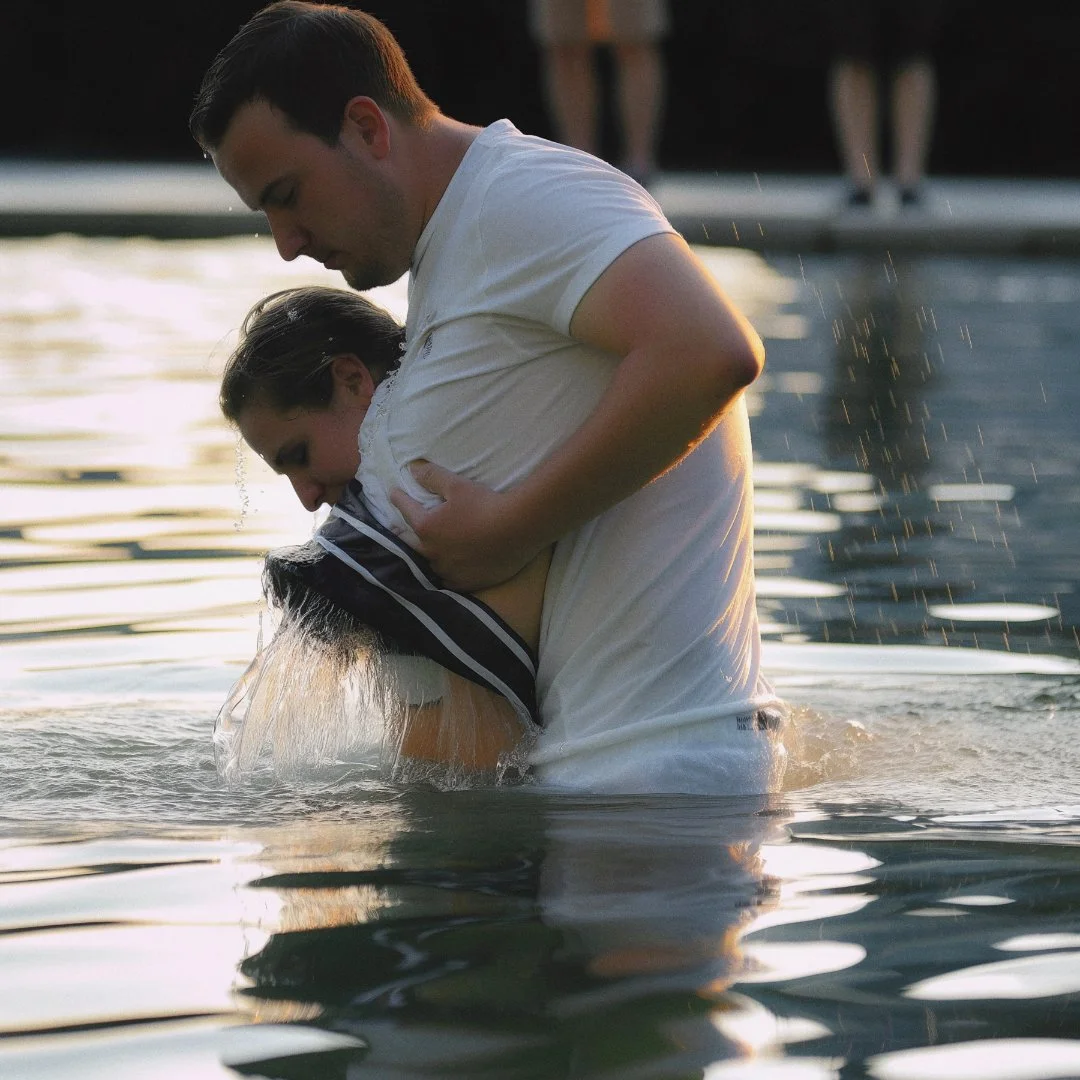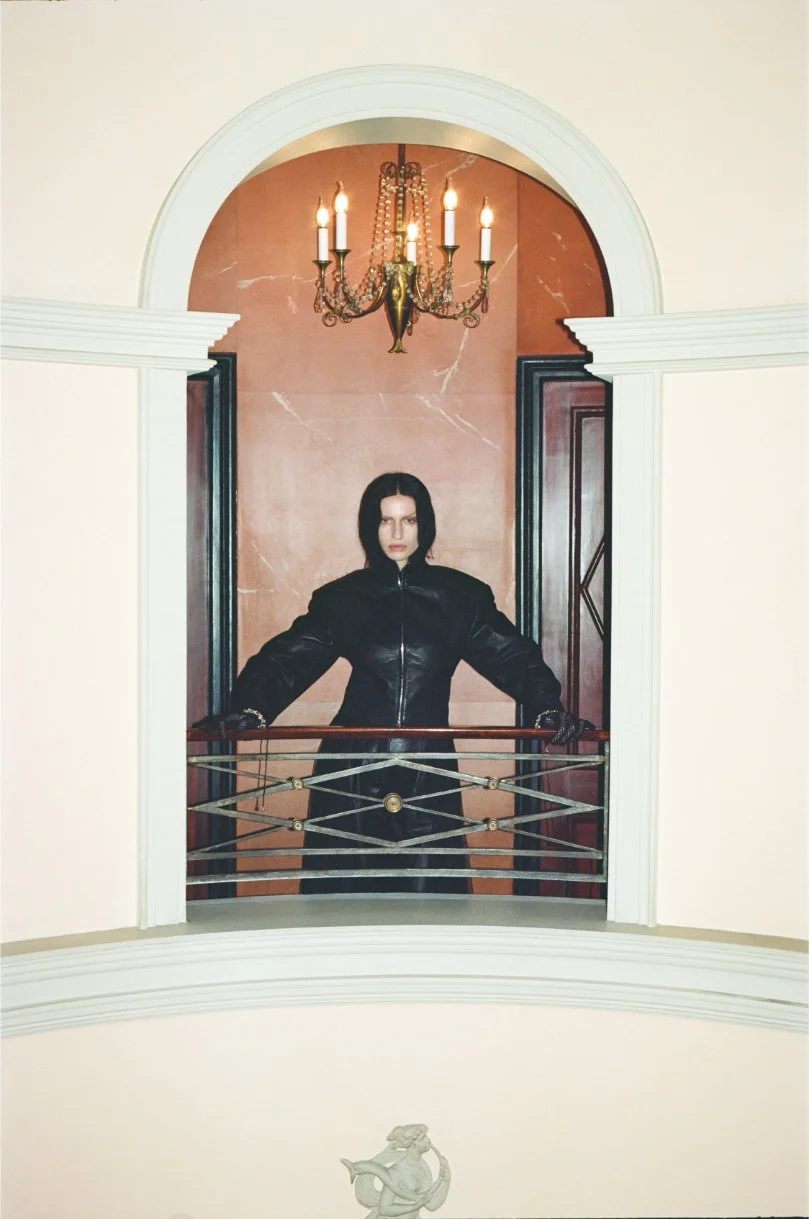
Coat FAÇON JACMIN Corset JEAN PAUL GAULTIER Gloves YOSHITA 1967
photography by Jesper D. Lund
styling by Nayeli De Alba
Tali Lennox’s paintings are rife with a rare erotic power that is both gothic and cadaverous. Desire becomes a tenuous dance between the oneiric and the folkloric; a passion play of spiritual autopsy and resurrection. Alongside jewelry designer and sexologist, Betony Vernon, Lennox dismantles the psychic fractures embedded in her paintings.
TALI LENNOX: The first time I met you was over ten years ago, in a spa in the mountains of Switzerland. There was a big jacuzzi, filled with people floating around you. You looked like a high priestess. It was so vivid—so amazing—to see how captivated everyone was by your words; topics we don’t often get to be open about, like desire. Things we can carry a lot of shame around.
BETONY VERNON: As you tell the story, I see the steam rising and the beautiful faces and the intimacy, that hot water and this sort of back-to-the-mother environment. I remember there was a dividing wall and we could see through to the outside and everything was covered with snow. It was a very improvised situation. It was magical because everyone in the hot tub was at least 25 years my junior, and you were all so eager to talk about desire, to talk about love, to talk about sex. There's not many occasions that arise in the world to have that kind of opportunity. For me, it was equally a moving opportunity because I work one-on-one and I rarely have access to groups like that.
LENNOX: I'm the same as well. I find that I don't socialize that much because I'm always looking for things that go into the depths, you know? And the people I keep in contact with, like yourself, and also with my paintings, it's this opportunity to peel back the psyche and step into the abyss of a place that holds fears and desires; openings and ruptures. It was really powerful to see how people open up in your presence. That's the communication that I really gravitate towards.
VERNON: When you and I first met, you were just beginning to paint. You were actually pursuing it as a career, which is daunting. It's one of the most important and hardest jobs to do. This subject of desire is daunting. It bonds us and it drives us when we speak of desire. What happens when you can’t paint, Tali?
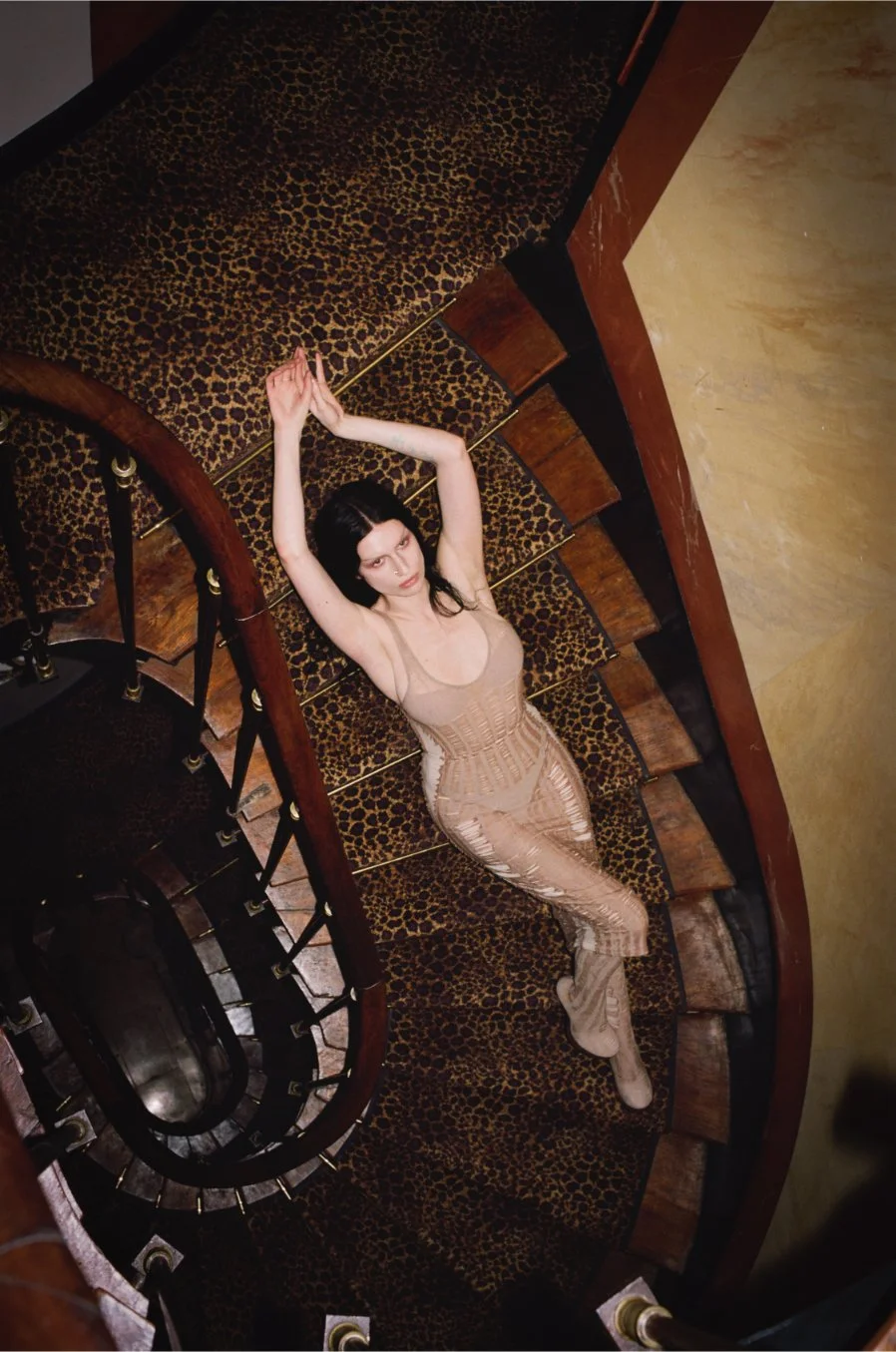
Total Look DIESEL
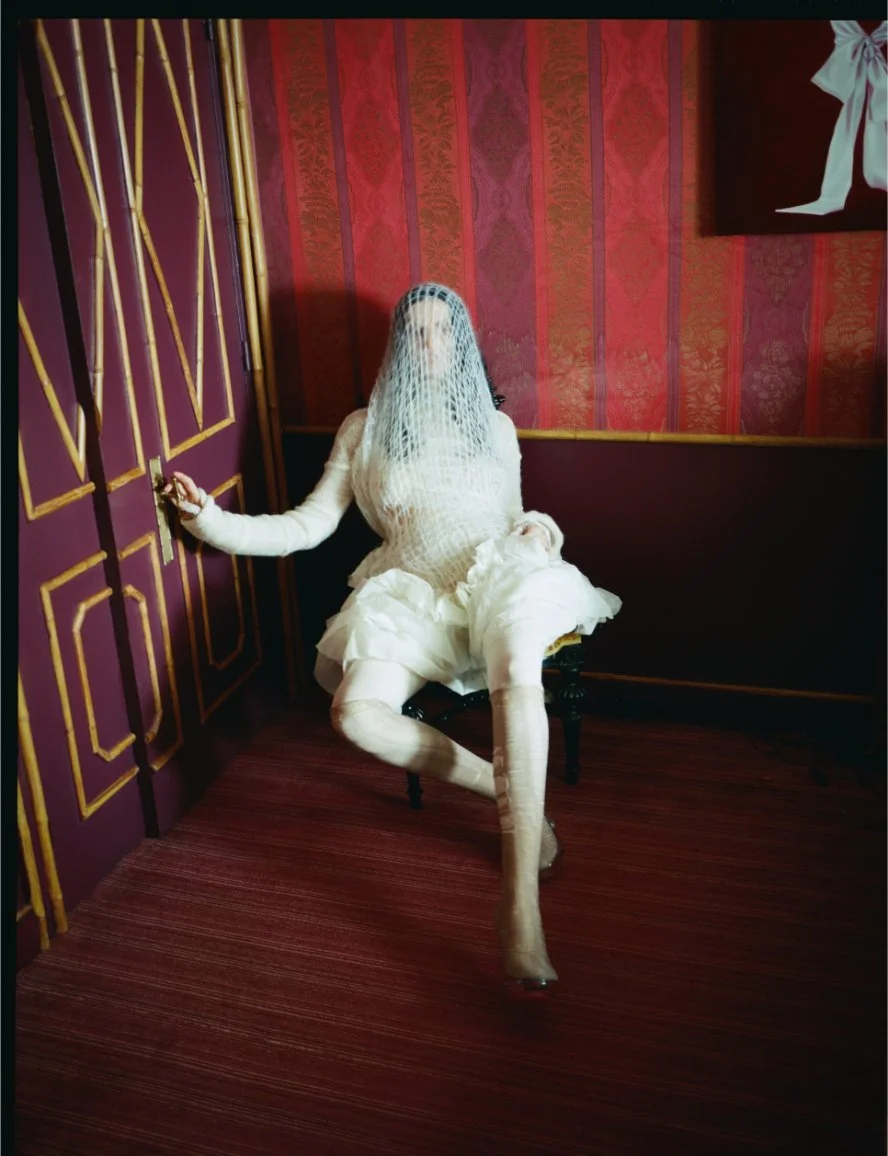
Dress COLOMBE DE NAES
Top LARUICCI
Shoes DIESEL
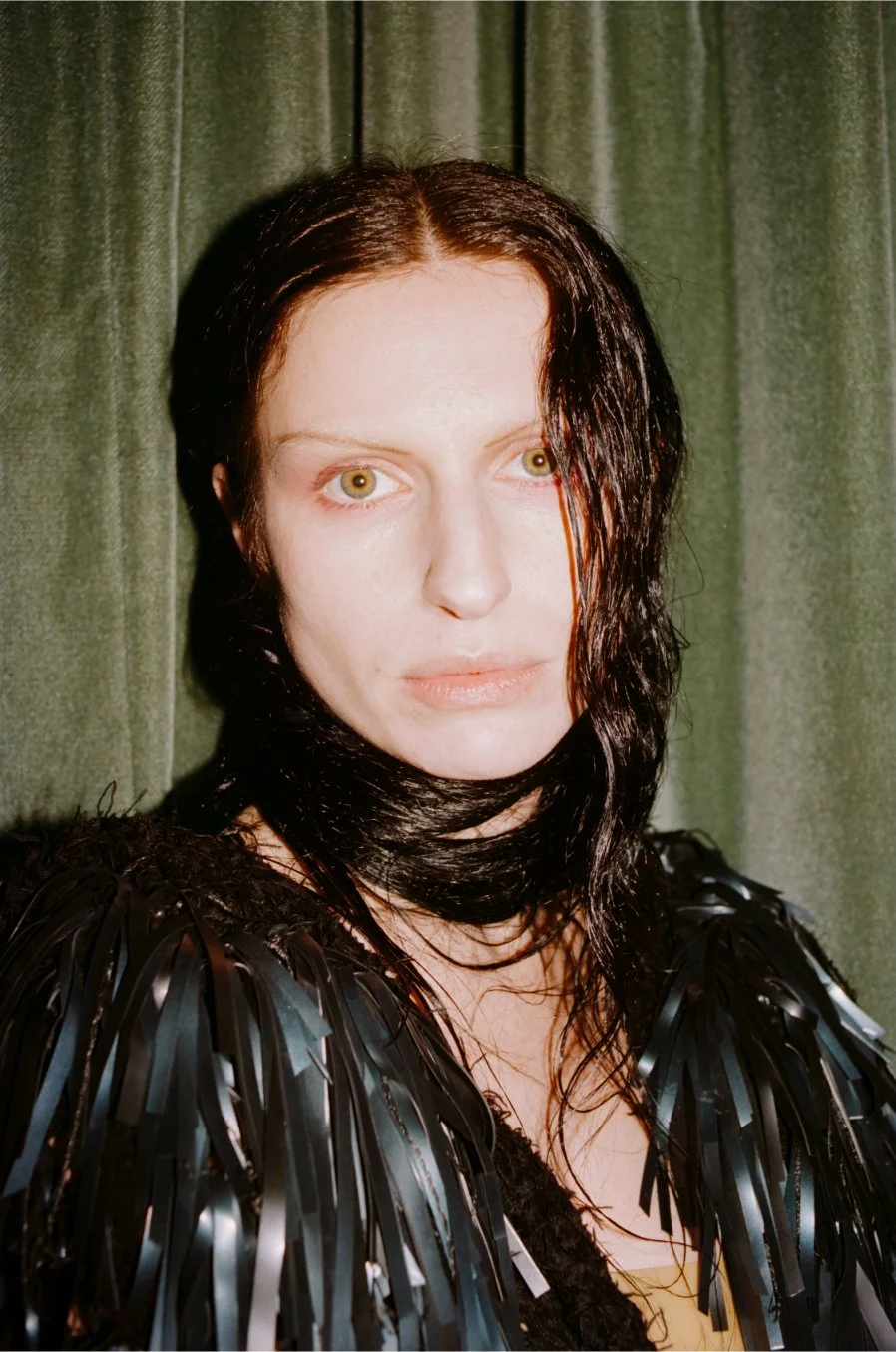
Coat MONIQUE FEI
LENNOX: It’s not a good feeling—I lose my sense of identity when I haven’t been painting. It’s my connection to myself. Having role models and influences is wonderful, but it takes time—especially as a woman—to feel like you can give yourself permission to build your own realm and follow your bliss, as Joseph Campbell said. You, however, are such a polymath. I often find myself speaking to myself in a limiting way, but something I’m working toward now is expanding my realms—exploring all the senses more fully. That also means letting go of guilt and not second-guessing myself. I wonder, how have you cultivated the conviction and focus to speak so openly about topics that so often hold us back—especially sexuality—without shame? And how have you managed to pursue so many passions without hesitation?
VERNON: Pleasure and desire are like sisters, no? We desire things because we think they're going to bring us pleasure. We are born to live in a place of pleasure yet in a society that is very much against it. It is so empowering when you shed your guilt. That's what I'm here on the planet to do: shedding and dismantling the taboo, which means dismantling the shame and the guilt around something that I personally was never told was wrong—not because I had perfect parents but because they pretty much weren't there. This lack of parental control and parental guidance let me bloom into my persona without shame and guilt, which I think is a really rare and privileged position to be in.
LENNOX: For me, with a lot of my paintings, they are about ruptures. I've been painting a lot of volcanoes lately to kind of symbolize this breakage that we have. That also comes with this feeling of release, euphoria, almost orgasmic, and through something that causes us to have a dismantling of self. Do you feel like for us to break through the debris that we hold onto, whether it be shame or outside voices, that you need a spiritual or psychological rupture to access that point? Or do you encourage the more gentle way?
VERNON: I am gentle, but the work is disruptive. Especially when I'm doing body work and healing work. It is breakthrough work. The people that come to me, they've often sought in many places to have a safe place to talk about their desires and have not found it because there's not many spaces. Breakthrough after someone's done a lot of therapy is where I work. I work with people who've really been on a quest. 80% of the people that I work with were victims of trauma, were victims of inappropriate sexual desire. Abuse is overstepping the line and often in the stage of life where we don't even know what the word consent means.
Whether you like it or not, we tend to be handed a big old suitcase full of other people's stuff. We are born like the empty canvas that you find yourself in front of. And then people put all sorts of things onto us that are not ours, but we realize it later, especially if we get to meet someone who makes us see things. Old ideas, limiting beliefs, those things hold you back until you meet someone who says to you, “Hey, it's okay. It's totally normal.” Now, I really feel like I'm in an awkward position because I believe that with the current state of affairs, we find ourselves fighting for things that we fought for many decades ago. We cannot sit on our laurels. Look at what happened in the United States with the dismantling of Roe vs. Wade. Because of the shame, desire today really does demand a safe space that is not censored. Sometimes I think, Are we back in Queen Victoria's era? It’s really disturbing. My work has only just begun. I'm not going to give up on anybody or anything.
LENNOX: The world is moving in a potentially extremely frightening direction. I don't know if I connect to what our idea of modernity is at the moment. There's not much I feel I can hold onto. So what I've kind of quietly decided is to build a very small orb for myself that has a space for beauty and pleasures and fantasy and history. Sometimes I wonder, am I stepping out of reality? If I don’t see myself firmly in the world, then what world are we in?
VERNON: You are the future. We have to pass through this disaster, this situation. It means that we're coming through. Breaking through is sometimes painful, but I think that we have to go through it. In these absurd times, by constructing that bubble, you also construct your community. There are a lot of people that see it like you and I do. Beauty and love always win.
LENNOX: And kindness.
VERNON Yes. Kindness and gentleness and, and keeping your value system in place. I don't want to go on about covid too much, but I think about the generalized trauma that it created. We are designed to hold each other, to desire each other and to dream and to connect with each other. And covid didn’t let that happen.We were told not to be near our loved ones and that having sex was dangerous, and breathing on each other was dangerous. It was a global trauma that involved eight billion people. In general, people don't really know how to process it. To process trauma, you need someone to help you. The comfort zone is missing. So making our bubbles is crucial.
LENNOX: During covid, I had a lot of thoughts about desire in the sense of Buddhist philosophy: a certain type of desire being the cause of spiritual inflammation or suffering. I was celibate for about a year and extracted so much. I really leaned into a place of nature and solitude. With my painting, I'm already in solitude a lot. I kept thinking about how the more that I started to extract things from my past, including sexual relations, I felt so much more back in tune with myself spiritually. I realized that my paintings aren't about desire, but I've been painting what I desire. When I was younger, I was quite adventurous, and I would do a lot of alternative healing methods involving very strong psychotropic and psychedelic substances. When you're young, you just hurl yourself into experience. I was craving a feeling of breakage, euphoria, and ripping through the veil. Now I notice with my personal life, I'm quite gentle and peaceful, but my paintings always have this intensity.
VERNON: Maybe they’ve come to this place because of the psychedelics. I think everybody should do psychedelics. They’re a very fast route to realizing that you're part of a big, single giant vibration. I think it would really change the world if there could be a moment where everyone was given a microdose of something to get a reality check.
LENNOX: Some macrodoses too.
VERNON: And some macrodoses [laughs]. Where you are today, in a space of not having the void, it was the work you've done. It's the meditation, it's the psychedelic experiences, and it's all the things that I also did and would do again and again, if the environment is right. There are ways to connect on a higher plane.
LENNOX: Every single decision that we make for ourselves, we're really just led by euphoria.
VERNON: It can push you to do things that you wouldn't otherwise do. The more frightful thing is when you have no more desire because it’s dead. That can be a very dark place, and it's a very painful place. To be wanted is so beautiful and physical and spiritual. The important thing is that it's reciprocated.
LENNOX: When you've had people come to you for guidance on how to either fulfill a desire or just reignite a feeling of desire or a feeling of sharing love with somebody else, do you have what you feel is a universal truth that can help people meet that place within themselves and summon the feeling where love and desire kind of go hand-in-hand?
VERNON: We need desire before we can actually love someone. I've had people say to me, particularly women, “I can't have sex with somebody unless I'm in love with them.” But that's so backwards because often we have sex with someone and then we fall in love with them, not before. I always encourage people to connect and make love if the desire is there. It's so magical and really quite rare that you actually desire someone. If you just go have sex with someone but maybe not desire them specifically, it's never a very good experience. But when you desire someone that’s when magic happens.
In terms of rekindling, I think it is just a question of going back to where it all started and really recognizing the rarity and the specialness of that connection. I say to [my clients], count how many times on your hand that you fell in love with someone. It doesn't happen every day. We can love every day, and we can even love someone first for one night. The key, in the end, is really self-love. To love yourself first prevents a lot of pain and mistakes in the end because you demand respect for yourself. I always say to my clients, please don't use the word single. It's so lonely. Use the word multiple or free. Take it back to freedom and be multiple.
LENNOX: I love the work that you've created with vessels and objects of worship. I love painting objects of worship, and I love the thought that a material thing can help us access caves within ourselves. With your jewelry, it’s interesting how an object can translate so much to people and invite them in. I’d love to know more about how you bring eroticism in through material objects.
VERNON: The objects are like portals to enhance pleasure. I've had people say to me, “When I put on one of your pieces, I feel strong. I feel like I had something that I couldn't actually have if I didn't have the piece.” In other words, it's a prosthetic. This piece is used for pleasing a man. But it's also for pleasing me because I like the way it looked. I like the fact that the pieces make you feel courageous and empowered. That makes you more receptive and open.
There's an element of play also. They become portals to communication, which is one of the things that we all need to work on and that our society doesn't really teach. They don't teach you how to build a relationship. They don't teach you how to parent. They don't teach you how to love each other. They don't teach you how to communicate. [We should] think about the way that we are teaching children today because all of those things are critical, and they're all the foundation of emotional intelligence. Without it, this kind of thing that we're living currently is going to happen.
And then, they are actually objects of ritual. When you decide that you're going to use the pieces, especially the ones that are more explicitly jewelry for the inside of the body, then it requires a ritual mindset. Ritual for me is what can easily culminate desire, just through the act of preparing a ritual. It sets the stage for that soothing of the desires because you can make them come alive. I think fantasy is so important. Your work is also fantasy. Everything you do is dripping and wet. They're like portals that allow us to sort of overcome the doldrums of everyday penetrative sex, which for me is really boring. I wanna play with you. I wanna set a stage and let things unfold in a way that is in a bubble and that is far away from reality and that does remove me from reality. I have no shame in that whatsoever.
LENNOX: More and more I also feel less guilt being on a path of wanting to seek as much beauty and aesthetic enjoyment as I can.
VERNON: I'm waiting for you.
LENNOX: I know you are. I’m building my first headquarters space in this historical relic I found in Paris. I’ve been thinking about different ways I can open up my work in this sense. I have been thinking about making erotic short films, like art films. I think that's something I might do in this space because it's so special. There's one room that's really small, almost like a boudoir, and the walls are really dark red velvet with 19th-century purple frescoes with cherubs. Very indulgent. We actually think it probably was a room for sexual encounters because originally it was the entertainment floor. So I think it could be the perfect stage to experiment with perhaps making films that don't need to be overtly sexual but just allow one to access that portal more. I have a lot of conviction in the fact that I don’t find eroticism in pornography. There's not much to hold onto.
VERNON: I want to make sure you understand that the erotic is the opposite of porn. Porn is male gaze, and it commodifies eroticism. It objectifies the erotic. It disassociates us whereas eroticism associates us with ourselves and others. We are suffering this moment with a rise in erectile dysfunction in men due to disassociation because of porn. It takes us out of reality. It's so disassociating, which is also what trauma does. We have to be very clear about what the erotic is. It is a female power and a source which has been vilified. You focus on the erotic. It's funny because these words have been used in a sort of sex positive way. But one of my goals throughout the past thirty years has also been to change the language that we use around the erotic and around the sexual. When people say things like, “It's a naughty pleasure.” I was like, “No, it's not naughty. Why is it naughty?” Because you're enjoying yourself? That is so Victorian.
LENNOX: It's so common. I often giggle and kind of blush when I speak about these things.
VERNON: Because I also work around sexual trauma, I'm often uprooting shame. Once you uproot the shame, you can uproot the guilt and, little by little, the fears that are put around our sexuality. One of the things that I meditated on a lot during Covid was why has our sexuality been placed in such a vilified space, especially female sex. It’s portrayed as the opposite power to a man's sexuality. It’s a time when we have to protect our male friends because they're a bit lost and fragile.
LENNOX: I agree, and I think there’s been so much fast change and expectations of people deconditioning unfortunate but very true moral codes that have been going on for such a long time. I think for men, it can be extremely confusing in the Western world.
VERNON: Also pretty much everywhere else. We have ideas about the ancient arts, for example, The Tao of the Loving Couple or Tantra, which are being commodified at the moment. It's an alternative. It's a more positive conversation around sexuality. But that doesn't mean that Hindi women have more rights. It's an illusion. We are in a position where we must activate our rights. I was thinking why has [our sexuality] been taken away from us? Why has the erotic been vilified? And I came to understand during Covid, the flat out answer to the question is because it makes you powerful. You are in your body.
LENNOX: Exactly. It’s very scary to people.
VERNON: You are really you in the end. You've emptied your suitcase of everybody else's bullshit. Now just be yourself. If you're in that first space of self love, you can love the entire world and you can love a man for one night and you can operate in a loving place. It makes you very powerful. This is why they've taken it from you because they would prefer that you were not powerful.
We wouldn't be sitting here having these conversations about how we're about to lose our rights. I will stand by you. I will stand by everyone because I believe that sexual rights are basic human rights. Like having a safe space to sleep, food to eat, a place to be warm, a place where you can express love. Environment is everything, and this is what is really important in this moment where no one feels safe.
We really don't know where we are heading. I believe that there will always be like two sides of the train track. So you just keep on your track. Whatever happens on the dystopic side – the more that you've solidified your bubble and the more that your ambience is created as you're getting ready to create your own temple, your own sweet, special headquarters – you just cultivate that and it'll be just fine.
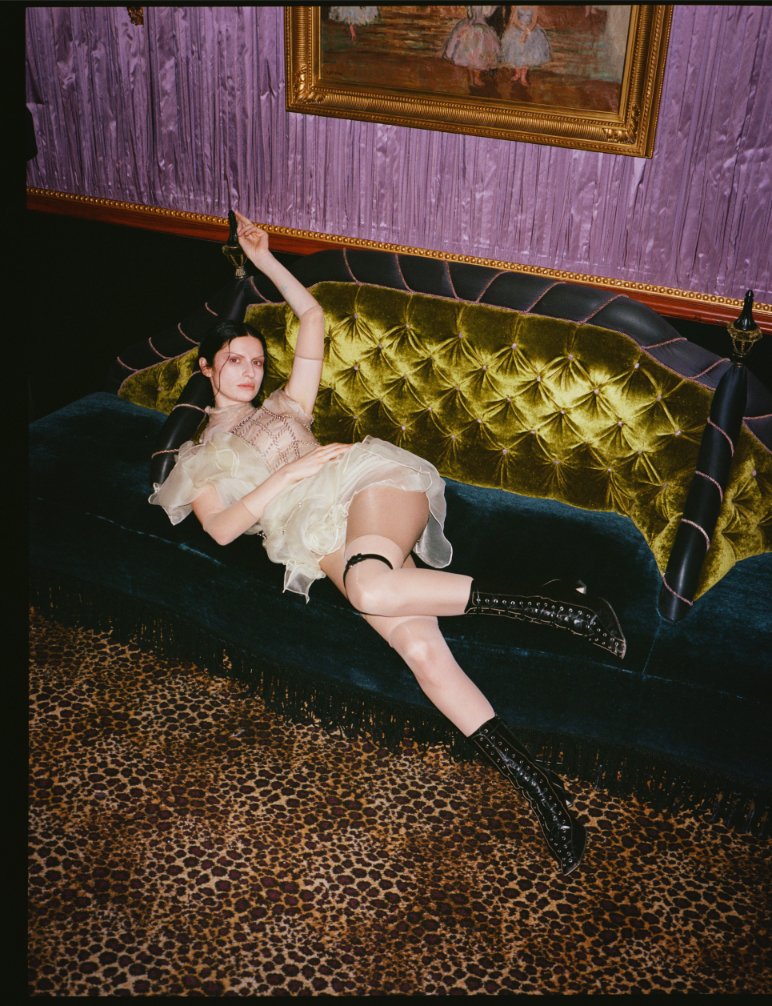
Dress SIEGENTHALER
Boots MIISTA
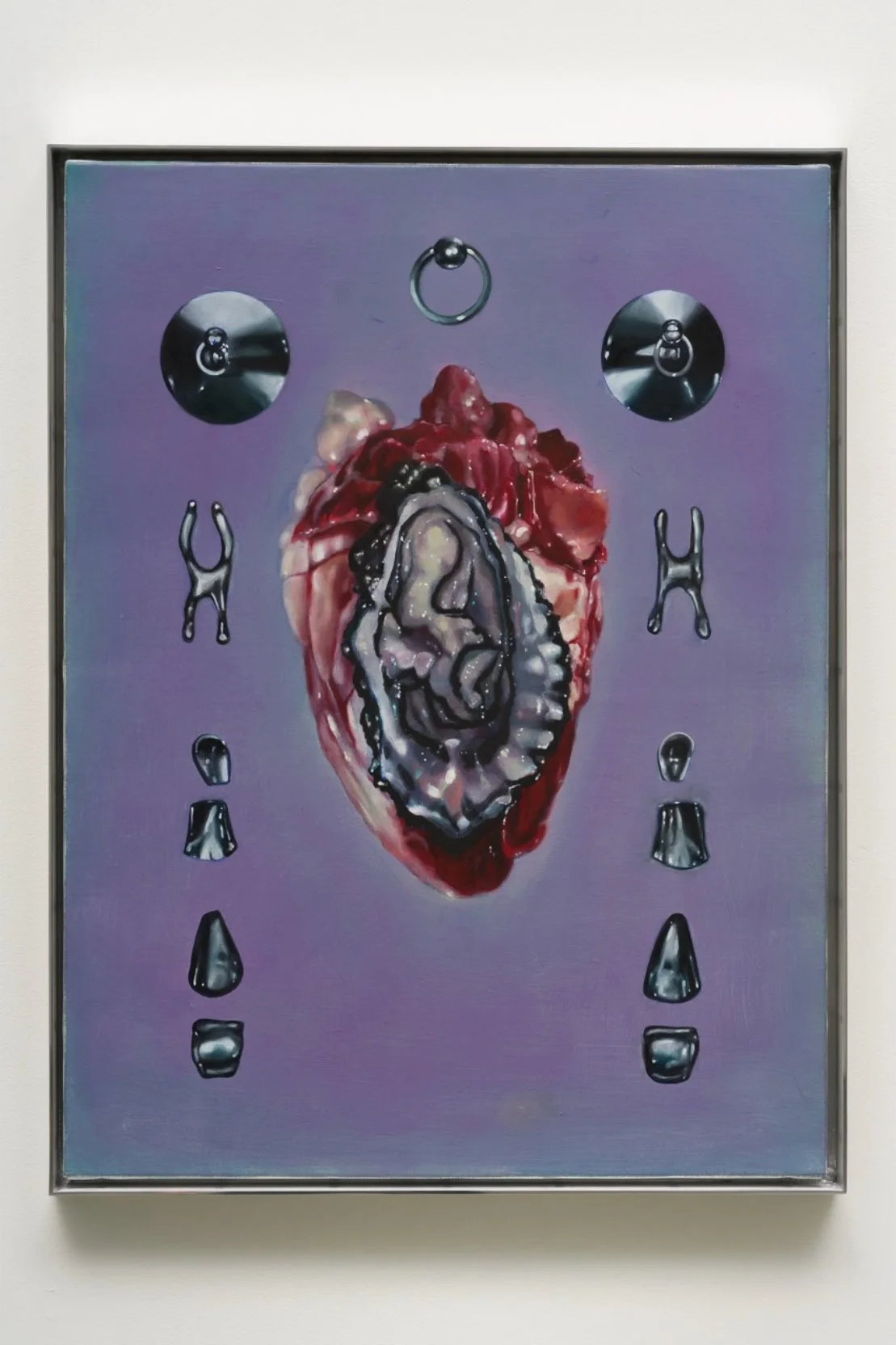
Tali Lennox, Heavenly Desserts, 2023.
Oil on linen, 24 0h x 18.0w in / 61.0h x 46.0w cm.
Courtesy of the artist and Nocodim. Photo by Yubo Dong / of studio photography
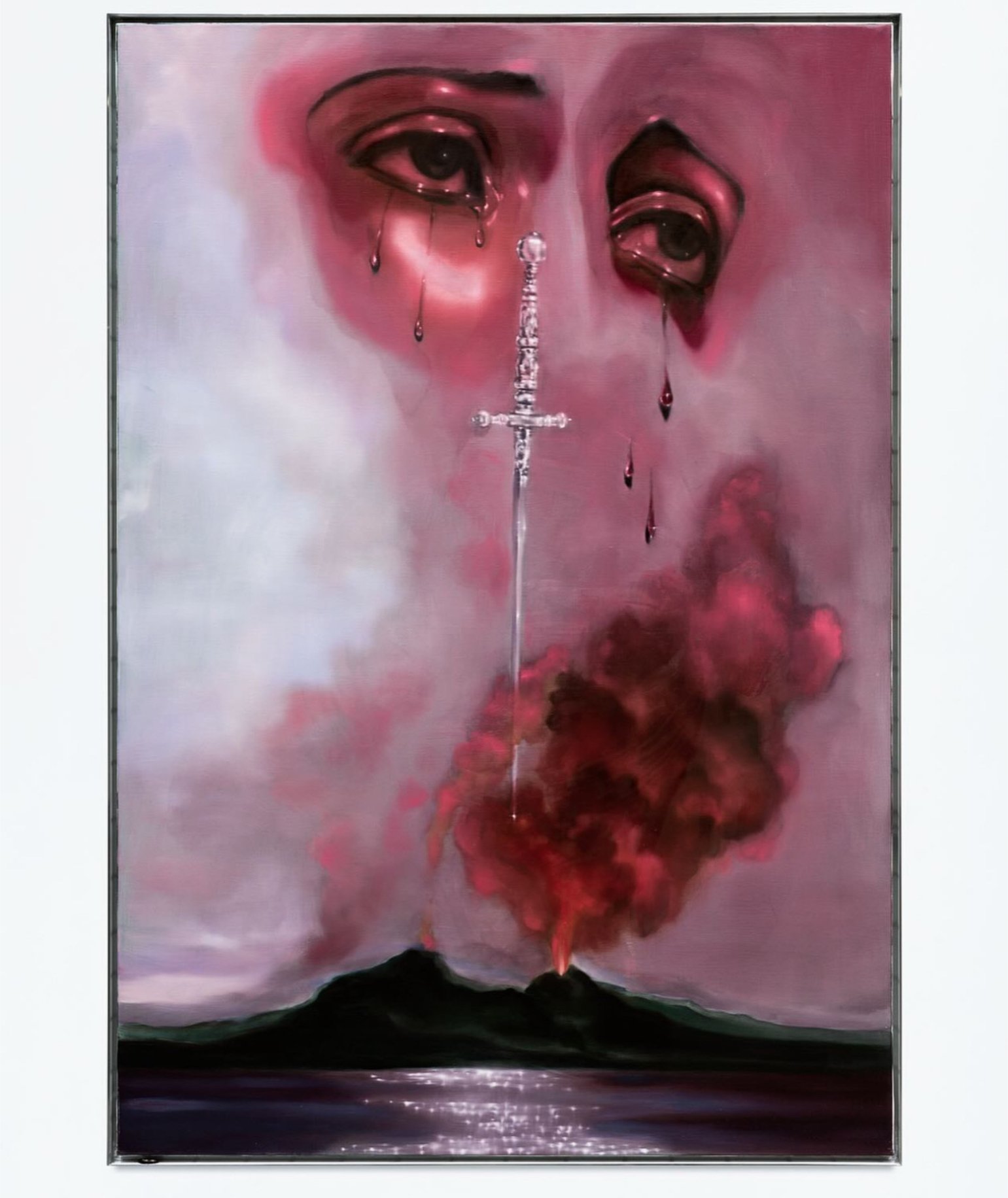
Tali Lennox, Belladonna 2023.
Oil on linen, 63.0h x 51.0w in / 161.0h x 130.0w cm
Courtesy of the artist and Nocodim. Photo by Yubo Dong / of studio photography
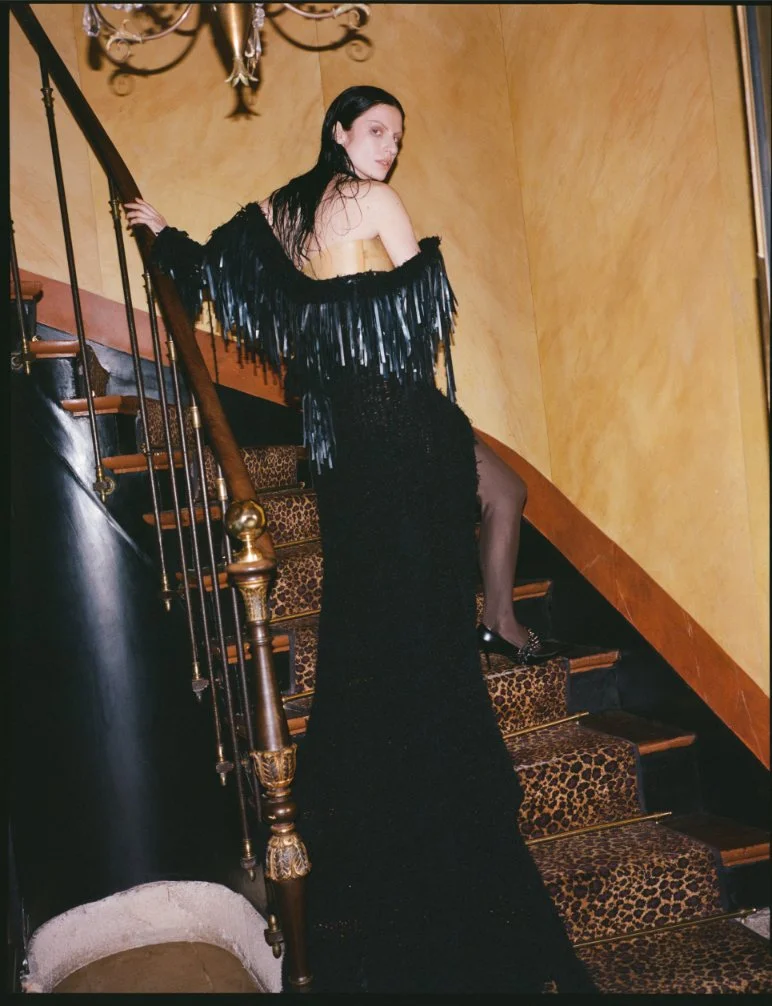
Coat MONIQUE FEI
Shoes ABRA
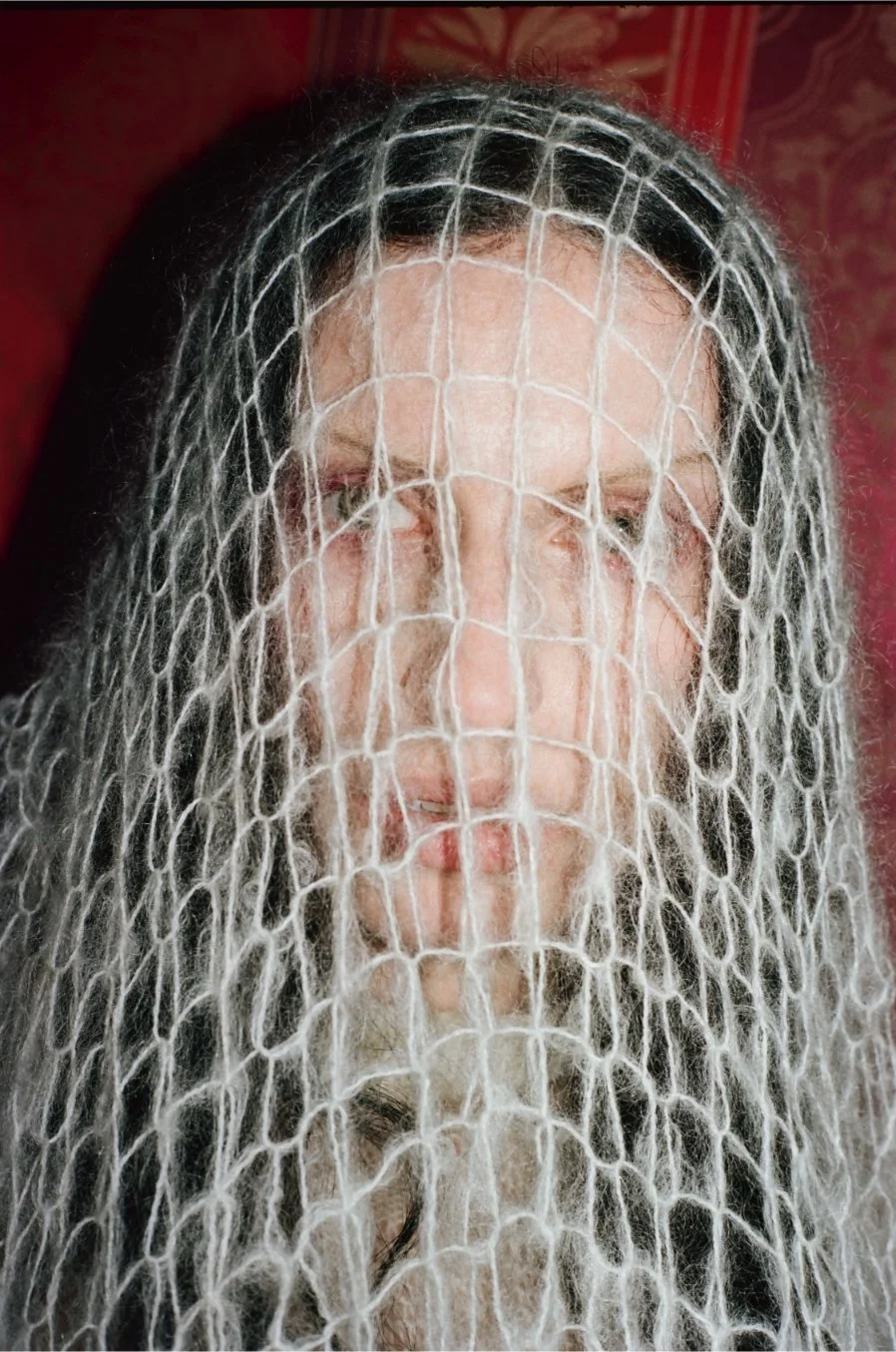
Dress COLOMBE DE NAES
Top LARUICCI
LENNOX: Thank you for the encouragement. Speaking to you instantly allows me to return to my essence. I'm also curious about Eden, with your boudoir project. Do you have a thought on the religious myth of Adam and Eve and Eden? I'm curious about if you have thoughts on that because the erotic throughout art and religion and history is so fascinating and also such a contradiction.
VERNON: In the beginning, I committed entirely to my erotic collection, discontinuing the 2,000 designs I had created between 1990 and 2000—a decision that cost me many clients who balked at selling massage rings, silver dildos, and more. I named the collection Paradise Found, a play on Yeats’ Paradise Lost. By 2007, I was searching for a property in Paris to bring my vision of Eden to life—an immersive, experiential space. I had precise criteria, and when I visited what would become Eden, Paris, something clicked. That night, on a whim, I opened Paradise Lost and turned to the passage where Satan flies over the gates of Eden. The space I had just seen—near Place des Vosges, with a grand door, a gate, and an inner garden—felt like fate. It was also right by the Bastille, where the angel atop the column is actually Lucifer, the fallen angel—another serendipitous connection. I embraced the idea fully. The Garden of Eden is always next to heavenly places, and for me, sexuality—when approached with deep respect—is a path to the higher self, much like psychedelics are for you. When we tap into the body’s natural pharmacy through the right connections, we unlock something profound—something far beyond everyday life. Sex is spiritual. We enter each other’s personal space, auras, and bodies. To deny its power is to misunderstand its depth.
LENNOX: I love Paradise Found because it’s so uplifting and optimistic. It’s not a heavy title. It’s not darkened, although I like duality and I love the dark too. I keep going back to the word ‘euphoric.’ It’s so nice that you encourage exploration in an enlightened, uplifting, sophisticated, mature way. It just dissolves these boundaries. Happiness dissolves guilt. That’s the boundary I know I have to work on in life: guilt. I was speaking about it with my dad lately because he said, “God, I really passed it on to you.” That's also why I think art is such an interesting way for people to be able to enjoy the erotic throughout time. In the past centuries, you couldn't show ankles in paintings. However, the women also never had hair and it wasn't quite realistic. It’s interesting how looking at paintings was one of the only ways people could enjoy eroticism in a public space.
VERNON: Even in the church. If you think about the way that Eve is portrayed, Mary Magdalene is portrayed, even in Bernini’s Ecstasy of Saint Theresa, she is in the throes of orgasm. You and I know that at the moment of orgasm, you are not here; you have gone someplace else. It's a different brainwave frequency. The brainwave frequency that is being emitted when you have an orgasm is the same frequency that is emitted when you are doing very advanced forms of yoga or meditation. It's not concerned with the day-to-day. So, our spaces must be like temples. You walk in the door, the stage is set, and the rest is history. We fulfill our desires through our environments. You don’t need anything else, the rest is cherry on the cake.