
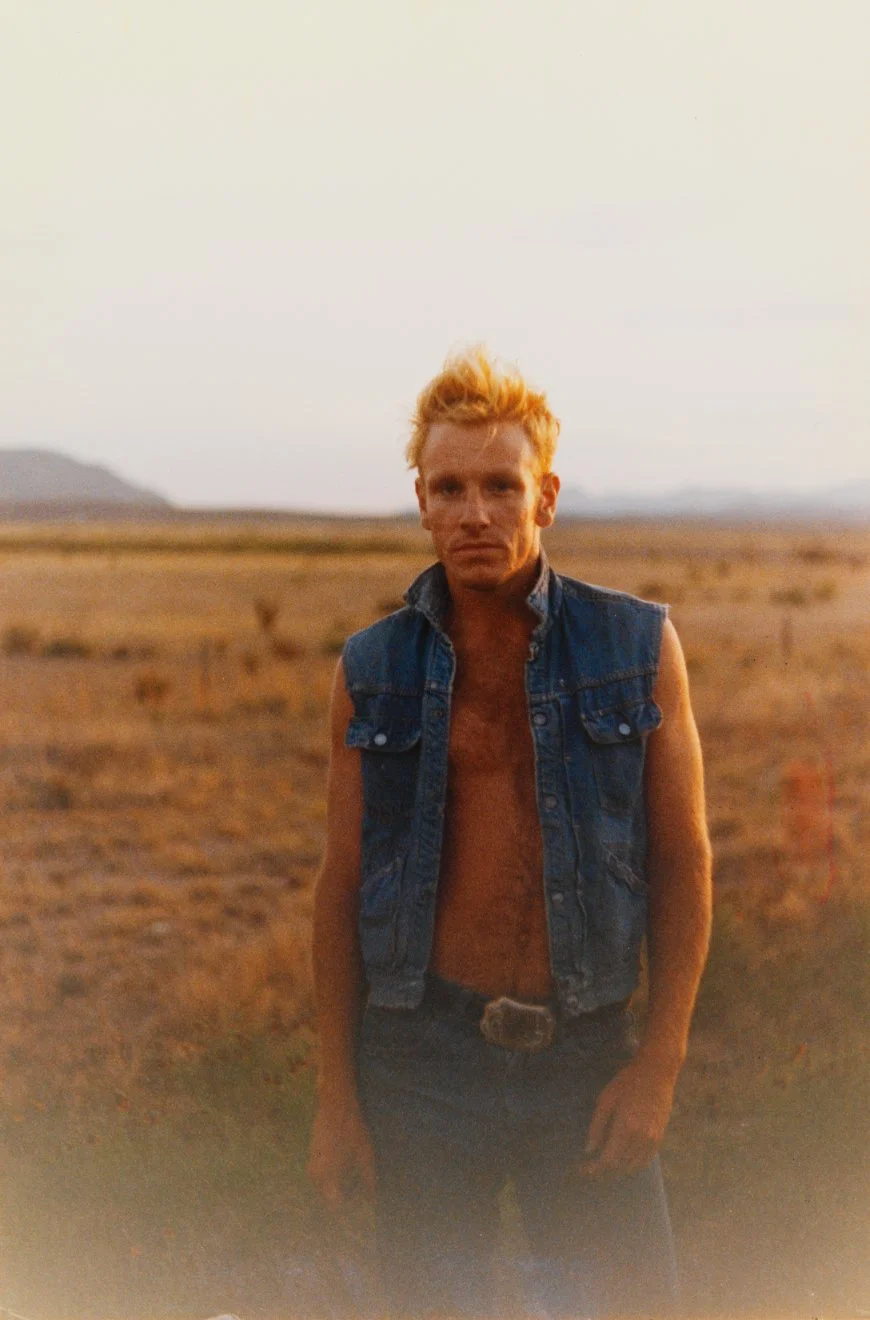
Jack Pierson
Badlands, 1991
© Jack Pierson, Courtesy Jack Pierson and Lisson Gallery
interview by Oliver Misraje
Jack Pierson’s work begins where longing takes shape–half-lit motel rooms, sun-faded billboards, rusted signage spelling out half-truths. Desire, in his world, is not only erotic but atmospheric, ambient; it drifts through his photographs and sculptures like heat shimmer off an empty highway. To encounter Pierson is to encounter a queer poetics of yearning–his gaze lingering on beauty just past its prime, on bodies caught in the soft ache of becoming. Whether in his disheveled boys or his melancholic text pieces, desire is never fixed; it is itinerant, flickering, always already vanishing. His art doesn’t just depict desire–it stages it, exposes it, lets it bleed into the horizon.
OLIVE MISRAJE: With your fictional self-portrait series, you identify the artist within the other and in the process, seem to capture a fascinating power dynamic between the artist and the muse as a sort-of two-way mirror. Is the muse named into existence by the artist or is that potentiality self-generated?
JACK PIERSON: Some muses don't need to be named into existence and others do. Both are appealing to me, because one gives a sense of discovery and another this feeling of collaboration beyond the sum of either of our respective parts.
OM: Do you ever encounter resistance with a model, in the figurative sense? If so, can that abstract tension lend itself to a good photograph?
JP: It’s a good question, because sometimes you can pull something out of somebody and that can be cool. But for me, usually when it's magic, they're giving it. If it’s not clicking, I’m prone to giving up, you know? That’s good, that’s good, thanks for coming.
OM: How has your personal understanding of what constitutes a muse changed over the years?
JP: I’m not sure if anything about the muse themselves has changed fundamentally as much as the avenues in which we meet each other. That’s something that has really changed in my photography. Part of what gave me entry to the art world was real life. Everybody wanted real life in the 90s. These are real people; these are his friends. And in fact, they were my friends. But there's nothing real life about my pictures these days. I’m not in a scene these days, so I’m really not surrounded by young people like I was in the 90s.
OM: What is your internal relationship to the muse after you capture the photograph—erotically, analytically, artistically?
JP : With “Baby,” I hardly knew the model two hours before he came to my house to shoot. We did that for three days, right? And weirdly, he's like a brother or kid to me. I think the genius thing about that book is that there's nothing, to me, prurient about it, especially given there are 150 pictures and 137 of them have his dick in it. I guess people find it sexy, I don't know. But I can hang out with him endlessly and there's no part of me that's like, oh this is a sublimation of something sexual. I don't go jerk off to the photograph or anything like that. Even when I was 24, it wasn’t about that. It’s more like, we’re both creatives and did this thing. Somehow there’s magic in that. That's the crucible, that's the union. I don’t need anything more than the photograph. Maybe that makes me a voyeur, I don’t know.
OM: The titles of your works rarely play cursory roles, between the meta-narrative layering in Mythology of the Self, to the aforementioned “Self Portrait” series. They seem to actively participate in the work. How much of that is intentional?
JP: The titles came into being in a very flippant, sort of cynical way. It was completely a spur of the moment thing. There was this curator in the studio who I was trying to show my paintings to, you know—which I am always trying to do as an artist—but she wasn’t interested. Then she walks over to a stack of pictures that I had organized, because I had been doing a lot of editorial fashion portraiture for magazines, celebrity portraiture, stuff like that. And I kept thinking, well, these are really good, even though they're not my typical work. I was a little bit embarrassed at her looking at all this cheap magazine photography and so, thinking fast on my feet, I was like, this a series I’m working on called “Self Portraits.” And she just pounced. She was all curatorially engaged: What? Oh, that’s really interesting. Tell me more. So, it just sort of escalated into this larger thing. I depend on my snap judgments and quick impulses. Maybe it's about containing multitudes or tapping into the subconscious or whatever. But I can’t say in confidence that that series is about transferring some aspect of my identity onto the models and vice-versa. To me, it just feels like a glitch in photography and naming and all that kind of thing.
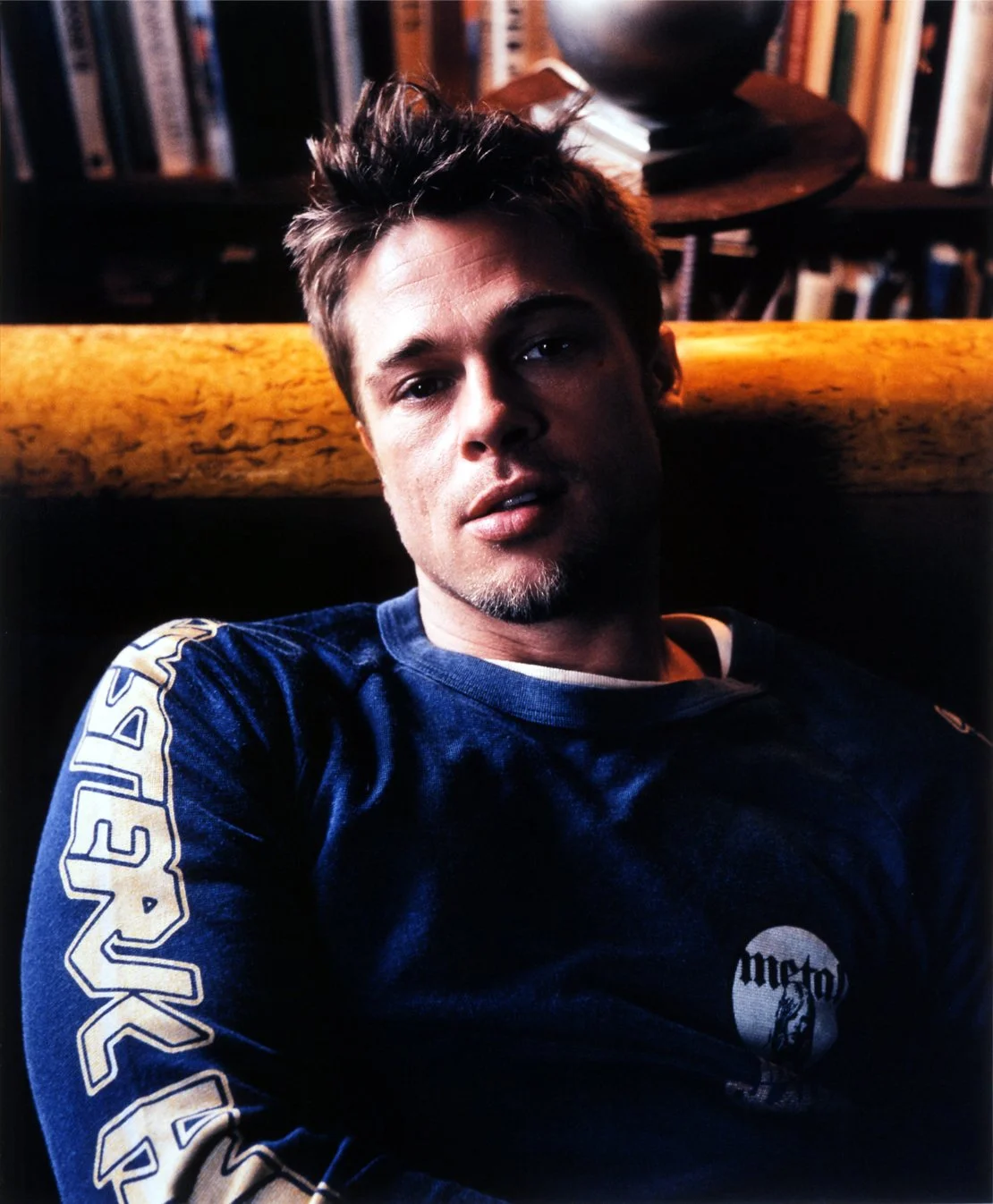
Self Portrait #22
Jack Pierson
2003
Pigment print
54 x 44 inches (137.2 x 111.8 cm)
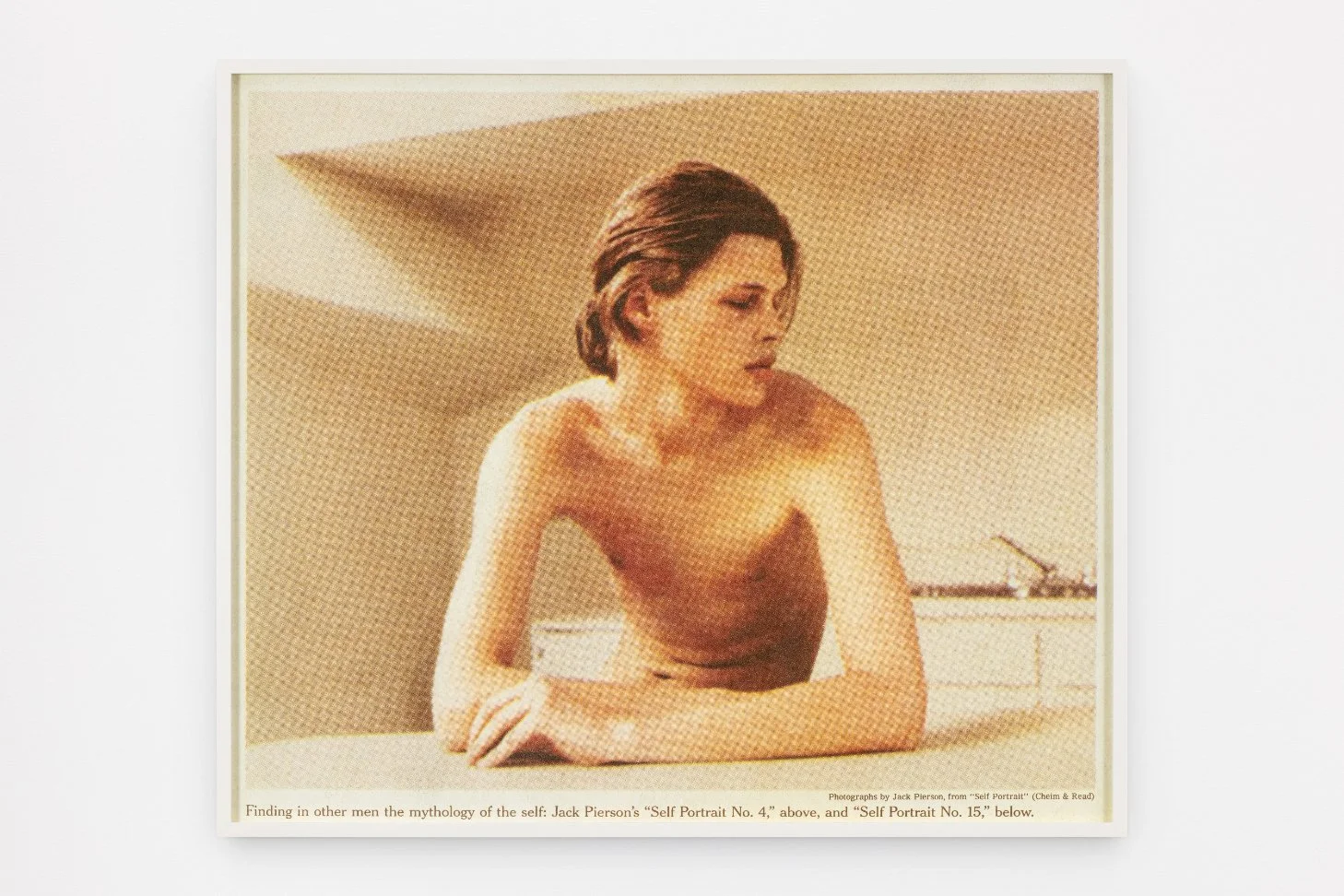
Mythology of the Self
Jack Pierson
2020
Digital print on archival paper
54 1/4 x 63 3/8 x 2 inches (137.8 x 161 x 5.1 cm)
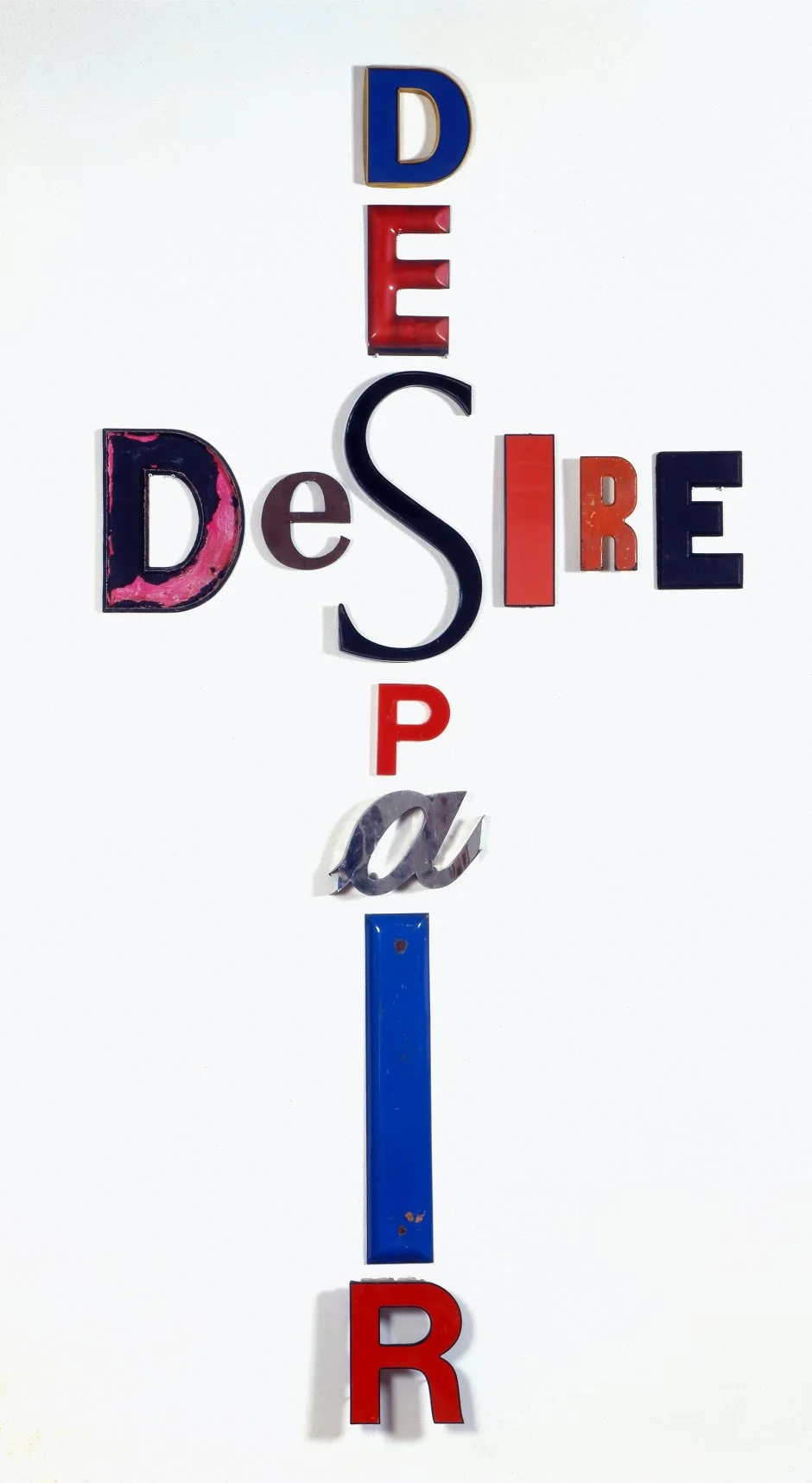
Jack Pierson
Desire, Despair, 1996
Metal, plastic, plexiglass and wood
Overall: 117 1/2 × 56 1/4in. (298.5 × 142.9 cm)
© Jack Pierson, Courtesy Jack Pierson and Lisson Gallery
OM: How does a photograph's relationship to desire shift in the context of a fashion editorial?
JP: It’s an interesting question because those self-portrait pictures for the most part were me trying to execute what I thought was fashion or editorial, when really, what they wanted were my personal photographs. A couple years ago I started using my own pictures as a reference. I guess I didn’t fully grasp the separation between the tricks of editorial and the tricks of real photography. I think I can do it more seamlessly now, somehow. Because even in my personal practice, I always saw fashion photography as legitimate photography. And so that was always my goal, even as a student—to make it look fashionable.
OM: I think that’s partially what makes homosexuals successful in fashion—that innate understanding that the point of desire isn’t its actualization; that there’s nothing less erotic than obtaining the object of your desire.
JP: If it’s done well, fashion has the means towards inspiring a sense of enchantment. I want that billboard that’s just my pure image. I like the idea of sending a message out that somebody could just rip out of a magazine. That alone is worth all of the noise that comes with working in fashion—waiting for the stylist, dealing with agents, set politics, etcetera—the thought that maybe, just maybe, somebody might rip this out of a magazine. I don’t want the paycheck, really. I just want some kid in Hemet to say, life can be like this.
OM: You've mentioned in the past that you see photography as an inherently queer medium, as opposed to painting. Do you still feel like that that separation exists today?
JP: Well, again, that's one of my flip responses where I’m trying to be a little bit of a provocateur. It just seems to me that photography disappears, it’s considered the more ephemeral, lesser medium. I was just saying to somebody else that it seems to me that if you're really going to be a painter, it's because you want to cast yourself into history. Though everything has changed in the thirty years since I've been operating. Like gays have children now (laugh). Now they have progeny or people to carry on their name. I'm not one of those gays who will have children, so I make stuff to sublimate that desire for my name to be attached to something. Or maybe it won't be. I also kind of like all those moments of misattribution. I don't think anything really lasts. I'm mostly just doing this to entertain myself, and others while I'm here (laughs). Have a little fun. Take a few pictures.
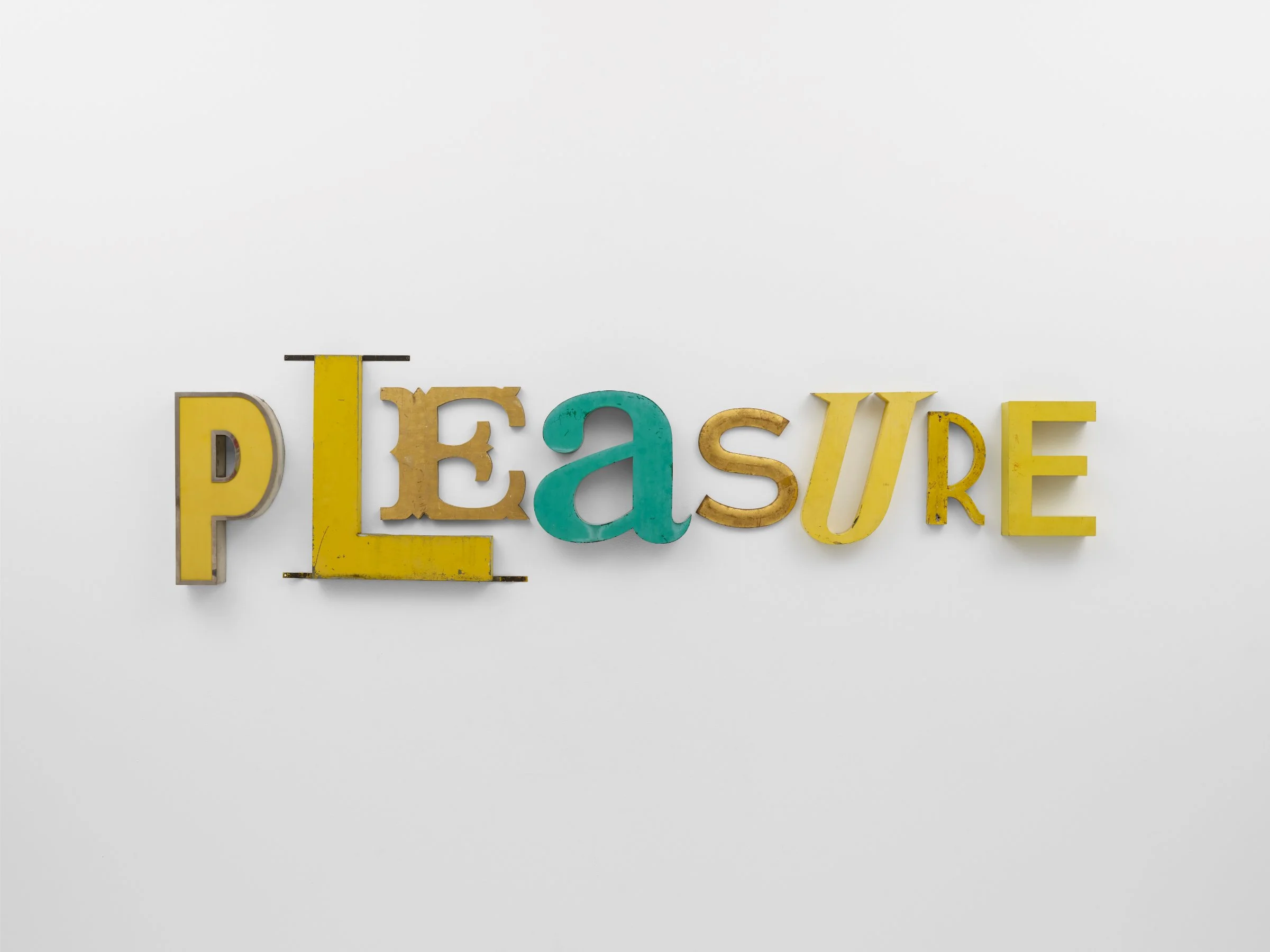
Jack Pierson
PLEASURE, 2024
Metal, paint, plastic, and wood
61 x 240 x 8.9 cm, 24 x 94 1/2 x 3 1/2 in
© Jack Pierson, Courtesy Lisson Gallery
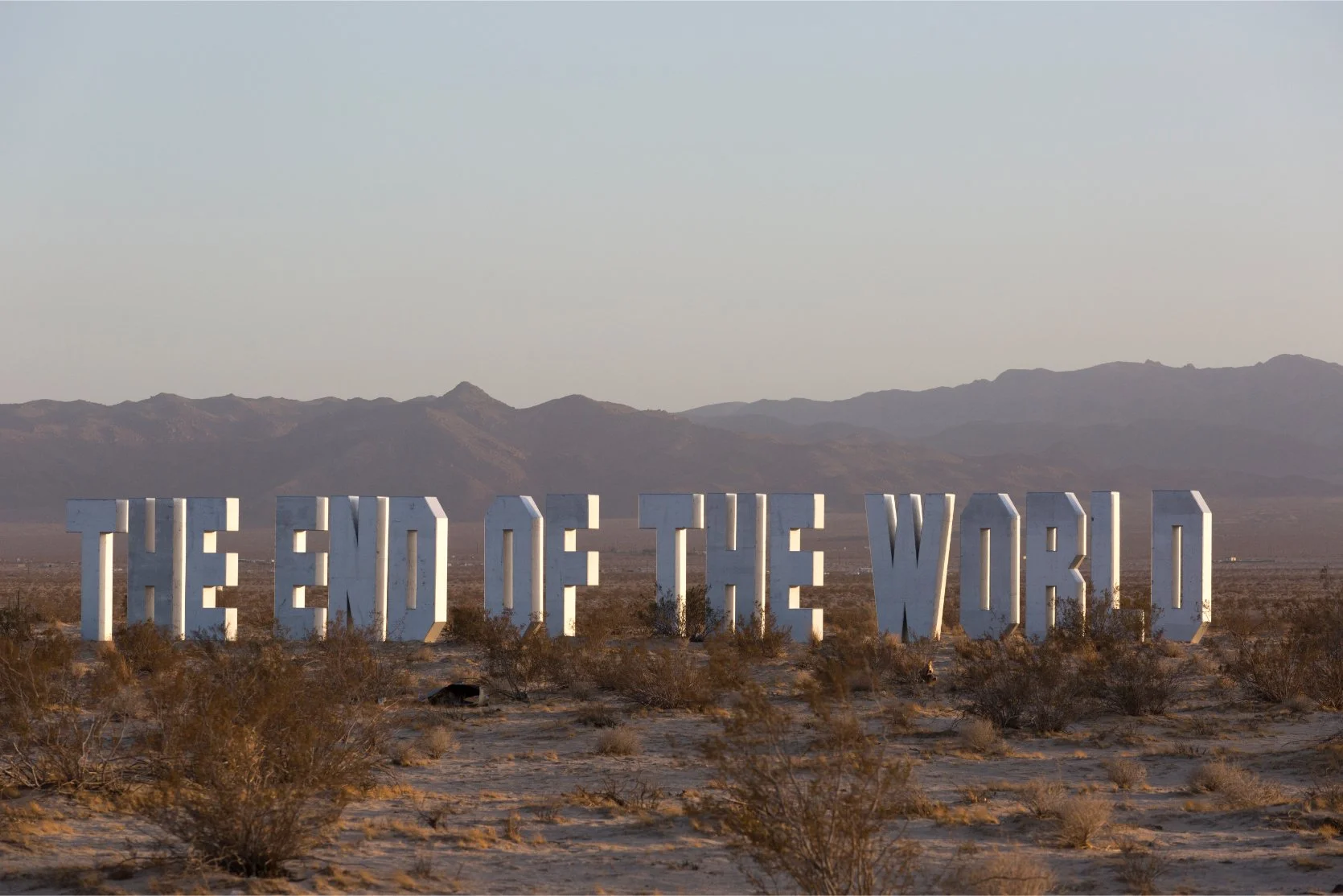
Jack Pierson
THE END OF THE WORLD, 2012
Plywood and silver paint
Dimensions variable
Installation view at High Desert Test Sites, Joshua Tree, California. Photo: Sarah Lyons
OM: I have this unearned nostalgia when being gay was a little bit more transgressive. I miss the angry, tortured, borderline violent, archetype of the homosexual.
JP: Have you had any experience with that? How old are you?
OM: I am 26. And I am violent.
JP: When was homosexuality ever transgressive to you?
OM: Grade school.
JP: Right, yeah. There’s this sense that, oh, this is wrong. But then it seems to me after that point, it evaporates a little bit. And I mean, I guess it's good and everybody should be able to get married and be model citizens if that’s what they want, like, “Look, here are my kids. Yes, we'll come to soccer, and host dinner parties,” or whatever else it is that they do. I get it, but it was fun when it was a little more transgressive.
OM: Yeah, totally. And that’s what I’m referring to when I say an unearned nostalgia. My father was a preacher, and that protestant outrage fueled me until I left for university. I moved to the big city and was like, damn—everyone’s a fag! Even straight dudes are fags.
JP: Oh, for sure. And I spent my teenage years hating my dad, and then I realized I actually liked him (laugh).
OM: How can we make gay sex transgressive again?
JP: I consider myself somewhat outside of the gay sex pool, but it seems to me that they're doing the best they can (laughs). The new generation has been jerking off to hardcore porn on the internet since they were eight. When I was eight, I found a playing card out in the woods with a grainy out-of-focus picture of a lady from the forties giving a blowjob. Even though my parents weren’t religious, I sat at dinner that night thinking, oh my god, they know. They can tell that I saw that picture, you know what I mean? And now, by the time kids are like thirteen, they’ve already seen a donkey fuck a girl (laughs). But there’s all kinds of freaky stuff that I can't figure out. Like puppy play or whatever.
OM: If it’s any consolation I can’t figure that one out either. There’s something allusive about the way you photograph your muses. Even if they’re nude, they’re at a remove. It kind of emulates that experience of being in public and seeing a beautiful person walk past you. On one hand it's exciting, then on the other, it hurts. Even if the photographs are sexy, they resist the viewer in a way that pornography doesn’t.
JP: Lately, when I've photographed a fellow, I have to make it a little bit removed. So much is being offered on the internet that I don’t want it to seem like my models are too. Yet at the same time, I'm presenting a nude person. I want it to be an experience that's almost like, God forgive me for saying this, a religious painting or something. I want you to see a man that's willing to stand there and be photographed for you, for me, you know? I’m also nostalgic for physique photography from the ’40s, ’50s, ’30s, where it was like, yeah, what the hell, I can stand here naked for you for a little bit. Those pictures are intensely erotic because there was nothing on offer.
OM: It’s also kind of strange how before internet porn, there was more room for it to achieve a cult, or even art house status, like LA Plays Itself for example. Have you ever thought about directing a gay porno?
JP: Yeah, theoretically. Although I think the best ones aren’t directed, you know. I like when there’s a touch of authenticity. But ultimately, I’d rather just make simple, nice, still pictures.
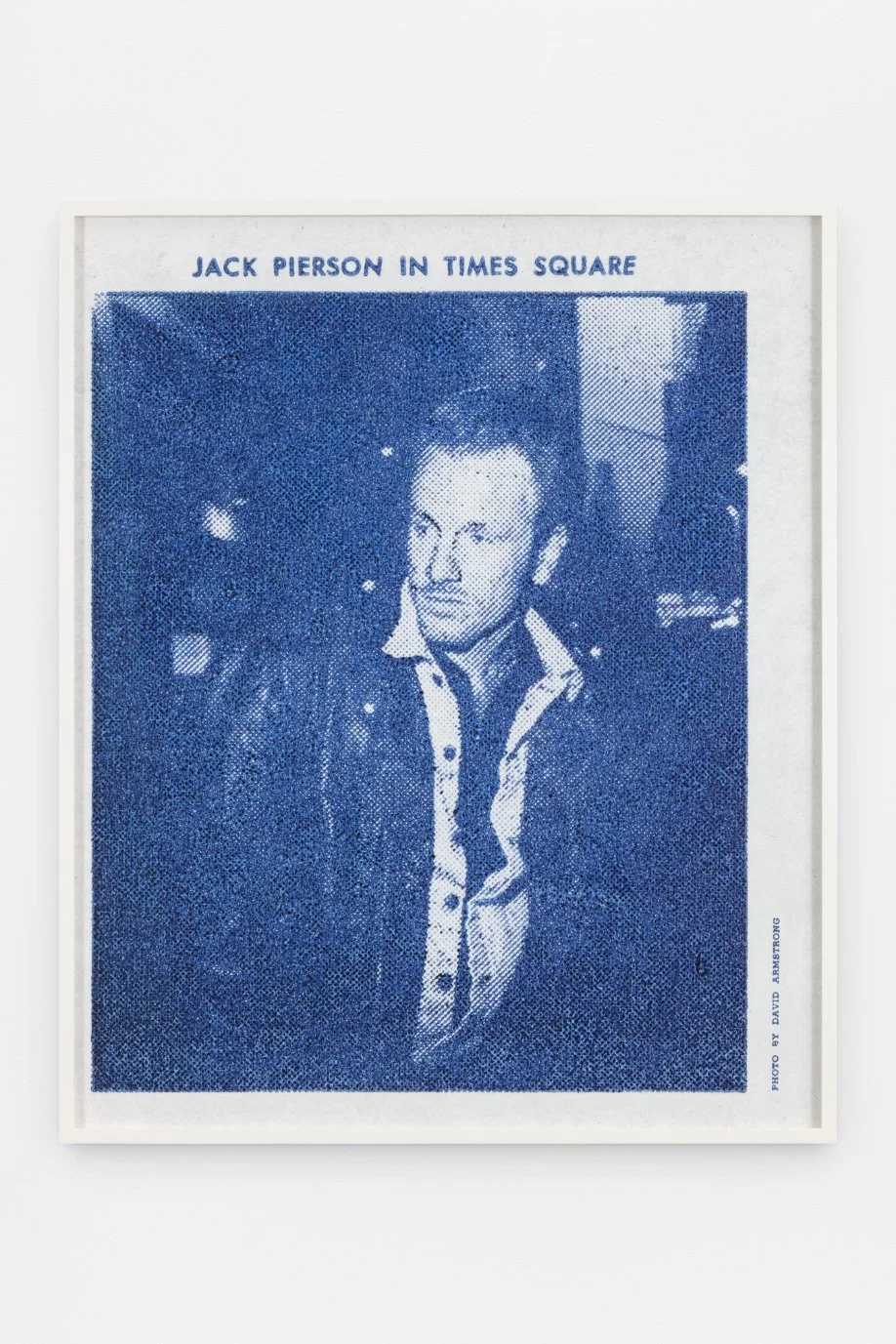
Jack Pierson
In Times Square, 2020
Digital print on archival paper
63 3/8 x 52 1/4 x 2 inches (161 x 132.7 x 5.1 cm)
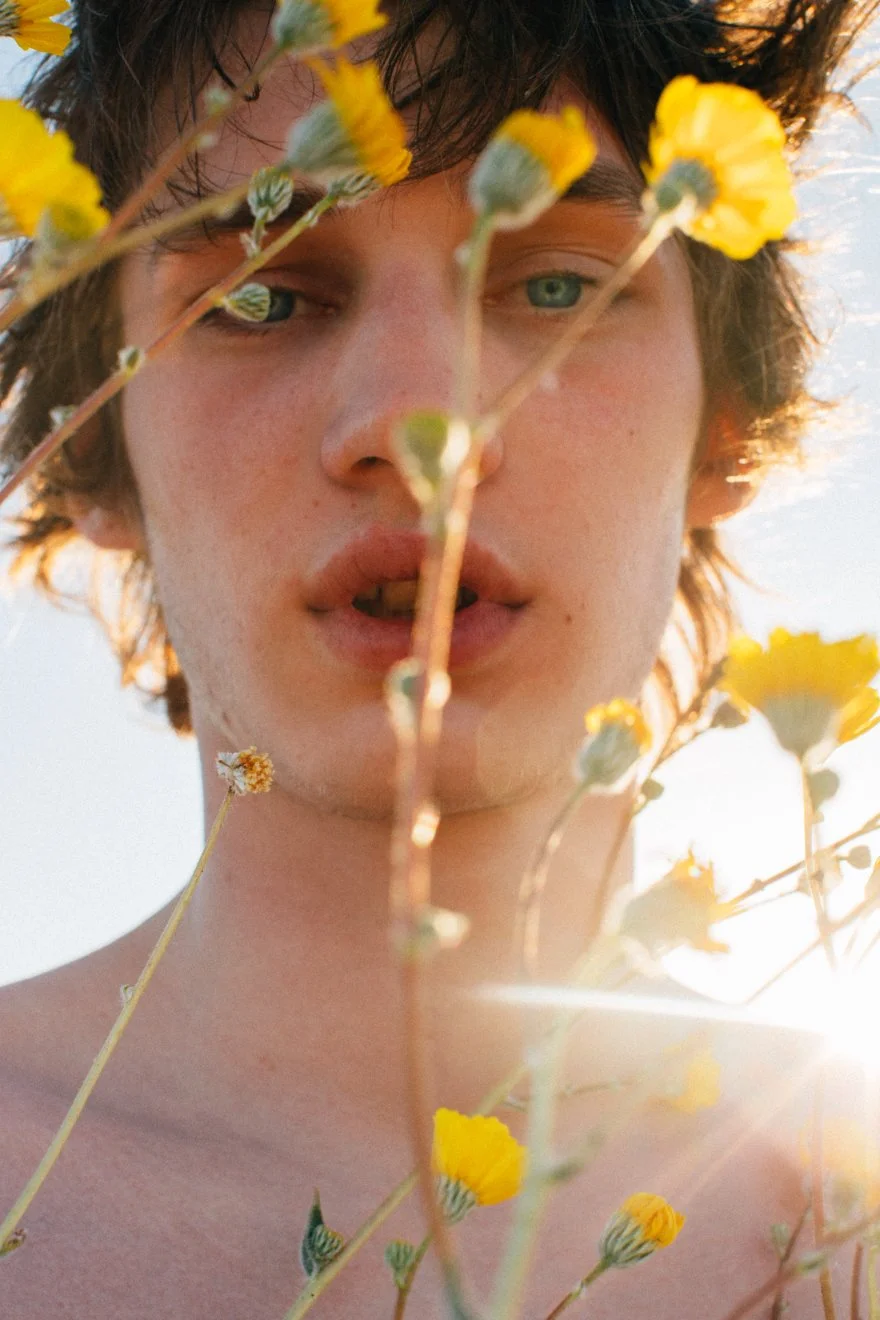
Jack Pierson
Baby Behind Flowers, 2019
Folded pigment print
45 x 30 inches ed.3
© Jack Pierson, Courtesy Jack Pierson and Lisson Gallery
OM: Do you think the changing sexual landscape of the homosexual experience influences homosexual art? Specifically, in regard to the diminishing prevalence of cruise culture in lieu of apps like Grindr.
JP: I don't see it as that different. It’s fascinating how much homosexual art there is these days. Homosexual art being celebrated not just by gays. I must say, I am impressed. I would've said it couldn't be done.
OM: You mentioned you’re calling in from your home in 29 Palms. Making art in the desert is a classically machismo, especially within the context of installation and sculpture—pop ups in your work from time to-time. What is your relationship to the landscape?
JP: I like the desert because it's simultaneously cheap, extreme, and exotic. This is the appeal of Southern California—I like any place where I can look and see the sky meet the water and the land. The horizon to me is a shorthand for hope, you know what I mean? I'm looking out the window now. There's no horizon in New York unless you're in a penthouse on the river or something like that. And I don't know. That exoticism is what first got me here and then you're right, there's something butch about the desert. Cowboys, marines, rednecks. You’ve got to be tough to survive here. The kind of person who chooses to live here is a little bit nutty and a lot of bit cool.