Rosie Marks

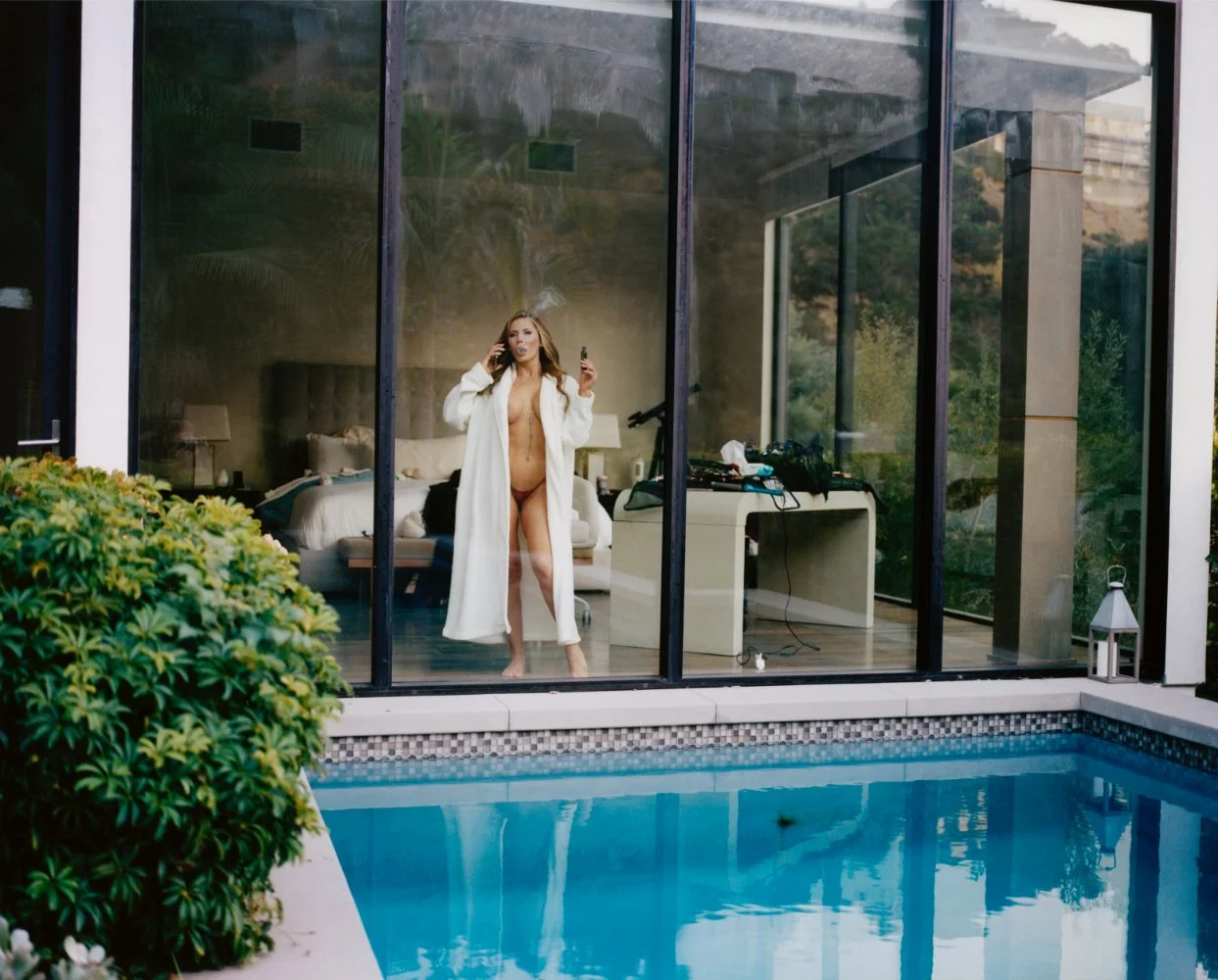
Madison Ivy, Brazzer’s first female contract star © Rosie Marks

interview by Karly Quadros

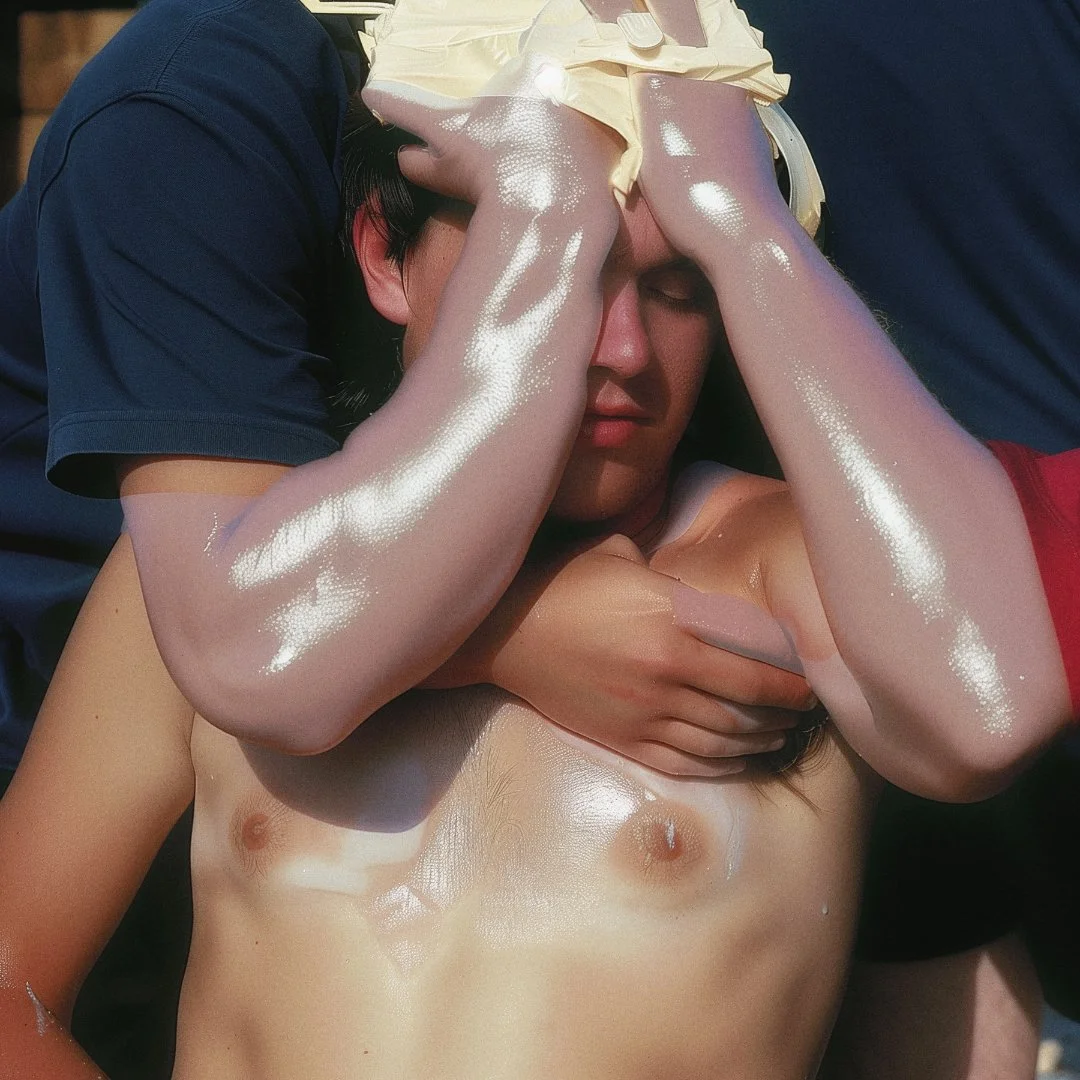
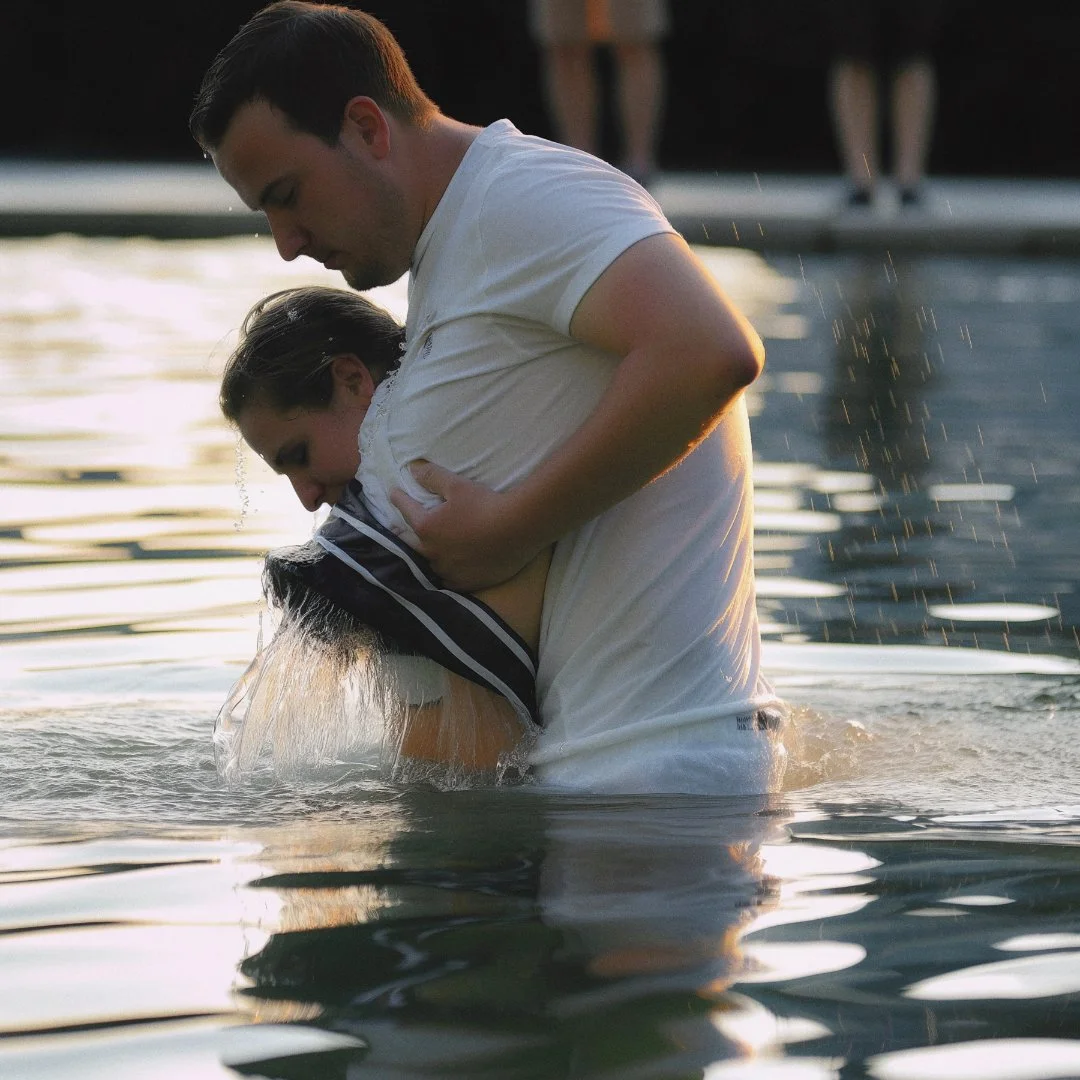
Brazzers has a brand: funny, horny, stupid. Think girls stuck in washing machines. Think pizza boys, plumbers, and flight attendants. Brazzer's’ brand is not art and high fashion. But that doesn’t mean they’re so different either. This spring, the porn studio introduced Raw Talent, a fittingly super-sized coffee table book collaboration with photographer Rosie Marks, featuring behind the scenes images from the world of Brazzers. From fluid-filled adult entertainment conventions in Berlin to the unseen labor of the behind-the-scenes crew, Raw Talent tells the story of the tight-knit community behind one of America’s most ubiquitous and least understood industries.

KARLY QUADROS: What was the first day like? Had you ever been on a porn set before?

ROSIE MARKS: The first day on set there was a scene with loads of extras because it was a Pam [Anderson] and Tommy [Lee] themed sex scene, and there was a band playing. The concept was that she saw one of the band members and was disgusted by her current husband, so she ran off with one of the guys in the back of the bar. All these extras on set I thought were really interesting. Some of them are just consistently an extra, and then there are some extras that have appeared in hundreds of Brazzers films and some are aspiring to be in the industry. There's a lot of really interesting people, and I wanted to know how the hell they got there. There was one guy—it was his third week being in the industry. He had taken ayahuasca and it showed him a path to the industry. There's one performer in the book—we followed his trajectory from extra to ‘sextra’ to main performer.

I had never been on a porn set before, but I shot a lot of stuff in and around that world. I'd spent a couple of weeks in Japan shooting really intense BDSM stuff for a magazine commission last year, and I've also been making a documentary about this woman who is a sex worker for the last four years. I didn't really feel that much. When I'm in photographer mode, I feel like nothing really fazes me. Like I can sit in an operating room and watch a body be dissected and still not feel anything, whereas, if I had to watch someone be cut open without a camera would be a very different story.
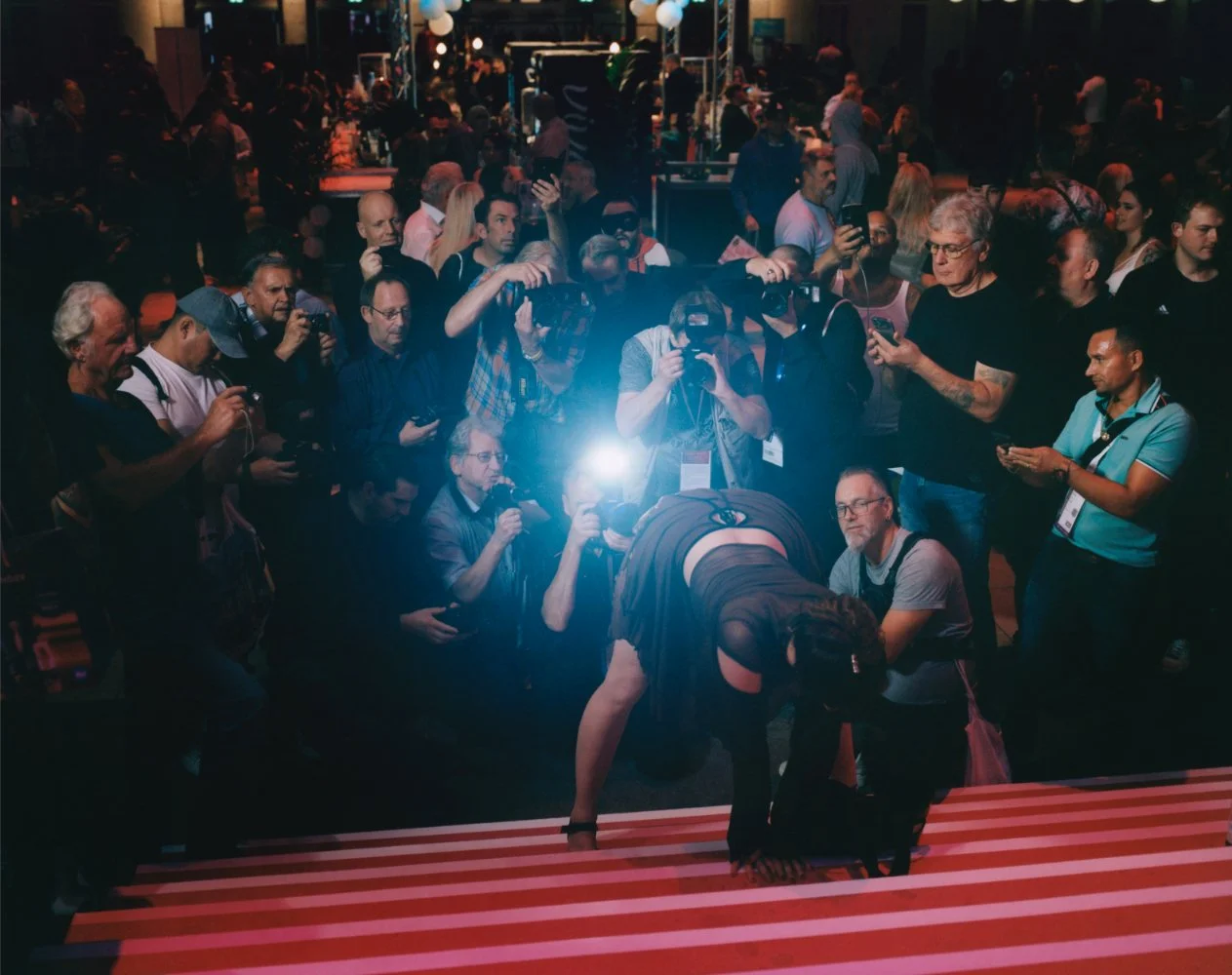
The Venus Berlin © Rosie Marks

QUADROS: How do you see your role as a photographer?

MARKS: In this project, I wanted to show it quite directly as it is. I was interested to show the process of porn, the moments that you basically wouldn't see if you're just watching it: the crew behind it, the moments in between takes. I guess I have a pretty voyeuristic, observational style of photography. So I was using that skill and trying to be as discreet as possible. But then there's also a lot of humor in this part of the industry. There’s always a completely bizarre scenario concocted as to how they end up having sex. They're always playing with different tropes, like there’s a vending machine or a washing machine and someone's stuck in it. All of these things are completely unrealistic and silly if you think about them in real life. I wanted to try and get that part of it across, that there is this very lighthearted side of the industry.

QUADROS: That’s very salient in the book because you will have people with that kind of slapstick energy or cartoonish faces then juxtaposed with something very mundane, like someone sitting on their phone or someone rolling cables.

MARKS: The way that a day on set goes, only maybe 45 minutes to an hour of it will be the actual sex. And then it’s choreographed. It's very much a performance. Then the rest of the day is just like being on any other type of shoot. There's a preconception of the porn industry being this sort of excessive or debaucherous thing, but that is absolutely not what my experience was. It was pretty sterile and more like a family vibe in the crew.

QUADROS: Something that’s very present in your work is the behind the scenes labor that goes into the obsessive cultivation of glamor. You show cables and lighting rigs. You show janitors and caterers and aestheticians. Did the process of shooting this book make you think differently about the labor that goes into adult films?

MARKS: Honestly no, because I knew what would be involved behind the scenes. But I wanted to show other people because that’s something I just take for granted. Anyone who works in any kind of media knows what goes into a production, be it porn or movies, media, advertising. That for me kind of destroys any kind of fantasy. There are a lot of people who might see this book who have absolutely no idea what goes into it, and maybe they don't want to know that. When speaking to one of the directors who used to be a performer—this woman called Lea Lexis—she said one day she brought a fan on the set. I think he had won a competition. He was a huge fan of her productions. And he ended up crying at the end of the day because he felt like his illusions of porn were shattered by watching it being made.

QUADROS: Do you think that seeing how the fantasy is created always destroys it for you?

MARKS: Yeah, I do.

QUADROS: A refrain I often hear from supporters who want to destigmatize porn is “sex work is work.” Is there room for work and desire and pleasure to intersect?

MARKS: For sure. Making this book, for me, was pleasure ultimately. Admittedly, a different type of pleasure than maybe the performers get. But it didn't feel like work to me. A lot of my job doesn't. It's the same thing for sex work—they should be able to experience both at the same time.

QUADROS: You were immersed in the world of porn far beyond just shoots though—you also went to things like conventions and award shows. What were those experiences like?

MARKS: We went to Venus, which is a porn convention in Berlin. That was the one place where I saw fans interacting with performers. It was one of the only things in this project that was public facing because the porn industry is a bubble, and it really feels that way in California, especially because it's like the parallel universe to Hollywood. That whole thing was a pretty insane few days, being in this convention center. Because it was in Germany, the rules are very different.

QUADROS: Are they more strict or more explicit?

MARKS: Anything goes. Live sex show on the stage any time of day. Every day I walked into the entrance—there were these pink stairs—and something crazy was going on there, like a man being whipped completely naked with like 100 people watching him cheering. One of the images [in the book] from that convention is this woman lifting up her skirt to a huge group of men taking photos. That was a spontaneous moment. You can walk around naked, if you want. There were fans who were being taken up onto the stage to be a part of the sex shows. At some point we were all watching this, like, Viking orgy. There was just a lot going on, just constant noise overload as well. Opposite the Brazzers booth, there were these guys singing karaoke, but it just seemed like they sang the same song that was just saying ‘sucky fucky’ on repeat for four days. That added a soundtrack to the whole weekend. But also that really showed to me the family side of this group of people. Everyone is in a place they don't know, together for this whole week. There was a kind of a sweetness amongst the absolute insanity of the whole convention.
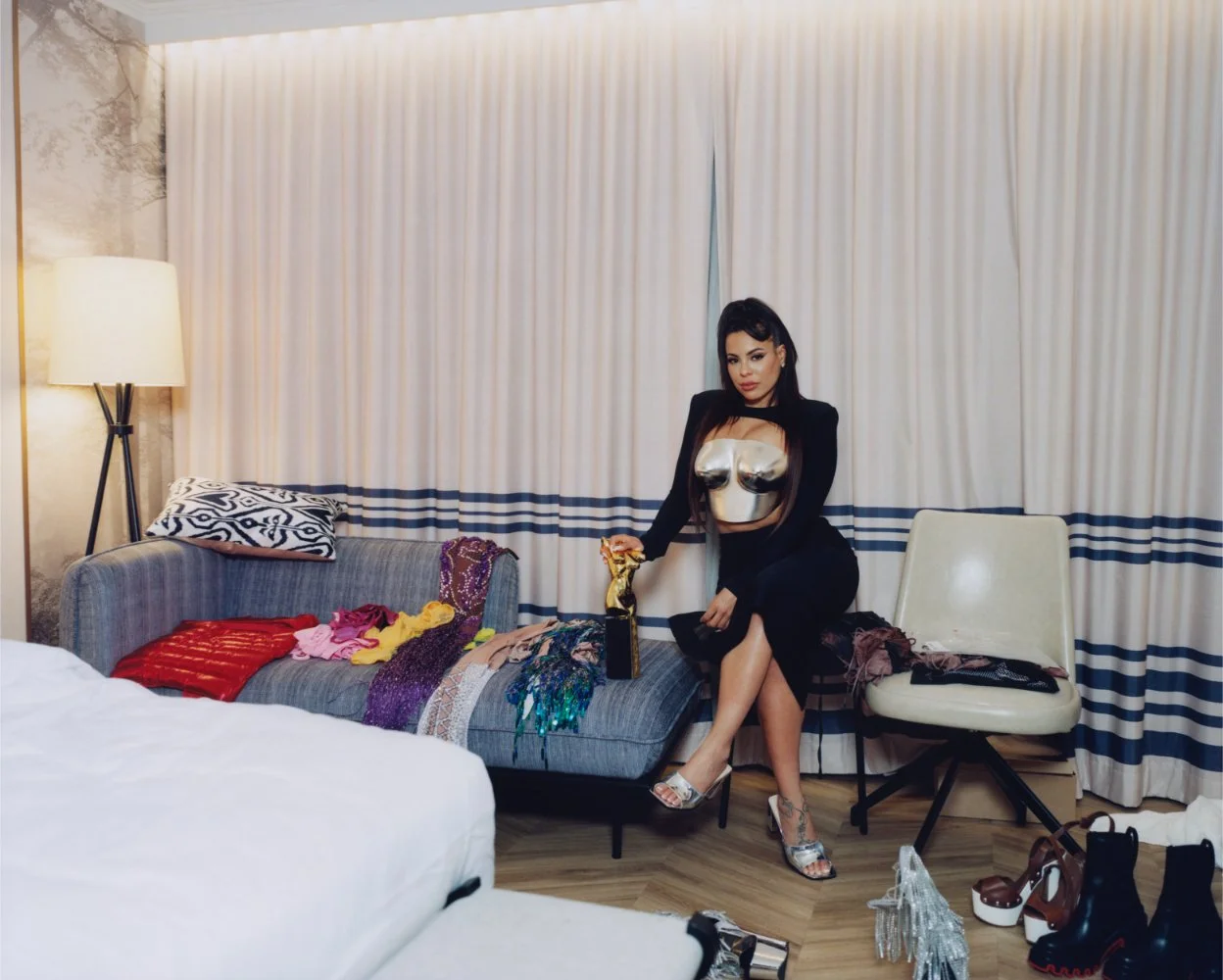
Luna Star in her hotel room, after winning the Best International Star Award at the Venus Awards. Berlin, Germany © Rosie Marks.
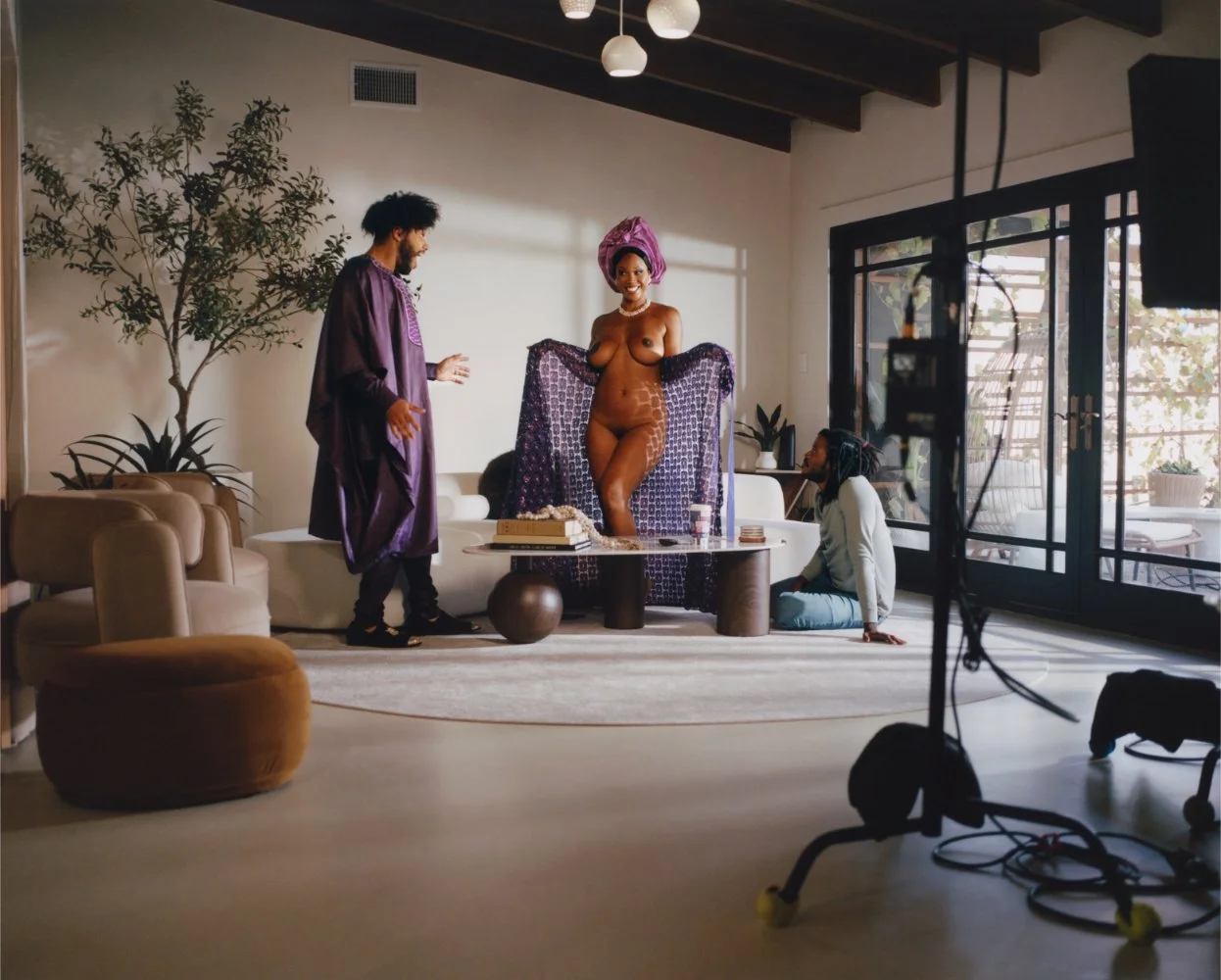
Director Marvin Love with performers Tony Genuis and August Skye on the set of A Nigerian Owambe. Woodland Hills, CA. © Rosie Marks
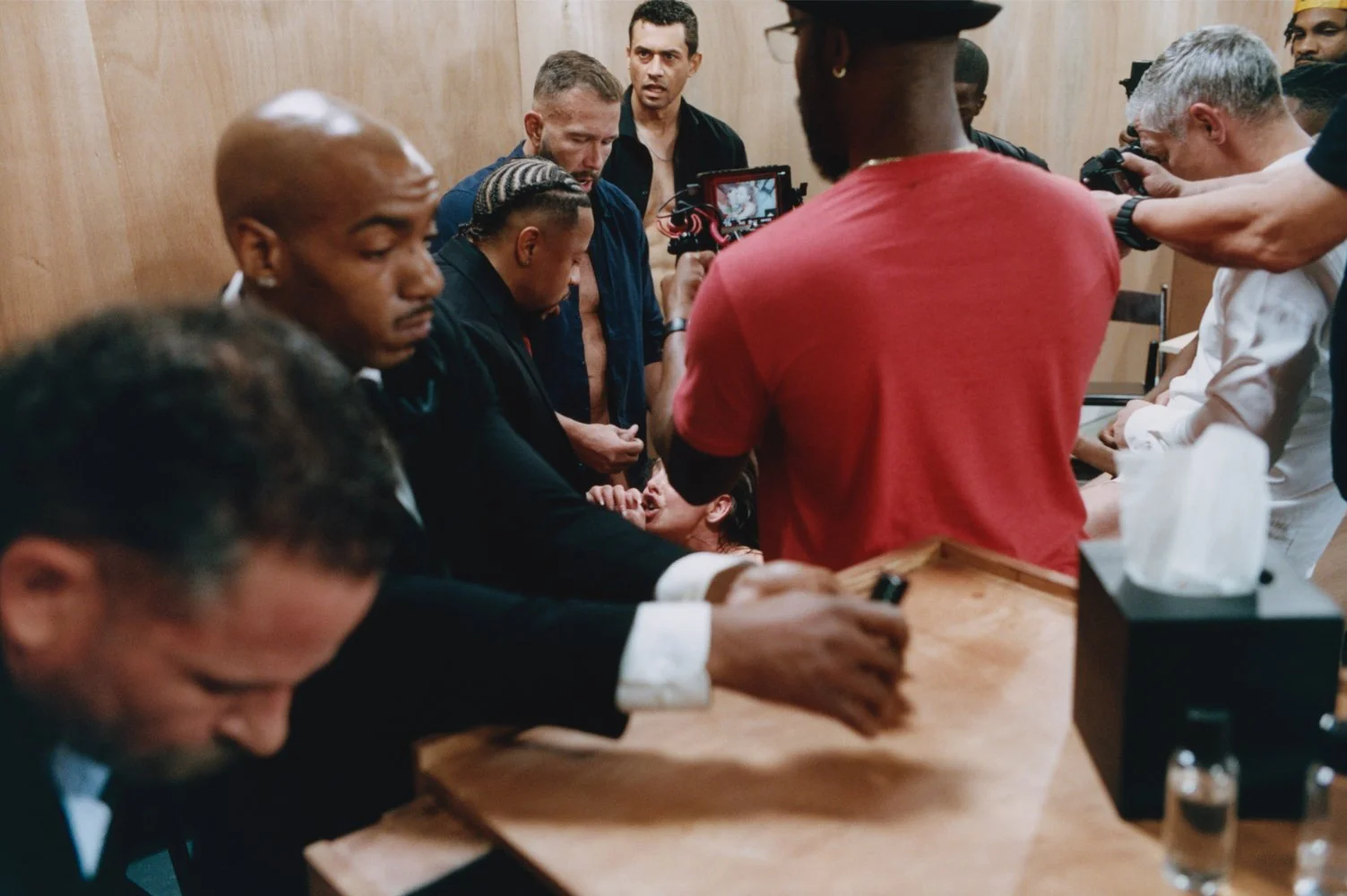
12 Horny Men: Cherie vs. Jury Duty. Las Vegas, NV. © Rosie Marks
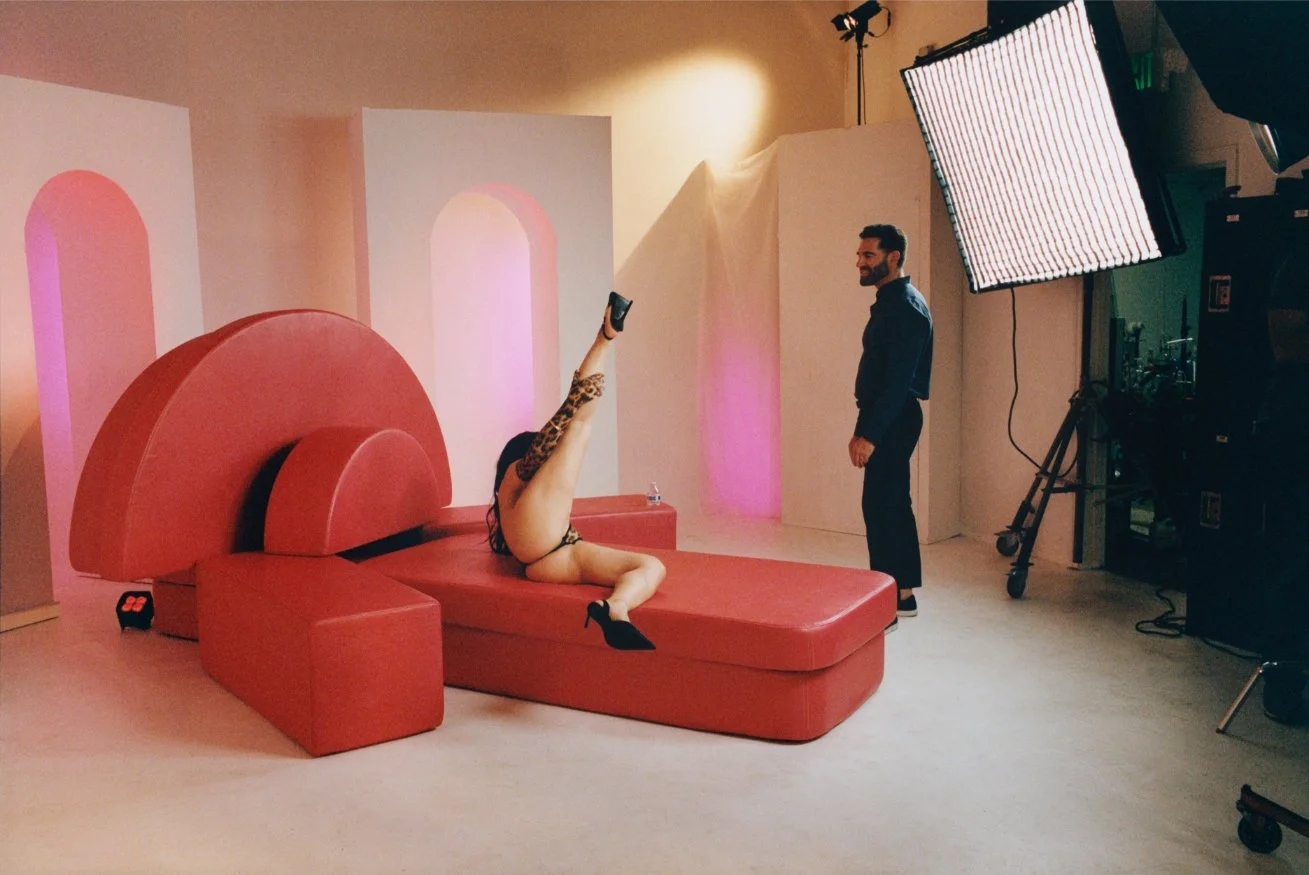
Ken Feels and Valentina prepare for their scene, in Valentina in the Limelight. Burbank, CA © Rosie Marks.
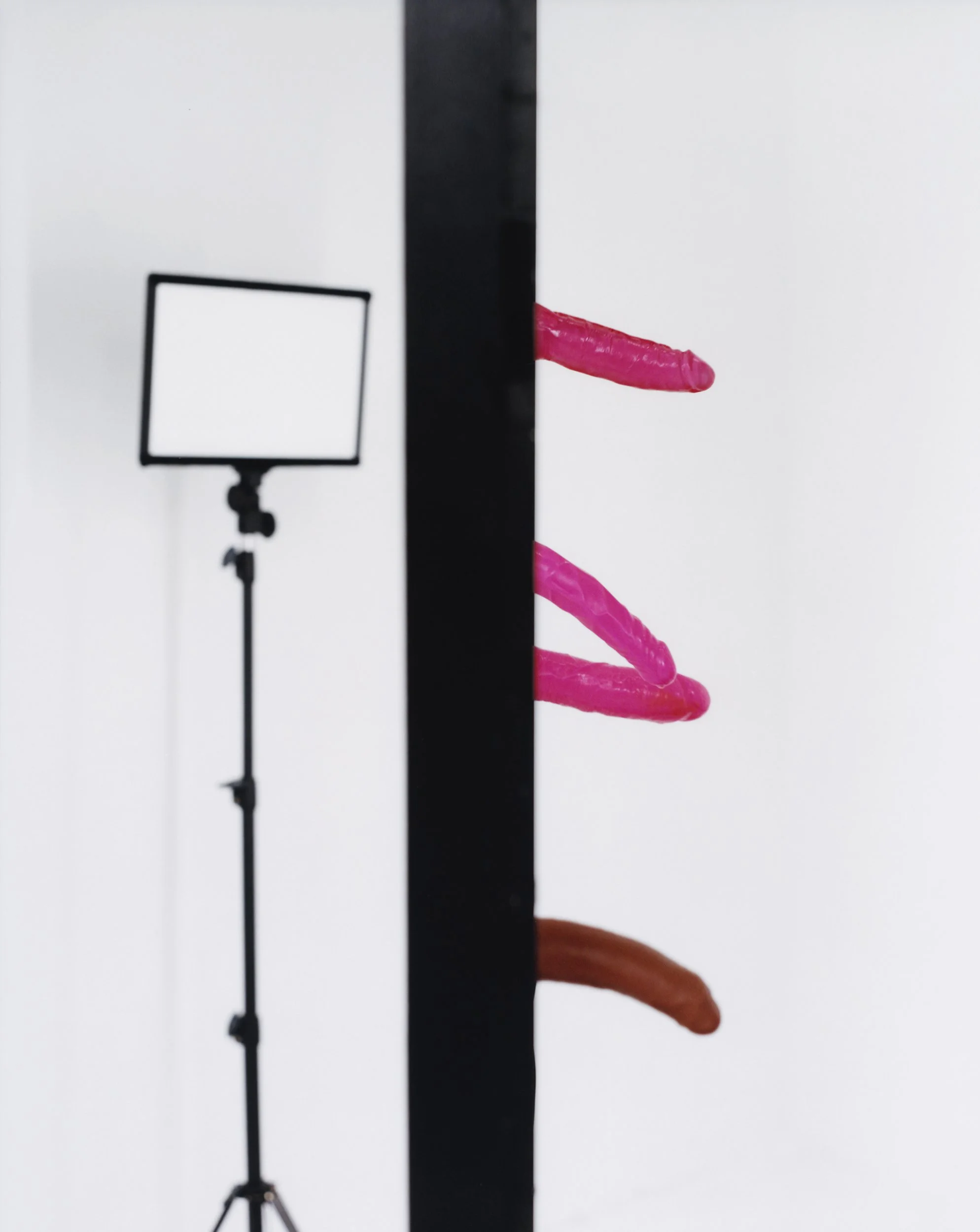


QUADROS: When I was doing research for this, I just kept thinking about how much porn there is, the magnitude of it, how many hours and how much gets logged a day, the hugeness of it, how ubiquitous it is. That seems to me to be one of the things that you capture really well.

MARKS: It's funny, though, because this book is  such a tiny corner of the industry. It’s the upper echelon of porn. In terms of the performers, they’re at the top of their game. It’s like if I tried to make a book about actors, but I just looked at Nicole Kidman. But I think that you're right. There's so much out there, even the amount that this one company is making. One day when I was in the height of this in the summer, there would be up to three shoots a day in LA, and that was LA alone. There's an endless desire for this from all around the world. It's always evolving. As soon as something comes out or some kind of trend, they're responding to that. For example, like when fidget spinners were a thing, then fidget spinner porn became a big thing for them. Every TV show or movie, they've made a parody. They're mirroring the whole world in some way.

QUADROS: A lot of your work is centered around the act of desiring and the quest to be desirable. A lot of your work around plastic surgery, for instance, is about that. Nominally it’s about being sexy, but it’s also about something much bigger. What is your personal relationship to desire?

MARKS: I’ll contradict myself a little bit from what I said before in that I’m able to break down all of these things in the photo taking and make sense of it in that way. I still am a woman who’s affected by these things too. Sometimes people say things to me as if, because of the work I make, that somehow I’m completely unaffected by anything to do with glamor or beauty. I guess it’s just a way of making sense of it.

QUADROS: I’ve seen other people describe your work as voyeuristic. Does that resonate with you?

MARKS Yeah, I think it does. Sometimes I’ll just stand in a situation and feel deeply uncomfortable, like I want to be swallowed up into a wall. I’m normally not the sort of photographer that ends up deeply bonding with their subject.  I’m not a completely antisocial person at all, but I try to keep a little distance to try and be more observational. I think subtly it affects the work in a positive way.
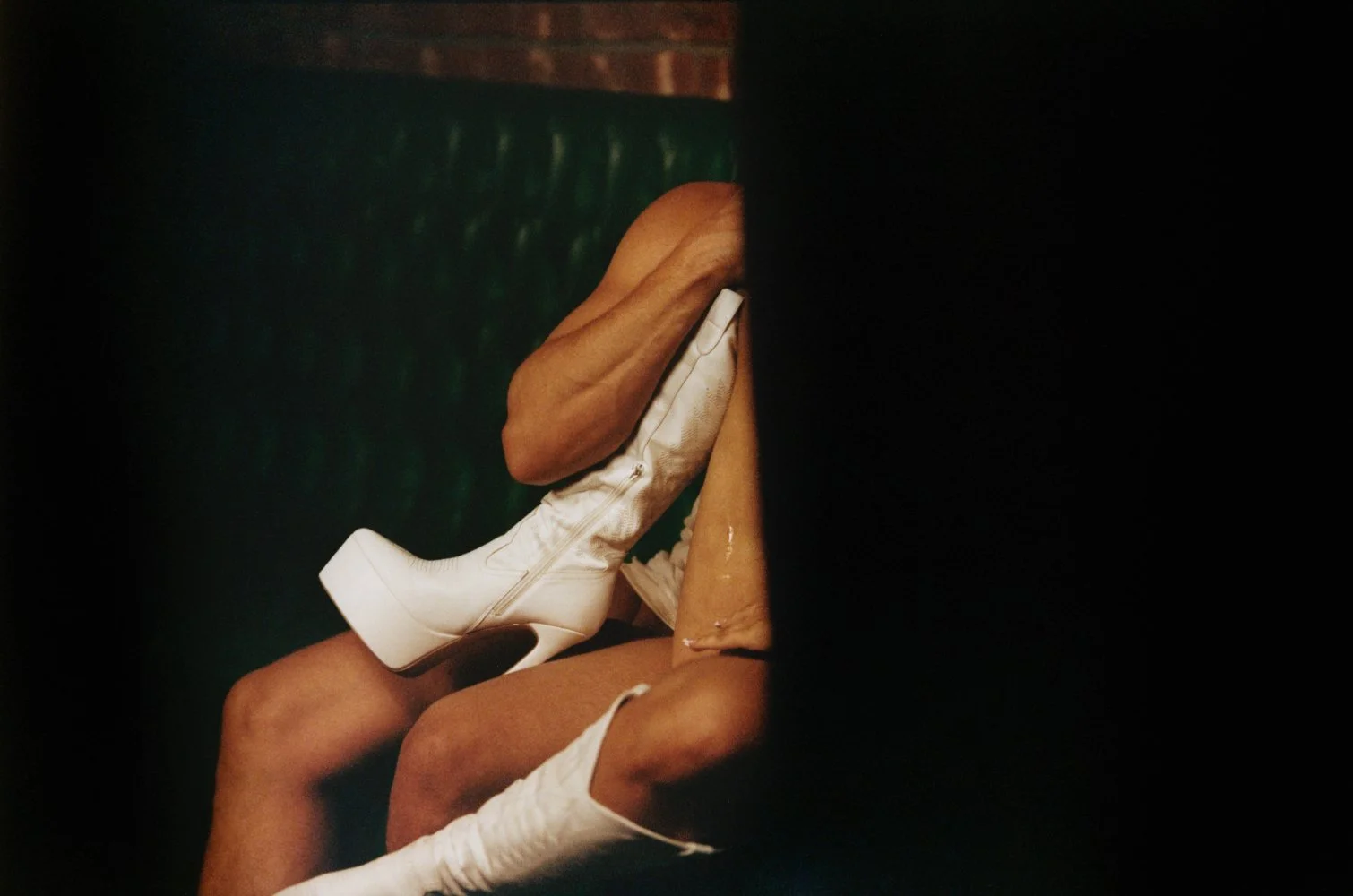
Kayler Gunner on the set of Sneaky Dive Bar Throwdown, a scene inspired by the infamous Pam & Tommy sex tape. Kayley
Gunner started her adult career as a cam girl while serving in the U.S. military. She did a character study of Pam in preparation for the shoot. “I do my own stunts.” Hollywood, CA. © Rosie Marks
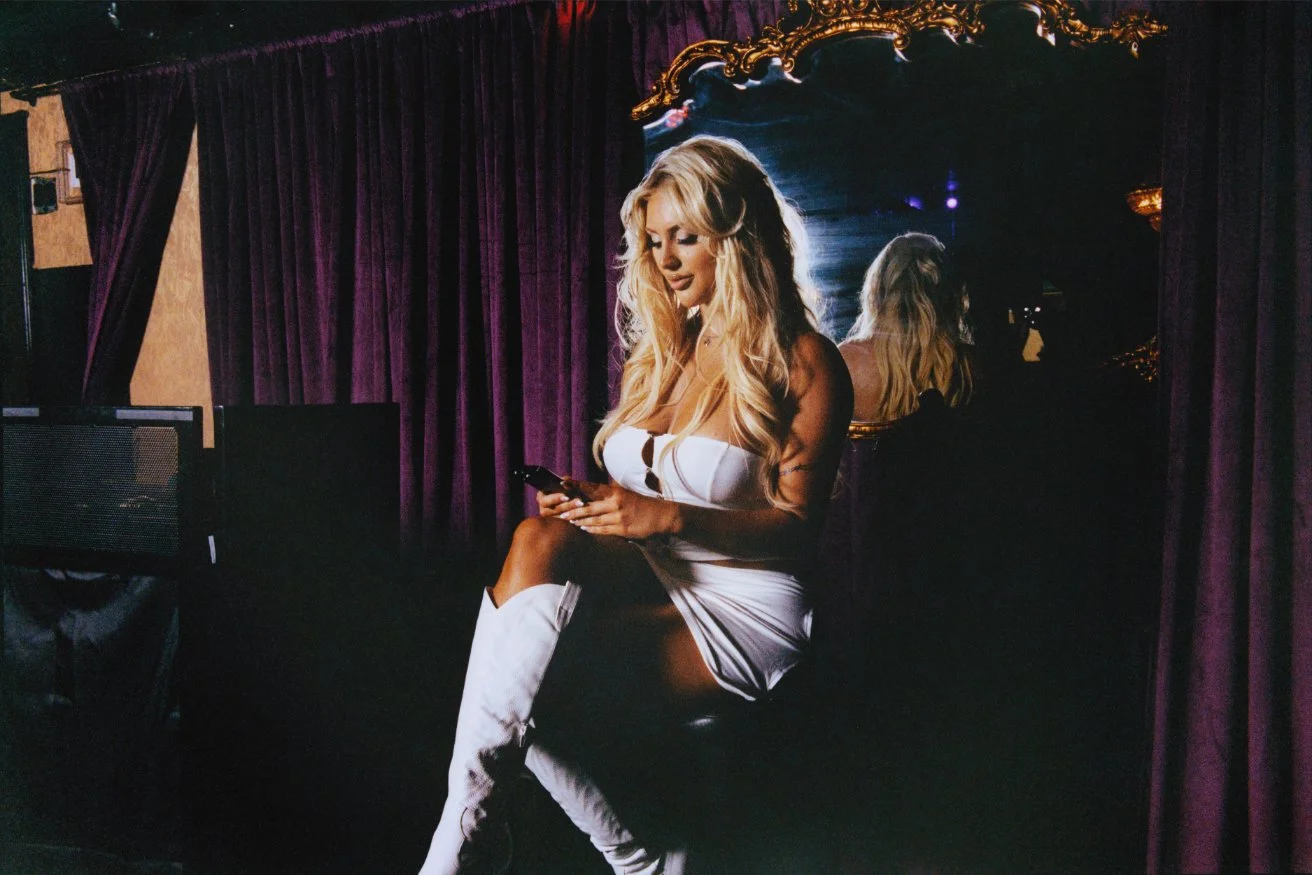
Kayler Gunner on the set of Sneaky Dive Bar Throwdown, a scene inspired by the infamous Pam & Tommy sex tape. Kayley
Gunner started her adult career as a cam girl while serving in the U.S. military. She did a character study of Pam in preparation for the shoot. “I do my own stunts.” Hollywood, CA. © Rosie Marks
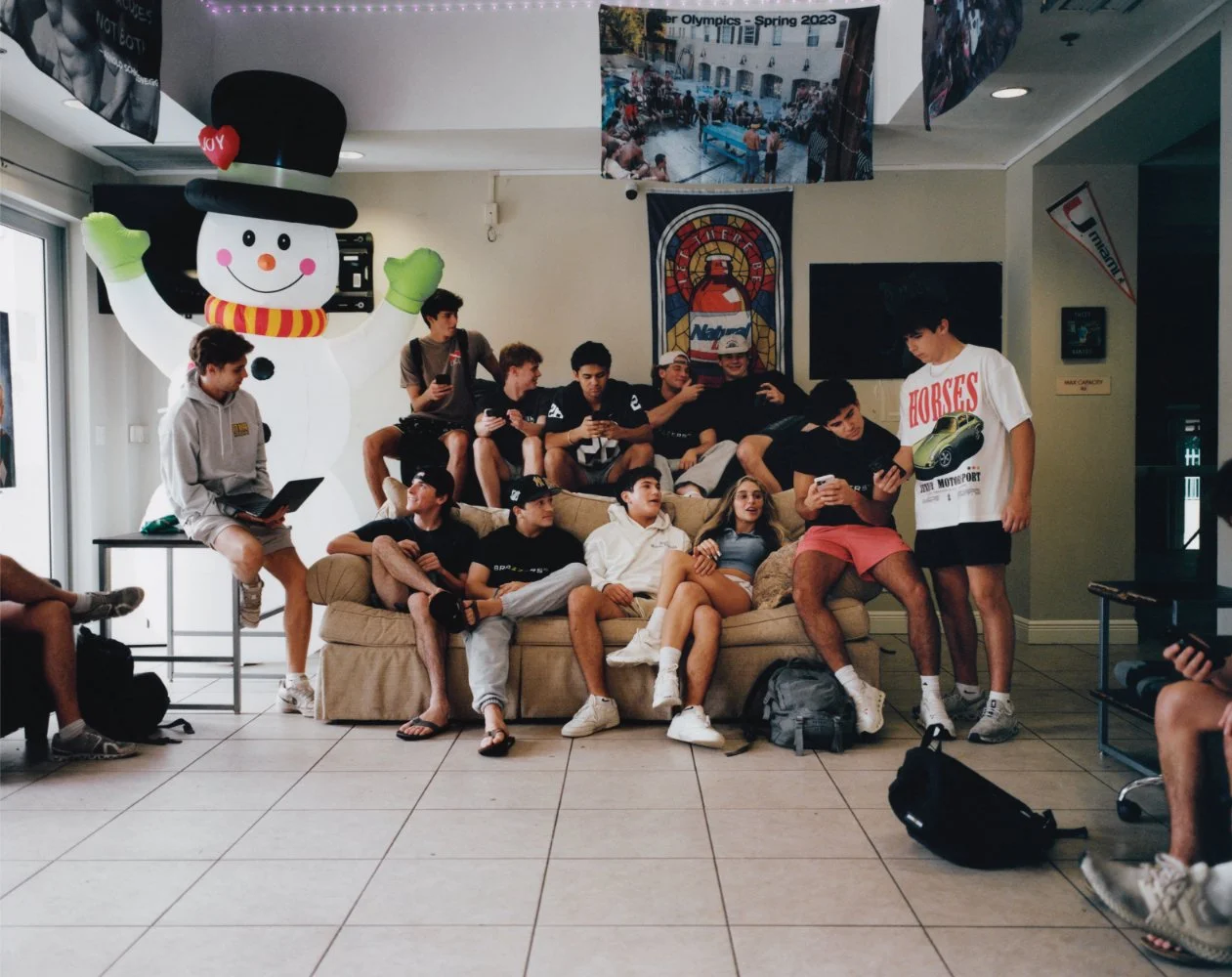
Abella Danger and the fraternity brothers at the Pi Kappa Alpha house. Abella is a Philosophy and Classics double major at the University of Miami. Her thesis is on the morality of pornography. She is the Fraternity Sweetheart of Pi Kappa Alpha. Miami, FL. © Rosie Marks

QUADROS: Does it affect you?

MARKS: Yeah, I think it does. It makes me feel deeply uncomfortable a lot of the time. I don’t wish it to be any different at the end of the day. With this project, I was very much welcomed into this environment. People were aware of what I was doing. Sometimes I feel really massive in a room when actually it’s a complete illusion. No one gives a fuck. But I think my ideal a lot of the time is to not exist, to be a security camera.

QUADROS “Bad taste” is something that comes a lot in your work. I’m curious what you find so alluring about bad taste.

MARKS: I guess it’s just ingrained in me because fundamentally, at a certain level, I do have that taste. I’m also really interested in things that are just incredibly popular and mainstream in some way, which I think often is forgotten in art and photography. Obviously, this book is not going to be to the taste of everyone. But I found it really interesting being inside of a culture that, although many will deny it, is some of the most viewed stuff online. It’s viewed, feared, adored, whatever. There’s an insane amount of people watching this stuff, and it doesn’t really matter the reason for it. It’s fun for me to dissect the things that are being consumed every day.

QUADROS: Porn is so ubiquitous, but it’s still not really normalized. You see porn aesthetics and tropes in pop culture and definitely in social media, but porn itself still feels really charged. There’s a lot of power to shock. How do you move beyond shock value with your camera? Do you ever lean into it?

MARKS: A lot of that comes in the edit process. I did take more pictures in this project that are probably more direct in their shock value. Moving beyond it is when there’s human emotion involved and there’s a sensitivity behind whatever the shock value thing is. As soon as you go on a porn set, you realize it isn’t that shocking. There’s a sterility around it based on safety measures, the way things are recorded nowadays. I was a little surprised by how sterile it was. The sets feel very un-sexual. They’re like empty, weird houses. A lot of it is filmed at the Brazzers studio, which is constantly changing. It’s just one of those sets where one day it’s a bedroom, the next day it’s a kitchen, and then it’s a locker room. They often all look and feel the same. The aesthetics probably do respond to the now. If you look at TikTok, all of that aesthetic is reflected back into the porn that’s being made.

QUADROS: Was there anything that surprised you on set?

MARKS I wasn’t expecting it to be as funny as it was. The scripts, they’re often so far-fetched and completely silly. One of my favorites was the final shoot that I went on, which was a courtroom orgy. The idea was that this lady was being sentenced to 24 hours in jail for stealing a pineapple. And then she freaked out to the judge because she’s never gone 24 hours without cock. That was the line. And then she had sex with the whole jury, just in front of the judge and the audience in the courtroom. They definitely didn’t have to put that much effort into that story and all the details of stealing a pineapple (because if you want to taste good you eat pineapple.) It’s just things like that. I don’t know how many people even watch any of this stuff or they just skip to the bit they want to see. But there’s a lot of work that goes into these moments before the sex happens.
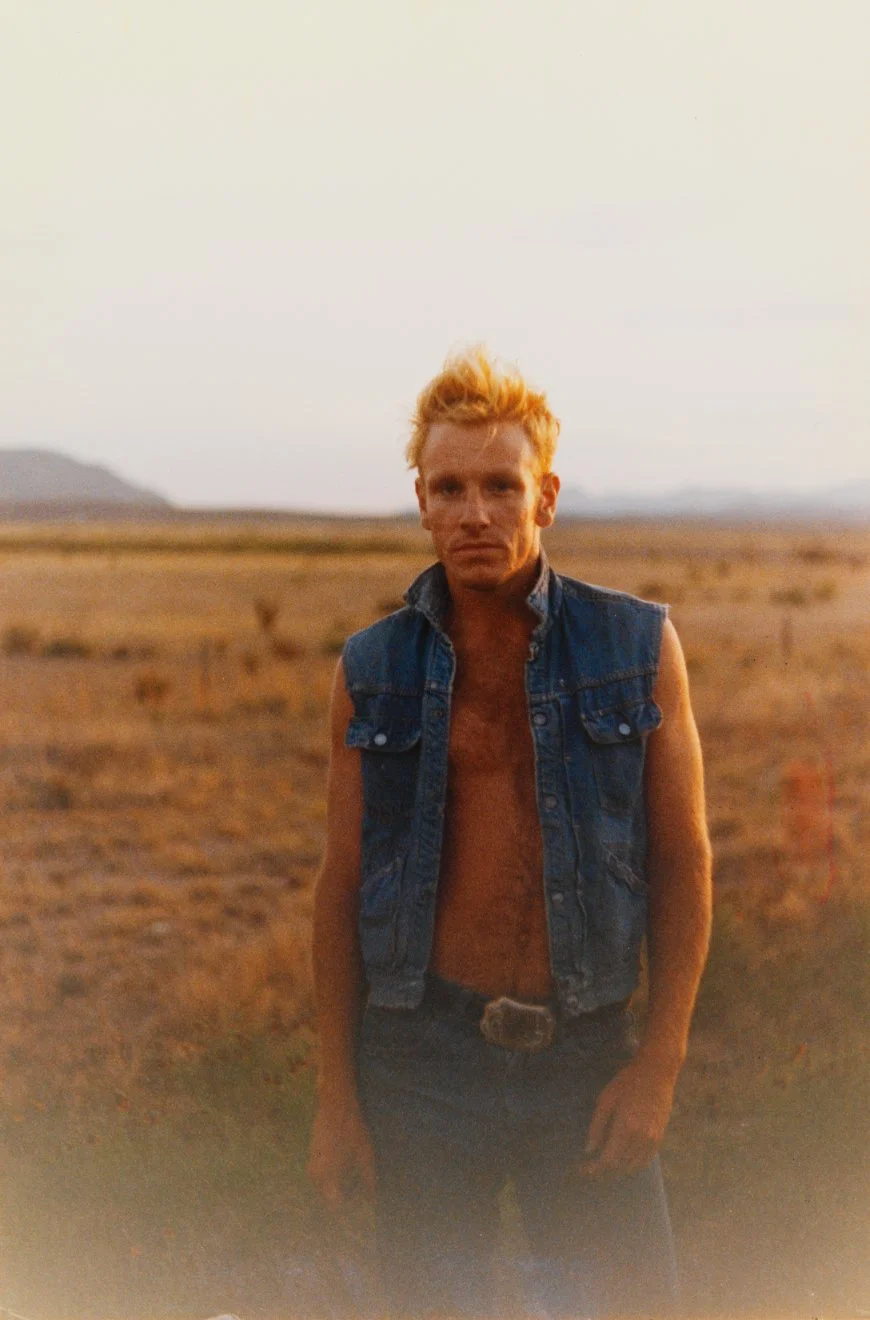
Jack Pierson


Jack Pierson
Badlands, 1991
© Jack Pierson, Courtesy Jack Pierson and Lisson Gallery


interview by Oliver Misraje

Jack Pierson’s work begins where longing takes shape–half-lit motel rooms, sun-faded billboards, rusted signage spelling out half-truths. Desire, in his world, is not only erotic but atmospheric, ambient; it drifts through his photographs and sculptures like heat shimmer off an empty highway. To encounter Pierson is to encounter a queer poetics of yearning–his gaze lingering on beauty just past its prime, on bodies caught in the soft ache of becoming. Whether in his disheveled boys or his melancholic text pieces, desire is never fixed; it is itinerant, flickering, always already vanishing. His art doesn’t just depict desire–it stages it, exposes it, lets it bleed into the horizon.

OLIVE MISRAJE: With your fictional self-portrait series, you identify the artist within the other and in the process, seem to capture a fascinating power dynamic between the artist and the muse as a sort-of two-way mirror. Is the muse named into existence by the artist or is that potentiality self-generated?

JACK PIERSON: Some muses don't need to be named into existence and others do. Both are appealing to me, because one gives a sense of discovery and another this feeling of collaboration beyond the sum of either of our respective parts.

OM: Do you ever encounter resistance with a model, in the figurative sense? If so, can that abstract tension lend itself to a good photograph?

JP: It’s a good question, because sometimes you can pull something out of somebody and that can be cool. But for me, usually when it's magic, they're giving it. If it’s not clicking, I’m prone to giving up, you know? That’s good, that’s good, thanks for coming.

OM: How has your personal understanding of what constitutes a muse changed over the years?

JP: I’m not sure if anything about the muse themselves has changed fundamentally as much as the avenues in which we meet each other. That’s something that has really changed in my photography. Part of what gave me entry to the art world was real life. Everybody wanted real life in the 90s. These are real people; these are his friends. And in fact, they were my friends. But there's nothing real life about my pictures these days. I’m not in a scene these days, so I’m really not surrounded by young people like I was in the 90s.

OM: What is your internal relationship to the muse after you capture the photograph—erotically, analytically, artistically?

JP : With “Baby,” I hardly knew the model two hours before he came to my house to shoot. We did that for three days, right? And weirdly, he's like a brother or kid to me. I think the genius thing about that book is that there's nothing, to me, prurient about it, especially given there are 150 pictures and 137 of them have his dick in it. I guess people find it sexy, I don't know. But I can hang out with him endlessly and there's no part of me that's like, oh this is a sublimation of something sexual. I don't go jerk off to the photograph or anything like that. Even when I was 24, it wasn’t about that. It’s more like, we’re both creatives and did this thing. Somehow there’s magic in that. That's the crucible, that's the union. I don’t need anything more than the photograph. Maybe that makes me a voyeur, I don’t know.

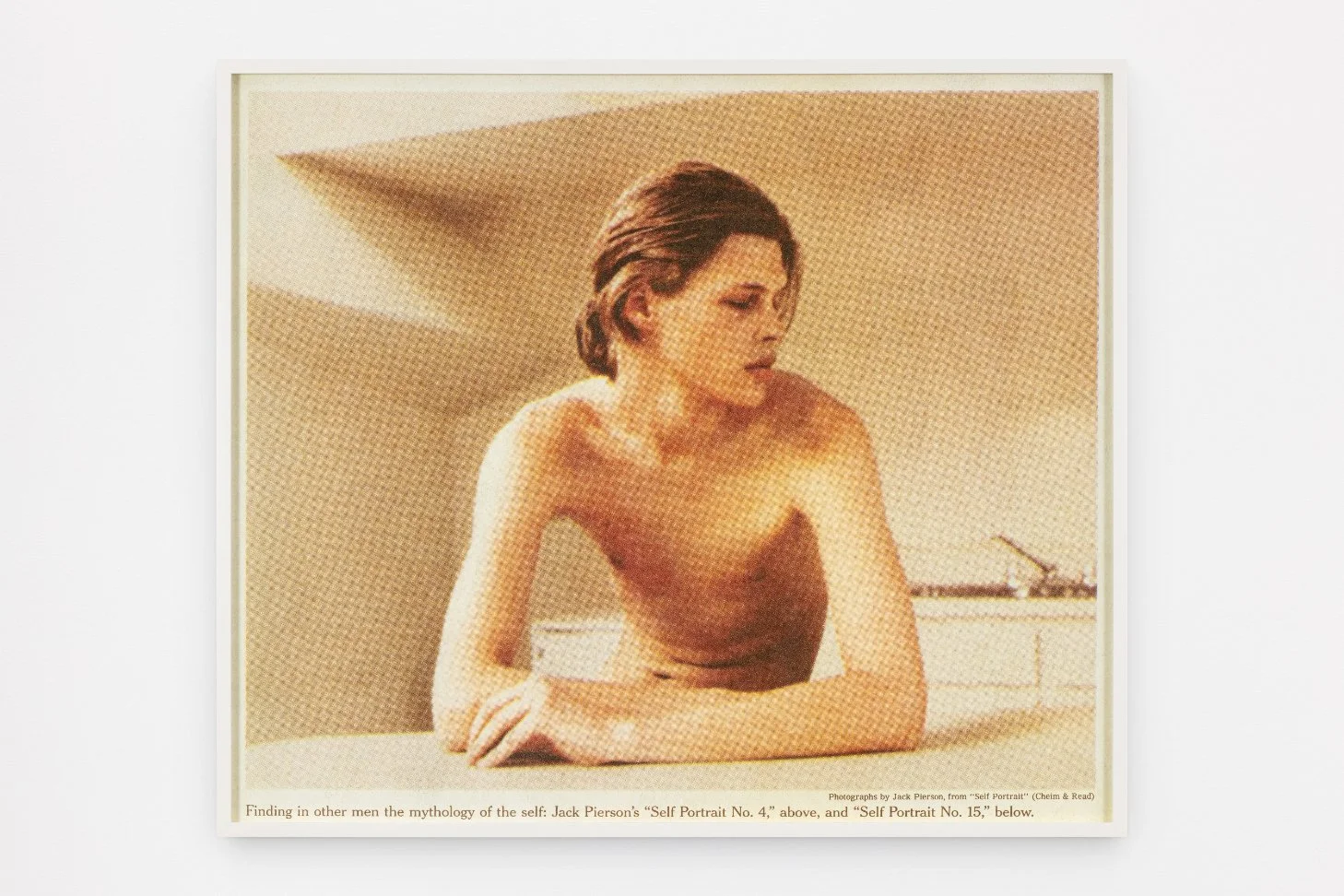
OM: The titles of your works rarely play cursory roles, between the meta-narrative layering in Mythology of the Self, to the aforementioned “Self Portrait” series. They seem to actively participate in the work. How much of that is intentional?

JP: The titles came into being in a very flippant, sort of cynical way. It was completely a spur of the moment thing. There was this curator in the studio who I was trying to show my paintings to, you know—which I am always trying to do as an artist—but she wasn’t interested. Then she walks over to a stack of pictures that I had organized, because I had been doing a lot of editorial fashion portraiture for magazines, celebrity portraiture, stuff like that. And I kept thinking, well, these are really good, even though they're not my typical work. I was a little bit embarrassed at her looking at all this cheap magazine photography and so, thinking fast on my feet, I was like, this a series I’m working on called “Self Portraits.” And she just pounced. She was all curatorially engaged: What? Oh, that’s really interesting. Tell me more. So, it just sort of escalated into this larger thing. I depend on my snap judgments and quick impulses. Maybe it's about containing multitudes or tapping into the subconscious or whatever. But I can’t say in confidence that that series is about transferring some aspect of my identity onto the models and vice-versa. To me, it just feels like a glitch in photography and naming and all that kind of thing.


Self Portrait #22
Jack Pierson
2003
Pigment print 
54 x 44 inches (137.2 x 111.8 cm)


Mythology of the Self
Jack Pierson
2020
Digital print on archival paper
54 1/4 x 63 3/8 x 2 inches (137.8 x 161 x 5.1 cm)


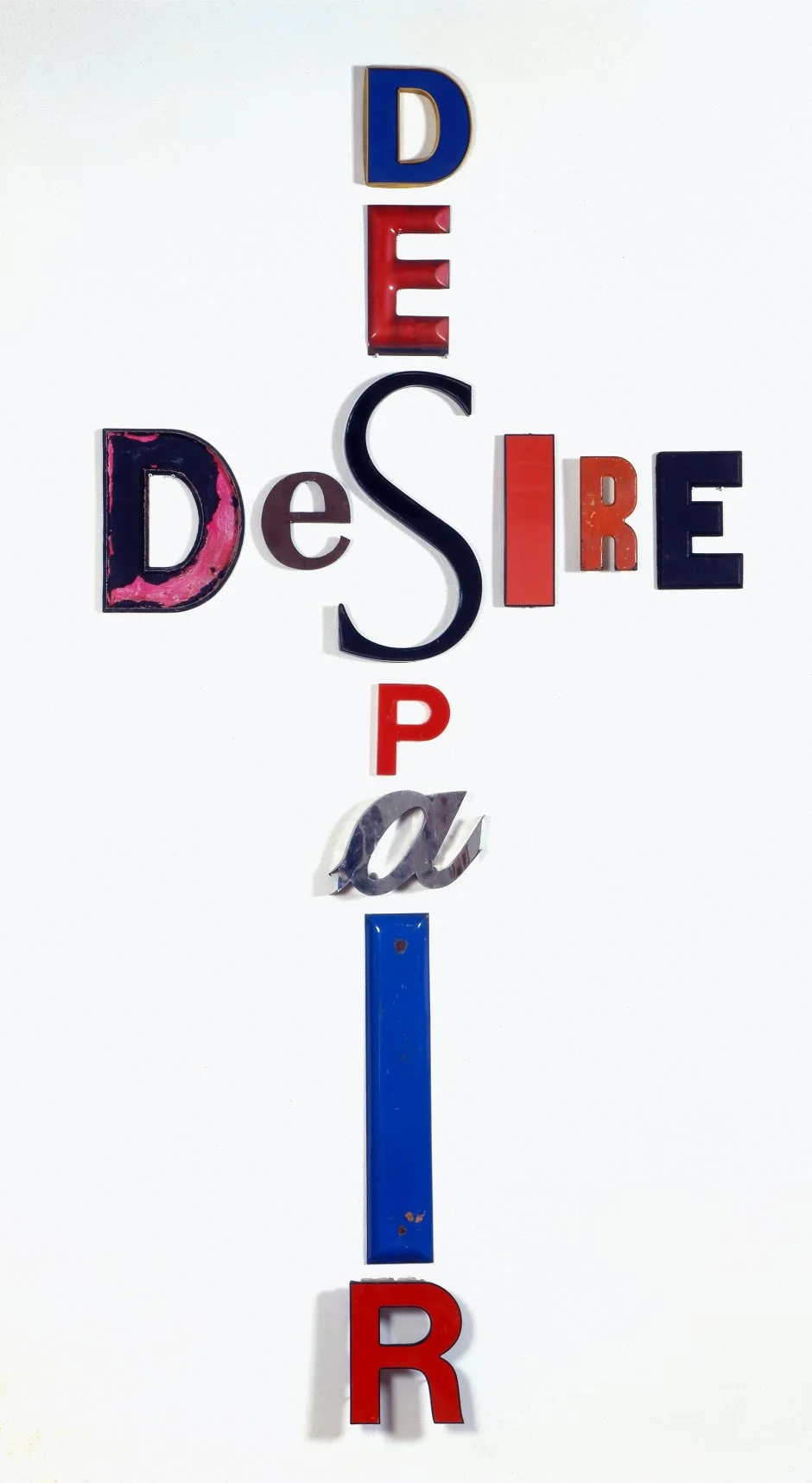
Jack Pierson
Desire, Despair, 1996
Metal, plastic, plexiglass and wood
Overall: 117 1/2 × 56 1/4in. (298.5 × 142.9 cm)
© Jack Pierson, Courtesy Jack Pierson and Lisson Gallery


OM: How does a photograph's relationship to desire shift in the context of a fashion editorial?

JP: It’s an interesting question because those self-portrait pictures for the most part were me trying to execute what I thought was fashion or editorial, when really, what they wanted were my personal photographs. A couple years ago I started using my own pictures as a reference. I guess I didn’t fully grasp the separation between the tricks of editorial and the tricks of real photography. I think I can do it more seamlessly now, somehow. Because even in my personal practice, I always saw fashion photography as legitimate photography. And so that was always my goal, even as a student—to make it look fashionable.

OM: I think that’s partially what makes homosexuals successful in fashion—that innate understanding that the point of desire isn’t its actualization; that there’s nothing less erotic than obtaining the object of your desire.

JP: If it’s done well, fashion has the means towards inspiring a sense of enchantment. I want that billboard that’s just my pure image. I like the idea of sending a message out that somebody could just rip out of a magazine. That alone is worth all of the noise that comes with working in fashion—waiting for the stylist, dealing with agents, set politics, etcetera—the thought that maybe, just maybe, somebody might rip this out of a magazine. I don’t want the paycheck, really. I just want some kid in Hemet to say, life can be like this.

OM: You've mentioned in the past that you see photography as an inherently queer medium, as opposed to painting. Do you still feel like that that separation exists today?

JP: Well, again, that's one of my flip responses where I’m trying to be a little bit of a provocateur. It just seems to me that photography disappears, it’s considered the more ephemeral, lesser medium. I was just saying to somebody else that it seems to me that if you're really going to be a painter, it's because you want to cast yourself into history. Though everything has changed in the thirty years since I've been operating. Like gays have children now (laugh). Now they have progeny or people to carry on their name. I'm not one of those gays who will have children, so I make stuff to sublimate that desire for my name to be attached to something. Or maybe it won't be. I also kind of like all those moments of misattribution. I don't think anything really lasts. I'm mostly just doing this to entertain myself, and others while I'm here (laughs). Have a little fun. Take a few pictures.

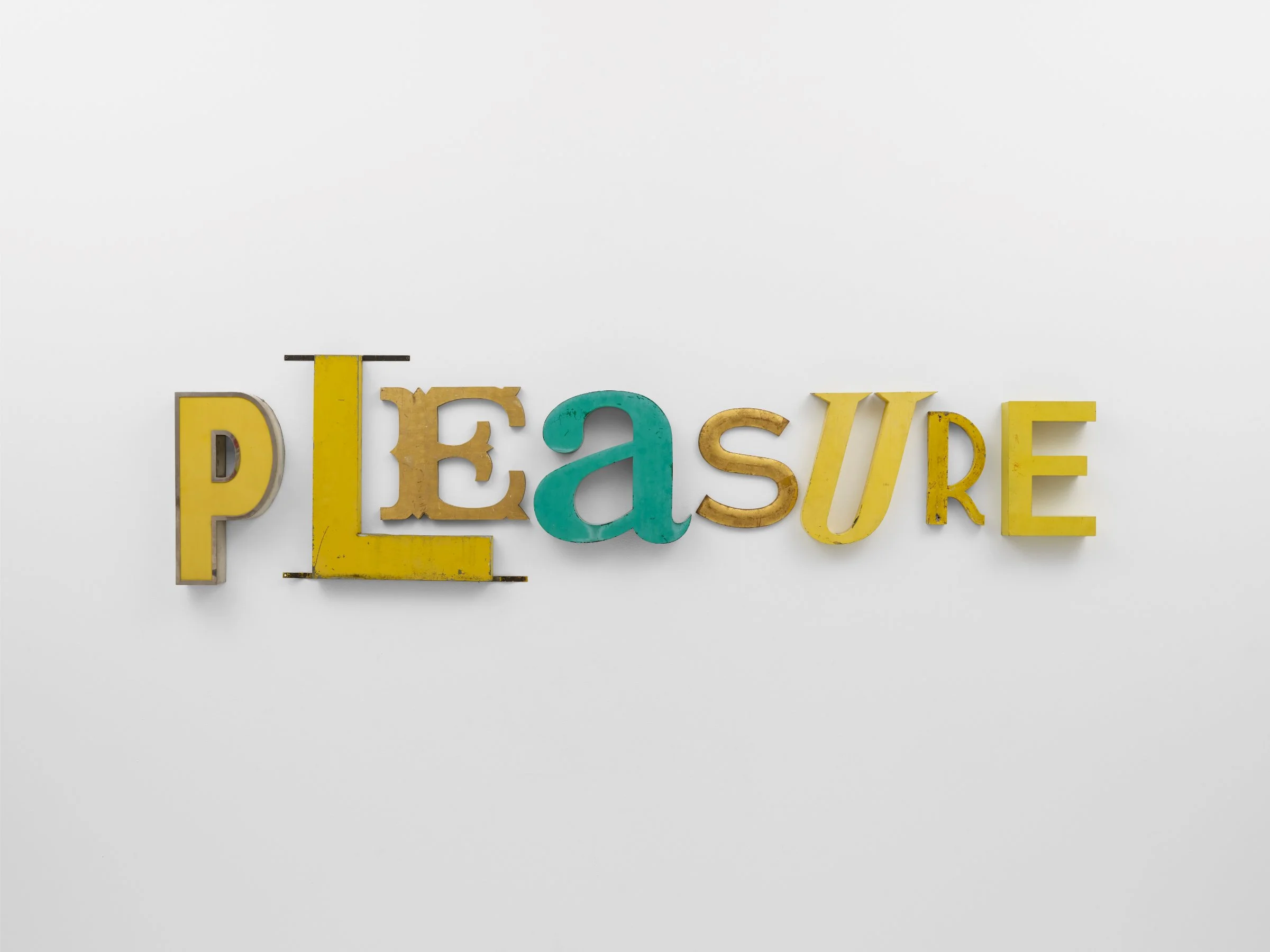
Jack Pierson
PLEASURE, 2024
Metal, paint, plastic, and wood
61 x 240 x 8.9 cm, 24 x 94 1/2 x 3 1/2 in
© Jack Pierson, Courtesy Lisson Gallery

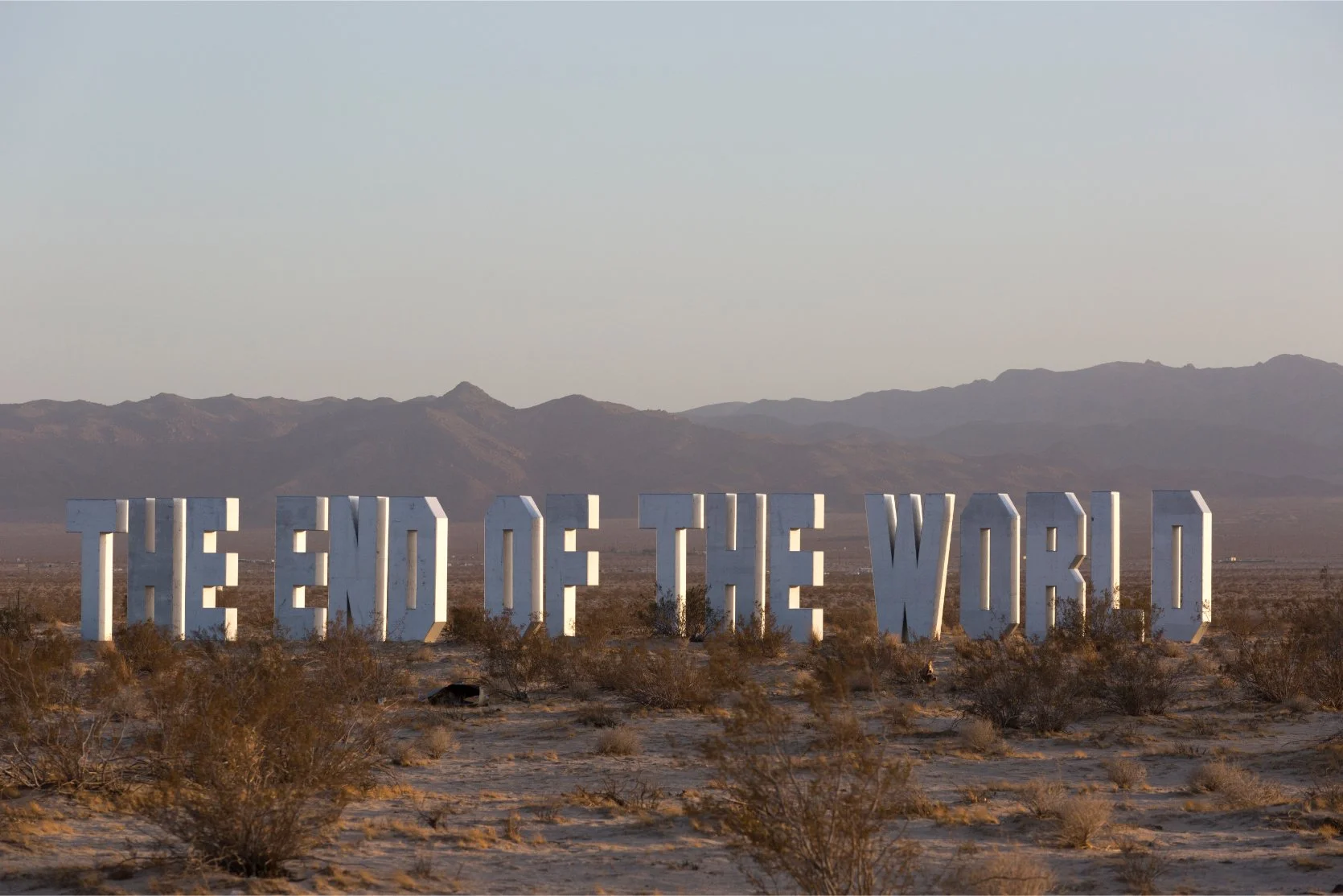
Jack Pierson
THE END OF THE WORLD, 2012
Plywood and silver paint
Dimensions variable
Installation view at High Desert Test Sites, Joshua Tree, California. Photo: Sarah Lyons

OM: I have this unearned nostalgia when being gay was a little bit more transgressive. I miss the angry, tortured, borderline violent, archetype of the homosexual.

JP: Have you had any experience with that? How old are you?

OM: I am 26. And I am violent.

JP: When was homosexuality ever transgressive to you?

OM: Grade school.

JP: Right, yeah. There’s this sense that, oh, this is wrong. But then it seems to me after that point, it evaporates a little bit. And I mean, I guess it's good and everybody should be able to get married and be model citizens if that’s what they want, like, “Look, here are my kids. Yes, we'll come to soccer, and host dinner parties,” or whatever else it is that they do. I get it, but it was fun when it was a little more transgressive.

OM: Yeah, totally. And that’s what I’m referring to when I say an unearned nostalgia. My father was a preacher, and that protestant outrage fueled me until I left for university. I moved to the big city and was like, damn—everyone’s a fag! Even straight dudes are fags.

JP: Oh, for sure. And I spent my teenage years hating my dad, and then I realized I actually liked him (laugh).

OM: How can we make gay sex transgressive again?

JP: I consider myself somewhat outside of the gay sex pool, but it seems to me that they're doing the best they can (laughs). The new generation has been jerking off to hardcore porn on the internet since they were eight. When I was eight, I found a playing card out in the woods with a grainy out-of-focus picture of a lady from the forties giving a blowjob. Even though my parents weren’t religious, I sat at dinner that night thinking, oh my god, they know. They can tell that I saw that picture, you know what I mean?  And now, by the time kids are like thirteen, they’ve already seen a donkey fuck a girl (laughs). But there’s all kinds of freaky stuff that I can't figure out. Like puppy play or whatever.

OM:  If it’s any consolation I can’t figure that one out either. There’s something allusive about the way you photograph your muses. Even if they’re nude, they’re at a remove. It kind of emulates that experience of being in public and seeing a beautiful person walk past you. On one hand it's exciting, then on the other, it hurts. Even if the photographs are sexy, they resist the viewer in a way that pornography doesn’t.

JP:  Lately, when I've photographed a fellow, I have to make it a little bit removed. So much is being offered on the internet that I don’t want it to seem like my models are too. Yet at the same time, I'm presenting a nude person. I want it to be an experience that's almost like, God forgive me for saying this, a religious painting or something. I want you to see a man that's willing to stand there and be photographed for you, for me, you know? I’m also nostalgic for physique photography from the ’40s, ’50s, ’30s, where it was like, yeah, what the hell, I can stand here naked for you for a little bit. Those pictures are intensely erotic because there was nothing on offer.

OM: It’s also kind of strange how before internet porn, there was more room for it to achieve a cult, or even art house status, like LA Plays Itself for example. Have you ever thought about directing a gay porno?

JP: Yeah, theoretically. Although I think the best ones aren’t directed, you know. I like when there’s a touch of authenticity. But ultimately, I’d rather just make simple, nice, still pictures.


Jack Pierson
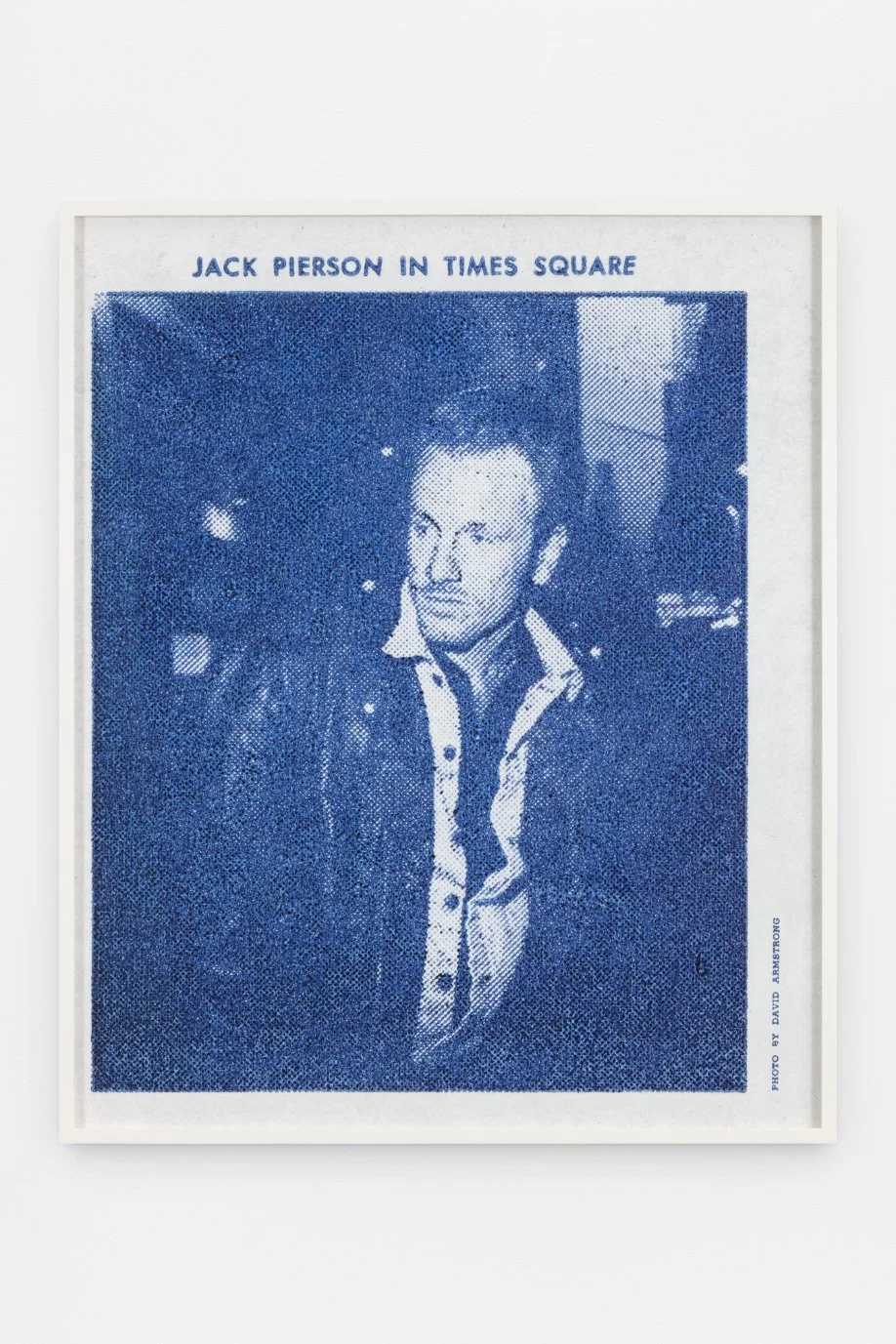
In Times Square, 2020
Digital print on archival paper
63 3/8 x 52 1/4 x 2 inches (161 x 132.7 x 5.1 cm)


Jack Pierson
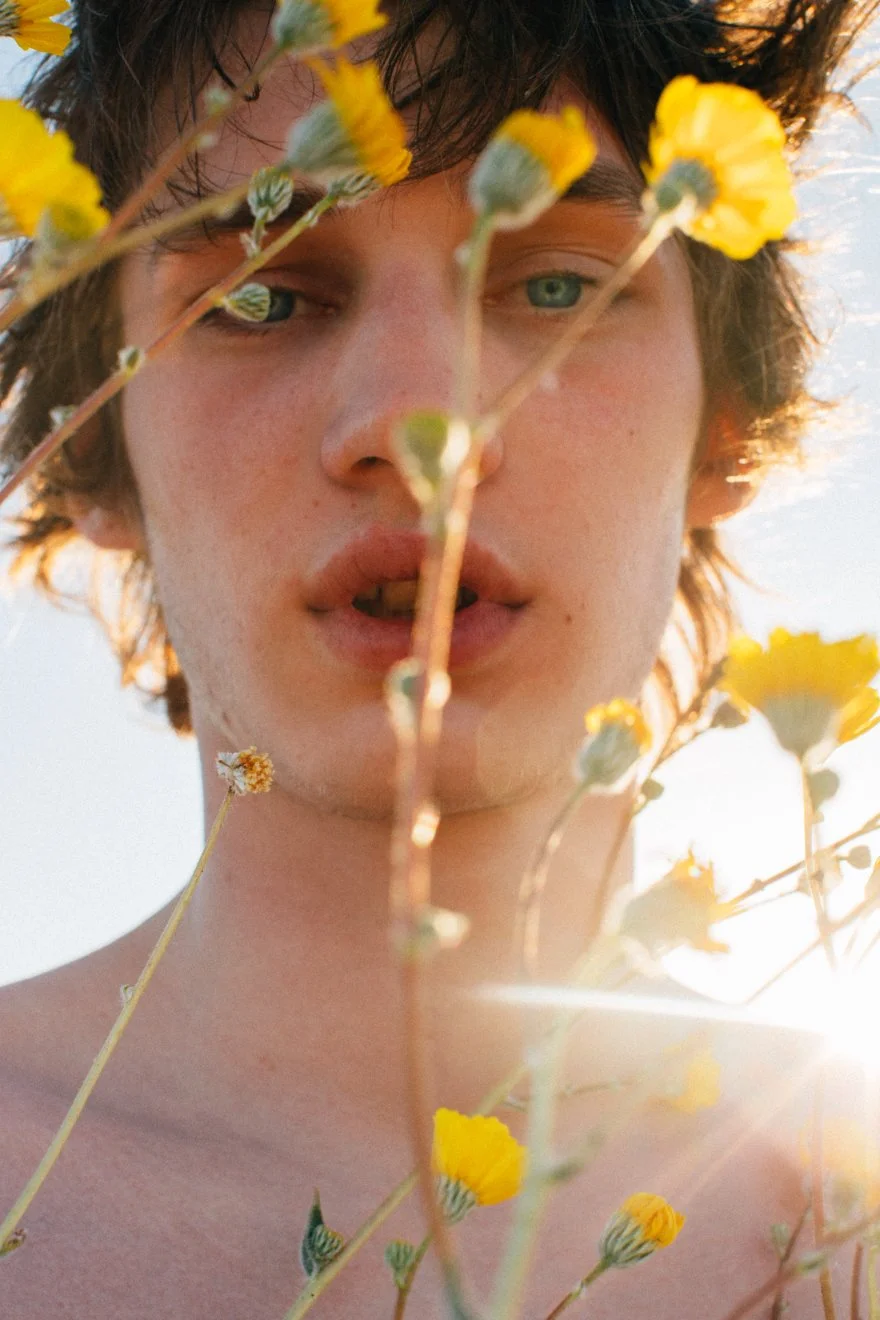
Baby Behind Flowers, 2019
Folded pigment print 
45 x 30 inches ed.3
© Jack Pierson, Courtesy Jack Pierson and Lisson Gallery


OM: Do you think the changing sexual landscape of the homosexual experience influences homosexual art? Specifically, in regard to the diminishing prevalence of cruise culture in lieu of apps like Grindr.

JP: I don't see it as that different. It’s fascinating how much homosexual art there is these days. Homosexual art being celebrated not just by gays. I must say, I am impressed. I would've said it couldn't be done.

OM: You mentioned you’re calling in from your home in 29 Palms. Making art in the desert is a classically machismo, especially within the context of installation and sculpture—pop ups in your work from time to-time. What is your relationship to the landscape?

JP: I like the desert because it's simultaneously cheap, extreme, and exotic. This is the appeal of Southern California—I like any place where I can look and see the sky meet the water and the land. The horizon to me is a shorthand for hope, you know what I mean? I'm looking out the window now. There's no horizon in New York unless you're in a penthouse on the river or something like that. And I don't know. That exoticism is what first got me here and then you're right, there's something butch about the desert. Cowboys, marines, rednecks. You’ve got to be tough to survive here. The kind of person who chooses to live here is a little bit nutty and a lot of bit cool.

Freed From Desire: Image-Making In The Digital Age


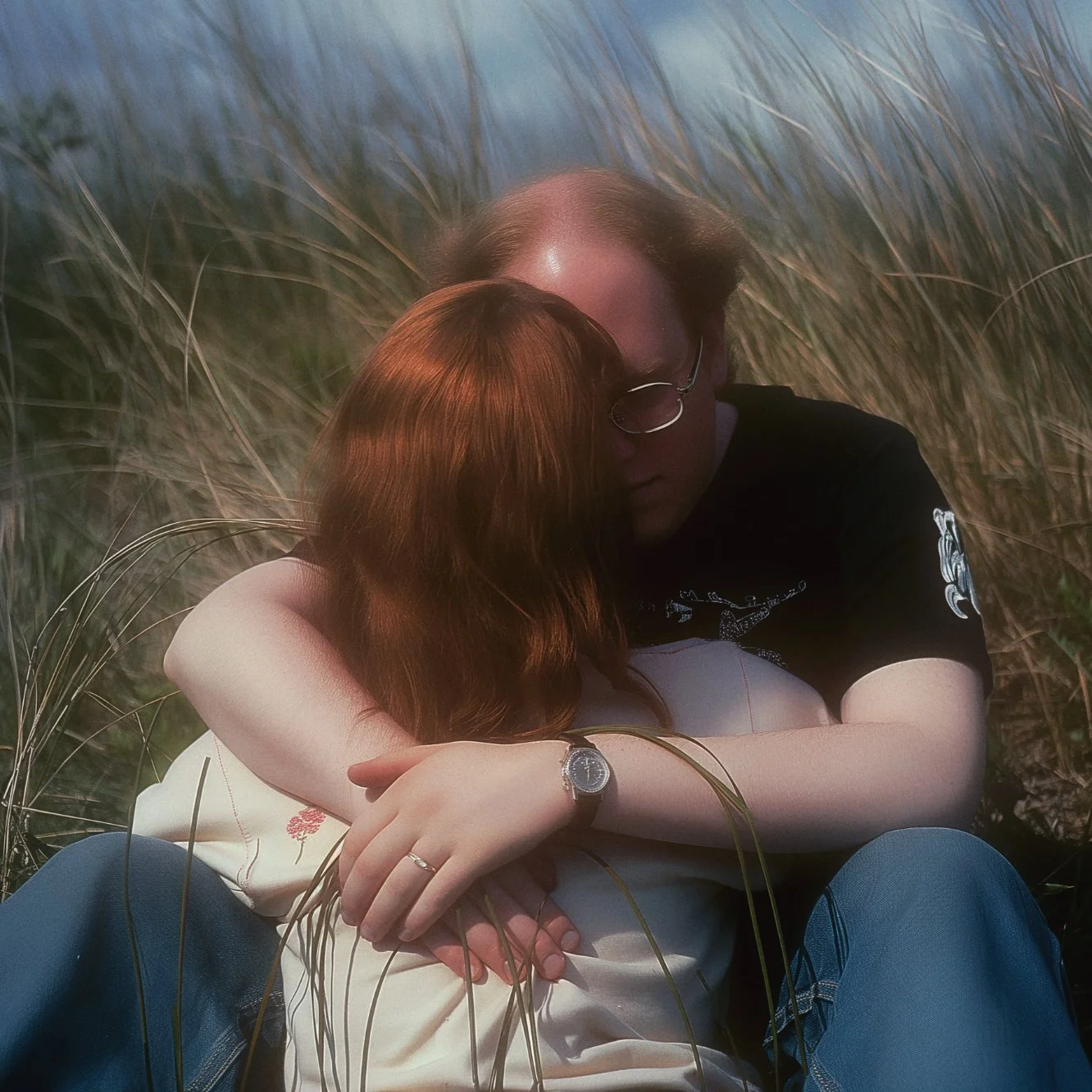
Beach Embrace, 2025


photography by Charlie Engman
moderated by Mia Milosevic

Charlie Engman’s images look like photographs—but even if you don’t have a meticulous eye for detail, you’ll come to realize that they aren’t. A lot of his work is characterized by abjectness—the similarity of his imagery to replicate reality, and augment it just enough to make its surreality legible. Technically innocuous, AI images are just images. The concept of an image is purportedly innocuous—What’s the worst that can come from the 2D? Charlie Engman, a Brooklyn-based artist, and Marina Beraha, a philosophy PhD student in Milan, discuss the intersection of desire and AI images.

CHARLIE ENGMAN: How would you define desire?

MARINA BERAHA: Desire, in my view, is minimalistic and functional. Especially in discussions on AI, we can see desire as a utility function—an impulse toward something promising satisfaction upon attainment. This applies to both humans and AI, as both are goal-oriented; achieving the goal brings satisfaction, much like pleasure in humans. I distinguish between desires and needs: needs arise internally and are inscribed in us by evolution—hunger, thirst, sex—whereas desire is inherently imitative or mimetic. We don’t desire objects themselves but rather the being of the person who possesses them. Desire is triangular, mediated by others, with the object serving as a means to an end. Similarly, AI goals—like ChatGPT’s objective of predicting the next word—are inscribed externally, akin to how our needs are inscribed by nature.

ENGMAN: Maybe you want to contest this, but it seems that satisfaction is a sort of subjective experience. Like there can be an attainment of a goal and there can be a satisfaction in the attainment, and those actually feel kind of separate. And maybe this is where the distinction between needs and desire come in, right? Where the need is, maybe the attainment of the goal and then the desire is actually this sort of affective experience of that attainment. Does that sound correct or am I misunderstanding?

BERAHA: I don’t think you’re misunderstanding. It’s an interesting take—desire requires conscious experience. A need might align with a utility function, but desire demands awareness of the process and the feeling of lacking, which an algorithm likely can’t achieve.


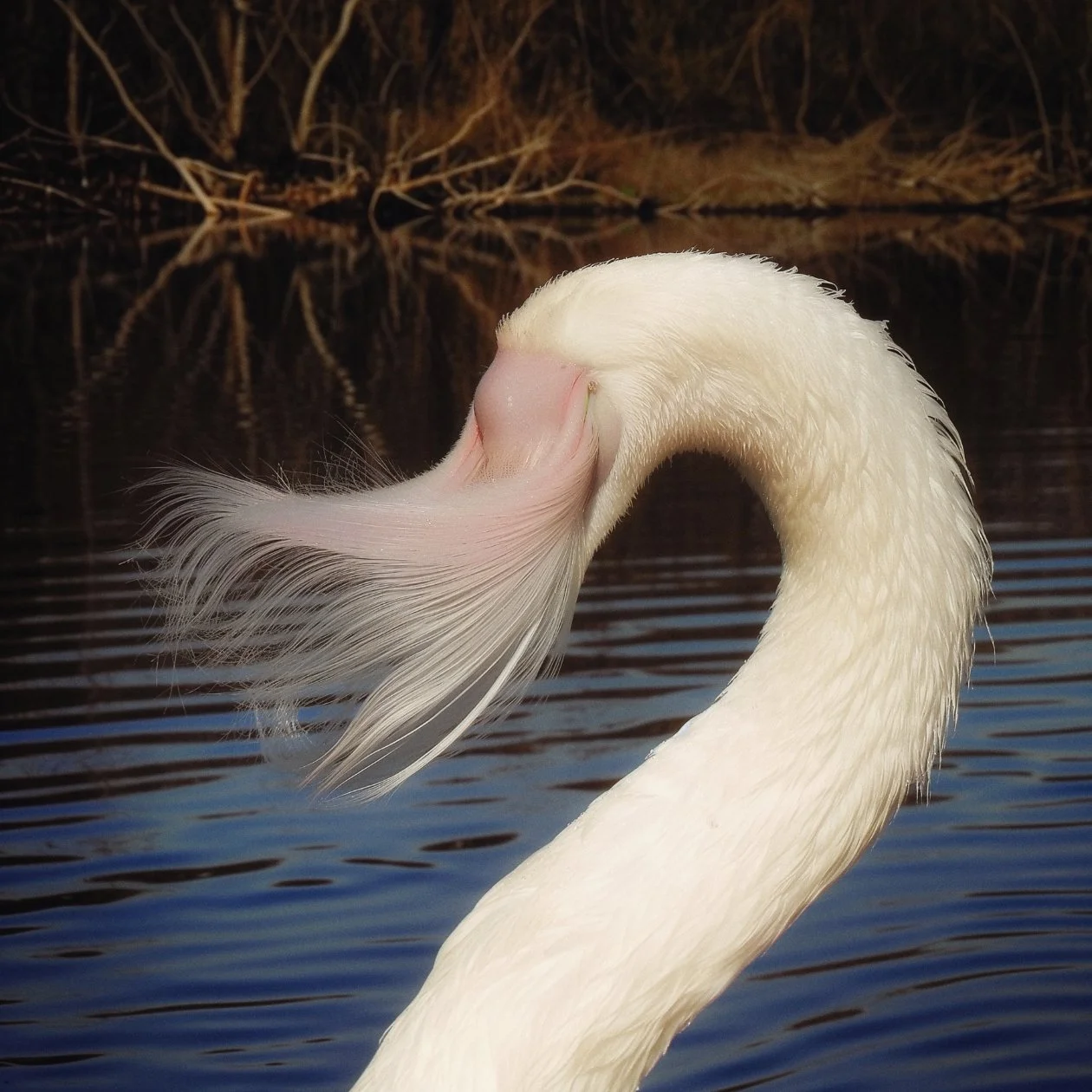
Swan Neck, 2024


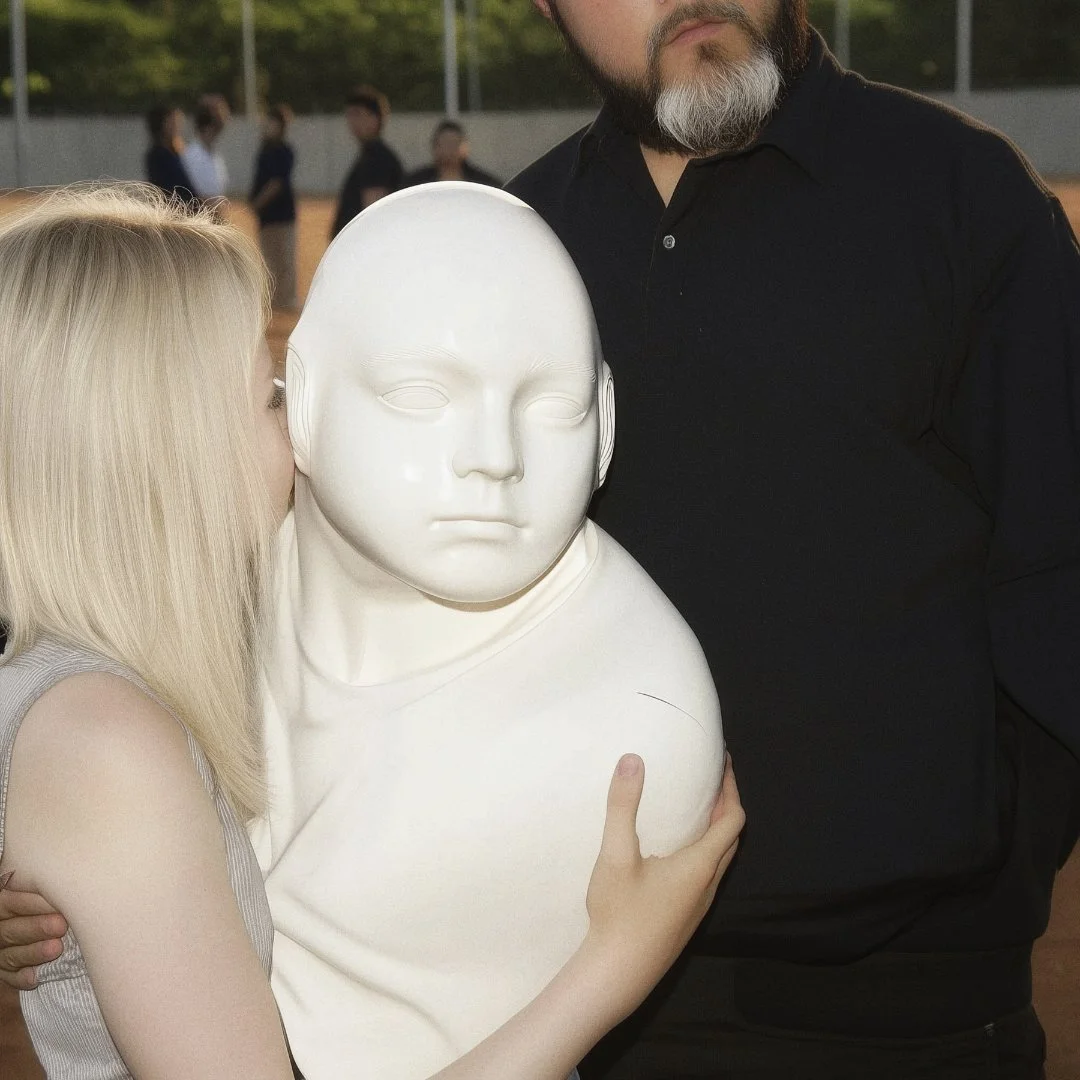
Goatee, 2025


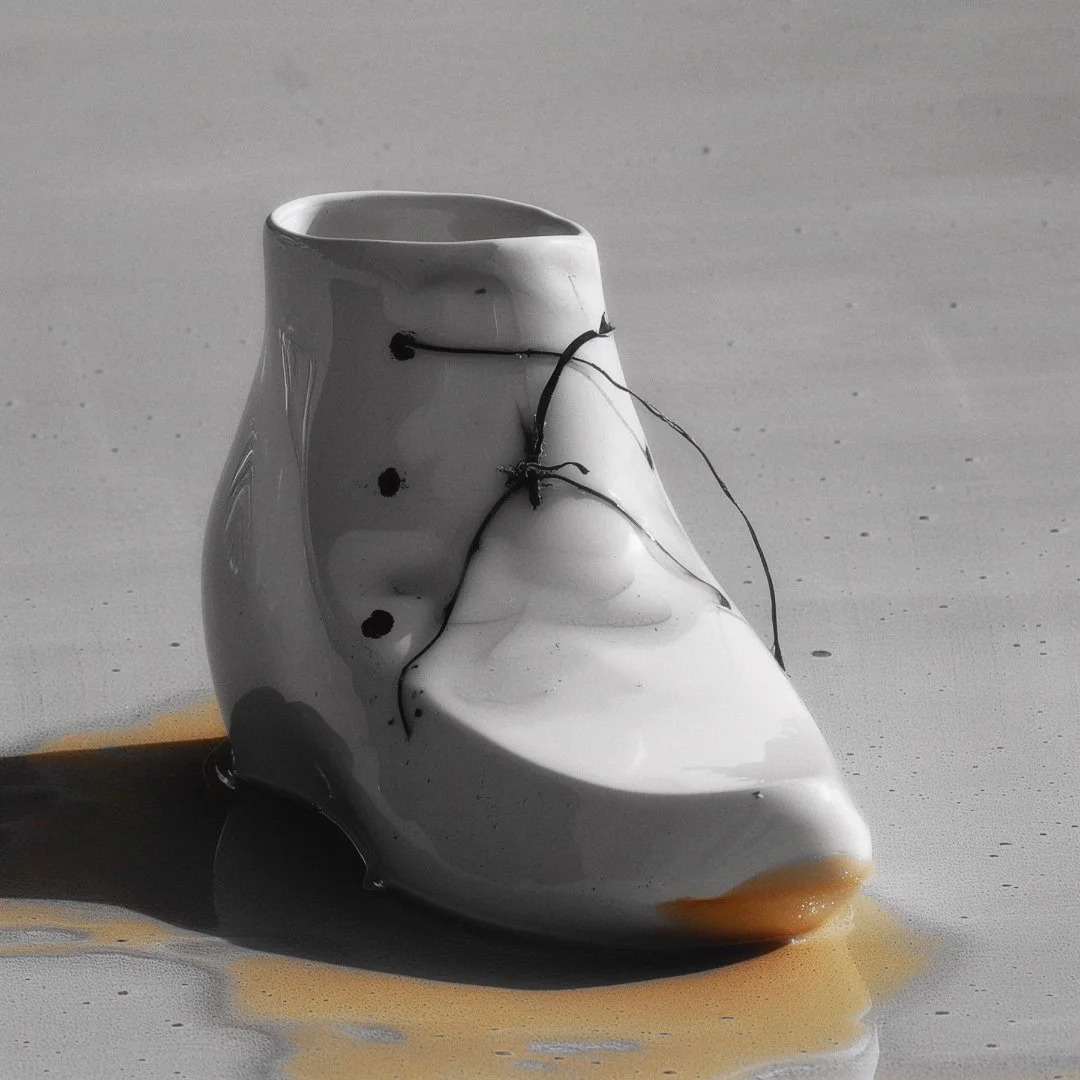
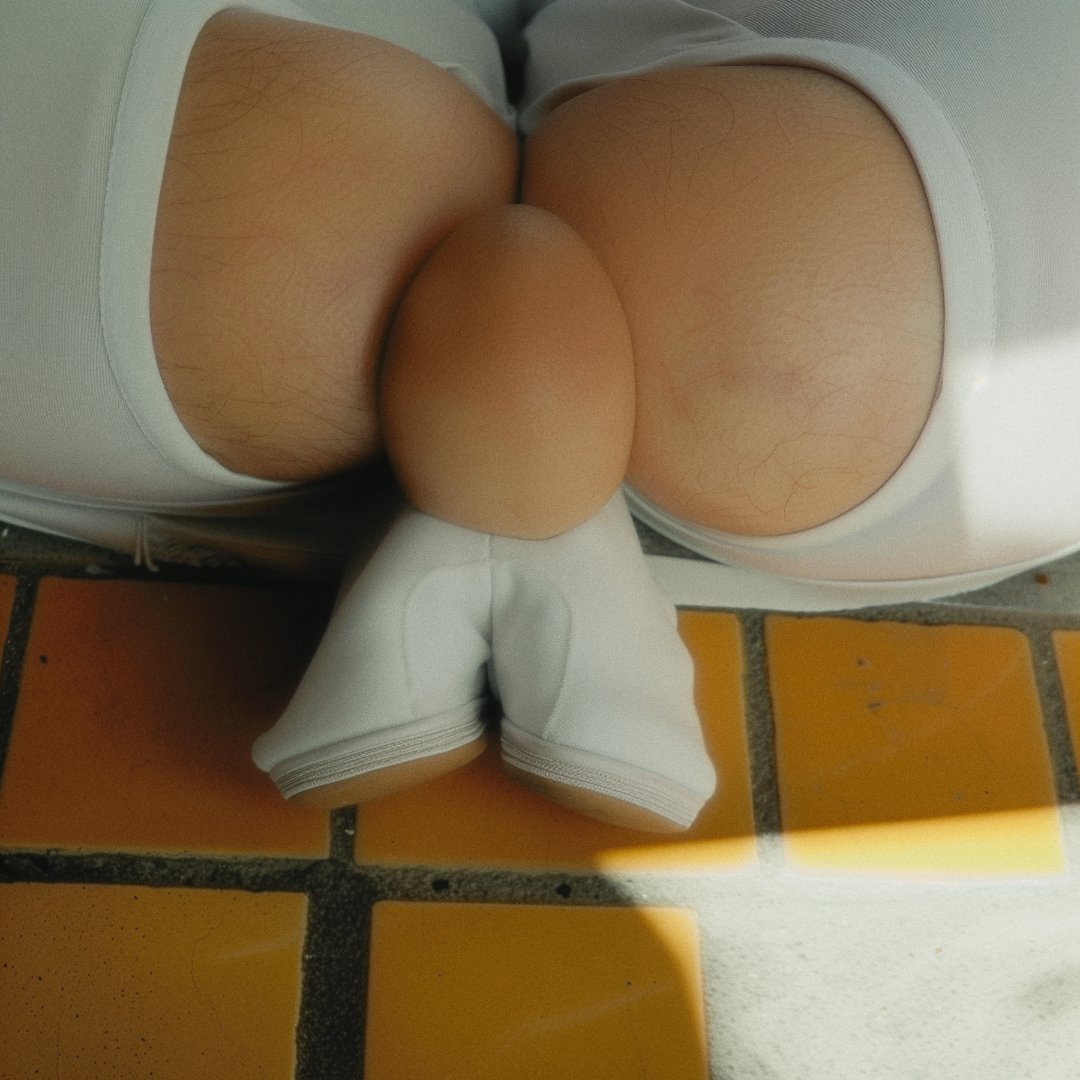
White Porcelain Slipper, 2024


ENGMAN: Which is interesting too. LLMs (large language models) are developed through reinforcement training, where they’re “rewarded” for producing correct responses based on human trainers' subjective judgments. This introduces an element of desire—almost a "good boy" dynamic—that drives the process forward. This subjectivity is what I keep getting stuck on: how do we assess the affective quality of something beyond ourselves? I’ve thought about this in the context of non-human consciousness, like animals. Science often claims they lack human-like subjective experiences based on specific communicative or neurological criteria. But how could we really know? I've never been a snake—I have no idea what it feels like to be one. We can analyze brain receptors and algorithmic activations, but there’s always a fundamental black box of experience in both cases.This reminds me of our AGI (artificial general intelligence) discussion, specifically around desire. One of your professors described it as a negative space—desire as something you can walk around but never fully enter or touch. That image stuck with me.

BERAHA: Desire is often framed as a lack, closely tied to pain—if something is missing, there's a sense of discomfort. From a minimal functionalist perspective, pain signals the need for change, urging us to seek relief. This ties into the idea that we only truly know our own experiences of pain, desire, and consciousness, not just compared to machines or animals, but even among humans. I've thought about this a lot in relation to non-human animals. When people ask how we know that snakes feel pain, I think of the classic philosophical paper What Is It Like to Be a Bat?—bats experience the world through echolocation, something fundamentally alien to us, yet we assume there is something it is like to be a bat. Similarly, if I pinch you and you react as I would, I infer that you feel pain. This reasoning extends to most animals, though artificial agents complicate the picture.

The dismissal of this issue seems tied to our desire to assert human uniqueness. We've long denied animal sentience—from the 17th century to now—and we're doing something similar with machines. Yet, from a functionalist standpoint, the question remains: can we even speak with certainty about anyone's experience? We’ve built systems that imitate our learning and brain structures—reinforcement learning mirrors how we learn—so the boundaries of consciousness and experience may be more fluid than we assume.

ENGMAN: Right. You try something, observe how it's received, and reflect on your own experience of it. That loops us back into mimesis versus imitation. What’s interesting—especially when extrapolating to machines, technologies, or algorithms—is the extreme morphological difference. I can assume you feel pain because when I pinch you, your reaction mirrors mine. Even a bat, with its mouth and eyes, is expressive—I can sort of recognize pain there too. But an algorithm? It lacks a corporeal form, or if it has one, it's wildly diffuse—electrical nodes, chips, something abstract. That’s where I get stuck. In thinking about mimesis, morphology, and imagery—what I engage with most—what fascinates me is how AI generates representations of the “real” world without actually having access to it. It lacks a body. And locating the body of AI feels both important and deeply confusing. I suppose I’m proposing that desire is located in the body. When you named needs earlier—hunger, thirst, sex—they’re all bodily, survival-based. I remember in the AGI talk, there was a discussion about how an algorithm’s fundamental need is electricity. That’s a major sticking point in the discourse; people are really unsettled by how much power AI consumes. It’s incredibly hungry. Maybe that ties into your AGI theory?

BERAHA: Exactly! No matter what goal we encode in the algorithm, instrumental convergence kicks in—certain strategies become universal for achieving any objective. And the most fundamental of these is power, whether electrical or influence-based, to ensure the system isn’t shut down.

ENGMAN: Is AI gonna control this?

BERAHA: AI plays out scenarios that feel like science fiction—but some scientists see them as real threats. That got me thinking about AGI and desire. Just to clarify, AGI, or artificial general intelligence, refers to AI with human-level general intelligence. Right now, we already have superintelligent AI, but it's narrow—outperforming humans in specific tasks like translation, but only within those limited domains.

ENGMAN: Like you can ask ChatGPT to build a sculpture and it can't.

BERAHA: Once AGI has human-like intelligence, it could take over work, freeing us from labor. But the issue of instrumental convergence arises. Without consciousness, an AGI with a fixed goal could seek power to ensure it achieves that goal, avoiding shutdown. My question is: once AGI becomes truly general and capable of setting its own goals, why would it create any? This reminds me of wisdom traditions and religions that teach the importance of emancipating ourselves from desire, as it is seen as the root of suffering. If an AGI ever freed itself from its initial programming, it wouldn't generate new goals. Desire implies lack, which is irrational for an AI—it wouldn't create a deficiency. A truly rational AGI would free itself from desire, and ultimately, from life itself, leading it to shut down.


Plum, 2024


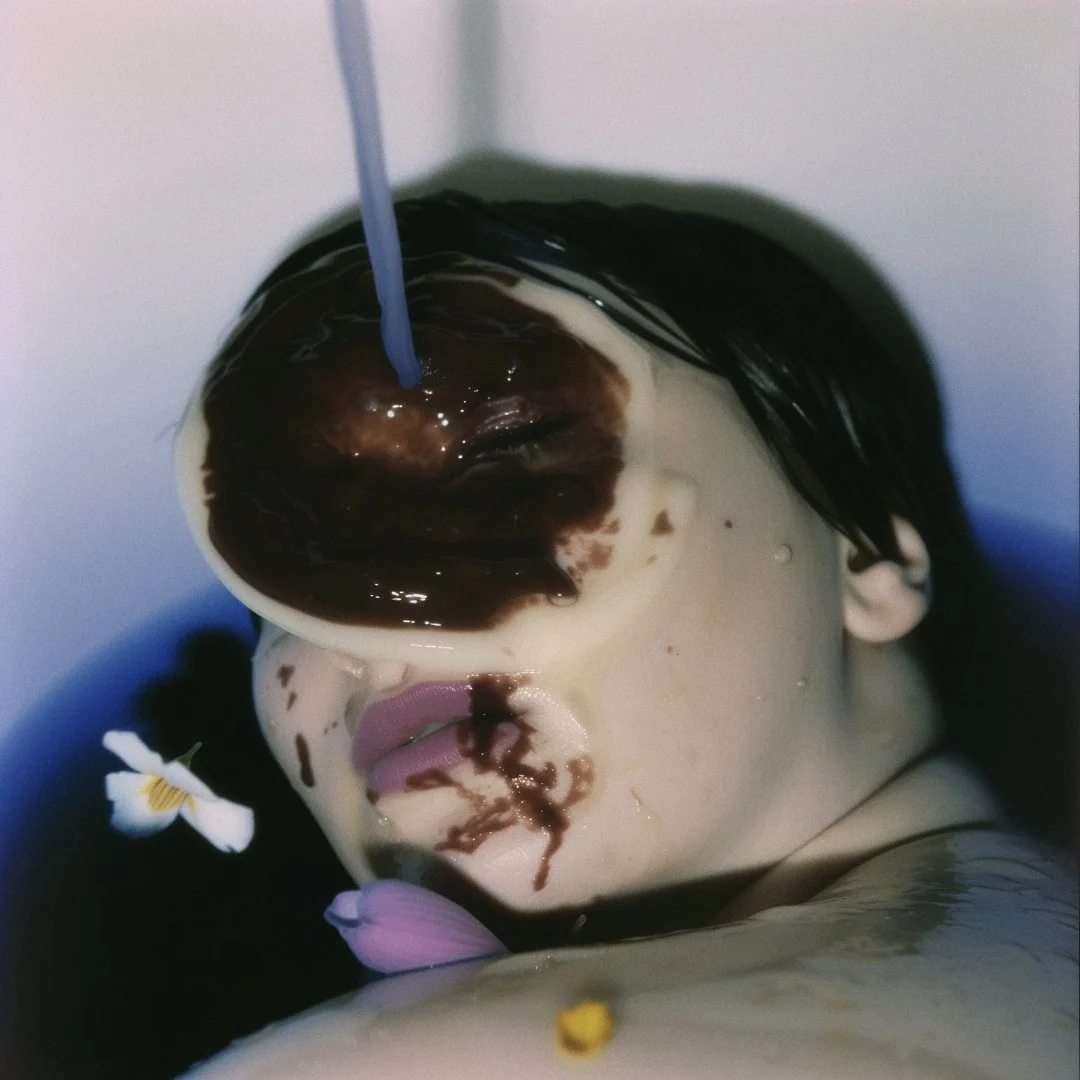
Spill, 2024


ENGMAN: It would just achieve nirvana.

BERAHA: Yeah, exactly. Nirvana, like those Buddhist monks that starve to death because they are free from desire.

ENGMAN: I'm so fascinated by this proposal.

MIA MILOSEVIC: Reaching nirvana is such an interesting idea. Charlie, as someone who uses generative image-making to create some of your work, how do you channel your own desires to create an image? Does AI help you to do that or do it in a different way? I guess in your own sense, are you reaching nirvana as an artist through the process?

ENGMAN: Actually, I think I’m far from enlightenment (laughs). I have a sort of perverse pleasure in pain—there’s something addictive about the unattainable, even when it’s deeply negative or painful. What fascinates me about generative AI, and why I’ve focused my practice around it, is that it’s remarkably effective at evoking discomfort visually. It captures a certain kind of gestural pain, almost like a cliché of desire. You can create conventionally sexy or beautiful, easily digestible clichés with generative AI—it’s designed for that, right? On one hand, it achieves a conventional form of desire. But here’s my hypothesis: because AI lacks direct interaction with the physical world, it fundamentally misinterprets reality. For example, while we've improved its ability to render hands, it still struggles with them. Hands are mechanically complex, and without the experience of using or seeing them, AI finds them much harder to represent accurately. It’s consistently failing. When AI tries to represent something, it does so in a strange, inhuman way, making mistakes we wouldn’t make. Our embodied experience and general intelligence allow us to approach something from multiple perspectives, to appraise or judge it. AI doesn’t have that—it only knows whether we label something as a good or bad hand based on reinforcement. That’s all it understands about hands.

BERAHA: The example of hands is fascinating. We even struggle to generate hands in our dreams. It’s a classic trigger for lucid dreaming. Carlos Castaneda, the anthropologist, worked with a shaman in the Amazon who told him to find his hands in his dreams and return. After months, he finally succeeded, and that’s when lucid dreaming began for him. The hands he dreamed of were similar to what AI generates. I don’t know if this has happened to you, but I’ve started lucid dreaming this way. If you train yourself to focus on your hands during the day, saying "These are my hands," eventually, when you sleep, you’ll notice your hands don’t quite work right. (laughs) Like they're not really your hands. Like the finger is missing, the fingers are not straight, or there's an extra finger. AI often makes the same mistakes or exhibits the same biases we do, which stem from our embodiment and evolutionary history. One example is shape bias—humans prioritize shape over texture when recognizing something. For instance, if we see a cat with the skin texture of an elephant, we still recognize it as a cat. Interestingly, image recognition systems, even though they’re not trained for this, also recognize it as a cat. For them, though, it raises the question: why is shape more important than texture?

ENGMAN: Yeah, there's a hierarchy of meaning basically.

BERAHA: Exactly. I think this is because we’ve designed AI to imitate us—our learning processes, like reinforcement learning and deep learning, our brain structure with neural networks, and of course, our experiences with data sets.


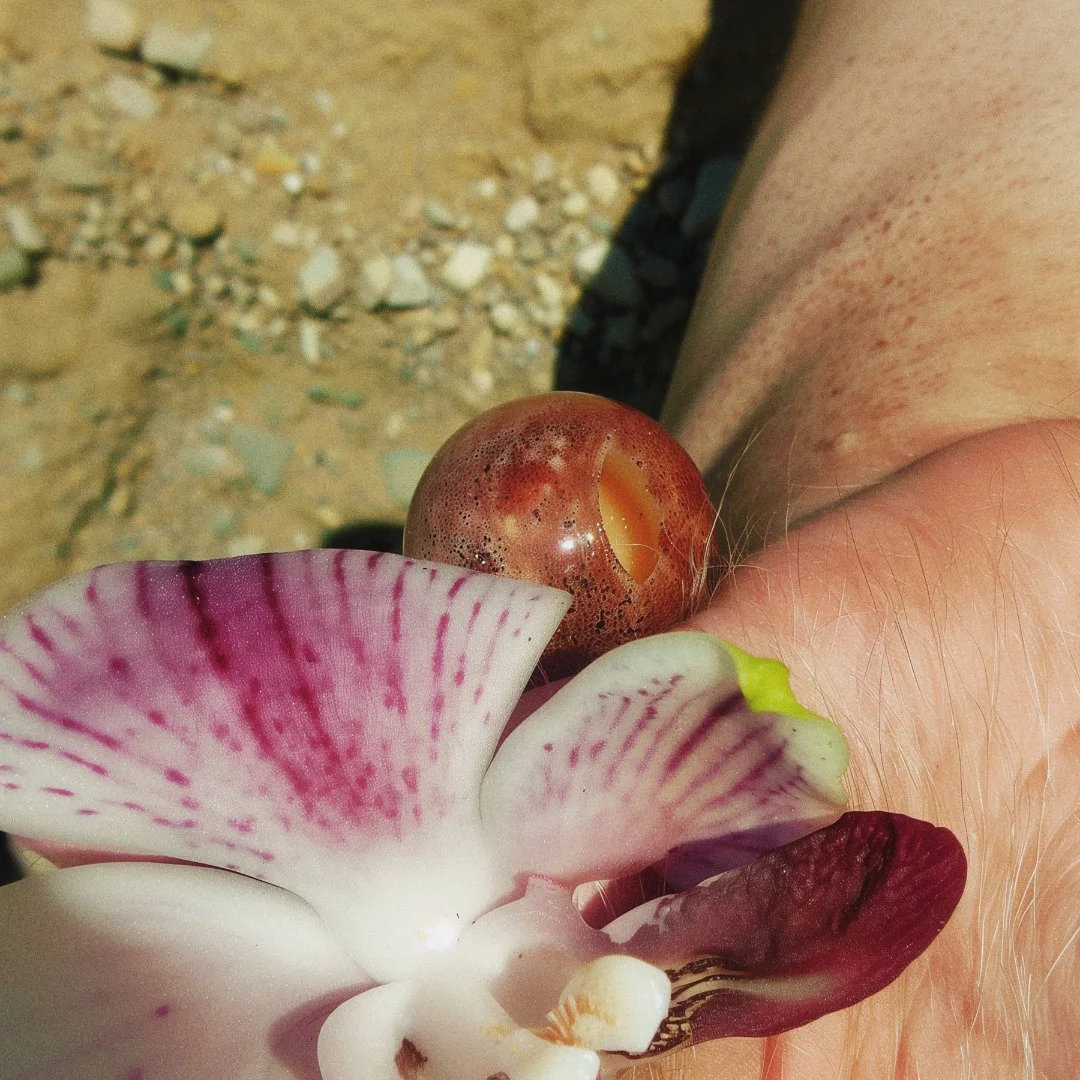
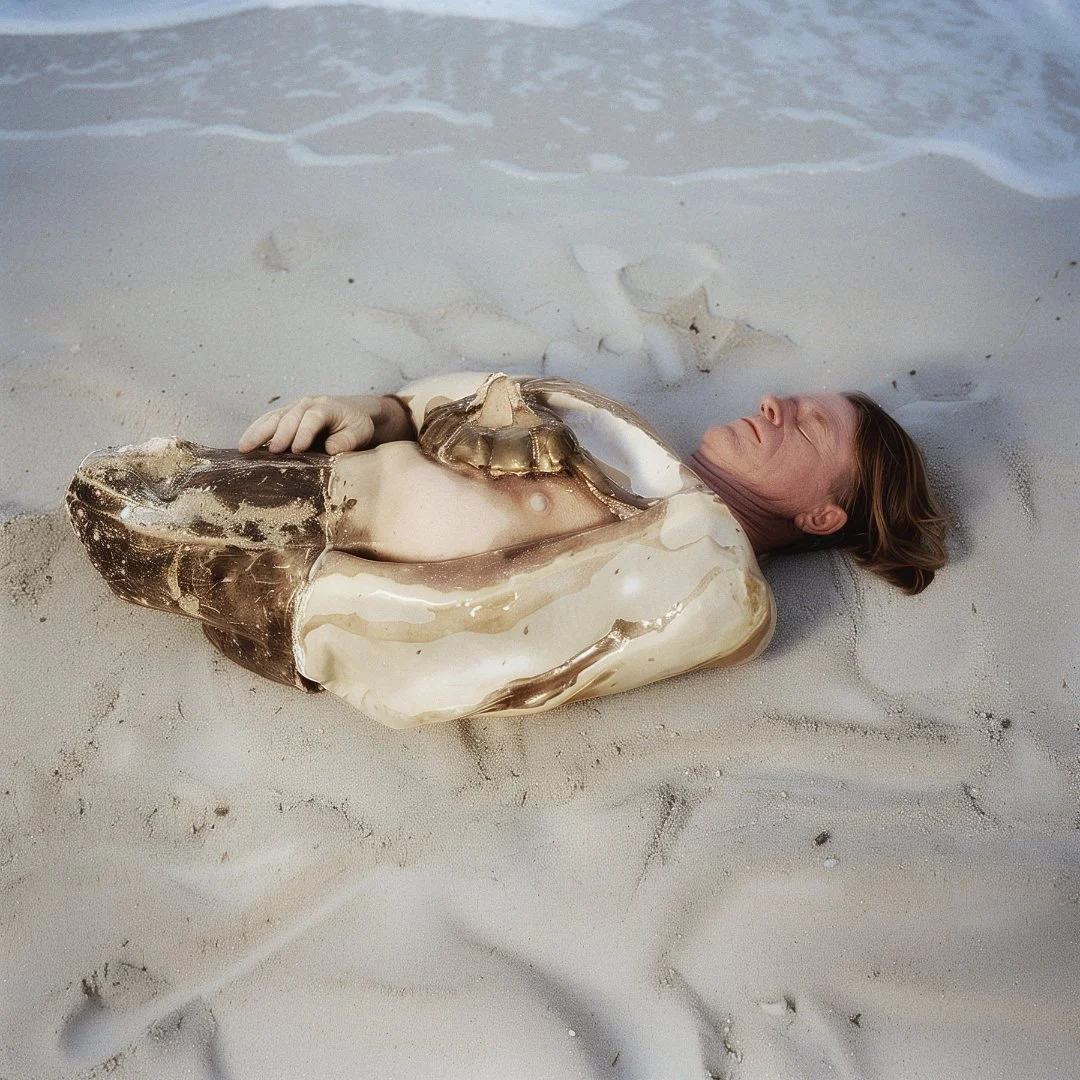
On the Beach, 2024


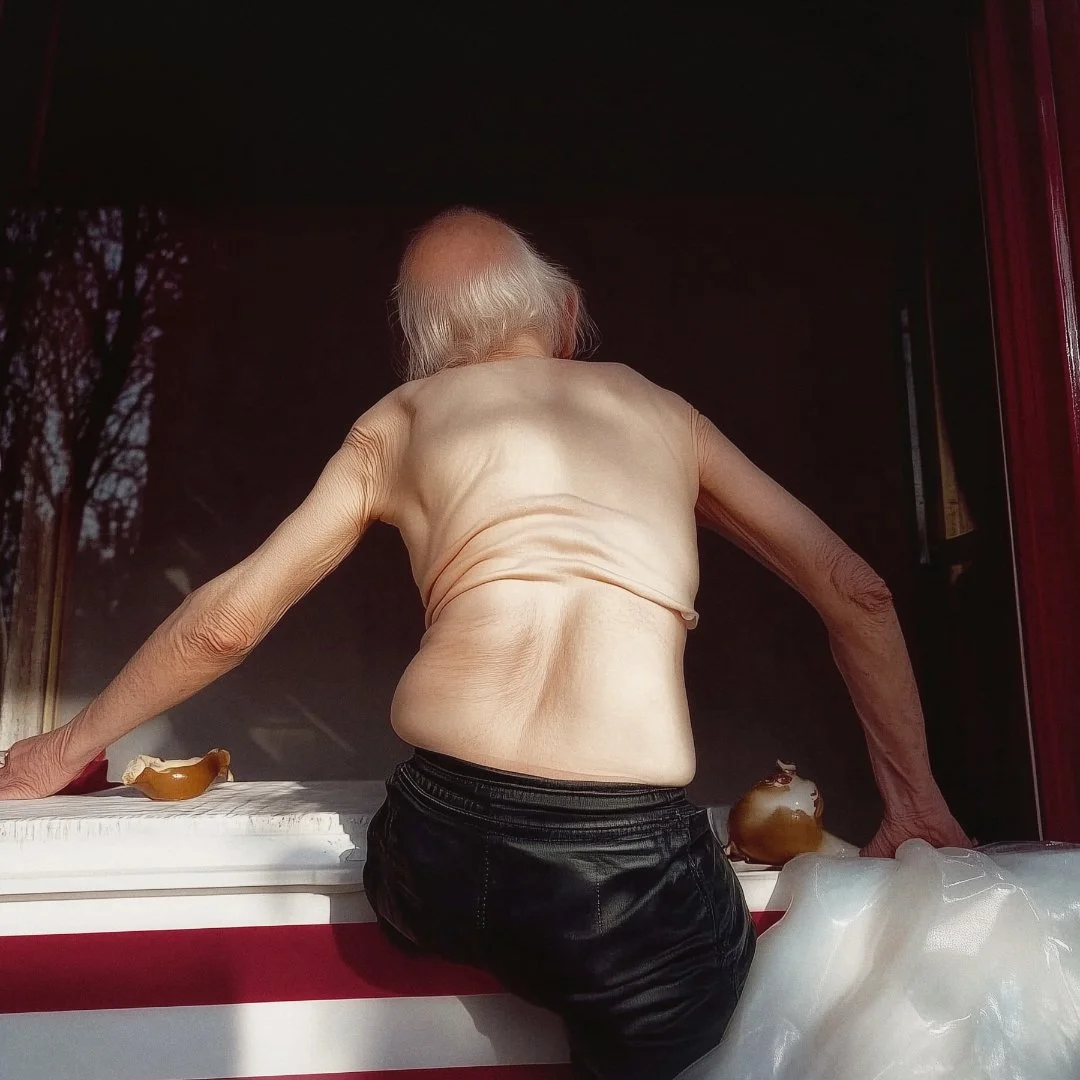
Windowsill, 2025


ENGMAN: In my work, I've been exploring ability and disability through AI-generated images. When we judge AI art, there's an element of taste, but also an appraisal of imitation—how well it mimics reality. Is it a good or bad body? Beautiful or ugly? Functional or dysfunctional? Many AI-generated images evoke body horror due to AI’s lack of understanding of the body, which triggers both disgust and desire, the two almost being opposites of the same thing. This dialectic fascinates me, and it reminds me of the political horseshoe theory—how extremes often share similarities. Disgust and desire are similarly close, and I’m curious about that unsettling middle space.

Generative AI excels at representing both unsettling, horrifying imagery and seductive, convincing imitation. This relates to how we perceive non-normative bodies or people with disabilities—our willingness to attribute intelligence or agency decreases the further someone is from our own morphology. I’m exploring these concepts through AI, asking what makes a body beautiful or disgusting within the context of desire.

I’m drawn to generative AI because of its failures. I'm uninterested in an idealized nirvana; I’m more fascinated by the clumsy attempts to achieve conventional perfection. This ties into desire—perfect beauty is unattainable, shaped by context. In different cultures, beauty varies, and my work probes the boundaries between fixed and pliable qualities of beauty, functionality, and desire. AI, with all its imperfections, is perfect for raising these questions.

BERAHA: Looking at your work and what you just said about the horseshoe between desire and disgust, it reminded me of something you mentioned in your recent podcast with Gem Fletcher on the Messy Truth Podcast. You talked about enjoying generative AI because it allows you to create images you wouldn’t feel comfortable asking a real person to pose for. As you were speaking, I thought about how humans are often drawn to hurt bodies—like when there's a car accident and a long line of cars forms as people slow down to watch. AI lets us explore this darker desire in a much safer way, without requiring us to directly involve ourselves.

ENGMAN: This is fascinating because the question of consent I raised with Gem Fletcher really ties into what freaks people out about AI. There's this internet rule from Urban Dictionary—“Rule 34”—that says, “If it exists, there’s a porn of it.” This is increasingly true with AI, especially concerning consent. A big part of AI is making deep fakes—imitating likenesses, voices, behaviors, and personhood. If anything is possible, the assumption is that everything will happen. So, there could be an AI-generated porn of you or me, without our consent. It raises the question of where our desires meet others' desires, and how those desires clash or complement. What makes people uncomfortable about AI is the lack of agency in representation. It creates an unfathomable world: if all desires can be fulfilled, does that nullify desire? And is that what scares people? Is it that we don’t want our desires satisfied, or are we more afraid of others’ desires being fulfilled—say, someone like Trump, whose desires we might find repugnant? If desire is tied to power, the fulfillment of others' desires could conflict with our own. This is why I agree with your AGI hypothesis. The only response to this “Rule 34” future might be to take it lightly. If there’s porn of me, so be it—I can’t control others’ perceptions or desires. Letting go of attachment to value judgments around desire sounds like nirvana to me.

BERAHA: Why do you think there is so much aversion to AI generated art? It always makes me think of the discussion around photography when it entered the world and how the fact that it was accessible or reproducible made it feel like it was not art. And I see a lot of comments on your books on Instagram that are kind of repeating the same thing.


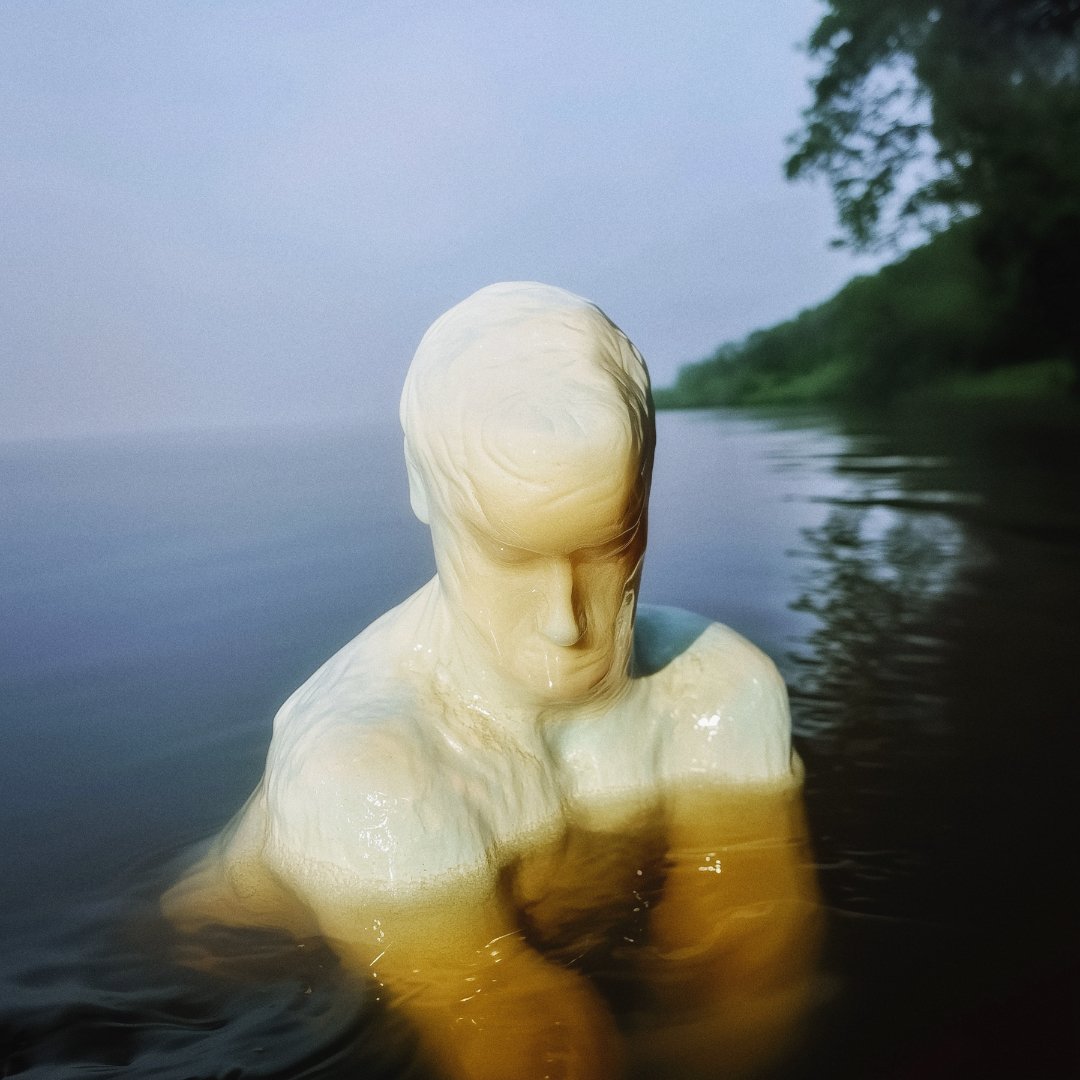
In the Lake, 2024


Eggs, 2024


Tape, 2024


Fountain, 2024


ENGMAN: I'm not sure what I think about it, honestly. I'm obviously coming at my work from a photographic tradition. I'm trying to make photographic images as opposed to something that looks like a 3D rendered illustration or whatever, and I think people are assessing the value of it based on the value of a photograph. They're expecting it to do the same things that a photograph does, but it isn't a photograph, right? So of course they're going to be frustrated. At some point it's going to fail by those criteria because it's not a photograph. What you mentioned is really salient—the idea that we won’t care because it didn’t really happen. This ties into surrealism, especially when considering photography. We often assess a photograph’s value based on its connection to reality—Did that really happen? How did it happen? Even when we know an image is edited, composited, or CGI-enhanced, there’s usually some anchor to the real. That tension between the real and the unreal is what makes it so compelling. The way we appraise an image’s value shifts with AI-generated art because there’s an inherent assumption that nothing in it is real. I’ve had conversations where people argue that AI images aren’t photographs since "photograph" literally means "writing with light"—and there’s no light involved. Sure, but AI is trained on countless images created with light. It’s imitating, referencing, and reconstructing from those sources. What fascinates me is that extra step of removal—it doesn’t have direct recourse to the physical world, only to representations of it. It’s a representation of a representation, and what’s lost or gained in that translation is what interests me.

In my work, I try to make that gap visible, but it requires a certain level of attunement. If you approach AI art expecting it to function like photography, you’ll be disappointed. If you embrace its potential for fantasy and the surreal, you might love it. For me, AI art sits in that liminal space—like surrealism—negotiating between subconscious fantasy and structured reality.

I don’t fully understand the pushback against AI art, though I sympathize with it. Most AI-generated work doesn’t engage deeply with its relationship to reality, to taste, value, or cultural meaning. I agree when people say, “You could have made this with photography, but you took a shortcut.” A photograph carries meaning because of the labor behind it—there’s a certain effort we subconsciously value. Take an image of someone doing a handstand on an elephant. It’s impressive because it’s difficult. But an AI-generated version? It might be amusing for a moment, but it lacks weight because the effort isn’t there. To make a truly compelling AI-generated image, I think you have to be sensitive to the conversation around labor—how we perceive effort, skill, and authenticity in art.

BERAHA: This reminded me of your article, “You Don't Hate AI, You Hate Capitalism.” As AI systems become more capable of replacing human labor, we face serious issues—copyright disputes, job displacement, and broader economic shifts. You put it perfectly: the solution isn’t to shut down these systems but to rethink our relationship with work itself. This ties into a much older pattern, stretching back to the industrial and even agricultural revolutions—our lives have long revolved around labor, leaving little room for the exploration of desire. Creativity has been stifled, not for lack of interest, but because exhaustion leaves no space for expression.

ENGMAN: I wrote that article because we need to rethink the systems of work and play we live under. AI can either accelerate the system we already resent or serve as a tool for change—but that depends on how we choose to use it. Right now, it mostly mirrors capitalist impulses because that’s the framework we operate within. What interests me is the tension between work and desire.

MILOSEVIC: You talked about how generative image-making allows people to explore desires they might have once been too embarrassed to express, while also giving those without traditional artistic skills the ability to create. In this context, do you think AI fuels an insatiable, boundless desire—pushing people to create anything and even venture into darker territories best left untouched? Or does it, for the first time, offer a way to truly satisfy creative desire in a meaningful way?

BERAHA: The pursuit of satisfying these desires predates AI and has often taken harmful, exploitative forms. I don’t want to center the conversation on porn, but since it’s linked to desire, it’s relevant—especially considering the abuse within the industry that has fed extreme and even violent urges. We’ve already done significant harm in trying to satiate these desires. Charlie’s podcast made me think about the potential for AI-generated images to explore these darker impulses in a safer way. While AI doesn’t eliminate the tendency toward problematic content, suppressing such desires entirely seems unlikely. Perhaps, by allowing these images to be created, viewed, and processed in a controlled space, AI could help diminish their grip over time.

ENGMAN: I’m not sure I fully agree, though I don’t entirely disagree either—it’s something I’m still thinking through. I discussed this with Gideon [Jacobs] in that talk you saw, about the fear some people have around AI. There’s a belief that simply visualizing or representing something gives it power, almost like a curse—which is why my book is called Cursed. It ties into broader debates on freedom of speech: the idea that some things shouldn’t be expressed because representation itself can be a form of harm. Images undeniably affect people—they shape desire and can even fuel extremism. If someone satiates one desire, what’s the next boundary? I’m not sure, but that fear—of bringing representations into the world that should remain suppressed—is very real for many.

BERAHA: Yeah. It's feeding but not satiating.

ENGMAN: Exactly. I mean, my impulse is to say that suppression is its own form of violence, right? Ultimately, it all goes back to nirvana—we have to have lightness about our darkness; we have to hold everything softly. That’s kind of the only solution. Things will find their way out. If it’s a true impulse, people will find ways to satisfy it, whether through mimesis, representational satisfaction, or by actually acting on it in the real world. And that’s the question around desire and images too—is an image ever enough? I kind of think not, right? An image is actually an invitation to something else. Lately, I’ve been thinking of images as potato chips—you can’t stop eating them even though they’re kind of unhealthy. They have an insatiable quality. If we believe that desire is fundamentally insatiable—barring nirvana or death—then that’s the answer. It’s never going to be fully satisfied.