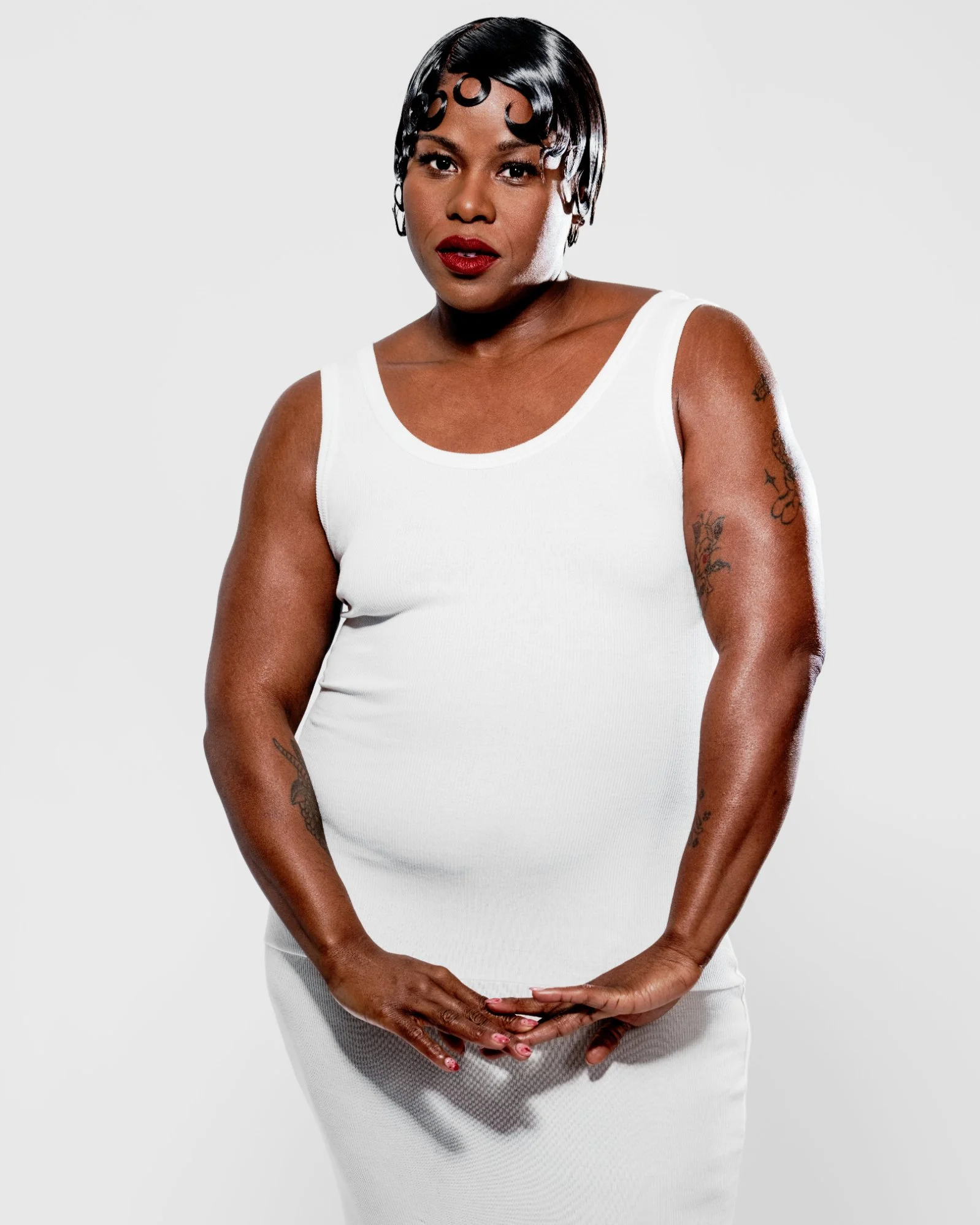
introduction by Qween Jean
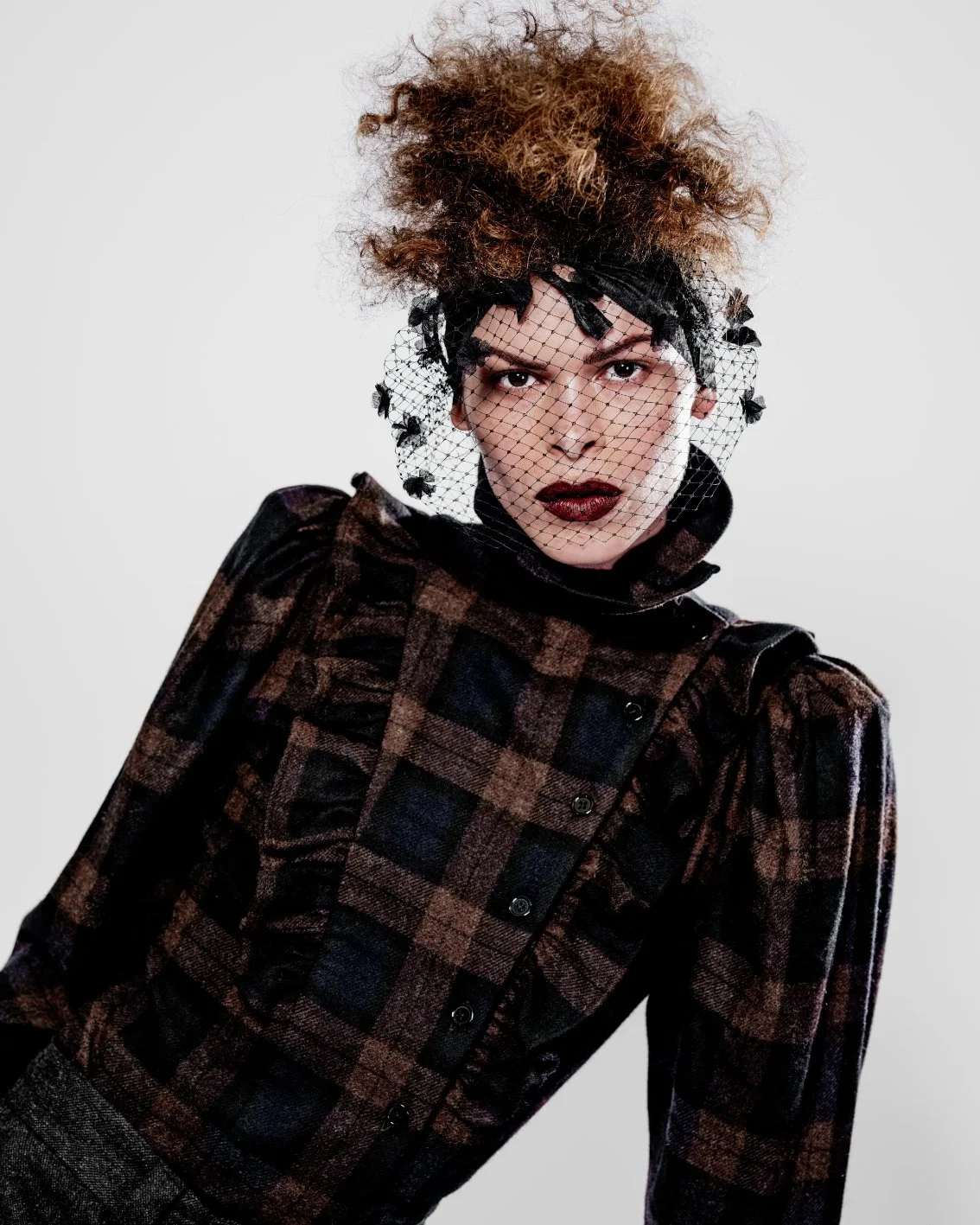
images by Cruz Valdez
styling by Julie Ragolia
makeup and hair by Yadim and Jimmy Paul
Put on the full armor of God, so that you can take your stand against the devil’s schemes. For our struggle is not against flesh and blood, but against the rulers, against the authorities, against the powers of this dark world and against the spiritual forces of evil in the heavenly realms.(Ephesians 6:11-12 [NIV])
This past spring, I had the honor of walking for the inaugural Mother, Daughter, Holy Spirit runway presentation. Far from a typical fashion show, this was a revolutionary call to action for trans equity and liberation. Over forty warriors were assembled and answered the call to pump, strut, and glisten in all our glory. Styled in exquisite armor to display our strength and amplify the urgency for solidarity, we combined resources and brought our invaluable talents to create a paradigm shift. The moment we centered our purpose, our power was unified, focused, and unstoppable.
As trans warriors, we refuse to audition for anyone’s permission to exist. We are born with the inherent ability to reject all binary systems and patriarchal expectations. We have no need for validation by the imperial authorities upholding white supremacy. We continue to exist, and we disrupt when silenced or threatened.
I made the divine decision to choose my truth. My parents expected me to lead the church, but the terms meant that I would have to bury the best parts of myself, the very special parts they’re fused to embrace.
However, today, I stand proudly as a shepherd for liberation. My faith grew as Qween’s voice matured and spread her wings. Mother Cecilia Gentili wrote in her memoir that “it is better to live a short life of authenticity than a long life filled with lies and sorrow.” That’s why I created a sanctuary at Black Trans Liberation where our queer youth and siblings could find solace and peace in their truths. I am a testament to the fact that access to a lush garden of opportunities allows everyone to elevate and bloom year-round.
Transgender and gender-non-conforming people endure an ongoing epidemic of injustice, deep-rooted hatred, and often blatant violence for having the courage to free ourselves. We demand a society and protections that are fortified in permanence, not convenience. Any conditional freedoms that are promised are conditional traps.
The misalignment around protecting humanity is echoed in the history of America and the injustices that are imbued in its marrow. The right’s obsession with returning to “greatness” is apolitical and constitutional regression that severely fractures the fidelity of democracy. These leaders have platformed and endorsed laws that threaten to destroy crucial lifelines and services for trans Americans. They have adopted transphobia as a cornerstone of their campaigns, increasingly targeting and harassing trans people as a means of sowing discord and division. The liberal class remains on this proverbial fence as conservatism becomes the new standard. We are resented simply because we demand fair opportunities for survival. Nevertheless, we are educating our selves in resistance to any system that is intent on delegitimizing our existence. The sooner we wrestle with the internal conflicts that prohibit us from seeing God in each other, the sooner we can heal and build a path for repair and restitution.
My vision for trans lives all over the world is that we are divinely made in the image of love. God’s love is transcendent and universal. We are worthy of adequate and affordable housing, access to healthy and sustainable food, abundant career opportunities, and the right to spread our knowledge. Our families are re-imagining strategies to cope, heal, and prosper. We cannot afford to remain silent while any human life is being persecuted.
We have emerged from this era of misinformation, fascism, and genocide with clarity, strategic direction, and the ability to regenerate love. While we are subjected to subhuman treatment, we hold the truth that our humanity is immeasurable and does not disappear when tyrannical regimes identify the next target. Our ancestors fought with audacity to provide and care for their people. We now take the mantle and journey to free all of our people from the sea to the river. Our love for humanity will live forever.
Miracles like Mother, Daughter, Holy Spirit serve as models of possibility that invest in the future. The one that looks like you and me.

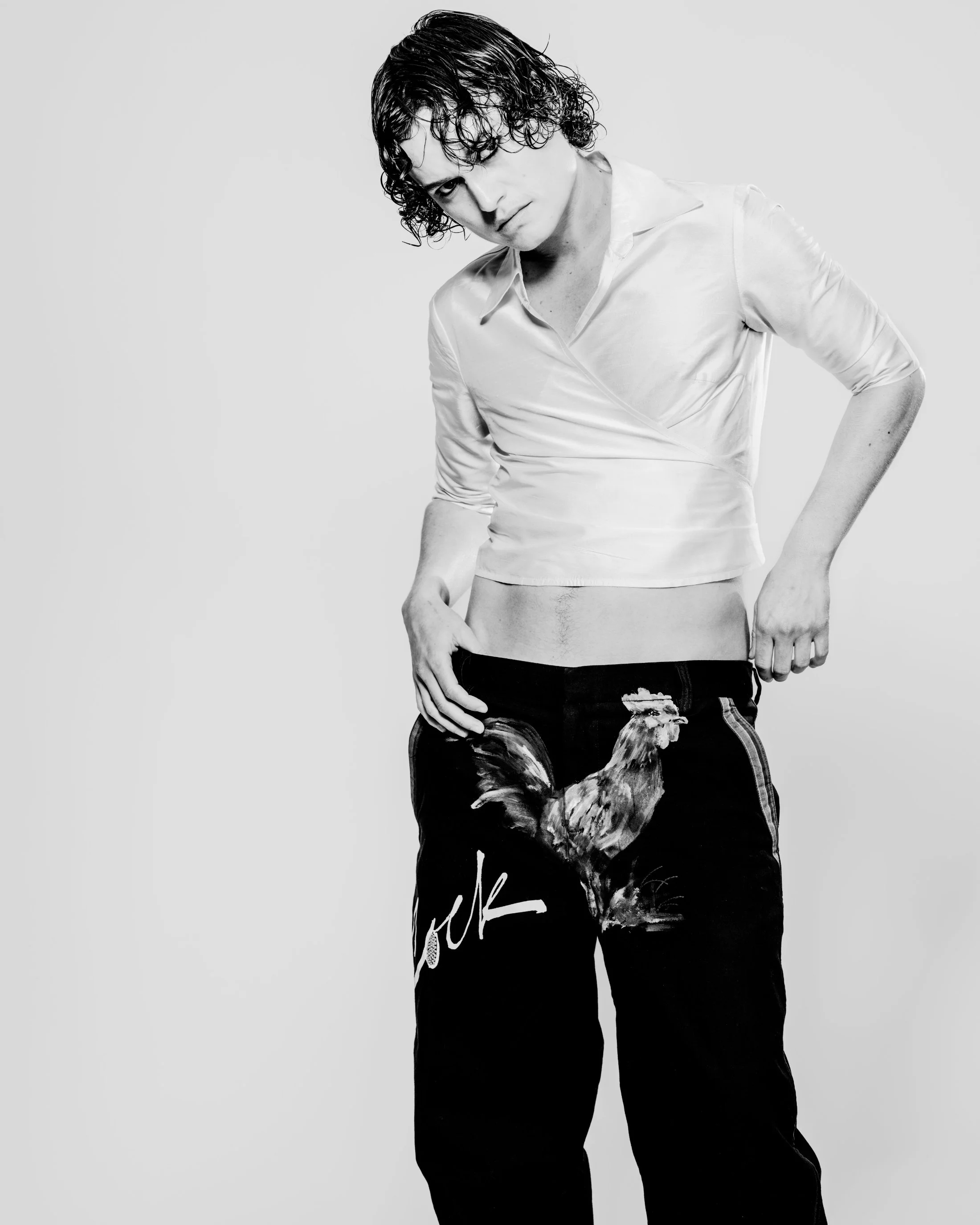

Bobbi Salvör Menuez, Connie Fleming, & Jack Halberstam in Conversation
Since January 2025, LGBTQ+ civil liberties have faced sweeping rollbacks, with transgender rights and recognition under the most aggressive attack. Executive orders have erased federal protections, while state and local governments have advanced exclusionary laws that narrowly define gender in binary, biological terms—pushing trans communities further to the margins. In this climate, groups like the Trans Justice Funding Project have become vital, channeling resources to grassroots organizations, especially in low-income and rural areas where resistance is hardest to sustain. To support this work, Bobbi Salvör Menuez and John Mollett launched Mother, Daughter, Holy Spirit, a fundraiser that merges fashion with cultural power. In the conversation that follows, Menuez, scholar Jack Halberstam, and model, artist, coach, and New York nightlife legend Connie Fleming reflect on representation and belonging in fashion, the role of mutual aid and redistribution, and resistance through collective action.
BOBBI SALVÖR MENUEZ I wanted to start by sharing how this all came together. Mother, Daughter, Holy Spirit began as a fundraising project I started with my friend John Mollett. We’d organized a big fundraiser for G.L.I.T.S in 2020, and after that experience—plus John’s incredible space, One For One, where the fashion show happened—we wanted to do something again. Fashion felt like the right vehicle for exploring gender communication and trans expression. We then brought on Lío Mehiel, whom I first met at Sundance—we are both trans masculine actors. When we thought about the runway, it was about representation: trans people with diverse experiences alongside allies like Mia Khalifa, Chani Nicholas, and Cynthia Nixon. I guess I’d be curious to hear about both of your experiences being a part of this and how it felt.
JACK HALBERSTAM I am the farthest thing from someone who should be on a runway. I was so out of my element, and I was shocked at the talent that was there. I mean, people were fabulous and beautiful, and I was just honored to be a part of it.
MENUEZ In our casting process, we worked with this duo called Casting Double, Salome Oggenfuss and Geraldine Barón. They work a lot in film, but outside industry norms. And with the styling by Julie Ragolia, it was about, what is the story we’re telling? We’re not trying to sell a product here—a traditional runway show is trying to sell something. We have things we’re selling that generate the funds for the Trans Justice Funding Project, but there’s something else that we’re trying to do in summoning the magic of getting everyone in one room.
HALBERSTAM Yeah, except that there were people like Connie—people who really have talent. (laughs) I was out of my depth, but I loved every minute of it.
MENUEZ Connie, what’s your take on this? As a certified runway star for a hot, hot minute.
CONNIE FLEMING The best shows I’ve been part of—whether with Thierry Mugler, Vivienne Westwood, or Patricia Field—aren’t just about the business side of fashion. They consider who’s watching and aim to include everyone. When you see something, you want to see yourself in it. If you can’t, it feels foreign, unattainable—and it shouldn’t. As a trans model, our presence pushes boundaries and makes possibilities real. You’re not just allowed to be there; you should be there. Society needs to be reflected in fashion, not sparsely or as something “special” that feels unreal.
HALBERSTAM What struck me was the seriousness of the team. It didn’t have the campy energy of a drag show; it had the focus and stakes of a high-fashion event. There was discipline, precision, and care. I’ve done all kinds of drag king shows, and this was nothing like the last-minute chaos of those—it was fully realized.
MENUEZ I love that. John and I both come from this DIY, “get it done” background, and that carried over, but what was really exciting—especially given the current political moment—was the readiness of an expanded network of allies. They brought their expertise in a very specific way, showing that you can use your skills to make an impact. There’s something powerful about not waiting for permission, about making a space that belongs to us and letting it shine with all the different contributions everyone has to offer.
FLEMING It also shows that the trans community isn’t separate—we are part of larger communities. When people interact and work with us on all levels, it sends a message to those who might not be fully plugged in: the person across from you, someone who is trans, isn’t “other.” You can’t other us when you’re in the room, collaborating, and engaging.
HALBERSTAM Connie, in your interview with Interview magazine, you talked about finding in art and fashion a kind of protection from the barrage of anti-trans sentiment that some people face every day.
FLEMING And the shoot for that feature was the first time I experienced an all trans set. I felt this cocoon of safety and an eye that wasn’t focused on my transness, just on me as a person, or a ‘moodle,’ a high-fashion show pony. I just felt a sense of ease and comfort. It was superemotional. I’d never been on a set without the specter of, Are you cunty enough?
HALBERSTAM We often think of art and fashion as frivolous or extraneous to the real material struggles we face, but what you said in Interview reframes it: the fantastic looks we create, the worlds we inhabit—these are meaningful acts of trans resistance.
FLEMING It’s also an expression that pushes back against being told, “You can’t do this, you’re not this, you’re othered.” They always go after art—it’s happening right now. Art gets folded into the scapegoating playbook.
HALBERSTAM That’s right, exactly. What people like the Trump regime want are the most basic, flattened expressions of aesthetics—like the way Trump covered the White House in gold leaf.
FLEMING I mean, will we be palatable if we’re dipped in gold leaf?
MENUEZ Something I’ve always cared about in my work—whether in cultural spaces or art spaces—is honoring the integral position of queer visionary thinking in shaping all of culture at large. When we trace things back and ask, Where did this cool idea come from?So often, the answer is trans people; Black trans women. That’s the root of so much of pop culture today. Even something as simple as a style of clothes can be traced back there.
FLEMING Like language. And finger clapping. It’s insane that you want to take from the community, but still want to destroy it.
MENUEZ This whole idea of giving people their flowers was at the center of what me and everyone working on the back end were trying to do—how can we bring it all together in a way that matters? Yeah, there are a million ways to make money. And the Trans Justice Funding Project is incredible to name here, because they’re uniquely positioned to triage the current landscape. What they do is microgrants for trans-led grassroots initiatives in all fifty states and US territories. So, when a state suddenly gets hit with a new shit storm, they can respond directly. The community knows what it needs, no endless paperwork—just getting that money to where it’s needed.
But it’s not just about money. It’s also about the act of gathering people and creating this deeper opportunity for collective nourishment. Fashion has its own way of doing that too. There’s this whole “celebration of the dolls” moment, and yeah, fashion knows what to do with a beautiful, skinny trans woman. But it was also essential for us to expand that—to bring in trans masc people, different kinds of bodies, everyone together on that runway. That multidimensionality was everything.
HALBERSTAM We’re currently living under a fascist government that’s weaponizing federal funding. They’re basically saying: any organization that supports diversity, that celebrates difference, queerness, or transness—we’ll cut you off. In that context, a project whose very goal is to parcel out small amounts of money to local organizations fighting specific battles is crucial. I’m all about that. It’s part of a mutual aid strategy that comes directly from grassroots organizing rather than from electoral politics or federal policy.
MENUEZ When we were deciding where to allocate funds, I kept thinking back to the fundraiser we did in 2020 for G.L.I.T.S [Gays and Lesbians Living in a Transgender Society], founded by Ceyenne Doroshow—who we love and have also worked with on this project. I wanted to expand their reach and get support into places I couldn’t access otherwise. That’s when I realized the Trans Justice Funding Project already does this work—G.L.I.T.S is one of their microgrant recipients. It felt exciting because they’re uniquely positioned to handle the in sanity of an ever-changing climate.
HALBERSTAM When it comes to funding, you need money, but too much money is its own liability, because then there are tax implications, and you have to start paying numerous people to manage those funds. It has to fall below those thresholds in order to get to the real people, as opposed to the organizations managing that grant. The aspiration here is not to be super rich, it’s to get rid of a society in which there are a super-rich few and a vast number of people living in poverty. That should never happen. Some of these billionaires could resolve poverty for entire communities.
FLEMING By just signing a check.
HALBERSTAM Exactly, but we don’t want to be petitioning the super-wealthy for handouts.What we want is for that money never to be funneled upward, but always redistributed. The only real hope is someone like Zohran Mamdani in New York City. He could change the way non-right-wing politicians articulate their purpose, moving beyond the middle-class, wishy-washy liberal rhetoric focused on tax cuts. We need a hard-left discourse that addresses income disparities and housing crises, where housing is often used by the wealthy to hide their money rather than meet real human needs.
FLEMING Yeah, it’s a wealth-building tool. They don’t live there.
HALBERSTAM There are people in the Bronx whose buildings don’t even have basic utilities—it’s outrageous. Meanwhile, there are buildings in Midtown that sit empty. He’s actually willing to talk about these issues, and if he gets elected, other politicians will have to pull left to win our votes. But honestly, voting isn’t the main solution. What we need, with trans people at the forefront, is to transform the society we live in.
MENUEZ There’s something very novel that feels counterintuitive about this approach to wealth redistribution considering that so many connections for this project came from the fashion world. That’s a big part of the space we’re building in, and it’s an interesting industry because of the optics of wealth and glamor. Connie, you know this too—there’s so much free labor that actually supports the industry and bears the weight of it.
FLEMING Yeah, the worker bees. Oh, I need a thousand buttons by Friday. Find them!
MENUEZ Exactly. It’s exciting to see people in an industry defined by competition and exclusive contracts come together around a mutual aid mindset. We’re all people who need to eat, pay our bills, and want to be happy, joyous, and free. So how can we work together?
HALBERSTAM Isn’t it funny that fashion is an industry largely created, populated, and staffed by gay men—mostly white gay men—who aren’t necessarily politically radical? Their interests are often elite, yet within that space, it became surprisingly queer and trans. Theater works the same way. Bobbi, you’ve probably noticed in your career that almost everyone working in the industry is queer, but the representation has to appear straight, straight, straight. That contradiction sits at the heart of both theater and fashion. And because of that tension, it can be exploited for queer and trans purposes—which is precisely what you both are doing so well.
FLEMING Also, because of who it’s being sold to—primarily women—the issues women face have to be addressed. There’s this ongoing conversation between the gay white man and the straight white woman, not just about comfortability, but about “I’m not in the kitchen baking cookies anymore; I have to go out to work.” That back-and-forth is a way to push. Now that the dolls are part of the conversation, there’s a push and pull about rights, employment, and having somewhere to live.
HALBERSTAM One thing to remember is why conservatives are so worried about trans, nonbinary, and queer people: there are so many of us; we’re approaching 45-50% of the population. Many conservative Christian politicians even have queer or trans kids at home. That’s why they attack universities—kids go in “straight” and come out queer or trans, educating their parents along the way.
FLEMING The structure of silencing is crumbling. You can’t grind someone down to a fine powder and tell them, “Oh no, you have to be this, because they’re lepers, they’re dying in droves, and they’re going to hell.” That’s falling apart. Their power—to control people with sin, to profit off of guilt, to give a little wine and a slice of bread and shut them up—is slipping. Now, they’re trying everything to hold onto their stranglehold on everyone.
HALBERSTAM In many ways, they’ve already lost these cultural battles, which is why a young generation is ready to fight on gender and sexuality issues. But economically, the problem is stark: a well-funded conservative wing faces young people who aren’t inheriting wealth—they’re inheriting debt. Student loans prevent them from buying homes or affording rent, and job markets are closing. So you have a radical, motivated generation without the resources to oppose the super-rich. We’re heading for a fierce generational battle because if you’re in your early twenties today, you’re staring at environmental collapse, housing crises, and shrinking opportunities.
It’s going to take massive social upheaval to get out of this situation. In many places, those upheavals are led by trans people, because we’re like the canaries in the coal mine—we see assaults on left-wing movements first. Now is the time to form solidarities and reach out. We may not have access to the funding, but we have numbers. If we don’t find our collective voice, we’ll be divided and conquered.
FLEMING They use financial pressure to silence people. It’s easy to think, I can’t post that on my Snapchat; my boss will see it, and I’ll lose my job. Once that stranglehold breaks, that’s when revolutions happen—think French or Russian Revolution.
HALBERSTAM Let’s think about creating these collectivities offline. The problem is that we don’t always know how to translate online momentum into real-world action. Remember the Arab Spring and other global uprisings alongside the rise of social media? The promise was that social media would facilitate change, but in reality, we are monitored, managed, and tracked. We need to step out of these systems that observe and commodify our actions. We need to meet in person, take to the streets, and return to older models of activism and direct connection.
FLEMING During COVID, we connected online, like nuns knitting by candlelight, but now that phase is fading. Young people—like some kids in Brooklyn wearing balaclavas—are hyperaware of constant monitoring. It’s not about hiding wrong doing; it’s about preserving humanity, resisting being tracked, cataloged, and reduced to data by AI and surveillance systems.
HALBERSTAM That’s why we can’t rely on political tactics like visibility anymore—we’re all visible all the time. People are masking to reclaim some anonymity. Anonymity can be dangerous when it comes to ICE or state surveillance, but it can also empower collectives to rise up without having their leaders targeted. Connie, what you said about 2020–2021 resonates: the murder of George Floyd galvanized us, creating enough outrage to spark calls to defund the police. We marched, we organized—but now, in 2025, unmarked cars and masked officers can pick people up with impunity, deporting them overnight.
That rebellion, born from Black activism, has been systematically undermined. The Trump administration understands that the most powerful activism comes from Black communities, and they’re doing everything to suppress it. We can’t wait for the next viral instance of brutality—we need to be in the streets now.
FLEMING Defunding the police wasn’t about having no police—it was about re-education: making sure someone intoxicated or experiencing a mental health crisis wasn’t swept into the criminal justice system.
HALBERSTAM It’s also about abolition—thinking beyond safety being enforced by a police force. True safety comes when we care for each other. The fashion show embodied that spirit: we weren’t waiting for anyone to guarantee our safety. We were out there in our flamboyance, holding space for each other, creating a glamorous, queer, fashion extravaganza—and that’s what made it so powerful for me.
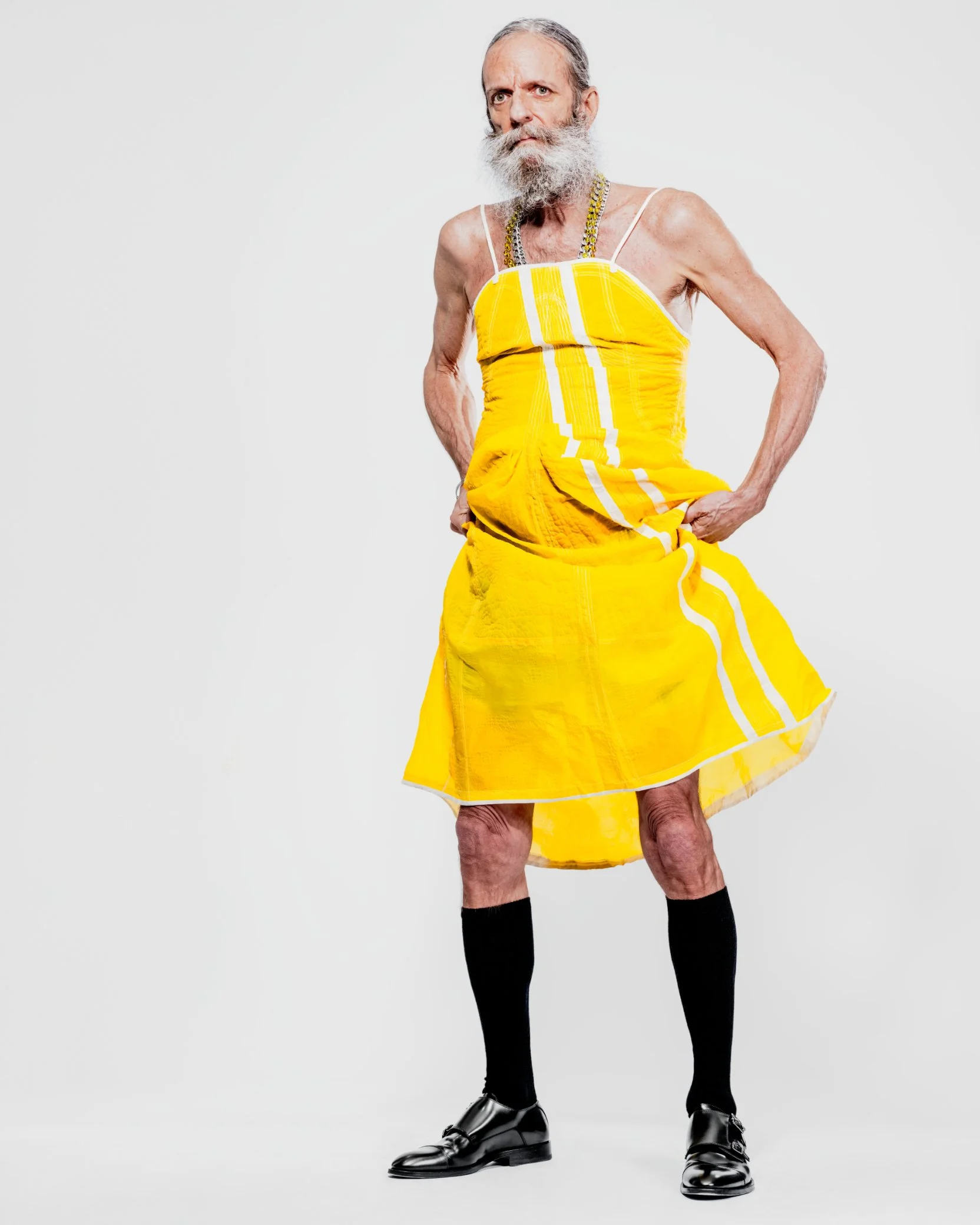
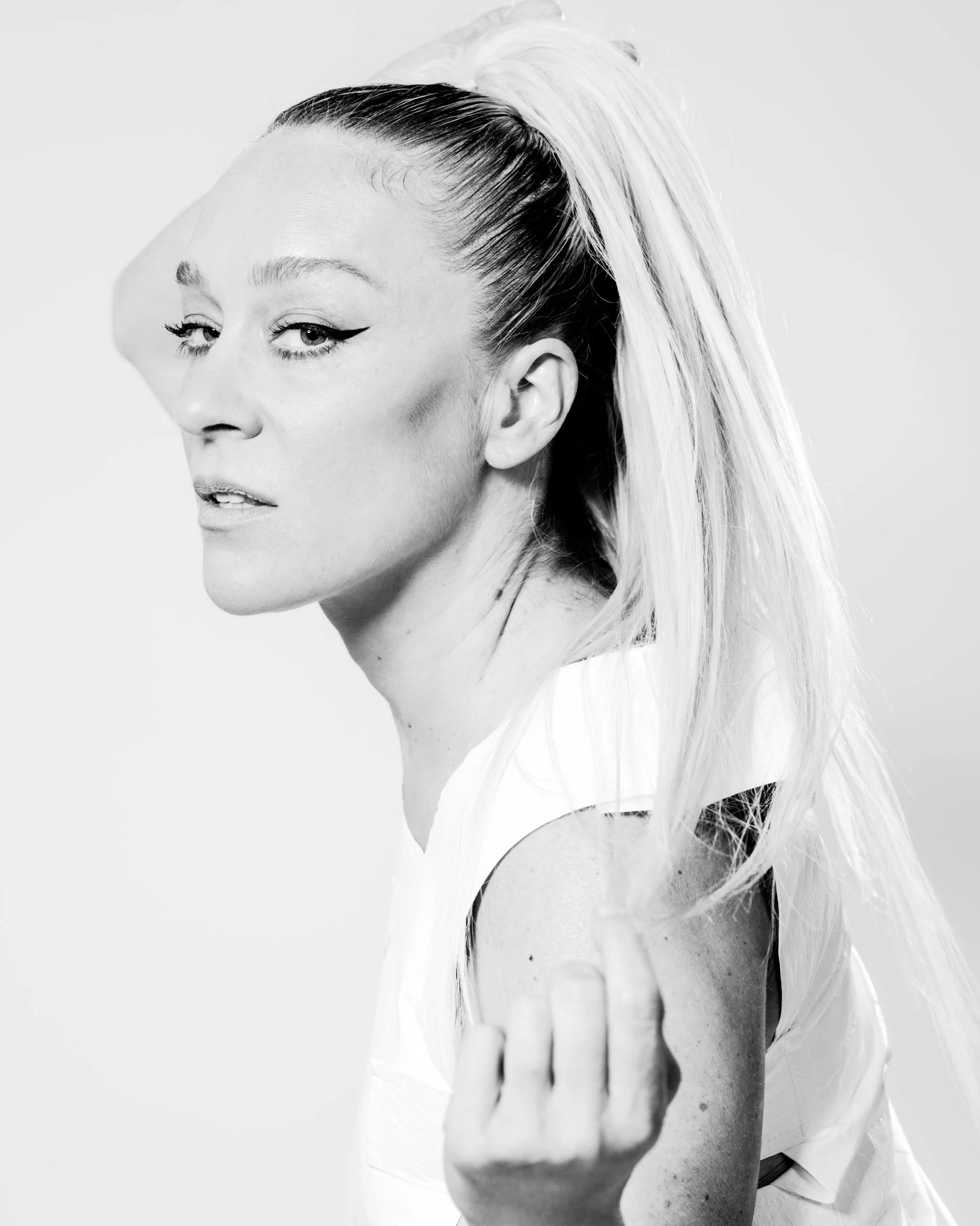
Bobbi Salvör Menuez & Chloë Sevigny in Conversation
Chloë Sevigny was always drawn to the subversive energy of New York and its seduction of freedom. Since her breakout role in Kids (1995), she has achieved mainstream success while staying true to her authentic roots as a quintessential New Yorker, consistently supporting the queer and trans communities at the heart of the city’s cultural fabric.
BOBBI SALVÖR MENUEZ It would be interesting to hear about your relationship to CandyDarling. You narrated her documentary. And you used a comp card from Women In Revolt (1971) for a t-shirt design to support Mother, Daughter, Holy Spirit. What does she mean to you?
CHLOË SEVIGNY I grew up in a very small town in Connecticut. It was very homogenous, and I was really frustrated by the lack of stimulation there. Because New York was so close, yet so faraway, I became obsessed with all things New York City. That, of course, always goes back to Warhol. My discovery of Candy came through my love of Warhol. I read all of his diaries and Candy’s diaries. Seeing her in Richard Avedon’s images, I was immediately struck by her beauty. There’s that arresting triptych photograph where she’s displaying her bits. (laughs) As a small-town girl, I was like, Wow, what is going on there? I hadn’t really been exposed to people like that before. Watching her films—I was completely taken by her glamor, her presence, and her style. Later, when I moved to New York City, I became deeply involved in the club scene. With the club kids, there was always a nod or a reference to Candy everywhere. To us, Candy was like a goddess.
MENUEZ Yes, the patronsaint of glamor. I also feel like there’s something about transfemininity that teaches me so much about what femininity even is, or can be.
SEVIGNY There’s a certain ownership over it. I mean, I was very androgynous as a young person coming into New York and questioning my own sexuality. You know, girls were making out with girls and making out with boys. I was just feeling it all out and discovering who I was. But there’s definitely a kind of glamor with Candy and some of the Warhol Superstars. When I was young, during the height of grunge, the femininity and glamour they embodied felt completely timeless.
MENUEZ I got to work with Kimberly Peirce years after you did Boys Don’t Cry (1999), and it was only then that I discovered that the person who made that movie is not a cis person. I’m curious about tracing those lines of queer representation throughout your career as an actress and how much intentionality there was around wanting to be involved in projects that told stories outside of the cis-straight-mainstream narrative?
SEVIGNY In the case of Boys Don’t Cry, I had read the Playboy article about Brandon Teena and had watched the documentary, and I was already really invested in that story, even before I auditioned for the movie or met the director, Kimberly Peirce. At one point, I even remember talking to Drew Barrymore, who at one time was thinking about developing a project around Brandon Teena and playing him herself. She had these photos of herself in drag. I know people feel really conflicted about the movie now because Hilary [Swank] was cast. But I felt very strongly that the story had to be told, and I just wanted to be a part of it, whoever made it. When I did get the audition for Kimberly’s project, I went in with a lot of gusto and was very emotional in the audition—even thinking about Brandon now, I could well up and start crying uncontrollably. I don’t know if Kimberly saw my passion, and that was part of the reason why I got the part, or if it was just my acting ability. (laughs)
MENUEZ Where art and culture are being made, there are always gay and queer and transgressive people of all varieties. It makes sense that it would be a magnetizing force for you.
SEVIGNY I wanted to be a part of the queer and trans community because it was very creative. It was challenging norms. It was all the things I also stand for, especially around the club scene, which is where people often find their chosen families. I think it was a safe space for a lot of people, especially then. There’s a lot about the darkness of going out when the sun is set, and being celebrated in those spaces was really important. Unfortunately, though, with Kids (1995), when I watch it now, it feels very homophobic—even though a lot of the kids in the movie were actually bi or gay. People weren’t out, especially within the skate culture, which was very straight, but I know a few very famous pro skaters who are now out of the closet. And now, looking at the movie and seeing what an impact it made—and how people are still watching it and talking about it—that’s one of the harsher aspects I wish could maybe be readdressed.
MENUEZ Visibility can only do so much. I’m not waiting for movies to politically save us all the way, you know. In terms of visibility throughout the history of film, it’s just a very complex and convoluted process.
SEVIGNY Yes, more fringe.
MENUEZ At the same time, I still so vividly remember watching Boys Don’t Cry as a pretty closeted person and just being so moved and devastated. I could tear up just thinking about it. I mean, I don’t know every truth of Hilary’s internal gender experience, and as someone who identifies as non-binary, I don’t really believe in the strict cis/trans binary. That said, I absolutely think trans people should be prioritized and given casting opportunities when the story is about a trans person—100 percent. There’s been a lot of clarity around that, and I think many of us have connected to it. But still, whatever Hilary’s internal experience was, something was conveyed that really spoke to me. The chemistry between you on screen was so vivid and powerful.
SEVIGNY I also did that TV show, If These Walls Could Talk (2000), which I know a lot of kids really connected with. I played a butch lesbian, and I remember reading Stone Butch Blues (1993) and doing a lot of research because I wanted to bring something authentic to the role. At the table read, Ellen DeGeneres was there, and she looked at me and said, “You can’t play butch.” I just thought, Wait—watch me.
MENUEZ I think you make a great butch, even though in my heart you’re a glamor girl. I want to circle back to how you first got involved with Mother Daughter Holy Spirit. You’ve been a supporter from the very beginning—helping with the shirt, closet donations, the party, and the photo shoot featured here. Shooting you in Women’s History Museum felt like a natural extension of the way you move through this rhizome of New York creatives, always flowing with new generational energy. Is there more you’d like to share about that experience?
SEVIGNY Well, I’ve known you and John [Mollett] for years and have always admired both of you as creative forces and as people. These are troubling times, and it feels like proactive organizing has fallen off a bit. So, when you started reaching out—wanting to raise money, spread the word, and do all this great work—I thought, why aren’t more people doing this? Of course, I wanted to be involved, especially trusting that you’d handle it with care and respect for everyone. I was flattered to be asked, excited about the work you were doing and the people you’d be celebrating. At the same time, I wondered how you were going to pull it all off—it seemed so ambitious. But I like that. I like ambition.
MENUEZ We’re an ambitious bunch.
SEVIGNY So, what is going to happen next?
MENUEZ John and I did a different fundraiser in 2021 for G.L.I.T.S, where we hosted an auction. This feels different. Once something gains momentum, it becomes its own creature, its own force. That’s what this project has turned into. Now we’re looking at how to take this huge wave—from the fashion show to the closet drops, the conversations, and the party—and carry it forward. I’m really interested in the ongoing resource sharing this kind of work creates. We all have things to offer, and the question is how to put them toward meeting essential needs for people on the margins within our shared communities and identities. Because honestly, to be a trans person in this country right now is insane.
SEVIGNY I did a lot of work with Hetrick-Martin Institute in the past. I think they’re a really great organization. Whenever I feel overwhelmed, I try to refocus on the local level, and the fact that they support New York City kids really moves me.
MENUEZ Yeah, I think what really unlocked this for me was realizing the power of creating opportunities for people to do what they’re best at toward a shared goal. That’s what I want to keep supporting—building those containers where everyone comes together, makes something happen, and chips away at the things we care about. Over time, we’ll see what we can carveout of the stone.
SEVIGNY Anything is possible. If I had advice for someone reading this right now, I’d say: get active. Start a group at your high school or on your campus—it doesn’t matter how old you are or what resources you have. Put up a flyer, find some like-minded people, and see what happens. The possibilities are limitless when you surround yourself with people who share your goals.
MENUEZ Well, I am so grateful for you. I hope your schedule starts to chill out, and I get to see you in New York.
SEVIGNY Well, I’m finishing this TV show, then I’m going upstate to make this movie. I’m away until November.
MENUEZ I guess I just need to be cast in something with you, otherwise I’ll never see you again.
SEVIGNY That sounds good. I’m into that. Let’s make that happen. (laughs)