Betsy Johnson & Marta Tiefenthaler in Conversation

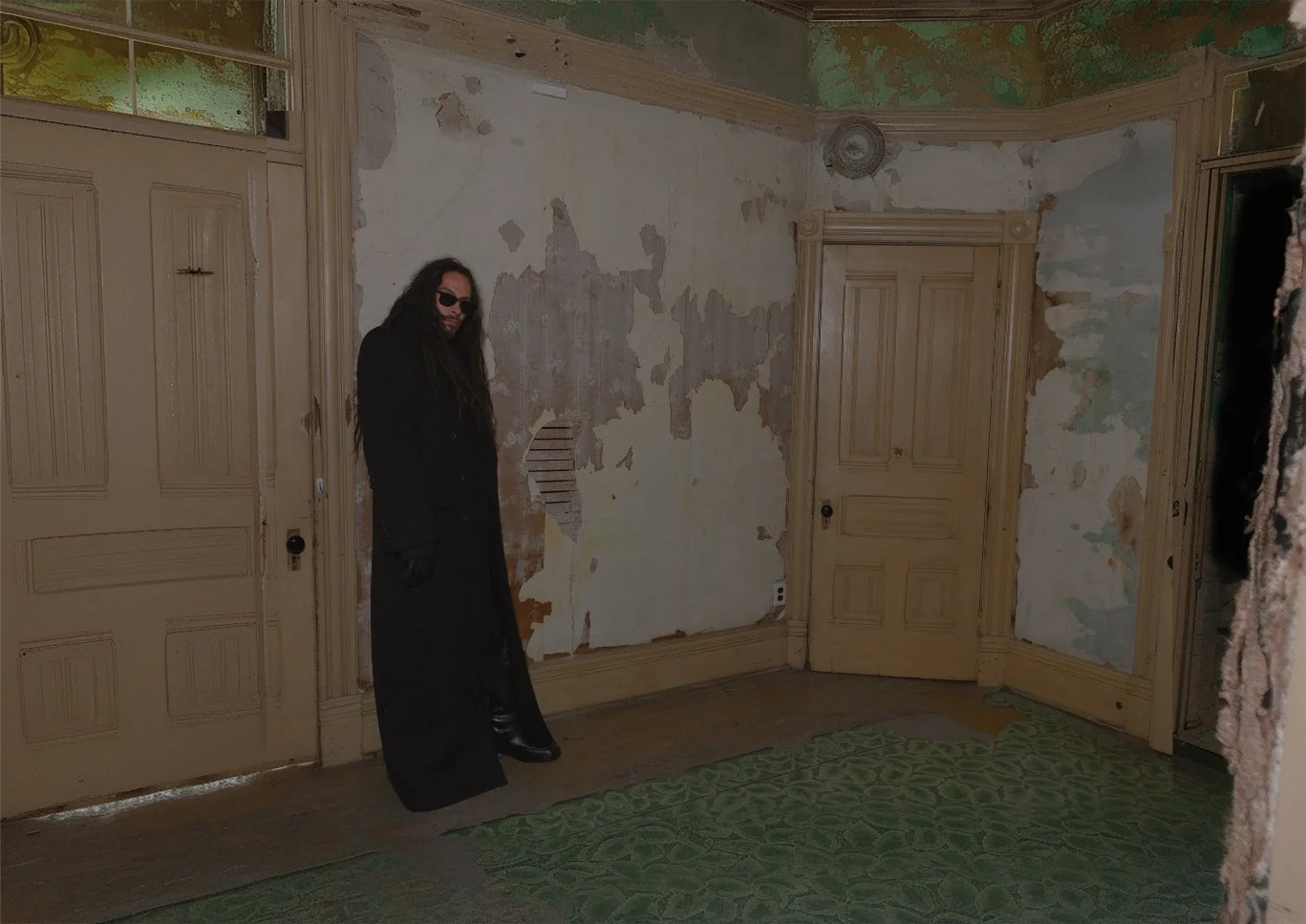
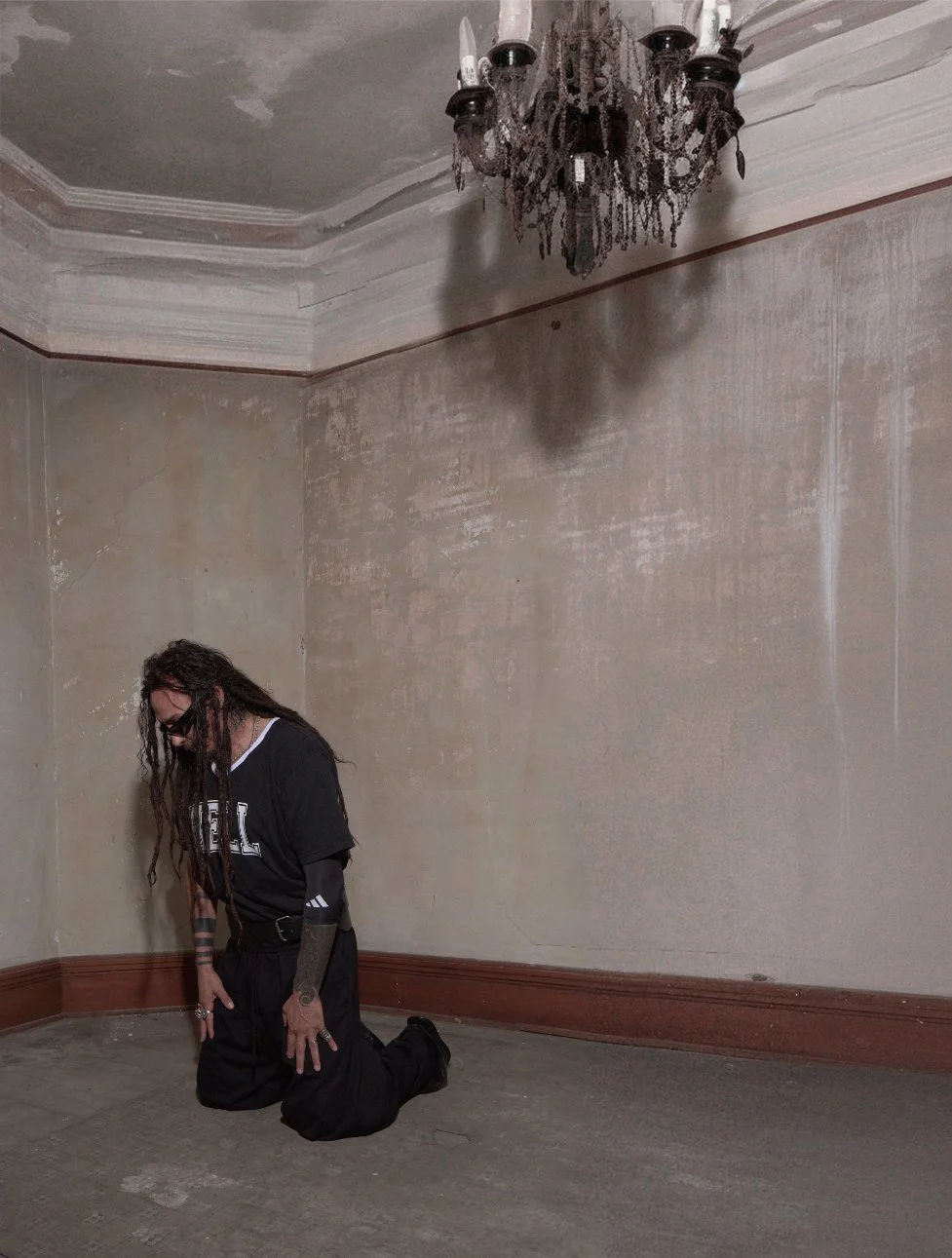
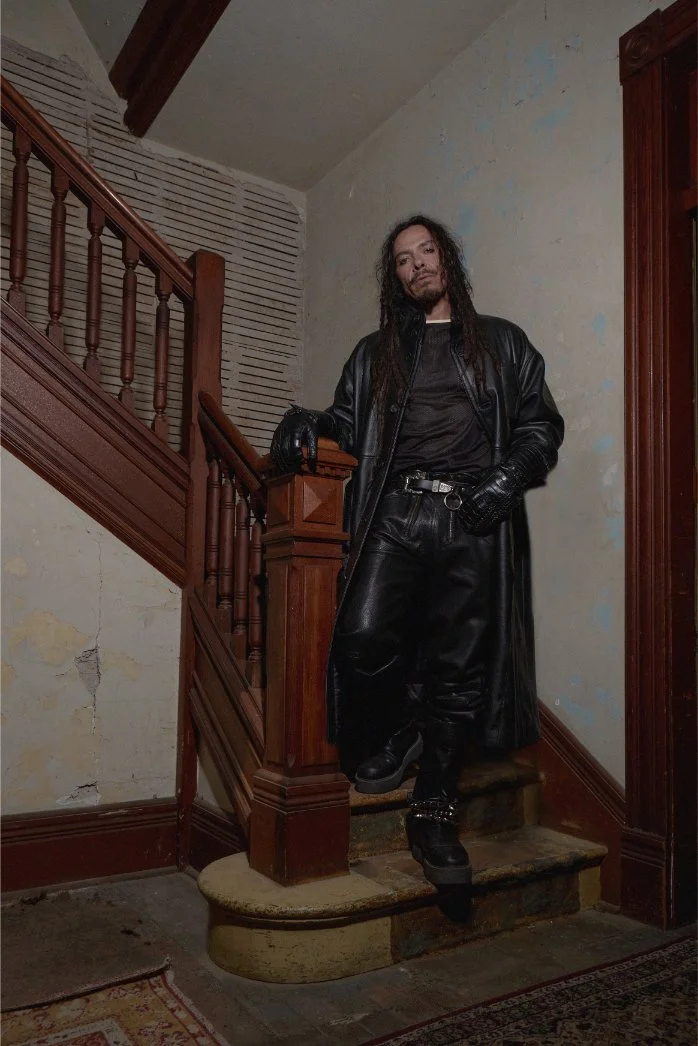
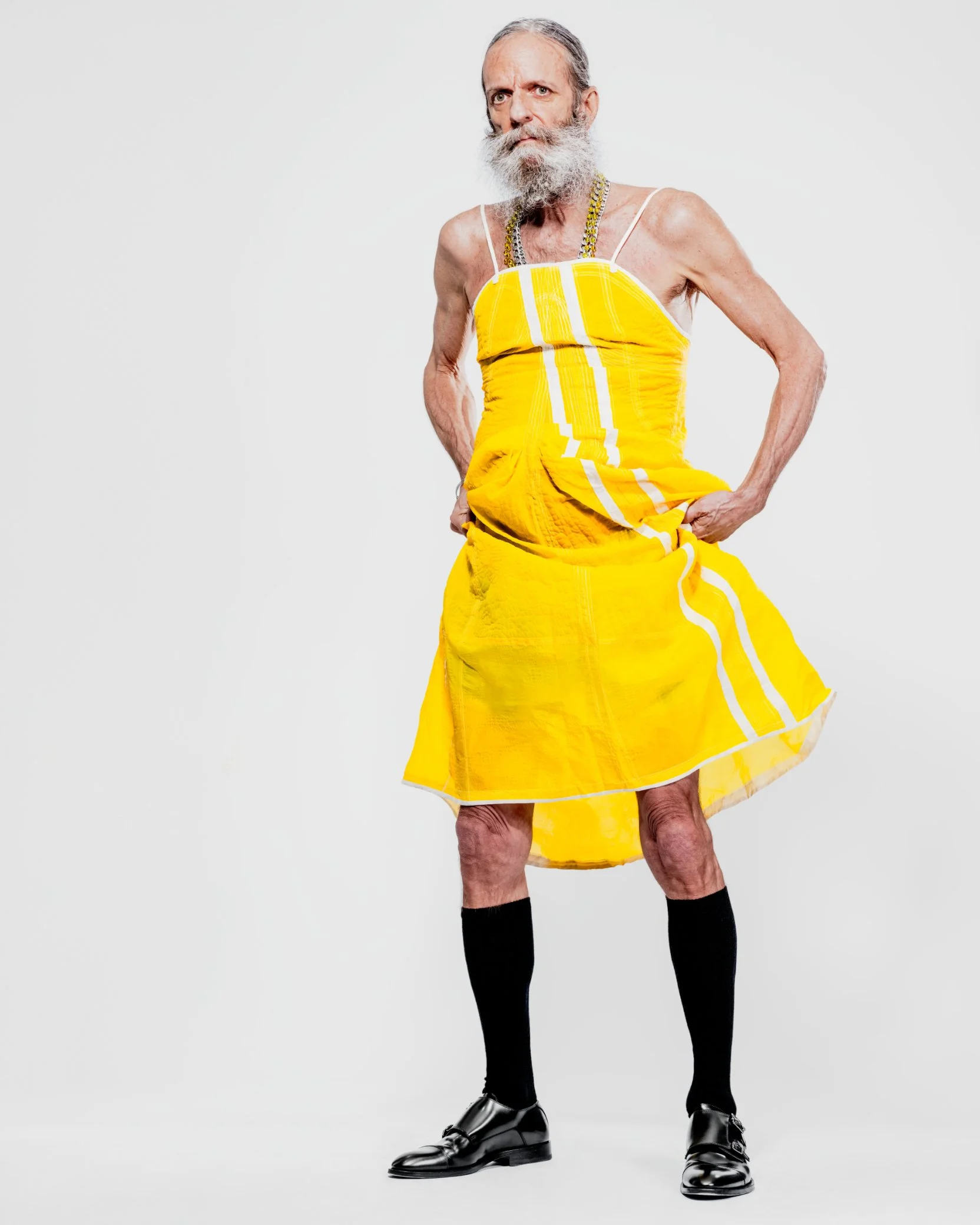
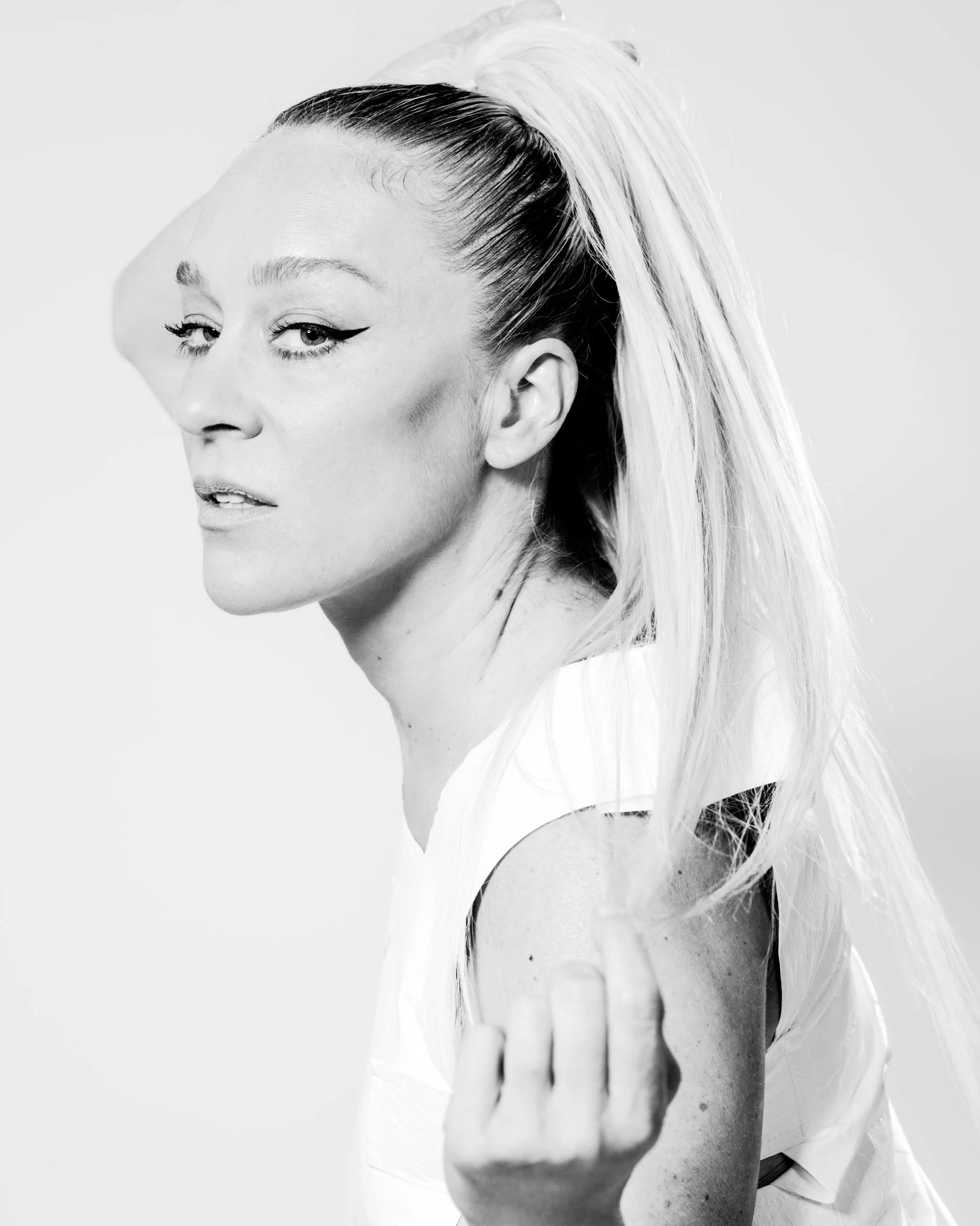
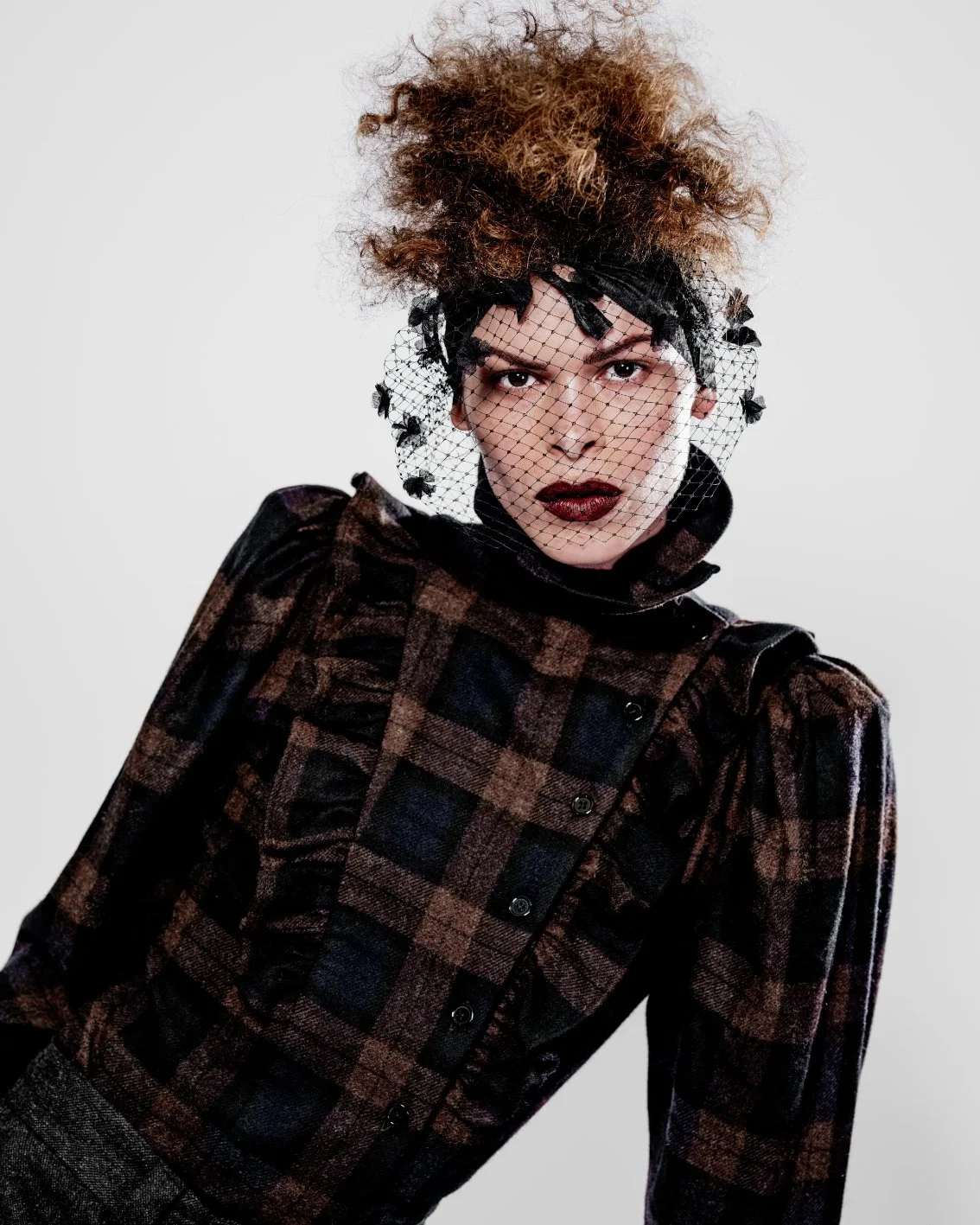
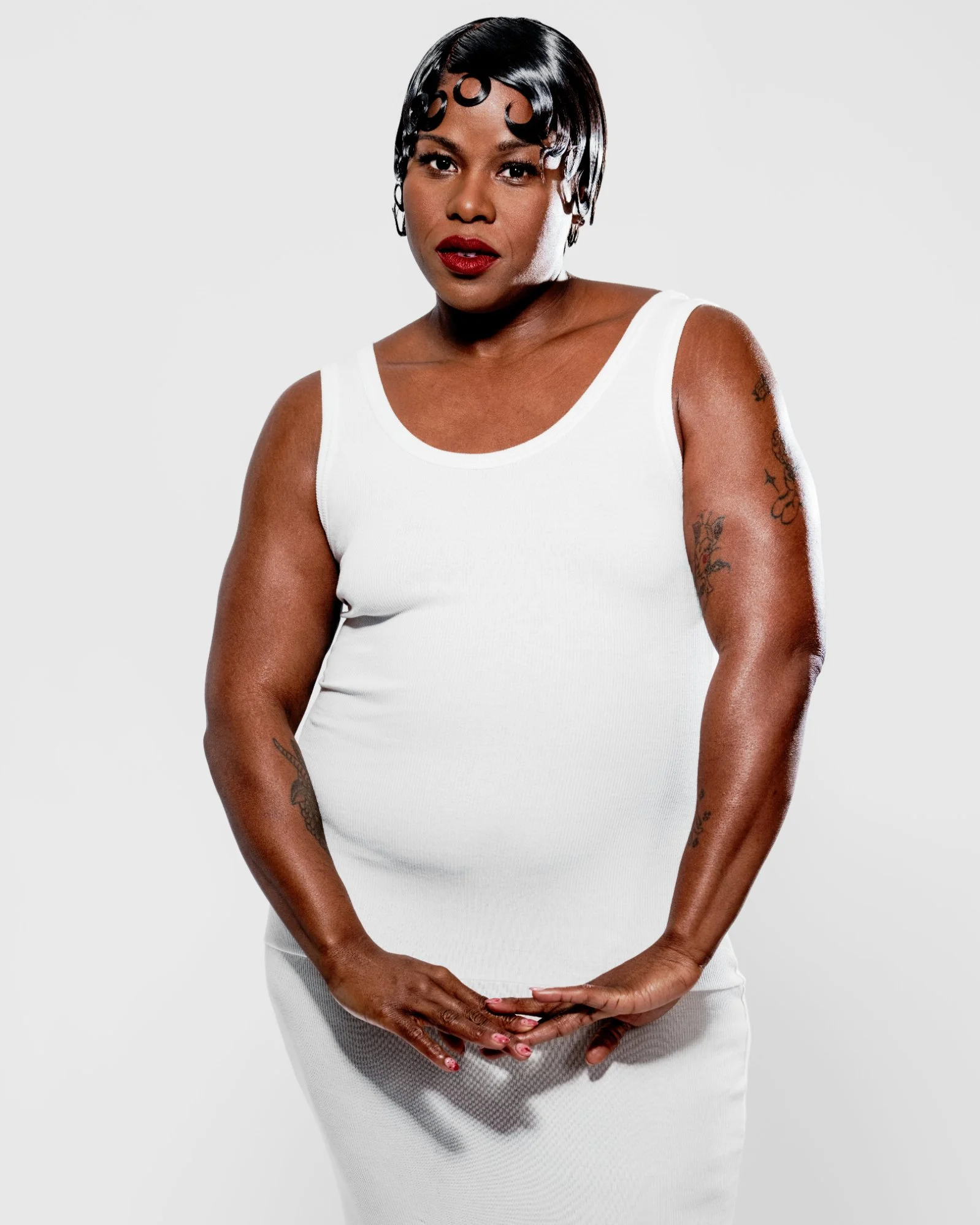
Hailing from the working-class fishing port of Grimsby, England, Betsy Johnson is one of those rare cultural multihyphenates—stylist, creative director, artist, designer, photographer, storyteller—who quietly transforms the visual language of fashion. Her influence unfolds subtly; you don’t always notice it until you can trace it back to one of her references. Her British roots inform a hard-edged style that shifts between minimalism and maximalism, punk and glamorous, dark and light. It is precisely these contradictions that have made her so successful in inventing a unique sartorial lexicon. For Betsy Johnson, work is the process, and the process is inseparable from the work itself. In response to the Work In Progress theme, objects found in Betsy’s home and studio were categorized—collateral of the creative process.

Austrian-born Martina Tiefenthaler, who served as Chief Creative Officer at Balenciaga during Demna’s highly successful ten-year tenure, approaches fashion with equal singularity. With a background in architecture, she provided a rigorously engineered foundation for the house’s reinvention of the modern silhouette. Tiefenthaler continues to reinvent herself and her practice through her recent ventures in coaching and image making. In the following conversation, Johnson and Tiefenthaler discuss the power of objects to hold memory, the role of emotional intuition amid commercial pressures, and the importance of holistic, human-centered leadership in creative industries. The pair posed themselves both the question: are you materialistic and do you hold on to things?

BETSY JOHNSON I didn’t think I held onto things, but I’ve been told that I’m a hoarder. (laughs) I hold onto everything from shoots: plane tickets, handwritten notes, props, labels, and a lot of printed materials. So, I’m materialistic in that way, but I don’t buy things. What about you?

MARTINA TIEFENTHALER: I do know I’m a hoarder. People don’t have to tell me. (laughs) I’m a trained designer, so the way that I look at things is really like, What’s the color, the touch of the material, the functionality, the context, who made it? How old is it? When I look at an item, it gives me information, which relates to a feeling—it makes me laugh or remember something that I had as a child, or the color makes me remember something. So, with the amount of things I own I probably look materialistic to other people, but I don’t think I am.

JOHNSON: That makes perfect sense. Most of the clothes I keep are like a pair of football shorts from when I was five years old. I keep them somewhere thrown in the corner of my closet, and somehow having these personal effects helps steer the work. Or if I feel like I’m losing touch with my creative path, I always go back to these notes and objects. They help re-center me.

TIEFENTHALER: As creatives, we need informative material. That can either be physical: objects, products, material, or it can be digital, like imagery. And then, the third category is everything that you have saved in your mind: memories, conversations, ideas. We need all this informative material to feed the process and to continue doing the job. The part that I’ve always liked about my job is that I’m able to go into moments of research, collect things, make edits, and then decide what is relevant right now to kick off the creation process. As a designer, being a hoarder comes in handy.

JOHNSON: There’s something you just said about feeling, which relates to something I was telling my mom recently. I told her, “I’m experiencing multiple layers of reality because when you have something physical or visual that you’re dealing with, it takes you back to a feeling or an opinion you have on something. That opinion then becomes contextualized by the image or the object. All of it gets layered together, and boom, there’s the idea. A lot of people now have a concept and a reference, but they’re missing the emotional aspect that ties the whole thing together.

TIEFENTHALER: I totally agree. So much of my career has been very commercial, with the primary target of generating revenue through sales. No matter how much I was telling myself that I was working for companies that were more on the conceptual side, the truth is, they had a commercial purpose. And as a professional creative, you have to fit into frames, whether it’s timing or other constraints, but you have to shoot ideas all the time, which can be tough. So, you learn how to work ignoring your feelings, coming up with more ideas, whether they’re good or not. Sometimes you have to go with an idea because the deadline is there and the timeline doesn’t allow the process to continue. That’s why I like to talk about feelings. It’s ironic that you want to create something that makes you feel good when you wear it, but the structures in which we work make it difficult to feel good.

JOHNSON: That’s interesting because my career is freelance. So, the balance between the commercial work and my personal practice sometimes gives me whiplash. You do have to shut down your emotions. Sometimes I went wrong in my formative years by approaching commercial work as if it were my personal practice. I would treat a commercial project as if it were my child. It was a process for me to find the balance between doing the job well and separating myself. Sometimes I take on back-to-back commercials, where there are tons of people and so many different expectations. Then, I need to find respite in the personal.

TIEFENTHALER: Yeah, that’s something I’m doing, working on non-commercial, artistic projects. Doing that has always been a tool for me to take a breath and do things at my own pace. If you don’t have to sell and you don’t have anyone telling you when something has to be ready, you actually experience ultimate freedom. The process is my goal, rather than the outcome itself.

JOHNSON: Do you ever sit on projects for ages? Sometimes I work on something personal, and I sit on it for two or three years. I either forget I’ve done it, or I’m too much of a perfectionist and never feel it's ready to put it out.

TIEFENTHALER: Having worked in given structures, I always thought that a project is something that has a starting point, the process, and the result. Therefore doing things that may never come out or don’t have an ending cannot be defined as projects. But with the new freedom I have, I’m trying to question how I was trained to label the way I work, and I want to get rid of labels. So, I would say I’m currently busy with a hundred projects, some of them are running for ages. They’re like different channels, some exist only in my mind.

JOHNSON: It’s refreshing to hear this. I had a long-term retainer project and after that I’ve been more into personal creative research and development. But it’s been interesting to explain to my accountant where all the money went. I was like, “I’ve been in research and development.” And they’re like, “But you’ve been trying this and you’ve been trying that.” And I’m like, “Yes.” Because when I enjoy where something is going, I have to just let it unfold, and then another path makes itself known. It’s not through anyone wanting to pay me to do something, but just because something presents itself, and that leads to another thing. So, on paper, I might be working on somewhere between sixteen to twenty projects, but it’s probably only three with some sort of timeline. What you’re saying is reassuring to me, because I can really start to wonder what I’m doing. It can feel like everyone’s focusing on their one thing and doing it well, and maybe I just have ADHD. But actually, it’s just the process of doing.

TIEFENTHALER: We have to get to know ourselves as individuals and figure out how we like to operate. At the beginning of our careers, when we learn, we need other people to show us how things are being done. Then it takes time and experience to find our own ways, and it would be easier to establish these if we were all to stop trying to put people into drawers, saying, “Okay, this is what they do, and that’s the number of projects that they do, so that’s how successful they are.” It’s complete nonsense. I’m astonished by how we hold onto this way of thinking as a community and as an industry. It’s all about who’s hot, who’s not, who’s busy, who’s successful. It’s very degrading, and it doesn’t make the community any richer, it’s really destructive.

JOHNSON: It makes a lot of people lie, also. They like to inflate what they’re doing, and then it becomes this pissing contest of who’s doing what. To me, the goal is to be less busy, so you can then figure shit out. What’s ironic is, all of the least successful projects that I’ve had on paper—whether it be financially or social media engagement—are my favorite things I’ve done so far. And all the things where everyone’s like, “Wow, that thing was so cool,” I’m like cringing inside.

TIEFENTHALER: I understand. Often the more liked projects by the audience are the less liked projects by the creator. The challenge is: what do we do with the audience? How much do we need it? Do we really care about it? In an industry that is so much about looks, I’m still struggling to find my way of dealing with it. You don’t need the audience in order to be creative, and that’s very liberating. Nobody can hold you back other than yourself. You will always have people who like what you do and people who don’t.

JOHNSON: Do you believe in networking? It’s something I’m terrible at. Sometimes I think I need to go out and see things, and then I don’t because I have anxiety and am a bit of a hermit. I’m curious about your take on this.

TIEFENTHALER: I’m not very good at it because I’d rather cook dinner at home and go to bed early than spend a night with people who make me feel weird being around them. But the work we do relies on teamwork, and having clients, and that only works if you are in touch with people. It’s wise to create your own community. I don’t think you have to attend all the events. But maybe calling someone and say: let’s meet and have a coffee together, is a good way of connecting. To me this is completely new (laughs), I was always hiding in the office, I like it.

JOHNSON: I don’t know about you, but when I was at school, I wasn’t really popular. Then, I left my hometown, did all these things, and out of nowhere some people thought I was cool. It was a strange phenomenon when I was about twenty-three to come into this industry that’s so based on being cool, and then you have people thinking you’re cool. But not everyone has the best intentions when they want to be your friend, especially in those spaces, so going through that and coming out the other side has been a strange but nice journey. How was your transition into this weird space?

TIEFENTHALER: I don’t walk around thinking that people find me cool. This is something I’d rather question. If someone tells me that they find me cool, I feel flattered, and I’m happy to hear it. But if you don’t think you’re cool, you don’t have to maintain it. And instead of aspiring to be cool, you can aspire to be content.

JOHNSON: I agree. Your life is just what you are doing minute to minute, so you have to enjoy what you’re doing. My team is crucial to my livelihood and even my mental well-being. They are the people I talk to every day. It truly is a collaborative effort, and this is what makes me really happy.

When you have an “online image,” you do one post and people form opinions, and that’s how they perceive you.

TIEFENTHALER: People read code unconsciously. You see something, and then it reminds you of something else. So you code what you see. For many years, I’ve been dressed only in black, and nobody ever asked me why. Everyone just thought, she’s goth, and I’m totally not goth. I don’t like the music, and I don’t know much about the culture. I started dressing in black because I had an intense job creating thousands of products per season. Working on colors, materials, shapes, forms, silhouettes—the whole day. I simply didn’t have the inspiration in the morning to style my looks. It was easier for me in the morning to choose an outfit based on my feeling: choosing only the fit and the fabric that I wanted to feel on my skin that day, not also the color. It was a very pragmatic decision. But people reading codes thought, she’s a dark, tough bitch. (laughs) But I don’t think I am. I always thought fashion people should know better, but maybe they don’t want to know better.

JOHNSON: For sure. It’s funny, though, no one thought I was goth; they just thought I was a bitch. (laughs) There’s this thing about automating as many aspects of your life as possible, so you can do what you want to do with your mind. I’ve been wearing the same cargo pants for maybe five years. I have three pairs because I wear them every single day when I’m working. It allows me to get on with my shit, and it’s the same for my team. When I’m looking at all these pieces, I don’t want my team to be in anything but black. I can’t be distracted. I just need to lock in. But yeah, someone saying, “I thought you were a total bitch before I met you,”—that sentence in itself is wild.

TIEFENTHALER: Ultimately, you gotta be quite fierce in order to make it, because there are quite a lot of people, often men, standing in your way. So, how do you get through this barrier? You have to have thick skin. It’s easy for other people to say, “Look at her. She’s doing well. She must be a bitch.” But it’s so destructive. Why not say, “Oh, she’s successful. She must be really good at what she does.”

JOHNSON: It’s very counterproductive to getting more women in spaces. I want to ask about your coaching, because it’s only been the past year, but half the time when I was going through a rough patch, my team became the reason I kept making things. I was getting more out of mentoring people on my team, and that back-and-forth mentorship became so focal to me. That’s something that I wasn’t expecting. I don’t know if this nurturing side of things has to do with being a woman.

TIEFENTHALER: I enjoy the coaching, as it’s about the human. A lot of people in the business don’t dare to let out their human side, men or women. Though in our industry, it’s all about team work, it’s rarely something you can do completely on your own. The one thing we do the whole day is communicate with other humans. Secondary to that, we create, we design, we direct, we style. It’s helpful to be human and prioritize the way we work together.

JOHNSON: When we’re in fitting, we’ll always joke and I’ll say, “It’s a safe space.” Our job is to try rubbish and most of it won’t look great, but it’s that one thing we find in the fifty things that’s good. This industry can be so narcissistic, and it has this social side that can be not just mentally, but also physically unhealthy. You don’t get the best out of people in these toxic environments.

TIEFENTHALER: Yes. I think this is because it’s a race for very few seats. If we gave the same attention and value to all the different roles, the whole atmosphere would relax. Likewise, if we focus all our attention as a company on two or three people, then the tension begins because it feels like there’s not enough space for everyone. These environments become very toxic because everyone’s worried they could be kicked out at any minute. I do not believe the artist has to suffer in order to create. It’s a myth.

JOHNSON: I’ve met a few people along my journey who romanticize this, and I’ve clapped back like, “Look, I’ve been a struggling creative. It’s not a nice place to be. It’s something that you spend every day trying not to be. But it’s your mindset, or your financial position, or sociopolitical situation that you’re in. I don’t want to be suffering. I want to be doing yoga, eating good food. I want to be on a call with a team that I love. A suffering artist is the last thing I want to go back to.” I know people who have chosen that facade, and I don’t know how real it is to them or what they’re actually experiencing, but it’s absurd to me.

TIEFENTHALER: It’s usually the non-creative people who have this idea. But providing a nice environment means better business too. People quit less, they are more invested and have fun doing what they do.

JOHNSON: The premise of creativity is to play. You have to feel safe like a child and protected by your leadership, so that you can feel relaxed enough to venture into the creative process. When I’m hiring people, I’m looking for people who are just obsessed with what they do. They’re the people who really show up every day and contribute to the creative conversation that we’re having. They’re not looking side to side, and they don’t care about what anyone else is doing inside or outside our studio.

TIEFENTHALER: I have to say, (laughs) almost everyone I know isn’t able to do that. But, of course, if the target is to sell and the industry is competitive, the orientation doesn’t go straightforward; it goes left and right and backwards. It’s also called merchandising. A threat to creativity. I have made many mistakes in my career, and I take responsibility for those mistakes. However, when I analyze why I made poor decisions or behaved in a way that I’m not proud of, it’s mostly because I felt unsafe. I was irritated in some way, and that causes you to lose focus.

JOHNSON: The industry can really make monsters of some people, but are you optimistic?

TIEFENTHALER: Generally speaking, I’m both pessimistic and optimistic. I’m an extremely sensitive person. So when I read the news, I’m a pessimist. I do not see anyone getting it together or making change for the better. However, I love creating, and I’ve realized creating is an optimistic act. Like to cook for example, it’s a tool to survive. I want to be alive, I want to be healthy, and I want to take care of myself.

JOHNSON: When I learned you were vegan through mutual friends, I was like, Wait, what? Someone who cares about the planet, about their body and themselves, is clearly self-aware and aware of the world around them, but is also in this really high position in an industry that doesn’t care about any of those things. This person exists?

It was reassuring because I can remember my first fashion week in London. I was nineteen, from Manchester, staying on someone’s sofa, and I just called my mom and cried hysterically. I was like, “Oh, this isn’t for me.” I thought I might find a corner for myself in fashion, but it ended up feeling like it was in complete opposition to who I was fundamentally. I felt like these people don’t talk about the things I find interesting. They don’t do things I find interesting. But people think they’re important and want to take their photographs. It felt like my whole world was shattered. She really talked me off a ledge and was like, “I think that’s good. You’re not interested in those things, but you like what you do. You know what you want for yourself. Ignore all of that. They don’t have to be your people.” That helped a lot. And over the years, I’ve found people that I do resonate with.

TIEFENTHALER: I relate to that a lot. Life is a journey of figuring out where you want to be. Where is your place at a particular moment in time, and do you feel content with the place that you have chosen? It’s a process. You can also make peace with sometimes making the wrong choices. Once you realize that life is trial and error, you try things out. If they work, you stick around. If they don’t, try to get out of there. That’s good advice if you want to have a career in fashion. If you end up being with a group of people who like to talk about the same things you like to talk about, then that’s the right place to stick around. But you need a bit of time to find that environment.

JOHNSON: Yeah, that’s how I ended up feeling. This last year, I’ve been the most content. On paper, and in other people’s eyes with whatever metrics they’re using, I’ve maybe been the least successful. But I’m happier in my day-to-day routine than I’ve ever been in my life, and growing. It feels like I’m just getting started.
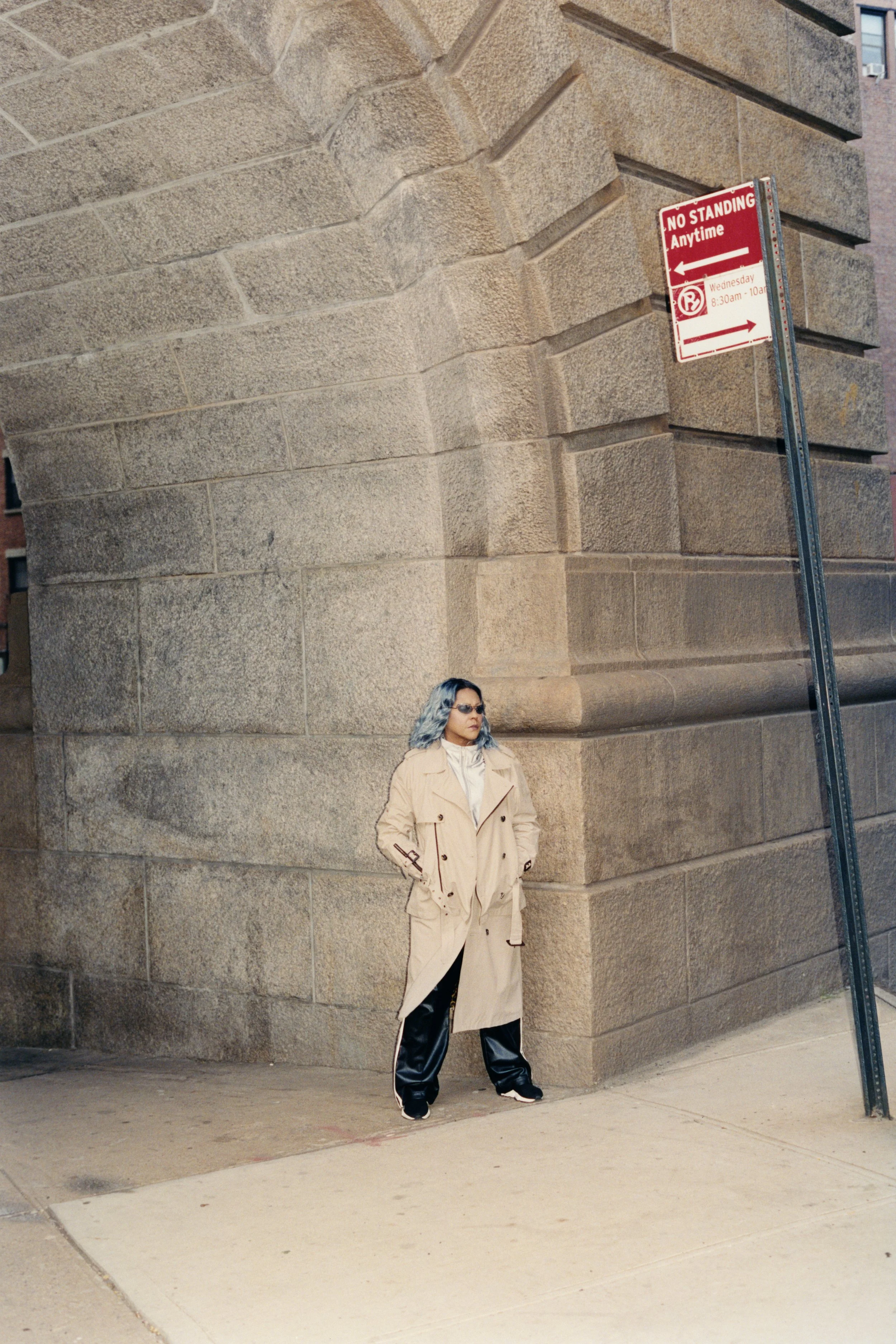
Lucien Pagès


interview by LYAS
photography by Jesper D. Lund

Who is Lucien Pagès? Guru, seer, champion of young fashion talent, Prince of PR—Pagès seems to be everywhere and nowhere at once. How is this possible? And where did he come from? Born and raised in his parents’ hotel in the rural village of Vialas in southern France, he grew up observing the choreography of human ambition. Notable guests included French President François Mitterrand, who arrived by private helicopter. The lodgings also housed a Michelin-starred restaurant. It was an early masterclass in people, perception, and influence—a curriculum that would later shape how he navigates the rarefied world of fashion. Since founding his eponymous agency in 2006, Pagès has not only witnessed the explosive rise of contemporary fashion, he has helped shape it. Representing over 150 brands across fashion, beauty, lifestyle, and beyond, his agency is a reservedly powerful force in the industry. While Pagès himself remains elusive, his name is synonymous with luxury. In a world defined by appearances and curated reputations, Pagès manages to have his cake and eat it too. This duality—control and freedom, invisibility and exposure, strategy and honesty, power and humanity—appears to be his secret weapon. Pagès is also not afraid of the future and welcomes new forms of media. He has been instrumental in opening the door to content creator and mononymic fashion commentator, Lyas, whose social media feed carries formidable clout among a new generation of sartorial enthusiasts. Lyas, who navigates the fashion ecosystem with keen insight, sharp wit, and a touch of red lipstick, has been highly successful in piercing its snobbery and institutional conservatism. Through a careful balance of media-trained and candid responses, Pagès explores with Lyas the balance of truth and manipulation in PR, the art of crisis management, and the pressures of surviving in a fast-paced, highly demanding industry. Pagès’ perspective illuminates the delicate interplay between leverage and authenticity, showing how strategy, empathy, and poise can coexist at the highest levels of fashion.

LYAS Do you think that PR is mostly manipulation? Can you answer in a media-trained way?

LUCIEN PAGÈS No. PR is not manipulation. I always say, because I’m very well trained, PR is the link between a brand’s designer and different types of media.

LYAS And the real answer… (laughs)

PAGÈS There is a bit of manipulation. (laughs) Especially right now, where truth is no longer important. What’s important is perception. You have to be as manipulative as the people who manipulate you. You have to anticipate the manipulation, which is already a manipulation itself. Things used to be easier. Now, something can be right, it can be wrong, whatever, but the perception from the outside is what makes the difference—not the reality.

LYAS What percentage of the job would you say is lying?

PAGÈS Manipulation is not a lie for me. It’s using reality and narrowing, or reworking it into a different narrative. Because when you lie, it never lasts. Eventually, people will find out. You have to extract from reality or you won’t last in this world.


LYAS Sometimes you get more press than some of your brands. Is that intentional?

PAGÈS The media-trained answer is no. It's absolutely not intentional. I was never proactive with my own communication.

LYAS And now the real answer.

PAGÈS When I accepted to do a pop-up, “Les Vacances de Lucien” at Colette in 2017, I became more exposed, and I needed the press. My brands were at Colette without actually managing to sell there. I asked myself, should I do it or not? But I realized that that exposure is a plus for my marketing career and for my company. Now I’m not as proactive. I’m very cautious about it. It's a slow process and I'm not thinking about it all the time. I know it’s good for the brand because I became the brand. I’m freer to speak than my clients, because they have the CEO telling them what they can and cannot say. I have few limitations, besides not offending my clients. Otherwise, I'm very free. Of course, with my clients, we do media training. And sometimes I ask them not to speak as freely, because it’s a business and economics are on the line. The fashion industry is huge with lots of employees.

LYAS Who terrifies PR the most—the journalists, the influencers, or the clients?

PAGÈS We have to be careful with everyone because they’re all equally important.

LYAS (laughs) Okay. And what’s the real answer?

PAGÈS I think it’s the client. (laughs)


LYAS How do you choose who gets invited to a show?

PAGÈS The media-trained answer is: we know who has press accreditation or who is accredited by The Fédération [de la Haute Couture et de la Mode]. The other answer is: we adapt to the client. Some clients may need to look cooler because they aren’t cool, or some need to be more established. Some brands need to bring higher-profile people to their show to let the industry know that they matter. It’s a tailor-made approach. And, of course, we invite everyone who is someone. (laughs) When we have limited capacity, we have to narrow our choices. It's becoming more difficult because it's not always about the importance of someone. Some of the most important people will never help you during the season. But then there are people who have a lesser title and they do help you during the season. It's complicated to find the balance between those who support the brand and those who are just important. There are rules. So, if someone is not happy with not being invited, we can always explain. There’s always a reason. Sometimes it's just—you're not important and you don't support the brand. (laughs) We know you just want to attend the show.

LYAS Literally.

PAGÈS You know, when there’s a problem, I ask the team: did this person actually shoot something this season, do they support the brand? Because it’s fine to create a little drama, but if they don’t contribute and still get invited, that’s what bothers me. For me, that’s the rule breaker—it’s not just about a title, it’s about real support. The tricky part is, people can abuse the situation. They push hard for seats, sometimes even threatening, “We’ll tell the designer,” which leads to absurd situations at shows. We don’t always want to escalate things over seating, so sometimes we let it slide. But that weakness in the system gets exploited, especially since designers have their own friendships and personal ties. Which is normal because if a designer wants a friend at their show, that’s their right. But that’s also where the rules stop working.

LYAS Is there anyone you would never invite to a show?

PAGÈS (laughs) I don’t even know how to say it with media training. I can’t decide this for a brand that is not mine, you know? It isn’t my show, so why would I blacklist someone from someone else’s show?

LYAS And the real answer?

PAGÈS There’s people who behave very badly or make trouble for no reason, so we will advise the brand not to invite them. These people are well known to all the PR. But I will not invite someone just because I don't like them, because again, it's not my show.

LYAS Maybe if it was your show, it would be different. (laughs)

PAGÈS Yes, of course. (laughs) It’s touchy. It’s fashion. And we have to be very subtle with all this because it's a relationship. This is what I say to my team: in public relations, there is relation—you have to take care of the relationship. Offending people has never worked.

LYAS How do you handle a bad review?

PAGÈS There is always something to learn from a bad review. (laughs)

LYAS Real answer, please.

PAGÈS I’m stressed now. People are going to read this. For me, it’s not a bad review until it’s personal. If it's about the work, you have to learn from it. For instance, if a journalist doesn't like this style or this designer, it’s valid. But if the review becomes personal, then it’s an issue, and we can decide not to invite this person anymore. It’s about analyzing the situation, because sometimes a review is honest, and sometimes the person has a grudge and it’s not objective anymore, which is unfair. If you feel that the bad review isn’t so wrong, then you have to guide your client into reflection. If you think it’s unfair, then it’s a discussion. But it’s also very weird, because more and more designers will tell you they don’t read the reviews. But I think they do.


LYAS I think they read it.

PAGÈS I do too. They say they don’t care, and then they follow with, “Oh, look at what Kathy wrote about this other designer.” (laughs)

LYAS They read it only when it’s positive.

PAGÈS The art of reviewing is dying, so we have to cherish and protect it because there is less and less journalism. The industry doesn’t care so much anymore about an opinion. To come back to my first answer, there is always something good to learn from a critic, because you can improve, or the opposite—the designer can react and say he or she doesn’t care and push even harder.

I’m happy that voices from social media, like you, started reviewing. They are sustaining the art of reviewing in their own way. They are also reaching a new generation, which gives me hope that this art is not dead yet.

LYAS We have the freedom to do it because of social media. It’s all about being independent. What was your last crisis meeting?

PAGÈS I think it was this morning. (laughs)

LYAS So, that’s the real answer. (laughs) Now, can you give me the media-trained one?

PAGÈS I haven’t had a crisis for a long time because we are very careful with everything.

LYAS Have you ever thought a designer you worked with was untalented?

PAGÈS No, because I only choose designers who have so much talent. (laughs)

LYAS Okay. And now the…

PAGÈS …The real answer. Yes, of course. Sometimes I see a collection and think that my dog could have done better. (laughs)

LYAS Have you ever thought about quitting fashion?

PAGÈS Yes. Always. Every day. That’s the real answer.

LYAS (laughs) Media training?

PAGÈS Of course, I love fashion. I can’t live without fashion. But both answers are very real. When it’s too painful, sometimes I want to quit because it’s too much work, too much pressure. Then, I think about what I would do instead. I would feel miserable to see myself not participating in it. You have to find the balance.


LYAS Do you think you need tough skin to survive in this industry?

PAGÈS Yes, you need tough skin, of course. It’s an industry of evaluating people. Fashion is where everything is more intense because of the rhythm. If you work on a movie or a book, it takes years to complete. But in fashion, everything is fast-paced; they are constantly working on collections. If people are paranoid in other industries, they are ultra paranoid in fashion. If you think someone is mean, fashion people are much meaner. That’s why I never liked The Devil Wears Prada (2006) because she's too nice! (laughs)

LYAS That’s an amazing quote.

PAGÈS We both have lived way worse than Miranda Priestly.

LYAS Of course.

PAGÈS You either need tough skin or a lot of protection. A lot of sensitive people think they cannot survive in the fashion industry, but that’s not true, because with sensitivity often comes creativity. Those people often find a way to protect themselves. It’s not just about being a warrior, it’s about knowing the warrior you are. And being strange is a strength in fashion. I see a lot of comments, mostly on TikTok, where people say, “Oh, I could never work in fashion because I know no one,” or “I can’t do PR because I’m too shy.” I tell people, you don’t have to be the Terminator, because it’s a job that requires emotions and sensitivity.

LYAS You hugged me once, do you remember? When I got fired from my first job in fashion.

PAGÈS I told you that it was going to happen.

LYAS That I was going to get a hug or get fired?

PAGÈS Fired. (laughs)

LYAS Yeah, of course. But I felt such humanity from you on that day. Is it hard to stay human in an industry that sometimes tries to suppress humanity?

PAGÈS No, it’s not hard—fashion is beautiful. (laughs) It’s not hard to keep your humanity if you are a human. People expect you to be tough because you’re your own boss and run your own company. Early in my career, I was always told I wasn’t tough enough. But I never wanted to become the “monster” people expect someone in my position to be. I resisted that whole ‘bad cop’ idea. I’d rather be the person who stands with you. Of course, you do have to fight to keep your humanity, because people want to put you in a box. They like the idea of someone with a strong attitude—it makes them feel more comfortable. But that’s also where you risk losing your humanity. In the end, I think that’s why our agencies have been successful: we always leaned into humanity rather than the performance of power.

LYAS The power can get to your head.

PAGÈS Yes, but I’ve been very clear about that since the beginning, because I know it’s fragile. I know that everything you build for years can be lost in one day. You have to be humble because you never know what will happen. I always felt some protection over me because I always behaved well, not because I knew some powerful friend or whatever. If I was a total dick, I think I could have had much more trouble. You receive what you give.

LYAS How do you know if someone really likes you or if they just need you?

PAGÈS I have very good instincts. I can see what’s coming. (laughs) The real answer is that I don’t care. I like to be used.

LYAS (laughs) I love! Actually, me too.

PAGÈS If I can help people with something they need, I can give it to them. If I’m ready to give, I give it. I like friendships in work more than in real life.

LYAS Why?

PAGÈS Because things are clearer. I’m fine with journalists and I can call them for something that I need, and they are aware of my interest. We don't have to fool each other, and through our mutual respect, we become friends, and of course, we help each other.

LYAS Has a relationship that started in work ever become more of a personal one?

PAGÈS Yes. But I prefer to meet people for work reasons, because then it’s clear from the start that we both want something. After that, we can move forward to a true friendship. When people pretend to be your friend from the beginning, for me, it's always a concern.

LYAS That’s an interesting perspective. Have you ever made someone cry?

PAGÈS No, never. (laughs) I do my best to maintain peace and harmony.

LYAS Real answer, please.

PAGÈS Yes, of course. Well, it hasn’t happened many times. It was never on purpose. It was more a lack of knowledge that the person was on the edge. You say something that’s normal, but it's not normal for the person who receives it.

LYAS What’s something in your work you’ve done that you're not proud of?

PAGÈS I’m proud of everything. My successes and my failures. (laughs)

LYAS Okay. So what’s the real answer?

PAGÈS (laughs) Yes, there is.

LYAS Can you give me an example?

PAGÈS No, I can’t. (laughs) There are two things, but I will not tell.

LYAS Just one of them, please?

PAGÈS It’s just things that I could have done better. Because of being tired and stressed, I didn’t make the right decision at the right moment. It’s just this sort of thing that I’m not proud of.

LYAS But Lucien, can you find one to tell us? (laughs)

PAGÈS I have to think about it.

LYAS I have time. I want one crispy little thing.

PAGÈS Okay, I need to think. (laughs) Every mistake I made was under pressure. And I don't forgive myself. Not to excuse myself, but I think that with my job and my position, I have to react well under pressure, but I’m taking full responsibility for my mistakes. It’s just that sometimes people drive me crazy over stupid things.

LYAS Like what?

PAGÈS Like a piece of clothing that never arrived at a shoot. It happens, and it’s my duty to protect my team. You can say, “Come on, it’s just a shirt or a belt,” but sometimes the person is too important and you end up being scared. It’s always the little things, and you often think, “Why do we put ourselves in these pathetic positions because of that?” But that's fashion.

LYAS That’s fashion for you, baby.


Crystal Waters


photography by Mat + Kat
styling by Masha Orlov
interview by Mykki Blanco

Crystal Waters is both a legend and an anomaly in the annals of dance music. When her platinum-selling hit “Gypsy Woman (She’s Homeless)” landed in 1991, it didn’t just change the course of house music—it made her an overnight sensation. Like her contemporaries—CeCe Peniston with “Finally,” Robin S. with “Show Me Love,” and Martha Wash’s unmistakable vocals powering Black Box and C+C Music Factory—Waters helped usher house music out of the clubs and onto the radio airwaves and into global pop culture. But “Gypsy Woman” stood apart: while its infectious “la da dee, la da da” hook made it irresistible on the dance floor, its subject matter was strikingly socio-economic, casting light on homelessness against a backdrop of hypnotic organ riffs. It was both a celebration and a critique, a reminder that the euphoria of house always carried with it the shadows of struggle. From working at a probation office in Washington, D.C., to topping international charts, Waters’ rise was meteoric. And the song’s afterlife has been just as enduring: sampled more than a hundred times by artists from T.I. to Alicia Keys to Katy Perry, it continues to ripple across genres. On TikTok, slowed-down edits and remixes of “Gypsy Woman” have introduced the track to Gen Z, who embrace it as both a nostalgic throwback and a fresh soundtrack for irony, glow-ups, and everyday memes. Thirty years later, “Gypsy Woman” is still a mirror—reflecting both the resilience of house music and the social realities it was born to express.

MYKKI BLANCO: For everything you have achieved, not only in electronic and house music, but in defining pop culture itself, you are very humble. What does gratitude mean to you? And is humility a virtue?

CRYSTAL WATERS: No one’s ever asked me this before. Bravo. Gratitude, for me, is everything. It goes back to that saying: you don't know what you got till it's gone. So, you need to appreciate it now. I do a lot of spiritual work and gratitude is one of the biggest things you have to do. You have to be grateful for everything. Humbleness is a very big part of it as well. I remember Quincy Jones said, “Once you start thinking you're better than sliced bread, then it's over for you.” I also know that my creativity comes through me—it is not from me. So, I have to be grateful for the spirit that comes through me. Once you let your ego take over, that's where you see all the problems come in.

BLANCO: What does it mean to be a work in progress?

WATERS: It’s one of the things I like about myself: I always try to make myself better. I always try to learn something new. I always want to try something a little different; not what everybody else is doing, what they're telling you, what you're indoctrinated to do. I like to think that I still am a work in progress.

BLANCO: You were there at the inception of house music culture and you’ve seen the pendulum swing so many times. Why do you think that house music went underground, had a resurgence, then went underground again—and then back and forth again.

WATERS: Isn’t that nice? Well, you know, it started out underground in the ’80s. Frankie Knuckles used to say, “House music is disco's revenge.” After the big disco record burning [in 1979] at Comiskey Park in Chicago, disco had to go underground. What came out of that was house music. I think I was one of the first people who actually crossed over to radio. But that community had been built and it was thriving for a long time. And it was about community. I was one of the lucky ones that crossed over. Then the mainstream got wind of it. And then, you know how the music industry does: they wear it out and once they can’t make any more money off it, they make it go away.

Hip hop came in, and we went back underground. Lucky for me, there was still life in the underground and I got to thrive. There was still money to be made and places to perform. Europe took on house music back in the ’90s. They weren't so good at it, but after a couple years, they learned how to do it and became really good at it. They kept house music alive for a long time. They kept the underground scene going. I haven't seen it come back to mainstream until just recently with Beyoncé and Drake doing those house music albums. And then, all of a sudden, people remember my songs. I think it's important to have that space in the club to be free and to just be yourself. And I think it will always survive and thrive because of that.

BLANCO: I am an artist who has always been openly gay my entire career. In the very beginning, around 2011 and 2012, I had a lot of mainstream artists, like Björk and Kanye West support me. But the general public did not. And so I had to go to Europe to find that success. Why do you think America turns its back on certain kinds of artists, while Europe is always there with open arms?

WATERS: It’s a good question. There’s a long history of Black artists going to Europe to escape racism in America. The Europeans are loyal. They know good music. They love good music. They want to dance. And they have regulations for radio that we don't have here in America. They have to play a certain amount of certain types of music. You can't just play what the record labels tell you to play. This lets other types of genres of music survive. But what is it exactly? It must be a cultural thing.

BLANCO: What defines a class act?

WATERS: I think it’s someone who is talented, humble, and understands. The first person that popped in my head is Diana Ross. That's a classy lady. I'm seeing it from an artist's perspective. You're here with a gift to share with the world. It is not about standing on stage saying, “Look at me, look how pretty I am, and look at what I can do.” And you can tell the attitude of different artists who do and don't do that. A class act is someone who's here to share their gift with the world and understand that's their purpose.

BLANCO: I was listening to the extended version of your latest track “Umm Bop,” which is wonderful by the way. Can you tell me how that came about and what inspires you these days?

WATERS: The producers, ManyFew, they just gave me this track, which has the modern sound of house, but with classic house tinges with strings. When I heard it, I just wanted to do something jazzy. “Umm Bop” came right to me. What inspired me is that urban vibe—more of a street vibe—which I remember from the ’90s. I think the reason why I'm writing these days is I still get inspiration from the music.

BLANCO: “Gypsy Woman” was most definitely not the first song you ever wrote, but it was the first dance song. Can you describe that inner light or that energy that was coming through you at that time?

WATERS: At that time, I wanted to be the next Sade. Look at the “Gypsy Woman” video. I had the ponytail, the red lips, and everything. (laughs) I was writing from more of that kind of vibe. I come from a jazz family, so I think it was more of a jazzy vocal. When I met the Basement Boys and they gave me the track for “Gypsy Woman,” I said, “You know, I have never done house music before.” And they said, “Don't worry about it. We love the style of your writing, so just keep that same style and write over these beats.” Basically, that's just what I did: I kept my same jazzy type vibe and put it over the beats.

BLANCO: I read that your father was a jazz musician. What role has jazz played in your life?

WATERS: Music was always around the house. I remember packing my bags and going on tour with my dad every summer. He would do the lounges at Holiday Inn. Back in the day, it was a big place to have dinner. While he was in the lounge bar, I would sit in the hotel room and go through all his albums. My favorite was Ella Fitzgerald. I always picked up the females, but I loved Ella because no matter how sad the song was, she sounded like she had a smile on her face. She always felt upbeat to me. She never, never over sang the song. And my uncle was Zach Zachary who was a lead saxophonist for MSFB (Mother Father Sister Brother). They did those songs, “Touch Me In The Morning” and “Love Is The Message.” They would hang out all the time and I would get to go backstage whenever they played. I remember watching them and analyzing the music.

BLANCO: You come from quite a musical family!

WATERS: Yep, everybody did something. Everyone played an instrument except me. My father could play anything. My brother could pick up anything and play. My sister played piano.

BLANCO: As a younger woman, you described yourself as relatively shy and introverted. What did it feel like for a shy girl from South Jersey to all of a sudden be a global superstar of a relatively new genre for radio?

WATERS: I hated being shy. I have worked on it for years, but I think it allowed me to sit back and watch. They taught me about the business side of music, about keeping your publishing. And watch out for this and watch out for that.

BLANCO: What a godsend! A lot of people don’t get that.

WATERS: My father said, “You wrote that song, you wrote the lyrics and the melody, they can't do nothing with it without you. Don't let them take any more than they deserve.” So, going from that to crossing over, I think that helped me from the business side of it.

blazer: Vintage Comme Des Garçons
trackpants: Jeremy Scott for Adidas

BLANCO: What did your first televised performance feel like?

WATERS: I didn’t know what was happening. I’ll be honest. I was sitting at work one day and I got a phone call that said, “You have a hit.” I thought maybe a hit in DC or maybe New York, because club music was just on the East Coast in my mind. I didn't know it was worldwide. The first thing they did was send me to London to do Top of the Pops. I didn't even have a passport. And I had never performed in front of anyone. I flew back on the Concorde and did my first show at The Palladium in New York.

It took maybe two hours of staging before the show, but I went out there and I did it. I had never done it before. And it was great. I always pat myself on the back because I didn't have any fear, which told me that this is what I was meant to do. I should have been terrified. I should have said no, turned around, and ran out the building. But I didn't.

BLANCO: When people talk about God, when they talk about the divine, do you think you were a conduit?

WATERS: It was a calling. It's what I'm mandated to do. So, I do believe that it's coming through.

BLANCO: I know that you have children and you have seen so many seismic shifts in the industry. What is it like to be a mother and be Crystal Waters?

WATERS: Nobody knew I had kids when I started. And they were really young then. So, in the beginning it was very hard because back then you couldn’t be a mother. If someone got pregnant at the label, they got dropped the next day. So, they would hide the fact that I had kids. I didn’t mind it because I was protective. It was also hard because they would pit my being a mother against me doing shows. If I had my kid’s birthday, they would threaten to drop me. And then, I couldn't travel with the kids because I was going through a divorce. So, in the beginning it was really hard.
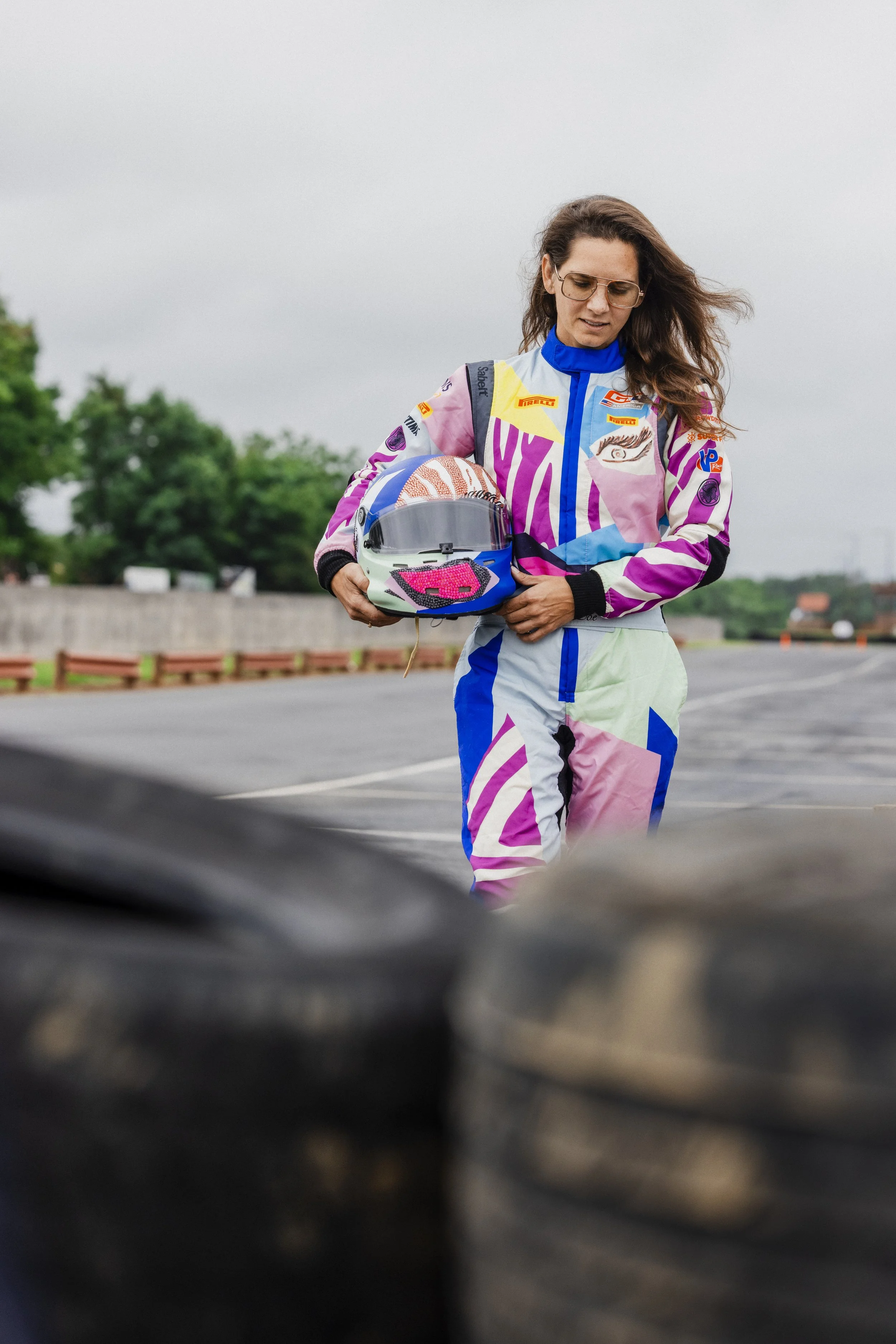
But right in the middle, when they got to be ten to fourteen, I really got to appreciate it more and be home with my kids. And I will tell you, the kids don't care if you're a star or not. They just want their mommy. Someone at the label said, “You have to be two people. You can't take this Crystal Waters that’s on the road—that star—you can't take her home. Nobody cares about that.” And I have always remembered that. So, when I came home, I always left that Crystal at the door and just became mommy. And it’s still kind of like that.

BLANCO: To riff off that, I wanted to know, do you enjoy cooking? And is there a dish that you make that your family and friends enjoy?

WATERS: I don’t like telling people I cook because the first thing they say is that they’re coming over. Once I became an empty nester, I really stopped cooking. I think the joy of cooking is when you cook for other people. And I always had to cook for large amounts of people, for the family. But I do cook during the holidays.

BLANCO: What’s the dish that everybody wants?

WATERS: You can guess what it is. We do traditional soul food for Christmas. I do fried chicken. We do ribs, we do mac and cheese, greens. It’s very basic, I’m not a real foodie.

BLANCO: I have two more domestic questions for you. Your skin is fabulous. Is there a go-to Crystal Waters skincare routine?

WATERS: Oh, there’s a routine, definitely. But the first one is water. I drink a ton of water, water, water, water. And I do actively take care. I do the facials, I do microneedling. I got more cosmetic creams than I know what to tell you about.

BLANCO: I have one more domestic question: what's your favorite perfume?

WATERS: Tom Ford Jasmine Rouge.

BLANCO: I pretty much fell into songwriting as an extension of my poetry and performing poetry. And the idea of working with music producers was not my own. Actually, my first manager saw me doing a poetry performance and was like, “Have you ever written music? Do you write poetry? And is poetry something that's important in your life?”

WATERS: I started writing poetry when I was really young and I got published. When I started getting into music, I got a job as a background singer. When I got that job, I was like, This is it. This is what I wanna do. I want to sing. And I kept hanging around the studio, hoping to get more work. When I wasn't, I realized I needed to write my own songs. I was like, oh, I know how to write poetry. That’s when I hooked up with a guy on keyboards and we started writing songs together.

BLANCO: Were you a club kid?

WATERS: Yep. I went to Howard University, but I spent a lot of time in the clubs, probably a little bit more than doing my homework. I was in the middle of the dance floor. Wednesday night was a big night.

BLANCO: Do you remember some of the clubs that you used to go to?

WATERS: This was thirty years ago in Washington DC. (laughs) My friends were all DJs and would go clubbing. Afterwards, everybody would come back to my apartment and hang out. And they used to give me all their promo vinyls, because they would get two or three copies. I always wondered why I didn't become a DJ. I guess females didn't do that. But I remember Tiffany’s Drink and Drown night on Wednesdays. That was the best one. I would go out with like a dollar in my pocket, get on the bus, not knowing how I was gonna pay to get in, but I always got in and I always got a ride home.

BLANCO: What are some of your favorite house DJs or house musicians?

WATERS: You know, I know everybody. (laughs) Of course, there’s David Morales and the whole gang from the ’90s. I still listen to them. I'm still good with DJ Spin, out of Baltimore. When I do my podcast, I just love hearing all these new cats coming through. I just like hearing all the new stuff.

BLANCO: When did you start the podcast and what was it about the format that you clicked with?

WATERS: The first podcast I started was back in 2009, called Clubheads Radio. It kept me current and in touch with what was going on. The one I have now, I Am House Radio, has been around about six years. The idea was simple: a place to showcase house music that wasn’t getting heard. There was so much great music out there, before the resurgence: Robin S., Cece Peniston, even my own stuff. If you weren’t in a club, you had nowhere to hear it. I also wanted to give credit where it was due. A lot of tracks are just known by the DJ’s name, but you don’t know who sang or wrote them, and so many of the singers, especially women, weren’t getting recognition.

BLANCO: You strike me as someone who despite all the hits is still quite hungry. So, I just have to ask, are you somebody who's going to be recording for the rest of their days?

WATERS: I'm not going to be stomping across that stage for the rest of my days. Some of my contemporaries are like, “Oh, we’ll do this until the wheels fall off.” I’m like, I don’t know about that. I feel like I have just a couple more things I want to say. I want to get a whole album out of my system.


coat: Vintage Jeremy Scott
track jacket: Vintage Adidas
pants: Jeremy Scott for Adidas
sunglasses: Henrik Vibskov


BLANCO: Can we talk about the documentary that they are making about your life?

WATERS: It just started, but I feel like the documentary isn’t only about me. It’s about what I represent at this point. I have to let people know the history of house music. A lot of people right now think David Guetta started house music. And it’s like, no, he didn’t. As long as I’m alive, I'm going to make sure that story is being told.

BLANCO: What has it been like allowing someone to film your life?

WATERS: It’s not easy. I’m a very private person. I’m not a socialite. I’m not looking for fame in that way. The filmmaker still wants to come to the house, but we’ll see. It’s a little uncomfortable.

BLANCO: And you also have a project coming up where you, Robin S., Cece Peniston, and more are playing some of your biggest hits to a live orchestra. Can you talk about this project, because it sounds remarkable.

WATERS: They’ve been doing this orchestrated dance music stuff in Europe for at least ten years. And they always invite maybe one American over to do it at a time. It’s really an experience to hear the music elevated with the strings. It left a big impression on me. So, I said, “You know, I want to do one. I want to do it here.” I mean, we have all the singers here in New York. It’s our music, you know, let’s bring it home. It’s called “I Am House Orchestrated.” It’s being presented by Susanne Bartsch on November 20th at Sony Hall. Everybody’s doing two songs. They’re doing their own songs and the people who aren’t there, we have background singers. We got Robin S., Cece Peniston, Barbara Tucker, Inaya Day, Black Box, Duane Harden, Dawn Thomas, and more.

BLANCO: This is going to be huge.

WATERS: We have a twenty-two piece orchestra. Next time, I want to go bigger, but we’re starting small. We’ve got all the songs picked and we’re just getting into it. Next month we should be advertising and getting people in there.

BLANCO: Throughout the years, what has been your relationship to fashion?

WATERS: When I first started, everybody wanted to dress me: Armani, Versace, anything, you can name it. It has never been on purpose, but I think back in the ’90s—when fashion and music were merging—that’s just what happened. And I had a lot of big time photographers. They were doing a lot of my photographs. So, I was just in that mode.

BLANCO: Do you have a spiritual practice?

WATERS: Yes, I do. As soon as I wake up, I usually tell myself something positive to have a happy, great day. I do a fifteen to twenty minute meditation. Then, after ten minutes of breath work, I read my spiritual book for about ten to twenty minutes. And then I do a set of prayers. When I have time, I actually write down all my affirmations. So, that takes me about an hour and a half, maybe two hours. Just do one thing at a time. Sometimes, I think I’m doing too much, (laughs) but you know, this is when I’m home and I’m not really traveling and having to catch a flight every day.

BLANCO: Instead of asking what’s next, what are you hoping for in the future?

WATERS: I’m hopeful to expand and grow. I mean, I love music. I will always do music; be a part of music. I’m so grateful that music is a big part of my life. There are so many new opportunities. Traditional ways of making my music have kind of gone, like going with a major label. I want to start getting more behind the scenes. I love the idea of this orchestrated event I’m doing. I also want to do more live streaming events with my radio show. I’m also working on a project to bring the house music experience to a play or experiential format. And I am working on the album. I still have a few more songs to write, so I can’t give you a release date, but it'll either be the end of this year or beginning of next year. That’s what gets me up in the morning.

BLANCO: And then my final question is, if you could tell Crystal Waters at eighteen years old one thing, what would you say to her?

WATERS: You are going to make it. Because at eighteen, I didn’t know if I was going to make it. I’m just talking about in general. So I’m glad I’m still here.

hair Chuck Amos @StatementArtists
makeup Marc Cornwall
director of photography Andrew Garcia
movement director Jorge Dorsinville
photo assistant Ari Sadok
styling assistant Roberto Grangeiro


A HISTORY OF HOUSE MUSIC  

1800s–Early 1900s: Harmonium Roots 

  • 1840s–1850s (Europe & America) – The harmonium (patented c.1840) is invented as a small reed organ. Unlike the pipe organ, it’s portable and affordable, making it a common instrument in middle-class homes, chapels, and schools. Its sustained drones and chords foreshadow the textures of pads and organ stabs in house. 

  • Late 1800s–1900s (Colonial Africa & South Asia) – Missionaries bring the harmonium to India, West Africa, and East Africa. 

  • In India, it becomes central to bhajans and qawwali devotional music, with its droning quality shaping ecstatic song structures. 

  • In Nigeria, Ghana, and coastal West Africa, the harmonium is incorporated into church music and later blends with highlife and juju. 

  • Its portability allows African congregations to create call-and-response hymns with organ chords, a structure that mirrors the later relationship of house divas with pulsing synths. 

  • 1930s–40s – Gospel quartets and African-American churches use organs and harmoniums for ecstatic worship. The spiritual repetition and layering of harmonium chords in hymns prefigures the way house tracks build momentum around a looping vamp. 
     

1950s–1970s: Foundations of Groove 

  • 1950s – In Chicago and Detroit, R&B groups use the Hammond organ (a harmonium descendant). The lush, swelling organ tone is a direct ancestor of the M1 organ stab that would define ’90s house. 

  • 1960s–70s – African musicians fuse the harmonium and Western organs with local rhythms. Fela Kuti’s Afrobeat includes organ drones layered against polyrhythms, a rhythmic interplay that feels house-like in repetition.

Disco, European Disco & Italo Synth Influence 

Before house coalesced in Chicago, European electronic disco was already shaping the sounds DJs would later manipulate. 

  • Giorgio Moroder (Italy, 1977): “I Feel Love” with Donna Summer introduced hypnotic arpeggiated synth basslines, a mechanical pulse, and repetitive song structures that presaged house loops and trance-like grooves. 

  • Italo Disco (late 1970s–early 1980s): Italian producers (Gazebo, Righeira, Klein + M.B.O.) created synthesizer-heavy tracks with driving four-on-the-floor beats, catchy melodies, and minimal vocals. These records circulated via European clubs, record imports, and mixtapes. 

  • UK Synthpop: Bands like Depeche Mode, New Order, and Yazoo blended sequenced synthesizers, drum machines, and melodic hooks—offering a palette of textures for early Chicago DJs to sample, re-edit, and integrate into extended mixes. 
     

Early 1980s: Birth of House in Chicago 

  • 1981–83 – Frankie Knuckles, resident DJ at the Warehouse (Chicago), uses reel-to-reel edits of disco and European synthpop to extend grooves. House emerged from Black, Latinx and queer club communities seeking ecstatic, inclusive dance spaces — the sound and culture grew together. The term “house” comes from this club. 

  • Around the same time, Ron Hardy (DJ at the Music Box) pushes the sound darker, faster, and more experimental, cementing house as underground and raw. 

  • Vince Lawrence collaborates with Jesse Saunders on early house singles and helps define its DIY production ethos. 

  • 1983 – Jesse Saunders’ “On and On” is released — often called the first house record. It fuses a drum machine (Roland TR-808) with repetitive basslines and minimal vocals. 

  • Trax Records (founded 1984) becomes the main label for Chicago house, releasing many of the genre’s most iconic early tracks. 

  • 1984–85 – Marshall Jefferson, Chip E., and Farley “Jackmaster” Funk experiment with deeper piano and organ-driven house tracks. 
     

Mid–Late 1980s: The Classics Emerge 

This is the golden phase of Chicago and New York house, with many iconic records that laid the groundwork for the ’90s diva era. 

  • 1985 – Farley “Jackmaster” Funk & Jesse Saunders – “Love Can’t Turn Around” 
    Gospel-style vocals by Darryl Pandy bring theatricality to house. 

  • 1986 – Chip E. – “Time to Jack” 
    One of the first records to explicitly reference “jacking,” a style of dance tied to house culture. 

  • 1986 – Steve “Silk” Hurley – “Jack Your Body” 
    A minimal, percussive house track that hit #1 on the UK charts, proving house’s global potential. 

  • 1987 – Marshall Jefferson – “Move Your Body (The House Music Anthem)” 
    The first piano house anthem, blending gospel ecstasy with pounding four-on-the-floor beats. 

  • 1987 – Mr. Fingers (Larry Heard) – “Can You Feel It” 
    A landmark deep house track—smoother, jazzy, atmospheric. Establishes “deep house” as distinct from raw Chicago house. 

  • 1987 – Frankie Knuckles & Jamie Principle – “Baby Wants to Ride” 
    Political house: combining gospel fervor with civil rights critique.” 

  • 1988 – Royal House – “Can You Party” 
    Sample-heavy house emphasizing the party/jack culture of the late ’80s. 

Chicago Meets Detroit 

  • While Chicago refined house, Detroit’s Belleville Three (Juan Atkins, Kevin Saunderson, Derrick May) were creating techno, a futuristic, machine-driven electronic sound. 

  • Inner City (Kevin Saunderson & Paris Grey, 1988–1989) exemplifies the dialogue between Chicago and Detroit: soulful house vocals meet Detroit’s mechanical synth precision, creating tracks that resonated in clubs and on international charts. 

  • This cross-pollination highlights the early transregional conversation between two American electronic music hubs. 


1988–1990: Acid, Ibiza & UK Expansion 

  • 1987–1988: Phuture’s “Acid Tracks” introduces the squelchy TB-303 sound that defines acid house. 

  • Ibiza’s Role: Legendary clubs like Amnesia, Pacha, and Ku provided multi-day, open-air party spaces where DJs could experiment with extended, hypnotic sets. European DJs visiting from the UK and beyond absorbed these tracks and styles. 

  • Second Summer of Love (1988–1989): Ibiza DJs and imported Chicago/Detroit tracks fueled the UK rave scene. Ecstasy use and the island’s permissive club culture amplified the euphoric, communal experience of house. 

  • Vinyl, cassette mixes, and pirate radio ensured house tracks spread rapidly, establishing a European house identity deeply indebted to American roots.

  • UK DJs pick up Chicago house and acid tracks, remixing and extending them, creating the blueprint for UK rave culture. 

  • House music’s combination of Chicago groove, Detroit futurism, and Ibiza’s euphoric environment sets the stage for the 1990s “diva era” and global house explosion. 
     

1990–1993: Mainstream Breakthrough (The Diva Era) 

This is when house formally enters pop culture consciousness—led by Black women whose voices redefined the genre’s global reach. 

  • 1990 – Snap! – “The Power” (not pure house but house-adjacent eurodance) primes mainstream audiences for house vocals. 

  • 1991 – Crystal Waters – “Gypsy Woman (She’s Homeless)” 
    A hypnotic organ riff + minimalist groove + “la da dee, la da da” hook. An overnight global hit, reshaping house as chart-ready. 

  • 1991 – CeCe Peniston – “Finally” 
    Written from a poem, delivered with gospel ecstasy. A quintessential diva-house anthem, topping the US dance charts and hitting international pop charts. 

  • 1992 – Masters at Work (Little Louie Vega & Kenny Dope) begin remix dominance 
    Their remixes (for Madonna, Barbara Tucker, etc.) solidify New York vocal house with Latin percussion and gospel vocals. 

  • 1993 – Robin S. – “Show Me Love” (StoneBridge Remix) 
    Defined by its sharp M1 organ stab riff. Becomes one of the most recognizable house tracks of all time. 
     

Mid–Late 1990s: Consolidation & Global Reach 

  • 1994 – Barbara Tucker – “I Get Lifted” continues the gospel-house tradition. 

  • 1996 – Armand Van Helden – “The Funk Phenomena” blends funk with house, moving toward big-beat styles. 

  • 1997 – Daft Punk – Homework brings French house worldwide, looping disco with raw machine grooves. 

  • 1999 – Stardust – “Music Sounds Better With You” becomes an international house-pop anthem. 
      

2000s: House Goes Global & Splits into Subgenres 

  • 2000–2003: Vocal House & Diva Legacy 

  • Barbara Tucker, Ultra Naté, and India continue gospel-inspired house. 

  • CeCe Peniston and Robin S. are celebrated as icons, frequently performing at Pride festivals and club events, keeping their hits alive in queer dance culture. 

  • Crystal Waters tours internationally, her tracks remixed by new DJs. 

  • 2001 – Daft Punk’s Discovery 

  • Songs like “One More Time” bring house into mainstream pop consciousness. The robotic vocoder vocals echo the repetitive trance of house divas, but filtered through French touch. 

  • 2005–2008: Electro-House Boom 

  • DJs like David Guetta, Steve Angello, and Benny Benassi push a harder, club-ready sound. 

  • This “superstar DJ” wave temporarily sidelines soulful diva house in favor of festival energy. 

Mid-2000s: European Labels & Nu-Disco Revival 

Ed Banger Records (France) 

  • Founded: 2003 by Pedro Winter (Busy P). 

  • Sound: French electro-house with punchy synths, playful hooks, and punk-inspired energy. 

  • Notable Artists: Justice (D.A.N.C.E.), SebastiAn, Mr. Oizo, Breakbot. 

  • Impact: Popularized a high-energy, club-friendly French electro aesthetic that reinterpreted house structures for international festival stages. 
     

Italians Do It Better (Brooklyn/Italo Influence) 

  • Founded: 2006 by Johnny Jewel and Mike Simonetti. 

  • Sound: Slow, synth-heavy, retro Italo-disco revival with dreamy, cinematic grooves. 

  • Notable Artists: Glass Candy, Chromatics, Desire, Mirage. 

  • Impact: Revived the hypnotic, melodic loops of classic Italo disco, influencing nu-disco and synthwave, and connecting European electronic traditions to contemporary house-inspired music. 

  • *2009 – Black Eyed Peas – “I Gotta Feeling” (prod. David Guetta) 

  • House structure + pop vocals = a blueprint for the EDM-pop hybrid of the 2010s. 


2010s: EDM Era & House Revival 

  • 2010–2015: Big-Room EDM & Crossover 

  • Swedish House Mafia, Avicii (“Levels”), and Calvin Harris dominate. The sound is bigger, shinier, festival-scale, often removing the gospel/organ roots of house. 

  • Yet, samples of Robin S. and CeCe Peniston’s vocal styles appear in remixes and mashups. 

  • 2012 – Disclosure – “Latch” (ft. Sam Smith) 

  • Marks the return of deep house to the charts. UK garage and house hybrid, but deeply indebted to 1990s vocal house structure. 

  • 2015 – Robin S.’s “Show Me Love” resurges 

  • Sampled in countless EDM tracks, from Jason Derulo’s “Don’t Wanna Go Home” to Robin Schulz’s remixes. The organ stab remains a universal shorthand for “house.” 

  • 2016–2018: Afro-House & Global Sounds 

  • Artists like Black Coffee (South Africa) globalize house by re-centering African rhythmic traditions—a full circle, since the harmonium and organ had once traveled to Africa with missionaries. 

  • This brings house closer to its African diasporic heartbeat. 
     

2020s: House Revival in Pop (The Diva Returns) 

  • 2020–21: Lockdown Streaming 

  • House classics like CeCe Peniston’s “Finally” and Crystal Waters’ “Gypsy Woman” see streaming spikes as younger audiences rediscover 1990s house. 

  • 2022 – Beyoncé – Renaissance 

  • A watershed moment: Beyoncé reclaims house as Black, queer-rooted dance music. 

  • “Break My Soul” directly samples Robin S.’s “Show Me Love” organ stabs, a deliberate homage. 

  • The album overall echoes Crystal Waters’ minimalist grooves and CeCe Peniston’s gospel ecstasy. 

  • 2022 – Drake – Honestly, Nevermind 

  • Drake’s pivot to house-inspired beats (produced by Black Coffee and others) signals mainstream rap’s recognition of house’s cultural dominance. 

  • 2023–2025: Ongoing House Renaissance 

  • Younger artists like Honey Dijon, TSHA, and Peggy Gou bring soulful and global flavors back into the club scene. 

  • CeCe Peniston, Robin S., and Crystal Waters are regularly sampled, remixed, and honored as foundational figures. 

  • TikTok virality breathes new life into “Gypsy Woman,” “Finally,” and “Show Me Love,” often introduced to Gen Z in snippets that bring them back into charts.

Maya Hawke in Conversation with Lily Rabe

interview by Lily Rabe
photography by Boe Marion
styling by Cece Liu
all clothing by Prada FW25

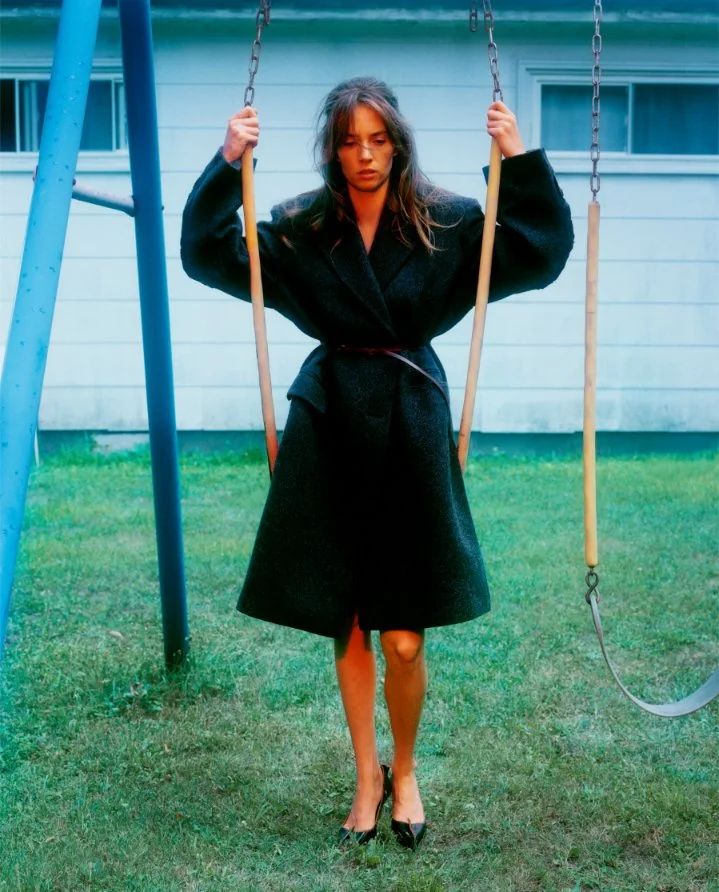
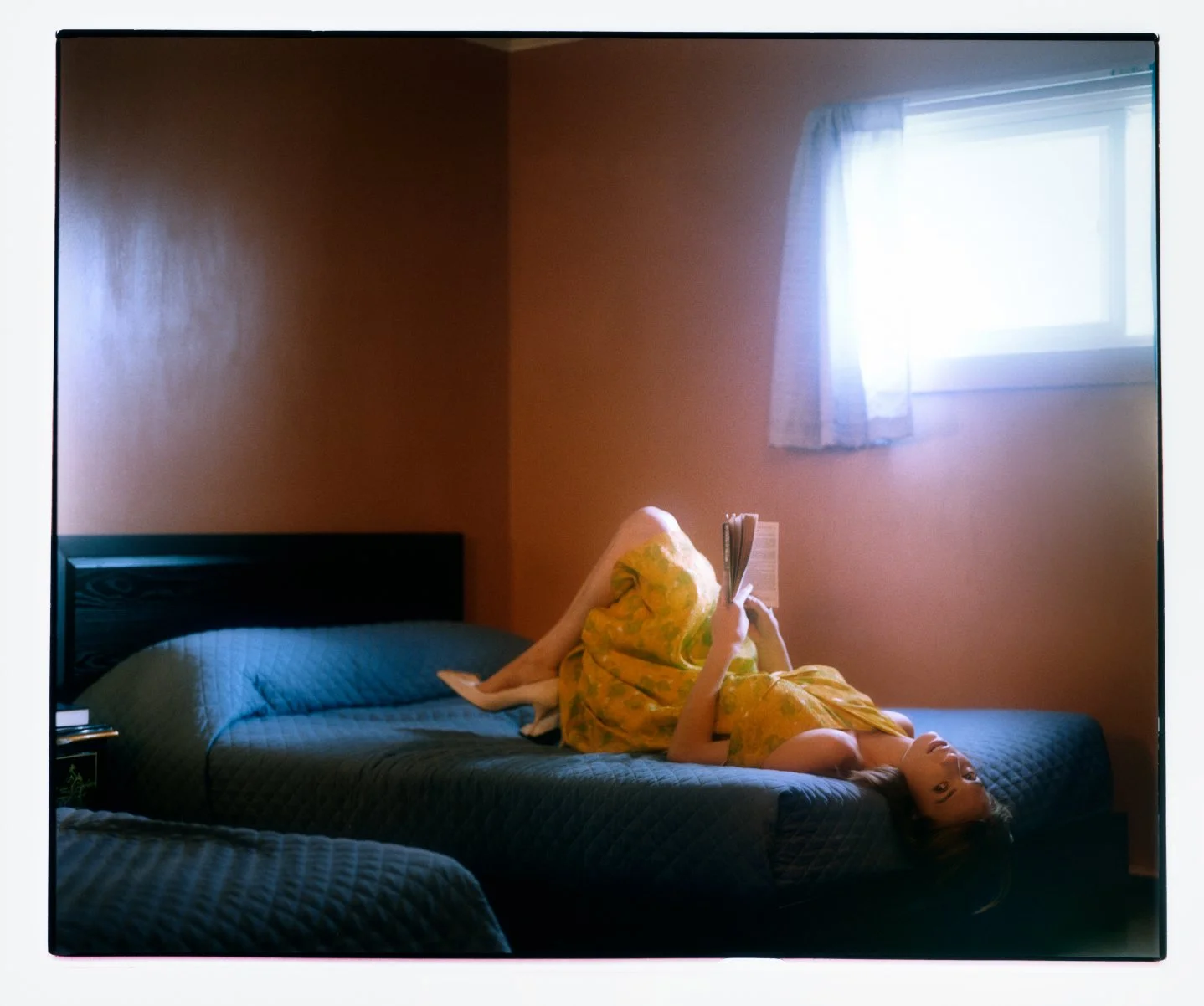
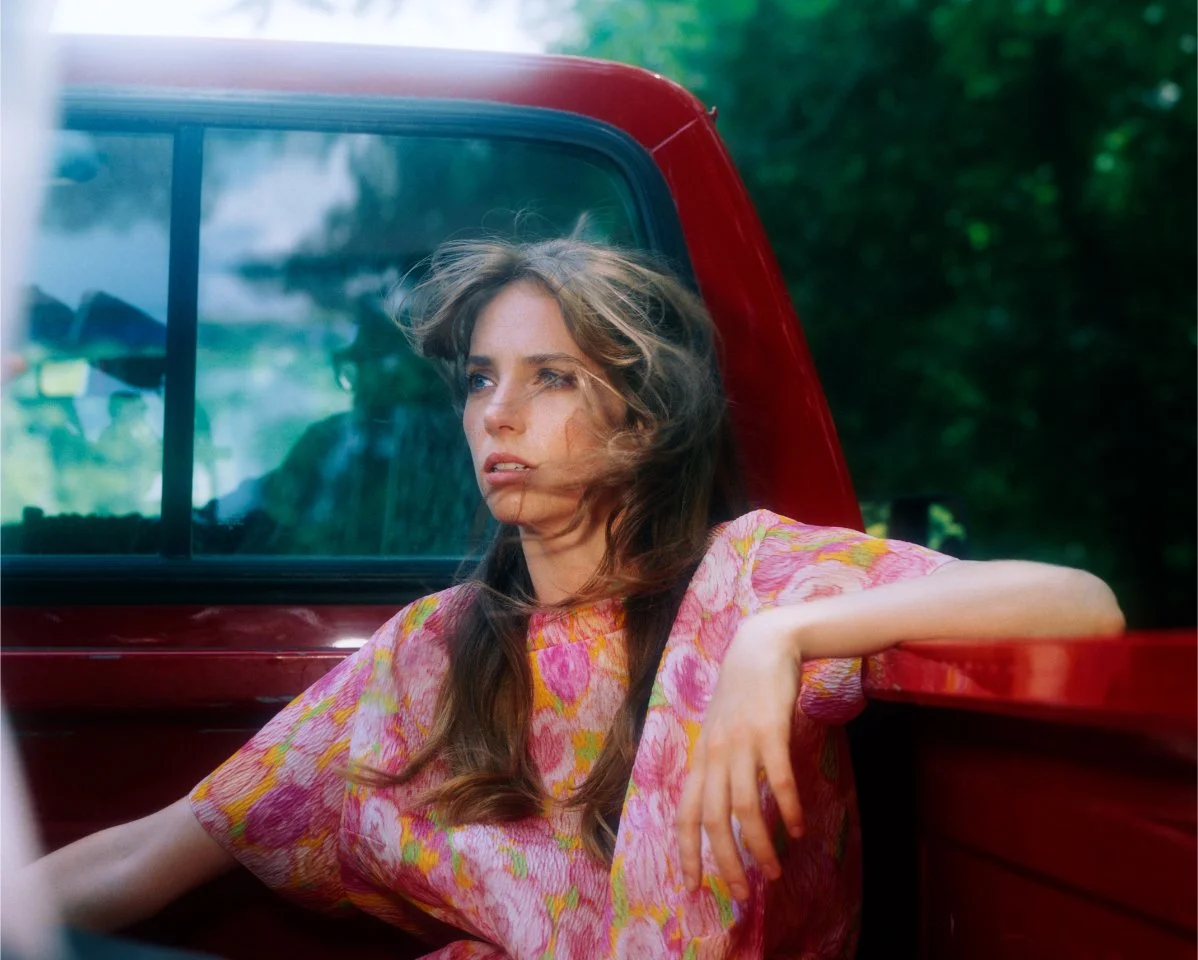
Maya Hawke’s breakout role on Stranger Things, as the frenetically precocious Robin Buckley, whose character arc would go on to challenge the entire dynamic of the Netflix tentpole, was instant proof of a rare, believable, and soulful complexity. That same year, a minor appearance as a Manson girl in Tarantino’s Once Upon A Time in Hollywood (2019), firmly placed Hawke in a class of next gen actors demanding visibility on the silver screen in an industry that is not only rapidly evolving, but also in crisis. Aside from her well-known screenwork, she is also a musician and stage actor who has released three studio albums and recently starred in an Off-Broadway play. Her titular role in the revival of Sarah Ruhl’s Eurydice, a play about the inexorable riptide of grief, earned her widespread critical acclaim. On the occasion of her recent casting in The Hunger Games: Sunrise on the Reaping (2026) and the final season of Stranger Things, Hawke and fellow actor Lily Rabe discuss the fraught, vulnerable psychic landscape of the dramatic arts and the undeniable power and seduction of process. There’s no business like show business.

LILY RABE: Hi, Maya.

MAYA HAWKE: Hi, beautiful woman.

LILY RABE: Speaking of works in progress—for me, I don’t know what it is to be in any other state of being other than work in progress. I always get so freaked out when a director says that we’ve picture locked. It sends me into an existential panic.

MAYA HAWKE: I feel the same. I feel like I’m always in a state of process and progress and creation. Where I get the most nervous is when things freeze. That’s the nice thing about the theater, because even though you lock the show, it’s never not in process, it’s never not continuing to be worked on.

RABE Yes, you always have another show, and you get to do it all over again. And then it’s over, and no one gets to see it anymore. But with theater, you don’t experience that feeling of saying goodbye like you do with film, where this one take is going to be...

HAWKE ...Used forever! They don’t get to see the four other takes that I did that were cool and different.

RABE: With the theater, you can fail better (laughs).

HAWKE: Yes, you can fail more continuously. So, it feels like failing is, in and of itself, an honorable act because it’s an impermanent state where you’re always aspiring to not fail the next time. But when you’re in a permanent state of failure, by closing the door on something, that’s when I get really sick to my stomach.

RABE: Even in the play, Ghosts, that I just did with your brother [Levon Hawke]—when the director, Jack O’Brien told us we were officially frozen—both “frozen” and “locked” feel so traumatizing.

HAWKE: Yes! I don’t want to be frozen, and I don’t want to be locked.

RABE: Once it was frozen, Jack would go back to his house in the country. When he would occasionally come in on a Sunday matinée, all of us would just be so desperate for a note from him

HAWKE: It’s true because when you freeze a show, you’re still shaping it. And it moves in different directions all on its own, just from the nature of the chemicals of the people together. Something I remember being so nervous about was when Les [Waters], who directed Eurydice, came back to see it, and I couldn’t even remember if I was still doing what I was supposed to be doing. We froze, but I don't know if I froze or not.

RABE: We both grew up in artistic families. Do you feel like that’s the way every interview you do starts?

HAWKE: It’s interesting. I wonder if that’s been your experience or not. I feel like it’s a double-edged blade, right? Because it’s both true and interesting. When I talk to most people, eventually, I start to wonder about them: How did you end up like you, or what happened to make you—you? I always wonder about a person’s childhood and experiences, so, for me, it’s such a fair question. Do you get asked that question a lot?

RABE: Yes, all the time. But what you’re saying is true. When I read someone’s profile, it always starts with their childhood and where they grew up. It just feels sort of loaded for us, but it is our history. It sounds like you don’t have a chip on your shoulder about that question.

HAWKE: I think it depends on who asked the question; I can smell whether someone is asking for the wrong reasons or for the normal reasons. One big mistake people from similar backgrounds make is getting defensive about it, because it gets a little like “the lady doth protest too much.” It’s a completely appropriate question if it comes out of curiosity and education about another person. I was doing an interview recently where someone asked me this question, and I just started talking about my high school teachers and my acting teachers. Because, yes, I have an artistic family, and that’s the reason I was exposed to acting, but it’s the same for most people: your parents loom so large. Then, you go out and you find your guides, especially as a teenager. Eventually, you wind your way back to your parents, where you’re like, “Oh, you guys are okay.” These guides that pop into your life, in these formative years, point you towards who you are, and sometimes who you are is right back to where you started. I wouldn't be me if it weren’t for Laura Barnett and Nancy Reardon and Nancy Fells Garrett, but I obviously wouldn't be who I am without my mom and dad.
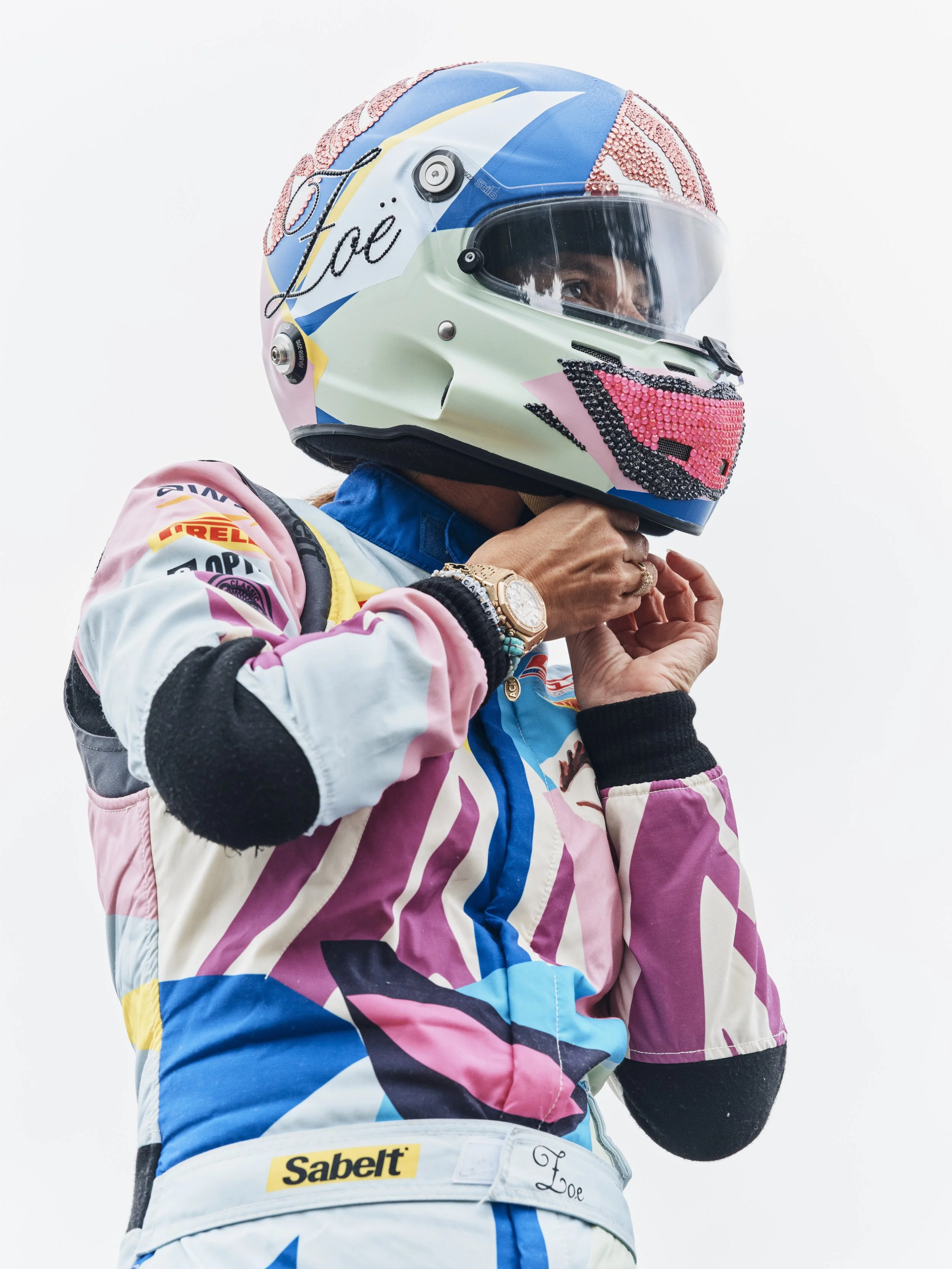
RABE: I’m interested in this because I took a slightly indirect path towards the thing I always knew I wanted to be doing, and part of that was because of exactly what we’re talking about. I had tremendously supportive, brilliant, incredible, and wonderful parents. But I was still like: I’m going to be a dancer. Then the second thing was writing, when really what I wanted to be doing was acting.

HAWKE: Well, in some ways, writing plus dance is acting. (laughs) I wanted to go deep into poetry, to go into academia, and study it. My different take on poetry was that it should be spoken out loud.

RABE: But it’s certainly not acting, don't you dare. (laughs)

HAWKE: Definitely not. (laughs) But I relate to trying to carve out your version of the same pie. It takes a little while to be like: All right, I’ll eat the pie. Being sure that you do love it, and this is the thing I’m the best at—the place I feel the safest and most whole in the universe—so I probably shouldn’t turn my back on that feeling just to prove I can. But I do feel like my experience watching people move through lives in the arts—both my parents and their friends—has been my secret weapon in life. It shapes everything—my emotional life, my work life, even therapy. Having the arts as your backbone is one of the most fortunate ways to move through life, because you have these tools on how to process emotions, how to look at conflict, how to look at the truth, through scene work and storytelling. I think it takes people a long time to go back and build that tool kit, versus if you’ve just been fortunate to walk out of your development with it. I couldn't be more grateful for that.

RABE: I think there’s a lot of truth in what you said. We’ve never really talked about this, but you’re the kind of person I’d call if I were afraid to share something with others for fear of judgment. But I’d call you, or your brother, because I’d know you wouldn’t be afraid of it. And I feel like you’d say the same about me. I wonder if that’s connected to what you just articulated so beautifully. It’s like we feel safer around the edges than maybe the average person does.

HAWKE: I think we understand the plasticity of emotion. Let’s say I’m having a horrible feeling, and I’m feeling somehow betrayed and angry, and as soon as I say those things out loud, something hard and carcinogenic loosens, then you have this opportunity to reshape it and be healed. That gives you so much emotional freedom and a sense of safety. To really understand that you are not defined by your feelings, you have to see how movable they actually are.

RABE: I know that your parents moved around a lot, but you were in New York primarily. Did your parents take you to the theater?

HAWKE: Well, not only did my parents take me to the theater, but my parents took me to see you in the theater. My favorite thing in the world as a kid was Shakespeare in the Park, and I saw you there twice; it shook me to my absolute core. I get asked all the time what movies made me become an actress. But really, the three things that made me want to be an actress were my dad doing The Winter’s Tale with Rebecca Hall, you in The Merchant of Venice, and you in As You Like It. Those three shows made me realize: that's the kind of woman I want to become, with that kind of strength and grace. I knew I wanted to go to Juilliard because I saw a version of being a grown woman that was right to me. I wanted to have mastery over language, over the space, and over the story that just made me want to do this. It was really because of seeing you.

RABE: I’m speechless. I love you. I can’t talk about this without talking about Eurydice. You and I never worked together—I was pulled into your orbit through your family. Right when Ghosts ended, which I had done with your brother Levon, you were cast in Eurydice. I haven’t really told this story, but I actually went to see you in it with your brother. I had seen the original production at that same theater, with the same director, even many of the same props, and music. I went with my mother, and we usually shared the same taste in theater—but this time, I was stumped. I thought it was beautiful, but I didn’t understand it. My mother said, “Maybe someday you will.” Years later, I returned. Sitting next to Levon, I watched you—someone I love—play this role, and I was overwhelmed. I cried so hard on your brother’s shoulder I couldn’t breathe or see; tears were shooting sideways out of my eyes. You were breathtaking—your command of the stage, your connection to your body, your language. You had this agelessness that was astonishing. I realized then that Eurydice might be the greatest play about grief ever written. And my mother was right: I finally understood it, because I had lost her. Experiencing that through you—this woman and artist I love—was profound beyond words. When we got backstage, I held onto you as if being passed from Levon’s arms into yours. You and Sarah Ruhl had given me the greatest gift anyone grieving could receive. It’s an experience I will carry forever.

HAWKE: It felt strange because, during rehearsals, Sarah often told me I reminded her of your mom. That made your reaction when you saw it even more meaningful to me. I almost felt like I felt as if Sarah wasn’t saying I reminded her of your mom, but that you would come to the play and feel her presence. I was so moved by the play. I haven’t had much experience with grief, but every night in that play, I felt it deeply—as if I were learning grief through the play itself. I feel like I grew a lot from doing that. We were in the deep end of sorrow that winter and into spring.

RABE: I feel like I’m back in the experience now.

HAWKE: You were so crazy good in Ghosts. It was a very intimidating thing to have seen you three times right before I started my play. How did it feel ending Ghosts, because ending a play is very strange and lonely, and you feel a little insane for a couple of weeks. And then you balance out.

RABE: It’s stressful, sad, and strange. Ending a job, a film, or a TV show can be incredibly emotional, but it’s not the same as a play. The schedule seeps into your cells—you become a creature of habit: when to wake up, when to have caffeine, when to eat. Being in the theater for eight shows a week, you almost go underground, and then suddenly, it’s over. Even though Ghosts was painful, I didn’t feel even close to ready to be done.

HAWKE: When you’re at a midpoint, you think you’re ready to be done with it, then towards the end, you think you can go on forever. One of my favorite Leonard Cohen quotes is, “You look good when you’re tired, you look like you could go on forever.” Weirdly, it’s from a poem called “How to Speak Poetry.” And it’s a true reflection of acting because you can get into that space where you feel like you could go on forever. You’re also in this community of people who are with you in that experience. You feel unified in this group that is going through it together, and it’s the least lonely a person can ever feel. But then, it ends, and you’re not ready for it to end, and suddenly it’s extremely lonely and anxiety-inducing, trying to carve back out who you were before it, and how you’ve changed from it.

RABE: You can never be who you were before. Do you find that with certain roles, when it comes to the end, you’re desperate to hold on to them, or sometimes you’re ready to let them go? And are there things that you do to encourage one thing or the other?

HAWKE: I feel like I’m always encouraging letting go. To me, great acting is the ability to be fully committed and involved while maintaining a relationship with yourself. I think sometimes people give themselves a lot of credit for losing themselves; that it means that you’re more serious and real. But to me, the real goal is to be fully committed and find a way to keep being you during it—to keep being a good partner, a good sister, a good friend, a good tenant. One of the hardest things, weirdly, was to keep up therapy while I was doing the play. But I think it was so valuable, because it was like checking back in with me every week for an hour. That’s what helped me release it when it was over. I also just had a big ending with Stranger Things, a character I played for seven years. It was funny because my dad called me—he was doing a TV show that was coming to an end—and he was like, “I feel so weird, I don't know if we’re going to do another season of this show. How will I let go of this character while also not letting go of him?” And my advice was to let go completely. Imagine you’ll never do it again. Because by the time you’ll do another season, you will be different. The characters can change too. You can build a new one. On Stranger Things, every season, I let go of whatever Robin from that season was and built a totally new one. For me, it’s about getting back to hearing your voice, your instincts, and your feelings, because you is where you filled up the cauldron before, and took that character out of the cauldron of you, so you always have to be churning.

RABE: Aren’t you doing a comedy right now?

HAWKE: Yes. Speaking of works in progress, I’m working on a romantic comedy—sort of. It’s a bit of a genre cruncher. It’s about a couple who convince themselves their relationship has sociopolitical consequences: when they’re getting along, they get promotions and their stocks go up; when they fight, their favorite celebrities get into car accidents, their stocks tank, and they get demoted. So they try to hack their life by hacking their relationship, forcing harmony to get whatever they want. As you can imagine, that has some negative repercussions. It’s about the danger of thinking you can control everything, and the need to just be honest. But it’s really fun. Lewis Pullman is such a great actor, and it’s the debut of an extraordinary first-time director, Graham Parkes. I’m also getting to play a role I’ve never really played before: a shrewd, smart, hot adult woman.

RABE: I feel like I’ve never done a run at comedy. But I’m very romantic about what the experience would be like; I’ve certainly romanticized it.

HAWKE It’s really fun because you get to play with all the silliness and the ridiculousness. But then, there’s this core of love and relationship, and I have probably spent the majority of my conscious years thinking about those two things. For better or for worse. You have this tremendous resource of the thing that you spend most of your time thinking about, so there's this depth there, and this messiness, and all of the experiences to draw from and to build off of. There’s also this kind of joy and silliness and mania to it.

RABE I was just thinking about how sad Ghosts was, but it was also so funny, as was Eurydice.

HAWKE: I cracked up laughing. But the thing about the truth: it can be funny and sad at the same time.

RABE: Exactly. We can become all things.

HAWKE: Absolutely. When you’re most available to laugh is also when we’re almost crying. When you’re just living in the most poignant emotional space, the wind could blow through you; you can laugh or cry, and you’re not sure which one. That’s the kind of art I want to be making, art that walks on that edge.

RABE: Tell me, what’s it like being on a tour as a musician? What’s it like being a rock star? (laughs) Is it you up there?

HAWKE: This is what’s confusing to me, because I kind of don’t want it to be me up there. If I’m going to stand in front of people, I want to be a character as a form of armor. Because no matter what, you’re playing a character. You can’t be you all the time on stage; you have to pick a version. But every time I tried to put a character on top of my writing, it felt false. The songs feel personal, so I don’t know how to be a character while singing them. That delineation confuses me. I haven’t figured it out yet. I want to look great on stage and put on a good show, but when I start trying to put on a show and pick a costume, it feels disconnected from the music. I almost just want to be naked on stage singing, because that would make me feel most connected—that’s how I feel in my songs. I’m committed to figuring out how to put on a show musically that incorporates all those things.

RABE: Do you get nervous in the same way as before the plays?

HAWKE: I get much more nervous. I have nerves that are almost at the level of a deterrent. Sometimes I think, maybe we just don’t do it tonight. With plays, the nerves are bad, but they’re not at the same level. It’s almost like it’s a ship that’s gonna leave the dock whether you’re on it or not, so you better jump on, versus being the captain of the ship with my music, saying, “I don't know if we should even leave the dock.” Also, there’s something about having your name on the poster. When someone’s coming to see you in a play, they’re coming to see the play, but with a concert, it’s just your name. If I could go back in time, I would have picked a band name, so it’s less pressure. When I was touring, I had stage deafness, where all of a sudden I just couldn't hear anything. It felt like time travel. I felt like everything moves in the slowest pace anything has ever moved, and the show’s over before you know it. I couldn’t hear my own voice, even whenit’s mixed perfectly; all I can hear is the audience.

RABE And what about public speaking or doing press? Do you get nervous about that?

HAWKE No. I sometimes get nervous if I think there’s a trick up someone’s sleeve, because I’ve been tricked before. Maybe now I have my guard up a little bit when doing press, but I don’t get nervous in that way.

RABE I get nervous even when giving a speech at dinner with really close friends where I know I’m safe. But with acting, I find tremendous comfort in the fact that it’s Lily Rabe playing this part.

HAWKE: Me too. I like implicating other people in my own disaster (laughs). I feel very nervous when no one else has been implicated. But the press isn’t nerve-wracking to me because I love conversation; it feels like where my comfort zone is. I’m happiest in a good talk.

RABE: You know when you’re on a press line, and then suddenly there’s this incredibly curious person who asks you a question that’s better than any question you could have ever imagined being asked. And it just makes the whole thing wonderful?

HAWKE: Yes. In those press walks, I can get nervous because I always want to be quippy and quick, and usually—as I’m sure you've noticed in this conversation—I’m just not that quick. It takes a little while for me to get to my point. So, sometimes I get nervous from, you know, Oh, I wish I had a spicy one-liner for this moment.

RABE: Like a sound bite. I’m not good with that either. I’m also not good with the log line. When people are like, “What’s this about?” I'm like, “Well, pull up a chair.” (laughs)

HAWKE: I’m bad at those, too, but I am good at talking.

RABE: Hamish [Linklater] always says, “Career is a dirty word.” Do you often think about your next steps, hoping for anything specific, or are you thinking about each project on its own in the moment you’re in your life?

HAWKE: When I was starting, I was trying to explain to my agents how I wanted them to think about my career. I would say things like, “I want to be sixty years old doing Shakespeare in the Park, so let’s keep that goal in mind to guide our choices.” In many ways, that’s still true, but I do think career is a dirty word. When Stranger Things first ended, I was in a sick brain about my career, and my sick brain was saying, “Your career is over.” I felt like I got lucky as a teenager and got to join something that worked, and everything else is the side effects from that luck, and now that luck ran out, you’re finished. I was really anxious, to the point of driving myself a little bit insane while I was doing the play. On every off day, I would take a bunch of meetings, because I was anxious from the loss of that anchor of Stranger Things. So, that was the strategy: I wanted to do whatever I could while I still could. Then, all of a sudden, I had this empty terrain of the foreseeable future, and I had no idea what was structuring it; it was really scary. I started thinking a lot about my career, what I wanted, what my goals were, and what was possible. As a young person, I had dreams, but with how the industry has changed, now those dreams are unclear. I don’t know if there’s such a thing as a movie star anymore. The path is all changing, and because of the nature of how quickly things are changing these days, Hamish is right, career is a dirty word. It just has to be about experience and about what’s pulling you in one direction or another. It’s okay if that’s sometimes money, and it’s okay if sometimes it’s going to cost you money to do this job. You just need to do it. You just have to make sure that you’re keeping that balance and don’t get addicted to either thing. It’s easy for me to get preoccupied with strategy and career, but I try to put it to bed.

RABE: I don’t think about my career when I’m working on something I love. I go to work every day and come home feeling like I’ve given every ounce of my sweat and soul because this is what I love. I love that feeling.

HAWKE: It’s addictive.

RABE: I want to be there all the time. So, when I'm getting to do that, I’m not thinking about my career in any sort of way. There is something just innately unhealthy about it, but also delusional. I’ve learned over the years that I’m almost always wrong when I think something is going to be a certain way, and I’m rarely right. So, I try to keep those voices as quiet as I can.

HAWKE: It’s not a game that you can play with a strategy. It’s like saying you have a good strategy for playing bingo. You just need to follow your heart and try everything because no matter how good a career you end up having, if you don’t follow it from your gut, it’s going to feel hollow. No matter how bad your career turns out, if every choice you made was your own, and you made it with love, and with the people you love, and the stories that you love, then I think you’re going to feel like you had a great career.

RABE: I have a feeling that we will want to just keep working until the end. Hopefully, we’ll never have that moment where we have to stop and look back and assess anything. (laughs)

HAWKE: Let’s leave that for our obituary writers.

Venera

interview by Oliver Kupper
photography by Lolita Eno
styling by Peri Rosenzweig

From the 1960s through the 1980s, the Soviets launched a fleet of probes toward Venus in what became the legendary Venera program—it was the first time human-made machines captured and returned images and sounds from another planet. What they revealed was staggering: a furnace-world of sulphuric skies, crushing pressure, and an atmosphere as brutal as it is apocalyptic. Drawing from that legacy, the experimental duo Venera—Korn guitarist and co-founder James “Munky” Shaffer and filmmaker/composer Chris Hunt—conjure a synth-driven cosmos just as mysterious and merciless. Their music is a psychological hymn to interplanetary Venusian travel, a soundtrack for drifting through toxic mists and colliding with the planet’s hostile refusal of organic life. But it is also something closer: an original score for our age of unraveling, a psychic reverberation of a society at the edge of rupture. Their sophomore album, EXINFINITE (out September 2025 on PAN), featuring the spectral voices of FKA twigs, Chelsea Wolfe, and Dis Fig, plunges deeper than their 2023 debut—heavier, darker, and more unrelenting. Shaffer’s guitar riffs—instrumental in shaping Korn’s signature sound—mutate here into foreboding, unbound chord progressions. Hunt, through his singular worldbuilding of sound and visceral pulsations, conjures soundscapes that shift from the eerily spectral to a violent primordium. Together, they navigate a shared sonic language, exploring the liberating force of experimentation and the transformative power of collaboration. The result is a nightmarish, chthonic vision—at once beautiful and orchestral. In the following conversation, Shaffer and Hunt delve into the origins of Venera, which began with an early studio session during work with Xhoana X and was further sparked when Korn commissioned Hunt to create pre-show music for their 2022 Requiem Tour.


OLIVER KUPPER: I want to start with the inception of Venera, which began around 2022 in Los Angeles when you were both recording with Xhoana X. Can you talk about the beginnings of your collaboration?

JAMES “MUNKY” SHAFFER: We needed somebody to design pre-show music for Korn’s Requiem Tour. He and I had already been working together, so I knew right away that Chris is very talented as a filmmaker and in creating sound design. During the Korn tour, Chris and I were already diving into some pre-recorded materials that we had. We went through the sequencing of the first Venera record and finalized some of the first recordings. I don't think we even had a label at that point.

CHRIS HUNT: From there, James and I got back together in LA and we really started to go down the rabbit hole together.

KUPPER: Chris, can you talk about what drew you into this sonic collaboration?

HUNT: James and I share a mutual love and language with which we communicate to one another sonically. In this record, there's a density and an intensity to what we both are drawn to in terms of sound. Our friendship and collaboration is an extension of that landscape. It's these very general kinds of genre terms, I guess. But there are certainly components of soundtrack stuff, ambient music, and part heavy music. I didn't necessarily grow up a huge Korn person, or even a huge metal person, but I always had an affinity for noise music and different heavier music. There's this nexus or a matrix of those elements, sounds, and aesthetics that were very common to both of us and still are.


KUPPER: Can you take me through your collaborative process? What does that experience look like in the studio?

SHAFFER: It's so much fun. Chris will grab a few pieces of equipment, whether there's a drum machine, a small synth, or a desktop synth. I'll get my guitar with a couple of my favorite pedals, because I'm always looking for new sounds to take me into another world outside the guitar, even though that's my medium. Then, we'll get together in the studio. We did a lot of stuff at my old studio in downtown LA. We'll kind of start slowly, dipping our toes into some sounds, and we'll look at each other and be like, yeah, that's cool, let's go with this. We don't talk about tempo or keys a lot right off the cuff. It comes from improvising and finding a common path, letting that dictate where it goes; we each let the other pull us back and forth. One of the things I love that Chris and I do is that intensity and density he mentioned, where comfort can grow from this discomfort. If I’m in a bad mood and something negative happens, I would only see this darkness. I think that's the beauty of some of the things we recorded—when you listen, you can feel a certain tone, and it can be this beautiful noise.

HUNT: This tension is an interesting way to describe it. For the past five years, every time we've gotten together has been equally joyful, inspiring, and productive. On one side of the spectrum, in terms of how we work and explore our practice, it’s a very easy, unfolding, joyful kind of flow. On the other side, I take our recorded materials and obsess over them to a very granular detail. I’ll take one bar at a time and identify clusters of materials like they’re pieces of a puzzle. Then, we talk about what the puzzle needs to be and start putting the pieces together. It feels very fulfilling. There's a lot of inspiration and joy behind doing that work, but it's also a lot of labor.

SHAFFER: Chris has this really unique ability to listen on a macro level. You know, when you're looking at something and on the surface it’s not so interesting. But when you look at it under a microscope, you start to see all these textures, this interesting landscape, and you start to expand on it. He's really great at creating a whole world within a world. It's one of the reasons why I love working with him.

KUPPER: It's very rare to meet somebody that you have this creative synergy with.

SHAFFER: Definitely. When we first started to record, we were having so much fun. The satisfaction of having no boundaries—there’s no guardrails when we record, no box we need to fit in. We’re just creating from complete artistic passion and creativity, not for a single on the radio. There’s an openness and freedom to that. It’s very rare to me. I’ve worked with several people through the years, but except for the band, Chris is the only one I’ve had this connection with on a creative level. We share the same creative vocabulary.

KUPPER: Do you feel like all that freedom was jarring after years of being in a band that was forced to produce hits to satisfy a record label?

SHAFFER: It’s a relief. There's a lotof pressure that I don't have any more. I feel liberated.

HUNT: We have our own language. We hope that it exists in a different space than Korn’s music does. Obviously, with the utmost respect and appreciation for that work, it’s amazing and legendary, but the language of the music here is just a little different. For us, a lot of it is driven by the process of exploring.

SHAFFER: When I'm working with the guys in the band, I'll write something at home and take it in and we’ll check it out together and build on it. When Chris and I are working, we want to discover where this experiment will lead us, we want to discover what grows in the lab.

KUPPER: The language is fascinating—you’re teasing the album with striking, dark, poetic texts by Amy Ireland. Can you talk about the textual and visual language behind it?

HUNT: Generally, it functions in two disparate but also harmonious ways. On a simple level, I just wanted an interesting language to accompany what we share about the music during the release process, publicity, and social media. Because so much of these processes are tied to the social media landscape, I’d much rather have another texture or layer we care about—something that helps fill out the story of the music. Then there’s the other part: using text. Imagery or text isn’t particularly new, but finding people connected to the world we feel the music lives in, who speak a similar language, is. With this, we’re letting them exist in that world in a very open way while adding a layer of their own—either narrative or an expansion of the concepts we’re exploring. In the most recent work, it’s Amy Ireland. She’s such a brilliant thinker and writer. I know her work through xenofeminism and her connection to CCRU [Cybernetic Culture Research Unit] in the UK.

KUPPER: You guys are bringing in Dis Fig, FKA Twigs, and Chelsea Wolfe. How does that process work, reaching out to these people and collaborating with these other musicians?

SHAFFER: When we are recording the songs and Chris is digging through, he will suggest things like, maybe this track will be interesting with vocals on it, and maybe it could be a female voice because it feels feminine. Then, we come up with a wishlist of interesting people who might help the track, and we give them a palette or a canvas to do their thing. We’re totally open, which is why when we reach out to them, they’re also open. Once they hear the music, they want to create their own thing over it. It’s fun because we get to create a wishlist, go through it, and contact people. It’s not a long list, honestly; it’s mostly through existing relationships. I mean, I don’t know Radiohead (laughs), so it seems like it would be difficult to reach Thom Yorke, which could be another amazing collaborative moment. We try to reach within our own network and connect with people who are interesting and talented.

HUNT: This project has been interesting and fulfilling, and the collaborative aspect of it is an extension of the way James and I work as well. At the same time, it’s also very focused on what it is and what we want it to be, and the process with James and me—the way we work—has been very resonant with everybody we have reached out to. Every vocalist who has contributed to the project has done so in such a smooth and inspiring way. It has been almost shocking how little challenge or back-and-forth there has been. It’s been such an interesting gift.


KUPPER: Do they come to the studio, or just send audio tracks or layers?

HUNT: FKA Twigs was the only person we got to spend a day with in the studio, which was a magical set of circumstances. For that track, James and I had a list of materials that we thought might be interesting for her to sing on, based on her previous work. When we got into the room and started playing these things, she was totally disinterested in every idea we had. But fortunately, because of the nature of how we work—how much capturing and accumulating sound and material process we have—I was able to just open a big folder of stuff and offer her more ideas to choose from. There was a very random part of one of the rough ideas that she liked, so we started expanding and chopping it up in the moment with her.

SHAFFER: Yeah, she was such a pro. Watching her process of creating this fresh track was really inspiring—she went in, laid down her background vocals, then her main vocal. Usually, people work on tracks for six weeks or more, but with her, it took six hours, and the song was done. It was incredible.

KUPPER: How do you think this album differs from the earlier ones? What do you think your take is on the evolution of it?

HUNT: It’s a similar level of openness in terms of experimentation for us in the process, but experimental in a different way. It’s not rigid, but a bit more structured. There is generally more percussion with drums and rhythm throughout, and the ideas are a little more succinct.

SHAFFER: It feels more structured, and yet it’s the same world that we created on the first album. But there’s an expansion and more focus on some of the details of that world.

KUPPER: James, you mentioned Thom Yorke. But Chris, who's a dream collaborator for you?

HUNT: Oh, man, I have him right here on this Zoom call. (laughs) I really don’t have a good answer for that. I feel like the dream collaborator is yet to come. We have to make the dream music for it to reveal who the dream collaborator is.

KUPPER: James, this project feels like such a deeply intellectual side to your sound and musical philosophy. What do you think fans of Korn might misunderstand about you through this music, and what do you hope to clarify about this side of your musical output compared to Korn?

SHAFFER: For me, it’s an extension to experiment deeper into what I love, which is designing sound. I can design sounds on Korn records, but they are more riff-based. This is another branch of what I love: ambient music, electronic music, while still having guitar-driven elements and some aggressive drums. It also goes back to when the band first started. When Korn first started, I always loved John Zorn records—this crazy noise stuff. And then, I heard a Mr. Bungle album and saw that Zorn was the producer. I did some research and found out he is a saxophone player, but also a producer with projects like Naked City and other interesting works. That opened the doors for me and kept me inspired to create things like this. It also challenges some of our fans to step into that world with me, whether they like it or not. I hope they find something interesting in it and understand that it is just another creative way for me to express myself, both through the instrument and music, and also contribute to the visuals, creating a new extension of who I am.

KUPPER: What are you both working on now, individually?

SHAFFER: We’re working on a third album, and we have a lot of materials I don't want to describe prematurely. It's exciting, and it feels like a new branch that's sprouting in this world that we've already created and that's taking root.

HUNT: The thing that's been so lucky about James and me is that we’ve been working basically anytime we see each other, for two or three days. It’s sort of a double-edged sword because we're constantly productive, but it also means there's a mountain of material. And what I love about the project is that it’s a work in progress in a deep way—we’re constantly evolving.

SHAFFER: I look at it as us being sonic explorers—we keep trying to find new caves and new landscapes to either create or explore and see where it takes us. There's just so much creative satisfaction in it. Especially when you discover something new, it's very satisfying to the creative soul. We have so much music; it's crazy. And it's all interesting. When Chris goes in to find the moments that have that magic inside of them, it's like stepping into a whole other world. We also like to go to a few different studios around LA because each one brings out a different texture and adds elements we weren’t expecting, whether it’s the mic positions on the drums, how I’m set up, the amp I’m using, or just the character of the room itself. We really get inspired by different spaces. The more we explore different rooms, the more we discover. We haven’t done anything outdoors yet, which would be really interesting to see what comes from that kind of improvisation in an open space. That’s definitely on our list.

HUNT: There are definitely some sounds on this record that stand out. Specifically, we used field recordings and found sounds. Chelsea Wolfe’s music partner, Ben Chisholm—who worked with her on her part of the track—actually contributed some of those recordings. I think they sounded like wind or something alongthose lines. It was really interesting material and caught us by surprise in the best way.

The Driven Artists Racing Team: Zoe Barry & Lyn St. James in Conversation

In motorsports, where just 4% of drivers are women, Zoe Barry and Lyn St. James break down the stakes, strategy, and survival on the racetrack.

interview by Zoe Barry
photography by Amanda Demme

In one of the most dangerous and competitive sports in the world, Zoe Barry drives Car #44—a number that highlights the stark reality that only 4% of licensed professional racecar drivers are women, and only 4% of artworks sold at auction are by women. Behind the wheel of a McLaren Artura GT4, wrapped in a custom livery by contemporary artist Mickalene Thomas—who also designed the race suits and helmet—Barry focuses on one thing: winning. Yet in a world still dominated by male decision-making, from rivals on the track to corporate sponsors off it, she must confront stereotypes and misconceptions at every turn.

In 2025, she co-founded Driven Artists Racing Team (DART Car) with art advisor Spring McManus to champion women in motorsports and the arts—a first-of-its-kind initiative that fuses competition with creativity, proving that performance and cultural impact can drive change together. In January 2026, the team will compete in the 24H Series Middle East Trophy in Dubai and Abu Dhabi as the first all-female-led team in the series.

Lyn St. James, now a mentor in the field, is a living legend: the only woman to win an IMSA GT endurance race solo (1985 at Watkins Glen), the first woman to earn Indianapolis 500 Rookie of the Year (1992—a record unbroken for three decades), the holder of dozens of speed records, and the first woman to surpass 200 mph on a closed oval, reaching 204.233 mph at Talladega. Together with St. James, Barry explores the psychological and strategic challenges of racing—the constant risk of death on the track, the split-second decision-making, and the stamina and endurance required to outpace the competition.

In a special photo feature supported by Caddis Eye Appliances—a champion of second acts in life, reflecting Barry’s leap into racing after a career in the corporate world—we followed Car #44 onto a practice track in West Virginia, capturing the raw grit and glamour of a day in the life of a champion racecar driver.


ZOE BARRY: Lyn, of course, people can Google you, but hearing you speak on a panel brought out the heart, the challenges, the soul behind the story. It reminded me of Einstein’s quote about standing on the shoulders of giants. Women like me can get behind the wheel today thanks to women like you who took those early risks and broke the stereotypes. Even now, only about 4% of racecar drivers are women. Unlike Olympians, who often follow a clear path, female drivers are competing alongside men in a world that doesn’t want to fund them, doubts their ability, and fears they’ll get hurt.

LYN ST. JAMES: Every woman in racing right now is an iconic, isolated story unto herself. There are so many different forms of motorsport, and unlike Olympic athletes—where there’s a fairly cookie-cutter pathway to the top—there’s no single route to get there in racing. I’ve had the luxury, through the Women’s Sports Foundation, to meet icons like Billie Jean King, and I’ve crossed paths with incredible athletes like Diana Nyad, Nancy Hogshead-Makar, and so many others I grew up watching on TV. Their accomplishments are extraordinary, and I’m not at all taking away from their abilities, their talents, or what they’ve achieved. But there is a fairly clear pattern for how to get there in those sports. Whether it’s through coaches, training centers, or established pipelines, there’s an infrastructure that helps guide the way.

In motorsports, there is no such infrastructure. There’s drag racing, oval track racing, stock car racing, road courses—so many different forms of the sport. And on top of that, there’s an enormous amount of politics and money involved. It’s constantly shifting, and every driver has to figure out their own path through it. But every female driver has to constantly carve out a niche and prove they belong there. Even to this day, what I’ve accomplished doesn’t necessarily make it easier for the women coming up now. At best, it might inspire them, give them confidence, or encourage them to try. But beyond that, you still have to prove yourself.

BARRY: (laughs) I'm working on it, Lyn.

ST. JAMES: I’m still here to mentor, to be an ally, and to help however I can—but I can’t get in the car, make the calls, or close the deals. In racing, you have to wear so many hats: raise money, manage your team, and convince sponsors to believe in you. And that’s the part people rarely talk about. I once heard a brilliant woman in the UK describe how, in many ways, we’re still in the caveman era—men are inherently wired to protect women. It’s just a deeply ingrained instinct we’re still navigating.


ZOE BARRY: And you can see it in the data. Years ago, if you had a three-year-old daughter, you’d put her in ballet. Today, parents don’t hesitate to put their kids—boys or girls—on skis, on a tricycle, or on a bike. But with racing, it’s different. Very few parents think, I’ll put my three-year-old daughter in a kart and let her go. That’s still where racecar drivers come from, and we haven’t broken through that mindset in the way we have in so many other sports.

ST. JAMES: Exactly. And that’s where racecar drivers come from—starting young. Fortunately, history has helped. Title IX in the ’70s changed things. Now we have parents who went to college, saw women compete in sports, and understand that women can push themselves physically just as hard as men. That’s progress. But there are still limitations. My daughter is in her forties, and I have a seven-year-old granddaughter. Would she put her daughter in a kart? No. Would she put her son in one? Yes. So it’s still very much about individual decisions, shaped by these cultural assumptions. We can’t ignore those realities. I’ve literally sat across from male sponsors who couldn’t bring themselves to say, “We won’t give you money because you could get killed.” But I knew they were thinking it. So, I said it for them, “I know I could die doing this. I’ve seen death on the track. I made a conscious choice to accept that risk. It’s that important to me.” Every racecar driver—male or female—has to reconcile that risk. But for women, it’s another layer of resistance to push against.

BARRY: Lyn, one thing I’ve noticed in my journey raising money is how similar it is to your experience securing sponsorship for racing. In tech, as a female founder, only 2% of the billions deployed in venture capital each year go to women. It’s similar in sports: women drive huge sales—Nike sneakers, for example—but female athletes are paid far less, sometimes 90% less than men. In racing, it’s the same: women get a fraction of the sponsorship, so they have to do so much more.

When I was in tech, there’s something called Keyman Insurance. If the key person—often the CEO or founder—dies, the business faces risk because they’re a major shareholder and driver of innovation. When I started racing, my chairman raised concerns with our lead investor about Keyman Insurance, implying my racing was a liability. I shot back: statistically, racing is safer than skiing. Are male CEOs stopped from skiing? No. Sometimes you counter with data, sometimes you confront it directly. You have to be upfront: yes, I could die doing this, but I’m doing it anyway. All the way up to F1, I don’t hear drivers having to defend their choice to be in a racecar, going over 200 miles an hour with the real risk of death. In all the conversations I’ve had with top athletes in this space, men simply don’t have to answer that question.

ST. JAMES: They don’t have to answer that question. In fact, it actually makes them more heroic, because people admire them all the more. When Eric Anden died, our sport stopped—literally. Not just Formula One, but the entire motorsports world. The same happened when Dale Earnhardt was killed. These were icons we never expected to lose in a racecar, and their deaths reminded everyone of the risks involved.

Women drivers are just as courageous. When Catherine Leg crashed at Road America years ago in an IndyCar, she walked out of the medical center after a horrific crash. I had a similar experience at Riverside in 1986. I was upside down and on fire, yet I crawled out and walked away. But now, we’re not always admired for it. I remember someone at Ford, who was sponsoring me at the time, saying, “Oh my God, she really drives just like the guys. And she didn’t cry.” I thought, You’ve got to be kidding me.

BARRY: Let’s go back to the beginning. How did you get started, Lyn?

ST. JAMES: It started when I discovered endurance racing—a form of motorsport I didn’t even know existed. I went to the 24 Hours of Daytona with my husband as a spectator, and I was blown away. These cars raced for a full twenty-four hours, and as a fan you could actually see the people—the crews, the human effort—behind it all. I called it seeing “real people” instead of superheroes, the way IndyCar or Formula One often felt. I was fascinated by how drivers with Corvettes, Camaros, Mustangs, and other so-called “back-of-the-pack” cars still managed to compete. That’s when I learned you needed a competition license. To get one, you had to join a club—so I became a member of the Sports Car Club of America. Then I found out you also had to attend a driver’s school before you could earn that license.
BARRY: How old were you at the time?

ST. JAMES: Well, I went to driver’s school and became a member of the Sports Car Club of America (SCCA) at twenty-seven and got my license a few years later. To participate, you needed a racecar, and there was a new class called Showroom Stock. You could take a production-based car, install a roll bar, a five-point seatbelt, and a five-pound fire extinguisher, and you could race. I bought a four-cylinder Pinto, which became my first racecar.

I drove it back and forth to work during the week and raced it for a couple of seasons. Eventually, I won the regional championship with it. That was the beginning, and it lit a fire in me. Going over a hundred miles an hour—on the front straightaway at Palm Beach International Raceway with a tailwind—it was exhilarating. I’ve always been a sucker for challenges, and every moment in a racecar tests you—your technique, your reactions, the car, your competition. It throws challenges at you constantly, and I just soaked it all up. I loved it, and I’ve never stopped loving it. I’ve never looked back.

BARRY: How many years to get your professional license?

ST. JAMES: To race professionally, I needed an IMSA (International Motor Sports Association) license. That was necessary to race in the Kelly American Challenge Series. I actually raced my husband’s Corvette at Daytona—not in the 24 Hours, but in one of the other events they held there. To get the IMSA license, you needed enough races under your belt, and you had to go through the licensing process, which is good—you really have to learn it. (laughs) Within a couple of years, I earned my professional license and I started racing in the Kelly American Challenge Series, which was a support race at IMSA events. They even offered a bonus prize for the top-finishing female driver in each race.

BARRY: That’s pretty progressive. They barely do top female finisher now.

ST. JAMES: Yeah, Kelly really needed to do something to support women in racing because of their history of primarily employing women as temporary secretaries, even as they expanded into light industrial work. I raced in all ten races in 1979—and I won in every race. That started to put me on the map because the race results were published in Speed Sport News, which didn’t have as wide a reach as today, but it mattered. They always noted the top female driver in the results, which helped get my name out.

Through that exposure, I was invited to race in the 24 Hours of Nürburgring as part of the BF Goodrich factory program, and we won our class. Around that time, I also started a company called Creative Images and used it to write sponsorship letters. I couldn’t sign my own name because it was promoting “Lyn St. James,” so I made up names of people in my company to make it seem bigger than it was. (laughs) One of the companies I targeted was Ford Motor Company. I’d seen a 1978 Car and Driver article titled “Ford and Feminism,” highlighting the company’s efforts to provide equal employment opportunities for women in non-traditional roles. I bombarded them with letters every time I raced and sent my results, relentlessly following up. In 1981, it paid off—I signed with Ford and became a factory driver. That was the tipping point in my career, the moment everything started to change.

BARRY: I’ve always been a daredevil—growing up in NYC, I was constantly taking risks, from gymnastics on rooftops to catching animals with my bare hands. I competed nationally in gymnastics, swimming, and sailing, but injuries and physical limits held me back. Then I discovered racecar driving—a sport where you can compete at a high level for decades. My first car was a racecar; I traded equity in my tech startup for a Mazda to start racing seriously. I went through racing school, club races, and learned the grind of back and mid-pack racing—the chaos, the carnage, and the challenge of getting to the front.

At forty, I earned my professional license. I applied a venture model to my racing team: raised funds, bought a GT4, and collaborated with artist Mickalene Thomas, who designed hand-painted helmets and suits. In our first pro race, we finished fourth. Now, my goal is historic: to run the 24H Series Middle East Trophy with an all-female team—a first for that race. For me, as an athlete, everything I did in gymnastics and swimming was sprint-focused. A gymnastics routine is only four minutes long. Swimming, of course, was pure sprint. In racing, our sprint events started with Mazdas in club racing—about twenty minutes long, but extremely fast. What were your early sprint races like?
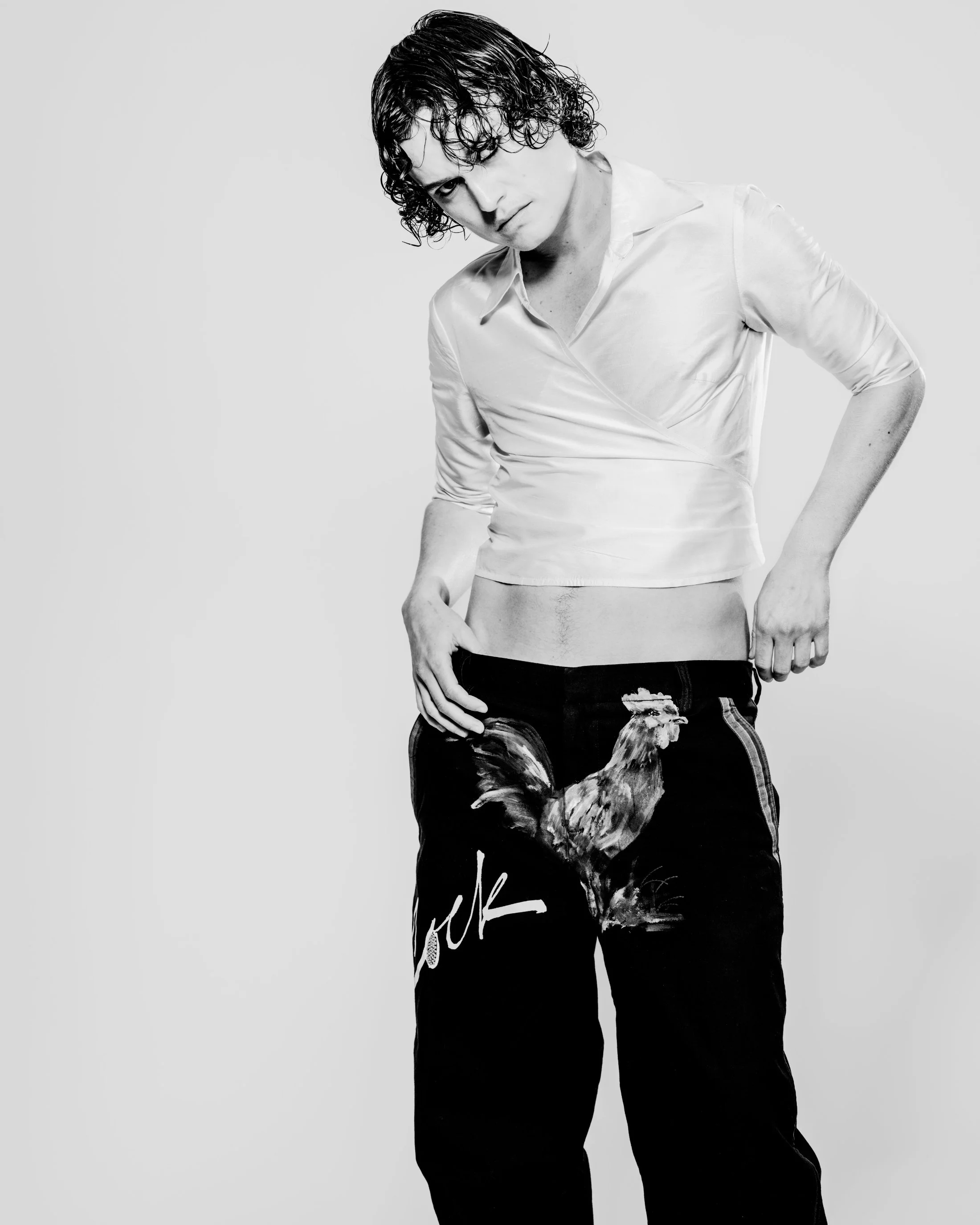
LYN ST. JAMES: My early amateur races were about thirty minutes. In pro racing, sprints usually run forty-five minutes to an hour—single driver, no pit stops. You have to manage fuel and tires carefully, because a car can only go so far before running out or wearing down. Safety and refueling rigs are factors too. For example, in the TransAm series, races were an hour with no pit stops, so the car had to be built to last the full distance.

Endurance racing is a different beast. The crew becomes the most important part—not the drivers. We’re just the machines in the car, responsible for staying out of trouble, driving fast, and bringing the car home intact. The crew keeps the car running, handling refueling, tire changes, brake maintenance—sometimes nonstop for 24 hours. You learn exactly what every person on your crew—and your competition—is made of, because anything can happen. Plans go out the window, and it’s all about how people respond under pressure.

BARRY: People don’t usually think of the car as an athlete, but you should. In endurance racing, that becomes clear. You have to prep the car differently for a sprint, a driver change, or a 24-hour, long-haul race. The approach for a true long-haul endurance event is completely different.

ST. JAMES: Absolutely. Without a crew who understands the nuances, you’re in trouble. Every component—brakes, suspension, setup—has to be prepared differently for an endurance race versus a sprint.

BARRY: I haven’t done a full 24-hour race yet, but there’s so much that goes into it from a planning and logistics standpoint. In many ways, it reminds me of tech—using a Gantt chart or burn-down chart to map everything out. If your goal is to launch on a specific date, you need to identify all the pieces that must be in place beforehand. Then you have a fixed budget, and you have to decide where to allocate resources and which areas deserve the most focus.

ST. JAMES: This is an organic response, but I really like that you have a singular, unique goal. Not only is it an endurance race, it’s in Dubai—a location where not much racing happens outside of Formula One. And doing it with an all-female driver lineup adds another layer of significance. Ideally, you’d integrate some women into the crew as well, though having an entirely female team can be extremely challenging given the skill and experience required.

I highly recommend, before attempting this, that you get some endurance racing experience under your belt. One series that comes to mind is the WRL (World Racing League), which features six and eight-hour races. It didn’t exist when I was racing, but from what I understand, seats aren’t prohibitively expensive or hard to get. Participating in one of these races as part of a driver lineup would give you a chance to observe, understand, and truly experience what endurance racing demands.

BARRY: Oh, they have one coming up at Watkins Glen! The “blue bush.” (laughs) Just so people reading this know, Watkins Glen has almost no runoff space—just a narrow strip of grass, maybe two car widths, before you hit the guardrail. To make it feel less scary, they’ve painted the guardrails blue—but any mistake, and you hit the grass, then the “blue bush.” The cars are all banged up.

ST. JAMES: I love that track. I made history there. I was racing for Ford in a Mustang in the Serengeti 500, a 500-kilometer endurance race in the GTO division of what was then called the Camel GT series. That season, I ended up with a different co-driver almost every race. For this one, I had a replacement co-driver I knew was competent—but honestly I was in the groove completely, so I wasn’t thinking things through. When I came in for the scheduled pit stop—where we were supposed to change drivers, refuel, and swap tires—I didn’t get out of the car. I didn’t put the window net down; I just shook my head “no.” In a pit stop, you only have 30 seconds, so there’s no time for discussion. The team, my co-driver, and the managers exchanged glances as I stayed in the car. They changed the tires, fueled the car, and I took off, running the entire race myself—and won the GTO division.

No other single driver, male or female, had ever won an endurance race solo. Since then, the rules have been changed so no driver can do it alone. That victory came with a few funny and frustrating moments. At the podium, I was alone—no car, no co-driver, no crew. The trophy was handed to me by a Serengeti representative, a guy from their retail team, which was both hilarious and surreal. Later, when I returned to the garage, the car and crew were gone. They took me out of the next race, so I missed the points. I ended up paying a penalty from my team for making that split-second decision. It’s a moment in my career that brings me a lot of excitement and pride, but it’s also a reminder that when you don’t play by the rules, there are consequences.

BARRY: What do you think are the different qualifications that go into being a good racecar driver? For me, you need basic skills—hands-on feel for the car, quick reflexes, eyes up to anticipate what’s coming. Over time, you learn to anticipate crashes or mistakes, even guide someone off the track without touching them. For example, at Sebring, my home track, I know a turn where the correct line is left. If someone dives inside, they might hit a greasy spot and go off—totally legal, not my fault.

It also requires an appetite for risk. When you sign up for this sport, you know you might die. Most sports don’t ask that—basketball, swimming, gymnastics—you aren’t thinking, I could die today. High-performance sailboat racing is closer, but in racing, it’s constant. From there, it’s awareness—reading competitors, understanding how they’ll react. Then it’s emotional intelligence, knowing how to push someone without endangering yourself. And finally, it’s about the fear factor—can you manage it, or do you let it manage you?

ST. JAMES: I think you just have to have really good perception and vision. Not only good reaction time, but anticipatory reaction time. You have to be able to anticipate and definitely have a feel for the car. Whether it’s through your body completely—I mean, your feet, your butt, your hands—I mean, all of that. You really wear the car. You become one with the car. I call it desire. You have to have a hunger for outracing and outmaneuvering.

BARRY: When you level up—in a new car, a new series, or a higher league—you get picked on. You just have to accept it as part of the process. I feel like all I’ve been doing is crashing—not in racecar driving necessarily, but in every sport. In gymnastics, everything is about falling. In tech, there’s the saying, “fail fast.” In sailing, on your first day in a boat, all you do is find the edge. It’s a full day of learning how to capsize the boat, pulling yourself out of the water, getting wet, draining the boat, and sailing forward. Then the coach blows the whistle, and you capsize again.

For me, I’ve totaled several racecars—on average, probably every other year. You don’t want to, but it’s part of leveling up. Going from Mazda to Porsche is a huge jump in speed and cornering. Competition also gets more aggressive as you move from club to national to pro racing, so there’s a steep learning curve. You’re the greenest person on the track, and people take advantage of that. In sailing, we used to call it “finding the marshmallow.”

ST. JAMES: First of all, it’s an expensive sport. I’ve had some older competitors say that women can drive racecars, but the reason they’re not more successful is because they don’t want to hurt the car. Try having that conversation. (laughs) The idea being that women are mothers and are “meant to protect everything in the world.” But there’s always a risk–reward in every move you make. Over time, you learn that you can’t build a career if you’re known as a crasher. Fortunately, I didn’t crash a lot, but I was still worried about it. Whether it’s crashing or being too hard on the car, you can’t afford that reputation.

One piece of advice I always try to share—whether with other female drivers or anyone I mentor—is that the best drivers never ask more from the car than it’s willing to give. If you overdrive, eventually you’re going to crash or break the car. And if you do that often enough, people won’t want you in their car. To build a career, you need to be both available and desirable as a driver. If you’re known for wrecking cars, there’s always going to be someone else waiting with a helmet who doesn’t carry that reputation.

BARRY: At the second race in Sonoma, we didn’t run because it was a rain race. And I love the rain. That’s my time to shine. It’s my absolute favorite condition to drive in. My coach always says I’m a beast in the wet. (laughs) But they canceled. In the GT3 race, I want to say they lost about a third of the field—badly. Then, they had the McLaren Trophy, which also got cancelled because so many cars were destroyed or driven off track. It was nuts—torrential rain. So, by the time our race came around, a lot of us decided not to go out.

We had to make a decision—because we were running a Mickalene Thomas car, which is a multimillion-dollar car. Everyone else out there is in a $250,000 to $300,000 car. I’m in something worth $2 to $3 million. I’m not going to take that risk. I can be really aggressive with my driving at the right time. When I drove the Mickalene Thomas car, I went from the back of the pack to fourth place. I have that data. But there are also times when you have to say, “I can’t take a 25% chance of putting this car into a wall.” Or, even if I don’t make the mistake, if someone else hits me, or the track is statistically likely to send you off—then you weigh the risk differently.

ST. JAMES: Every opportunity is an opportunity to make a decision. You assess the situation and try to make the best call. Now, if you’re always going to raise your own money, run your own team, and drive your own cars—fine, do whatever you want. But if you want a career as a professional driver, you can’t be known as a crasher.

BARRY: One thing we haven’t talked about too deeply is the Mickalene Thomas art aspect of DART Car. I’m really proud of this part. I raised investor dollars and made sure part of that funding went directly to Mickalene for this work. We gave her full creative license and she delivered a bold, Cubist-inspired design with lips on the front and a winking eye motif.

That visual language carried through everything—the car, the helmets, the race suits, all with those lips. Mickalene jokes they’re “for all the kisses in all the special places.” It’s playful, but it resonates. People love it. And not just women—men too. You’d expect women to gravitate toward hot pink and crystals, but when the car was being wrapped in a private garage, collectors kept coming through asking for photos. And it wasn’t just collectors. When we went to the tech inspection, the crew—not museum-goers or gallery regulars—were holding the helmet like it was a treasure. At that time, none of us knew how the market would respond, but then my first helmet sold at auction at Silverstone, during the F1 event in July, for $150,000. Since then, collectors have been snapping up DART pieces, and that’s the mission: every sale funds more driving, gets more women behind the wheel, and raises visibility for female artists.

ST. JAMES: Sometimes that’s one of the unique roles women can play in this competitive world—where certain lines of demarcation get blurred. Women can bring a different lens, elevate the story, and shift the narrative. This is one of those examples.

Mother Daughter Holy Spirit


introduction by Qween Jean
images by Cruz Valdez
styling by Julie Ragolia
makeup and hair by Yadim and Jimmy Paul


Put on the full armor of God, so that you can take your stand against the devil’s schemes. For our struggle is not against flesh and blood, but against the rulers, against the authorities, against the powers of this dark world and against the spiritual forces of evil in the heavenly realms.(Ephesians 6:11-12 [NIV])


This past spring, I had the honor of walking for the inaugural Mother, Daughter, Holy Spirit runway presentation. Far from a typical fashion show, this was a revolutionary call to action for trans equity and liberation. Over forty warriors were assembled and answered the call to pump, strut, and glisten in all our glory. Styled in exquisite armor to display our strength and amplify the urgency for solidarity, we combined resources and brought our invaluable talents to create a paradigm shift. The moment we centered our purpose, our power was unified, focused, and unstoppable.

As trans warriors, we refuse to audition for anyone’s permission to exist. We are born with the inherent ability to reject all binary systems and patriarchal expectations. We have no need for validation by the imperial authorities upholding white supremacy. We continue to exist, and we disrupt when silenced or threatened.

I made the divine decision to choose my truth. My parents expected me to lead the church, but the terms meant that I would have to bury the best parts of myself, the very special parts they’re fused to embrace.

However, today, I stand proudly as a shepherd for liberation. My faith grew as Qween’s voice matured and spread her wings. Mother Cecilia Gentili wrote in her memoir that “it is better to live a short life of authenticity than a long life filled with lies and sorrow.” That’s why I created a sanctuary at Black Trans Liberation where our queer youth and siblings could find solace and peace in their truths. I am a testament to the fact that access to a lush garden of opportunities allows everyone to elevate and bloom year-round.

Transgender and gender-non-conforming people endure an ongoing epidemic of injustice, deep-rooted hatred, and often blatant violence for having the courage to free ourselves. We demand a society and protections that are fortified in permanence, not convenience. Any conditional freedoms that are promised are conditional traps.

The misalignment around protecting humanity is echoed in the history of America and the injustices that are imbued in its marrow. The right’s obsession with returning to “greatness” is apolitical and constitutional regression that severely fractures the fidelity of democracy. These leaders have platformed and endorsed laws that threaten to destroy crucial lifelines and services for trans Americans. They have adopted transphobia as a cornerstone of their campaigns, increasingly targeting and harassing trans people as a means of sowing discord and division. The liberal class remains on this proverbial fence as conservatism becomes the new standard. We are resented simply because we demand fair opportunities for survival. Nevertheless, we are educating our selves in resistance to any system that is intent on delegitimizing our existence. The sooner we wrestle with the internal conflicts that prohibit us from seeing God in each other, the sooner we can heal and build a path for repair and restitution.

My vision for trans lives all over the world is that we are divinely made in the image of love. God’s love is transcendent and universal. We are worthy of adequate and affordable housing, access to healthy and sustainable food, abundant career opportunities, and the right to spread our knowledge. Our families are re-imagining strategies to cope, heal, and prosper. We cannot afford to remain silent while any human life is being persecuted.

We have emerged from this era of misinformation, fascism, and genocide with clarity, strategic direction, and the ability to regenerate love. While we are subjected to subhuman treatment, we hold the truth that our humanity is immeasurable and does not disappear when tyrannical regimes identify the next target. Our ancestors fought with audacity to provide and care for their people. We now take the mantle and journey to free all of our people from the sea to the river. Our love for humanity will live forever.

Miracles like Mother, Daughter, Holy Spirit serve as models of possibility that invest in the future. The one that looks like you and me.


Bobbi Salvör Menuez, Connie Fleming, & Jack Halberstam in Conversation

Since January 2025, LGBTQ+ civil liberties have faced sweeping rollbacks, with transgender rights and recognition under the most aggressive attack. Executive orders have erased federal protections, while state and local governments have advanced exclusionary laws that narrowly define gender in binary, biological terms—pushing trans communities further to the margins. In this climate, groups like the Trans Justice Funding Project have become vital, channeling resources to grassroots organizations, especially in low-income and rural areas where resistance is hardest to sustain. To support this work, Bobbi Salvör Menuez and John Mollett launched Mother, Daughter, Holy Spirit, a fundraiser that merges fashion with cultural power. In the conversation that follows, Menuez, scholar Jack Halberstam, and model, artist, coach, and New York nightlife legend Connie Fleming reflect on representation and belonging in fashion, the role of mutual aid and redistribution, and resistance through collective action.

BOBBI SALVÖR MENUEZ I wanted to start by sharing how this all came together. Mother, Daughter, Holy Spirit began as a fundraising project I started with my friend John Mollett. We’d organized a big fundraiser for G.L.I.T.S in 2020, and after that experience—plus John’s incredible space, One For One, where the fashion show happened—we wanted to do something again. Fashion felt like the right vehicle for exploring gender communication and trans expression. We then brought on Lío Mehiel, whom I first met at Sundance—we are both trans masculine actors. When we thought about the runway, it was about representation: trans people with diverse experiences alongside allies like Mia Khalifa, Chani Nicholas, and Cynthia Nixon. I guess I’d be curious to hear about both of your experiences being a part of this and how it felt.

JACK HALBERSTAM I am the farthest thing from someone who should be on a runway. I was so out of my element, and I was shocked at the talent that was there. I mean, people were fabulous and beautiful, and I was just honored to be a part of it.

MENUEZ In our casting process, we worked with this duo called Casting Double, Salome Oggenfuss and Geraldine Barón. They work a lot in film, but outside industry norms. And with the styling by Julie Ragolia, it was about, what is the story we’re telling? We’re not trying to sell a product here—a traditional runway show is trying to sell something. We have things we’re selling that generate the funds for the Trans Justice Funding Project, but there’s something else that we’re trying to do in summoning the magic of getting everyone in one room.

HALBERSTAM Yeah, except that there were people like Connie—people who really have talent. (laughs) I was out of my depth, but I loved every minute of it.

MENUEZ Connie, what’s your take on this? As a certified runway star for a hot, hot minute.

CONNIE FLEMING The best shows I’ve been part of—whether with Thierry Mugler, Vivienne Westwood, or Patricia Field—aren’t just about the business side of fashion. They consider who’s watching and aim to include everyone. When you see something, you want to see yourself in it. If you can’t, it feels foreign, unattainable—and it shouldn’t. As a trans model, our presence pushes boundaries and makes possibilities real. You’re not just allowed to be there; you should be there. Society needs to be reflected in fashion, not sparsely or as something “special” that feels unreal.

HALBERSTAM What struck me was the seriousness of the team. It didn’t have the campy energy of a drag show; it had the focus and stakes of a high-fashion event. There was discipline, precision, and care. I’ve done all kinds of drag king shows, and this was nothing like the last-minute chaos of those—it was fully realized.

MENUEZ I love that. John and I both come from this DIY, “get it done” background, and that carried over, but what was really exciting—especially given the current political moment—was the readiness of an expanded network of allies. They brought their expertise in a very specific way, showing that you can use your skills to make an impact. There’s something powerful about not waiting for permission, about making a space that belongs to us and letting it shine with all the different contributions everyone has to offer.

FLEMING It also shows that the trans community isn’t separate—we are part of larger communities. When people interact and work with us on all levels, it sends a message to those who might not be fully plugged in: the person across from you, someone who is trans, isn’t “other.” You can’t other us when you’re in the room, collaborating, and engaging.

HALBERSTAM Connie, in your interview with Interview magazine, you talked about finding in art and fashion a kind of protection from the barrage of anti-trans sentiment that some people face every day.

FLEMING And the shoot for that feature was the first time I experienced an all trans set. I felt this cocoon of safety and an eye that wasn’t focused on my transness, just on me as a person, or a ‘moodle,’ a high-fashion show pony. I just felt a sense of ease and comfort. It was superemotional. I’d never been on a set without the specter of, Are you cunty enough?

HALBERSTAM We often think of art and fashion as frivolous or extraneous to the real material struggles we face, but what you said in Interview reframes it: the fantastic looks we create, the worlds we inhabit—these are meaningful acts of trans resistance.

FLEMING It’s also an expression that pushes back against being told, “You can’t do this, you’re not this, you’re othered.” They always go after art—it’s happening right now. Art gets folded into the scapegoating playbook.

HALBERSTAM That’s right, exactly. What people like the Trump regime want are the most basic, flattened expressions of aesthetics—like the way Trump covered the White House in gold leaf.

FLEMING I mean, will we be palatable if we’re dipped in gold leaf?

MENUEZ Something I’ve always cared about in my work—whether in cultural spaces or art spaces—is honoring the integral position of queer visionary thinking in shaping all of culture at large. When we trace things back and ask, Where did this cool idea come from?So often, the answer is trans people; Black trans women. That’s the root of so much of pop culture today. Even something as simple as a style of clothes can be traced back there.

FLEMING Like language. And finger clapping. It’s insane that you want to take from the community, but still want to destroy it.

MENUEZ This whole idea of giving people their flowers was at the center of what me and everyone working on the back end were trying to do—how can we bring it all together in a way that matters? Yeah, there are a million ways to make money. And the Trans Justice Funding Project is incredible to name here, because they’re uniquely positioned to triage the current landscape. What they do is microgrants for trans-led grassroots initiatives in all fifty states and US territories. So, when a state suddenly gets hit with a new shit storm, they can respond directly. The community knows what it needs, no endless paperwork—just getting that money to where it’s needed.

But it’s not just about money. It’s also about the act of gathering people and creating this deeper opportunity for collective nourishment. Fashion has its own way of doing that too. There’s this whole “celebration of the dolls” moment, and yeah, fashion knows what to do with a beautiful, skinny trans woman. But it was also essential for us to expand that—to bring in trans masc people, different kinds of bodies, everyone together on that runway. That multidimensionality was everything.

HALBERSTAM We’re currently living under a fascist government that’s weaponizing federal funding. They’re basically saying: any organization that supports diversity, that celebrates difference, queerness, or transness—we’ll cut you off. In that context, a project whose very goal is to parcel out small amounts of money to local organizations fighting specific battles is crucial. I’m all about that. It’s part of a mutual aid strategy that comes directly from grassroots organizing rather than from electoral politics or federal policy.

MENUEZ When we were deciding where to allocate funds, I kept thinking back to the fundraiser we did in 2020 for G.L.I.T.S [Gays and Lesbians Living in a Transgender Society], founded by Ceyenne Doroshow—who we love and have also worked with on this project. I wanted to expand their reach and get support into places I couldn’t access otherwise. That’s when I realized the Trans Justice Funding Project already does this work—G.L.I.T.S is one of their microgrant recipients. It felt exciting because they’re uniquely positioned to handle the in sanity of an ever-changing climate.

HALBERSTAM When it comes to funding, you need money, but too much money is its own liability, because then there are tax implications, and you have to start paying numerous people to manage those funds. It has to fall below those thresholds in order to get to the real people, as opposed to the organizations managing that grant. The aspiration here is not to be super rich, it’s to get rid of a society in which there are a super-rich few and a vast number of people living in poverty. That should never happen. Some of these billionaires could resolve poverty for entire communities.

FLEMING By just signing a check.

HALBERSTAM Exactly, but we don’t want to be petitioning the super-wealthy for handouts.What we want is for that money never to be funneled upward, but always redistributed. The only real hope is someone like Zohran Mamdani in New York City. He could change the way non-right-wing politicians articulate their purpose, moving beyond the middle-class, wishy-washy liberal rhetoric focused on tax cuts. We need a hard-left discourse that addresses income disparities and housing crises, where housing is often used by the wealthy to hide their money rather than meet real human needs.

FLEMING Yeah, it’s a wealth-building tool. They don’t live there.

HALBERSTAM There are people in the Bronx whose buildings don’t even have basic utilities—it’s outrageous. Meanwhile, there are buildings in Midtown that sit empty. He’s actually willing to talk about these issues, and if he gets elected, other politicians will have to pull left to win our votes. But honestly, voting isn’t the main solution. What we need, with trans people at the forefront, is to transform the society we live in.

MENUEZ There’s something very novel that feels counterintuitive about this approach to wealth redistribution considering that so many connections for this project came from the fashion world. That’s a big part of the space we’re building in, and it’s an interesting industry because of the optics of wealth and glamor. Connie, you know this too—there’s so much free labor that actually supports the industry and bears the weight of it.

FLEMING Yeah, the worker bees. Oh, I need a thousand buttons by Friday. Find them!

MENUEZ Exactly. It’s exciting to see people in an industry defined by competition and exclusive contracts come together around a mutual aid mindset. We’re all people who need to eat, pay our bills, and want to be happy, joyous, and free. So how can we work together?

HALBERSTAM Isn’t it funny that fashion is an industry largely created, populated, and staffed by gay men—mostly white gay men—who aren’t necessarily politically radical? Their interests are often elite, yet within that space, it became surprisingly queer and trans. Theater works the same way. Bobbi, you’ve probably noticed in your career that almost everyone working in the industry is queer, but the representation has to appear straight, straight, straight. That contradiction sits at the heart of both theater and fashion. And because of that tension, it can be exploited for queer and trans purposes—which is precisely what you both are doing so well.

FLEMING Also, because of who it’s being sold to—primarily women—the issues women face have to be addressed. There’s this ongoing conversation between the gay white man and the straight white woman, not just about comfortability, but about “I’m not in the kitchen baking cookies anymore; I have to go out to work.” That back-and-forth is a way to push. Now that the dolls are part of the conversation, there’s a push and pull about rights, employment, and having somewhere to live.

HALBERSTAM One thing to remember is why conservatives are so worried about trans, nonbinary, and queer people: there are so many of us; we’re approaching 45-50% of the population. Many conservative Christian politicians even have queer or trans kids at home. That’s why they attack universities—kids go in “straight” and come out queer or trans, educating their parents along the way.

FLEMING The structure of silencing is crumbling. You can’t grind someone down to a fine powder and tell them, “Oh no, you have to be this, because they’re lepers, they’re dying in droves, and they’re going to hell.” That’s falling apart. Their power—to control people with sin, to profit off of guilt, to give a little wine and a slice of bread and shut them up—is slipping. Now, they’re trying everything to hold onto their stranglehold on everyone.

HALBERSTAM In many ways, they’ve already lost these cultural battles, which is why a young generation is ready to fight on gender and sexuality issues. But economically, the problem is stark: a well-funded conservative wing faces young people who aren’t inheriting wealth—they’re inheriting debt. Student loans prevent them from buying homes or affording rent, and job markets are closing. So you have a radical, motivated generation without the resources to oppose the super-rich. We’re heading for a fierce generational battle because if you’re in your early twenties today, you’re staring at environmental collapse, housing crises, and shrinking opportunities.

It’s going to take massive social upheaval to get out of this situation. In many places, those upheavals are led by trans people, because we’re like the canaries in the coal mine—we see assaults on left-wing movements first. Now is the time to form solidarities and reach out. We may not have access to the funding, but we have numbers. If we don’t find our collective voice, we’ll be divided and conquered.

FLEMING They use financial pressure to silence people. It’s easy to think, I can’t post that on my Snapchat; my boss will see it, and I’ll lose my job. Once that stranglehold breaks, that’s when revolutions happen—think French or Russian Revolution.

HALBERSTAM Let’s think about creating these collectivities offline. The problem is that we don’t always know how to translate online momentum into real-world action. Remember the Arab Spring and other global uprisings alongside the rise of social media? The promise was that social media would facilitate change, but in reality, we are monitored, managed, and tracked. We need to step out of these systems that observe and commodify our actions. We need to meet in person, take to the streets, and return to older models of activism and direct connection.

FLEMING During COVID, we connected online, like nuns knitting by candlelight, but now that phase is fading. Young people—like some kids in Brooklyn wearing balaclavas—are hyperaware of constant monitoring. It’s not about hiding wrong doing; it’s about preserving humanity, resisting being tracked, cataloged, and reduced to data by AI and surveillance systems.

HALBERSTAM That’s why we can’t rely on political tactics like visibility anymore—we’re all visible all the time. People are masking to reclaim some anonymity. Anonymity can be dangerous when it comes to ICE or state surveillance, but it can also empower collectives to rise up without having their leaders targeted. Connie, what you said about 2020–2021 resonates: the murder of George Floyd galvanized us, creating enough outrage to spark calls to defund the police. We marched, we organized—but now, in 2025, unmarked cars and masked officers can pick people up with impunity, deporting them overnight.

That rebellion, born from Black activism, has been systematically undermined. The Trump administration understands that the most powerful activism comes from Black communities, and they’re doing everything to suppress it. We can’t wait for the next viral instance of brutality—we need to be in the streets now.

FLEMING Defunding the police wasn’t about having no police—it was about re-education: making sure someone intoxicated or experiencing a mental health crisis wasn’t swept into the criminal justice system.

HALBERSTAM It’s also about abolition—thinking beyond safety being enforced by a police force. True safety comes when we care for each other. The fashion show embodied that spirit: we weren’t waiting for anyone to guarantee our safety. We were out there in our flamboyance, holding space for each other, creating a glamorous, queer, fashion extravaganza—and that’s what made it so powerful for me.


Bobbi Salvör Menuez & Chloë Sevigny in Conversation

Chloë Sevigny was always drawn to the subversive energy of New York and its seduction of freedom. Since her breakout role in Kids (1995), she has achieved mainstream success while staying true to her authentic roots as a quintessential New Yorker, consistently supporting the queer and trans communities at the heart of the city’s cultural fabric.

BOBBI SALVÖR MENUEZ It would be interesting to hear about your relationship to CandyDarling. You narrated her documentary. And you used a comp card from Women In Revolt (1971) for a t-shirt design to support Mother, Daughter, Holy Spirit. What does she mean to you?

CHLOË SEVIGNY I grew up in a very small town in Connecticut. It was very homogenous, and I was really frustrated by the lack of stimulation there. Because New York was so close, yet so faraway, I became obsessed with all things New York City. That, of course, always goes back to Warhol. My discovery of Candy came through my love of Warhol. I read all of his diaries and Candy’s diaries. Seeing her in Richard Avedon’s images, I was immediately struck by her beauty. There’s that arresting triptych photograph where she’s displaying her bits. (laughs) As a small-town girl, I was like, Wow, what is going on there? I hadn’t really been exposed to people like that before. Watching her films—I was completely taken by her glamor, her presence, and her style. Later, when I moved to New York City, I became deeply involved in the club scene. With the club kids, there was always a nod or a reference to Candy everywhere. To us, Candy was like a goddess.

MENUEZ Yes, the patronsaint of glamor. I also feel like there’s something about transfemininity that teaches me so much about what femininity even is, or can be.

SEVIGNY There’s a certain ownership over it. I mean, I was very androgynous as a young person coming into New York and questioning my own sexuality. You know, girls were making out with girls and making out with boys. I was just feeling it all out and discovering who I was. But there’s definitely a kind of glamor with Candy and some of the Warhol Superstars. When I was young, during the height of grunge, the femininity and glamour they embodied felt completely timeless.

MENUEZ I got to work with Kimberly Peirce years after you did Boys Don’t Cry (1999), and it was only then that I discovered that the person who made that movie is not a cis person. I’m curious about tracing those lines of queer representation throughout your career as an actress and how much intentionality there was around wanting to be involved in projects that told stories outside of the cis-straight-mainstream narrative?

SEVIGNY In the case of Boys Don’t Cry, I had read the Playboy article about Brandon Teena and had watched the documentary, and I was already really invested in that story, even before I auditioned for the movie or met the director, Kimberly Peirce. At one point, I even remember talking to Drew Barrymore, who at one time was thinking about developing a project around Brandon Teena and playing him herself. She had these photos of herself in drag. I know people feel really conflicted about the movie now because Hilary [Swank] was cast. But I felt very strongly that the story had to be told, and I just wanted to be a part of it, whoever made it. When I did get the audition for Kimberly’s project, I went in with a lot of gusto and was very emotional in the audition—even thinking about Brandon now, I could well up and start crying uncontrollably. I don’t know if Kimberly saw my passion, and that was part of the reason why I got the part, or if it was just my acting ability. (laughs)

MENUEZ Where art and culture are being made, there are always gay and queer and transgressive people of all varieties. It makes sense that it would be a magnetizing force for you.

SEVIGNY I wanted to be a part of the queer and trans community because it was very creative. It was challenging norms. It was all the things I also stand for, especially around the club scene, which is where people often find their chosen families. I think it was a safe space for a lot of people, especially then. There’s a lot about the darkness of going out when the sun is set, and being celebrated in those spaces was really important. Unfortunately, though, with Kids (1995), when I watch it now, it feels very homophobic—even though a lot of the kids in the movie were actually bi or gay. People weren’t out, especially within the skate culture, which was very straight, but I know a few very famous pro skaters who are now out of the closet. And now, looking at the movie and seeing what an impact it made—and how people are still watching it and talking about it—that’s one of the harsher aspects I wish could maybe be readdressed.

MENUEZ Visibility can only do so much. I’m not waiting for movies to politically save us all the way, you know. In terms of visibility throughout the history of film, it’s just a very complex and convoluted process.

SEVIGNY Yes, more fringe.

MENUEZ At the same time, I still so vividly remember watching Boys Don’t Cry as a pretty closeted person and just being so moved and devastated. I could tear up just thinking about it. I mean, I don’t know every truth of Hilary’s internal gender experience, and as someone who identifies as non-binary, I don’t really believe in the strict cis/trans binary. That said, I absolutely think trans people should be prioritized and given casting opportunities when the story is about a trans person—100 percent. There’s been a lot of clarity around that, and I think many of us have connected to it. But still, whatever Hilary’s internal experience was, something was conveyed that really spoke to me. The chemistry between you on screen was so vivid and powerful.

SEVIGNY I also did that TV show, If These Walls Could Talk (2000), which I know a lot of kids really connected with. I played a butch lesbian, and I remember reading Stone Butch Blues (1993) and doing a lot of research because I wanted to bring something authentic to the role. At the table read, Ellen DeGeneres was there, and she looked at me and said, “You can’t play butch.” I just thought, Wait—watch me.

MENUEZ I think you make a great butch, even though in my heart you’re a glamor girl. I want to circle back to how you first got involved with Mother Daughter Holy Spirit. You’ve been a supporter from the very beginning—helping with the shirt, closet donations, the party, and the photo shoot featured here. Shooting you in Women’s History Museum felt like a natural extension of the way you move through this rhizome of New York creatives, always flowing with new generational energy. Is there more you’d like to share about that experience?

SEVIGNY Well, I’ve known you and John [Mollett] for years and have always admired both of you as creative forces and as people. These are troubling times, and it feels like proactive organizing has fallen off a bit. So, when you started reaching out—wanting to raise money, spread the word, and do all this great work—I thought, why aren’t more people doing this? Of course, I wanted to be involved, especially trusting that you’d handle it with care and respect for everyone. I was flattered to be asked, excited about the work you were doing and the people you’d be celebrating. At the same time, I wondered how you were going to pull it all off—it seemed so ambitious. But I like that. I like ambition.

MENUEZ We’re an ambitious bunch.

SEVIGNY So, what is going to happen next?

MENUEZ John and I did a different fundraiser in 2021 for G.L.I.T.S, where we hosted an auction. This feels different. Once something gains momentum, it becomes its own creature, its own force. That’s what this project has turned into. Now we’re looking at how to take this huge wave—from the fashion show to the closet drops, the conversations, and the party—and carry it forward. I’m really interested in the ongoing resource sharing this kind of work creates. We all have things to offer, and the question is how to put them toward meeting essential needs for people on the margins within our shared communities and identities. Because honestly, to be a trans person in this country right now is insane.

SEVIGNY I did a lot of work with Hetrick-Martin Institute in the past. I think they’re a really great organization. Whenever I feel overwhelmed, I try to refocus on the local level, and the fact that they support New York City kids really moves me.

MENUEZ Yeah, I think what really unlocked this for me was realizing the power of creating opportunities for people to do what they’re best at toward a shared goal. That’s what I want to keep supporting—building those containers where everyone comes together, makes something happen, and chips away at the things we care about. Over time, we’ll see what we can carveout of the stone.

SEVIGNY Anything is possible. If I had advice for someone reading this right now, I’d say: get active. Start a group at your high school or on your campus—it doesn’t matter how old you are or what resources you have. Put up a flyer, find some like-minded people, and see what happens. The possibilities are limitless when you surround yourself with people who share your goals.

MENUEZ Well, I am so grateful for you. I hope your schedule starts to chill out, and I get to see you in New York.

SEVIGNY Well, I’m finishing this TV show, then I’m going upstate to make this movie. I’m away until November.

MENUEZ I guess I just need to be cast in something with you, otherwise I’ll never see you again.

SEVIGNY That sounds good. I’m into that. Let’s make that happen. (laughs)