interview by Perry Shimon
photography by Marta Marinotti
Artist and essayist Hito Steyerl looks at how images move—who controls them, who gets seen, and under what conditions. In books like Duty Free Art and The Wretched of the Screen, she follows the image as it slips between circulation and control. Her exhibition The Island, which was on view at Osservatorio Fondazione Prada, Milan, continues that thread, building a space where images feel unstable—never just representations, but active agents in systems of surveillance, extraction, and power.
PERRY SHIMON: It seems to me that AI is not so much an epochal new technology but rather a continuation of Silicon Valley monopoly capitalism and another wave of expropriating the knowledge commons so as to manipulate behavior and accumulate maximum profits. Is it possible to have any technological developments under capitalism that are not used against people and the environment in order to maximize shareholder profits and unlimited growth?
HITO STEYERL: Let’s set up a double-blind experiment; one situated within capitalism, the other outside. Then we will know for sure. The issue is that this is currently impractical for us. So, for now, following Neurath’s boat paradigm is probably a viable experimental strategy. Neurath’s boat strategy: One needs to fix and gradually rebuild the boat plank by plank while out on sea and stay afloat at the same time. I’d prefer to just get another boat. But for now, the dry dock is out of reach. Another angle would be to define the current postcapitalist return to state defense monopoly capitalism as already different from capitalism. An authoritarian version of Stamokap (State monopoly capitalism), something which is no longer capitalist and no longer keeps up any pretense of competition and free market. Perhaps we may end up missing trad neoliberal capitalism as something benign in comparison.
SHIMON: Your written essays and lectures tend to be very lucid and cut through the marketing hype that occludes the underlying financial motivations of these tech companies and contemporary art speculators. Your installations render these same issues in complex technospatial assemblages. I suppose at the level of accessibility, the writing and lectures are more durable and are able to circulate further. What are some of the things about the installation form that you find attractive? How do they show up in The Island?
STEYERL: It’s just two different forms. I think, coming from cinema, that experiencing it in one specific place and time with other people is a powerful format; it still activates some of the collective viewing it was originally based on. The expanded cinematic form doesn´t circulate well, but has other merits. For example, forcing people out into shared IRL space, awkward encounters in elevators, unpredictable stuff happening in the subway, etc.
SHIMON: Identifying counterexamples to platform capitalism online, the best example I’m aware of is Wikipedia: a massively co-produced knowledge commons run mostly by volunteers and providing a beloved, widely used resource to the world while operating within structures of transparency and accountability. Is this a model for search, social, mapping, and LLMs? Can you see any movements or strategies for implementing this? Perhaps in a particular region like the EU? Do you have any thoughts on Switzerland’s Apertus AI? Is this a step in that direction?
STEYERL: Definitely, one should try to have public models and run them as data commons or cooperatively. There will be new problems for sure, but at least they will be new. Don’t overestimate Wikipedia, though. It is full of spooks, especially in smaller states who eagerly uphold nationalist narratives. Paid bots—it feels like the war in the Marx Brothers’ Duck Soup between the fictional countries Freedonia and Sylvania.


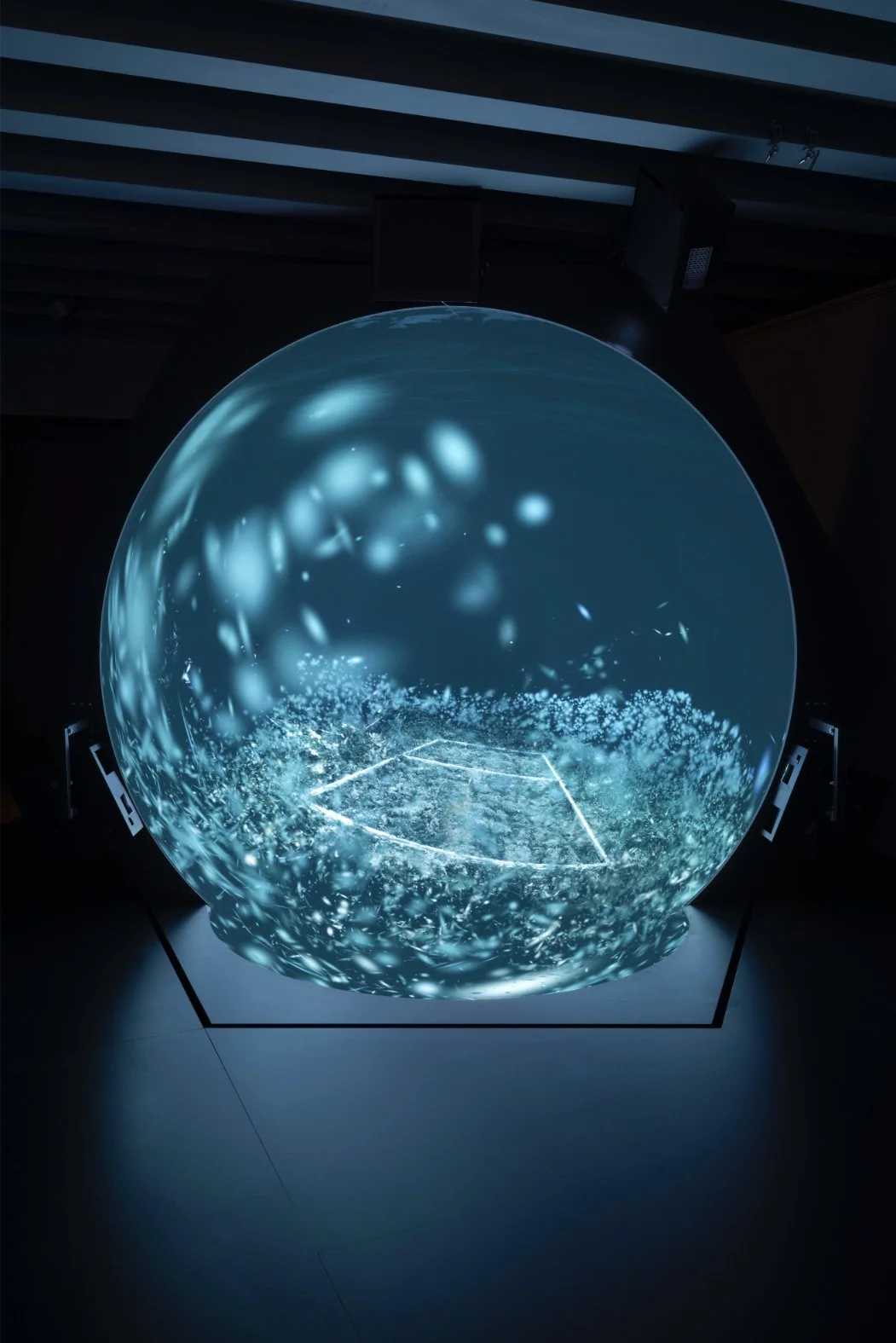
Hito Steyerl, Stills from: The Island, 2025
Single channel HD video, Cinema; Quantum noise holograms; Archaeo-logical projection spheres; Documentary videos. Duration 26 minutes (Single channel HD video); installation dimensions variable. Image CC 4.0. Courtesy of the artist, Fondazione Prada, Andrew Kreps Gallery, New York, and Esther Schipper, Berlin/Paris/Seoul
SHIMON: On a fundamental level, is the reproduction of statistical probabilities an acceptable enough definition of intelligence? And as more people adopt this corporate epistemic regime, does that both stall the production of new and differing knowledges as well as train an analytically impoverished generation of passive prompters? On the other hand, does this kind of statistical inference have more narrow and specific uses and benefits?
STEYERL: I don’t care about intelligence; it is a fundamentally racist term. I think all of the above are already happening, including people finding convincing use cases for statistical machines beyond what we know already to be useful–some kinds of modelling, process optimization, simulation, big data processing, pattern recognition, and analysis. Plus, of course, a lot of corporate-induced, top-down epistemic impoverishment and imposed bullshit.
SHIMON: I get the sense that AI excels at producing the kind of throwaway, platitudinous writing necessitated by the white-collar, professional-managerial positions the late David Graeber called ‘bullshit jobs’—which is actually a very useful study of this class of work. As AI agents act on behalf of both information producers and consumers, are we simply heading towards a full automation of bullshit jobs? And more significantly, what does that mean for the growing masses of immiserated precariat that the professional managerial class will soon be joining?
STEYERL: Yes, good point. Immiseration or retraining as massage therapists. Agentic unemployment.
SHIMON: Is employment in the plantation-industrial mode favored by modernity aspiration at all? Or even existentially survivable? Are you aware of any clearly formulated alternative modes of organizing society that prioritize health, safety, happiness, free time to be shared with loved ones, and remediating the ruins of the ecological devastation brought about by the modern modes of production?
STEYERL: Yes, there are many. How, or if, they actually are able to function is another question, or the question itself may be dysfunctional somehow.

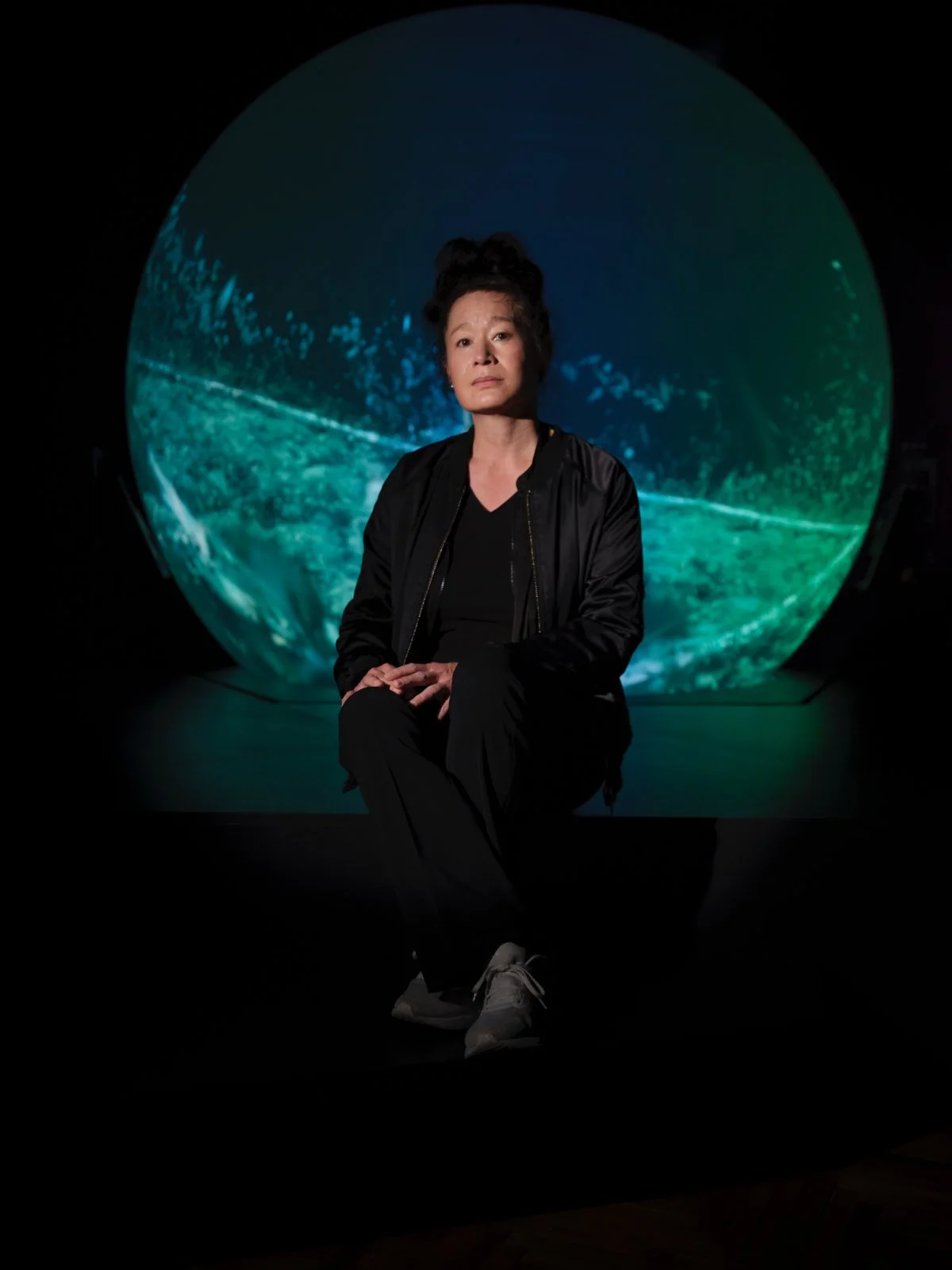
Hito Steyerl, Stills from: The Island, 2025
Single channel HD video, Cinema; Quantum noise holograms; Archaeo-logical projection spheres; Documentary videos. Duration 26 minutes (Single channel HD video); instal-lation dimensions variable. Image CC 4.0. Courtesy of the artist, Fondazione Prada, Andrew Kreps Gallery, New York, and Esther Schipper, Berlin/Paris/Seoul
SHIMON: There seems to be a limitless amount of enthusiasm and support for science fiction-themed art works these days within liberal institutions. My concern is this distracts from clear political agendas and broad coalition building. It seems to relegate alternative political imaginaries to the realm of fantasy and elite cultural institutions. Do you see any examples of science fiction works informing political action? I tend to find it more common that dystopian science fiction seems to influence future technocrats. What kind of affordances does the genre offer you in The Island?
STEYERL: From the days of Thomas More's Utopia (1516), science fiction is inseparable from political imaginaries. Very different ones too, from colonial to fascist to revolutionary. [Alexander] Bogdanov’s Red Star [The First Bolshevik Utopia (1908)] as an example of the latter. There is everything, from a moron like Lovecraft to authors like Octavia Butler or Ursula Le Guin. Darko Suvin's works give you interesting insights about this whole spectrum, I wholeheartedly recommend them to anyone.
SHIMON: In your recent Tehran summit lecture you mention the collapse of the division of labor between capitalists, politicians, and the media, citing the example of Elon Musk in the US who is all at once. There was a recourse to an open question of whether these emerging technologies are inherently fascist as well as an acknowledgement that the speed in which these technologies are evolving and acting on the world make them resistant to stable theorization. I agree to some extent while acknowledging a consistent trajectory and continuity of power relations. Have you settled on a position regarding the fascist question in regards to these technologies?
STEYERL: For now, owned and controlled mostly by different types of authoritarians. In 30, 50, 200 years, probably a completely different story.
SHIMON: In your “Roko’s basilisk: [artificial stupidities and existential risk]” essay you cite the Biosphere 2 project as an early model for both space colonization and the reality show, the latter being categorized as both an artificial performance of the socially constructed idea of natural selection and perhaps less obviously a performance of extinction—which seems to be the inevitable trajectory of our current growth-oriented economic model. You go on to call this a kind of “survival spectacle” that impacted the development of many other cultural forms and then muse on what kinds of cultural knock-on effects will result from the push towards artificial general intelligence. Since the time of writing this essay, have you tracked or anticipated any developing cultural mutations as a result of the developing AI imaginary?
STEYERL: I was always fascinated by this picture of a protest in front of Refik Anadol’s work at MoMA. Sixteen climate protesters were arrested who were condemning MoMA’s Board Chair’s ties to the fossil fuel industry. They seemed to create a human power cord to the massive LED screen. Don’t ask me how, but I think this situation has the potential to mutate culturally in ways which are hard to anticipate as of yet.
SHIMON: Here on Earth, we have infrastructural crises like automobilism, petrocapitalism, and industrial animal farming—to name a few. There seems to be an ongoing call for more planetary data collection and processing to make better-informed decisions. I’m concerned this is simply a marketing tactic by the technology sector and the becoming-planetary technocracy. I’m not convinced any of these infrastructural problems are truly suffering from a lack of data. Furthermore, the epistemic arena of data sovereignty appears susceptible to a never-ending disconsensus and calls for ever more data collection. Rather, it seems to be a question more of political will. Beyond identifying the acts of mystification and diversion from technology companies, what other epistemic refoundation should be taking place?
STEYERL: Gödel argued that the axioms of a system cannot be verified within a system. Meaning that you cannot compute the rationale for using computation, or the objectives of an economic, or basically, any system. You cannot answer the question of why you need more data by providing more data. It’s just a bad infinity of ever more data otherwise.
SHIMON: Your prolonged attention, critical interrogations, and speculative interventions seem to require an almost constant countersurveillance of this technological regime. It occurred to me while reviewing your essays and projects that there is both a lucid stream of critical explication and also some rather monstrous hyperarticulations or caricatures of these technologies. Have you given much thought to this bifurcation of approaches? I found myself wondering if your art practice is not a sublimation of the psychic maladies attending this degree of attention and countersurveillance to such horrific themes.
STEYERL: Maybe. I am not in possession of the truth or authoritative reading of my works, so if you say so, then why not? How do we test your hypothesis?