Kim Petras: Teknolust


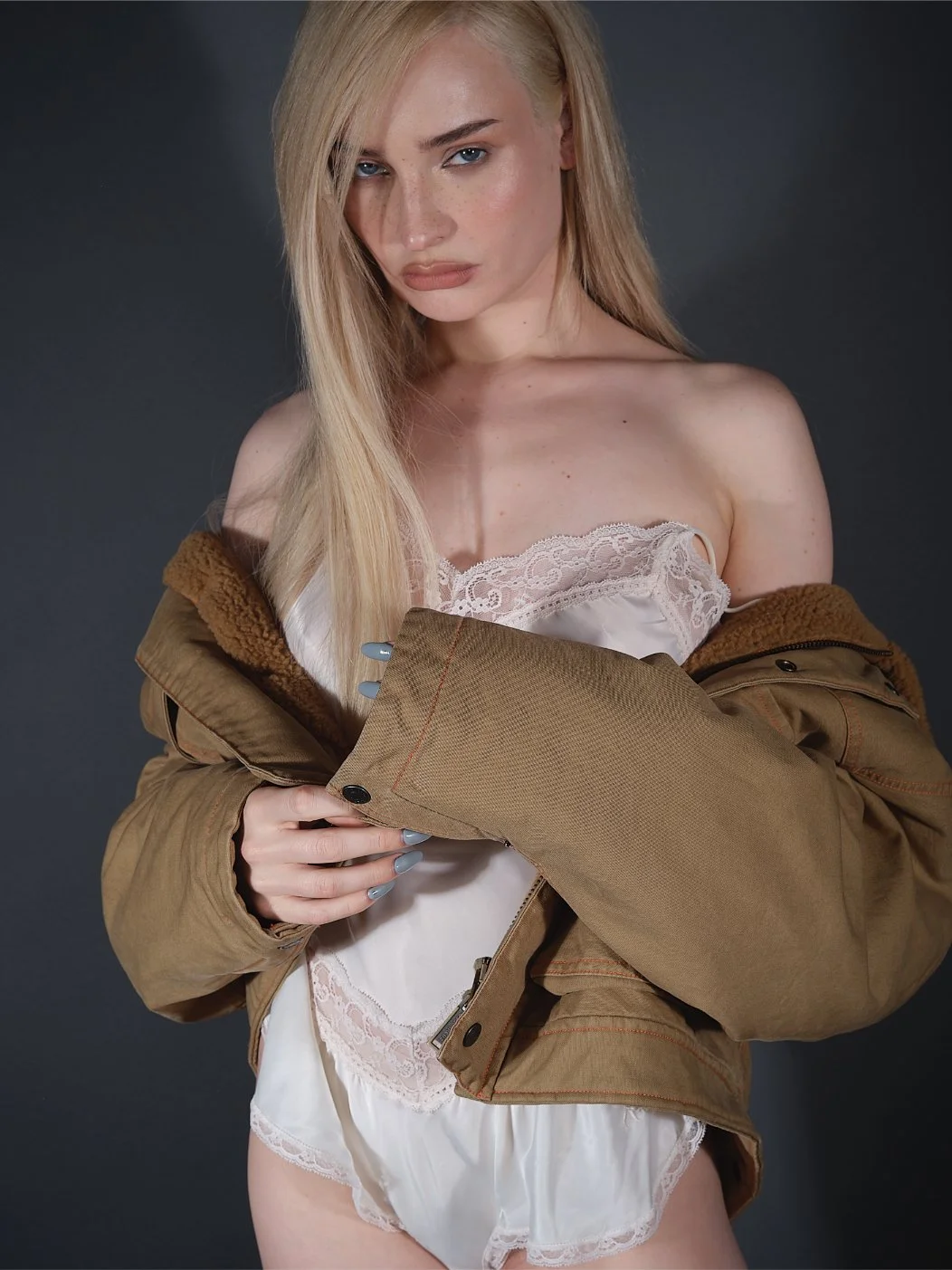
romper VINTAGE CHRISTIAN DIOR
jacket DSQUARED2


interview by Oliver Kupper
photography by Paulo Sutch


Grammy Award-winning German singer-songwriter and pop provocateur Kim Petras wields a virtuosic ability to craft  psycho-pop playgrounds populated by meticulously constructed cyborgian female identities—from the iconic blonde bombshell to the horror heroine. Her new album, Detour, functions as both a kaleidoscopic mixtape and a bold testament to her unparalleled skill in both persona building and destruction.

OLIVER KUPPER: I want to start with the music video for “I Like Ur Look,” because it really sets the tone for your new album, Detour, and the visuals around its branding. The video opens with you staring at a computer screen, which connects to the themes in our issue: living in a world where we are constantly watching and being watched.

KIM PETRAS: Well, in the video—and just in my life—the internet and screens have a really nostalgic quality for me. I associate a lot of childhood and teenage memories with being in chat rooms with my friends and things like that. I also sort of clumsily started my career on the internet, realizing that I could connect with people through it. And I’ve been making music on computers for most of my life, since I began as a bedroom artist. So in that sense, it’s been the ultimate tool for me. Aesthetically, with that video, it’s really about wanting to be a version of myself that’s more likable than I think I am. It’s about trying out different personas and personalities to impress someone you feel is better than you and has this fixed, confident identity. I’ve always felt like I needed to invent images and versions of myself in my art, because I often thought the real me was too boring. So I created these characters through my music, videos, and performances that felt more captivating than I am. Living through them makes life more bearable—it gives things a kind of logic and also offers an escape.

I’ve always had this strange desire to create characters who don’t feel human emotions as intensely, or who can just get whatever they want, or who are hypersexual and don’t care what that means. On one of my records, I even sing about killing people. It’s all part of building these exaggerated personas. With the new album, it’s interesting because I feel like all those characters finally come together and form a kind of “super version” made out of all the others. “I Like Ur Look,” in particular, feels like a kind of starting point. It reflects the idea of being moldable—being signed to people who tell you what you should be, what works, and what doesn’t. You internalize that and think, maybe if I just adjust myself and become all these different versions, I’ll be successful, or lovable, or whatever it is. That mindset really runs through the video. Even when I write songs, I’ll put on an outfit, even if I’m just in my home studio. I sort of get into character first. Everything is connected to the idea that, in my art, I constantly feel the need to become a character, which I actually love doing.
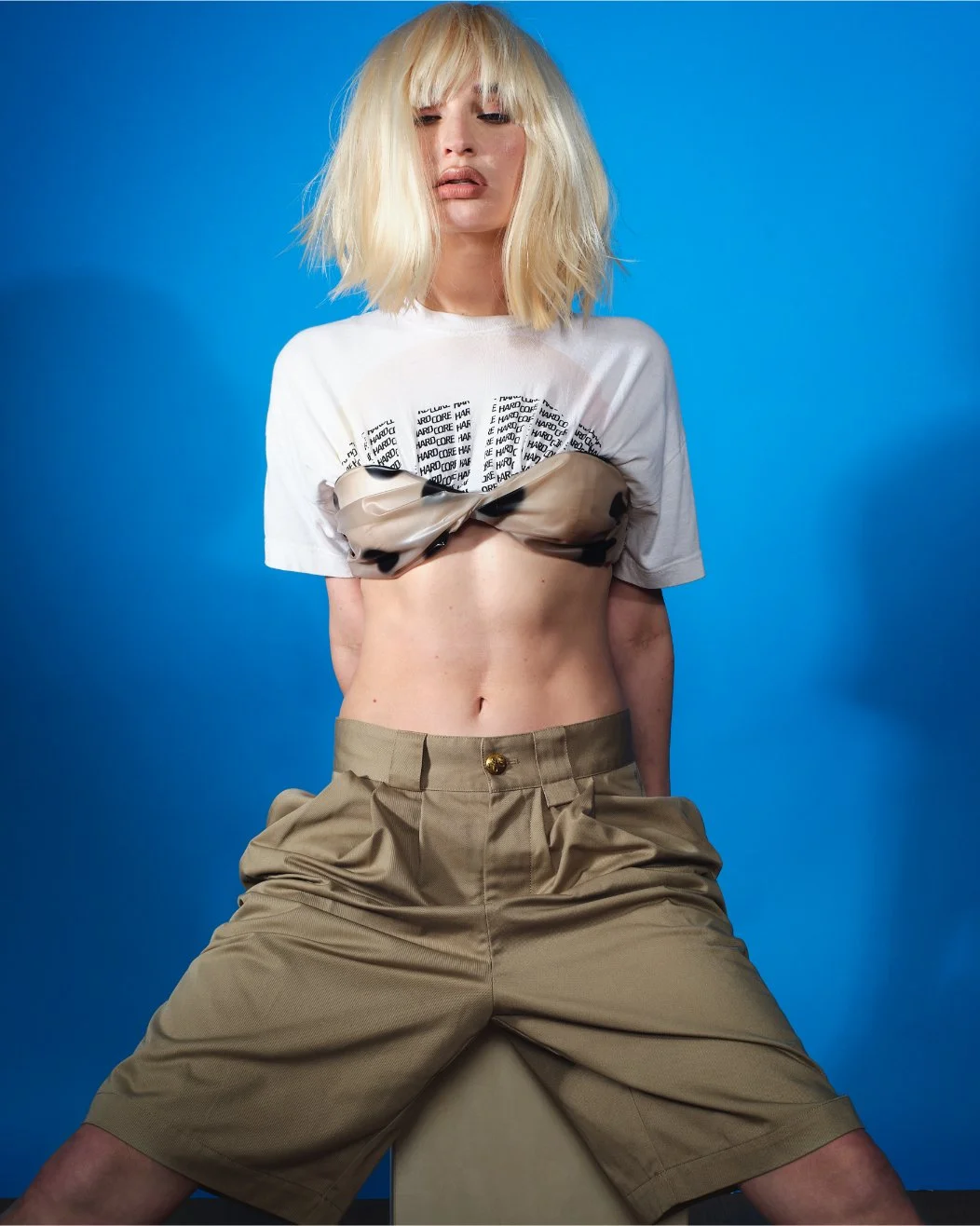
 

top MARC JACOB
Shorts WILLY CHAVARRIA


KUPPER: The internet not only mediates our lives but can also shape who we are and algorithmically influence our behavior, which is interesting when it comes to building characters.

PETRAS: When it comes to algorithms, though, I think they’re really scary. My biggest issue with them is censorship, especially right now. I almost feel like I need to stay somewhat outside of the algorithm in order to see it clearly. In the past, I was very online and deeply inside it, but over the last few years, it’s felt important to keep some distance so I can observe it without getting completely absorbed. What scares me is that algorithms tend to push everyone toward the same influences. People start seeing the same things and eventually become a kind of monoculture. These days, I’m careful not to look at it constantly, because even if you don’t want it to influence you, it does. For me, it’s important to stay outside of that system so I can stay true to what I actually like—curating my own references instead of being fed them. It’s tempting as an artist to look at what everyone agrees is cool or acceptable and just follow that, but I’ve always wanted to go in the opposite direction. I’m more interested in pushing against what’s socially acceptable and exploring the more taboo side of things.

KUPPER: I think the most exciting thing about your work is that you create this kind of pop playground that feels totally your own. Madonna touched on something similar in the ’90s—playing with the sacrilegious and the sexual, especially with projects like her Sex book —pushing ideas that went against the norms of the industry.

PETRAS: That’s definitely something I’m really interested in. I’m also a huge defender of bad taste. I think a big component of pop music is really good taste mixed with really bad taste. A lot of the stuff everyone wants to scream out at a party is usually the stupidest thing. The repetitiveness, the structure of pop, the fact that it can feel calculated—that’s all a little bit bad taste. But that’s what makes it interesting to me. I like playing with what people consider bad songwriting or “not art” and putting that into my music in just the right way. Because I think that’s what makes pop pop.

KUPPER: Do you feel like what you do leans more towards an art project or a pop musical project? Or is it somewhere in between?

PETRAS: I like to think of myself as an art project. It’s really freeing to think of yourself—your body, your image, all of it—as art. I think anyone can do that. There’s something liberating about approaching your life that way. So, at the center of everything for me is the art. That’s what I care about the most. But I’ve definitely dabbled in pop commercialism and been curious about it. I’ve tried to learn how that whole system works. I’ve even put out projects where I thought, okay, I’m going to let people in the music industry tell me what to do. And that, in itself, becomes a kind of commentary, especially when you place it in opposition to my other music. It raises the question of what happens when labels—or people who think hits are the only measure of success—start directing the artist. To me, that’s just as interesting as an artist doing exactly what they want.

For me, success is about moving people—making something that resonates, something people talk about, or something I personally feel proud of. If I write a song that I think is perfect, that feels like success. It’s about executing the vision and seeing it through. But for a lot of people, success means numbers and money. And I can’t say I’m completely anti-commercialism. I do want to play big shows. I don’t want to self-sabotage. I want to make things people can relate to, because that’s part of what music does—it puts emotions out into the world so someone else can hear it and think, I feel that too.

jacket STYLIST’S OWN
glasses l.a. EYEWORKS

At the same time, I’ve always resisted this songwriting idea you hear a lot in places like Nashville—that the most creative thing you can do is just “tell the truth.” That idea always kind of enraged me. I’ve never believed that truth-telling is the only creative principle. A lot of songwriters seem to follow that rule, but I’ve always been more interested in creating alternate universes than just describing what’s right here in front of us.

KUPPER: Speaking of alter egos, do you feel like your new album is almost like a super group of all of your alter egos together in one musical arena?

PETRAS: Yeah, I do. Especially vocally. I think you can really hear it in the way the vocals are treated—the different textures and characters that have built up over time. It feels like the repertoire of characters I’ve created over the years, all the ones I love, coming together. So, in a way, it does feel like a kind of “supergroup” of my characters. But at the same time, it’s also rebelling against every version of myself that came before it. This is probably the least perfect pop vocal record I’ve ever made. There are a lot of cracks, a lot of imperfections in it, and I’ve actually come to find that really refreshing. I’ve done the polished, perfect pop vocal many times before—that felt like chapter one of my career as an artist. It was about figuring out how to achieve that classic sound of pop perfection.

Now, it feels like the only way forward is to break that perfection and do the opposite—be raw instead. You can hear it in the mixing, the processing, everything. It’s intentionally opposing that earlier approach. In a way, it also mirrors the music world right now. Nostalgia is so huge—so much music sounds like a nostalgic ’80s song. And I love that too, I really do. I’ve enjoyed working with those sounds. But for me right now, that’s probably the least interesting thing I could be doing. This project feels like an opposing mirror to that. Nostalgia feels a bit boring to me at the moment, and I want to make something that feels like the future rather than the past.

Ironically, when you start thinking about the future, you end up looking back too. For me, that optimism about the future really lived in the early 2000s. That period has always been fascinating to me because it was such a formative time. In a funny way, that’s, in and of itself, nostalgic too—it’s just a different kind of nostalgia. The kind that sounds like people imagining the future. To create something that feels forward-looking, you often end up pulling from a different moment than everyone else. But honestly, with this album, most of the songs didn’t start from a sonic reference at all. They started with the songwriting—the lyrics, the ideas—and then the sounds came later. That’s new for me. Earlier in my career, the track and the production would come first, and then I’d write songs on top of them. This time it was the opposite: I had the songs first, and then we built the instrumentation around them. It made the whole process feel really different from anything I’ve done before.

KUPPER: Do you feel like there’s more vulnerability in that?

PETRAS: Yes. It’s a very vulnerable moment for me as an artist. My career started with this feeling of knowing that I wanted to be a performer and a songwriter, but also relying a lot on other people’s opinions about how to get there. Now, it feels like the rug has been pulled out from under that. I really don’t listen to anyone’s opinion except my own and my friends’, and I just want to make the music I actually want to listen to. Of course, people have opinions about that—like, am I ruining my career or not? But I actually find that really interesting, because I’ve always thought the downfall of an artist can be just as fascinating as their rise. So, there’s a bit of an orchestrated downfall happening here, even in the imagery. The hair is messy, the wigs are thin and synthetic—and not expensive wigs. The makeup is smudged, and there are bruises on my legs. It’s not that polished, perfect look anymore. I’ve always found the destruction of something perfect you built to be incredibly interesting.
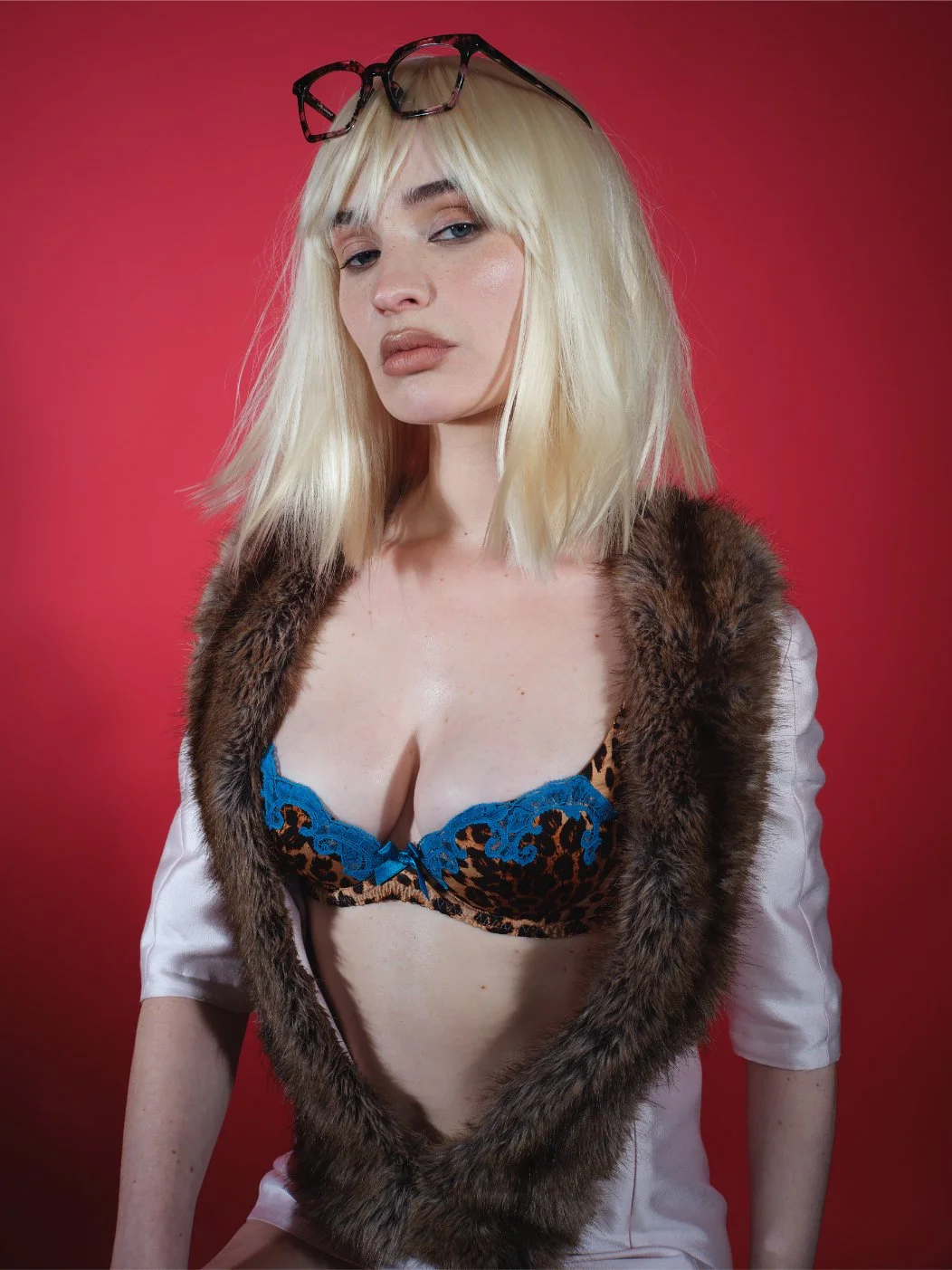
 

glasses L.A. EYEWORKS
dress FANCI CLUB
bra AGENT PROVOCATEUR


KUPPER: That’s a rare epiphany for an artist.

PETRAS: Well, the new album is called Detour because it’s about being at a fork in the road and not choosing either path. Just going off road, saying, “I actually don’t want to stick to any road. I just want to drive this pretty pop Corvette I have off a cliff and see what happens.” Maybe none of the roads get me where I want to go, and right now I just need to take a detour. I’ve always been super sure of myself, but there was a period where my compass felt broken. Being on a number-one song with someone didn’t feel like I “made it.” Winning [a Grammy] doesn’t feel like I’ve “made it.” The only thing that feels like I’ve made it is singing songs with my fans, in whatever size rooms, and creating, being in the studio constantly. That’s where I really just want to be. Also, having a life outside of my career is something I care about now, which I never did before. It feels clumsy—my life has been nonstop, just working a lot and loving the speed of pop star life.
KUPPER: How do you deal with fame and hypervisibility?

PETRAS: Well, it’s something I’ve always strived for. In the past, I thought I needed more visibility. I needed my image to be perfectly crafted. There was so much conversation about marketing, about having a brand, like “Oh, a rebrand that’s perfect can really change your career if you just package it nicely.” And honestly, that’s just so boring to me now. The idea of the perfect brand has lost its appeal. Someone being “crafted” feels inauthentic to me. I never wanted to lock myself into a box: this is my image, this is my perfect little package that I sell. Because that box can easily become a prison. I’m really interested in breaking that character. That’s more shocking to me than doubling down on branding; making it simple, digestible for everyone. Not that I don’t love personas in general, because it is an escape for me. This is also a persona. It’s not suddenly the truest, most authentic version of me. It’s still calculated. I’m consciously trying to break the character, which is also a character. The character that wants to break itself.

I also think hypervisibility now isn’t exclusive to celebrities anymore. Everyone is hypervisible, surveilled all the time. Everyone can relate. I’ve been in songwriting sessions where people say, “It’s not relatable if you sing about being famous.” And I’m like, “Well, everyone has to manage their brand and image now. Everyone.” To be successful, to be popular, to be liked—everyone builds a brand. So for me, my friends, and even my fans, there’s this urge: I just want to throw away how everyone sees me. I want to get away from it. And that’s what this album is about.

KUPPER: Do you think that the delay in releasing the album gave you a chance to think about different approaches to how you were going to release it?

PETRAS: I think it actually was a blessing in disguise. Everything started to fall into place—especially in terms of the album’s narrative. That earlier phase, even the look, feels like a version of me that wanted to conform, to become something more easily likable. But with the next release—the official single—it’s like I’m driving that image straight off a cliff. So in a way, the delay gave me the perfect jumping-off point. I also dropped a kind of super-deluxe version before the album—what we called Pretour. We put it on YouTube and SoundCloud since I’m not allowed to officially release it, so you can’t really stream it in the usual places. But those songs are basically the map of how I got to the album. I actually think it’s a really cool way into the project: giving away the deluxe before the album even comes out. It lets people hear the extra songs that led me here, and gives you a deeper way inside the world.
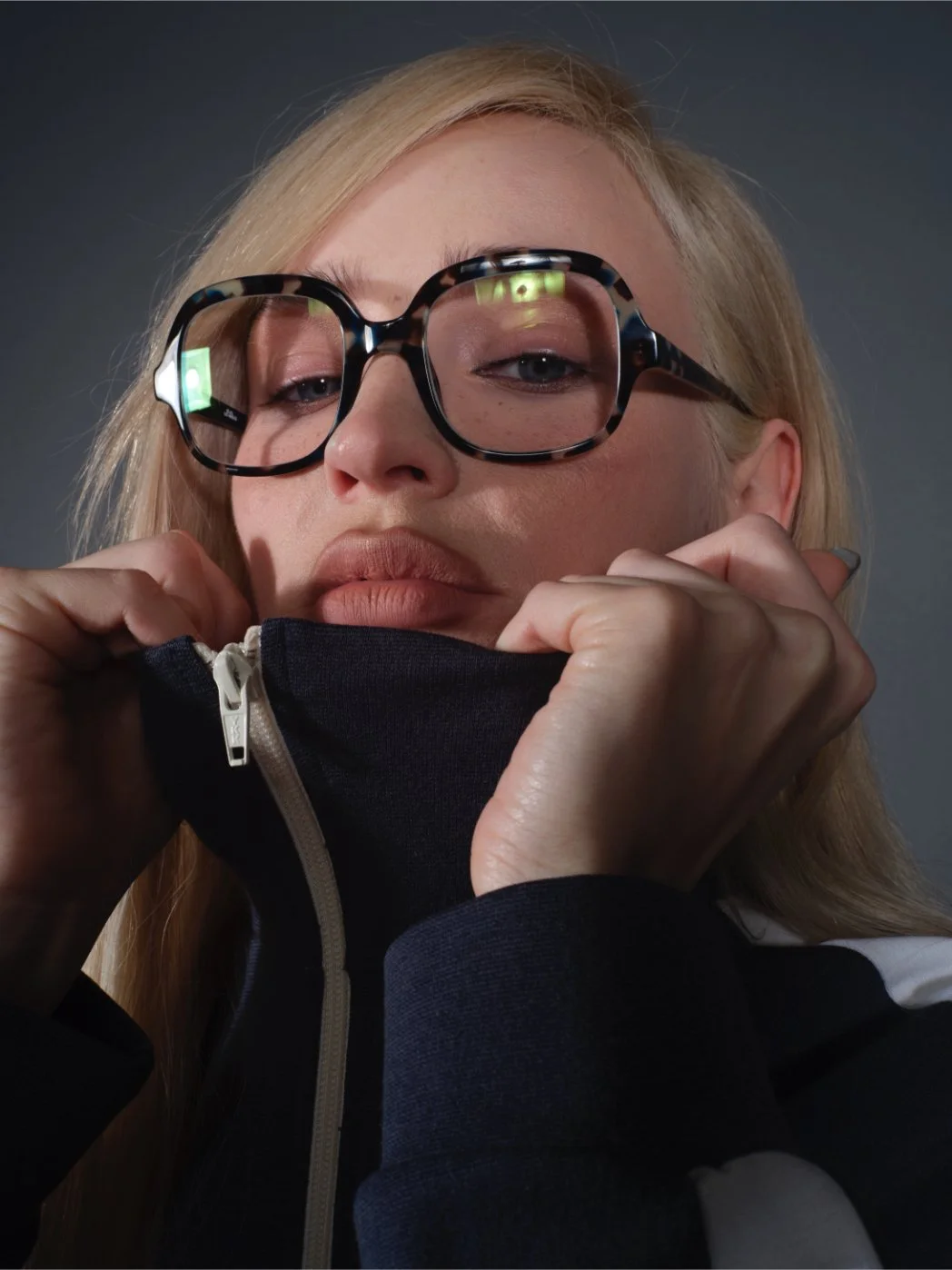
 

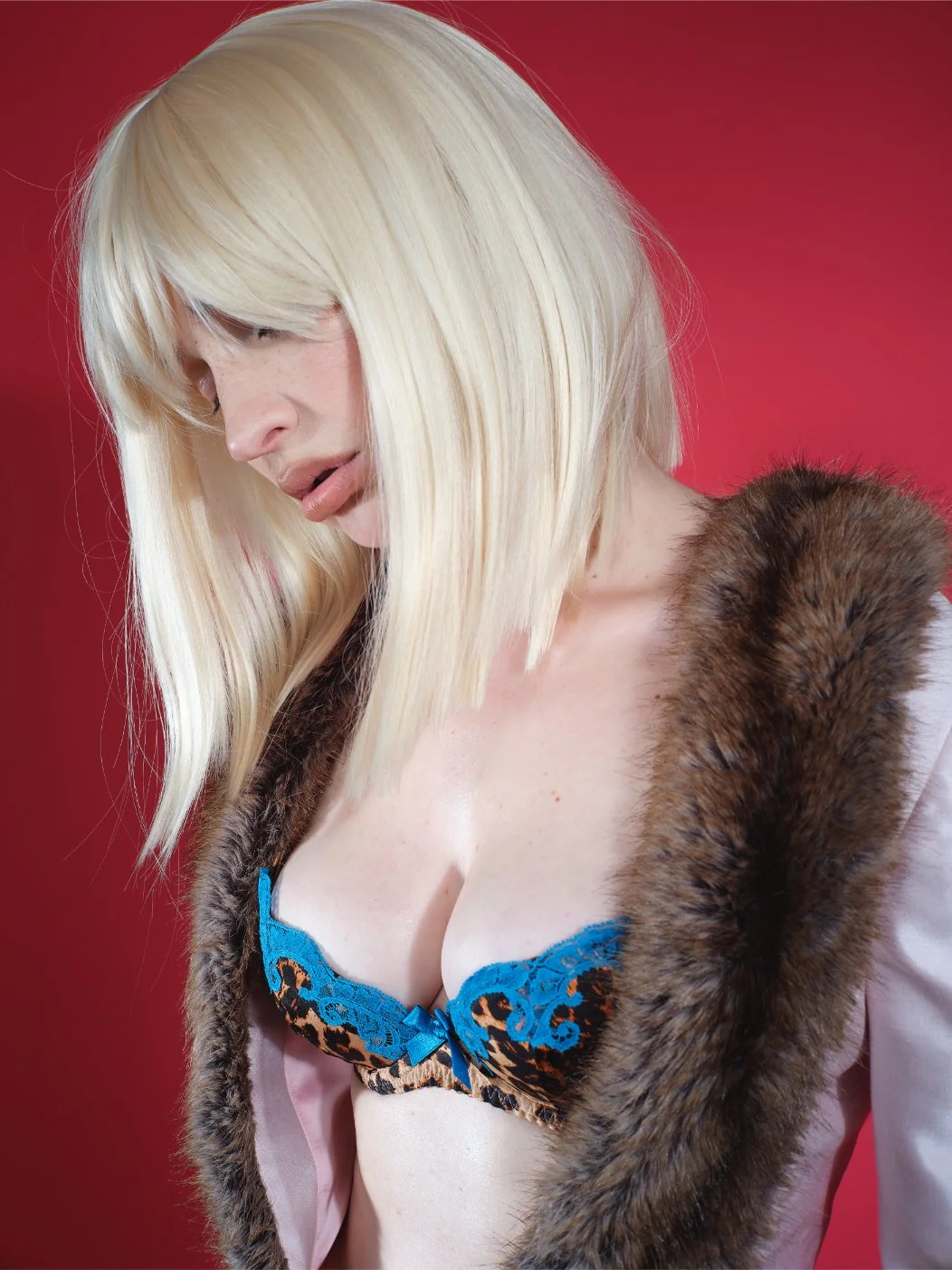
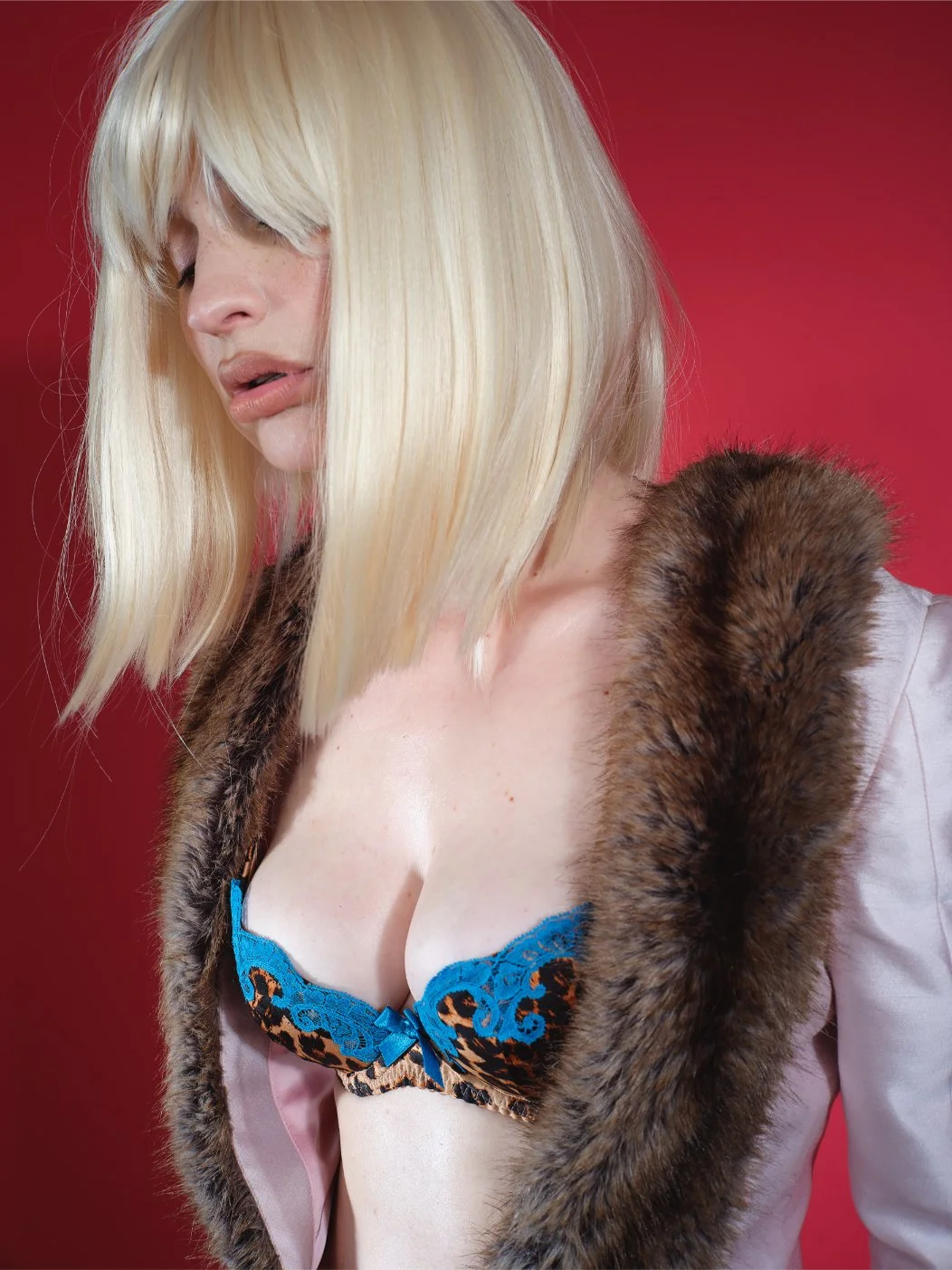
jacket STYLIST’S OWN

glasses L.A. EYEWORKS


KUPPER: Your song “Pop Sound” has that line: “Made for the masses, made for the money / Made for the thrill, factory girl / It’s an illusion, it’s an oasis.” It really encapsulates how a pop star exists within the machinery of the music industry.

PETRAS: To a certain extent, that is me—how my career started was very calculated. I’m going to create this character because she’s marketable, and we’re going to sell her. It feels really cathartic that the song goes there—pulls back the curtain and just says it outright: I am a product. I made myself a product, and now I have to deal with the consequences of that. At the same time, it’s also kind of a love song to music—to the craft itself. That line: “all week I tweak for your sound.” It’s about the discipline, the obsession, everything that goes into building the perfect pop product, really laboring over it. But with me, there’s always also the trans layer to it—having literally taken control of my body, and people projecting onto that, saying you’ve gone against nature, you’re manufactured, you’re fake. So the song touches on that too—on pop, on perception, on what it means to make decisions about your own body.

KUPPER: Can we talk a bit about these personas you’ve created across albums—from the horror-pop era to the blonde bombshell? Which ones do you feel most connected to? Who feels the most distant from who you really are? And who were the hardest to step into—where did they come from?

PETRAS: I think they’re all coming from different places. But honestly, none of them feel that distant. My whole music career, and why I’m an artist at all, is because I needed to invent characters in order to be myself, to express myself. Early on, I felt like I wasn’t interesting enough. I wanted to be more confident than I am, more expressive. I’m actually very shy, and I don’t always feel like I can be those things in real life. So creating a character—someone who can go on stage for me—unlocks that flow state. And that’s what I’m always trying to reach, because just thinking and being can feel overwhelming.

So, all these characters come out of that desire. If I put it behind an image, a mask, something defined, then I can perform it. I can access what makes me feel alive through that. First, there was the blonde bombshell—bratty, “I get whatever I want,” that whole thing. That early phase was very much about this exaggerated idea of the German girl going to America: vapid, blonde, hot, rich, skinny, and that’s all she cares about. That was iteration one.
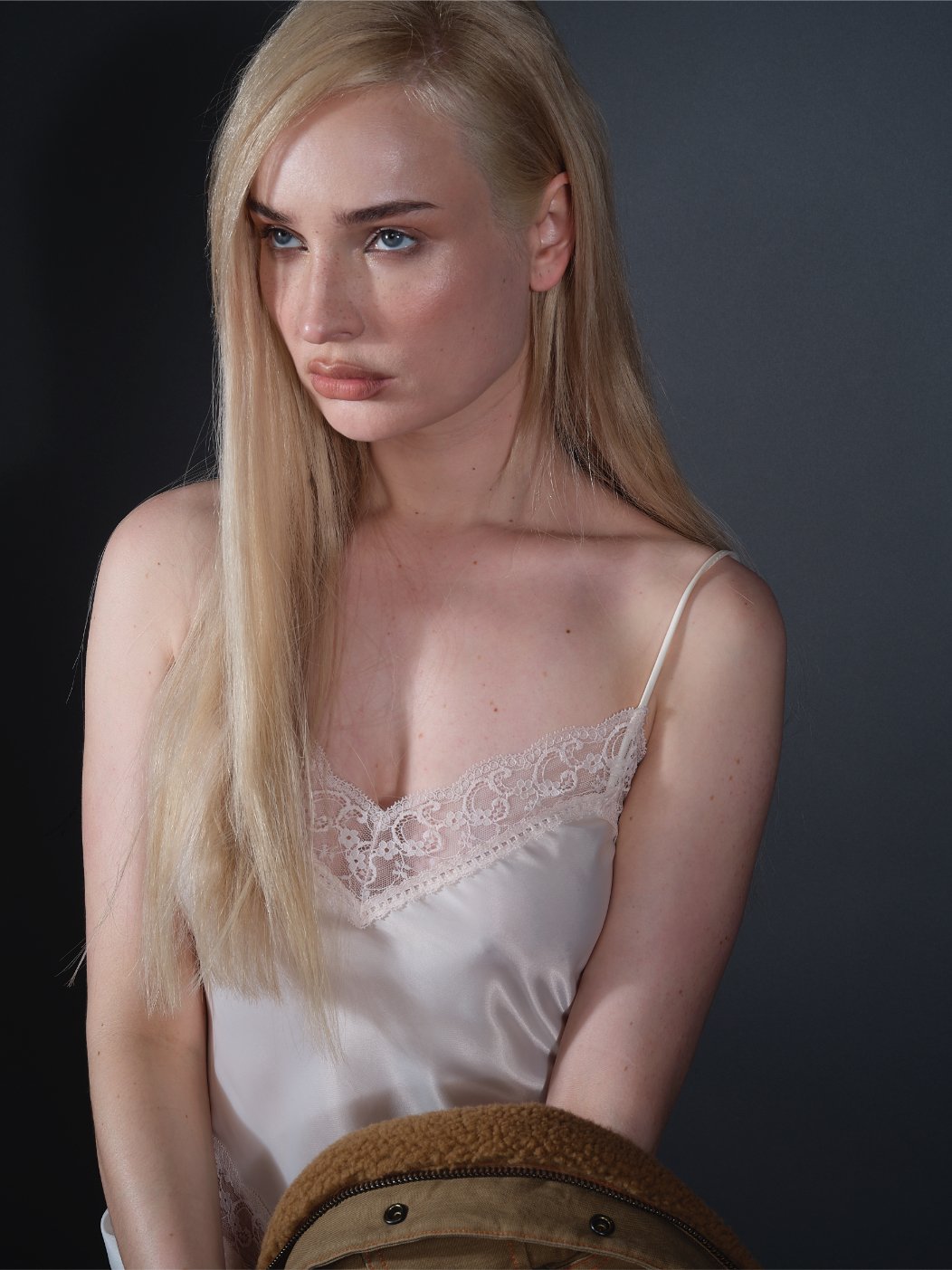
 

romper VINTAGE CHRISTIAN DIOR


KUPPER: When did things get dark?

PETRAS: That vapid blonde character developed a shadow side—like, what if underneath that, she’s actually dark? What if she’s killing for power, for fame? What’s behind the mask? After that, it shifted into something more exposed—clarity—where it’s like, okay, this is my actual inner world. Those other things are characters, but now I’m talking about real feelings. And then, that opens into hypersexuality, which was a whole other break. Before that, sex wasn’t really central to the work. But stepping into that space—being able to say whatever I want, to perform this totally sexually free version of myself—felt like breaking the character again. Even though that version isn’t fully me either.

In reality, I come from a more complicated place: a religious upbringing, a lot of family trauma, being told early on that my transition was something perverse. I have these very vivid memories of being questioned, of people trying to define me in that way. So that inevitably fed into exploring sexuality in the music. I think a lot of people saw that shift as breaking the “pop princess” image, which I’ve always been interested in doing. But it also gets you labeled really quickly—and those labels stick. It’s strange how, in some ways, the world still feels very sanitized, almost like the 1950s, in terms of what’s acceptable. There’s a line, and it’s very clear when you cross it. So, that era was kind of like, let’s just break everything. Because I admire people who are sexually free, who can just be whatever they want. I find that inspiring. But at the same time, there’s still this idea that being open about sexuality is somehow harmful or corrupting, especially for younger people.

When I think about my own childhood, it was just about singing ridiculous pop songs with my friends—it was fun, it didn’t define my life. So, it’s interesting that this fear still exists, especially when you think about how long this conversation has been going on. At the end of the day, it felt worth exploring. But it’s also not that serious—it’s not some grand political statement. It’s just fun.
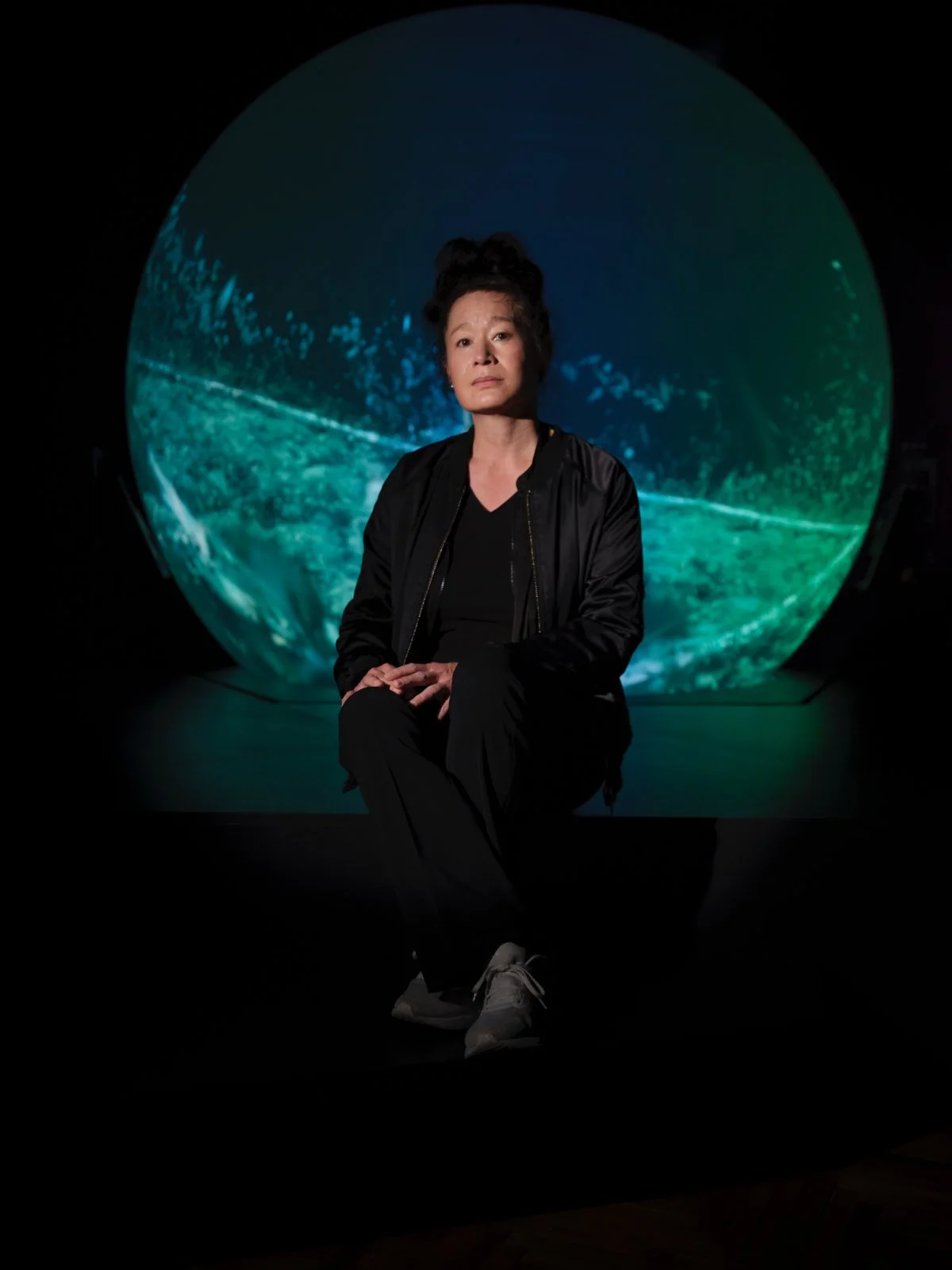
Hito Steyerl: The Island


interview by Perry Shimon
photography by Marta Marinott

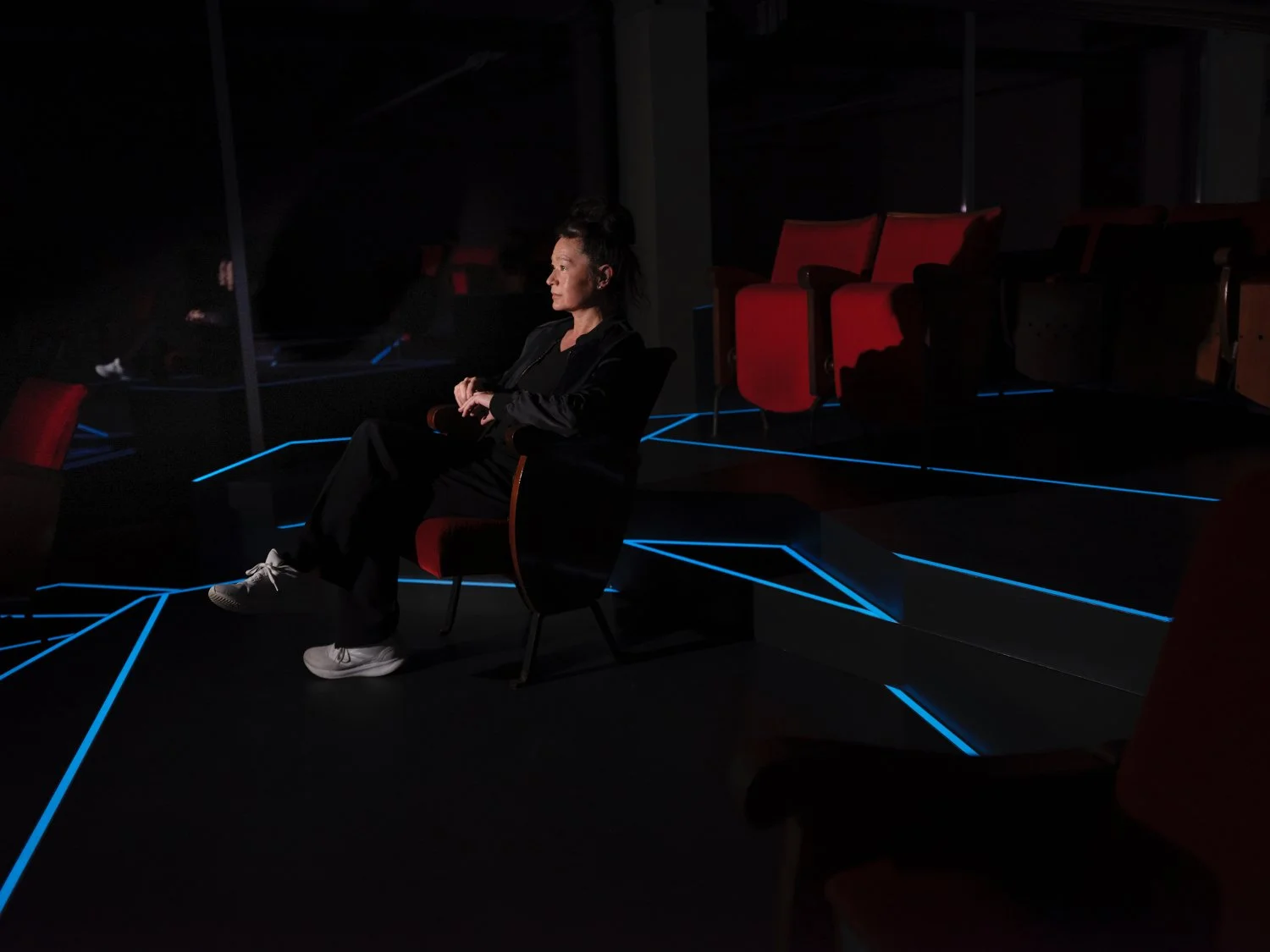
Artist and essayist Hito Steyerl looks at how images move—who controls them, who gets seen, and under what conditions. In books like Duty Free Art and The Wretched of the Screen, she follows the image as it slips between circulation and control. Her exhibition The Island, which was on view at Osservatorio Fondazione Prada, Milan, continues that thread, building a space where images feel unstable—never just representations, but active agents in systems of surveillance, extraction, and power.

PERRY SHIMON: It seems to me that AI is not so much an epochal new technology but rather a continuation of Silicon Valley monopoly capitalism and another wave of expropriating the knowledge commons so as to manipulate behavior and accumulate maximum profits. Is it possible to have any technological developments under capitalism that are not used against people and the environment in order to maximize shareholder profits and unlimited growth?

HITO STEYERL: Let’s set up a double-blind experiment; one situated within capitalism, the other outside. Then we will know for sure. The issue is that this is currently impractical for us. So, for now, following Neurath’s boat paradigm is probably a viable experimental strategy. Neurath’s boat strategy: One needs to fix and gradually rebuild the boat plank by plank while out on sea and stay afloat at the same time. I’d prefer to just get another boat. But for now, the dry dock is out of reach. Another angle would be to define the current postcapitalist return to state defense monopoly capitalism as already different from capitalism. An authoritarian version of Stamokap (State monopoly capitalism), something which is no longer capitalist and no longer keeps up any pretense of competition and free market. Perhaps we may end up missing trad neoliberal capitalism as something benign in comparison.

SHIMON: Your written essays and lectures tend to be very lucid and cut through the marketing hype that occludes the underlying financial motivations of these tech companies and contemporary art speculators. Your installations render these same issues in complex technospatial assemblages. I suppose at the level of accessibility, the writing and lectures are more durable and are able to circulate further. What are some of the things about the installation form that you find attractive? How do they show up in The Island?

STEYERL: It’s just two different forms. I think, coming from cinema, that experiencing it in one specific place and time with other people is a powerful format; it still activates some of the collective viewing it was originally based on. The expanded cinematic form doesn´t circulate well, but has other merits. For example, forcing people out into shared IRL space, awkward encounters in elevators, unpredictable stuff happening in the subway, etc.

SHIMON: Identifying counterexamples to platform capitalism online, the best example I’m aware of is Wikipedia: a massively co-produced knowledge commons run mostly by volunteers and providing a beloved, widely used resource to the world while operating within structures of transparency and accountability. Is this a model for search, social, mapping, and LLMs? Can you see any movements or strategies for implementing this? Perhaps in a particular region like the EU? Do you have any thoughts on Switzerland’s Apertus AI? Is this a step in that direction?

STEYERL: Definitely, one should try to have public models and run them as data commons or cooperatively. There will be new problems for sure, but at least they will be new. Don’t overestimate Wikipedia, though. It is full of spooks, especially in smaller states who eagerly uphold nationalist narratives. Paid bots—it feels like the war in the Marx Brothers’ Duck Soup between the fictional countries Freedonia and Sylvania.

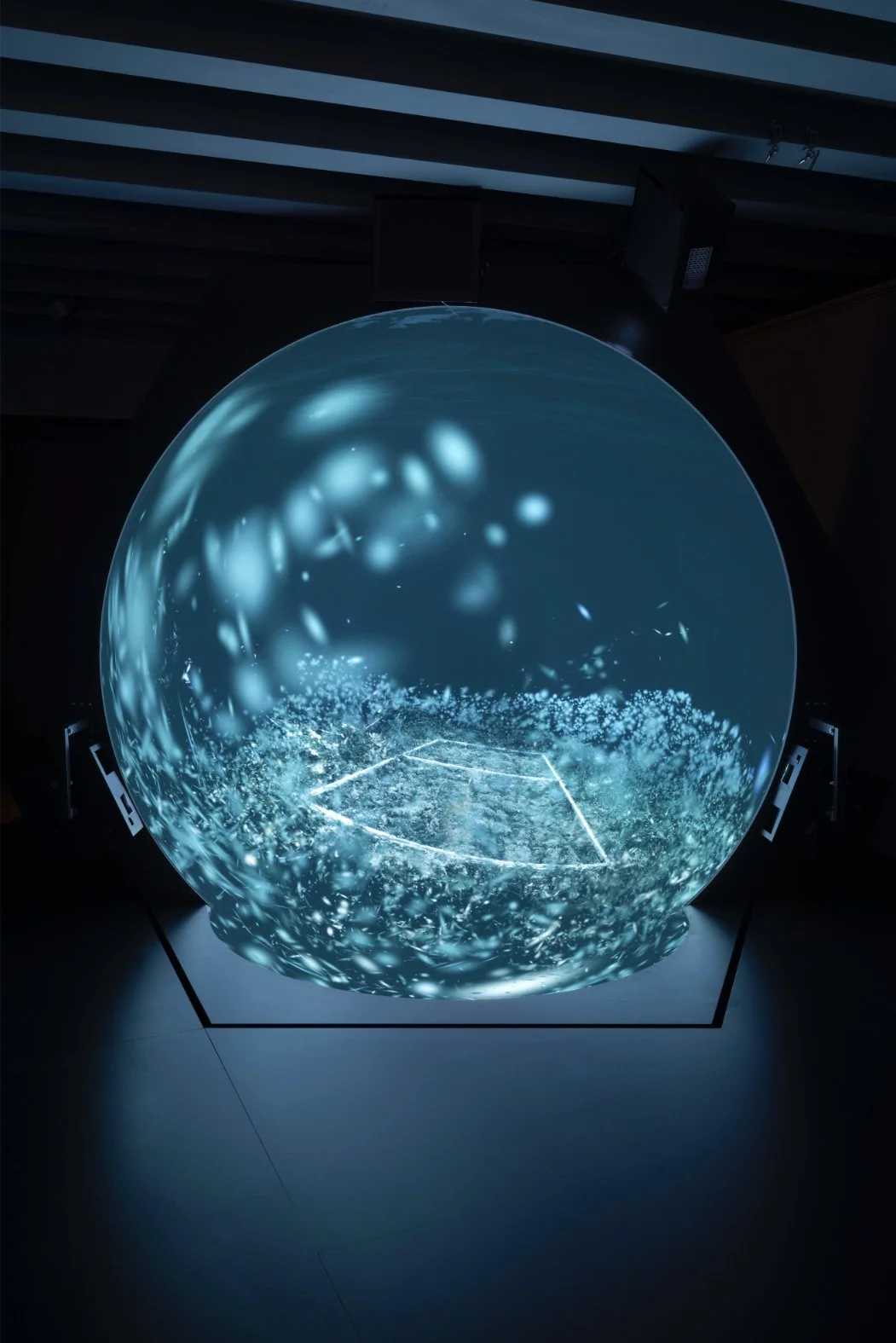
Hito Steyerl, Stills from: The Island, 2025
Single channel HD video, Cinema; Quantum noise holograms; Archaeo-logical projection spheres; Documentary videos. Duration 26 minutes (Single channel HD video); installation dimensions variable. Image CC 4.0. Courtesy of the artist, Fondazione Prada, Andrew Kreps Gallery, New York, and Esther Schipper, Berlin/Paris/Seoul

SHIMON: On a fundamental level, is the reproduction of statistical probabilities an acceptable enough definition of intelligence? And as more people adopt this corporate epistemic regime, does that both stall the production of new and differing knowledges as well as train an analytically impoverished generation of passive prompters? On the other hand, does this kind of statistical inference have more narrow and specific uses and benefits?

STEYERL: I don’t care about intelligence; it is a fundamentally racist term. I think all of the above are already happening, including people finding convincing use cases for statistical machines beyond what we know already to be useful–some kinds of modelling, process optimization, simulation, big data processing, pattern recognition, and analysis. Plus, of course, a lot of corporate-induced, top-down epistemic impoverishment and imposed bullshit.

SHIMON: I get the sense that AI excels at producing the kind of throwaway, platitudinous writing necessitated by the white-collar, professional-managerial positions the late David Graeber called ‘bullshit jobs’—which is actually a very useful study of this class of work. As AI agents act on behalf of both information producers and consumers, are we simply heading towards a full automation of bullshit jobs? And more significantly, what does that mean for the growing masses of immiserated precariat that the professional managerial class will soon be joining?

STEYERL: Yes, good point. Immiseration or retraining as massage therapists. Agentic unemployment.

SHIMON: Is employment in the plantation-industrial mode favored by modernity aspiration at all? Or even existentially survivable? Are you aware of any clearly formulated alternative modes of organizing society that prioritize health, safety, happiness, free time to be shared with loved ones, and remediating the ruins of the ecological devastation brought about by the modern modes of production?

STEYERL: Yes, there are many. How, or if, they actually are able to function is another question, or the question itself may be dysfunctional somehow.

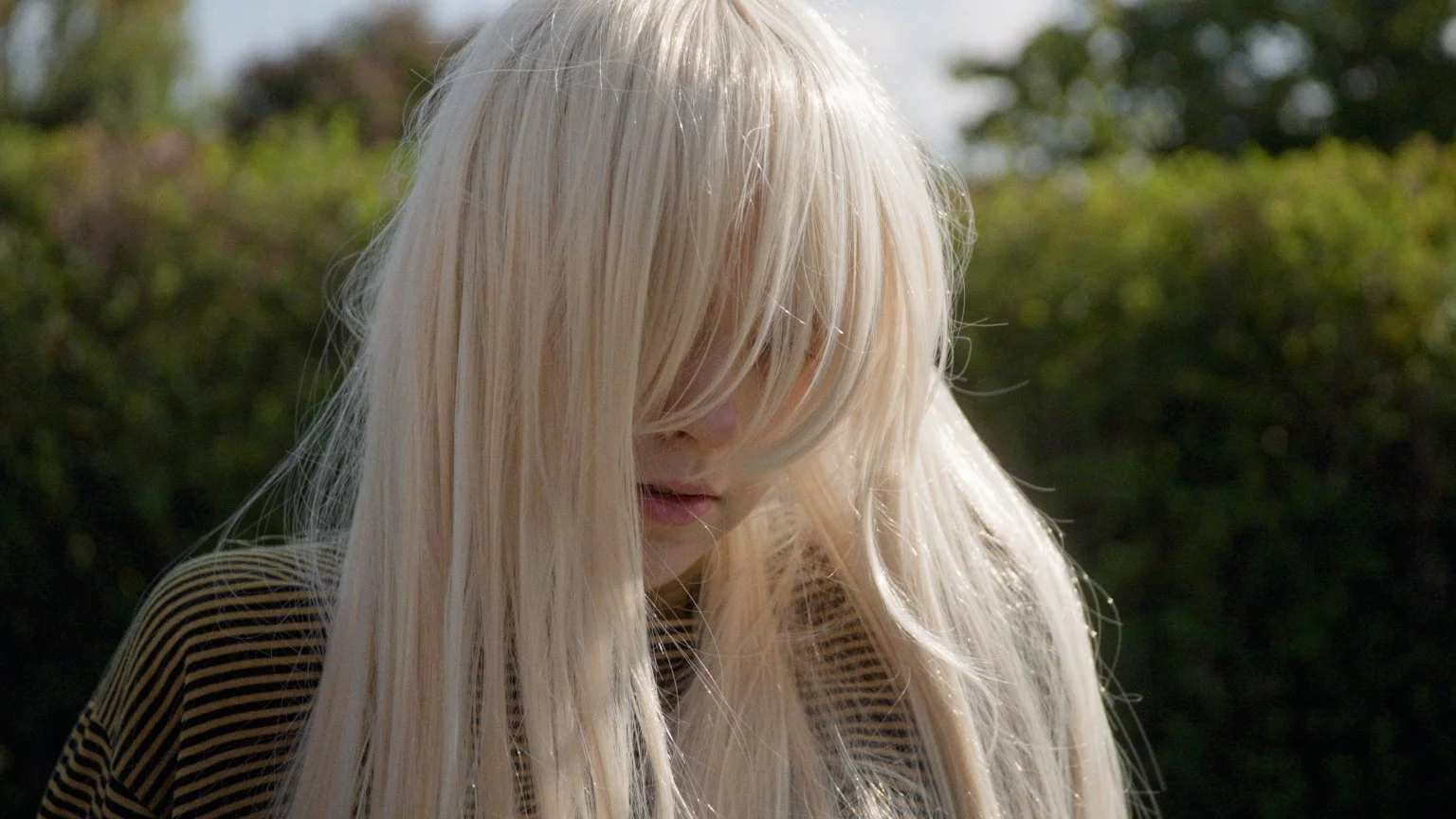
Hito Steyerl, Stills from: The Island, 2025
Single channel HD video, Cinema; Quantum noise holograms; Archaeo-logical projection spheres; Documentary videos. Duration 26 minutes (Single channel HD video); instal-lation dimensions variable. Image CC 4.0. Courtesy of the artist, Fondazione Prada, Andrew Kreps Gallery, New York, and Esther Schipper, Berlin/Paris/Seoul

SHIMON: There seems to be a limitless amount of enthusiasm and support for science fiction-themed art works these days within liberal institutions. My concern is this distracts from clear political agendas and broad coalition building. It seems to relegate alternative political imaginaries to the realm of fantasy and elite cultural institutions. Do you see any examples of science fiction works informing political action? I tend to find it more common that dystopian science fiction seems to influence future technocrats. What kind of affordances does the genre offer you in The Island?

STEYERL: From the days of Thomas More's Utopia (1516), science fiction is inseparable from political imaginaries. Very different ones too, from colonial to fascist to revolutionary. [Alexander] Bogdanov’s Red Star [The First Bolshevik Utopia (1908)] as an example of the latter. There is everything, from a moron like Lovecraft to authors like Octavia Butler or Ursula Le Guin. Darko Suvin's works give you interesting insights about this whole spectrum, I wholeheartedly recommend them to anyone.

SHIMON: In your recent Tehran summit lecture you mention the collapse of the division of labor between capitalists, politicians, and the media, citing the example of Elon Musk in the US who is all at once. There was a recourse to an open question of whether these emerging technologies are inherently fascist as well as an acknowledgement that the speed in which these technologies are evolving and acting on the world make them resistant to stable theorization. I agree to some extent while acknowledging a consistent trajectory and continuity of power relations. Have you settled on a position regarding the fascist question in regards to these technologies?

STEYERL: For now, owned and controlled mostly by different types of authoritarians. In 30, 50, 200 years, probably a completely different story.

SHIMON: In your “Roko’s basilisk: [artificial stupidities and existential risk]” essay you cite the Biosphere 2 project as an early model for both space colonization and the reality show, the latter being categorized as both an artificial performance of the socially constructed idea of natural selection and perhaps less obviously a performance of extinction—which seems to be the inevitable trajectory of our current growth-oriented economic model. You go on to call this a kind of “survival spectacle” that impacted the development of many other cultural forms and then muse on what kinds of cultural knock-on effects will result from the push towards artificial general intelligence. Since the time of writing this essay, have you tracked or anticipated any developing cultural mutations as a result of the developing AI imaginary?

STEYERL: I was always fascinated by this picture of a protest in front of Refik Anadol’s work at MoMA. Sixteen climate protesters were arrested who were condemning MoMA’s Board Chair’s ties to the fossil fuel industry. They seemed to create a human power cord to the massive LED screen. Don’t ask me how, but I think this situation has the potential to mutate culturally in ways which are hard to anticipate as of yet.

SHIMON: Here on Earth, we have infrastructural crises like automobilism, petrocapitalism, and industrial animal farming—to name a few. There seems to be an ongoing call for more planetary data collection and processing to make better-informed decisions. I’m concerned this is simply a marketing tactic by the technology sector and the becoming-planetary technocracy. I’m not convinced any of these infrastructural problems are truly suffering from a lack of data. Furthermore, the epistemic arena of data sovereignty appears susceptible to a never-ending disconsensus and calls for ever more data collection. Rather, it seems to be a question more of political will. Beyond identifying the acts of mystification and diversion from technology companies, what other epistemic refoundation should be taking place?

STEYERL: Gödel argued that the axioms of a system cannot be verified within a system. Meaning that you cannot compute the rationale for using computation, or the objectives of an economic, or basically, any system. You cannot answer the question of why you need more data by providing more data. It’s just a bad infinity of ever more data otherwise.

SHIMON: Your prolonged attention, critical interrogations, and speculative interventions seem to require an almost constant countersurveillance of this technological regime. It occurred to me while reviewing your essays and projects that there is both a lucid stream of critical explication and also some rather monstrous hyperarticulations or caricatures of these technologies. Have you given much thought to this bifurcation of approaches? I found myself wondering if your art practice is not a sublimation of the psychic maladies attending this degree of attention and countersurveillance to such horrific themes.

STEYERL: Maybe. I am not in possession of the truth or authoritative reading of my works, so if you say so, then why not? How do we test your hypothesis?


An Interview of Hart Lëkshina

interview by Anna Frost

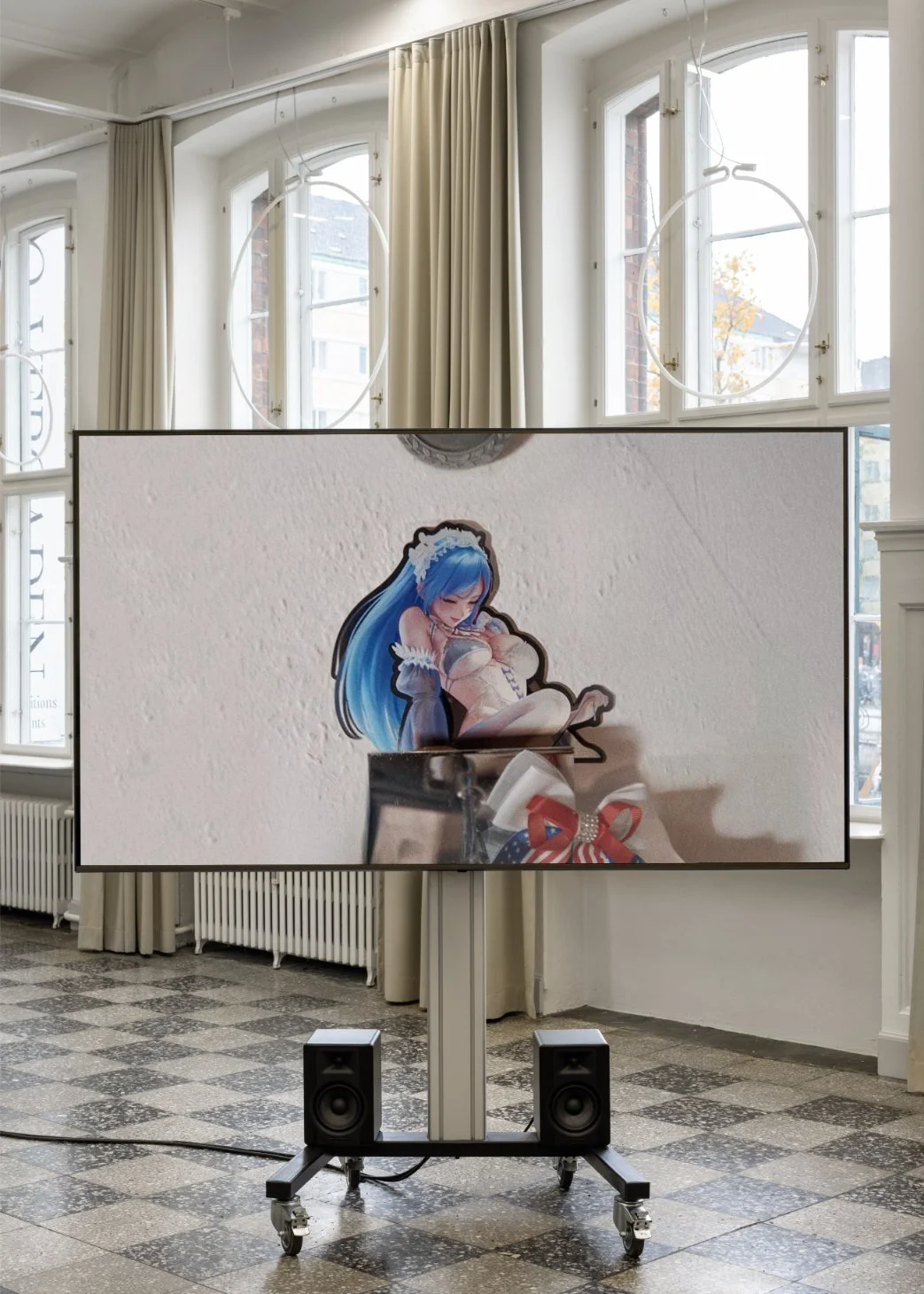
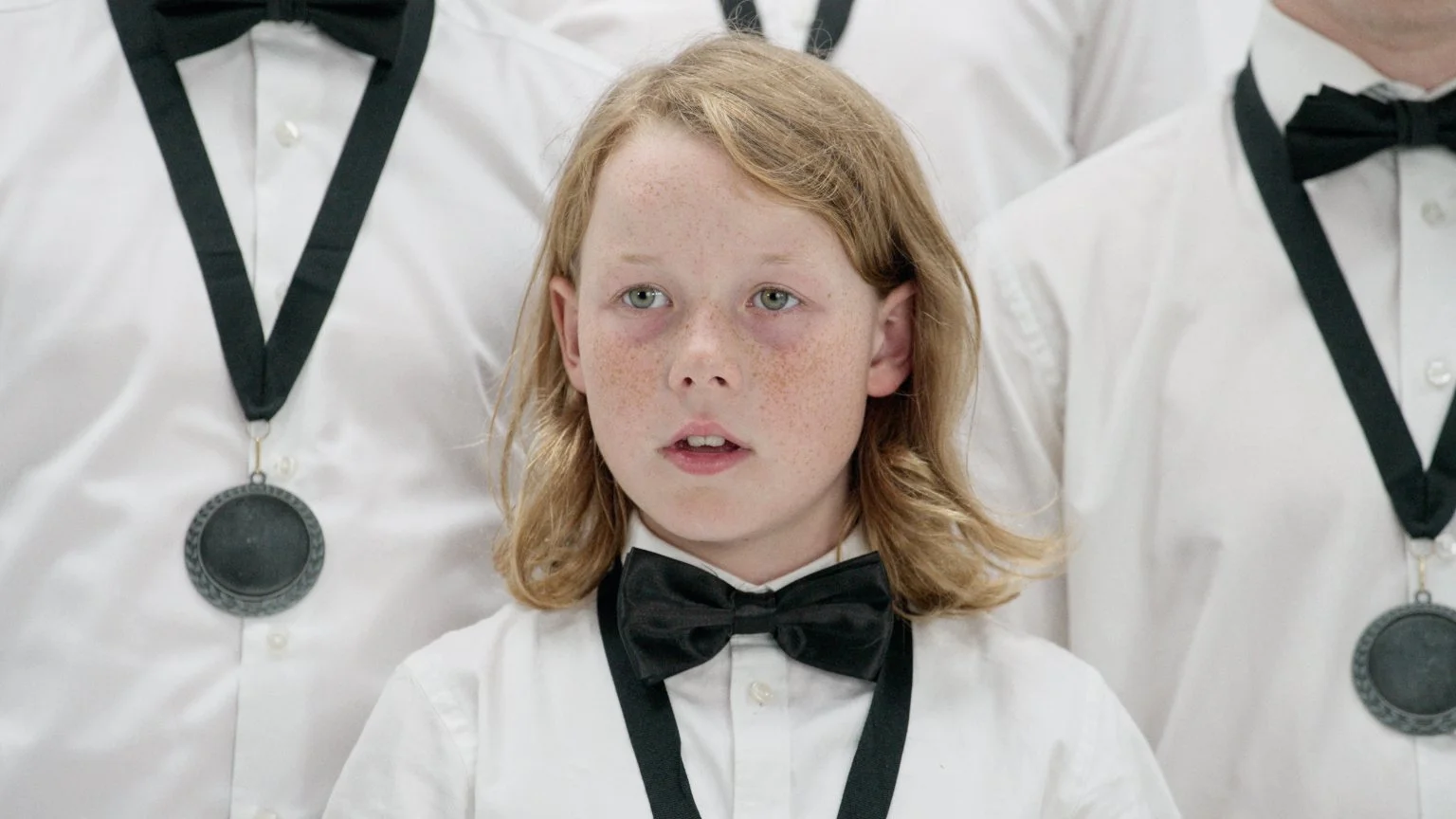
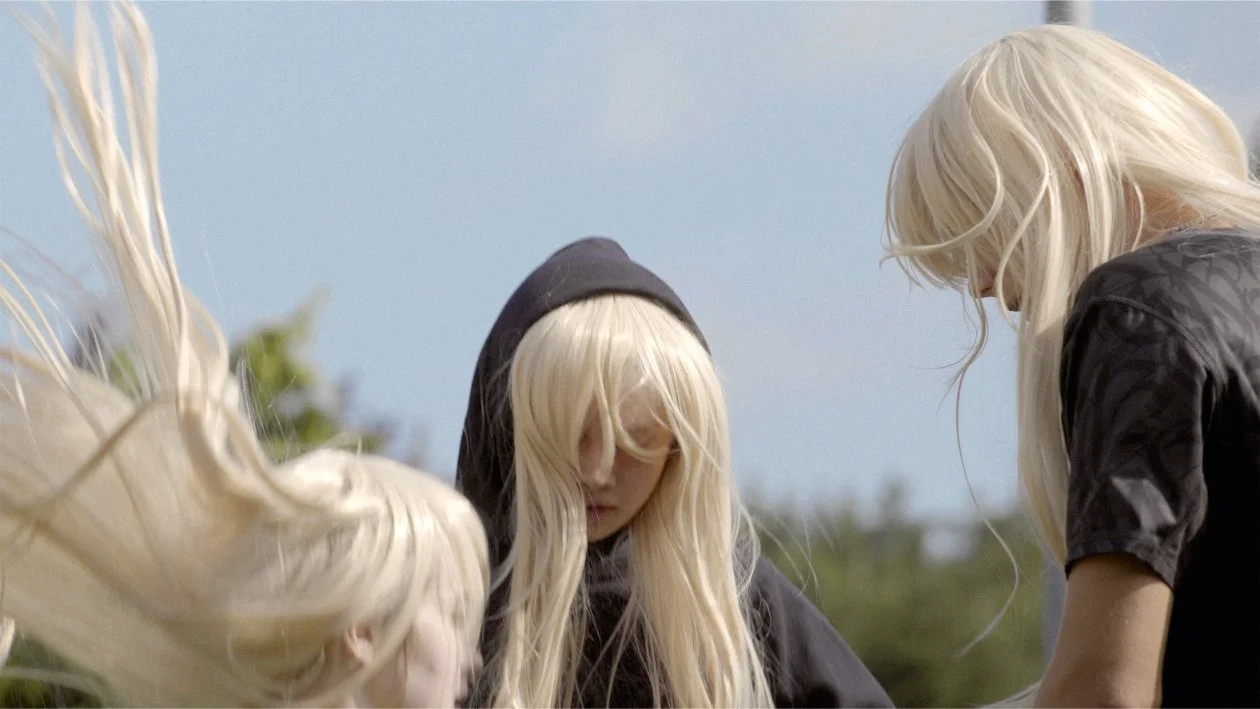
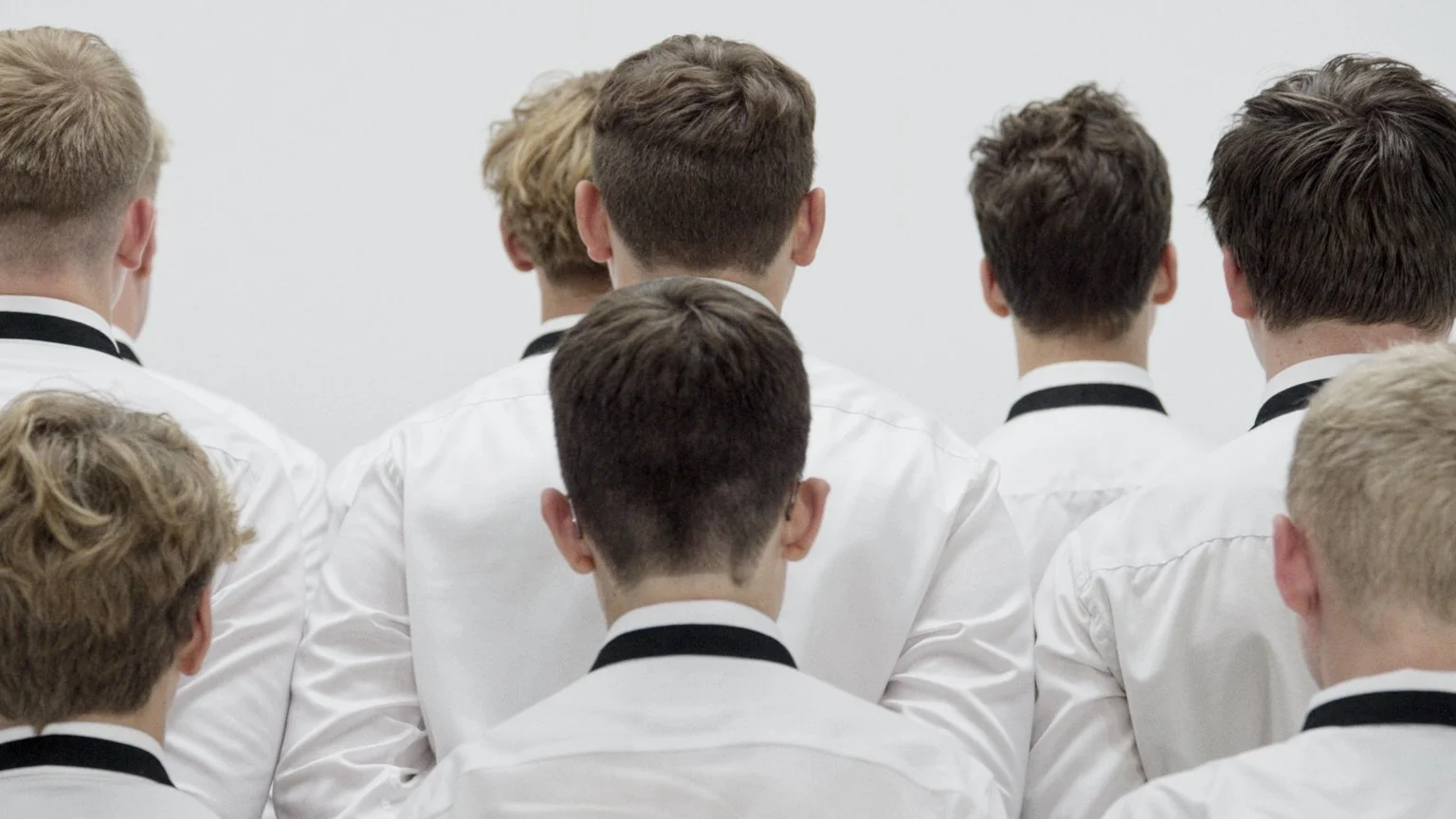
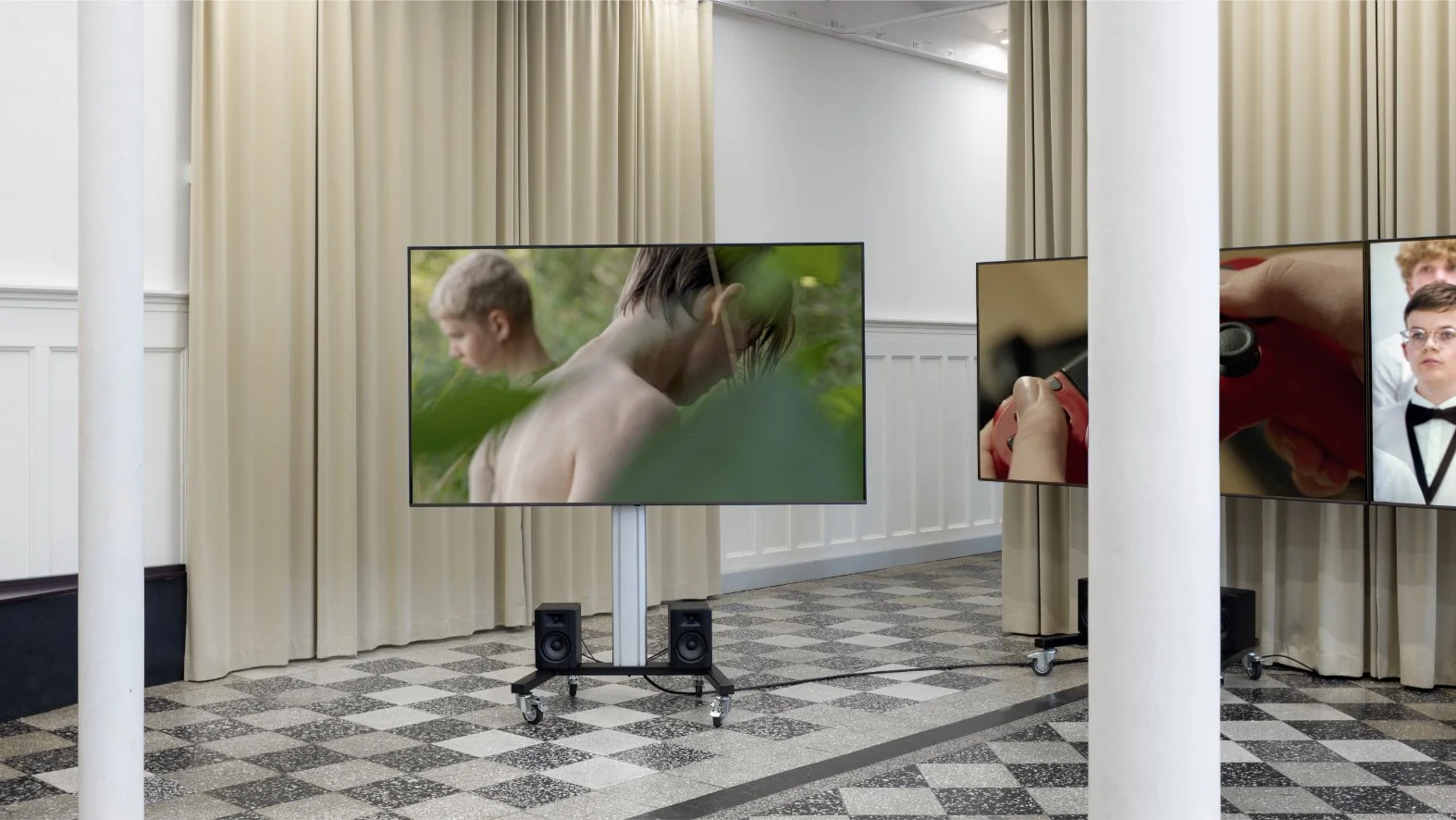
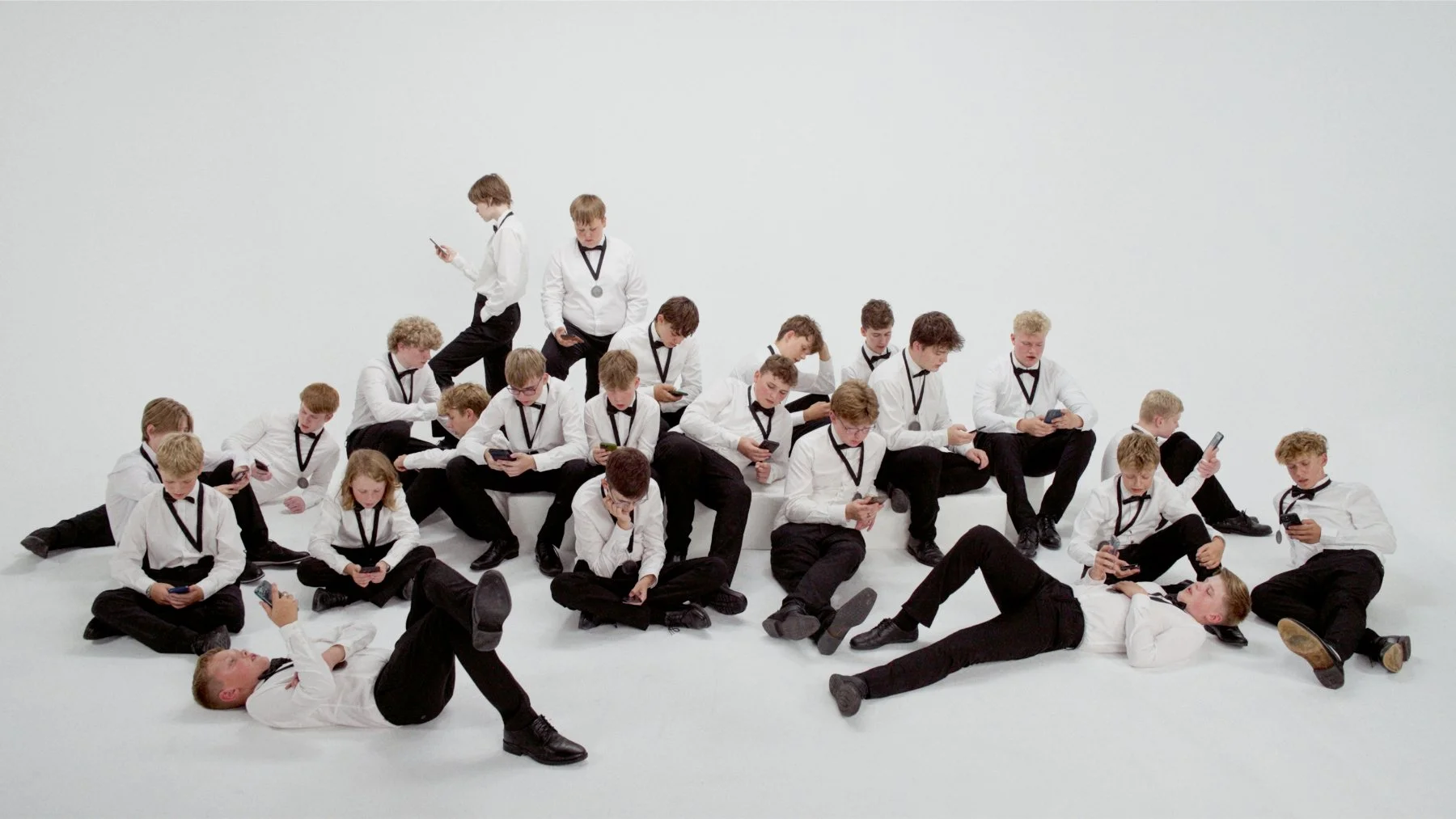
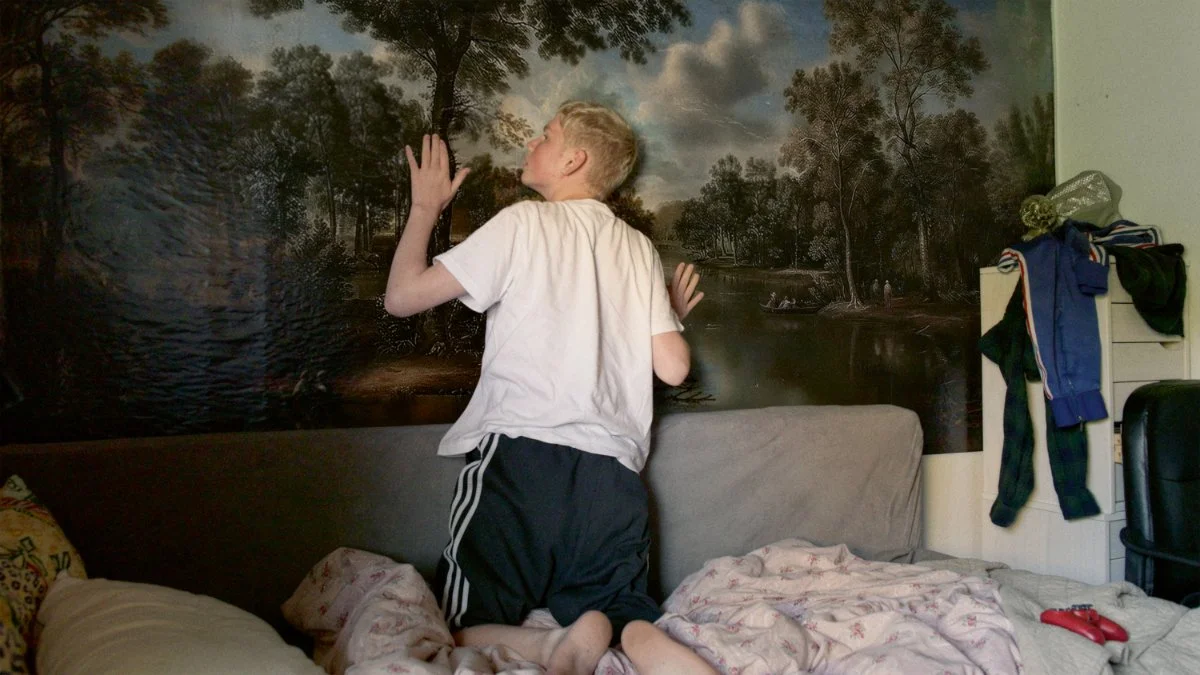
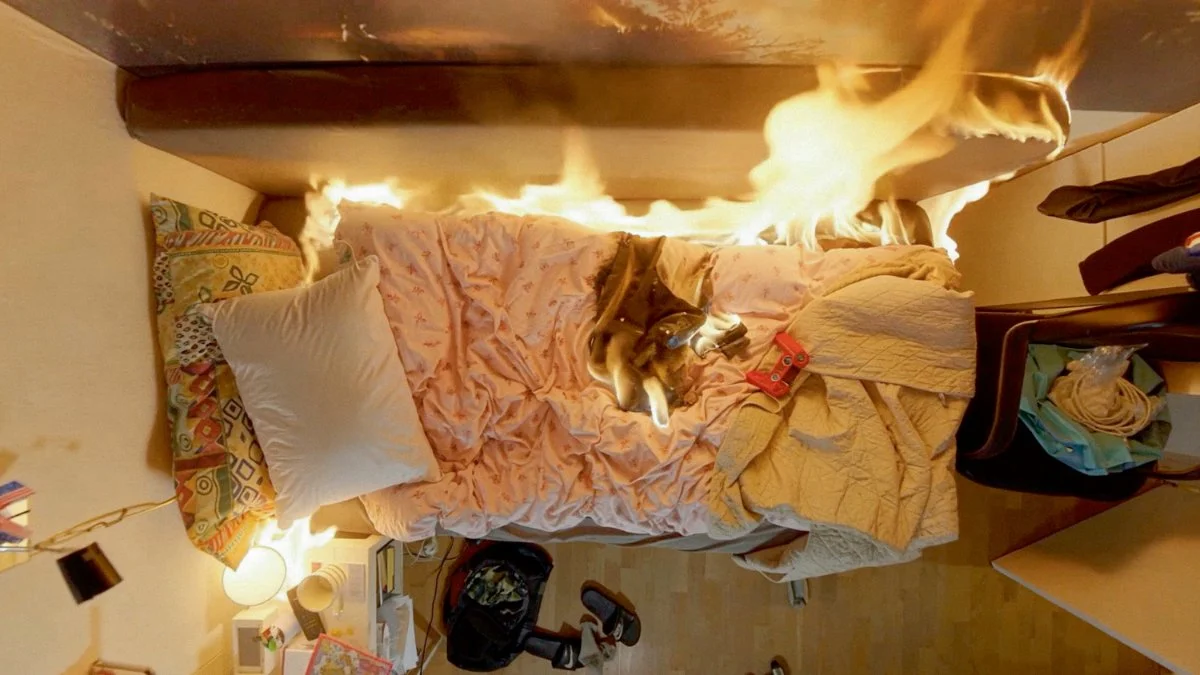
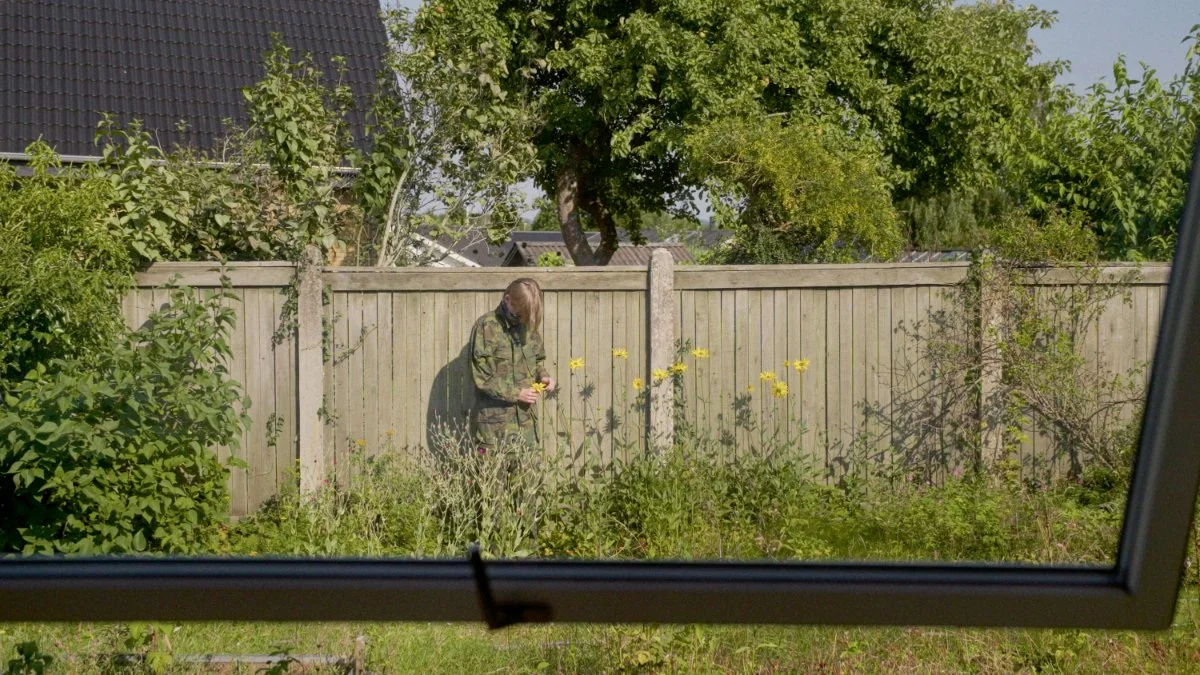
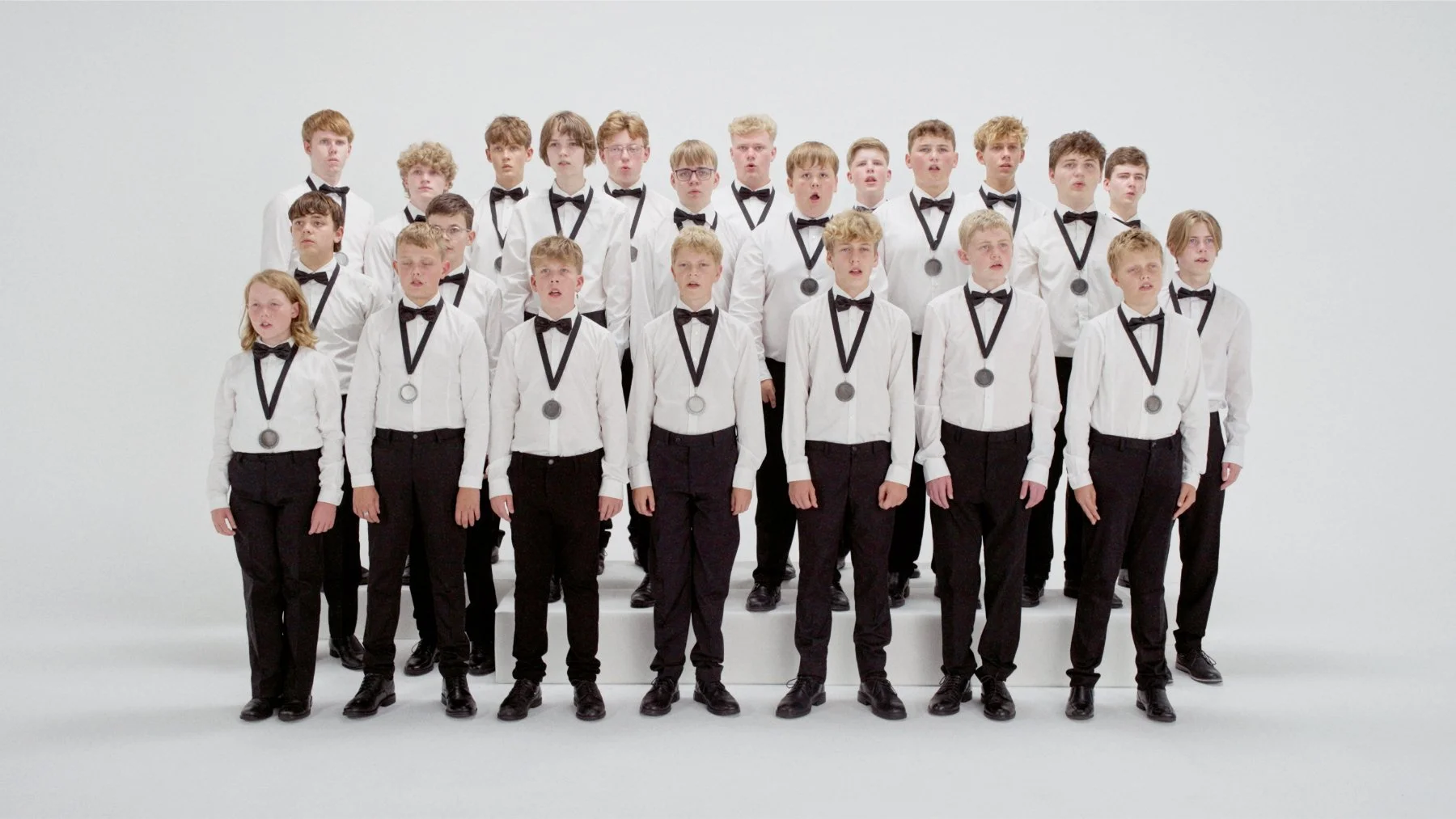
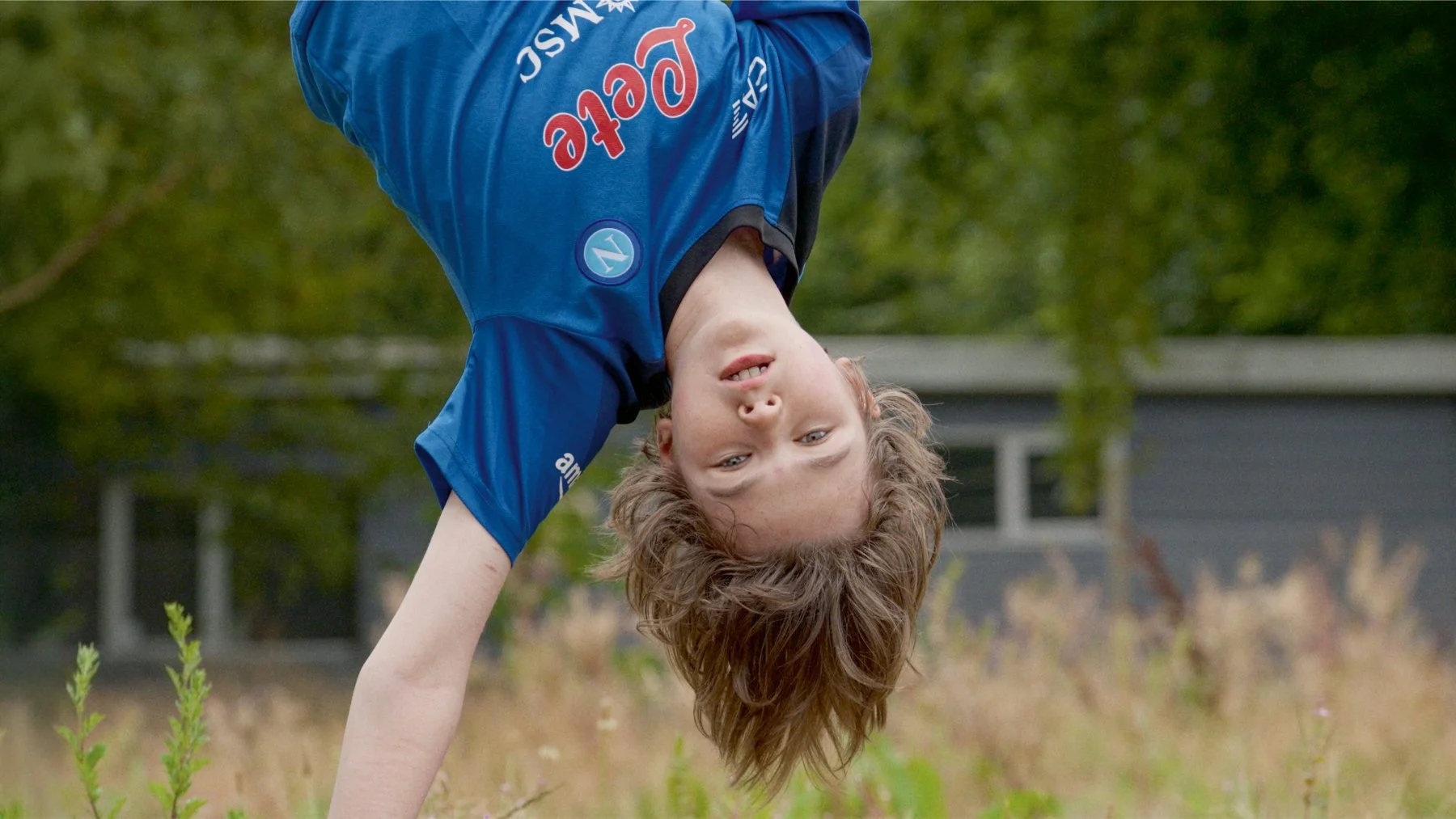
In Boy World Effigy II, the Los Angeles-based artist duo Hart Lëshkina (Tati Lëshkina and Erik Hart) cast a historic Danish boys’ choir as a study of collective order and individual freedom. Their multichannel video installation, shown at Copenhagen’s O—Overgaden Institute of Contemporary Art in 2025, unfolds across multiple synchronized screens. Each visual and sonic element is carefully choreographed so that even apparent moments of dissonance are deliberately integrated into the work’s unity. The viewer is enveloped by a field of voices, gestures, and glances as the piece shifts from harmony into measured unraveling, demonstrating a system that remains tightly controlled, even as it breaks. 

The work incorporates systems of watching and being watched: the choir’s synchronized formations resemble regimes of observation, while slips and asynchronies expose the seams of control. The installation turns the gallery into both a stage and a monitoring room, implicating the viewer as an active surveillant whose gaze assembles meaning across channels. At the same time, the piece probes internalized surveillance in the ways discipline and self-regulation form subjectivity, so that the effigy functions like an avatar under continuous scrutiny, alternately performing compliance, vulnerability, and resistance. By collapsing aesthetic choreography with techniques of observation, the work asks whether visibility protects, annuls, or remakes the person at its center. 

Hart Lëshkina
Scroll 1, boy 3 (Boy World Effigy II), 2026
C-type prints with oil stick, and charcoal on paper

ANNA FROST: How did you first get the idea of working with a boys’ choir? 

ERIK HART: Youth choirs are something we have been researching and circling around for several years. Our practice often engages with power structures, avatars, personal agency, constructed realities, and the emergence of the self through the performance of the other. When we began thinking about these ideas spatially and physically, the choir felt like a compelling subject. 

TATI LËSHKINA: We were particularly drawn to working with a youth choir because this age group presents a moment when identity is still in flux; not yet crystallized as much as that of adult performers. While our work is not about youth or coming of age, we often find that younger performers retain an openness and a less resolved, more fluid, and unstudied relationship to self-presentation.

FROST: How do you think this subject matter shaped the work?

LËSHKINA: A choir functions as a single body, and it is often described as an instrument, yet it is composed of many distinct voices. That tension was compelling to us and the choir—it became a metaphor for how identity forms within structure. It holds cohesion and dissonance simultaneously; discipline produces harmony, but harmony requires surrender. Breath, tone, posture, and timing all must align. The individual voice exists, yet it must continually calibrate itself against the collective.

Hart Lëshkina
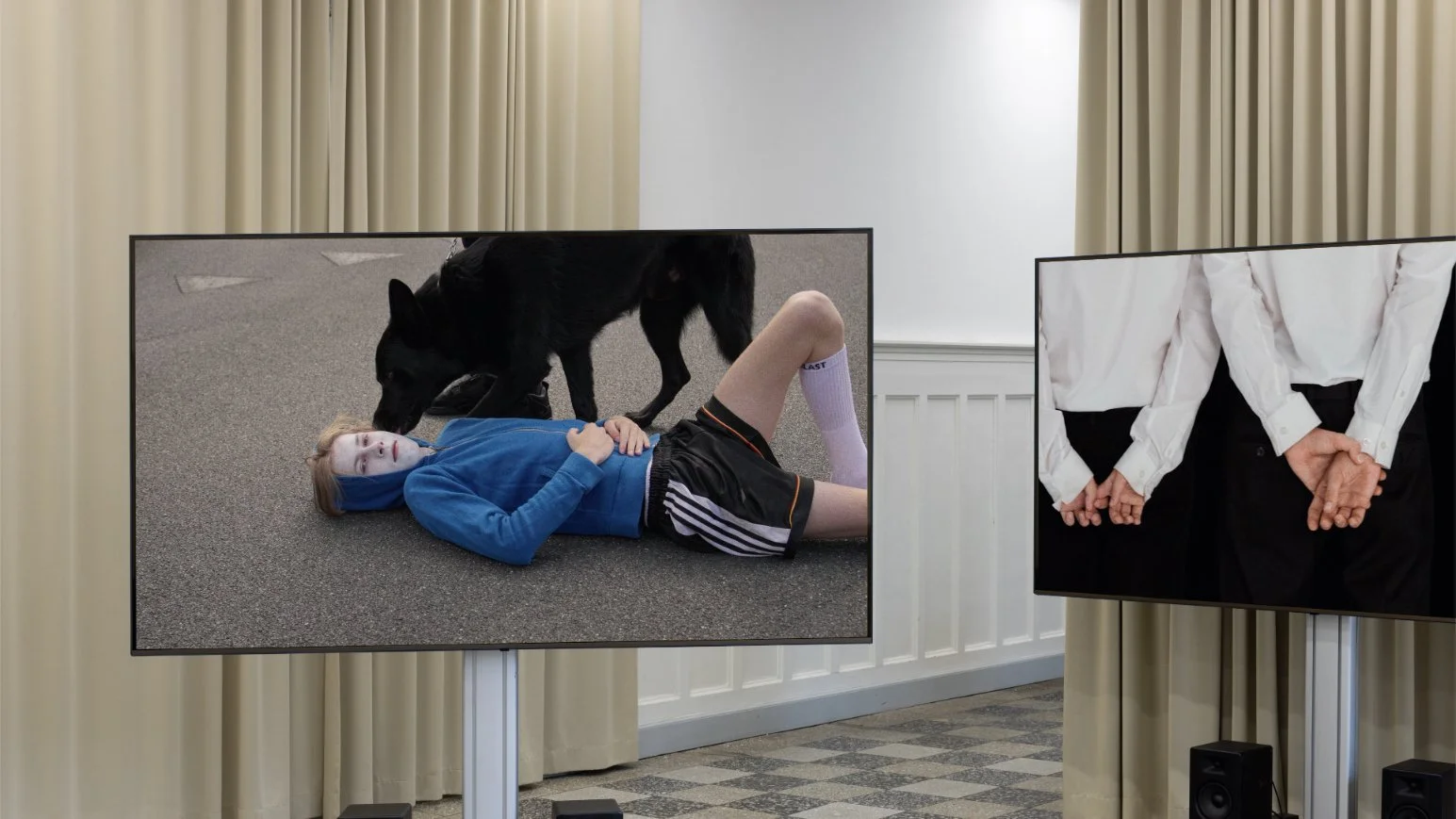
Boy World Effigy IIinstallation view,
O-Overgaden Institute for Contemporary Art, Copenhagen, 2025

HART: Within the performative sequences we constructed, we were interested in observing the subtle moments when an individual becomes aware of themselves as both participant and subject, both inside the structure and slightly outside it. In that sense, the choir is not simply a subject for us; it is a mechanism—a living system in which the self and the structure are constantly negotiating space.

FROST: How intentionally do you design moments of vulnerability for the subjects versus allowing vulnerability to arise spontaneously?

HART: We do not approach vulnerability as something to extract or stage. What we construct are conditions and frameworks. Sometimes those frameworks are structured with a clear beginning, middle, and end. Other times, they operate more like prompts, fragments of text, behavioral scores, or spatial instructions that participants must navigate. The architecture might be defined, but what unfolds inside it is not fixed. For us, the situation has to be actively inhabited. It cannot feel predetermined. We are less interested in directing an emotional outcome than in observing how individuals move through a system we have proposed. The framework establishes rhythm, alignment, and pressure. Within that structure, there is always something uncharted.

LËSHKINA: Vulnerability tends to surface in that uncharted space. In the hesitation between gestures, in the recalibration of posture. In the moment when someone becomes aware of themselves inside the choreography. Often it is subtle rather than dramatic. A breath that falls slightly out of sync. A gaze that lingers. A recognition of being seen.

HART: We remain responsive to those shifts. The process is reciprocal. If something unexpected emerges, we adjust in real time. So, there is intention in the architecture of the situation, but not in scripting fragility. We build the container. The interior remains alive. Vulnerability is not imposed. It arises through navigation, through friction within structure, through the tension between control and surrender.

FROST: Where does this work place itself in your overall practice?

HART: Boy World Effigy II sits in close dialogue with many of the conceptual threads that run through our work. We repeatedly return to questions around collective identity, systems of behavior, and the subtle mechanics through which individuals locate themselves within larger structures. At its core, our practice examines how individuals are shaped by systems they both inhabit and reproduce. We are drawn to moments where identity feels unstable, where the boundary between authenticity and performance begins to blur. Much of our work operates within that tension between interiority and external structure, between instinct and choreography. Our broader practice often stages constructed environments in which figures appear suspended between roles. They are neither fully autonomous nor fully controlled. There is often an undercurrent of ambiguity around who is leading, who is following, who is observing, and who is being observed.

LËSHKINA: Boy World Effigy II intensifies these ongoing concerns. Conceptually, it brings together several threads that have long been present in our work: the collective body, ritualized behavior, the aesthetics of discipline, and the quiet negotiation between agency and conformity. We have always been interested in how power circulates, through gesture, posture, repetition, and shared codes. The choir becomes a concentrated site where these dynamics are made visible. In this work, that ambiguity is amplified through the structure of the choir itself. The collective voice produces unity, yet each individual must continually modulate themselves in relation to others. It becomes a choreography of mutual surveillance and mutual dependence.


Hart Lëshkina
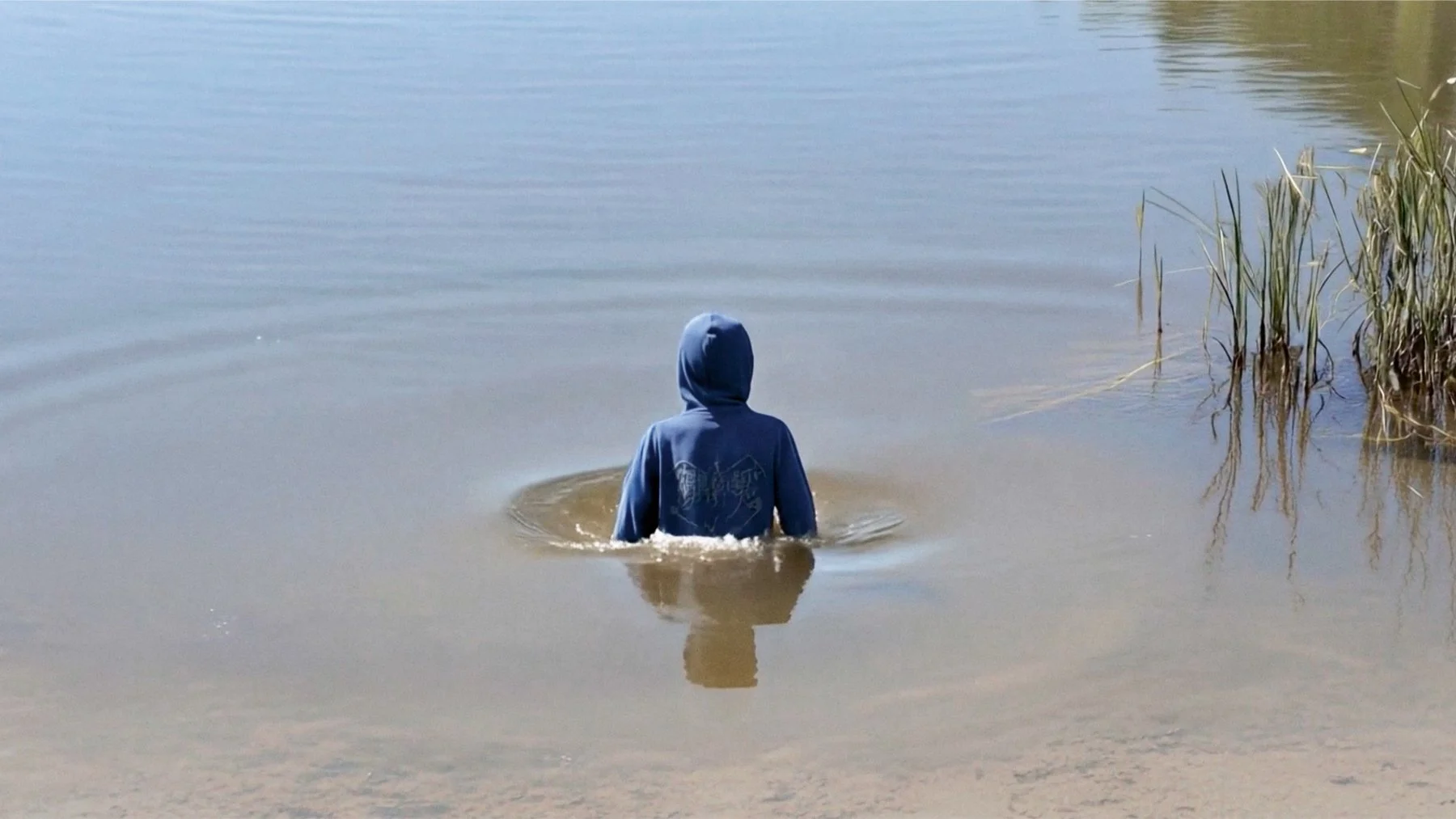
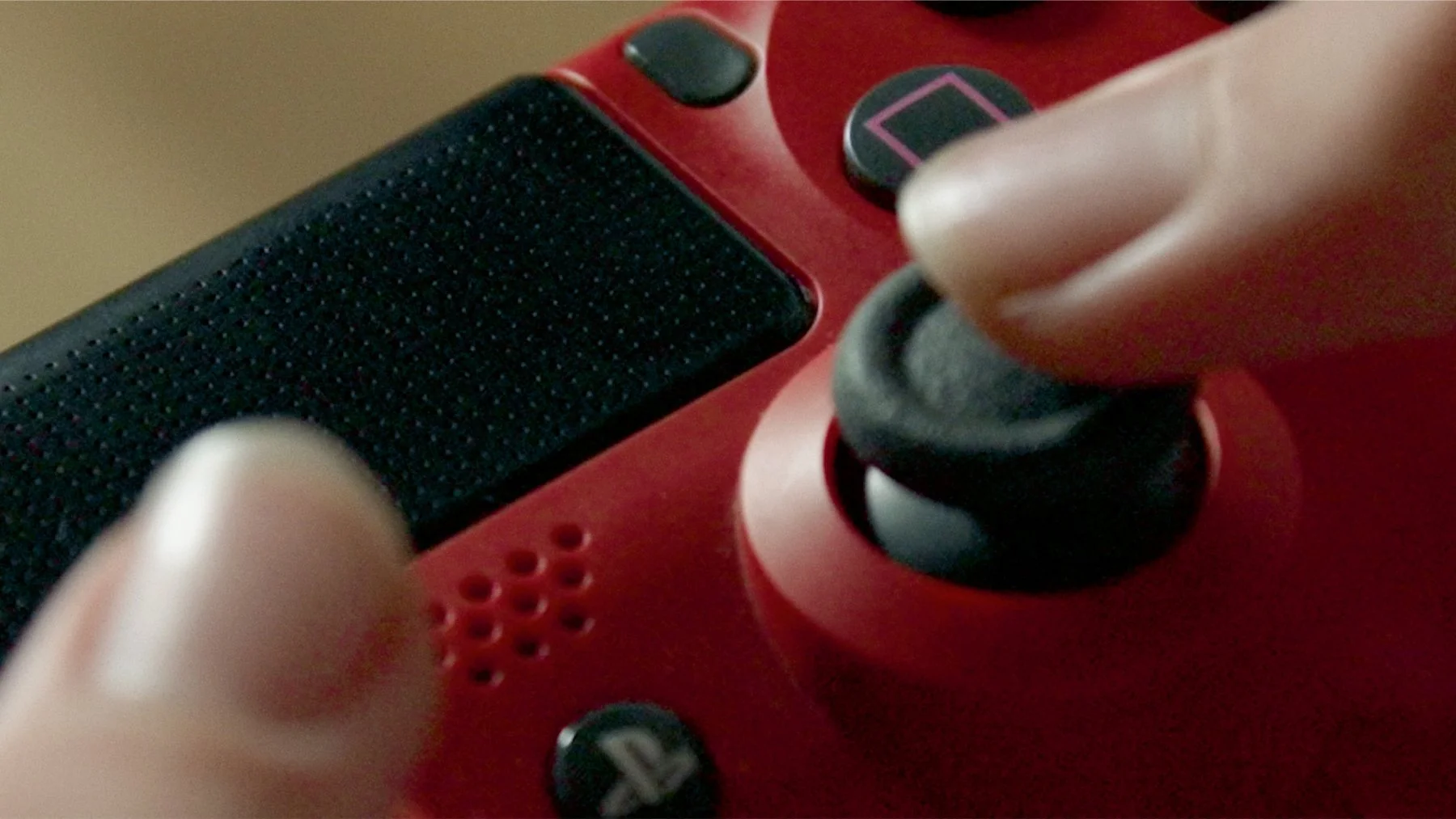
Video stills from Boy World Effigy II, 2025


FROST: Could you elaborate on how the installation’s spatial and sonic structures reveal some of the core principles of the work?

HART: In Boy World Effigy II, the choir is not simply a subject but a living architecture. It embodies structure. The individuals inside it enact a system that is at once protective and constraining. That duality mirrors a recurring tension within our practice: systems that nurture while also demanding surrender. The installation format allows these ideas to unfold spatially. The four-channel structure creates simultaneity rather than hierarchy, while the eight-channel sound circulates through the space, shaping the viewer’s physical and perceptual experience. Video, spatial composition, and sonic choreography operate together as a single organism. They are all independent structures that function as a whole.

FROST: How does the concept of surveillance appear in your practice?

HART: Surveillance enters our work less as a literal device—we are not usually depicting overt systems of monitoring. Instead, we are interested in the internalization of being seen. Across several projects, we construct environments and personas where figures are acutely aware of one another. Individuals observe and calibrate themselves in relation to others. Posture shifts, gestures become slightly heightened. A performance emerges because the presence of the collective generates a field of mutual awareness. It operates through proximity, repetition, and shared codes. In group formations, choreographed sequences, or ritualized behaviors, there is often an undercurrent of self-regulation. The body adjusts itself before it is corrected. The performance precedes the command. We are interested in that moment where discipline has already been absorbed.

Surveillance also appears in our work through the idea of the avatar and the projection of potential selves. In contemporary digital culture, identity is constantly mediated through screens, software, and platforms. Social media, gaming environments, and commodification of the self encourages individuals to construct versions of themselves that are simultaneously curated and monitored. One becomes both subject and spectator of one’s own image. The self is performed in anticipation of being seen and quantified.

We are drawn to that loop, the way projection becomes a form of self-surveillance. In our work, figures often appear aware of their own image, as if inhabiting a version of themselves that is slightly externalized. This tension between embodied presence and projected persona mirrors broader digital conditions where visibility and validation are intertwined. Spatially, we sometimes destabilize the viewer’s position. There is no singular point of control. Perception becomes fragmented or distributed. The viewer is implicated in the act of watching while simultaneously feeling watched by the image or the environment itself. Surveillance becomes reciprocal.

LËSHKINA: We like the idea that systems reproduce themselves through participation. Surveillance is not only imposed from above. It is sustained laterally, through imitation, alignment, aspiration, and desire. That tension between agency, projection, and self-monitoring continues to surface in different forms across our practice.

Hart Lëshkina
Video still from Boy World Effigy II, 2025

FROST: How do you build the peripheral world around a work, and how does it feed back into the piece? 

HART: When we make a work, we are always building a world around it and a psychological ecosystem, both before and after it takes form. Creating on the periphery is part of our process, not something separate from it. The work develops through an expanding system of materials, ideas, and interventions that exist in dialogue with one another. This includes text pieces, drawings, manipulated images, collage, painting, and collected artifacts that we alter and work with over time. These elements are not supporting material but part of the same body of thought, each holding equal significance within the work’s evolving language. For us, this process is ongoing. The peripheral world continues to evolve alongside the work itself, shaping how it is experienced and understood, and ultimately becoming inseparable from the piece.

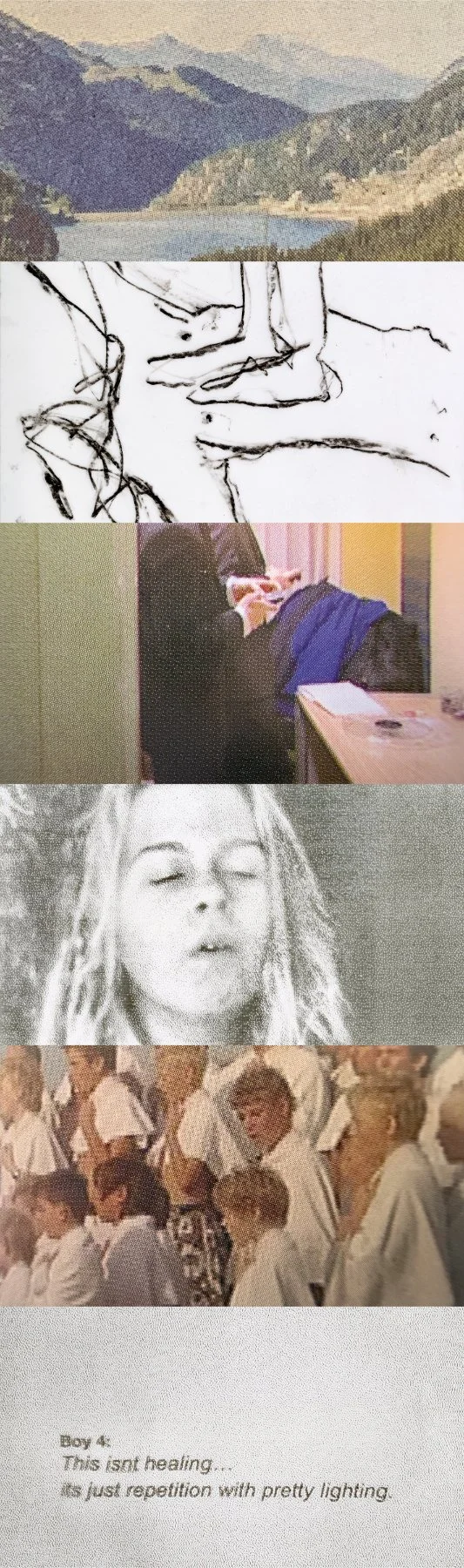
Hart Lëshkina
Scroll 3, boy 5 (Boy World Effigy II), 2026
C-type prints with oil stick, and charcoal on paper, digital print on vellum, oil paint and ash

FROST: What attracts you to the tension between beauty and dysfunction?

LËSHKINA: Beauty is not something we set out to pursue when making the work. It is not a goal or a guiding principle. If moments read as beautiful, they emerge as a byproduct of form, alignment, or atmosphere, not as an objective. What draws us is the space between cohesion and fracture. We are interested in the instability beneath surfaces that appear resolved. Harmony is compelling to us precisely because it contains the possibility of collapse. A system that functions smoothly is also one that demands calibration, repetition, and containment. Within that structure, dysfunction is not an interruption from the outside. It is latent and embedded. 

Rather than opposing beauty and dysfunction, we are interested in the space where coherence begins to destabilize. It is where realization occurs: an individual or environment conveys both its participation and its function within a structure, and its distance from it.

Hart Lëshkina
Video stills and installation views from Boy World Effigy II
O-Overgaden Institute for Contemporary Art, Copenhagen, 2025

Hart Lëshkina
Video stills and installation views from Boy World Effigy II
O-Overgaden Institute for Contemporary Art, Copenhagen, 2025

Hart Lëshkina
Video stills and installation views from Boy World Effigy II
O-Overgaden Institute for Contemporary Art, Copenhagen, 2025

Hart Lëshkina
Video stills and installation views from Boy World Effigy II
O-Overgaden Institute for Contemporary Art, Copenhagen, 2025

FROST: How does the type of anonymity that digital-ness allows for affect the capacity for vulnerability or authenticity?

LËSHKINA: We do not experience digital-ness primarily as concealment. We experience it as a space of projection and rehearsal. What is often dismissed as anonymous or unreal can, for many individuals, be the first site where unrealized selves are articulated. The avatar, the curated image, and the constructed feed are not simply masks. They are speculative embodiments. The face someone constructs online is sometimes closer to the face they wish they woke up to. Digital space becomes a laboratory for identity. It allows desire to take form visually before it is fully lived. That process carries vulnerability. To project a potential self publicly is to expose aspiration. That gesture is fragile.

At the same time, digital-ness operates like a contemporary ritual system. It has its own choreography. Posting, editing, archiving, scrolling, responding. These are repetitive gestures performed daily, almost devotionally. Visibility functions as belief. Validation becomes a kind of communion. Participation is both voluntary and expected. In that sense, it resembles a social religion, structured by codes, aesthetics, and collective witnessing.

What complicates this further is that digital identity is both fluid and enduring. The self can be revised, stylized, and reimagined, yet it is also documented and stored. The projection becomes an archive. The archive becomes memory. Authenticity is not something that exists outside of this structure. It is negotiated within it. Identity is iterative. It is performed in relation to others. Digital-ness does not simply obscure the self. It becomes a stage where aspiration, embodiment, surveillance, and longing intersect.


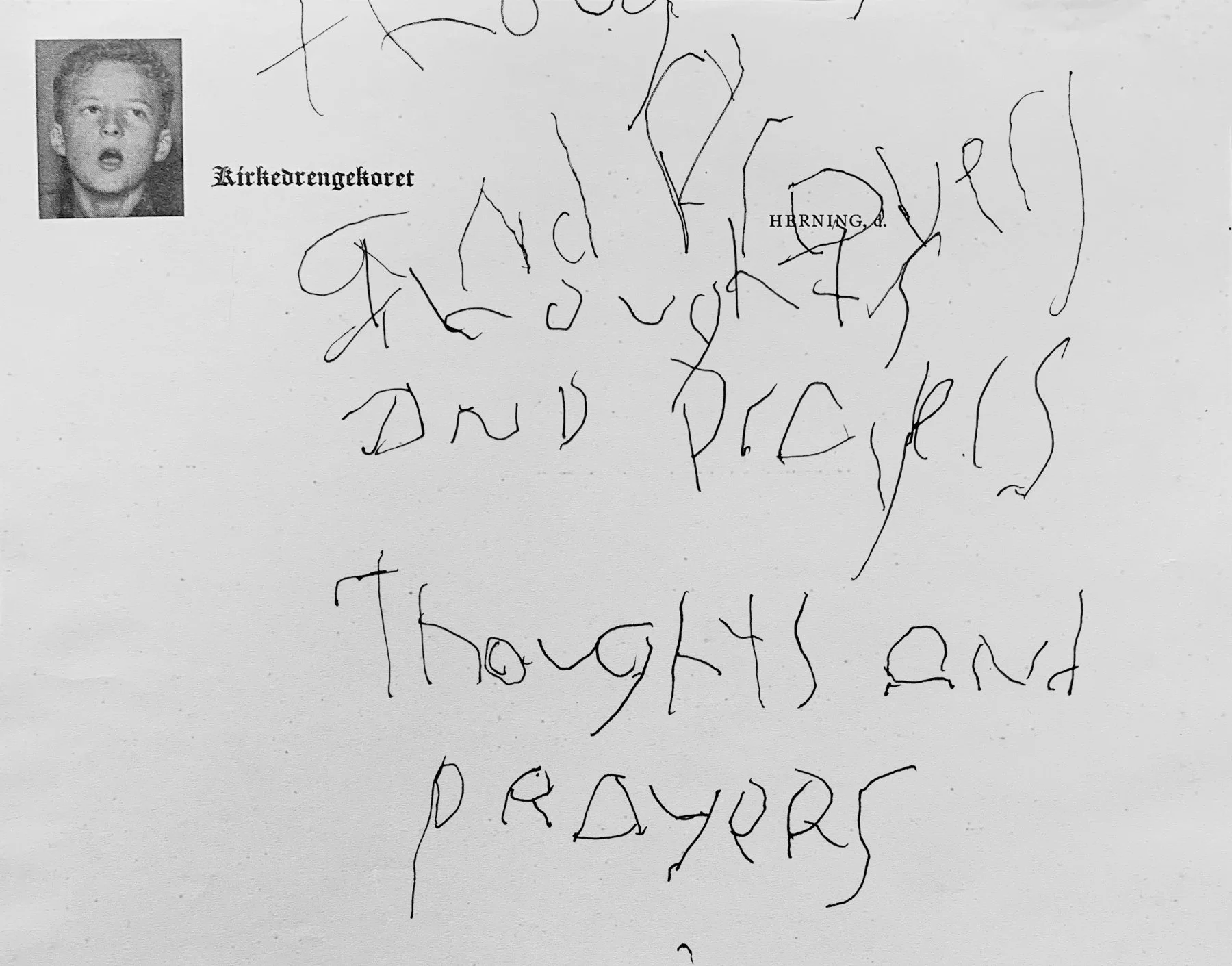
Hart Lëshkina
Thoughts, Prayers (Boy World Effigy II), 2025
Archival Herning Kirkes Dregenkor letter head with ink


FROST: How does the horizontal reorientation alter the emotional relationship between viewer and depicted subject compared with portrait/scroll consumption?

HART: With much contemporary media consumption, it is experienced through an infinite vertical scroll, often designed to be consumed in isolation. What is usually compressed into the solitary gesture of the hand becomes spatial, architectural. With this work, vertical media is reoriented and unfolds across a horizontal plane. We imagined a horizon the viewer could inhabit and gaze up rather than control. The handheld world expands beyond reach, and the viewer is no longer manipulating the media; they are confronted by it.

FROST: The fragmented style and speed of the work prevent the viewer’s possibility of seeing everything. How does this partial visibility shape the emotional narrative—what is revealed versus what remains occluded?

LËSHKINA: The fragmentation is deliberate. It mirrors conditions we are living within, where perception is continuous, layered, and interrupted.

All artworks: Hart Lëshkina, Boy World Effigy II, 2025/2026 ©. Courtesy of the artist

HART: Digital media is consumed in fragments. We scroll, swipe, and screenshot. We absorb partial narratives and move on. Attention is distributed. There is rarely a singular, stable vantage point. That rhythm of acceleration and disposal shapes how images are digested. We wanted the structure of the work to echo that condition, while slowing it at selected moments just enough to make the viewer aware of it.

The four channels operate simultaneously. Something is always unfolding beyond your field of vision. You are forced to choose where to look, knowing that you are missing something elsewhere in the peripheral. That impossibility of total comprehension produces tension, not through spectacle, but through awareness of limitation. The off-screen space holds pressure. The unseen is not absent; it is presence withheld. It suggests that the system extends beyond any single image or moment. Cohesion is felt, but never fully secured. The viewer experiences the work in fragments, in overlaps, in partial alignments. That condition reflects both the internal dynamics of the collective and the broader digital environment in which perception is constantly mediated, accelerated, and incomplete.

FROST: What are your future plans for this project? 

HART: We are currently in the process of developing a book with stills from this work, which we anticipate releasing in late spring. The work was conceived to function primarily within an exhibition format, as a physical and experiential installation. That immersive condition remains central. However, from the earliest stages of conceiving the scenarios, we were acutely aware of the still image. We understood that certain frames would hold independently, that they could sustain their own internal tension within the sequence of a book. In the book form, the images will become more fragmented. Without the audio and the motion, the viewer will encounter a quieter but more porous structure. The pacing is determined by the reader’s own rhythm. We like the idea that the absence of sound and motion leaves space for projection. The viewer supplies their own internal soundtrack, their own sequencing, their own interpretation of what precedes or follows each frame. In that sense, the book will not replicate the installation. It will reframe it. Hopefully, allowing the work to function through stillness, through gaps, through the space between images.

Boy World Effigy II will be shown next at the Sound and Art Festival SPOR in Aarhus this April. From there, we are planning to show the work in Paris and Los Angeles. The project was conceived to adapt to various sites, and we are currently in dialogue around how it can evolve within different architectural and cultural contexts. We are also in the midst of developing a new sound work, which we intend to show this summer in Europe, and have been finishing a couple of bodies of mixed-media and installation works we plan to show next.