
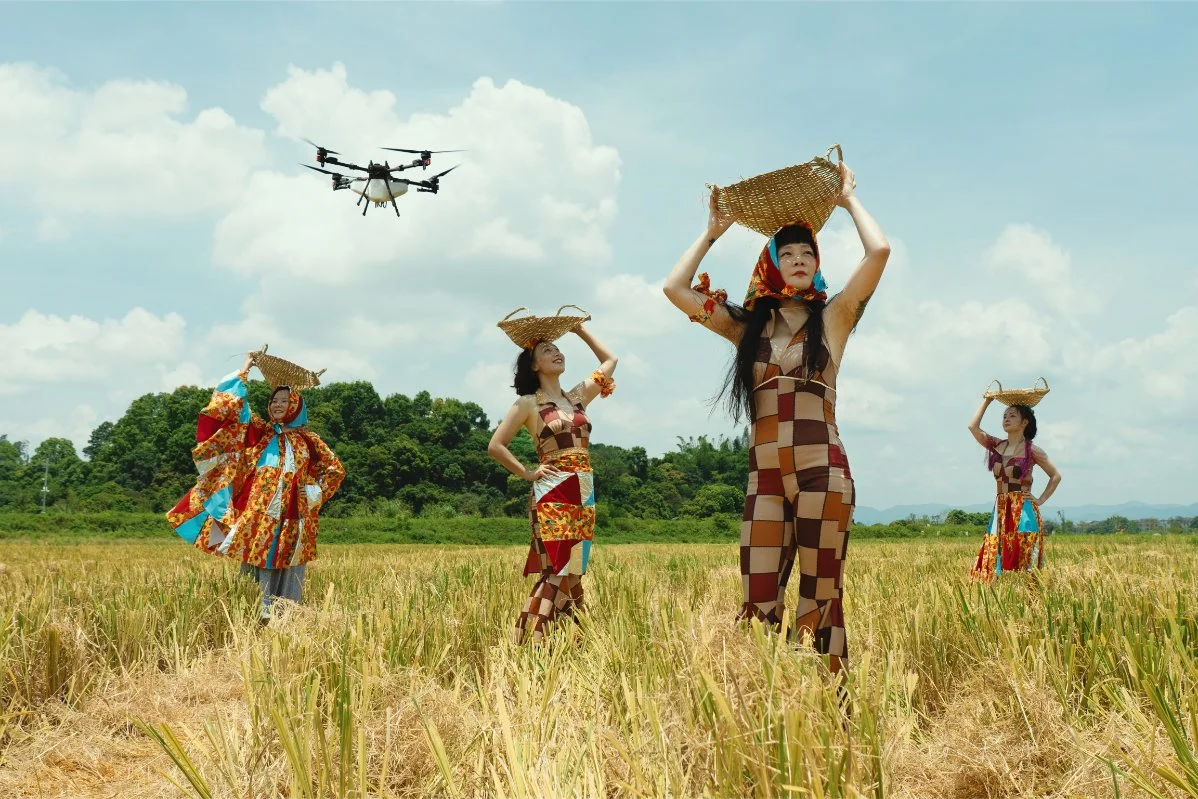
Cao Fei, Dash (still), 2026. Double-channel video, color, sound, 47min. Courtesy the artist, Vitamin Creative Space, and Sprüth
Magers. Work produced by Fondazione Prada on the occasion of the exhibition “Dash”
interview by Xiaowei Wang
Over the past three years, Cao Fei has embedded herself in farmlands across southern and northwestern China and Southeast Asia, closely observing and critically interrogating the rise of smart agriculture. In her new exhibition, Dash, at Fondazione Prada in Milan, she uses photography, video installation, archival material, and virtual reality to probe the tension between 21st-century technological acceleration and enduring agricultural traditions.
XIAOWEI WANG: A drone's eye and a farmer's eye produce radically different relationships to land: one algorithmic, gridded, optimizing; the other embodied, sensory, and with years of experience. In the process of making this body of work, how have you come to view land?
CAO FEI: The drone represents a mode of perception grounded in remote sensing, mapping, and datafication—it transforms land into a calculable, planar dataset. The farmer, by contrast, embodies a way of knowing rooted in the body, in experience, and in intergenerational transmission. For the farmer, land is understood not only as private property, but also as something that carries memory and emotion. My lens is directed toward the gap between these two perspectives—a kind of invisible “entanglement” within this rupture. Algorithms seek to optimize the land, while people respond to this optimization with curiosity, observation, acceptance, or resistance. Today, land is no longer a stable concept, but a contested field shaped by multiple forces. As humans increasingly hand over decision-making to machines, land becomes a resource, a material, a laboratory for the future, a form of infrastructure. It gradually ceases to be that sensuous rural ground imbued with smell, memory, kinship, and ritual.
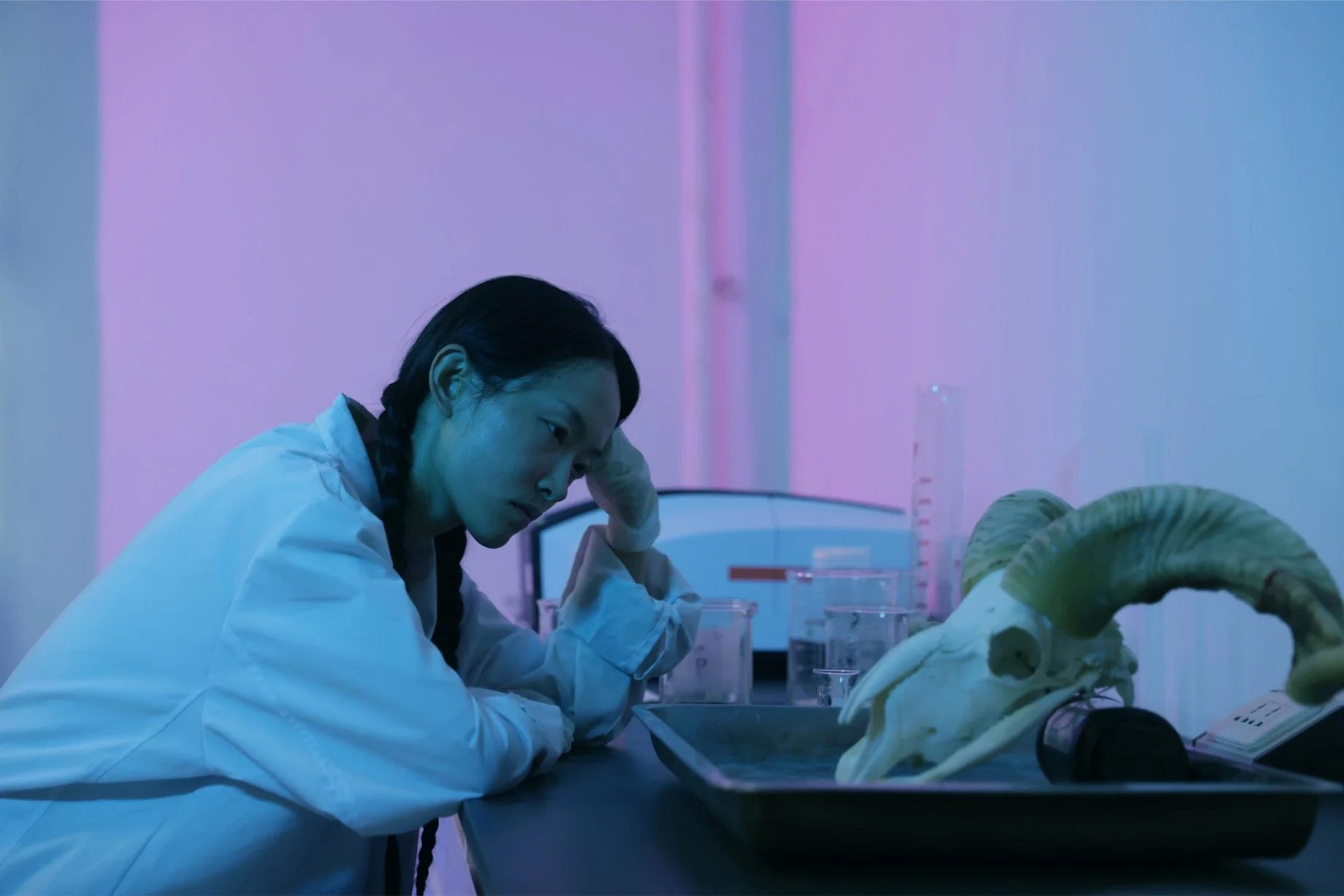
Cao Fei, Dash (still), 2026. Double-channel video, color, sound, 47min. Courtesy the artist, Vitamin Creative Space, and Sprüth Magers. Work produced by Fondazione Prada on the occasion of the exhibition “Dash”
WANG: The mode of the drone shot, the overhead view of fields, places, and landscapes, has become one of the defining images of contemporary agriculture, as well as contemporary life. But it’s also, in many ways, a managerial image, and a totalizing one. What impacts does such a managerial and totalizing view have on the way we value land in society?
FEI: Agricultural drones transform the “locality” of land into a governable data resource—something that can be mobilized as a factor of production. This managerial and totalizing perspective may lead us to treat land in a more efficiency-driven and instrumental way, placing increasingly utilitarian demands on it. The entire ecological system tied to cultivation—seeds, fertilizers, water, microbial life—becomes a set of variables subject to “precision” management. The multiple temporalities that once defined land—seasonal cycles, agricultural calendars, accumulated generational knowledge, and farming rhythms—are now compressed into a single, unified time of production. Those elements that cannot be subsumed under the logic of efficiency—rituals associated with cultivation, informal conversations at the field’s edge, catching insects, bonfires, and songs at harvest—are gradually being excluded from our cultural imagination of land. Traditionally in China, there is the notion of returning to the earth—a worldview in which production, survival, and even death are all bound to the land, embedding the continuity of family life within it. This sense of belonging to the soil is now being fundamentally reconfigured.
WANG: Dash sits at the intersection of some of the most urgent questions of our moment: climate, labor, sovereignty, tradition, and technological acceleration. What does art, specifically VR and installation, allow for that journalistic formats cannot in examining these issues?
FEI: Journalism deals with reflecting facts, whereas art can process reality through fiction. News requires clarity—black and white—and must be precise. Art, on the other hand, can be ambiguous and chaotic. News needs “the big picture,” focusing on agendas and headlines; art focuses on overlooked details, emotions, and moments deemed insignificant. Art installations create a sense of presence and experience, awakening the audience’s perception. When you stand between the granary and the temple of Dash, between drones and incense, between solar panels and ritual—facing the inherent alienation of the VR work—you feel a weightlessness in flight, a dreamlike state, a transcendence of time. These are sensations that text alone can never convey.
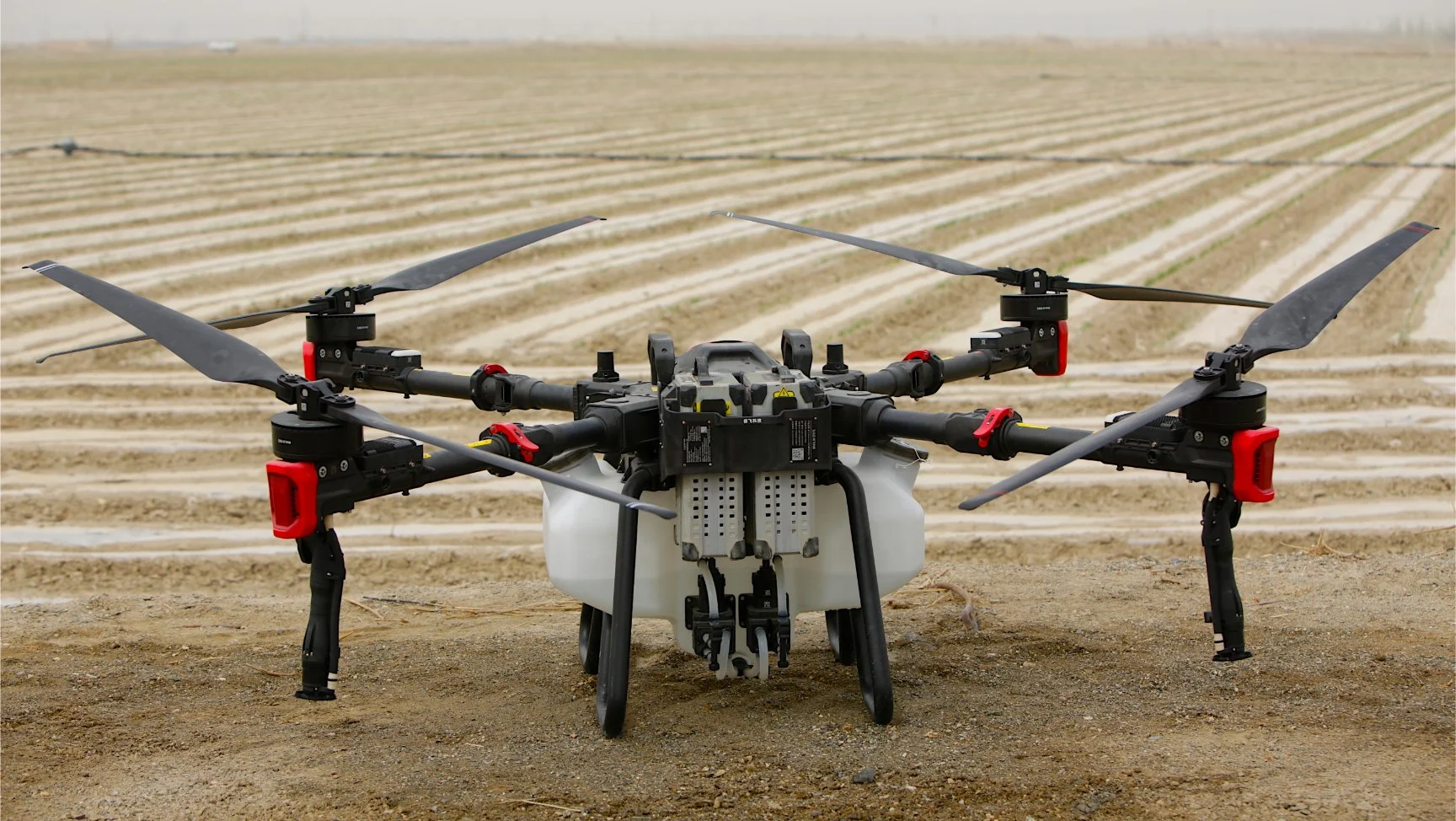
Cao Fei, Super Farms (still), 2026. Single-channel video, color, sound, 47min. Courtesy the artist, Vitamin Creative Space, and Sprüth Magers. Work produced by Fondazione Prada on the occasion of the exhibition “Dash”
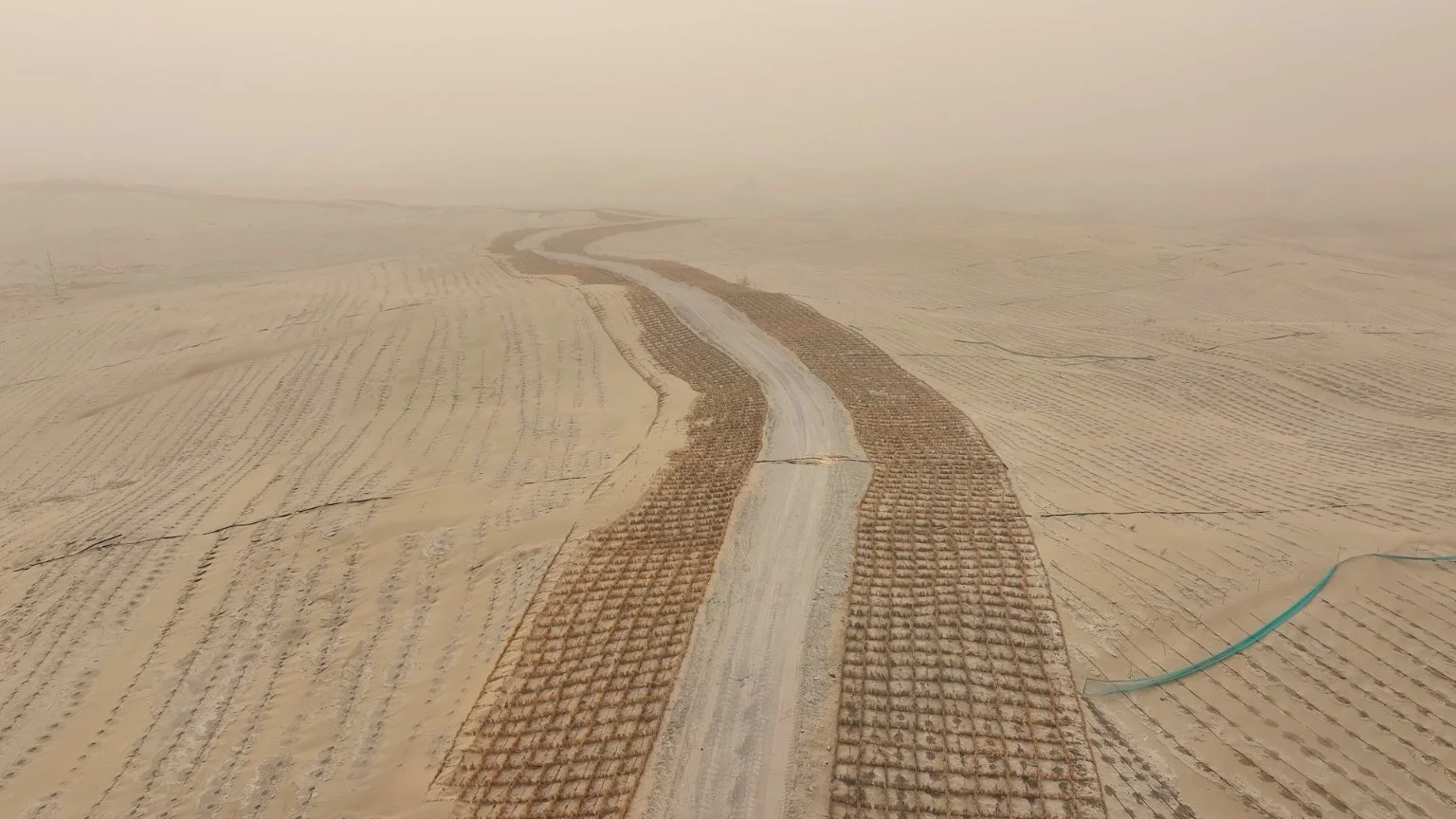
Cao Fei, Super Farms (still), 2026. Single-channel video, color, sound, 47min. Courtesy the artist, Vitamin Creative Space, and Sprüth Magers. Work produced by Fondazione Prada on the occasion of the exhibition “Dash”
WANG: There’s a demographic shift that is captured in some of these images from Dash, particularly how rural aging and young people moving to cities create the “agricultural labor shortage” that smart farming is meant to solve. But the young people who do stay, or return, often relate to the land through screens and interfaces rather than bodies. Do you see it as a new form of agricultural knowledge? Its disappearance?
FEI: What I see is the friction between two different knowledge systems during the transition from old to new—a state of hybrid transition. In the fields, I see “New Farmers” skillfully operating agricultural land vehicles and drones. At the same time, they still physically go into the fields to inspect pest conditions and soil moisture. They still need to help workers pull water pipes, replace seedlings, and install smart valves. When frost hits, they are busy lighting fires in the fields; when a level-10 sandstorm strikes and blows away the seeds they just painstakingly sowed, they feel the same heartbreak over the economic losses caused by natural disasters they cannot stop. These things that cannot be quantified as data—human experience, book knowledge, anxiety, and fatigue—all negotiate, fuse, and overlap within the same body. They do not simply wax and wane at each other’s expense. This process of “friction” is exactly what Dash focuses on: the “evolution” of humanity and technology in the present moment.
WANG: Agricultural calendars are among humanity’s oldest technologies and are still deeply embedded in many cultures, including the Chinese lunar calendar. They combine ways of reading sky, soil, season, and astronomy into a single system of time. As new, smart farming technologies allow for more precision and control, how do you see agricultural time changing? Does agricultural time no longer matter?
FEI: Agricultural time has never ceased to be important; it is a rhythm embedded in the universe since ancient times. Now, it is being optimized into algorithmic production systems because these are universal laws of nature. Today, the precision of agricultural technology has shown me that some farmers have achieved more efficient time management. During my research in Southeast Asia, farmers told me that they can finally take afternoon naps, travel with their children, or attend wedding banquets in the village without worry. They can go home to cook for their kids and help with homework; they can even use idle drones to help other farmers with crop protection, open a farm supply store, or plant more land to earn more income. The change in agricultural time is not about one kind of time replacing another; rather, time has become “thickened.” Within the same span of time, many new intervals and folds have grown.
WANG: The ritual images from Dash, such as the farmer burning incense beside the drone as an offering, the traditional “rice dragon” procession along a paddy road, seem to suggest that people are folding these new machines into very old cosmologies. Do you think the drone is being domesticated by ritual, or is ritual being hollowed out by the drone? What kind of long-term role does the agricultural drone play in farmers’ lives? Are they treated like a plow-pulling ox, for example?
FEI: A plow-pulling ox requires feeding, care, and emotional investment; it is simultaneously a family asset, a tool, and a family member. A drone only requires charging, maintenance, and data updates; it is an asset and a tool for livelihood. While an ox can be domesticated by a farmer, technology remains—to the farmer—an alien, superhuman, non-human, and uncontrollable existence. In the film Dash, the sequences where drones are deified amid the decline of tradition were inspired by the Parade of the Deities (Youshen) traditions along China’s southeast coast. As “deities” are carried by villagers on a tour between different settlements, the resulting aura of power serves to both purify the land of evil and pray for favorable weather and a bountiful harvest. On the other hand, through the ritual of the procession, a sense of cohesion is forged between different villages and clans, forming the foundation of stability for the traditional countryside—the shared worship of the same deity.
WANG: In the Dash-180c VR screenshots, the landscapes are lush and abundant but conspicuously emptied of human presence. Do you see that as a utopia? A cautionary tale?
FEI: Dash-180c is a VR sci-fi game. Through the subjective point of view of an abandoned drone, we see a future following a period of advanced technological development: the ecology has undergone unprecedented restoration, the growth of AI has been suppressed, and smart technology has been brought under governance. Humans coexist with the non-human, and tradition is consecrated. Yet, in terms of human values, we are met with a world that may have stripped away its layers of meaning. It is neither a utopia nor a cautionary tale; it is a fairytale, a speculation.
WANG: In Dash-180c, the landscapes and images stand in stark contrast to the photographic work in Dash, particularly the bright images of rituals and dances. Can you talk about this contrast? Why is there such an intense disjuncture?
FEI: The work Dash was filmed in reality; it is based on what is happening in the present. It depicts the negotiation between humans and technology, rituals, deities, struggling villages, and human desires. The imagination of the VR work in Dash-180c is oriented toward the future. It takes place after technology has already undergone radical development and humanity has encountered irreversible trials and errors, entering a relatively calm period of restoration—a search for a new, tempered mode of development and balance. Dash-180c is precisely the landscape of a certain stage in that imagined future. The temples are still there, the incense is still there, but it should not be the final landscape.
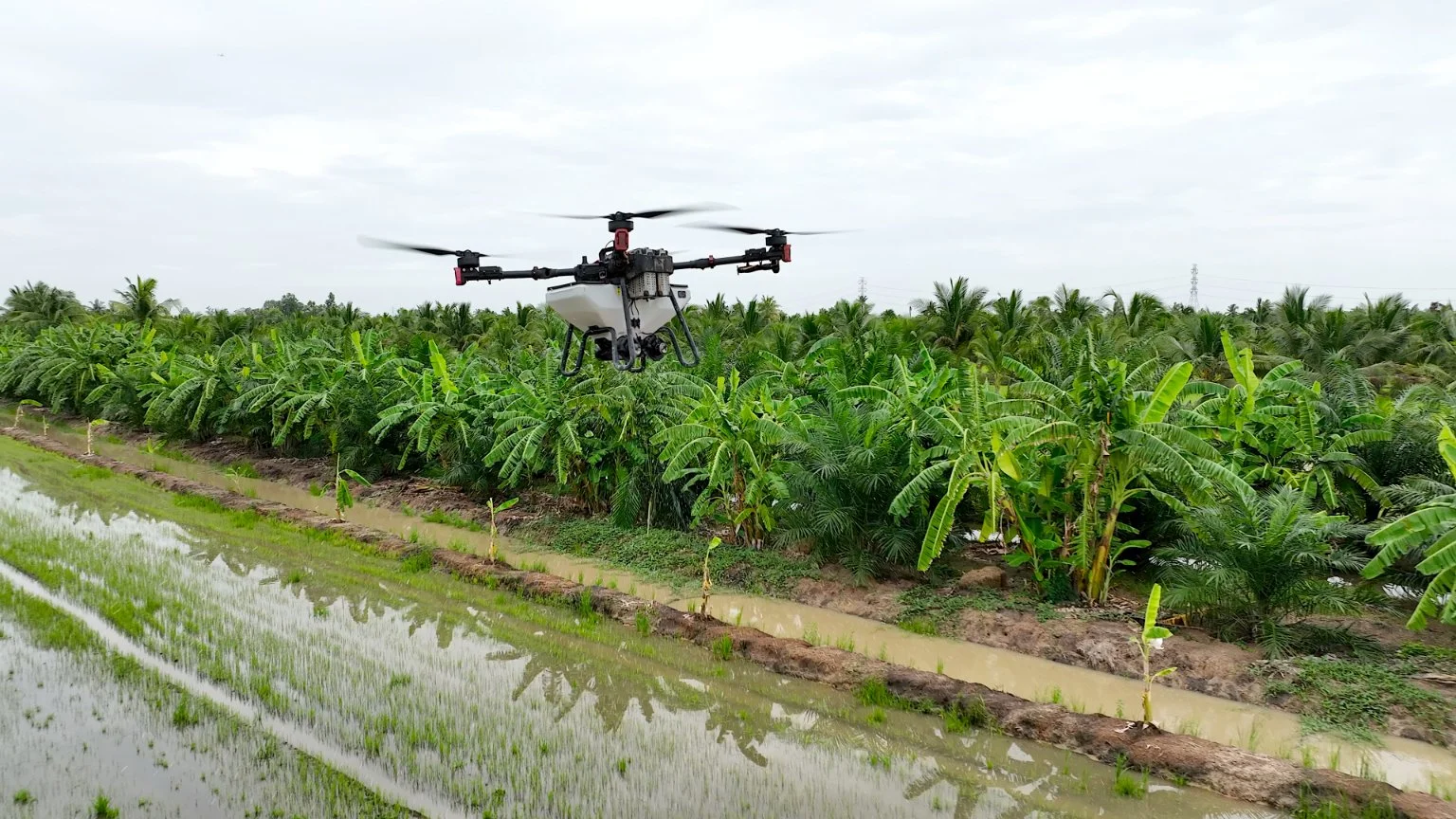
Cao Fei, Southward Journey (still), 2026. Sin-gle-channel video, color, sound, 30min. Cour-tesy the artist, Vitamin Creative Space, and Sprüth Magers. Work produced by Fondazione Prada on the occasion of the exhibition “Dash”
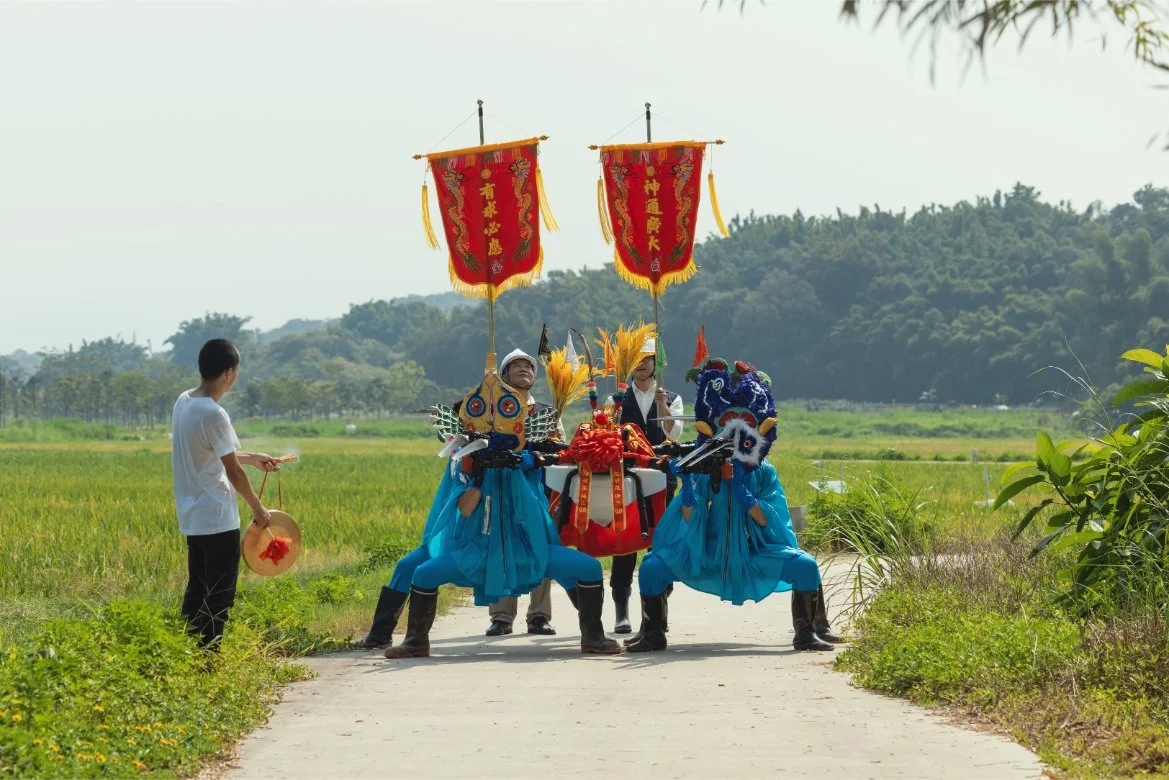
Cao Fei, Dash (still), 2026. Double-channel video, color, sound, 47min. Courtesy the artist, Vitamin Creative Space, and Sprüth Magers. Work produced by Fondazione Prada on the occasion of the exhibition “Dash”
WANG: The question of who benefits from agricultural bounty/surplus is always changing, and has a long history: from feudal grain tribute to colonial plantation systems and now contemporary free trade agreements. How did you see precision agriculture changing who benefits from agricultural surplus?
FEI: Precision agriculture promises efficiency: fewer inputs for greater outputs. But technology only solves the most basic “plowing, planting, managing, and harvesting” cycle. Geopolitics, trade monopolies, and trade barriers—none of these are within the calculation scope of precision agriculture. The birth of new technology cannot, on its own, break through existing economic structures. While precision technology brings bounty, will it create a mismatch with supply and demand? Agricultural products like grain and fruit cannot be stockpiled indefinitely. Will the increase in yield driven by technology cause market price fluctuations, thereby trapping farmers in a dilemma of increased production without increased income? Does this technology-driven rise in agricultural efficiency require a corresponding match in market infrastructure and institutional design to ensure the fairness and sustainability of benefit distribution? I am not an economist, so I likely cannot answer these questions. But these are more than just economic issues. As an artist, Dash is perhaps more focused on the cultural aspect. Harvest was once bound together with the land, the village, the ancestors, and prayers for favorable weather. But today, the meaning of “harvest” has been redefined; it has become a figure in the pursuit of efficiency, detached from that ancient gratitude toward heaven and earth, the simple affection for the mountains and trees, and the rituals of reverence for ancestors and spirits. What we have lost is not just a method of distribution, but the value of harvest as a local cultural legacy. In the Dash project, I attempt to explore the possibility of extending this value into the present.