
interview by Anna Frost
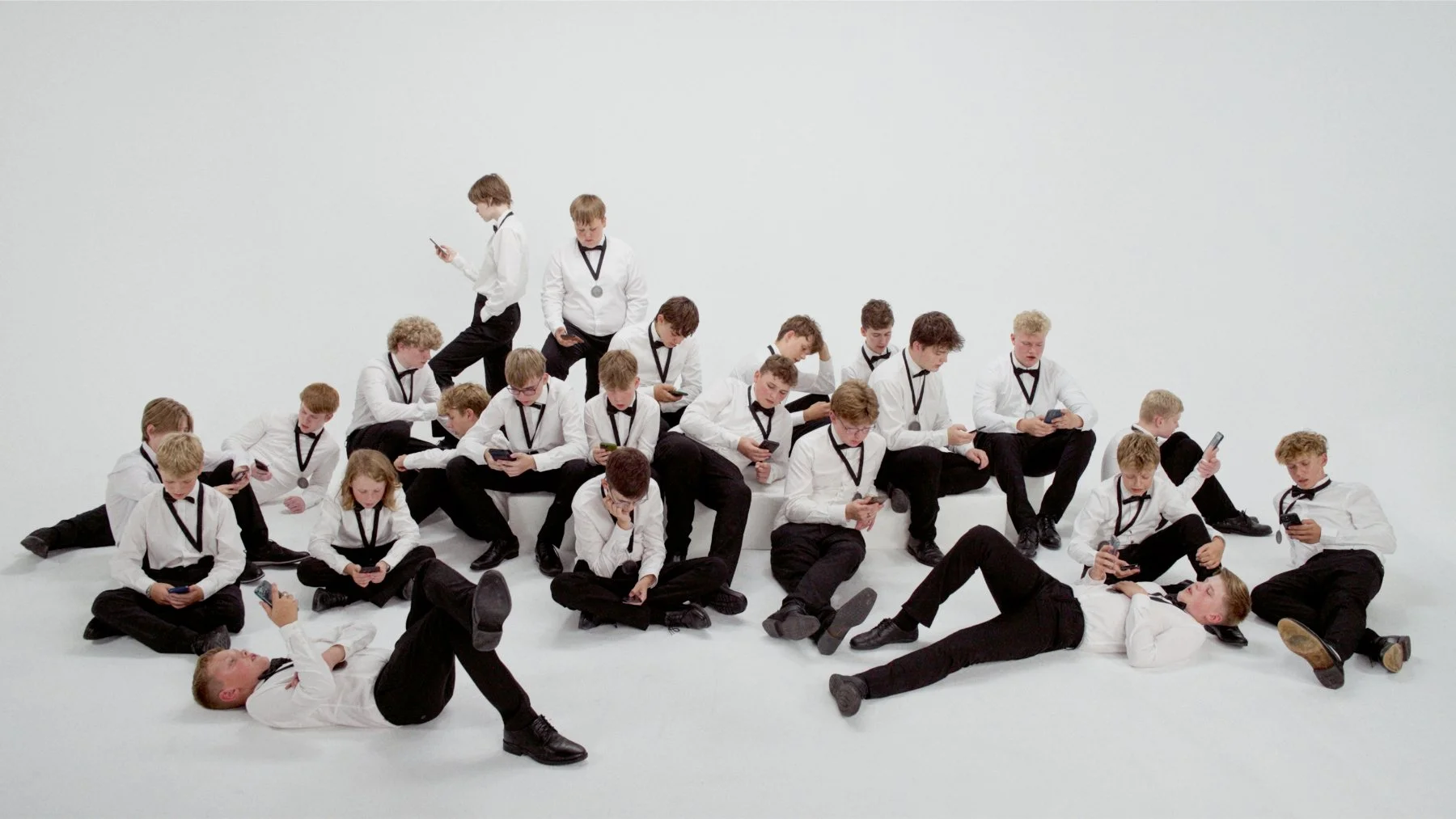
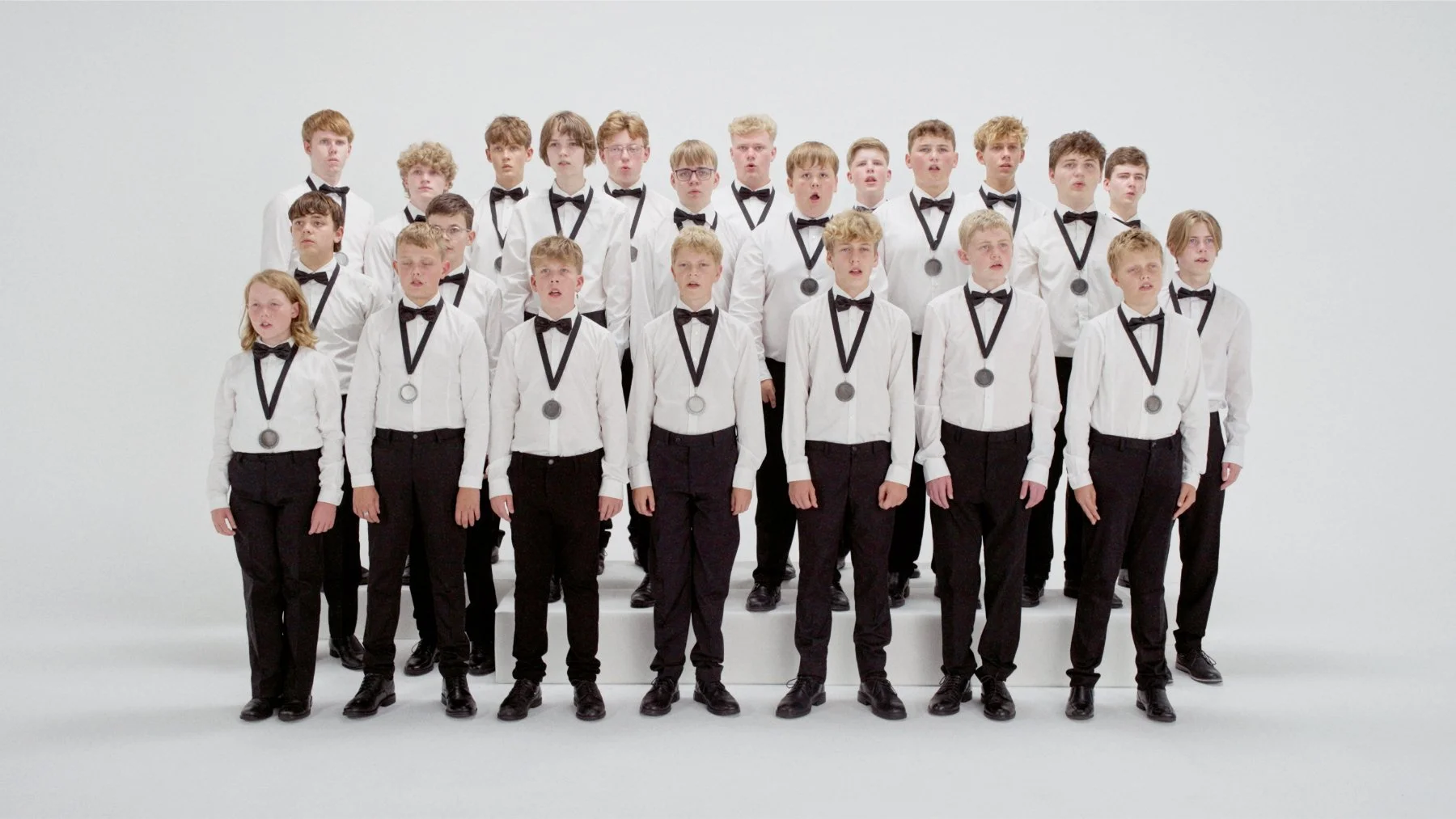
In Boy World Effigy II, the Los Angeles-based artist duo Hart Lëshkina (Tati Lëshkina and Erik Hart) cast a historic Danish boys’ choir as a study of collective order and individual freedom. Their multichannel video installation, shown at Copenhagen’s O—Overgaden Institute of Contemporary Art in 2025, unfolds across multiple synchronized screens. Each visual and sonic element is carefully choreographed so that even apparent moments of dissonance are deliberately integrated into the work’s unity. The viewer is enveloped by a field of voices, gestures, and glances as the piece shifts from harmony into measured unraveling, demonstrating a system that remains tightly controlled, even as it breaks.
The work incorporates systems of watching and being watched: the choir’s synchronized formations resemble regimes of observation, while slips and asynchronies expose the seams of control. The installation turns the gallery into both a stage and a monitoring room, implicating the viewer as an active surveillant whose gaze assembles meaning across channels. At the same time, the piece probes internalized surveillance in the ways discipline and self-regulation form subjectivity, so that the effigy functions like an avatar under continuous scrutiny, alternately performing compliance, vulnerability, and resistance. By collapsing aesthetic choreography with techniques of observation, the work asks whether visibility protects, annuls, or remakes the person at its center.

Hart Lëshkina
Scroll 1, boy 3 (Boy World Effigy II), 2026
C-type prints with oil stick, and charcoal on paper
ANNA FROST: How did you first get the idea of working with a boys’ choir?
ERIK HART: Youth choirs are something we have been researching and circling around for several years. Our practice often engages with power structures, avatars, personal agency, constructed realities, and the emergence of the self through the performance of the other. When we began thinking about these ideas spatially and physically, the choir felt like a compelling subject.
TATI LËSHKINA: We were particularly drawn to working with a youth choir because this age group presents a moment when identity is still in flux; not yet crystallized as much as that of adult performers. While our work is not about youth or coming of age, we often find that younger performers retain an openness and a less resolved, more fluid, and unstudied relationship to self-presentation.
FROST: How do you think this subject matter shaped the work?
LËSHKINA: A choir functions as a single body, and it is often described as an instrument, yet it is composed of many distinct voices. That tension was compelling to us and the choir—it became a metaphor for how identity forms within structure. It holds cohesion and dissonance simultaneously; discipline produces harmony, but harmony requires surrender. Breath, tone, posture, and timing all must align. The individual voice exists, yet it must continually calibrate itself against the collective.
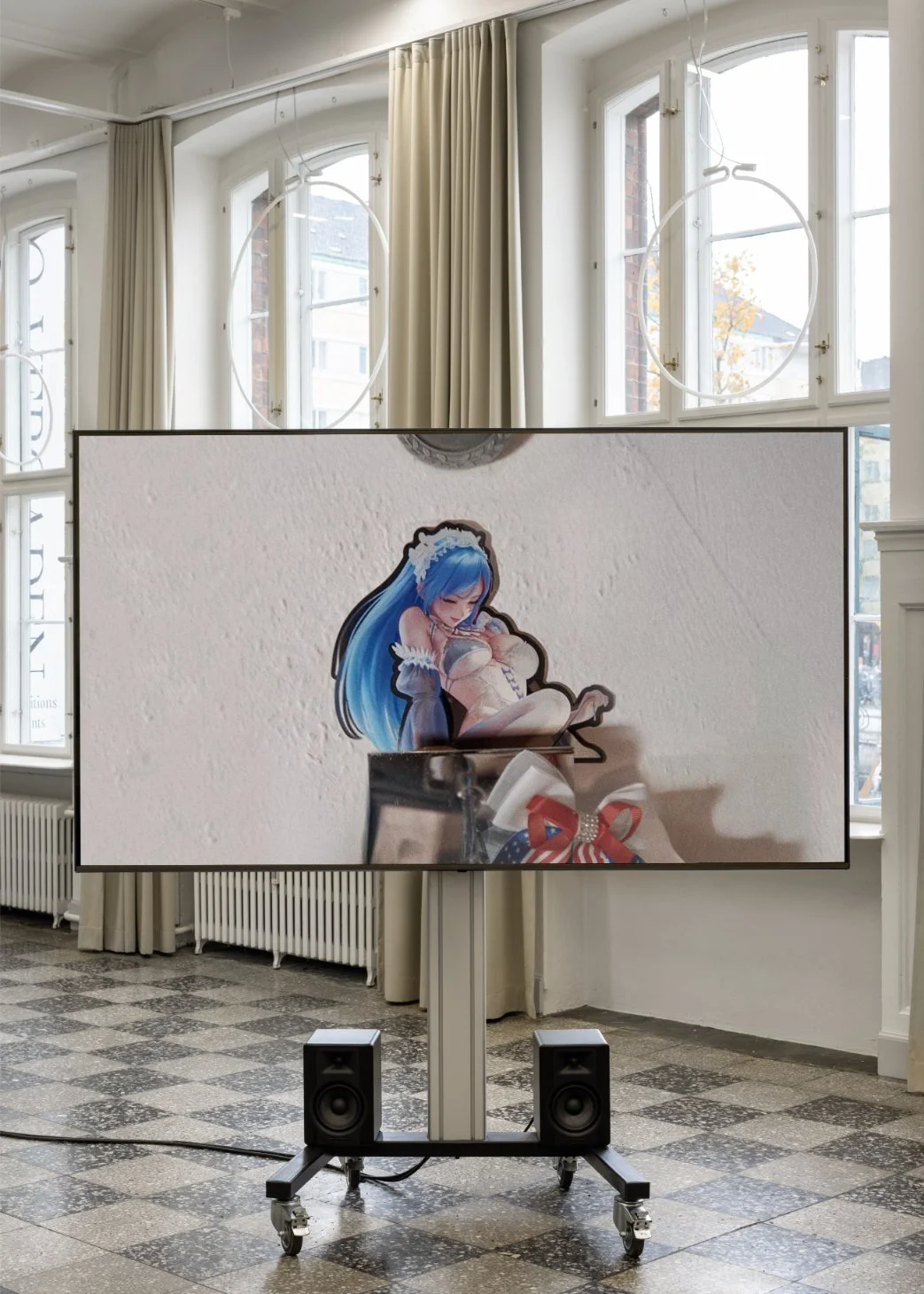
Hart Lëshkina
Boy World Effigy IIinstallation view,
O-Overgaden Institute for Contemporary Art, Copenhagen, 2025
HART: Within the performative sequences we constructed, we were interested in observing the subtle moments when an individual becomes aware of themselves as both participant and subject, both inside the structure and slightly outside it. In that sense, the choir is not simply a subject for us; it is a mechanism—a living system in which the self and the structure are constantly negotiating space.
FROST: How intentionally do you design moments of vulnerability for the subjects versus allowing vulnerability to arise spontaneously?
HART: We do not approach vulnerability as something to extract or stage. What we construct are conditions and frameworks. Sometimes those frameworks are structured with a clear beginning, middle, and end. Other times, they operate more like prompts, fragments of text, behavioral scores, or spatial instructions that participants must navigate. The architecture might be defined, but what unfolds inside it is not fixed. For us, the situation has to be actively inhabited. It cannot feel predetermined. We are less interested in directing an emotional outcome than in observing how individuals move through a system we have proposed. The framework establishes rhythm, alignment, and pressure. Within that structure, there is always something uncharted.
LËSHKINA: Vulnerability tends to surface in that uncharted space. In the hesitation between gestures, in the recalibration of posture. In the moment when someone becomes aware of themselves inside the choreography. Often it is subtle rather than dramatic. A breath that falls slightly out of sync. A gaze that lingers. A recognition of being seen.
HART: We remain responsive to those shifts. The process is reciprocal. If something unexpected emerges, we adjust in real time. So, there is intention in the architecture of the situation, but not in scripting fragility. We build the container. The interior remains alive. Vulnerability is not imposed. It arises through navigation, through friction within structure, through the tension between control and surrender.
FROST: Where does this work place itself in your overall practice?
HART: Boy World Effigy II sits in close dialogue with many of the conceptual threads that run through our work. We repeatedly return to questions around collective identity, systems of behavior, and the subtle mechanics through which individuals locate themselves within larger structures. At its core, our practice examines how individuals are shaped by systems they both inhabit and reproduce. We are drawn to moments where identity feels unstable, where the boundary between authenticity and performance begins to blur. Much of our work operates within that tension between interiority and external structure, between instinct and choreography. Our broader practice often stages constructed environments in which figures appear suspended between roles. They are neither fully autonomous nor fully controlled. There is often an undercurrent of ambiguity around who is leading, who is following, who is observing, and who is being observed.
LËSHKINA: Boy World Effigy II intensifies these ongoing concerns. Conceptually, it brings together several threads that have long been present in our work: the collective body, ritualized behavior, the aesthetics of discipline, and the quiet negotiation between agency and conformity. We have always been interested in how power circulates, through gesture, posture, repetition, and shared codes. The choir becomes a concentrated site where these dynamics are made visible. In this work, that ambiguity is amplified through the structure of the choir itself. The collective voice produces unity, yet each individual must continually modulate themselves in relation to others. It becomes a choreography of mutual surveillance and mutual dependence.
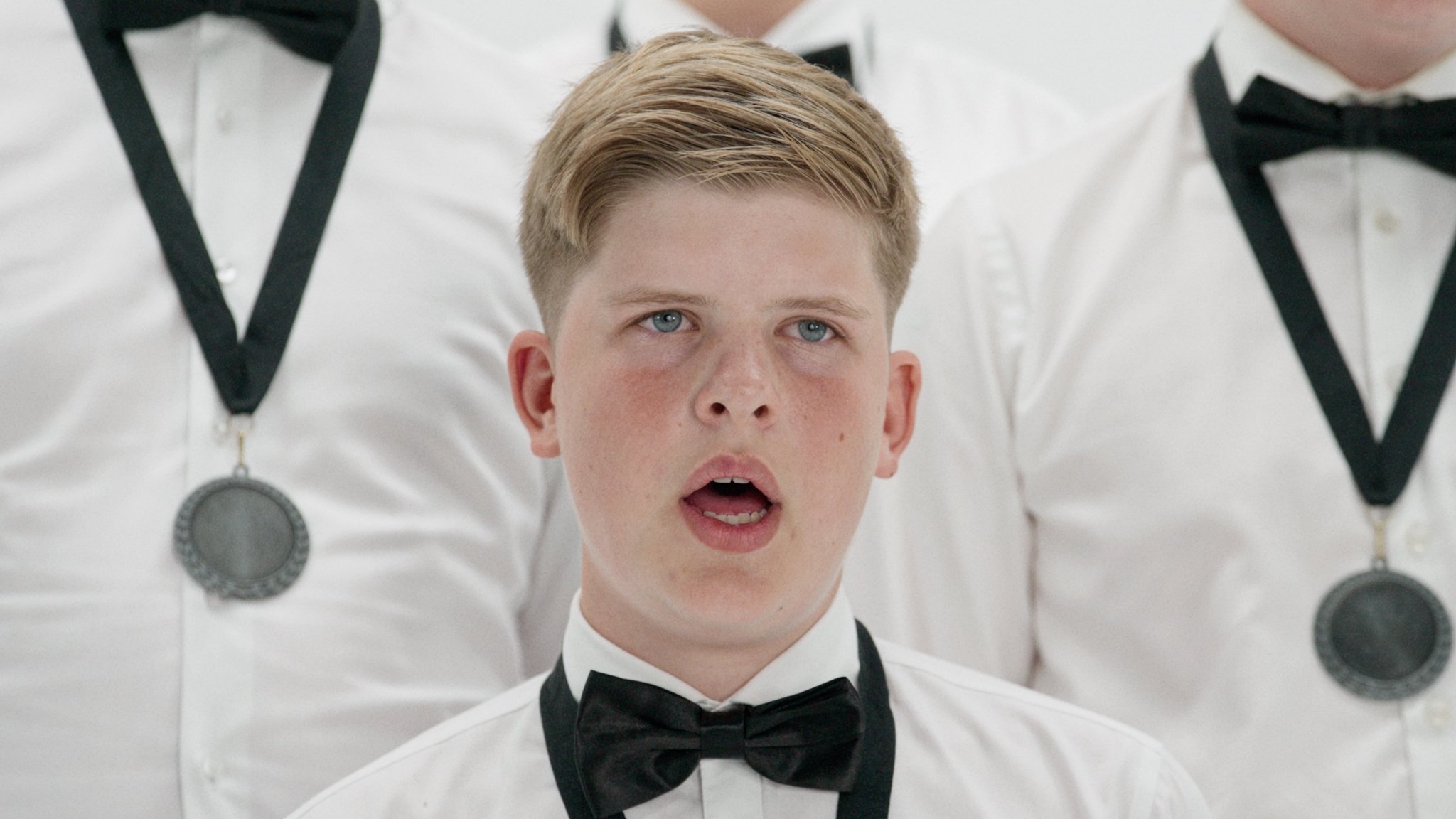

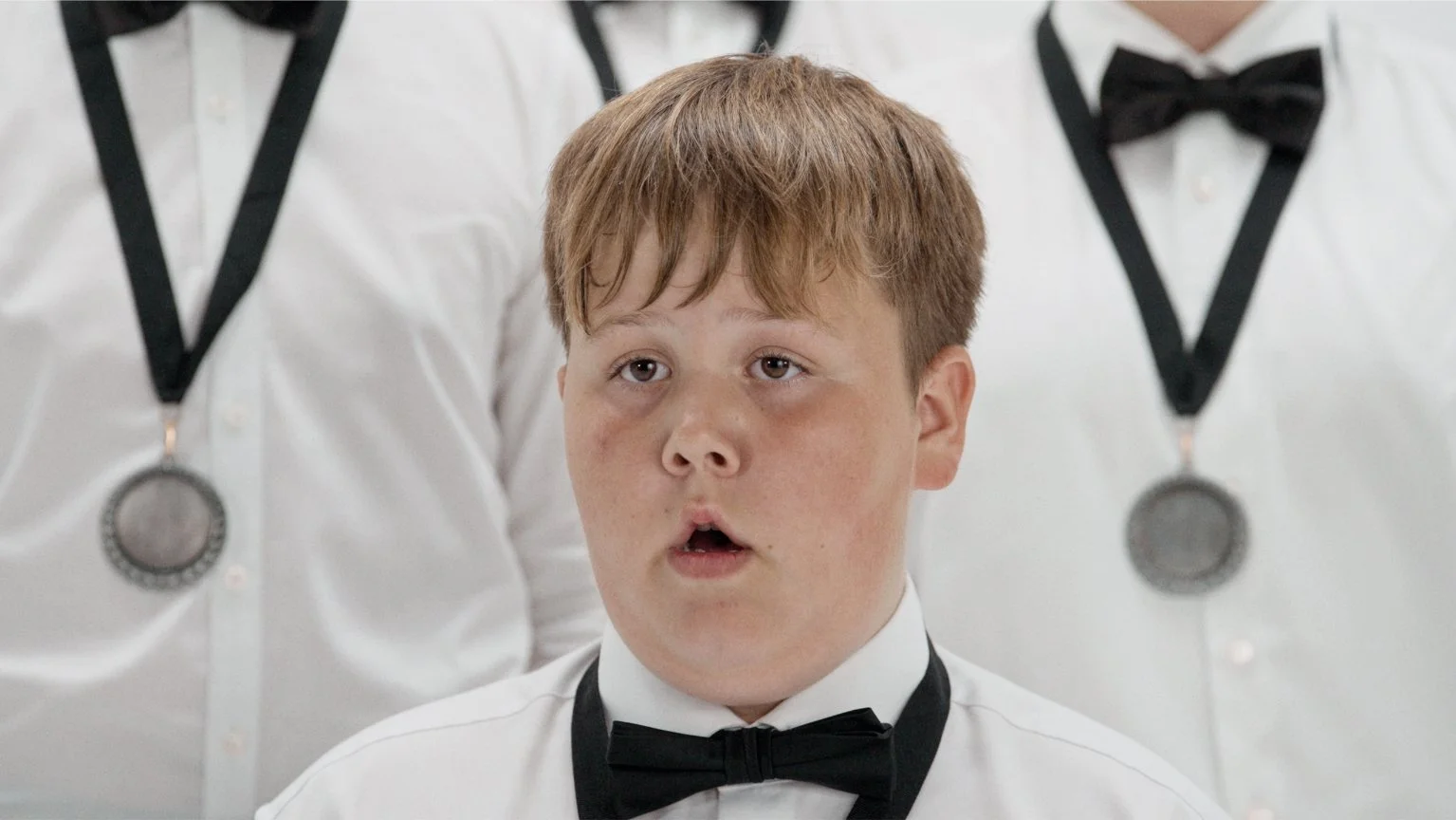
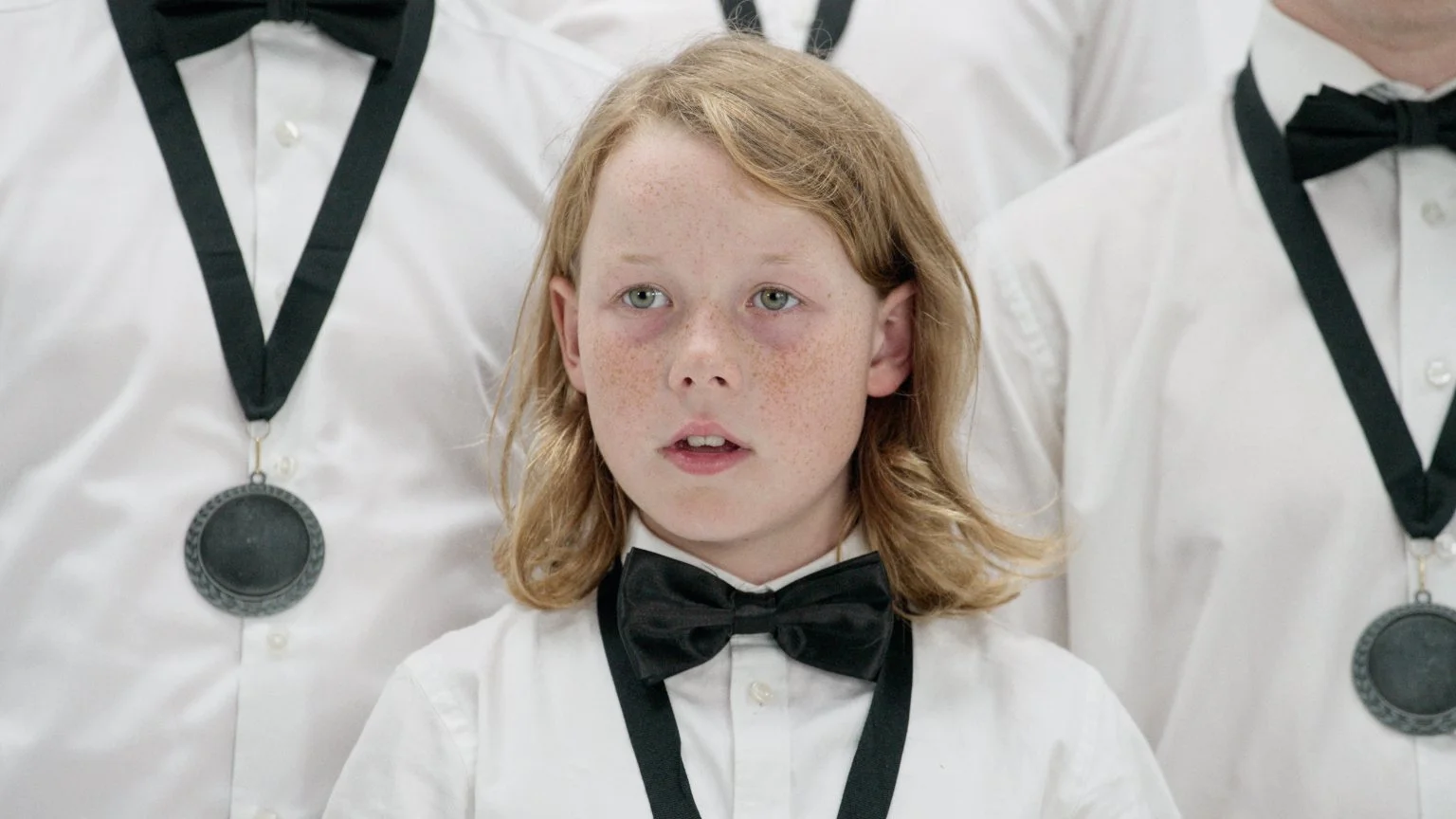
Hart Lëshkina
Video stills from Boy World Effigy II, 2025
FROST: Could you elaborate on how the installation’s spatial and sonic structures reveal some of the core principles of the work?
HART: In Boy World Effigy II, the choir is not simply a subject but a living architecture. It embodies structure. The individuals inside it enact a system that is at once protective and constraining. That duality mirrors a recurring tension within our practice: systems that nurture while also demanding surrender. The installation format allows these ideas to unfold spatially. The four-channel structure creates simultaneity rather than hierarchy, while the eight-channel sound circulates through the space, shaping the viewer’s physical and perceptual experience. Video, spatial composition, and sonic choreography operate together as a single organism. They are all independent structures that function as a whole.
FROST: How does the concept of surveillance appear in your practice?
HART: Surveillance enters our work less as a literal device—we are not usually depicting overt systems of monitoring. Instead, we are interested in the internalization of being seen. Across several projects, we construct environments and personas where figures are acutely aware of one another. Individuals observe and calibrate themselves in relation to others. Posture shifts, gestures become slightly heightened. A performance emerges because the presence of the collective generates a field of mutual awareness. It operates through proximity, repetition, and shared codes. In group formations, choreographed sequences, or ritualized behaviors, there is often an undercurrent of self-regulation. The body adjusts itself before it is corrected. The performance precedes the command. We are interested in that moment where discipline has already been absorbed.
Surveillance also appears in our work through the idea of the avatar and the projection of potential selves. In contemporary digital culture, identity is constantly mediated through screens, software, and platforms. Social media, gaming environments, and commodification of the self encourages individuals to construct versions of themselves that are simultaneously curated and monitored. One becomes both subject and spectator of one’s own image. The self is performed in anticipation of being seen and quantified.
We are drawn to that loop, the way projection becomes a form of self-surveillance. In our work, figures often appear aware of their own image, as if inhabiting a version of themselves that is slightly externalized. This tension between embodied presence and projected persona mirrors broader digital conditions where visibility and validation are intertwined. Spatially, we sometimes destabilize the viewer’s position. There is no singular point of control. Perception becomes fragmented or distributed. The viewer is implicated in the act of watching while simultaneously feeling watched by the image or the environment itself. Surveillance becomes reciprocal.
LËSHKINA: We like the idea that systems reproduce themselves through participation. Surveillance is not only imposed from above. It is sustained laterally, through imitation, alignment, aspiration, and desire. That tension between agency, projection, and self-monitoring continues to surface in different forms across our practice.
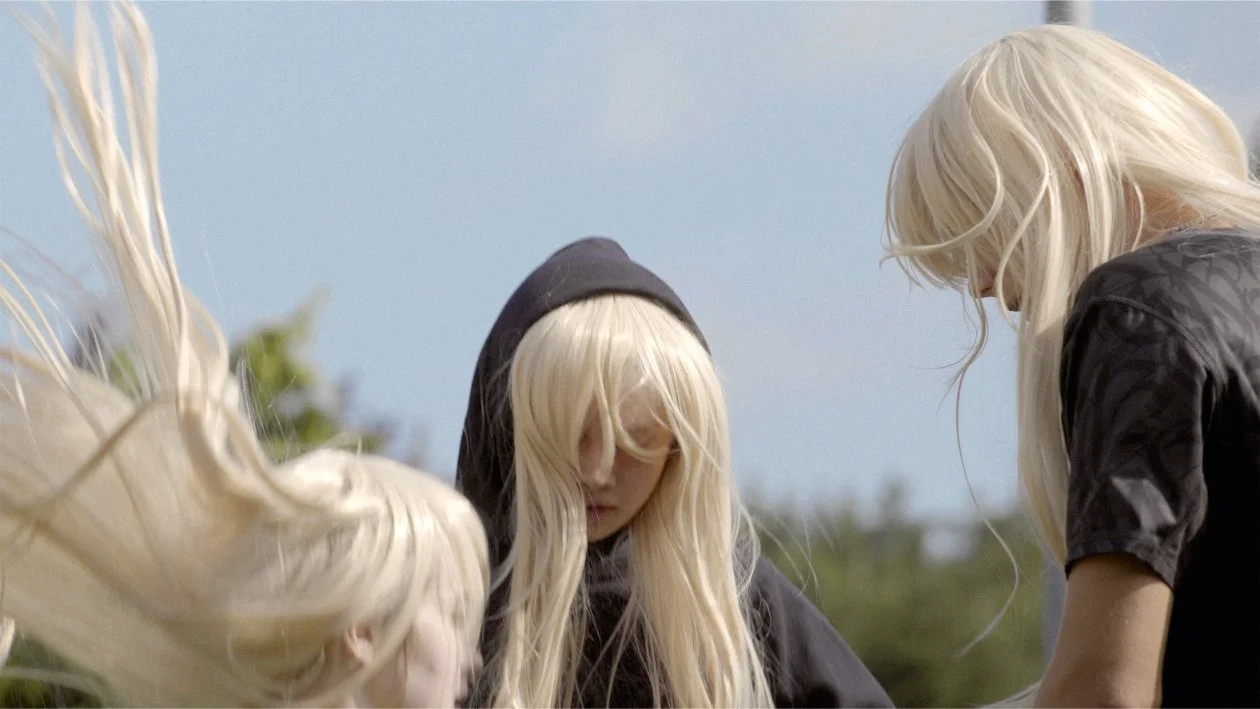
Hart Lëshkina
Video still from Boy World Effigy II, 2025
FROST: How do you build the peripheral world around a work, and how does it feed back into the piece?
HART: When we make a work, we are always building a world around it and a psychological ecosystem, both before and after it takes form. Creating on the periphery is part of our process, not something separate from it. The work develops through an expanding system of materials, ideas, and interventions that exist in dialogue with one another. This includes text pieces, drawings, manipulated images, collage, painting, and collected artifacts that we alter and work with over time. These elements are not supporting material but part of the same body of thought, each holding equal significance within the work’s evolving language. For us, this process is ongoing. The peripheral world continues to evolve alongside the work itself, shaping how it is experienced and understood, and ultimately becoming inseparable from the piece.

Hart Lëshkina
Scroll 3, boy 5 (Boy World Effigy II), 2026
C-type prints with oil stick, and charcoal on paper, digital print on vellum, oil paint and ash
FROST: What attracts you to the tension between beauty and dysfunction?
LËSHKINA: Beauty is not something we set out to pursue when making the work. It is not a goal or a guiding principle. If moments read as beautiful, they emerge as a byproduct of form, alignment, or atmosphere, not as an objective. What draws us is the space between cohesion and fracture. We are interested in the instability beneath surfaces that appear resolved. Harmony is compelling to us precisely because it contains the possibility of collapse. A system that functions smoothly is also one that demands calibration, repetition, and containment. Within that structure, dysfunction is not an interruption from the outside. It is latent and embedded.
Rather than opposing beauty and dysfunction, we are interested in the space where coherence begins to destabilize. It is where realization occurs: an individual or environment conveys both its participation and its function within a structure, and its distance from it.
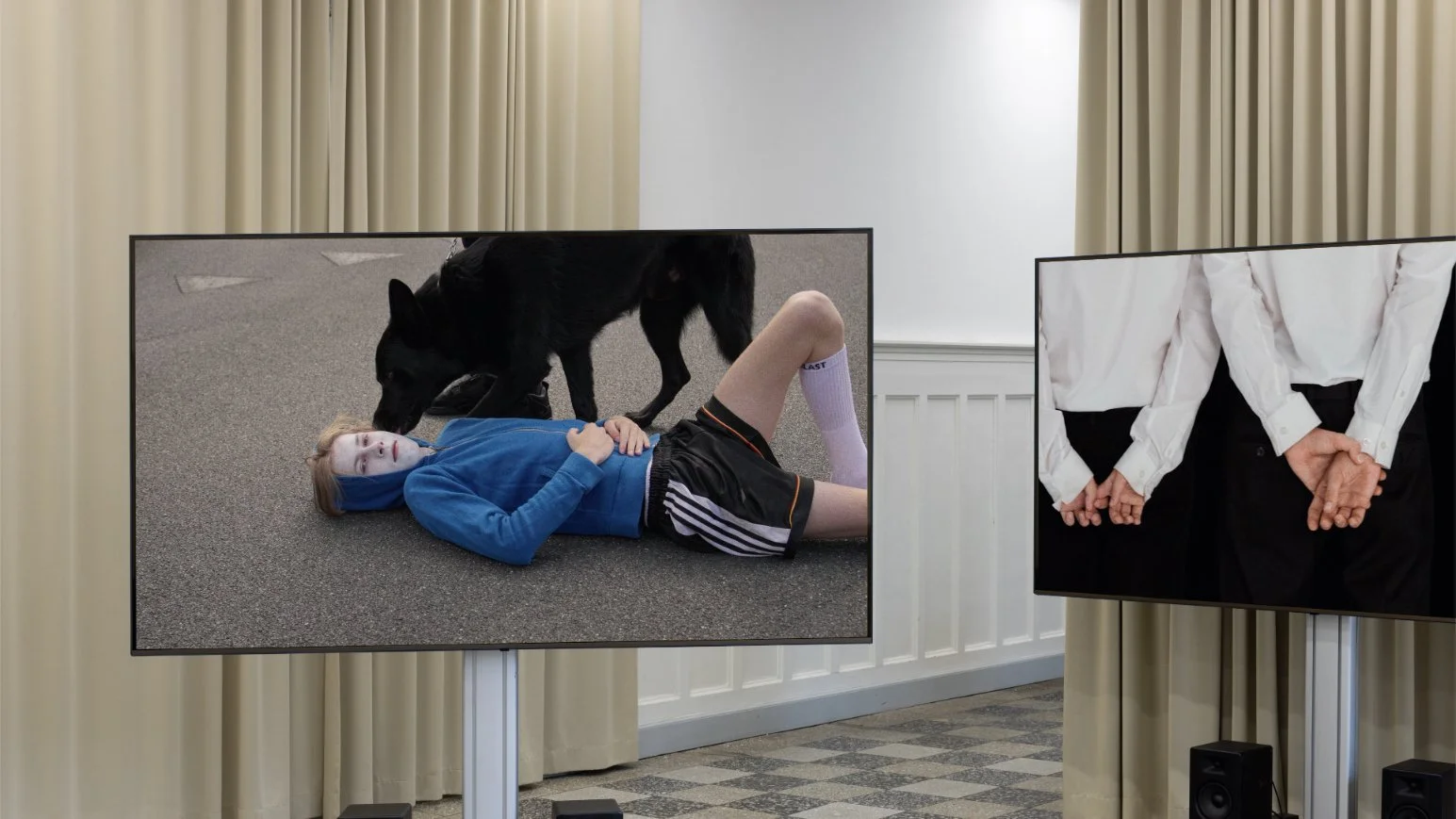
Hart Lëshkina
Video stills and installation views from Boy World Effigy II
O-Overgaden Institute for Contemporary Art, Copenhagen, 2025
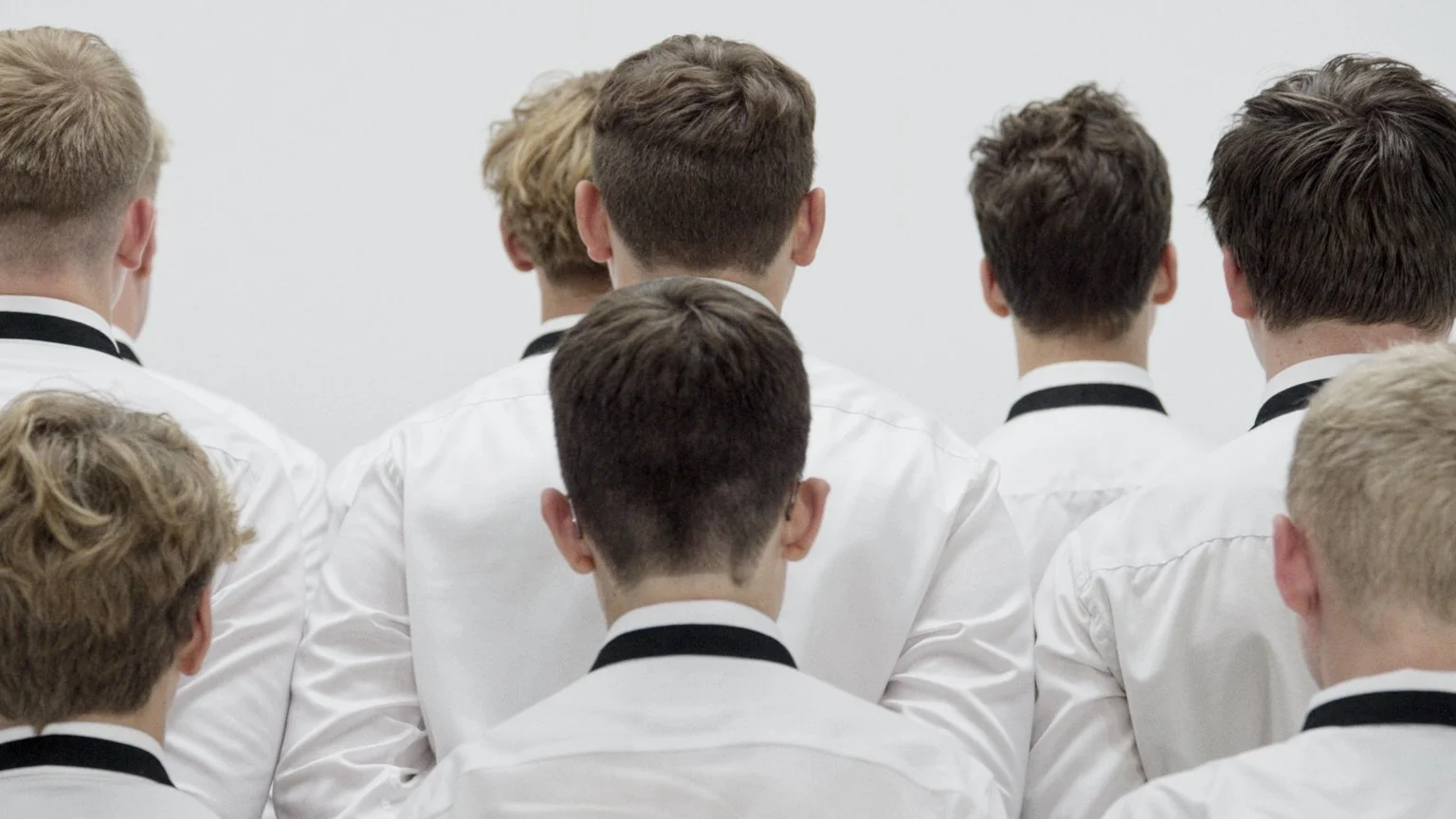
Hart Lëshkina
Video stills and installation views from Boy World Effigy II
O-Overgaden Institute for Contemporary Art, Copenhagen, 2025

Hart Lëshkina
Video stills and installation views from Boy World Effigy II
O-Overgaden Institute for Contemporary Art, Copenhagen, 2025
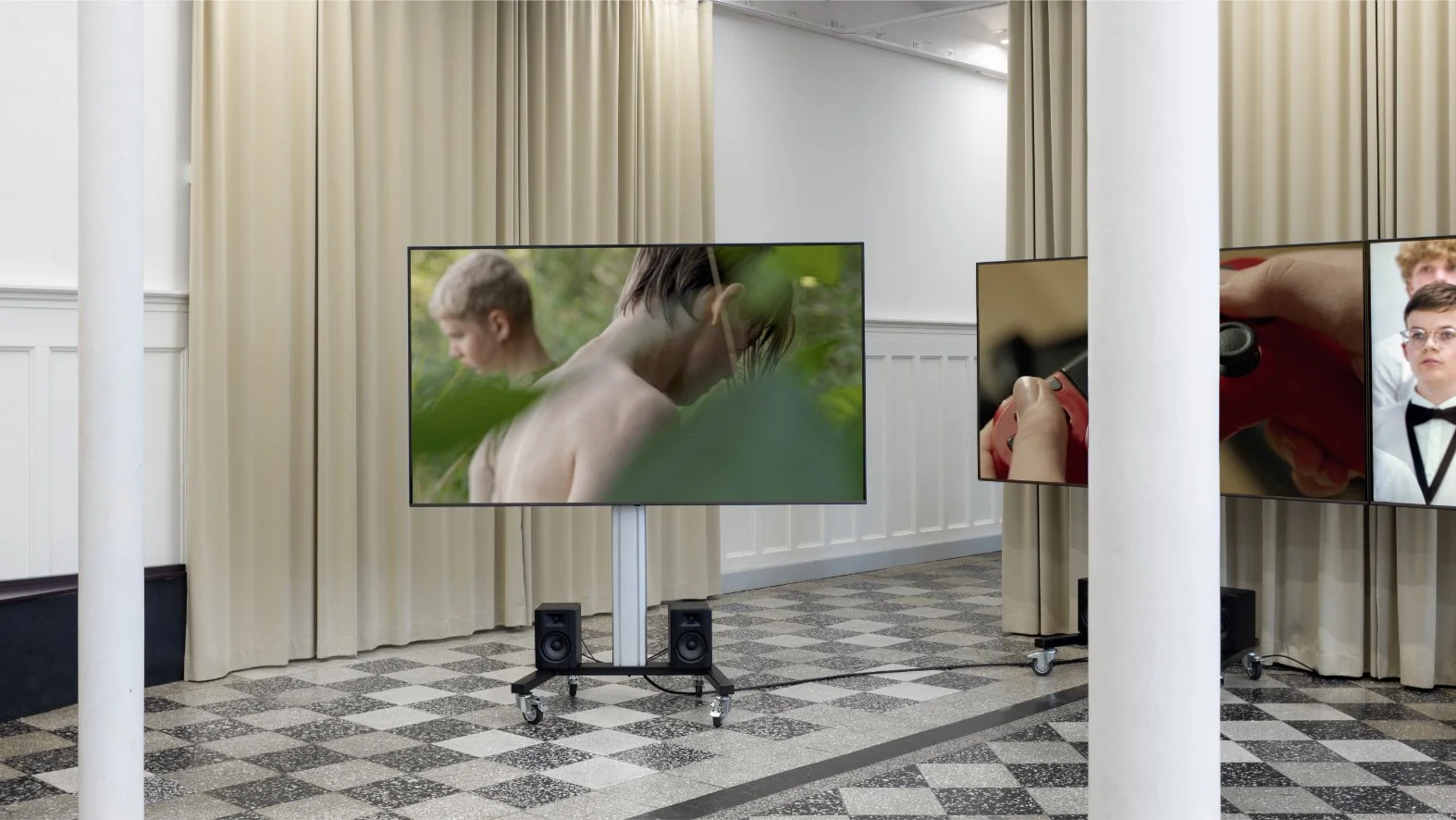
Hart Lëshkina
Video stills and installation views from Boy World Effigy II
O-Overgaden Institute for Contemporary Art, Copenhagen, 2025
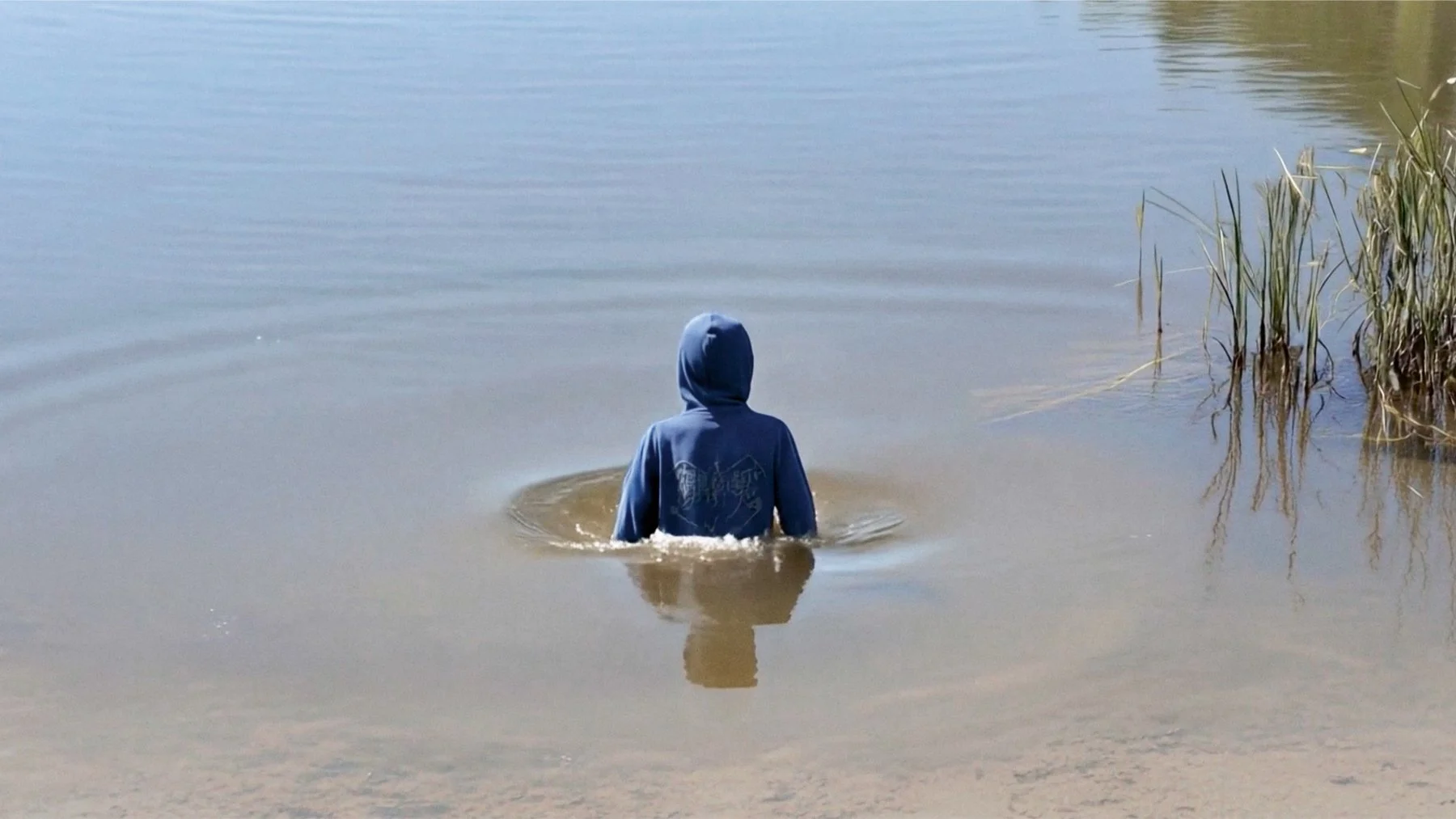
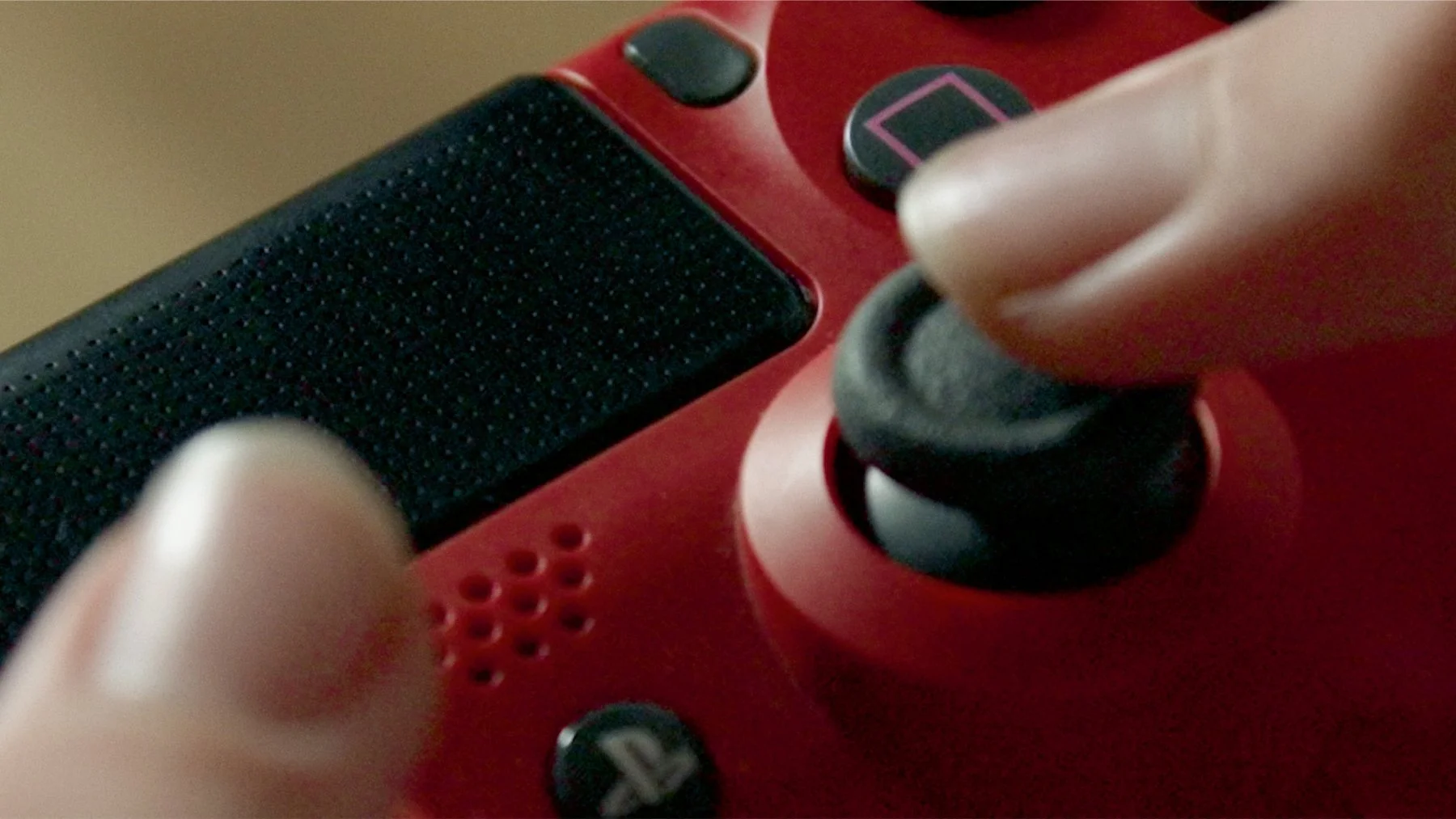
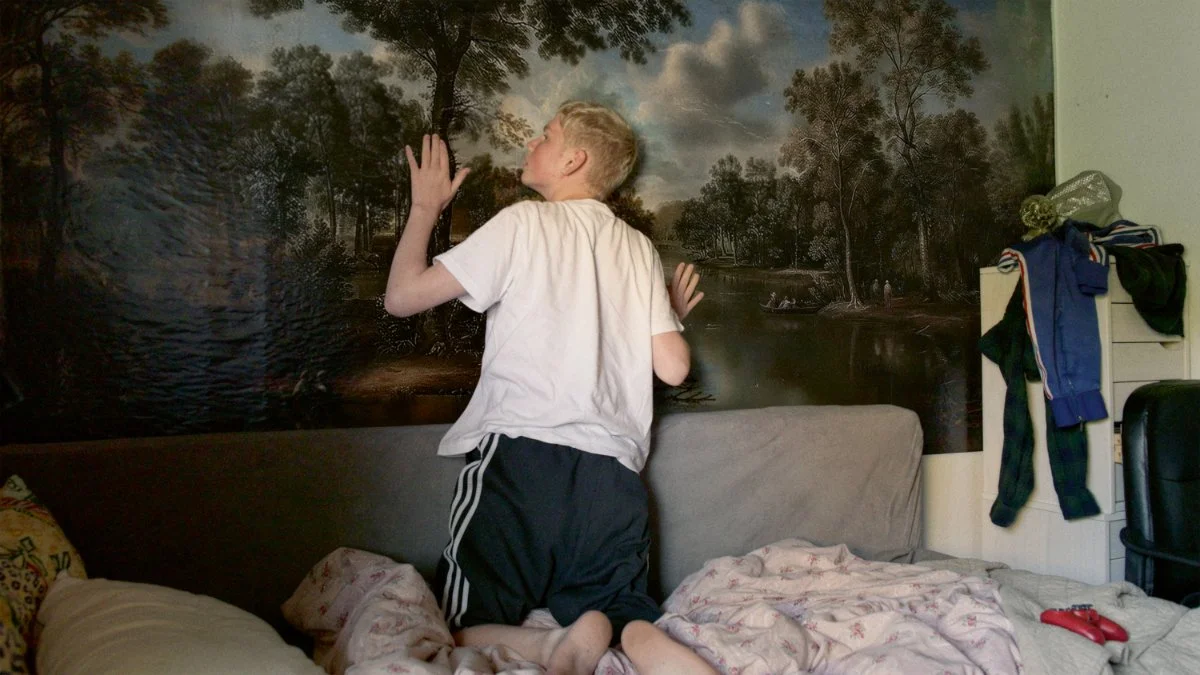
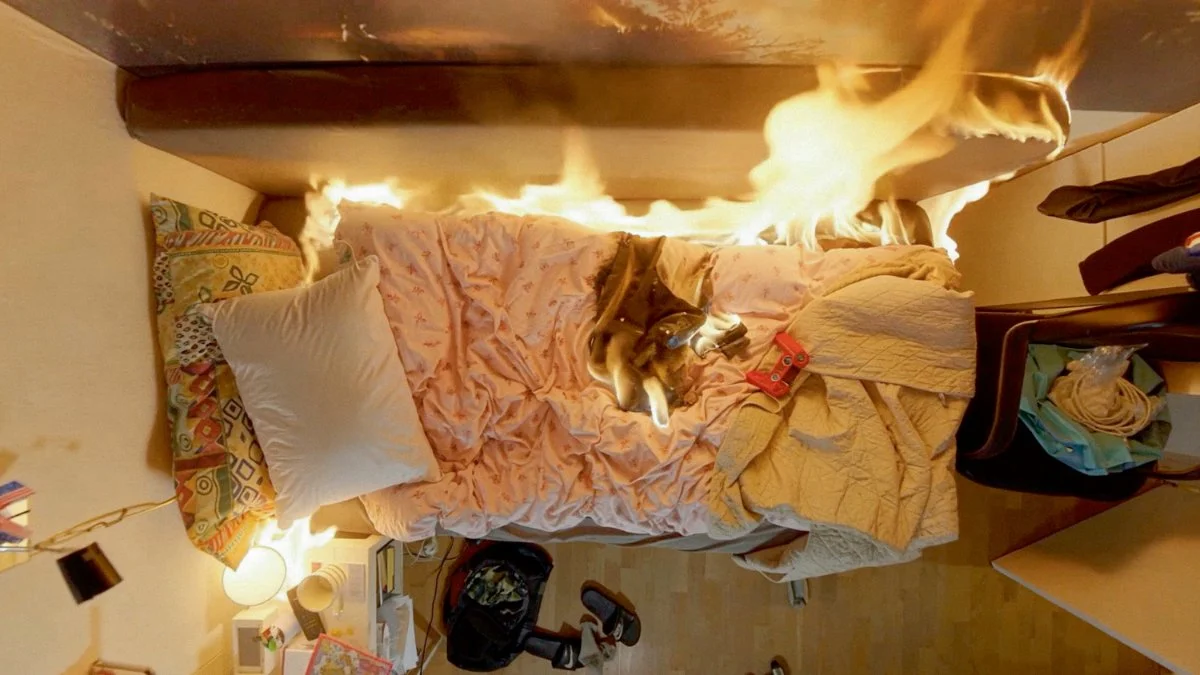
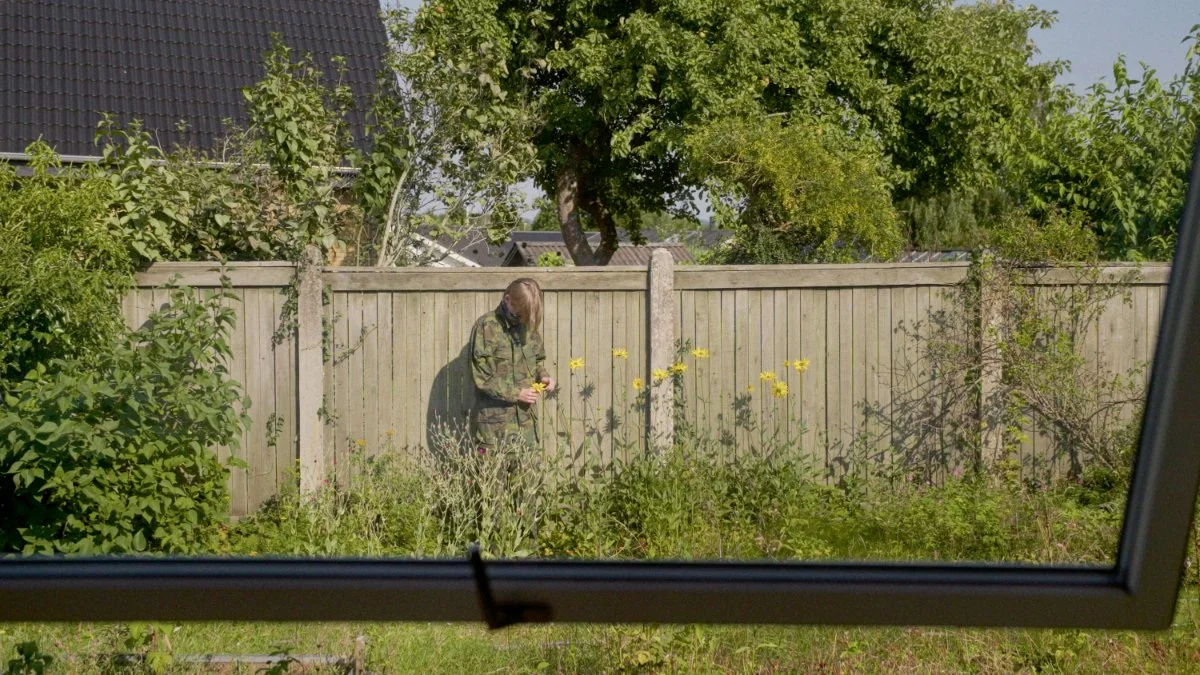
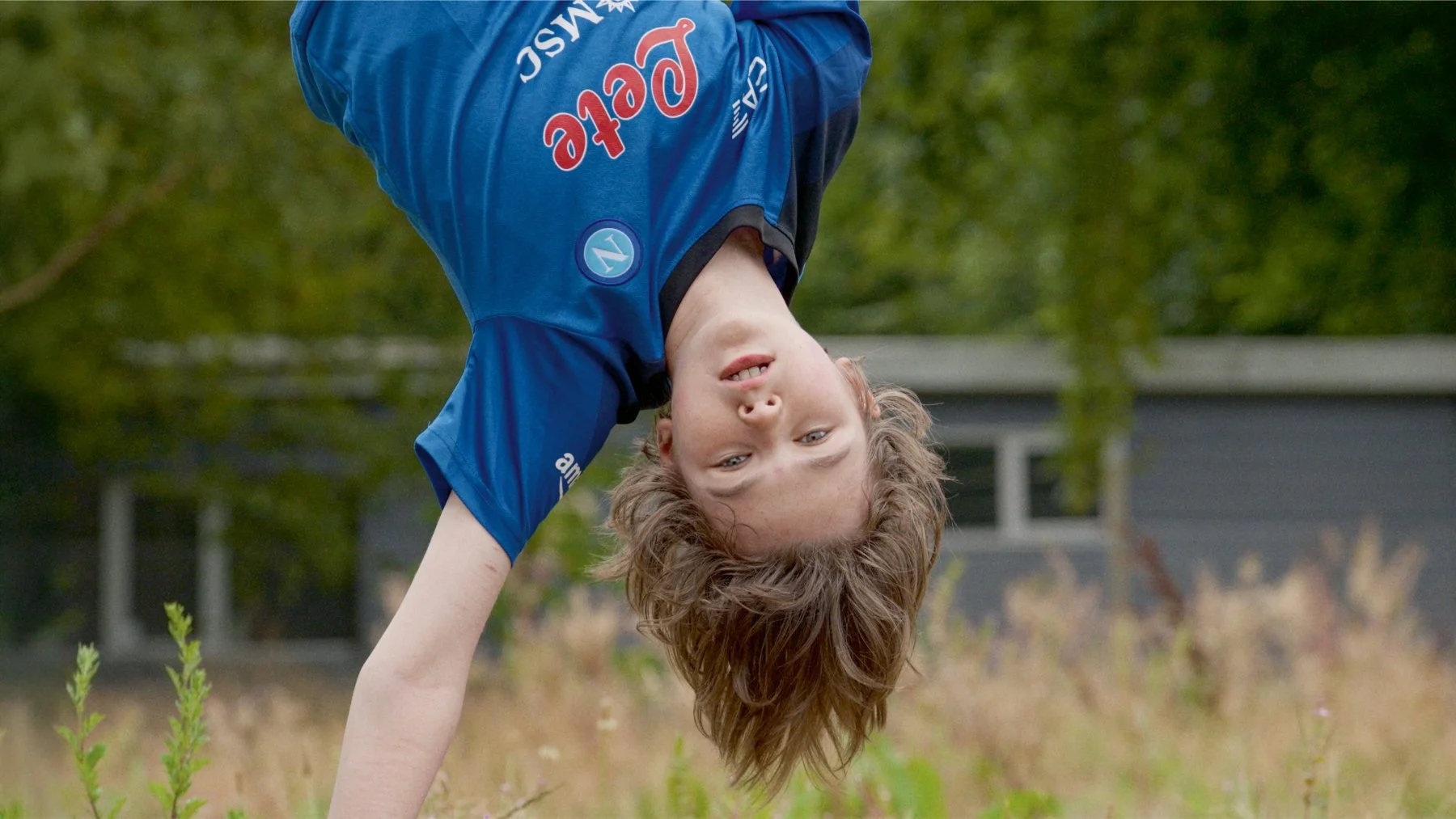
FROST: How does the type of anonymity that digital-ness allows for affect the capacity for vulnerability or authenticity?
LËSHKINA: We do not experience digital-ness primarily as concealment. We experience it as a space of projection and rehearsal. What is often dismissed as anonymous or unreal can, for many individuals, be the first site where unrealized selves are articulated. The avatar, the curated image, and the constructed feed are not simply masks. They are speculative embodiments. The face someone constructs online is sometimes closer to the face they wish they woke up to. Digital space becomes a laboratory for identity. It allows desire to take form visually before it is fully lived. That process carries vulnerability. To project a potential self publicly is to expose aspiration. That gesture is fragile.
At the same time, digital-ness operates like a contemporary ritual system. It has its own choreography. Posting, editing, archiving, scrolling, responding. These are repetitive gestures performed daily, almost devotionally. Visibility functions as belief. Validation becomes a kind of communion. Participation is both voluntary and expected. In that sense, it resembles a social religion, structured by codes, aesthetics, and collective witnessing.
What complicates this further is that digital identity is both fluid and enduring. The self can be revised, stylized, and reimagined, yet it is also documented and stored. The projection becomes an archive. The archive becomes memory. Authenticity is not something that exists outside of this structure. It is negotiated within it. Identity is iterative. It is performed in relation to others. Digital-ness does not simply obscure the self. It becomes a stage where aspiration, embodiment, surveillance, and longing intersect.
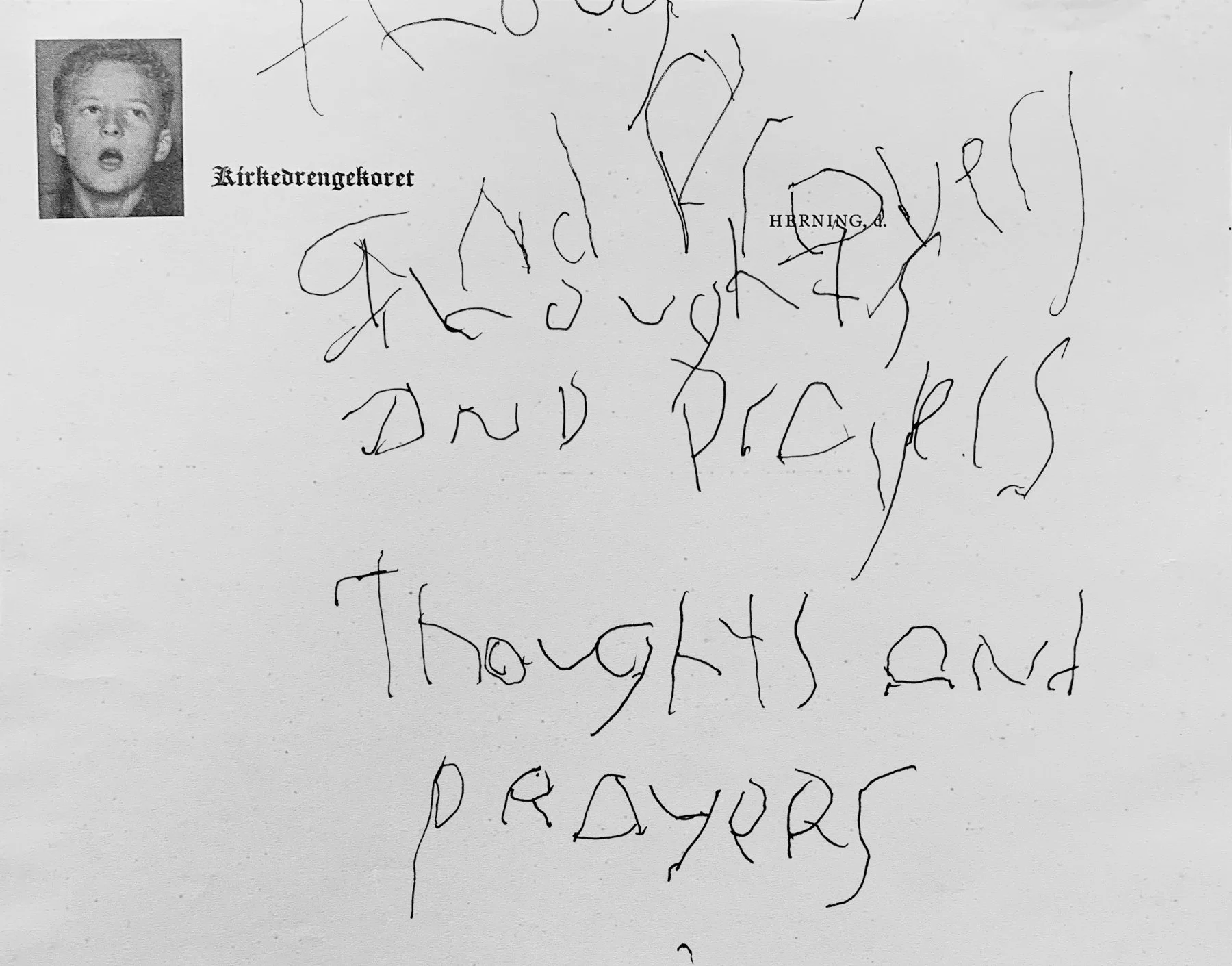
Hart Lëshkina
Thoughts, Prayers (Boy World Effigy II), 2025
Archival Herning Kirkes Dregenkor letter head with ink
FROST: How does the horizontal reorientation alter the emotional relationship between viewer and depicted subject compared with portrait/scroll consumption?
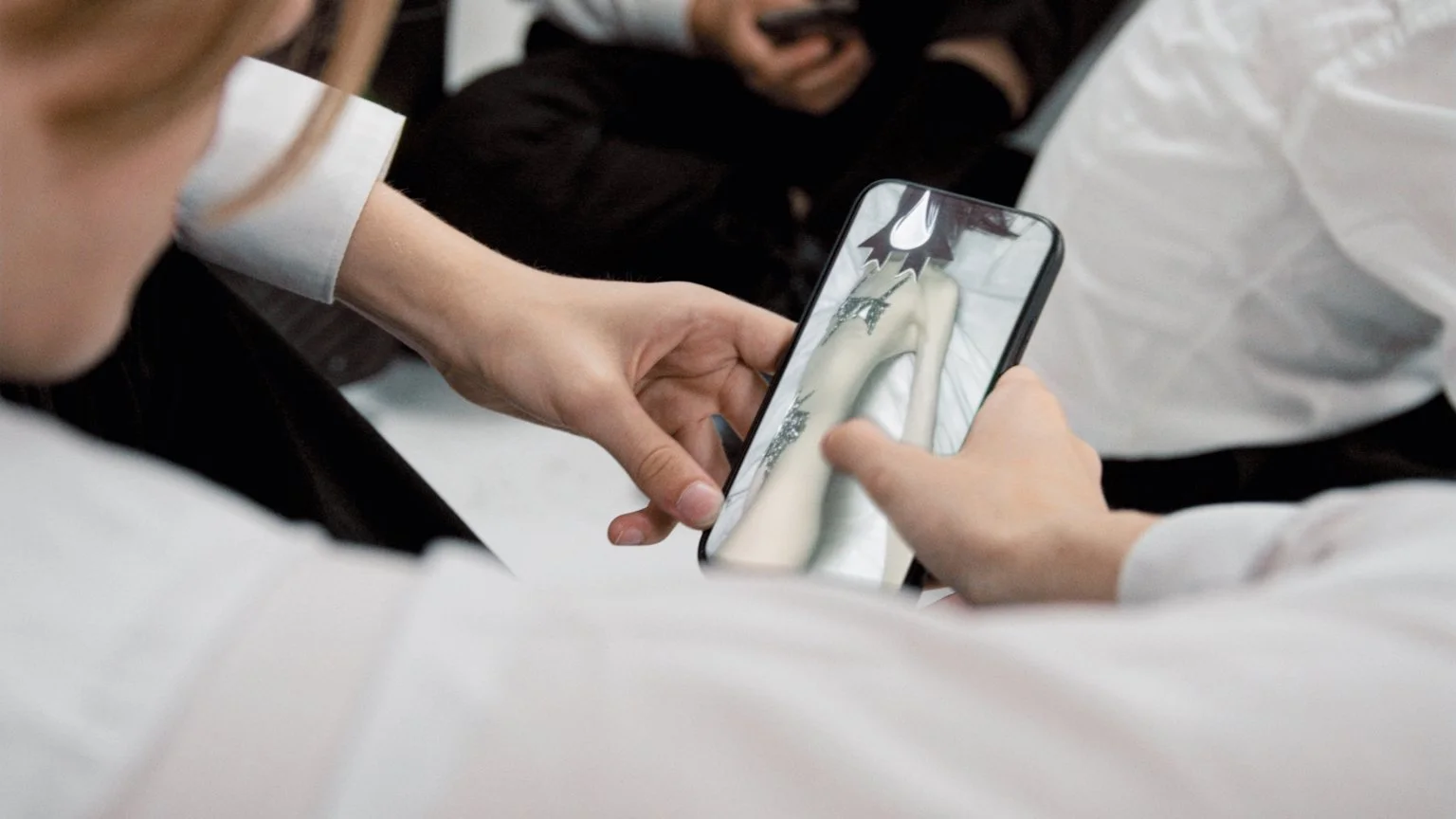
HART: With much contemporary media consumption, it is experienced through an infinite vertical scroll, often designed to be consumed in isolation. What is usually compressed into the solitary gesture of the hand becomes spatial, architectural. With this work, vertical media is reoriented and unfolds across a horizontal plane. We imagined a horizon the viewer could inhabit and gaze up rather than control. The handheld world expands beyond reach, and the viewer is no longer manipulating the media; they are confronted by it.
FROST: The fragmented style and speed of the work prevent the viewer’s possibility of seeing everything. How does this partial visibility shape the emotional narrative—what is revealed versus what remains occluded?
LËSHKINA: The fragmentation is deliberate. It mirrors conditions we are living within, where perception is continuous, layered, and interrupted.
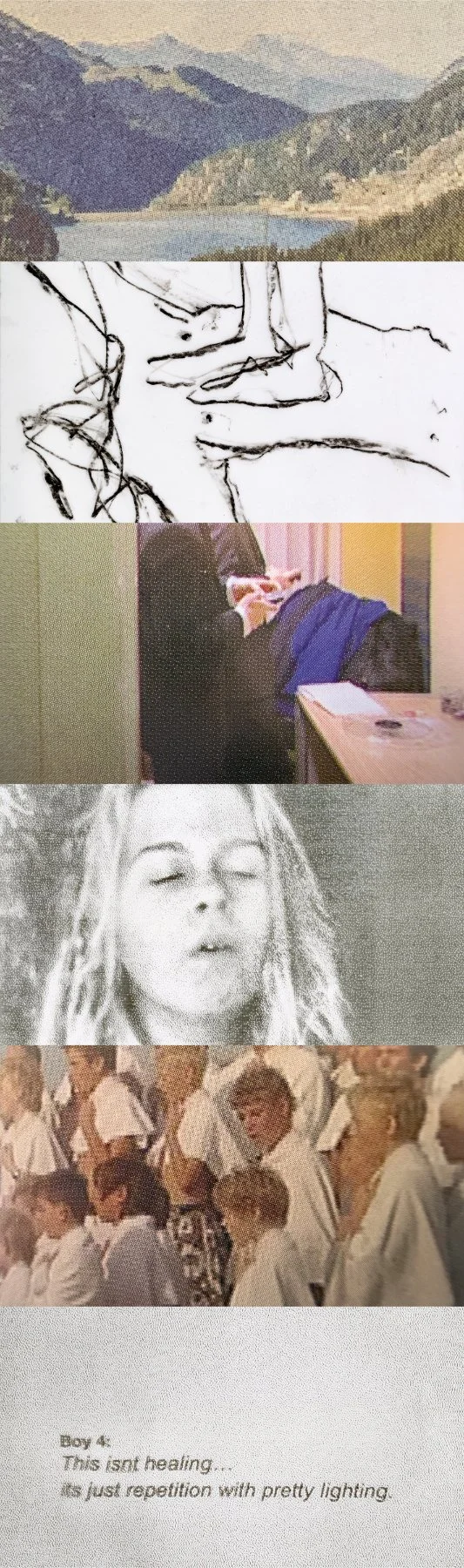
All artworks: Hart Lëshkina, Boy World Effigy II, 2025/2026 ©. Courtesy of the artist
HART: Digital media is consumed in fragments. We scroll, swipe, and screenshot. We absorb partial narratives and move on. Attention is distributed. There is rarely a singular, stable vantage point. That rhythm of acceleration and disposal shapes how images are digested. We wanted the structure of the work to echo that condition, while slowing it at selected moments just enough to make the viewer aware of it.
The four channels operate simultaneously. Something is always unfolding beyond your field of vision. You are forced to choose where to look, knowing that you are missing something elsewhere in the peripheral. That impossibility of total comprehension produces tension, not through spectacle, but through awareness of limitation. The off-screen space holds pressure. The unseen is not absent; it is presence withheld. It suggests that the system extends beyond any single image or moment. Cohesion is felt, but never fully secured. The viewer experiences the work in fragments, in overlaps, in partial alignments. That condition reflects both the internal dynamics of the collective and the broader digital environment in which perception is constantly mediated, accelerated, and incomplete.
FROST: What are your future plans for this project?
HART: We are currently in the process of developing a book with stills from this work, which we anticipate releasing in late spring. The work was conceived to function primarily within an exhibition format, as a physical and experiential installation. That immersive condition remains central. However, from the earliest stages of conceiving the scenarios, we were acutely aware of the still image. We understood that certain frames would hold independently, that they could sustain their own internal tension within the sequence of a book. In the book form, the images will become more fragmented. Without the audio and the motion, the viewer will encounter a quieter but more porous structure. The pacing is determined by the reader’s own rhythm. We like the idea that the absence of sound and motion leaves space for projection. The viewer supplies their own internal soundtrack, their own sequencing, their own interpretation of what precedes or follows each frame. In that sense, the book will not replicate the installation. It will reframe it. Hopefully, allowing the work to function through stillness, through gaps, through the space between images.
Boy World Effigy II will be shown next at the Sound and Art Festival SPOR in Aarhus this April. From there, we are planning to show the work in Paris and Los Angeles. The project was conceived to adapt to various sites, and we are currently in dialogue around how it can evolve within different architectural and cultural contexts. We are also in the midst of developing a new sound work, which we intend to show this summer in Europe, and have been finishing a couple of bodies of mixed-media and installation works we plan to show next.