A Living Spiral of Becoming: An Interview of Lily Kwong

interview by Alper Kurtul

Raised among redwoods and working at the intersection of ecology, sculpture, and community, Lily Kwong approaches art as a living system rather than a fixed object. From EARTHSEED DOME to the intimate transformations of motherhood, her practice unfolds through cycles of care, renewal, and collective belonging.

ALPER KURTUL: You’ve said you were raised by redwood trees. Do you think the relationship you formed with nature as a child also shaped the relationships you formed with people?

LILY KWONG: Absolutely. You can actually see outside—I’m in Mill Valley right now, which is where I grew up, just outside of San Francisco. It’s right by Muir Woods, our national monument, filled with redwoods—the tallest trees in the world. They really influenced me and felt like ancestors when I was growing up. They’re so mighty, so energetically powerful—especially to a sensitive little kid—that they felt like beings, more than just trees. That obviously shaped my relationship to nature. As an imaginative kid who spent a lot of time in the woods, with an artistic spirit, I started this conversation with nature that felt very real to me at a very young age. And in adulthood, I’ve worked to maintain that feeling of mystery—almost mysticism.

When you have that deep grounding in nature, you feel you’re part of an ecosystem, a community. You see how plant communities and ecological communities create resilience, and how they create richer, healthier environments. I’ve applied that to my life and my relationships with people. I take my friendships very seriously, very deeply. A lot of them feel like sisterhoods, like family. It’s like a grove of trees: everyone sharing resources underground, even if we look separate above ground. So yes, it deeply influenced how I relate to other people. Community is what makes up a deeply enriched human life.
KURTUL: So you might say you found yourself in art as a child. When do you think you really started?

KWONG: Yeah, I think I did. My parents are artists—my dad is a writer, and my mom was a seamstress and painted a lot when I was a kid. There were always crafts and storytelling and projects happening in our home.

My mom went to great lengths to create elaborate projects that I’d work on with her—whether it was decoupaging a special treasure box, building a playhouse instead of buying one, or writing stories with my father. So, I grew up in a really creative household, and also inside the container of the redwoods, which felt so rich. I was constantly building forts and, as I said, in conversation with the woods.

And I was lucky to go to a high school called the Urban School in San Francisco, which really influenced me and had a strong focus on the arts. I had a photography teacher, Chris McCall, who was the first person to truly believe in me as an artist. He got me an internship at Fraenkel Gallery, one of the strongest photography galleries here.

Frisch Brandt, one of the directors, took me under her wing. I was also taking pre-college courses at the San Francisco Art Institute. So, the Bay Area in the early aughts—being in the city and then returning home to this powerful natural environment—really set the stage for what I do now.

KURTUL: It sounds like a perfect childhood.

KWONG: It really was. I’m so blessed. It was full of creative games and projects. I really got to be a kid. Now I have a five-year-old and a two-year-old, and I’m trying to capture that experience for them in a world that’s gotten much more complex and technological. Wandering, exploring, getting lost, finding curiosity, letting yourself be bored, and then blooming again—I really hope to cultivate that in my kids.

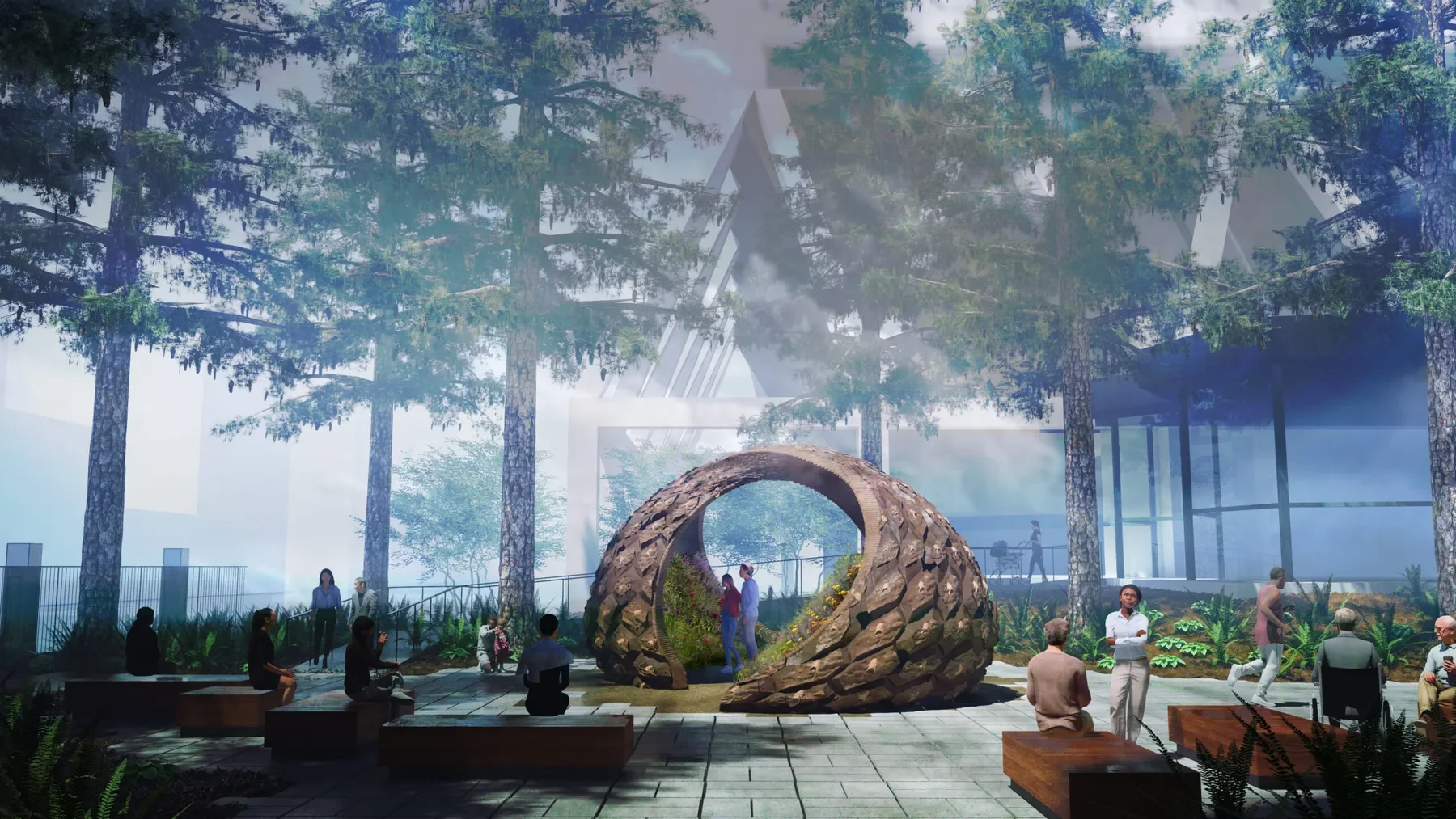
KURTUL: EARTHSEED DOME is a living structure—it grows, decays, transforms. Is there something in your own life that you allow to remain unfinished—something that evolves over time?

KWONG: Myself—my entire being. When I was younger, I was trying to construct a fixed identity and feel safe by grounding myself in something less mutable. As I get older, I feel like I’m constantly being undone and remade.

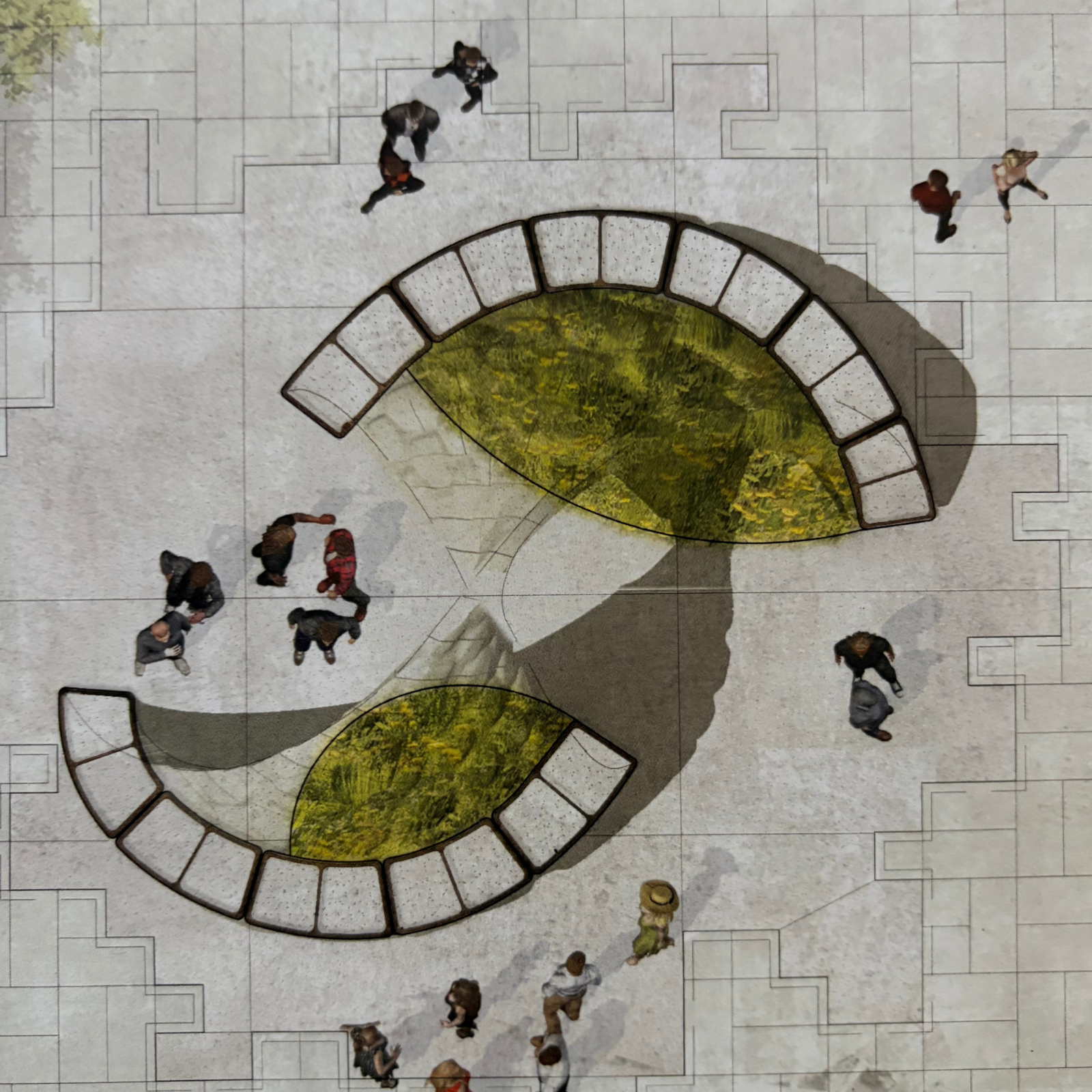
I loved working with the symbol of the spiral for Gardens of Renewal, because that’s what life is. It’s not linear; it’s a spiral of becoming, returning, folding inward, blooming again. The less attached I’ve become to my expectations—of myself and of other people—the more textured and dynamic and meaningful life has become. And it’s really been through releasing that need to “finish” who I am that life has opened up.

KURTUL: In your work, rather thana metaphor, nature is often its own character; an interlocutor of sorts.

KWONG: Absolutely. There’s a quote I love from Robin Wall Kimmerer—she says, “Nature knows you even when you are lost.” And that has always been true for me. Human beings are complex. Relationships ebb and flow. And especially now, there’s more noise than ever. In a lot of ways, nature is the only thing that makes sense to me right now.

When I feel untethered or ungrounded, and I carve out the time to sync myself back to the rhythms of the earth and the natural world, that’s when I become more regulated—more myself. Mother Earth is so generous in that way: you can bring anything to her. When I go to the woods, the jungle, the ocean with complicated human emotions, she’s always there, helping integrate those feelings. When you’re at your saddest, one long swim in the ocean can shift something almost immediately. So yes, I often feel most seen and heard by the natural world.

KURTUL: There have been numerous scientific studies conducted globally which suggest that spending time among trees and in nature has real biological effects: reducing cortisol, inflammation, releasing serotonin. It’s not pseudo-science.

KWONG: Exactly. Something is truly happening biologically, and it can change our mindset and physical wellbeing.

KURTUL: And EARTHSEED DOME also transforms the viewer into a pollinator. Allowing people to physically touch your work isn’t very common in art. Is that a personal loss of control for you, or an act of trust?

KWONG: It’s a total act of trust—and community. It never occurred to me that it could be perceived as a lack of control. The sculpture doubles as a seed-dispersal hub. We designed pockets within the sculpture where people can reach in and take thousands of seed packets. I’ve also been really inspired by Ruth Asawa—being back in San Francisco, seeing her retrospective at SFMOMA—and how much she worked with children.

So, I went to my kids’ preschool, and the children created cyanotypes. Their cyanotypes are actually printed on the seed packets. Talk about a lack of control: you’re working with 3, 4, 5-year-olds—and you’re working with cyanotypes, directly with the sun, with all the variables that come with this nineteenth-century printing technique.

The reason I invited children into it, and then the public, is that we’re practicing ecological stewardship by participating. By sharing seeds, sharing wisdom, sharing information, we’re reminded that we’re interconnected. That was one of the core intentions of the work.
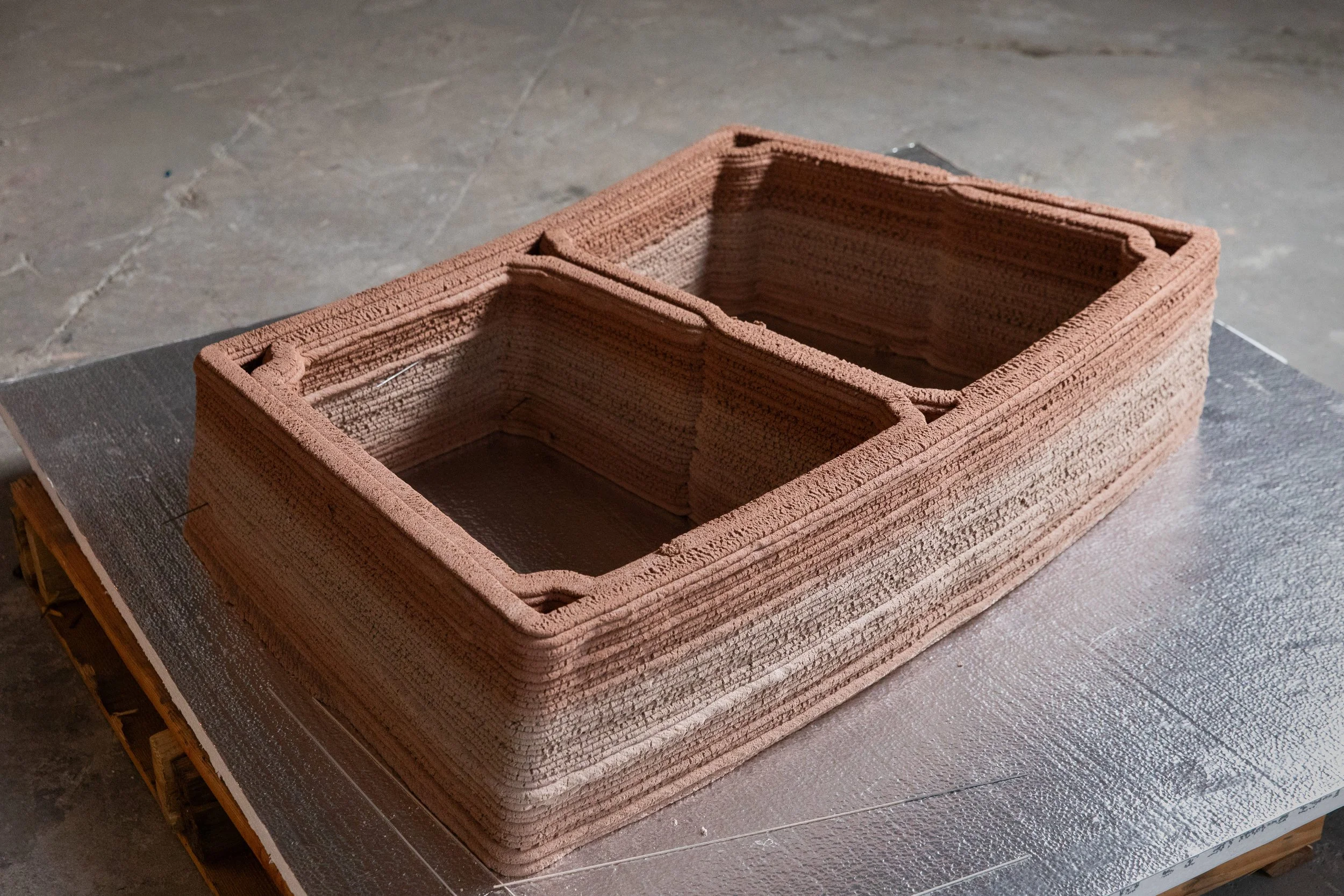
KURTUL: You’ve created work in many places around the world, but this project brings you back to the geography where you were born. Is returning home more comforting, or more confrontational for you?

KWONG: It’s been very comforting, honestly. I haven’t lived here in twenty years, and I’ve never done a piece in San Francisco. I’ve come home to make this work, and I’m a completely different person now: I’m a mother, a wife, I have my career.

It’s been surreal. The drive I take from Marin to the site mirrors the drive I used to take as a high school student—it brings back a sense memory that’s been buried for decades: this young girl with dreams and aspirations to create work and share ideas and explore. And now I’m doing it at a meaningful scale. ICA San Francisco has been an extraordinary partner—believing in this work and supporting something that uses experimental technology and building strategies.

The opening was so emotional because it brought together incredible curators, gallerists, and artists I had admired as a student, along with my former teachers, my first employer, family friends, extended family, and my godparents. I was reminded of a line I once read: “I am an accumulation of everybody who has nurtured me.” Being there, I truly felt that.

KURTUL: And where were you for the other twenty years?

KWONG: I was in New York for thirteen years, then LA for five years. Then I did a stint in Miami for a couple of years when I was learning about plants—I worked in Florida in my mid-twenties.

KURTUL: Becoming a mother—do you think it affected you and your art?

KWONG: It shifted everything. I became much more fearless and experimental with my work. Once you’ve grown a human being in your body and birthed them, you feel a deep confidence in your creative power—in your power as a creator. So then it’s like: why not try building EARTHSEED DOME? Why not experiment with photography differently?

It unclogged certain blocks and opened this portal of letting creative energy flow through you. That’s what childbirth is, and that’s what it felt like to me: letting your innate, biological intelligence take over—without overanalyzing or overcomplicating. Transferring that to making work has been really fruitful.

KURTUL: As someone who works so closely with nature, are there moments in your personal life when you feel hopeless in the face of climate change? Or does that concern feed your creative impulse in any way?

KWONG: I honestly never feel an emotional burden while creating work, because my work is focused on celebrating the abundance and miracle of nature—the true awesomeness of it. In one scoop of soil, there are more organisms than there are human beings on Earth. There are countless relationships happening—fungi, bacteria, microbiomes. It’s truly marvelous. The cycles of seasons, blooming flowers, relationships between wildlife, native species, pollinators—it’s extraordinary.

The endless questions I have about this planet, and the composition of elements that allows us to experience so much beauty and becoming—life, death, the life cycle constantly unfolding—that’s what fuels me. Where I get depressed and overwhelmed is when I read the news and think about human activity and the threats to the natural world—our lifestyle, our culture, our economy.

KURTUL: Is there a private ritual that nourishes you?

KWONG: I have a lot of rituals that give me life force, that help me move through the day and through my work. Part of my ritual when I’m making work is that I’m constantly making offerings to the land throughout the project. I shared with Madison Square Park that it felt like my offering to New York. EARTHSEED DOME feels like an offering to the redwoods. I mean that at the deepest level. When I’m installing, I bring materials and totems and objects that express reciprocity, reverence, gratitude. There are stones from my favorite beach in Mill Valley hidden throughout the Redwood Grove in Transamerica Redwood Park. For Madison Square Park, I made a big offering—seeds, spices, tobacco—around the perimeter of the work.

For people who need a place to reconnect with themselves, to grieve, to connect with one another, to celebrate nature, I want them to know I consider these works sacred spaces for myself—and I extend that offering to anyone who visits.

KURTUL: Beyond your work, what makes you most yourself?

KWONG: I think what makes me who I am is connecting more and more to my original essence every day. Having children has allowed me to connect to my inner child more—spontaneous curiosity, joy, that original essence.And I think it is an energetic practice to stay in touch with that person. It does make me more myself.

The Perfect Specimen: An Interview of Lauren Lee McCarthy

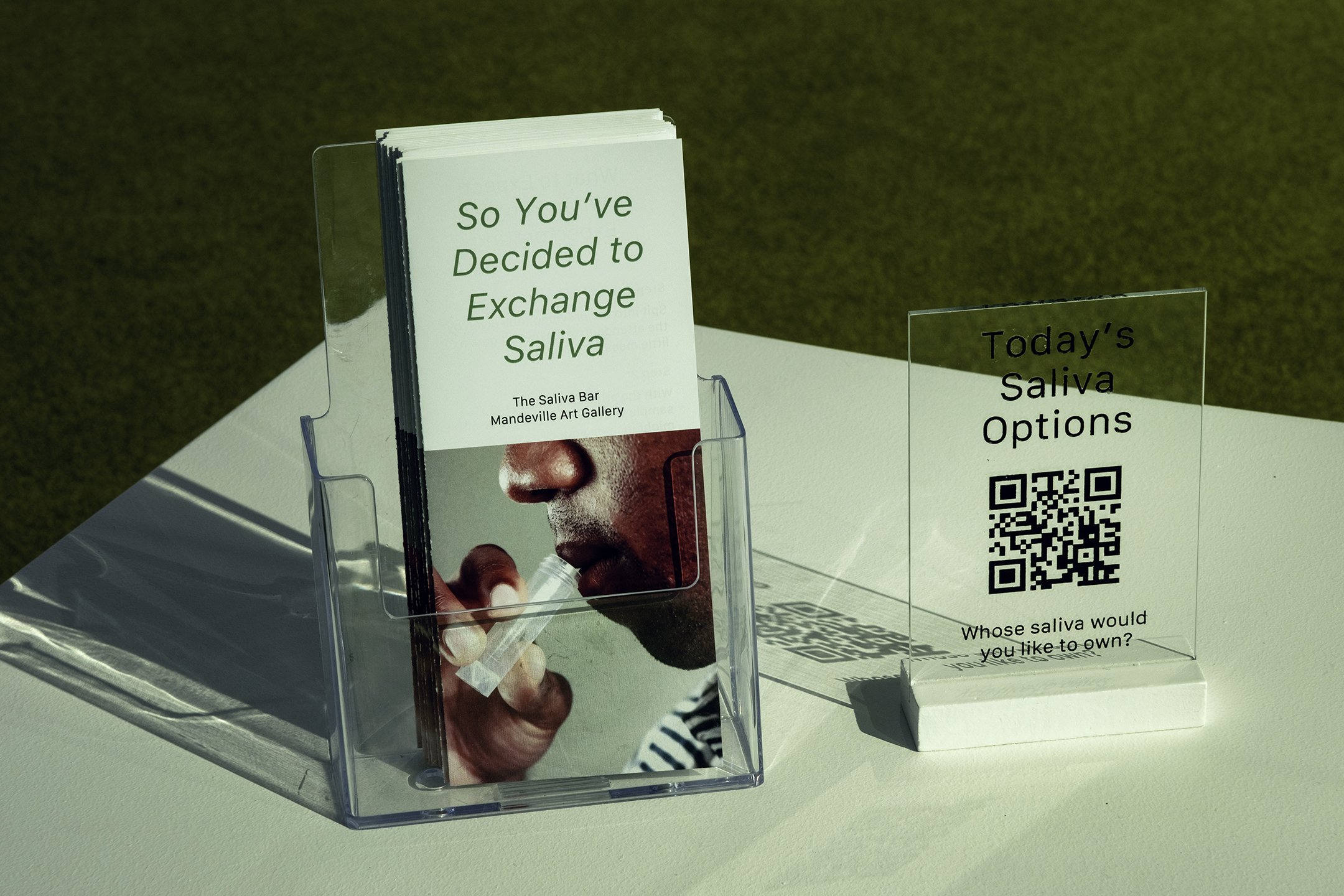
medical pamphlet with man spitting into vial says "So You've Decided to Exchange Saliva"

Installation view, Lauren Lee McCarthy: Bodily Autonomy at UC San Diego Mandeville Art Gallery. March 2-May 25, 2024. Photo by Pablo Mason. With support from Creative Capital.

interview by Doreen A. Ríos

When asked to read through a long list of terms and conditions before giving consent, most of us have developed a reflexive response of scrolling to the bottom and trudging ahead. There’s a miniature risk/benefit analysis that we all conduct, which includes a completely unknown potential risk in the distant future, and the near future benefit of moving on. Time is such a valuable commodity that we regularly find ourselves sharing everything from personal data, browsing data, biometric data, and more. Oftentimes, there’s no contract at all. You may have thought you were showing all of your friends how your looks changed from 2009 to 2019, but you were really training someone’s private surveillance software. The list of myopic, nefarious applications that we serve by giving ourselves away to faceless data farms in exchange for what often amounts to a forgettable laugh is endless. In Lauren Lee McCarthy’s Bodily Autonomy exhibition at UC San Diego’s Mandeville Art Gallery, she explores two very specific aspects of the way that we engage with science and technology. With “Surrogate,” she created an application where couples and individuals who are interested in hiring her as a surrogate mother are invited to dictate everything from her eating and sleeping habits, to her daily activities, and more. While these requests are not actually fulfilled, the application itself challenges notions of reproduction, genetic selection, and commerce. With “Saliva” she has created a saliva exchange station that is activated every Thursday from 6-8pm where visitors are invited to give and receive samples of their own saliva. Each participant is given agency to label their sample as they prefer and they provide the conditions for what happens to it (scout’s honor). Doreen A. Ríos, a PhD candidate in Art History, Theory, and Criticism at UC San Diego and an independent curator and researcher, spoke with McCarthy to discuss the implications of these technologies and the imperative within the work to embody a more transparent form of participation.

DOREEN A. RÍOS: There's a conversation within your practice about the ways that we’re not able to shape the systems for which we consent to take part, or these systems are obscure enough that we do not really know what our role is. How do you feel these two bodies of work are connected within the show and your own extended practice?

LAUREN LEE McCARTHY: I started by working on the “Surrogate project, and for me, there were a lot of questions about control—over a birthing person's body and a life before it begins. The idea of having an app that someone could use to control me as I was their surrogate was this metaphor for the ways that we try to intervene in the process of birth, as well as the desire to have that kind of control. 

As I saw these different ways that we could intervene technologically, there were questions for me about the implications of these interventions. Already, we can select features from a sperm donor, like the eye color, or the height or the race; we can screen the embryo in the uterus and decide that we want to terminate the pregnancy if it carries characteristics that aren’t suitable. The question of what is suitable or acceptable was really present for me. It's also about desires for motherhood, surrogacy and labor in that sense, and kin and family. I was speaking specifically about genetic selection, but the questions of who is a suitable person weren’t as central because there were so many different things happening. The “Saliva project was a way to highlight some of those questions, and to try and do it in a way that was more accessible and interactive. 

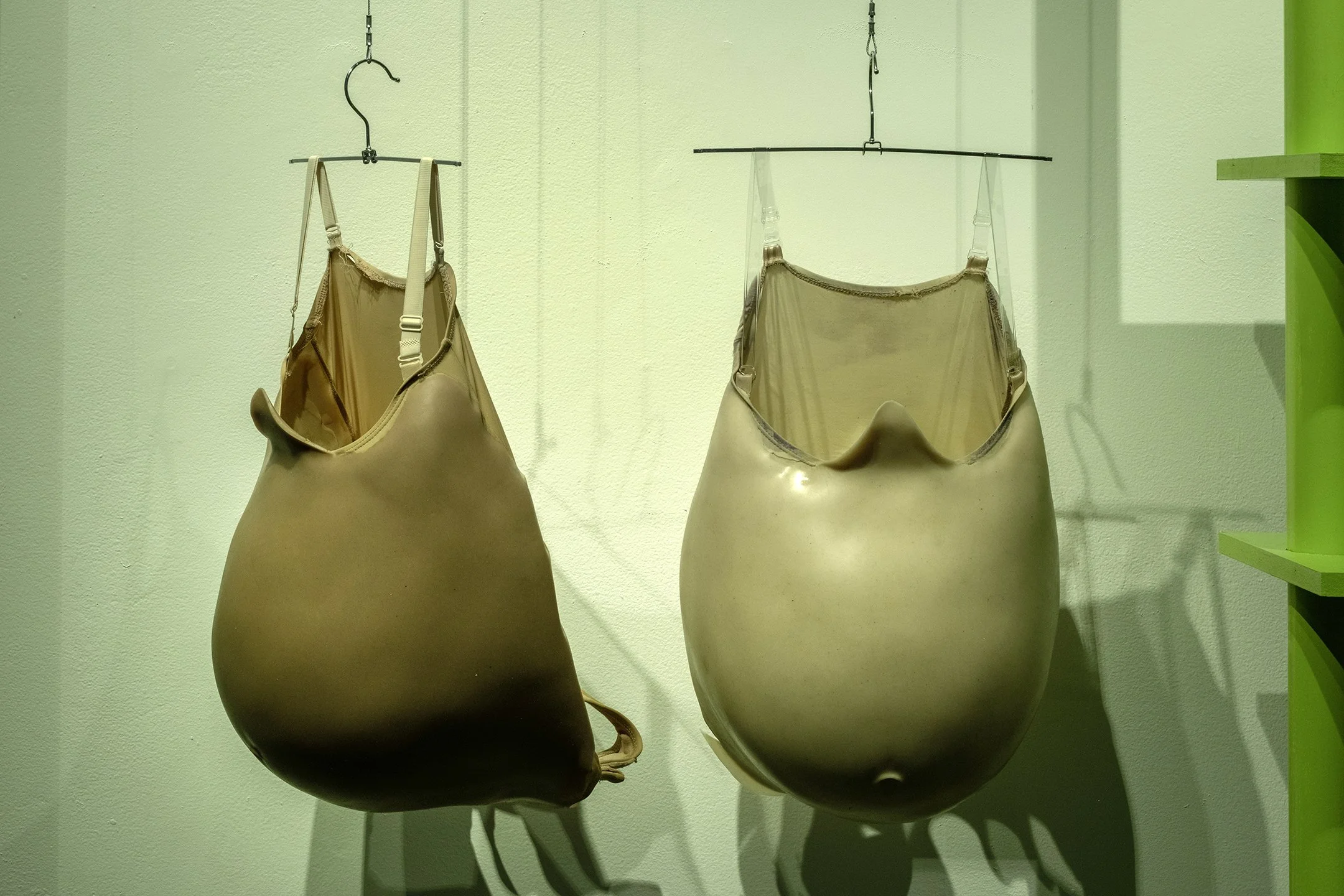
two Prosthetic Belly Devices made from silicone and electronics on clothing hangers

Prosthetic Belly Devices, 2021 Silicone, custom electronics. Lauren Lee McCarthy: Bodily Autonomy at UC San Diego Mandeville Art Gallery. March 2-May 25, 2024. Photo by Pablo Mason. With support from Creative Capital.

DOREEN A. RÍOS: This question about what's the perfect specimen really comes back to haunt us in a lot of ways—through eugenics, obviously—but in other notions of understanding what a perfect body is. Both of these projects are very much connected to the fact that they have to be embodied. The conversation that we have regularly in terms of data is the extraction of data from a body, and then this data becoming something else, whereas here it’s almost as if it was the opposite exchange. The provocation works in an embodiment rather than a disembodiment. 

LAUREN LEE McCARTHY: A lot of my work is about trying to embody some of the things that are happening around us. It can often feel very-large scale and opaque, like when we hear about AI, or about other technologies that are shaping our lives, like surveillance. We can hear about it as a concept, and it could feel scary or impressive, but it’s very hard to have a visceral understanding of it.

At the same time, I feel like we should be able to form an opinion about these technologies because they directly impact us in so many different ways. A lot of my work is trying to create situations where we can feel that human impact. I'm trying to create a metaphor for us to be able to engage at a scale that feels more personal. It's really about agency on the part of the viewer to say your opinion is important. 

DOREEN A. RÍOS: There's two very powerful moments of the exhibition when it becomes obvious that agency and governance mean very different things to many different bodies. One is the video piece where you’re doing this psych evaluation with the therapist who is trying to see if you're suitable for becoming a surrogate. There's these very specific competing moments where you ask the question “Well, can I make a decision for my own body? The answer is, “No.” And then, right next to it in the Saliva Retreat video you have an active way of trying to engage with the complexities of that, not through your own body, but through the connections that you can create in this specific setting with multiple bodies at the same time.

LAUREN LEE McCARTHY: One thing that was really important was taking the psych evaluation as a starting point, and taking what I learned going through these different reproductive processes. There's a lot of judgments based on your identity—your gender, race, and class—that are projected onto you as you go through the birth industrial complex. Many decisions that should be yours to make about your own body are taken out of your hands. With the saliva thing, there is a provocation. People are challenged to decide if they want to let go of this biological matter or not, and to whom? The whole experience is designed to walk people through the process of donating their saliva and then selecting someone else's in a way where consent and agency are central. That's in contrast to a lot of the technology that we interact with where there’s a long scroll of terms and you just hit ‘okay,’ and don't really have any idea what's happening.

We worked a lot on the language and the design. When people tag their saliva, they decide how they want to identify themselves, as opposed to other medical processes where it's very invasive—they're asking specific questions, or sometimes they're even giving you specific labels that you might not even agree with. Those shifts were very intentional and I hoped to set these things next to each other—the psych evaluation and the Saliva Retreat—so that you could feel the differences of where you, the viewer or the participant, stood in terms of your own agency.

Video installation with three people sitting at a table subtitle says "It's not a video game. It's our baby's life."

Installation view, Lauren Lee McCarthy: Bodily Autonomy at UC San Diego Mandeville Art Gallery. March 2-May 25, 2024. Photo by Pablo Mason. With support from Creative Capital.

DOREEN A. RÍOS: Having had the experience to participate in the saliva bar, for me, it also turned into a sense of responsibility when you agree to the whole process. You become responsible for someone else's saliva, and I think the roles shift in a very interesting way where now you're the one who has to fulfill someone else's wishes and limits, and you can actually consciously decide to not follow through with that.

That is also another side of this agency—and governance and privacy and surveillance and consent—that we rarely ever see. I remember coming back home with my saliva bag and the first thing I thought was, Where should I place this? I can’t just go and throw it away and say, “Cool experience, bye!” On the other hand, there are other wishes that I need to fulfill.

LAUREN LEE McCARTHY: I love how you put that. We give our personal data constantly throughout the day and it's very hard to conceptualize what that means. I think of the saliva as a physical representation of that. What will I do? Do I throw it away? Do I put it in my refrigerator? It’s a provocation to deal with it instead of something that's seamlessly moved by a system you're barely aware of. It's about creating some of that friction. 

I really like making things that extend beyond the gallery, or extend beyond the frame of what is an art piece or an art experience. It's funny to have these things that end up in your home or go out into the world and then shift or affect your life outside of that in some way, even if it's very small.

DOREEN A. RÍOS: Conversely, it also makes you consider this layer of systems and networks that we cannot opt out of, because it was never a decision for us to be part of them in the first place. You can't help but think, What is it that you're being part of without the possibility of opting out? 

LAUREN LEE McCARTHY: Yes, there's this theme that we've been addressing with these systems that you either have to opt into without a clear understanding, or you're just in them and you never really opted in. There's another layer that is thinking about human relationships and how we understand the boundaries between ourselves and other people. A large theme in that psych evaluation session was this idea that to be pregnant is so risky; to do that for your own family makes total sense, but to do that for someone that is not your genetic relative is crazy. It doesn't make sense. That was something that I heard a lot from family and friends. It comes back to these questions of family and kin and relatedness. For a lot of people, a genetic nuclear family doesn't function as a support structure, and in queer communities we’ve seen a lot of different types of families being formed. One aim of the work was to raise some of those questions; to complicate that a bit.

It was also a performance happening in my life, as I'm trying to make this thing happen that affects my family and my friends. So, I’m having these conversations that are creating friction, they’re rubbing against their ideas of where my body should end, and where someone else's family or life should begin. That's always been a really interesting question for me: where that line is and also making work that is very participatory. Where are the boundaries? I don't want to be crossing lines that shouldn't be crossed without consent, so I’m trying to understand that.

three people stand behind saliva bar installation wearing green smocks

Installation view, Lauren Lee McCarthy: Bodily Autonomy at UC San Diego Mandeville Art Gallery. March 2-May 25, 2024. Photo by Adrian-Dre Diaz. With support from Creative Capital.

DOREEN A. RÍOS: How do you think about that notion of systems and boundaries with respect to the aesthetic decisions that you make? 

LAUREN LEE McCARTHY: With both the “Surrogate piece, but especially in the “Saliva piece, there's a desire to strike this tone that feels like there's clearly a system here, but trying to make it feel somewhat transparent. There's the use of pipes and things that you can see through, like clear curtains, and the bar itself. Similarly, with the Surrogate app, I was trying to make something that feels not super techy, but more like something that we can understand on a human scale.

There's also this desire to capture a feeling that was on one hand, very human and physical, very embodied and visceral. And then, on the other hand, kind of technical. Especially because a lot of that process happened over 2020 and 2021. So, we were doing so much of it over Zoom. It was this very weird dissonance of talking about something that's so physical and embodied, but doing it through screens and apps and forms and emails. I wanted to bring some of that in, but still have the feeling that it was something human that you could touch and hold.

installation view of Lauren Lee McCarthy's "Bodily Autonomy" with saliva bar and video installation

Installation view, Lauren Lee McCarthy: Bodily Autonomy at UC San Diego Mandeville Art Gallery. March 2-May 25, 2024. Photo by Pablo Mason. With support from Creative Capital.

DOREEN A. RÍOS: I definitely think that shows. A couple of years ago, I was collaborating with a group of scientists from the genomic lab at UNAM in Mexico City. They were collaborating with a group of artists to study the ancestry of contemporary Mexicans. There were around 100 participating artists, and they all agreed upon specific contract terms and conditions, because they were donating their DNA samples. The director of the lab was very concerned about the ways in which a lot of these companies like 23andMe started to gain attention. They not only get to create these databases from the people that use their service, but they also charge for it. So, it's the whole opposite thing, right? There is a very interesting connection in terms of why anyone should trust an artist, a scientist, or a random company that is providing a “service” for you to keep your DNA in their lab? That doesn't really cross our minds.

LAUREN LEE McCARTHY: Yeah, totally. Who do we trust, and why? What do you do when you don't necessarily have enough information to make a judgment? I think about those stories of people that donated sperm twenty years ago, thinking this will be anonymous, and then everyone was getting 23andMe, and then they would find cohorts of sperm donor siblings. At the time they thought, Yes, this can remain anonymous. But then, the technology changes and suddenly, you're holding this material, which can have a whole different life. It can transform a relationship or set of relationships. Another part of it was this question about speculation. You're holding someone's saliva or you're giving yours. Right now, you can't do a whole lot with someone’s saliva, but who knows what might be possible in the future? There's also speculation in a value sense: whose saliva might be valuable to be holding, and that was more tongue in cheek. But I’m thinking about this project in a moment of experimentation with other monetary systems, this speculation of which technology or what might you hold that could be valuable in the future?

We should be able to consent and understand the terms of what we're agreeing to, but it's not always possible because of the way time works. And so, how much do you want to spend? How much do we focus on what may or may not happen in the future versus being present right now, or to say it the other way—how much do we just indulge in what's happening right now versus being conscious of what could be coming in the future, and how do we prepare for that?

DOREEN A. RÍOS: It’s really powerful and compelling—the kind of conversation and artistic practice that I believe is very necessary for this moment in time, especially as the systems become more and more obscure, and it seems like we have fewer ways of opting out. 

LAUREN LEE McCARTHY: There's an absurd humor too. When I tell people that there's a saliva exchange happening, people are perplexed. I enjoy engaging with things in that way. These are really difficult conversations and questions, but I’m trying to find a way to also make it playful or silly. 

Bodily Autonomy is on view through May 25 @ UC San Diego’s Mandeville Art Gallery 9655 Scholars Drive North, La Jolla

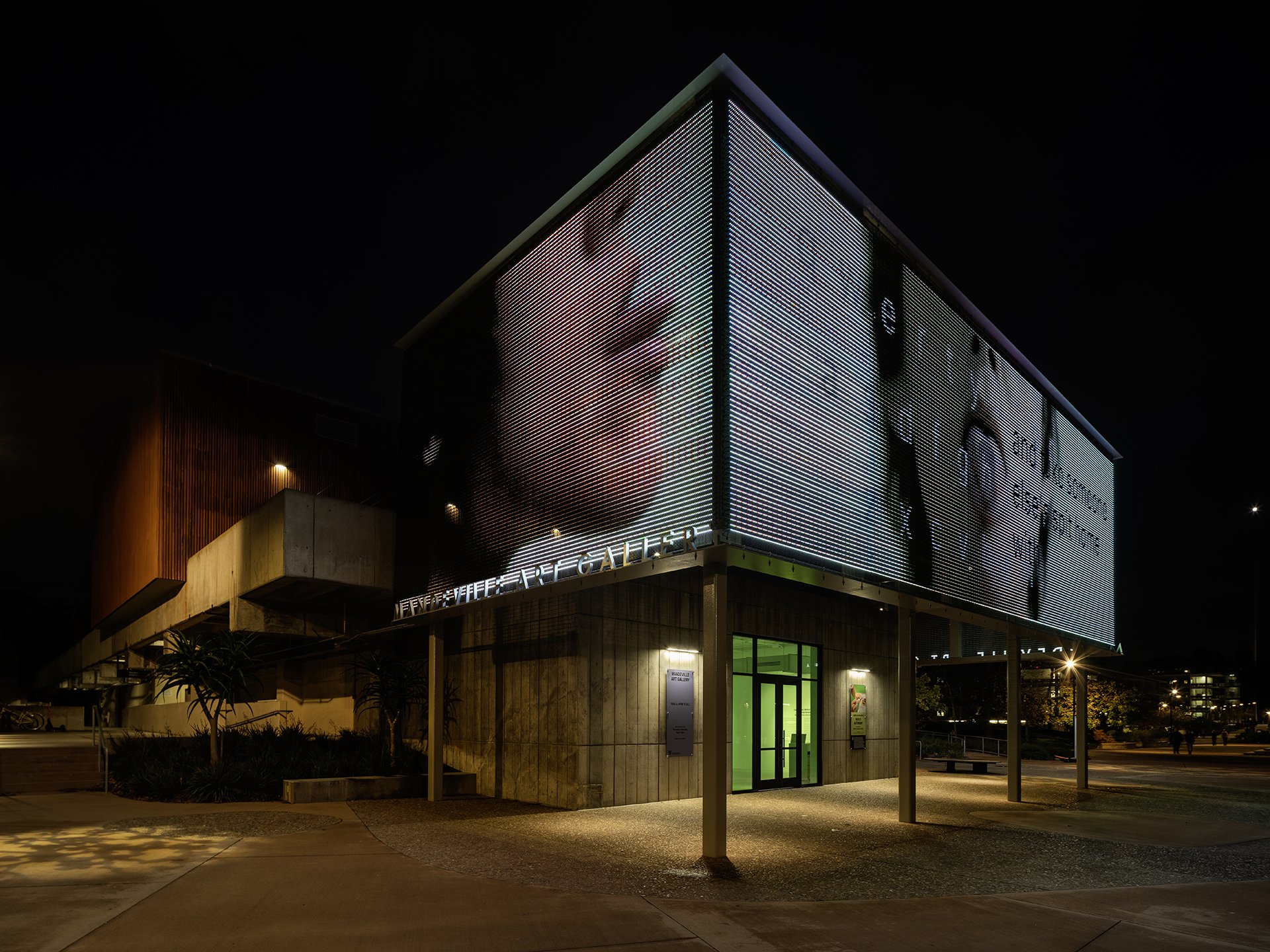
two-channel video installation on exterior of Mandeville Art Gallery shows two women sticking out tongues at UCSD

Installation view, Lauren Lee McCarthy and Casey Reas, Are you the perfect specimen?, 2024, Video (color, silent), Lauren Lee McCarthy: Bodily Autonomy at UC San Diego Mandeville Art Gallery. March 2-May 25, 2024. Photo by Pablo Mason. With support from Creative Capital.