
interview by Alper Kurtul
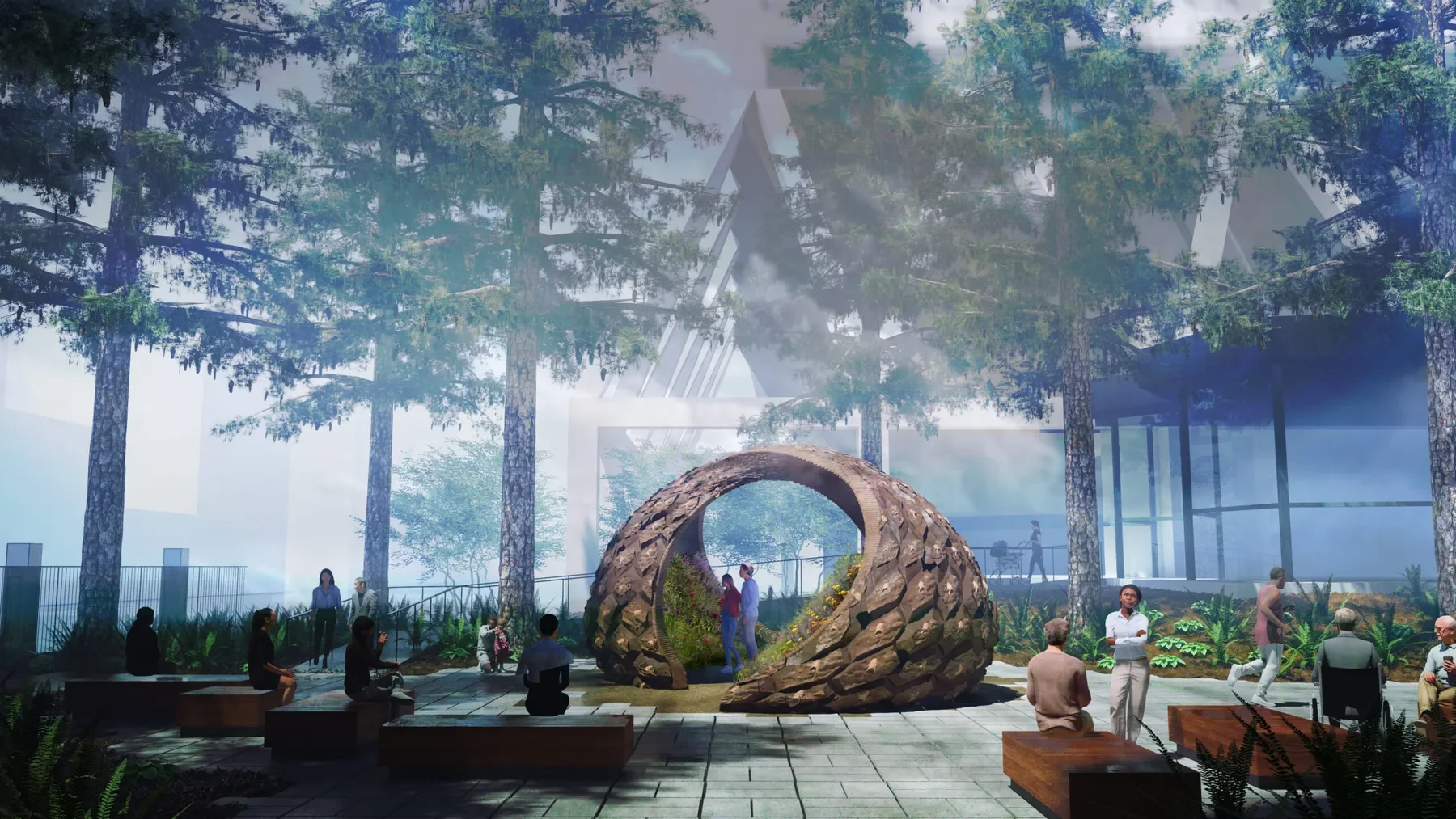
Raised among redwoods and working at the intersection of ecology, sculpture, and community, Lily Kwong approaches art as a living system rather than a fixed object. From EARTHSEED DOME to the intimate transformations of motherhood, her practice unfolds through cycles of care, renewal, and collective belonging.
ALPER KURTUL: You’ve said you were raised by redwood trees. Do you think the relationship you formed with nature as a child also shaped the relationships you formed with people?
LILY KWONG: Absolutely. You can actually see outside—I’m in Mill Valley right now, which is where I grew up, just outside of San Francisco. It’s right by Muir Woods, our national monument, filled with redwoods—the tallest trees in the world. They really influenced me and felt like ancestors when I was growing up. They’re so mighty, so energetically powerful—especially to a sensitive little kid—that they felt like beings, more than just trees. That obviously shaped my relationship to nature. As an imaginative kid who spent a lot of time in the woods, with an artistic spirit, I started this conversation with nature that felt very real to me at a very young age. And in adulthood, I’ve worked to maintain that feeling of mystery—almost mysticism.
When you have that deep grounding in nature, you feel you’re part of an ecosystem, a community. You see how plant communities and ecological communities create resilience, and how they create richer, healthier environments. I’ve applied that to my life and my relationships with people. I take my friendships very seriously, very deeply. A lot of them feel like sisterhoods, like family. It’s like a grove of trees: everyone sharing resources underground, even if we look separate above ground. So yes, it deeply influenced how I relate to other people. Community is what makes up a deeply enriched human life.
KURTUL: So you might say you found yourself in art as a child. When do you think you really started?
KWONG: Yeah, I think I did. My parents are artists—my dad is a writer, and my mom was a seamstress and painted a lot when I was a kid. There were always crafts and storytelling and projects happening in our home.
My mom went to great lengths to create elaborate projects that I’d work on with her—whether it was decoupaging a special treasure box, building a playhouse instead of buying one, or writing stories with my father. So, I grew up in a really creative household, and also inside the container of the redwoods, which felt so rich. I was constantly building forts and, as I said, in conversation with the woods.
And I was lucky to go to a high school called the Urban School in San Francisco, which really influenced me and had a strong focus on the arts. I had a photography teacher, Chris McCall, who was the first person to truly believe in me as an artist. He got me an internship at Fraenkel Gallery, one of the strongest photography galleries here.
Frisch Brandt, one of the directors, took me under her wing. I was also taking pre-college courses at the San Francisco Art Institute. So, the Bay Area in the early aughts—being in the city and then returning home to this powerful natural environment—really set the stage for what I do now.
KURTUL: It sounds like a perfect childhood.
KWONG: It really was. I’m so blessed. It was full of creative games and projects. I really got to be a kid. Now I have a five-year-old and a two-year-old, and I’m trying to capture that experience for them in a world that’s gotten much more complex and technological. Wandering, exploring, getting lost, finding curiosity, letting yourself be bored, and then blooming again—I really hope to cultivate that in my kids.
KURTUL: EARTHSEED DOME is a living structure—it grows, decays, transforms. Is there something in your own life that you allow to remain unfinished—something that evolves over time?
KWONG: Myself—my entire being. When I was younger, I was trying to construct a fixed identity and feel safe by grounding myself in something less mutable. As I get older, I feel like I’m constantly being undone and remade.
I loved working with the symbol of the spiral for Gardens of Renewal, because that’s what life is. It’s not linear; it’s a spiral of becoming, returning, folding inward, blooming again. The less attached I’ve become to my expectations—of myself and of other people—the more textured and dynamic and meaningful life has become. And it’s really been through releasing that need to “finish” who I am that life has opened up.

KURTUL: In your work, rather thana metaphor, nature is often its own character; an interlocutor of sorts.
KWONG: Absolutely. There’s a quote I love from Robin Wall Kimmerer—she says, “Nature knows you even when you are lost.” And that has always been true for me. Human beings are complex. Relationships ebb and flow. And especially now, there’s more noise than ever. In a lot of ways, nature is the only thing that makes sense to me right now.
When I feel untethered or ungrounded, and I carve out the time to sync myself back to the rhythms of the earth and the natural world, that’s when I become more regulated—more myself. Mother Earth is so generous in that way: you can bring anything to her. When I go to the woods, the jungle, the ocean with complicated human emotions, she’s always there, helping integrate those feelings. When you’re at your saddest, one long swim in the ocean can shift something almost immediately. So yes, I often feel most seen and heard by the natural world.
KURTUL: There have been numerous scientific studies conducted globally which suggest that spending time among trees and in nature has real biological effects: reducing cortisol, inflammation, releasing serotonin. It’s not pseudo-science.
KWONG: Exactly. Something is truly happening biologically, and it can change our mindset and physical wellbeing.
KURTUL: And EARTHSEED DOME also transforms the viewer into a pollinator. Allowing people to physically touch your work isn’t very common in art. Is that a personal loss of control for you, or an act of trust?
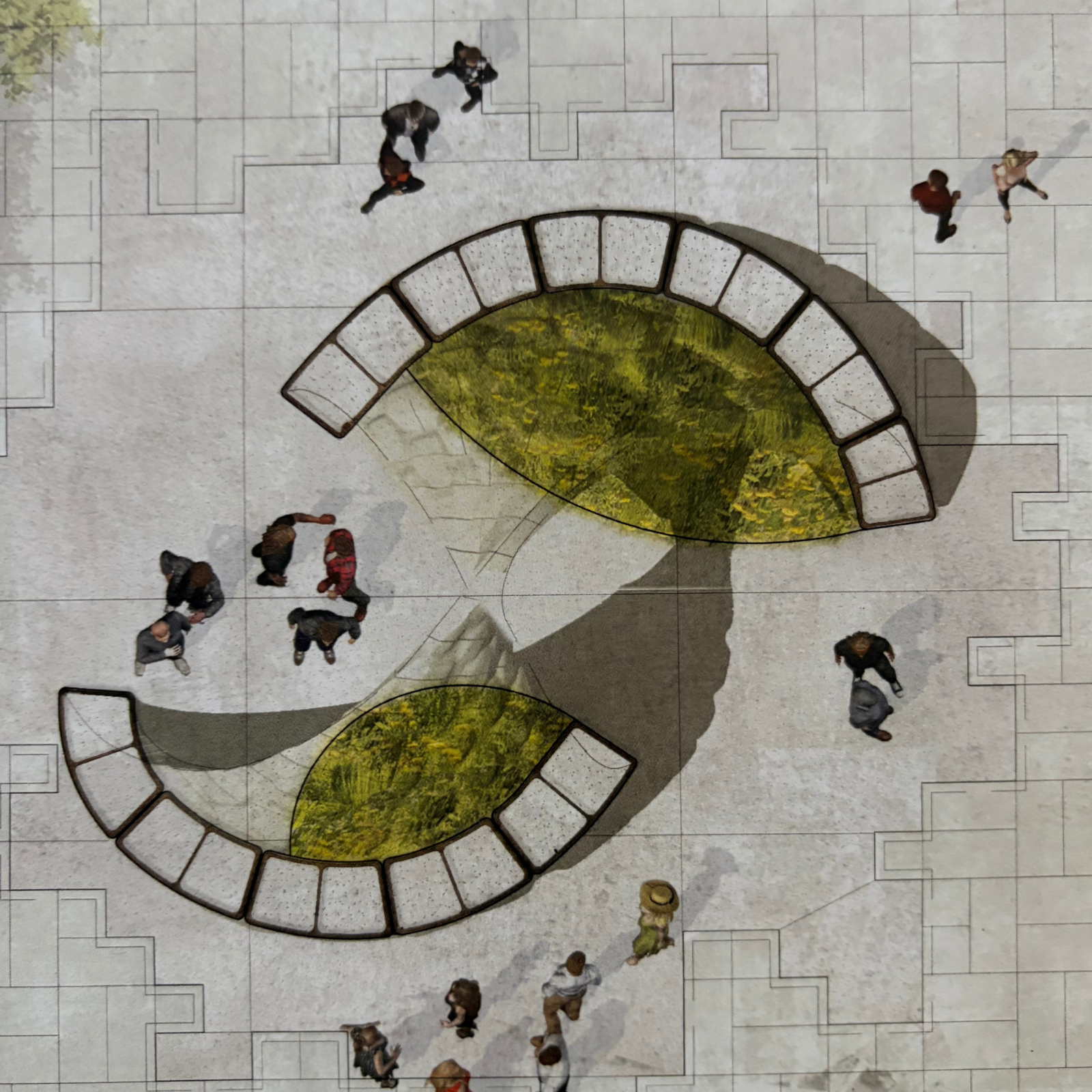
KWONG: It’s a total act of trust—and community. It never occurred to me that it could be perceived as a lack of control. The sculpture doubles as a seed-dispersal hub. We designed pockets within the sculpture where people can reach in and take thousands of seed packets. I’ve also been really inspired by Ruth Asawa—being back in San Francisco, seeing her retrospective at SFMOMA—and how much she worked with children.
So, I went to my kids’ preschool, and the children created cyanotypes. Their cyanotypes are actually printed on the seed packets. Talk about a lack of control: you’re working with 3, 4, 5-year-olds—and you’re working with cyanotypes, directly with the sun, with all the variables that come with this nineteenth-century printing technique.
The reason I invited children into it, and then the public, is that we’re practicing ecological stewardship by participating. By sharing seeds, sharing wisdom, sharing information, we’re reminded that we’re interconnected. That was one of the core intentions of the work.
KURTUL: You’ve created work in many places around the world, but this project brings you back to the geography where you were born. Is returning home more comforting, or more confrontational for you?
KWONG: It’s been very comforting, honestly. I haven’t lived here in twenty years, and I’ve never done a piece in San Francisco. I’ve come home to make this work, and I’m a completely different person now: I’m a mother, a wife, I have my career.
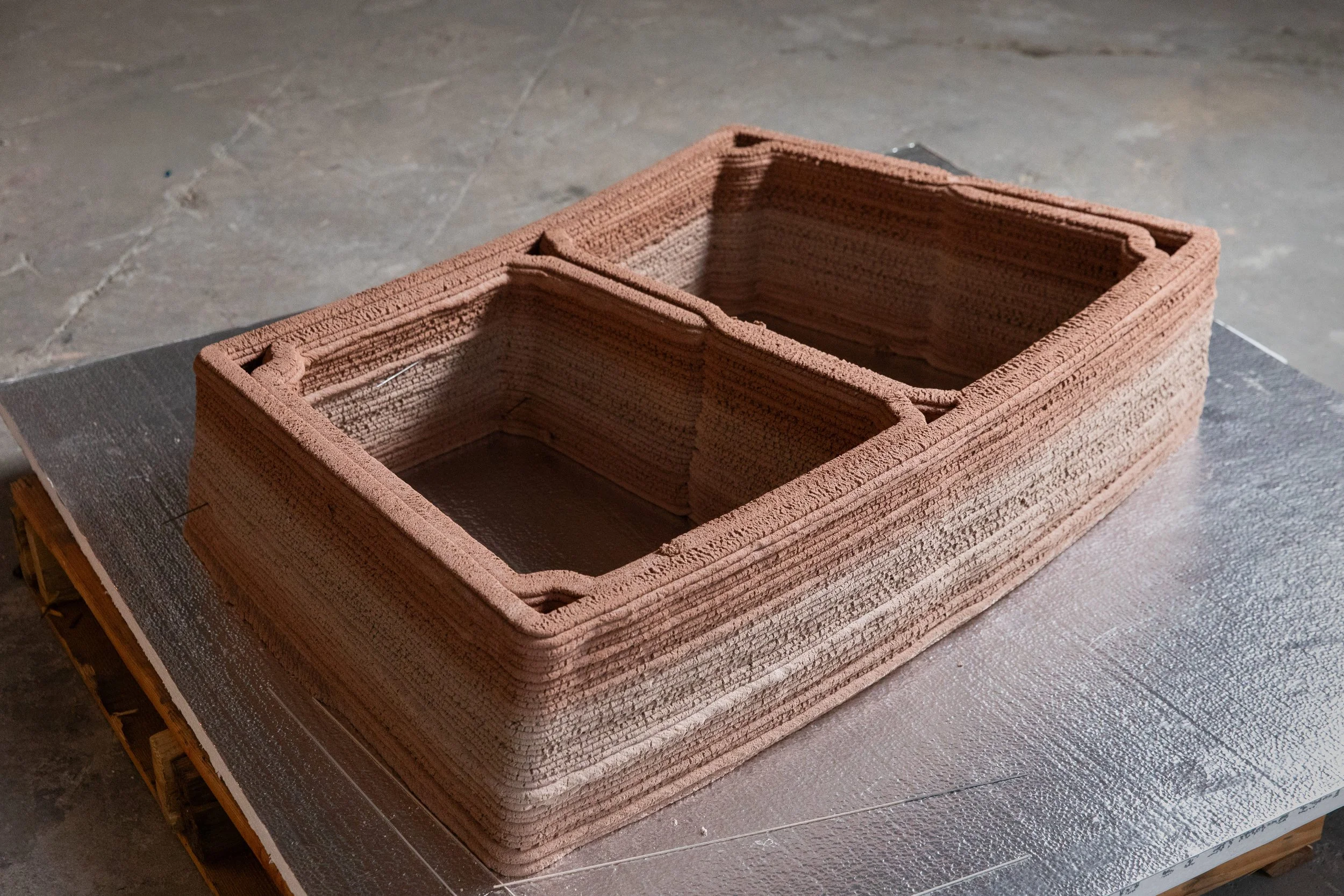
It’s been surreal. The drive I take from Marin to the site mirrors the drive I used to take as a high school student—it brings back a sense memory that’s been buried for decades: this young girl with dreams and aspirations to create work and share ideas and explore. And now I’m doing it at a meaningful scale. ICA San Francisco has been an extraordinary partner—believing in this work and supporting something that uses experimental technology and building strategies.
The opening was so emotional because it brought together incredible curators, gallerists, and artists I had admired as a student, along with my former teachers, my first employer, family friends, extended family, and my godparents. I was reminded of a line I once read: “I am an accumulation of everybody who has nurtured me.” Being there, I truly felt that.
KURTUL: And where were you for the other twenty years?
KWONG: I was in New York for thirteen years, then LA for five years. Then I did a stint in Miami for a couple of years when I was learning about plants—I worked in Florida in my mid-twenties.
KURTUL: Becoming a mother—do you think it affected you and your art?
KWONG: It shifted everything. I became much more fearless and experimental with my work. Once you’ve grown a human being in your body and birthed them, you feel a deep confidence in your creative power—in your power as a creator. So then it’s like: why not try building EARTHSEED DOME? Why not experiment with photography differently?
It unclogged certain blocks and opened this portal of letting creative energy flow through you. That’s what childbirth is, and that’s what it felt like to me: letting your innate, biological intelligence take over—without overanalyzing or overcomplicating. Transferring that to making work has been really fruitful.
KURTUL: As someone who works so closely with nature, are there moments in your personal life when you feel hopeless in the face of climate change? Or does that concern feed your creative impulse in any way?
KWONG: I honestly never feel an emotional burden while creating work, because my work is focused on celebrating the abundance and miracle of nature—the true awesomeness of it. In one scoop of soil, there are more organisms than there are human beings on Earth. There are countless relationships happening—fungi, bacteria, microbiomes. It’s truly marvelous. The cycles of seasons, blooming flowers, relationships between wildlife, native species, pollinators—it’s extraordinary.
The endless questions I have about this planet, and the composition of elements that allows us to experience so much beauty and becoming—life, death, the life cycle constantly unfolding—that’s what fuels me. Where I get depressed and overwhelmed is when I read the news and think about human activity and the threats to the natural world—our lifestyle, our culture, our economy.
KURTUL: Is there a private ritual that nourishes you?
KWONG: I have a lot of rituals that give me life force, that help me move through the day and through my work. Part of my ritual when I’m making work is that I’m constantly making offerings to the land throughout the project. I shared with Madison Square Park that it felt like my offering to New York. EARTHSEED DOME feels like an offering to the redwoods. I mean that at the deepest level. When I’m installing, I bring materials and totems and objects that express reciprocity, reverence, gratitude. There are stones from my favorite beach in Mill Valley hidden throughout the Redwood Grove in Transamerica Redwood Park. For Madison Square Park, I made a big offering—seeds, spices, tobacco—around the perimeter of the work.
For people who need a place to reconnect with themselves, to grieve, to connect with one another, to celebrate nature, I want them to know I consider these works sacred spaces for myself—and I extend that offering to anyone who visits.
KURTUL: Beyond your work, what makes you most yourself?
KWONG: I think what makes me who I am is connecting more and more to my original essence every day. Having children has allowed me to connect to my inner child more—spontaneous curiosity, joy, that original essence.And I think it is an energetic practice to stay in touch with that person. It does make me more myself.
