
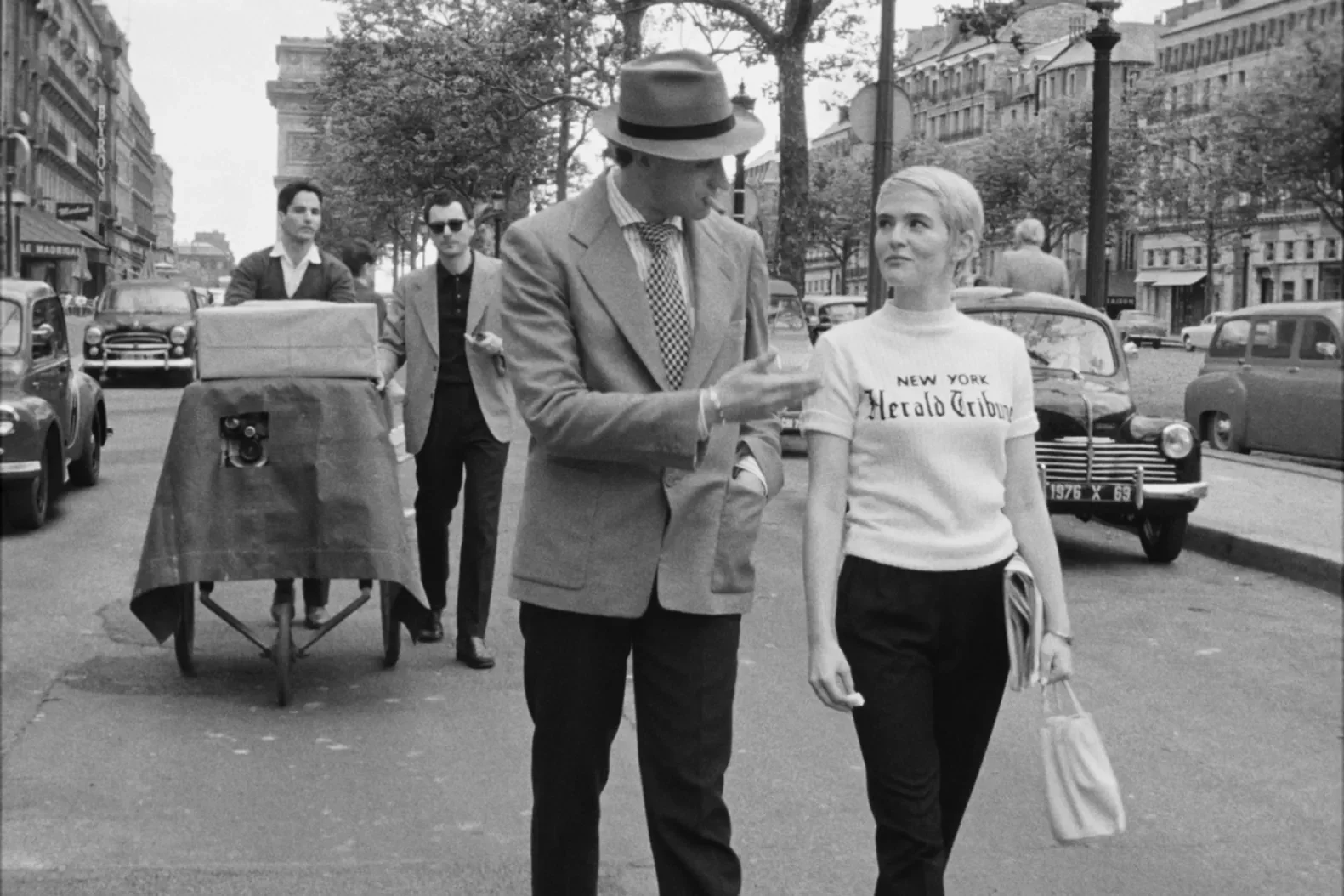
text by Emma Grimes
Richard Linklater’s latest film, Nouvelle Vague, is a sentimental love letter to the French New Wave—that brief postwar period in cinema when a group of young critics with nerve and conviction just about altered every rule about how movies could look and how we should think about them. In celebrating these filmmakers, Linklater offers a pleasant and affectionate reminder of their originality.
The film opens in 1959, as Francois Truffaut’s The 400 Blows makes its Cannes debut, and a restless Jean-Luc Godard, still a critic at Cahiers du Cinema, is itching to direct his first feature film. Cahiers is now known as the breeding ground for these insolent critics-turned-directors that punctured the French film establishment. As critic David Kehr wrote, it was the start of “film criticism as a contact sport.”
To Godard, his role as a filmmaker was a continuation of his role as critic. He didn’t see them as two separate pursuits; rather, his films were his criticism too, just imparted differently. And soon enough, he got his shot at making that film with a script from Truffaut, allegedly based on a real crime story pulled from the newspaper. The eventual result, Breathless, is restless, improvised, and spectacularly alive.
Linklater succinctly captures Godard’s taut vision and stubbornness as a director. A significant portion of the film takes place in Parisian bistros, where the cast and crew lounge around, waiting for their cue from Godard. Jean-Paul Belmondo (Aubry Dullin) and Jean Seberg (Zoey Deutch) don’t rehearse their lines because there are no lines to rehearse in advance. Some days on set last just two hours. His peculiar and erratic filmmaking approach causes Seberg to doubt whether he has any overarching vision at all. She wants to call it quits at one point.
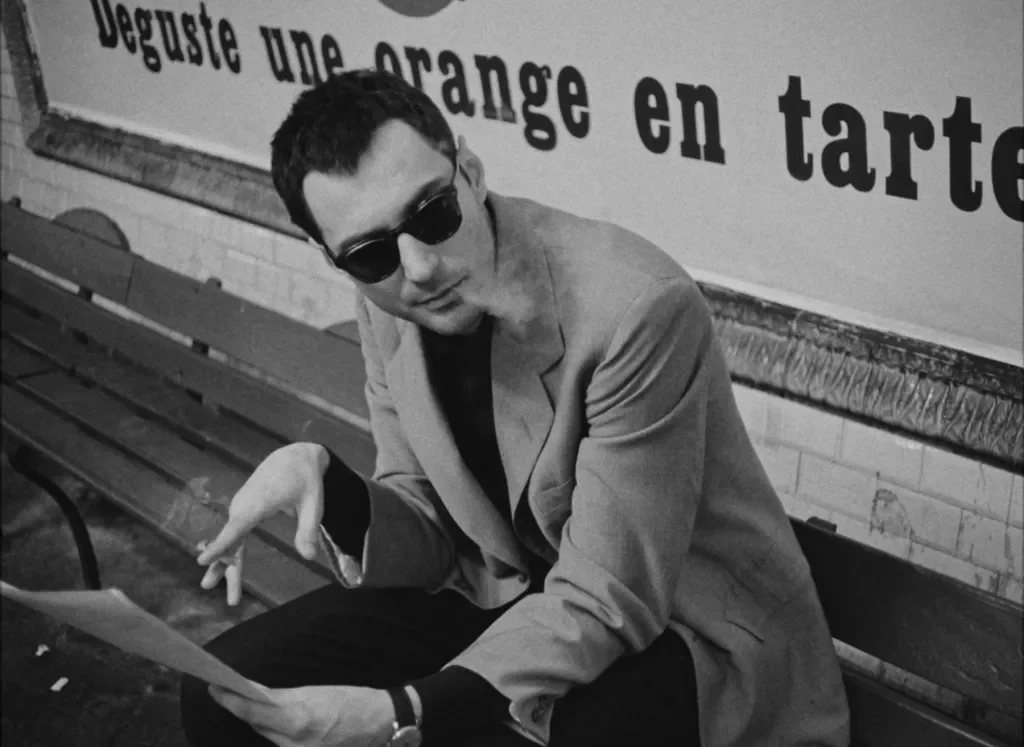
While some or all of these historical facts about the making of the movie may be familiar to cinephiles, it’s a pleasure to watch it all unfold on the big screen and in the hands of these actors. Guillaume Marbeck gives a brooding and very focused Godard, but Deutch steals the screen as Seberg. She is sharp, radiant, and elusive. You can immediately understand why Godard wanted to capture her unguarded, candid self.
And the rest of the Godard checklist, Linklater crosses off: his use of the handheld camera, on-location shooting, disregard for continuity editing, and his insistence on capturing spontaneity. The critic Armond White wrote in 2007 that half a century of familiarity with Breathless has bred “a certain kind of nonchalance” about the wildly original and trailblazing film. “The excitement of discovery is almost gone,” White writes, “meaning it’s time for rediscovery.”
Linklater succeeds at doing just that, allowing a modern audience to see it anew—to feel, perhaps for the first time, how pioneering and defiant these young filmmakers once were and how strange their perspective once seemed. We meet and spend a little time with other filmmakers, including Truffaut, Jacques Rivette, Éric Rohmer, and Robert Bresson.
But in rediscovering Godard and his cohort of iconoclasts, Linklater inevitably folds something once radical into a consumable product with duller edges. This paradox is inevitable for the project he’s after, that of sincerely celebrating the New Wave’s pioneering achievements. Nevertheless, it risks feeling like one of those “vintage” t-shirts sold online—retro and unique in spirit, but mass-produced in reality.
Still, none of this diminishes the pleasure of watching this film. I loved every minute. The wood-fire crackling of the film reel, the warmth and ebullience of Deutch’s embodiment of Seberg, the beautiful imitations of original shots from Breathless—it’s all undeniably, intensely pleasurable.
But to truly honor Godard would mean scandalizing us again, making something unruly instead of sweet and digestible. Nouvelle Vague isn’t any fresher than convenience store candy, but it does taste just as nice and is impossible to resist.