
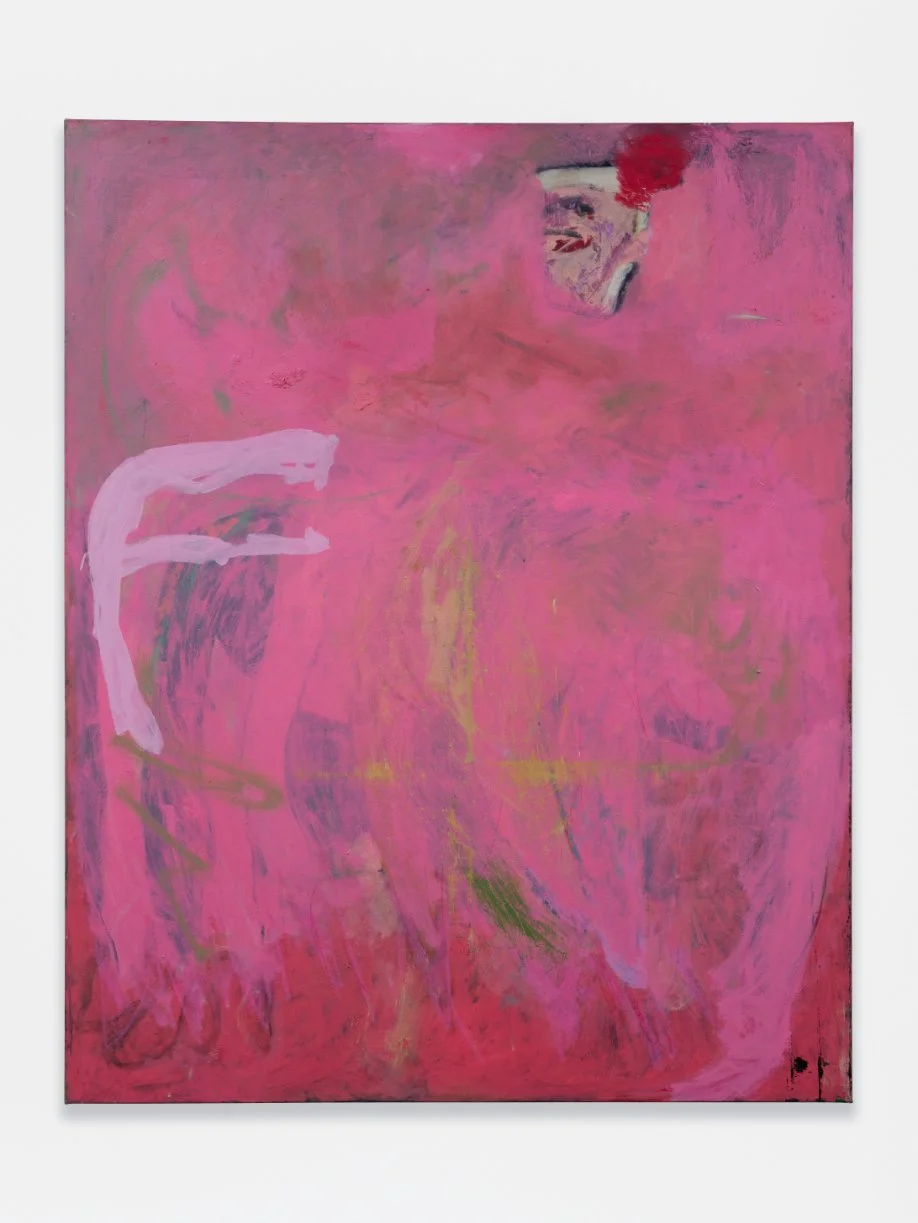
A fog of skirts, 2026
Oil on canvas
60 x 48 in (152.5 x 121.9 cm)
Courtesy of the artist and O-Town House
text by Arlo Kremen
photography by Evan Bedford
Taken from Joan Crawford’s 1967 horror flick Beserk!, Jools Rothblatt’s Berserker!—fixed safely as a noun—centralizes on a filthy and violent aesthetic identity. To try and nail her paintings down with concrete descriptors would disregard their dynamism. Almost lifting off the canvas, figures quickly dissolve into space and other neighboring forms. A fog of skirts envelops space in a cloud of pink, with long limbs hanging low, fingers gesturing at the magenta ground. A muddy nun’s head floats high, smudged dark with a bloody splat at the corner of her habit. As the nun disappears into the fog—or alternatively becomes the fog—it takes on her life force. An animated, living, tense mist. Rothblatt spoke of her paintings as capturing “the perfume of a room. It’s tension and thickness. That thing in the air in a club or a courtroom. That kind of sweat.” If this painting had a perfume, it would smell like cotton candy vape and a punch. A saccharine bruise.
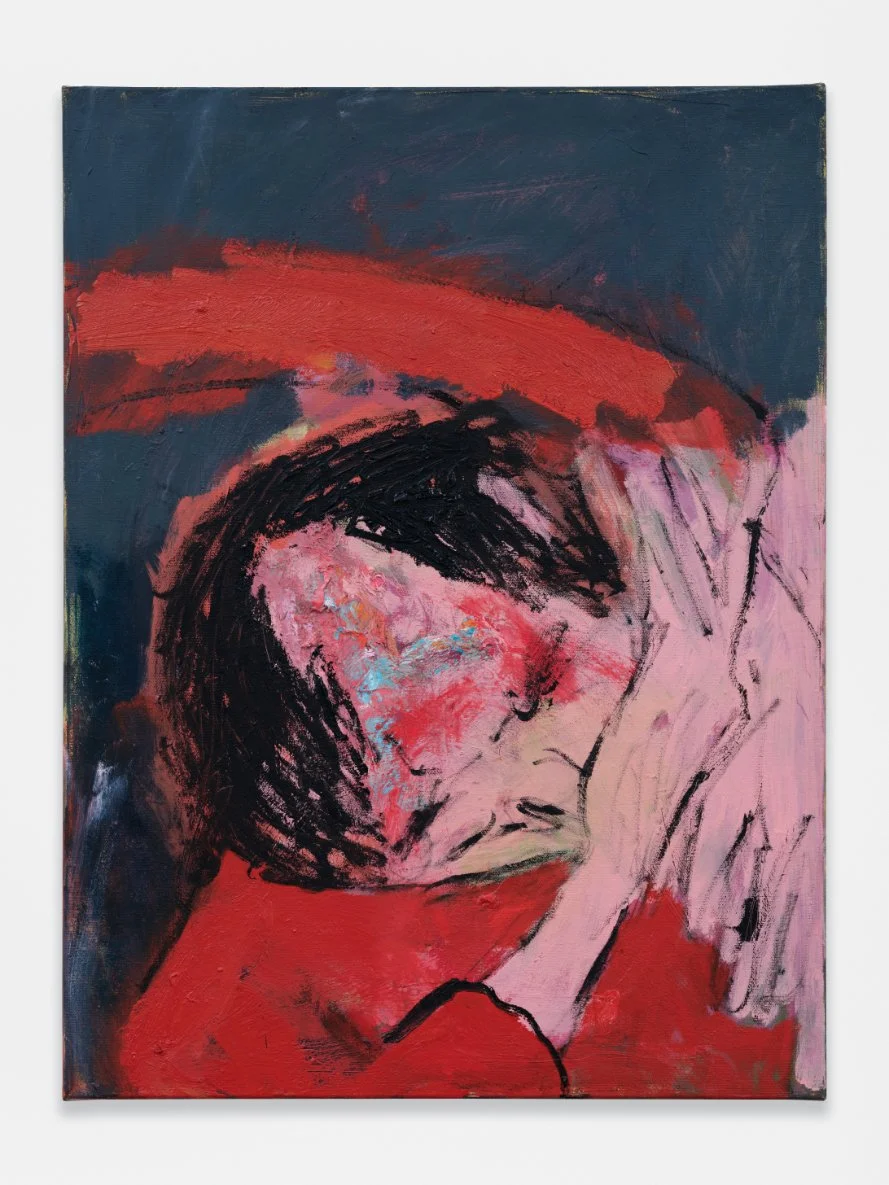
Lifetime Sports (Fistmagnet), 2026
Oil on canvas
24 x 36 in (61 x 91.4 cm)
Courtesy of the artist and O-Town House
Lifetime Sports (Fistmagnet), while not sweet, will undeniably leave a mark. A Bukowski poem as a painting, this barfly has received what might just be the last beating of the night. Head ducked down and shielded by two thin hands, his abuser seems to have pounded a receding hairline into the fistmagnet’s scalp. Red and blue patches creep up his crown like a fungus claiming new ground. His red shirt matches a streak of red slipped on just above his bent figure, all in the fore of a blue night background, a scene this night has gazed upon with an ordinary frequency.
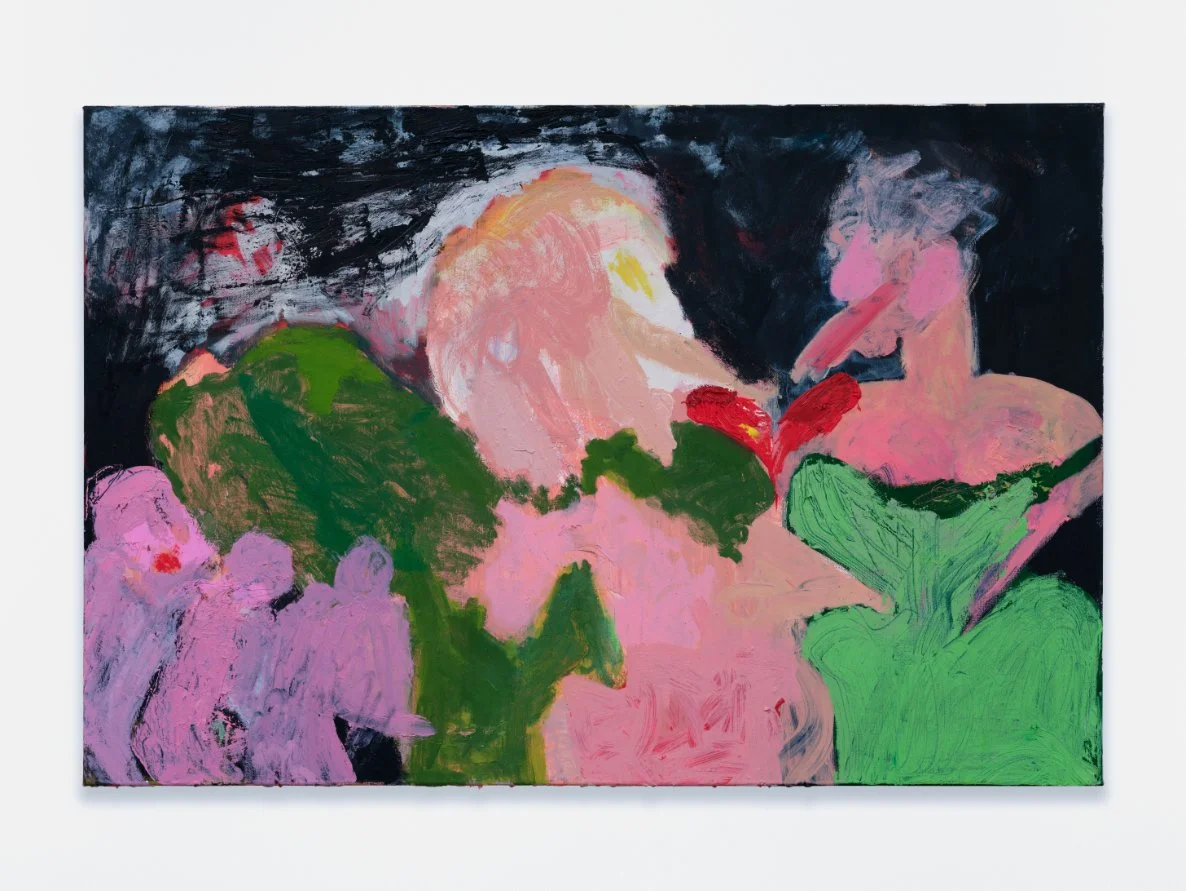
Agitator Cracked Actor haha, 2026
Oil on canvas
24 x 36 in (61 x 91.4 cm)
Courtesy of the artist and O-Town House
Walking around the show, Rothblatt begins pointing to a number of painted figures: “that’s a diva, that’s a diva, a sprawled-out diva, that’s a punch in the face.” The figures which are present are largely sourced or inspired by Hollywood’s Golden Age in which Rothblatt revels in the often overlooked messiness embedded in the “Golden Age” epithet. Lifetime Sports is one such figure. Another is Agitator Cracked Actor haha. Here, not much is discernible other than a tightly corseted green dress with a fleshy body rising out of it, with a chest, shoulders, a neck, and a face somewhere along the spectrum from goose to human. Whatever she might be, what is absolutely certain is her diva attitude. Three tiny pinkish-purple figures creep in like adoring fans to witness her grandeur, and whatever stands between her and her fans is an abstracted intermingling of dark green and peach tones. What is going on is backgrounded by the feeling of a movie star and the vibration in the air when she appears.
Another movie star, at least an animated one, Popeye’s Olive Oyl, is seen bent over with a gasoline pump up her rectum. On her blank face, her name is scribbled out. 7-Upskirt (gasoyline). What was once her long red dress has become a long-sleeve shirt paired with green booty shorts, plastered across a vehicle where the pump plugs right into her anus—a scatological genre painting for modern life.
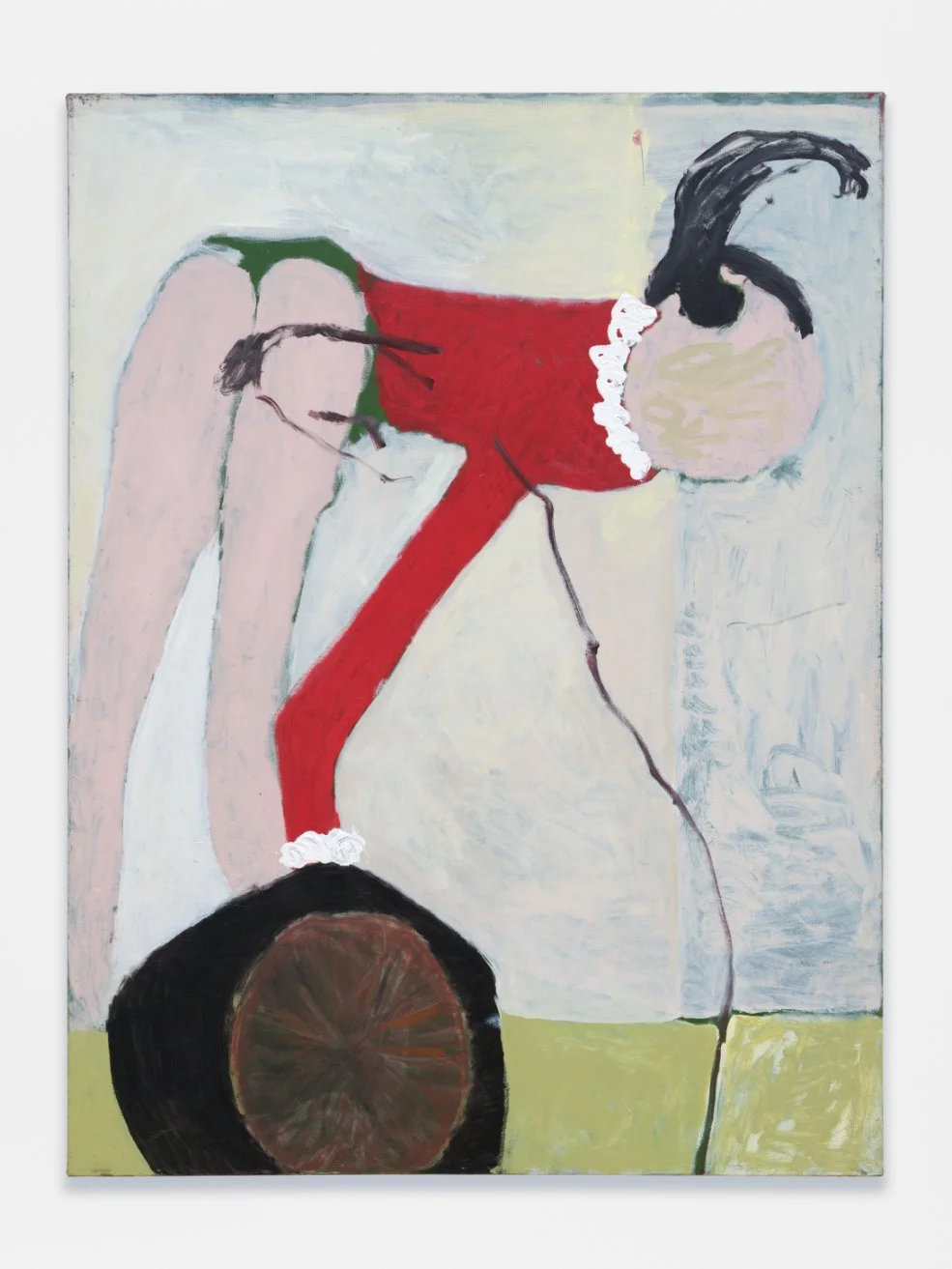
7-Upskirt (gasoyline), 2026
Oil on canvas
48 x 36 in (121.9 x 91.4 cm)
Courtesy of the artist and O-Town House
The painted letters on Olive Oyl’s face also appear in Hollywood Music. The word is “Hollywood.” Rothblatt notes that this is the closest she’ll ever get to making a text painting. Many of the works have similar markings, although none of them come out to resemble any single letter or word. Rather, they sit in an interstitial space between meaning and meaninglessness. They come to the viewer like faded, unintelligible graffiti—words now lost to time. The markings demand close, attentive looking to register the nonsensical signs. Despite their lack of a clear referent, these markings do communicate.
A red wall marking beside O-Town House’s charming second-floor kitchen speaks of Kim Fuck, the artist’s hardcore alter ego persona. Littered around LA bathrooms, Rothblatt mentions, keep an eye out for Kim. Much of the letter-like scribbles and scrapes act similarly to graffiti. Loose lettering, stacked and bleeding, and frequently illegible, both lettering forms communicate something that is floating, left without contextual ground, often meaningless to those who come to it later. Rothblatt makes note of how over the years her penmanship and brush handling have become nearly identical, that there is no longer a significant difference, especially when using smaller brushes. Her notebook is filled with words that are not really about the words themselves but the gesticulation and exaggeration of the forms, nearly identical to the paintings’ incoherent language. While these textual elements may have set meaning, their formal exaggeration betrays a sense of chaos. A babbling ambiance charges each painting with its own—to use the artist’s own words—perfume.
This overwhelming sense of disorder, however, is the appeal. It is a central tenet of the theater of Hollywood. What would the film industry be if it weren't for stories of people like Joan Crawford, whose on-set abuse is legendary? What would it be were it not the unjust misogynistic targeting and maligning of actresses in the press for things of nebulous accuracy? Probably something much smaller and less interesting. Hollywood itself was a fiction, a story told as journalistic curiosity, whose cruelty and violence locked audiences into a professionalized gossip network. The life of Hollywood actors and filmmakers became its own movie, completely sensationalized. The line between on-stage and off-stage was thin, and it only becomes slimmer as time progresses. The violence of the screen is the violence of life, and Rothblatt meets this spectacular, bloody conflation with a wide, battered grin.
Jools Rathblatt’s Berserker! in on view through June 27 @ O-Town House, 672 S La Fayette Park Place, Suite 44/43, Los Angeles
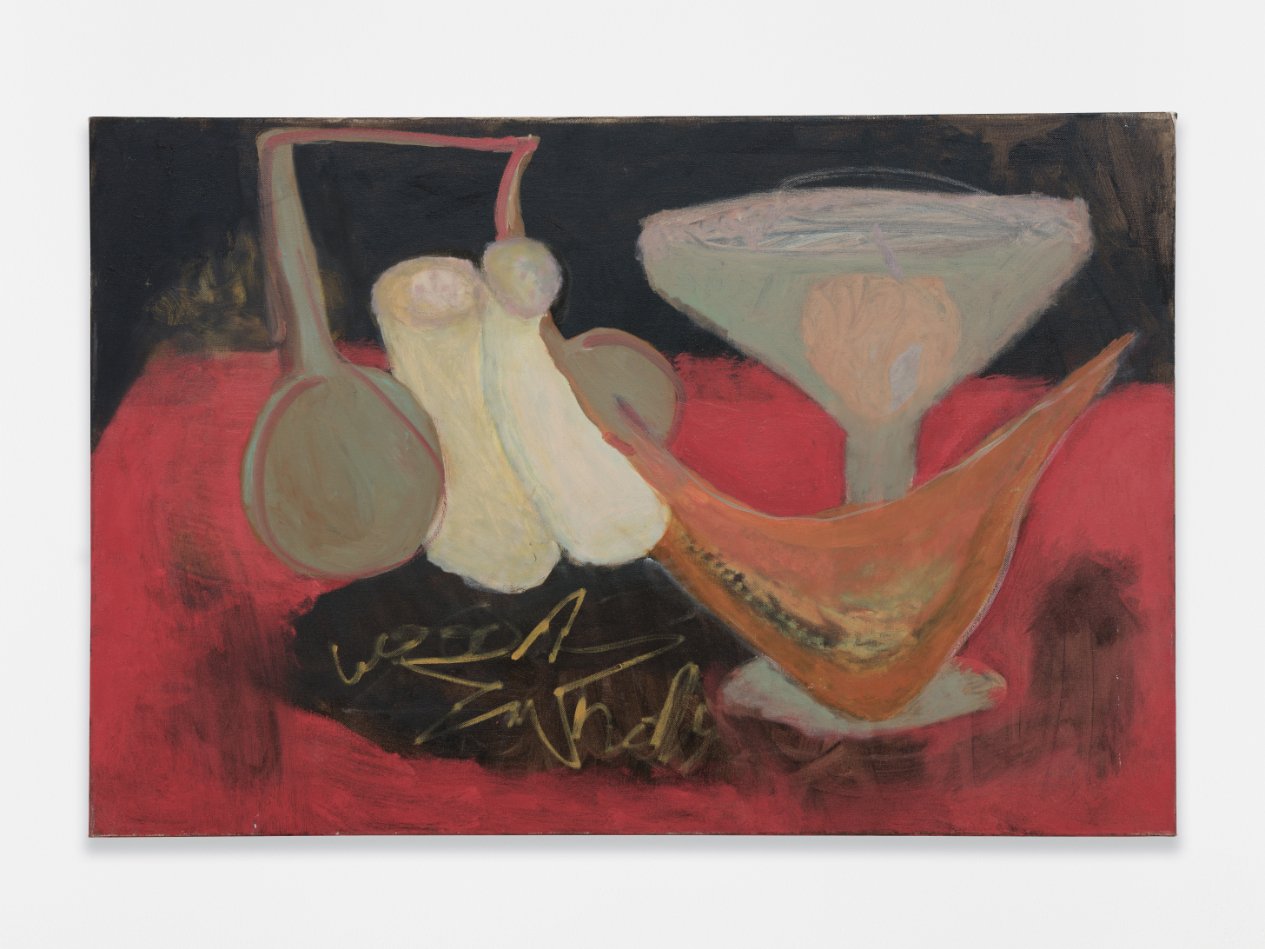
Hollywood Music, 2025
Oil on canvas
24 x 36 in (61 x 91.4 cm)
Courtesy of the artist and O-Town House