

Mime at Sacre Coeur – Paris
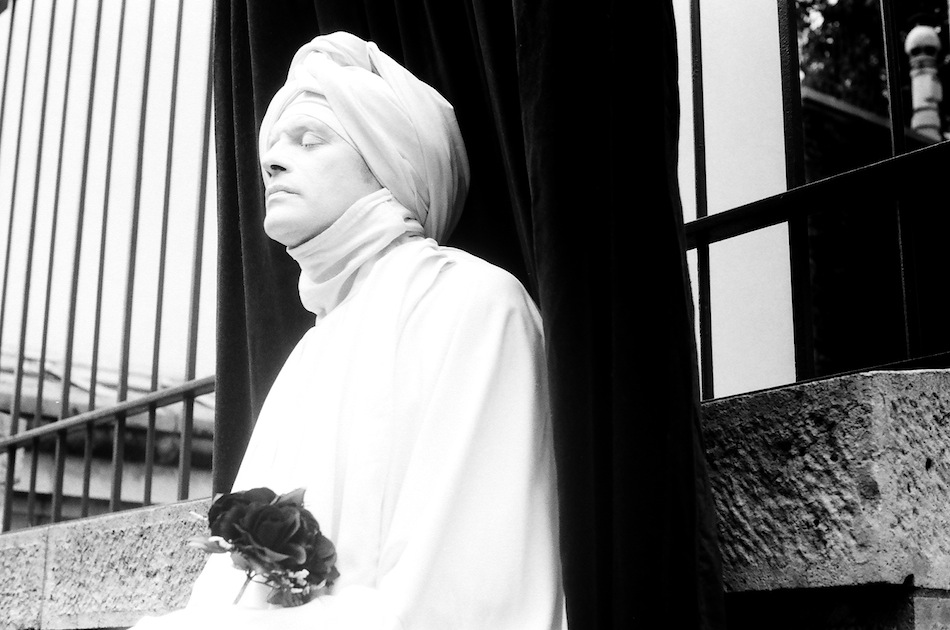
Photography by Adarsha Benjamin
SMOKIN HOT: AUTRE QUARTERLY
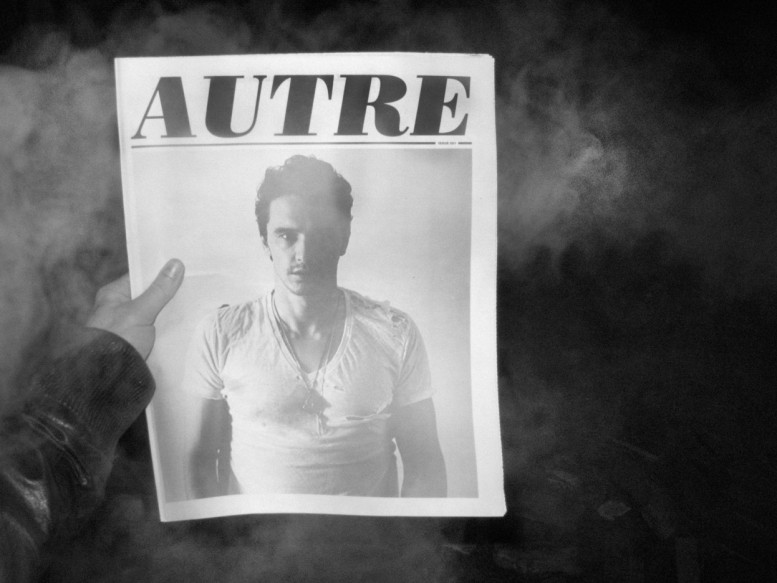
AUTRE QUARTERLY, issue one, cover shot of JAMES FRANCO by ADARSHA BENJAMIN – fashion editorials with CAVERN COLLECTION – interviews with KAWS and ARIEL PINK – art by ALIA PENNER, MINKA SICKLINGER, and JAMES GEORGOPOLOUS. Now available at COLETTE (Paris) VIOLA (London) STANDARD BOOKSTORE (Osaka) THE IMPOSSIBLE PROJECT SPACE (New York) INCU (Sydney) PARK LIFE (San Francisco). More to come....
[IN THEATERS] The Man Who Fell To Earth

David Bowie in Nicolas Roeg's THE MAN WHO FELL TO EARTH (1976). Courtesy BFI.
David Bowie in Nicolas Roeg's THE MAN WHO FELL TO EARTH (1976). Courtesy BFI.
“Are you Lithuanian?” After a space craft seemingly crashes to Earth, David Bowie walks off to sell a ring for twenty bucks in a dusty Southwestern town, then almost immediately hires high-priced, thick-spectacled patent attorney (Graduate screenwriter Buck Henry) to register ten world-changing patents. Orange-haired, pale-faced, minimally expressioned Bowie (the pop legend obviously well-cast as an alien in his first starring role) desperately yearns to return himself and water to his parched planet — but will the authorities let him? — with coed-shtupping professor Rip Torn providing technical help, and chambermaid Candy Clark providing distractions via overdoses of very terrestrial booze, church, sex, and television (“Get out of my mind, all of you!”). Roeg’s science fiction cult classic/cautionary moral tale is an assault of fragmented, non-linear narrative style, typically striking visuals, echt 70s soundtrack by John Phillips of The Mamas and Papas (along with period “needle drops”), with a pathbreaking no-comment depiction of a gay couple and multiple eye-brow-raising sexual romps — including one punctuated by gunshots. All too often seen in washed-out copies, this new 35mm print of the uncut director’s version allows Roeg’s dazzling visuals (Pauline Kael called him “the most visually seductive of directors”) to be seen as they were meant to be. [site]
A Return To The Garage: Bare Wires 'Cheap Perfume'
Hailing from Oakland, Bare Wires, a legitimate throwback through and through are set to release their own infectious brand of garage fuzz this September with their album Cheap Perfume.
The New Hieroglyphic Language of Light and Time
 New Mexico, USA, 1975

Ernst Haas was one of those rare photographers of the 20th century imbued with a certain poetical sensibility. Born in Vienna in 1921, Haas almost went into medicine, but his artistic inclinations led him to photography. Haas was soon invited into the famous Magnum photo agency, the first invitation by the agency's founder's Robert Capa, Henri Cartier-Bresson, George Rodger, and David Seymour. Haas, like William Eggleston, was one of the first adopters of color photography and is largely credited with changing the medium as an artform altogether. Ernst Haas was also profoundly prolific, traveling the world for assignments for magazines, but along the way he was building a personal portfolio of images the world has never seen – until now. Color Correction, a recently published monograph, exhibits a collection of never before seen photographs that are considered "far more edgy, loose, complex and ambiguous," and that Haas believed – in his own lifetime – people just wouldn't understand.
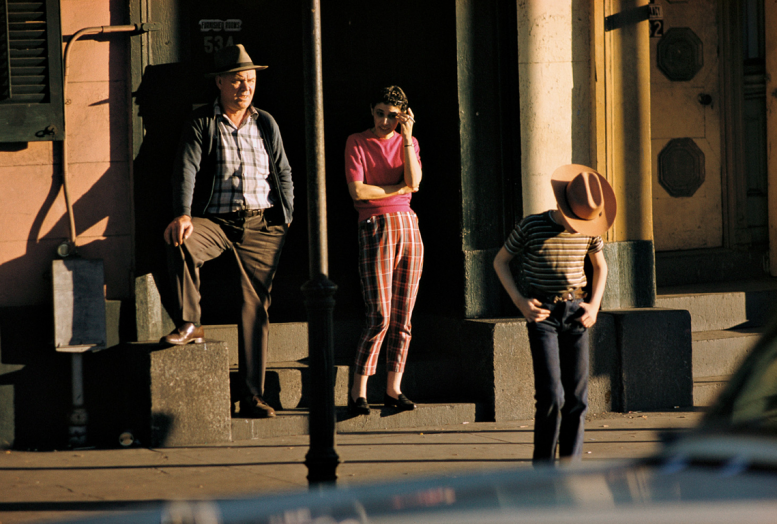 New Mexico, USA, 1975
On Photography: Philosophy by Haas
Photography is a bridge between science and art. It brings to science what it needs most, the artistic sense, and to art the proof that nothing can be imagined which cannot be matched in the counterpoints of nature. Through photography, both artist and scientist can find a common denominator in their search for the synthesis of modern vision in time, space and structure. We can write the chapters in a visual language whose prose and poetry will need no translation.
The camera only facilitates the taking. The photographer must do the giving in order to transform and transcend ordinary reality. The problem is to transform without deforming. He must gain intensity in form and content by bringing a subjective order into an objective chaos. Living in a time of the increasing struggle of the mechanization of man, photography has become another example of this paradoxical problem of how to humanize, how to overcome a machine on which we are thoroughly dependent....the camera....
In every arts there is poetry. In every human being there is the poetic element. We know, we feel, we believe. As knowers we are like the scientist relating through logical determination. As feelers, we are like poets relating the unrelated through intuition. As believers, we are only accepting our human limitations. The artist must express the summation of his feeling, knowing and believing through the unity of his life and work. One cannot photograph art. One can only live it in the unity of his vision, we well as in the breadth of his humanity, vitality, and understanding....
There is no formula – only man with his conscience speaking, writing, and singing in the new hieroglyphic language of light and time.
Text by Ernst Haas
Intro Text by Oliver Maxwell Kupper
Color Correction by Ernst Haas (Steidl)
 Route 66, Albuquerque, New Mexico
Roman Polanski Film Retrospective at the MOMA

jack_nicholson_china_town
Roman Polanski has, over the course of a half century, become recognized as one of the great modern masters of the cinema. Many of his films are infused with a mysterious, difficult-to-define sense of dread, which is understandable given much of his early life experience. Polanski’s parents were sent to a concentration camp, where his mother died, and he lived as a fugitive Jewish teenager in Nazi-occupied Poland. His 1984 autobiography begins, “For as far back as I can remember, the line between fantasy and reality has been hopelessly blurred,” and his films use the fantastical elements of cinema to make sense of the extraordinary reality he has experienced. Roman Polanski, a film retrospective at the NY MoMA, will run from September 7 to September 30.
Stella McCartney Spring 2012

The Phoenix Hotel



Location scouting: The Phoenix Hotel, a mid-century, kitsched out motor-lodge in the heart of the Tenderloin in San Francisco. Photography by Oliver Maxwell Kupper.
Warby Parker Monocle

Warby Parker's amazing colonel monocle in whiskey-tortoise, "Crafted in a perfect circle with just the right amount of grip and give, our Colonel monocle is the perfect accessory for budding robber barons, post-colonial tyrants and super villains."
Opening Ceremony Fall/Winter 2011

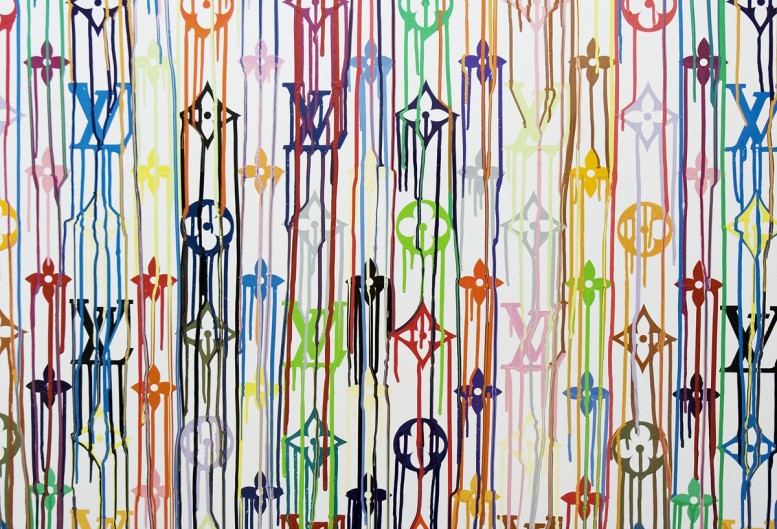
[LIQUIDATED] ZEVS Solo Show in Tokyo

zevs_losangeles_2
zevs_liquidated_logos_hong_kong_artist_statements
Venerable French street art mainstay ZEVS' first solo show will open in Tokyo at Art Statements Gallery this September 2 and will be on view until September 23. ZEVS twisted, dripping logos and corporate iconography is obvious statement unto itself and have become as recognizable as the logos themselves. 3-2-12 Ebisu-minami Shibuya-ku, Tokyo 150-0022, Japan
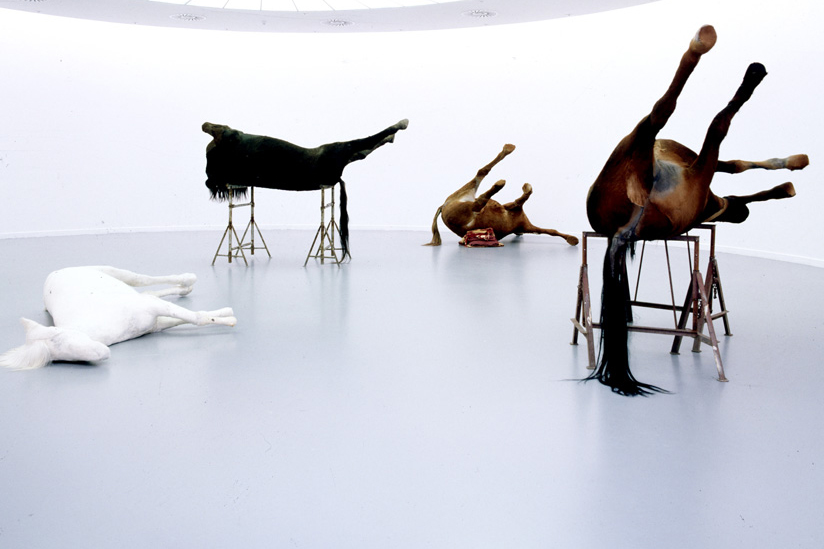
Berlinde De Bruyckere and John Currin in Montreal
BerlindedeBruyckere
john_currin_porn
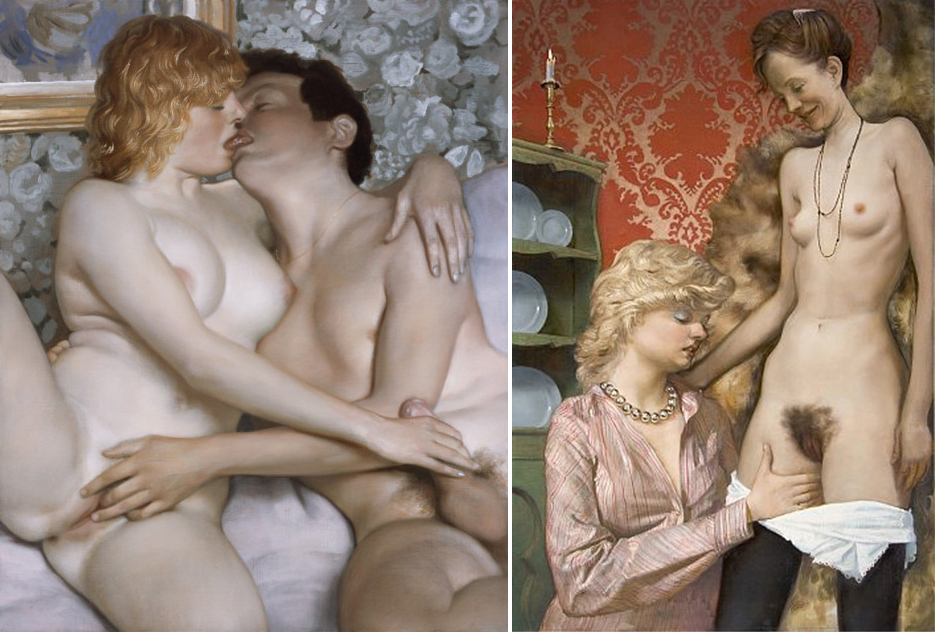
left: John Currin, Deauville right: John Currin, The Dane
DHC/ART in Montreal presents two concurrent solo exhibitions by acclaimed Belgian sculptor Berlinde De Bruyckere and American painter John Currin - "two leading international figurative artists working in a virtuosic, old masterly tradition yet testing and expanding the parameters of their respective disciplines." On view until November 13. www.dhc-art.org
The Art of Cruelty
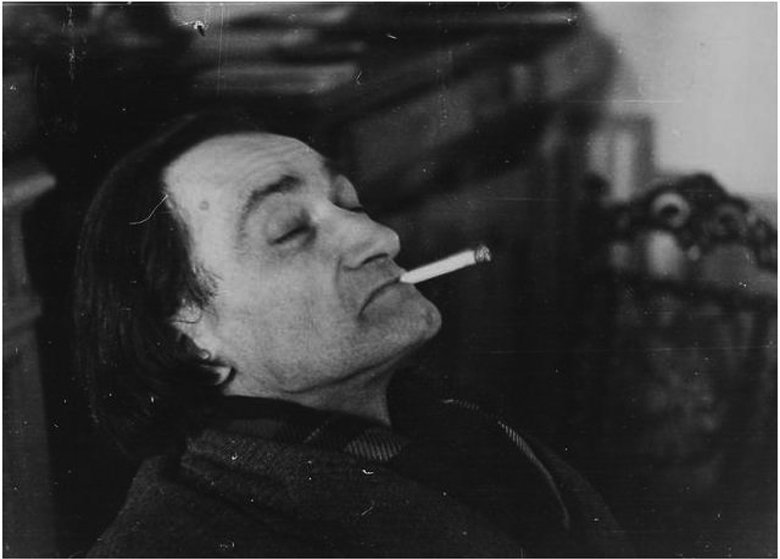
"This book asks different questions. It asks whether there are certain aspects or instances of the so-called art of cruelty – as famously imagined by French dramatist and madman Antonin Artaud – that are still wild and worthwhile, now that we purportedly inhabit a political and entertainment landscape increasingly glutted with images – and actualities – of torture, sadism, and endless warfare." In her book, The Art of Cruelty: A Reckoning (W.W. Norton), author Maggie Nelson asks vital questions about violence in art in a society where violence is ubiquitous and thus not intellectually viable for a balanced social order. Nelson elucidates her inquiries by drawing upon the thoughts and teachings of philosophers such as Friedrich Nietzsche, thinkers such as Antonin Artaud, and painter Francis Bacon. When is enough enough?
Arsenic and Old Lace: Maison Michel AW 2011

Karl Lagerfeld shoots Sasha Pivovarova & Clemence Poesy for the 70 year old Parisian millinery house Maison Michel's AW '11 collection.
JOHN MAUS: A Prophet for the New Generation
At the forefront of the brand-spanking-new “synth-pop deconstructionist” genre of lo-fi contemporary music is John Maus — a manic, inexplicable enigma unto himself. Maus hails from Austin — Minnesota, not Texas — and that’s just one thing that’s “different” about his sensibility and entire way of being. Exploring themes of the familiar and the strange, the real and the surreal, all drenched in a disarming expression of pure emotion, Maus takes pop music to an entirely new level. There’s no straightforward way to describe the experience of a live John Maus show other than to say that it will, without a doubt, go far beyond all possible expectations. Maus toys with notions of performance, singing over his own pre-recorded backing tracks. He sweats, spits, cries, shrieks and gasps for air. He paces back and forth, emotes with his hands and face, runs in place, jumps, pulls at his own hair. It’s not uncommon to leave one of Maus’ shows baffled, puzzled, enlightened, relieved, inspired or even unsure of what you have just witnessed. It is easy, too, to scoff or raise eyebrows when the roadies clear all visible indications of any sort of musical instrument off the stage and Maus lopes out humbly like an overgrown, misplaced frat boy, awkwardly slumping his shoulders to conceal some of his stature, dressed in a pinstriped button-down, straight-leg jeans and blindingly white running sneakers (it’s no wonder he pulls off the college look, as he taught philosophy at the University of Hawaii and is currently working towards a PhD in Political Science). Yet with a few twists and turns of various nobs on a synthesizer contraption he keeps on the floor (and kneels sporadically throughout his set to operate), Maus transports audience members into his world — a world of raw, unadulterated emotion yearning to break free from the physical entrapment of a body — expressed through jarring, fantastical manipulated synth beats and frantic, resonant vocals (we’re talking screams, howls and wails). In interviews, Maus has been known to spew philosophical aphorisms, eschew comparisons and avoid talking about Ariel Pink — with whom he attended CalArts and collaborated with musically for many years (and who was spotted in the audience at the Echoplex — word has it he lives with Geneva Jacuzzi, one of the opening acts for Maus and another member of the eclectic deconstructionist set).
Maus’ live act is like a beautiful car wreck — it’s nearly impossible not to wince as he simulates a nervous breakdown onstage; melting, crumpling and exploding into different shapes and perspiring through his neatly-ironed shirt to a soundtrack of murky, grating, echoing “retro-futurist” pop — yet this emotional metamorphosis is uncannily mesmerizing. It is an intensely visceral, interactive experience — almost more of a performance art show or a method acting piece than a concert — and, as became clear at the July 15th show at The Echoplex in Los Angeles, his cult of diehard followers (of the beer-spraying, lyric-chanting, moshing variety) just can’t get enough. His latest album, We Must Become the Pitiless Censors of Ourselves, was released on June 27th after a nearly four-year hiatus from recording.
Text and photography by Annabel Graham
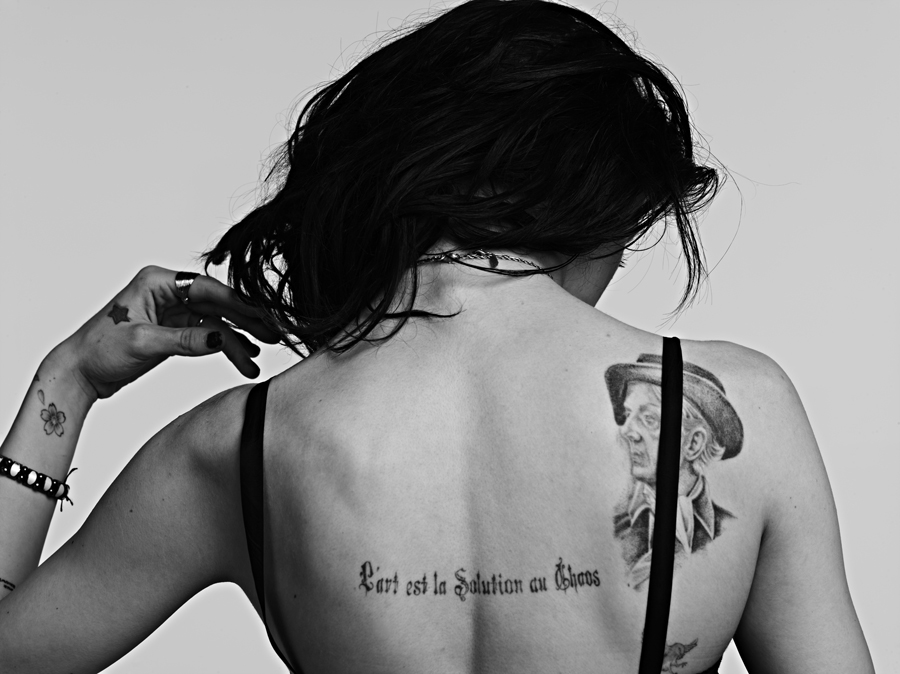
L'ART EST LA SOLUTION AU CHAOS


[BOOKS] Adventures in the Orgasmatron

Released only a few days ago, Adventures in the Orgasmatron: Wilhelm Reich and the Invention of Sex: How Renegade Europeans Conceived the American Sexual Revolution and Gave Birth to the Permissive Society (Fourth Estate) is the untold story of Wilhelm Reich and the dawn of the sexual revolution. An illuminating, startling, at times bizarre story of sex and science, ecstasy and repression. In the middle of the 20th century, the United States became an adoptive home for dozens of expatriated European thinkers, who saw this rich, young country ripe for sexual liberation. One of the most left-field of them was the Viennese psychoanalyst Wilhelm Reich, a disciple of Freud’s who had broken with the master. Reich’s own approach was based on his theories of the orgasm and sexual energy, which he dubbed ‘orgone energy’. Instead of the couch, he made use of a tall, slender construction of wood, metal, and steel wool, which he called the orgone box. A highly sexed man himself, Reich thought that a person who sat in the box could elevate their ‘orgastic potential’ ridding the body of repressive forces, improving sexual potency, and enhancing overall health. After World War Two, Reich’s theories caught on among writers and artists, the early adopters of the counter-culture. Norman Mailer and Saul Bellow were amongst those for whom the orgone box represented a yearned-for synthesis of sexual and political liberation, and of physical science and psychology. Meanwhile, Reich himself faced one debacle after another. Albert Einstein heard him out before rebuffing him. The FBI investigated him as a Communist sympathizer: it turned out that they were hunting the wrong man. The federal government banned the orgone box and tagged Reich as a fraud. There were claims of sexual misdeeds, and bouts of Reich’s own mental instability. This is the story of the blossoming of the 20th century’s sexual revolution, and the unshackling of a repressed society, and sex before science.
A Scattering of Blossoms & Other Things
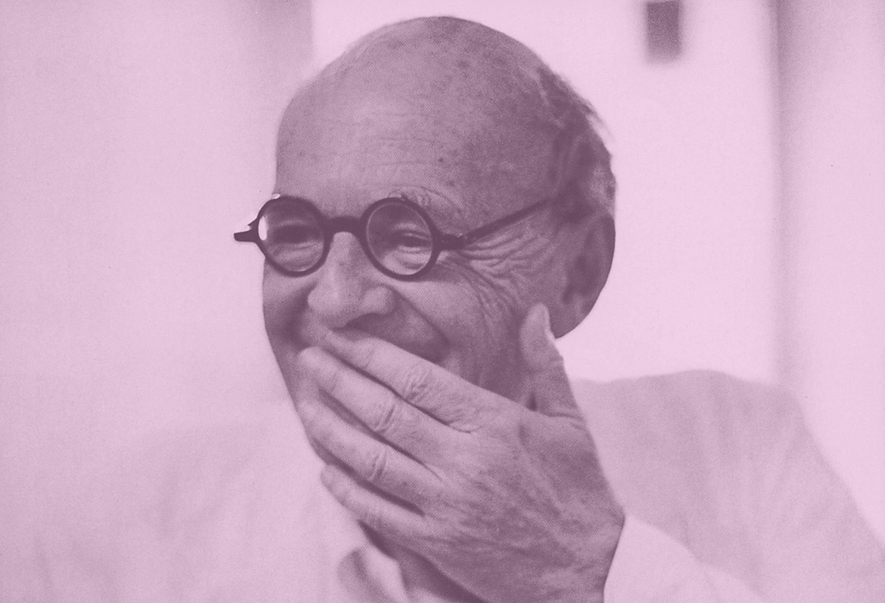
The Museum of Contemporary Art presents Cy Twombly Tribute: A Scattering of Blossoms & Other Things, a memorial exhibition of the late painter Cy Twombly on view at MOCA Grand Avenue through October 2, 2011.
[MUSIC VIDEO] Hunx and His Punx 'Lovers Lane'
Official Hunx video for "Lovers Lane," release a couple days ago, off of their first album Too Young To Be In Love LP released last march. "Too Young To Be In Love is the first fully-realized Hunx and His Punx album, and the group’s first for the Hardly Art record label. It was recorded in New York City by Ivan Julian—one of the founding members of inimitable NYC punk legends Richard Hell and the Voidoids. This record was made in the same studio that one of Hunx's idols, Ronnie Spector, once recorded in. While it is preceded by the Gay Singles LP (True Panther Sounds/Matador Records, 2009), a collection of hard-to-find and out-of-print 7” singles, Too Young To Be In Love is the first proper studio record from Hunx and His Punx.