


An Interview of Diane Severin Nguyen

interview by Whitney Mallett
photography by Zoe Chait
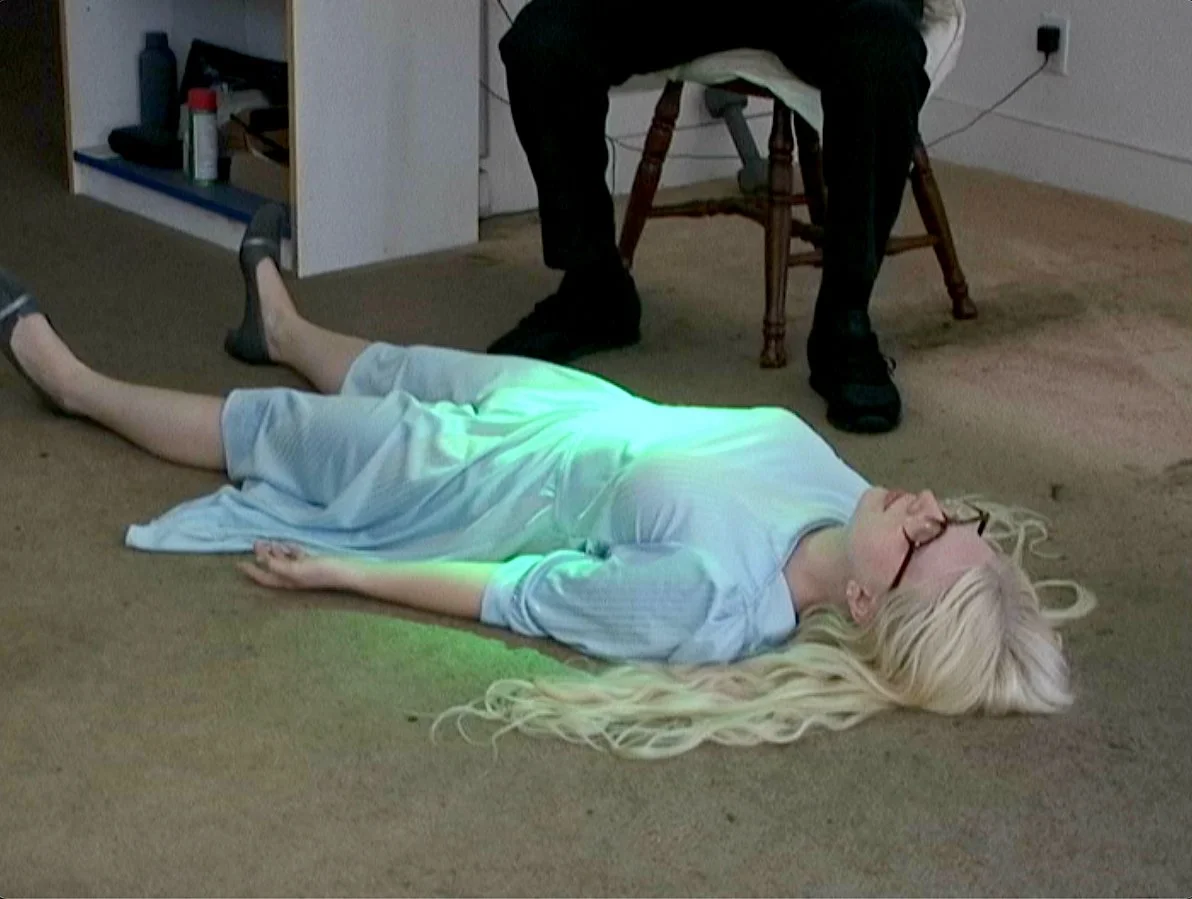
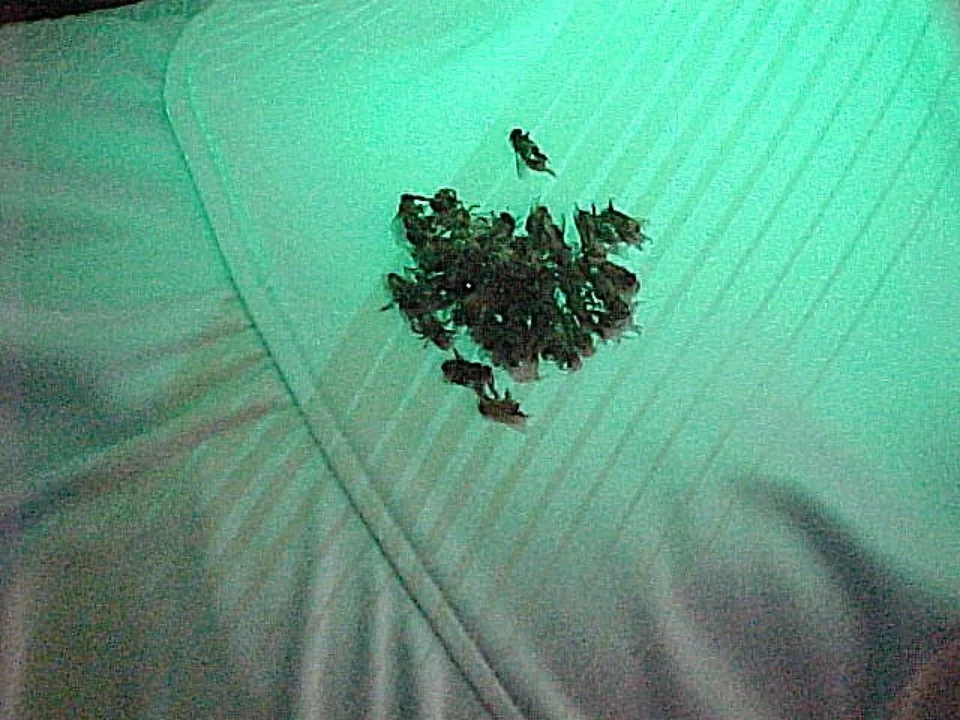
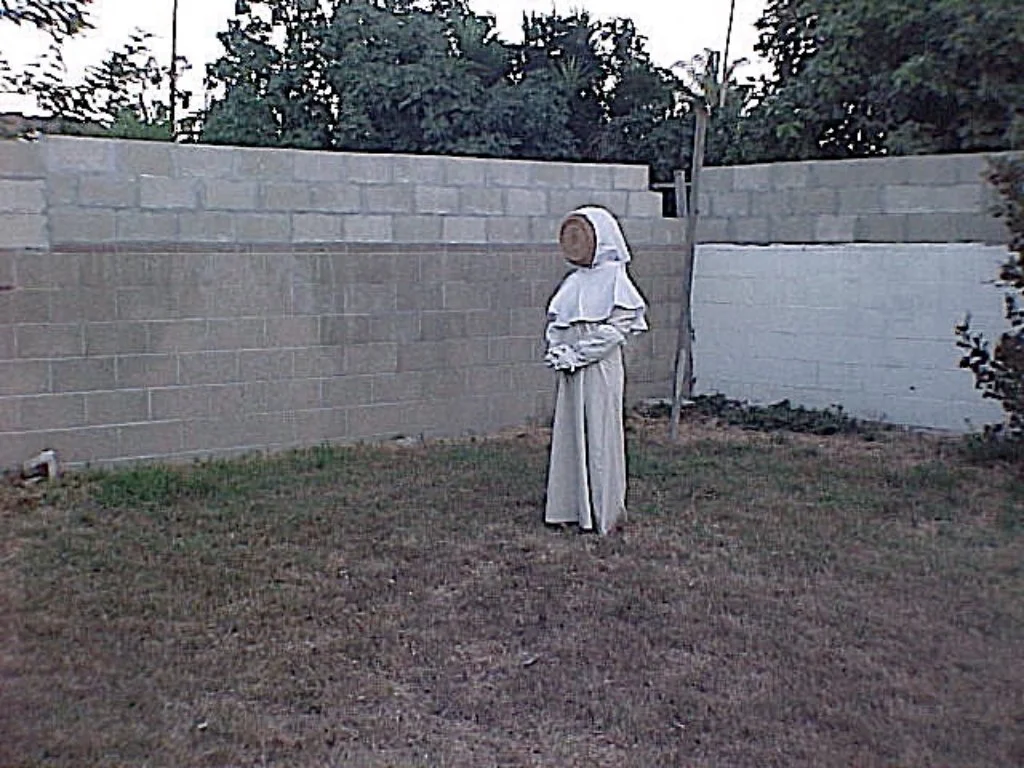
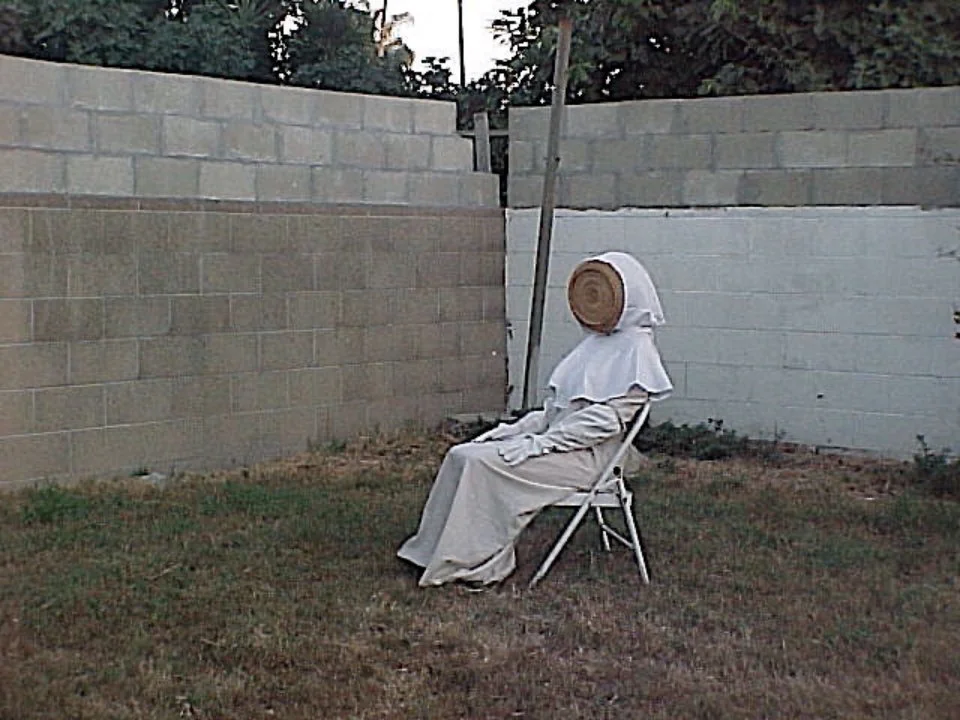
New York–based, California-born Diane Severin Nguyen works across photography, video, and installation, investigating how media and imagery shape identity, history, and power. In a conversation with Whitney Mallett, Nguyen discusses her first live performance, which turns to anti–Vietnam War protest music, reimagined as a televised concert that blurs the lines between performance and broadcast. She reinterprets classic folk and protest songs, tracing how they have been remembered, transformed, and mythologized, while exploring how nostalgia for political struggle shapes contemporary notions of resistance and freedom. This commissioned project unfolds across a new music album, a live band performing as a conceptual art project, and a broadcast performance, creating an immersive exploration of sound, memory, and cultural resonance. It is co-commissioned by The Museum of Contemporary Art, Los Angeles.
WHITNEY MALLETT: How are you feeling after your first rehearsal last night?
DIANE SEVERIN NGUYEN: It’s really exciting to actually have the performers to work with. We were just figuring out what everyone’s strengths are and what kinds of characters we could pull out of them. I had everyone pretend they were on a drug—ketamine, LSD, shrooms—and it turned out to be surprisingly effective. It was the perfect layer to free them up. And, interestingly, when you act “psychedelic,” you inevitably channel the ’60s and ’70s. There’s something about that era that just seeps in.
MALLETT: So, is it fair to say that, in assessing everyone like this, you’re drawing inspiration from your performers and building in a collaborative element?
NGUYEN: Yes, of course. I feel like everyone has at least two opposite ends within them, and their personality ends up being some strange average—or even a conflict—between those extremes. So, what I’m doing is making the process more participatory: having the performers explore those opposite sides of themselves. Once we assess everyone, we’ll really know what the best songs are and what narrative makes the most sense. It makes the idea of a musical a lot more fluid, which is fun.
MALLETT: The concept is that it’s a band, right?
NGUYEN: Yes, it’s an eleven-person band, but it keeps mutating. There will probably be smaller vignettes too: three people at once, maybe a medley with two or three together. And at the end, everyone will perform as a group. But honestly, it’s almost too much with everyone performing at once; there are just so many different threads and registers I want to hit within the same performance. For me, the idea of opposites and friction within a person is really important. I want every performer to embody multiple selves, not just one role.

MALLETT: You mentioned the psychedelia of the ’60s and ’70s—is there an anti-Vietnam War reference in it?
NGUYEN: Totally. That’s the whole thread of it. Music in that era was almost dangerous. We’ve been going through a lot of songs from that time. The lyrics can be shockingly explicit about war and questioning authority. It’s not just about reenacting protest music from that era, but about asking whether that messaging collides with today’s music at all. Because people don’t really use music as a medium for mass, populist messaging in the same way anymore. We’re in a very surreal space with music right now. I’m drawn to that era—not just musically, but also through films, books, and especially the French New Wave. French New Wave was formally innovative, but it was also always linked to politics, with the Vietnam War as a constant peripheral subject. It’s fascinating how distant suffering could inspire so much Western creative production. You see people discovering themselves in a kind of liberal humanist way—values like love, freedom, anti-establishment—and yet those values often depended on conflict abroad to find that sense of transcendence. I’m drawn to how conflict sparks soul-searching, then gets commodified—as it did in the ’60s and ’70s.

MALLETT : There’s an almost constant recycling of the so-called “authenticity” of that period. I’m thinking about how much I loved Almost Famous (2000) when I was younger. And then there was that Bob Dylan movie that just came out.
NGUYEN: I also saw that the Whitney Museum is putting on a group show called Sixties Surreal this fall. I feel like those two words, “authenticity” and “freedom,” are so important to the performance. For the past five years or so, I’ve been really interested in how the acoustic has come back, how Gen Z bands are leaning into it, and the authenticity we project onto the acoustic. And how that connects to the authenticity of protests today, it’s still very nostalgic of the ’60s and ’70s. The protests we romanticize most are the protests against the Vietnam War, so in creating the graphic design, that imagery is always there.
MALLETT: When I was younger, I just thought of it as ’70s music. It took me getting older to realize it was actually part of a folk revival itself. But also, speaking more broadly about your practice—I loved In Her Time (Iris’s Version). Maybe you could talk about your larger study of feeling. For me, it makes sense that music and angst go together—that whole tradition is one way to access it. But I know it’s something you’re interested in beyond music.
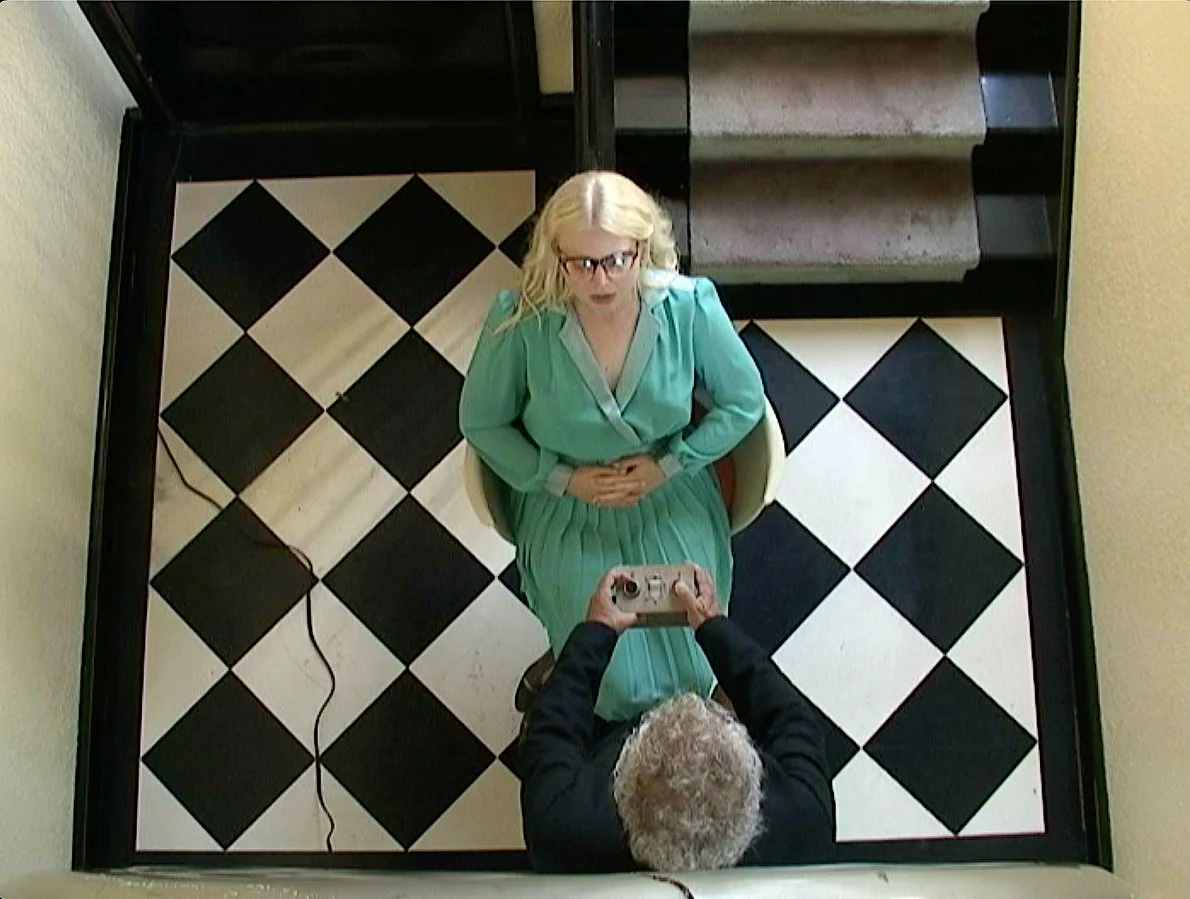
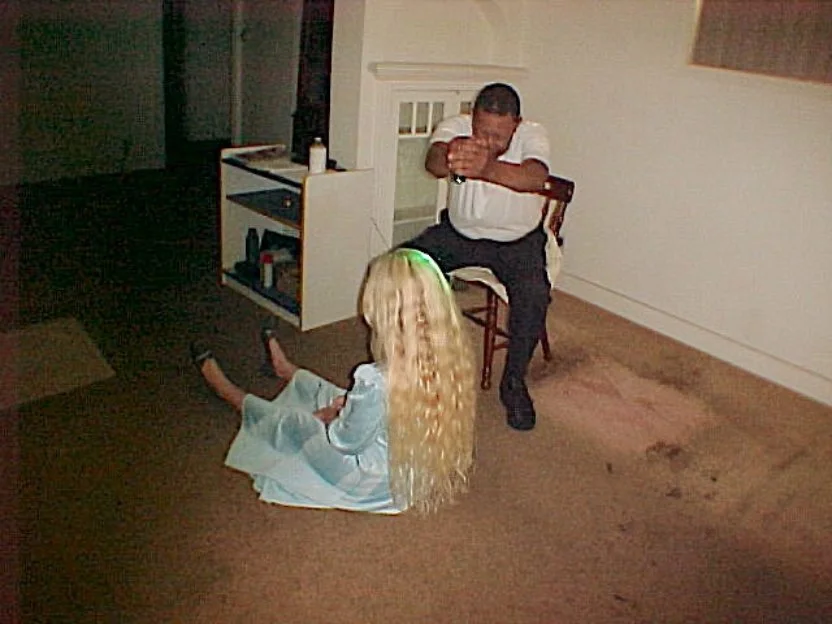
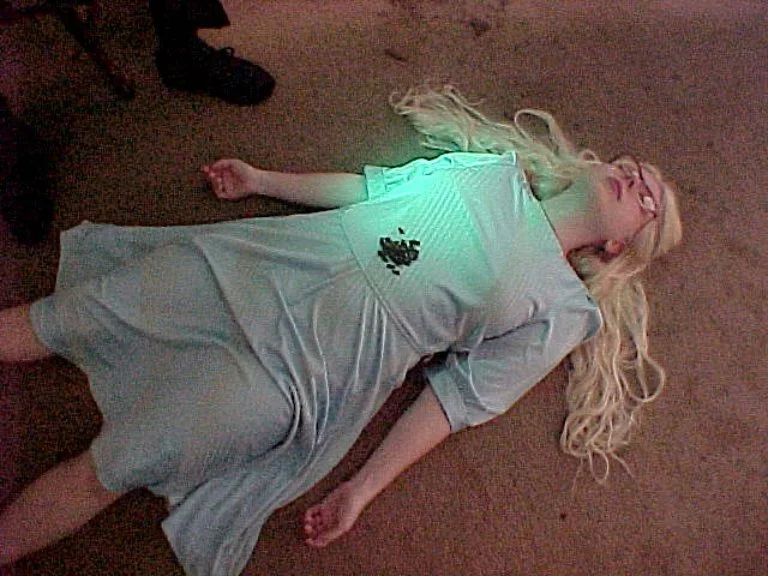
NGUYEN: I don’t always want to reduce my practice to the era of the Vietnam War, but thinking through that period has been so productive for me. On a deeper level, it probably connects to my own search for identity. The Vietnamese body, historically, is imagined as burning, mutilated, and always marked by violence. The Western liberal gaze turns it into an object of pity: I feel bad for you, I’m sorry for you. I’m drawn to those contradictions—the most toxic and the most affirmative sides of sentimentality—and how complex that emotion is. Even as a teenager, I often identified more with things happening elsewhere, or in another time, than with my own present. There’s something about how we need those other images, other histories, to latch onto in order to see ourselves. So much of my practice is about unpacking that gaze—not to arrive at a neat thesis, but to trouble it. In In Her Time (Iris’s Version), for instance, the actress is reenacting a rape scene from a film about the mass rapes of Chinese women. She finds a kind of pleasure in that performance, and with it, a strange authenticity through a predetermined script, and through an event she never experienced. That paradox fascinates me. In the end, I’m trying to think through emotions in a way that acknowledges their complications. Like in Adam Curtis’s work, it’s about tracking how emotions develop over time, and how they shape where we locate both the self and collectivity.
MALLETT: I feel like you’re also talking about consumption—both the cultural consumption of this subject position and how that becomes a way to access emotion. We consume products, media, images, and through that, we construct identity. Going back to the Vietnam War era is interesting, a moment when American society was also negotiating the import of Asian culture: kawaii aesthetics, teen music fandom, and identity as something to be consumed. There are so many layers in how these forms of cultural and emotional consumption overlap.
NGUYEN: It’s weird how teenagers are so malleable, but at the same time have so much conviction. In this performance, it’s less directly about “young girl energy,” but it does circle around what now feels slightly cringe. I’m adapting a lot of language—lifting stage banter, gestures, all those little aspects of a concert that can be played with. So much of it comes back to freedom—not as a movement, but as a texture, as something aesthetic. You really feel it in that era, even in fashion details or interiors from the ’60s and ’70s—shag carpeting, for example. What did those textures actually mean when, at the same time, the television was constantly broadcasting the war? The home became this surreal, almost psychedelic space.
MALLETT: This is probably your biggest performance so far. You’re staging a similar kind of emotional experience as a film, but the process of putting it together is very different. In film, you can rearrange the order of things. So, I’m curious how this compares to your filmmaking process.
NGUYEN: I guess I’m figuring that out too, because it feels strange not to have the mediation of the camera—since I’m so interested in mediation. I keep thinking about how to build the performance with the awareness that performance itself is already a form of mediation, and what we expect from it. For me, it’s always about playing with that. In my films, the last thing I want is for someone to feel they can completely access something—because to me, that’s not possible. You can never fully access a person. So, it’s always about thinking through layers of perception. Approaching that in the context of a concert or performance has been really fun. In a way, it’s almost like my photography. There will probably be parts of the concert where there are no people at all, just lights and kinetic effects. I’m planning to use wind, fake snow, and wetness, for example. I think anything referencing Vietnam will mostly come through this threat of nature—through instability—rather than anything explicit. So, within that space of improvisation, movement, and light, I want to see how all these elements collide and create chemistry. There has to be instability. And because I’m using a concert as the frame, there’s so much to work with. I’m not really thinking in terms of performance art—I’m thinking in terms of a televised concert.
MALLETT: There’s also the mediation of everyone holding their iPhone.
NGUYEN: Yeah, exactly. It’s going to be at BRIC, which is a broadcasting studio. The cameras will actually be on the audience, and I think they’ll have a powerful presence. I like that because it connects back to that era of television broadcasting, when concerts like this were happening all the time.

MALLETT: It makes me think of American Bandstand. When I was a kid in the ’90s, we had the Canadian version of MTV, called MuchMusic. I loved putting it on and dancing along—basically just dancing while watching people dance in a studio. I guess it was a kind of low-cost way to engage with youth culture and music.
NGUYEN: There’s definitely an equivalent to that. The spaces, the sets, the whole atmosphere of live performance feels really familiar to me. They still happen a lot in Asia and other cultures, where the variety show format is such a big thing—the competitions, the constant audience engagement, even the laugh track.
MALLETT: There was a British one too—Top of the Pops. I didn’t watch it contemporaneously, but years later, I would find it on YouTube. A lot of bands like Blur and Oasis performed on it. It was televised live, which feels connected to the semiotics you’re working with in this concert. When YouTube first came around, I remember watching a lot of those recordings. I guess SNL still carries a version of that tradition.
NGUYEN: Yeah, I went through all the SNL performances, Tiny Desk, and Jools Holland. There’s an intimacy that’s not really there.
MALLETT: You get a sense of how good someone is as a live performer, even if you’re not physically there. In the ’80s and ’90s, so much of connecting with an audience happened through televised broadcasts, before the music video became dominant. You wouldn’t know if someone was a strong live performer until you saw them on SNL or the Grammys. And I think that’s the real testament of a pop star—whether they can carry that kind of live performance.
NGUYEN: It’s funny because in K-pop, for instance, there are all these live stage performances and variety show appearances, but what they’re really mastering is performing to the cameras. They’re on seven different cameras at once, which becomes a whole different way to engage the audience. I feel bad for anyone actually sitting in the room—they’re not being sung to; all the performers are focused on the cameras. You see the same thing in fashion now, with any setup that uses that kind of rig.
MALLETT: It does take a specific talent to perform for a live audience. Bruno Mars is good at that.
NGUYEN: (laughs) Yes. I feel like I consume a lot of music where the performers are really skilled at working the camera. I also like how Brechtian it is—this awareness of the apparatus, amping up a feeling of intimacy that they can’t actually have with the live audience because the space is so big. Instead, they project it onto the camera, onto an audience that isn’t physically there. I did something similar when making In Her Time [(Iris’s Version)]. I told the actress, “Pretend you’re being interviewed.” I didn’t actually conduct the interview, but the camera acted as a relay to something else entirely. I’d like to bring that out in this live performance. It surfaces a discomfort, a kind of cringe, but it’s fascinating: you sense something emerging—maybe not narcissism, but a quality that goes beyond the present moment.
MALLETT: You mentioned that you watch a lot of K-pop. Do you think that dance routines will possibly play a role in the performance?
NGUYEN: I wish it could. Of course, I want a dance routine. I’m just trying to work backwards to see where that could make sense. That kind of dancing in unison is not very Western. It is much more Eastern, especially in that era. What you have in the West is people stomping around the stage and kicking things. That’s more the movement that I’m looking for. What are the anti-establishment movements?

MALLETT: That makes me think about this performance art piece I was in for my friend’s undergrad years ago, where we redid Woodstock ’99. We were just breaking stuff. You’re thinking about the original Woodstock as a reference for this, but I just thought of Woodstock ’99 as an example of a total failure of revival. As a child of the ’90s, it felt like history was over.
NGUYEN: Yeah, this is totally in that vein. It’s really funny to think about how everything has been a revival of something else. But even in the ’60s and ’70s, it was already being co-opted in some way. It was also highly effective for advertising during the Mad Men era.
MALLETT: Growing up in the era that we did—we are around the same age—we had to learn that that era also wasn’t authentic, but in the ’90s, we were led to believe that it was.
NGUYEN: I used to listen to folk music in high school, which wasn’t in my immediate cultural context, so why was it so effectively romantic? It felt very real.
MALLETT: Would you be downloading it on Napster?
NGUYEN: Totally. Limewire. Napster. I was so good at stealing everything.
MALLETT: How did you cast the ensemble? Did you send out a casting call? Or was it amongst friends of friends?
NGUYEN: Performa posted on Backstage, and I got a lot of submissions. I narrowed it to twenty, then live-auditioned half. Everyone sang “Let It Be”—I chose it for its simplicity, but I realized how powerful it is. The composition, the texture, the melody—it feels collective, uplifting. Hearing people sing it together was unexpectedly moving.
MALLETT: People say the Beatles are overrated, but it sounds like you aren’t in that camp.
NGUYEN: I’m trying to be objective about it and not think too much about what I love and what I don’t, because it makes it way more fun to go into things that I used to find a bit cringe, over-affected, or not in my taste. That’s the most fun part of the performance: putting everything together. Because half of it is funny, then at a certain point, it becomes just real. It’s about reaching the end and not being able to tell. We can only really test it out if we can see how it affects people.
MALLETT: It is interesting to think specifically about the Performa audience and that demographic. Like Joni Mitchell, she could end up coming to this, which is interesting to think about.
NGUYEN: At the preview, the room was mostly older patrons with a few younger friends. We played Donovan’s “Universal Soldier” as pop punk and Billie Eilish’s “Ocean Eyes” as Bob Dylan. Half the room recognized one, half the other. When the helicopter soundscame in, the older crowd associated them with Vietnam. I liked how those generational differences created multiple entry points for the audience.
MALLETT: Would you say that’s one of your goals—that you’re thinking about the intensity of an emotional experience?
NGUYEN: I just want people to notice certain things more. Sometimes that can feel really good, but it can also make you feel hypocritical or feel some contradiction. It’s a really powerful feeling to confront the contradiction. I even make work from feelings of contradiction. I feel like everything is a weird unconscious commentary on the art world, on being an artist, what people expect from you, and how you play with that. And it’s about that whole system that produces meaning and emotion. There is an equivalent to whatever Bob Dylan’s space is in art, or in everything, where something becomes assigned an authentic form of suffering, protest, or resistance. We should think through where we place the power of intellectual authority.