The Driven Artists Racing Team

In motorsports, where just 4% of drivers are women, Zoe Barry and Lyn St. James break down the stakes, strategy, and survival on the racetrack.

interview by Zoe Barry
photography by Amanda Demme

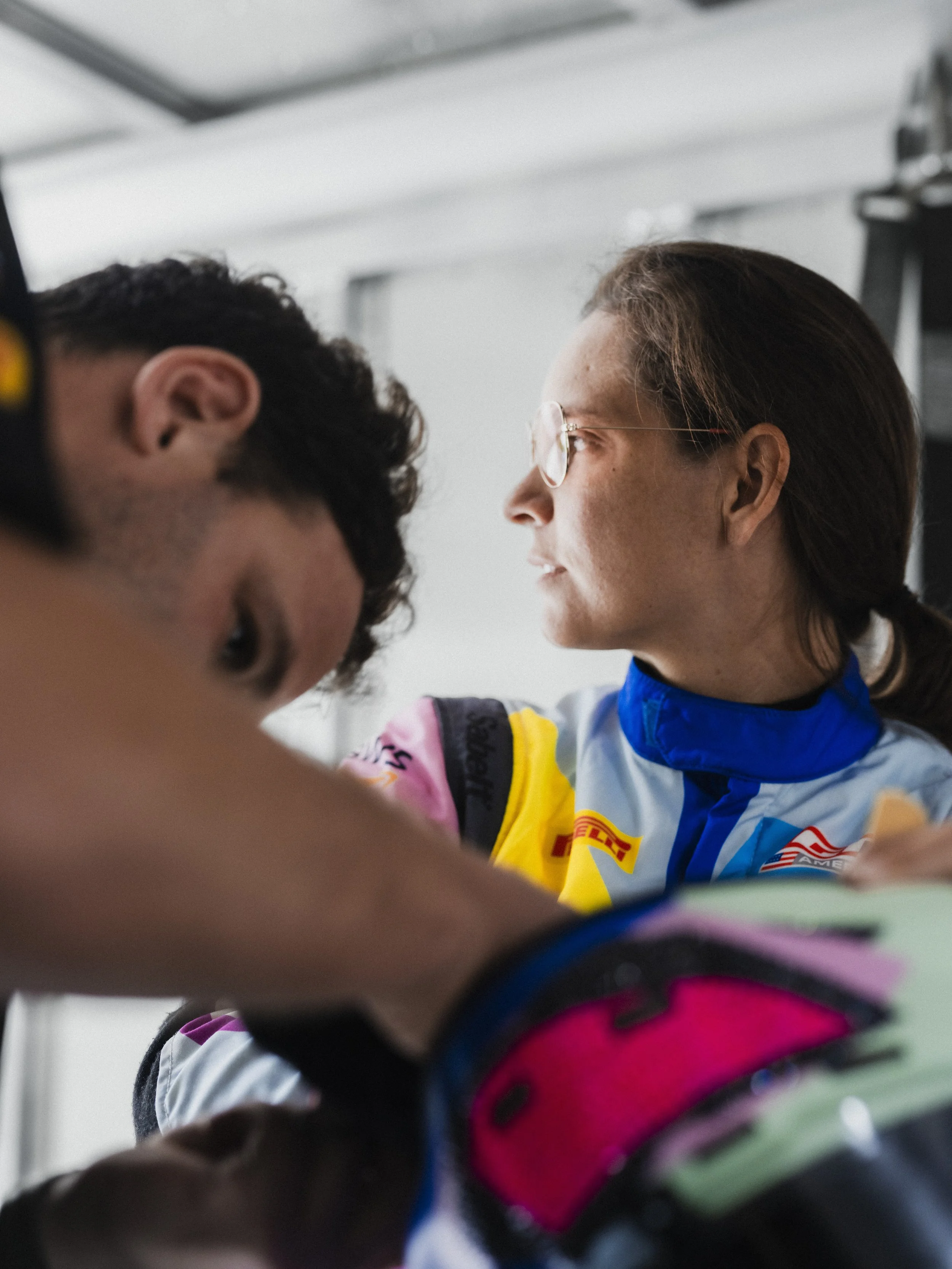
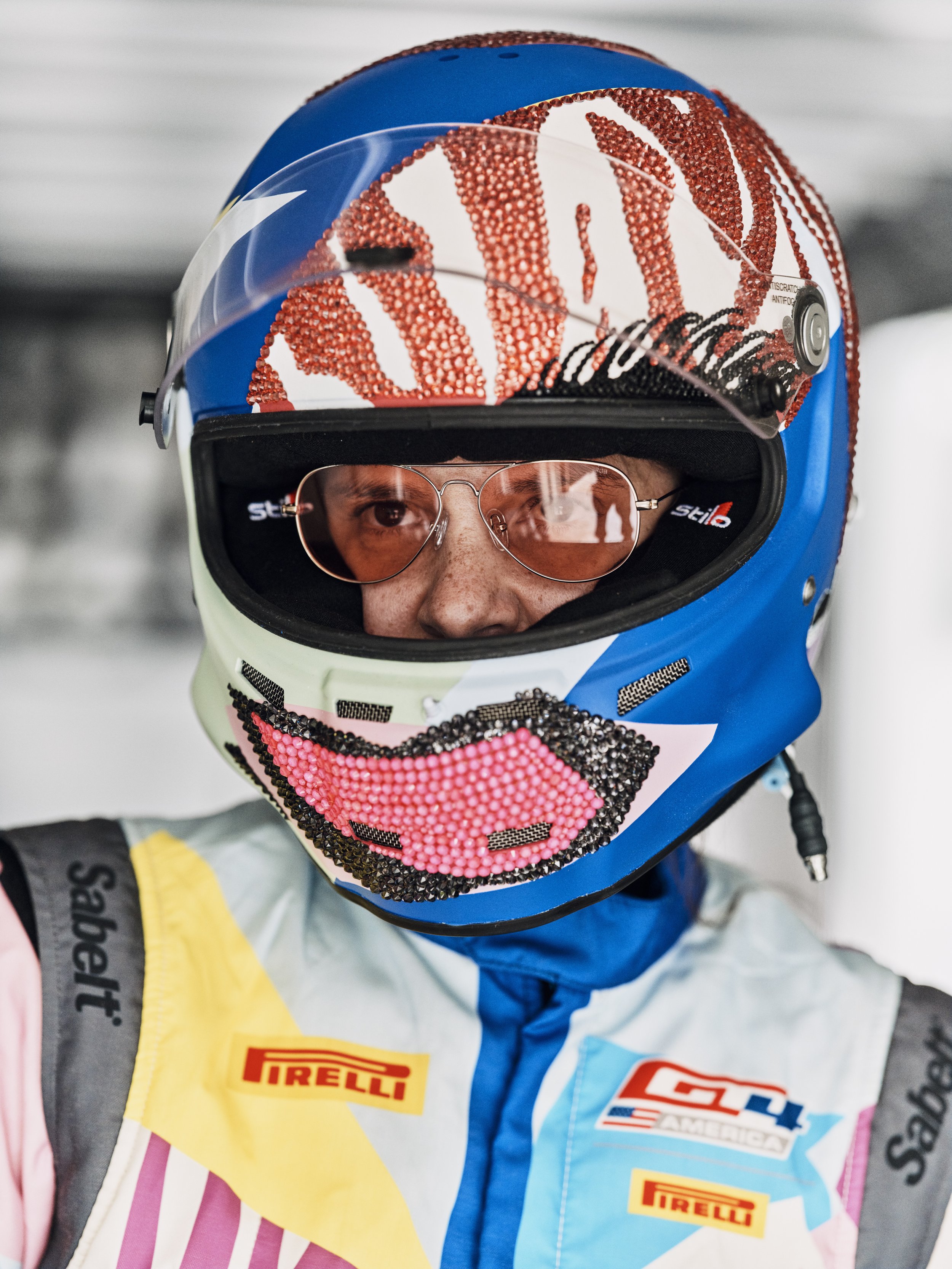
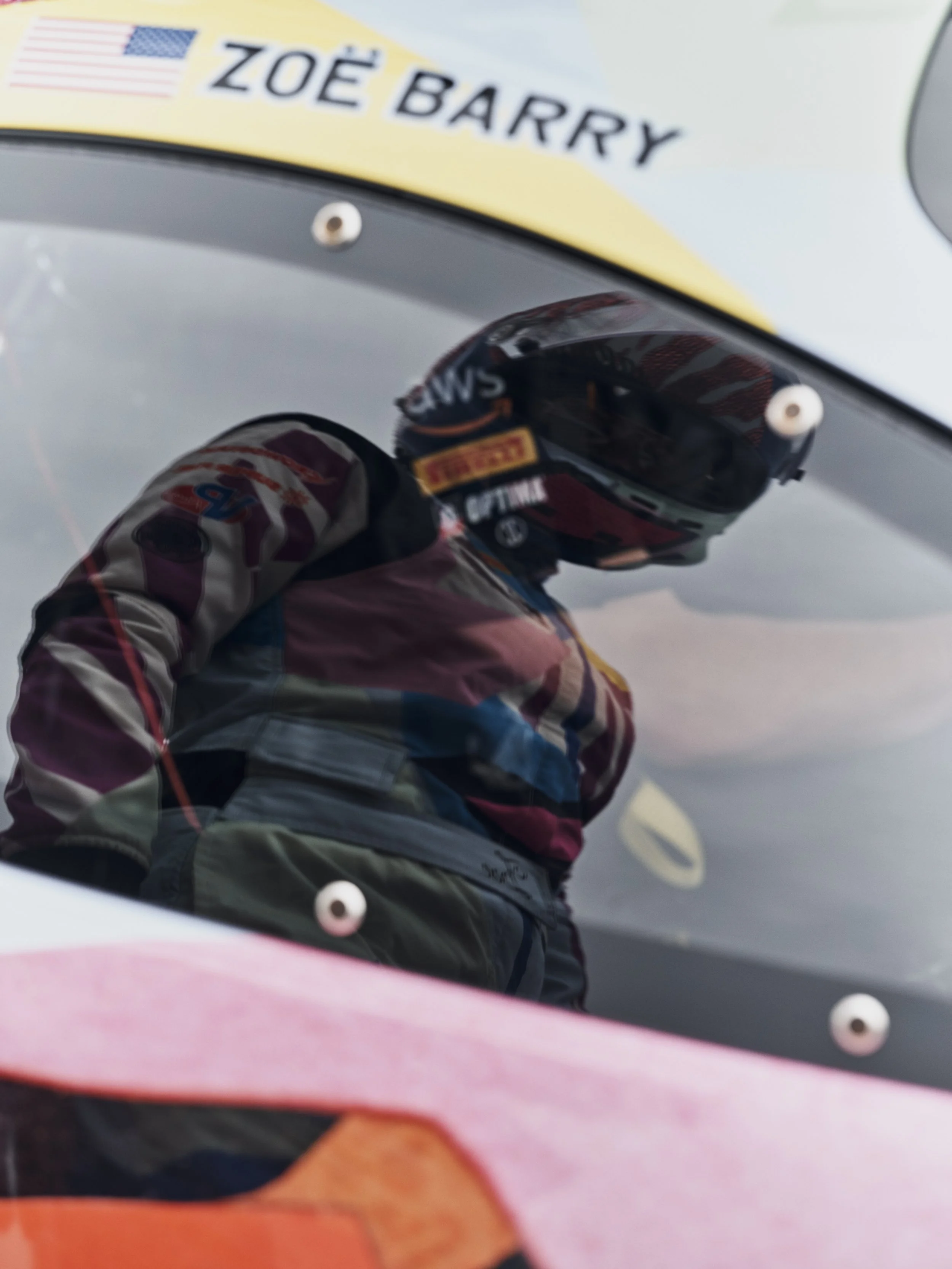
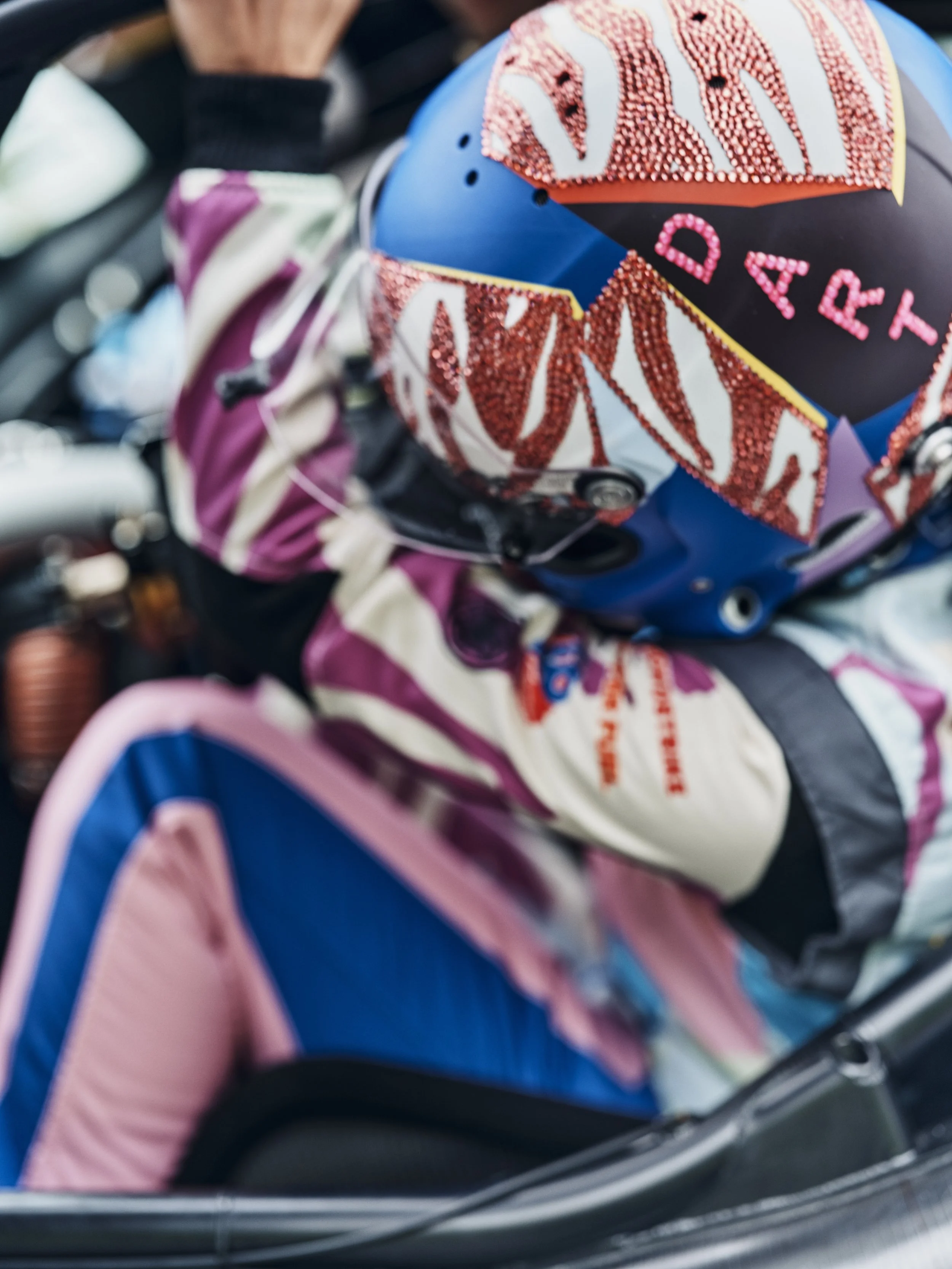
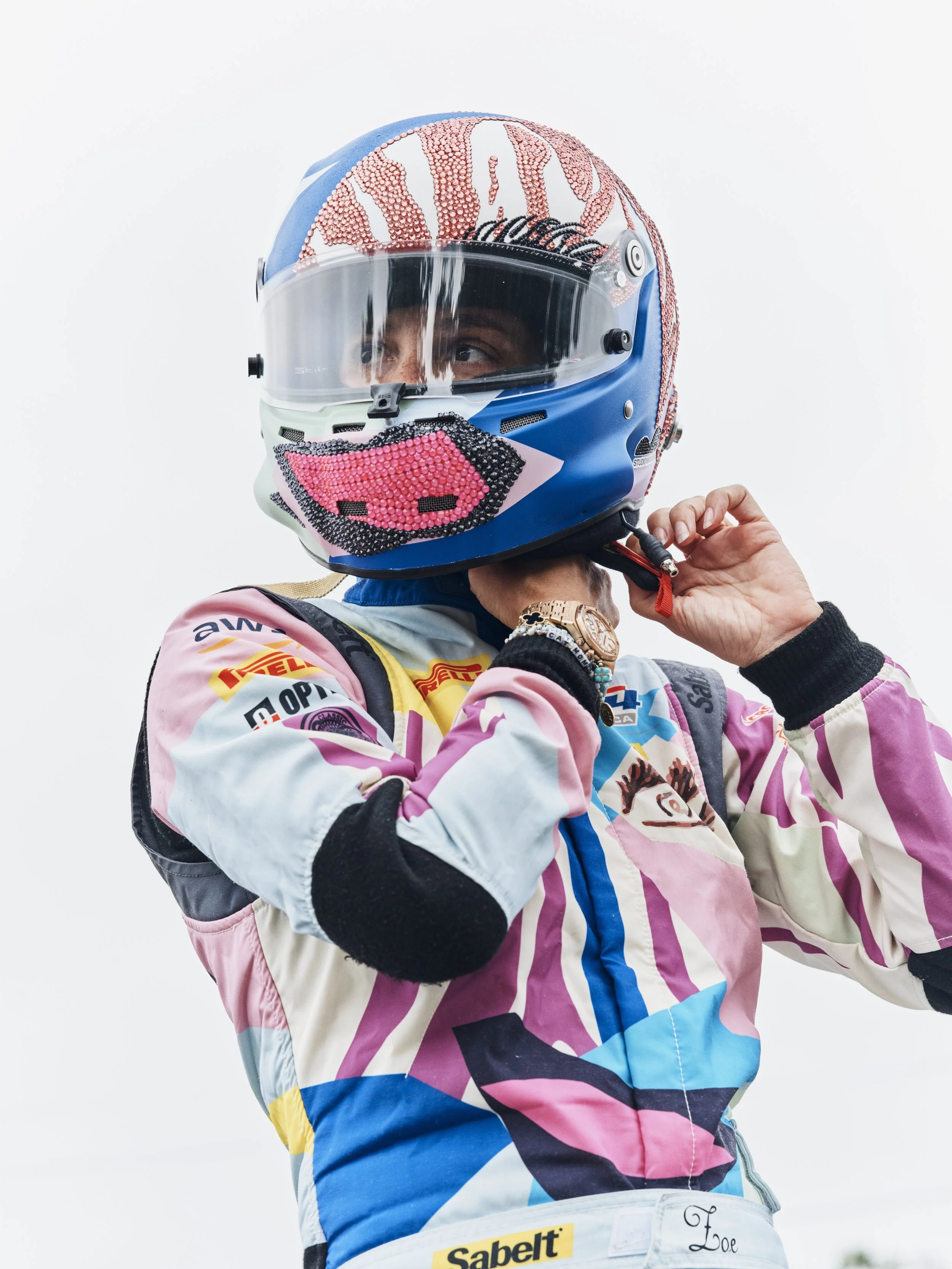
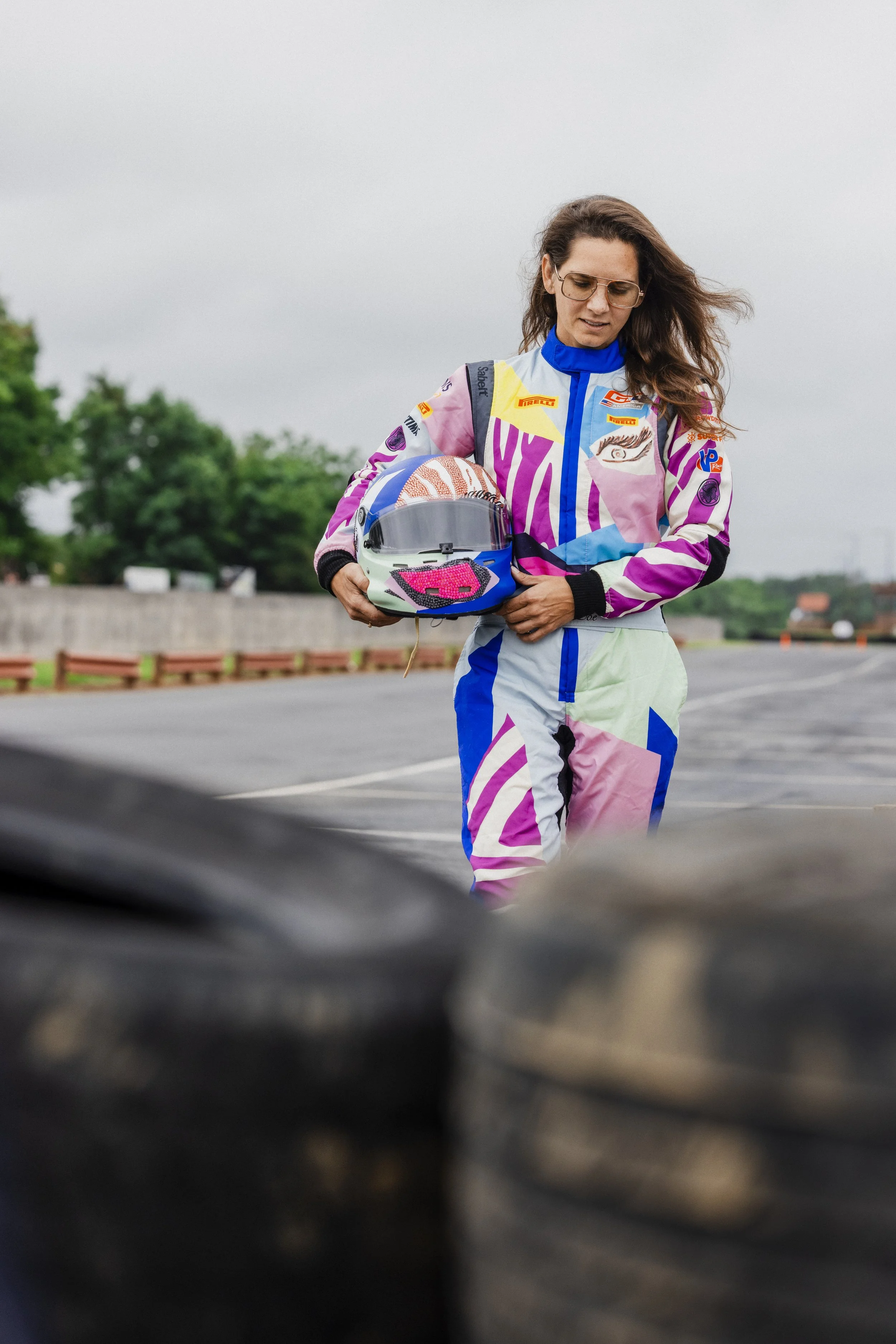
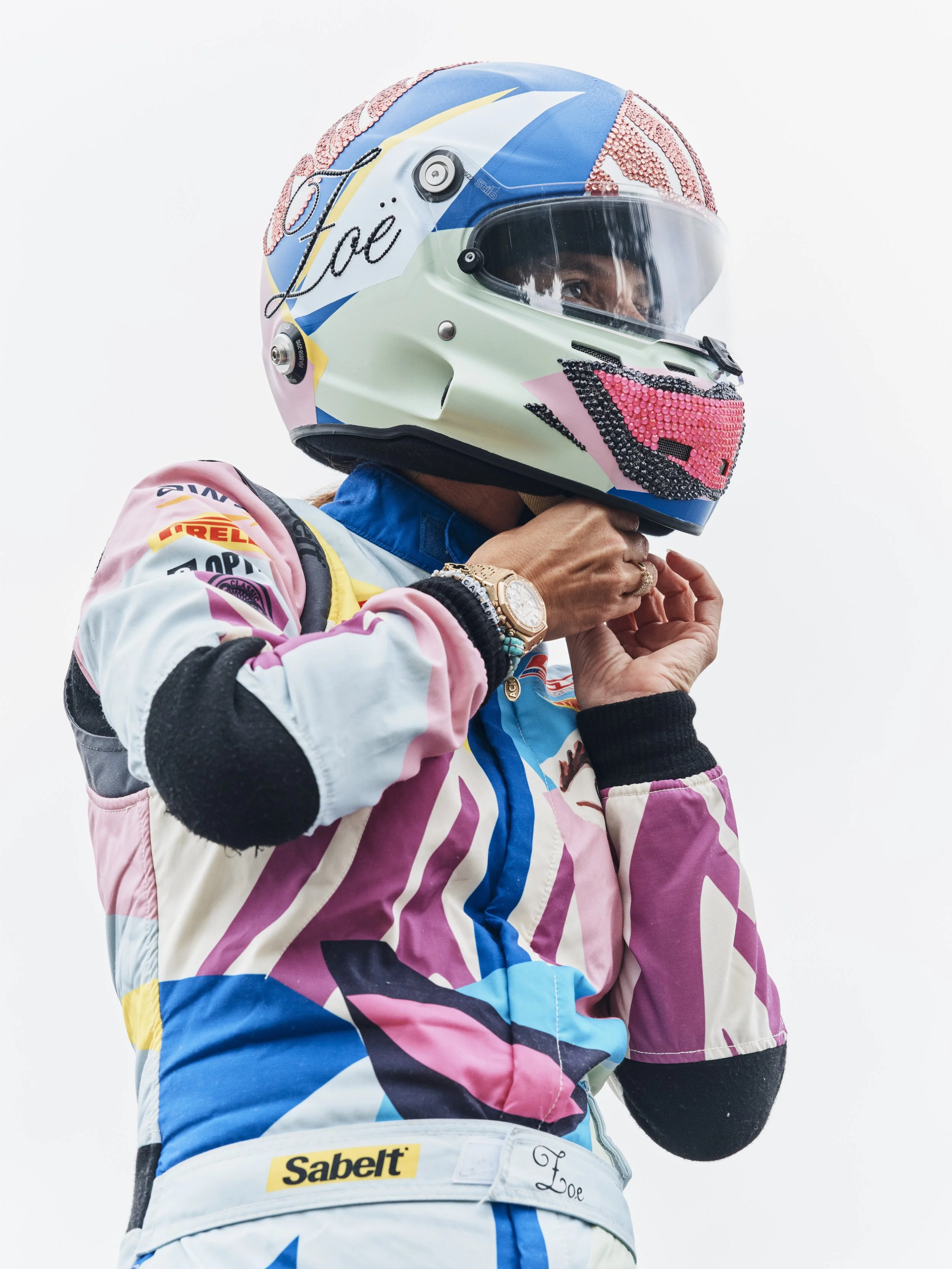
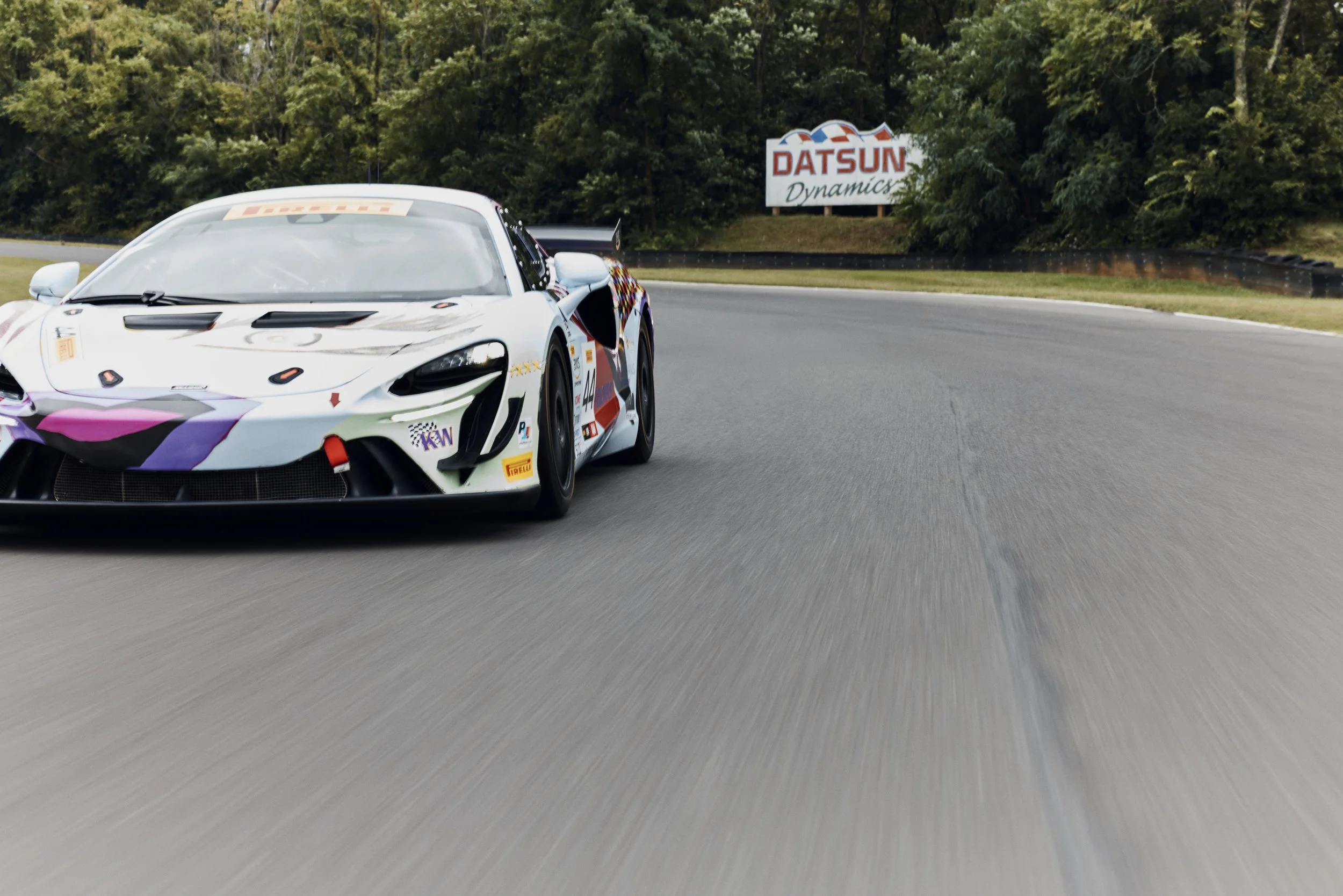
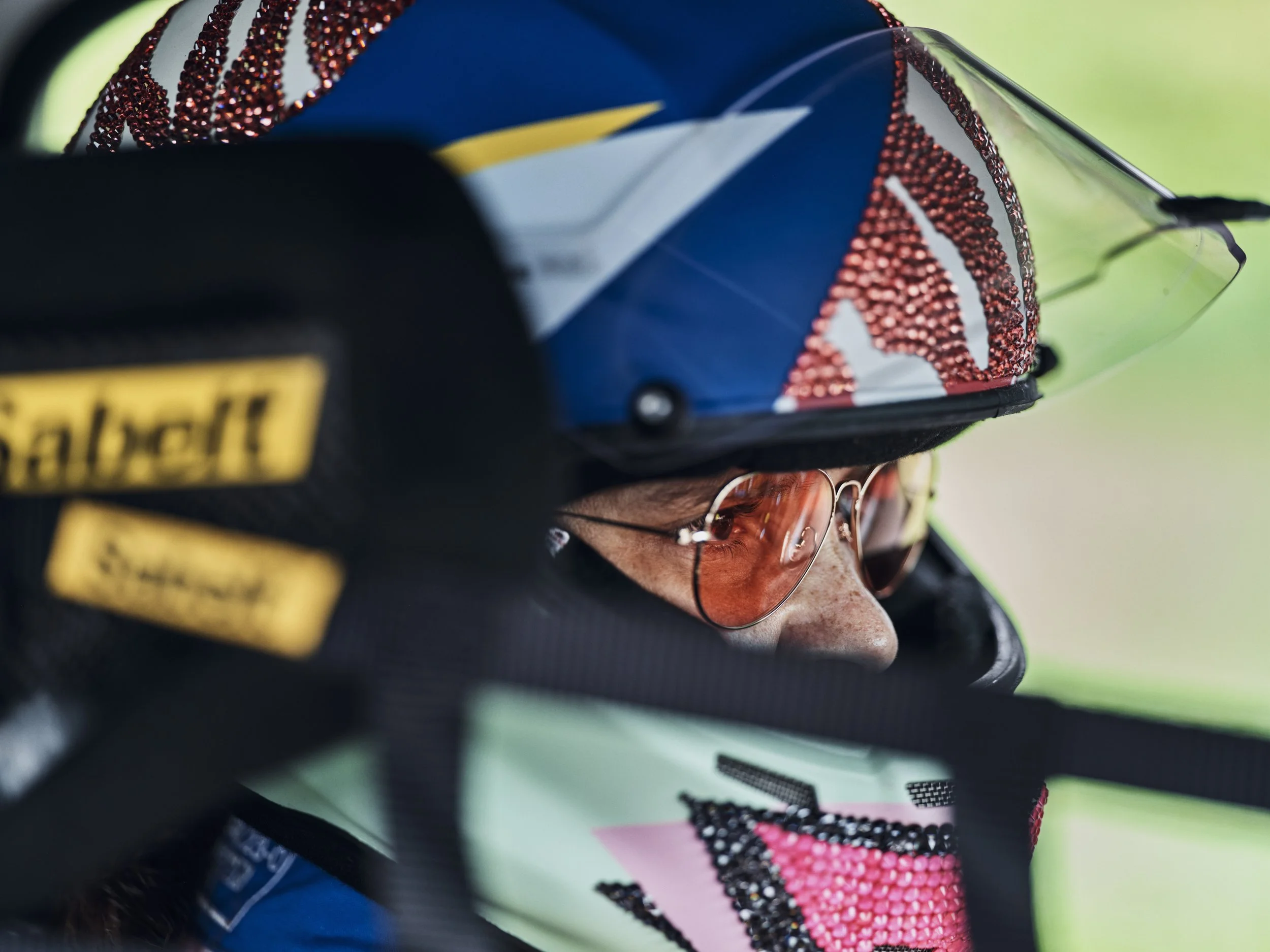
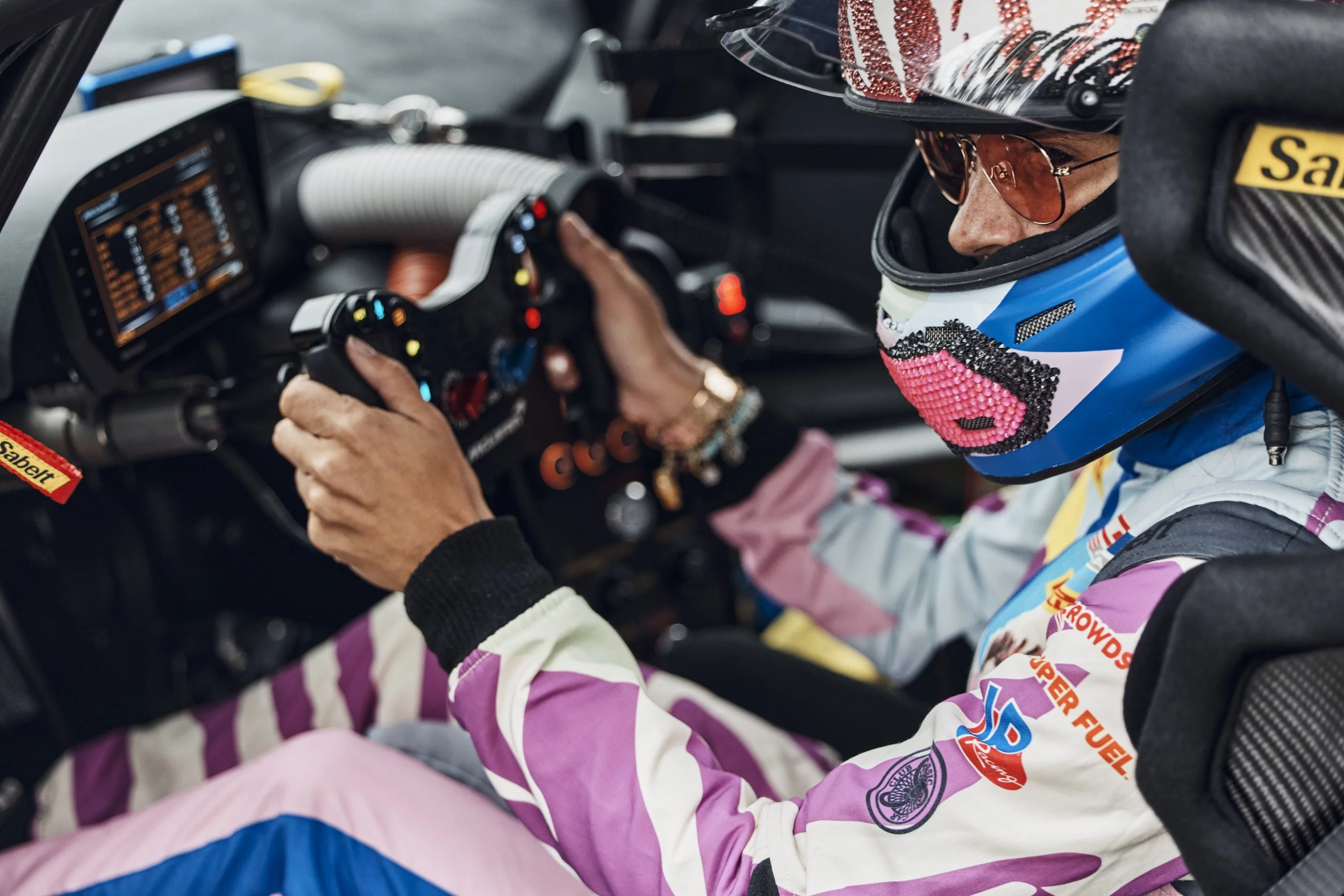
In one of the most dangerous and competitive sports in the world, Zoe Barry drives Car #44—a number that highlights the stark reality that only 4% of licensed professional racecar drivers are women, and only 4% of artworks sold at auction are by women. Behind the wheel of a McLaren Artura GT4, wrapped in a custom livery by contemporary artist Mickalene Thomas—who also designed the race suits and helmet—Barry focuses on one thing: winning. Yet in a world still dominated by male decision-making, from rivals on the track to corporate sponsors off it, she must confront stereotypes and misconceptions at every turn.

In 2025, she co-founded Driven Artists Racing Team (DART Car) with art advisor Spring McManus to champion women in motorsports and the arts—a first-of-its-kind initiative that fuses competition with creativity, proving that performance and cultural impact can drive change together. In January 2026, the team will compete in the 24H Series Middle East Trophy in Dubai and Abu Dhabi as the first all-female-led team in the series.

Lyn St. James, now a mentor in the field, is a living legend: the only woman to win an IMSA GT endurance race solo (1985 at Watkins Glen), the first woman to earn Indianapolis 500 Rookie of the Year (1992—a record unbroken for three decades), the holder of dozens of speed records, and the first woman to surpass 200 mph on a closed oval, reaching 204.233 mph at Talladega. Together with St. James, Barry explores the psychological and strategic challenges of racing—the constant risk of death on the track, the split-second decision-making, and the stamina and endurance required to outpace the competition.

In a special photo feature supported by Caddis Eye Appliances—a champion of second acts in life, reflecting Barry’s leap into racing after a career in the corporate world—we followed Car #44 onto a practice track in West Virginia, capturing the raw grit and glamour of a day in the life of a champion racecar driver.

ZOE BARRY: Lyn, of course, people can Google you, but hearing you speak on a panel brought out the heart, the challenges, the soul behind the story. It reminded me of Einstein’s quote about standing on the shoulders of giants. Women like me can get behind the wheel today thanks to women like you who took those early risks and broke the stereotypes. Even now, only about 4% of racecar drivers are women. Unlike Olympians, who often follow a clear path, female drivers are competing alongside men in a world that doesn’t want to fund them, doubts their ability, and fears they’ll get hurt.

LYN ST. JAMES: Every woman in racing right now is an iconic, isolated story unto herself. There are so many different forms of motorsport, and unlike Olympic athletes—where there’s a fairly cookie-cutter pathway to the top—there’s no single route to get there in racing. I’ve had the luxury, through the Women’s Sports Foundation, to meet icons like Billie Jean King, and I’ve crossed paths with incredible athletes like Diana Nyad, Nancy Hogshead-Makar, and so many others I grew up watching on TV. Their accomplishments are extraordinary, and I’m not at all taking away from their abilities, their talents, or what they’ve achieved. But there is a fairly clear pattern for how to get there in those sports. Whether it’s through coaches, training centers, or established pipelines, there’s an infrastructure that helps guide the way.

In motorsports, there is no such infrastructure. There’s drag racing, oval track racing, stock car racing, road courses—so many different forms of the sport. And on top of that, there’s an enormous amount of politics and money involved. It’s constantly shifting, and every driver has to figure out their own path through it. But every female driver has to constantly carve out a niche and prove they belong there. Even to this day, what I’ve accomplished doesn’t necessarily make it easier for the women coming up now. At best, it might inspire them, give them confidence, or encourage them to try. But beyond that, you still have to prove yourself.

BARRY: (laughs) I'm working on it, Lyn.

ST. JAMES: I’m still here to mentor, to be an ally, and to help however I can—but I can’t get in the car, make the calls, or close the deals. In racing, you have to wear so many hats: raise money, manage your team, and convince sponsors to believe in you. And that’s the part people rarely talk about. I once heard a brilliant woman in the UK describe how, in many ways, we’re still in the caveman era—men are inherently wired to protect women. It’s just a deeply ingrained instinct we’re still navigating.

ZOE BARRY: And you can see it in the data. Years ago, if you had a three-year-old daughter, you’d put her in ballet. Today, parents don’t hesitate to put their kids—boys or girls—on skis, on a tricycle, or on a bike. But with racing, it’s different. Very few parents think, I’ll put my three-year-old daughter in a kart and let her go. That’s still where racecar drivers come from, and we haven’t broken through that mindset in the way we have in so many other sports.

ST. JAMES: Exactly. And that’s where racecar drivers come from—starting young. Fortunately, history has helped. Title IX in the ’70s changed things. Now we have parents who went to college, saw women compete in sports, and understand that women can push themselves physically just as hard as men. That’s progress. But there are still limitations. My daughter is in her forties, and I have a seven-year-old granddaughter. Would she put her daughter in a kart? No. Would she put her son in one? Yes. So it’s still very much about individual decisions, shaped by these cultural assumptions. We can’t ignore those realities. I’ve literally sat across from male sponsors who couldn’t bring themselves to say, “We won’t give you money because you could get killed.” But I knew they were thinking it. So, I said it for them, “I know I could die doing this. I’ve seen death on the track. I made a conscious choice to accept that risk. It’s that important to me.” Every racecar driver—male or female—has to reconcile that risk. But for women, it’s another layer of resistance to push against.

BARRY: Lyn, one thing I’ve noticed in my journey raising money is how similar it is to your experience securing sponsorship for racing. In tech, as a female founder, only 2% of the billions deployed in venture capital each year go to women. It’s similar in sports: women drive huge sales—Nike sneakers, for example—but female athletes are paid far less, sometimes 90% less than men. In racing, it’s the same: women get a fraction of the sponsorship, so they have to do so much more.

When I was in tech, there’s something called Keyman Insurance. If the key person—often the CEO or founder—dies, the business faces risk because they’re a major shareholder and driver of innovation. When I started racing, my chairman raised concerns with our lead investor about Keyman Insurance, implying my racing was a liability. I shot back: statistically, racing is safer than skiing. Are male CEOs stopped from skiing? No. Sometimes you counter with data, sometimes you confront it directly. You have to be upfront: yes, I could die doing this, but I’m doing it anyway. All the way up to F1, I don’t hear drivers having to defend their choice to be in a racecar, going over 200 miles an hour with the real risk of death. In all the conversations I’ve had with top athletes in this space, men simply don’t have to answer that question.

ST. JAMES: They don’t have to answer that question. In fact, it actually makes them more heroic, because people admire them all the more. When Eric Anden died, our sport stopped—literally. Not just Formula One, but the entire motorsports world. The same happened when Dale Earnhardt was killed. These were icons we never expected to lose in a racecar, and their deaths reminded everyone of the risks involved.

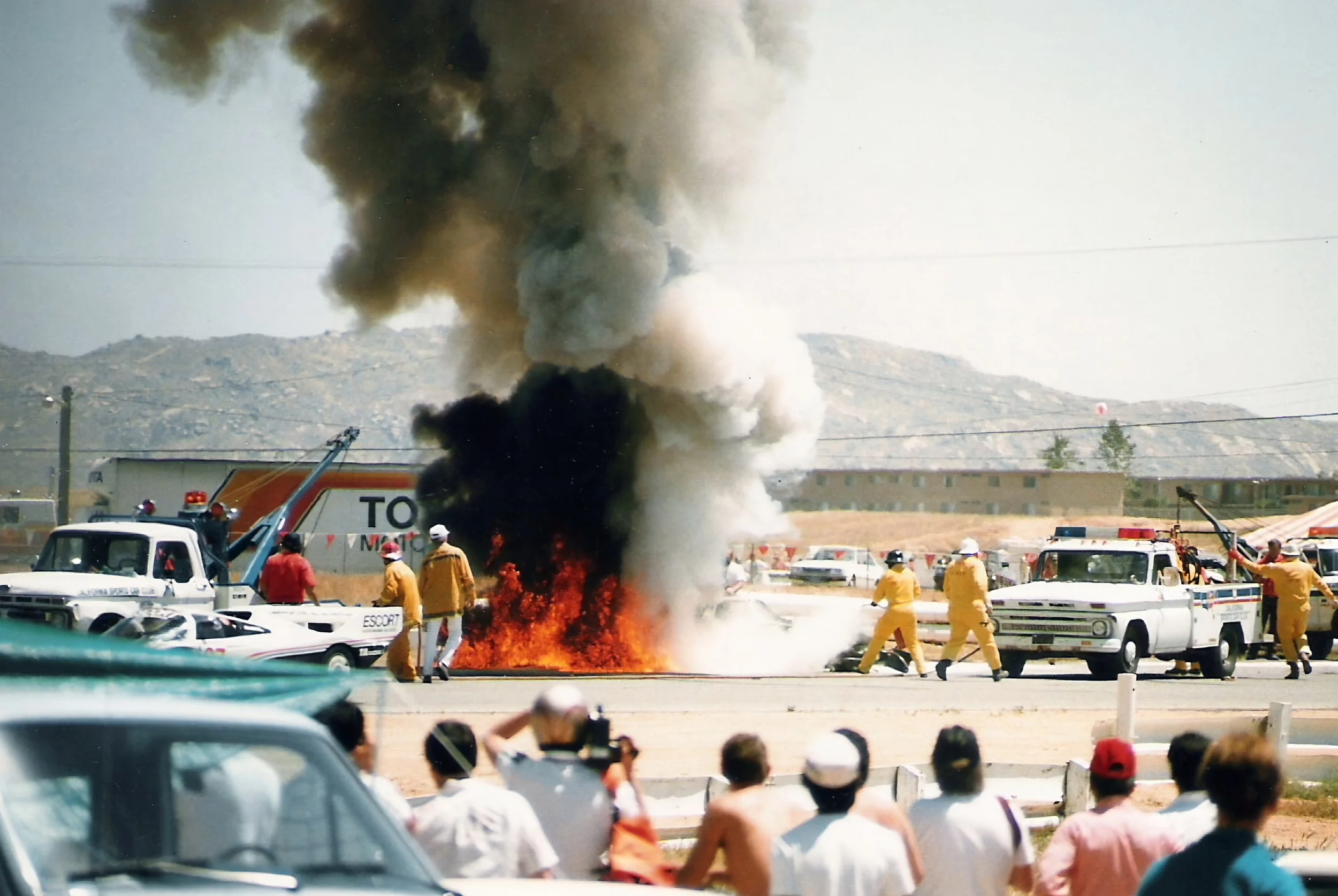
Women drivers are just as courageous. When Catherine Leg crashed at Road America years ago in an IndyCar, she walked out of the medical center after a horrific crash. I had a similar experience at Riverside in 1986. I was upside down and on fire, yet I crawled out and walked away. But now, we’re not always admired for it. I remember someone at Ford, who was sponsoring me at the time, saying, “Oh my God, she really drives just like the guys. And she didn’t cry.” I thought, You’ve got to be kidding me.

BARRY: Let’s go back to the beginning. How did you get started, Lyn?

ST. JAMES: It started when I discovered endurance racing—a form of motorsport I didn’t even know existed. I went to the 24 Hours of Daytona with my husband as a spectator, and I was blown away. These cars raced for a full twenty-four hours, and as a fan you could actually see the people—the crews, the human effort—behind it all. I called it seeing “real people” instead of superheroes, the way IndyCar or Formula One often felt. I was fascinated by how drivers with Corvettes, Camaros, Mustangs, and other so-called “back-of-the-pack” cars still managed to compete. That’s when I learned you needed a competition license. To get one, you had to join a club—so I became a member of the Sports Car Club of America. Then I found out you also had to attend a driver’s school before you could earn that license.

BARRY: How old were you at the time?

ST. JAMES: Well, I went to driver’s school and became a member of the Sports Car Club of America (SCCA) at twenty-seven and got my license a few years later. To participate, you needed a racecar, and there was a new class called Showroom Stock. You could take a production-based car, install a roll bar, a five-point seatbelt, and a five-pound fire extinguisher, and you could race. I bought a four-cylinder Pinto, which became my first racecar.

I drove it back and forth to work during the week and raced it for a couple of seasons. Eventually, I won the regional championship with it. That was the beginning, and it lit a fire in me. Going over a hundred miles an hour—on the front straightaway at Palm Beach International Raceway with a tailwind—it was exhilarating. I’ve always been a sucker for challenges, and every moment in a racecar tests you—your technique, your reactions, the car, your competition. It throws challenges at you constantly, and I just soaked it all up. I loved it, and I’ve never stopped loving it. I’ve never looked back.

BARRY: How many years to get your professional license?

ST. JAMES: To race professionally, I needed an IMSA (International Motor Sports Association) license. That was necessary to race in the Kelly American Challenge Series. I actually raced my husband’s Corvette at Daytona—not in the 24 Hours, but in one of the other events they held there. To get the IMSA license, you needed enough races under your belt, and you had to go through the licensing process, which is good—you really have to learn it. (laughs) Within a couple of years, I earned my professional license and I started racing in the Kelly American Challenge Series, which was a support race at IMSA events. They even offered a bonus prize for the top-finishing female driver in each race.

BARRY: That’s pretty progressive. They barely do top female finisher now.

ST. JAMES: Yeah, Kelly really needed to do something to support women in racing because of their history of primarily employing women as temporary secretaries, even as they expanded into light industrial work. I raced in all ten races in 1979—and I won in every race. That started to put me on the map because the race results were published in Speed Sport News, which didn’t have as wide a reach as today, but it mattered. They always noted the top female driver in the results, which helped get my name out.

Through that exposure, I was invited to race in the 24 Hours of Nürburgring as part of the BF Goodrich factory program, and we won our class. Around that time, I also started a company called Creative Images and used it to write sponsorship letters. I couldn’t sign my own name because it was promoting “Lyn St. James,” so I made up names of people in my company to make it seem bigger than it was. (laughs) One of the companies I targeted was Ford Motor Company. I’d seen a 1978 Car and Driver article titled “Ford and Feminism,” highlighting the company’s efforts to provide equal employment opportunities for women in non-traditional roles. I bombarded them with letters every time I raced and sent my results, relentlessly following up. In 1981, it paid off—I signed with Ford and became a factory driver. That was the tipping point in my career, the moment everything started to change.

BARRY: I’ve always been a daredevil—growing up in NYC, I was constantly taking risks, from gymnastics on rooftops to catching animals with my bare hands. I competed nationally in gymnastics, swimming, and sailing, but injuries and physical limits held me back. Then I discovered racecar driving—a sport where you can compete at a high level for decades. My first car was a racecar; I traded equity in my tech startup for a Mazda to start racing seriously. I went through racing school, club races, and learned the grind of back and mid-pack racing—the chaos, the carnage, and the challenge of getting to the front.

At forty, I earned my professional license. I applied a venture model to my racing team: raised funds, bought a GT4, and collaborated with artist Mickalene Thomas, who designed hand-painted helmets and suits. In our first pro race, we finished fourth. Now, my goal is historic: to run the 24H Series Middle East Trophy with an all-female team—a first for that race. For me, as an athlete, everything I did in gymnastics and swimming was sprint-focused. A gymnastics routine is only four minutes long. Swimming, of course, was pure sprint. In racing, our sprint events started with Mazdas in club racing—about twenty minutes long, but extremely fast. What were your early sprint races like?

LYN ST. JAMES: My early amateur races were about thirty minutes. In pro racing, sprints usually run forty-five minutes to an hour—single driver, no pit stops. You have to manage fuel and tires carefully, because a car can only go so far before running out or wearing down. Safety and refueling rigs are factors too. For example, in the TransAm series, races were an hour with no pit stops, so the car had to be built to last the full distance.

Endurance racing is a different beast. The crew becomes the most important part—not the drivers. We’re just the machines in the car, responsible for staying out of trouble, driving fast, and bringing the car home intact. The crew keeps the car running, handling refueling, tire changes, brake maintenance—sometimes nonstop for 24 hours. You learn exactly what every person on your crew—and your competition—is made of, because anything can happen. Plans go out the window, and it’s all about how people respond under pressure.

BARRY: People don’t usually think of the car as an athlete, but you should. In endurance racing, that becomes clear. You have to prep the car differently for a sprint, a driver change, or a 24-hour, long-haul race. The approach for a true long-haul endurance event is completely different.

ST. JAMES: Absolutely. Without a crew who understands the nuances, you’re in trouble. Every component—brakes, suspension, setup—has to be prepared differently for an endurance race versus a sprint.

BARRY: I haven’t done a full 24-hour race yet, but there’s so much that goes into it from a planning and logistics standpoint. In many ways, it reminds me of tech—using a Gantt chart or burn-down chart to map everything out. If your goal is to launch on a specific date, you need to identify all the pieces that must be in place beforehand. Then you have a fixed budget, and you have to decide where to allocate resources and which areas deserve the most focus.

ST. JAMES: This is an organic response, but I really like that you have a singular, unique goal. Not only is it an endurance race, it’s in Dubai—a location where not much racing happens outside of Formula One. And doing it with an all-female driver lineup adds another layer of significance. Ideally, you’d integrate some women into the crew as well, though having an entirely female team can be extremely challenging given the skill and experience required.

I highly recommend, before attempting this, that you get some endurance racing experience under your belt. One series that comes to mind is the WRL (World Racing League), which features six and eight-hour races. It didn’t exist when I was racing, but from what I understand, seats aren’t prohibitively expensive or hard to get. Participating in one of these races as part of a driver lineup would give you a chance to observe, understand, and truly experience what endurance racing demands.

BARRY: Oh, they have one coming up at Watkins Glen! The “blue bush.” (laughs) Just so people reading this know, Watkins Glen has almost no runoff space—just a narrow strip of grass, maybe two car widths, before you hit the guardrail. To make it feel less scary, they’ve painted the guardrails blue—but any mistake, and you hit the grass, then the “blue bush.” The cars are all banged up.

ST. JAMES: I love that track. I made history there. I was racing for Ford in a Mustang in the Serengeti 500, a 500-kilometer endurance race in the GTO division of what was then called the Camel GT series. That season, I ended up with a different co-driver almost every race. For this one, I had a replacement co-driver I knew was competent—but honestly I was in the groove completely, so I wasn’t thinking things through. When I came in for the scheduled pit stop—where we were supposed to change drivers, refuel, and swap tires—I didn’t get out of the car. I didn’t put the window net down; I just shook my head “no.” In a pit stop, you only have 30 seconds, so there’s no time for discussion. The team, my co-driver, and the managers exchanged glances as I stayed in the car. They changed the tires, fueled the car, and I took off, running the entire race myself—and won the GTO division.

No other single driver, male or female, had ever won an endurance race solo. Since then, the rules have been changed so no driver can do it alone. That victory came with a few funny and frustrating moments. At the podium, I was alone—no car, no co-driver, no crew. The trophy was handed to me by a Serengeti representative, a guy from their retail team, which was both hilarious and surreal. Later, when I returned to the garage, the car and crew were gone. They took me out of the next race, so I missed the points. I ended up paying a penalty from my team for making that split-second decision. It’s a moment in my career that brings me a lot of excitement and pride, but it’s also a reminder that when you don’t play by the rules, there are consequences.

BARRY: What do you think are the different qualifications that go into being a good racecar driver? For me, you need basic skills—hands-on feel for the car, quick reflexes, eyes up to anticipate what’s coming. Over time, you learn to anticipate crashes or mistakes, even guide someone off the track without touching them. For example, at Sebring, my home track, I know a turn where the correct line is left. If someone dives inside, they might hit a greasy spot and go off—totally legal, not my fault.

It also requires an appetite for risk. When you sign up for this sport, you know you might die. Most sports don’t ask that—basketball, swimming, gymnastics—you aren’t thinking, I could die today. High-performance sailboat racing is closer, but in racing, it’s constant. From there, it’s awareness—reading competitors, understanding how they’ll react. Then it’s emotional intelligence, knowing how to push someone without endangering yourself. And finally, it’s about the fear factor—can you manage it, or do you let it manage you?

ST. JAMES: I think you just have to have really good perception and vision. Not only good reaction time, but anticipatory reaction time. You have to be able to anticipate and definitely have a feel for the car. Whether it’s through your body completely—I mean, your feet, your butt, your hands—I mean, all of that. You really wear the car. You become one with the car. I call it desire. You have to have a hunger for outracing and outmaneuvering.

BARRY: When you level up—in a new car, a new series, or a higher league—you get picked on. You just have to accept it as part of the process. I feel like all I’ve been doing is crashing—not in racecar driving necessarily, but in every sport. In gymnastics, everything is about falling. In tech, there’s the saying, “fail fast.” In sailing, on your first day in a boat, all you do is find the edge. It’s a full day of learning how to capsize the boat, pulling yourself out of the water, getting wet, draining the boat, and sailing forward. Then the coach blows the whistle, and you capsize again.

For me, I’ve totaled several racecars—on average, probably every other year. You don’t want to, but it’s part of leveling up. Going from Mazda to Porsche is a huge jump in speed and cornering. Competition also gets more aggressive as you move from club to national to pro racing, so there’s a steep learning curve. You’re the greenest person on the track, and people take advantage of that. In sailing, we used to call it “finding the marshmallow.”

ST. JAMES: First of all, it’s an expensive sport. I’ve had some older competitors say that women can drive racecars, but the reason they’re not more successful is because they don’t want to hurt the car. Try having that conversation. (laughs) The idea being that women are mothers and are “meant to protect everything in the world.” But there’s always a risk–reward in every move you make. Over time, you learn that you can’t build a career if you’re known as a crasher. Fortunately, I didn’t crash a lot, but I was still worried about it. Whether it’s crashing or being too hard on the car, you can’t afford that reputation.

One piece of advice I always try to share—whether with other female drivers or anyone I mentor—is that the best drivers never ask more from the car than it’s willing to give. If you overdrive, eventually you’re going to crash or break the car. And if you do that often enough, people won’t want you in their car. To build a career, you need to be both available and desirable as a driver. If you’re known for wrecking cars, there’s always going to be someone else waiting with a helmet who doesn’t carry that reputation.

BARRY: At the second race in Sonoma, we didn’t run because it was a rain race. And I love the rain. That’s my time to shine. It’s my absolute favorite condition to drive in. My coach always says I’m a beast in the wet. (laughs) But they canceled. In the GT3 race, I want to say they lost about a third of the field—badly. Then, they had the McLaren Trophy, which also got cancelled because so many cars were destroyed or driven off track. It was nuts—torrential rain. So, by the time our race came around, a lot of us decided not to go out.

We had to make a decision—because we were running a Mickalene Thomas car, which is a multimillion-dollar car. Everyone else out there is in a $250,000 to $300,000 car. I’m in something worth $2 to $3 million. I’m not going to take that risk. I can be really aggressive with my driving at the right time. When I drove the Mickalene Thomas car, I went from the back of the pack to fourth place. I have that data. But there are also times when you have to say, “I can’t take a 25% chance of putting this car into a wall.” Or, even if I don’t make the mistake, if someone else hits me, or the track is statistically likely to send you off—then you weigh the risk differently.

ST. JAMES: Every opportunity is an opportunity to make a decision. You assess the situation and try to make the best call. Now, if you’re always going to raise your own money, run your own team, and drive your own cars—fine, do whatever you want. But if you want a career as a professional driver, you can’t be known as a crasher.

BARRY: One thing we haven’t talked about too deeply is the Mickalene Thomas art aspect of DART Car. I’m really proud of this part. I raised investor dollars and made sure part of that funding went directly to Mickalene for this work. We gave her full creative license and she delivered a bold, Cubist-inspired design with lips on the front and a winking eye motif.

That visual language carried through everything—the car, the helmets, the race suits, all with those lips. Mickalene jokes they’re “for all the kisses in all the special places.” It’s playful, but it resonates. People love it. And not just women—men too. You’d expect women to gravitate toward hot pink and crystals, but when the car was being wrapped in a private garage, collectors kept coming through asking for photos. And it wasn’t just collectors. When we went to the tech inspection, the crew—not museum-goers or gallery regulars—were holding the helmet like it was a treasure. At that time, none of us knew how the market would respond, but then my first helmet sold at auction at Silverstone, during the F1 event in July, for $150,000. Since then, collectors have been snapping up DART pieces, and that’s the mission: every sale funds more driving, gets more women behind the wheel, and raises visibility for female artists.

ST. JAMES: Sometimes that’s one of the unique roles women can play in this competitive world—where certain lines of demarcation get blurred. Women can bring a different lens, elevate the story, and shift the narrative. This is one of those examples.

ALFONSO GONZALEZ JR.

An image of Alfonso Gonzalez jr. on a horse

interview by Jeffrey Deitch
photography by Johanna Hvidtved

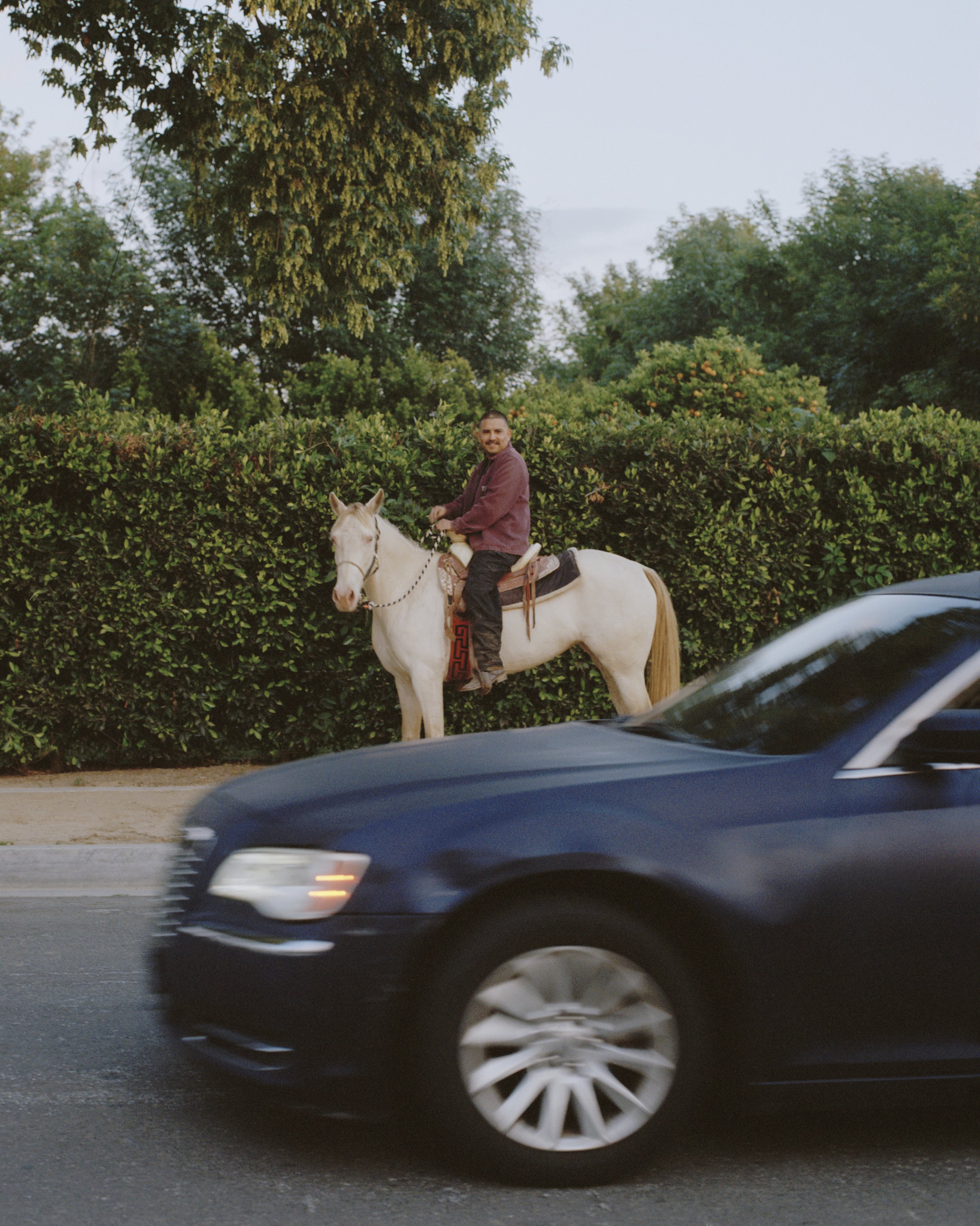
Having cut his teeth as a traveling sign painter, Alfonso Gonzalez Jr.’s paintings are deeply infused with the tradition of the Chicano Art Movement of Southern California and the distinct vernacular of Los Angeles’s palimpsestic urbanity. His paintings are near-spiritual windows to the vibrancy and richness of immigrant communities across the Southland. Through graffiti-covered overpasses and cement ravines, birthday party supply stores, nail salons, and helicopters circling stucco-clad multi-unit dwellings, Gonzalez Jr. reimagines art history through a diasporan lens. Photographed at a friend’s equestrian ranch in the unincorporated Avocado Heights neighborhood of the San Gabriel Valley, Gonzalez Jr. speaks to Jeffrey Deitch about his unique letterforms; inspired by pachuco and cholo traditions, his narrative approach, and observational humor.

An image of Alfonso Gonzalez Jr's painting

JEFFREY DEITCH: I was impressed by how your introduction to art comes from real life. You learned by immersing yourself in graffiti and sign painting. Your knowledgecomes from perfecting the craft. Tell us more about your artistic origin story.

ALFONSO GONZALEZ JR: My father’s a sign painter. He grew up in Tijuana and moved to LA when he was about twelve years old, so he witnessed the beginning of the Chicano Art Movement. Around that time, there were hundreds of murals painted all over Los Angeles County. He moved both of my parents to the Boyle Heights area when they came to the United States, and that’s where a lot of that movement was born. Some of the first art I remember seeing was in books that he had of Mexican muralists, like [David Alfaro] Siqueiros, [José Clemente] Orozco, and a few of [Diego] Rivera. He painted a few murals when he was younger, but later became a sign painter for a lot of tow truck companies, storefronts, and things like that. I would always go with him to work, so that exposed me to different parts of the city.

Going from San Gabriel Valley to the San Fernando Valley, looking at everything in between, and watching the landscape change wasalways really fascinating to me. That was also around the time I started seeing graffiti. It was the ’90s Southern California style, but it wasn’t just an artistic style; it was also the spot selection—climbing bridges and billboards. So I began meeting people. I had a cousin who did graffiti, and he introduced me to a lot of magazines and music. He had all these sketchbooks. All of that really informs what I’m doing now. Now that I’ve found my own voice, I’m continuing that legacy.

DEITCH: There is a very distinctive Los Angeles mural and graffiti style.

GONZALEZ JR: The beautiful thing about the United States is that the immigrants create a rich culture and history that is unique to this country. For instance, Boyle Heights was a Japanese and Jewish neighborhood that later became home to Mexican immigrants. A lot of the Chicano art movement was inspired by the Mexican muralists and the printmaking that was happening in places like Oaxaca, but with a new perspective, because it’s for people born in the United States.

What we know as modern-day graffiti originated in the 1970s in New York City on the subways. But the Los Angeles landscape is different. A lot of the early graffiti movement started on the buses, and once law enforcement started cracking down on that, it moved to the highways. Artists were creating really bold styles to catch your attention at fast speeds, but when those got buffed and erased, people started climbing. Then, the thing was to paint really difficult spots in very intricate styles.

The palettes and the lettering style are also influenced by pachuco, cholo, and Chicano gang styles. There was a whole movement that used pre-aerosol paint. They used paint brushes and tar in the LA River. There are still some really old landmarks fromthe 1920s in many of these neighborhoods. Gangs like the Avenues and White Fence from the ’20s started what would later become the pachuco style. That style was a lot sharper, bolder, created to mark territory, and to be intimidating. A lot of it is inspired by Old English. It has a darker feeling to it.

DEITCH: I’ve heard that part of the inspiration comes from the Los Angeles Timesmasthead?

GONZALEZ JR: Yeah, that’s the Old English. To this day, when I see the Los Angeles Times, it just feels very serious, very gothic, almost.


An image of Alfonso Gonzalez Jr. and a horse
Image of a horse

DEITCH: Could you give us a better understanding of the differences in the pachuco and cholo approaches?

GONZALEZ JR: The pachuco style started around World War II, when everyone was rationing, which meant you couldn’t use a lot of material. But the pachucos were dressed in baggy clothes, and they would always clash with the sailors. There were a few fights, and the LAPD always sided with the sailors, so that’s what led to the Zoot Suit Riots. A lot of the modern Chicano gangs, which we call cholos, were basically groups of teenagers that started clubs in the ’60s and later became what we know as gangs. Sometimes it was a football team, and other times it was for protection, but a lot of the fashion came from workwear, and a lot ofthat clothing is similar to how people dress in prison. It also influenced the way people dressed in the ’80s, when streetwear started to become popular.

DEITCH: I love the story you told me about working as a traveling sign painter, going across the country. It reminded me of James Rosenquist’s background, how he turned that into his pop art. How does your experience as a sign painter inform the paintings that you show now in galleries?

GONZALEZ JR: I grew up painting signs, graffiti, and cartoons, but as far as referencing and rendering a photo, I learned that at work. The first company I worked for was based in Los Angeles, and they painted all kinds of ads—a lot of movie posters—on 12 to 20-story buildings. After working with that company, one of my mentors asked me if I would go with him to work for a company that was based out of Brooklyn.

This company was founded by ex-graffiti writers who saw the opportunity to expand what we were doing in LA—working with different creative agencies, and painting ground-level advertisements—in Manhattan and all over the country. I started off painting on suspended scaffolds, so you would view the work from hundreds offeet away. Then, eventually, once I got better, I went to the ground—stuff that is still really large-scale, but you could walk up and look at it.

It was my first time going to New York, so I met a lot of these painters who came from different backgrounds, but we had a lot of similarities. I experienced that training from the last of the old billboard painters. It was the old school apprenticeship that most people don’t have anymore. They would start at 7:00, and if you showed up at 7:01, they would go upwithout you. They’d just close the door and say, “You gotta go.” For me, that was my livelihood. I couldn’t get fired because I didn’t have any other options. You had to have thick skin because they were mean. They were trying to get you to quit. But, after a few years of that—it wasn’t days or months, it was years—they were like, “Okay, you can hang now, let me teach you.” I was like, “I don’t know anything, so you just tell me what to do, and I’ll do it, and I’ll clean your brushes.”

DEITCH: Is that when you started to go to museums?

GONZALEZ JR: After a while, I got tired of just drinking with my co-workers during my off hours, so I started going to all the museums in whatever town we were in. I would see some pop art and think, Wow, this is an advertisement. I would see works by Rosenquist, Rauschenberg, and Andy Warhol’s soup cans, and it was such a breakthrough moment. And then, I started thinking about my place in it. I’m like, Hey, why don’t I do it?

Growing up, I always called myself an artist, but I didn’t really have the chops. It took making it my livelihood to get the discipline to finish things. Leaving LA was also a crucial part of my story, because you have to look at it from the outside to know what’s really going on. People always tell me things like, “Wow, you really captured this and that.” And it’s because I traveled all over the United States, then to Europe and Asia, and when I came back, all these little mundane nuances from home—the kind that are easy to ignore—started to inform my work.

DEITCH: You are one of the great artists portraying Los Angeles today. You have a lot of Los Angeles cityscapes, landscapes, and people working. So I’d like to hear about your vision of the city.

GONZALEZ JR: I have a deep appreciation and love for the city. I know it’s not perfect, and there’s a lot of stereotypes. Some of them are accurate, and some of them aren’t, but some of these stories aren’t being told, so I enjoy the opportunity to give my perspective. The thing that makes it really special here is that you can really be in the mix, or you can also hide away if you need to. There are parts that feel very urban and there are places that feel almost secluded and rural. Maybe that doesn’t make sense until you experience it.

As I was introduced to a lot of art and started thinking about these different movements, one of the things I kept thinking was, if this is what’s going in the history books, there’s still a lot of important stuff missing. So, I feel like my perspective is really just giving you a peek into what’s going on in certain pockets of LA.

DEITCH: Looking at your work, we can see that you’re very influenced by the billboards, the advertisements on the back of buses, the contrast between nature and commerce in Los Angeles neighborhoods, buildings that are well taken care of, and then junk cars.

GONZALEZ JR: Back when I was painting advertisements, I would feel conflicted with thoughts about overconsumption and the tactics they use. Whether it’s fear-mongering, hypersexualizing, or targeting particular demographics by using stereotypes. My paintings are my way of making fun of it, critiquing it, but also acknowledging that I participate in it. I look at these things every day and a lot of the time, I find it very humorous. So, I try to lean into the humor.

I feel like it’s all landscape, but my millennial brain thinks about it like the way you would navigate on Google Maps. You click on something, you zoom into it, then you back out and go around the corner, and then you’re like, Okay, I’m on La Brea right now, but what’s over here? Then you make a right, and you’re like, damn, I moved the mouse too far, and now I’m zoomed in on this dumpster. Then you back out, and there’s a lawyer billboard or something. I don’t really use Photoshop or Illustrator. Many of the things I’m referencing are documented on my iPhone, but then I crop or zoom into them.


Cowboy materials
Painting by Alfonso Gonzalez Jr.

DEITCH: Can you walk us through your whole process—from before you even get to the canvas? Does it start with taking an iPhone photo of a cityscape that you experience?

GONZALEZ JR: There’s a few different examples of how I approach a painting. The pretty straightforward way is starting with the photo. I’m always taking photos of things that I find interesting, so I look at the archive to find things I want to paint. Sometimes I see something and document it, knowing right away that I’m going to create a work out of it. But even when I do that, I take the liberty of changing the colors, simplifying things, collaging onto it in some cases. Other times, I have a specific idea about something. So, I drive around, looking to find one thing, only to end up finding something else. Other times, the work is not referencing anything; it could be built off of memory or something that I think could exist. It’s a combination of all these things. A lot of what I’m doing is built off of memory, and it’s informed by when I was painting signs, or when I was doing graffiti—I know how things would build up naturally, because the work is about other people’s decisions and how they influence and change the surface. So I’m getting into the mentality of a 13-year-old graffiti tagger who’s really angry at this other kid, like crossing them out—it’s these very aggressive gestures—or like someone who’s afraid, or it’s the conversation between a client and a sign painter about why they chose specific colors. They all begin with these little meta-narratives.

DEITCH: And my last question is: would you prefer to buy your insurance from Adriana or Veronica?

GONZALEZ JR: Well, based off the advertisements, I feel like Veronica. Adriana has been around for longer, but Veronica’s cool because of the dog. It’s a great selling point. They’re both really good at marketing, but Veronica took it to the next level. Her ads are a lot more memorable because she doesn’t recycle the ads. She’s very timely. When the Barbie movie came out, she did some Barbie-themed ads. She did some Scarface ads. It’s always seasonal and smart.

Alfonso Gonzalez Jr. on a horse

An Interview of: Diane Severin Nguyen

interview by Whitney Mallett

photography by Zoe Chait

New York–based, California-born Diane Severin Nguyen works across photography, video, and installation, investigating how media and imagery shape identity, history, and power. In a conversation with Whitney Mallett, Nguyen discusses her first live performance, which turns to anti–Vietnam War protest music, reimagined as a televised concert that blurs the lines between performance and broadcast. She reinterprets classic folk and protest songs, tracing how they have been remembered, transformed, and mythologized, while exploring how nostalgia for political struggle shapes contemporary notions of resistance and freedom. This commissioned project unfolds across a new music album, a live band performing as a conceptual art project, and a broadcast performance, creating an immersive exploration of sound, memory, and cultural resonance. It is co-commissioned by The Museum of Contemporary Art, Los Angeles.

WHITNEY MALLETT: How are you feeling after your first rehearsal last night?

DIANE SEVERIN NGUYEN: It’s really exciting to actually have the performers to work with. We were just figuring out what everyone’s strengths are and what kinds of characters we could pull out of them. I had everyone pretend they were on a drug—ketamine, LSD, shrooms—and it turned out to be surprisingly effective. It was the perfect layer to free them up. And, interestingly, when you act “psychedelic,” you inevitably channel the ’60s and ’70s. There’s something about that era that just seeps in.

MALLETT: So, is it fair to say that, in assessing everyone like this, you’re drawing inspiration from your performers and building in a collaborative element?

NGUYEN: Yes, of course. I feel like everyone has at least two opposite ends within them, and their personality ends up being some strange average—or even a conflict—between those extremes. So, what I’m doing is making the process more participatory: having the performers explore those opposite sides of themselves. Once we assess everyone, we’ll really know what the best songs are and what narrative makes the most sense. It makes the idea of a musical a lot more fluid, which is fun.

MALLETT: The concept is that it’s a band, right?

NGUYEN: Yes, it’s an eleven-person band, but it keeps mutating. There will probably be smaller vignettes too: three people at once, maybe a medley with two or three together. And at the end, everyone will perform as a group. But honestly, it’s almost too much with everyone performing at once; there are just so many different threads and registers I want to hit within the same performance. For me, the idea of opposites and friction within a person is really important. I want every performer to embody multiple selves, not just one role.

MALLETT: You mentioned the psychedelia of the ’60s and ’70s—is there an anti-Vietnam War reference in it?

NGUYEN: Totally. That’s the whole thread of it. Music in that era was almost dangerous. We’ve been going through a lot of songs from that time. The lyrics can be shockingly explicit about war and questioning authority. It’s not just about reenacting protest music from that era, but about asking whether that messaging collides with today’s music at all. Because people don’t really use music as a medium for mass, populist messaging in the same way anymore. We’re in a very surreal space with music right now. I’m drawn to that era—not just musically, but also through films, books, and especially the French New Wave. French New Wave was formally innovative, but it was also always linked to politics, with the Vietnam War as a constant peripheral subject. It’s fascinating how distant suffering could inspire so much Western creative production. You see people discovering themselves in a kind of liberal humanist way—values like love, freedom, anti-establishment—and yet those values often depended on conflict abroad to find that sense of transcendence. I’m drawn to how conflict sparks soul-searching, then gets commodified—as it did in the ’60s and ’70s.

MALLETT : There’s an almost constant recycling of the so-called “authenticity” of that period. I’m thinking about how much I loved Almost Famous (2000) when I was younger. And then there was that Bob Dylan movie that just came out.

NGUYEN: I also saw that the Whitney Museum is putting on a group show called Sixties Surreal this fall. I feel like those two words, “authenticity” and “freedom,” are so important to the performance. For the past five years or so, I’ve been really interested in how the acoustic has come back, how Gen Z bands are leaning into it, and the authenticity we project onto the acoustic. And how that connects to the authenticity of protests today, it’s still very nostalgic of the ’60s and ’70s. The protests we romanticize most are the protests against the Vietnam War, so in creating the graphic design, that imagery is always there.

MALLETT: When I was younger, I just thought of it as ’70s music. It took me getting older to realize it was actually part of a folk revival itself. But also, speaking more broadly about your practice—I loved In Her Time (Iris’s Version). Maybe you could talk about your larger study of feeling. For me, it makes sense that music and angst go together—that whole tradition is one way to access it. But I know it’s something you’re interested in beyond music.

NGUYEN: I don’t always want to reduce my practice to the era of the Vietnam War, but thinking through that period has been so productive for me. On a deeper level, it probably connects to my own search for identity. The Vietnamese body, historically, is imagined as burning, mutilated, and always marked by violence. The Western liberal gaze turns it into an object of pity: I feel bad for you, I’m sorry for you. I’m drawn to those contradictions—the most toxic and the most affirmative sides of sentimentality—and how complex that emotion is. Even as a teenager, I often identified more with things happening elsewhere, or in another time, than with my own present. There’s something about how we need those other images, other histories, to latch onto in order to see ourselves. So much of my practice is about unpacking that gaze—not to arrive at a neat thesis, but to trouble it. In In Her Time (Iris’s Version), for instance, the actress is reenacting a rape scene from a film about the mass rapes of Chinese women. She finds a kind of pleasure in that performance, and with it, a strange authenticity through a predetermined script, and through an event she never experienced. That paradox fascinates me. In the end, I’m trying to think through emotions in a way that acknowledges their complications. Like in Adam Curtis’s work, it’s about tracking how emotions develop over time, and how they shape where we locate both the self and collectivity.

MALLETT: I feel like you’re also talking about consumption—both the cultural consumption of this subject position and how that becomes a way to access emotion. We consume products, media, images, and through that, we construct identity. Going back to the Vietnam War era is interesting, a moment when American society was also negotiating the import of Asian culture: kawaii aesthetics, teen music fandom, and identity as something to be consumed. There are so many layers in how these forms of cultural and emotional consumption overlap.

NGUYEN: It’s weird how teenagers are so malleable, but at the same time have so much conviction. In this performance, it’s less directly about “young girl energy,” but it does circle around what now feels slightly cringe. I’m adapting a lot of language—lifting stage banter, gestures, all those little aspects of a concert that can be played with. So much of it comes back to freedom—not as a movement, but as a texture, as something aesthetic. You really feel it in that era, even in fashion details or interiors from the ’60s and ’70s—shag carpeting, for example. What did those textures actually mean when, at the same time, the television was constantly broadcasting the war? The home became this surreal, almost psychedelic space.

MALLETT: This is probably your biggest performance so far. You’re staging a similar kind of emotional experience as a film, but the process of putting it together is very different. In film, you can rearrange the order of things. So, I’m curious how this compares to your filmmaking process.

NGUYEN: I guess I’m figuring that out too, because it feels strange not to have the mediation of the camera—since I’m so interested in mediation. I keep thinking about how to build the performance with the awareness that performance itself is already a form of mediation, and what we expect from it. For me, it’s always about playing with that. In my films, the last thing I want is for someone to feel they can completely access something—because to me, that’s not possible. You can never fully access a person. So, it’s always about thinking through layers of perception. Approaching that in the context of a concert or performance has been really fun. In a way, it’s almost like my photography. There will probably be parts of the concert where there are no people at all, just lights and kinetic effects. I’m planning to use wind, fake snow, and wetness, for example. I think anything referencing Vietnam will mostly come through this threat of nature—through instability—rather than anything explicit. So, within that space of improvisation, movement, and light, I want to see how all these elements collide and create chemistry. There has to be instability. And because I’m using a concert as the frame, there’s so much to work with. I’m not really thinking in terms of performance art—I’m thinking in terms of a televised concert.

MALLETT: There’s also the mediation of everyone holding their iPhone.

NGUYEN: Yeah, exactly. It’s going to be at BRIC, which is a broadcasting studio. The cameras will actually be on the audience, and I think they’ll have a powerful presence. I like that because it connects back to that era of television broadcasting, when concerts like this were happening all the time.

MALLETT: It makes me think of American Bandstand. When I was a kid in the ’90s, we had the Canadian version of MTV, called MuchMusic. I loved putting it on and dancing along—basically just dancing while watching people dance in a studio. I guess it was a kind of low-cost way to engage with youth culture and music.

NGUYEN: There’s definitely an equivalent to that. The spaces, the sets, the whole atmosphere of live performance feels really familiar to me. They still happen a lot in Asia and other cultures, where the variety show format is such a big thing—the competitions, the constant audience engagement, even the laugh track.

MALLETT: There was a British one too—Top of the Pops. I didn’t watch it contemporaneously, but years later, I would find it on YouTube. A lot of bands like Blur and Oasis performed on it. It was televised live, which feels connected to the semiotics you’re working with in this concert. When YouTube first came around, I remember watching a lot of those recordings. I guess SNL still carries a version of that tradition.

NGUYEN: Yeah, I went through all the SNL performances, Tiny Desk, and Jools Holland. There’s an intimacy that’s not really there.

MALLETT: You get a sense of how good someone is as a live performer, even if you’re not physically there. In the ’80s and ’90s, so much of connecting with an audience happened through televised broadcasts, before the music video became dominant. You wouldn’t know if someone was a strong live performer until you saw them on SNL or the Grammys. And I think that’s the real testament of a pop star—whether they can carry that kind of live performance.

NGUYEN: It’s funny because in K-pop, for instance, there are all these live stage performances and variety show appearances, but what they’re really mastering is performing to the cameras. They’re on seven different cameras at once, which becomes a whole different way to engage the audience. I feel bad for anyone actually sitting in the room—they’re not being sung to; all the performers are focused on the cameras. You see the same thing in fashion now, with any setup that uses that kind of rig.

MALLETT: It does take a specific talent to perform for a live audience. Bruno Mars is good at that.

NGUYEN: (laughs) Yes. I feel like I consume a lot of music where the performers are really skilled at working the camera. I also like how Brechtian it is—this awareness of the apparatus, amping up a feeling of intimacy that they can’t actually have with the live audience because the space is so big. Instead, they project it onto the camera, onto an audience that isn’t physically there. I did something similar when making In Her Time [(Iris’s Version)]. I told the actress, “Pretend you’re being interviewed.” I didn’t actually conduct the interview, but the camera acted as a relay to something else entirely. I’d like to bring that out in this live performance. It surfaces a discomfort, a kind of cringe, but it’s fascinating: you sense something emerging—maybe not narcissism, but a quality that goes beyond the present moment.

MALLETT: You mentioned that you watch a lot of K-pop. Do you think that dance routines will possibly play a role in the performance?

NGUYEN: I wish it could. Of course, I want a dance routine. I’m just trying to work backwards to see where that could make sense. That kind of dancing in unison is not very Western. It is much more Eastern, especially in that era. What you have in the West is people stomping around the stage and kicking things. That’s more the movement that I’m looking for. What are the anti-establishment movements?

MALLETT: That makes me think about this performance art piece I was in for my friend’s undergrad years ago, where we redid Woodstock ’99. We were just breaking stuff. You’re thinking about the original Woodstock as a reference for this, but I just thought of Woodstock ’99 as an example of a total failure of revival. As a child of the ’90s, it felt like history was over.

NGUYEN: Yeah, this is totally in that vein. It’s really funny to think about how everything has been a revival of something else. But even in the ’60s and ’70s, it was already being co-opted in some way. It was also highly effective for advertising during the Mad Men era.

MALLETT: Growing up in the era that we did—we are around the same age—we had to learn that that era also wasn’t authentic, but in the ’90s, we were led to believe that it was.

NGUYEN: I used to listen to folk music in high school, which wasn’t in my immediate cultural context, so why was it so effectively romantic? It felt very real.

MALLETT: Would you be downloading it on Napster?

NGUYEN: Totally. Limewire. Napster. I was so good at stealing everything.

MALLETT: How did you cast the ensemble? Did you send out a casting call? Or was it amongst friends of friends?

NGUYEN: Performa posted on Backstage, and I got a lot of submissions. I narrowed it to twenty, then live-auditioned half. Everyone sang “Let It Be”—I chose it for its simplicity, but I realized how powerful it is. The composition, the texture, the melody—it feels collective, uplifting. Hearing people sing it together was unexpectedly moving.

MALLETT: People say the Beatles are overrated, but it sounds like you aren’t in that camp.

NGUYEN: I’m trying to be objective about it and not think too much about what I love and what I don’t, because it makes it way more fun to go into things that I used to find a bit cringe, over-affected, or not in my taste. That’s the most fun part of the performance: putting everything together. Because half of it is funny, then at a certain point, it becomes just real. It’s about reaching the end and not being able to tell. We can only really test it out if we can see how it affects people.

MALLETT: It is interesting to think specifically about the Performa audience and that demographic. Like Joni Mitchell, she could end up coming to this, which is interesting to think about.

NGUYEN: At the preview, the room was mostly older patrons with a few younger friends. We played Donovan’s “Universal Soldier” as pop punk and Billie Eilish’s “Ocean Eyes” as Bob Dylan. Half the room recognized one, half the other. When the helicopter soundscame in, the older crowd associated them with Vietnam. I liked how those generational differences created multiple entry points for the audience.

MALLETT: Would you say that’s one of your goals—that you’re thinking about the intensity of an emotional experience?

NGUYEN: I just want people to notice certain things more. Sometimes that can feel really good, but it can also make you feel hypocritical or feel some contradiction. It’s a really powerful feeling to confront the contradiction. I even make work from feelings of contradiction. I feel like everything is a weird unconscious commentary on the art world, on being an artist, what people expect from you, and how you play with that. And it’s about that whole system that produces meaning and emotion. There is an equivalent to whatever Bob Dylan’s space is in art, or in everything, where something becomes assigned an authentic form of suffering, protest, or resistance. We should think through where we place the power of intellectual authority.