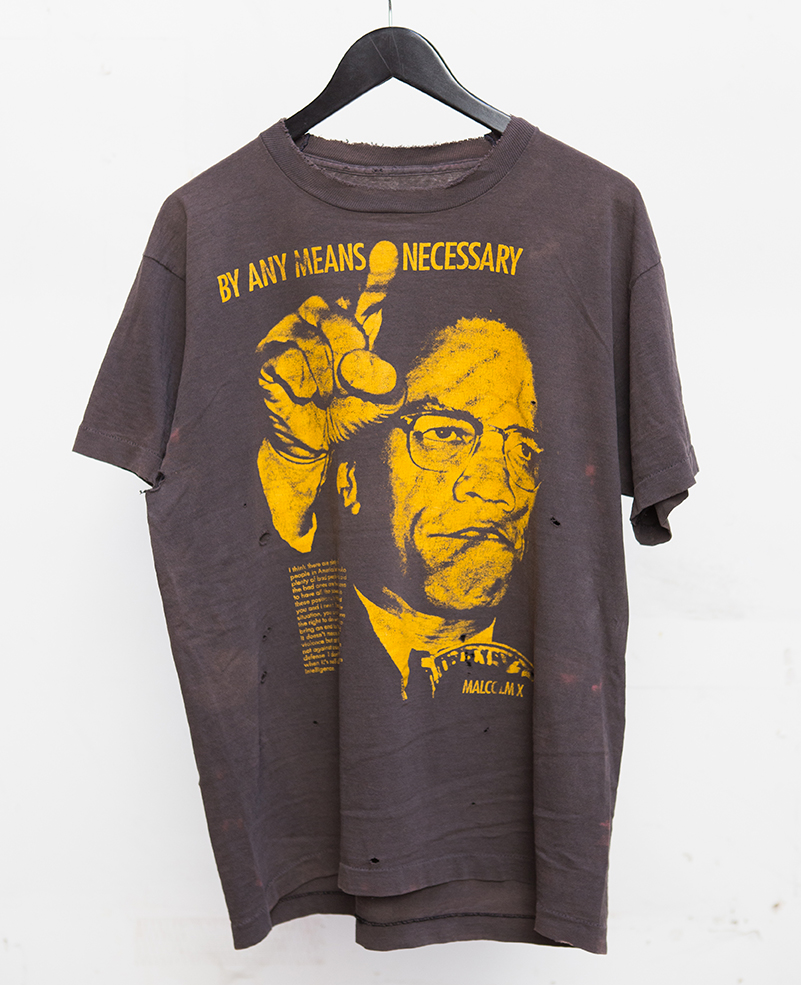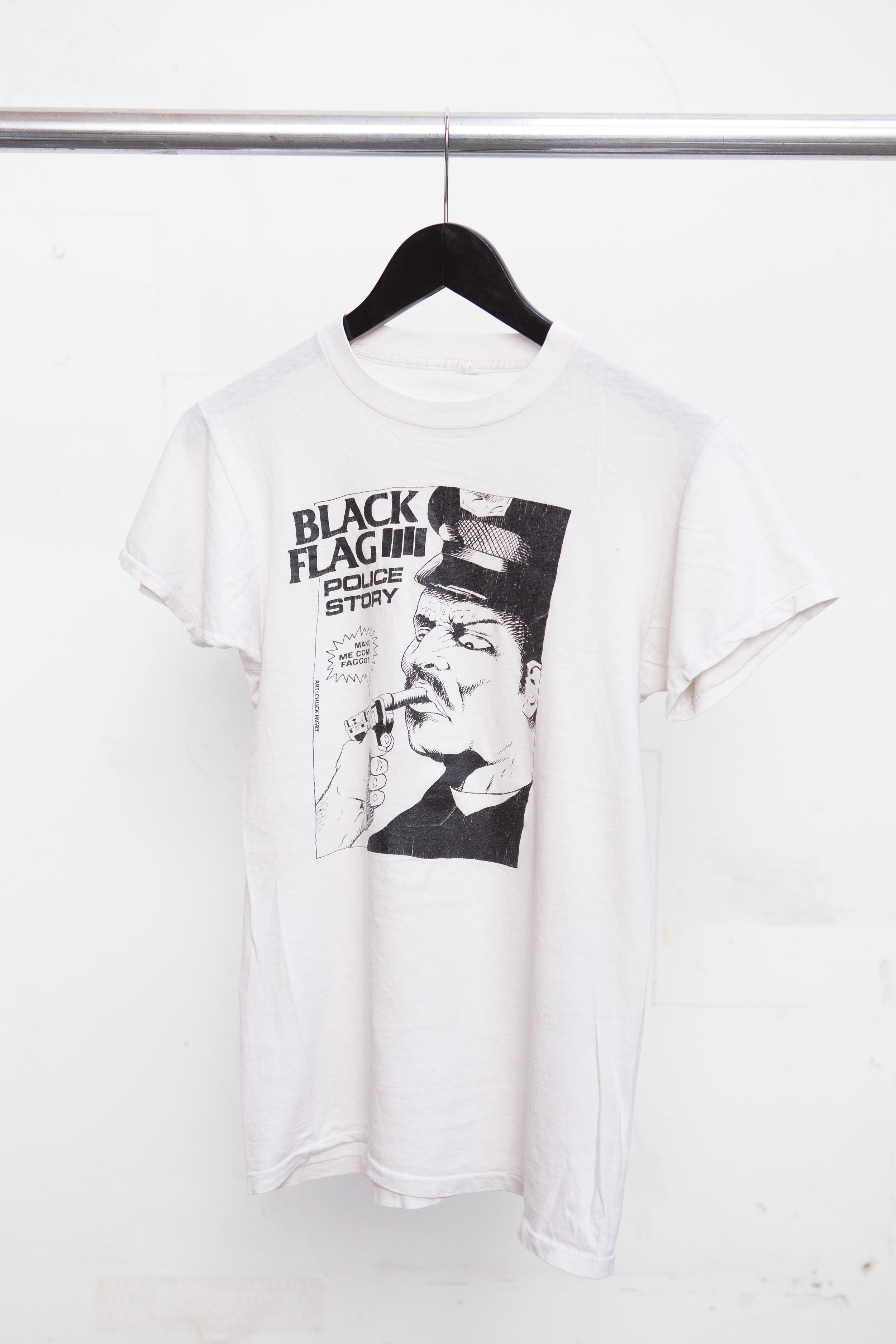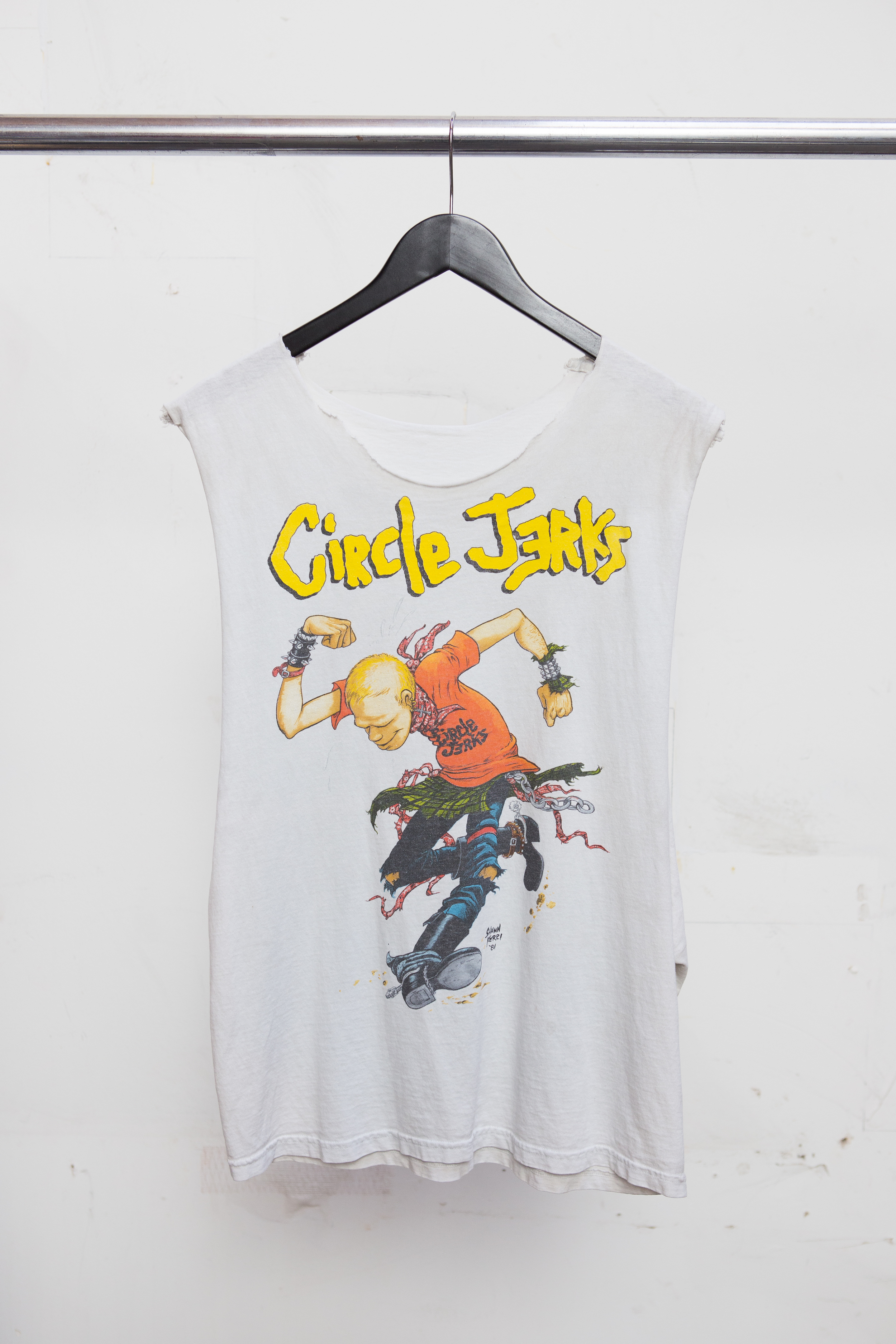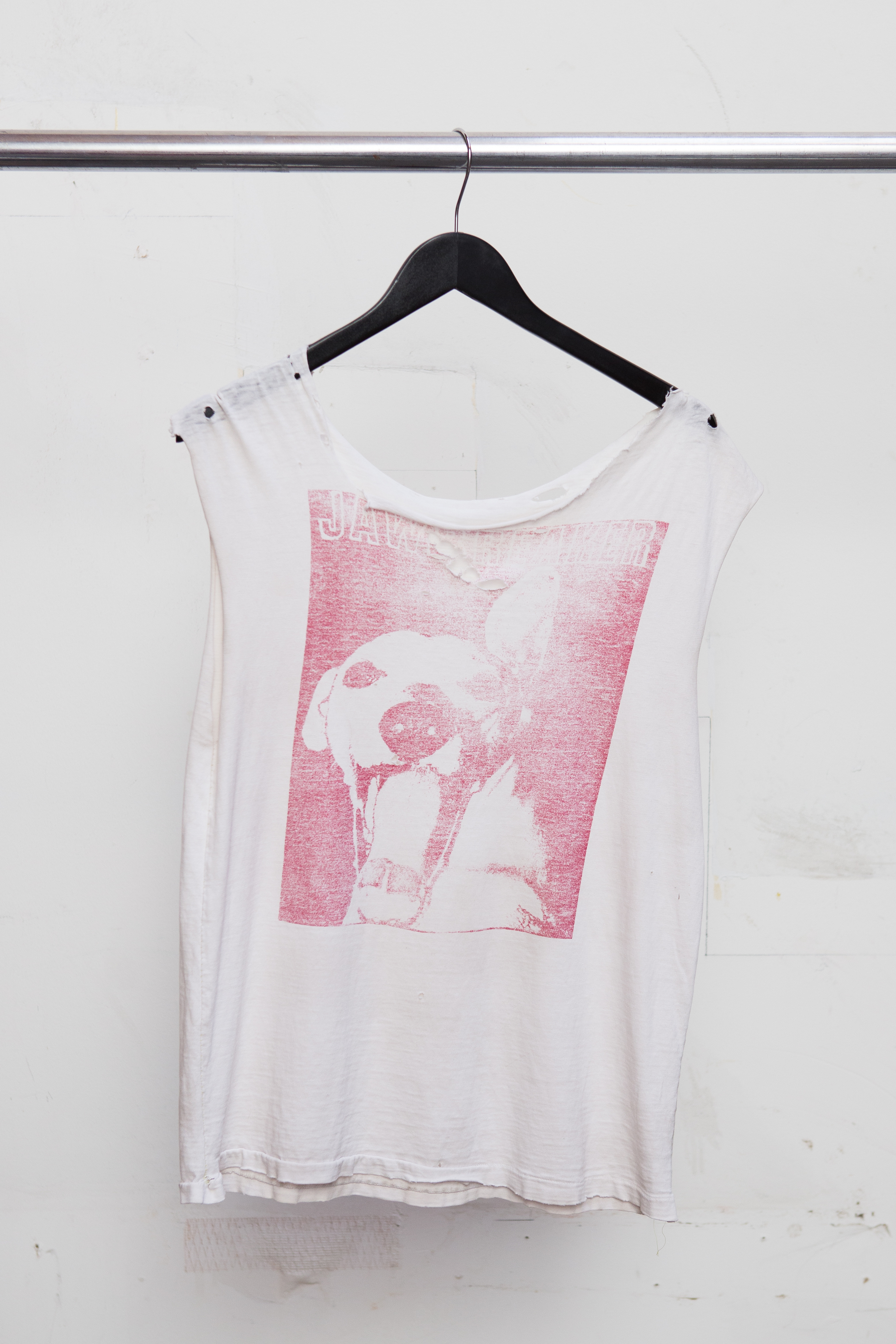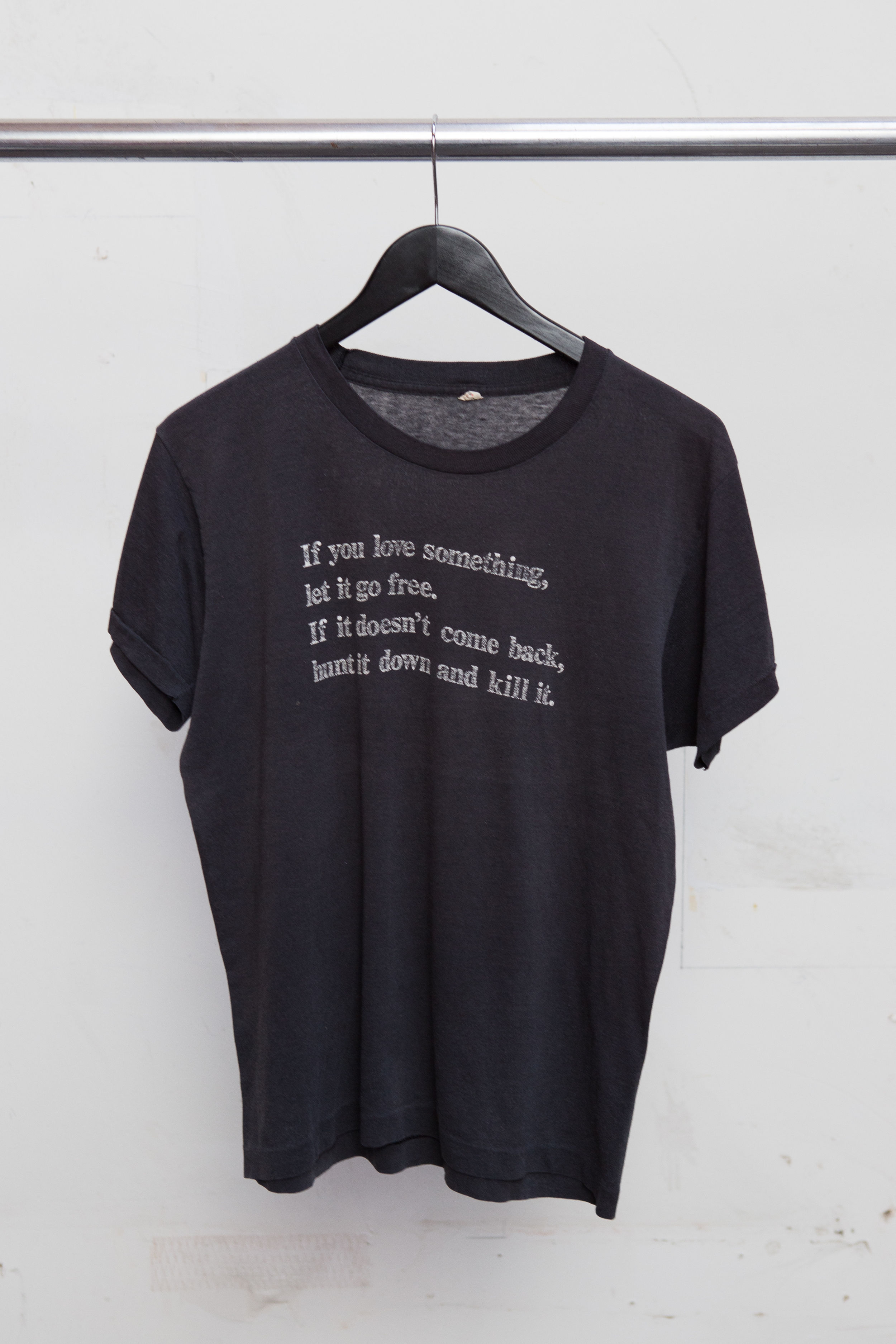
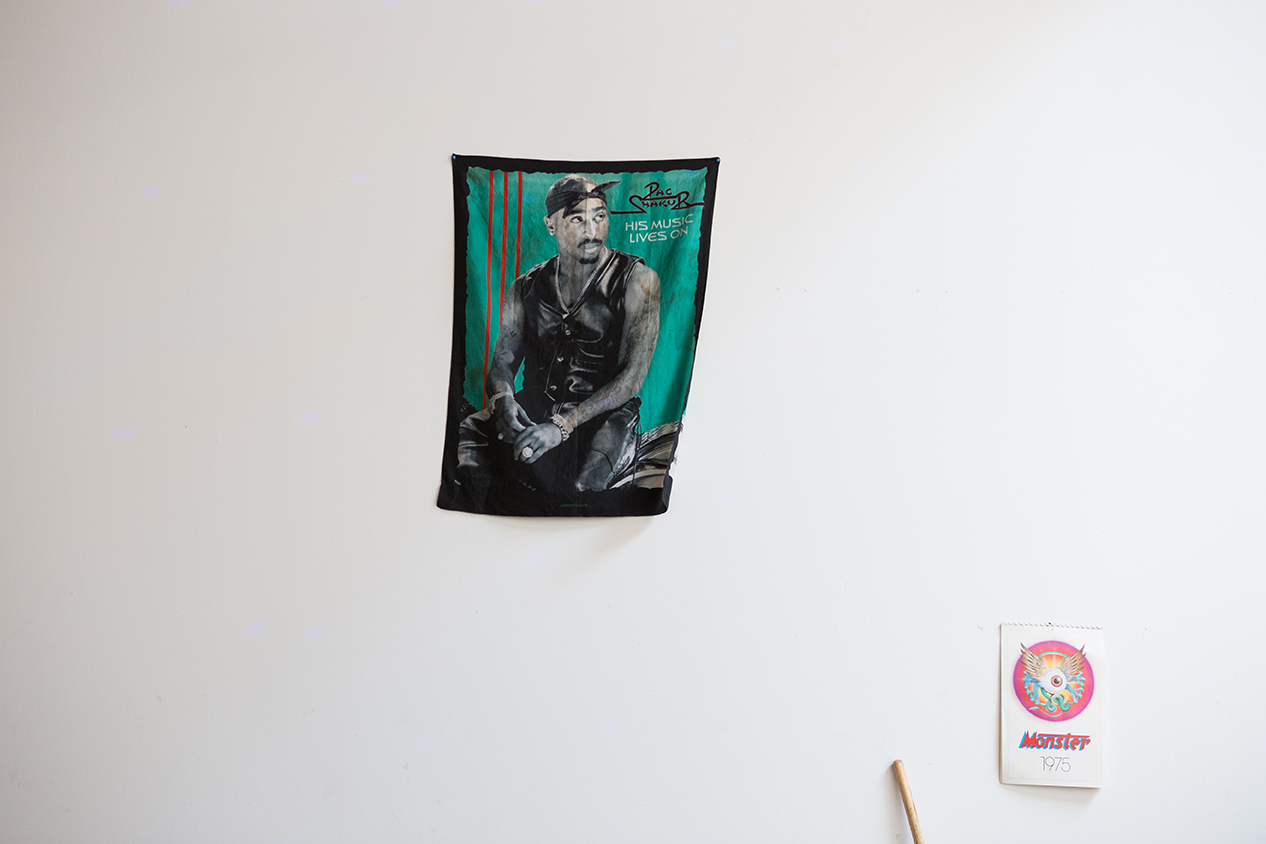
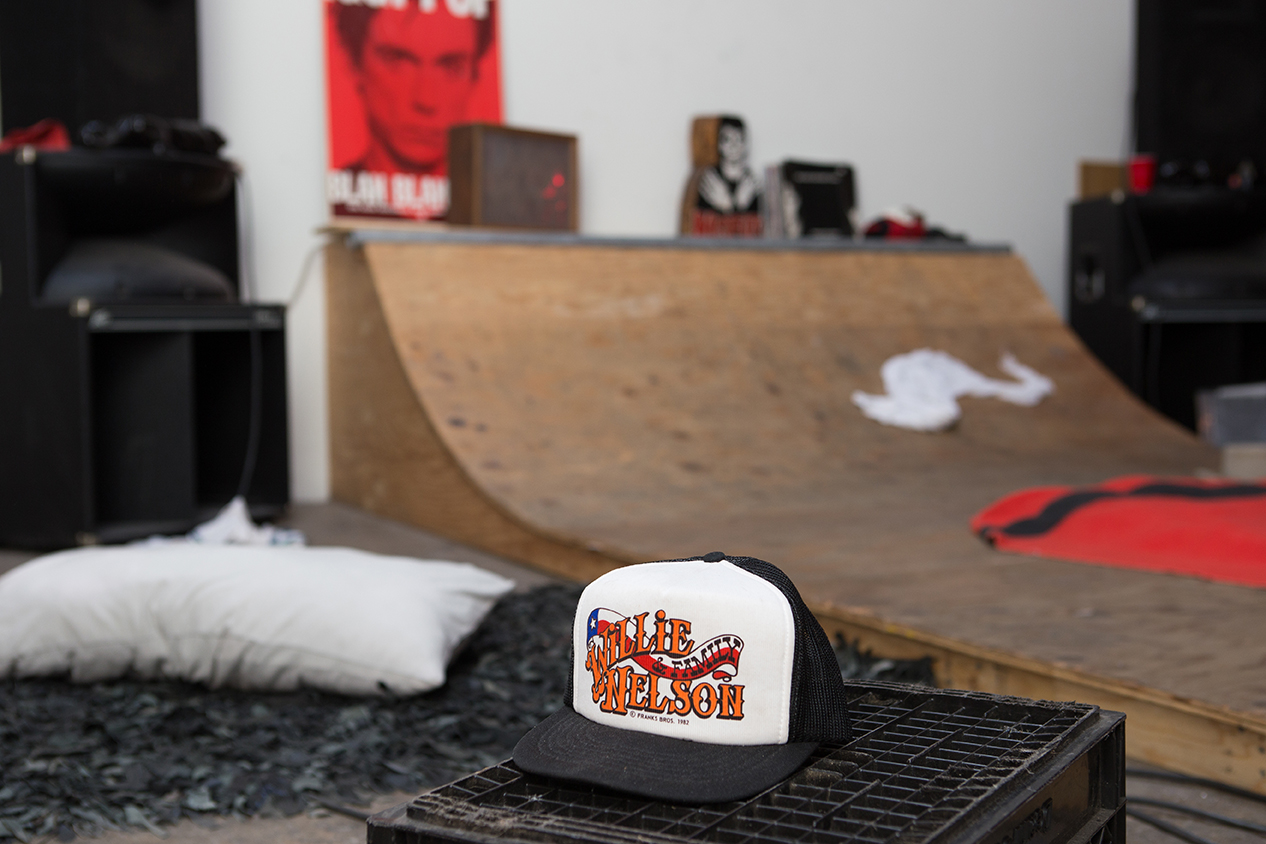
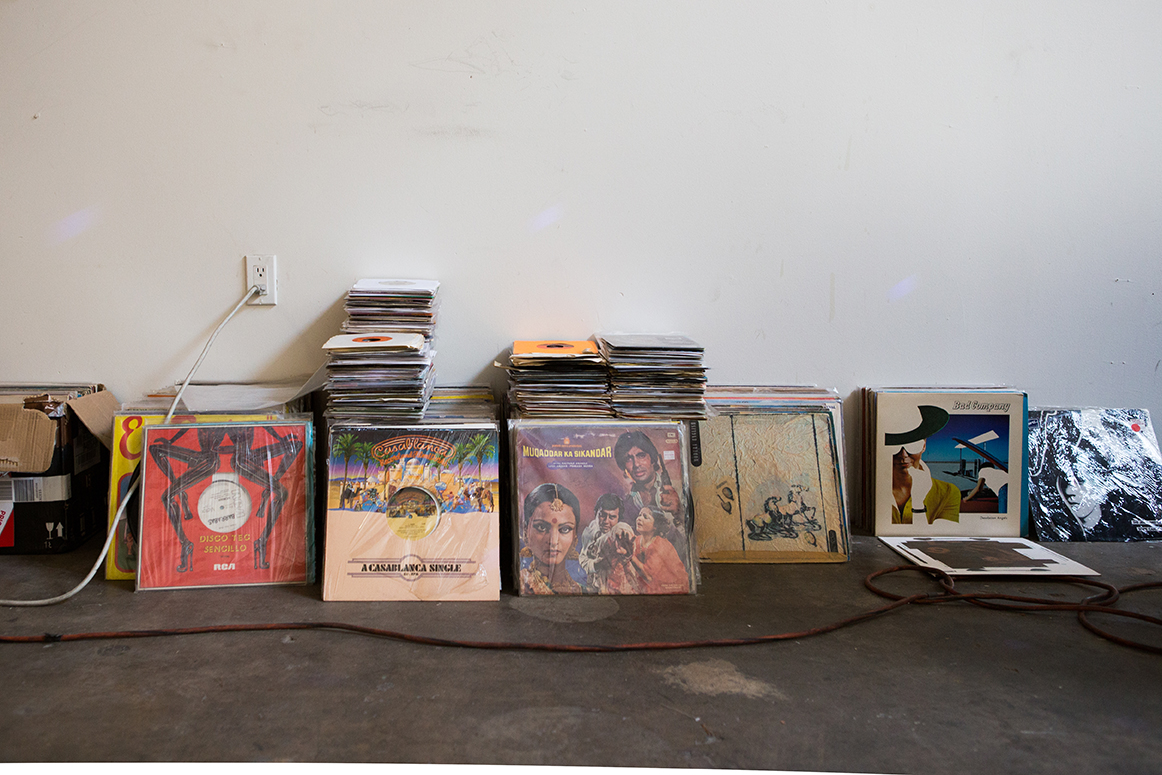



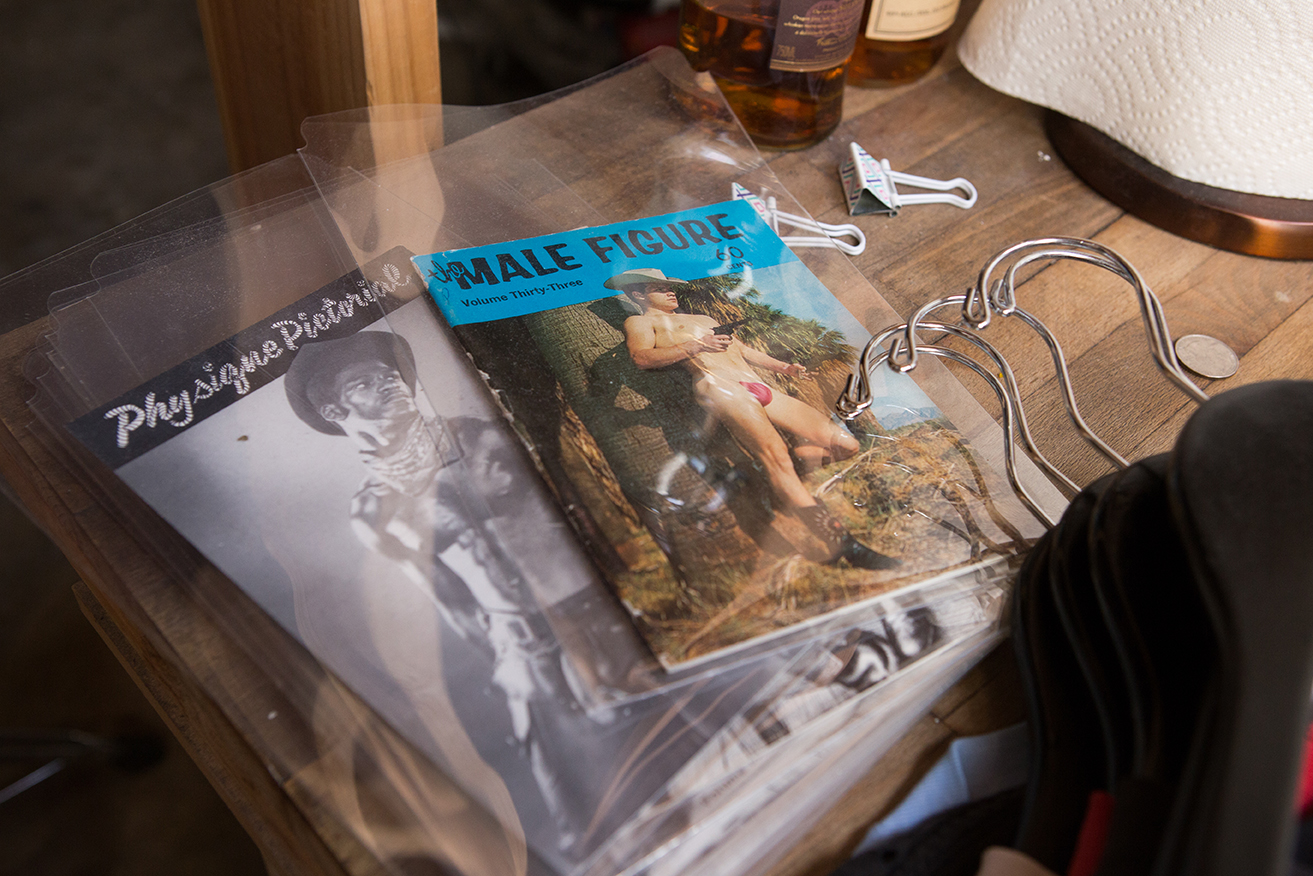
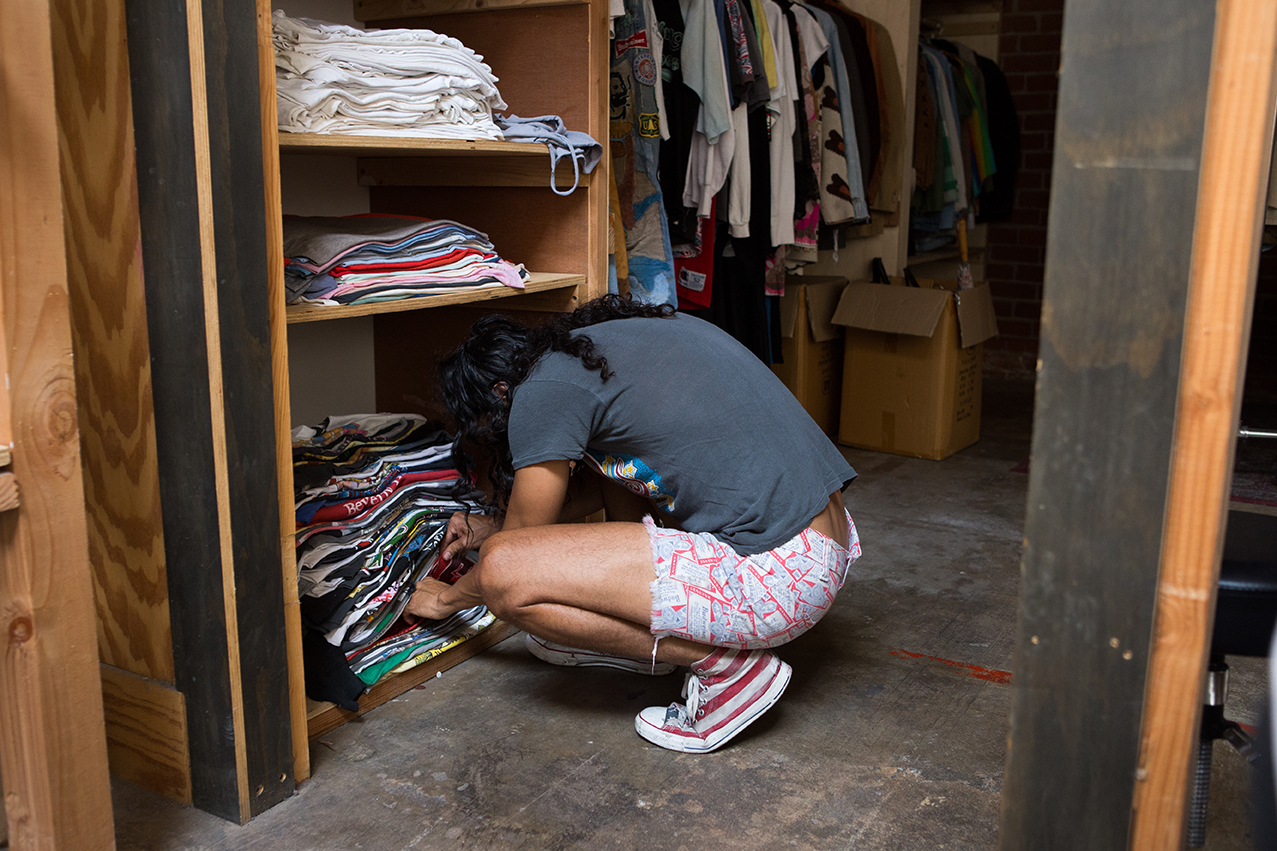
The first time I met Patrick Matamoros, we decided to drive to Malibu – to John Frusciante’s house – to shoot a wet t-shirt contest fashion editorial with some of his incredible vintage tees. He had just come in from New York where he would sell his tees either on the street or in pop up shops throughout the city – and often got arrested for not having a merchant’s license. There were original Vivien Westwood and Malcolm McClaren seditionary tees with Minnie Mouse getting fucked by Mickey, and Snow White getting gang banged by the Seven Dwarves. It was the kind of subversive brilliance that came out of a late 70s punk London when donning swastikas and chains was the cool thing to do. Today, a lot of these t-shirts have become a lot more rare and sought after. Ten years later, Patrick is in Los Angeles and has a virtual library of some of the rarest t-shirts in the world – what he calls a “t-shirt orphanage.” His biggest clients are Rihanna and Kanye. It’s hard to find anything about the umbrella company, Chapel NYC, which he uses to slang his threadbare wares. Patrick is also very secretive about where he finds his t-shirts, but he is not shy about telling you that he’ll travel far and wide to find some of the coolest tees you’ve ever seen. Patrick has a laid back, ageless California soul whose living room consists of a half pipe and a DJ booth that usually has a Waylon Jennings record spinning on repeat. After all this time, we got a chance to catch up with Patrick to ask him some questions about his life in vintage tees, the great lengths he goes to source his tees and his brand, Chapel NYC. Chapel has also curated a fine selection of rare tees for the Autre store – we are rolling out a batch this week and next, so grab one or two before someone else does.
Oliver Kupper: When did you start collecting tees?
Patrick Matamoros: My first vintage tee was my cousin’s Beatles t-shirt. It was from the early 80s. It was worn and thin. I had a crush on this girl in the eighth grade—a cute, Mexican gothic girl. She had never talked to me before. She came up to me and said, “Nice t-shirt,” and walked away with an attitude. I went and got the rest of my cousin’s t-shirts.
OK: Those t-shirts were original concert tees?
PM: Concert tees didn’t really start until the seventies. You’ll see t-shirts before then, but hardly ever official. Maybe you’ll get something made up for a photo shoot for a record label. T-shirts weren’t fashion until the seventies.
OK: What’s the craziest length you’ve ever gone to source a tee?
PM: I bought a t-shirt from a homeless guy once. I was on a bus, and this guy is wearing a 1976 Lynyrd Skynyrd shirt. It was amazing. I start talking to him to see if the t-shirt meant something to him, but someone had given it to him at a shelter. I bought him a new t-shirt and paid him $40.
OK: Did you sell it?
PM: Yeah. Almost immediately for $350 or $400.
OK: There are specific tees that people seem to like over time. Have you noticed any trends?
PM: I’ve gotten a bunch of new clients recently that are very young. Ten years ago, people were wearing t-shirts ironically. These young kids that are collecting tees and getting into tees are not doing that. When they’re wearing a Brandi t-shirt from 2002, they’re really, really into it. There’s nothing ironic about the way they wear a Christina Aguilera or Mariah Carey t-shirt. I’m not exactly a fan of most of those people or their music. But I think it’s cool that these kids aren’t doing what we were doing ten years ago. They are actual fans of everything they wear.
The trend right now is very much early 2000s and late 90s. A lot of cartoon stuff; a lot of Disney t-shirts. Not like Mickey Mouse, though.
OK: Tell me about the days when you were a street merchant in Soho. How did you go about doing that? Where did you sell them?
PM: I used to sell at the markets on the weekends. I was looking for more opportunity to sell my stuff. Some guy who sold on the street in Soho asked me to sell with him. The first day that I was out there, I made $2,000. I thought, “Maybe I’m onto something here.” I set up every day at the corner of Prince and Mercer. I used to have to fight for that spot. No one wanted that spot, but I made it hot. People were always there. People started setting up next to me. Everyone knew to find me there. If I didn’t show up, I’d get phone calls or texts from clients saying, “Hey, you weren’t there yesterday.” I kept getting arrested. Not for doing anything illegal; Bloomberg didn’t want any street merchants. He created a task force to get rid of street merchants under the guise of trying to fight counterfeits in Chinatown. He started arresting street merchants for any offense. If you were half an inch over a line where you were supposed to be, you would get arrested instead of getting a ticket. That’s how they go about intimidation.
OK: They put you in holding?
PM: Oh, yeah. I got arrested three times in four days once.
OK: That was outside of a hotel?
PM: At the time, it was a L’Occitane store. Now, it’s the Nescafé store.
OK: New York has definitely changed. Is that why you moved back to LA?
PM: I was born and raised in LA, and I like enjoying my life. No matter how successful you are, you keep plugging away, but you don’t see yourself moving forward. I decided to make being happy my number one goal. That worked.
OK: When did you sell your first t-shirt?
PM: I don’t have a great story to that. I was trying to pay some bills. I went to a store that bought vintage clothes and sold some t-shirts to them to pay my rent. I would say it started before the t-shirts, when I was in the mod scene. I always had impeccably tailored suits. People would always come up to me and ask where I got my suits. I would say, “Give me your number. If I find something, I’ll give you a call.” I was really into old things. I wasn’t into shopping at the Gap.
OK: Does every t-shirt have a story?
PM: Oh, yeah. It might not register on the t-shirt necessarily. That’s part of the story, but it isn’t the story. Take this Motorhead t-shirt. The story is the person who wore that t-shirt.
"That’s the story of their life, the t-shirt. How many times did someone snort coke or shoot heroin in that t-shirt? That’s what I’m after. That piece that you look at and say, “Fuck, man.” Where did this t-shirt come from?"
OK: Who wore that Motorhead t-shirt?
PM: Someone who really loved Motorhead. At what point do you think they said, “There are too many holes?” It’s destroyed. You can’t wear that again. That’s the story of their life, the t-shirt. How many times did someone snort coke or shoot heroin in that t-shirt? That’s what I’m after. That piece that you look at and say, “Fuck, man.” Where did this t-shirt come from?
OK: In terms of counterfeits, how do you know that they’re real? A lot of people can print t-shirt on vintage linens. Can you tell the difference?
PM: Yeah. I see so many t-shirts. You match the wear of the t-shirt to the wear of the print. You see enough fakes that you can tell. It’s t-shirt archaeology.
OK: What is an era to which you find yourself gravitating?
PM: I love as early seventies as I can get. It’s hard to find t-shirts from that era. T-shirts didn’t really come into being until 1975—that’s when you see t-shirts for a purpose. If you do find a music t-shirt from pre-1975, it’s pretty special. I care less about rarity than about how intrinsically cool the t-shirt is.
OK: It seems like it gets pretty niche. You have everything from hip hop tees to 70s concert tees.
PM: These t-shirts are all orphans. I’m their caretaker. I’m trying to find the right home for them. You might like that tee, but it’s not yours. You know when you put it on. You really know.
OK: It’s the t-shirt orphanage. It seems like t-shirts speak to you. If you buy and wear vintage tees wholesale for the sake of resale, it feels like a difficult thing to give up. Do you have trouble giving up t-shirts?
PM: All the time. But my clients respect what I do. When I say a t-shirt is $1,000 and they agree, I respect that they have money to buy it.
OK: It also seems easier to put a price tag on things when you have your own personal value to it. People will put any value on a t-shirt, but you seem like you have a legitimate, distinct value for a t-shirt. It seems worth it, if you have the money.
PM: People get really upset when I tell them the price. I don’t feel bad. Maybe, sometimes, I feel bad a little. It’s not the hard work that I put into finding the pieces. That’s important, but that’s not really it. It’s all relative. Someone walks in with a Balenciaga bag, and they start complaining about the price. I tell them, “You know what, maybe it’s not for you.” I take the option away from them. That’s when they really want it. Go to Barney’s, got to Bergdorf’s, go to Maxfields—try to find something this fucking cool for $500. Come back, and now it’s $600, because you’ve aggravated me. The aggravation tax is $100. And I’ve done that. They’ve gone and come back, and I’ve charged them the aggravation tax. They don’t even question it. They know they were wrong. For them, it has value. They could afford it, and they questioned me. I’ll even send them to all my competitors. Here are the four stores that are my competitors—if you find anything this cool, I’ll give it to you. I give people that challenge all the time.
OK: It’s ironic that the vintage t-shirt market has become a luxury market. They’ve become the definition of luxury, in the sense of how rare they are and the value you put on them. There’s a distinct value to them outside of monetary value.
PM: A lot of the other stores sell according to how rare it is. I don’t care. I’ll sell blank t-shirts for $500. All I care about is how good it looks on you.
OK: What’s the coolest shirt you’ve ever seen?
PM: That’s tough. I have a Lou Reed t-shirt that’s pretty cool. It’s just his face and the words, “Lou Reed.” The back says, “Rock n’ Roll Animal.” But it’s so thin and fragile—it’s absolutely beautiful.
OK: What’s a typical buying trip like?
PM: I get my best tees from old clients. Buying shirts isn’t the same as it used to be. You used to be able to buy stuff. I used to be able to go to thrift stores and find things, but that doesn’t happen anymore. Really, I’m getting all my best stuff from people like myself or ex-collectors. Buying trips aren’t what they used to be.
OK: Has the market become saturated?
P: It’s the opposite. We’re drying up. Because of the Internet, people know that they have valuable things. They’re selling the things themselves, they’re saving them, they’re giving them to their kids. People are keeping things when they used to donate them. There used to be a circle of life of t-shirts. That’s not happening anymore. The supply line has been broken.
OK: But the t-shirts are still around. They might come back later.
PM: When they do, even a basic tee is going to be hundreds of dollars. A common 1989 Stones tee—which you used to get for $60—is now $150-$300. Christina Aguilera t-shirts from 2000 have gone for $350. In ten years, even those things are going to be impossible to find. Let alone a nice 70s Stones tee—those things are going to be out of any well-to-do someone’s price range. That t-shirt is going to be $3,000. That’s what they’re going to be going for.
Click here to purchase tees from the Chapel NYC collection on Autre. Follow Chapel NYC on Instagram. photographs by Sara Clarken. text and interview by Oliver Maxwell Kupper. Follow Autre on Instagram: @AUTREMAGAZINE