
Image courtesy of Sutton and Grimanesa Amorós Studio.
interview by Mia Milosevic
Influenced by the extreme terrain of Peru—its vast deserts where light refracts off the sand and temperatures plunge at night, and its rough Pacific coastline where ocean foam catches and fragments the sun—Grimanesa Amorós has built a practice around light as living material. For Amorós, darkness is imbued with light waiting to be released. Her two current works mark a significant moment in that practice.
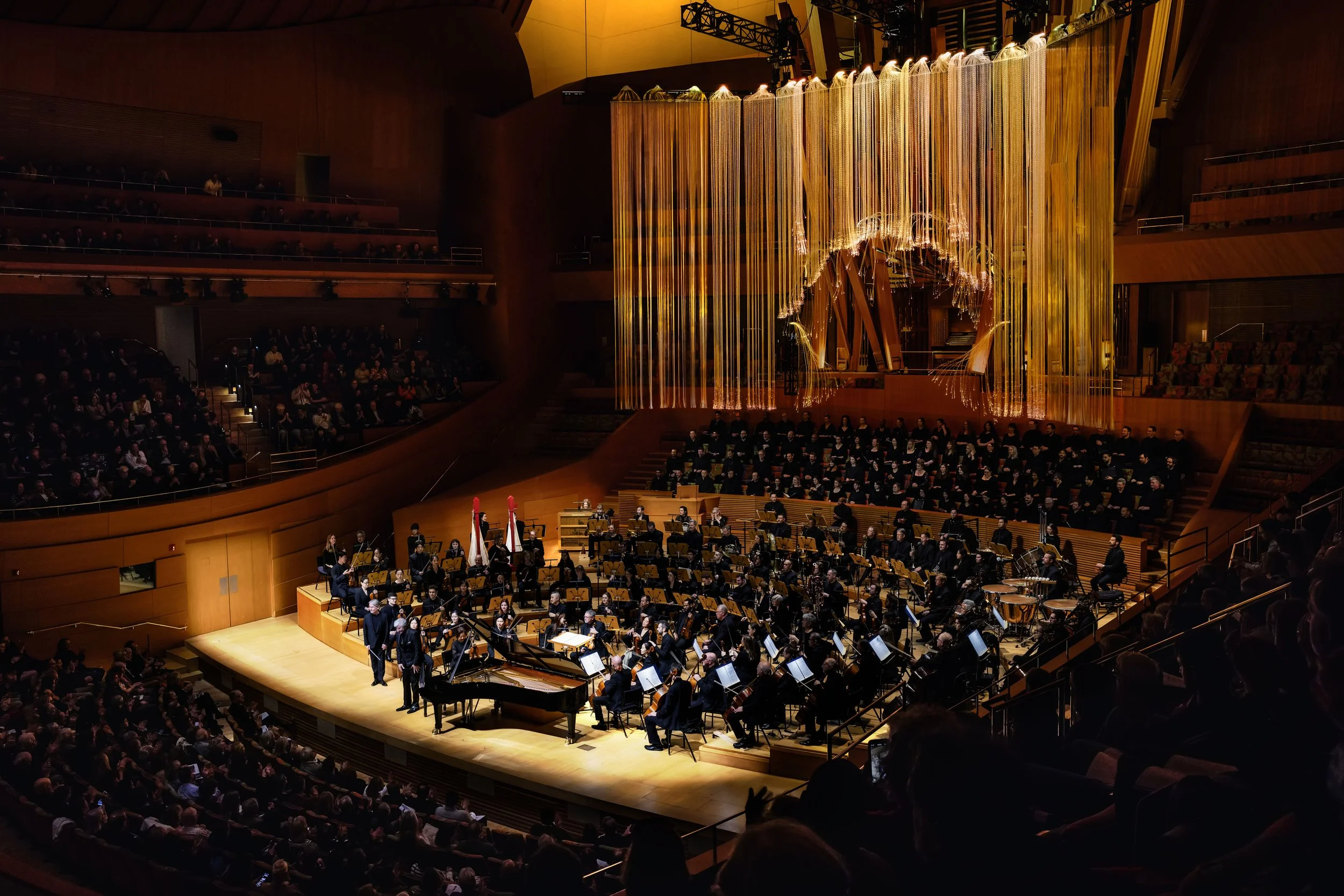
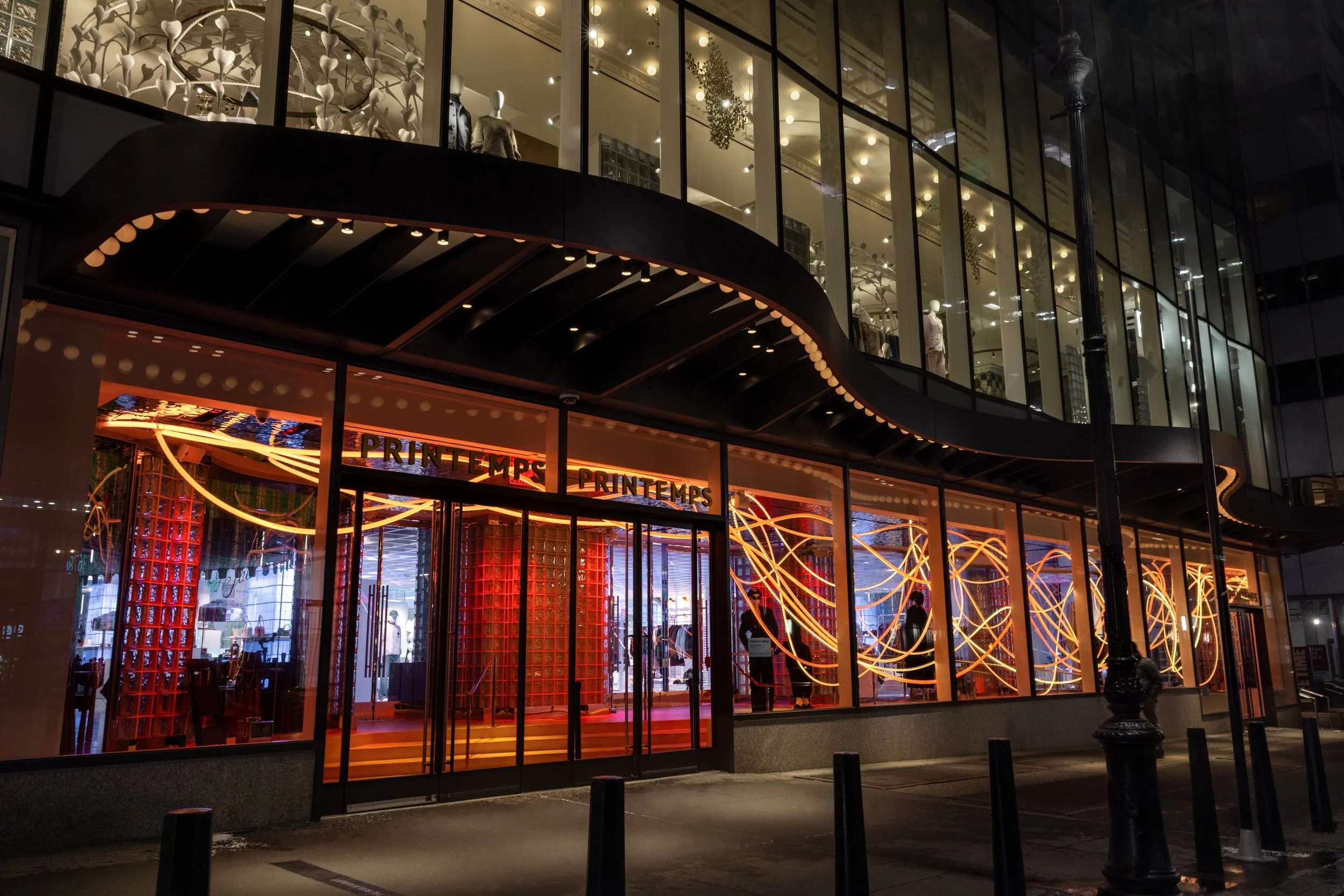
Radiance, a monumental installation within Walt Disney Concert Hall, was created in collaboration with the LA Philharmonic to coincide with its production of Prometheus—directed by composer and conductor Esa-Pekka Salonen and featuring pianist Jean-Yves Thibaudet—which transformed the hall into an immersive landscape from January 9–11. Perfect Timing, Printemps’ first-ever commission of a light artist, opened January 19, 2026 at One Wall Street and runs through the end of March, engaging passersby in a meditation on presence amid Manhattan’s Financial District.
MIA MILOSEVIC: Well, first of all, congratulations on your installation at the Philharmonic, and of course Perfect Timing for Printemps in the Financial District. Let’s start with your process behind Radiance and all that went into the work.
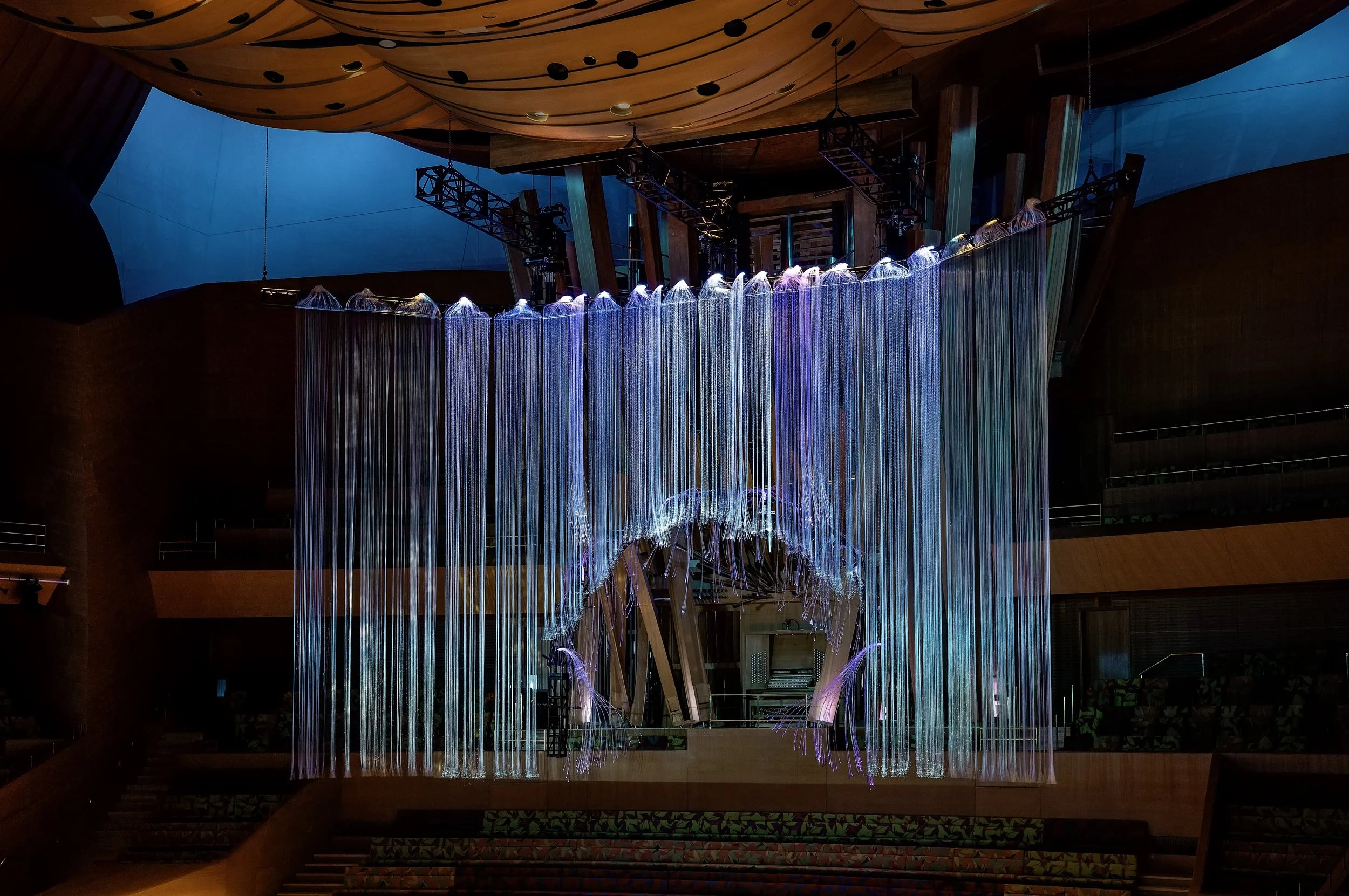
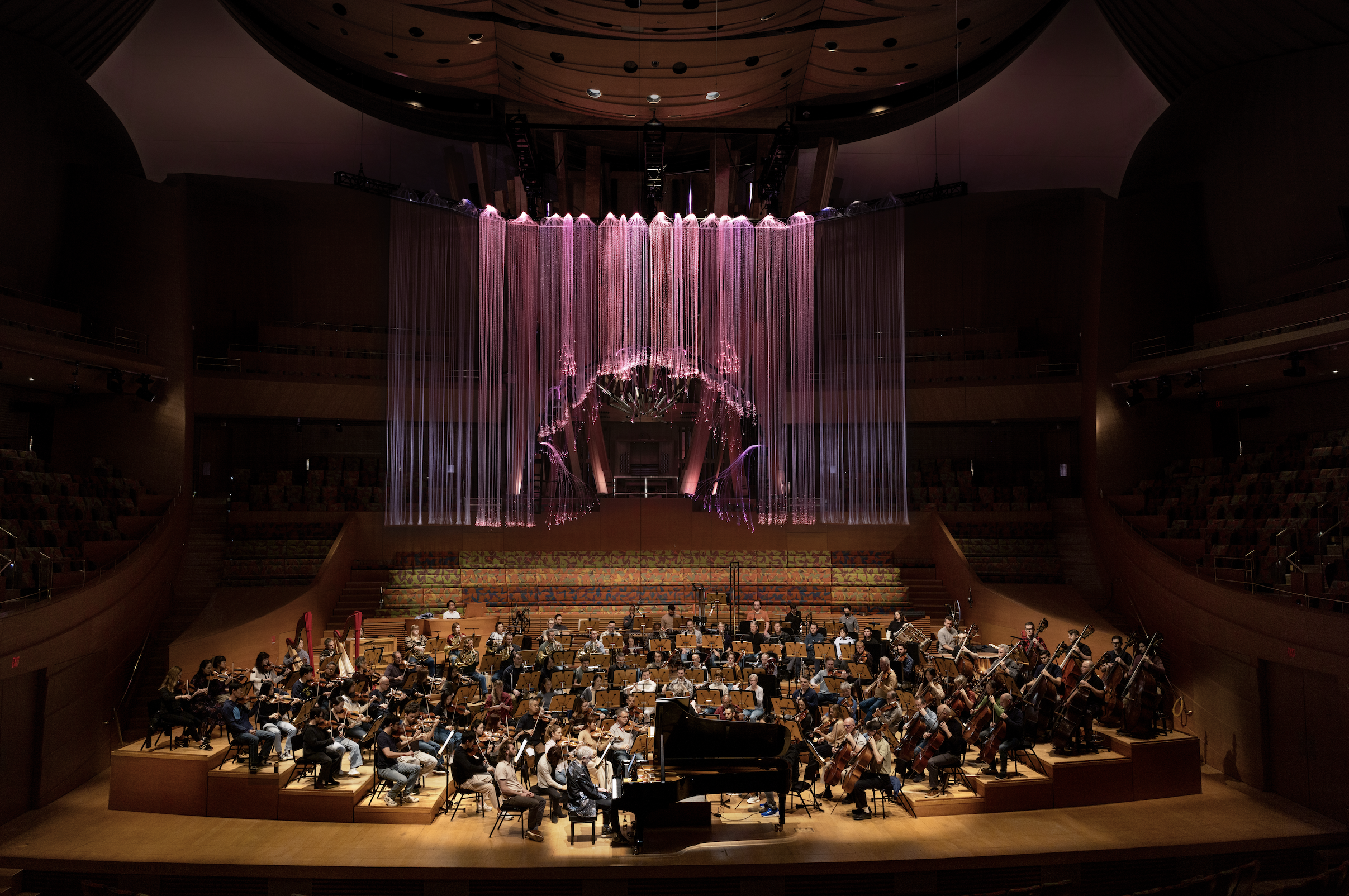
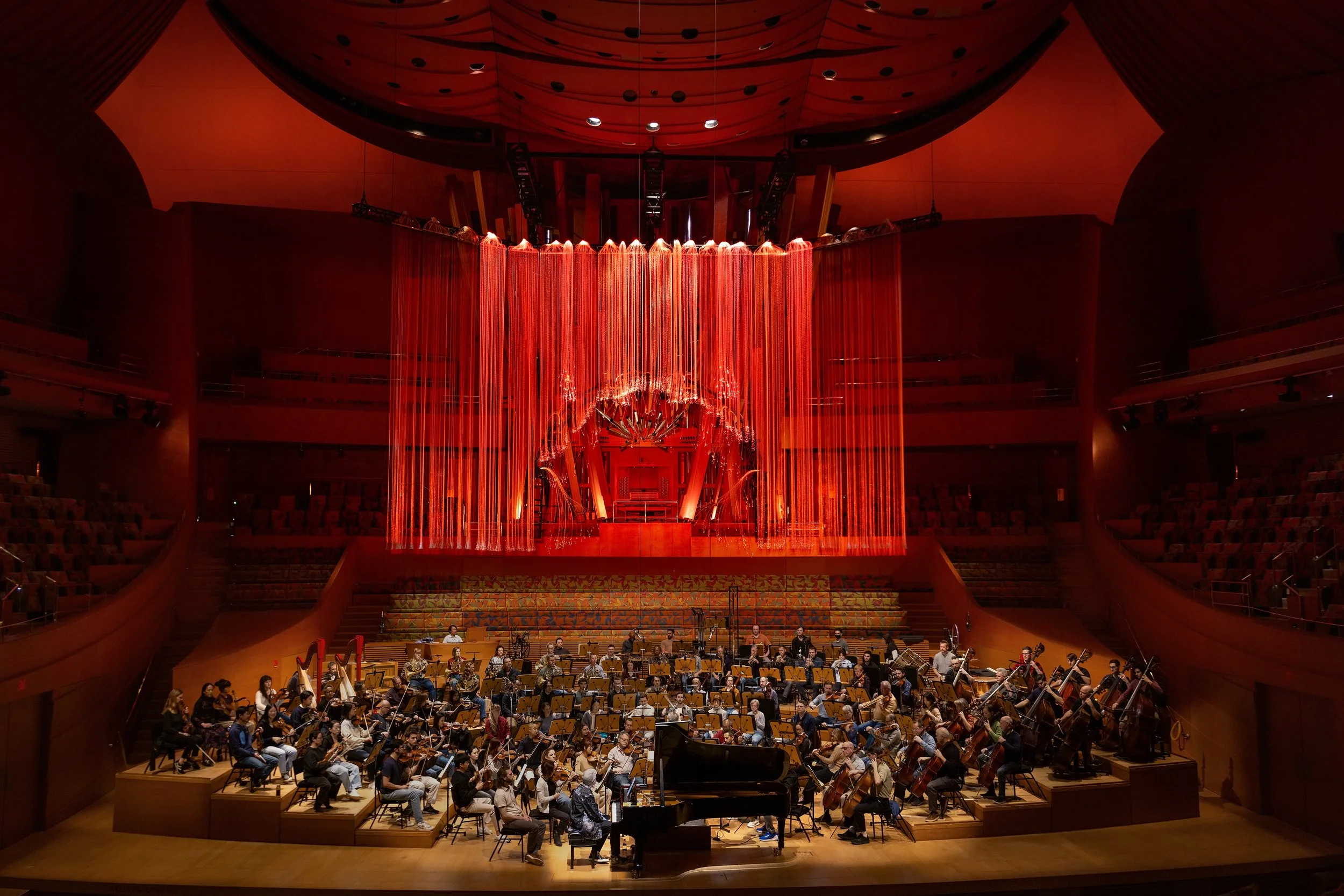
GRIMANESA AMORÓS: Radiance was commissioned by the Los Angeles Philharmonic. It’s a light sculpture—a very large one that occupied basically the whole stage. It was very important to me to incorporate the architecture of Frank Gehry, because as soon as you enter the concert hall, you feel it—the wood he used, the large organ in the center.
I was also thinking about Prometheus. As we all know, Prometheus shared the gift of fire with humanity, sparking technological advancement and human progress. At the same time, I wanted to incorporate my own Peruvian cultural heritage—specifically the Incan god Viracocha, who bestowed knowledge upon his people by teaching them the arts, guiding them toward civilization and creativity. Both of those ideas helped me create Radiance.
MILOSEVIC: It’s so interesting to consider what it means to play with fire, especially in the context of Prometheus. How did you approach representing fire through the work?
AMORÓS: It was a very interesting, challenging project because I don’t read music. So I asked myself, How am I going to approach this? I made a lot of drawings—conceptually the work was there—but part of my process is also the lighting sequence. How do you manage the rhythm of sound and light? I started looking at the scores and saw combinations of notes and pauses. I thought: when those moments come together, that’s when the music gets intense. So, I based the lighting sequence on my own interpretation of those nodes in the score.
What’s also interesting is that when you’re presenting the work live, things have to be right on point. The beginning, the intermission, the ending—it has to be precise. And the conductor is never precise (laughs)—a few seconds before or after, you know, we’re all human. Afterwards, I learned I could work with someone who reads music. In one of the rehearsals, I was off on my ending. But when you work with someone who reads music, they know when the end is coming, and they’ll count you in. That was very important for how the pacing of the lights evolved.
Prometheus always dreamed of making a composition with color—he had a lot of colors in mind that I took as inspiration, but I didn’t want to use them literally. It took me about two weeks just to create the colors I wanted to use.

MILOSEVIC: That’s amazing. Do you know what colors he wanted to use?
AMORÓS: Yes—blue, green, purple, yellow, violet. But for example, if I used blue, it was a very different blue, like a royal blue you haven’t quite seen before. These are colors that come from my own mind. I was very pleased with how they all came together.
It was also wonderful to have the support of Esa-Pekka Salonen. I wanted to start with darkness, then bring up just a light on him, and finish again in complete darkness—because I believe there’s nothing in life that truly has a beginning and an end.
I wanted the stage to be able to look back at the audience. The final moment is very cathartic: the chorus is singing, the cellos, everything building to a peak. You feel lifted out of your seat. At the same time, the piece starts pulsing white and moving with the intensity. Then the house lights—which I also designed—turn and illuminate the entire audience in white. And then everything goes black.
As the audience, you don’t know what to expect. You’re already inside these incredible moments of sound and visuals. And then white comes toward you, and darkness follows.
MILOSEVIC: That reminds me of something you said in a podcast—something like, when you’re all in the room sharing the same light. I’d never thought about light that way, especially indoors. The parallels you drew were really striking.
AMORÓS: I always say that for me, light is a romance with the unknown—wherever you go, you don’t know what kind of light you’re going to receive. And light is ephemeral. In that sense, it’s very similar to sound. So, you have visual and sonic stimulation at the same time, which is amazing for us—even health-wise. (laughs)
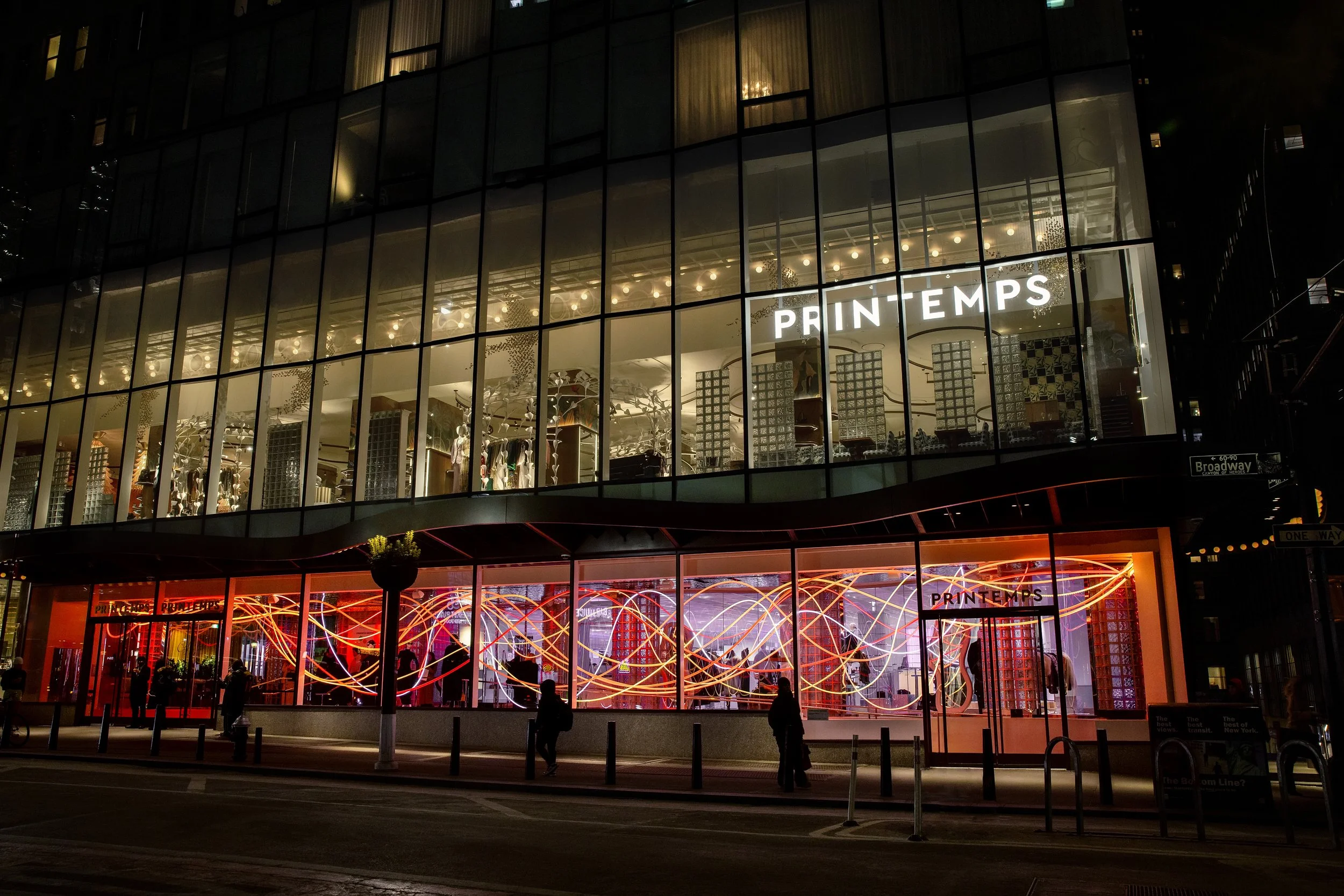
Image courtesy of Sutton and Grimanesa Amorós Studio.
MILOSEVIC: To take it back a little—I heard that you began by drawing maps, that you were fascinated with continents, and your mother noticed and put you in art classes. Can you talk a bit about your evolution as an artist and how it all started?
AMORÓS: I always had this explorer inside me. I was obsessed with drawing continents—first Peru, then South America, then Europe. My mother would say, “Okay, it’s midnight, lights off.” And then, tick tick tick, I’d wait for everyone to fall asleep and stay up until three or four in the morning drawing. She could see I had a real love for it—and also, I think she wanted to protect her white walls, (laughs) because I was drawing on those too. So, she enrolled me in drawing classes. I was painting in oil by age ten or eleven. While my friends were out having fun, I was going to class. That was important—it gave me direction early on: how brushes work, composition, how to train your eye.
MILOSEVIC: With the LA Phil work, and your work in general—would you say it’s rooted in Peru? I also heard you mention the sea foam on the coast as an early influence.
AMORÓS: Yes, very much so. When you grow up close to the Pacific Ocean—and in Peru it’s very rough—there’s a moment, I think around the end of March, when the fishermen used to say the ocean was sick, because it would throw up this enormous amount of foam. I was fascinated by it. The foam caught the sun and created these reflections and fragmentations. I used to poke the little bubbles, and when I was small I imagined I could get lost inside them—they seemed so large you could actually go in. I think that created my fascination with this kind of organic shape, which eventually showed up in my work many years later.
MILOSEVIC: And your fascination with light—did that begin in a similar place, with the reflection?
AMORÓS: I was always fascinated by light, by shadows, by your own shadow walking along the shore and the reflection it makes. But it didn’t really start in earnest until a trip I took to Iceland, where I had a sculpture under the Northern Lights. That’s when I truly began working with light.
MILOSEVIC: And how did the transition happen—from painting to sculpture to light?
AMORÓS: I was a painter until, I’d say around ’92. I was working very intensively—twelve, thirteen, fourteen hours a day—and I reached a point where I felt I had nothing more to say with that work, nothing left to challenge myself with. So I applied for two grants: the National Endowment for the Arts and a travel grant, also through the NEA. My dream had always been to go to Africa. I was obsessed with Africa and with African art—Africa and drawing maps had always been connected in my mind.
Once I went, it completely changed my life—my perception of time, my perception of my own work. When I came back, I started using sculpture. I saw how people built their huts, mixing materials with straw. That inspired me to work with handmade paper, but in a very sculptural way.
And I should say—I didn’t go to art school. I went to the Art Students League on 57th Street for about four years. My art history education came from going to the Met constantly, memorizing paintings, and coming back to test myself. That was my training.

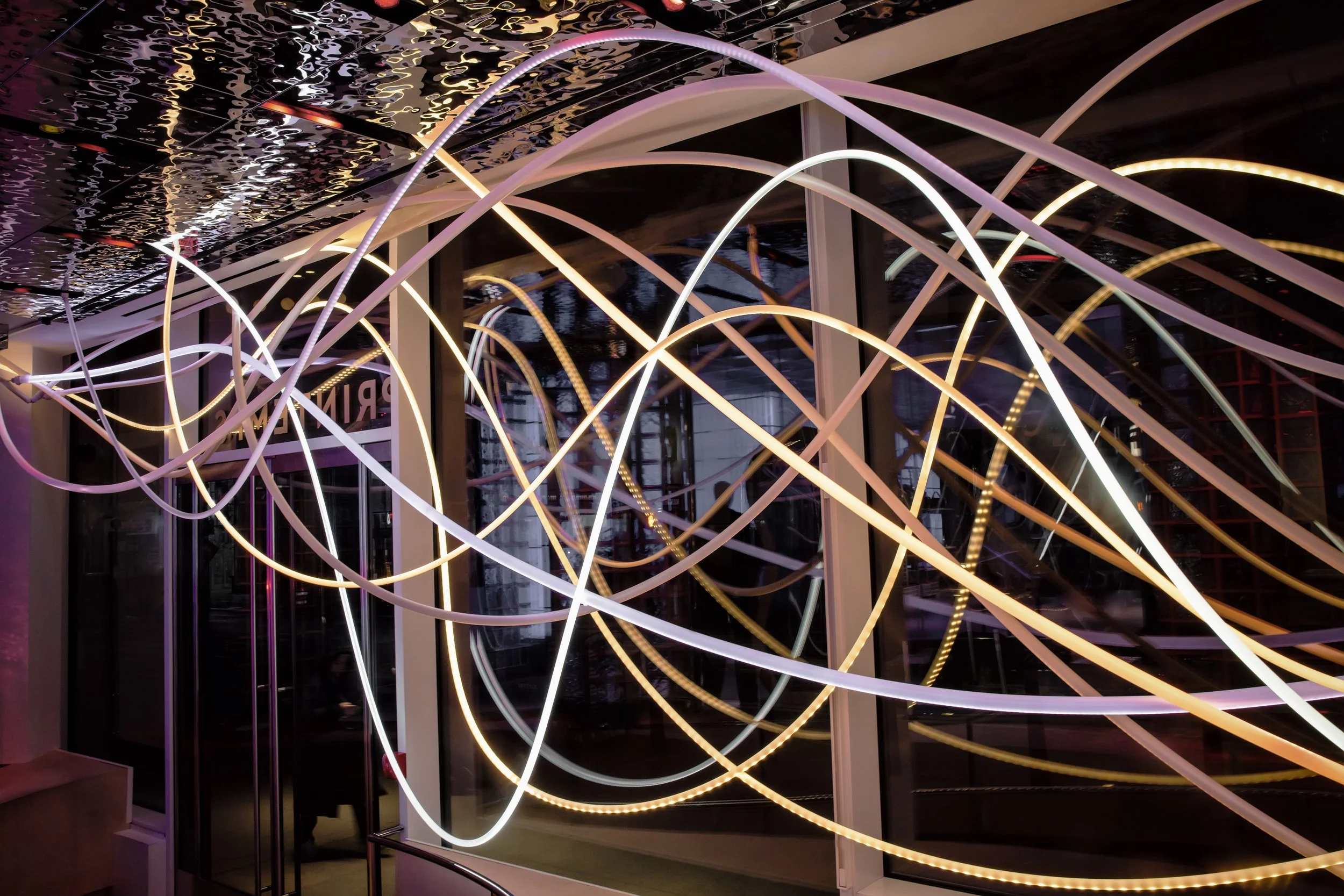
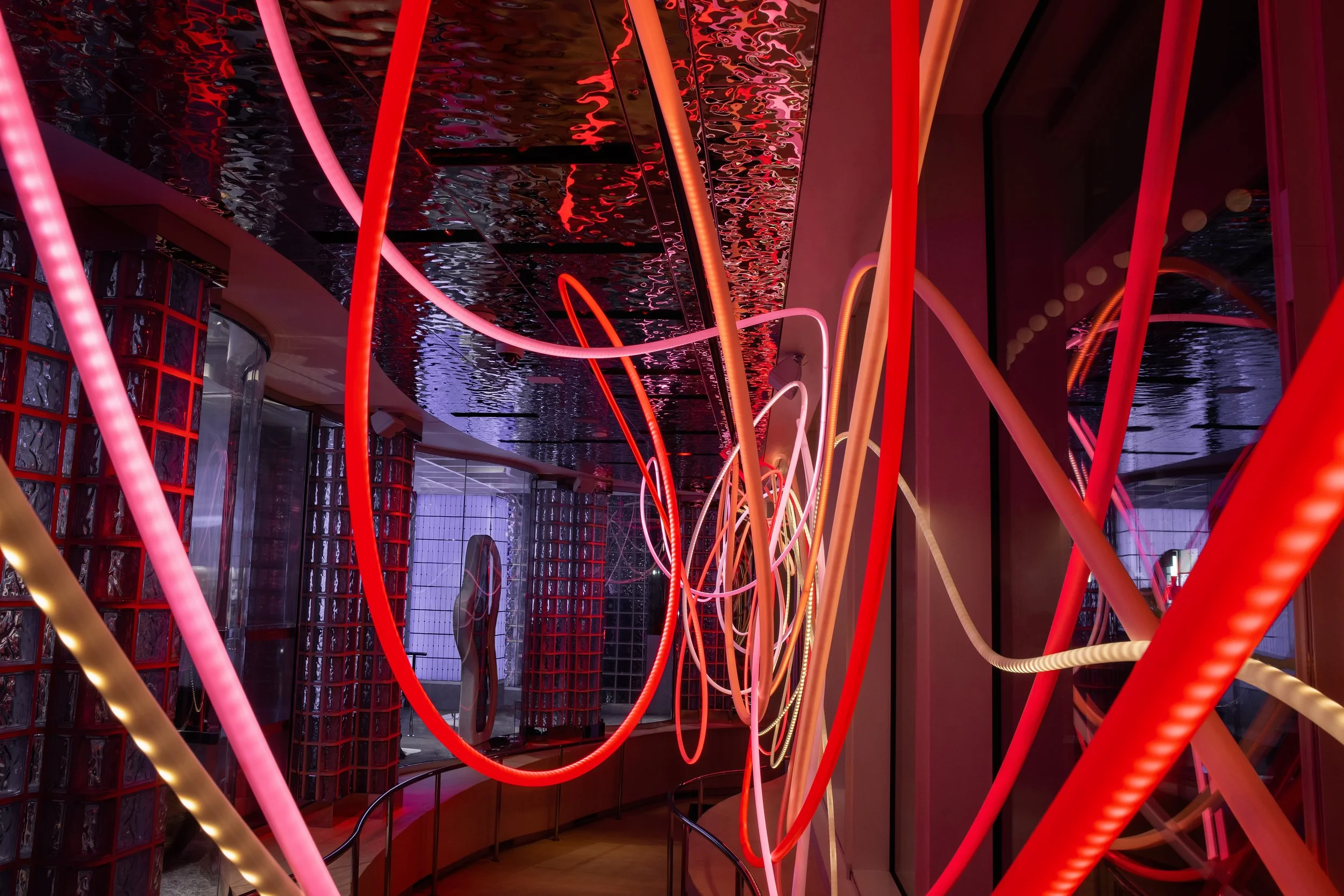
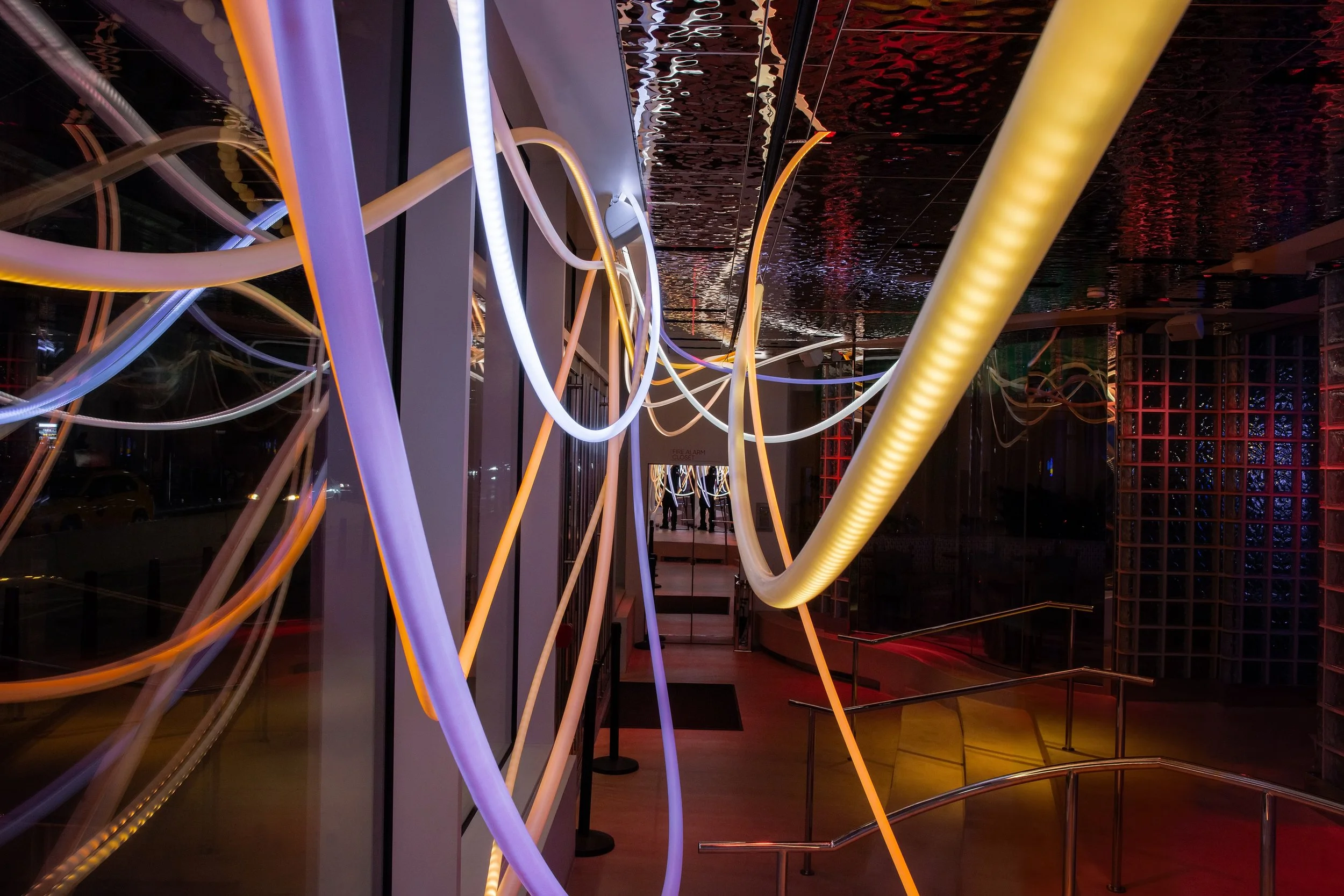
MILOSEVIC: As someone who loves New York and works with light, how did you approach capturing the city in Perfect Timing?
AMORÓS: When I get a commission that’s going to be large-scale, I always visit the site. In this case, it was easier—it was downtown. (laughs) When I go, I become a viewer. I watch how people move through the building: some open the door and dash straight up the stairs, others open it slowly and take their time. I find that so interesting.
Architecture is also always very important to me. The architecture has to invite the artwork and make it a part of itself—so that the piece and the building receive you, and you become one. Sometimes, artwork in a space just clashes because it doesn’t consider the lines or how it will be perceived. For me, that integration is what makes a person think. I generally don’t want to control what you take from the piece—I have my own conceptual reasons for why the work exists, but I want the viewer to arrive at their own experience.
I was also thinking a lot about the red, yellow, and green. Traffic lights are very important to New Yorkers—the way we interact with them is its own kind of rhythm.
Perfect Timing is set to change colors in March and will be on view through the end of the month.