text by ADAM LEHRER
Full disclosure: there is nothing objective about this article. I love Fat White Family. The band, to me, represents everything I’ve ever held dear about rock n’ roll: chaos, rebellion, sleaze, art, drugs, poetry, and politics. The first time I saw the band play live, about a year and a half ago, I was more excited than that time I saw Martin Scorsese walking down the Bowery (re: very excited). After housing beers and watching various members of the band run around the venue with their most famous fan and cheerleader, Sean Lennon, I elbowed my way to the front of the hall and got ready to let loose. 15 minutes went by when the band’s six members, gangly, unkempt, and skinny, took to the stage, launching into a particularly cacophonic rendition of the opening chords of the band’s lead single off debut album Champagne Holocaust, Auto Neutron. Lead singer Lias Saoudi, already half naked and sweating like Usain Bolt at the finish line, jittered to the front of the stage like a character in a Chris Cunningham music video and the band belted in unison, “AH AH AHHHH AHHH AHHHHHHH!” Instantly, bodies began colliding in joyous punishment. In various levels of intoxication, the crowd bowed to the revolution of the Fat White Family. It hurt so good. By the end of the song, Lias had his cock out. The scene erupted like a Wolfgang Tillmans exhibition come to life.
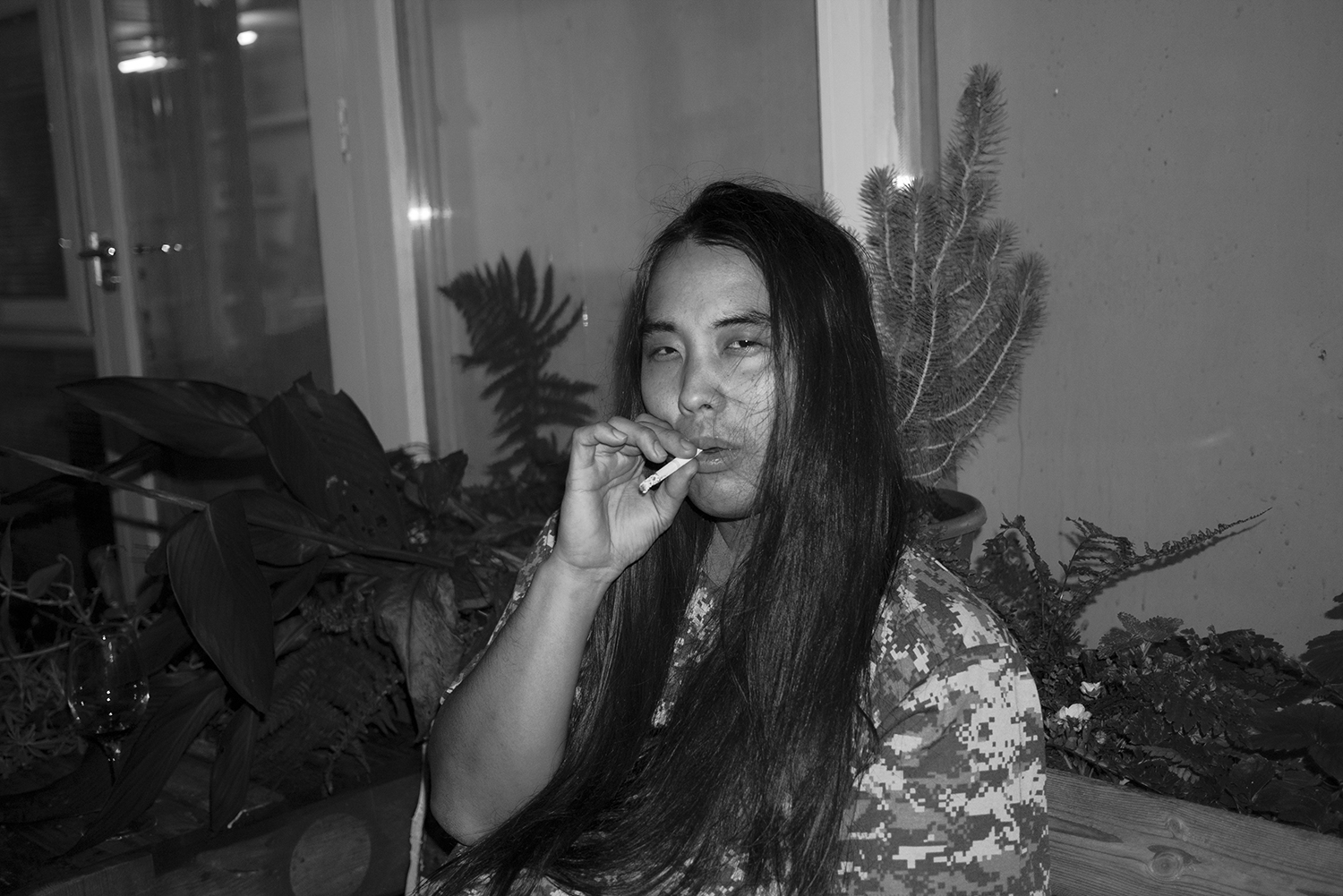
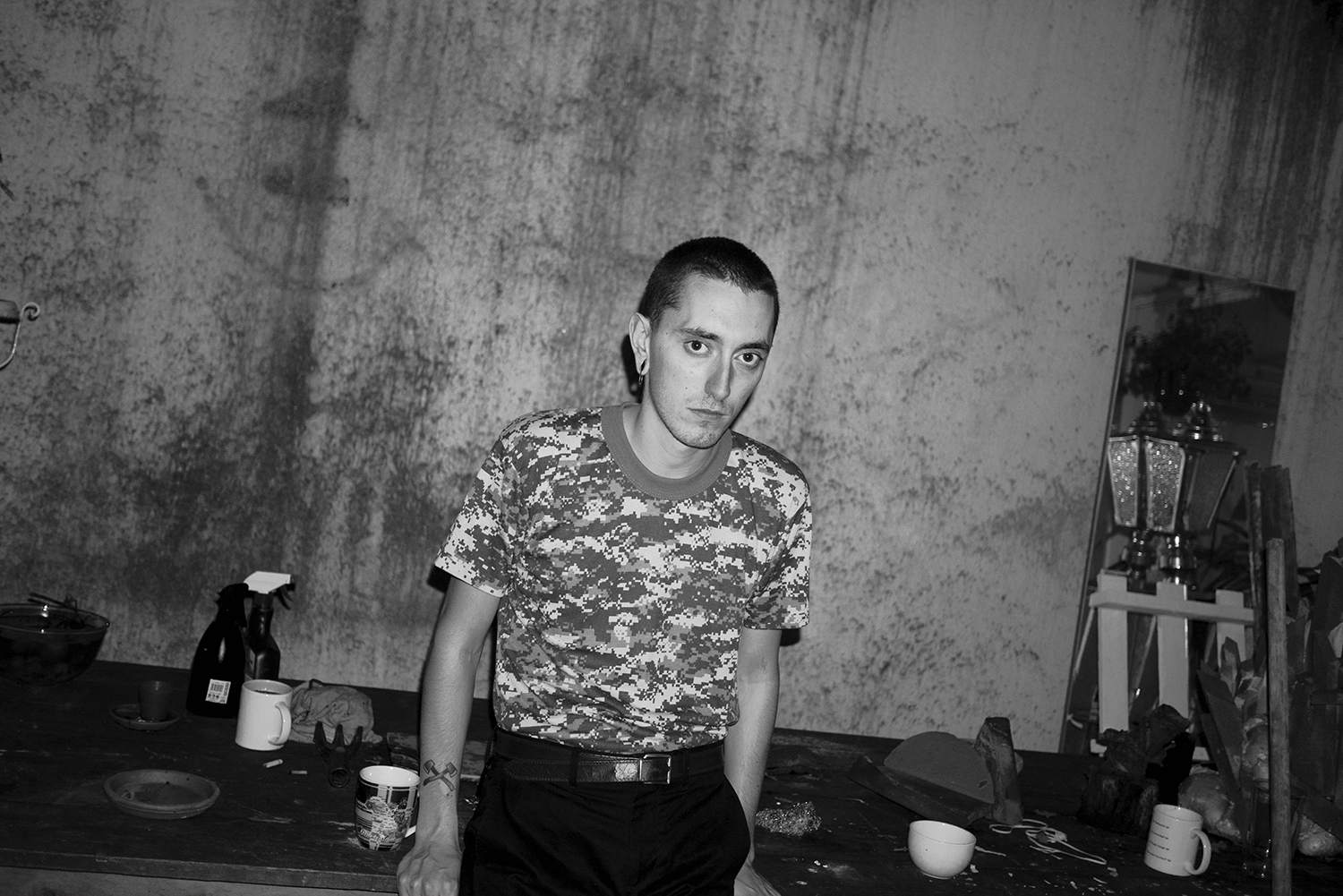
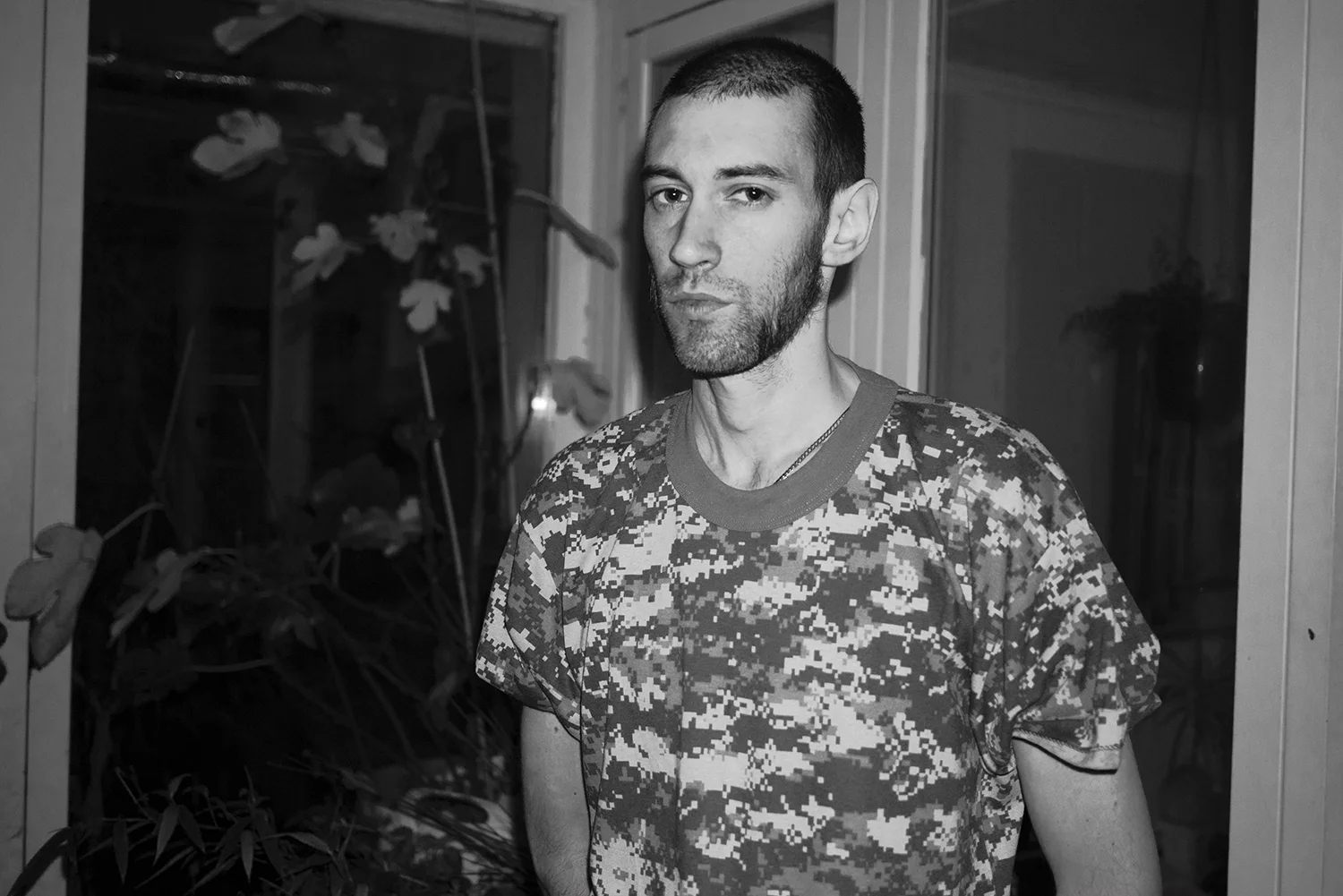
The band; Lias, as well as Saul Adamczewski (guitar), Adam J. Harmer (guitar), Joseph Pancucci, (brother of Lias) Nathan Saoudi (keyboard), Severin Black (drums), and Taishi Nagasaka (bass); formed in 2011 while they were squatting and enduring various levels of impoverished horror in Peckham, forming an alliance and an agenda in the process. From the time that the band released their electrifying debut record, opinions of them were divisive but absolute. Hero worship and skepticism were thrown around equally, but nigh any journalist could argue against the fact that this band was relevant to our sick, scared, and poor era. Noisey called the band, “A reminder that rock n’ roll can mean something.” The Quietus called Champagne Holocaust one of the best records of 2014. Pitchfork, in a more lukewarm review, nevertheless described the debut record as the “shambolic beginnings of something.” Case in point, Fat White Family wants rock music to have substance again. Charged up by leftist politics and rally cries against the agonies of capitalism, Fat White Family is both aware of the culture while totally antithetical to the culture. The music, while certainly energizing, has its touchstones: the anarcho punk ethos of Crass, the shambolic poetry of Mark E. Smith and The Fall (they even released a single called I Am Mark E. Smith), the nihilist poetry of Country Teasers, and the early garage psych of The 13th Floor Elevators. But the music is only half the story with the band. I often say that the most effective (and my favorite) politicians (Obama, Churchill, etc..) do what they must to achieve power, and once the power is achieved use it to shake the culture and make change. It seems every article out there in one way or another finds different adjectives to describe the pestilence and grit and grime that define the entity that is Fat White Family. Though those descriptions aren’t false, they fail to mention the intelligence behind the art. Fat White Family is intimately aware of the power of performance and media. With a militaristic look, an aura of degenerate mystery, and ratchet stage antics full of blood and nudity, the band commands attention. Now that the attention has been achieved, the band can have their ideas known and their message spread.
Fat White Family’s new album, Songs for Our Mothers, is out today on Fat Possum. It continues the band’s political nihilism while incorporating a more subdued if not at all toned down sound. The melodies are more pronounced, and the incorporation of synths and horns brings to mind the more ambitious records of British pop music history. From opening track The Whitest Boy On the Beach, there is something off-kilter and more thought-provoking than the band’s earlier onslaughts, bringing to mind bands like Devo. It seems the album’s central conceit is an exploration of the volatile conditions that often create the best art, as the band has cited the work of Ike and Tina turner as a central influence on the band.
In anticipation of Songs for Our Mothers, I spoke to Lias on a Viber call. He is nothing like his stage persona. Expecting a bamboozled alkie, I found myself speaking to a fiercely intelligent young guy deeply worried about the state of the economy, highly aware of contemporary art, and fiercely committed to original art. Topics that came up were housing, the band’s unhealthy obsession with Irish actor Sam Neill, the divide between human being and performer, and of course lots about the new record. I also snuck in a question about Lias and Fat White brother in arms (as well as brother from same mother) Nathan’s collaborative band with electronic act Electronic Research Council and Sean Lennon, The Moonlandingz, whose record Expanded is out now.
Autre: Perhaps I’m off base here, but from the moment I first got into the band I detected at least an awareness of a performance art aesthetic, is that at all accurate?
LIAS SAOUDI: Yeah definitely. I went to college for four years, at Slade School of Art in North London, so it’s something I’ve been a part of for a while.
AUTRE: What about politically? Did you develop your own sort of ethos on your own? Or did you pick up certain ideas from family members or friends growing up?
LIAS SAOUDI: Well my mum is sort of like a Yorkshire coal miner who was there during the strikes. My dad’s an Algerian immigrant. It’s not like I grew up on an estate, but I wouldn’t jump to say that I was, myself, working class. I was afforded opportunities both my parents never had, because they worked really hard. But both of them, yeah completely. But myself I guess I would say I was more lower-middle class. We would go on a holiday abroad every now and then. . I think it was the kind of environment, which set me up to take it where I am now. It was probably always going to turn out this way.
AUTRE: I find it interesting how some adults think that people our age, millennials or whatever, are apolitical or don’t care. But I just don’t find that to be true these days, certainly with bands like yours, and with what’s going on in the States right now with everything rallying around Bernie Sanders and things like that. Do you feel generally hopeful that at least people seem to be more aware than they were in the last few years?
LIAS SAOUDI: I think a certain amount of apathy has lifted, but I fail to see any real, genuine hope in the situation being altered. I think there is something to rally around and I think that’s really positive. I think it’s the lowest kind of cynicism to just not even bother. My issue with bands and music and the people here in London while I was kind of squatting around and studying is that people were just concerned with climbing up a ladder socially. There’s no way you’re getting anywhere.

AUTRE: Yeah, absolutely.
LIAS SAOUDI: I mean I’ve been in London for 12 years and we worked pretty hard at this project. From an outsider’s perspective it must seem like we’ve had some success. But my living standards have never increased, if anything they’ve diminished. And London, the city that I’ve kind of grown to love and consider home, is kind of out of my reach. That brings anger.
AUTRE: Yeah it’s the same situation over here in New York. What’s insane to me is that one of the main reasons people want to move to cities like New York or London is because they want to eat at great restaurants with really talented chefs, or see great bands or artists. But if they don’t start regulating the rent, these people aren’t going to exist and these cities are going to suck.
LIAS SAOUDI: It’s just become a little bit like Paris. The restaurants will remain, but all the other good stuff will fuck off. It’s prohibitively expensive to live here while you’re trying to do something creative. It’s always been tough, you know you have to work a shitty job while you’re doing your painting or your band. The city is for tourists and millionaires and for people to invest in property while you’re pushed further and further out of the housing market and the red market. It’s boring. There’s nobody standing up for you, there’s no rules, there’s no law anymore.
AUTRE: It’s pretty insane. Living in New York, I’ve been here almost four yeas years but I’ve already had to bounce around from three neighborhoods. It happens too fast. Blame it on hipsters moving to your hood all you want, but people are going to live where they can afford. No one is at fault other than greedy landowners and a government that doesn’t protect its citizens from encroaching poverty.
LIAS SAOUDI: It’s alarming that the government, our government, doesn’t want regulation when it comes to things like the housing market. But they are perfectly comfortable with regulating the Middle East. It’s like you won’t put a fucking cap on the rent in South London but you’ll happily bomb Libya. I’m confused now by what they mean by regulation. It’s just such fucking dog shit. Bands don’t traditionally come from London- they come to London to make their way. And I think we’ll see an end to that.
AUTRE: So I wanted to ask you some stuff about the new record, which I’ve listened to and I love. The first thing I noticed is that right from the first record, right from Auto Neutron, it kind of had this groovy but nevertheless full on oral onslaught. The new one seems a little bit more textured, maybe are there some synths in there?
LIAS SAOUDI: Yeah there was a little bit of a disco element. Everybody was kinda getting into Donna Summer at that point.
AUTRE: Yeah, that’s interesting. I thought of the first Devo record honestly when I heard that second track.
LIAS SAOUDI: Yeah it is that kind of vibe. I think it was just a lot more thought going into it. Not that we didn’t take it seriously the first time. It takes a long time to make a record. That’s always the case, it’s a refection of what everybody’s been into. It’s is a little less schlocky, a little bit I dare say understated. I’ll be held to that no doubt, but it’s about drawing a juxtaposition between that understatement and what actually goes on in the songs, the events and fleshing them out. If there’s a shock value that’s where it is.
AUTRE: I’ve always thought you guys even at your most cacophonic had some serious grooves going on. I feel like it comes in even stronger when you’re quieting down a little.
LIAS SAOUDI: It’s kind of like dance music I suppose essentially.
AUTRE: Yeah you can dance to it for sure. I know Joe Strummer had a quote that was like “the best rock and roll music just makes you want to stop thinking and dance and not give a fuck what anyone thinks.”
LIAS SAOUDI: I think so, and I think if you can do both at the same time that’s kind of the goal. If you can have both angles, and you can realize what you’re dancing to. The story behind it, the narrative.
AUTRE: Substance.
LIAS SAOUDI: Yeah you’ve got two layers going on there. There’s an ever so slight intellectual side to it.
AUTRE: I caught some psychedelic vibes too, are you guys into Psychedelia at all?
LIAS SAOUDI: Yea of course I mean we’re steeped in that. I think especially on the first record. There was kind of all that dodgy psych that was all pouring out during the last five years. A lot of it was just an interesting sound, but it didn’t seem to have any essential purpose. It was kind of like vintage shop psych for metropolitan dudes to pose around to and get laid. There was no essential struggle or crisis. Which given the times we’re living in, like we were talking about earlier, I find a little apathetic and irresponsible to an extent.

AUTRE: Definitely. I thought it was interesting, when I saw you guys at the Bowery Ballroom last year I saw you running around with Sean Lennon. He actually co-produced this new record, and you guys are doing a side project with him? The Moonlandingz?
LIAS SAOUDI: Yeah the Moonlandingz man!
AUTRE: I love that video.
LIAS SAOUDI: Yeah it’s good, it’s fun. Kind of tongue in cheek, the whole thing. It’s all really well written stuff. We were playing this fictional band within a concept record, we just decided to take it to the next level. And then Sean got involved. I got something from Sean the other day actually, Yoko Ono is on one of the tracks now.
AUTRE: Oh sweet!
LIAS SAOUDI: Yeah, we’re having a scream off on one of them I think. It’s nice, we’re in a position now where you can kind of cross-pollinate with other artists much more easily. Maybe the financial rewards are not as great these days for musicians, but if you get a little bit of a break you can start working with all kinds of people. It’s kind of exiting.
AUTRE: Definitely, and I feel like Sean is almost a perfect mentor for you guys because he for one thing is massively famous just because of who he is, but he also has an ear to the underground always.
LIAS SAOUDI: Yeah and he’s a really great musician man. It’s great to have him in the studio. He’s just always been really lovely with us and always supported us since the first day we met him. He’s been a great ally to have, whenever we’re stateside we always hit him up.
AUTRE: Most people associate you guys with influences like The Fall and the Birthday party ad Crass, all that stuff, but I hear soul on your records, I hear funk. And he’s a good producer for that because he knows a little bit about everything.
LIAS SAOUDI: He’s kind more into the sensual side of it all than the harsh, politically charged kind of punk side of it. And that works well for us.
AUTRE: I feel like Fat White Family has a lot of hero worship attached to it. Rock n’ Roll lovers have a lot of faith in you guys. I mean Noisey described you as “the band making Rock n’ Roll mean something again.” Do you welcome this? Or are there times when you want to just play rock music without people attaching so much to it?
LIAS SAOUDI: I try and remain as ignorant as possible. I kind of gravitate towards things that I don’t really understand. I don’t really think about it that much, I just try and get on with my job. I find it extremely difficult to write and I’m quite precious about it, so I’m just getting on with it and I hope it works out. It’s not the most stable profession, all those people saying that is great, you know, wonderful, but it’s kind of just a lucky byproduct of what we’re doing.
AUTRE: You do get a lot of positive reception in blogs, but I can’t imagine it actually compares to the reactions you guys get at your shows when kids go fucking nuts.
LIAS SAOUDI: That’s great, that’s my favorite part of it. I was doing a little bit of performance art at the end of college, and I was kind of at a loose end- didn’t really know where to place myself. I’ve really become quite jaded and disdainful with the whole contemporary art scene. But being in a band you could kind of just do that at your own street level instead of having to curtail to some type of elite the whole time. So that was important to me, and the performance thing remains priority #1 for me.
AUTRE: That is the benefit of Rock n’ Roll over art, because art is still contingent on you being able to sell your stuff to some rich guy, where as Rock n’ Roll is just contingent upon kids losing it over your music.
LIAS SAOUDI: Yeah. You know when you’re shit because people just don’t stick around. It’s a lot more difficult to lie to yourself.
AUTRE: When I saw you at the Bowery Ballroom you had your cock out within the first three minutes of the show.
LIAS SAOUDI: (laughs) I don’t know where that comes from really. As a person I’m usually quite reserved, quite shy, quite insecure essentially, so it’s like an outlet I suppose. It’s not really like a pre-meditated thing. It just feels nice. Theoretically, again if you’re doing that in contemporary art it raises all sorts of questions. Difficult questions. But I think if you’re doing that in Rock n’ Roll it’s just a bit of spice.
AUTRE: Yeah! So you once wrote “Hell hath no fury like a failed artist” in Is It Raining in Your Mouth. The band has if not become overwhelmingly financially successful has gained a certain level of notoriety. Is it as easy for you to write those same sort of vibes with the success that you have now?
LIAS SAOUDI: Well a lot of the time when I’m writing there will be some sort of historical context, some sort of totem culturally that other people can gather around and hang their hat on essentially. When I wrote that I was actually talking about Adolf Hitler.
AUTRE: Oh shit that makes sense!
LIAS SAOUDI: (Laughs) Yeah! But it worked for me as well so I just put that in there. So that’s usually the angle I come in at when I’m writing sometime. So it’s kind of personal but it’s also got a different context usually.

AUTRE: Do you consider the rock star version of you to be you and a part of you? Or like a character that you have to get into to become what you are on stage?
LIAS SAOUDI: When I go on stage it’s a peculiar experience, I don’t feel like that person at all really. That’s just the way it happens when I perform. It’s strange when you get up on a stage in front of a big crowd of people, there’s all kinds of things that happen in your brain. Some of them healthy, some of them not so healthy, I think naturally I must be a real attention seeker. Because I do love it. It’s a weird one.
AUTRE: I was looking at the press release for the new record and at the end there it says something about this record being about love, death, sex, the actor Sam Neill. What’s with the obsession with Sam Neill?
LIAS SAOUDI: I don’t know where that comes from exactly. It’s a real thing in the group.
AUTRE: He’s good man.
LIAS SAOUDI: (Laughs) I think maybe it’s the film Event Horizon, which is arguably one of the shittiest films ever made.
AUTRE: He was in Possession, have you ever seen that movie? Sam plays a spy that comes home to his wife who acts increasingly unstable wife who ass him for a divorce, that description doesn’t at all sum up the head fuckery that follows.
LIAS SAOUDI: I’ll have to check that out man.
AUTRE: That’s a good horror movie.
LIAS SAOUDI: He’s in one of the songs. In Satisfied, there’s a lyric in there about Sam Neill working outside or something. It’s fun when you bring things back down to the juvenile level sometimes.
AUTRE: Do you find it difficult to stay out of the bullshit side of the music business?
LIAS SAOUDI: It is weird and it’s slightly disturbing when what you do as a bunch of friends; living together in a shitty house; suddenly becomes your bread and butter. It’s something you just kind of have to get a grip on so you don’t have to go back to making pizzas or whatever. There’s an element of anxiety there. You’ve been struggling and then you get a little bit of a break, and then you have to grapple with how making art is an economic act whether you like it or not. You have to accept that.
I try to get at a part of that on the record, by talking about the relationship between Ike and Tina Turner. Just how in a way everybody kind of endorsed the violence that took part as a fan and a listener of the music. It’s in there.
AUTRE: It is interesting with Ike and Tina though because those songs are so beautiful but you can hear the tension between them. Or you go listen to old Phil Spector productions or something and they sound so perfect and pretty but then you realize that the guy who’s making them is quite psychotic really. It gives everything an interesting spin.
LIAS SAOUDI: It’s a brutal dichotomy and it’s something which you kind of find yourself in all of a sudden. As far as it being a business, and you have all these people around you, and you have to decide which you trust and which you don’t. There’s things that go wrong and it’s difficult but that’s the reality of the situation.
AUTRE: It must be even more frightening because Fat White Family does have potential to become quite a big rock band.
LIAS SAOUDI: I mean maybe, I don’t know. I’ll take what I can get. The more people that listen to it the better
AUTRE: Are there any other bands these days that you find to be adequate if not pretty great?
LIAS SAOUDI: There’s a couple of really great bands kicking around. There’s a band called Meat Raffle who are a new band just putting out their first release, but they’re worth checking out. I’m a fan of the Sleaford Mods I think they’re really good.
AUTRE: Oh yeah I like their new record a lot.
LIAS SAOUDI: It’s funny and it’s brutal and it’s full of the right kind of spite. It revels in its own authentic misery, and I think that puts the fear into all the right people. That’s the ultimate kind of process. You can just kind of dance to the pain, and that’s what it sounds like to me.
AUTRE: So are you guys going to be touring the states on this new record?
LIAS SAOUDI: Yeah we’ll be over there. Our management is based in LA now so they’ll be really key in getting us over there. I imagine quite a bit in the next year. I think March, and then maybe later on in the year. I like to spend time over there, although touring is a bit tough. It’s a lot of fucking driving and a lot of shitty food. It’s that whole middle bit, which is quite a big bit, it’s pretty tough to get in the van and drive around and do shows. But once you get to the big cities its always fantastic you know?
AUTRE: Yeah. Alright man, I can’t wait to see you guys next time you come to New York, it was a pleasure speaking with you. Good luck and congratulations!
LIAS SAOUDI: Cheers man!
Fat White Family's new album 'Songs For Our Mothers' is out today via Without Consent/Fat Possum Records, purchase here. Watch the music video for Whitest Boy On The Beach here. Text and interview by Adam Lehrer. Photographs by Flo Kohl, shot on location in London. Follow Autre on Instagram: @AUTREMAGAZINE