
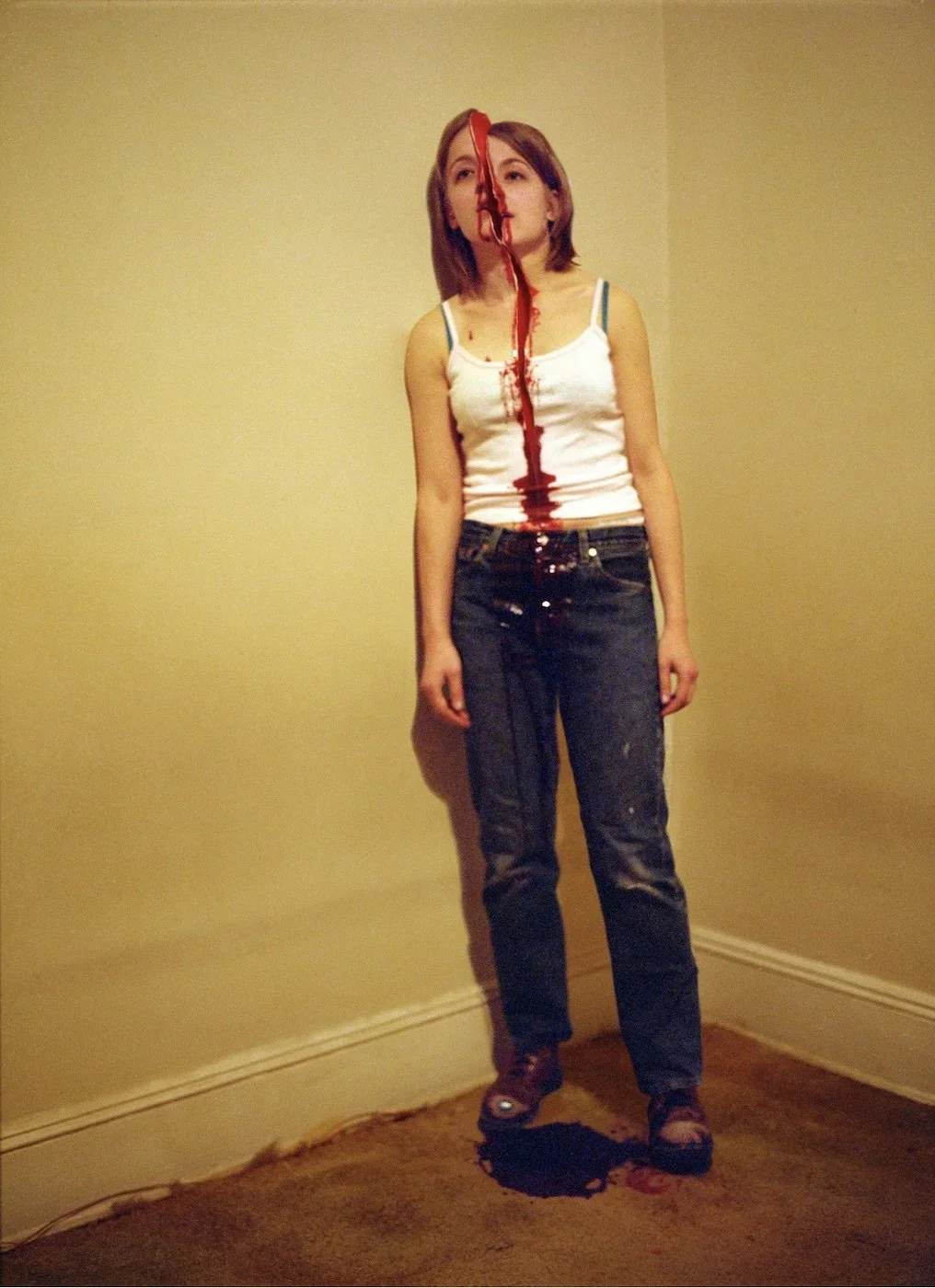
Sue de Beer
Untitled, 1997-1999
C-print
49.88h x 36.38w in 126.68h x 92.39w cm
Edition 3 of 3
Courtesy of the artist and Marianne Boesky Gallery
text by Emma Grimes
The archetype of the monstrous feminine is front and center in Under the Skin, a group show that brings together six artists whose work examines the female body in relation to the genre of horror. The exhibition spans painting, sculpture, and photography, beginning with Clarity Haynes’ Infinity Birth Altar (2021).
A cotton-candy-blue canvas is organized into a 6x6 grid, with each of the 36 squares containing a close-up illustration of a crowning vagina. Every square is slightly different from the next, reflecting a diversity of female body types, and each orifice is pushing out a different colored spherical object. The tight repetition creates the feeling of looking at a pattern, which banalizes the conventionally “unattractive” or “gross” image of a crowning vagina, while also putting it on a pedestal. Giving birth is treated as mundane and revered at the same time. The title—Infinity Birth Altar—further evokes this quality of worship, and put together, the work lifts up the everyday labor that is the creation of new life.
In another painting from Clarity Haynes, Origin I (2021), a figure’s hips and crotch are caught in close-up as a blue, jelly-like object juts out from bloodied skin. This image does not seem to allude to a particular orifice but rather to an unexpected and unintended foreign object emerging from the body. Recalling the genre of body horror, Haynes’ two paintings blur the boundary between natural and unnatural bodily processes, or even native versus foreign bodily entities. The latter work is presented in a tondo canvas, recalling Renaissance paintings and even devotional Biblical scenes. Placing this image in the revered tondo form encourages one to doubt their initial judgment of the work and to critically question the inner logic that we use to define words like “gross” or “repulsive.”
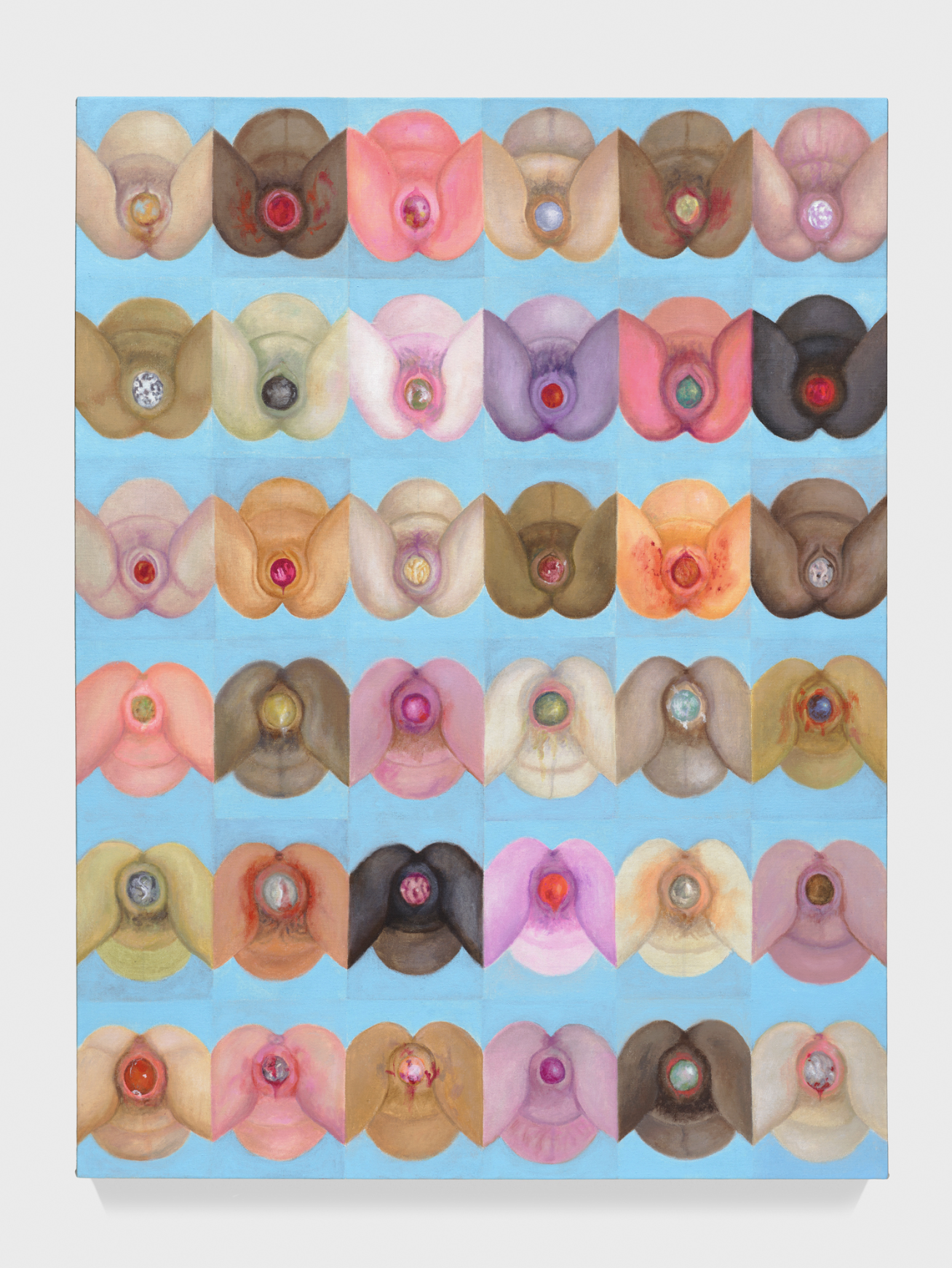
Clarity Haynes
Infinity Birth Altar, 2021
Oil on canvas
40h x 30w x 1.50d in
101.60h x 76.20w x 3.81d cm
Courtesy of the artist and New Discretions
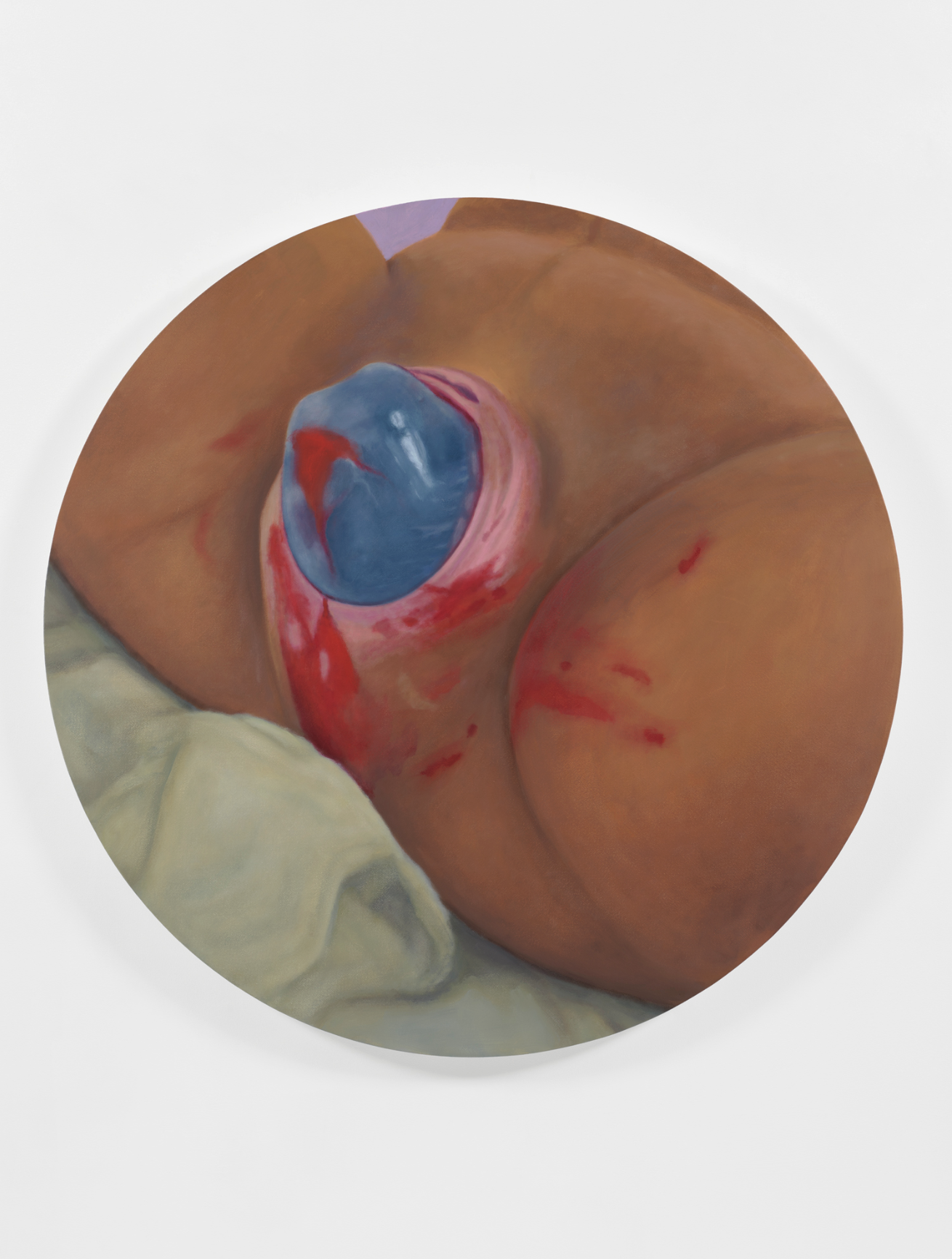
Clarity Haynes
Origin I, 2021
Oil on canvas
48 inches diameter
Courtesy of the artist and New Discretions.
What we find ourselves averse to must be considered. In Julie Kristeva’s theory on the abject, she writes that the things we find repulsive are that which is neither subject or object. Feces, menstrual blood, or a corpse are not repulsive because they suggest “uncleanliness,” Kristeva writes, but because they’re ambiguous. The abject is “what does not respect borders, positions, rules.” Like the blue-jelly object protruding from the skin or the crowning vaginas, what’s being disturbed is the idea of one singular, whole body.
In Infinity Birth Altar, Haynes juxtaposes the abject with cotton-candy blue and pinks. There’s a waltz between a lightness of style and an intensity of subject. Yet they bleed into each other, and one is unable to tease them apart. Thus the abject illustration also becomes charming. Again, like with the tondo canvas in Origin I, Haynes upends our instinctual assumptions about the abject.
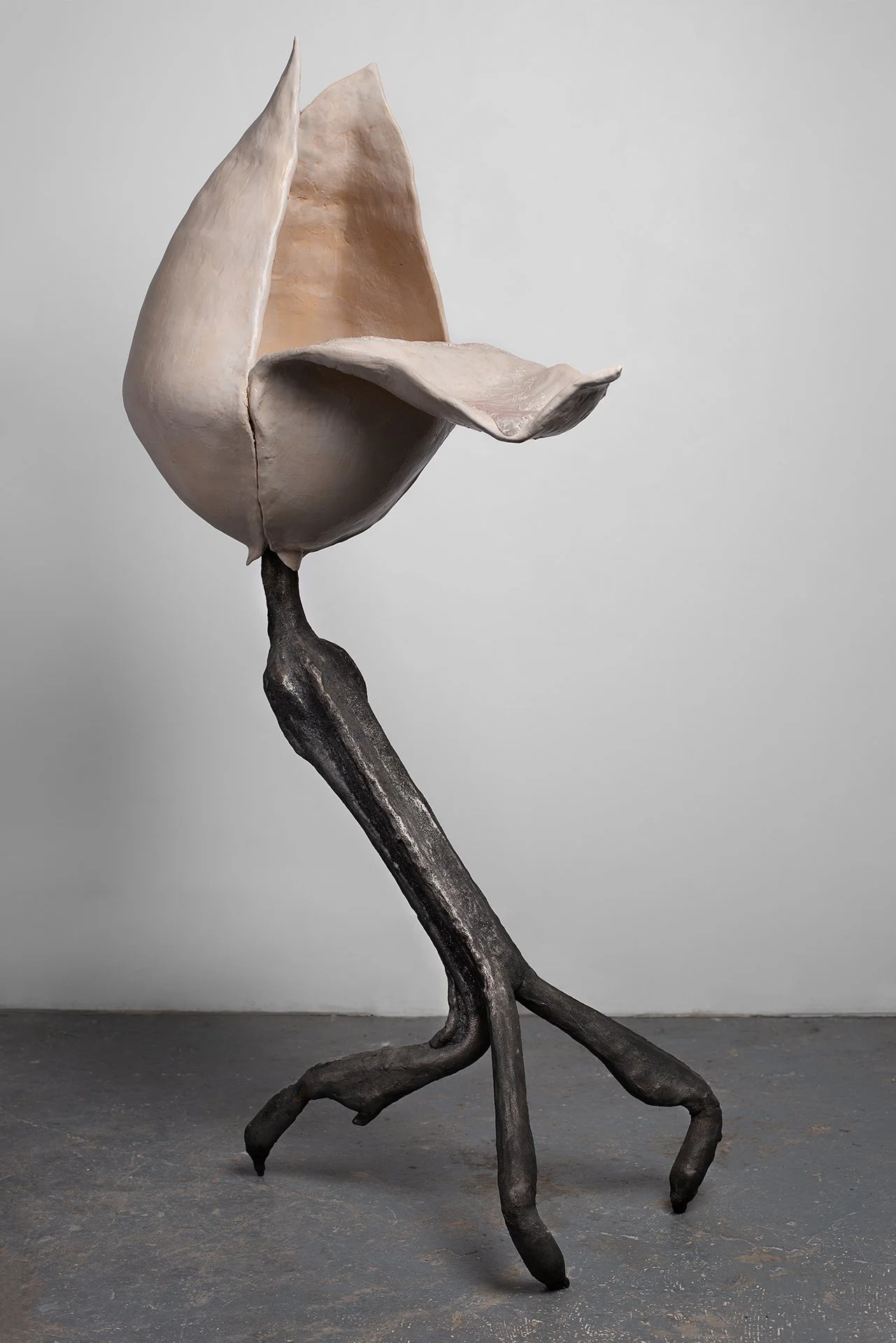
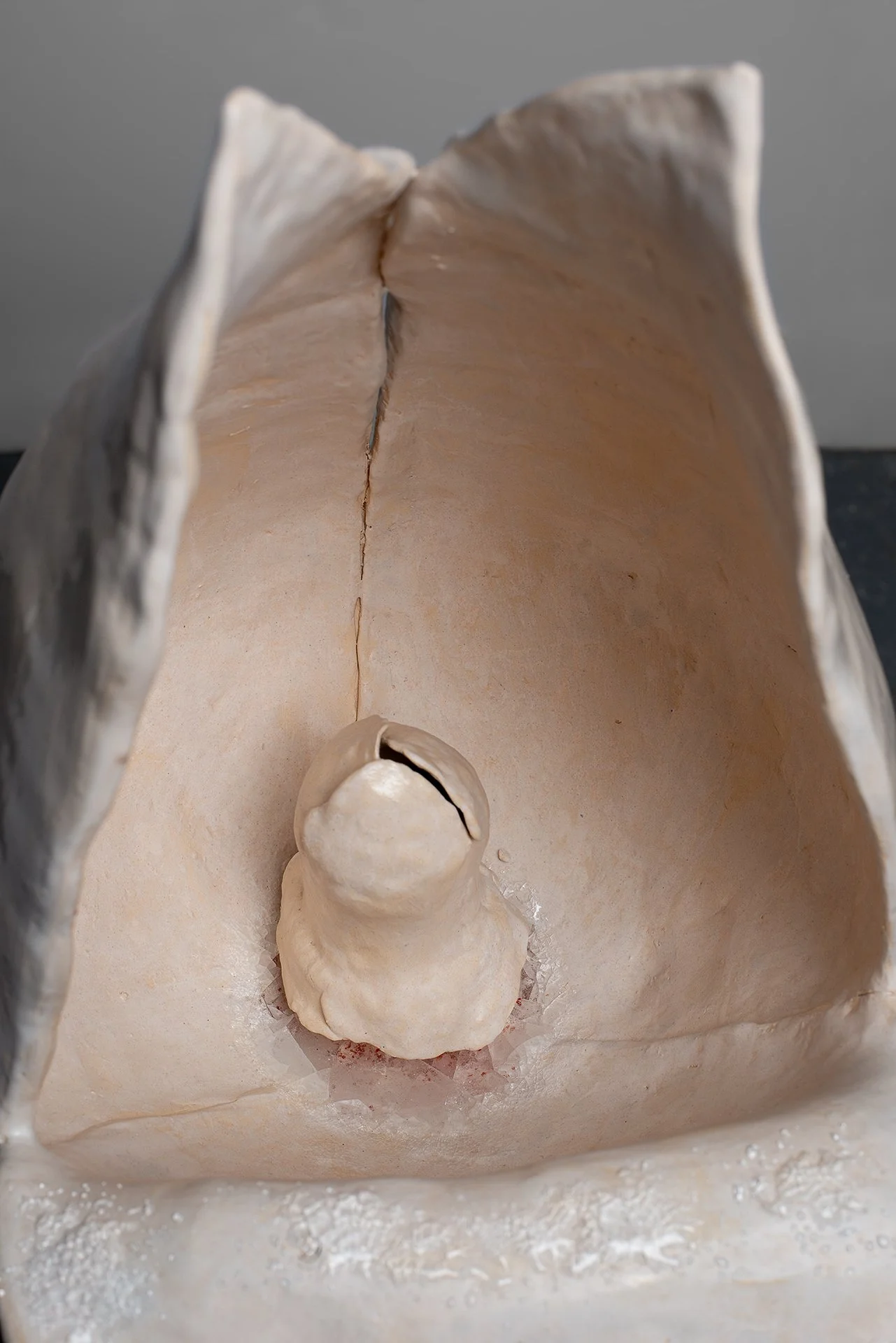
Staged across the gallery floor are five sculptures from Eva Tellier and Alison Kudlow. Three cast-iron legs uphold a glass, off-white flower in Kudlow’s Catch (2026). Two petals stand upright while the third lies flat, inviting a peek inside. A small glass object rests solemnly surrounded by beads and shards of glass. Kudlow’s work always feels fragile yet sharp, as though the sculptures, if you stepped too close, would slice your hand. They feel self-made, like they constructed themselves. And while sometimes a piece of art is stagnant until activated by your gaze, these give the distinct opposite impression; they’re indifferent to it.
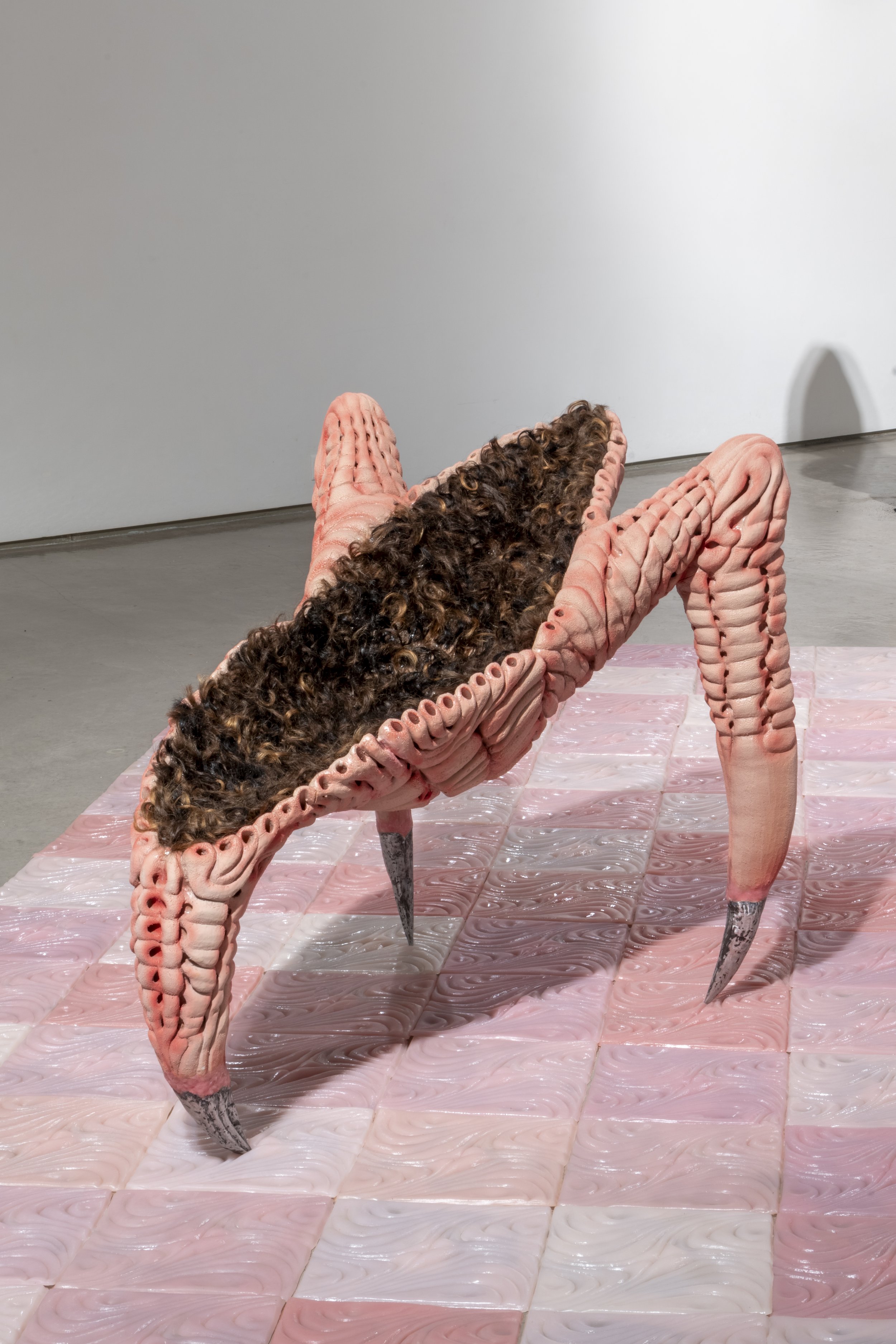
Closer to the back, Eva Tellier’s three-legged body-horror sculpture quietly lounges with the confidence of someone who knows they’re the most interesting person at the party. The three legs wear shoes of pointy teeth, and the outside material is like the brain’s membrane. The top of the sculpture is scooped out slightly, creating a vague slit, and is covered in curly brown hair. Chair et poil / Flesh and Fur (2025) is the most body-horror of all the body-horror pieces here, and one can imagine this sculpture suddenly becoming sentient and wreaking havoc on the world outside.
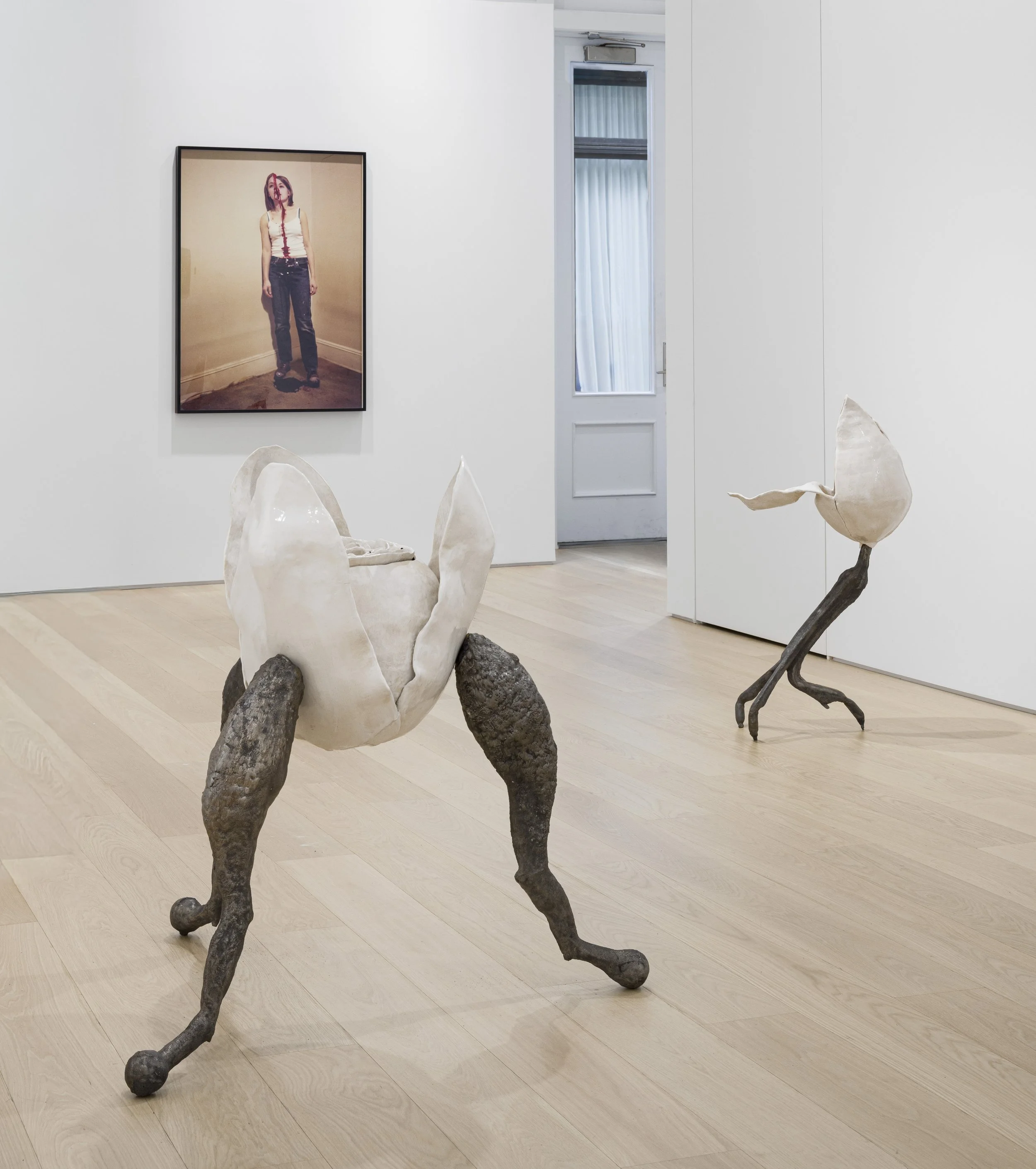
Sue de Beer presents a photograph, Untitled (1997-1999), of an adolescent girl splitting down the middle. Standing against a wall, blood oozes down her white top and blue jeans. Her young face looks anguished, yet also on the verge of great relief. The archetype of the monstrous feminine, presented here, is drawn from film theorist Barbara Creed. In her 1993 book, Creed first points out how in horror films with “monstrous” female characters, their issues are usually tied back to their reproductive functions. In the older, male-directed films Creed was analyzing, such as Carrie or Alien, one can argue that the monstrous feminine was broached to be confronted and then controlled, contained, exiled, or punished. But in this photograph from de Beer of an adolescent grotesquely splitting in half, one only finds sympathy.
The works on view from Haynes, Kudlow, Tellier, and de Beer—in addition to Katherine Hubbard and Carly Ries—interrogate the archetype without trying to contain or even condemn it. In this way, Under the Skin significantly contributes to the way we think about the female body, how we inhabit it, what we consider abject, and, most importantly, what we do with it.
Under the Skin is on view through Friday, August 14 at Asya Geisberg Gallery, 45 White Street, New York.