
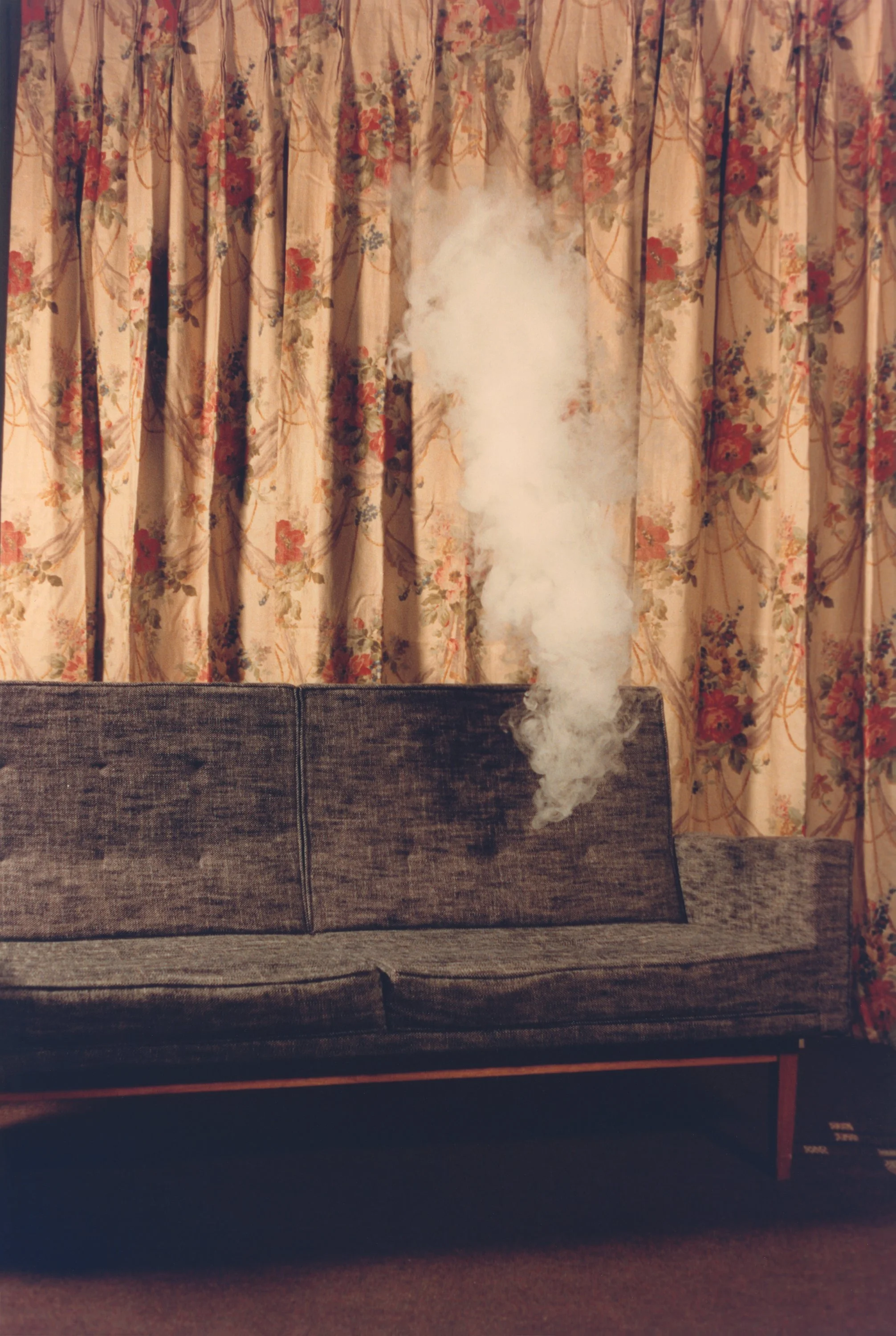
David Lynch, Smoke on Couch, 1992.
archival pigment print, 30 × 20 in. (76.2 × 50.8 cm); paper: 36⅝ × 26⅝ in. (93 × 67.6 cm); frame no. 99659.01.
© The David Lynch Estate, courtesy of The David Lynch Estate and Pace Gallery.
text by Dani Iwakoshi
Although widely recognized for a filmography spanning five decades, David Lynch’s artistic practice began in the studio. Having initially studied painting and sculpture at the Pennsylvania Academy of Fine Arts, he drew upon Surrealist influences to develop an unconventional approach to storytelling, cementing his reputation as one of the most avant-garde and influential filmmakers of contemporary cinema. Throughout his life, he continued to work across numerous media, extending his enigmatic visual language into photography, sculpture, music, and furniture design.
David Lynch: LA at Pace Gallery presents a posthumous collection of thirty-five photographs captured between 1979 and 2008, and organized into five distinct series. Mulholland Drive and Inland Empire, directed by Lynch, explore the contradictions within Los Angeles as both a scene of glamour and decay, locating beauty within the tensions.
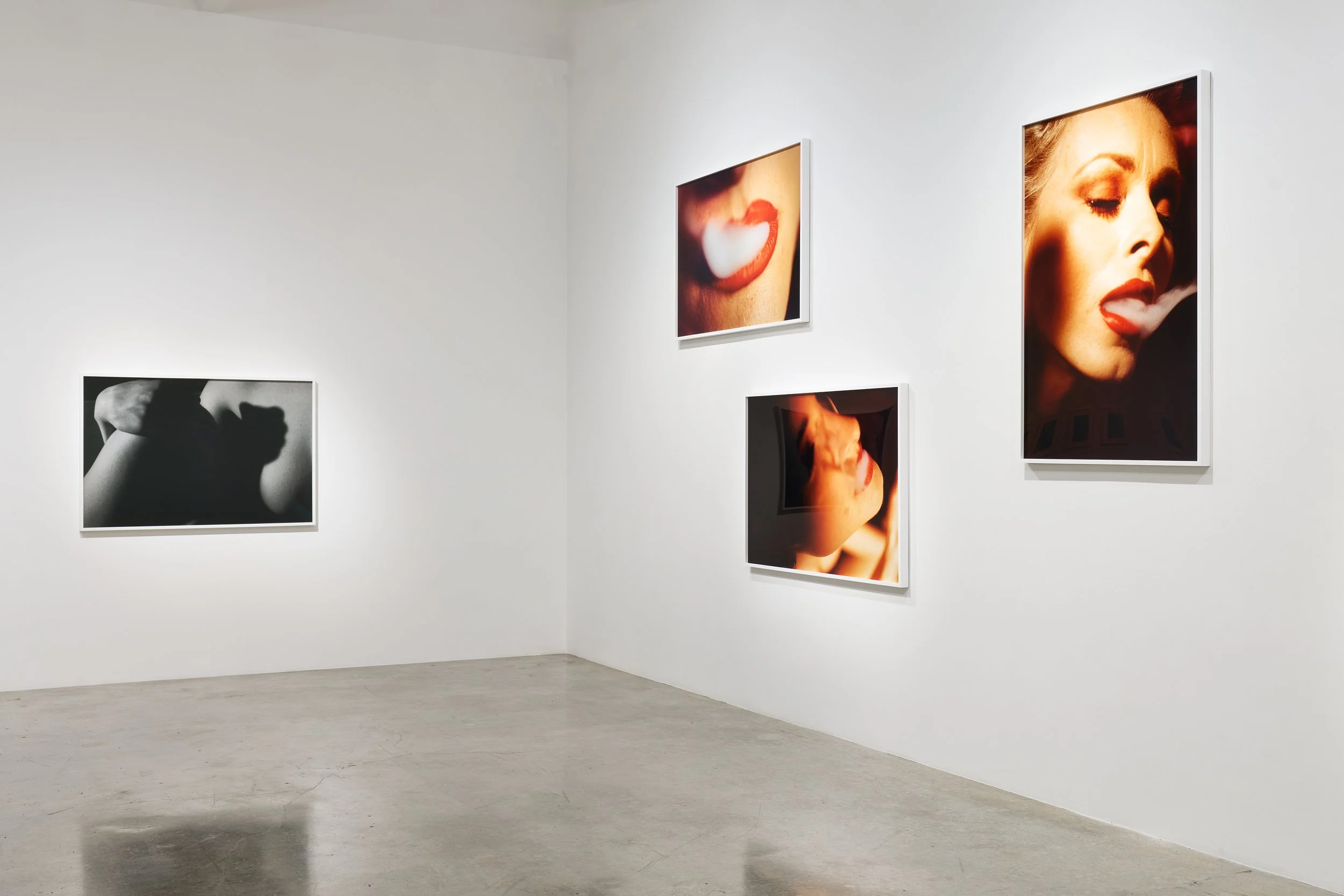
David Lynch: LA
1201 South La Brea Avenue, Los Angeles, CA 90019
September 19 –December 23, 2026
photography courtesy Pace Gallery
Using Los Angeles as both a subject and a muse, Lynch was particularly drawn to its light, which he credited as a catalyst for his art. The exhibit functions as a prelude to a LACMA retrospective, which was just announced and still in early development.
The dissonance begins before the photographs are even encountered. Pace Gallery sits upon a manicured green courtyard, exposed in the relentless Los Angeles heat. Inside, the sterile walls of a typical art museum cleanse the space of any domestic comfort, and feel almost deliberately at odds with the strangeness and intimate worlds contained in the photographs.
Playing on the classical trope of the reclined woman, the Couch series opens the exhibition. By layering multiple exposures, Lynch plays with the limitations of static photography, disassembling the woman’s body into a fragmented composite. Her feet are misplaced where her hands should be, disrupting the physical coherence of the subject. What can stillness communicate that the moving image cannot? Perhaps anticipation: the suggestion of an action that has yet to occur.
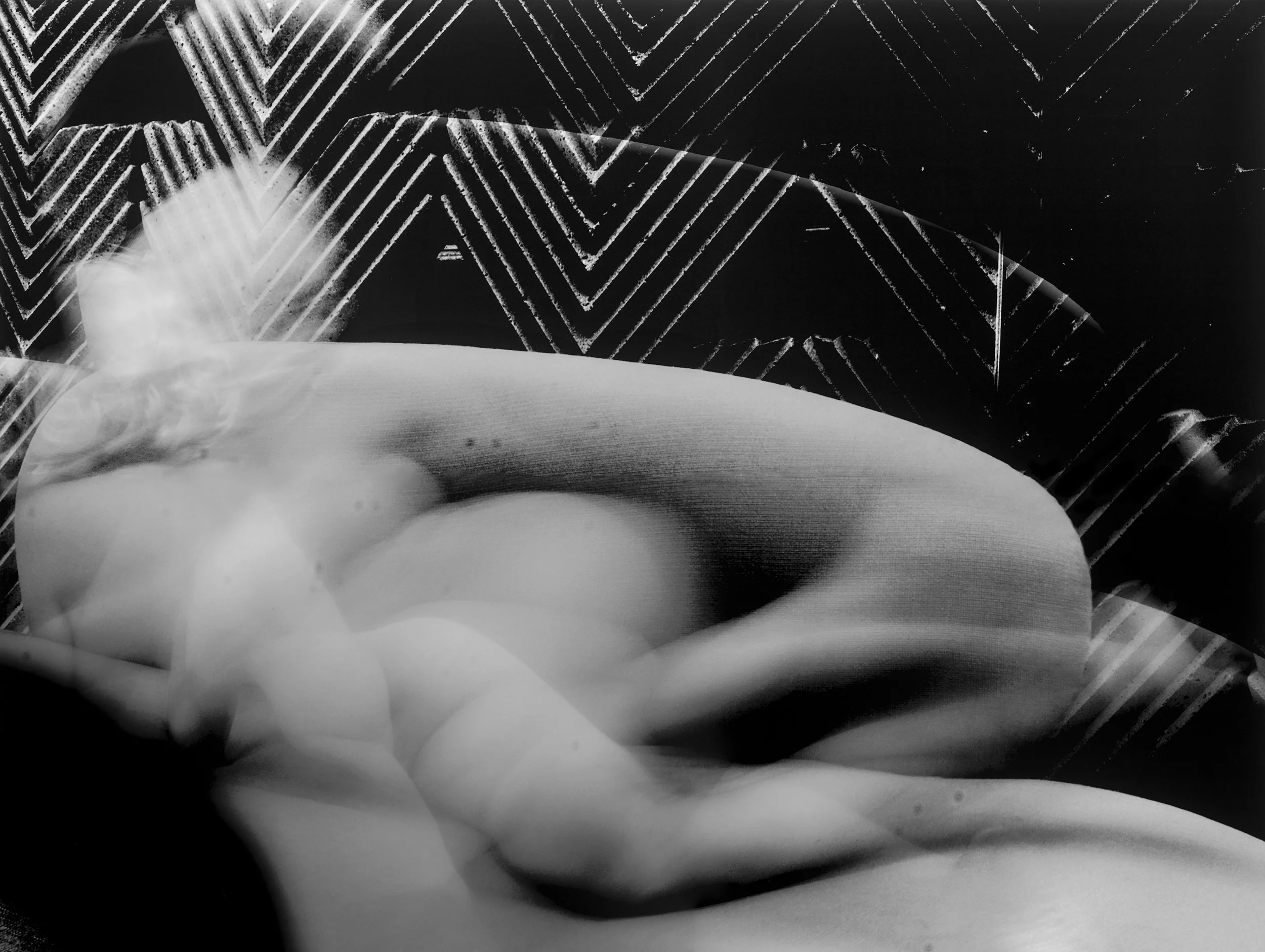
David Lynch, "Couch Series" #13, 2008.
archival pigment print
84 × 107 in. (213.4 × 271.8 cm); paper: 85⅝ × 113⅝ in. (217.5 × 288.6 cm); frame no. 99663.01.
© The David Lynch Estate, courtesy of The David Lynch Estate and Pace Gallery.
The architectural images, or “portraits,” present an empty and sprawling Los Angeles. Their distinctly cinematic quality evokes a once-thriving industrial past rendered silent and ominous behind boarded-up windows. A narrative of dark secrets begins to build beneath the grandiose display; the abstractions, bodies, and shadows now have a place to live.
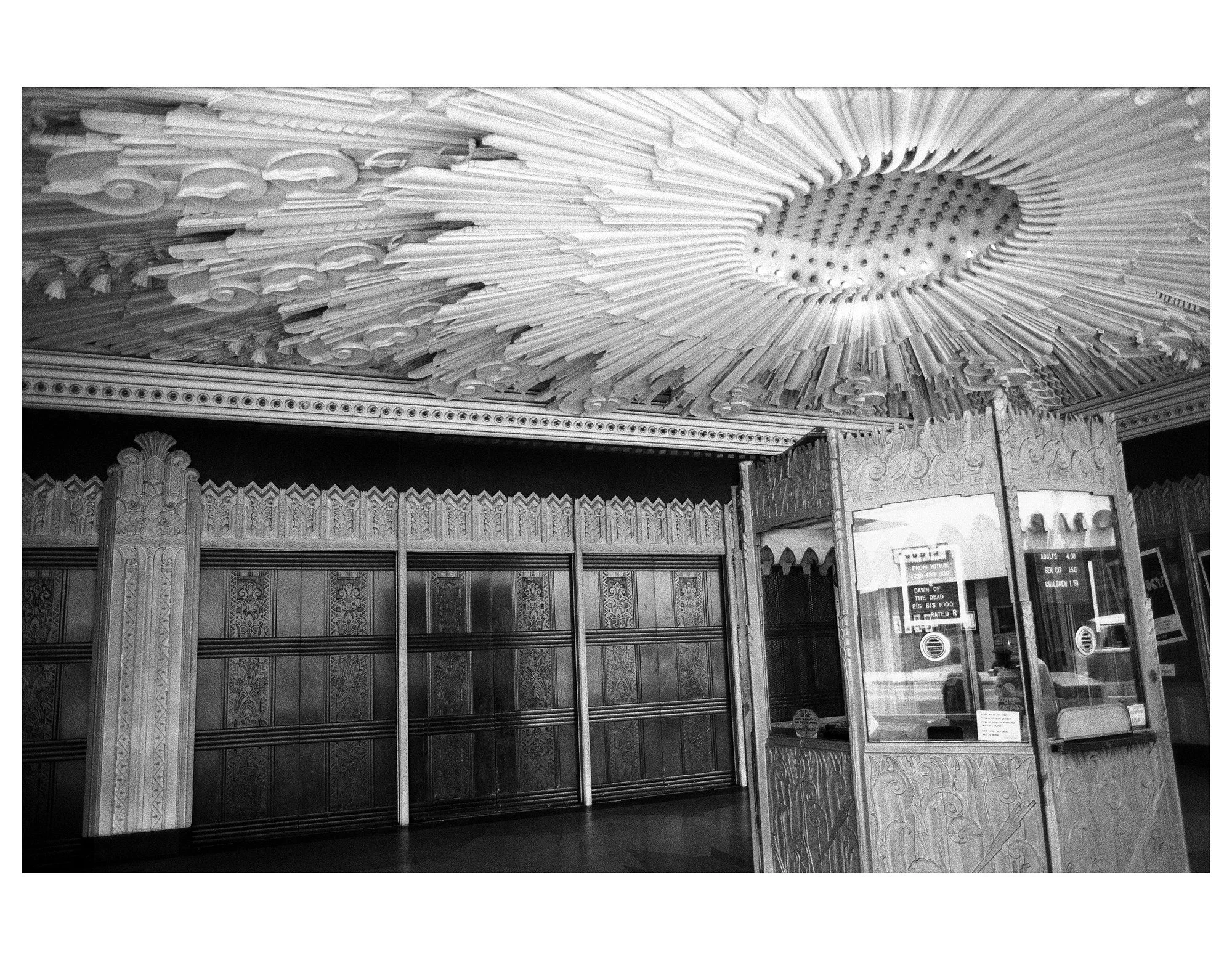
David Lynch, Untitled (Los Angeles), 1979.
archival silver gelatin print
40 × 60 in. (101.6 × 152.4 cm); paper: 41 × 61 in. (104.1 × 154.9 cm); frame no. 99618.01.
© The David Lynch Estate, courtesy of The David Lynch Estate and Pace Gallery.
Select photographs are saturated with color, like smoke slowly spilling out of a woman’s mouth lined with bright red lipstick. We do not see where the smoke starts or ends; instead, it appears as a fluid, continuous gesture. As Lynch captures the trace of action without revealing the action itself, smoke becomes both subject and metaphor: something momentarily visible, constantly shifting, and impossible to hold in place. Shadows often hide what may lurk in the margins.
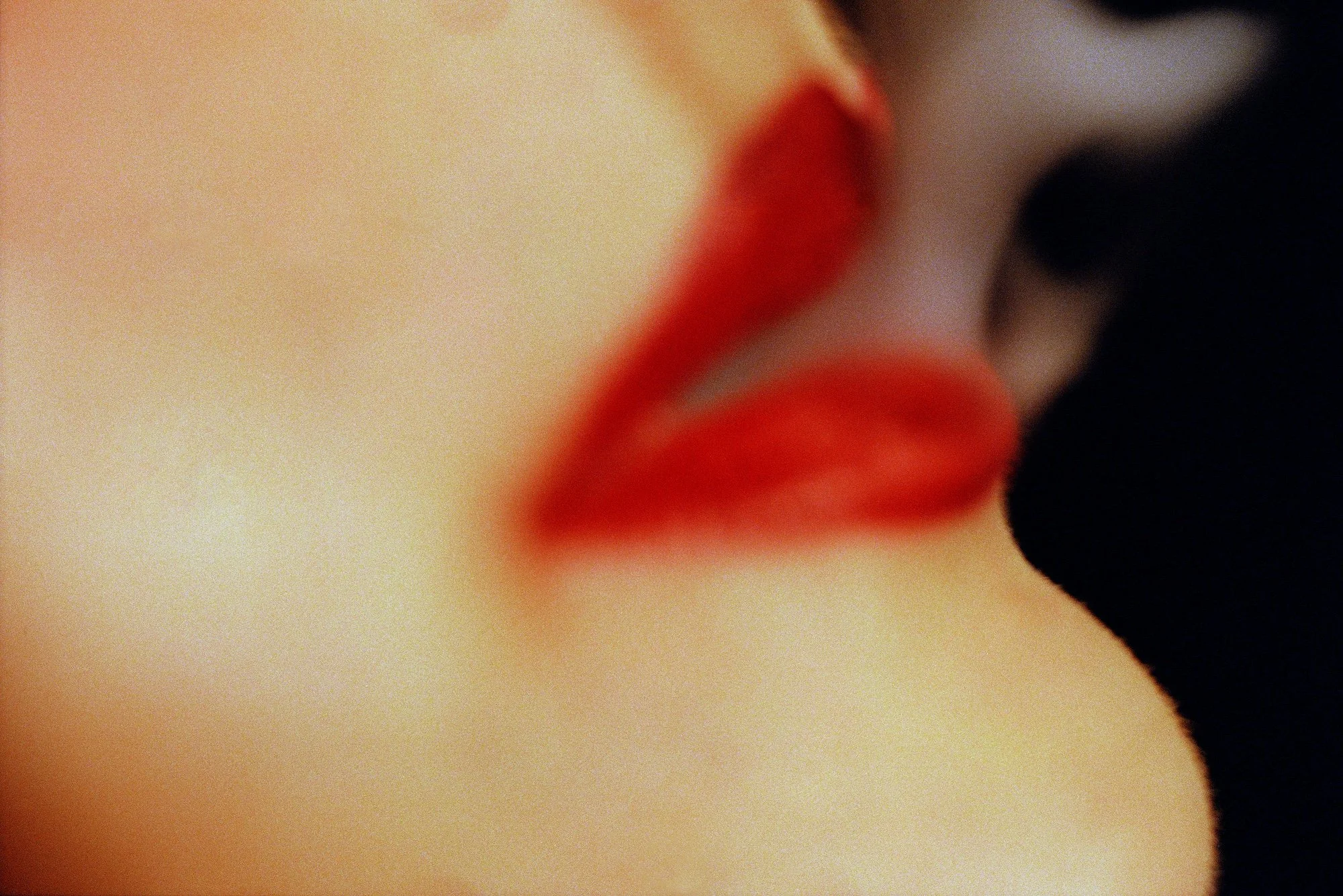
David Lynch, Untitled (Nudes and Smoke), c. 1994.
archival pigment print
40 × 60 in. (101.6 × 152.4 cm); paper: 41 × 61 in. (104.1 × 154.9 cm); frame no. 99657.01.
© The David Lynch Estate, courtesy of The David Lynch Estate and Pace Gallery.
Hidden behind an inconspicuous hallway, you’ll find a smaller room with dark burgundy walls. The final images from the Kits series consist of disassembled organs of small animals and instructions on how to reconstruct them. Inspired by his childhood spent building model airplanes, this twist is both comical and horrific. The room introduces a friction between the natural and manufactured. Small animal organs are reduced to components awaiting reconstruction, while houseflies are assigned human names, blurring the boundary between the biological and absurd.
A light fixture is held up by a fleshy, red shape that contrasts with the industrial metal structure supporting its weak glow. While the previous rooms withhold information through smoke and shadows, this series feels like an excess of information that resists the narrative logic established by the preceding rooms.
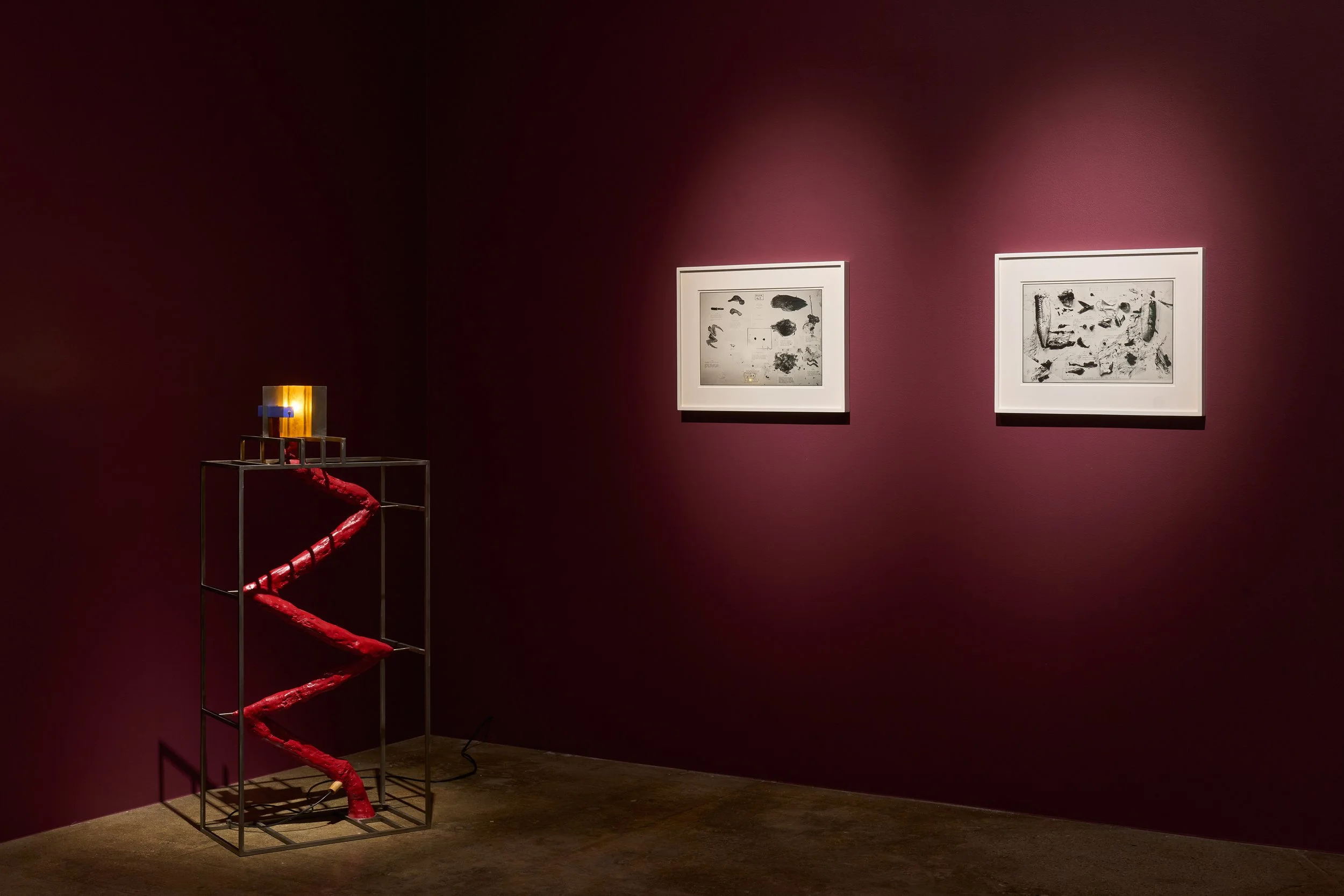
David Lynch: LA
1201 South La Brea Avenue, Los Angeles, CA 90019
September 19 –December 23, 2026
photography courtesy Pace Gallery
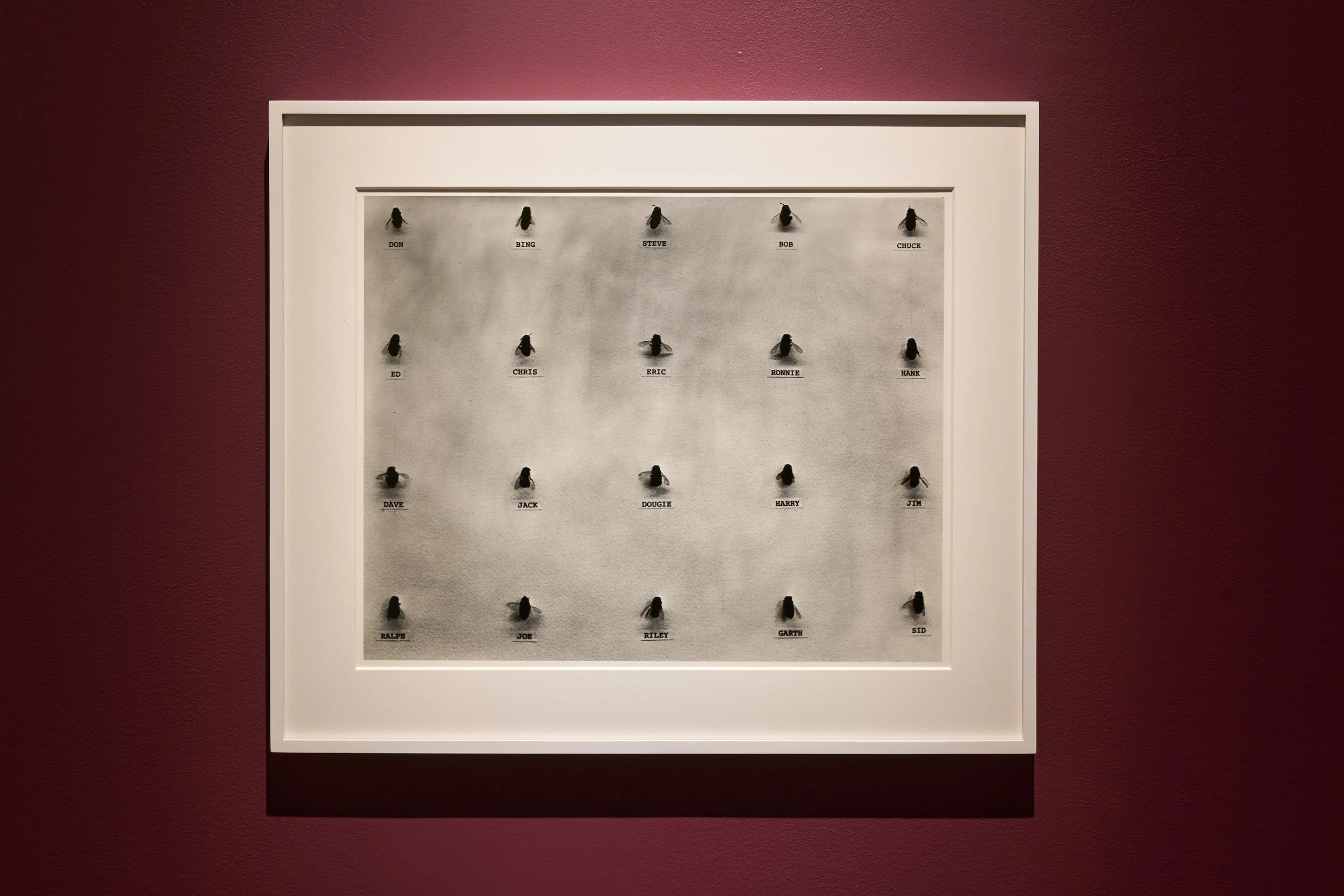
David Lynch: LA
1201 South La Brea Avenue, Los Angeles, CA 90019
September 19 –December 23, 2026
photography courtesy Pace Gallery
Across the five series, Lynch repeatedly returns to the instability of familiar forms. Bodies become fragmented, smoke becomes a record of movement, and the natural world is reduced to something that can be disassembled and reconstructed. Nothing is entirely recognizable, yet nothing is completely abstract. It all exists in the space between familiar and unknowable.
These bodies of work demand time, as much of Lynch’s work does, and in the end, there is never one clear takeaway. It simultaneously grounds us in reality and distorts what is otherwise familiar, unsettling perceptions of time, space, and the body. We are left suspended inside the interval between what has happened and what might.
David Lynch: LA is on view through December 23 @ The Pace Gallery, 1201 South La Brea Avenue, Los Angeles