
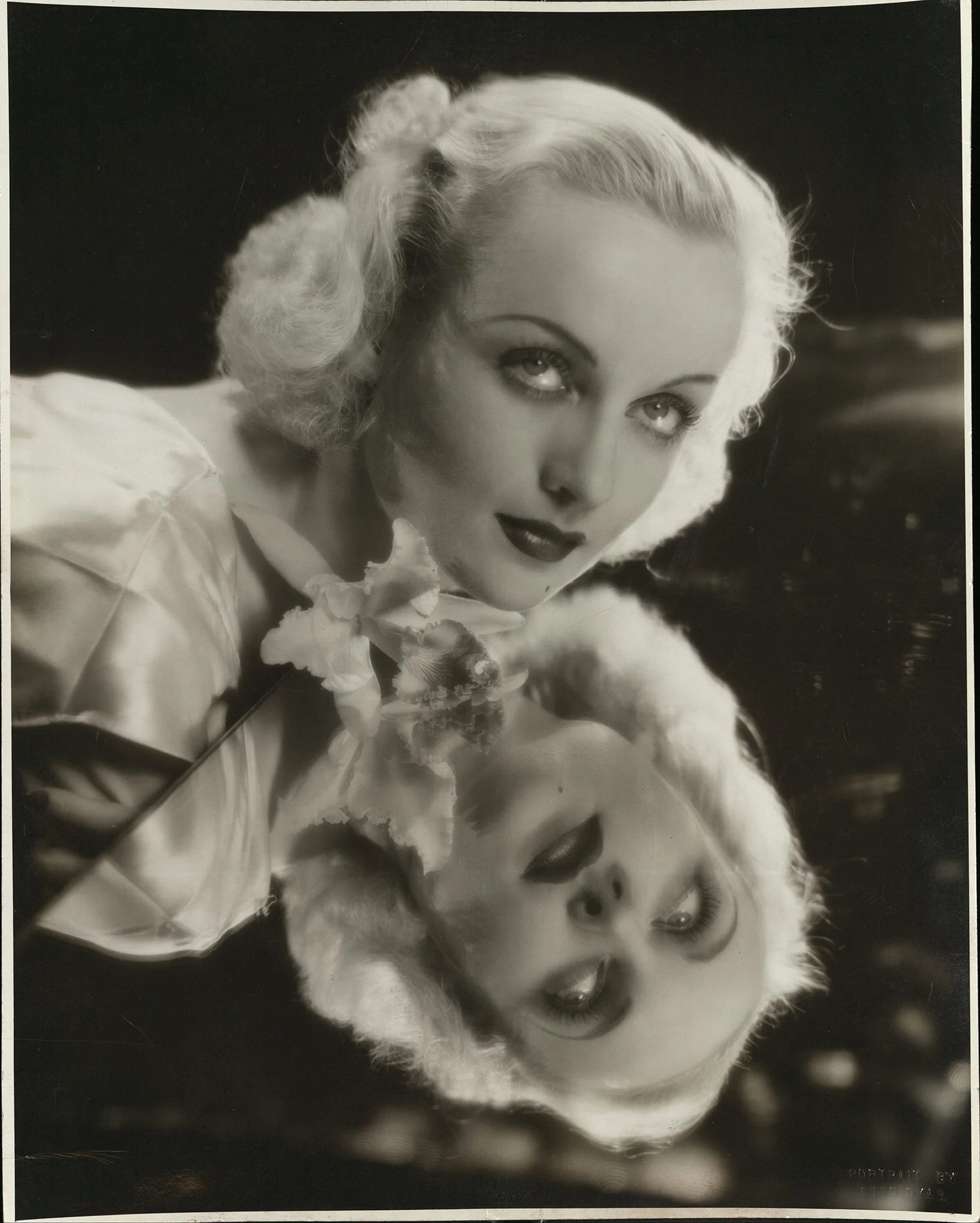
Otto Dyar. Carole Lombard, c. 1933. Gelatin silver print, 13 7/8 × 10 1/2″ (35.2 × 26.7 cm)
text by Emma Grimes
MoMA’s Face Value exhibition, showcasing 20th-century celebrity press images, is a compelling exploration into the celebrity star-making system. The show includes more than 200 photographs, spanning 1921 to 1996, including discarded studio images of stars such as Joan Crawford, Jean Harlow, and Marilyn Monroe. The pictures sprawl across two floors, submerging you in an atmosphere that feels reminiscent of walking around a movie studio in LA.
In one sequence of four images from 1933, Jean Harlow applies her makeup in front of the camera. She sits at a glass table, adorned with beauty trinkets, in a silk robe trimmed with fur sleeves. At first she gazes at her reflection in a hand-held mirror, then she applies her eyebrow pencil while looking into the camera, then her lipstick, and finally she breaks out into a laugh as she combs her hair. It’s the star performing a private moment, inviting the viewer into what appears to be her unguarded, real self.
In his 1979 pioneering book about the constructed public image, Stars, film scholar and theorist Richard Dyer wrote about the mass desire to feel that we “know” celebrities as they “truly” are. We want to see the person at home in their Sunday morning pajamas as much as the impeccable, polished one on stage. Face Value’s appeal is in watching how this illusion is assembled. The photos of Harlow are glaringly artificial: studio lighting and design alongside her rehearsed spontaneity, yet knowing this doesn’t extinguish the felt sense of having been granted access to her private self.
Looking at some of these photographs that perform authenticity, it’s hard not to think of a few contemporary celebrities and pop stars who have mastered this art. They share just enough images to feel you’ve been given “access” to their inner world, whether they’re paparazzi photos leaving dinner or “no-makeup” selfies posted on social media. They know that success, especially the monetary kind, requires an attached audience devoted to your every move. To see Jean Harlow apply her makeup is to see a layer that’s supposed to be hidden, and devotion requires intimacy, even if it’s artificial.
Step back a few feet and allow your eyes to drift across all of the images, until their names and individual faces fall away. The stars flatten into one figure. She or he is likely posing in a studio with its bright lighting, wearing a glamorous dress or suit. The sheer quantity of these images, and their repetitive formula, challenges the comforting idea that fame is the natural consequence of an innate, magical essence. The pattern of posturing, lighting, and styling work conjunctively to construct each person’s allure. Taken together, these photographs are a telling portrait of the powerful machine that built them.
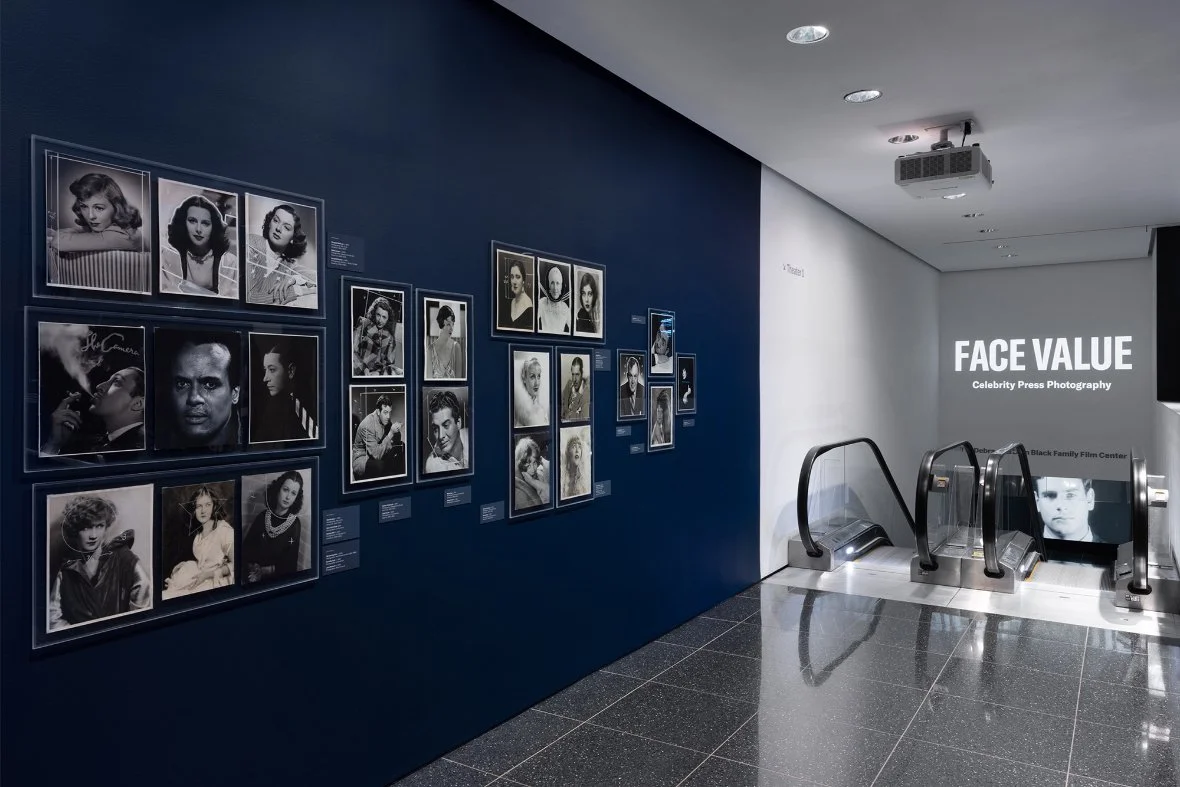
Installation view of Face Value: Celebrity Press Photography on view at The Museum of Modern Art, New York, from June 28, 2025, through June 21, 2026. Photo: Jonathan Dorado
With the emotional manipulation inherent in the construction of these identities brought to the foreground, we can see how they’re designed to shape our perception of who is exceptional and worthy of devotion. They also tell us, more indiscreetly, to buy a ticket. The economic impact of movie stars is also a central subject of Dyer’s Stars. Studios, banks, and investors rely on the star as capital. In 1933, Paramount was in an economically precarious situation until the unexpected success of films like She Done Him Wrong and I’m No Angel starring Mae West stabilized the company. Deanna Durbin had a similar impact for Universal in 1937. Behind just about every great Hollywood producer, was a captivating woman who rescued him in a moment of fatal distress.
The exhibit moves closer to the present moment, including screen tests and images from Andy Warhol, Dennis Hopper, Diana Ross, and Oprah Winfrey. Winfrey poses with the silhouette of Michael Jackson, promoting her special interview with him. In the original caption that contextualized the image, Winfrey’s name is underlined in red ink. Her name is a brand, and circulation of that brand is everything. The more it’s repeated, the more value it accrues.
Nearby, a wall of athletes extends the show out into a new territory. The football and baseball players are posed with an equal amount of deliberation as the actors, highlighting how the star-making machine stretches across the board. It might be easier to believe you’re a fan of a quarterback or baseball pitcher because they possess a unique, physical talent. And while they do possess talent (of a more measurable kind than actors), their equally constructed images call our attention once again to the way our attachments and sympathies are directed by a system working behind the scenes. As with the Hollywood stars, these feelings of adoration are the driving factor behind their earning potential.
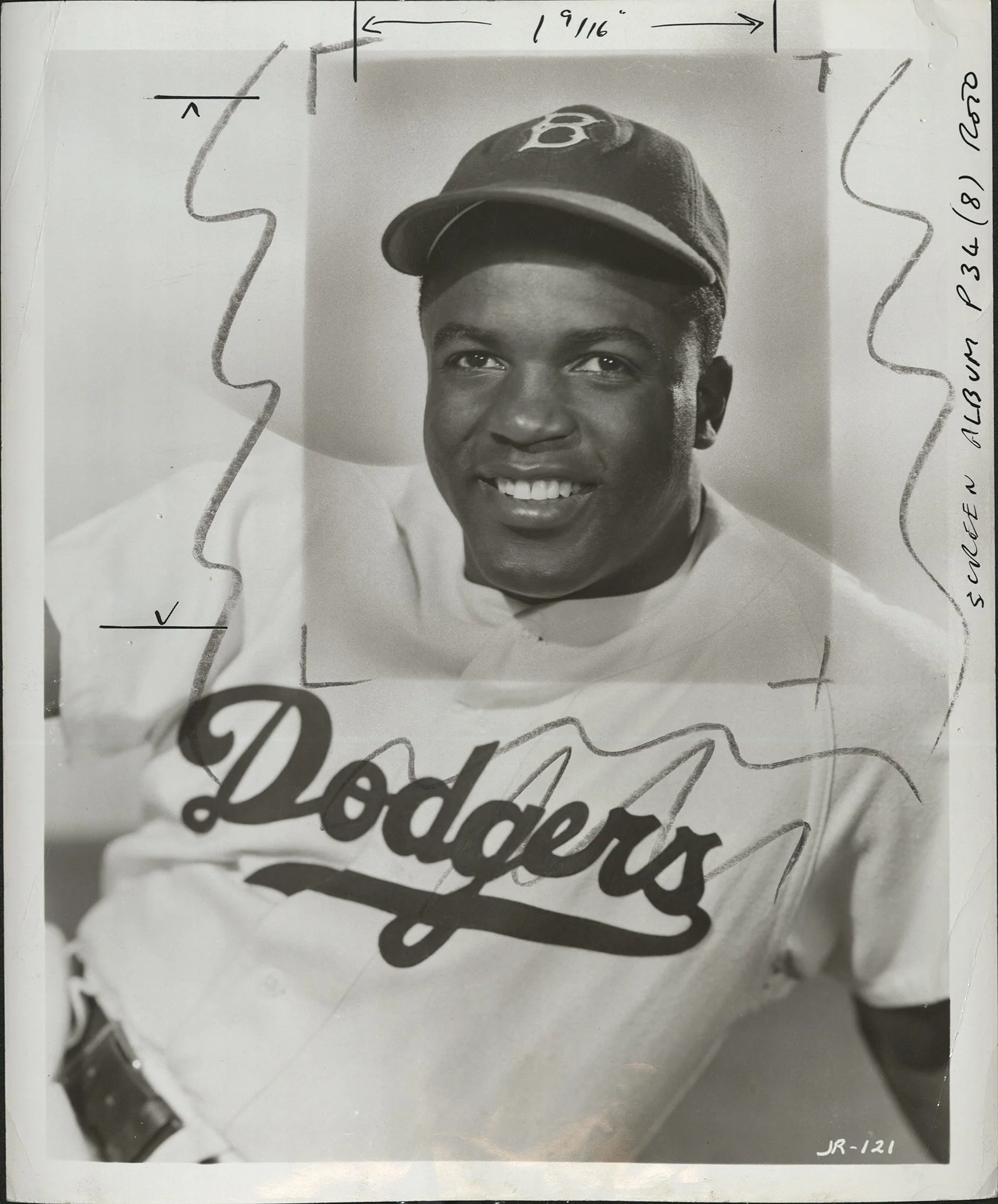
Jackie Robinson, c. 1950. Gelatin silver print, 10 × 8″ (25.4 × 20.3 cm)
But knowing this doesn’t smother desire. Standing in front of a photograph of Barbara Stanwyck, I felt my long-lasting admiration for her. And though I had been contemplating all of the ways in which these images before me were manufactured to sell me something, I wanted nothing else but to go home and stream The Lady Eve.