Karlheinz Weinberger: Intimate Stranger

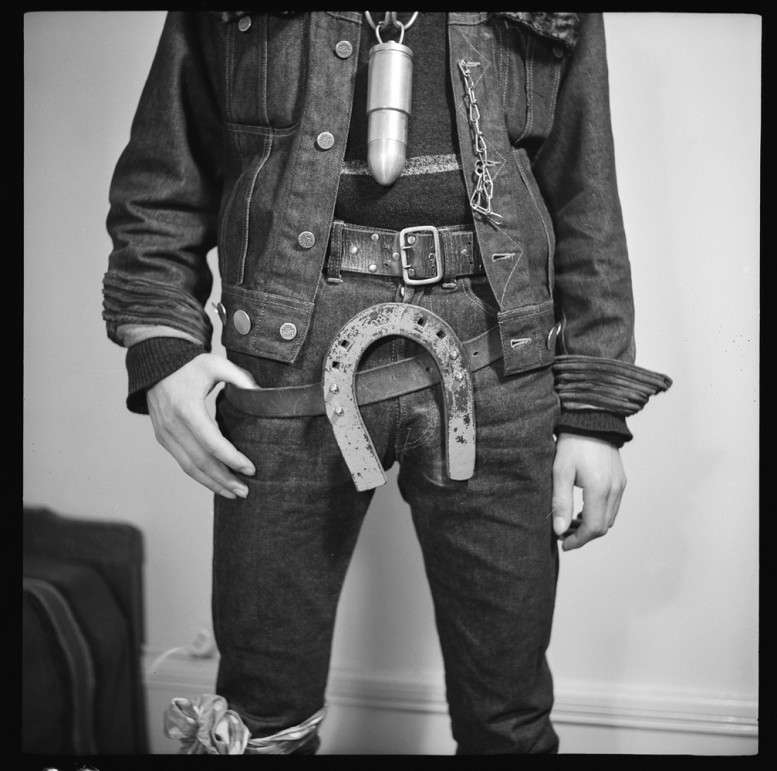
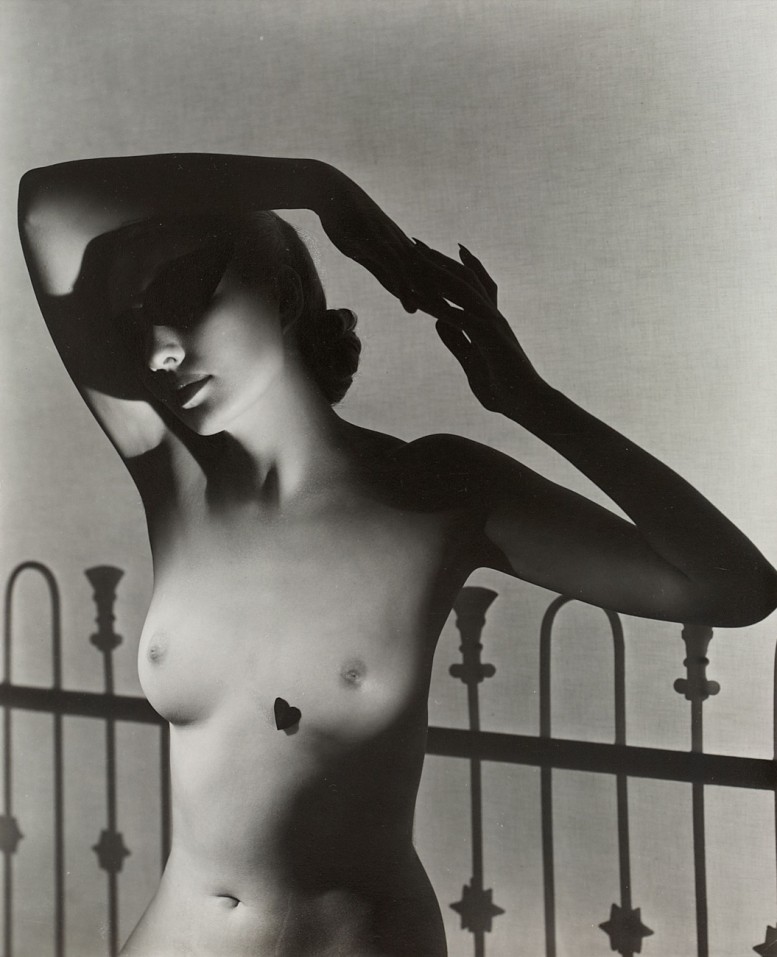
Swiss Institute...presents the first institutional exhibition of vintage prints by the late Karlheinz Weinberger (1921-2006). An unsung pioneer of vernacular photography since the Fifties, Weinberger captured a young generation of rebels, who were greatly influenced by American culture. More info here.

Original Raconteurs: Julian Maclaren-Ross

Photo assemblage of a portrait of Julian Maclaren-Ross

Editor Alan Ross begins his Introduction to Julian Maclaren-Ross’s Memoirs of the Forties with his claim that the book is the “front-line account of Bohemian wartime Soho by its longest-serving combatant.” Maclaren-Ross, a skilled raconteur held resident court at the Wheatsheaf Pub in “Fitzrovia,” an area popular with artistic types decked out in full dandy regalia, reminiscent of Oscar Wilde, which included a carnation in his buttonhole, extravagantly tailored suits, a teddy bear coat, and a silver topped cane. His signature flourish was the long cigarette holder he used to consume exotic tobacco. (He is said to have smoked up to fifty cigarettes a day.) His apparent flamboyance, however, belied the clarity and concision of his economic prose, delivered in a style not unlike his Modernist contemporary and one-time literary hero, Hemingway, although with much less gravity, and a great deal more irreverence and sly humor.

Maclaren-Ross’ short stories about his experience as a soldier during WWII and the blatant absurdities of military life gave him his first taste of success and he later went on to write novels, radio plays, literary satires, critical essays, and noir fiction. He was also an excellent translator having been educated, for the most part, in the south of France. However, Maclaren-Ross’s love of women and alcohol, his inability or refusal to conform to convention meant that he spent much of his life firmly entrenched at the poverty line. As his biographer Paull Willetts puts it, he was the "mediocre caretaker of his own immense talent."

In Memoirs of the Forties, unfinished at the time of his death, the author recounts in vivid detail his experiences in London during that decade and his personal dealings with other major-players of the era – Dylan Thomas, Graham Greene, the painters John Minton, Robert Colquhoun, Robert Macbryde, and others.

Certain anecdotes stand out for the way in which they shed light on famous or inscrutable personalities, such as Maclaren-Ross’ description of the time the grand mage, Aleicester Crowley, borrowed a copy of one of his short story collections, The Nine Men and returned the work with copious notes scribbled furiously in the margins. Maclaren-Ross describes them as “rather petulant old-world comments, such as: ‘Yes, yes, all very well, but why doesn’t he tell us what the girl’s background is?! Who are her people?!!’ and so on.” Crowley goes on to tell their mutual friend, who lent him the book, “Well next time you see him, tell him to be more precise about his characters’ origins. He seems to ignore all the traditional social values that make up the fabric of our civilization.’” Maclaren-Ross’ response was, “since I’d always understood that Crowley’s mission as Worst Man in the World was to tear this fabric down, [his comments] amused me quite a lot. But then maybe all diabolists are conservative at heart, or where would be the fun?”

Memoirs of the Forties and other of Julian Maclaren-Ross’ works can be found on Amazon.com.

Text by Anna Wittel

Goodbye Tura Satana! Into the Great Wild Beyond You Go....

tura_satana_faster_pussycat_kill_kill

Tura Satana, who is best known for her roll as Varla in Russ Meyer's 1965 cult film Faster Pussycat! Kill Kill!,has died. She lived fast, strange, and long; at one point even turning down a marriage proposal from Elvis Preseley. Bon voyage Tura Satana!

Gathered

lorna_simpson

Lorna Simpson: Gathered presents works that explore this Brooklyn-born artist’s interest in the interplay between fact and fiction, identity and history. Through works that incorporate hundreds of original and found vintage photographs of African Americans that she collects from eBay and flea markets, Lorna Simpson undermines the assumption that archival materials are objective documents of history. The exhibition also includes examples of Simpson’s series of installations of black-and-white photo-booth portraits of African Americans from the Jim Crow era and a film work. On view until August 21, 2011 at the Brooklyn Museum.

Black Lust

Jean Villiot's Black Lust

"One of those bizarre works of fiction and fact whose haunting details live with the reader forever. This diabolic novel is an encyclopedia of venery, a kaleidoscope of perversions, a jungle of horrors. Historic realism appealing only to people with mature, shock-proof tastes -the love and hate of a white woman for a black Mohammedan chief forms the overtone of this historic novel whose background paints the native tribes in the Valley of the Nile before the turn of this century." Jean de Valliot was actually the failed pornography writer Georges Grassal de Choffat, or Hugues Rebell, depending on who you ask.  Black Lust was published in 1931 and only 2000 copies were printed "for private collectors." In my library is edition no. 1967.

Flower Myth

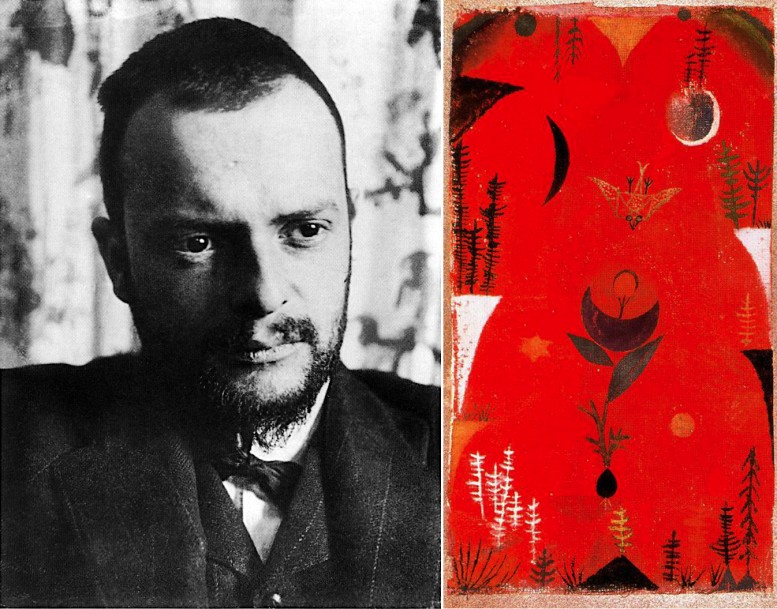
Left: Klee in 1911, by Alexander Eliasberg Right: Flower Myth (1918), Watercolor on pastel foundation on fabric & newsprint mounted on board
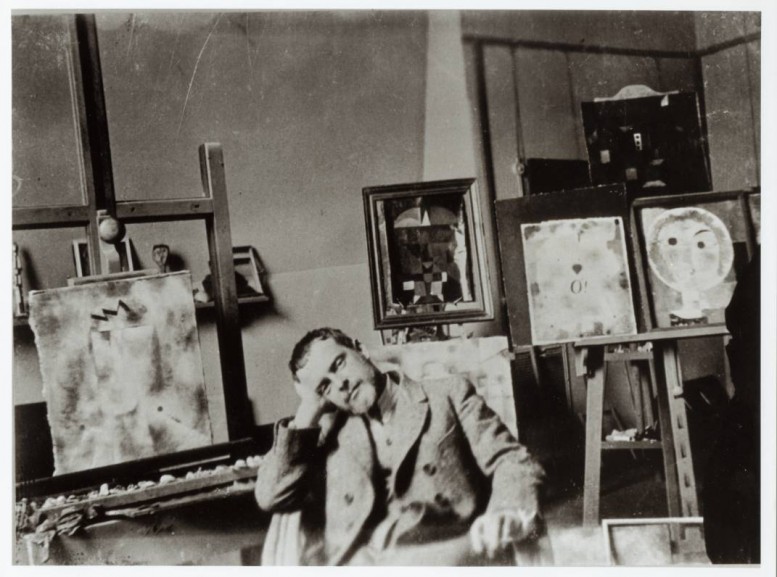
Paul Klee in His Studio

"I cannot be grasped in the here and now. For I reside just as much with the dead as with the unborn. Somewhat closer to the heart of creation than usual. But not nearly close enough." Paul Klee

Stolen Youth: In Memory of Maria Shneider

Maria Shneider
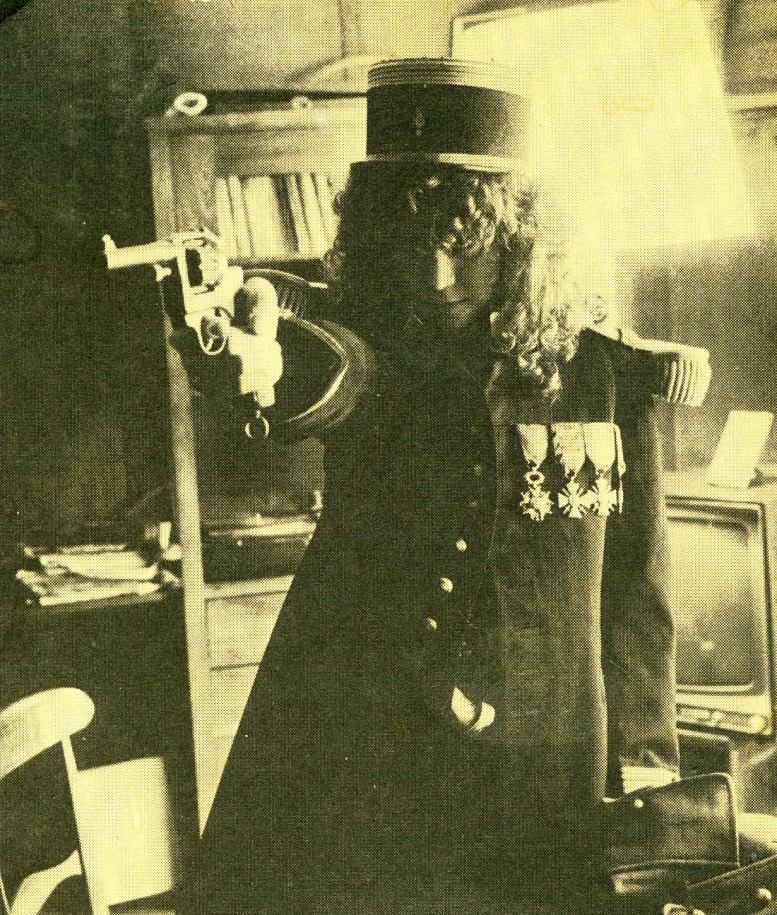
Maria Shneider with Pistol
Maria Shneider

Maria Shneider, who was paid $4,000 dollars to star opposite Marlon Brandon in Bertolucci's Last Tango in Paris, has died at the age of 58; she will be buried in Père Lachaise Cemetery in Paris.

Artist: Devendra Banhart

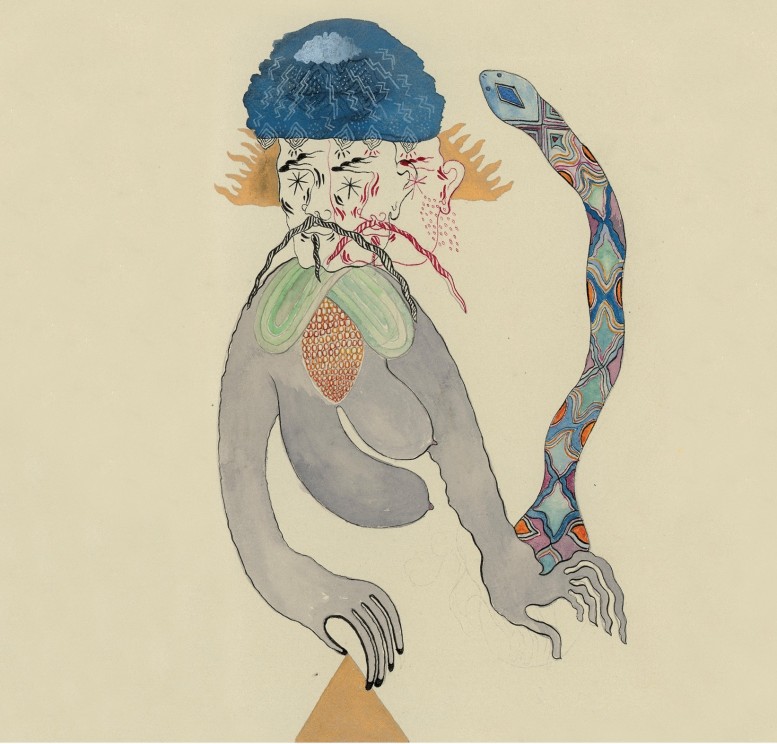
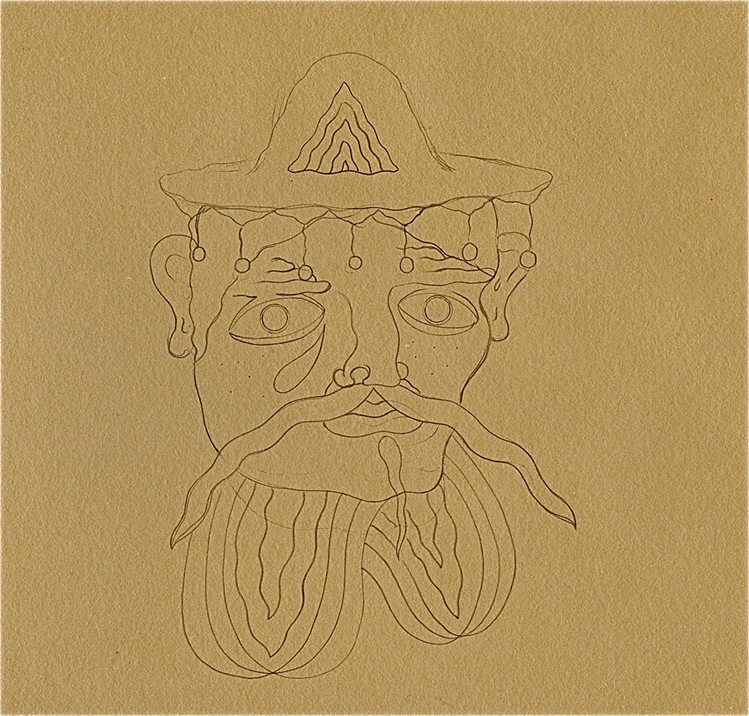
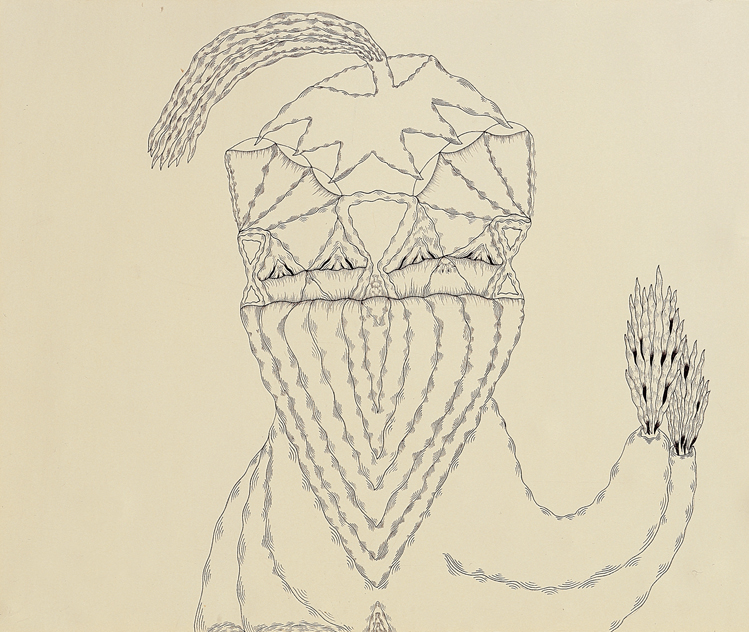
Artist Devendra Banhart picks up where native cave painters left off 20,000 years ago.  There is a shamanistic catharsis in the pure forms, lines, and colors against stark simple backgrounds that give Banhart's art an almost talismanic quality.  I should also say that there is a common misconception that cave art is primitive - the Lascaux cave drawings, for instance, (which were discovered in 1940 by four teenagers and their dog in southwestern France), upon closer observation, are actually incredibly complex.  For example, they have found evidence of mathematical star charts, dimensional perspective not seen in art for centuries and  intricate spiritual iconography.  Inside Banhart's art one can find the same cosmic complexity. Banhart's art is a return to the id - as if there was ever a magic tab to dissolve on your tongue to return you there. Banhart has been more widely recognized in other mediums, but his art has touched hallowed museum walls.  In 2004 Banhart exhibited exclusively next to the art of Paul Klee, at the San Francisco Museum of Modern Art.  Banhart has also had many solo shows in galleries around the world. The newest revelation is that Banhart has bought some tattoo supplies and has started tattooing his friends and family. Banhart's tattoos are brilliant little mementos that don't stray too far from the style of his artwork.  They hover moderately within the confines of traditional tattooing - albeit, with a lot less shading.  His tattoos are currently an altruistic enterprise, and he has graciously offered to give me one the next time I stop through his neck of the woods.  Coming up in March Banhart will be having a show in Milano along with Adam Tullie of Cavern Collection and bonkers conceptual artist Keegan McHargue.  More info about the show here.

Text by Oliver Maxwell Kupper for Pas Un Autre

Images Kill: Toilet Paper Magazine

"Toilet Paper is a new magazine directed by Maurizio Cattelan and photographer Pierpaolo Ferrari. Following in the wake of Cattelan’s cult publication ‘Permanent Food’, Toilet Paper is a new generation magazine that combines commercial photography, twisted narratives and surrealistic imagery to create a series of powerful visual tableaux." You can buy an issue herewww.toiletpapermagazine.com