Jeanloup Sieff’s Photographic Formations

"The French photographer Jeanloup Sieff (1933–2000) began photographing in the 1950s. He worked in the tradition of French humanist photography and photographers such as Edouard Boubat, Henri Cartier-Bresson and Robert Doisneau. His early reportages have a romantic, nostalgic air, with lovers, cafes, smoke-filled jazz clubs and other familiar Paris milieus. He was commissioned by the fashion magazine Elle for portraits and short articles, and in 1958 joined the prestigious Magnum photo agency, before going back to freelance work the following year. One of his favorite subjects was portraits of French cinema and “la nouvelle vague” personalities, including Jean-Claude Brialy, François Truffaut and Jean Seberg." A new exhibit exploring his Sieff's work entitled Jeanloup Sieff's Photographic Formations will be opening on Feb. 19 at the Moderna Museet in Stockholm. The exhibit is on view until May 22, 2011. www.modernamuseet.se.en

The Truth is Not in the Mirror

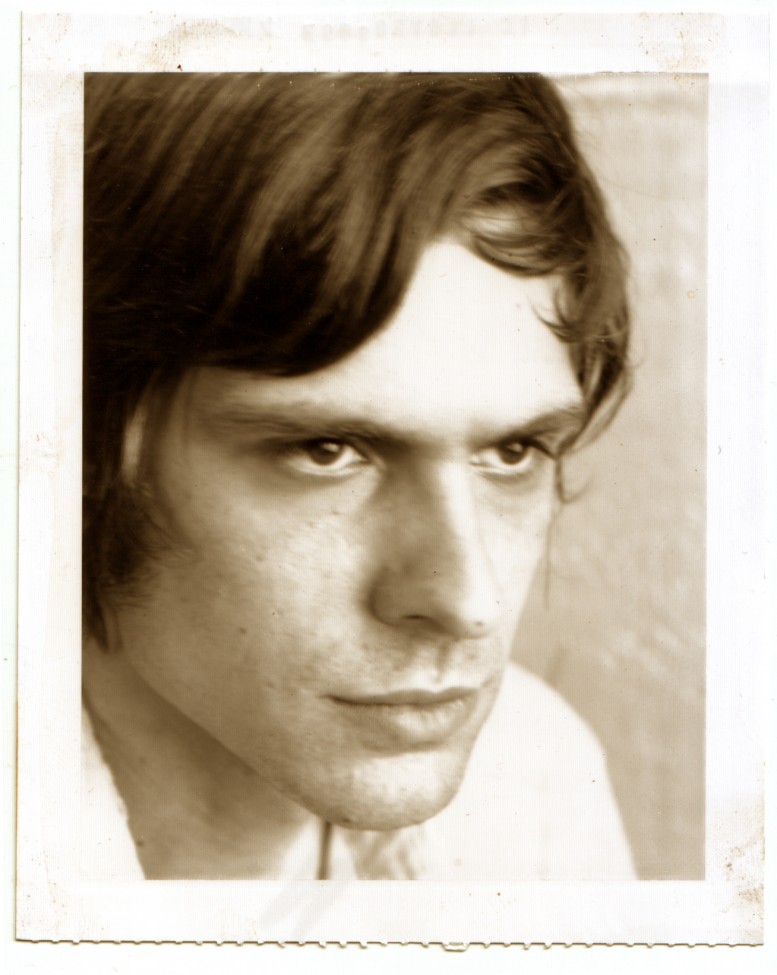
Michael Corridore, Untitled 13, from the Angry Black Snake series, Courtesy of a New York Collector

Photography as a medium has always been actively concerned with describing identity. While a portrait is typically an artistic representation of a person where verisimilitude is the goal, here the inquiry is questioned and expanded. Rather than employing a camera to create an objective document, the artists in this exhibition are often involved in constructing narrative sequences that pose questions with open-ended outcomes. As the title, The Truth is Not in the Mirror... suggests, photography has the power to imply, construct, and/or deny a narrative. Many of the photographers are contemporary storytellers and, in this sense, their work reflects facets of our ever-changing precepts about family, identity, truth and fiction.  Artists include, in summary,  Michael Corridore, Philip-Lorca diCorcia, Andy Freeberg, Lee Friedlander, David Hockney, Graham Miller, Martin Parr, The Sartorialist, Larry Sultan and Mickalene Thomas. The Truth is Not in the Mirror, Photography and a Constructed Identity is on view at the Haggerty Museum in Milwaukee, Wisconsin until May 22, 2011. www.marquette.edu/haggerty

The Photographic Work by F.C Gundlach

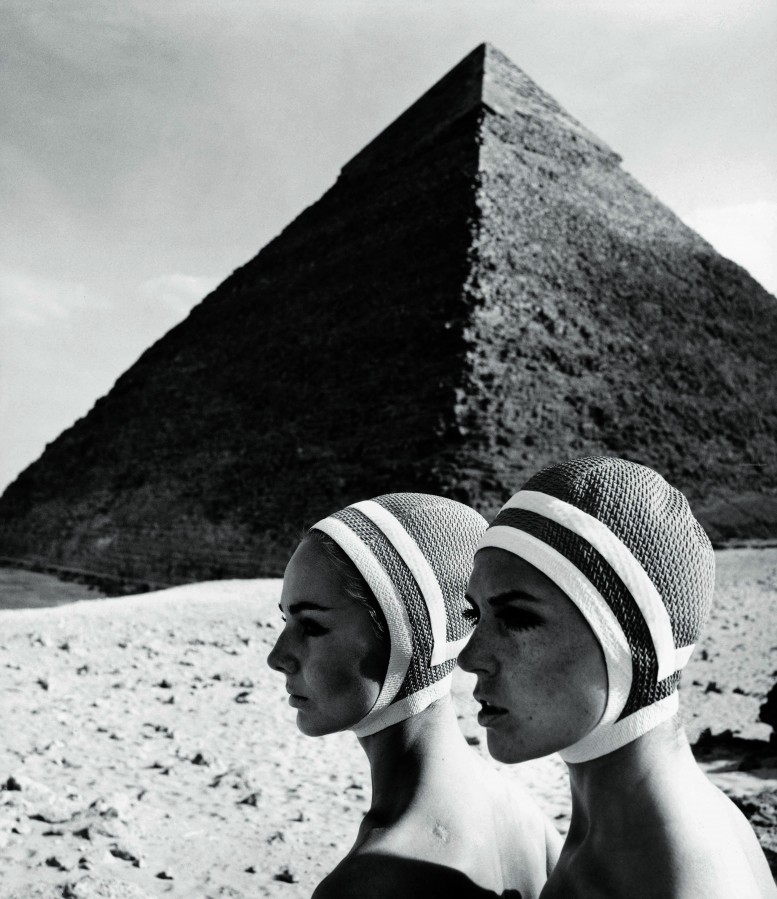
"Op Art-Fashion“, Gizeh/Ägypten 1966 In: Brigitte 10/1966 © F.C. Gundlach

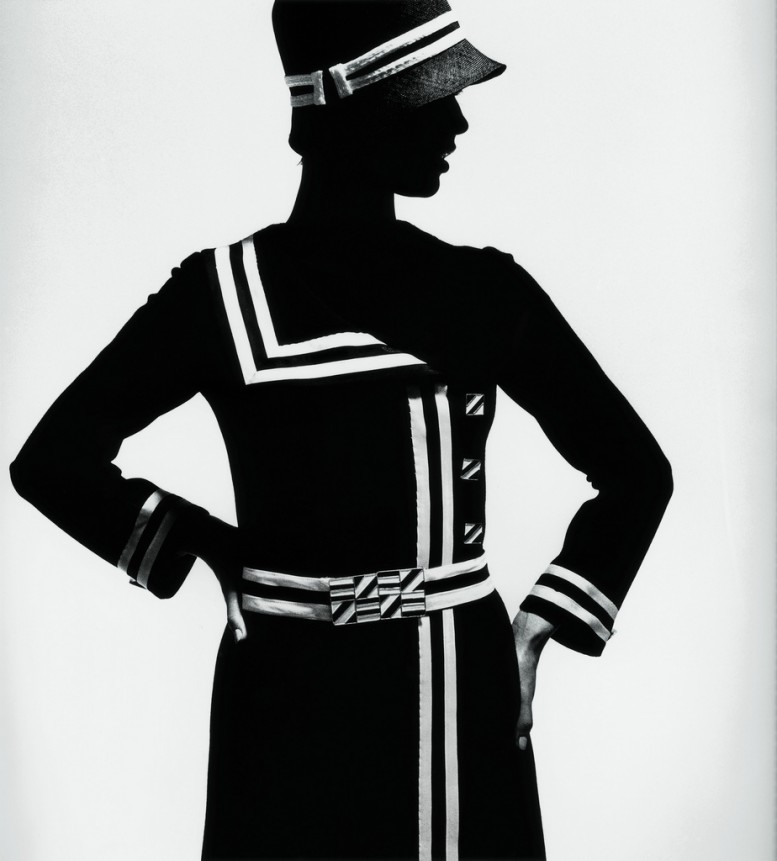
"Op Art-Silhouette“, Jerseymantel von Lend, Paris 1966 In: Brigitte 4/1966 © F.C. Gundlach

An extensive monograph of F.C. Gundlach's photography will be released this summer. "This definitive monograph brings F.C. Gundlach’s fashion work together for the first time in an extended way and establishes him as one of the most distinguished German fashion photographers of the post-war era. F.C. Gundlach placed fashion in the focus of his work for more than 40 years. His work presents not only the history of fashion, but also the poses, gestures, locations and atmosphere, which defined the changing ideals of beauty over decades. Alongside this work, Gundlach also created empathetic portraits, reportages and traveled intensively around the world. On his assignments he always worked closely together with the editors and art directors. His photographs for high-circulation magazines shaped the public’s perception of the permanent changing fashion. Yet his black-and-white and color photography also captured the spirit of its time, embodying the optimism of the meager days after the war, from the New Look to the swinging sixties, the op and pop art through to the highly staged photographs of the eighties." www.steidlville.com

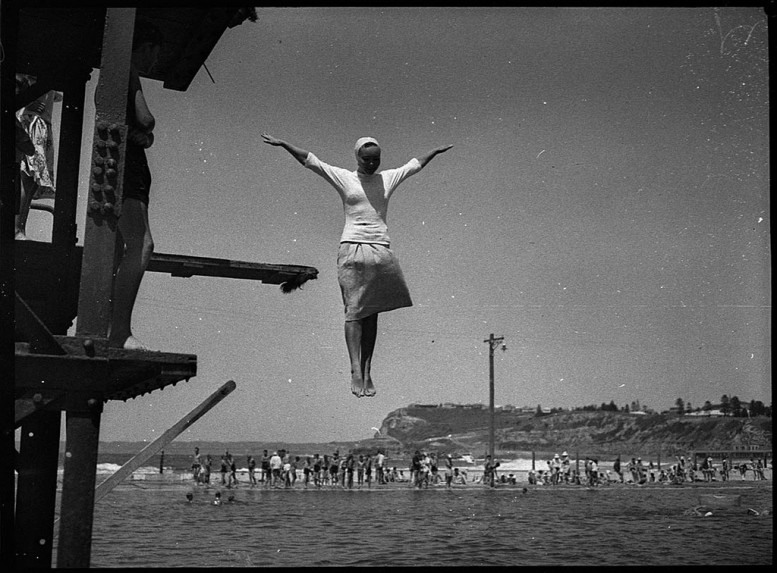
For Los Angeles...

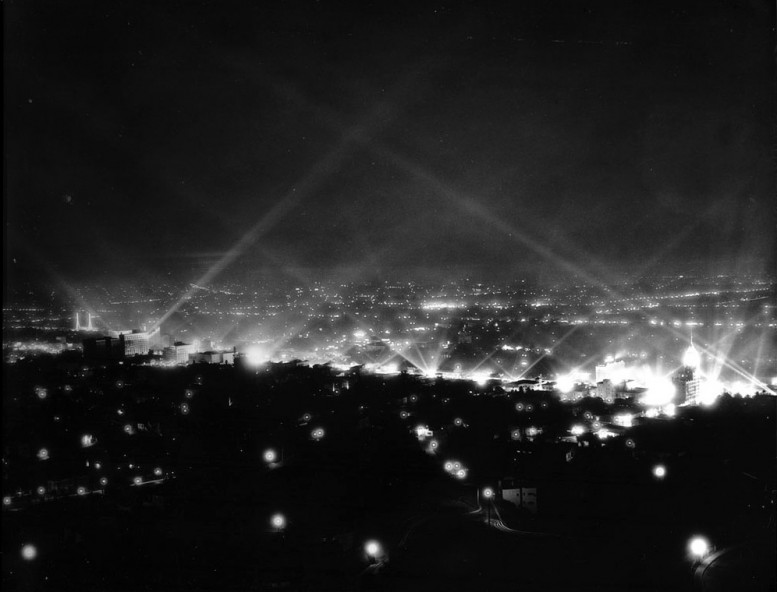
Hollywood, 1946

Scent of cedar on this Los Angeles evening scent of the new born day arrives at half past magic the glory of the morning sun rising on our broken hearts as they beat three beats in unison The sounds of waves with a triple z cascade below the mountain top down the coast we descend The toke of two pipes made of apples Cherry pies in between virgin thighs with a glance of nostalgia the memory of Remains.... (excerpt of an Untitled Poem by Adarsha Benjamin)

Journey Into the Past

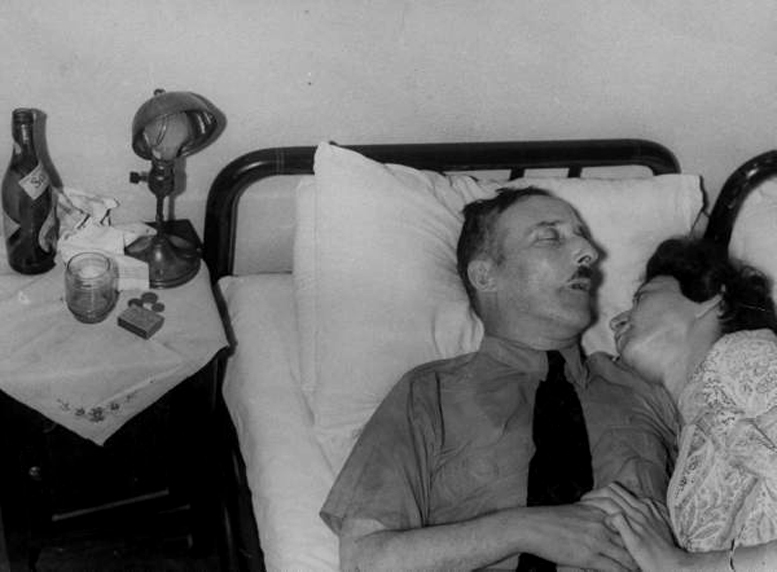
Poison on the Night Stand: Bodies of exiled Austrian author Stefan Zweig & his wife lying on bed, still holding hands, after they committed suicide together - Rio De Janeiro, Brazil - 1942

"A deep study of the uneasy heart by one of the masters of the psychological novel, Journey into the Past, published here for the first time in America, is a novella that was found among Stefan Zweig’s papers after his death. Investigating the strange ways in which love, in spite of everything—time, war, betrayal—can last, Zweig tells the story of Ludwig, an ambitious young man from a modest background who falls in love with the wife of his rich employer. His love is returned, and the couple vow to live together, but then Ludwig is dispatched on business to Mexico, and while he is there the First World War breaks out. With travel and even communication across the Atlantic shut down, Ludwig makes a new life in the New World. Years later, however, he returns to Germany to find his beloved a widow and their mutual attraction as strong as ever. But is it possible for love to survive precisely as the impossible?...During the 1930s, Zweig was one of the best-selling writers in Europe, and was among the most translated German-language writers before the Second World War. With the rise of Nazism, he moved from Salzburg to London (taking British citizenship), to New York, and finally to Brazil, where he committed suicide with his wife [in 1942]." You can find the newly translated Journey into the Past here.

Art and Prostitution: Mark Morrisroe

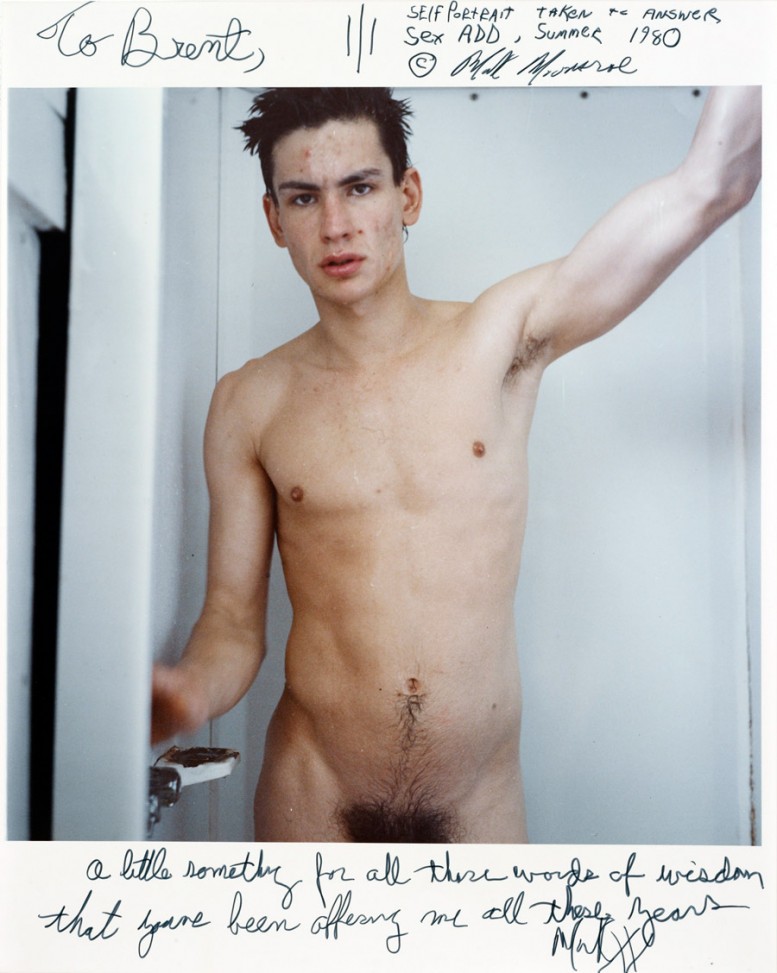
Art is oft born from tragic circumstances. Mark Morrisroe was born in Boston to a drug-addicted mother and left home at  age 15. Morrisroe would turn to prostitution to support himself. When he was 17 years old, an unsatisfied John shot him in the back, leaving him with a bullet lodged next to his spine for the rest of his life. The experience had a profound influence on Morrisroe's art, which often incorporated images of young prostitutes and X-rays of his injured chest.  Grappling with his identity as a homosexual through photography and performance art, Morrisroe become a seminal figure in the punk scene of Boston during the 1970s and 80s. Mark Morrisroe died in 1980 from complications from AIDS - he was 30 years old. More than twenty years after Mark Morrisroe’s early death, Fotomuseum Winterthur is presenting the first comprehensive survey exhibition on his work. Mark Morrisroe is on view until Feb. 13. www.fotomuseum.ch

Karlheinz Weinberger: Intimate Stranger

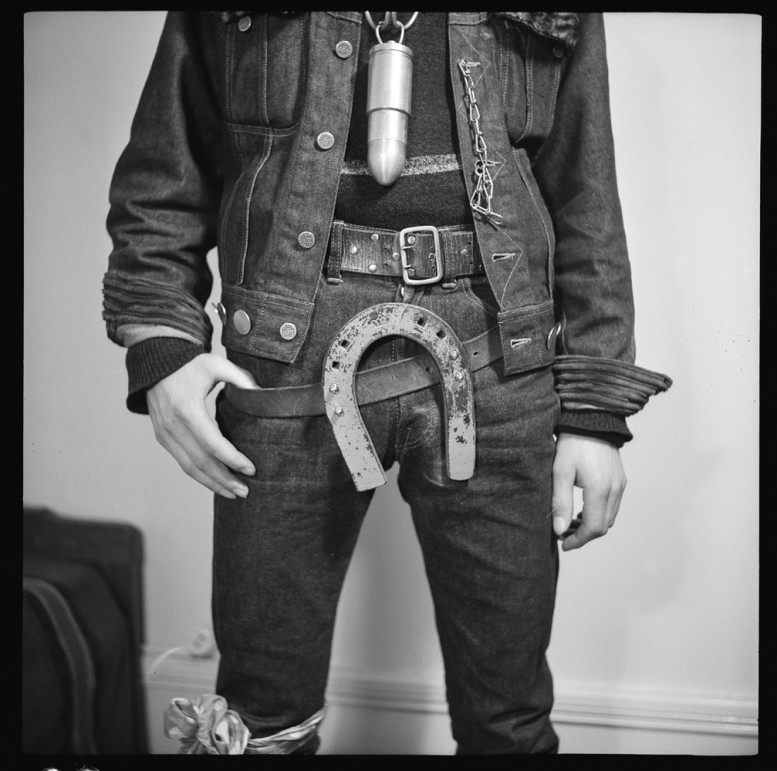
Swiss Institute...presents the first institutional exhibition of vintage prints by the late Karlheinz Weinberger (1921-2006). An unsung pioneer of vernacular photography since the Fifties, Weinberger captured a young generation of rebels, who were greatly influenced by American culture. More info here.

Original Raconteurs: Julian Maclaren-Ross

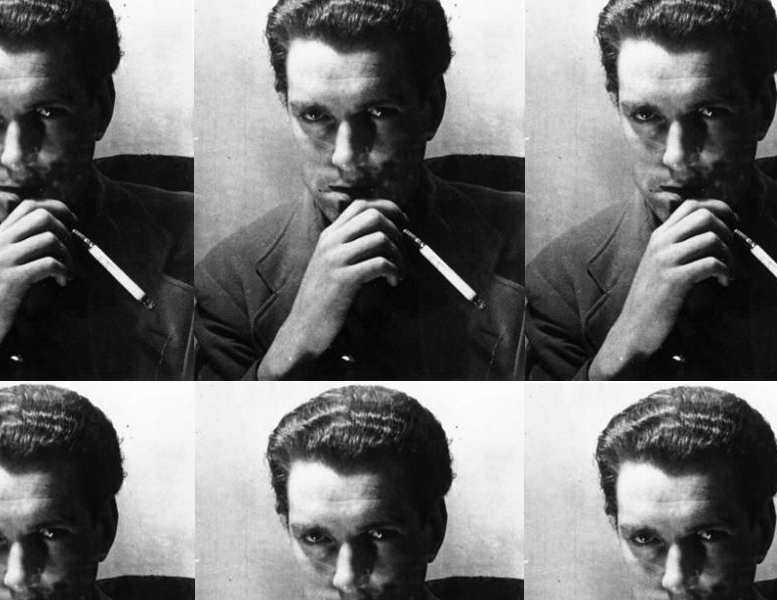
Photo assemblage of a portrait of Julian Maclaren-Ross

Editor Alan Ross begins his Introduction to Julian Maclaren-Ross’s Memoirs of the Forties with his claim that the book is the “front-line account of Bohemian wartime Soho by its longest-serving combatant.” Maclaren-Ross, a skilled raconteur held resident court at the Wheatsheaf Pub in “Fitzrovia,” an area popular with artistic types decked out in full dandy regalia, reminiscent of Oscar Wilde, which included a carnation in his buttonhole, extravagantly tailored suits, a teddy bear coat, and a silver topped cane. His signature flourish was the long cigarette holder he used to consume exotic tobacco. (He is said to have smoked up to fifty cigarettes a day.) His apparent flamboyance, however, belied the clarity and concision of his economic prose, delivered in a style not unlike his Modernist contemporary and one-time literary hero, Hemingway, although with much less gravity, and a great deal more irreverence and sly humor.

Maclaren-Ross’ short stories about his experience as a soldier during WWII and the blatant absurdities of military life gave him his first taste of success and he later went on to write novels, radio plays, literary satires, critical essays, and noir fiction. He was also an excellent translator having been educated, for the most part, in the south of France. However, Maclaren-Ross’s love of women and alcohol, his inability or refusal to conform to convention meant that he spent much of his life firmly entrenched at the poverty line. As his biographer Paull Willetts puts it, he was the "mediocre caretaker of his own immense talent."

In Memoirs of the Forties, unfinished at the time of his death, the author recounts in vivid detail his experiences in London during that decade and his personal dealings with other major-players of the era – Dylan Thomas, Graham Greene, the painters John Minton, Robert Colquhoun, Robert Macbryde, and others.

Certain anecdotes stand out for the way in which they shed light on famous or inscrutable personalities, such as Maclaren-Ross’ description of the time the grand mage, Aleicester Crowley, borrowed a copy of one of his short story collections, The Nine Men and returned the work with copious notes scribbled furiously in the margins. Maclaren-Ross describes them as “rather petulant old-world comments, such as: ‘Yes, yes, all very well, but why doesn’t he tell us what the girl’s background is?! Who are her people?!!’ and so on.” Crowley goes on to tell their mutual friend, who lent him the book, “Well next time you see him, tell him to be more precise about his characters’ origins. He seems to ignore all the traditional social values that make up the fabric of our civilization.’” Maclaren-Ross’ response was, “since I’d always understood that Crowley’s mission as Worst Man in the World was to tear this fabric down, [his comments] amused me quite a lot. But then maybe all diabolists are conservative at heart, or where would be the fun?”

Memoirs of the Forties and other of Julian Maclaren-Ross’ works can be found on Amazon.com.

Text by Anna Wittel

Goodbye Tura Satana! Into the Great Wild Beyond You Go....

tura_satana_faster_pussycat_kill_kill

Tura Satana, who is best known for her roll as Varla in Russ Meyer's 1965 cult film Faster Pussycat! Kill Kill!,has died. She lived fast, strange, and long; at one point even turning down a marriage proposal from Elvis Preseley. Bon voyage Tura Satana!

Gathered

lorna_simpson

Lorna Simpson: Gathered presents works that explore this Brooklyn-born artist’s interest in the interplay between fact and fiction, identity and history. Through works that incorporate hundreds of original and found vintage photographs of African Americans that she collects from eBay and flea markets, Lorna Simpson undermines the assumption that archival materials are objective documents of history. The exhibition also includes examples of Simpson’s series of installations of black-and-white photo-booth portraits of African Americans from the Jim Crow era and a film work. On view until August 21, 2011 at the Brooklyn Museum.

Black Lust

Jean Villiot's Black Lust

"One of those bizarre works of fiction and fact whose haunting details live with the reader forever. This diabolic novel is an encyclopedia of venery, a kaleidoscope of perversions, a jungle of horrors. Historic realism appealing only to people with mature, shock-proof tastes -the love and hate of a white woman for a black Mohammedan chief forms the overtone of this historic novel whose background paints the native tribes in the Valley of the Nile before the turn of this century." Jean de Valliot was actually the failed pornography writer Georges Grassal de Choffat, or Hugues Rebell, depending on who you ask.  Black Lust was published in 1931 and only 2000 copies were printed "for private collectors." In my library is edition no. 1967.