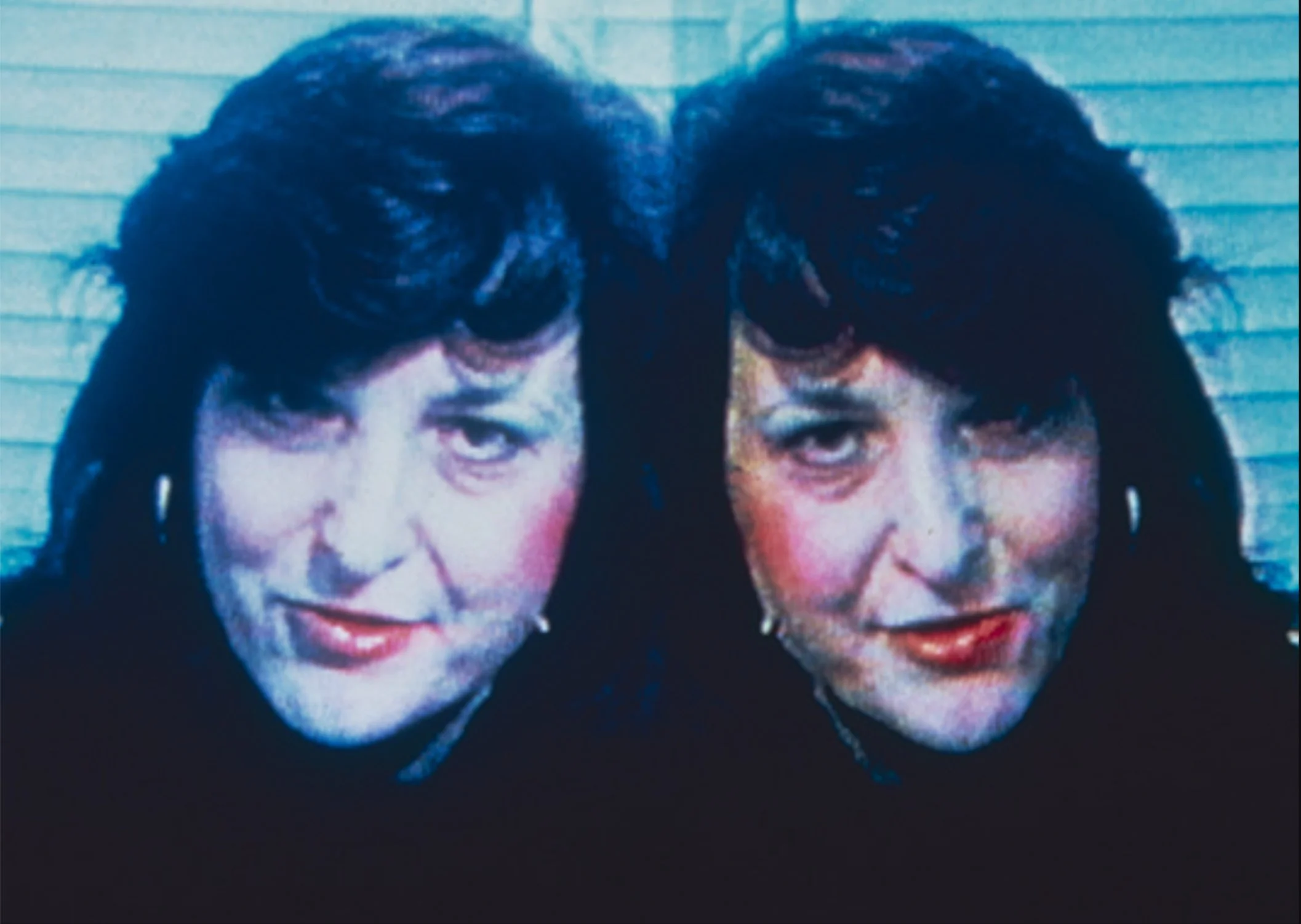
Lynn Hershman Leeson: Logic Paralyzes The Heart

The Electronic Diaries of Lynn Hershman Leeson,
1984-2019. (Video Still) 4K video (color, sound)
75:29 minutes

interview by Summer Bowie


In 1973, Roberta Breitmore took a bus to San Francisco and checked into Room 30 of the Dante Hotel, where she scattered the ephemera of her life: driver’s license, bank statements, cosmetics, wigs, clothing. She attended Weight Watchers and went to a psychiatrist. She immersed herself in the community, took on jobs, and went on dates. But Roberta Breitmore wasn’t real. She was the invention of pioneering media artist Lynn Hershman Leeson. For the past six decades, Leeson has been exploring technology, identity, and surveillance with startling prescience. Algorithmic chaos, digital persona building, data accumulation—her oeuvre mirrors the online/irl identity split endemic to our current post-truth world.

SUMMER BOWIE: What technology would you say is currently the most pernicious to you?

LYNN HERSHMAN LEESON: I don’t think it’s really about technology. I think it’s about humans and how they use it. You could have a technology that appears very innocent, naive, and useful, and then it gets turned into something pernicious, depending on what a person or a company wants to achieve, and the technology is constantly changing.

BOWIE: There’s an element of horror you explore that examines everything from the darkness of our inner psyche and how it plays out in the technologies we build, to the ways technologies are shaped by their users. But in early works like your Breathing Machines (1967-68), you also explore how horror can be used as a mechanism for overcoming fear.

LEESON: You have to be aware of the possibilities of what these things can be turned into, depending on who’s using them and how they’re adapted in culture. You can’t control everything. Or really, very little.

BOWIE: Computer technology is so often characterized as a masculine pursuit, and while it is dominated by men, half of its users are women, and women’s contributions are hardly ever recognized. Most people still don’t know that the first computer algorithms were conceptualized by a woman.

LEESON: Yeah, exactly. People forget that. It’s easy for a male-dominated culture to try to own everything, but this is something that was bred by Ada Lovelace and other women. So, it can’t be completely pulled into the ways that culture wants it to. I think you have to sustain those parts of it that reject and don’t want to be absorbed into a different kind of culture. I think we also need to make people aware of how influential women were, even though they were not often noted historically. Mistaken credits, especially those that were misattributed to men, need to be scrutinized and corrected.
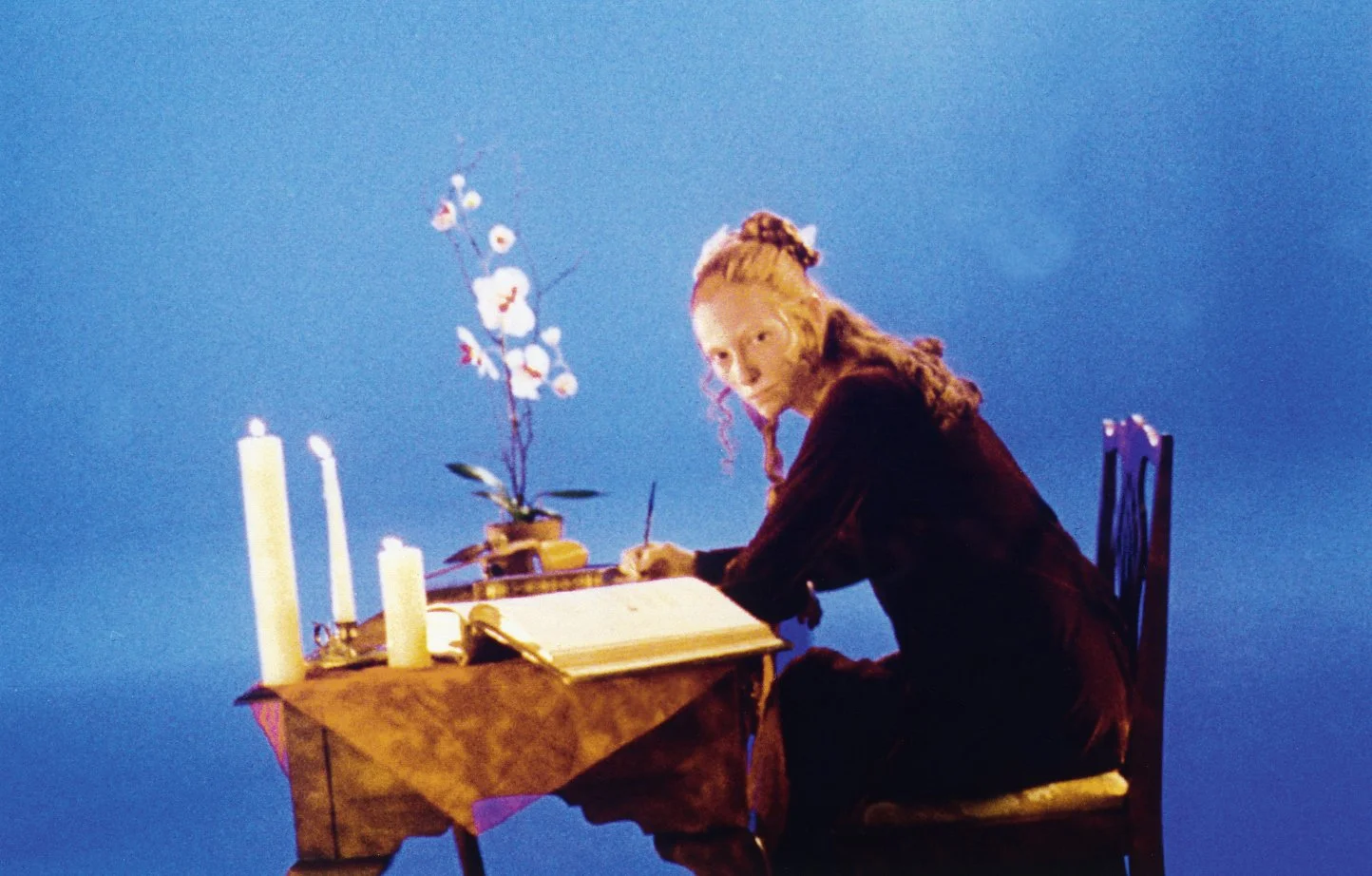
Conceiving Ada, 1994.
(Video Still) 4K print from 35 mm film (digitized), color, sound
84:54 minutes

BOWIE: In 1997, you released your film Conceiving Ada, which is a sort of speculative historical reimagining of Ada Lovelace, who designed the first algorithm for a machine in the early 19th century. Yesterday, Meta and YouTube were found guilty of intentionally designing their algorithms to be addictive for children. I’m really curious about what first drew your interest in algorithmic computer technologies, and how much of this you saw coming.

LEESON: Well, I was doing a documentary on the history of the telephone when I became aware of Ada Lovelace. I had never heard of her before—I don’t think many people had. And, of course, I went to the library and looked her up, and there was only one tiny book on her. I just felt that this was critically important, something that would change our whole world. So that’s what drew me to make that film about her. I didn’t know algorithms would take over our lives or become so addictive. I just knew that it was a critical factor of communication on a global scale in a way that had never been possible.

BOWIE: In the mid-1970s, when you created Roberta Breitmore, we were in a very analog state of government surveillance. One of the things I find really interesting about this project is that you were able to procure a driver’s license, a social security card, a credit card, blood samples, dental x-rays, and other documents for her. How were you able to procure such a robust proof of identity?

LEESON: Well, I just felt it was important to create examples of what would be considered reality and what would be taken seriously. I didn’t explain anything to anybody. I just applied for them, and I got them automatically, because nobody was doing anything out of the ordinary with identity in those days. So, they just believed me. That’s who I was and what I needed.

BOWIE: Were you ever nervous about falsifying information with government agencies like the DMV or Social Security Administration? And were any of them more difficult than others?

LEESON: No, it had no precedent, so people did not expect falsified information in those days.

BOWIE: The other thing I find really fascinating about her is that you were living out the life that you constructed for her. Knowing how our ad consumption, media diet, and social interactions play such a vital role in shaping our identities on a very core level, did attending Weight Watchers meetings, going on dates, and reading beauty advice in women’s magazines start to seep into your own psyche at times?

LEESON: Not really. I mean, I made every effort to keep her separate from me. I was very aware of what she was doing, as opposed to what I was doing, and of how she reacted, versus how I would react to a situation. Because I was so aware that she had her own reality, I tried to clarify that in everything she did—especially since people thought I was schizophrenic and that I couldn’t tell the difference.
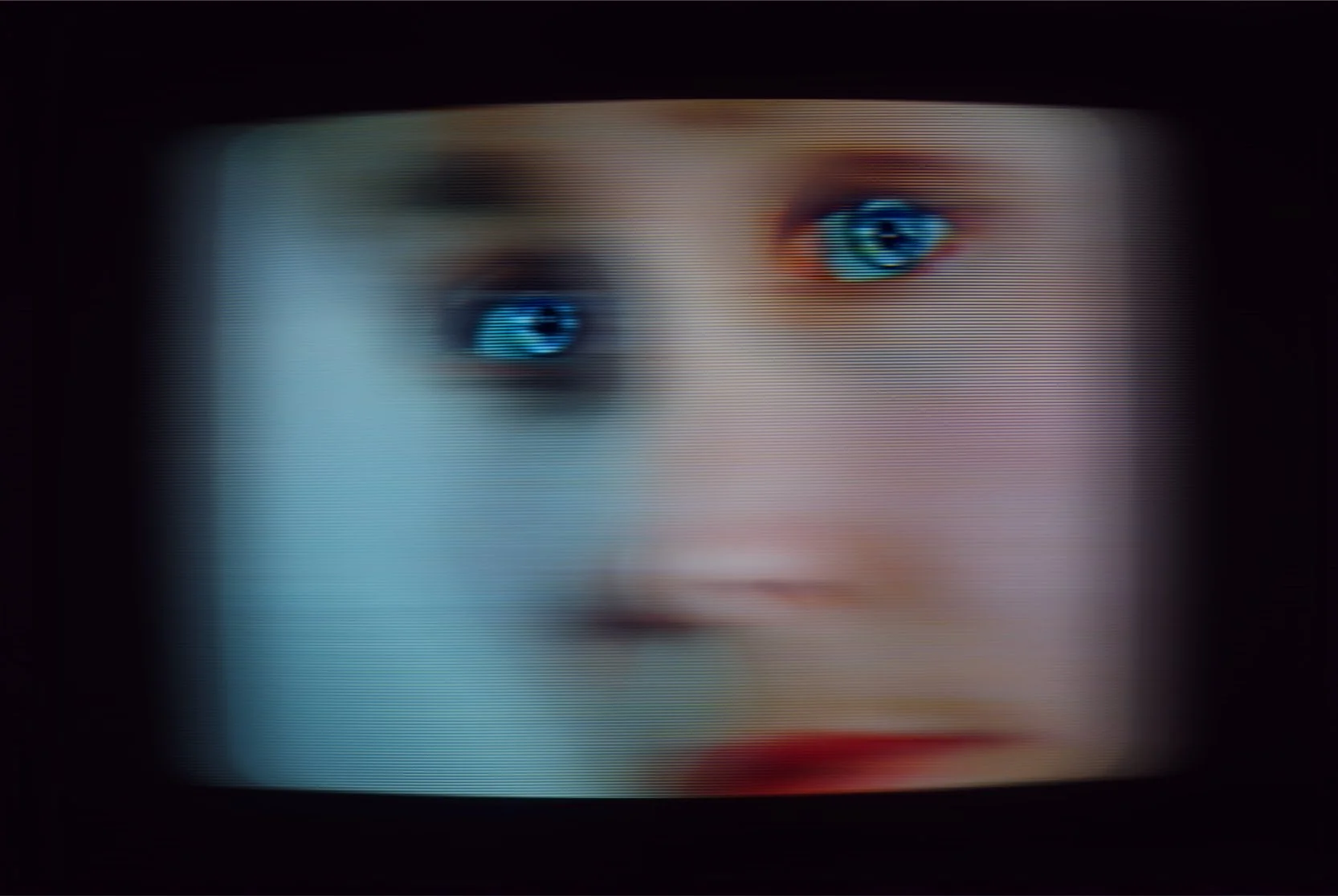
Seduction of a Cyborg, 1994.
(Video Still) Video (first digital video projection), color, sound
6 minutes

BOWIE: And then, with CybeRoberta (1995), you created a doll version of Roberta Breitmore, who is a very early nanny cam. She broadcasts video footage taken from her eyes onto the internet. I remember covert domestic surveillance being far more controversial in that era, as the technology was becoming commercially available. Did you ever expect it to become so socially acceptable over time?

LEESON: Yes, I knew it was coming. And it will, in the future, integrate into our lives even more.

BOWIE: At this point, constructed identities have become so inextricably integrated within our social landscape. Do you think they are a necessary byproduct of the surveillance state?

LEESON: I think so. It’s a means of protecting ourselves. We create these other representations of ourselves, but the core remains hidden.

BOWIE: Is it even possible at this point for these avatars to meaningfully protect us, or does it just give us a false sense of peace while the surveillance apparatus sifts through every trace of our existence?

LEESON: I don’t think that anybody can get away from that because it's so deeply ingrained in our culture. Everything is surveilled.

BOWIE: There have been a number of studies and articles over the last few years citing the negative effects of social media on young girls in particular. Do you feel like they’re especially predatory toward young girls?

LEESON: I think it’s that young girls need to communicate in a broader sense than just through technology, and probably in a greater way than anybody else. So they’re more prone to use it and to be affected by it—more than other people who have a wider range of possibilities.
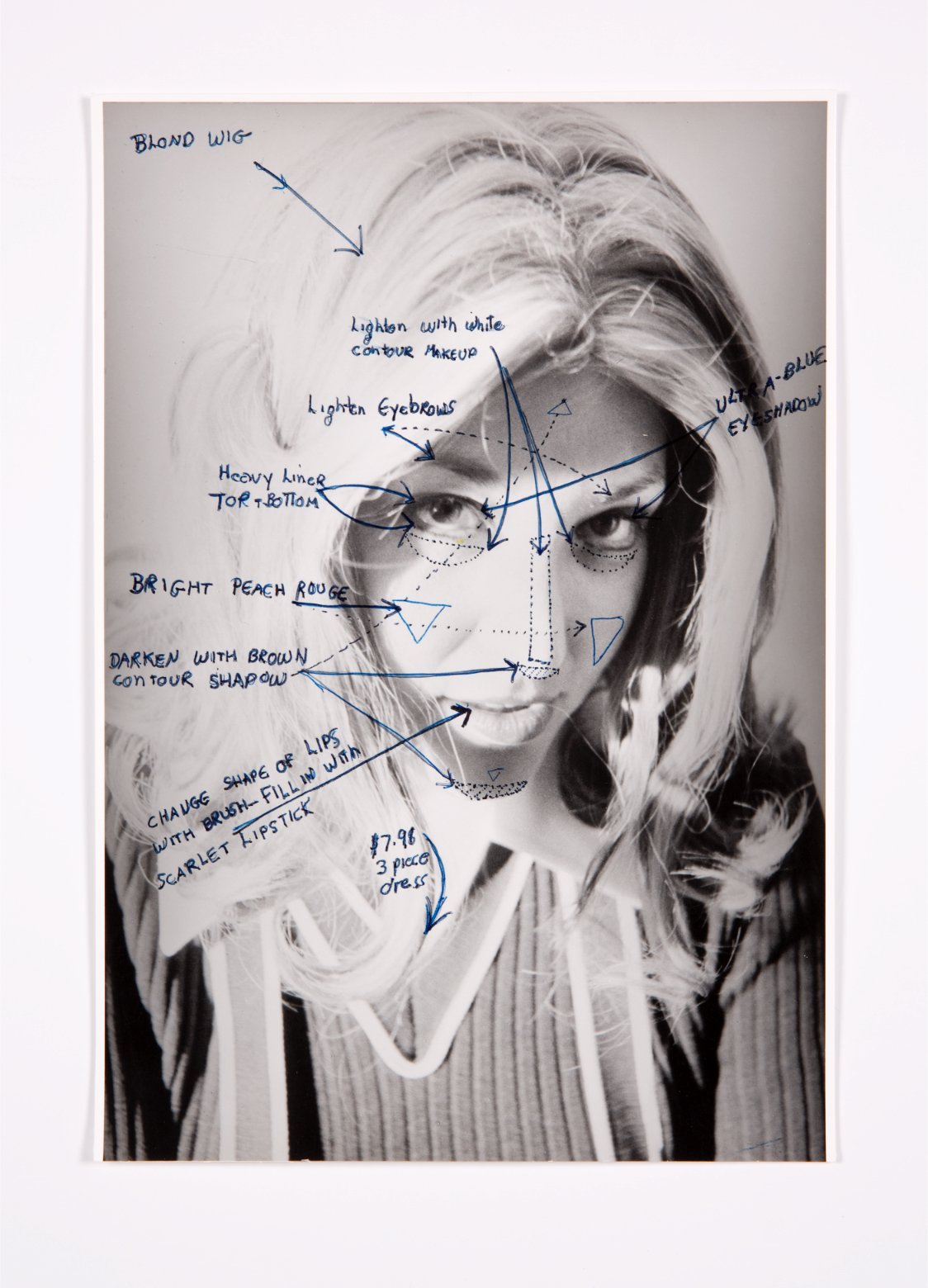
 

Construction Chart Drawing, 1973. Ink on gelatin silver print
9¼ x 6½ inches (23.5 x 16.5 cm)
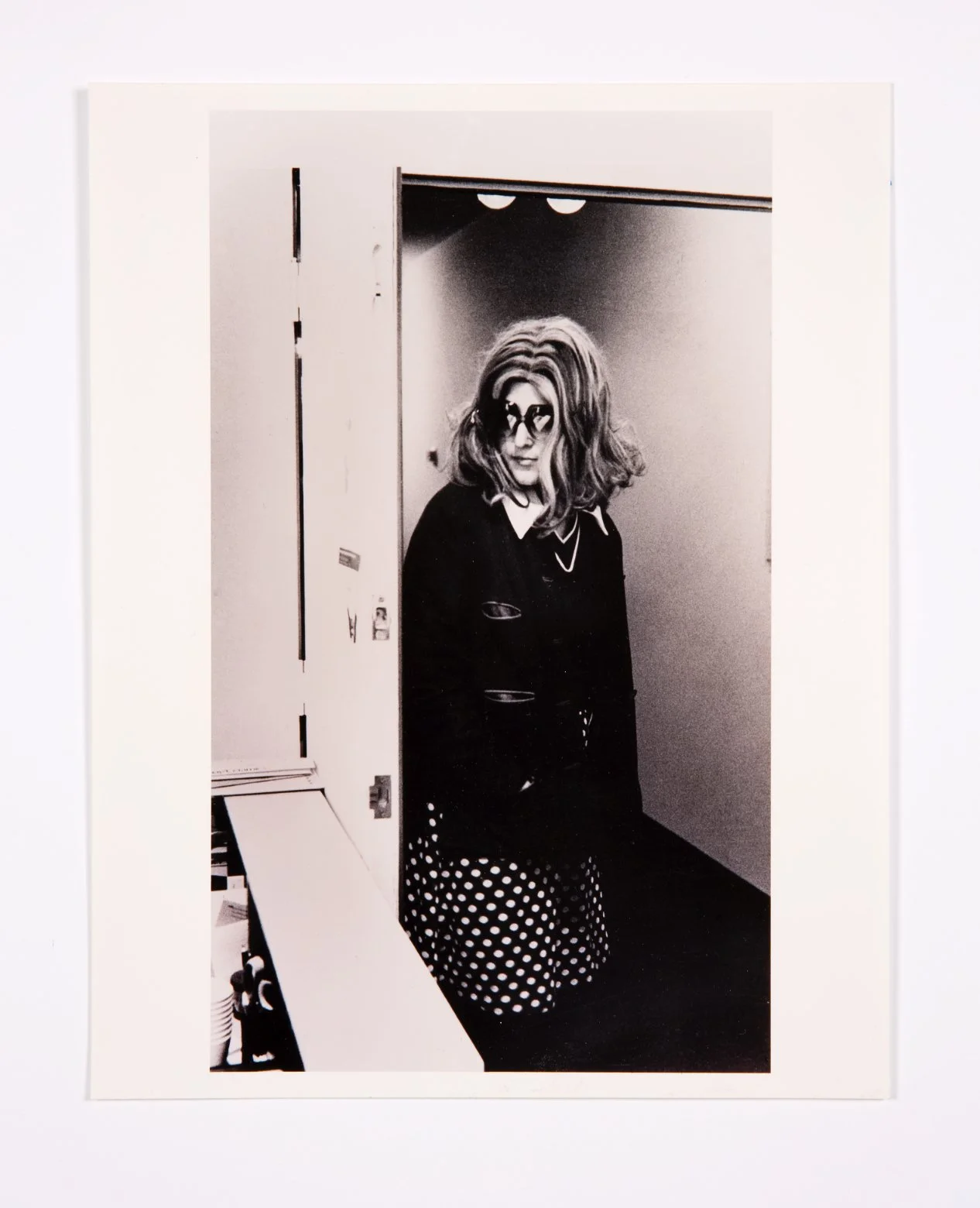


Roberta at Gallery Opening, 1976. RC print,
10 x 8 inches (25.4 x 20.3 cm


BOWIE: In A Room of One’s Own (1990-1993), you created a series of voyeuristic moments via the kinetograph, yet you interrupt this scopophilic impulse so that any pleasure in voyeurism is frustrated in various ways. Can you talk about the purpose of that intervention?

LEESON: I didn’t exactly mean to incite frustration. I could only do so much in that piece. I think I was just trying to make people aware of how we’re all being surveilled. I don’t think many people are really aware of the lengths to which our lives are captured by other people. And you can’t create an infinite protection of surveillance. There are limitations. And certainly it’s based on the technology that’s available and becoming available. Even now, people are not aware of how fully surveillance owns them. Technology becomes more and more capable of capturing our privacy.

BOWIE: Whether via tabloids in the past or social media now, we have this craving for “behind the scenes” access, and, of course, those private moments are their own reconstructions. There’s a very zero-sum tension between the desire to access somebody else’s privacy and the desire to protect one’s own.

LEESON: And then there’s also the question: if privacy even exists anymore. Or can it exist now in our culture? And what does that mean?

BOWIE: That’s really the enduring question of this issue. Your Synthia Stock Ticker (2000) is a simple yet poignant visual representation of the relationship between global finance and the emotional morale of a nation—two paradigms that are deeply interconnected and interdependent. How would you say the advent of social media has affected that relationship?

LEESON: I think more people became aware of that relationship. Social media makes it more easily manipulated in a way that can control the value. We rely on these external factors as a basis for who we are, rather than having it contained in any more secure way—something that’s constantly being manipulated by external forces and shifts, by things that people want to happen, which then affect personal privacy.

BOWIE: So much of your work revolves around the symbiotic relationship between technology and identity, and many of your works were created in real time alongside technological developments that were either nascent or, at times, still theoretical. What was coming up for you as you observed this relationship develop over the turn of the century?

LEESON: Well, I was lucky. I live in the Bay Area, so I was privy to ideas that people were working with. And as different elements of technology became reality, it just seemed to me that they affected who we were, how our perceptions operated, and even how we perceived ourselves.

BOWIE: It becomes an interesting mirror through which we observe ourselves. Aside from our literal use of the selfie cam as a mirror, our smartphones have become a definitive intermediary between our identity and its projection. As both the projector and the screen, our sense of self is defined as much by what we put onto the internet as it is by the response those posts receive.
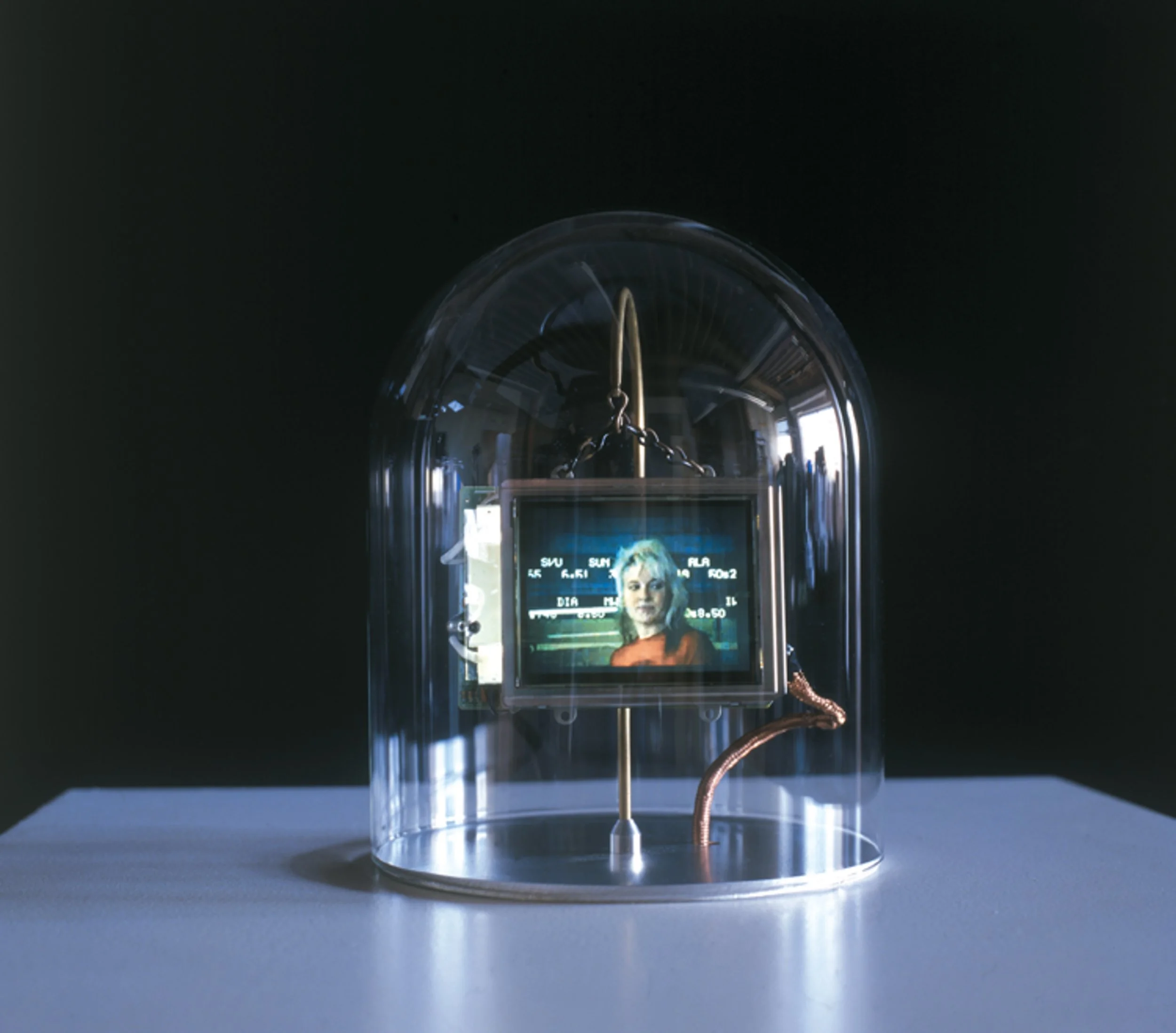
Synthia Stock Ticker, 2000-2002. Custom software, LCD, glass and electronics, first use of stock date and behavior as net motivation, 15 x 11 x 11 inches (38.1 x 27.9 x 27.9 cm

LEESON: And how much we know about how the internet works and how we place ourselves in it.

BOWIE: In your 2002 film Teknolust, a bio-geneticist uses her own DNA to create three self-replicating automatons, one of which was named Ruby. Contemporaneously, you were commissioned by SFMOMA to create Agent Ruby, an artificially intelligent internet entity that converses with online users. She was basically a proto-chatbot. One version of Ruby is a cyborg in the corporeal sense, while the other in more of an uncanny cognitive sense. What did you ultimately want her to do for people?

LEESON: I originally wanted to create this other entity that could be online and communicate with people. I didn’t have any expectations about what she would do. So, everything was a surprise, and she kind of grew into fitting a need that culture had in communication. And also, it brings people in more direct contact than before. Our histories become public. I do not think privacy exists. I wanted Agent Ruby to be a guide for people to access the possibilities inherent in surveillance technologies.

BOWIE: Last year, a survey conducted by the Center for Democracy and Technology found that about 20% of teenagers either knew somebody or were themselves in a romantic relationship with a chatbot.

LEESON: That doesn’t surprise me. And I think it can also become dangerous if it’s not checked, because they assume that it’s a real being in their communication, and it could imply doing destructive things that people sometimes follow.

BOWIE: On one hand, I see a culture that has lost its ability to hold people in community and to support one another through an increasingly complicated world. So, I see how it fills a dire need for people who aren’t socialized to talk about their feelings or ask vulnerable questions.

LEESON: It becomes an aid for that for sure.
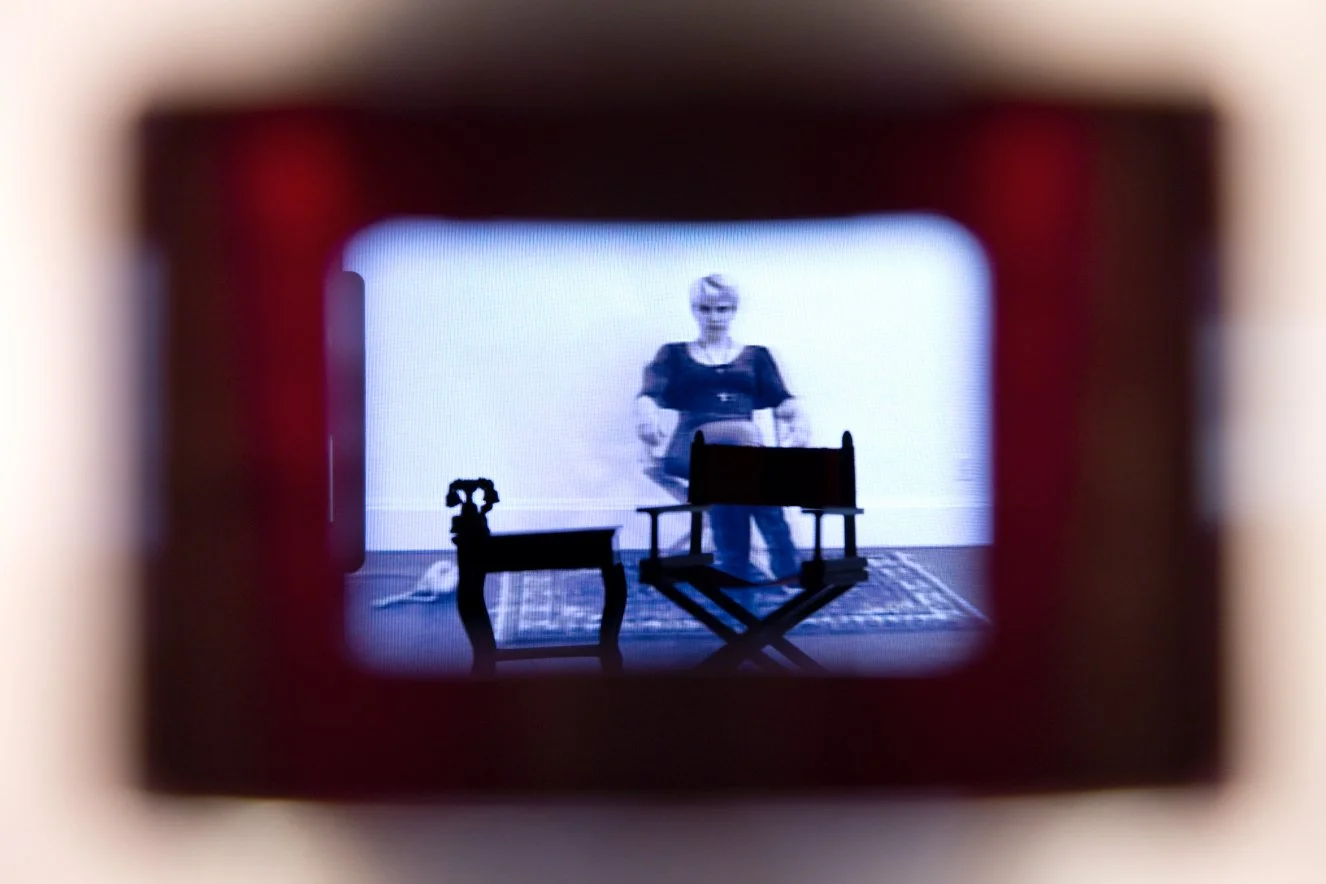
Room of One’s Own, 1990-1993. (Detail). Transferred laser disc, miniature furni-ture, surveillance system, cameras, projection15 x 16 x 35 inches (38.1 x 40.6 x 88.9 cm)

BOWIE: On the other, it feels safer, more private, even though it certainly isn’t. OpenAI has been developing an “adult mode” that would allow users to sext with ChatGPT. It’s currently on hold because there’s concern that it will create an unmitigated mental health crisis.

LEESON: People will lose the awareness that it’s just a computer and start interacting as if it were another human being. And that’s really dangerous.

BOWIE: How does it feel to see these technologies emerge, many of which are versions of ideas you had been theorizing from the late ’80s into the turn of the century?

LEESON: It feels frustrating, particularly when I’m not acknowledged. You don’t do these things just to be acknowledged, but you know how hard they were to do, and it’s like your ideas and what you’ve contributed are being stolen and put out without any reference to the origin.

BOWIE: How do you think the feminine approach to technology acts in contrast to the masculine?

LEESON I think it’s just a respect for individuals, for the eye, and for not being absorbed into cultural commodities—sustaining an individual presence that is aware of what’s around it, but also sustains itself and its own possibilities. It doesn’t lose those things.

BOWIE: How would you like the cultural understanding of your work, and your contribution to both art and technology, to be understood and carried forward?

LEESON: Well, I’ve got all of my records at Stanford, and they’re poised to assume everything I’m doing and incorporate it into their library, making it available. So it will be preserved as my work and then used as cultural changes occur in the future. You can’t predict how it’s going to go.
Cristine Brache: The Earliest Subjects of Technological Looking


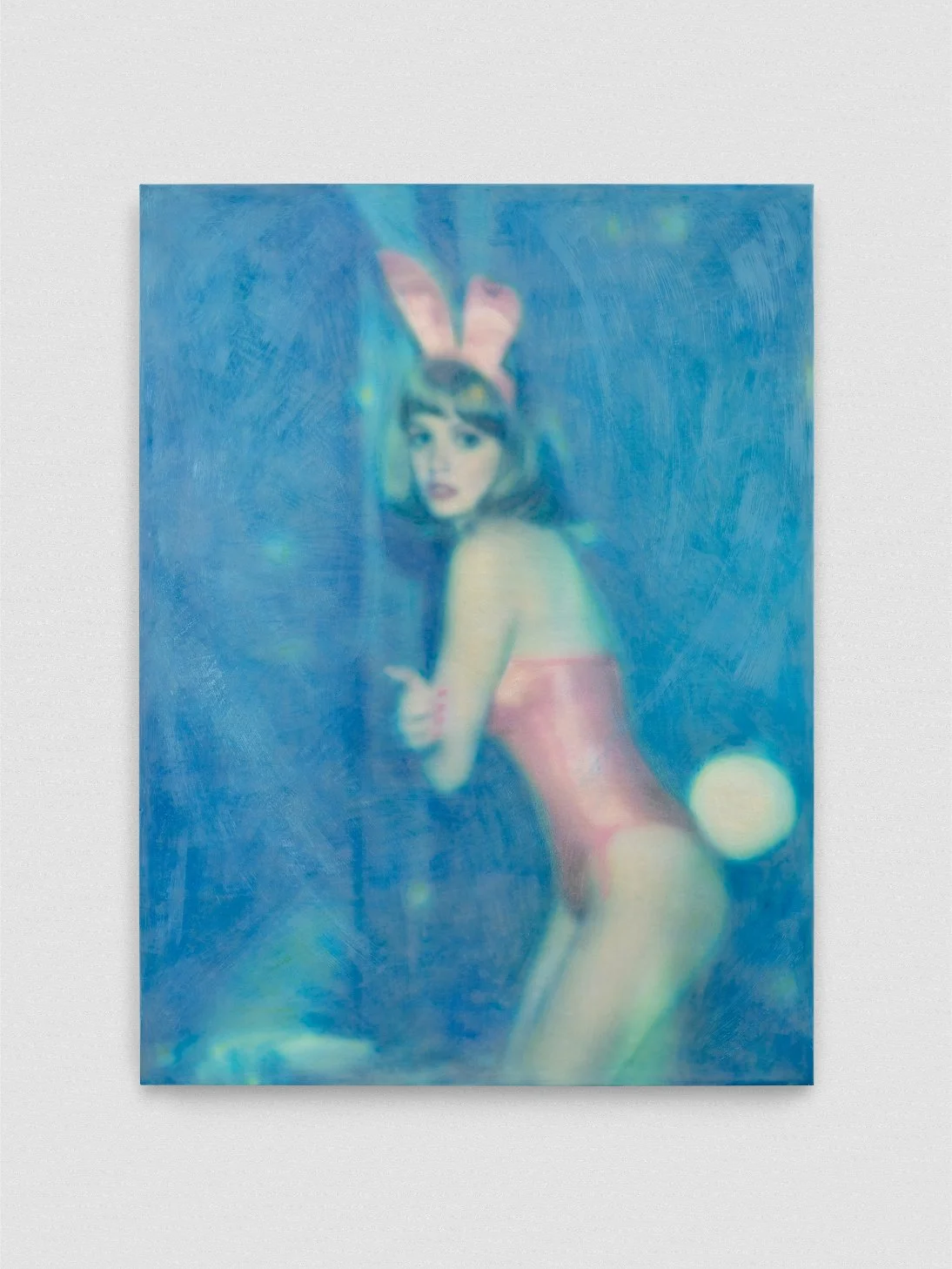
Cristine Brache, Apprehension, 2025. Oil, ink, and encaustic on cotton and wood. 121.92 x 91.44 cm / 48 x 36 in


Its here, everything—
Everything anyone ever
Dreamed of, and more.
But love is lost:

The only sacrifice
To live in this heaven,
This Disneyland
Where people are the games.

– Dorothy Stratten

Interview by Summer Bowie


Dorothy Stratten, a blonde bombshell ingénue of the late 1970s, was plucked from obscurity while working in a Vancouver Dairy Queen at the just-underripe age of seventeen. Her preternatural beauty caught the eye of small-time pimp and nightclub promoter Paul Snider, who quickly realized that she was his ticket into Hollywood, though naturally, he convinced her it was the other way around. Within two short years, she found herself married to Snider and a valuable asset to Hugh Hefner after successfully transitioning from Playmate to screen actor. In 1980—her final year—Stratten was named Playmate of the Year and cast opposite John Ritter in Peter Bogdanovich’s They All Laughed, a film that follows a group of male private investigators who blur the line between surveillance and seduction. During production, Snider, suspicious of an affair between Stratten and Bogdanovich, hired a private investigator to confirm it. Stratten ultimately filed for divorce, serving Snider with papers along with her first voluntary alimony check. He responded with brutal violence: maiming her face, raping her, and killing her with a shotgun, and then raping her again before taking his own life. In the aftermath, Bogdanovich published a memoir, The Killing of the Unicorn: Dorothy Stratten 1960–1980, recounting her final year. Teresa Carpenter’s investigative feature for The Village Voice was later adapted into Star 80, Bob Fosse’s film starring Mariel Hemingway as Stratten.

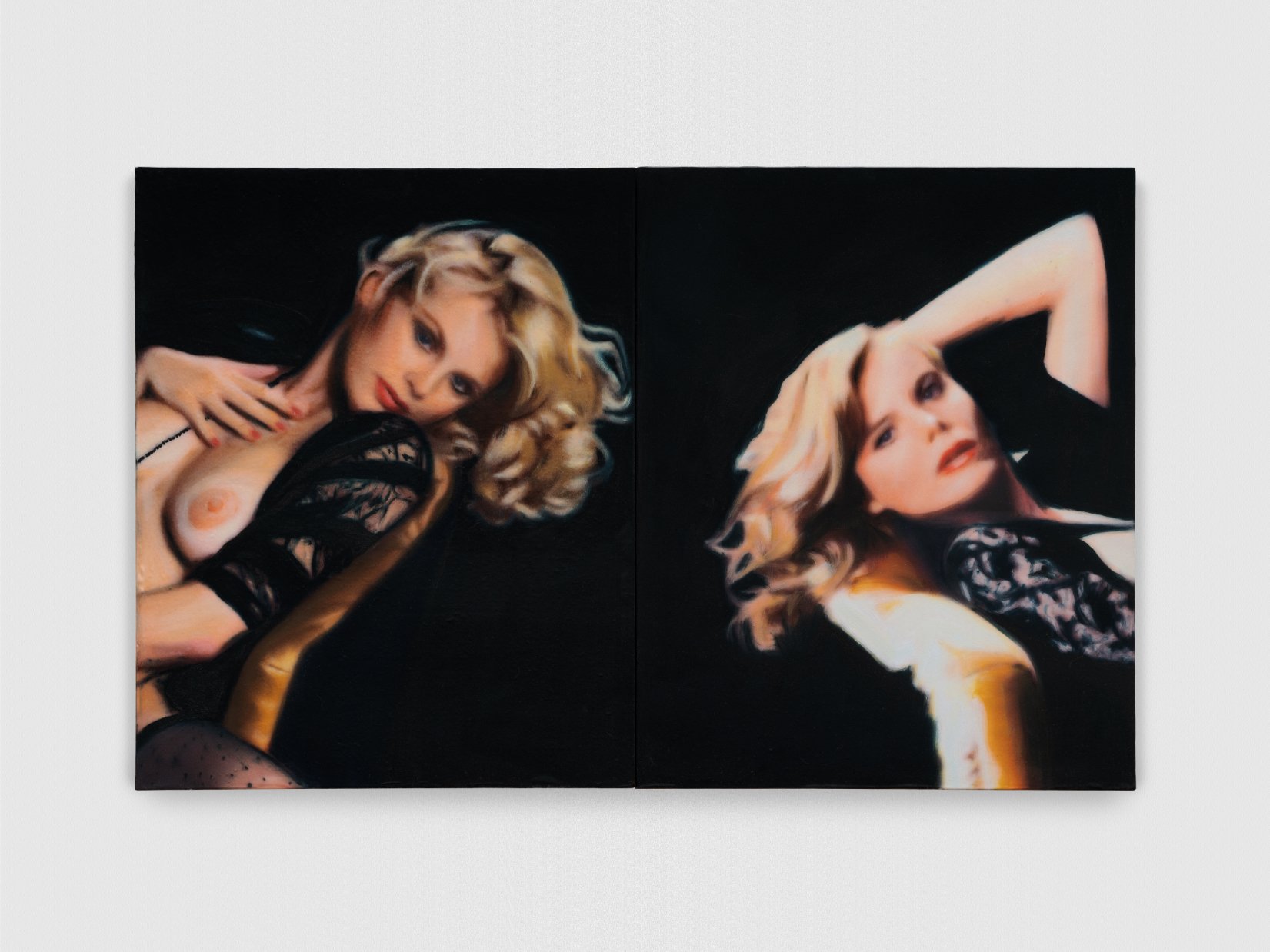
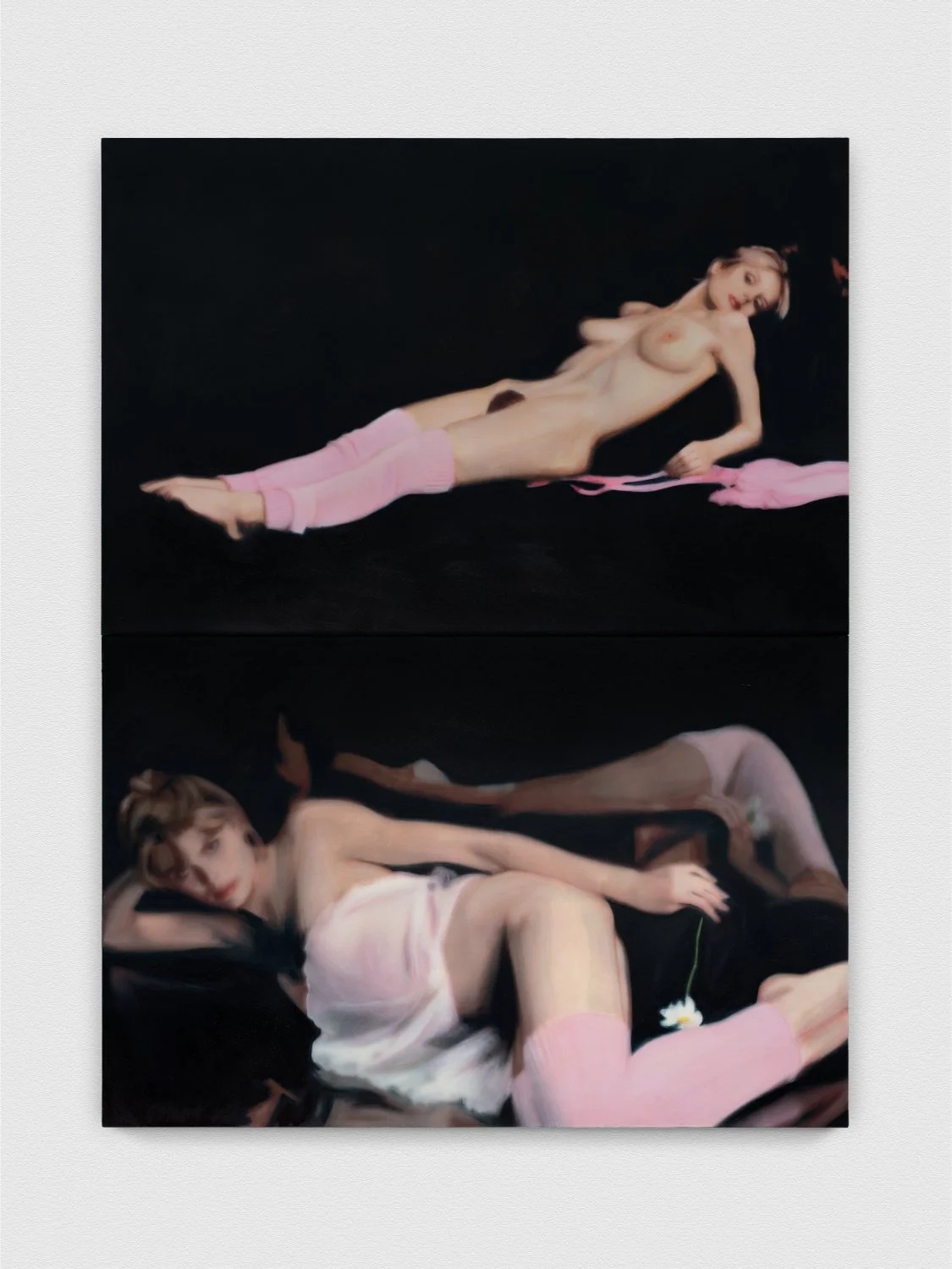
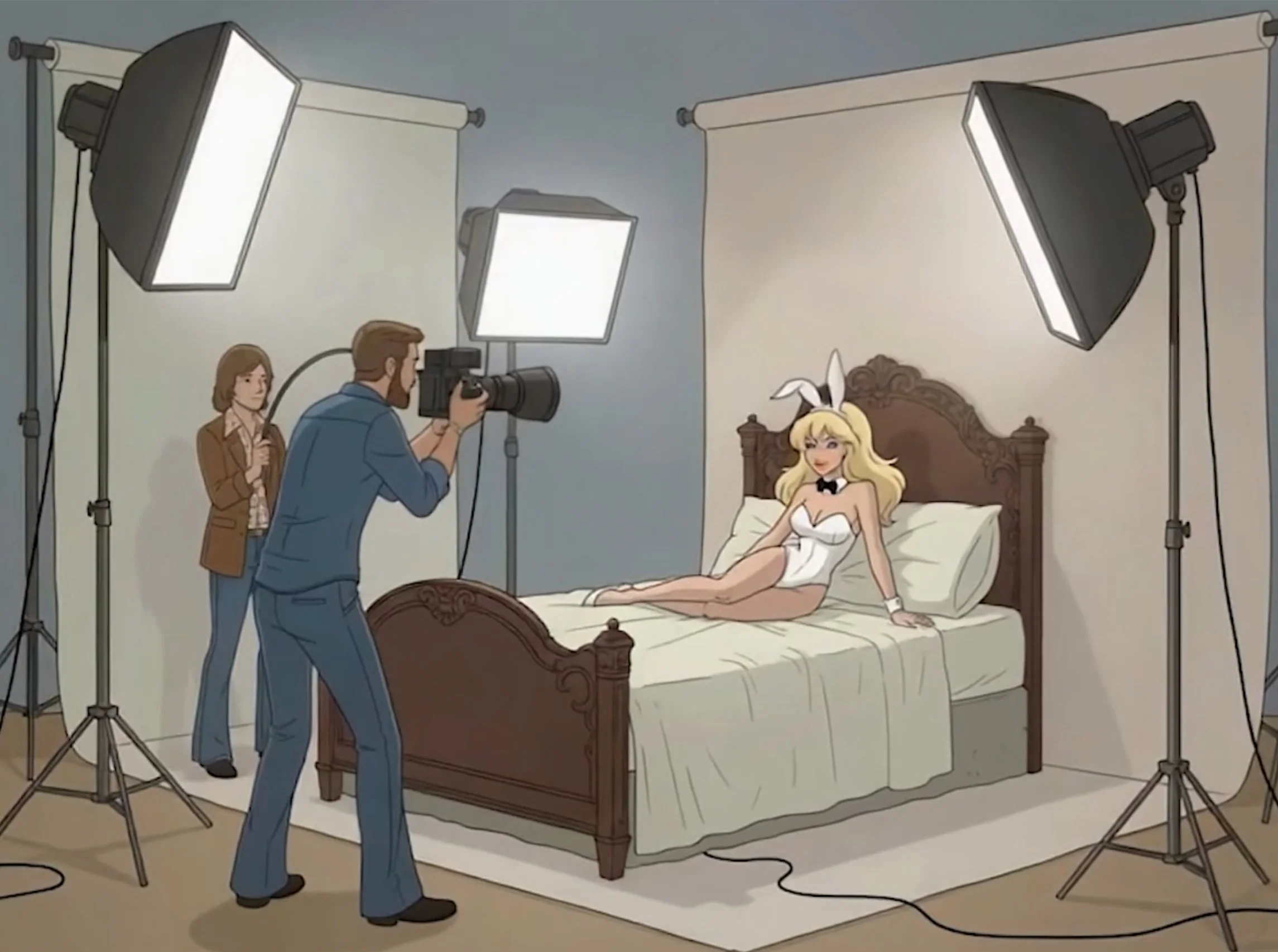
It was when Cristine Brache discovered Stratten’s poetry that she realized how much of her story had been lost in the shadow of her titillating centerfolds and violent, untimely demise. Spanning the three stories of Bernheim’s London townhouse, Brache’s Centerfolds draws inspiration from Stratten’s life as a case study demonstrating the power of the gaze in extracting our identities. Employing a combination of encaustic paintings, interactive sculpture, and a fragrance of increasing potency on each floor, Brache exhausts the male gaze with her indefatigable focus on its mechanisms. The Well is a sculpture of a miniature house with a chimney that serves as a long viewfinder through which one watches a short video. In it, a cartoon Playboy playmate waxes philosophical about the role of the well across cultures throughout history. She then proposes the lens as a proper metaphor for the well in our current age. Much like the fragrance, the video has an accelerating power that cuts off quickly, yet remains heavy in your memory, offering a potential counterbalance to the subtle extraction of our egos as we scroll to the bottom, accept, and continue.


SUMMER BOWIE: Dorothy Stratten’s story is so fascinating because it’s rare for somebody to posthumously regain relevance. This exhibition recovers a lot of the volume that her legacy has been missing and offers a refreshing lens for observing it.

CRISTINE BRACHE: The project really began when I discovered her poetry. I’d known about Dorothy Stratten for years, but reading her writing revealed an interior voice that’s almost completely absent from the story most people know. Her life has largely been narrated by three men with specific agendas, so poetry is one of the few places where her subjectivity actually survives. What struck me was how surprising that felt. A gorgeous blonde woman could be endlessly photographed—her beauty is such a topic—but the idea that she might also be a poet seemed almost illegible.

BOWIE: One of the things I found very compelling about the video component of your Well sculpture is that, unlike its visuals and the rest of the show, the text actually doesn’t address gender at all. It speaks from a very universal perspective on the consequences of excessively reflecting, or, more currently, reproducing an image.

BRACHE: That wasn’t a conscious choice, but when I thought about the well in relation to the many myths it has across cultures, I saw a parallel to our current relationship with the camera lens, this idea about gazing or wishing into something that can reward or punish you. There’s the Japanese myth of Okiku, which is about a maid who serves a samurai and winds up haunting him from a well. In the video, this is offered alongside other Western ideas of the well and gazing, like the myth of Narcissus, and it ends with a scene from Snow White where she sings into a wishing well. It all, in some way, embodies our relationship to the lens—what the lens generates when a person looks into it, who’s looking at the resulting image, and who’s looking through the viewfinder. Between all of this voyeurism and surveillance, there’s so much that is being consented to and risked, and so much that gets lost through the visibility of the subject that was captured, especially as the image circulates. There’s a deal you’re making when you consent to being photographed, like when you wish into a well. It’s the same when you consent to looking at an image. You’re signing onto something that feels like a cautionary tale.

BOWIE: In all of it, the role of the technology is to weaponize the subject’s consent when they engage with it. As an ancient technology, the well performed this role metaphorically; as a more recent technology, the camera does this very literally; and now we’re consenting to tools of mass surveillance that weaponize our ignorance in ways beyond imagination. Women have acted as this canary in the coal mine under the surveillance of men. It’s a formula that has played out across racial lines as well, but the power dynamics have now been extrapolated under surveillance capitalism between all of us and the billionaire class that monitors and monetizes every banal thing we do.

BRACHE: Gender is so implicit to me, and how I’m read has everything to do with it. We’ve made a lot of progress, but everything you’re saying also operates under the umbrella of misogyny. Every decision that we make and all of these technologies have a misogynistic position from the start because society is consciously and unconsciously still misogynistic. People often say that pornography predicts the next wave of technology—film, VHS, the internet, AI—but I think that’s less about pornography itself and more about the fact that the images being circulated are overwhelmingly images of women for male consumption. Women become the earliest and most normalized subjects of technological looking. In that sense, the camera and earlier image technologies were already rehearsing the dynamics of consent, exposure, and control that now exist, at scale, under surveillance capitalism. The story of Dorothy Stratten is also situated in a moment when people were only beginning to develop the vocabulary to talk about things like domestic violence. Ms. magazine ran its first issue on battered wives in 1976. So her experience was incredibly isolated. But that isolation also mirrors something structural: women’s lives have often been the site where these power dynamics become visible first. What’s different now is that the same logic of observation and monetization has expanded outward. The surveillance once directed most intensely at women’s bodies is now applied to everyone through data collection and platform economies. In that sense, misogyny isn’t separate from surveillance capitalism; it’s one of the places where its logic was rehearsed earliest.


Cristine Brache, Repose, 2025. Two panels, Oil, ink, and encaus-tic on silk and wood. 50.8 x 81.2 cm / 20 x 32 in


BOWIE: The ’70s was an era when filmmaking was becoming more affordable, marking the beginning of American New Wave cinema with directors like Bogdanovich, DePalma, and Scorsese radically changing the form. However, the misogynist underpinnings of cinema were still very much in place. Women were just starting to become aware of the male gaze, to understand why it felt so alienating, and everyone who didn’t see themselves reflected in the identities on screen were developing what bell hooks called the interrogative gaze. You also have a way of alienating the viewer from the image. Can you talk about the role of the encaustic layer?

BRACHE: I call the thicker encaustic works you’re describing “frosties” because I like to think of the subjects as being stuck under a frozen lake. You feel like you can almost reach them, but can’t. The more you look at them, the more they vanish. Having that icy material quality is a way of articulating the weight of passing time and, conversely, being stuck in it. The physical separation that encaustic creates between subject and viewer is also an attempt to capture the yearning, frustration, and false ownership viewers feel when observing a subject of desire. With Dorothy—she died so young, she didn’t leave many of her own words behind, and then men filled in those gaps. Encaustic felt like the appropriate medium to create space for her lost interiority because no words are involved, only color, texture, and emotion. The images also feel vintage, which relates to time. I think a lot about mortality, because she was world-famous when she died, and now almost nobody knows who she is. As individuals, no matter how well-known we are in life, we are still inevitably forgotten. That’s really painful, but also beautiful. It’s a lot to process as a human.

BOWIE: That rapid consumption of her really accelerated her demise. This encaustic layer feels, as a viewer, like you’re being denied something that you’re trying to consume. It’s acting in favor of the subject herself as a form of protection in this really beautiful way.

BRACHE: Exactly. The silk ones are more vibrant. That’s for the Star 80 series, where I have the diptychs of Dorothy and Mariel Hemingway side by side. I wanted those to be overly seen, in the same way those specific images were. There was that overexposure. When thin layers of wax are glazed with oil, it looks more vibrant than traditional oil painting, especially in person, because the light is penetrating it in a different way.

BOWIE: That series starts with the two women placed side by side, looking almost indistinguishable from one another. Then, the images of Dorothy become progressively more X-rated, while Mariel remains very R-rated. There’s a protective role Dorothy plays for Mariel as the cautionary tale.

BRACHE: It’s a very clean, visual way to talk about how a subject can get lost through image circulation. Dorothy provides the source of the context. She’s totally exposed. Then Mariel presents this R-rated version because her body can’t be shown in the same way without losing that rating. Dorothy is the one who gets alienated the more she’s iterated. It comes back to this idea of Dorothy Stratten losing her interiority. It was also my way of talking about the vulnerability of being seen. The more you’re seen, the more alienated you become. The image is recontextualized repeatedly until the original intention is completely lost.

BOWIE: Yes, but this exhibition goes beyond addressing the tension between presence and erasure. The repetition of the images also estranges the subject from the purposes they once served. Can you talk about the way that you’re subverting the role of hyper-reproduction, so that rather than erasing the subject, you are erasing the purpose of projecting her image to begin with?

BRACHE: I’m aware that I am also using her image, but it’s with a different intention. A lot of my work deals with documenting stories that would otherwise be lost. I felt really horrible about Dorothy’s story. It’s very painful to me what she must have lived through. It’s a very sincere gesture to her, but I don’t want to take any ownership or to perpetuate the things that I’m commenting on. There is a scent included in the exhibition, which I made in collaboration with perfumer Marissa Zappas, as a way to have something in the space that can’t be circulated, documented, or repurposed. You can’t take the scent with you. You experience it in your body, and it functions more unconsciously. It’s even further removed from language than an image.

BOWIE: Would you say that it serves as somewhat of a parallel to her poetry?

BRACHE: Those are the few words that are hers, and I don’t want to have a stake in her. I just want to remember and honor her story.

BOWIE: I feel like the scent speaks to her invisible power. It’s a very apt way of embodying her because the olfactory sense is the greatest generator of memory. Much of the work captures what you call “the fleeting ruptures where the performed self breaks down or momentarily turns inward under the pressure of constant display.” Would you say that this experience, which was once unique to traditional celebrities, is becoming more universal in our age of social media?

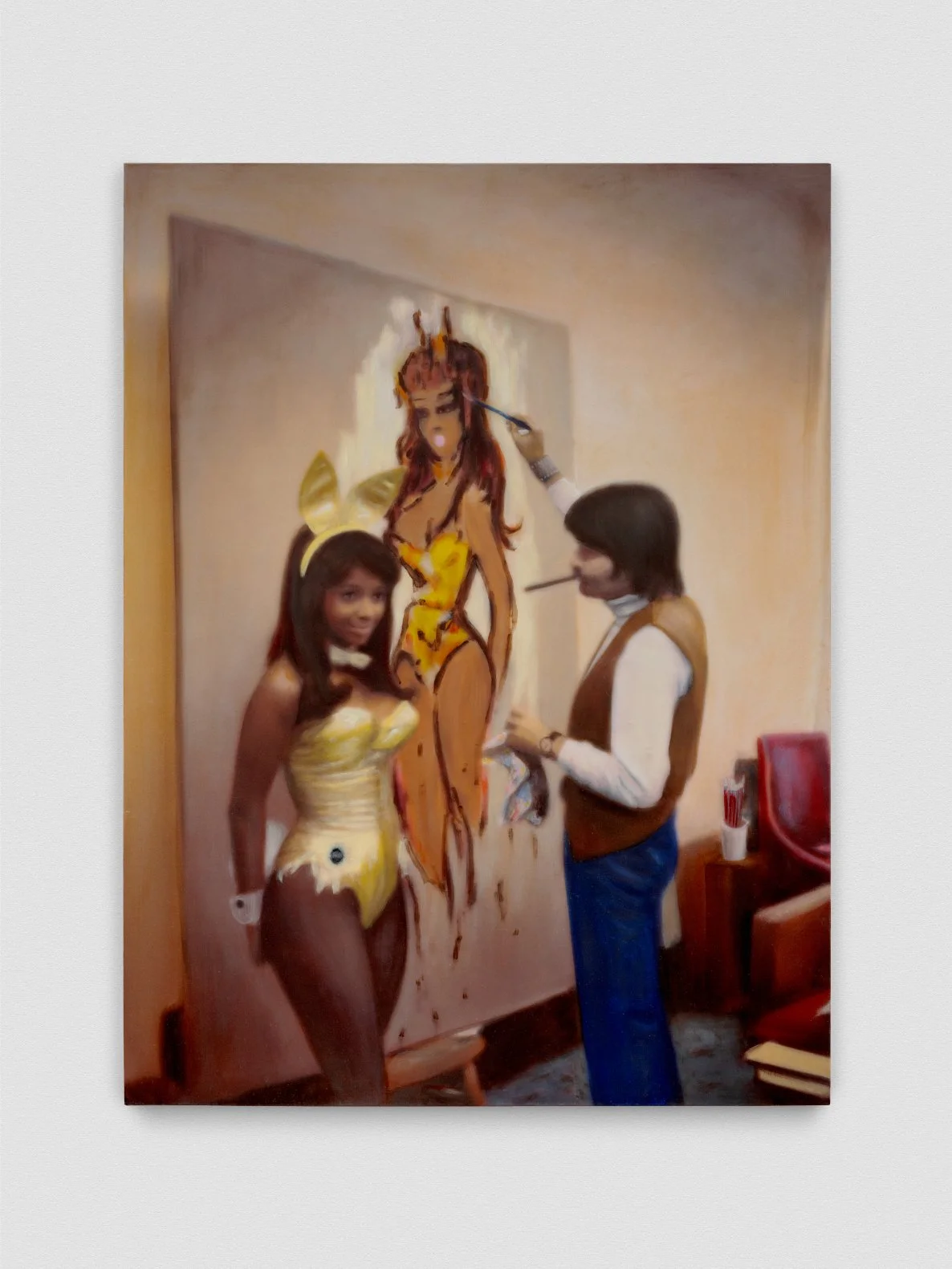
BRACHE: Well, we do surveil ourselves constantly, everybody has a livestream at their disposal. All of this is collapsing under our current age of hyper-visibility, but major celebrities still have very specific psychologies that I couldn’t ever understand. The ruptures you’re talking about relate more specifically to my Playboy Bunny series, which I find are very controlled: The suits only come in one size, and they come with a manual that includes many, many rules. It was Hugh Hefner’s hyper-tailored fantasy of feminine beauty. Today, with hyper-capitalism and hyper-surveillance, we’re all constantly performing. We have fewer opportunities when we can put the mask down, even momentarily. The bunny suit perfectly encapsulates these ideas, and they’re usually posed next to men in suits, which articulates a dynamic in a very iconic, universal way. We take those images for granted because it’s like Mickey Mouse. Everybody knows Mickey Mouse, but when you look at it really, it’s saying so much. Beyond gender, with the performativity required of us online and day to day, you have to be careful about what you do and don’t say. There’s little room for error or grace. I’m really interested in candid moments at the Playboy Bunny clubs, where Bunnies might be caught off guard. You may have all of this stuff controlling you, but at least this moment is yours. That’s the pressure that everybody lives with now, and it’s really depressing. I feel it all the time myself.

BOWIE: The algorithmic takeover of our lives has created these demographic profiles for us that, in some ways, mirror the bunny suit. They squeeze us into these narrowly defined archetypes. We tend to lose sight of who we are and what we actually want when all of our data is collected and then projected back onto us in the form of products that appeal to our deepest insecurities. It’s only when we find a moment to reflect on the source of that disquieting tension that we can actually see the disparity between our own shape and the mold we’re spilling out of. I wonder if it’s not the very loss of ourselves that motivates us to consent to this unprecedented state of surveillance. We’re desperate for someone to tell us who we are, even if it’s a bot, but the more we give ourselves away, the less there is to know.


Cristine Brache, After the Pageant, 2025. Two Panels, Oil, ink, and encaustic on cotton and wood. 167.6 x 127 cm / 66 x 50 in


BRACHE: What you’re describing is how the more we are externally defined, the less abstraction we’re left with. The abstraction that we have inside is the spiritual aspect. We all consent to this reality. The more we define our reality, the less space we have to articulate or engage with abstraction—these spaces between words and meaning that aren’t yet defined.

BOWIE: You talk about how acknowledging that she chose to take her clothes off and stand in the spotlight “is not to claim that the conditions were neutral, fair, or free of consequence. It’s simply to reject the fantasy that purity ever existed as an alternative.” This feels like the pithy response to the idea that people wouldn’t need to be surveilled if they were trustworthy, or that they shouldn’t mind being surveilled if they have nothing to hide that society hasn’t yet internalized.

BRACHE: That expectation of purity is a mechanism of misogyny that puts the onus on women to resolve the moral implication, when really, all of these decisions that women make—“moral” or “immoral”—are simply coping strategies in a misogynistic environment. The thing that really complicates it is that women do enjoy self-objectifying. They enjoy feeling sexy, but there’s so much danger in that. They risk being preyed upon, so we hold them responsible for the consequences, or what might happen to other women who emulate them. In Bogdanovich’s book, he’s constantly criticizing Stratten’s choice to be in Playboy. There’s a dynamic of him being disapproving of her spreads, and her being disappointed with his reaction. It complicates his fairytale story of her as this princess who couldn’t have wanted to do that, because it doesn’t resolve the ending for us, the tragedy.


Cristine Brache, Muse, 2025. Oil, ink, and encaustic on silk and wood. 101.6 x 76.2 cm / 40 x 30 in


BOWIE: It’s interesting because in “Visual Pleasure and Narrative Cinema,” Laura Mulvey wrote about film as a medium that satisfies two forms of pleasure for us. One being scopophilia, the pleasure of viewing and voyeurism. The other being this reflection of our idealized ego. As viewers, we project ourselves onto the subject we’re viewing and derive pleasure from simply imagining ourselves in their position. But we only get to engage with it from that voyeuristic perspective. As a result, our envy of their firsthand experience causes us to resent and judge them. We’ve coded this form of pleasure as uniquely feminine, but it’s not. Exhibitionism is not a gendered experience, so we resent the gender that we assigned to it.

BRACHE: I totally agree with that. It’s interesting how much we project on celebrities, especially celebrity women. They’re damned if they do and damned if they don’t. All of our expectations are constantly contradictory.

BOWIE: I’m curious about this idea that you play with of resisting exploitation by exhausting the gaze. There’s something very fascinating about that because the very purpose of Laura Mulvey’s essay was to demonstrate how the very analysis of pleasure and beauty is what destroys it. I feel like you’re doing the same thing by exhausting the gaze, by forcing people to reflect so deeply on their own act of viewing.

BRACHE: There was this feeling I had in painting these nudes of her, where I was like, Is this inherently wrong? Because she’s naked and she died tragically, there’s this feeling of disrespecting the dead or re-exploiting her. But I felt compelled to do it because censoring her own choices is worse than just showing them factually. The presumption of her wanting to be censored is disrespectful too. So, I have to go with what I have in front of me, which is evidence that she was proud of these images, and she obviously consented to them. I think that whoever views the work will have the same conflicted feelings I had in the process of making them. We have to deal with our own projections, even if we don’t realize that’s what we’re doing. We’re dealing with our own feelings about it, rather than what is true about her choices. People are either very into them or apprehensive about them. But almost all the women who have seen the paintings love them. (laughs) That says a lot to me.

BOWIE: Did observing other people viewing the work change the way that you feel about it, or even just how you view the work?

BRACHE: I wouldn’t say my views changed because I’ve sat with these images for so many years now, and I’ve really thought about them a lot. I like to be extremely careful with what I choose to depict. But I’d like to think again about my video, The Well that you mentioned earlier, where it’s just this conversation with the lens, or this consenting to the lens, or choosing to engage with the lens. It’s the same when you’re choosing to engage with the work. There is this unspoken agreement that you’re making, and you may or may not be aware that you’re making it, but you’re definitely going to have feelings related to the engagement. It’s a very interesting dynamic that we have between looking and being seen.