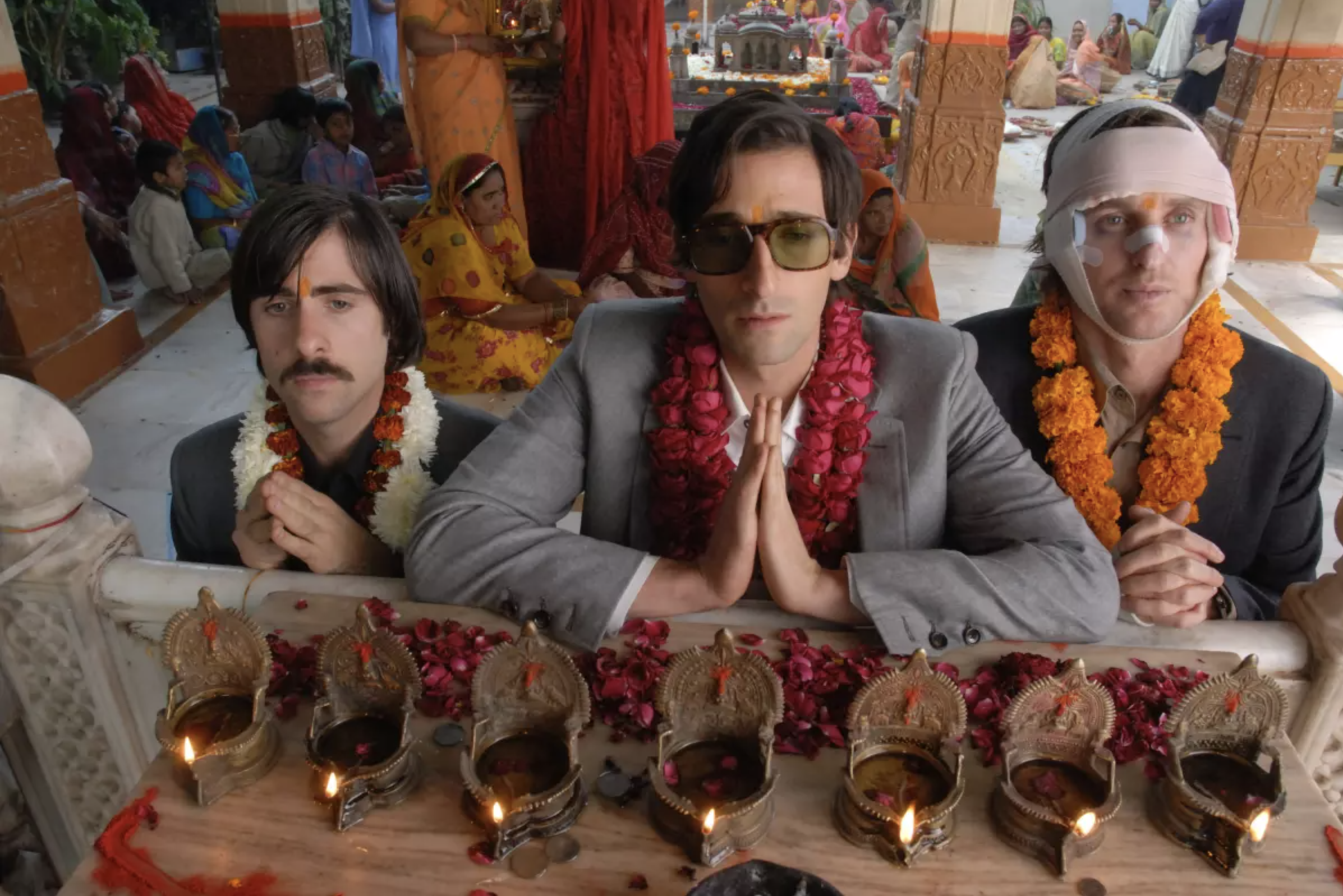
From left, Jason Schwartzman, Adrien Brody and Owen Wilson in the movie “The Darjeeling Limited.” (Fox Searchlight Pictures)
interview by Oliver Kupper
Over the past four decades, American music supervisor Randall Poster has created some of the most indelible movie soundtracks for a range of legendary film directors. For Harmony Korine’s Gummo (1997), it was a mosh pit of death metal and 1950s teenybopper balladry. For Todd Haynes’ Velvet Goldmine (1998), it was glam rock and sleaze-fuzz from the 1970s. For Martin Scorsese’s The Wolf of Wall Street (2013), it was hard-charged rhythm and blues. From blockbusters to indie darlings, Randall’s musical touch has been added to more than 100 films. But nothing has been more enduring than his collaboration with Wes Anderson. This weekend in Los Angeles, the Hollywood Bowl will celebrate the director’s 30-year filmography through three immersive concert experiences featuring performances by close collaborators, including Beck, Karen O, Devo, the LA Philharmonic, Kaoru Watanabe, and more.
KUPPER: So much of my early musical exploration has been through watching films with your musical direction, and then having to hunt down albums from physical record stores.
RANDALL POSTER: I know the feeling of exploration and reward. It’s a beautiful thing, man. That’s been the greatest gift for me: just finding music that led me to other music that led me to other artists. It’s been the gift that has kept on giving throughout my life.
KUPPER: This project at the Hollywood Bowl is so interesting. This is essentially a three-day Wes Anderson music immersive. Maybe we could talk a bit about how you met Wes Anderson and how you started collaborating.
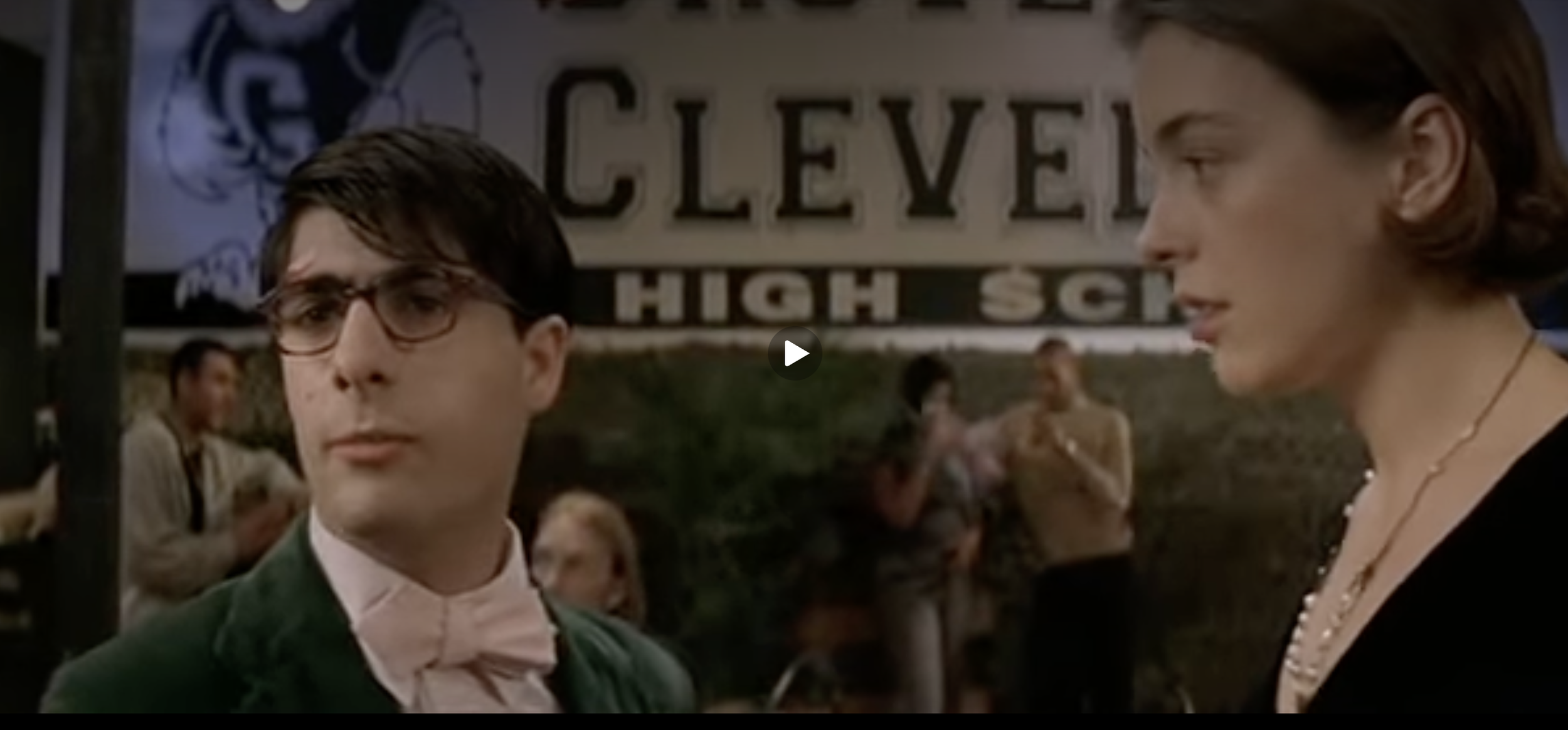
POSTER: I met Wes as he was finishing Bottle Rocket. He was living in LA at the time, so we had that first meeting at the Farmer’s Market in Los Angeles and we just got right into it. I helped him put together the first soundtrack album to Bottle Rocket and then we segued right into Rushmore. And we’ve been in musical and cinematic dialogue ever since.
KUPPER: What is your initial process?
POSTER: Well, first of all, I just want to clear up one thing on music supervisors. We don’t just pick the songs. We work and collaborate, in the best-case scenario, with visionary directors and basically become their partner in the music in the movie, the person who the director has to talk to about the music in the movie. And if there’s any inspiration, we just pursue it, in terms of gathering and collecting any piece of music or style or vein of the musical world that might have bearing on the movie. We bring it all together and see where it takes us.
KUPPER: Can you talk about Rushmore specifically?
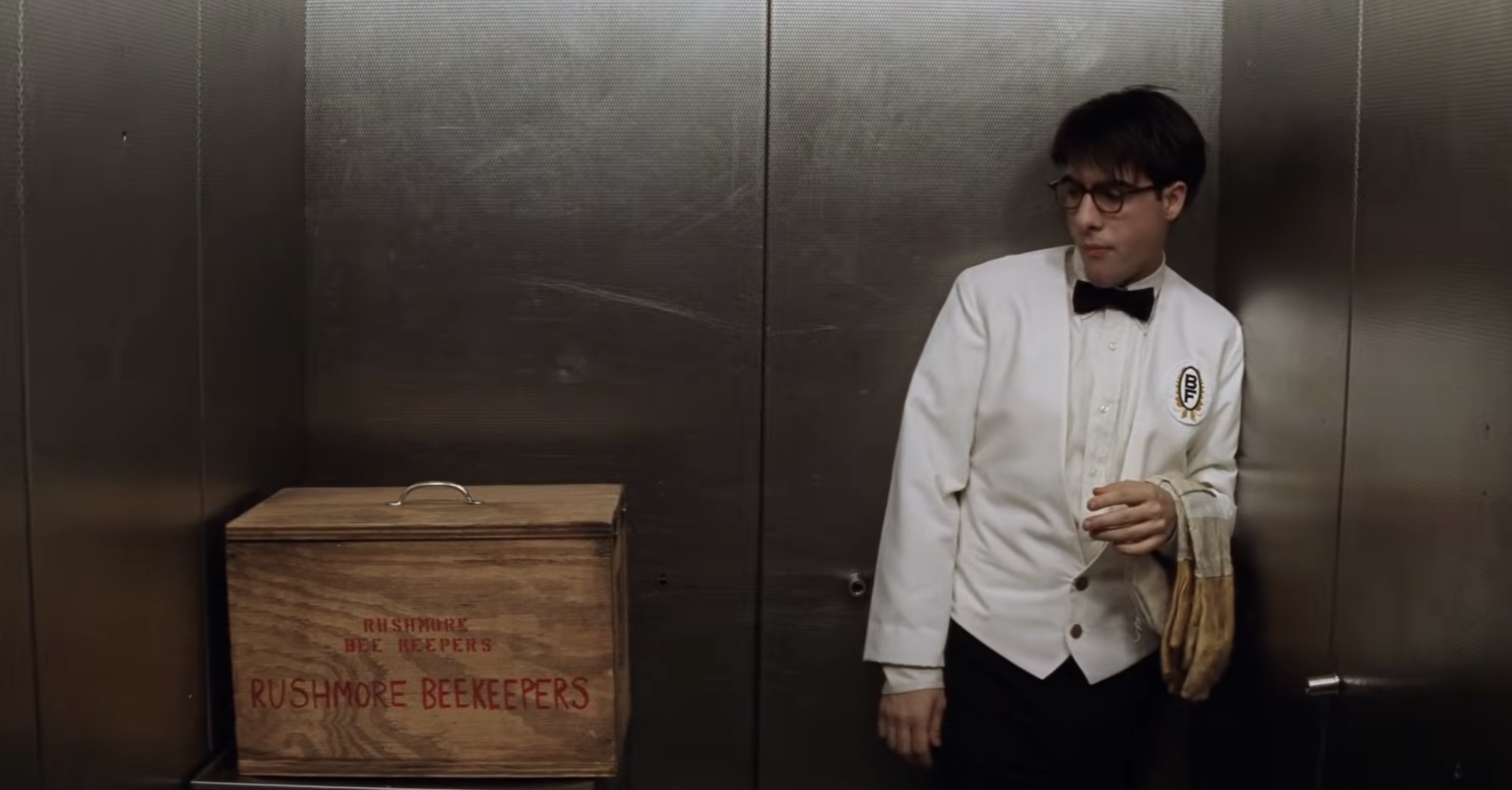
POSTER: In Rushmore, Wes was taken with this imagery of the British invasion of the1960s, where you had all of these English rock and rollers in suits and ties, but yet they were anti-heroes. They were playing anthems to rebel. They were harbingers of rebellion, yet they dressed in suits and ties. We pursued that in terms of tracking down all the great British pop songs of the era and seeing how they might fit into the movie. Some movies have more of a musical notion at the start, but then some movies evolve as you make them.
KUPPER: You do a lot of films, but you also do a lot of TV shows. I remember watching Boardwalk Empire. There’s this great episode where they’re in Cuba and you found these incredible 1920s Cuban tracks.
POSTER: I started to do TV, which has generally been bigger shows that have more of a cinematic quality. With Boardwalk Empire and Vinyl, I got involved by virtue of my working relationship with Martin Scorsese. I started to get work on commercials because Wes started to do commercials. The filmmakers kind of bring me into the medium.
KUPPER: Working with Scorsese must be interesting because his movies are so driven by the music. They have such quick cuts to different songs and also sometimes full songs.
POSTER: I think Mean Streets—and probably Wes would agree—was a moment where pop songs were used to drive the whole movie. His bold use of source music has been an inspiration for all of us who followed. Nobody is bolder than Marty in terms of mixing songs, mixing genres, and just allowing the music to really knock you out.
KUPPER: In terms of direction, what are the different levels of not letting the music overtake a scene or overtake the movie?
POSTER: There really aren’t many rules. My rule is to try to push the music to be as vivid as it can be, and to not be afraid of using a song. Instinctively, I think you have a sense of when a scene is playing without any accompaniment or with a more gentle approach. That’s really just instinct. You need to know where silences can help to protect the songs as well.
KUPPER: The score of a film is interesting too, in terms of how to let it live naturally with the musical direction. How do you approach it?
POSTER: Sometimes people see a movie that I’ve worked on and they’ll say, “I thought the music was the best part.” And they think they’re giving me a compliment, but it’s really not a compliment because, ideally, you want the music to be part of the cinematic fabric of the film, so it doesn’t feel like it’s a standalone component.
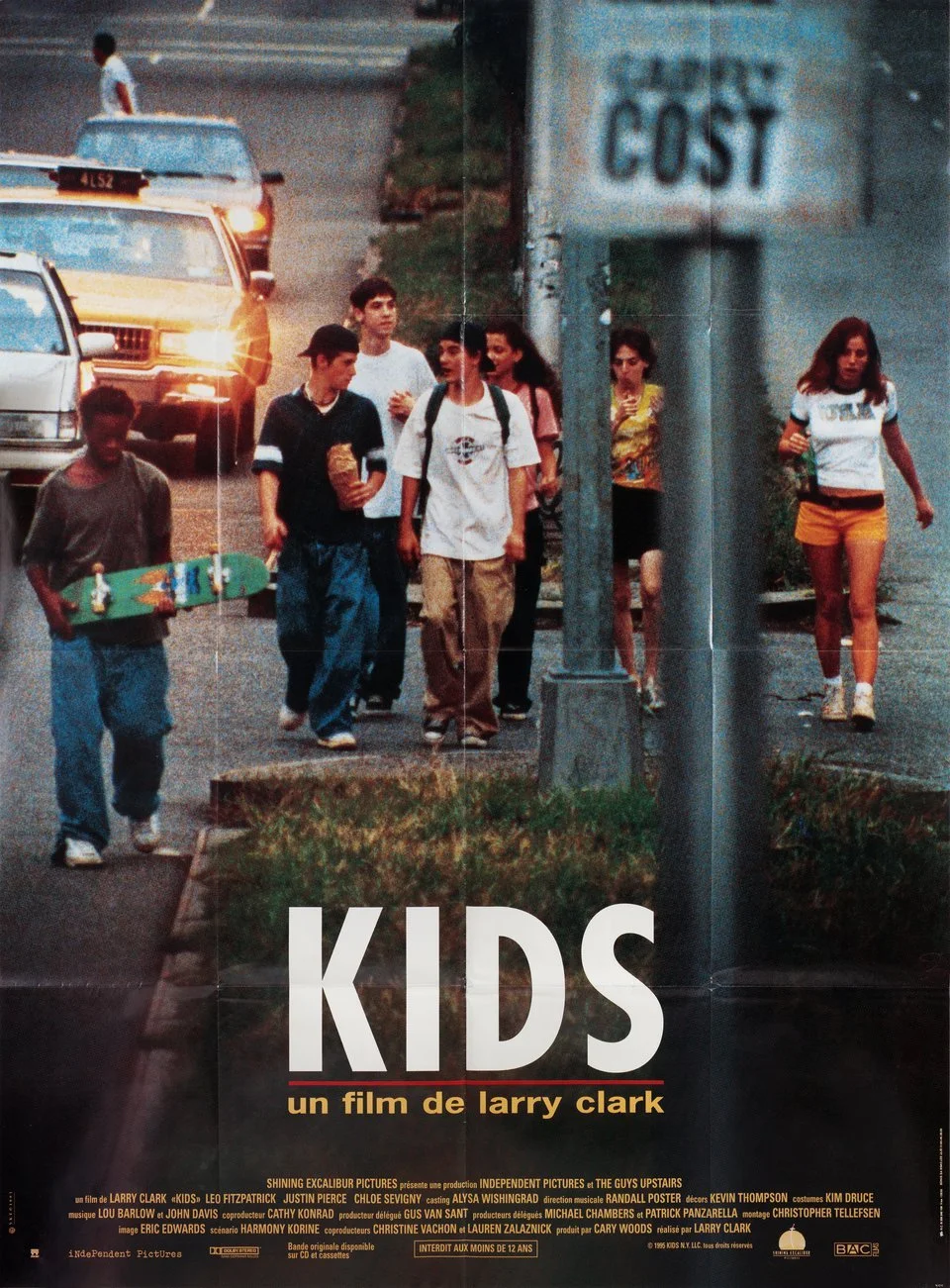
KUPPER: How did you start working with Harmony Korine and that world? Was Kids your first film?
POSTER: When I graduated from college, I really didn’t have any clear direction, and I realized that I’d better try to create some kind of momentum for life. So, I wrote a script with a friend of mine called A Matter of Degrees that we developed at the Sundance Institute Lab. Then we shot and made the movie, which came out in 1990. That was around the moment when what they had been calling college radio became alternative music. So, I decided during the making of that movie, overseeing the music, that what I really wanted to do was to work with great film directors, and if I made music my area of expertise, that would be the point of contact. And it kind of worked out that way. Earlier in my career, I produced two movies and then people started asking me to help them with the music in their movies. I was working with friends of mine who wanted to make movies in various capacities, and we just kind of hung together. Thankfully the directors kept making movies. Whether it was Todd Haynes or working with Killer Films and Christine Vachon or working with Wes or Richard Linklater or Todd Phillips, these are my contemporaries. I’ve made probably ten or twelve movies with each of them, so that was the good fortune of being surrounded by peers who had a real keen interest in making important or meaningful movies. And, I got to come along.
KUPPER: What is your process for finding new music?
POSTER: It’s utilizing some of your academic training. We start out with when the film is set and any musical components which are already scripted. Then we try to create some kind of musical foundation to build off of. That really is the initial task at hand. As the editorial evolves, we just figure out a way to find the right music component, be it song or score, that helps tell the story.
KUPPER: Are you watching the films and thinking about songs that work for these scenes?
POSTER: Yeah, I’m always thinking about what songs would work in scenes. That’s my curse.
KUPPER: What is that process like?
POSTER: Sometimes, you have ideas and then you get an opportunity to actually put the songs to picture and when something works, you feel it. Sometimes, you’ll be on a movie where there’s a very detailed preconception of the music and then when they come home with the film, it just is not the right thing. Hopefully, the story is telling you what music it’s looking for by virtue of the feeling you get when you hit upon the right thing.
KUPPER: Are there any major a-ha moments that stand out to you in terms of working with Wes Anderson?
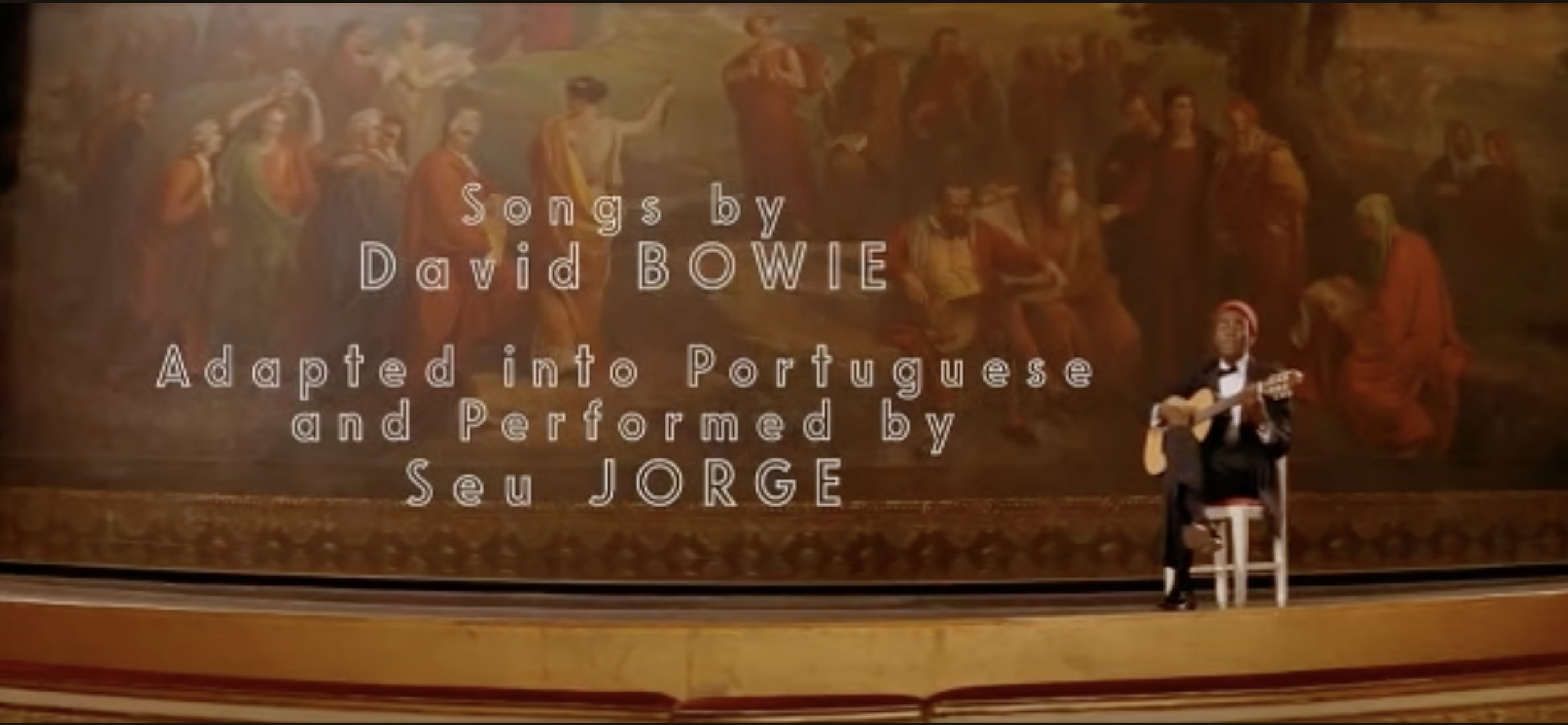
POSTER: When we found “Ooh La La” at the end of Rushmore, that was a bit of a revelation. When we got in the studio with Seu Jorge during Life Aquatic and worked with him on transforming David Bowie’s songs, that was a revelation, largely based on Jorge’s genius and Wes’ skills as an alchemist. It was a really interesting learning process to explore the film music of Satyajit Ray, and the music that he made as a composer, when we did Darjeeling Limited. That was a really interesting journey in that Wes established this notion that we were only going to use previously recorded film scores. He’s always so surprising. His skillset and his ability to understand classical music has just grown and grown and grown over the course of making movies. I think he’s taught himself how to read music over the years. So, as in all things, when you find yourself in the company of a genius, hold on tight. It is as challenging as it is rewarding, and challenging in the best way to bring out the most of your own creativity.
KUPPER: What do you think the biggest challenge is for a musical director?
POSTER: Sometimes it’s about having faith that the path will emerge. When you’re aging wine, it has a dumb period where the specific charms of the wine haven’t really settled in the bottle. In filmmaking, at certain points, as the story is taking shape, you have to have faith that it will come together.
KUPPER: One of your most exciting films is Gummo, which is such a strange movie. It could only come out at a certain time in film history. What was your approach to that movie?
POSTER: I got to know Harmony while we were making Kids. I worked very closely with Lou Barlow and John Davis in making the score for that movie. Harmony, while he didn’t direct the movie, was the visionary on that project in many ways. With Gummo, which I think is a masterpiece, we took two tracks in the creative process. One, the music in the movie is relatively eclectic and runs counterpoint to the strangeness of the story and the setting. Then, we made a soundtrack album that was filled with death metal, which somehow was the spine of the movie, even if it didn’t emerge in the movie itself. Harmony and I had a fun time satisfying the movie with more of an emotional musical range, and then treating the headbangers to a death trip on the soundtrack album.
KUPPER: Yeah, you have Roy Orbison leading into death metal...
POSTER: Yeah, the Roy Orbison in Gummo is just magnificent.
KUPPER: What are some films that you saw growing up whose scores you remember well?
POSTER: American Graffiti was a big one where I saw how you could use music to travel through time and get a sense of what it was to be in that place at that time through the popular music of that moment. I would say I was affected by the use of music in Woody Allen’s movies, Manhattan probably most particularly. The Godfathers showed me the power of thematic music. I would say, more recently, as we were talking about the absence of music being a supporter of music when it steps in is, No Country for Old Men, which has almost no music in it.
KUPPER: Yeah. It’s almost atmospheric. I’m thinking about films like The Third Man.
POSTER: Yeah, I don’t know that I haven’t used Anton Karas in another movie. The theme to The Third Man is enduring; here it is all these decades later.
KUPPER: And he was just sort of discovered playing zither in a cafe.
POSTER: Yeah, and the other thing about the theme to The Third Man is that it was a number one hit all around the world.
KUPPER: Do you feel like, through your direction, especially working with Wes Anderson and people like Seu Jorge, that those discoveries bring their music to the world on a much bigger scale?
POSTER: Yeah, Wes was living in New York when he was writing Life Aquatic. We used to meet up on Sundays and I would read the new pages that he had written. And one Sunday, all of a sudden, the page said, “Pelé goes on deck and sings a David Bowie song in Portuguese.” And that was it. That was the only indication in the script. We went through and picked twelve or thirteen Bowie songs and then went to Rome where they were shooting, and were in the studio for four or five days with Jorge working on the songs. He wasn’t even necessarily that familiar with the David Bowie catalog, and that was sort of the magic. Seu Jorge was just brilliant in the way that he was naturally able to translate these songs in a way that was true to the movie and still true to David Bowie.
KUPPER: Was David Bowie involved?
POSTER: David Bowie gave us the rights to do it. When we played the music for Bowie, he loved it. I think he really responded to it, so they were very open to this translation.
KUPPER: Yeah, it’s amazing when covers sort of take on a new life. Nina Simone singing Bob Dylan brings a whole new life to that music. Licensing can be such a tricky process, are there any songs that you feel got away?
POSTER: No, nothing really ever got away, except we had a problem where we were hoping to use a couple Beatles songs in the Royal Tenenbaums, and unfortunately, George Harrison got sick and passed away while we were trying to finish up the arrangements. So Mark Mothersbaugh recorded a version of Hey Jude that actually works better for the movie than I thought the actual Beatles did. So I guess that’s one that got away, but generally, they don’t get away. I sort of pride myself on not disappointing directors.
KUPPER: Can you talk about the process of getting licensing?
POSTER: It’s mechanical to a certain degree, but also there’s no blue book of song prices or approvals, so there’s always a human dimension to licensing, especially if you have to fit some kind of budgetary boundary. I’m pretty relentless in getting what we need and getting what we want. To your point, when you’re working with directors who are known for using music well—and hopefully I’m known for working on movies that use music well—you can convince people that it’s worth the association.
KUPPER: Yeah, that makes sense.
POSTER: You’re proof of it in the sense that these movies prompted you to seek out the music and more music like it.
KUPPER: Yeah, there’s that famous story of Phil Spector and John Lennon watching Mean Streets and Lennon asking Phil Spector, “Did you give him permission to use all these songs?” And, him saying, “No, I didn’t.” But because the film was so strong, they let him use it all.
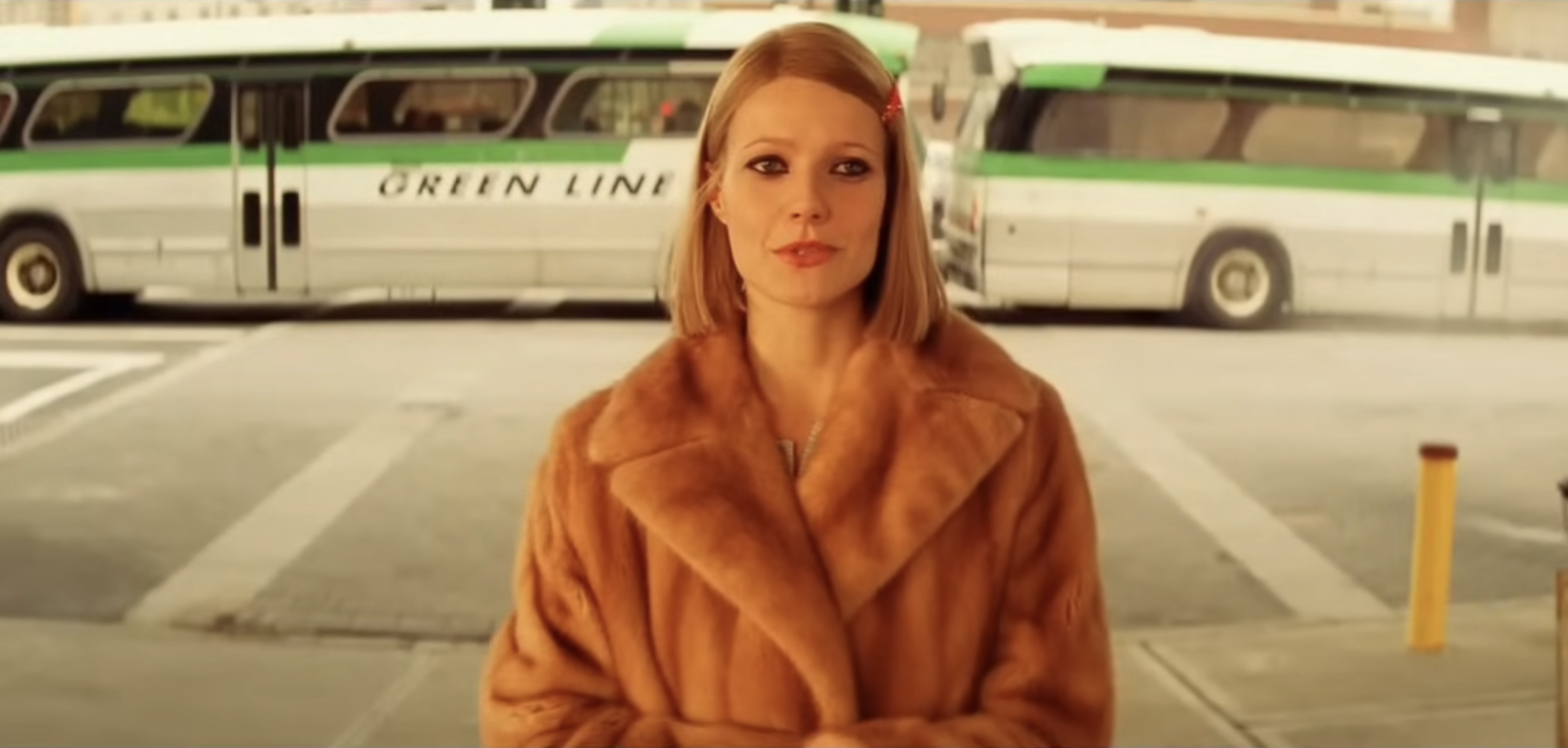
POSTER: Thats a great story. We were told a great story by Cameron Crowe that he went and saw Royal Tenenbaums with Jackson Browne. When Gwyneth Paltrow emerges from the bus and “These Days” starts to play, which I think is probably one of Wes’ hallmark cinematic moments, Jackson Browne leans into Cameron Crowe and goes, “Man, I used to play guitar like that.” And Cameron Crowe goes, “That’s you playing guitar.” (laughs) We’re gonna have Jackson Browne playing “These Days” at the shows.
KUPPER: That’s incredible.
POSTER: We’ve been asked over the years to do something like this. Finally, Wes isn’t gonna make another movie until the end of the year and we had this sort of opening, and we always thought it would be a fun thing to do to be able to play some of the film scores and have the songs intermixed. After all these years of making movie after movie, we thought maybe we’d take a breath and just have fun celebrating the music in the movies.
KUPPER: Yeah, it’s an amazing project. One final question: how have Spotify and all these different streaming platforms changed your process as a director?
POSTER: Well, it hasn’t really changed my direction. Using the streamers can often just make things smoother or faster. It used to be that I’d be in an editing room and I’d have an idea for a song, and then I’d just say, “Alright, I’ll get up early. I’ll get to Tower Records when it opens, and hopefully they’ll have the CD.” Now everything is there. I don’t really supervise music through an algorithm. I like to listen and through study and exploration and questioning experts, help find my way. With streaming services, accessing certain songs or artists is just at my fingertips. I enjoy the Apple interface—making playlists and all their credit information, which could be a lot better. I prefer the Apple interface over the Spotify interface, but I know more people are on Spotify. I obviously work on all the platforms.
Click here to purchase tickets.