
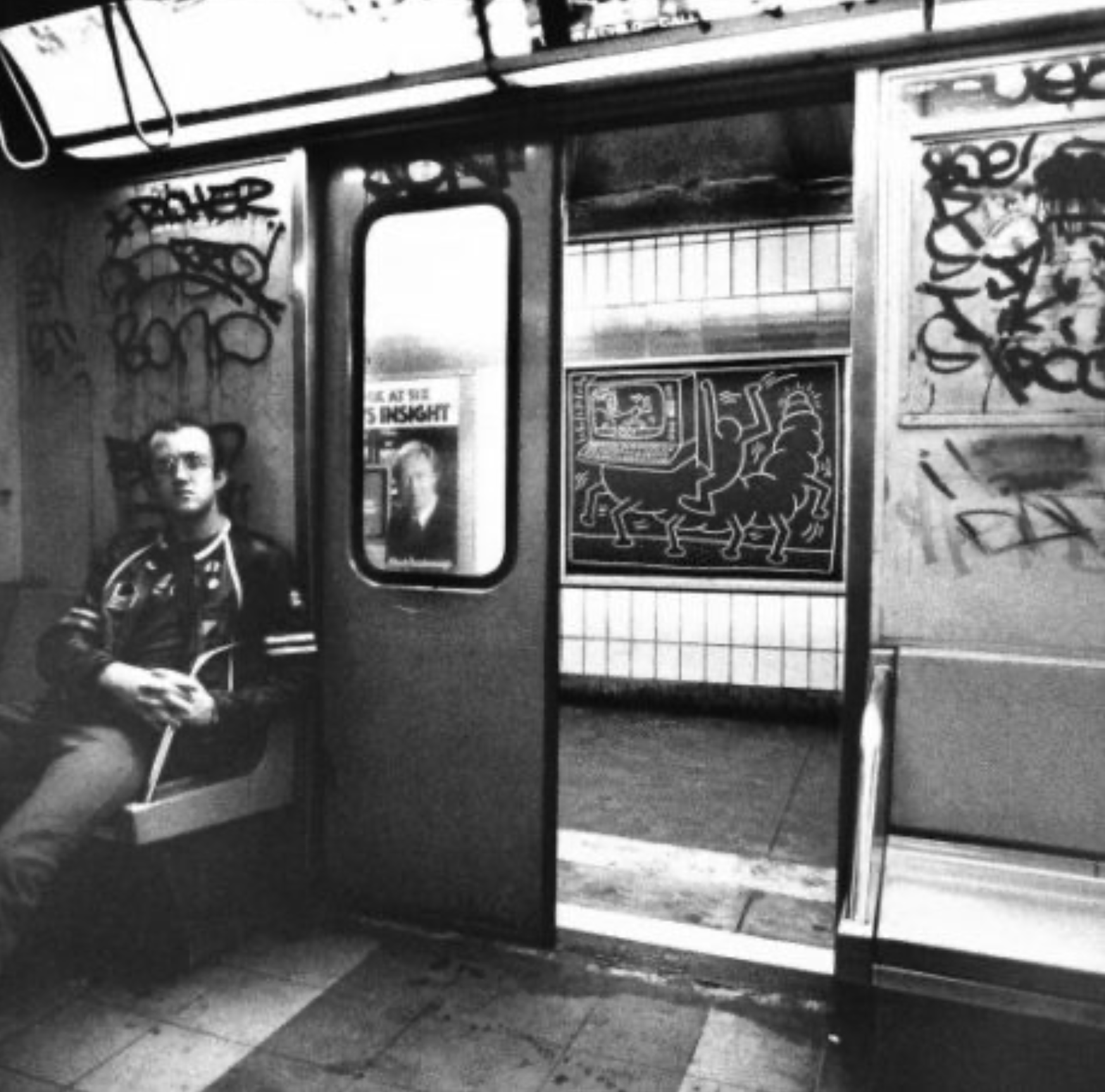
Tseng Kwong Chi
Keith Haring in New York City Subway Car, 1981/2019
Gelatin silver print
20 × 30 inches
text by Lola Titilayo
Downtown/Uptown New York in the Eighties reveals a decade shaped by cultural pressure points – economic insecurity, constitutional backlash, a public health catastrophe, and the debate over who gets to be seen, feeling uncannily familiar in today’s world. The show frames the decade as a blueprint for understanding the problems artists face today, battling with institutions, identity, and the power of image in everyday life.
After the financial crisis of the 1970s, New York entered a decade marked by raw, unpredictable talent, with artists who were defiantly bent on redefining what art could be. Rising artists like Jean-Michel Basquiat, Sherrie Levine, and Christopher Wool began reshaping contemporary art, challenging expectations, and expanding the bounds of artistic expression. The ’80s ushered in a new era, in which experimentation and radical expression were the gravitational center of the scene.
Entire neighborhoods downtown were still gritty, industrial, and half-abandoned, which allowed artists to claim lofts and storefronts as studios, galleries, and performance spaces. The lack of structure made the city fertile ground for artists to experiment, and community was paramount in bringing ideas together. From the economic crisis recovery to the rise of AIDS, art became a way to claim space, identity, and voice often in ways that were provocative and deeply personal to the artist.

Barbara Kruger
Untitled (What me worry?), 1987
Photographic silkscreen on vinyl
107 7⁄8 × 127 15⁄16 inches
One of the defining threads was a turn toward confrontational, socially charged art. Barbara Kruger’s Untitled (What Me Worry?) exemplifies this impulse. Using her signature combination of bold, declarative text layered over ironic phrases and imagery, Kruger exposes the gap between the carefree façade promoted by mass culture and the complicated reality underneath.
The phrase “What me worry?” places the viewer inside that first-person statement, while challenging them to question the role that privilege plays in determining the content and degree of our worries. In doing so, the work pushes the viewer to step outside the passive acceptance of cultural norms and to recognize how language and imagery shape our emotional responses.
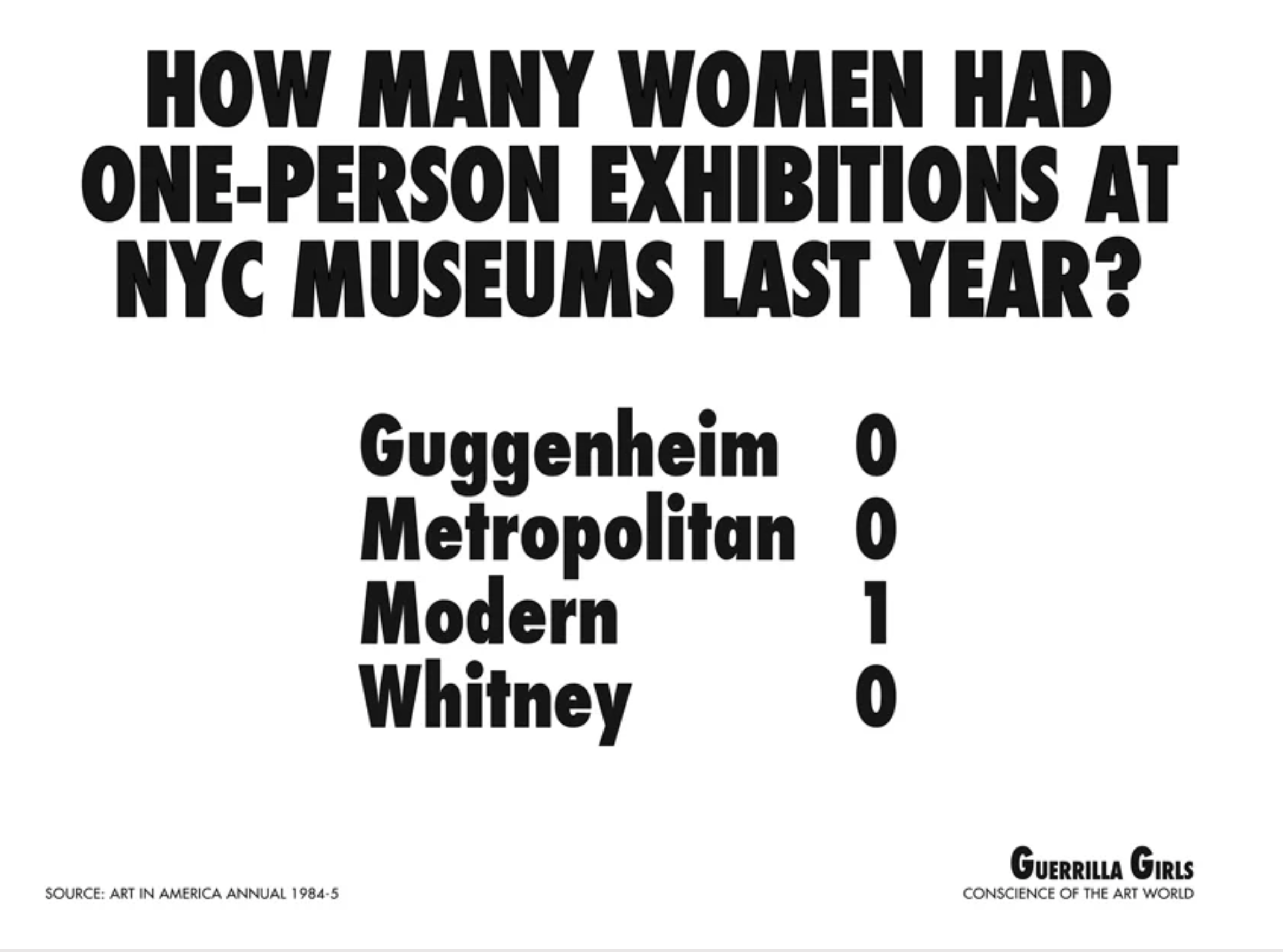
Guerrilla Girls
How Many Women Had One-Person Exhibitions at NYC Museums Last Year?, 1985
Off-set print on paper
Sheet: 17 × 22 inches
On the recurring theme of confrontational art, Guerrilla Girls calls out discrimination in the art world. These bold posters were designed to draw viewers’ attention to the main issue for women in the art industry: the lack of representation in major institutions and solo exhibitions within a global art capital. True to their approach, the Guerrilla Girls maintain anonymity using gorilla masks as a way to shift the attention from the individual to the collective message.
Works such as untitled(fred) by Kenny Scharf, embody the decade’s chaotic energy with the use of clashing patterns, complementary colors, and cartoonish, improvised expressions.
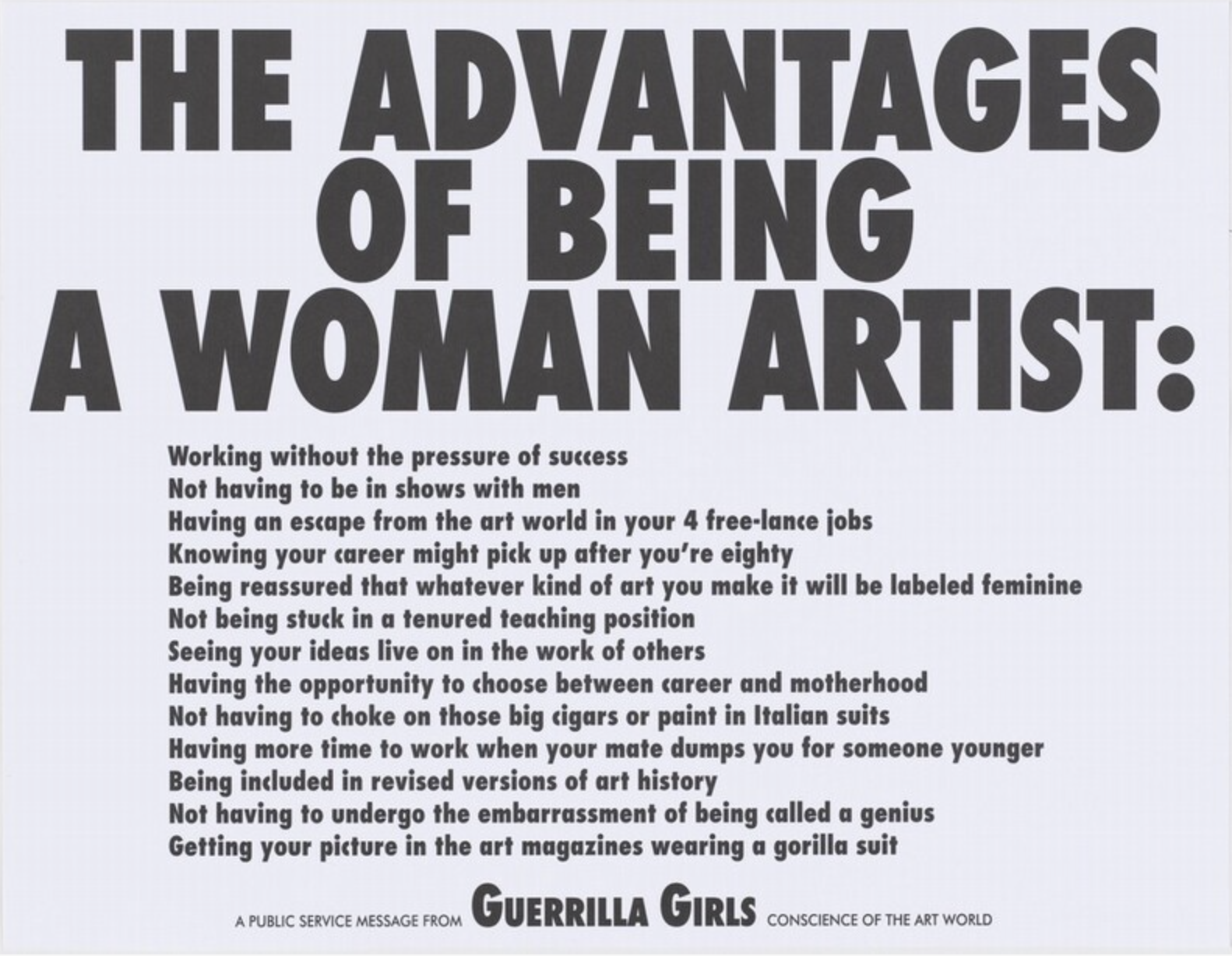
Guerrilla Girls
The Advantages of Being a Woman Artist, 1988
Print on paper
Sheet: 17 × 22 inches
In Jean-Michel Basquiat’s Gravestone, the three-door installation represents the architecture of a monument to life, death, and what lies beyond. Created just a year before his death, the rigid doors form passages to Basquiat’s life and memories. His untitled (Mary Boone) features a rough painting of a crown, with “mary boone” written underneath. A fitting inclusion for the curator, as she marks her triumphant return to the New York art world.
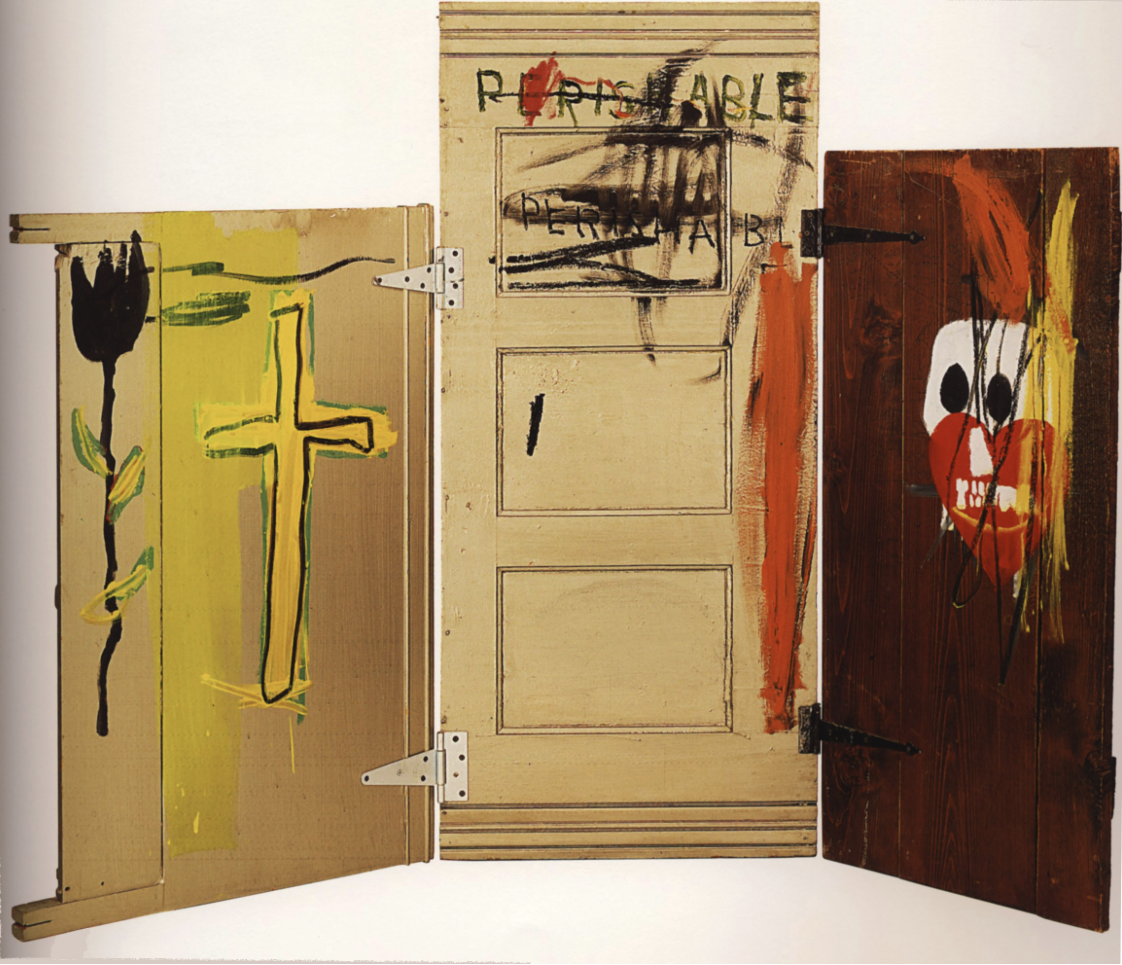
Jean-Michel Basquiat
Gravestone, 1987
Acrylic and oil on wooden panels
5415⁄16 × 687⁄8 × 221⁄16 inches
Keith Haring, along with artists such as González-Torres, David Wojnarowicz, and Niki de Saint Phalle confronted society with its role in the AIDS epidemic. On a formal level, Haring experimented with diverse surfaces such as ceramic vases and chalkboards, adapting his signature dancing figures to new textures while preserving the joyful energy of his line work. Jeff Koons, by contrast, embraced materials like stainless steel, transforming everyday objects into highly-polished, hyper-reflective icons of consumer culture. Together, these artists pushed material boundaries using unexpected textures to reimagine the relationship between art, objects, and cultural norms.
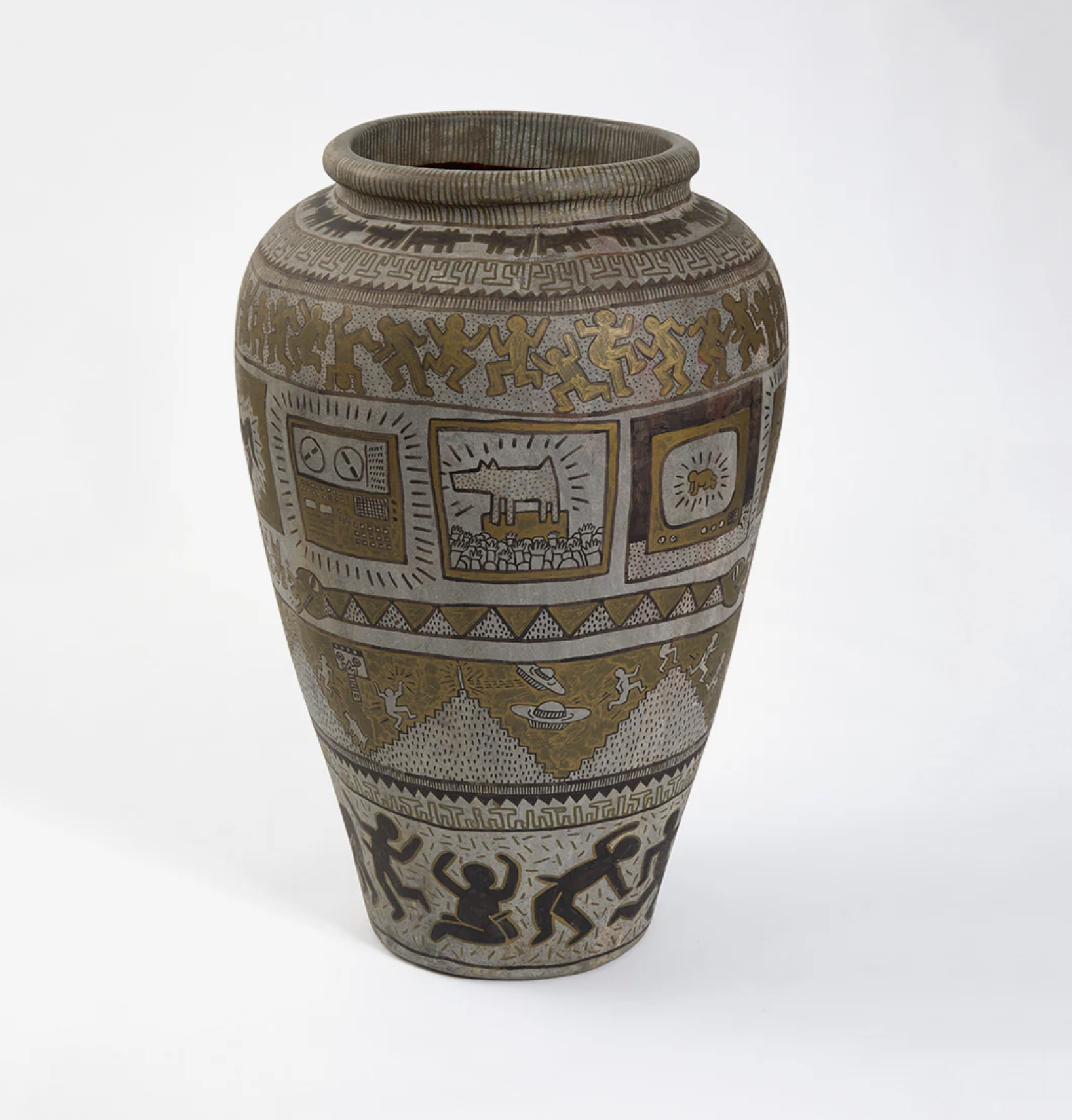
Keith Haring
Untitled (Gold Vase), 1981
Felt-tip pen and enamel on fiberglass vase
40 × 25 × 25 inches
Downtown/Uptown New York in the Eighties is on view through December 13 at Lévy Gorvy Dayan, 19 East 64th Street, New York