
Julie Mehretu
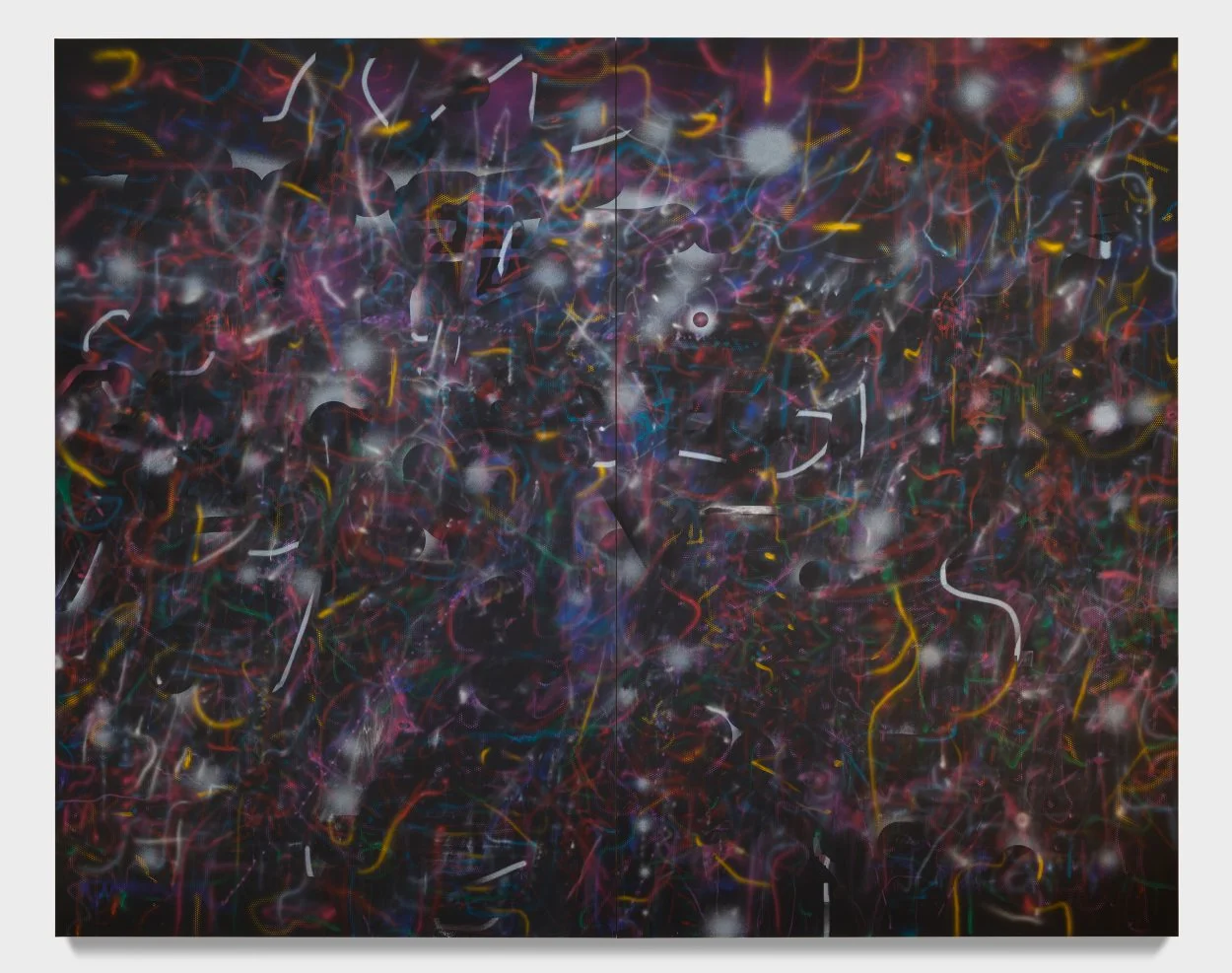
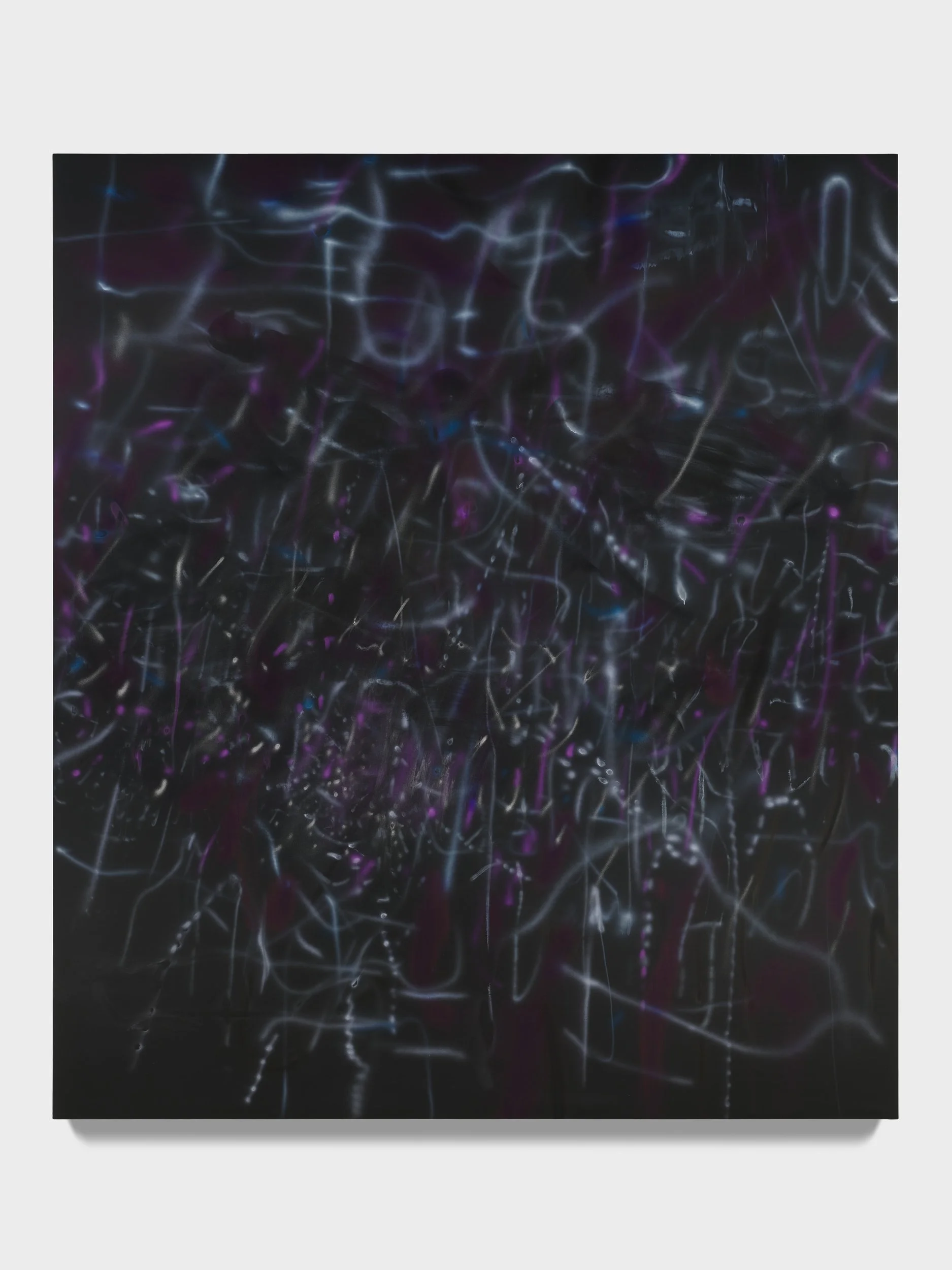
Black Monolith (after Atopolis: For Édouard Glissant by Jack Whitten), 2024-2026
Ink and acrylic on canvas
144 × 180 in (365.8 × 457.2 cm) (overall), 144 × 90 in (365.8 × 228.6 cm) (each)
text by Emma Grimes
Our Days, Like a Shadow (a non-abiding hauntology) is a replete showcase of Julie Mehretu’s latest paintings. All of the works on view are made in two of Mehretu’s familiar styles: her large-scale, abstract canvases and her three-dimensional paintings mounted on metal fixtures (made by Nairy Baghramian), which Mehretu refers to as her TRANSpaintings.
The first work visitors encounter is a striking, 144-by-180-inch black canvas invigorated by abstract dashes and marks that activate every inch of the surface. Its title, Black Monolith (after Atopolis: For Édouard Glissant by Jack Whitten), references a 2014 monumental painting by Jack Whitten. Both formally and conceptually, this work, alongside the exhibit more broadly, revisits themes that have long captivated Mehretu, but it all feels especially urgent and renewed in today’s political climate.
The word “monolith,” referenced in the title, recalls Glissant’s ideas about the right to opacity, specifically his conviction that no person, including oneself, can be fully grasped. Writing in a postcolonial context, Glissant argued that the West had presumed to understand certain people, and viewing anyone as transparent inherently reduces the human.
It’s this refusal of transparency that fiercely resonates throughout Mehretu’s latest body of work. Every canvas in the show changes as one moves around it. Light, streaming in from the floor-to-ceiling windows and ceiling fixtures, hums across the surface. As you move your eyes across, certain strokes glimmer like shooting stars; one would not be far off, even, in describing the experience as cinematic. The paintings are never entirely complete hanging on the wall or staged in their metal fixtures. They require the gaze of the viewer to be stimulated, and their mutability is an intrinsic part of their nature.
Julie Mehretu / Nairy Baghramian
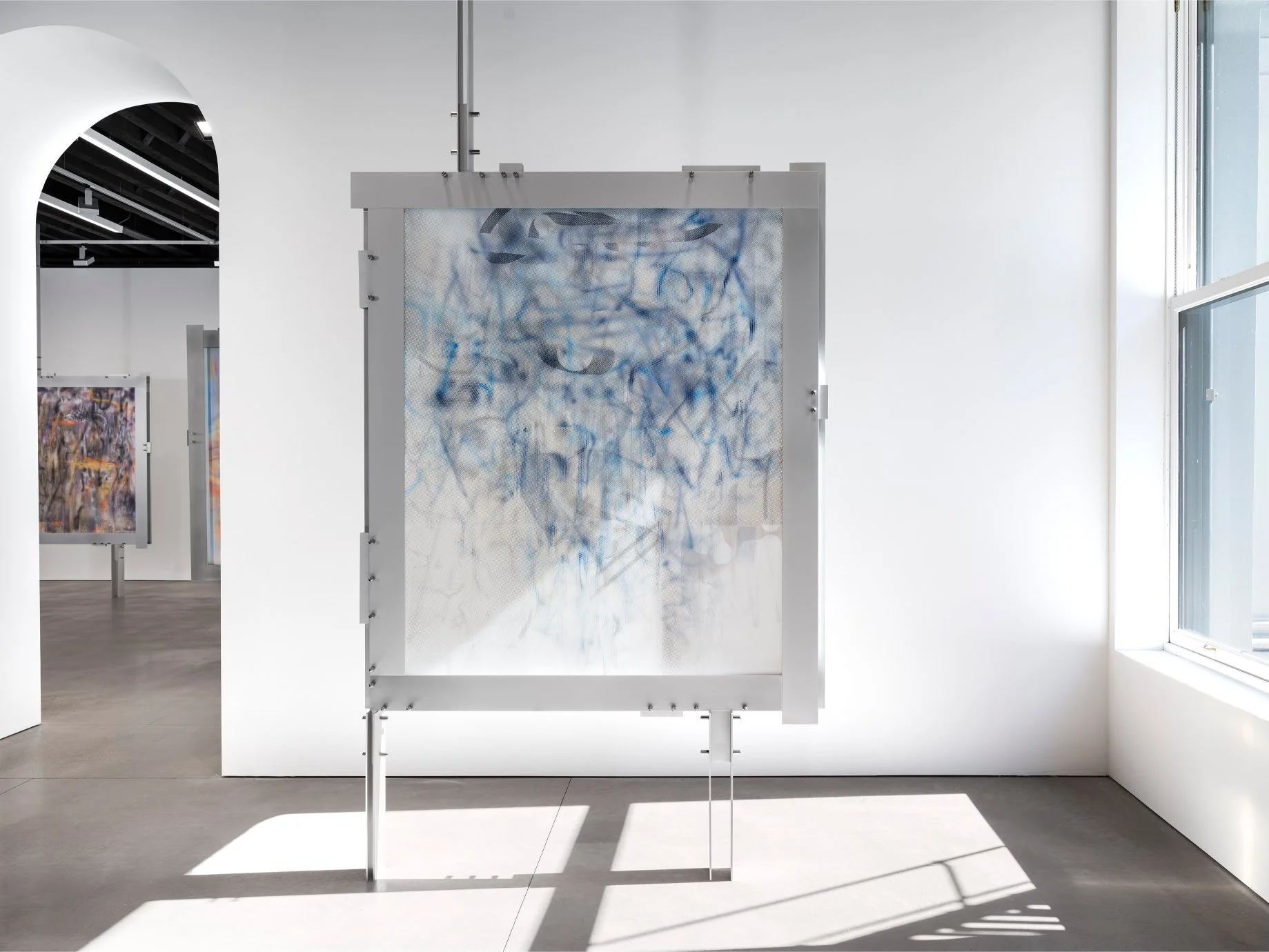
TRANSpaintings (blue) / Upright Brackets, 2024
Ink and acrylic on monofilament polyester mesh in an aluminum sculpture
Painting: 72 × 60 in (182.9 × 152.4 cm)
Mehretu’s TRANSpaintings embody this ethos even more directly. Upon first encounter, they seem transparent: if one waves their hand behind the canvas, its shadow appears from the other side. But this first impression is almost a trick, as they are not really transparent at all. While they are more porous than the typical canvas, they’re still largely opaque and refuse to be seen through clearly. They also, like the wall canvases, transform as one walks around them. They depend on the changing conditions of the light and your eyes, which alter the moment-by-moment manifestation of the painted material.
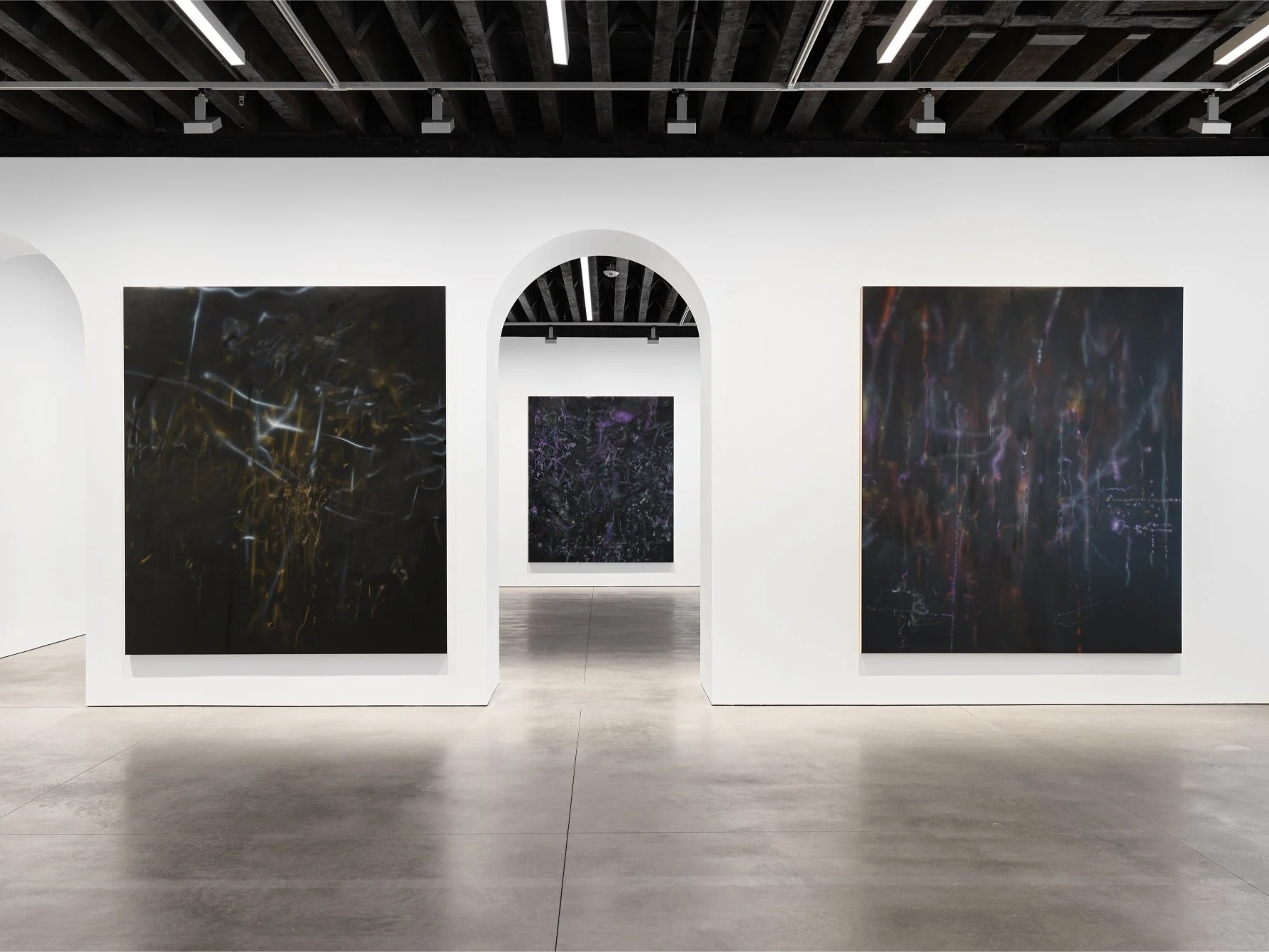
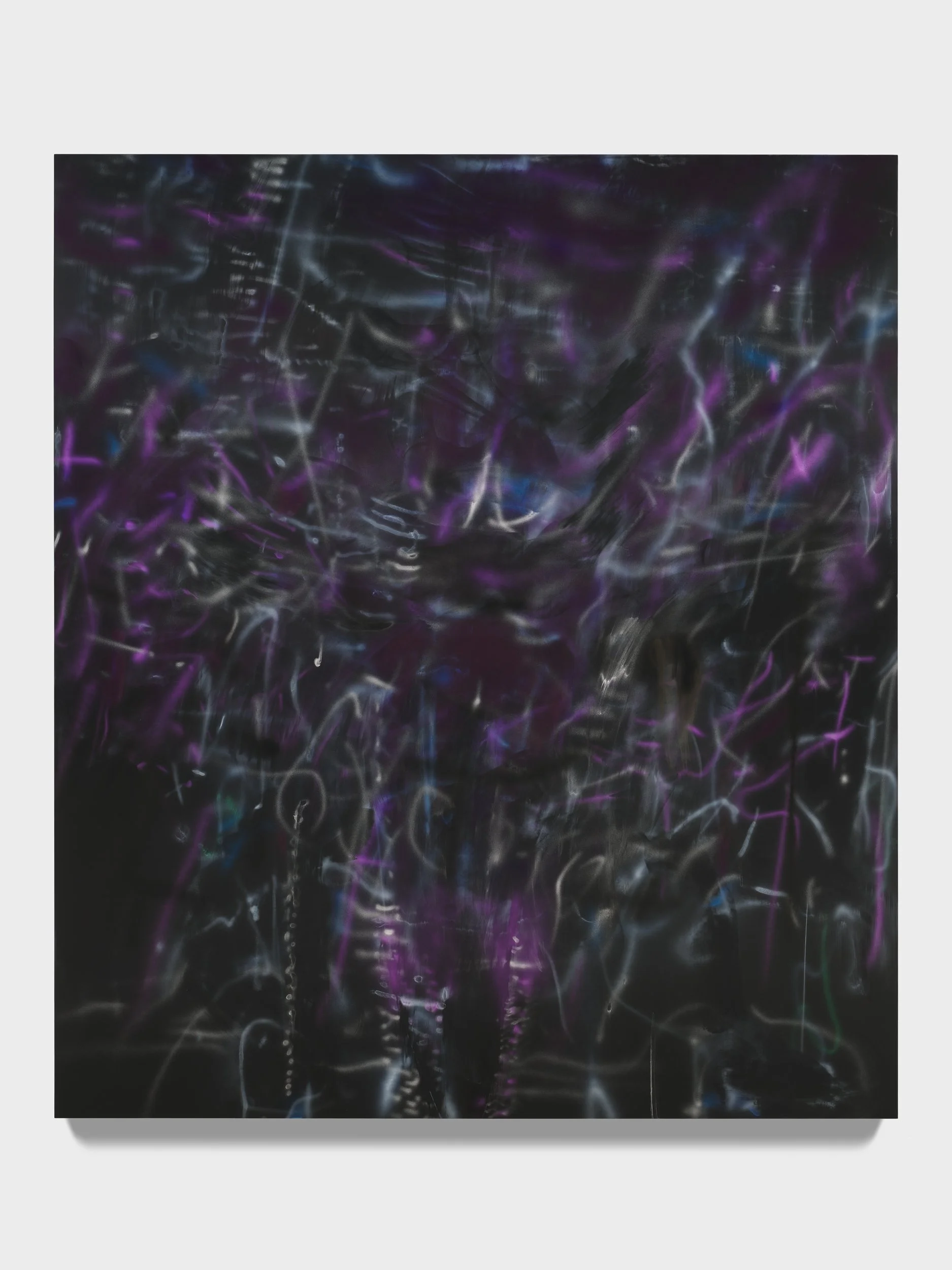
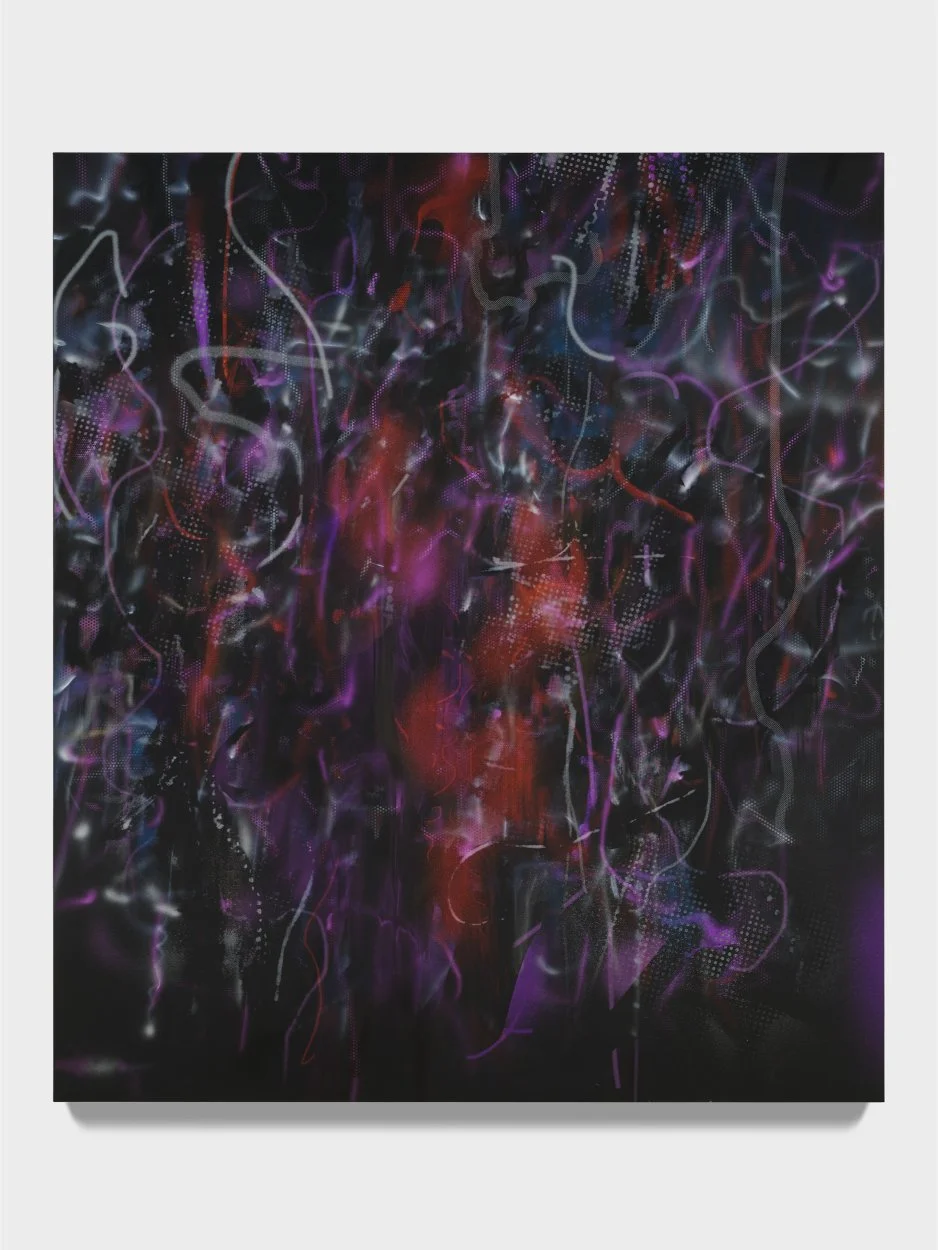
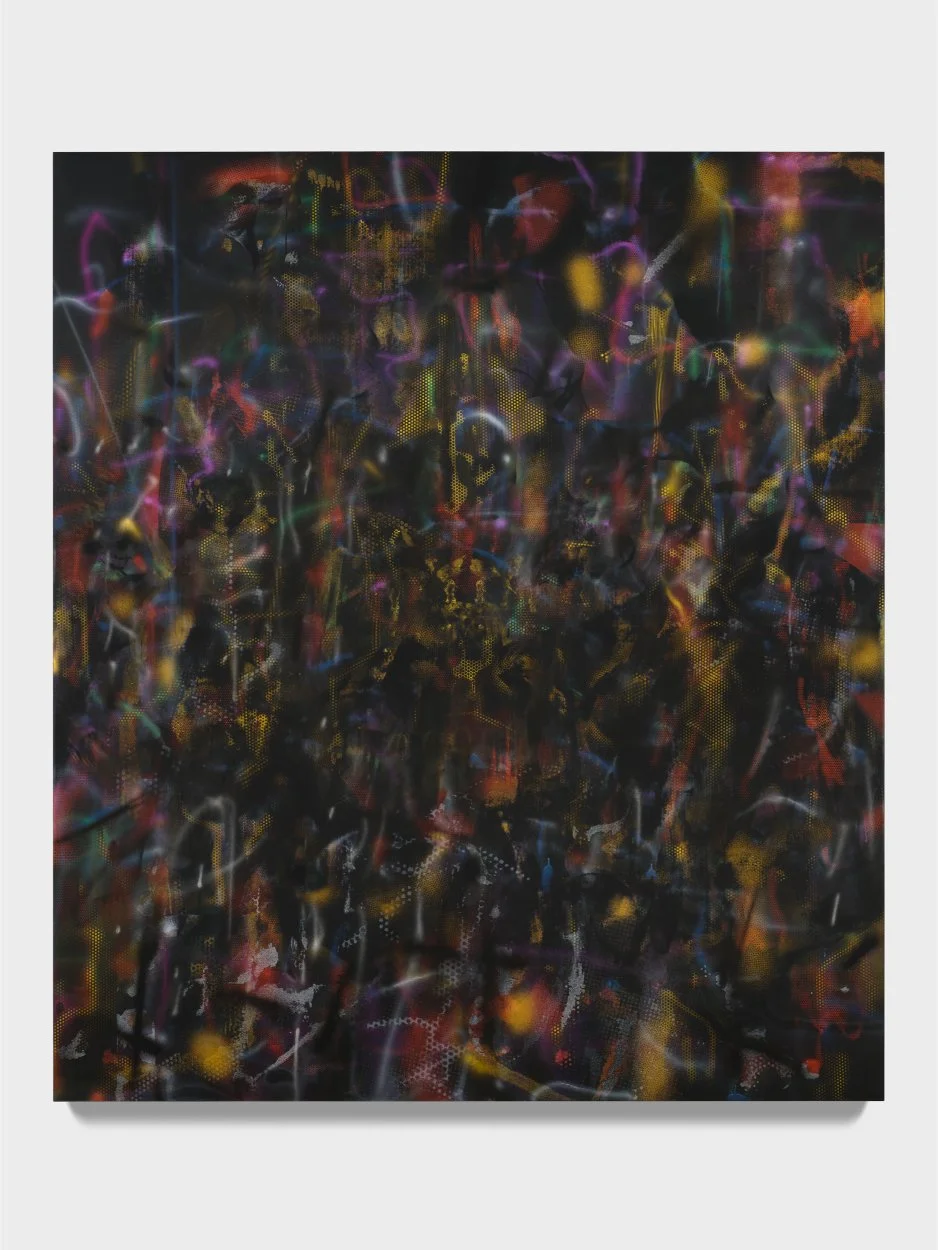
The second floor contains numerous, a near overwhelming amount, TRANSpaintings in varying colors and configurations. By the time one reaches the third floor, which holds many wall canvases done in a similar shade as Black Monolith, one has the sense that the exhibit is testing your desire to categorize and generalize. There are simply so many works that resemble each other within such a confined space that you intuitively think about them as a monolith, and it’s precisely this human tendency to classify and group together, which fundamentally eliminates difference and diversity, that the show’s arrangement ends up drawing attention to. The paintings themselves, meanwhile, are reminders of the imperative to refrain from trying to totally understand. They whisper not to be grasped fully, but to be respected in their opacity.
Our Days, Like a Shadow (a non-abiding hauntology) is on view through June 6 at Marian Goodman Gallery, 385 Broadway, New York.