Kristen Stewart Dives Headfirst into Filmmaking

The Chronology of Water, 2025.

text by Emma Grimes

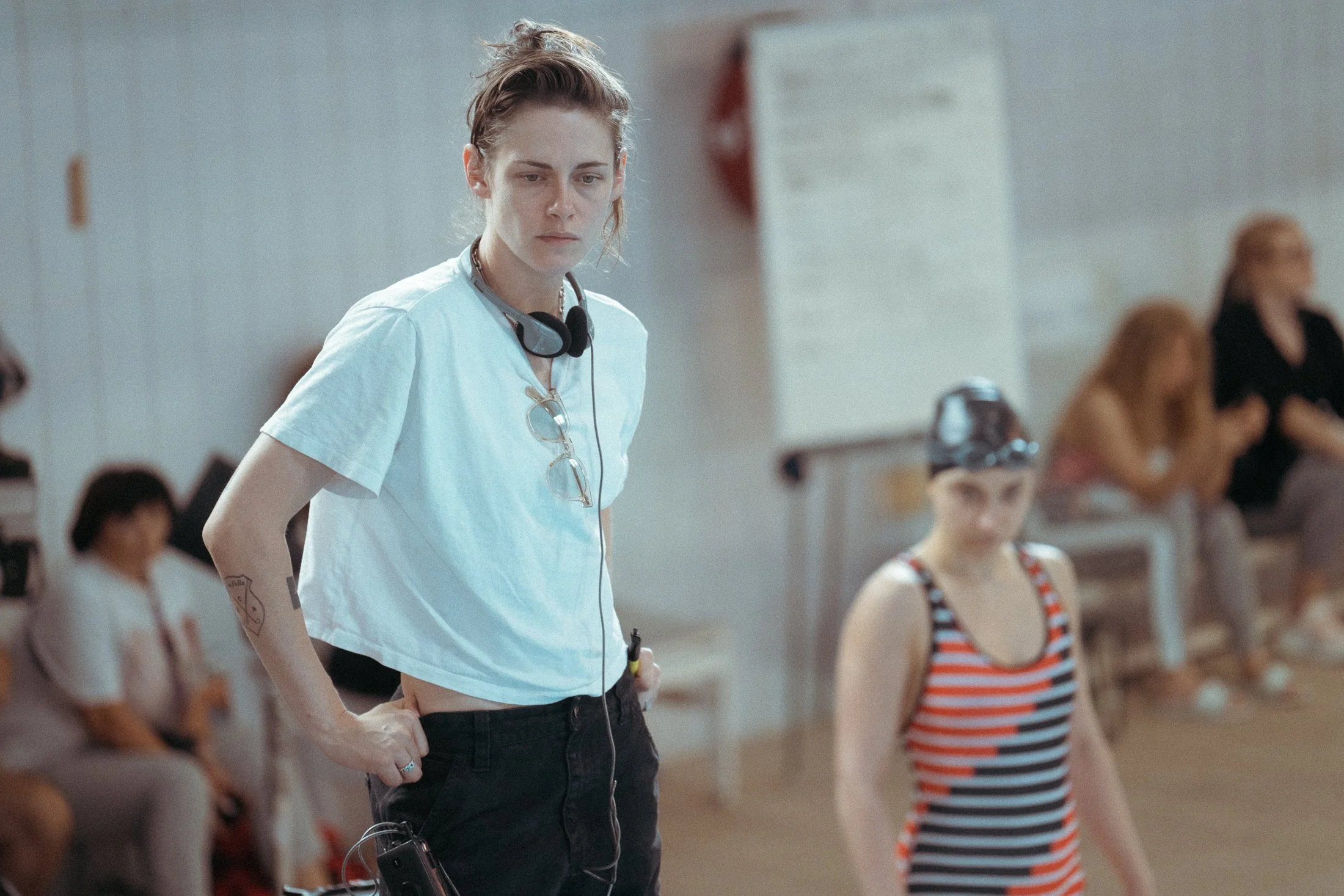
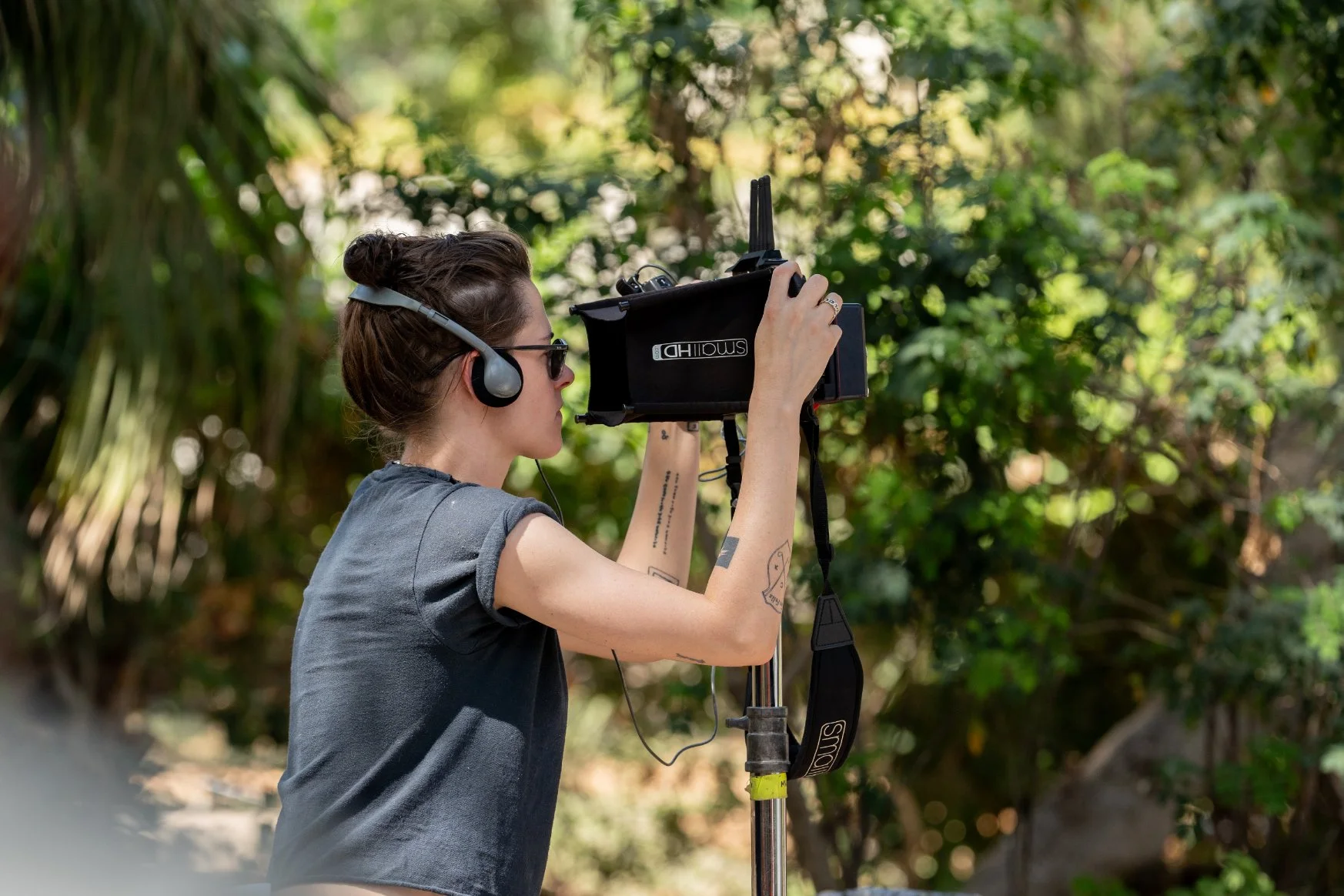
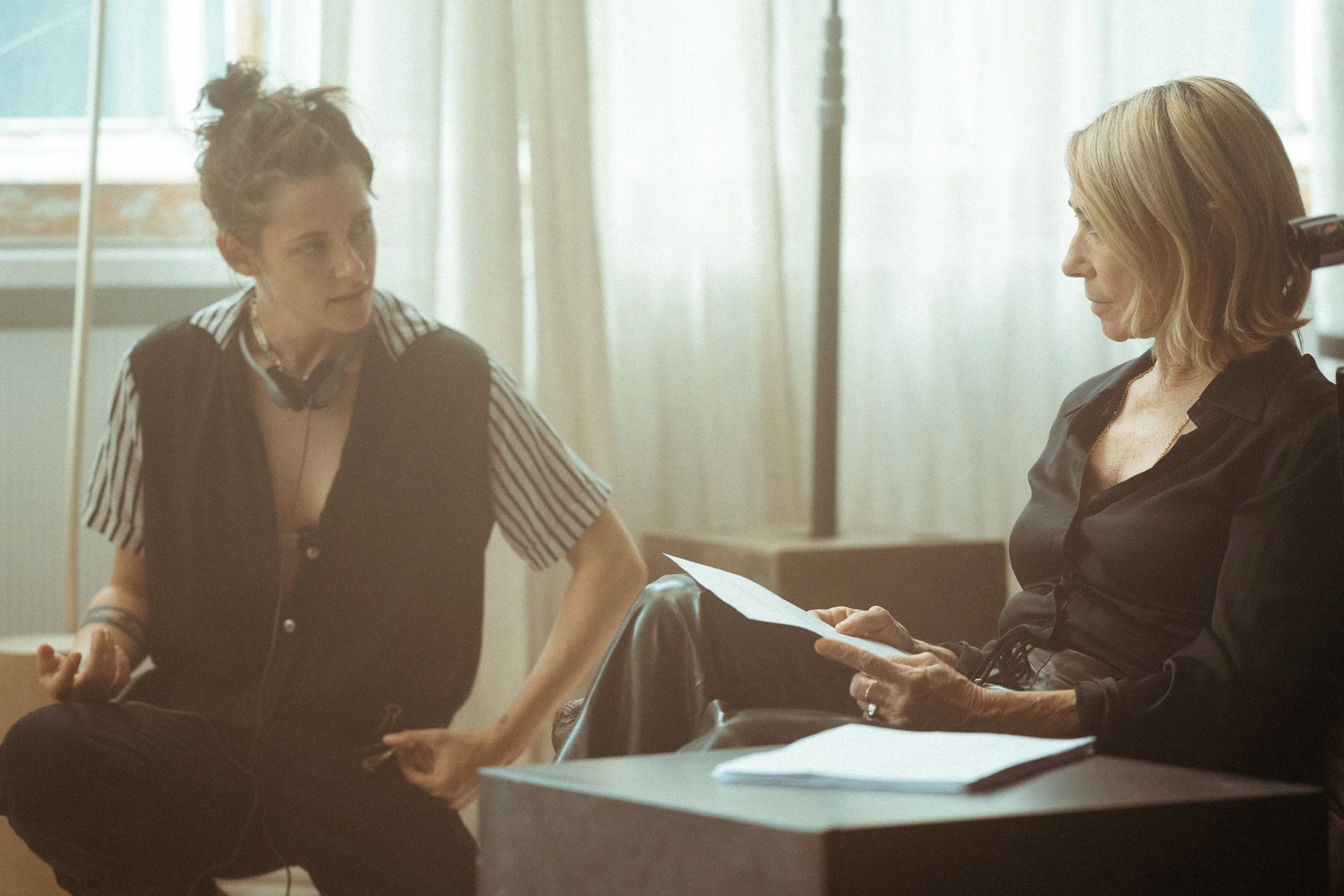
Kristen Stewart’s The Chronology of Water is an audacious debut—a film about girlhood, the making of sexual identity, and the long work of recovering one’s voice. Adapted from Lidia Yuknavitch’s 2011 memoir, it follows a childhood warped by parental abuse, a sanctuary found in swimming, and finally her odyssey into becoming a writer.

Stories of people finding their voices are familiar, as are tales of how art heals and can redeem suffering. The Chronology of Water contains both, but by being anchored to the ruthless specificity of Lidia’s life, it avoids falling into the cliched catharsis that such tales often deliver. Stewart cares about individual formation. She’s interested in how a self, particularly a female one, comes together inside an incessant, gendered environment of surveillance, and how desire takes shape within this structure.

The form of the movie is fragmented and disjointed, which Stewart carries over from the memoir. Early in the book, Yuknavitch writes: “I remember things in retinal flashes. Without order. Your life doesn't happen in any kind of order…It’s all a series of fragments and repetitions and pattern formations.” The movie similarly withholds chronology, jumping across periods of Lidia’s life without locating them in a linear timeframe. 

The film opens with a shot of menstrual blood flowing into a shower drain, followed by abrupt, disjointed images from Lidia’s life. These flashing images only acquire their appropriate context much later. The sound is visceral and can feel invasive. And while the presumed strategy behind this is to drag you straight into Lidia’s world, in moments, it’s raucous to the point of pulling you out.

Those flashing bits of memory place you into her mode of remembering, where certain images, like the corner of her childhood living room, and sounds, like the crack of a belt, intrude the present moment. It’s in this position that one can insert their own fragmented experiences. While many won’t recognize themselves in the precise details of Lidia’s circumstances, there is a universality to her relationship with memory—the way it arrives and interrupts. But as with the sound at times, the harsh editing has a piercing way of yanking you out of the film.

A book, by nature, allows the reader to self-pace. Once you’re seated in a theater, however, you’re committed to enduring whatever the screen throws at you. Stewart throws a lot and trusts you can take it. Her singular vision and fearlessness in executing it is spectacular, even if at risk of being alienating. Stewart made the deliberate choice to stay true to her vision instead of placating a wider audience, and for that reason alone, this film is worth seeing.

Following that introduction of flashing images, the film begins to jump between memories from Lidia’s childhood. In one dismal scene, the family pulls off the road in a Pacific Northwest forest to cut down a Christmas tree. The father takes Lidia’s older sister into the white density of trees, while Lidia and her mother stay in the car. They’re gone long enough to cause uneasiness. When their figures finally reappear in the frosted car window, they have no tree. Claudia opens the door, her face sunken and repulsed. The camera briefly catches the mother in the front seat—face obscured by hair and upholstery—and in a single blink it becomes clear that she understands exactly what has transpired.

The film returns again and again to such memories. Years later, at swim practice, Lidia and her teammates line up in identical orange swimsuits and step onto a scale. For every pound over the limit, the coach gives a “lick,” striking them with a clipboard. We’re never shown the coach’s face, instead the camera stays low, fixed on their torsos. The smack of the wood on flesh punctures your eardrums. When the coach reaches Lidia, he says because she is a freshman, he will “make it count.”

Moments like these, calmly presented, are more disturbing for their implied routine than for their downright repulsiveness. It recalls a line from Maggie Nelson’s The Argonauts, in which Nelson reflects on the violent sexual material she encountered in books as a child and then pauses, writing, “I don’t even want to talk about female sexuality until there is a control group. And there never will be” (66). Stewart gives this idea a form, suggesting that violation doesn’t intrude upon girlhood but is one of the foundational, organizing structures of it.

The film moves forward through Lidia’s adult life and relationships. She marries a gentle man she can’t ever accept, believing he’s too good for her. Later, she marries a man who shares her hunger for self-destruction. In between, she suffers a devastating loss. Finally, a friend brings her to a writing class taught by Ken Kesey, played with full bravado by Jim Belushi. She begins writing and doesn’t stop.

This is where the film’s form finally steadies. The previous jolts of memories ease and scenes lengthen. This is the reward you get for sitting through those first quarters, watching Lidia find her stride. After she leaves her second marriage, she visits a professional dominatrix, played with an intense tenderness by Kim Gordon. The sessions allow her to reframe her pain from something unbearable to something she can move through.

The culmination arrives when Lidia is invited to participate in a reading of her work. Waiting backstage, the scene is crosscut with a recurring image of her as a toddler biting her lip—the moment the narration earlier identified as when she “lost her voice.” Up on stage, reading from her short story “The Chronology of Water,” she constructs a voice for that earlier self when none existed. “Memories are stories,” she says at one point. “So you better come up with one you can live with.”  

One of the memoir’s greatest strengths is in the way Yuknavitch resists framing herself as a heroic figure. No matter how intricately she chronicles her own trials, tribulations, and victories, she never transforms herself into a classic, beat-the-odds winner. Yuknavitch writes from the position of somebody assured in her own significance not because of her accomplishments but because of her personhood (“My sister and I, we were selfish,” she writes. “We wanted selves.”). She refuses to satisfy the demand that a woman’s achievement is what makes her story worth telling.

The film’s conclusion, on the other hand, fails to capture this and inserts into the text what was intentionally left out of the original—Lidia as Hero. Stewart manages this by offering a cliched conclusion that stresses Lidia’s successes, both personal and professional, reshaping the story into a recognizable arc of triumph. It ultimately indulges the familiar expectation that suffering must be redeemed and that only exceptional women are worthy of narrative attention. The conclusion dilutes what precedes it, softening the book’s most radical claim: that an ordinary, messy life is already enough.

Christopher Wool’s See Stop Run Finds Its Home in the Desert

Courtesy of Christopher Wool

text by Emma Grimes


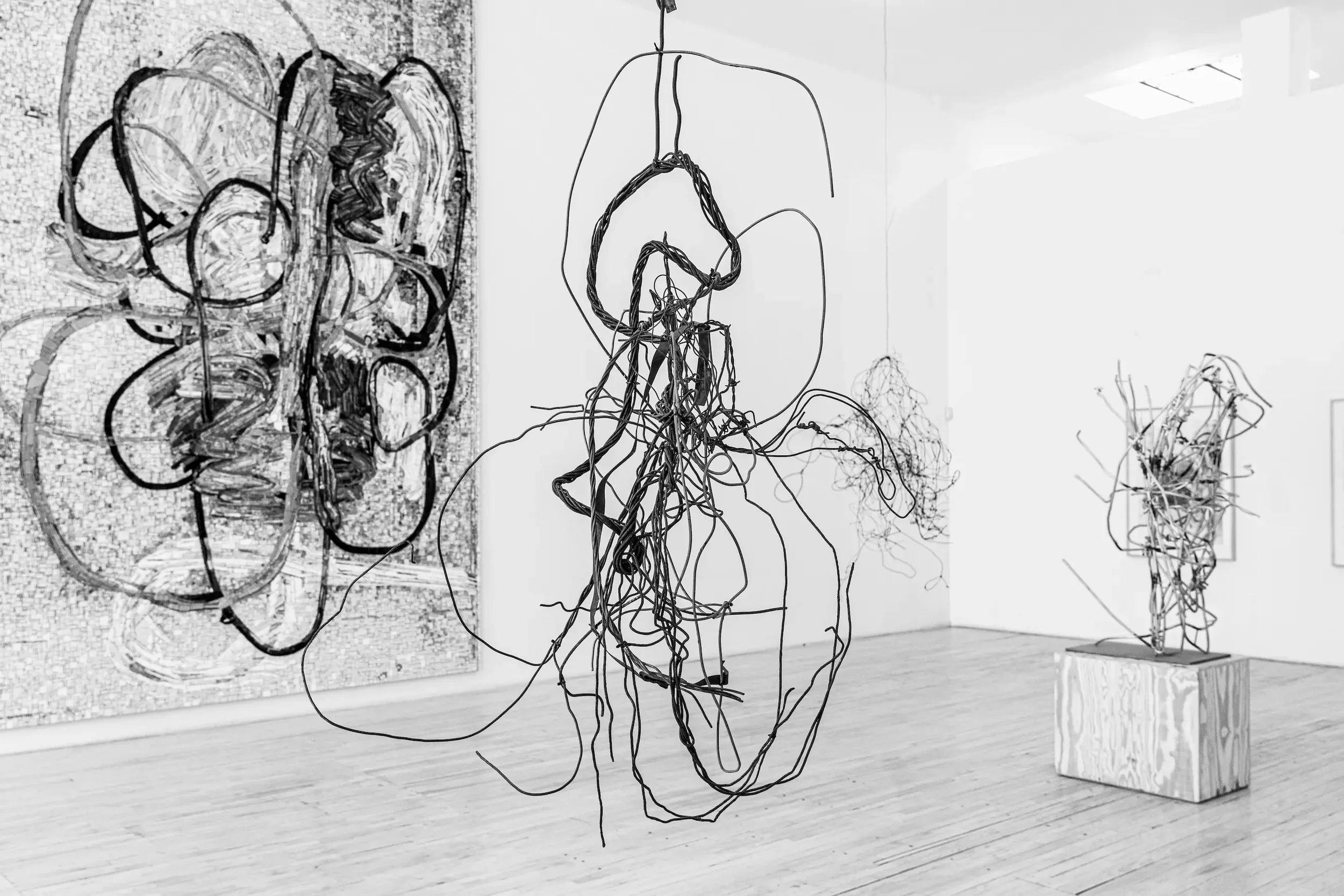
Walking into Christopher Wool’s See Stop Run exhibit in Marfa, you’re first confronted by a massive, spiderweb tangle of cast pipes. The sculpture sprawls across the center of the room without a clear point of origin: knotted and unruly. It feels like some kind of infrastructural system, rather than a single object, mirroring the subjects that fill Wool’s nearby photographs of old tires, scattered debris, and everything in between. To Wool, the natural world is inseparable from human waste.

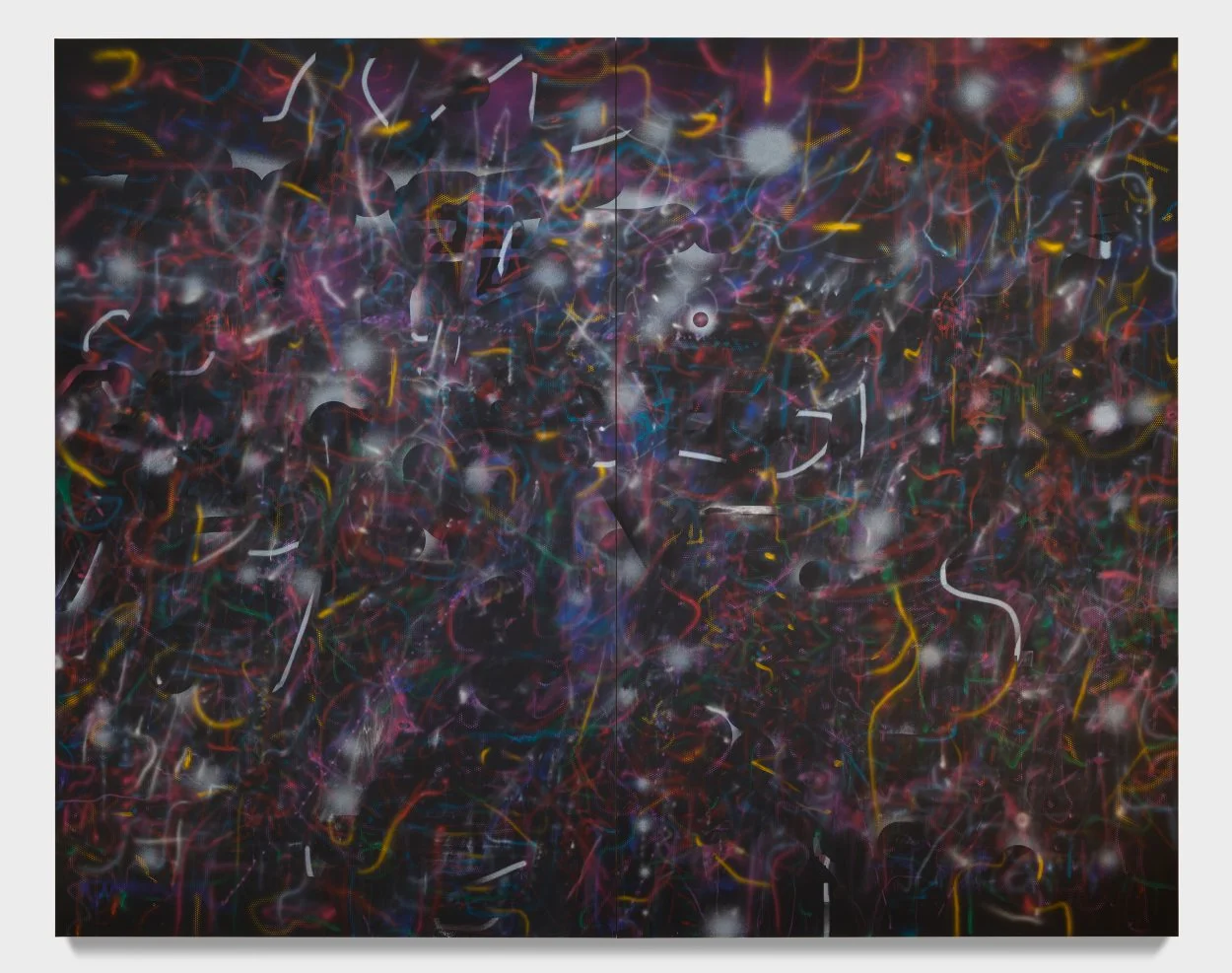
The show spans four rooms across two neighboring buildings, holding a mix of sculptures, photographs taken locally in Marfa, and paintings.

When curator Anne Pontégnie first conceived of See Stop Run, she said that she wanted to get away from “the neutrality of contemporary art spaces, galleries, and institutions” and find somewhere in New York City—where the show originally ran—where the work “could interact with something other than a blank slate.” The show’s first iteration took  place in an old, derelict office building in downtown Manhattan, and critics praised how the paintings and sculptures engaged with the space’s cracked floors, exposed wiring, and peeling surfaces, creating what a New York Times critic described as “visual rhymes.”

When the exhibition moved to Marfa in the spring of 2025 and took up space in the Brite Building, the presentation changed. It’s now in exactly the kind of pristine, white-walled space that Pontégnie wanted to avoid. Only one of the rooms contains the same wildness as the New York show, and this has the impact of lessening the dialogue between Wool’s work and its surroundings from shouts to whispers.

Courtesy of Christopher Wool

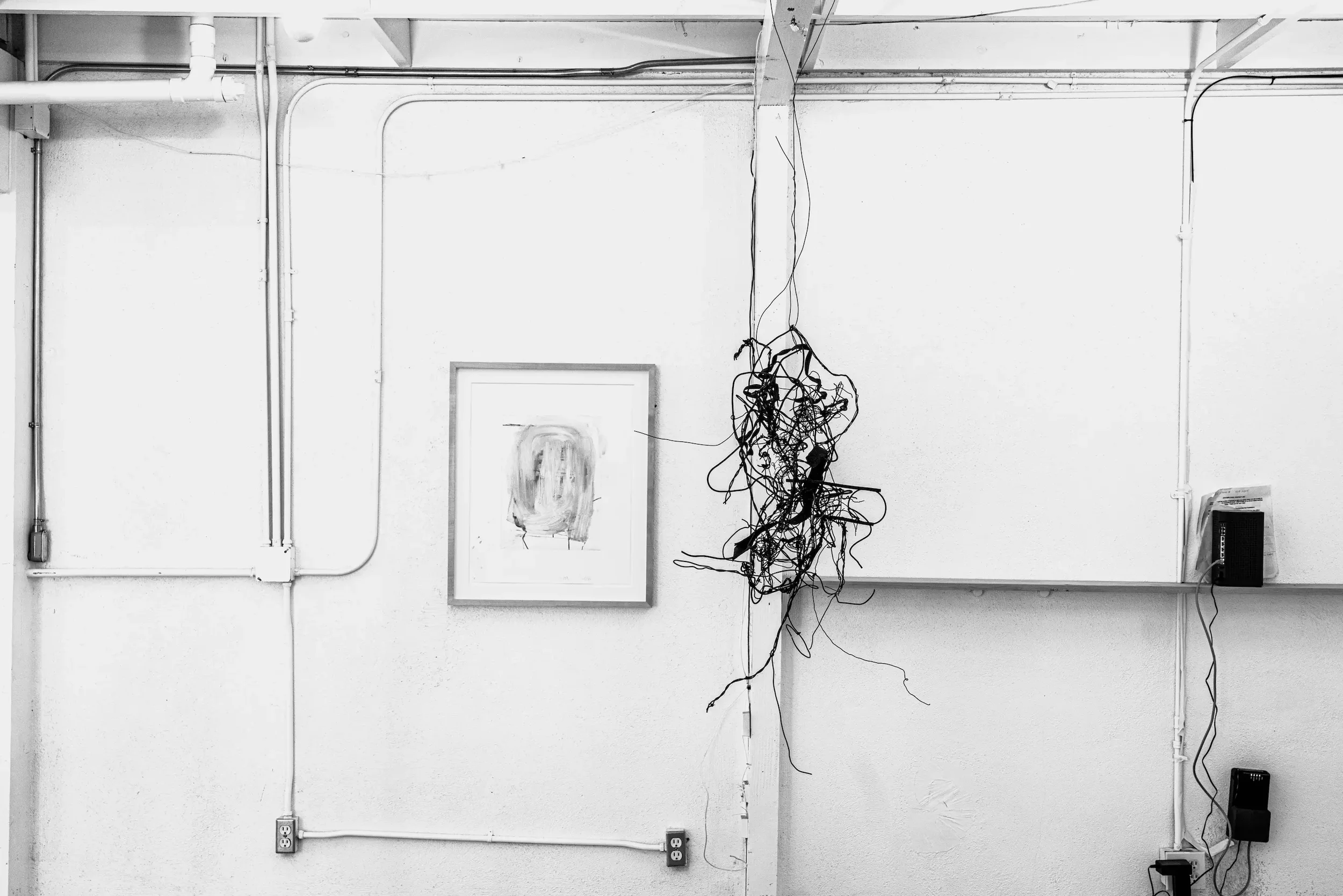
The exhibition here in Marfa is thoughtfully curated, but it doesn’t feel accurate to describe it as controlled chaos exactly, because what makes Wool’s work so compelling is how little it wants to be controlled. Most of the show does unfold in white gallery walls, but one room upstairs has a kitchenette, and another resembles the environment of the original New York show. Here, there are holes left behind by old nails and cracks in the floors. The wear and tear of the building—alongside the refrigerator and sink—feels as meaningful as the art itself because Wool’s work never seeks to dominate the space; it only asks to live in it. 

One of the clearest examples is a wiry sculpture suspended from the ceiling, held by a black cord looped over a silver hook. It’s not immediately apparent where the artwork ends, and the means of display begins. Is the cord a part of the sculpture or just what’s holding it up? Wool seems to be testing the limits of his own work.

If a wire slipped loose or the floor cracked underfoot, or perhaps if one of his hanging sculptures fell to the ground, that wouldn’t change anything. It might even add something. And even though the Marfa iteration of See Stop Run offers less in terms of its setting, it ultimately delivers something even more compelling.

Courtesy of Christopher Wool

Courtesy of Christopher Wool

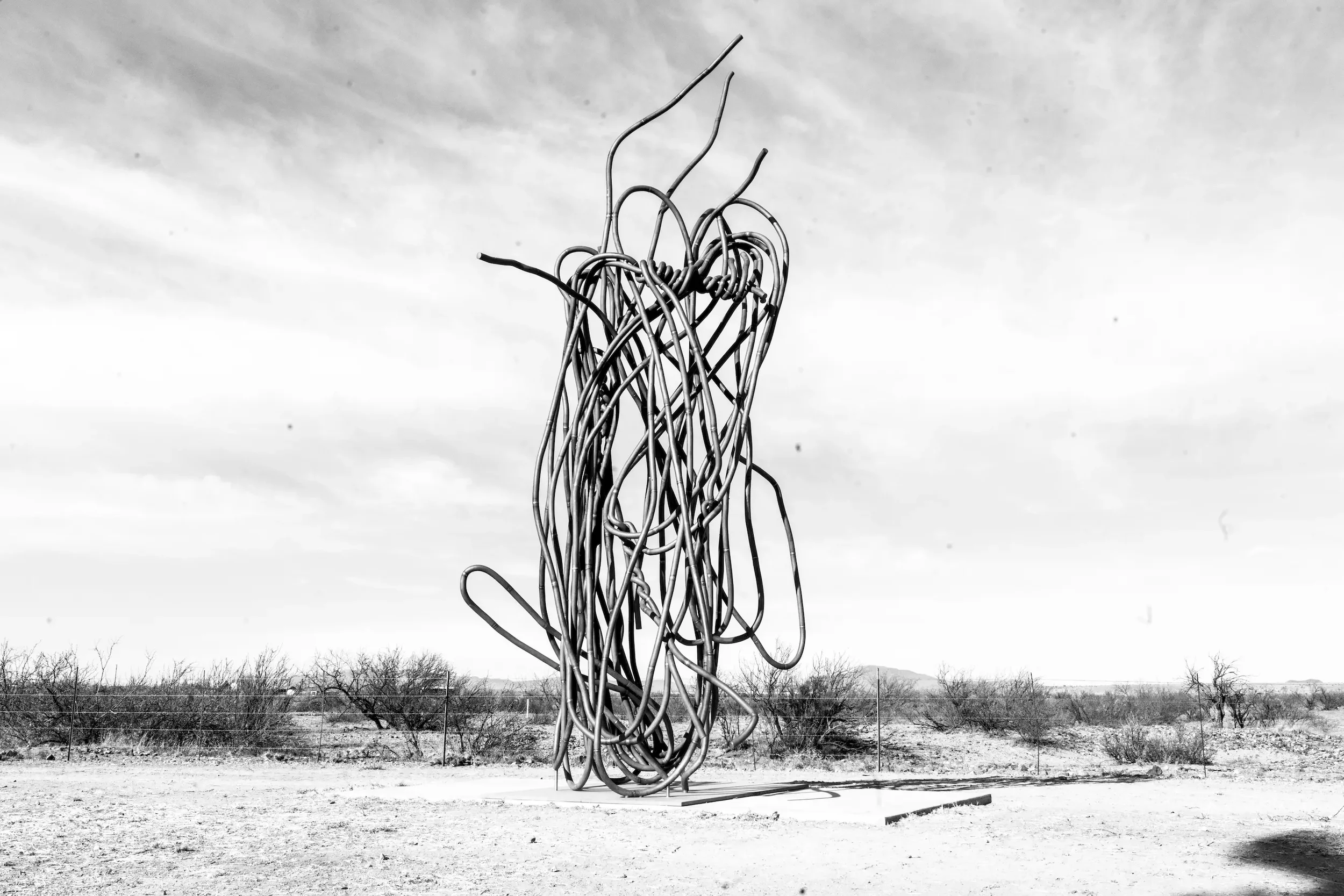
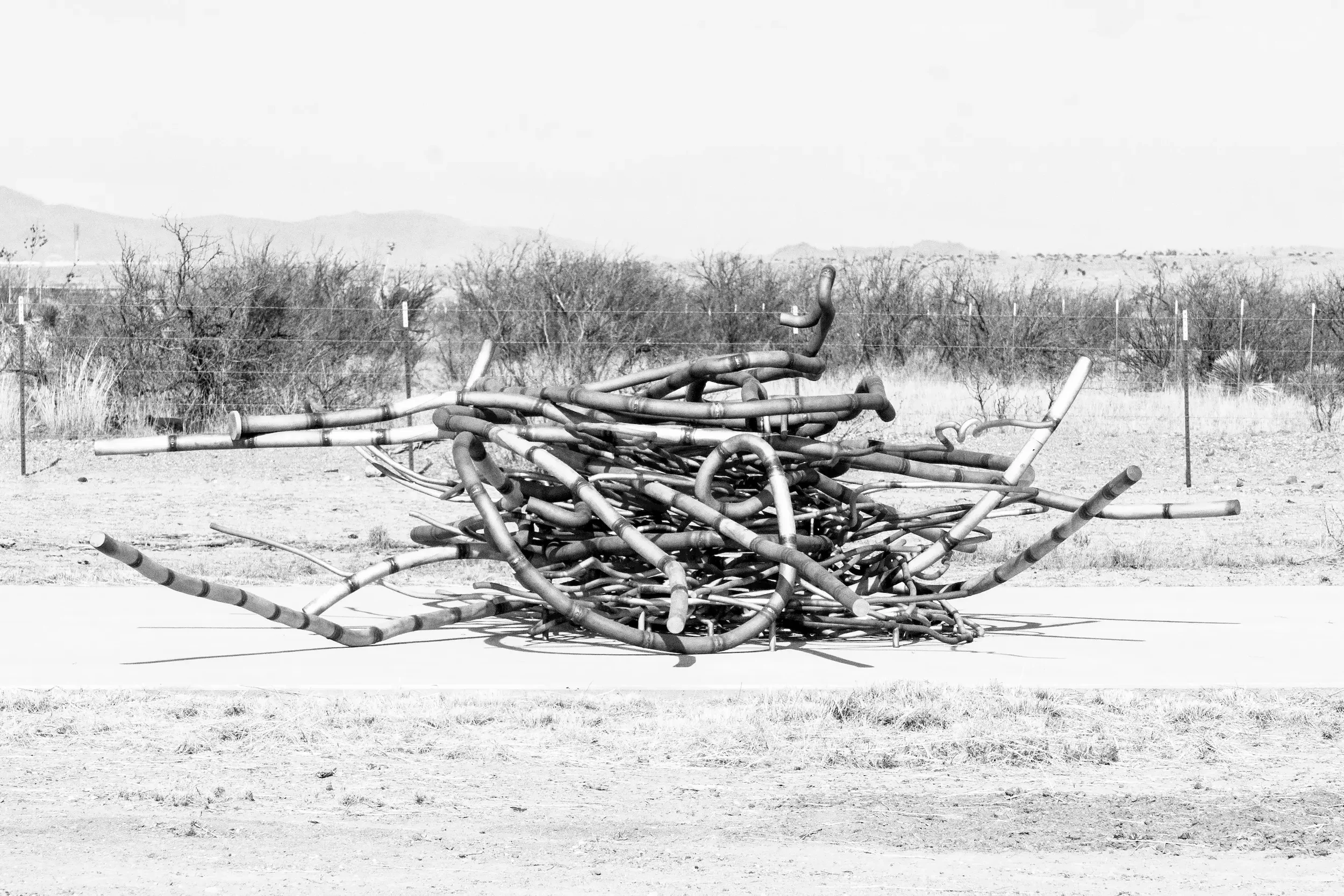
This comes in the form of three outdoor sculptures, which require a short drive to see, that feel like both the show’s natural conclusion and its highlight. Placed directly in the Chihuahuan desert, the works move forward from interacting with artificial space into dealing directly with the natural world as it is.

The steel forms resemble things already scattered across the landscape— tumbleweeds and tree roots and branches—but unlike the natural parallels, these ones don’t move or decay. Gazing at them, you can feel the human hands that meticulously crafted them. And meanwhile, the real desert continues its course all around them, indifferent. The sun rises and sets. The mountains stand tall.

In this way, Wool sets up a confrontation between two kinds of being: the natural world, which is alive precisely because it changes and dies, and his hand-crafted sculptures, which can endure only by refusing to be part of that cycle. Standing among these works as the wind forcefully blows and the Texas sun beams, you hover between these two modes of existence: the steel that combats mutability and the real, organic matter that changes, blows away, disappears.

See Stop Run is on view through Spring 2027 in the Brite Building, Marfa, Texas.

Richard Linklater Offers a Sweet, if Tame, Ode to Jean-Luc Godard


text by Emma Grimes


Richard Linklater’s latest film, Nouvelle Vague, is a sentimental love letter to the French New Wave—that brief postwar period in cinema when a group of young critics with nerve and conviction just about altered every rule about how movies could look and how we should think about them. In celebrating these filmmakers, Linklater offers a pleasant and affectionate reminder of their originality.

The film opens in 1959, as Francois Truffaut’s The 400 Blows makes its Cannes debut, and a restless Jean-Luc Godard, still a critic at Cahiers du Cinema, is itching to direct his first feature film. Cahiers is now known as the breeding ground for these insolent critics-turned-directors that punctured the French film establishment. As critic David Kehr wrote, it was the start of “film criticism as a contact sport.”

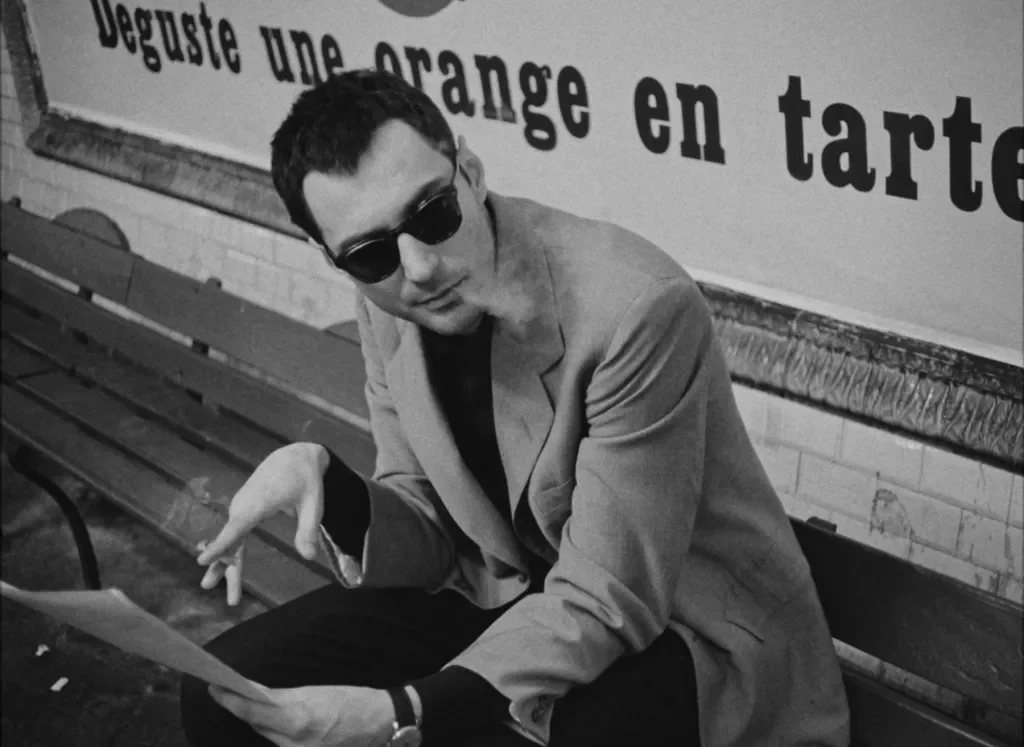
To Godard, his role as a filmmaker was a continuation of his role as critic. He didn’t see them as two separate pursuits; rather, his films were his criticism too, just imparted differently. And soon enough, he got his shot at making that film with a script from Truffaut, allegedly based on a real crime story pulled from the newspaper. The eventual result, Breathless, is restless, improvised, and spectacularly alive.

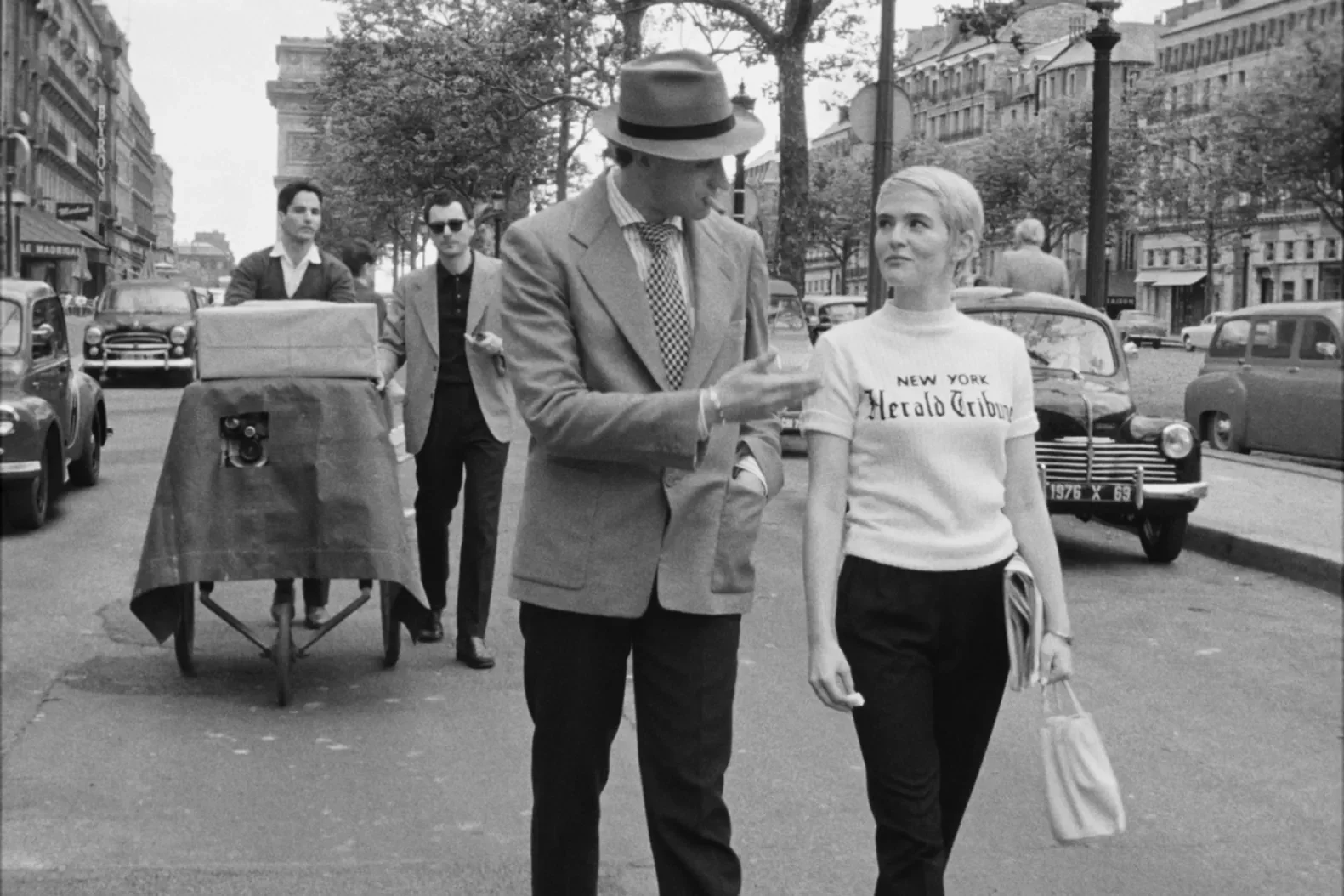
Linklater succinctly captures Godard’s taut vision and stubbornness as a director. A significant portion of the film takes place in Parisian bistros, where the cast and crew lounge around, waiting for their cue from Godard. Jean-Paul Belmondo (Aubry Dullin) and Jean Seberg (Zoey Deutch) don’t rehearse their lines because there are no lines to rehearse in advance. Some days on set last just two hours. His peculiar and erratic filmmaking approach causes Seberg to doubt whether he has any overarching vision at all. She wants to call it quits at one point.

While some or all of these historical facts about the making of the movie may be familiar to cinephiles, it’s a pleasure to watch it all unfold on the big screen and in the hands of these actors. Guillaume Marbeck gives a brooding and very focused Godard, but Deutch steals the screen as Seberg. She is sharp, radiant, and elusive. You can immediately understand why Godard wanted to capture her unguarded, candid self.

And the rest of the Godard checklist, Linklater crosses off: his use of the handheld camera, on-location shooting, disregard for continuity editing, and his insistence on capturing spontaneity. The critic Armond White wrote in 2007 that half a century of familiarity with Breathless has bred “a certain kind of nonchalance” about the wildly original and trailblazing film. “The excitement of discovery is almost gone,” White writes, “meaning it’s time for rediscovery.”

Linklater succeeds at doing just that, allowing a modern audience to see it anew—to feel, perhaps for the first time, how pioneering and defiant these young filmmakers once were and how strange their perspective once seemed. We meet and spend a little time with other filmmakers, including Truffaut, Jacques Rivette, Éric Rohmer, and Robert Bresson.

But in rediscovering Godard and his cohort of iconoclasts, Linklater inevitably folds something once radical into a consumable product with duller edges. This paradox is inevitable for the project he’s after, that of sincerely celebrating the New Wave’s pioneering achievements. Nevertheless, it risks feeling like one of those “vintage” t-shirts sold online—retro and unique in spirit, but mass-produced in reality.

Still, none of this diminishes the pleasure of watching this film. I loved every minute. The wood-fire crackling of the film reel, the warmth and ebullience of Deutch’s embodiment of Seberg, the beautiful imitations of original shots from Breathless—it’s all undeniably, intensely pleasurable.

But to truly honor Godard would mean scandalizing us again, making something unruly instead of sweet and digestible. Nouvelle Vague isn’t any fresher than convenience store candy, but it does taste just as nice and is impossible to resist.