photograph by Liz Fish
text by Oliver Kupper
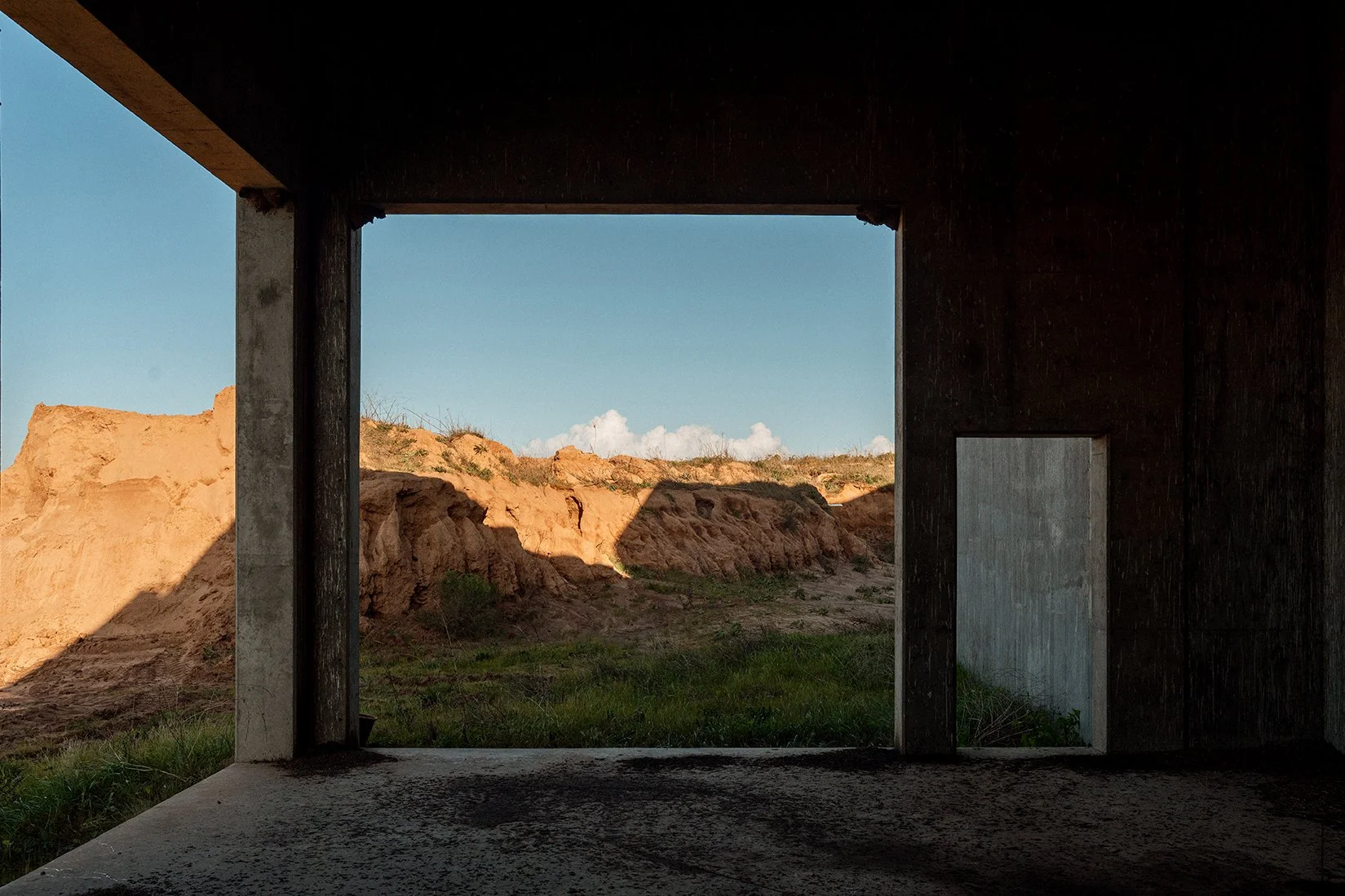
There is something so perfectly appropriate about encountering Cole Sternberg’s along the high embankments inside a concrete bunker in the Santa Maria Valley. The building was conceived for human use but never truly fulfilled its purpose; abandoned, it became something else, quietly occupied by plants, animals, moisture, and time. Sternberg’s paintings arrive after the fact, acting as just another layer in its ongoing transformation.
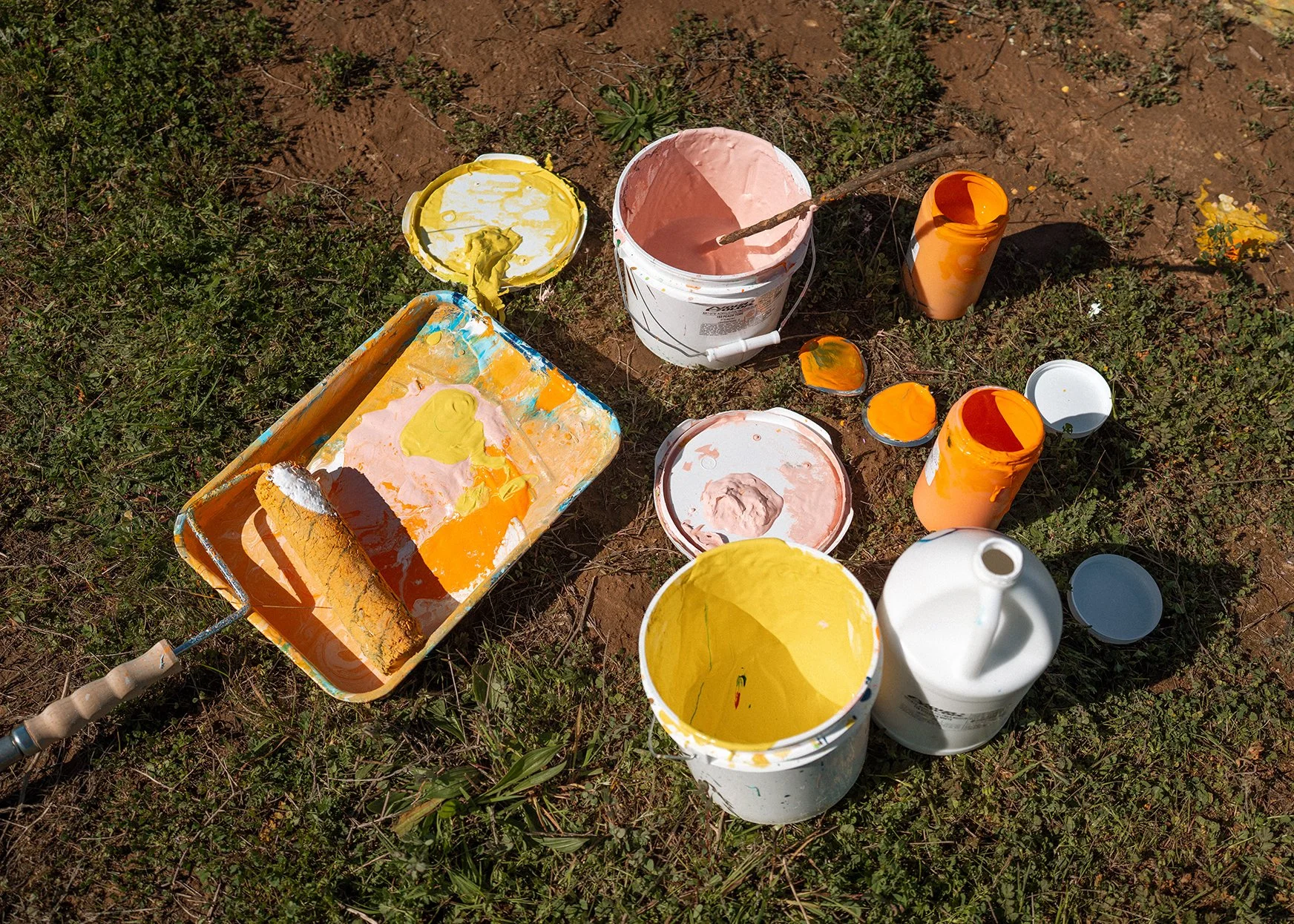
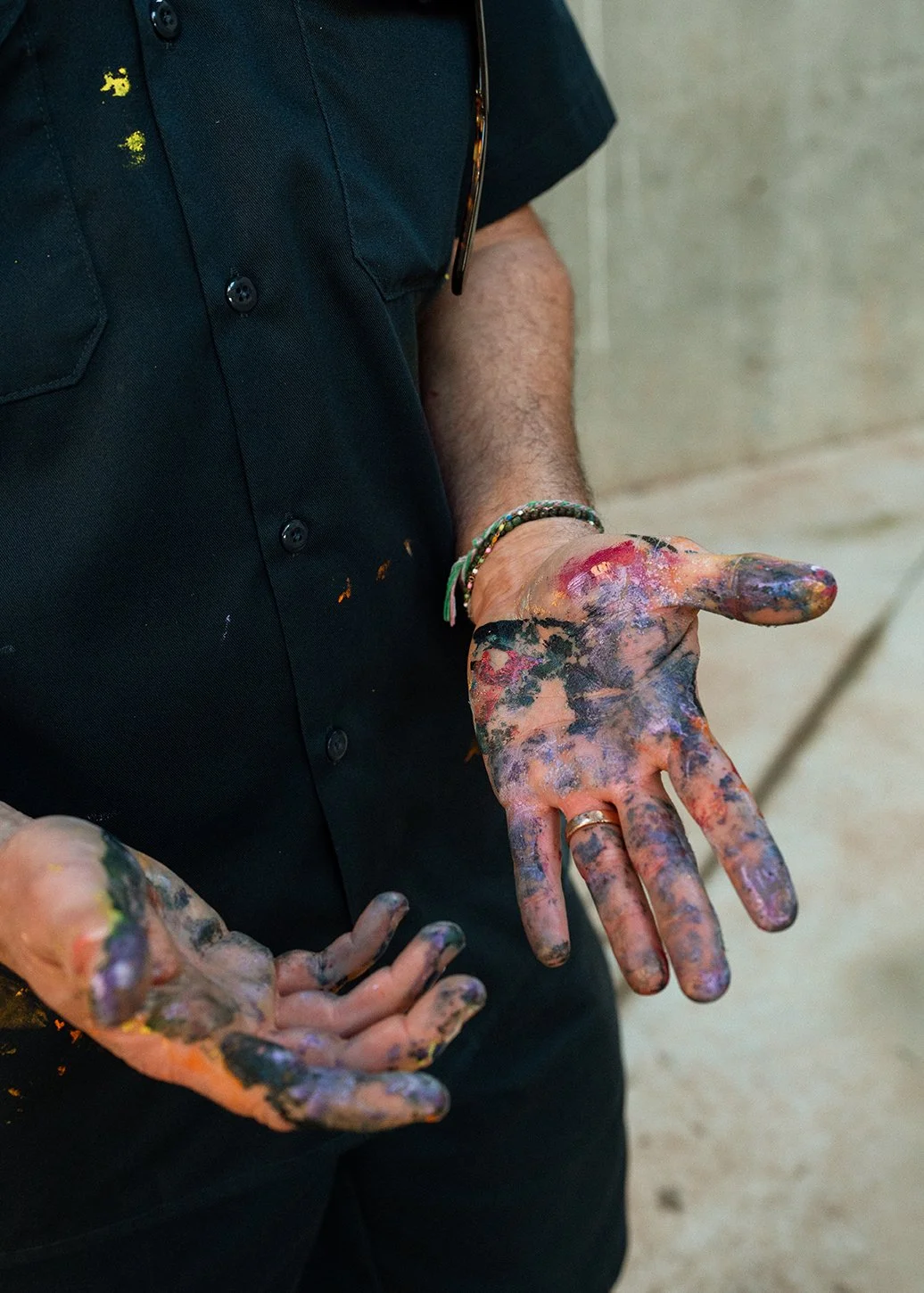
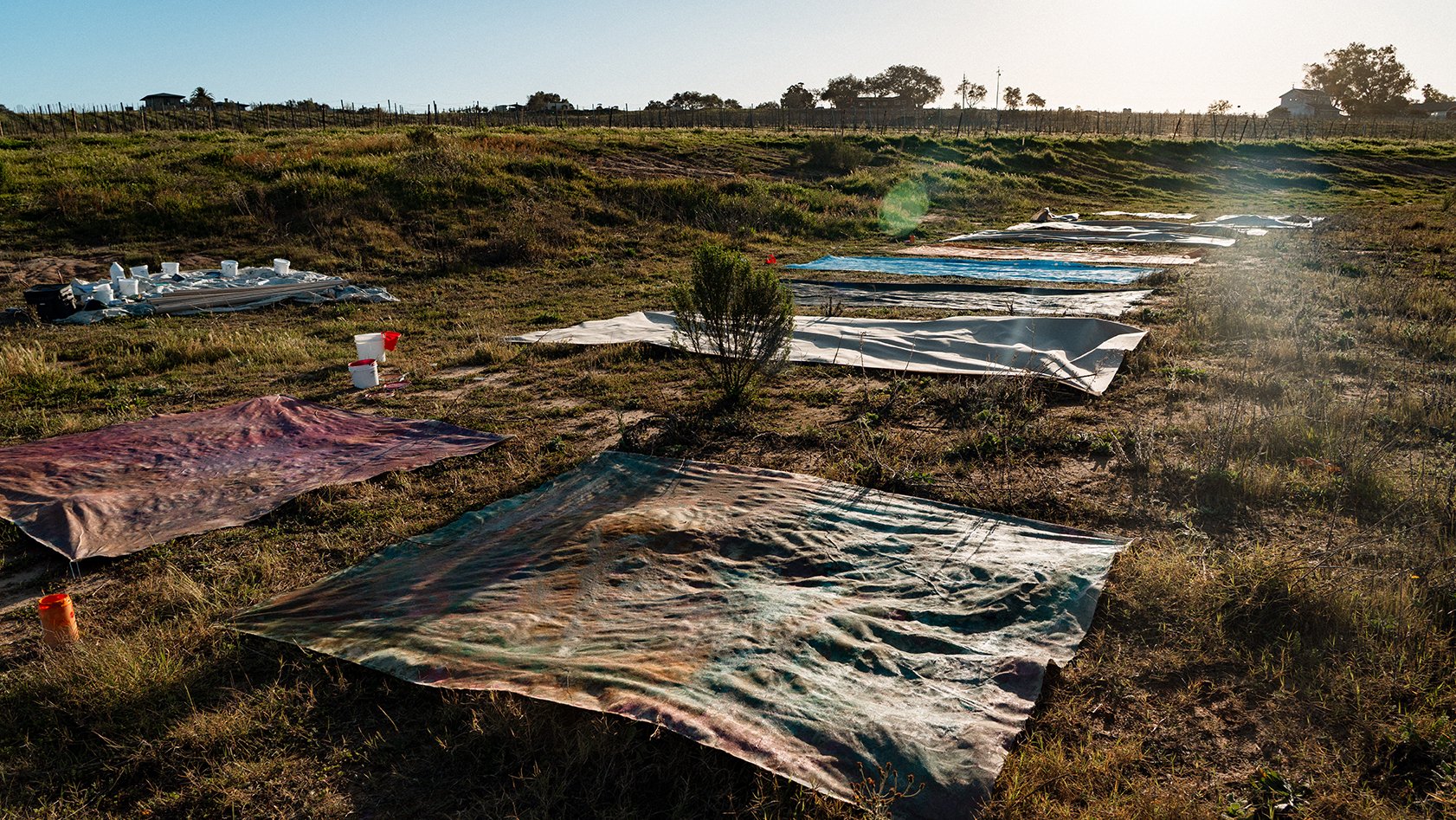
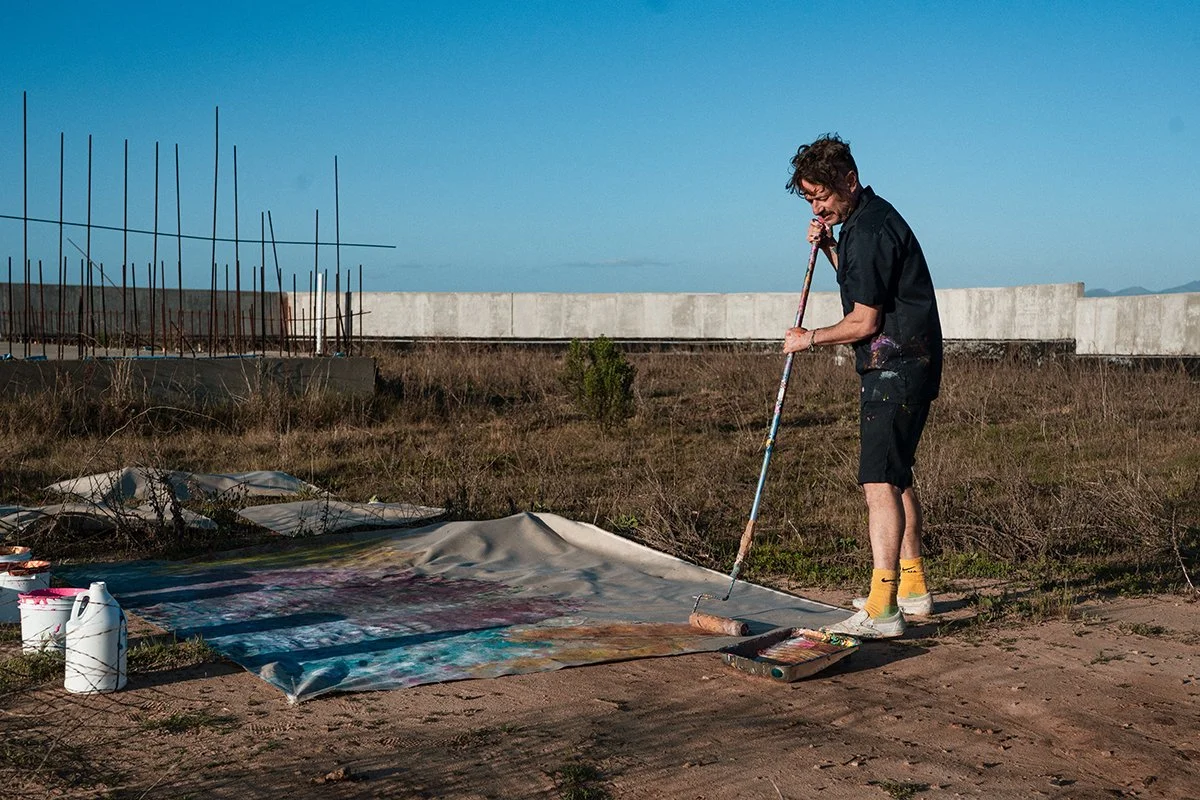
Presented by Los Angeles Nomadic Division (LAND) at Presqu’ile Winery, the exhibition brings together a new body of large-scale paintings made specifically in response to the site. Sternberg has subjected the canvases to the landscape itself—dragging them through the vineyard, burying them in the earth, exposing them to the elements and pulling them through the Pacific. The resulting surfaces carry traces of those encounters: dirt, grass, abrasion, staining; marks made by unpredictable forces of nature.
Inside the bunker, the relationship becomes more complicated. The immense concrete interior has a strange, almost sacred scale, and Sternberg’s works can read at moments like banners, relics or fragments of some civilization being slowly reclaimed. There is a productive tension between the paintings’ evidence of exposure and the bunker’s unmistakably human architecture. One represents the attempt to make an image; the other represents the attempt to make a structure that will outlast us.
Sternberg has long been interested in the uneasy position of humanity between its desire to control nature and its absolute dependence upon it. Here, the idea is immediately legible. The dirt on the canvas is dirt; the weathered surfaces are weathered; the abandoned bunker is an abandoned bunker.
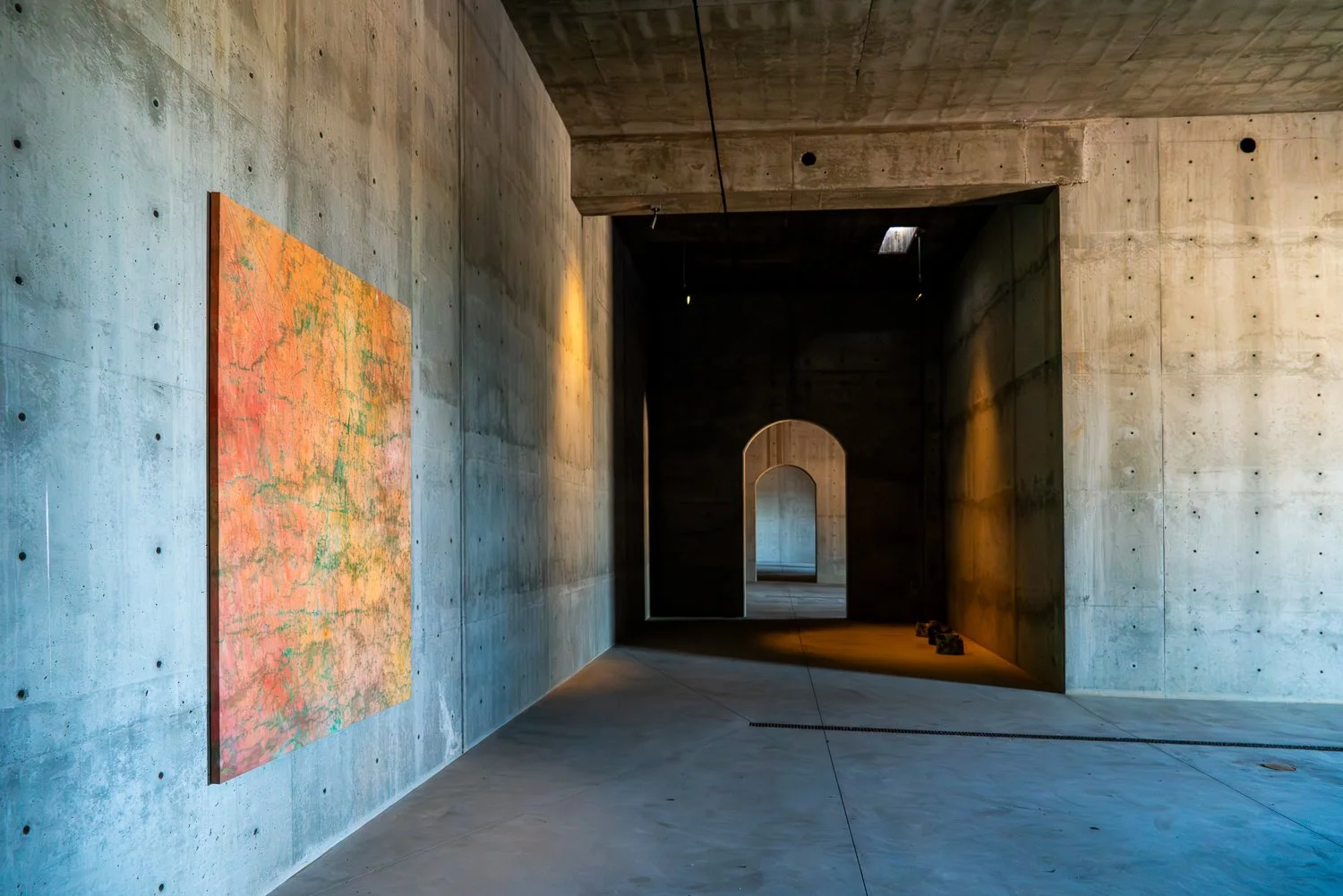
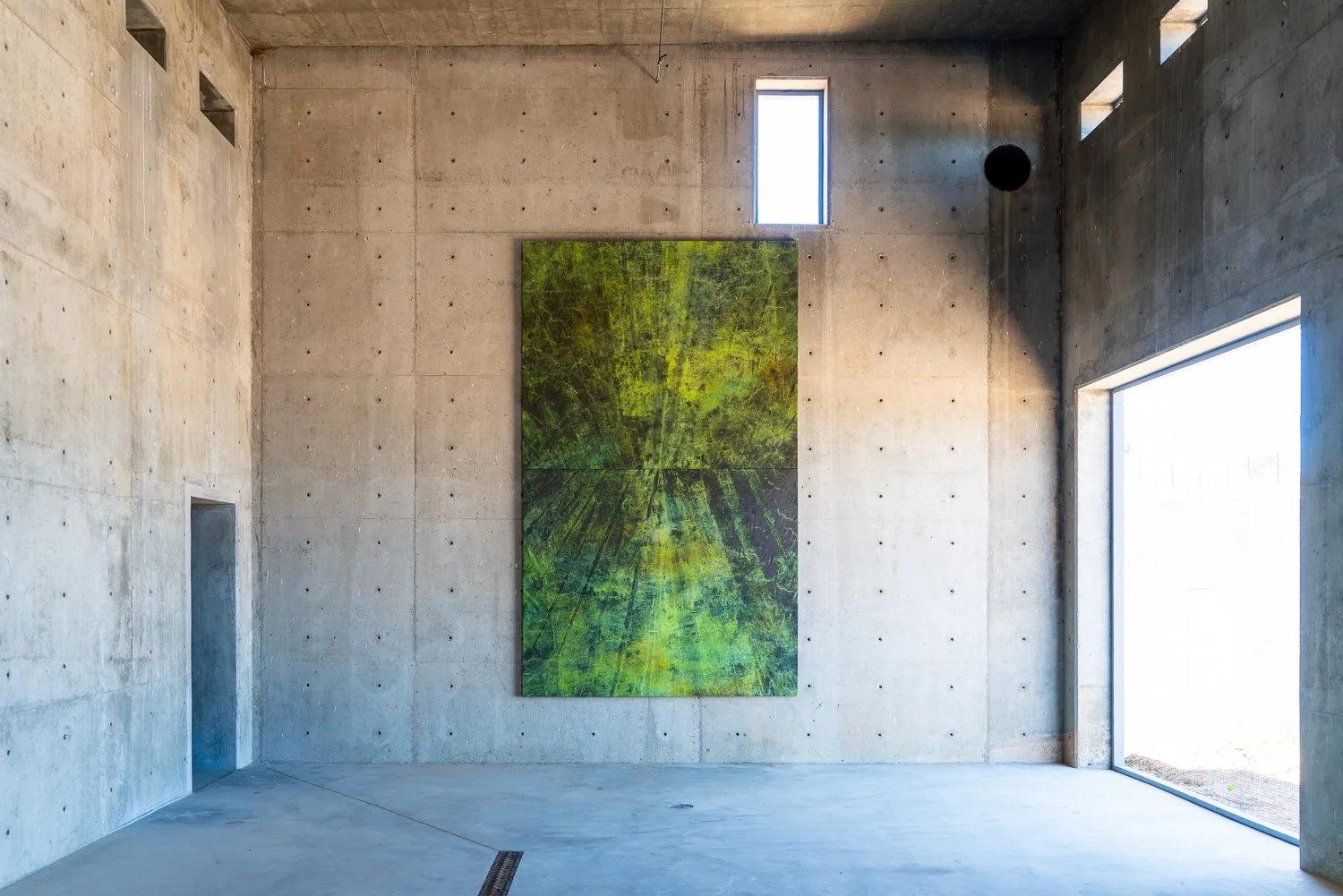
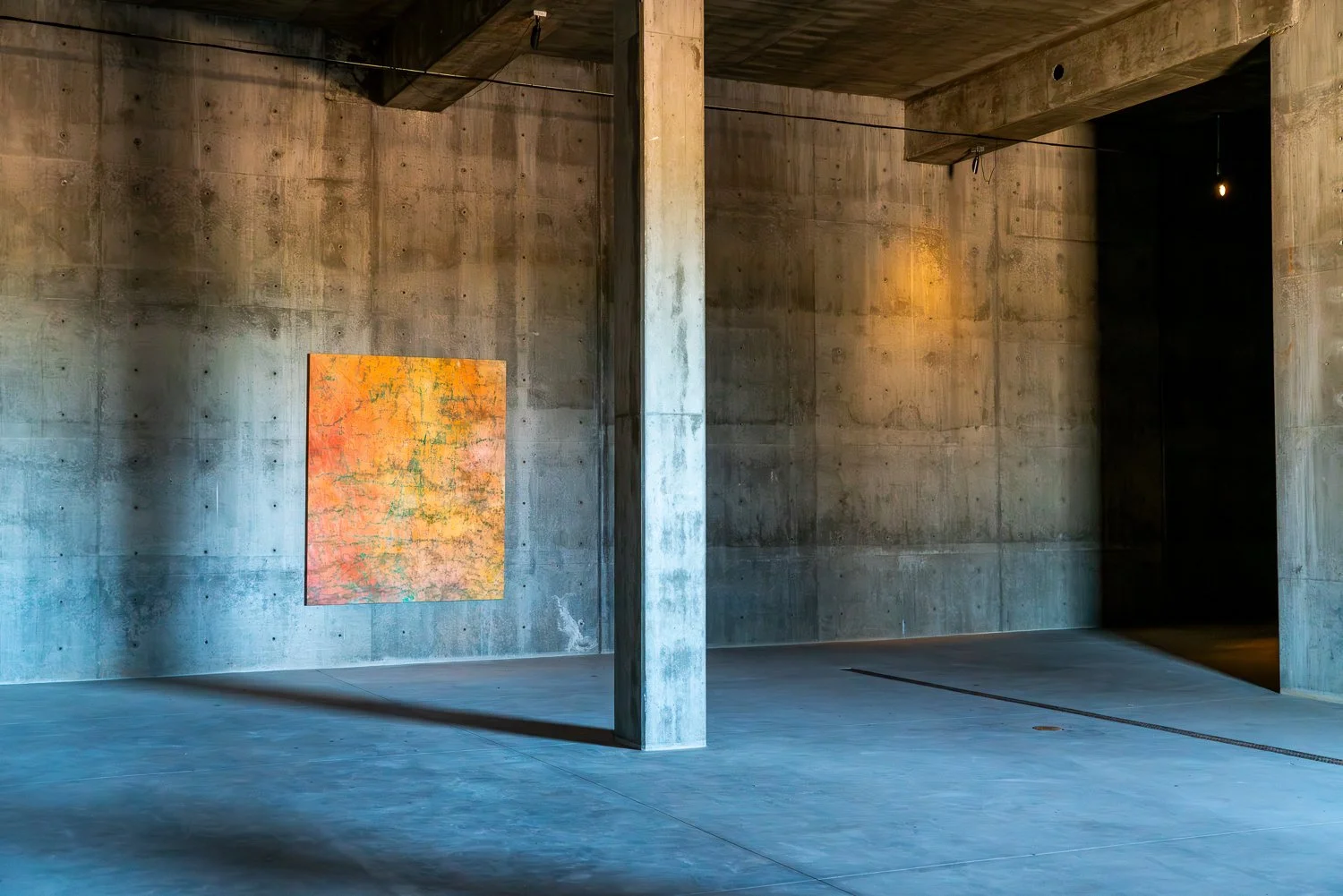
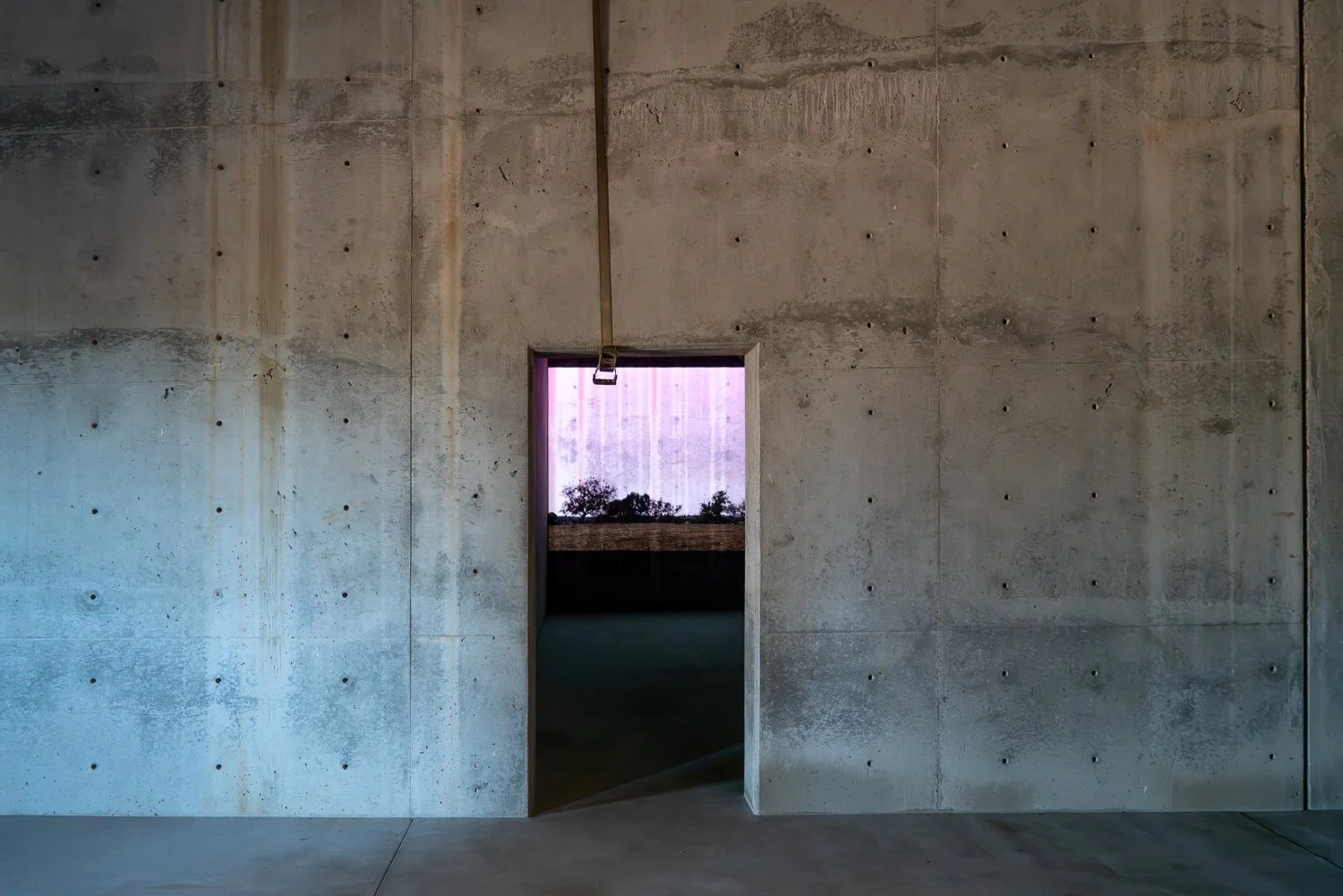
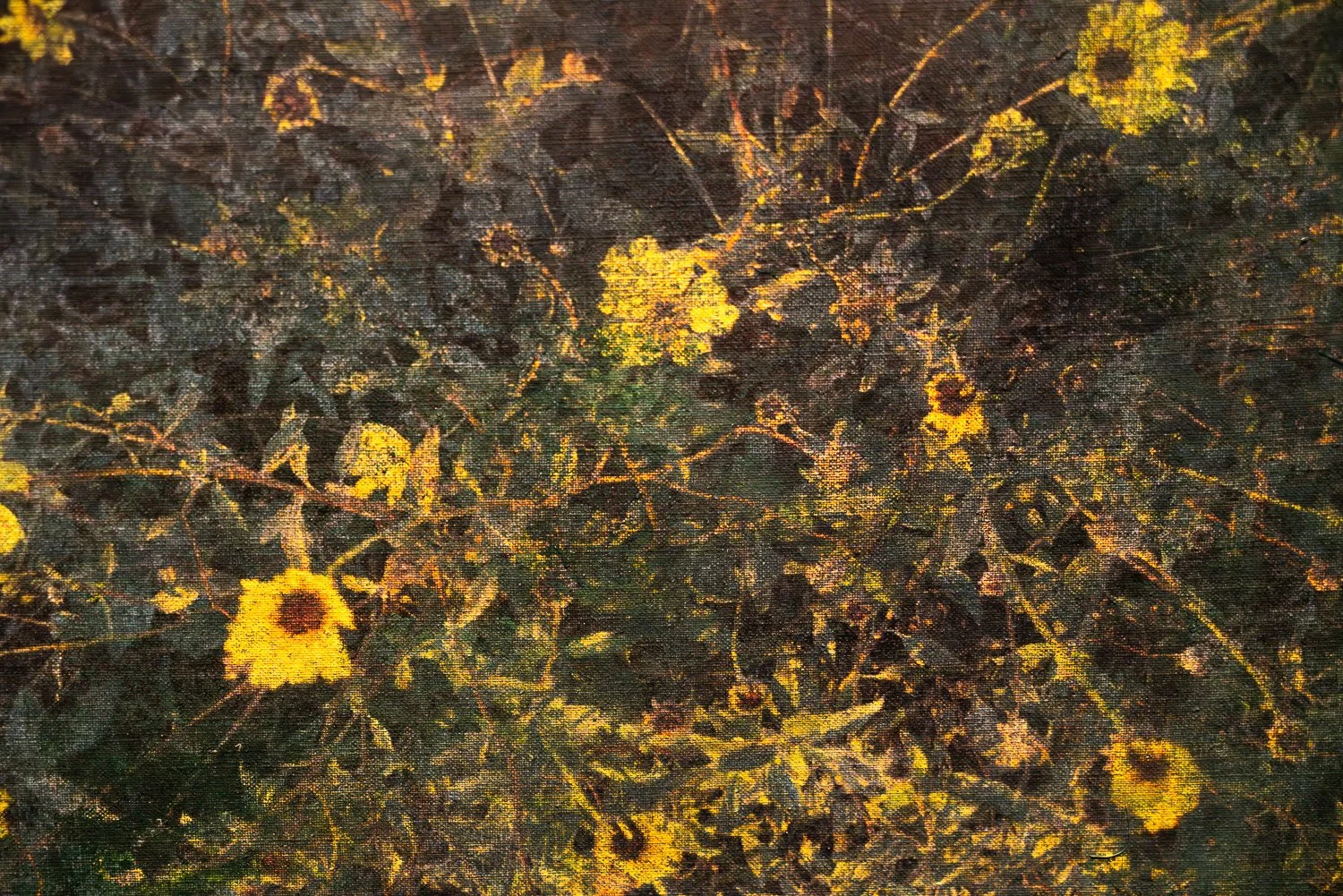
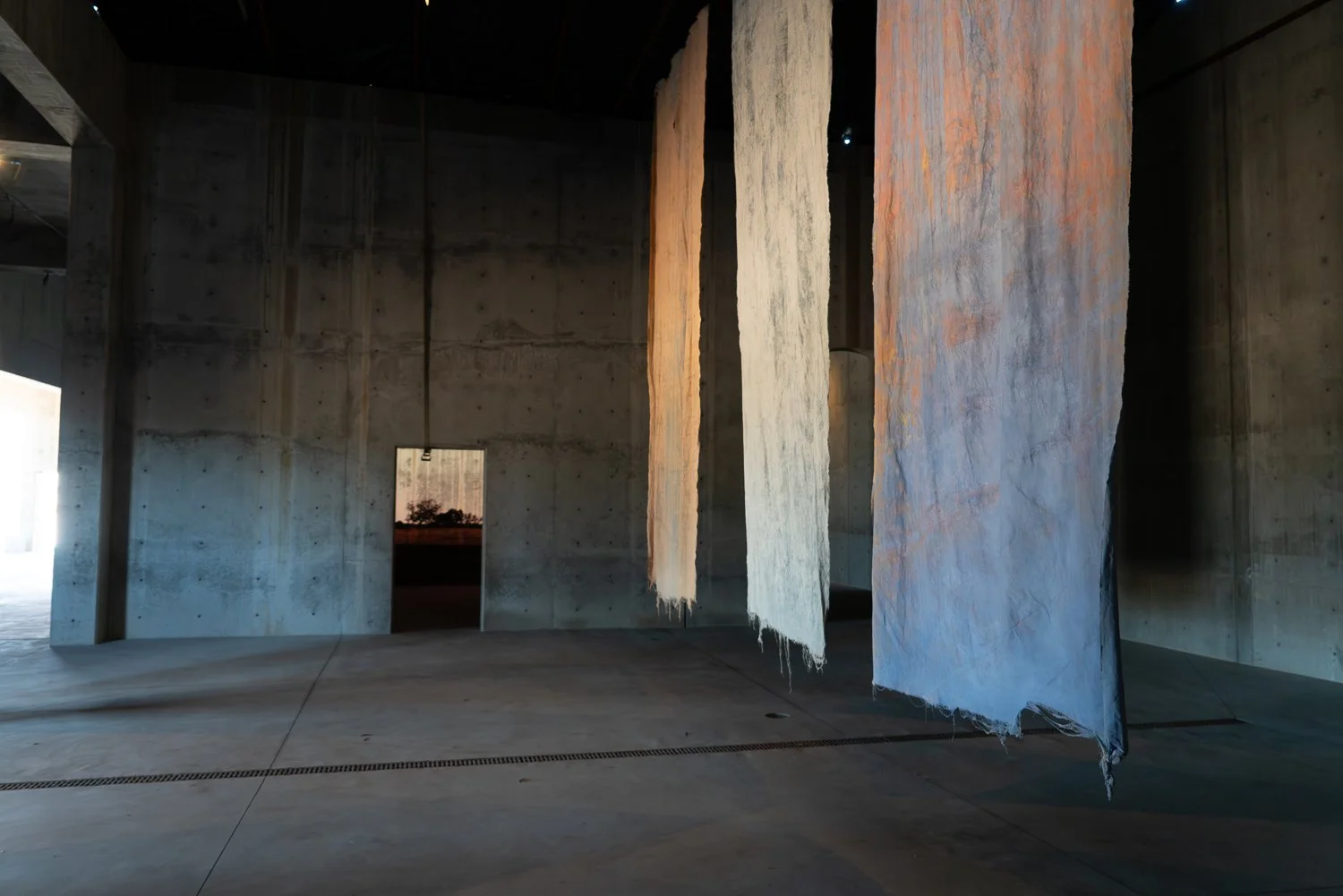
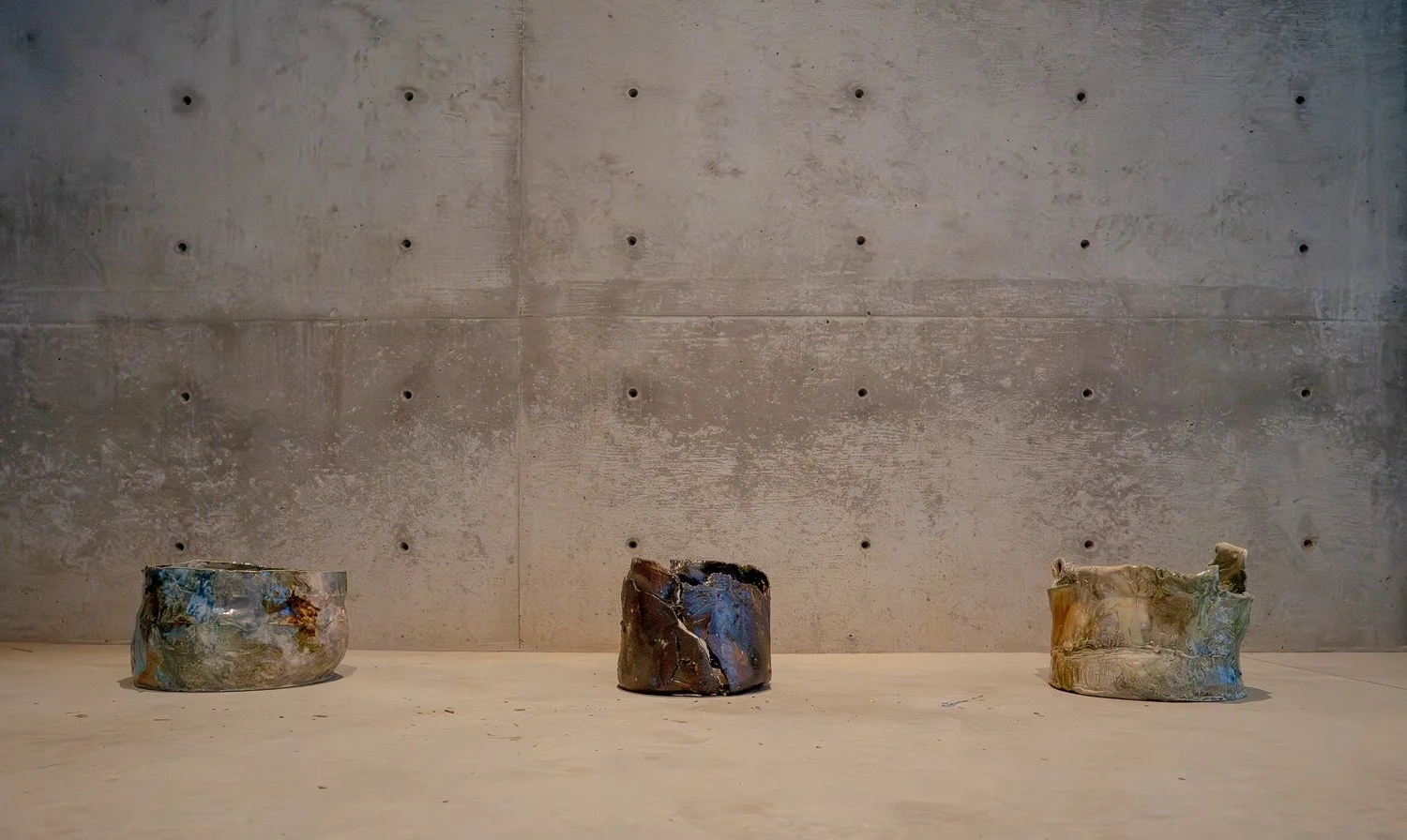
As you journey into the bunker, away from the winery and into this strange architectural void, the paintings change. As bodies move through the space, so too does the light, and the material histories of each work become more apparent the longer you look.
There is an obvious danger in this kind of work. Contemporary art has developed an extensive vocabulary for talking about ecology, impermanence, interconnectedness and the more-than-human world. Phrases like “listening to the land” are easily prone to semantic erosion. Along the high embankments occasionally brushes against that language. Yet the actual works are more ambiguous than the rhetoric surrounding them. They simply remind us that the environment is always changing.
Situating contemporary art inside an agricultural and commercial landscape adds another layer of context. Presqu’ile is a working vineyard; the bunker belongs to the history and infrastructure of the property. This is a hallmark of Los Angeles Nomadic Division and their mission to democratize contemporary art by inviting us into an experience of aesthetic inquiry outside of the white cube.
At its best, along the high embankments is an exhibition about contact: between canvas and soil, architecture and weather, human intention and forces that are indifferent those intentions. Its strongest moments occur when the conceptual framework falls away and the paintings simply register what has happened to them.
The bunker will eventually become something else, as all buildings do. The paintings will move on too. What remains is the more modest and convincing idea at the heart of the project: that a work of art can be a record not only of what an artist wanted to make, but of everything that happened to it along the way.
Cole Sternberg’s along the high embankments is presented by Los Angeles Nomadic Division (LAND) and on view through November 8, 2026. Reserve a one-hour time slot and explore at your own pace. The experience is self-guided — plan for about an hour to take in the work fully. Time slots are available Saturday and Sunday from 12-5PM.