
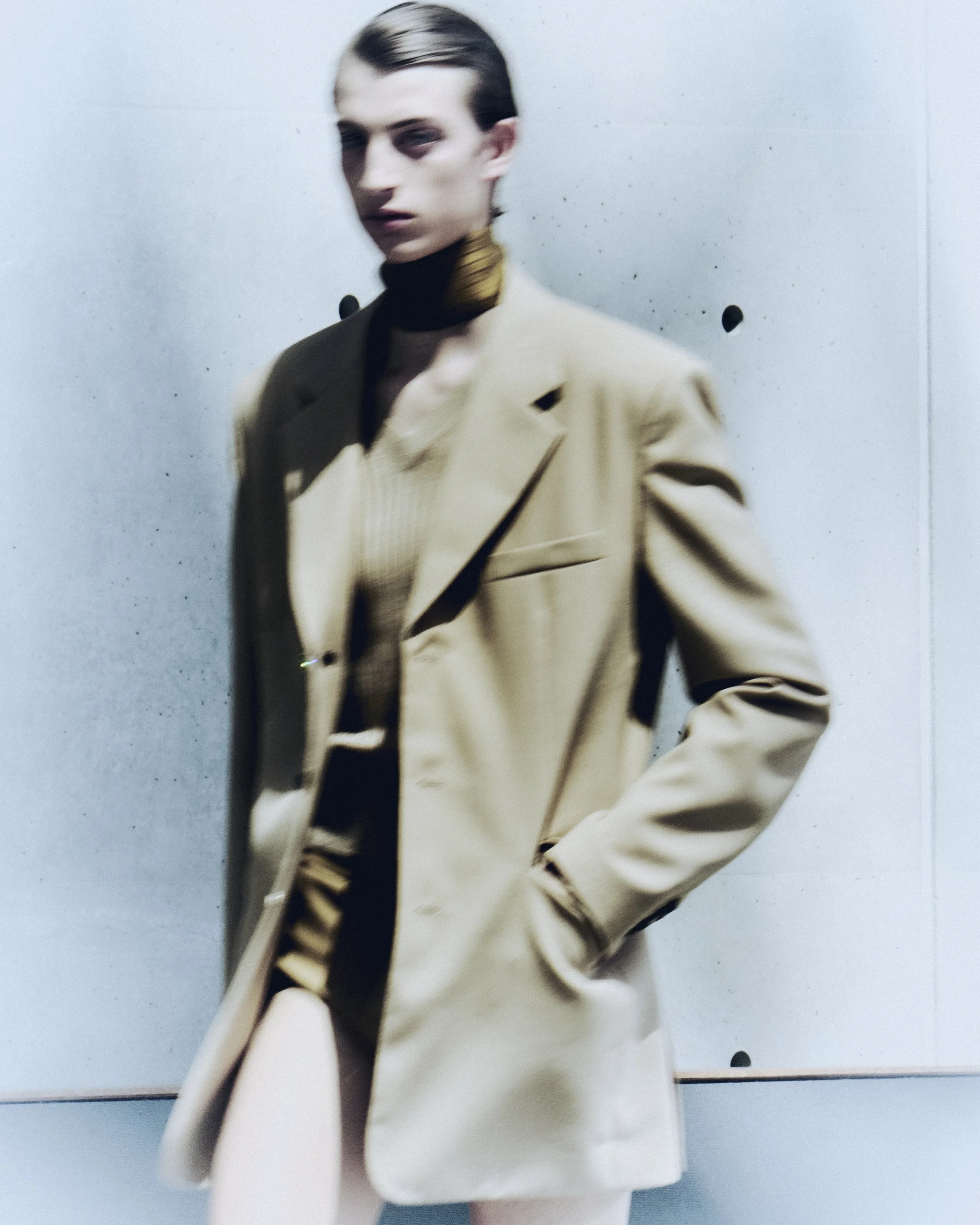
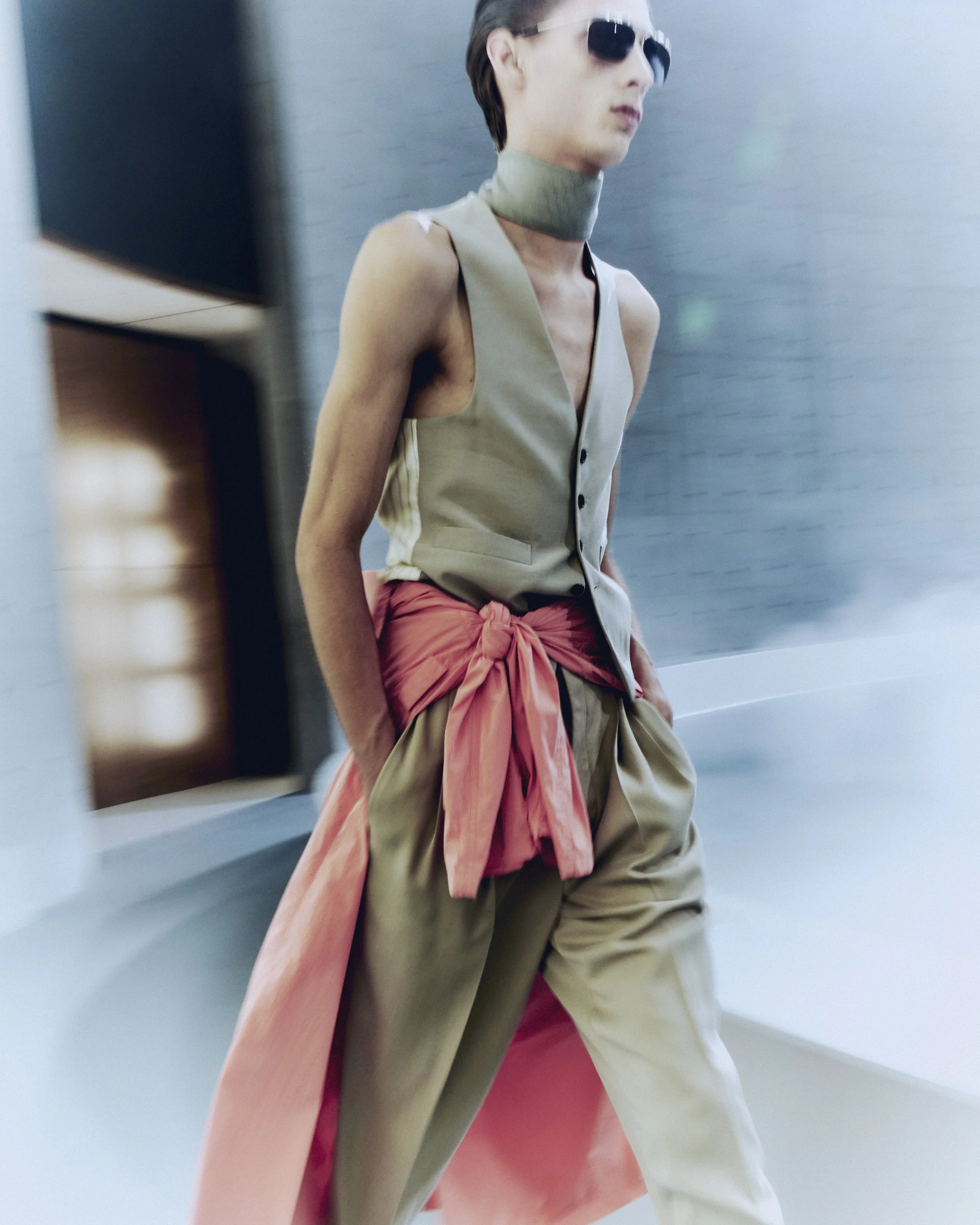
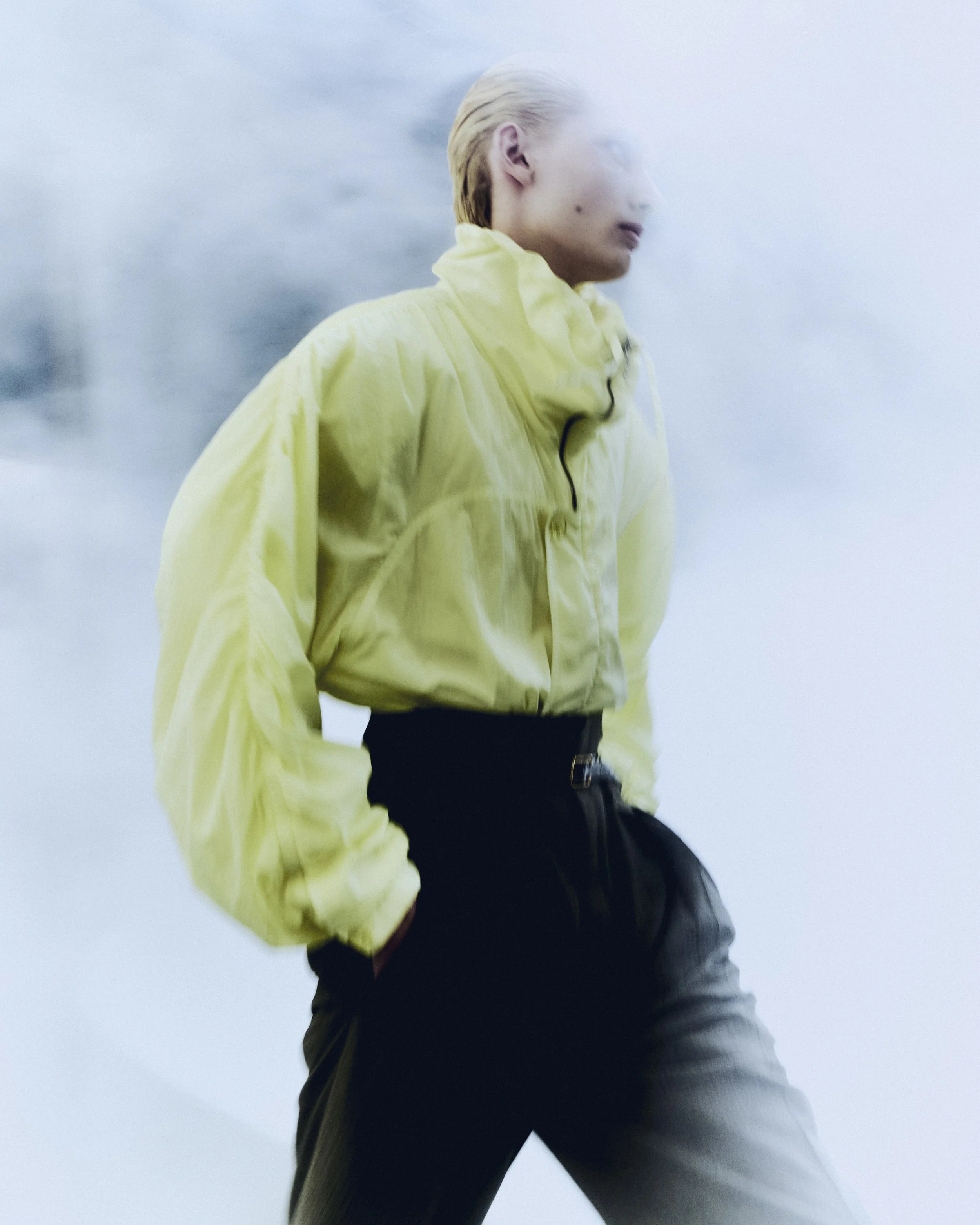
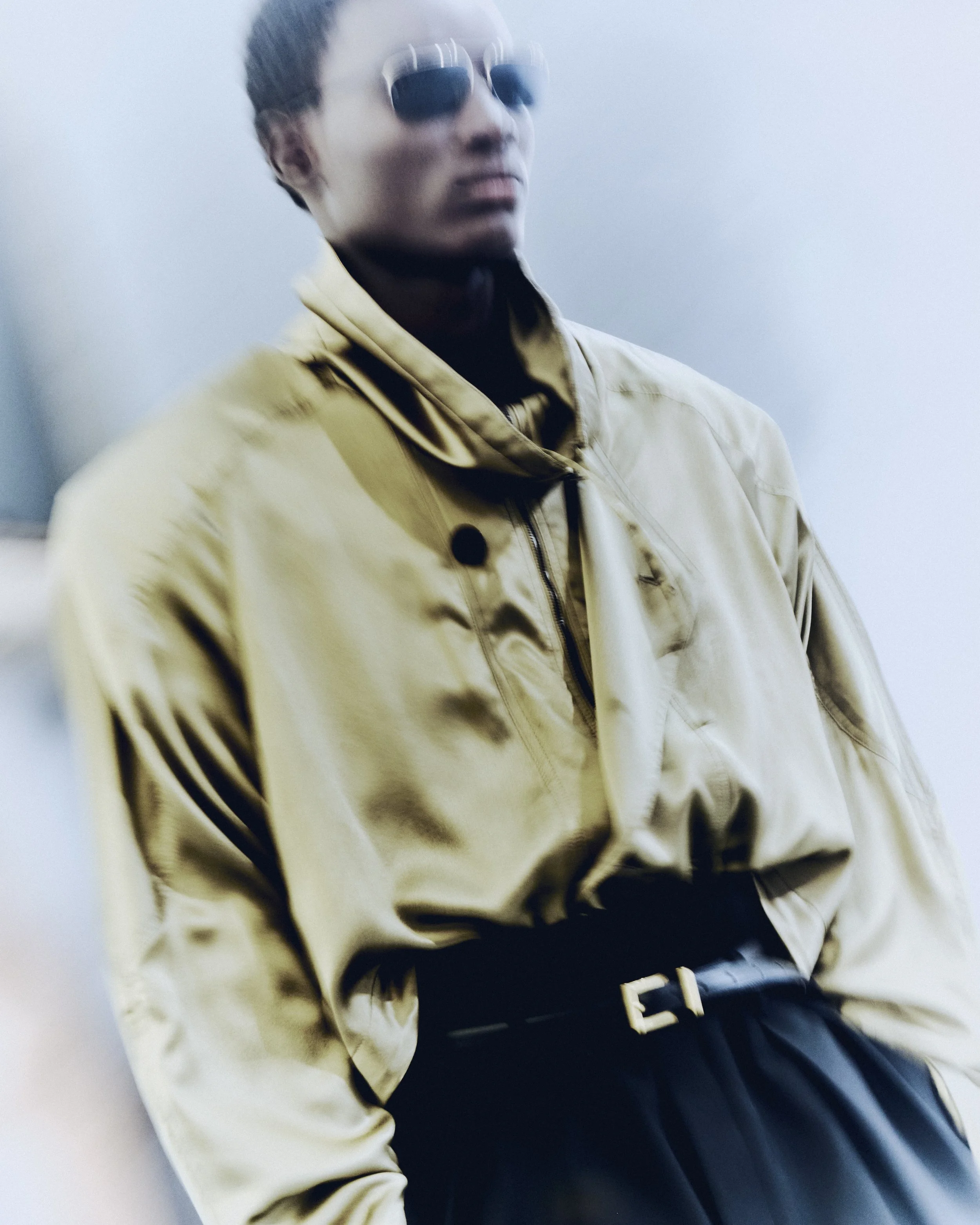
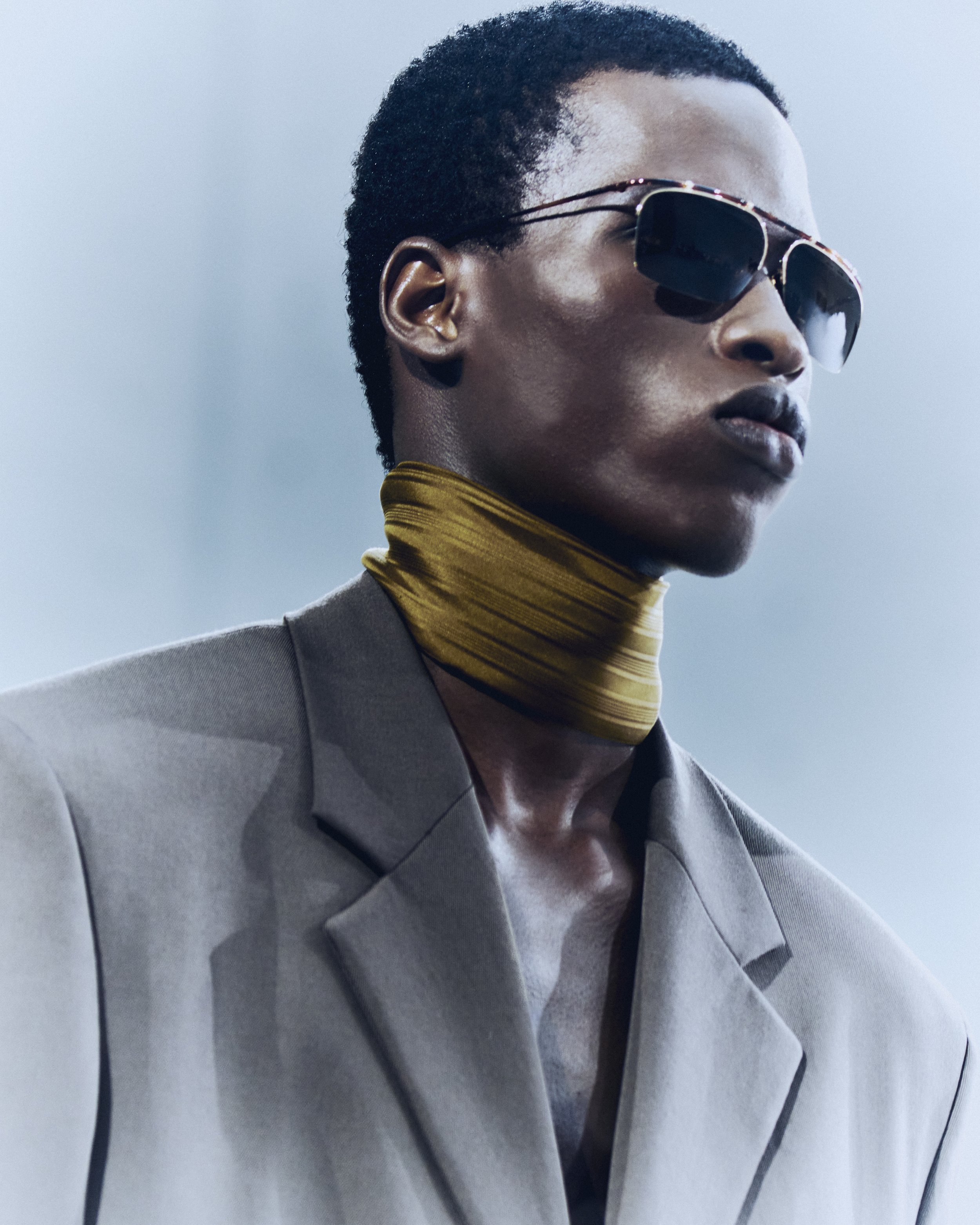
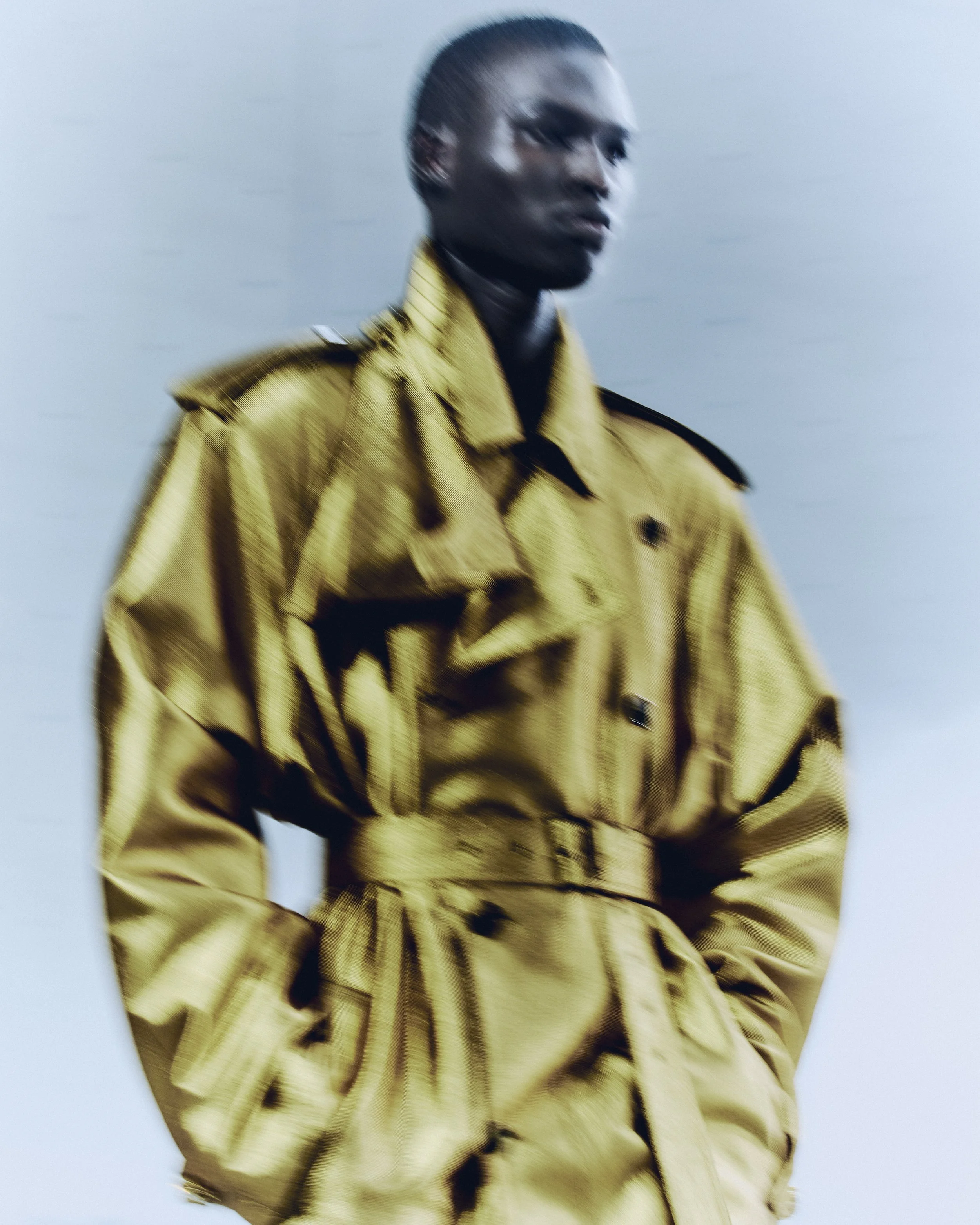
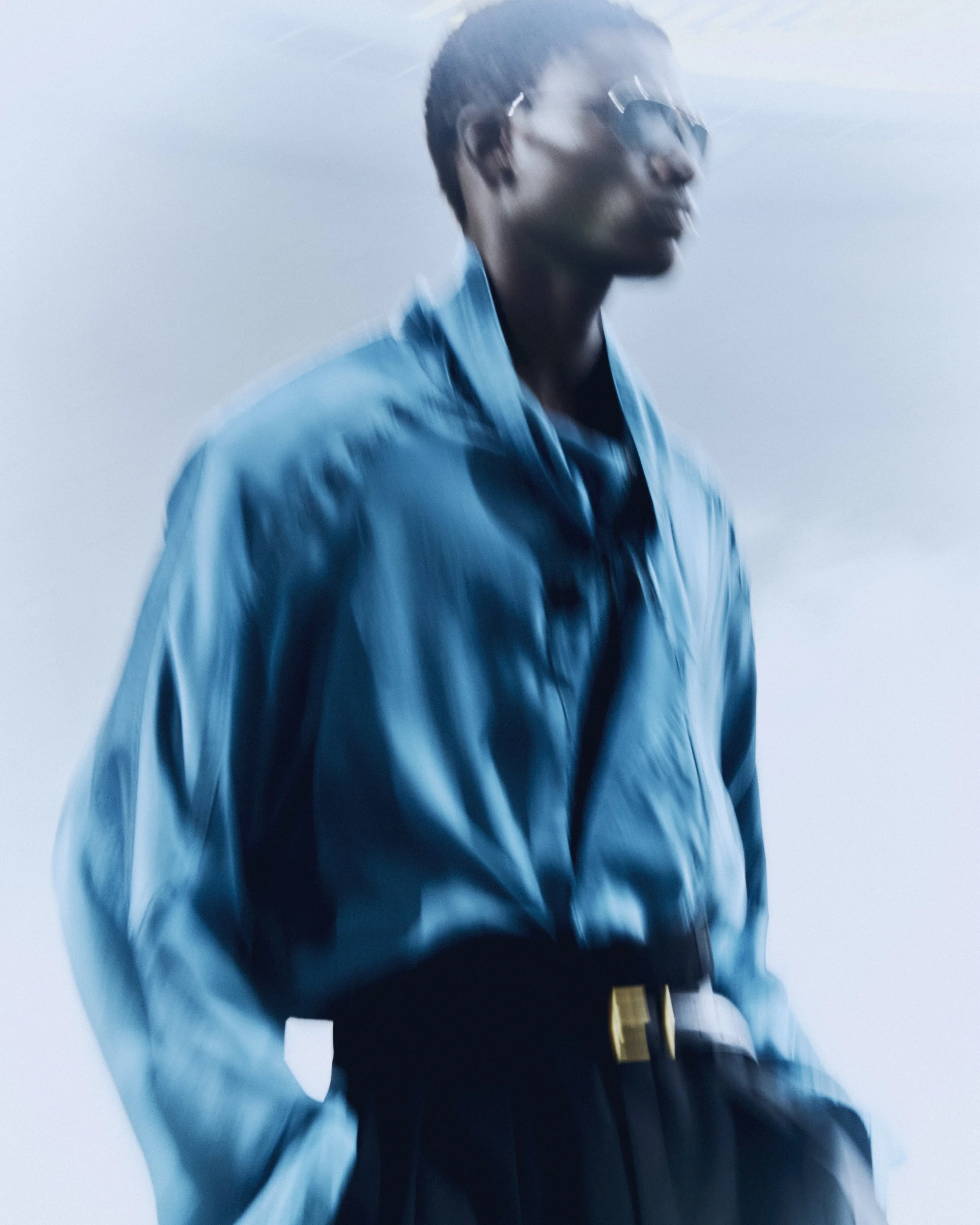
Saint Laurent Men's Summer 27 by Anthony Vaccarello Presentation At Bourse de Commerce

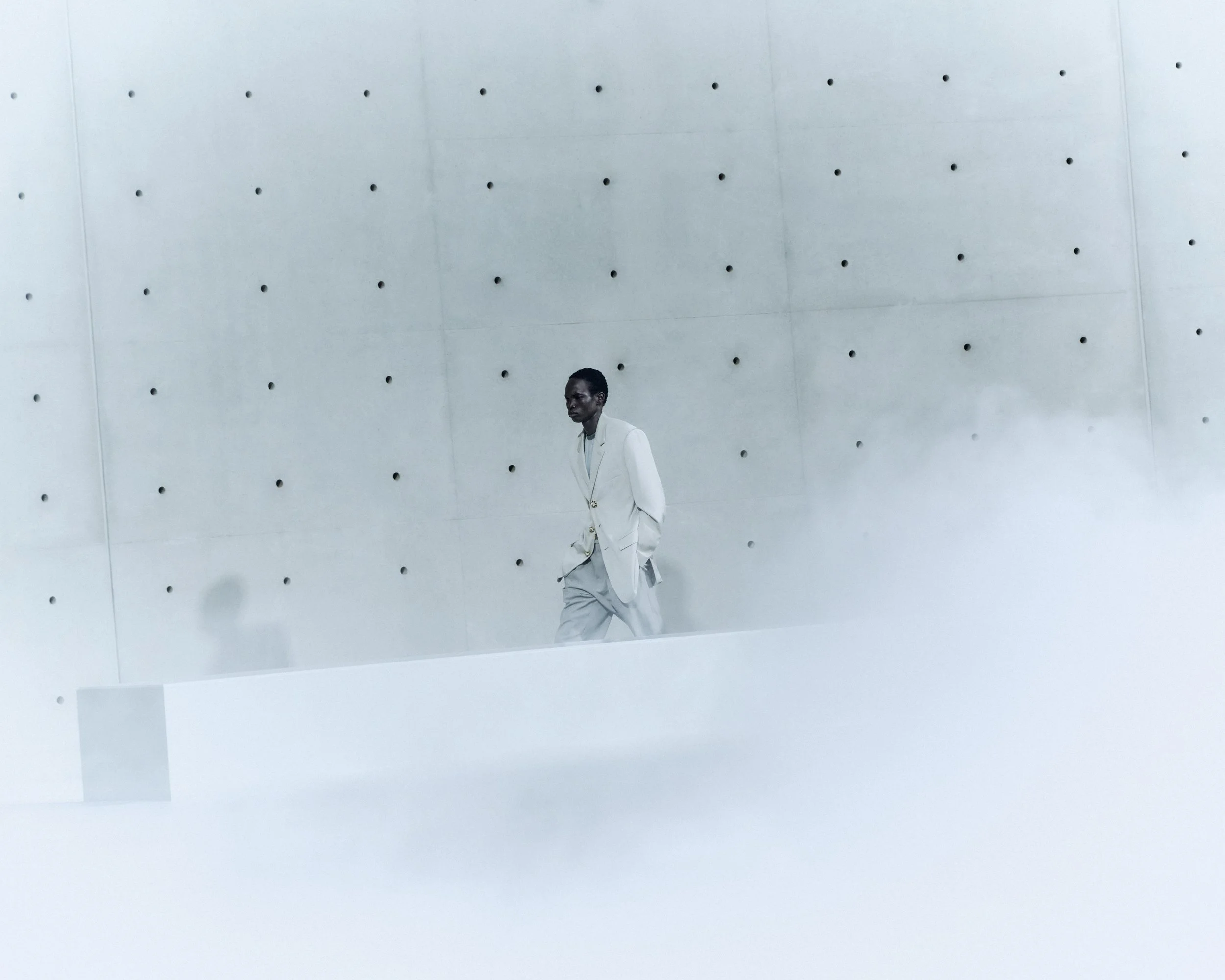
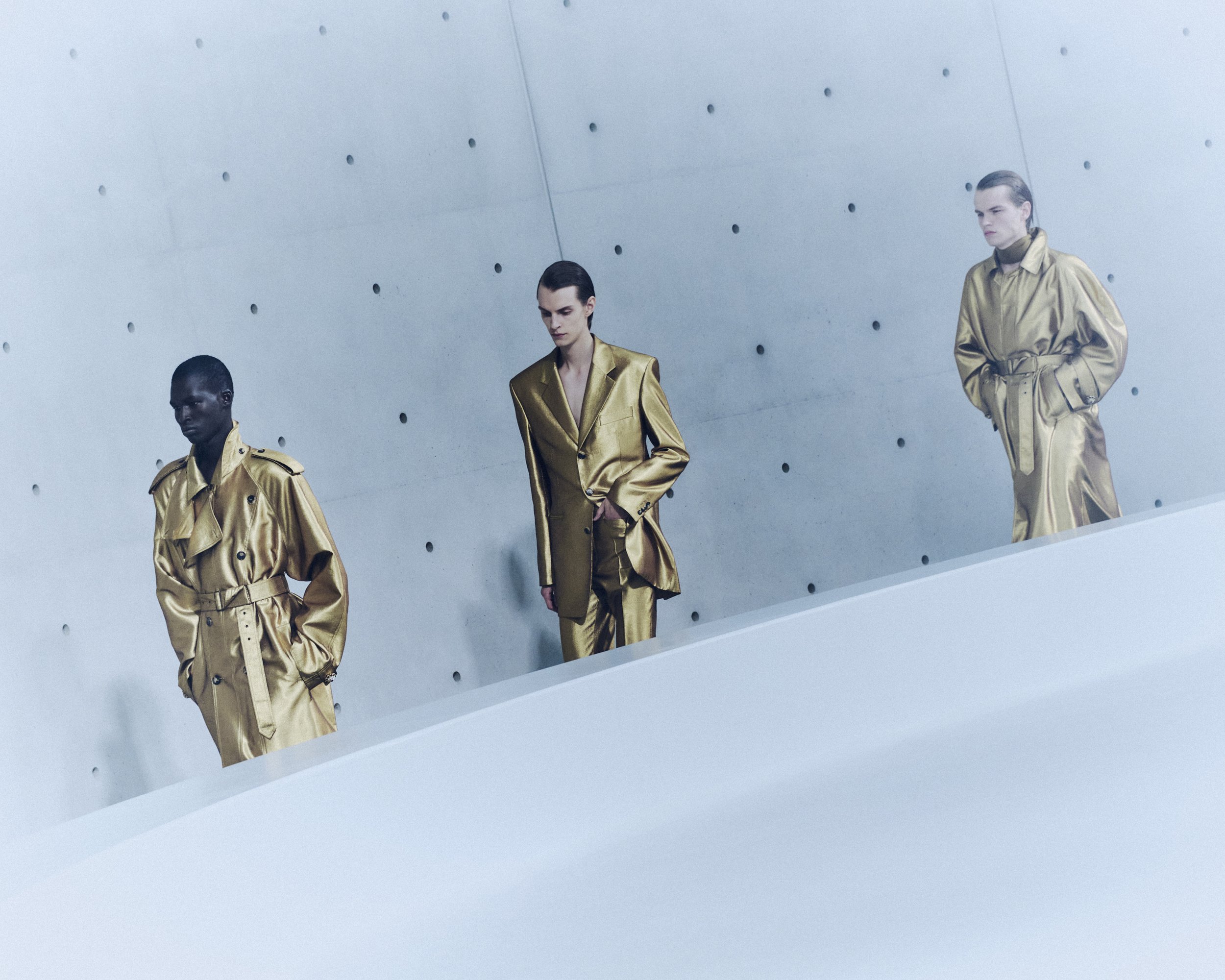
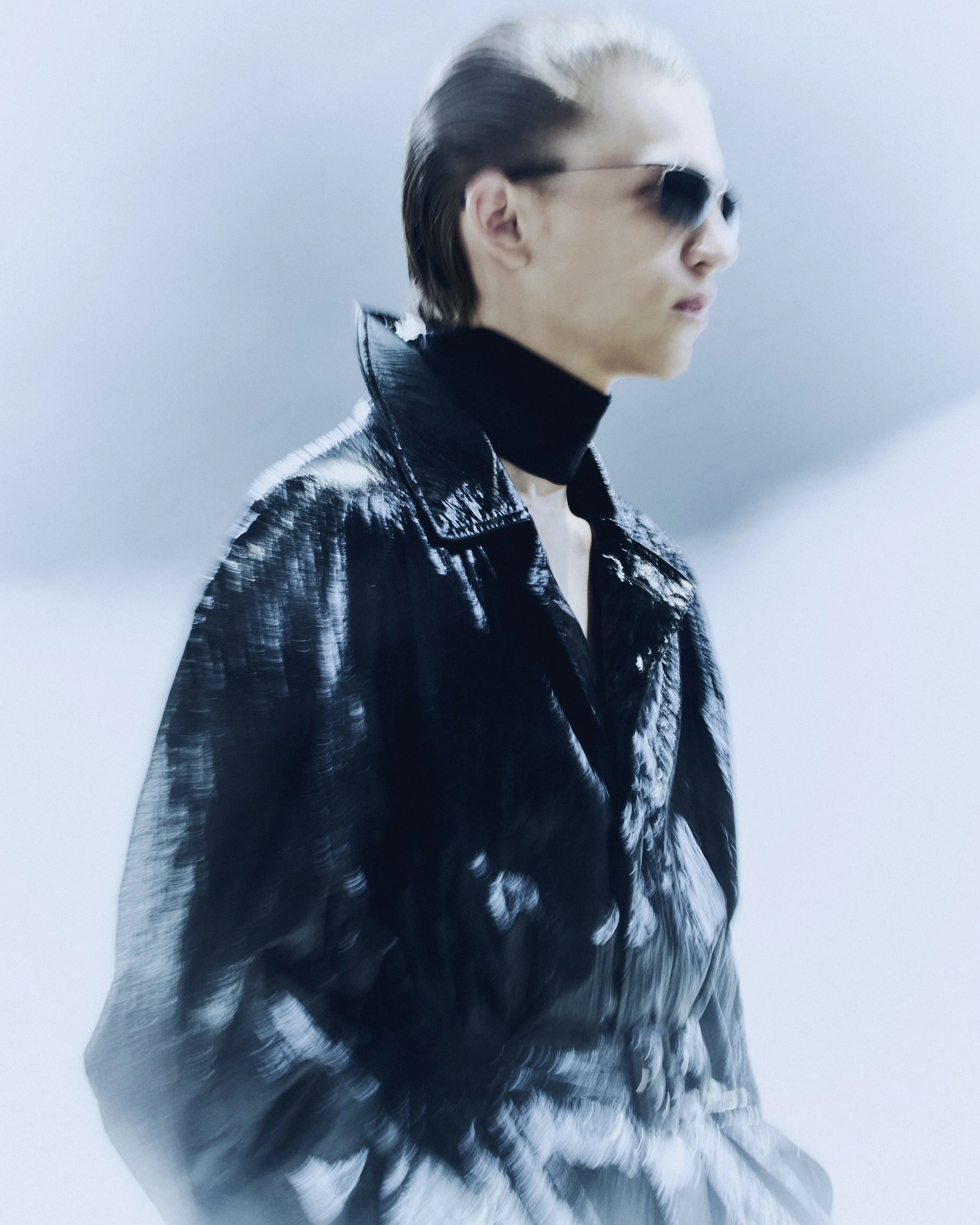
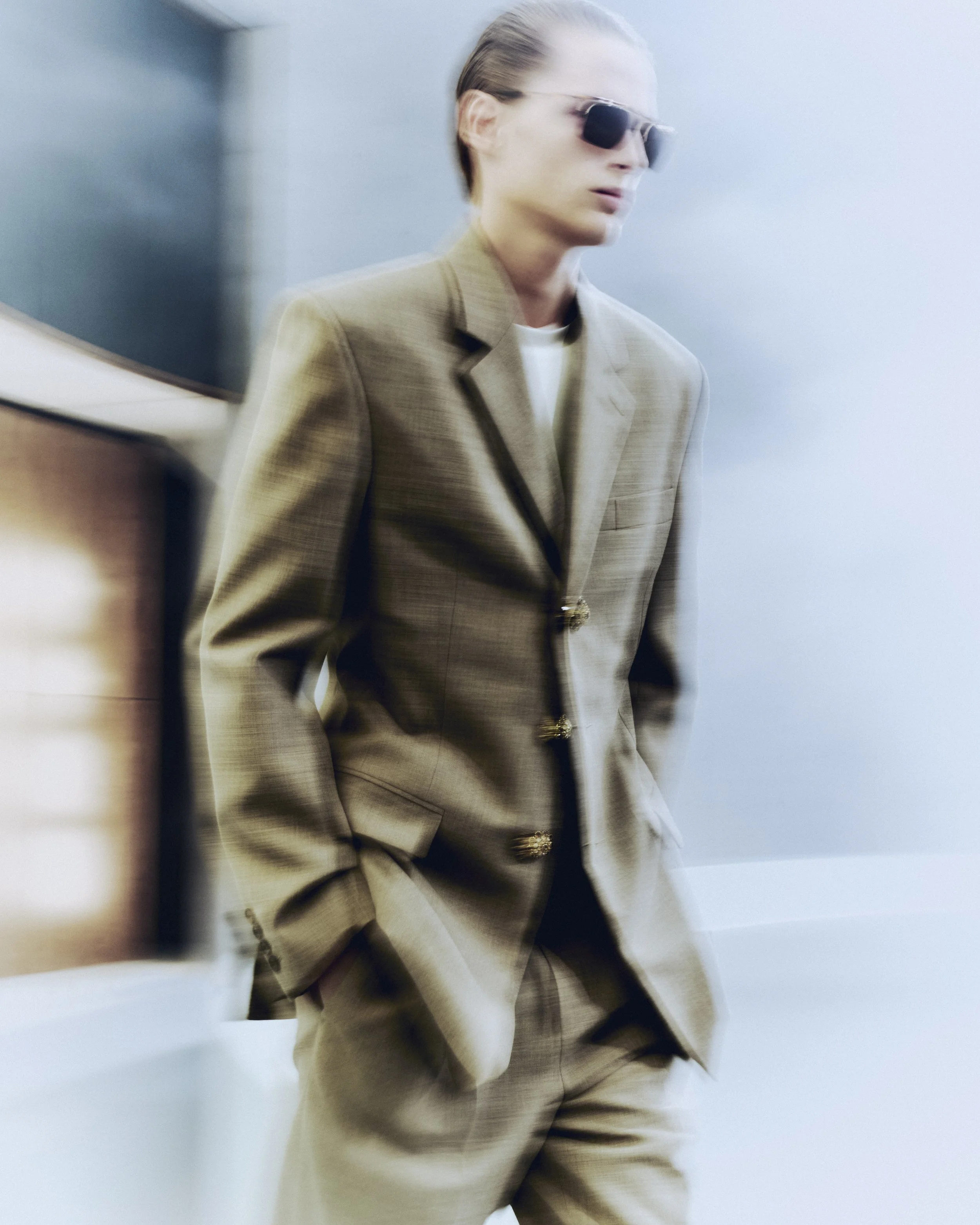
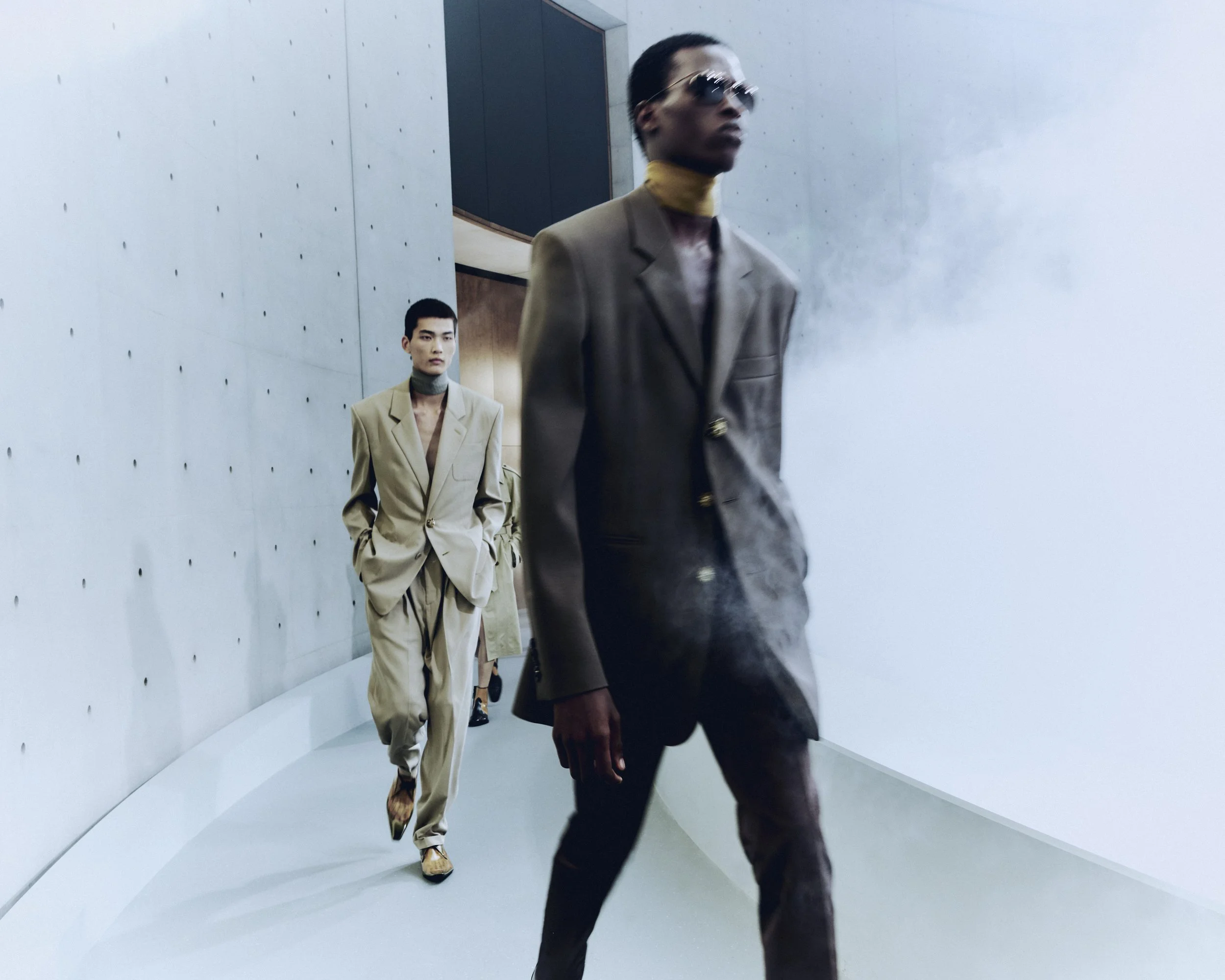
Saint Laurent’s Summer 2027 Men’s collection by Anthony Vaccarello unfolds inside the Bourse de Commerce — Pinault Collection, where architecture, atmosphere, and absence become inseparable from the clothes themselves. The circular structure—designed by Tadao Ando Architect & Associates, Niney et Marca Architectes, and Agence Pierre-Antoine Gatier—grounds the presentation in a language of restraint: concrete, proportion, and light forming a silent, continuous frame for what is revealed within it.

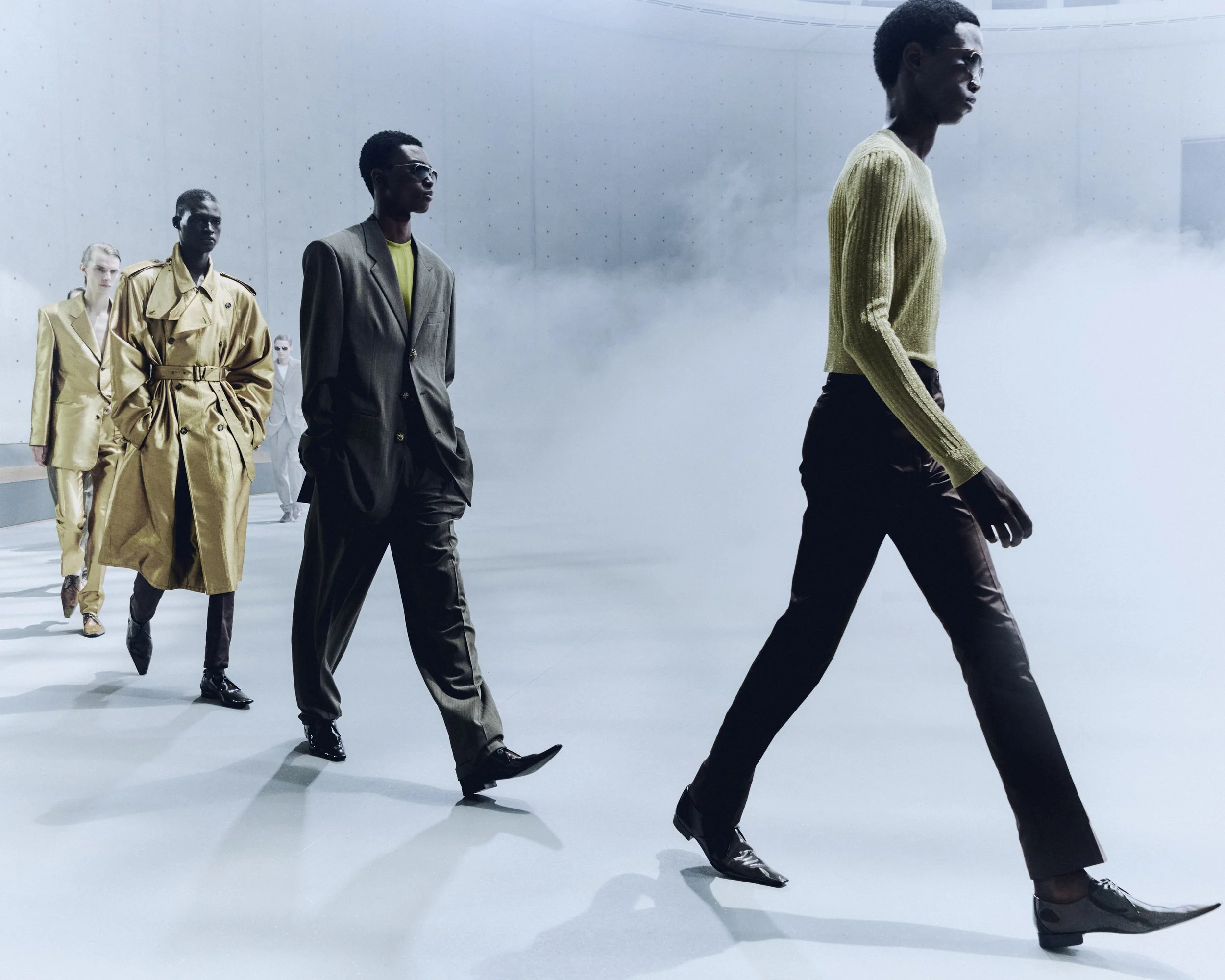
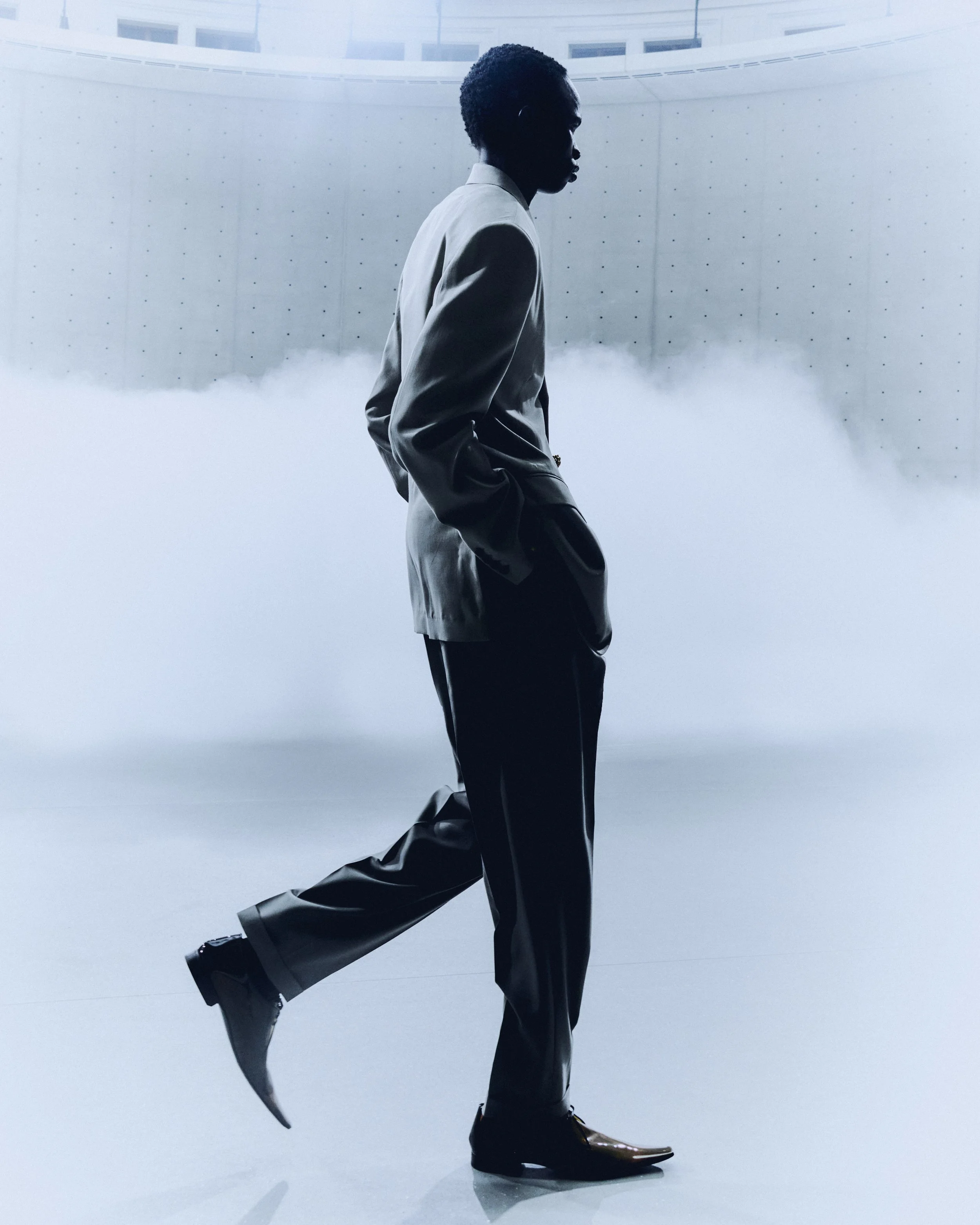
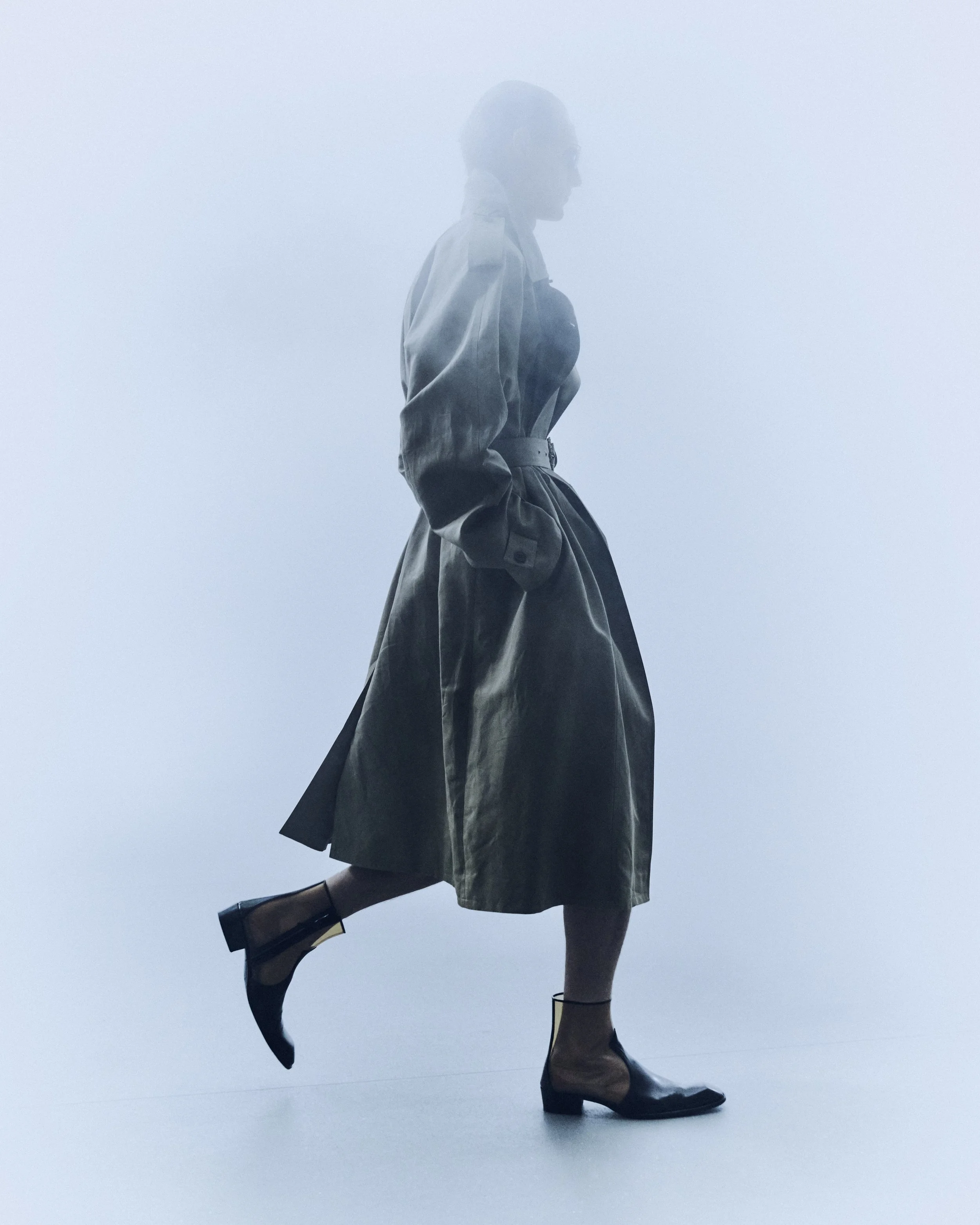
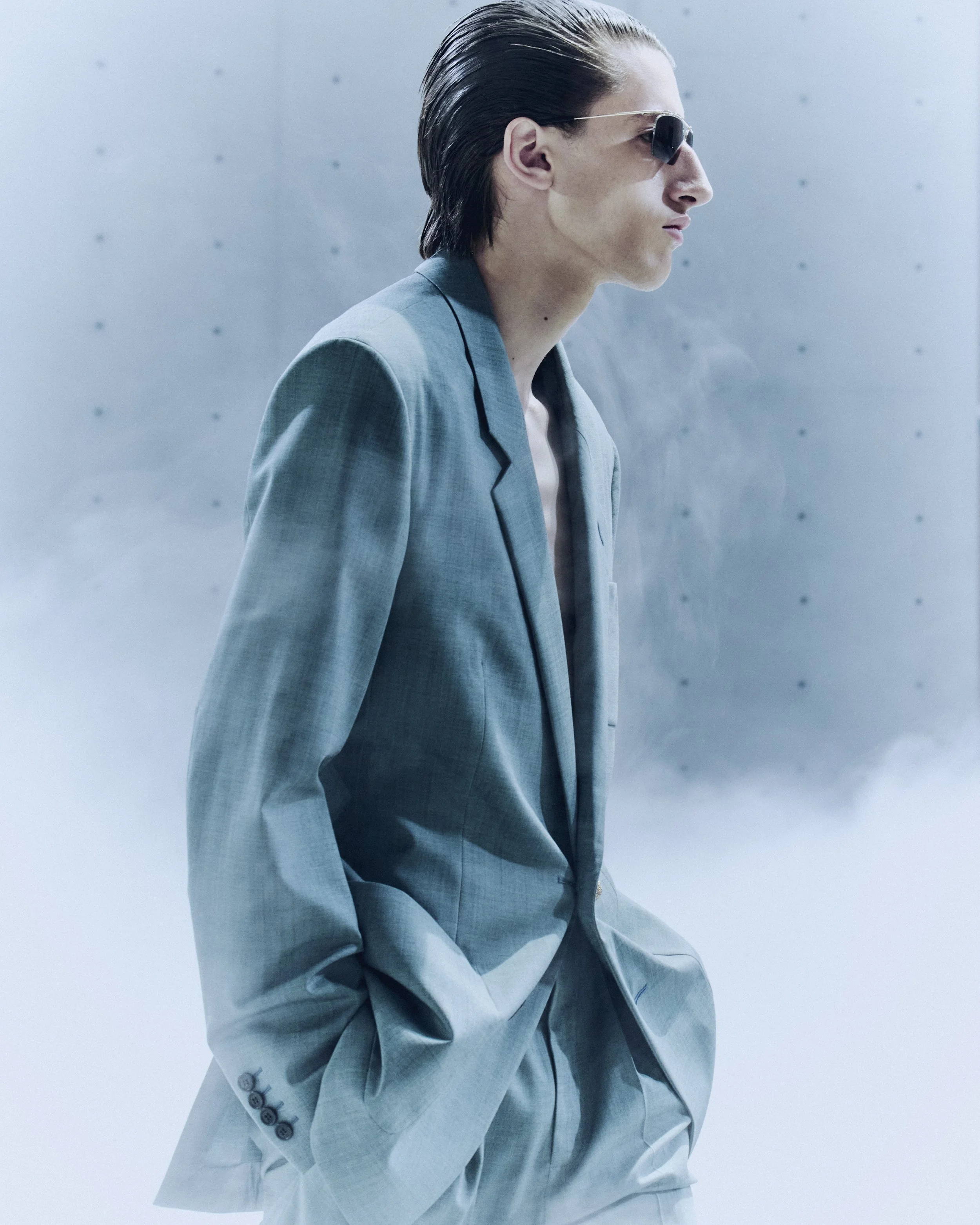
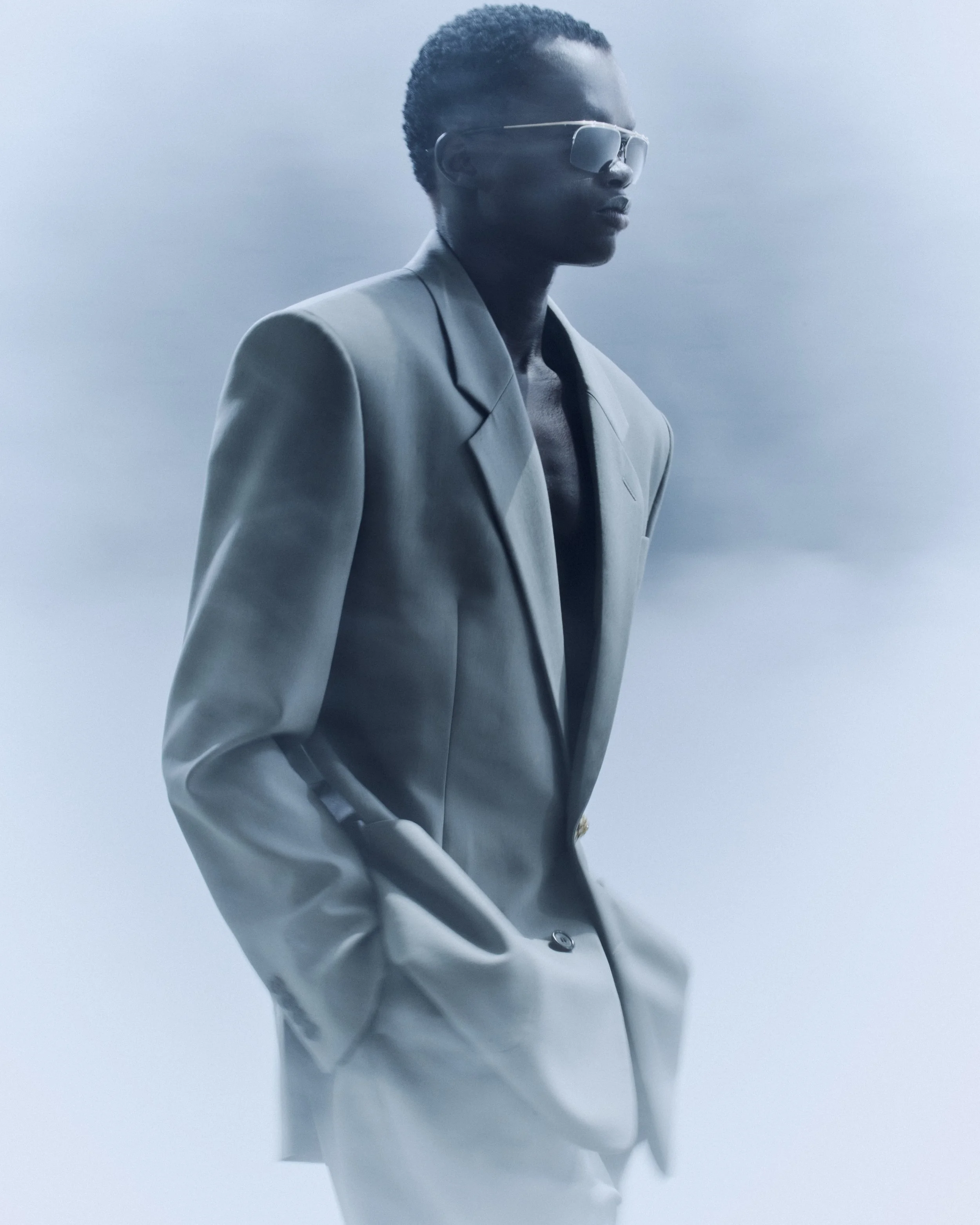
At the center of the experience is Fujiko Nakaya’s Cloud #07156 (2026), an immersive fog installation that transforms the rotunda into a shifting field of visibility and disappearance. As mist fills the space, the building ceases to function as a static container and instead becomes a breathing environment—one in which bodies and garments appear, dissolve, and re-emerge like fragments of thought.

Vaccarello’s collection is anchored in a provocation: “Nobody is trying to seduce you. What makes them seductive is that they do not need to.” From this premise, the show considers desire not as accumulation but as withdrawal—what happens when drama, noise, and excess are withheld rather than amplified. Across 40 looks, restraint becomes its own form of intensity.

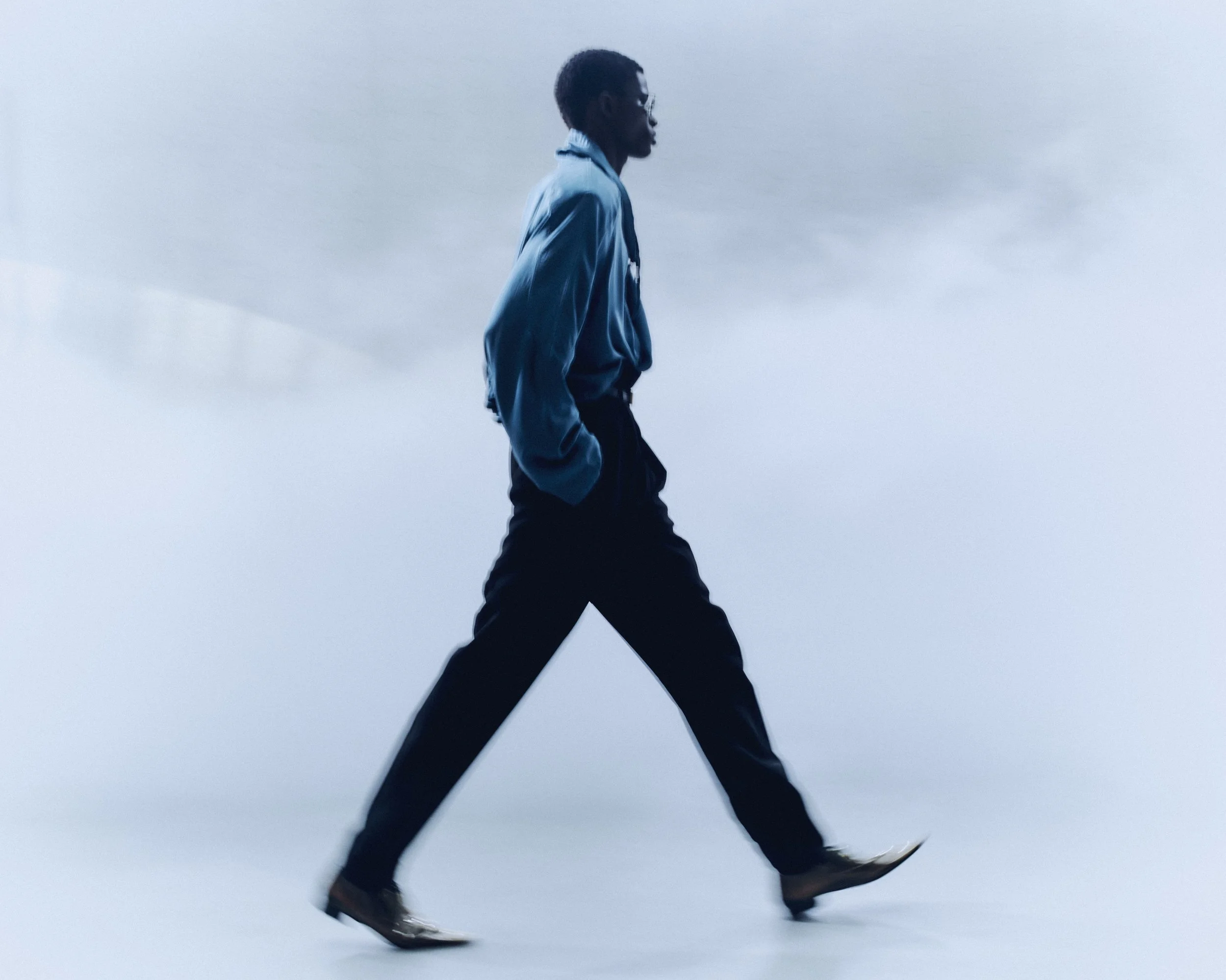
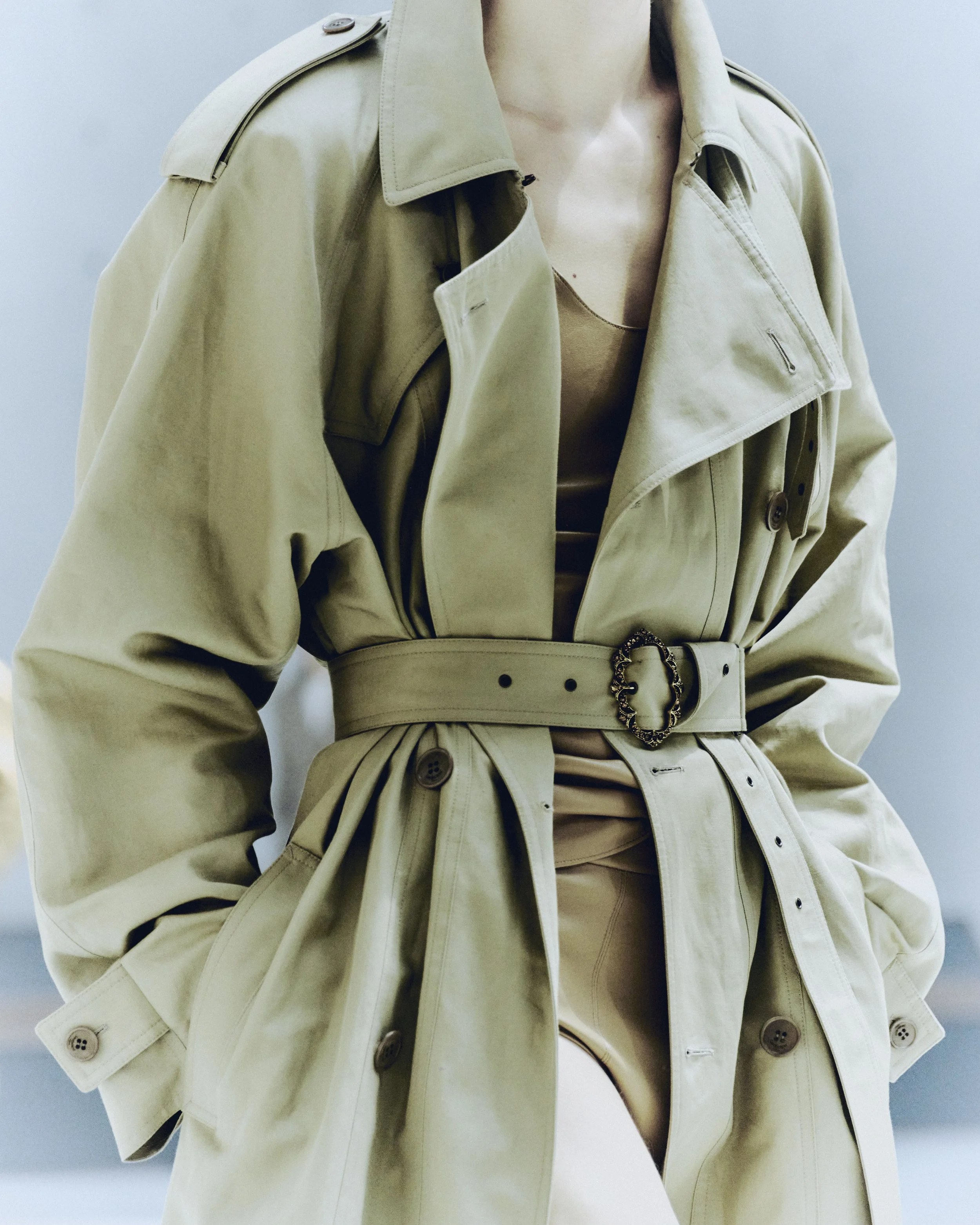
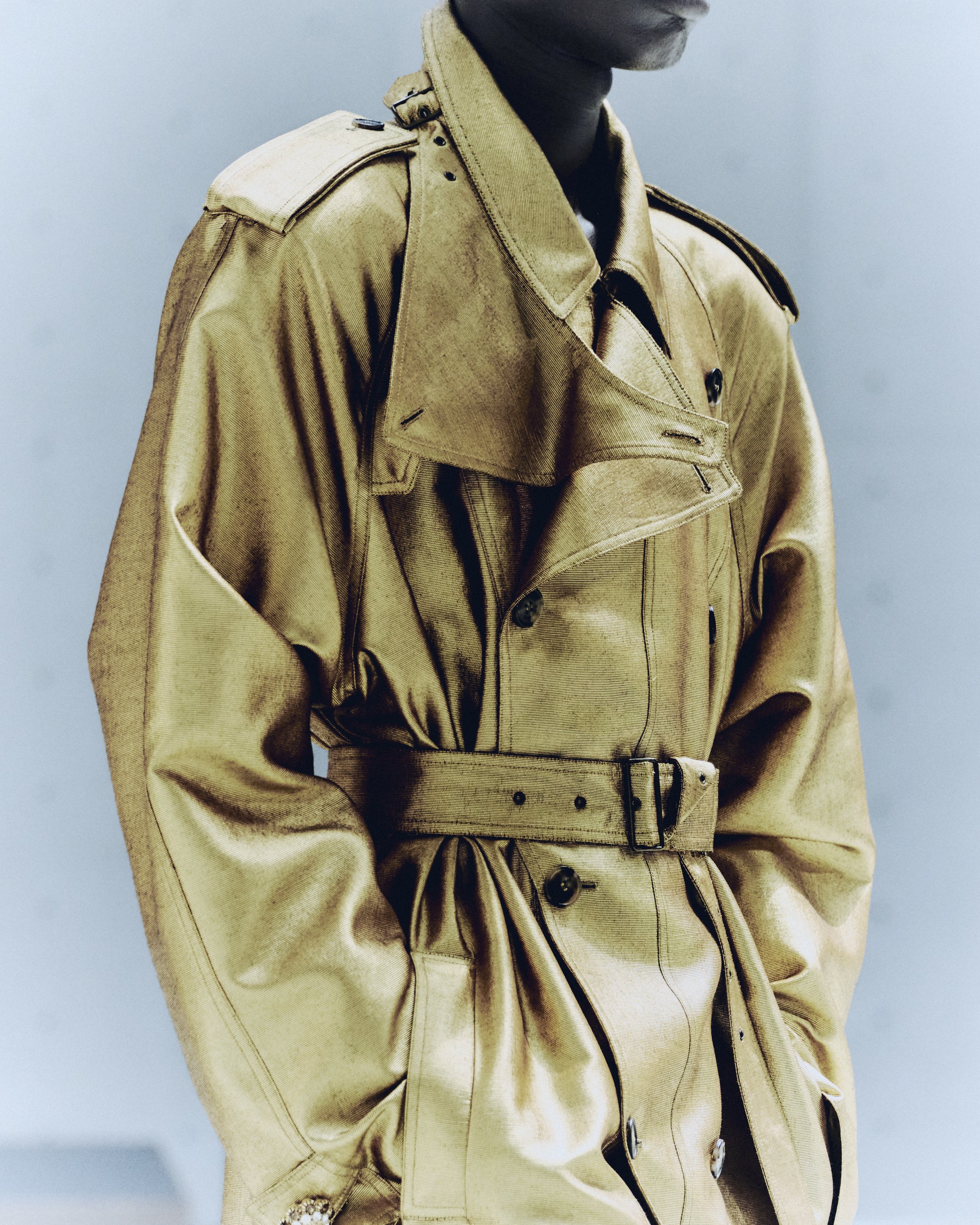
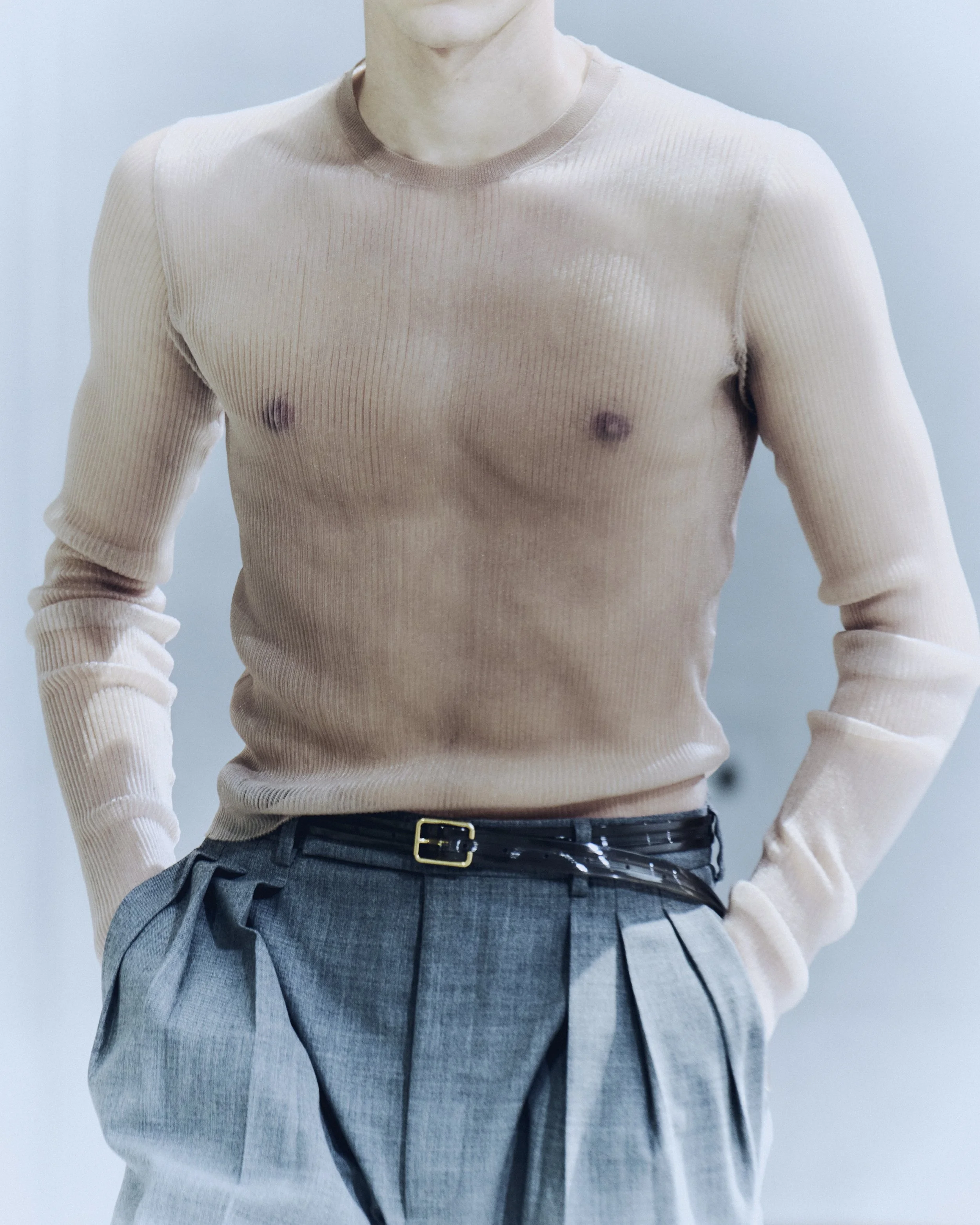
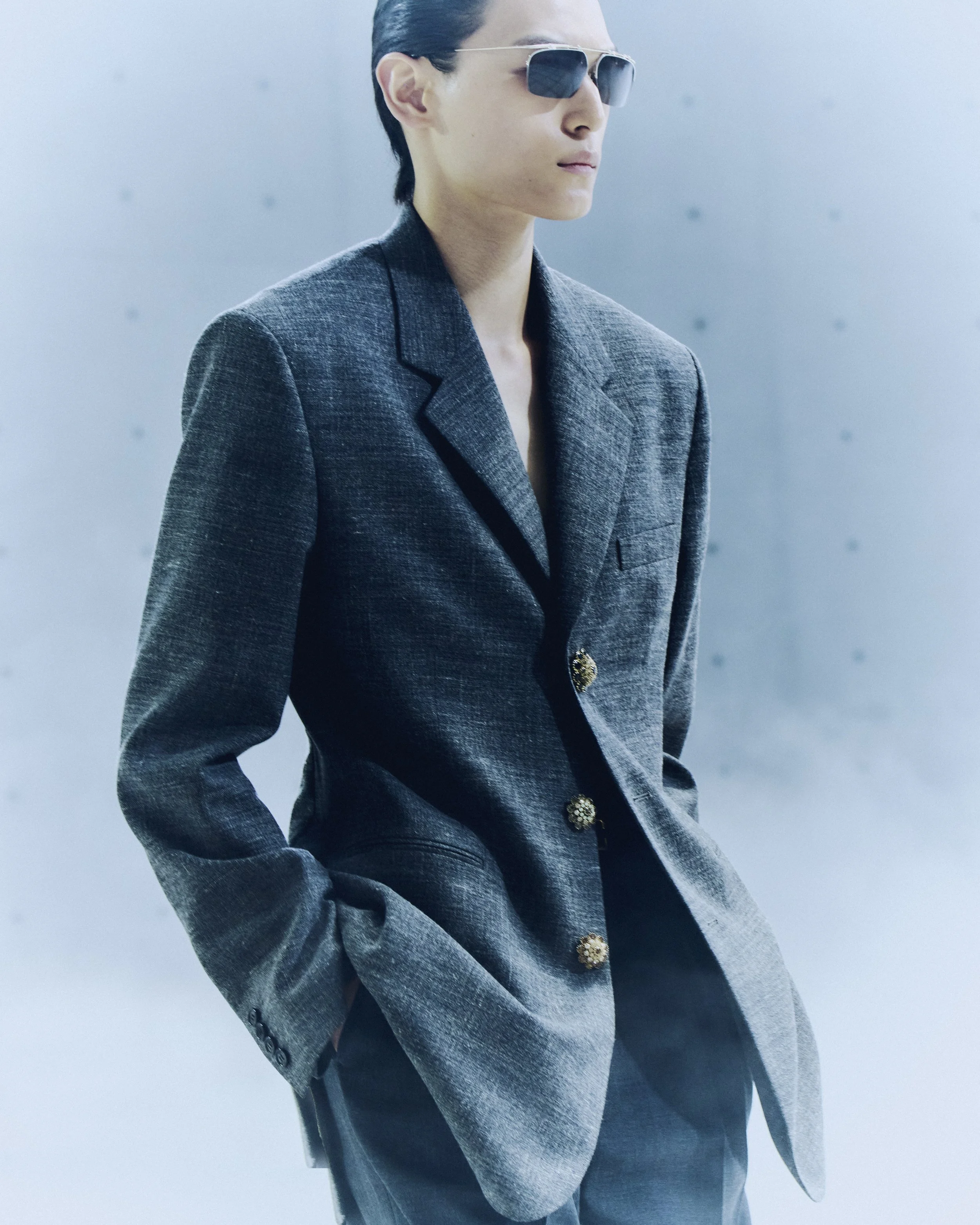
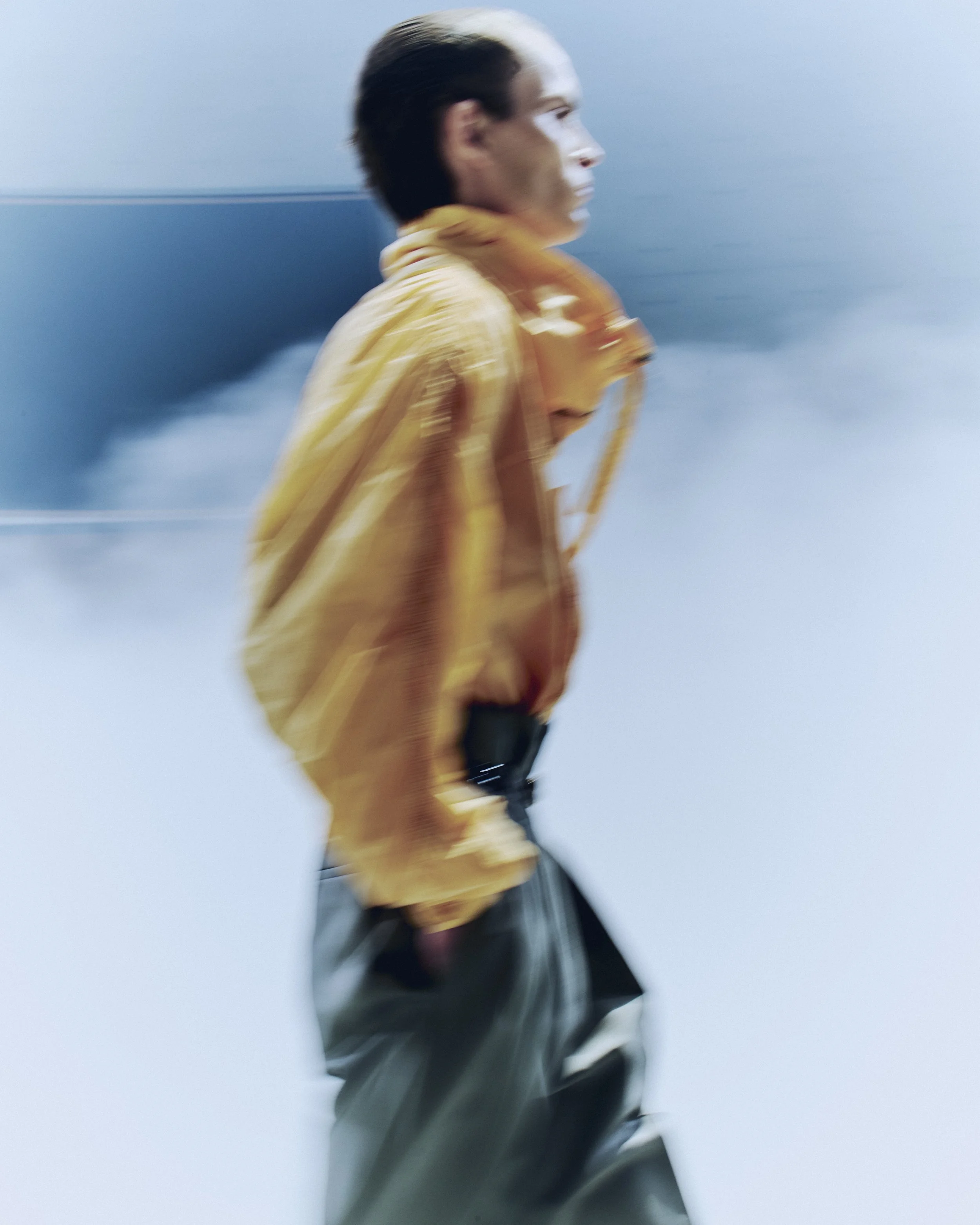
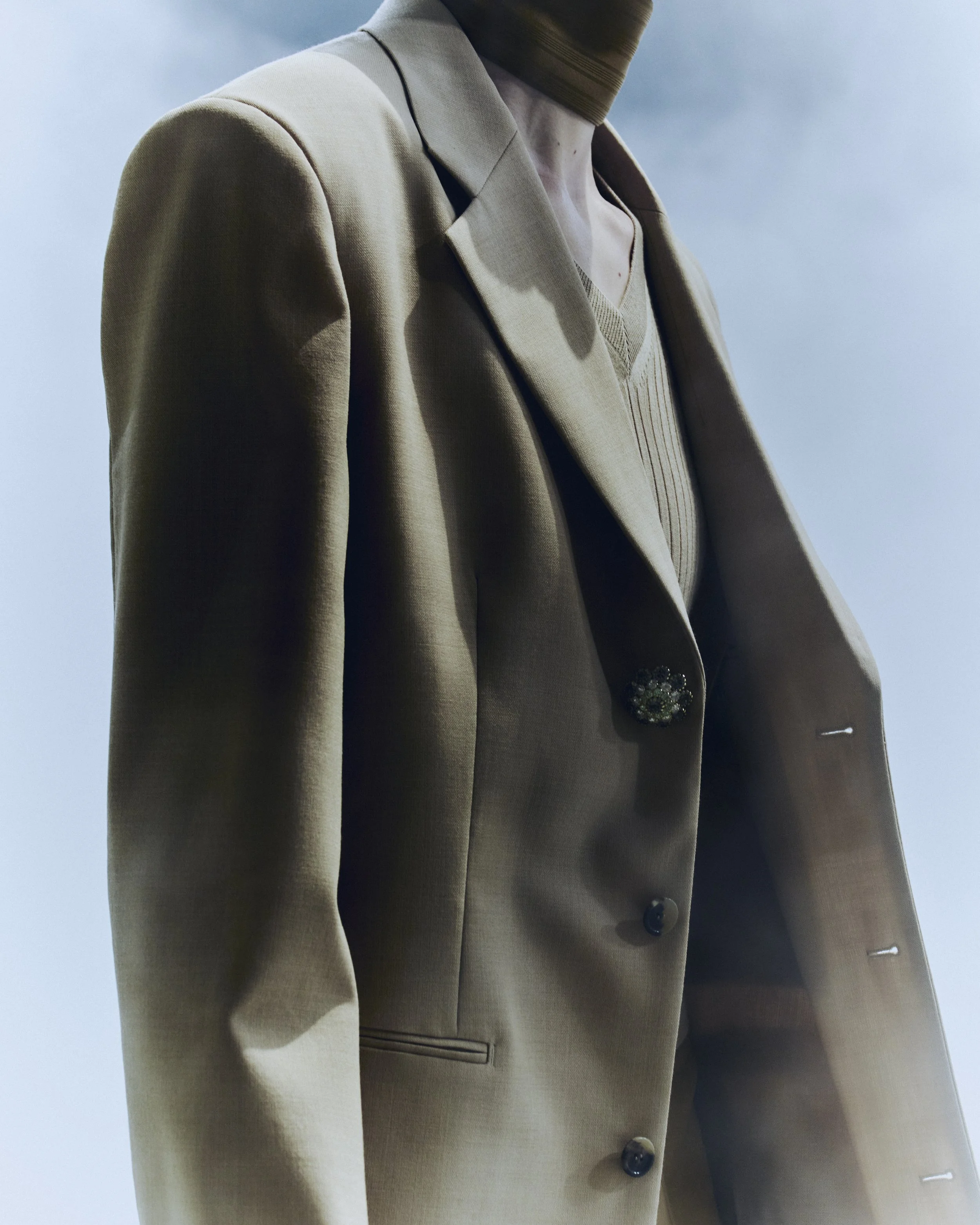
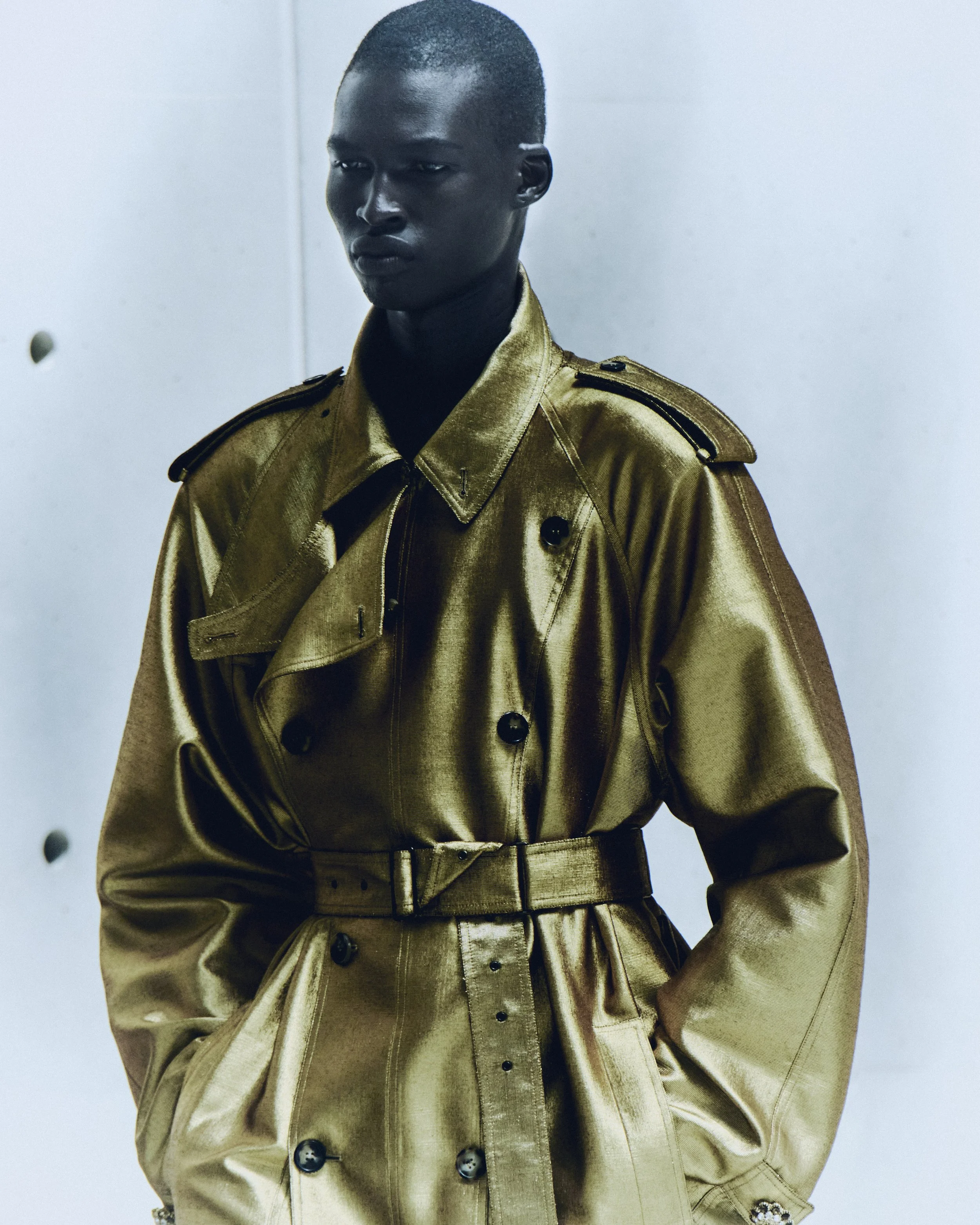
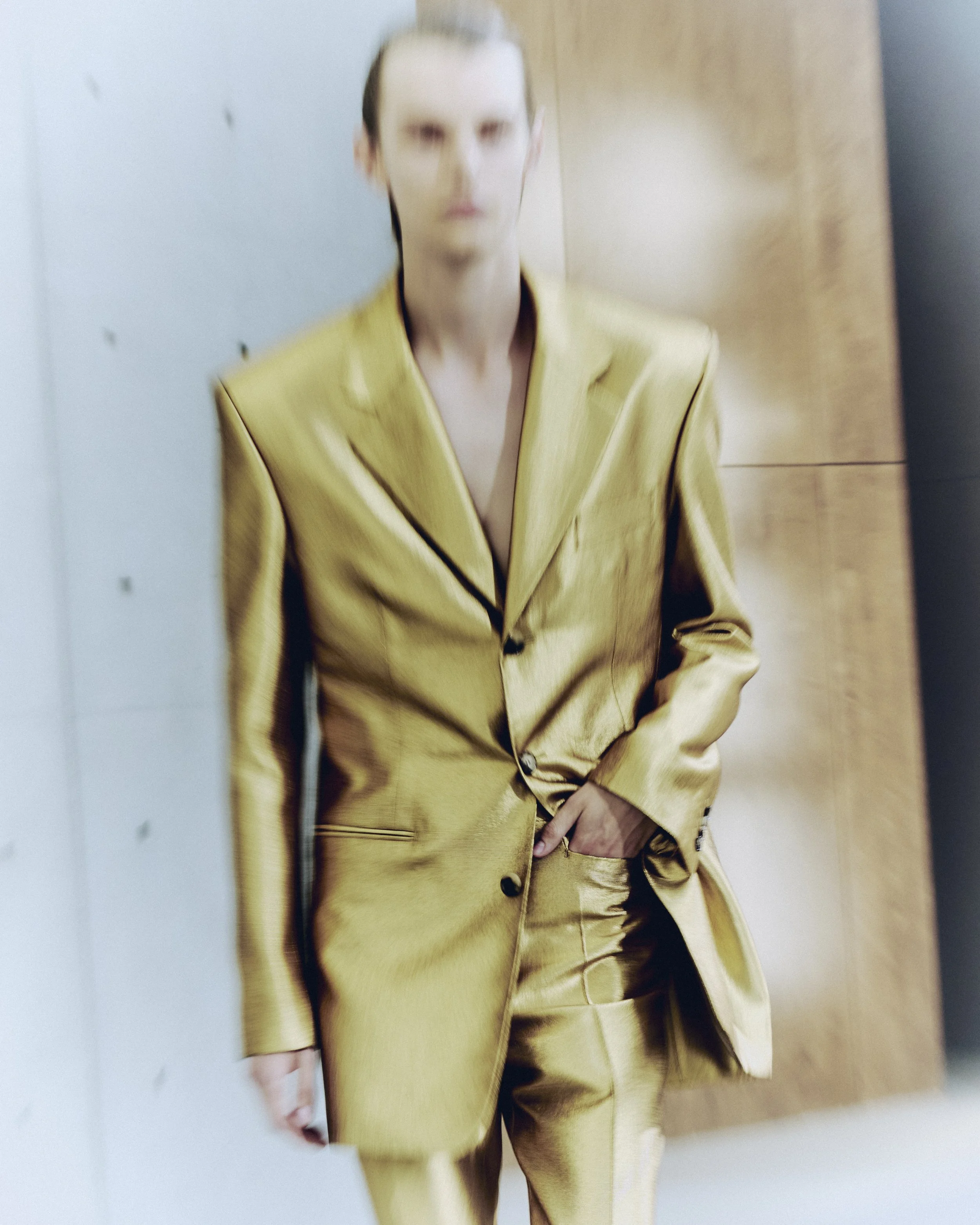
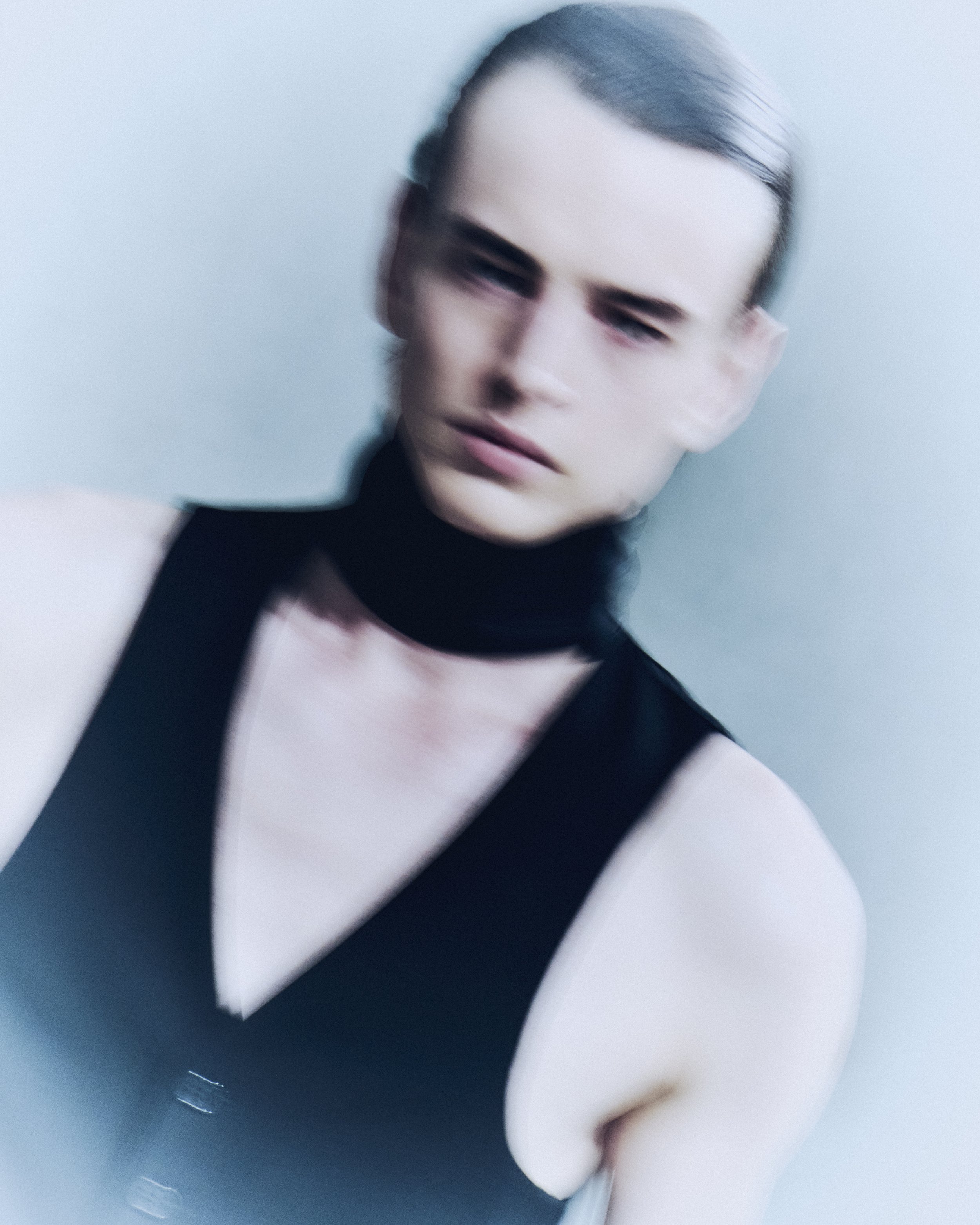
Tailoring is sharpened into new proportions: a three-button jacket cut higher on the body, paired with narrow flat-fronted or softly pleated trousers; familiar Saint Laurent codes—the waistcoat, the ribbed V-neck sweater—recalibrated through precision rather than reinvention. Even athletic blousons appear refined, rendered in unexpectedly delicate technical taffeta. Gold threads through the collection not as ornament but as transformation, turning the utilitarian trench into something heightened yet still functional. The palette remains grounded—grey, brown, black, beige—punctuated by flashes of orange, ochre, claret, lime, powder blue, and shimmering gold.

The collection is informed by figures who treated restraint as a form of expression: Marguerite Duras, Tina Chow, and the fictional Mr. Ripley. Each, in different ways, embodies Vaccarello’s central idea that omission can be more powerful than declaration. As the notes frame it: “It is refusal, perhaps, that most powerfully fuels desire.” And further: “We have forgotten the pleasure of the unknown, the unseen and the unspoken.”

The presentation extends this philosophy into space and choreography. Models move through Cloud #07156 in a sixteen-minute sequence, emerging and dissolving within Nakaya’s fog. Here, clothing is never fully fixed in view. Instead, it becomes part of an atmosphere where presence is temporary, and disappearance is designed. The installation is not a backdrop but an active force—another articulation of absence, restraint, and desire in motion.

The Weight of Lightness: Miya Ando’s “Mono no aware” at Saint Laurent Rive Droite, Los Angeles

In a city so often obsessed with permanence—ageless faces, endless summers, architecture designed to defy time—Mono no aware, Miya Ando’s luminous exhibition at Saint Laurent Rive Droite in Los Angeles, arrives like a soft exhale. Curated with elegant restraint by Anthony Vaccarello, the exhibition runs from April 8 through May 28, 2025, and offers visitors a meditative encounter with the ineffable: beauty that doesn’t last, and thus becomes more precious.

Ando, a Japanese-American artist based in New York, brings to Los Angeles a body of work that is both austere and poetic. Her materials—steel, redwood, washi paper, glass—are not chosen for comfort or ease. These are tough, elemental substances, but in her hands, they seem to sigh. Steel oxidizes. Wood is scorched. Silver nitrate glistens briefly before tarnishing into shadow. Every piece seems to exist in the act of becoming something else, caught in a slow dance between creation and decay.

It is this delicate tension—between the enduring and the fleeting, the seen and the sensed—that defines Mono no aware. The title, a Japanese philosophical term, loosely translates to “the pathos of things.” But it's not sorrow in the Western sense; it’s a tender, almost reverent awareness of the impermanence of all things. The falling cherry blossom, the shifting moonlight, the flicker of memory—Ando translates these moments not as loss but as sublime presence.

This exhibition is less a gallery show than a sensorial field. Ando’s paintings, with their subtle gradations and vaporous textures, resemble atmospheres more than images. One large piece—steel treated with silver nitrate—glows as if lit from within, a silver dusk caught in mid-fade. Stand before it long enough and you may find yourself breathing slower, drawn into its quietude. The light changes as you move. It is not just the painting that shimmers, but your own perception, altered.

Nearby, sculptures made of redwood anchor the space with a different kind of gravity. Ando uses the traditional Japanese shou-sugi-ban technique to char the surface of the wood, preserving it through fire. The result is a deep, inky black that isn’t void but presence. The carbonized surface absorbs light instead of reflecting it. Touch, were it allowed, would surely reveal unexpected warmth beneath the charcoal. These works feel ancient and future-facing at once—artifacts of a time out of time.

Silkscreen prints—subtler, perhaps quieter still—offer a more intimate scale, drawing viewers close. They echo the motifs of moonlight, fog, and celestial transience that recur throughout Ando’s work. There is a consistent language at play, not in symbols or icons, but in atmosphere. What binds the pieces together is not a narrative, but a rhythm, a kind of visual breath.

Ando’s training is as multidisciplinary as her art. With a background in East Asian calligraphy and metal patination, she bridges traditions with innovation. Her American upbringing meets her Japanese lineage in a hybrid that never feels forced. Instead, her work pulses with the complexity of in-between identities—cultural, material, temporal. The result is a deeply personal, spiritual vision, one that invites viewers not just to look, but to dwell in a different register of time.

Vaccarello’s curatorial touch is light but essential. The space at Saint Laurent Rive Droite—typically known for its sleek fashion displays and curated chaos—has been transformed into a vessel for contemplation. The works are given room to breathe, and the minimalist setting amplifies their quiet power. The collaboration between the house of Saint Laurent and Ando is more than aesthetic alignment—it’s an act of mutual recognition. Both traffic in forms of elegance that resist explanation, both seek out the sacred in style and silence.

It is tempting to categorize Mono no aware as environmental art or spiritual abstraction. But to do so would be to contain it too tightly. What Ando offers here isn’t doctrine—it’s sensation. It’s the way silver catches dusk. The scent of scorched wood. The hush that falls when you realize something beautiful is slipping away. And yet, Mono no aware does not mourn. It honors. In every oxidized panel, every blackened beam, every fading gradient, there is a kind of stillness that feels like acceptance. Not resignation, but reverence.

In a world constantly refreshing itself, where we swipe and scroll in pursuit of the next, the now, the new, Miya Ando’s work asks us to pause. To notice. To feel, just for a moment, the immensity of impermanence. And maybe, in doing so, to find a strange and fragile peace.