Mona Fastvold Chronicles an Enigmatic Mystic in The Testament of Ann Lee

The Testament of Ann Lee, Photograph courtesy Searchlight Pictures

text by Hank Manning

If humans, roughly half male and half female, were made in God’s image, and the first incarnation was a man, then the second must be a woman. Thus was the logic of the Shakers, a breakaway sect of Quakers that emerged in Manchester in the mid-1700s under the leadership of Ann Lee. In addition to their egalitarian gospel, they attracted derision for their charismatic, loud, and long-lasting style of worship—improvised dancing and singing that often continued for days until quashed by police. During her multiple prison stints, Lee organized her visions into a formal gospel and decided to move with her followers to colonial America.

The Testament of Ann Lee, a new film by Mona Fastvold, is in some ways a standard biopic of the putative prophet, portrayed by Amanda Seyfried. It depicts Lee’s life chronologically, nearly from cradle to grave, with heavy-handed narration by a tertiary character that can make Lee feel frustratingly unknowable despite the significant time viewers spend with her. The film takes inspiration from and highlights many of the Shakers’ great eccentricities—their hymns, dance, architecture, design, and progressive beliefs. What first registers as frenetic worship gradually enraptures viewers, becoming hypnotic by the film’s end. Lee herself is a remarkable figure for her ability to earn respect in a domain that almost invariably precluded female leadership, as well as for the prescience of her beliefs. In addition to gender equality, Shakers fiercely opposed slavery and war, encouraged simple living, and shared responsibilities on communal farms. It was Lee’s demand for celibacy (even in marriage) that pre-determined the early demise of the movement. She proclaimed it as God’s will after all four of her children died in early infancy. 

In their previous collaboration, Fastvold and her partner, Brady Corbet, wrote The Brutalist, which Corbet directed. Like Lee, Lazlo Toth, the titular architect, moved to America after facing religious persecution in Europe. Although the stories took place 200 years apart and Toth is a fictional character, they present similar narratives of America as a beacon of hope. Lee and Toth, a Holocaust survivor, both hope to reunite their families, practice their religion in peace, and achieve economic security. But as foreshadowed in a rather on-the-nose opening shot of the Statue of Liberty turned upside down, America ultimately fails to live up to its promise. 

The immigrants do find some success. Toth’s wife and niece join him as he reestablishes himself as a prolific architect. The Shakers find quality land for agriculture in upstate New York, grow their congregation through traveling preachers, and establish six Shaker villages. Nonetheless, Old World prejudices persist, and a sense of belonging remains elusive. Toth earns commissions but never the respect of his wealthy patron. He declares to his wife, “They do not want us here.” His niece, agreeing, continues her exodus to Israel. Lee likewise finds herself unwelcome, often the victim of violent mobs. Her strict beliefs continue to alienate her, as her husband and other early followers find celibacy untenable and depart. 

Both films feel, in some respects, like pieces of art created by the protagonists themselves, as if brutalism and Shakerism were film genres. Both protagonists teeter between heroes and anti-heroes, with audiences cheering for their success after persecution while also bristling at their bursts of anger, self-confidence, and rigidity. Their penchants for minimalist design—rectangular brutalist architecture and simple wood Shaker furniture—inspire expansive sets throughout. Daniel Blumberg, who won an Oscar for his horn-and-drum-focused score for The Brutalist, has now adapted Shaker hymns into a partial musical, at its most powerful as it accompanies the changing of seasons on their cross-Atlantic journey. Their hymn, “All is Summer,” convinces fellow travelers of their ability to tame the weather. 

In other aspects, the films are surprisingly maximalist. The Brutalist stretches on for three and a half hours, including a fifteen-minute intermission. The Testament of Ann Lee is no less expansive in spirit. Neither film is ever lacking in ambition, piling on period costumes, heavy dialect, and a determination to grapple with history, faith, gender, grief, migration, and power all at once, always with a sense of audacity that mirrors the uncompromising figures at their centers. But even these two, with their large ambitions, ultimately find themselves victims of circumstance. 

The film resists characterizing Ann Lee as either a progenitor of modern religious practice or merely an outlier within it. Many of her beliefs were shared with Quakers, whose practice has endured, while her own particular sect has nearly disappeared (today, the Shaker population has dwindled to just three practitioners). What the film ultimately withholds is a stable framework for interpretation: Lee is not a great woman of history, not merely an eccentric, and not reducible to an archetype. That ambiguity may be intentional. By refusing to resolve her into a legible category, The Testament of Ann Lee gestures towards a different truth—that history does not sort its figures neatly, and that our understanding of it is necessarily provisional and incomplete.
Jafar Panahi's "It Was Just an Accident" Implores Us to Weaponize Our Laughter

It Was Just an Accident, Photograph courtesy NEON

text by Hank Manning

Jafar Panahi doesn’t have to look far to find inspiration for his films. He often portrays a fictionalized version of himself, a filmmaker speaking truth to power. In real life, Iranian authorities have twice imprisoned him, first for making “anti-regime” films and then for inquiring about the condition of another imprisoned filmmaker. He was released the second time after engaging in a 48-hour hunger strike, but continues to face restrictions on his travel and filmmaking. 

Although he does not appear onscreen in It Was Just an Accident, which won the Palme d’Or at this year’s Cannes Film Festival, it may be Panahi’s most personal film yet. His first feature made after his second imprisonment, he shot it clandestinely with a small crew in Tehran to avoid having to work with state censors. The resulting long takes and often close quarters give the film something of a documentary, true-to-life feel. The characters’ backstories, motivations, and fantasies were inspired by his own stay in prison—although he says he did not personally suffer physical torture—and conversations with fellow prisoners.

One night at his repair shop, auto mechanic Vahid hears a sound that has haunted him for years: the high-pitched squeak of an improperly attached prosthetic leg. It belongs to Eghbal, a prison guard who tortured him and other political prisoners. Vahid instinctively springs to action, trailing and then assaulting and kidnapping his former tormentor. But doubts arise—Vahid was blindfolded in prison, so he can’t be sure he has found the right person. He enlists other former prisoners to help him confirm. They likewise depend on secondary senses—smell and touch—to try to identify the man.

It Was Just an Accident, Photograph courtesy NEON

The members of Vahid’s ad hoc party—wedding photographer Shiva, her ex Hamid, bride Goli, and groom Ali (who was not a prisoner and is consequently the least passionate character)—use different strategies to navigate life in a brutal authoritarian country. Shiva initially hopes to forget the torture she endured and live quietly resigned inside the system. Goli, who faints when reminded of her imprisonment, persuades Shiva to at least pursue a confession and an apology. Hamid, filled with rage, demands ultimate vengeance: the immediate killing of his former tormentor. From the conflicts between the victims-turned-captors, we see the difficulties that ordinary people face in opposing authoritarianism. Unlike those inside the regime, who are either chosen for their lack of morals or carefully propagandized to not see the humanity of others, people outside the regime have a variety of morals and desired approaches. These large groups must balance demands for resignation, justice, and vengeance, making unified action more challenging.

Over time, these differences swell. Some passionate emotions subside into logical considerations. Vahid, who at first intended to bury Eghbal alive, becomes hesitant, especially when learning that Eghbal has an innocent wife and young daughter. The party must contend with the fact that their hostage is only one member of a large, oppressive system. They consider whether he can be blamed for following orders, no matter how cruel, or whether he is also a victim who had no choice but to do brutal work to support his family. Yet, if a man who commits violence against the innocent doesn’t bear responsibility for the regime, then who possibly could? But then again, even if he is guilty and deserving of the worst treatment, will enacting revenge do anything to help the group, if they can even get away with it?

The film is too honest to provide any easy answers. Individual viewers will likely align themselves more closely with one or another member of the group’s moral philosophy while simultaneously understanding the flaws in each. The film’s final shot unsettles every conclusion we’ve formed, leaving us to wonder if any sort of resistance could lead to a proper resolution.

It Was Just an Accident, Photograph courtesy NEON

The film inspires a surprising number of laughs. In particular, a running gag features Vahid paying bribes to security guards and nurses, demonstrating the way that corruption permeates all areas of society. We are reminded that no matter how horrifying authoritarian regimes are, they are also inevitably ridiculous. Since tyrants insist on being taken seriously, we cannot forget to weaponize our laughter.

Although clearly set in Iran, the key politics, such as the regime’s justifications for the prison sentences, are intentionally left generic enough so that audiences can easily imagine parallel scenarios developing under any authoritarian government. While the film does raise more questions than it answers, its one seemingly unavoidable conclusion is that authoritarianism, in any form, must not be allowed to take root. Even those who place themselves at the top of an oppressive hierarchy eventually meet their fate, as systems centered on ever-escalating violence quickly spiral out of control, consuming everyone within them.

Devil In The Flesh, When Op Art Electrified The Film World @ MAMAC In Nice, France

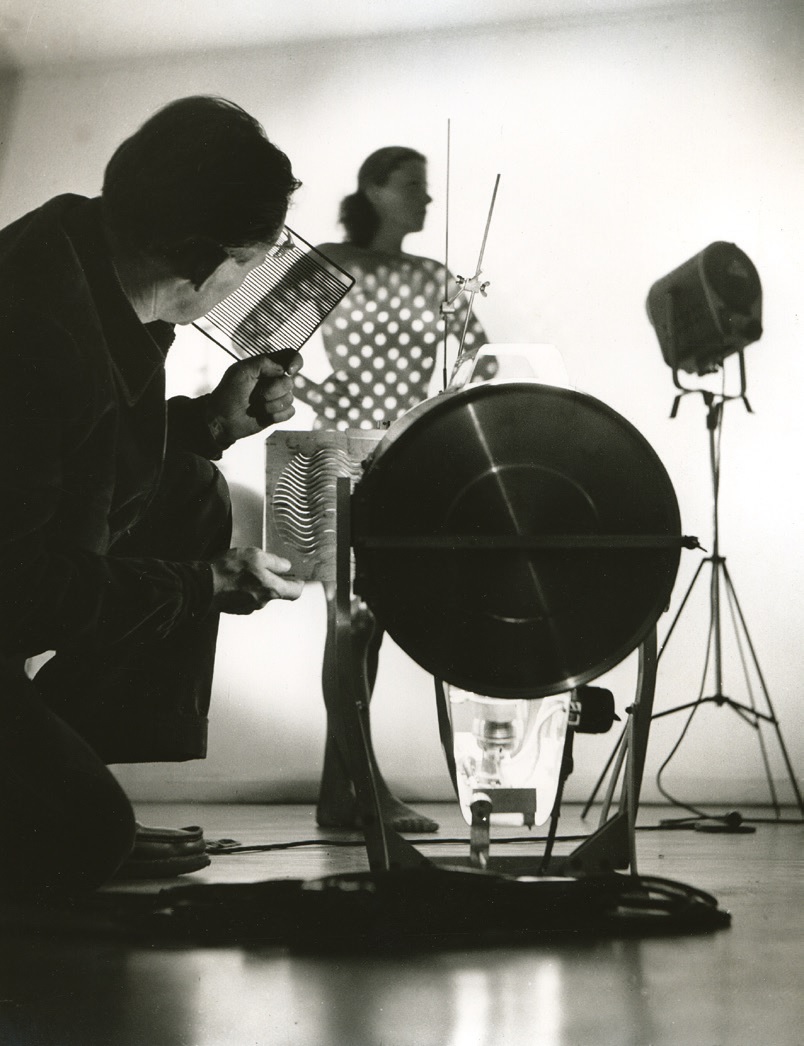
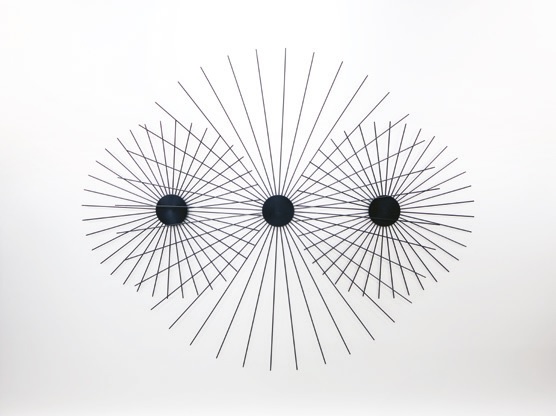
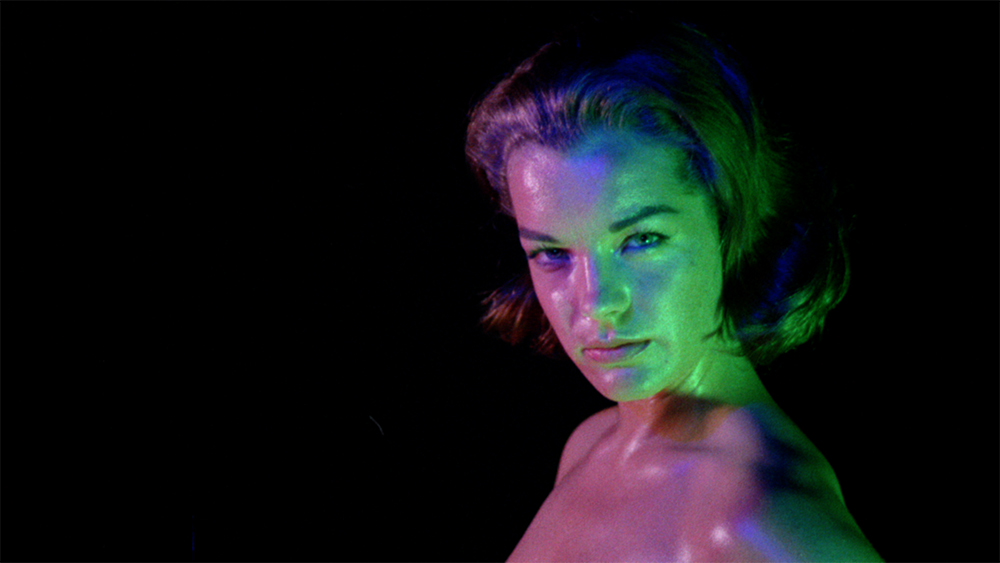
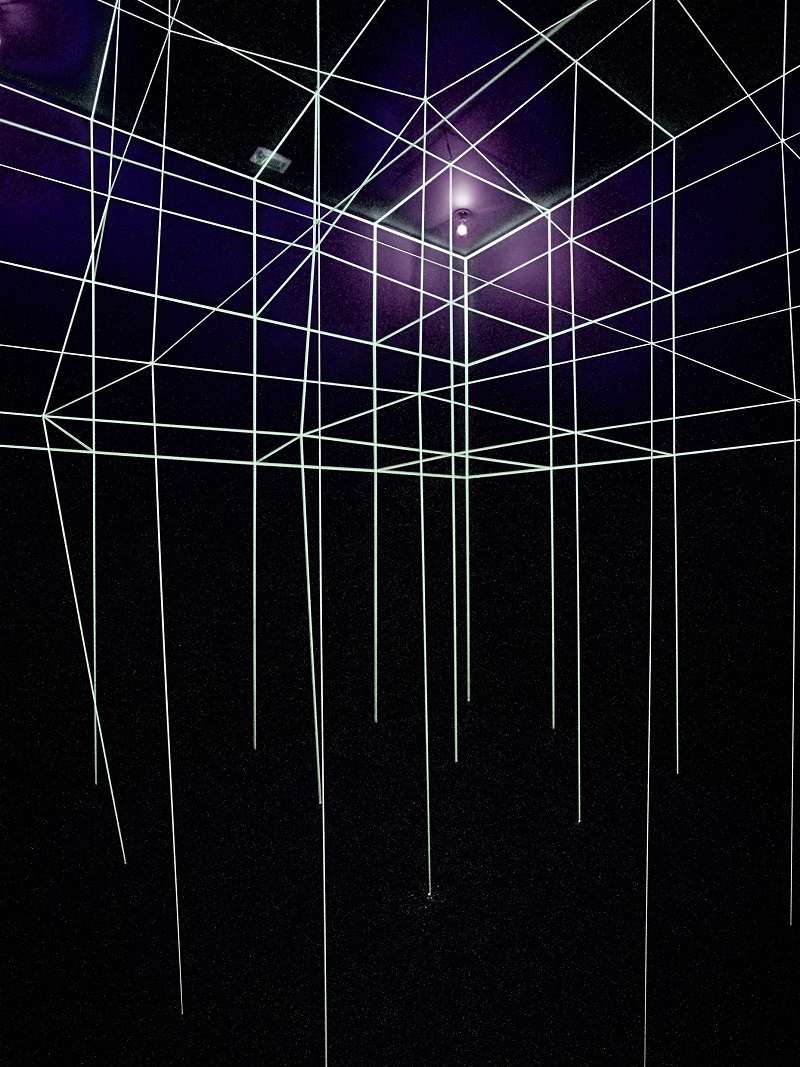
In the early 1960s, kinetic art established itself in Europe with a double principle: destabilising perception and democratising art. Optical illusion paintings, reliefs with light and motion, and disorientating environments shake perception. Christened “Op Art” in 1964, this avant-garde art was met with resoundingly popularity and success, so much so that it was commandeered in entirely new ways. While the advertising agencies, designers and major fashion house seized its intoxicating shapes, cinema gave Op Art an unexpected angle. An art of movement and of light, it was both a predecessor, able to sublimate its visual games, and a follower, which seeks to plunder it through its desire for modernity. From dramas to thrillers, filmmakers and decorators drew a language and themes from it, producing a whole range of “re-uses” in the scenery and the plot – scenes of hoaxes and dread, sadistic characters or zany improvisers, but also extreme experiences: scenes of hallucination, psychosis.

Exhibition immersed the visitor in this passionate story between two arts, punctuated by mockery and misunderstanding, reciprocal sublimation, pop or baroque manifestations as well as collaborations and plagiarism. Through nearly 30 films, 150 works and documents, it explored the origin and the taboos of this predatory fascination, and considers what cinema revealed to Op Art of its own nature. In such, it released the spirit of a decade ruffled by modernity, thirsting for emancipation and haunted by the ghosts of the war. This era, full of contradictions, created a completely new aesthetic culminating in the fruitful friction between the visual arts and the cinema. Devil in the flesh, When Op Art electrified the film world is on view through September 29 at MAMAC 1 Place Yves Klein, Nice. photographs courtesy of MAMAC