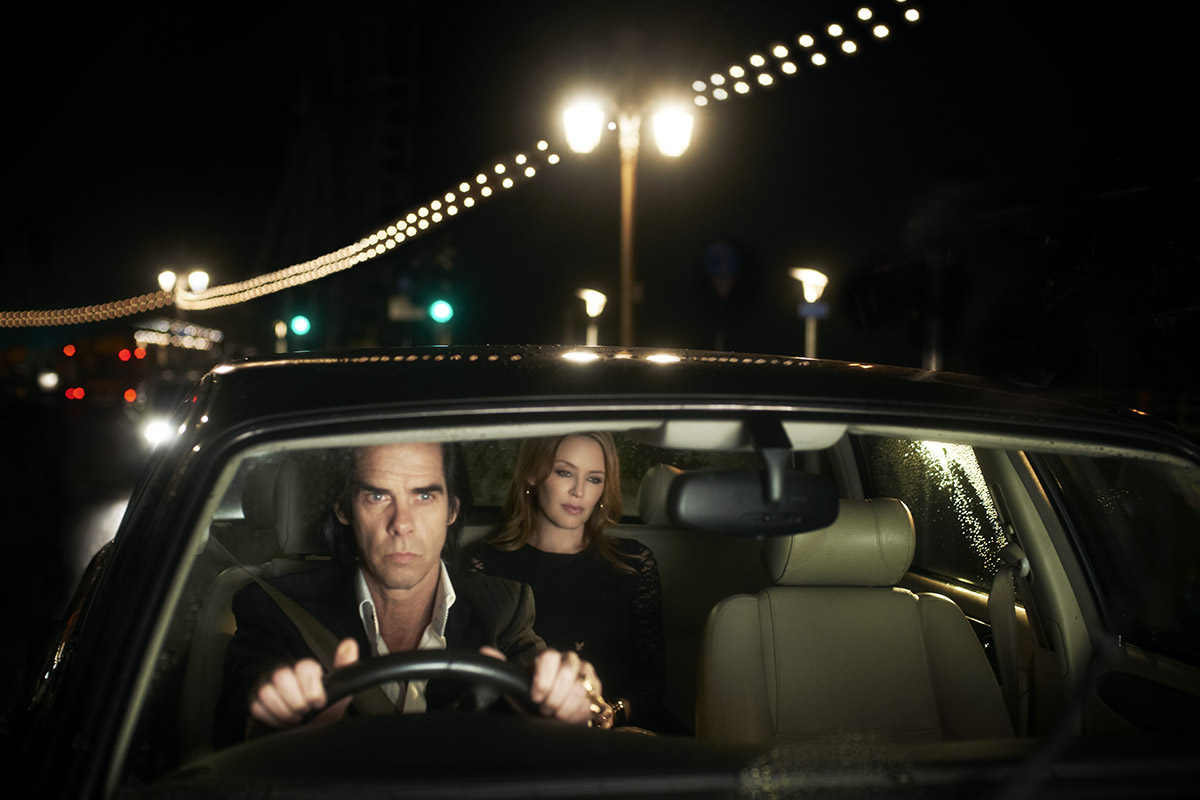
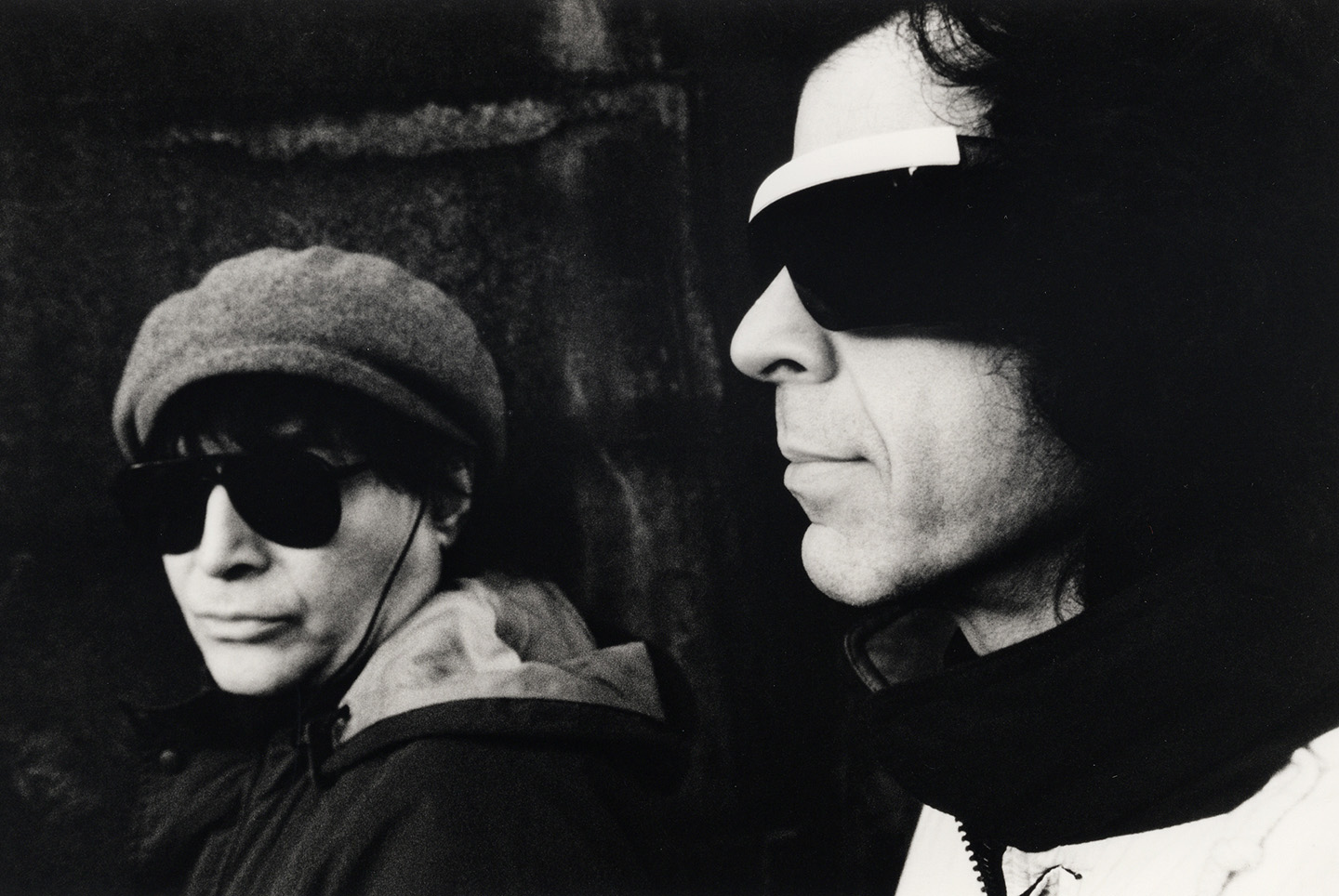
The Testament of Ann Lee, Photograph courtesy Searchlight Pictures
text by Hank Manning
If humans, roughly half male and half female, were made in God’s image, and the first incarnation was a man, then the second must be a woman. Thus was the logic of the Shakers, a breakaway sect of Quakers that emerged in Manchester in the mid-1700s under the leadership of Ann Lee. In addition to their egalitarian gospel, they attracted derision for their charismatic, loud, and long-lasting style of worship—improvised dancing and singing that often continued for days until quashed by police. During her multiple prison stints, Lee organized her visions into a formal gospel and decided to move with her followers to colonial America.
The Testament of Ann Lee, a new film by Mona Fastvold, is in some ways a standard biopic of the putative prophet, portrayed by Amanda Seyfried. It depicts Lee’s life chronologically, nearly from cradle to grave, with heavy-handed narration by a tertiary character that can make Lee feel frustratingly unknowable despite the significant time viewers spend with her. The film takes inspiration from and highlights many of the Shakers’ great eccentricities—their hymns, dance, architecture, design, and progressive beliefs. What first registers as frenetic worship gradually enraptures viewers, becoming hypnotic by the film’s end. Lee herself is a remarkable figure for her ability to earn respect in a domain that almost invariably precluded female leadership, as well as for the prescience of her beliefs. In addition to gender equality, Shakers fiercely opposed slavery and war, encouraged simple living, and shared responsibilities on communal farms. It was Lee’s demand for celibacy (even in marriage) that pre-determined the early demise of the movement. She proclaimed it as God’s will after all four of her children died in early infancy.
In their previous collaboration, Fastvold and her partner, Brady Corbet, wrote The Brutalist, which Corbet directed. Like Lee, Lazlo Toth, the titular architect, moved to America after facing religious persecution in Europe. Although the stories took place 200 years apart and Toth is a fictional character, they present similar narratives of America as a beacon of hope. Lee and Toth, a Holocaust survivor, both hope to reunite their families, practice their religion in peace, and achieve economic security. But as foreshadowed in a rather on-the-nose opening shot of the Statue of Liberty turned upside down, America ultimately fails to live up to its promise.
The immigrants do find some success. Toth’s wife and niece join him as he reestablishes himself as a prolific architect. The Shakers find quality land for agriculture in upstate New York, grow their congregation through traveling preachers, and establish six Shaker villages. Nonetheless, Old World prejudices persist, and a sense of belonging remains elusive. Toth earns commissions but never the respect of his wealthy patron. He declares to his wife, “They do not want us here.” His niece, agreeing, continues her exodus to Israel. Lee likewise finds herself unwelcome, often the victim of violent mobs. Her strict beliefs continue to alienate her, as her husband and other early followers find celibacy untenable and depart.
Both films feel, in some respects, like pieces of art created by the protagonists themselves, as if brutalism and Shakerism were film genres. Both protagonists teeter between heroes and anti-heroes, with audiences cheering for their success after persecution while also bristling at their bursts of anger, self-confidence, and rigidity. Their penchants for minimalist design—rectangular brutalist architecture and simple wood Shaker furniture—inspire expansive sets throughout. Daniel Blumberg, who won an Oscar for his horn-and-drum-focused score for The Brutalist, has now adapted Shaker hymns into a partial musical, at its most powerful as it accompanies the changing of seasons on their cross-Atlantic journey. Their hymn, “All is Summer,” convinces fellow travelers of their ability to tame the weather.
In other aspects, the films are surprisingly maximalist. The Brutalist stretches on for three and a half hours, including a fifteen-minute intermission. The Testament of Ann Lee is no less expansive in spirit. Neither film is ever lacking in ambition, piling on period costumes, heavy dialect, and a determination to grapple with history, faith, gender, grief, migration, and power all at once, always with a sense of audacity that mirrors the uncompromising figures at their centers. But even these two, with their large ambitions, ultimately find themselves victims of circumstance.
The film resists characterizing Ann Lee as either a progenitor of modern religious practice or merely an outlier within it. Many of her beliefs were shared with Quakers, whose practice has endured, while her own particular sect has nearly disappeared (today, the Shaker population has dwindled to just three practitioners). What the film ultimately withholds is a stable framework for interpretation: Lee is not a great woman of history, not merely an eccentric, and not reducible to an archetype. That ambiguity may be intentional. By refusing to resolve her into a legible category, The Testament of Ann Lee gestures towards a different truth—that history does not sort its figures neatly, and that our understanding of it is necessarily provisional and incomplete.