
text by Arlo Kremen
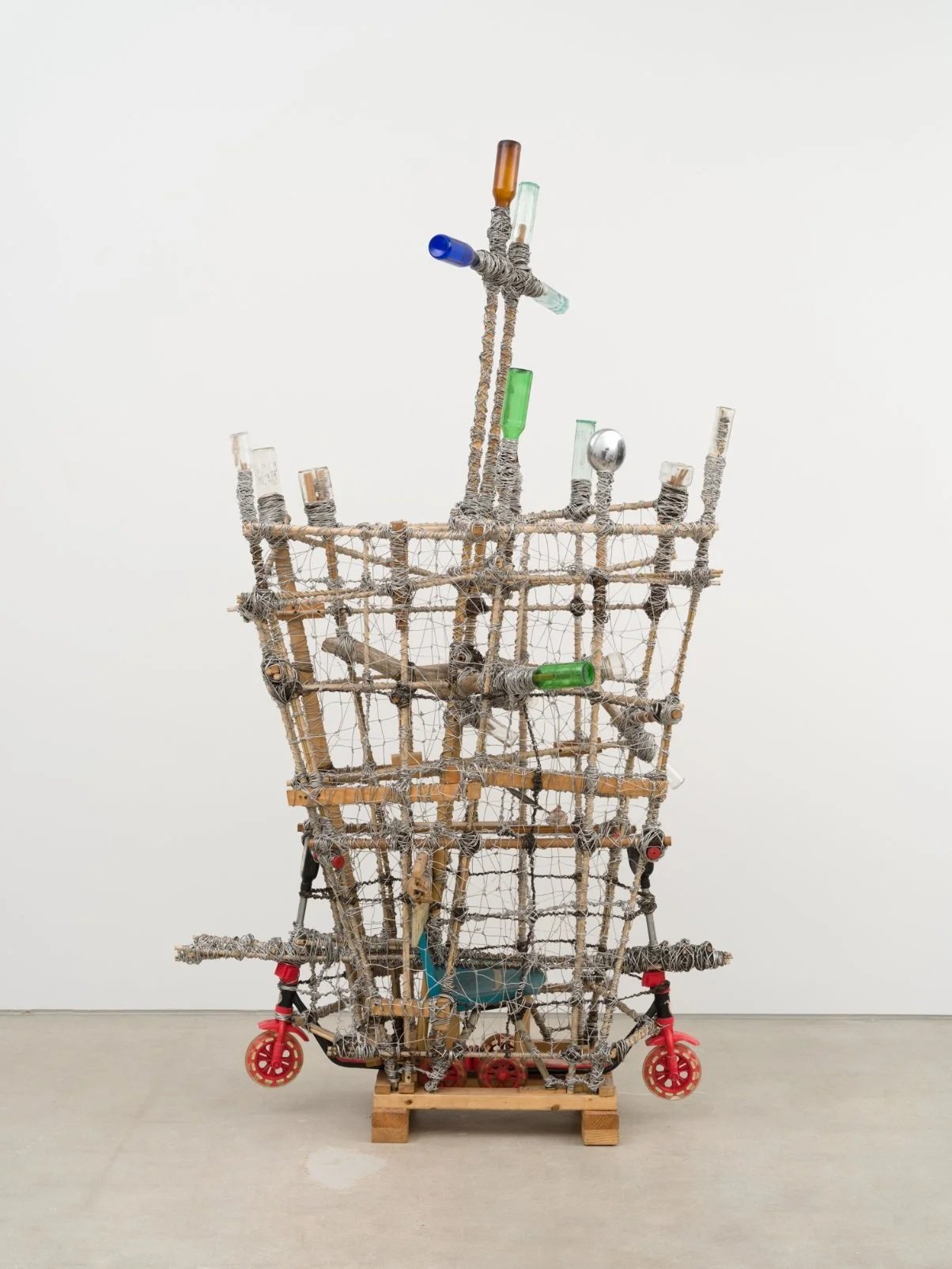
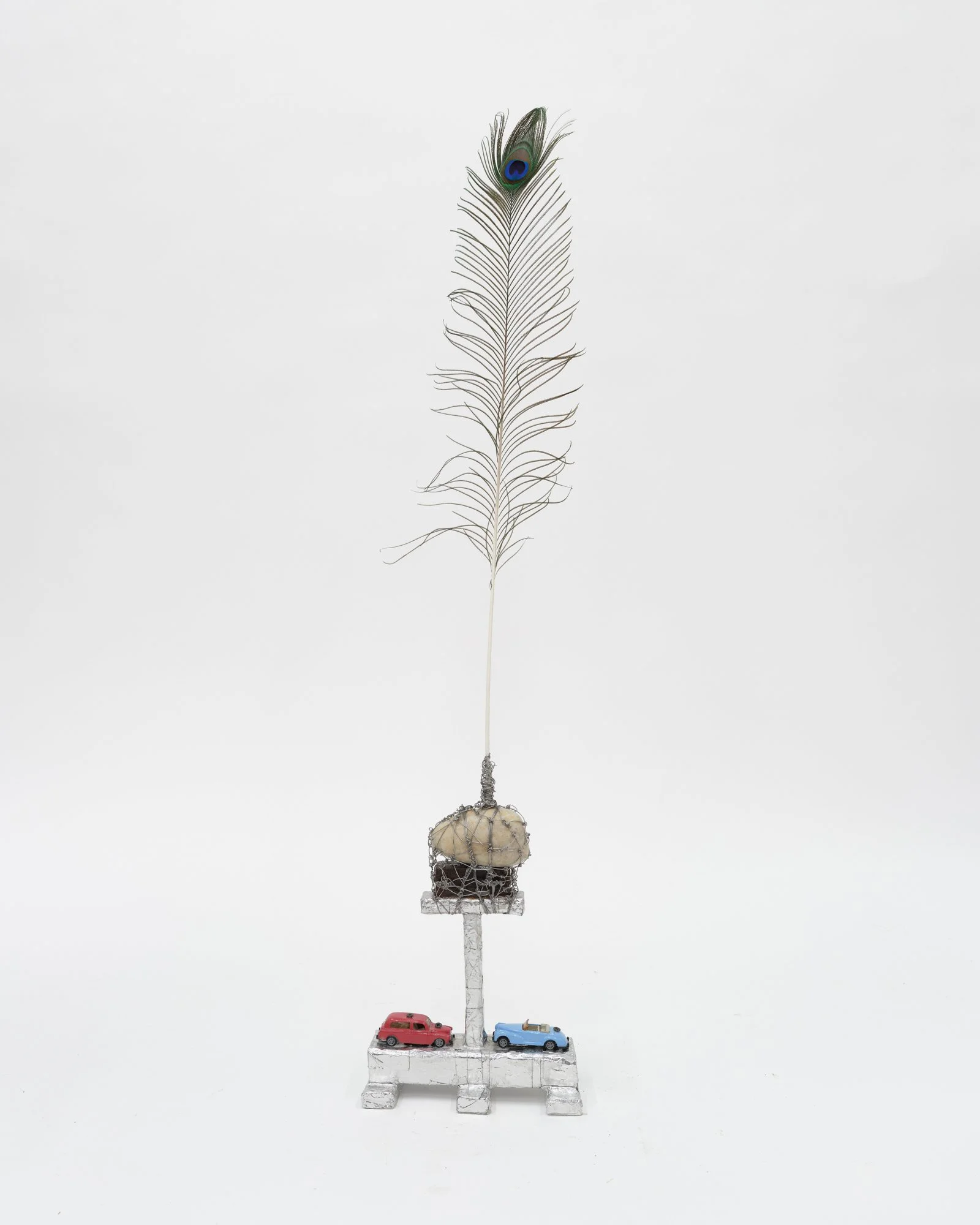
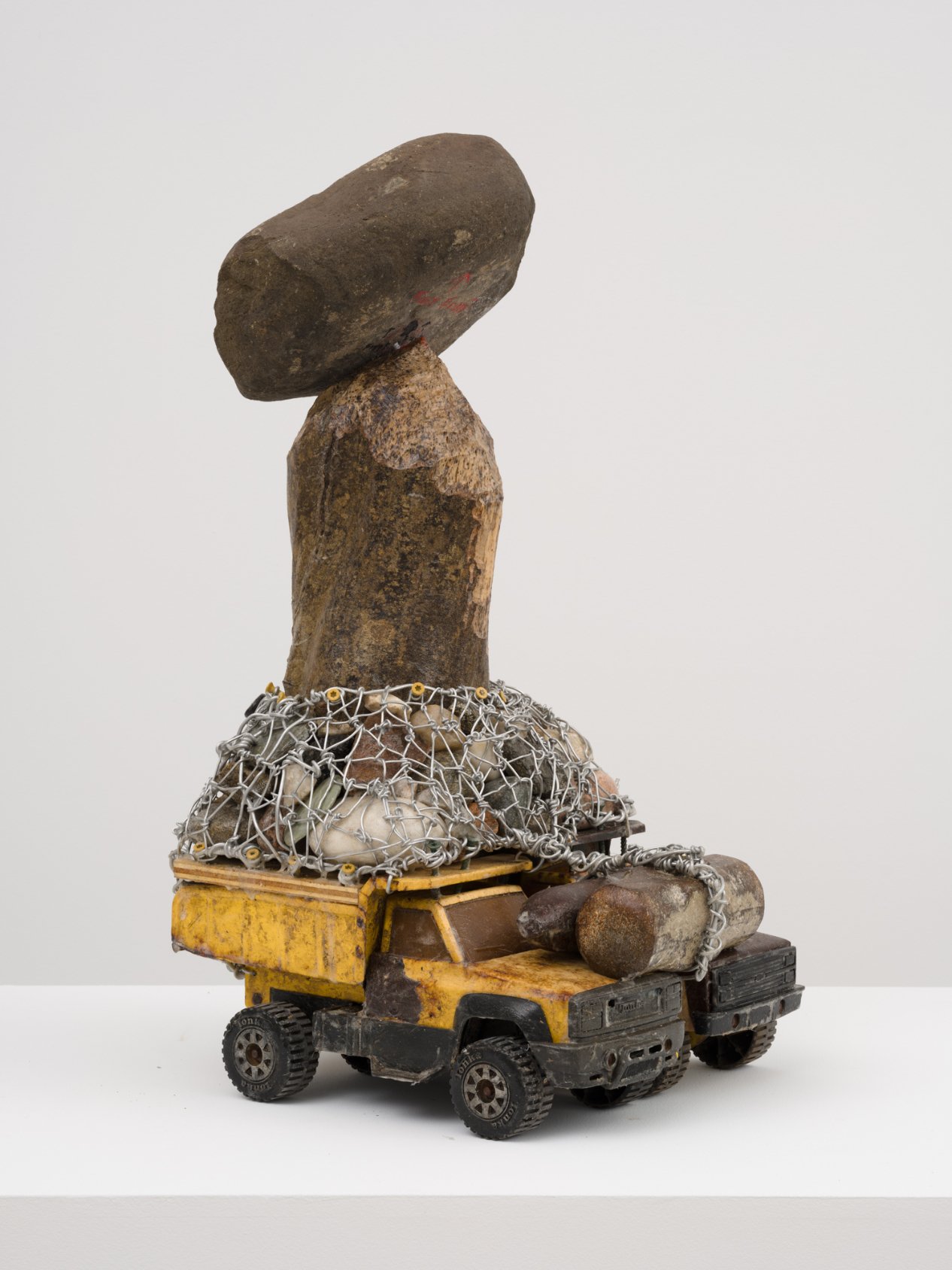
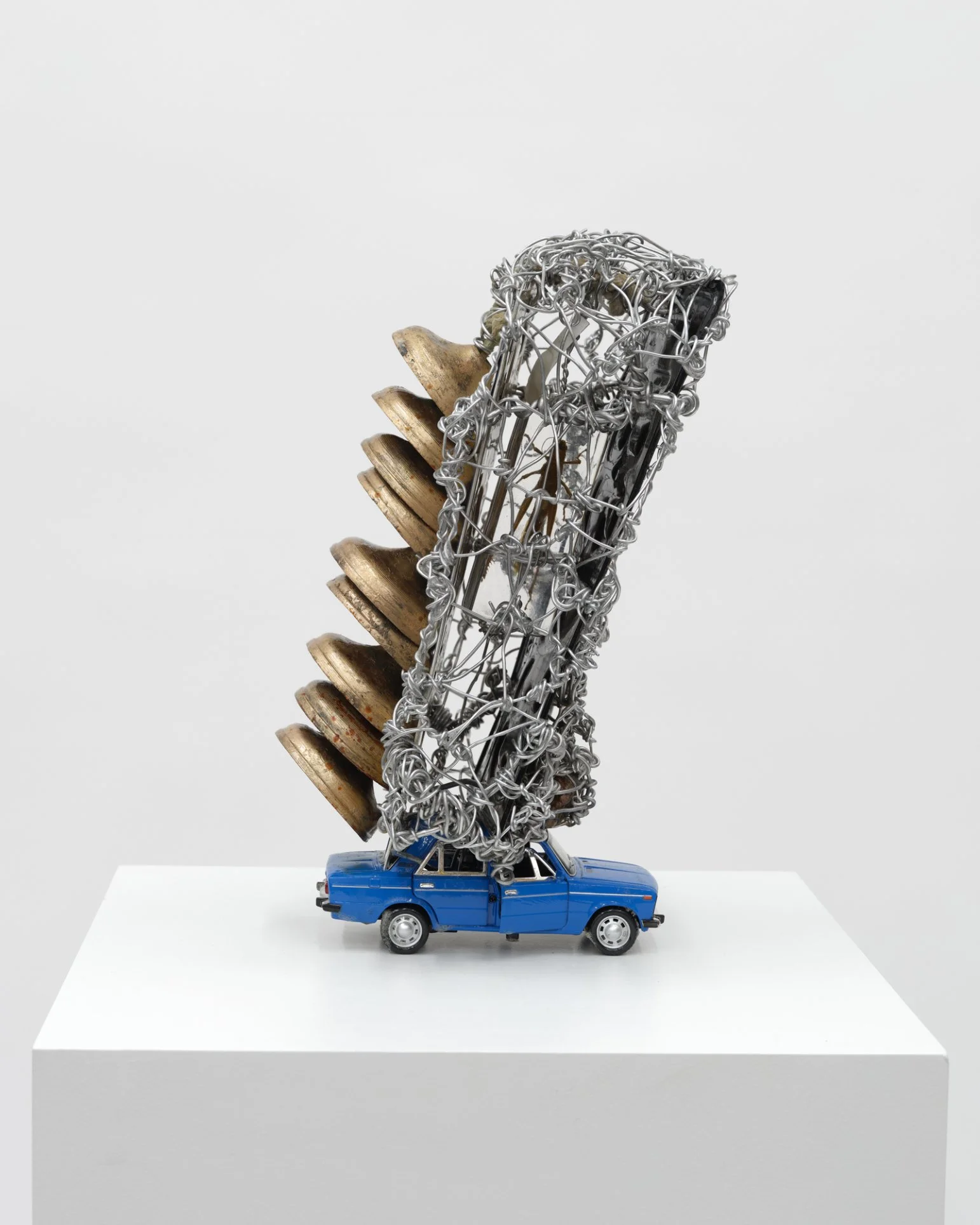
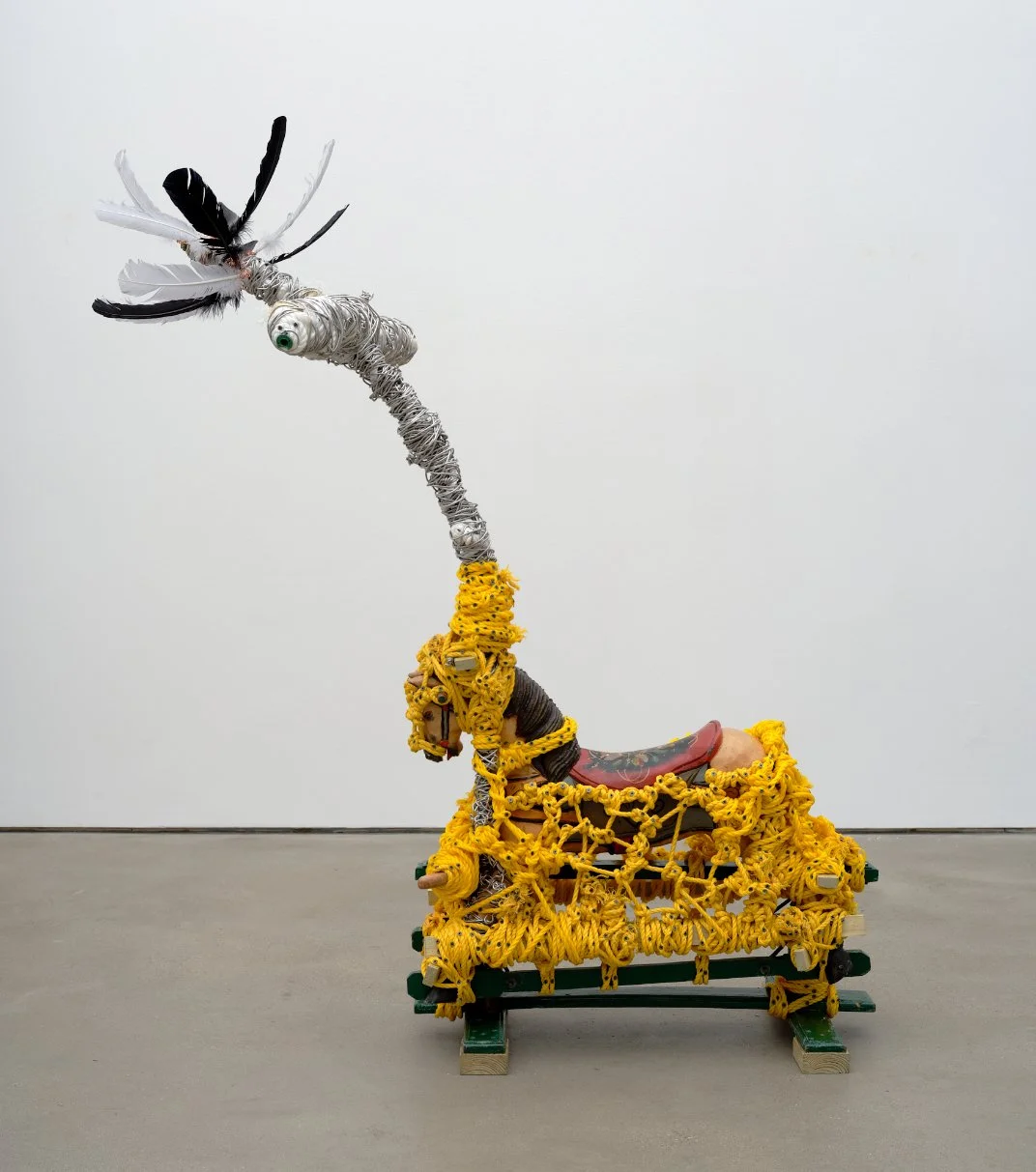
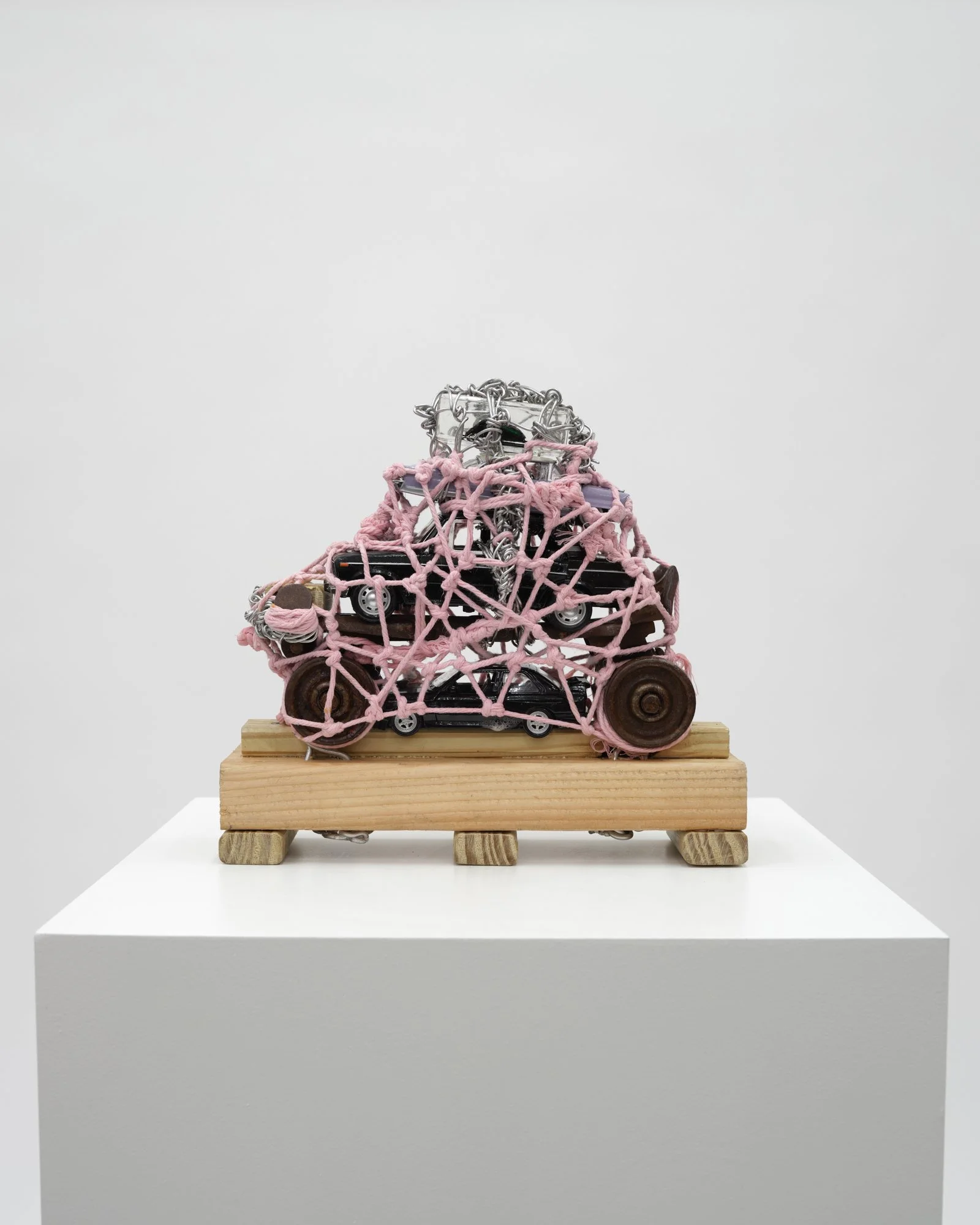
Arriving in New York City in 1968 at the age of seven, Saint Andrew, Jamaica-born Arthur Simms’ assemblages draw on the legacies of Duchamp and Rauschenberg. His new solo exhibition, Caged Bottle, at Karma New York shows works spanning nearly four decades from his studio on Staten Island. His sculptural works are made from found objects, often bound together by rope or wire. Rocks, bottles, toys, furniture, street signs, feathers, bones, and so many other discarded objects are manipulated by Simms into new forms. The binding of disparate objects together unifies them—a transformation of the many into a singular, fused work. Bug in the Cars (2024) is made from three toy cars, a roller skate, wire, and a bug, all stacked one atop another. The wire, wrapped around the glass encasing a bug carcass, cascades down to entwine two toy cars and the roller skate. A pink yarn webs the exterior of the sculptures into a fixed state, wrapped around the wheels of the roller skate, preventing movement. The third toy car, however, is quite literally disconnected. Free from the binding of wire and yarn, this car remains caged, likely able to move in the small space its cell affords, yet still a part of the overall sculptural figure—bound and unbound, unified and disunified, fixed and unfixed.
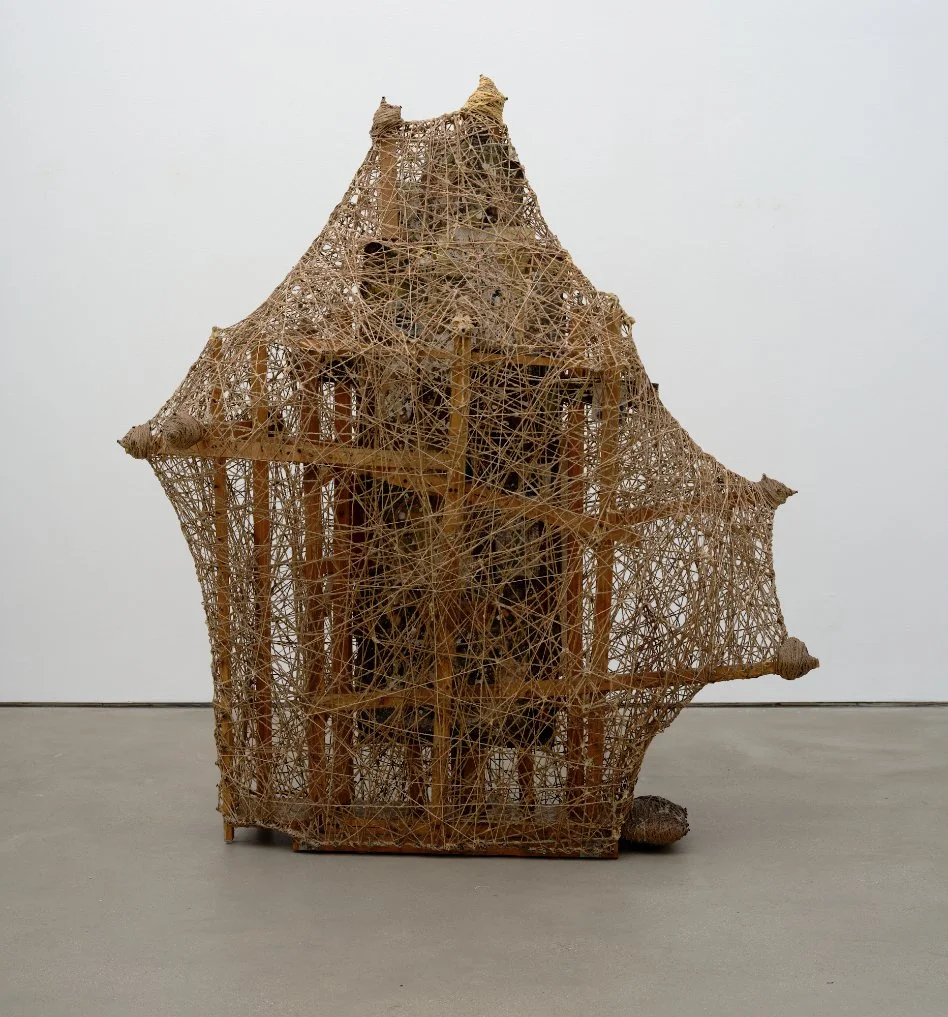
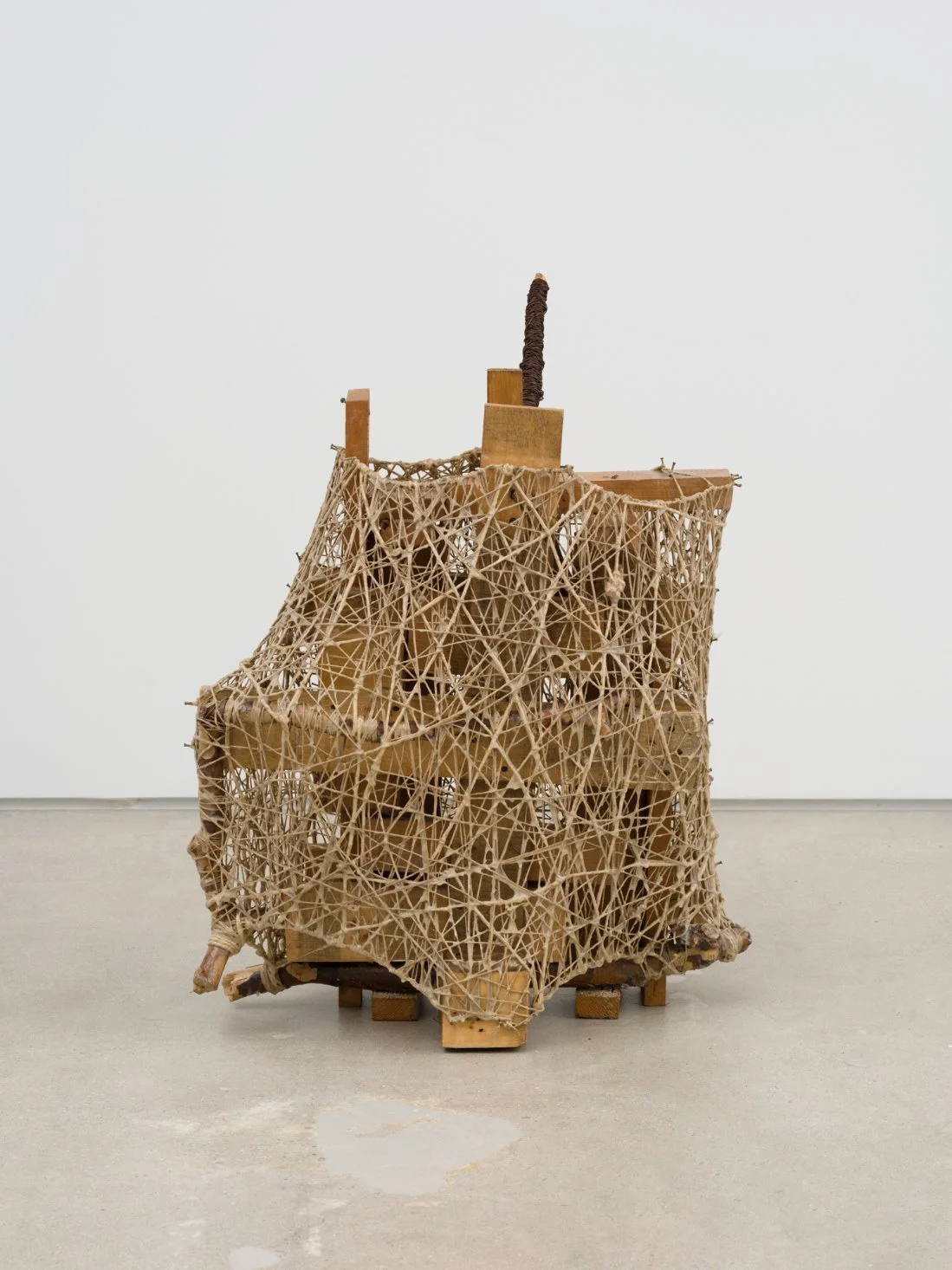
Simms’ use of yarn in Bugs in the Cars is relatively spare compared to his wrapping of rope in Sexual Tension (1992) and Spanish Town (2003). Both works are so densely bound with rope that their internal content becomes unclear from even a moderate distance. Whether it be the exact forms of wooden blocks in Spanish Town or whatever dark matter sits in the heart of Sexual Tension, a distinct separation occurs at the level of exteriority and interiority. The rope acts as a skin, concealing the beating organs it encases. Nearly spiritual, Sexual Tension, the earliest work in the show, although not relative to any human form, feels, in some sense, ghostly. A bodied quality sits hidden within an interior, inaccessible to onlookers, and can be directly encountered only through its shroud of hemp, while only the presence of an interior object is intimated.
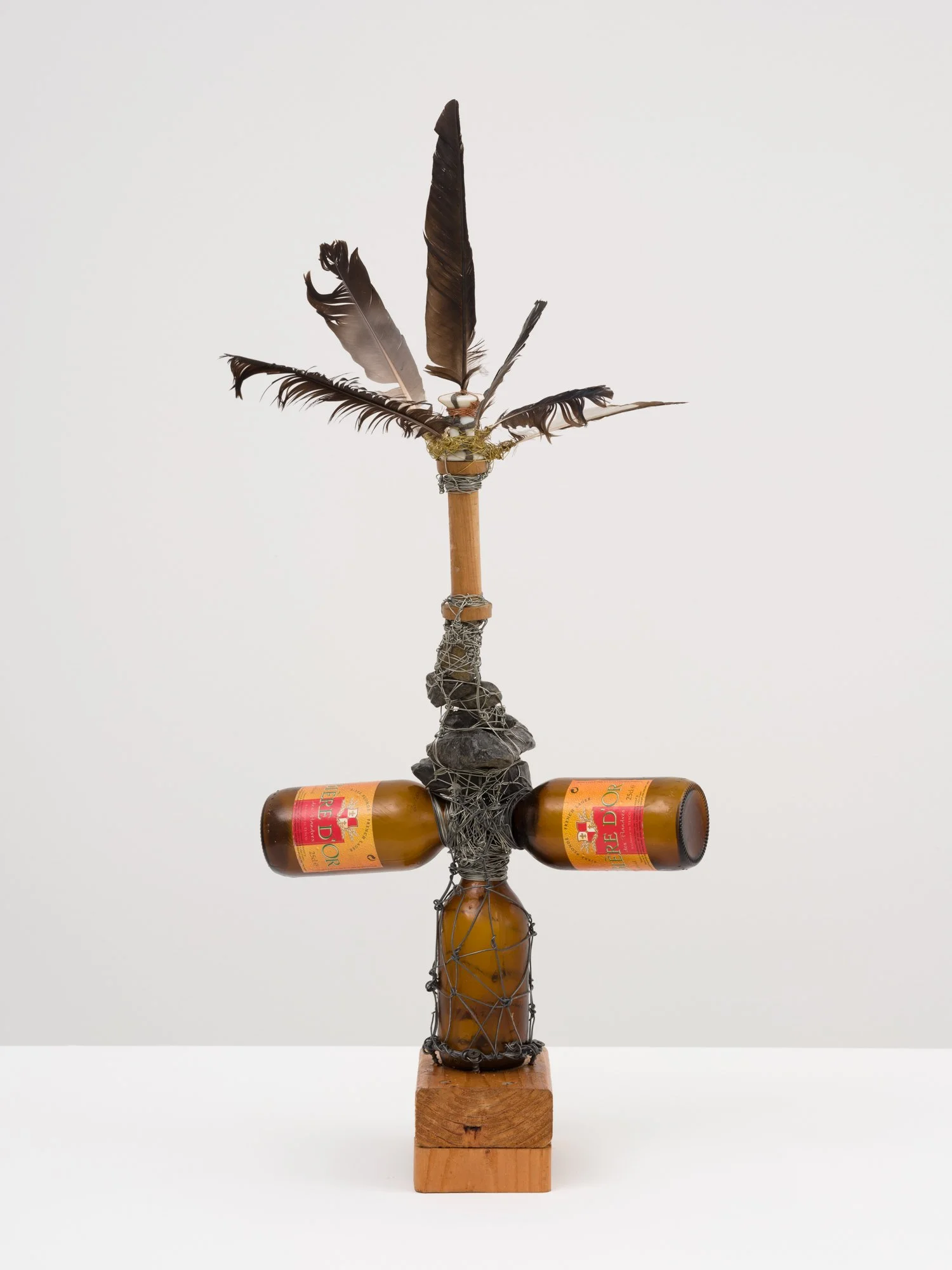
Simms continues his interest in the spiritual in his works inspired by Congolese Nkisi (vessels for spirits or medicinal substances to resolve disputes, enforce justice, heal, or harm enemies). It is possible to argue that perhaps when creating Sexual Tension, Simms was already thinking of Nkisi, sculptures that are at times seen wrapped in rope, but his inspiration becomes more clearly articulated in The Knife and the Hammer, Fear of Aggression (1994). Mimicking the Nkisi in his puncturing the work with nails and knives, he activates the spirit within this totemic figure. The work is exhibited here for the first time but was assembled while working at the Brooklyn Museum as an art handler in the early 1990s, when Simms became fascinated with Nkisi and Central African throwing knives. The work, in its vertical orientation, features a slab of wood perpendicular to the floor, appearing nearly cross-like. In his bridging together of Christianity and Congolese spirituality, he reckons with art history. Art objects are manifested in the show as being inseparable from cultural modes of metaphysical belief.
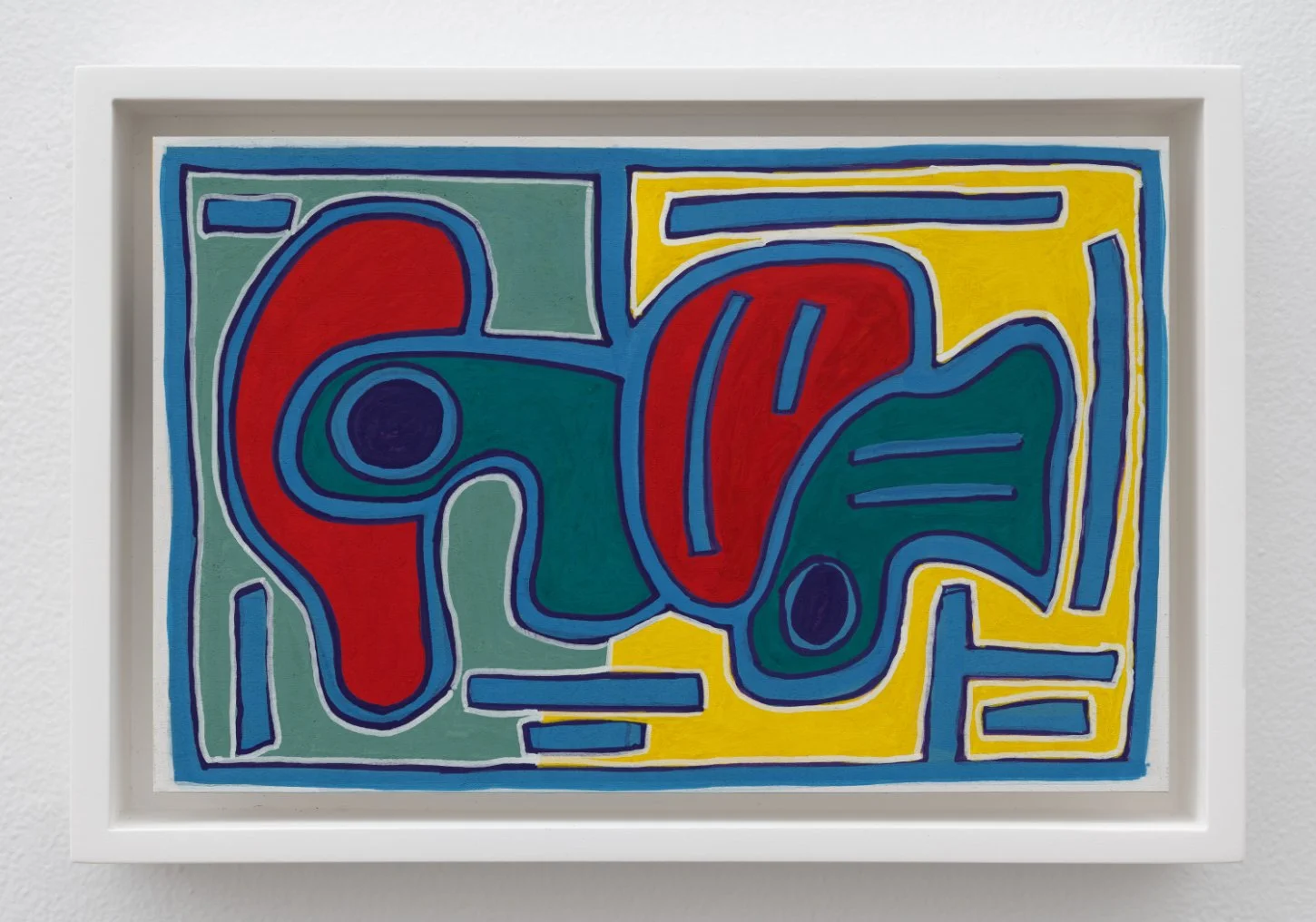
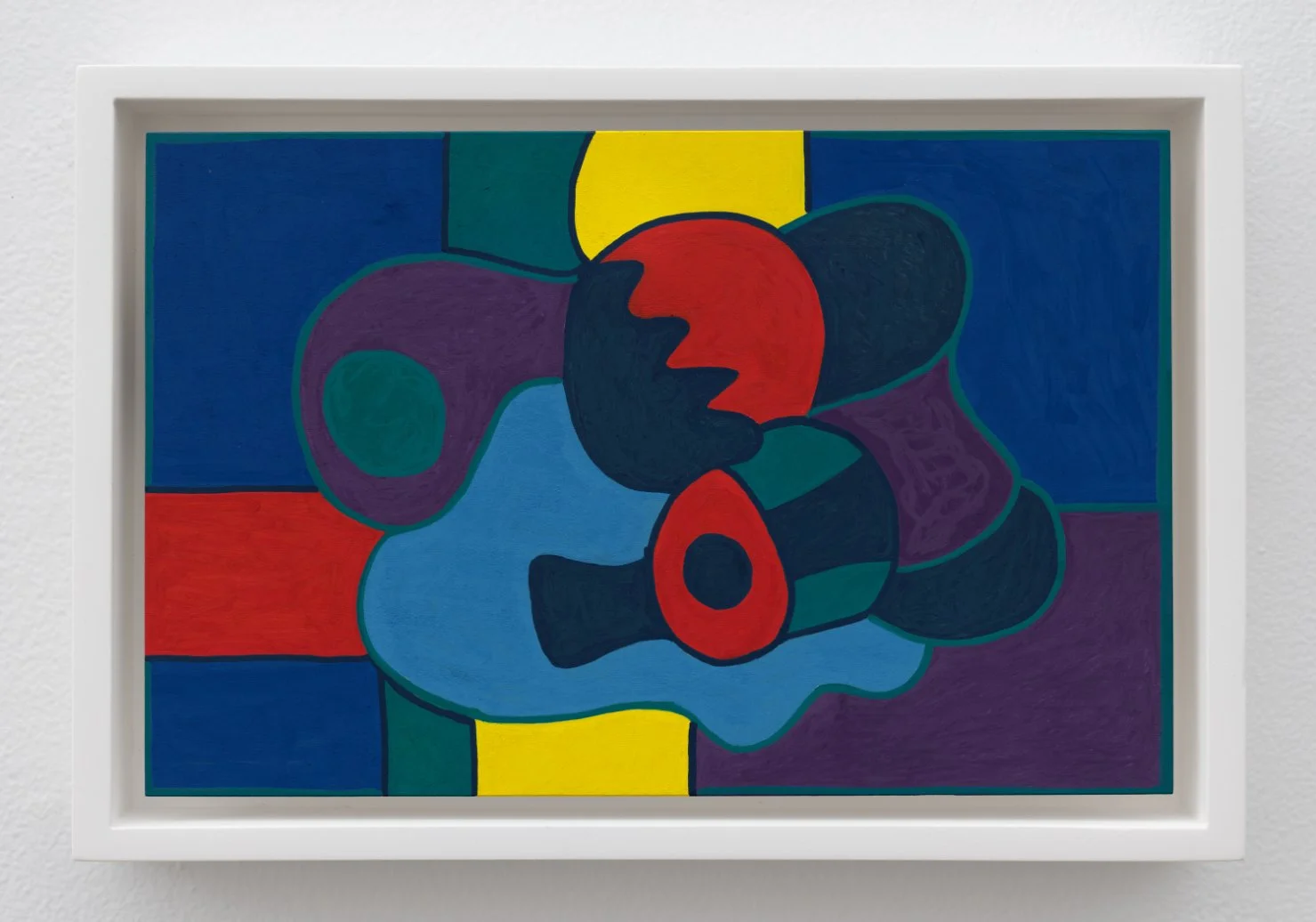
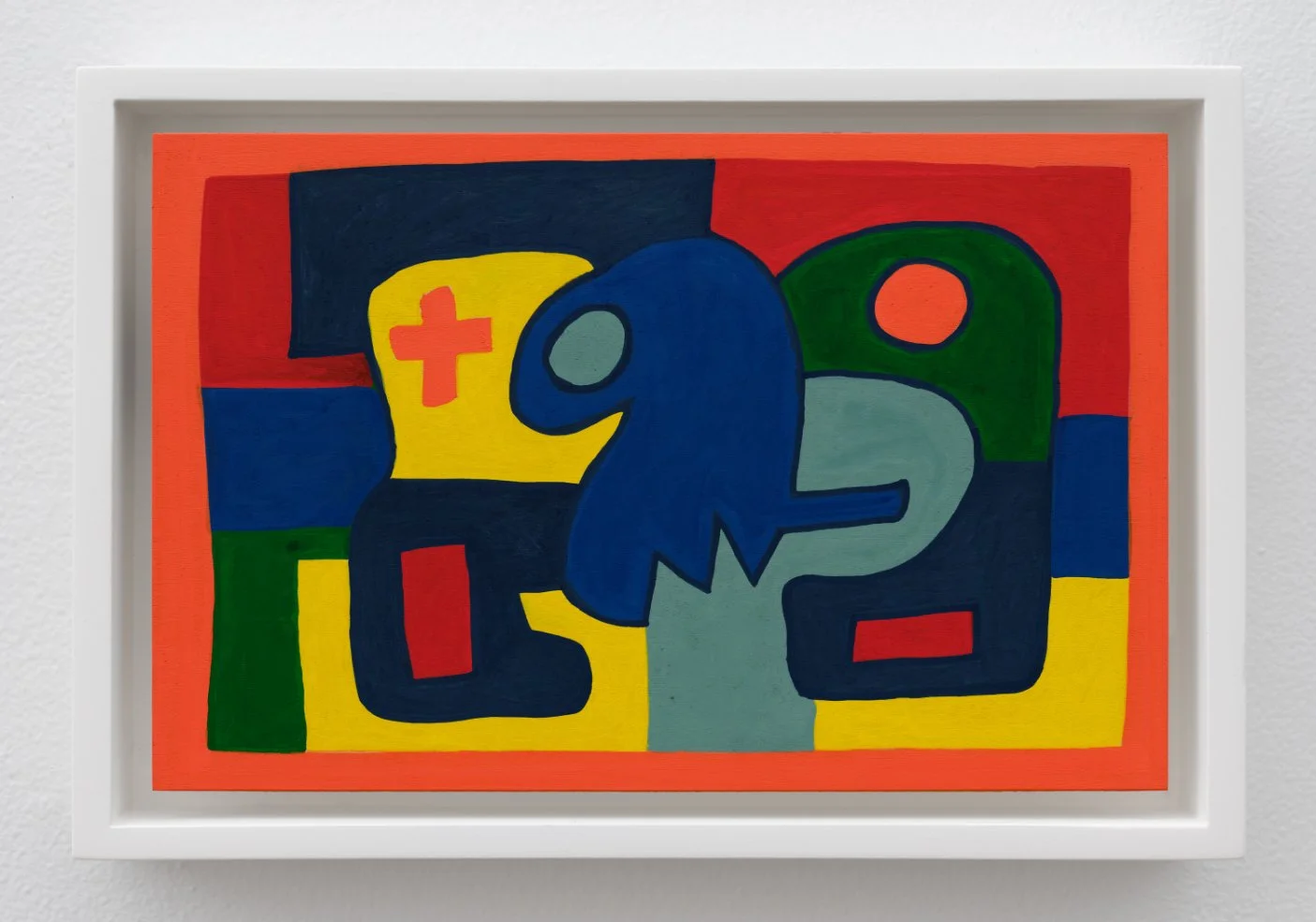
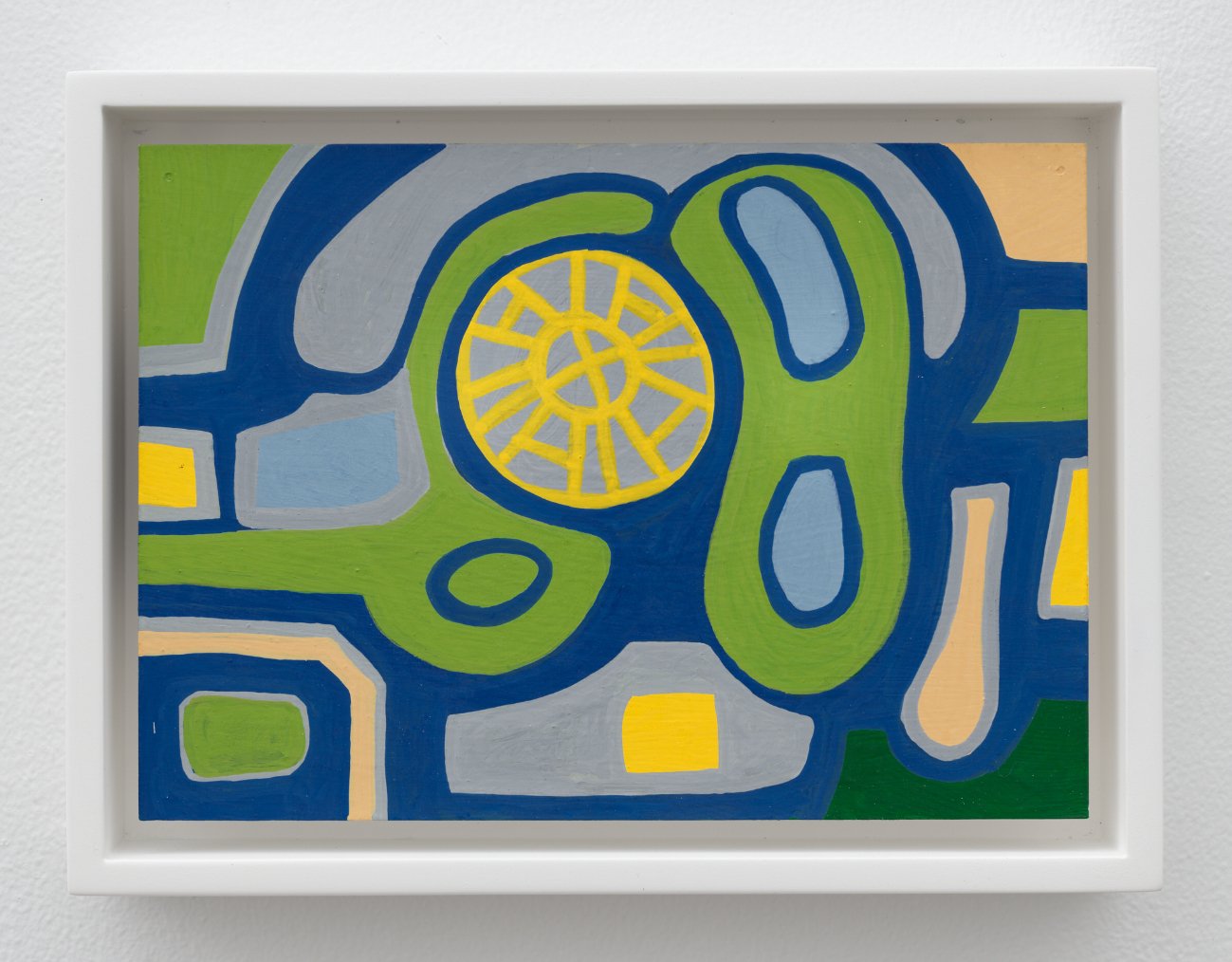
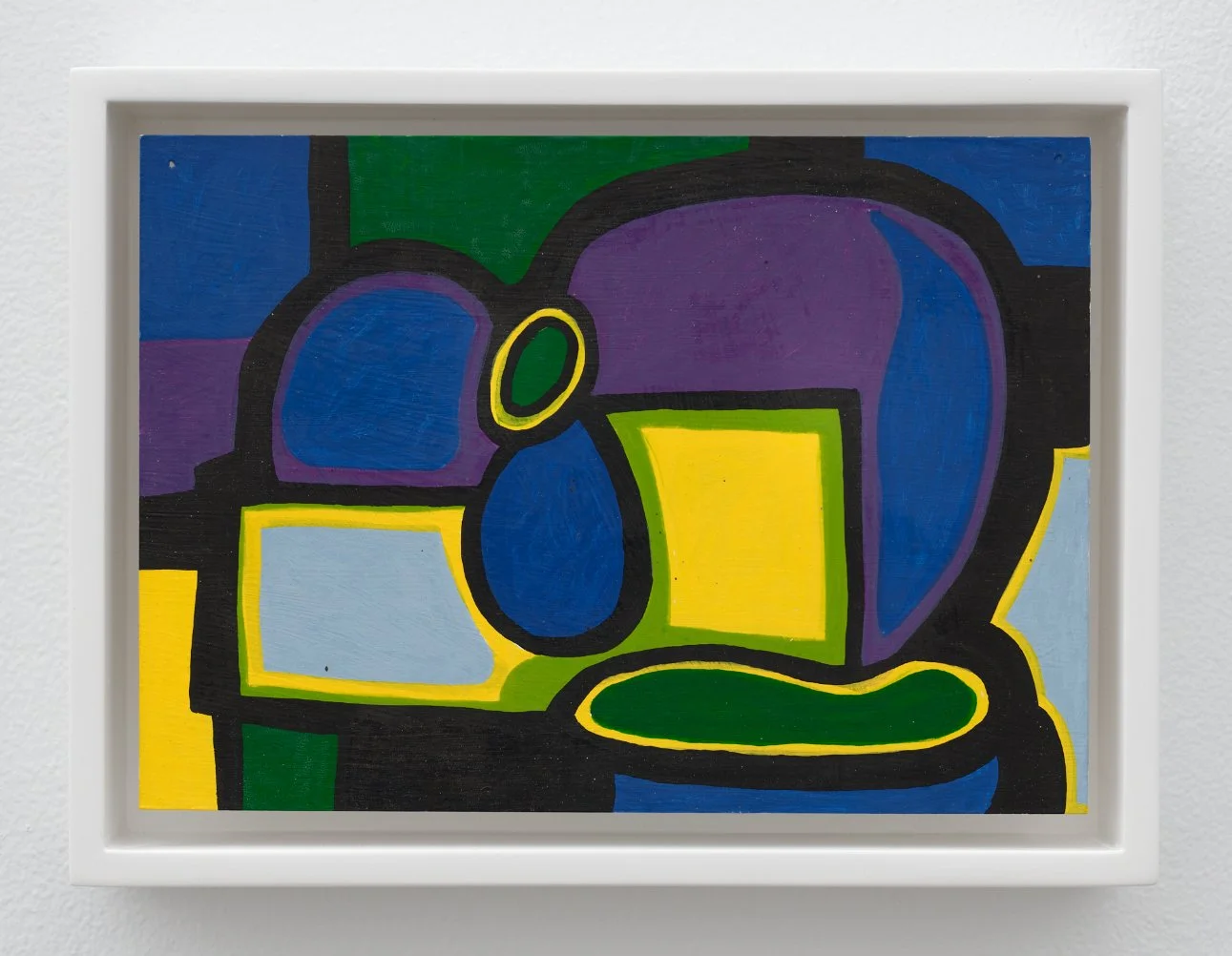
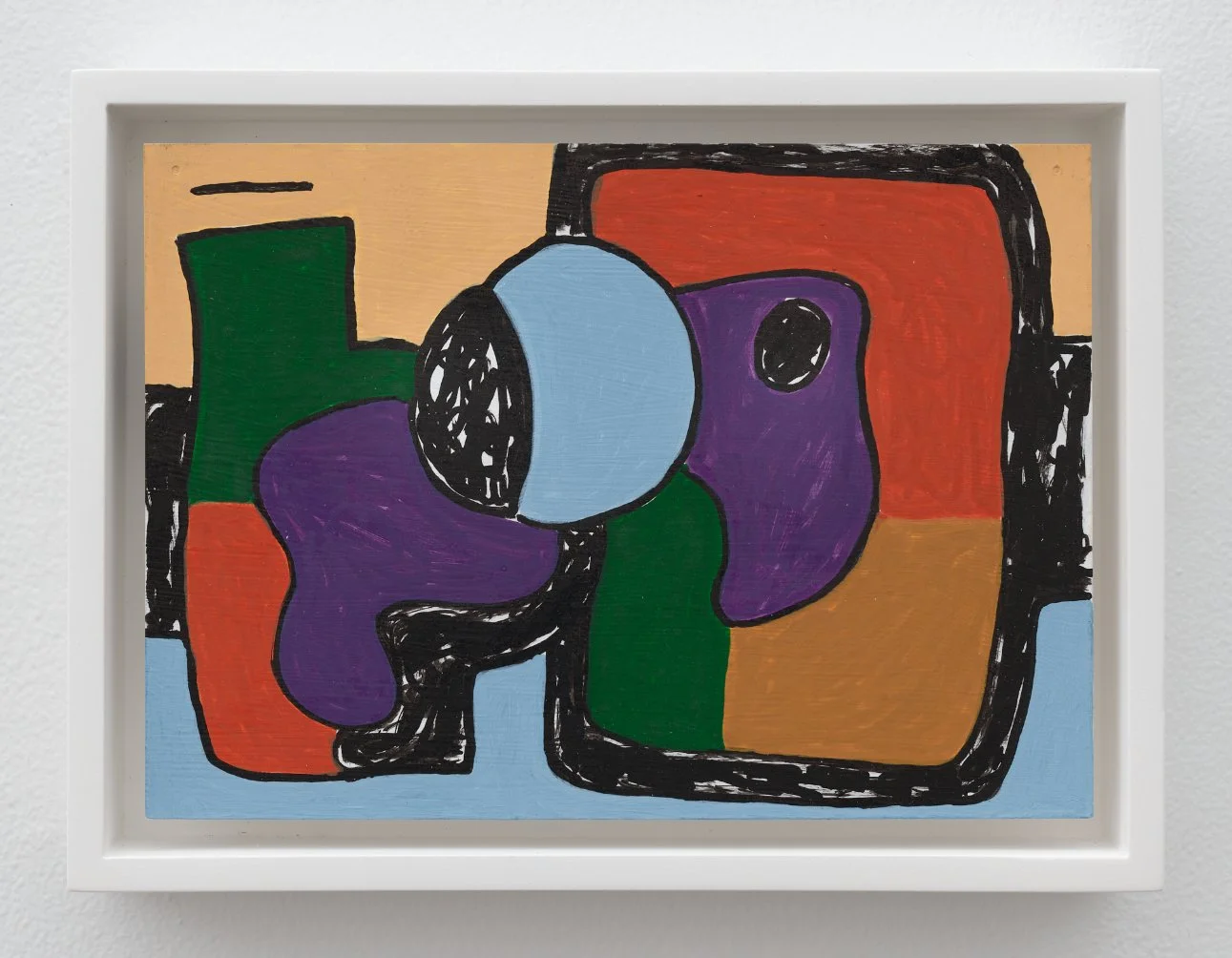
Just as much as his work might be about spirit, Simms pays quite a bit of attention to form. In his exhibited paintings, Simms propounds the strength of the line. With a collection of works from 2025 whose titles begin with “Search for form” followed by a number indicating their order, Simms demarcates exactly what is at stake in these works: the power of a line to define a form. He uses lines to create forms, to separate blocks of color, and to provide forms with loose details. These works apply lines identical to his Retablos from 2015 that continue his interest in spirituality. Two of the three retablos in the show, Retablo 5, Staten Island, and Retablo 1, Lois Dodd, are, unlike his searches for form, representative of something (Staten Island and Lois Dodd, respectively). He used the same techniques of line as used in 2015 as he did a decade later, studying the distillation of forms to lines and color, in a manner quite similar to Arthur Dove, and in the case of Lois Dodd, Marius de Zayas’s absolute caricatures. A throughline could be drawn from his acrylic paintings on wood and aluminum to his sculptural practice in his continued interest in rope and wire, linear forms. Simms explores the potential of the line as a sculptural gesture, something that can, of course, be used to bind and attach, but also the line as something that can conceal, mystify, and define interiors and exteriors, as is the case with Sexual Tension. He thinks of the line’s bulk—when wrapped repeatedly over itself, the line becomes its own form rather than a tool to define a form.
Simms’ lines, particularly his ropes, are also soaked in memory. Being made of hemp, the use of rope betrays its presence before laying eyes on the works, with its pungent scent. Simms has spoken in interviews about his childhood memories remaining in smell and sound; thus, the olfactory dimension of the material triggers engines of memory. Many of his memories are related to the music he heard as a child, describing music as a process of layering and the coalescence and accumulation of sounds into a single work. As such, the binding feature of his linear forms refers back to his childhood.
Arthur Simms
The Knife and the Hammer, Fear of Aggression, 1994
Rope, glue, hammers, wood, knives, blades, wire, metal, screws, stones, monetary note, nails, cobblestone, and pencil
107 1/4 x 35 x 15 in.
© Arthur Simms. Courtesy the artist and Karma
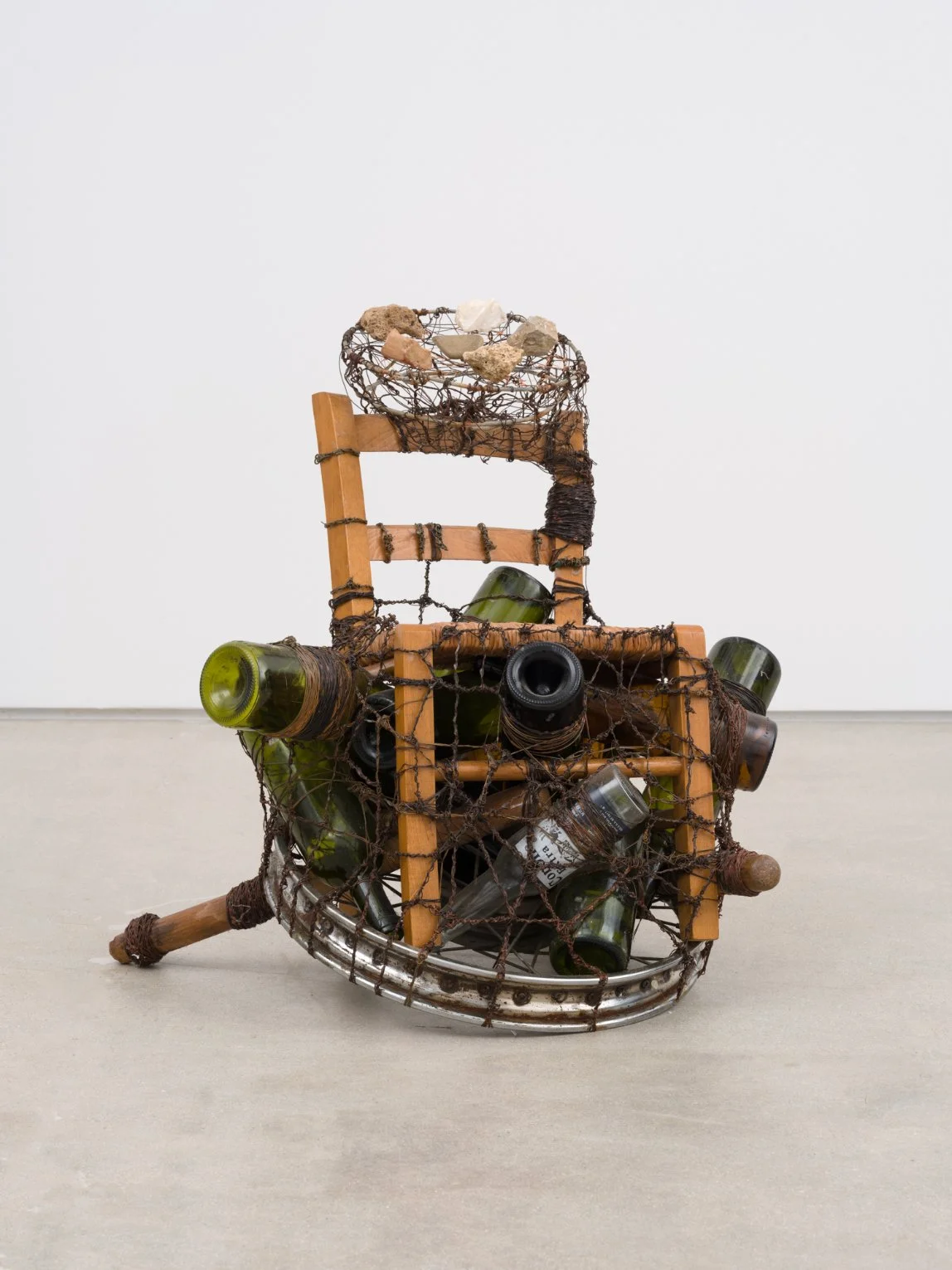
In the exhibition’s titular work, Caged Bottle (2006), Simms tests the strength of the line in the most literal sense imaginable. Using both rope and wire, Caged Bottle is a balancing act between a deconstructed toy bike wrapped in rope and a recycling bin-like structure made from wires and a bike wheel. Glass bottles and an assortment of other objects fill the interiors of the two sides, providing a distribution of weight that allows Caged Bottle to balance its wheels on a small platform without tipping and crashing, which would result in the unfixed glass bottle in a birdcage tumbling off and shattering. This work is all about precarity. But in using the linear forms of wire and rope to hold it all together, the halves can balance each other, preventing the destruction of the caged bottle. In this display of Simms’ work, presenting his paintings and sculptures together for the first time, alongside his interest in art history, the spiritual, the cultural, and memory, the artist’s formalist attitudes are made clear, positioning him as a unique artist undeniably worthy of this spike in recognition after so many years flying under the radar.
Arthur Simms’ Caged Bottle is on view through February 14 @ Karma, 22 E 2nd Street, New York City.
Arthur Simms
Caged Bottle, 2006
Rope, wood, glue, bicycles, metal, bottles, and wire
50 x 62 x 36 in.
© Arthur Simms. Courtesy the artist and Karma