
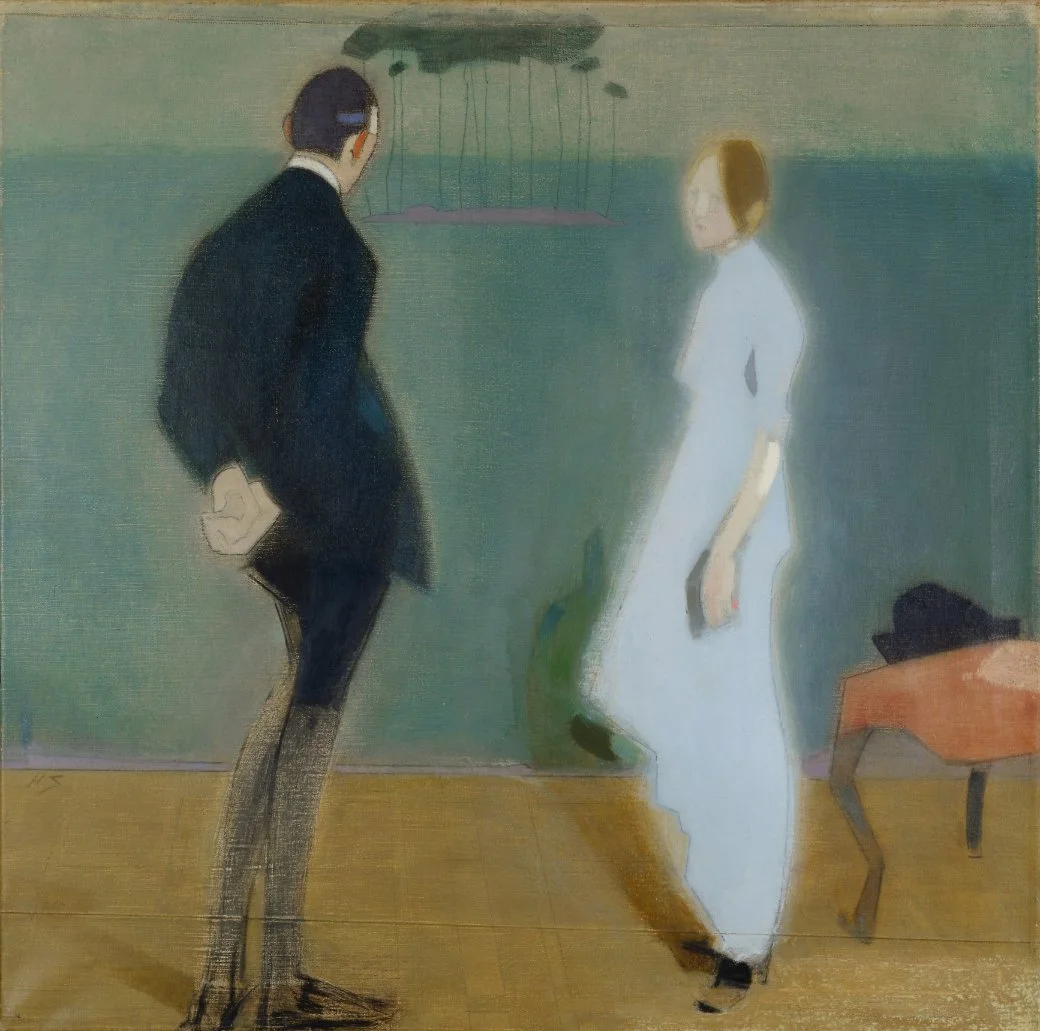
Helene Schjerfbeck
The Tapestry (1914-1916)
Oil on canvas
35 1/4 × 36 1/4 in. (89.5 × 92 cm)
Photo: Per Myrehed
text by Emma Grimes
The ongoing Seeing Silence exhibition at The Metropolitan Museum of Art offers an impressive exploration of one of the 20th century’s greatest, and long-overlooked, Modernist painters, Helene Schjerfbeck. The sprawling show gathers more than fifty works by the Finnish artist, spanning from 1880 to 1945, just a year before her death at the age of 83. It marks an astonishing debut—Schjerfbeck’s work has never before been examined so thoroughly by a major US museum. While she has long been admired by Nordic countries, her oeuvre has only recently begun to draw broader international recognition.
Schjerfbeck was born in 1862 to an affluent family in Helsinki. Bedridden for weeks as a toddler following a tumble down the stairs, her father encouraged the four-year-old to begin drawing. While details of her childhood are limited, her biographers have largely characterized it as “lonely and bleak.” By eleven years old, she was enrolled at the Finnish Art Society’s Drawing School—her exceptional talent earned her free tuition—and quickly advanced through the coursework. Schjerfbeck, who was itching to visit Paris, was finally awarded government funds in 1880 to travel abroad.
Seeing Silence begins right after this period. The alluring portrait, Youth (1882), depicts a nude young man from the waist up. His pale skin emanates with the simple faultlessness of youth, while his muscular contour is painted with an equal measure of softness and precision. Behind the figure is a golden background, and Schjerfbeck’s restrained palette has the effect of intensifying each color. Every tone feels concentrated, as if the pigment had been distilled to its purest form.
An early self-portrait from the decade demonstrates a similarly controlled and forceful use of color. Schjerfbeck gazes past the canvas as strands of yellow hair spill over her forehead. Her hair nearly dissolves into the dark, golden-brown background, making her pale face, pink cheeks, and grey-blue eyes appear like a spotlight on a stage. And though her facial features are sweet and delicate, they never conceal a deep-rooted solemnity.
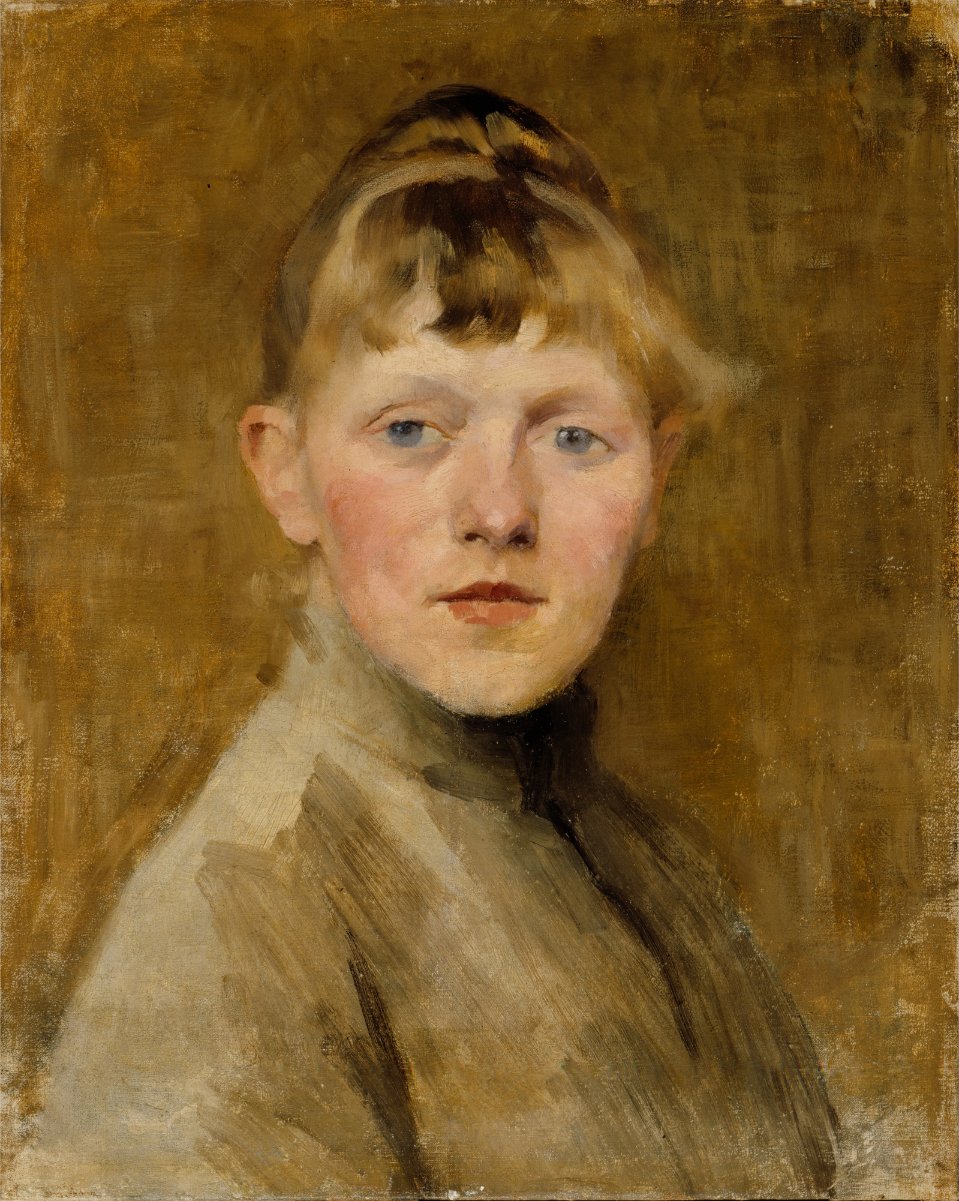
Helene Schjerfbeck
Self-Portrait (1884-1885)
Oil on canvas
19 11/16 × 16 1/8 in. (50 × 41 cm)
Photo: Finnish National Gallery / Henri Tuomi
By far the most intriguing work from this decade is The Door (1884), which depicts a flat, black door inside an unidentifiable room. Schjerfbeck painted this scene from a chapel in Brittany, but you wouldn’t know it from looking at the scene. Strokes of light glint from beneath the dark doorway, and a nearby archway disappears into the wall. At twenty-two years old, her technical prowess had already been proven. What else was there to do but flirt with form and representation?
In the following gallery, the paintings leap forward in time. One of the many figure paintings on view, Maria (1906), depicts a woman turned away from the viewer, absorbed with a book in her lap. A bright splash of luminous blue paint represents her dress. The edges of her head appear lightly illuminated, as though catching rays from a distant light source. Yet even though light appears to fall across her face, there’s no implied world beyond the canvas. This painting, like many of Schjerfbeck’s works, refuses to allude to anything outside its own boundaries.
Schjerfbeck’s sitters are purified of excess, eliminating nearly all specificity. A stroke of grey suggests her elbow. A round-ish shape of paint represents her dress. Schjerfbeck offers the barest details while still maintaining the recognizable structure of a figure. But this painting contains a curious exception among her oeuvre. In the upper right corner, the artist has painted the sitter’s name: “MARIA”. For an artist so committed to ambiguity, it’s an oddly specific gesture.
The third gallery contains several of Schjerfbeck’s still lifes and landscapes, and it offers perhaps the most compelling opportunity to observe the evolution of her aesthetic. In her 1892 work Blue Anemones in a Chip Basket, delicate purple flowers rest in a finely rendered wooden basket. The blossoms are soft, lifelike, and precise. Compare these flowers with the apples Schjerfbeck would paint fifty-two years later in Still Life with Blackening Apples (1944).
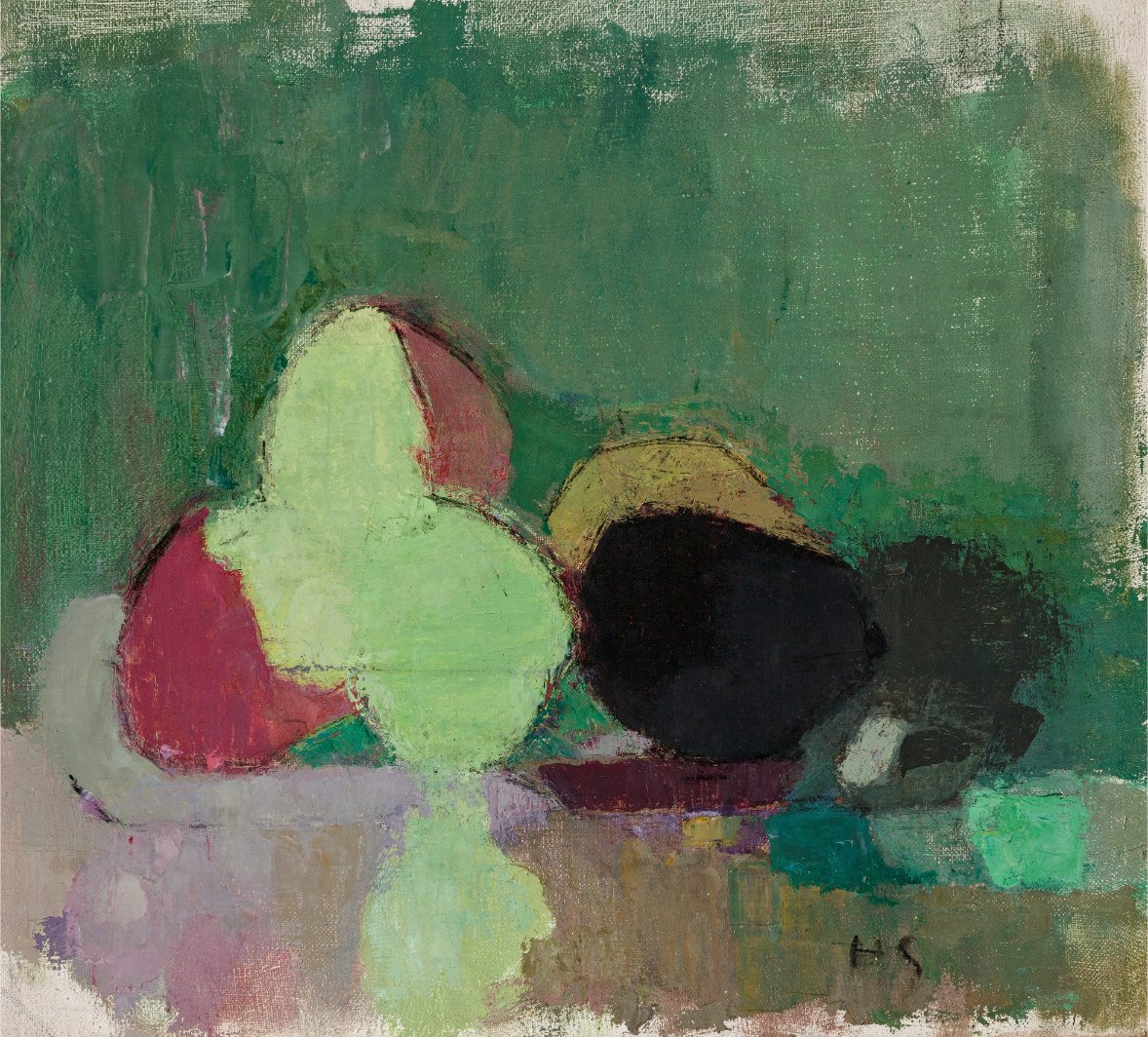
Helene Schjerfbeck
Still Life with Blackening Apples (1944)
Oil on canvas
14 3/16 × 19 11/16 in. (36 × 50 cm)
Photo: Rauno Träskelin / Didrichsen Art Museum
In this later painting (painted at 82 years old), the apples appear less like the recognizable fruit and more like a sequence of rounded, brightly colored forms. Oblong shapes in mint green, raspberry pink, yellow, and black represent the fruit. Beneath them lies a horizontal block of layered color—splotches of lavender, blue, and green that blend and overlap. The artwork’s museum label says that the blackened apples are likely symbols of Europe, painted amid the devastation of World War II. Yet this was also, interestingly, painted two years before her death. And seen alongside the self-portraits from this same period, one might wonder whether the rotting apple functions as another kind of self-image.
The final gallery gathers multiple of these self-portraits across Schjerfbeck’s life, and it’s an extraordinary room to walk through. One moves chronologically through the space, beginning with the bright-eyed, naturalistic images and ending with stark, skeletal depictions that recall the disquieting distortion of Munch’s The Scream. Any resemblance to an elderly woman is coincidental. She doesn’t seem interested anymore in painting the face that gazes back in the mirror, but is profiling decay. Her eyes are empty holes; her mouth is in a perpetual, gaping “O”. They rattle and disturb.
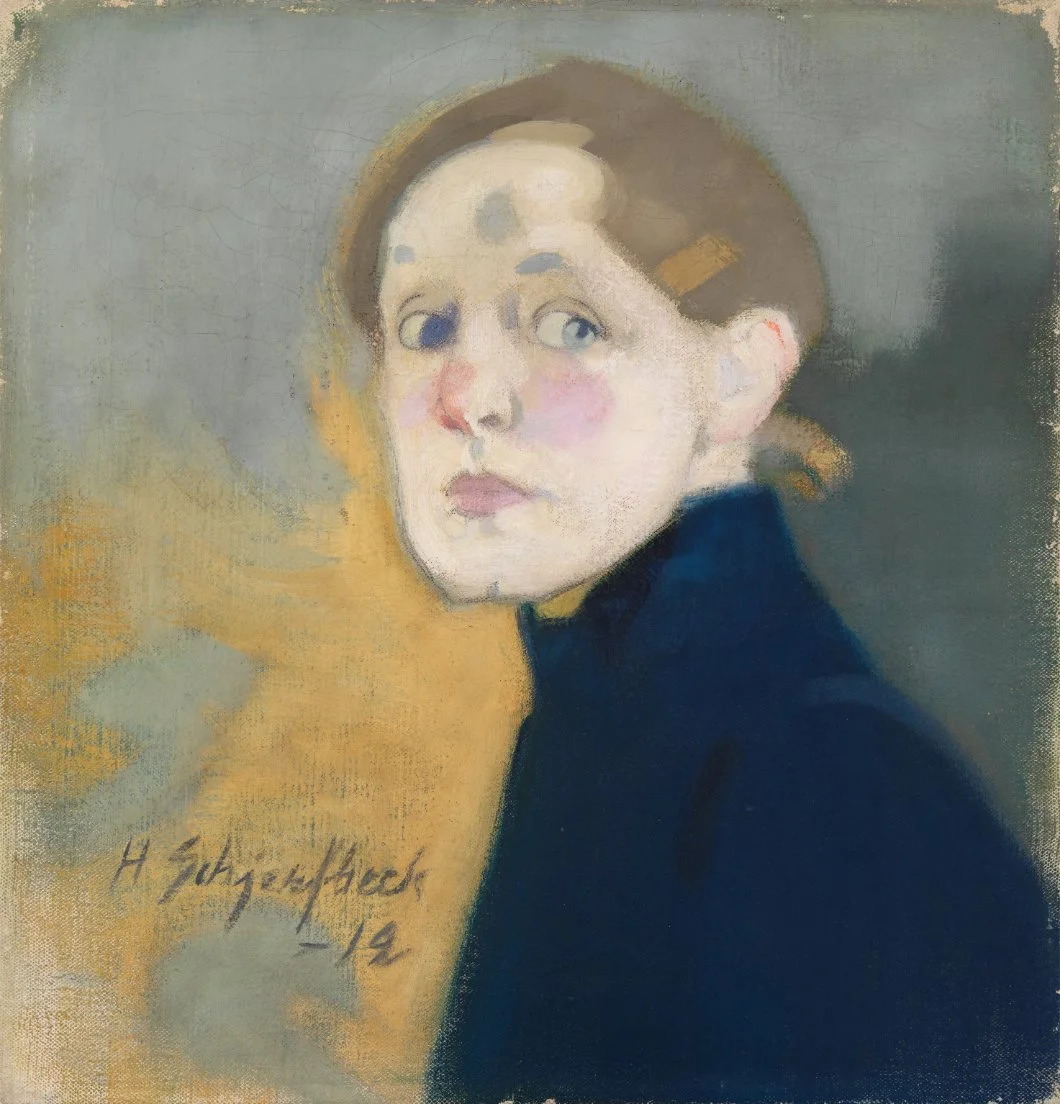
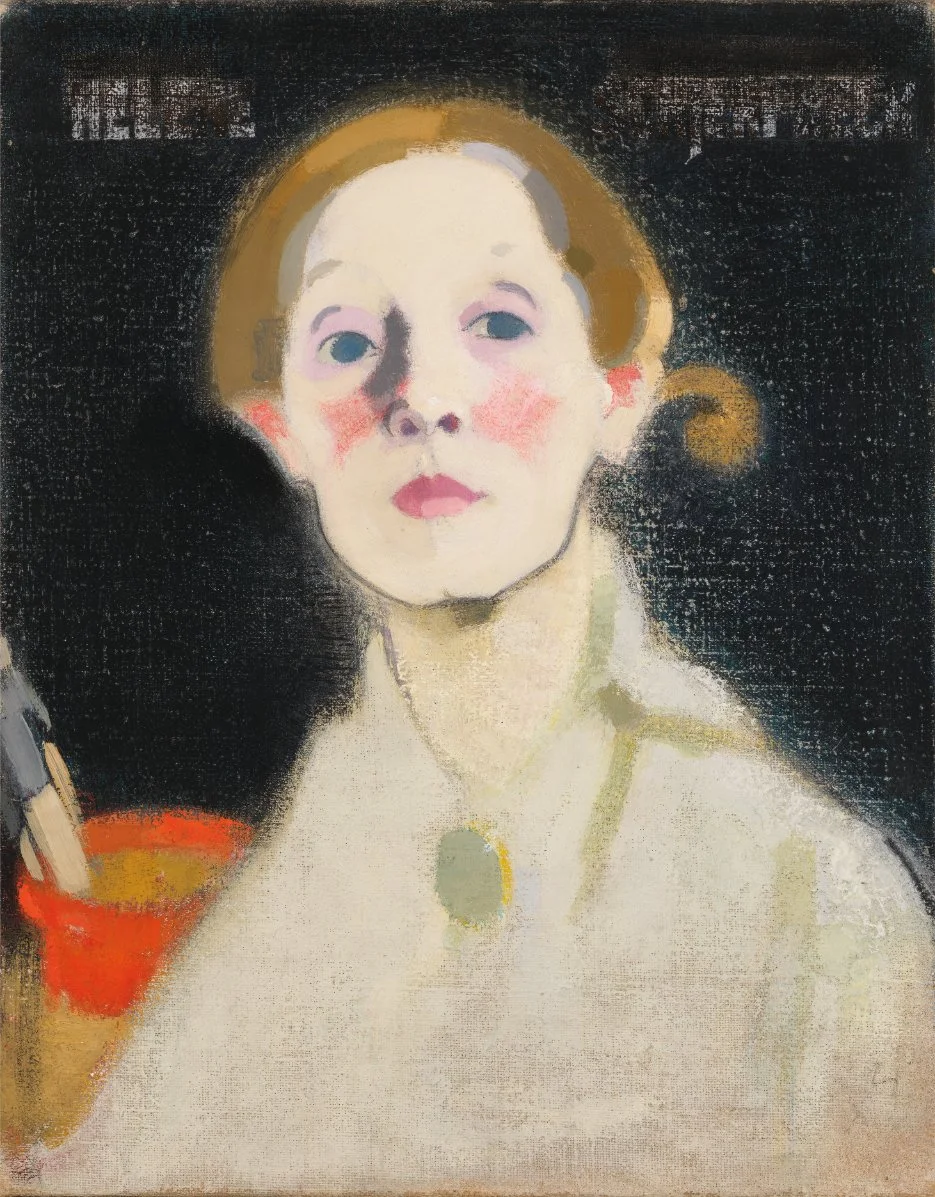
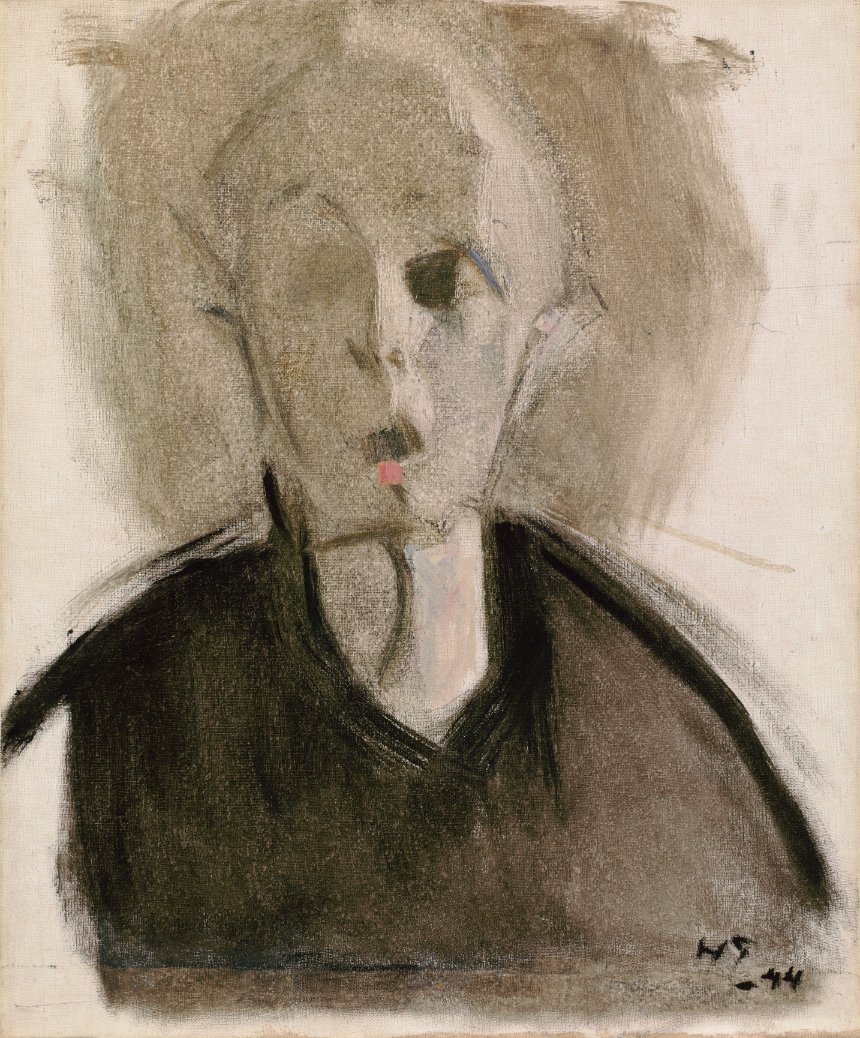
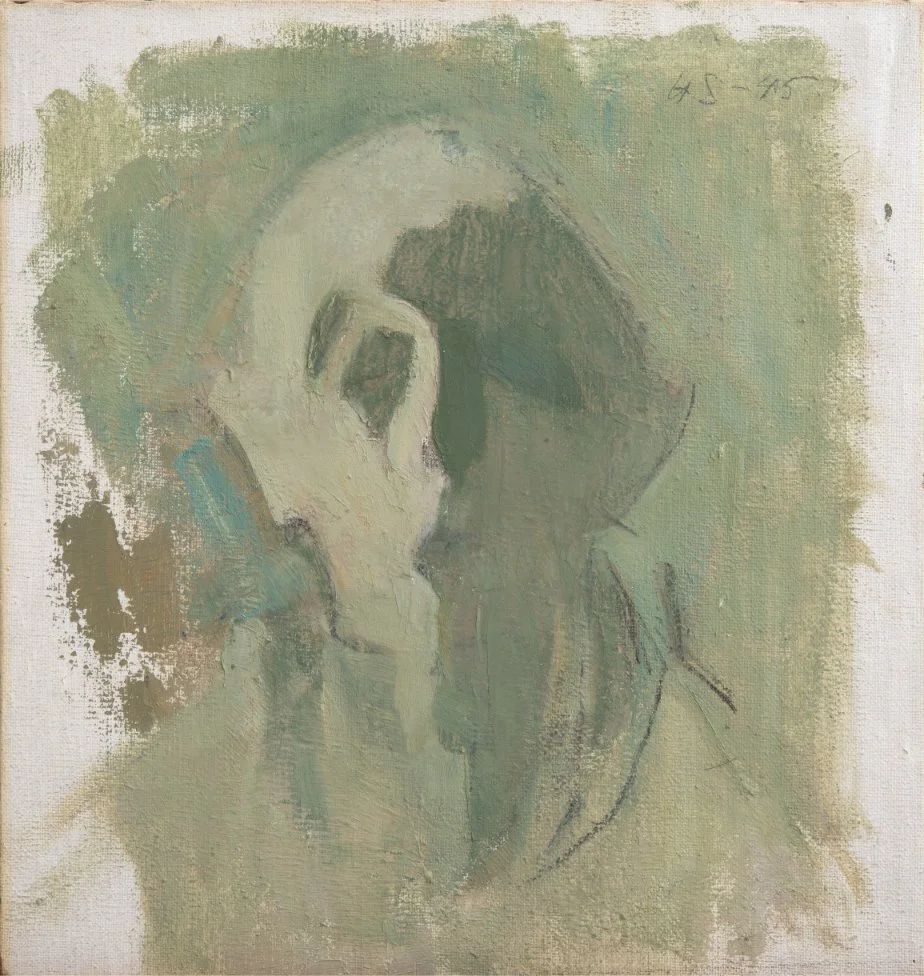
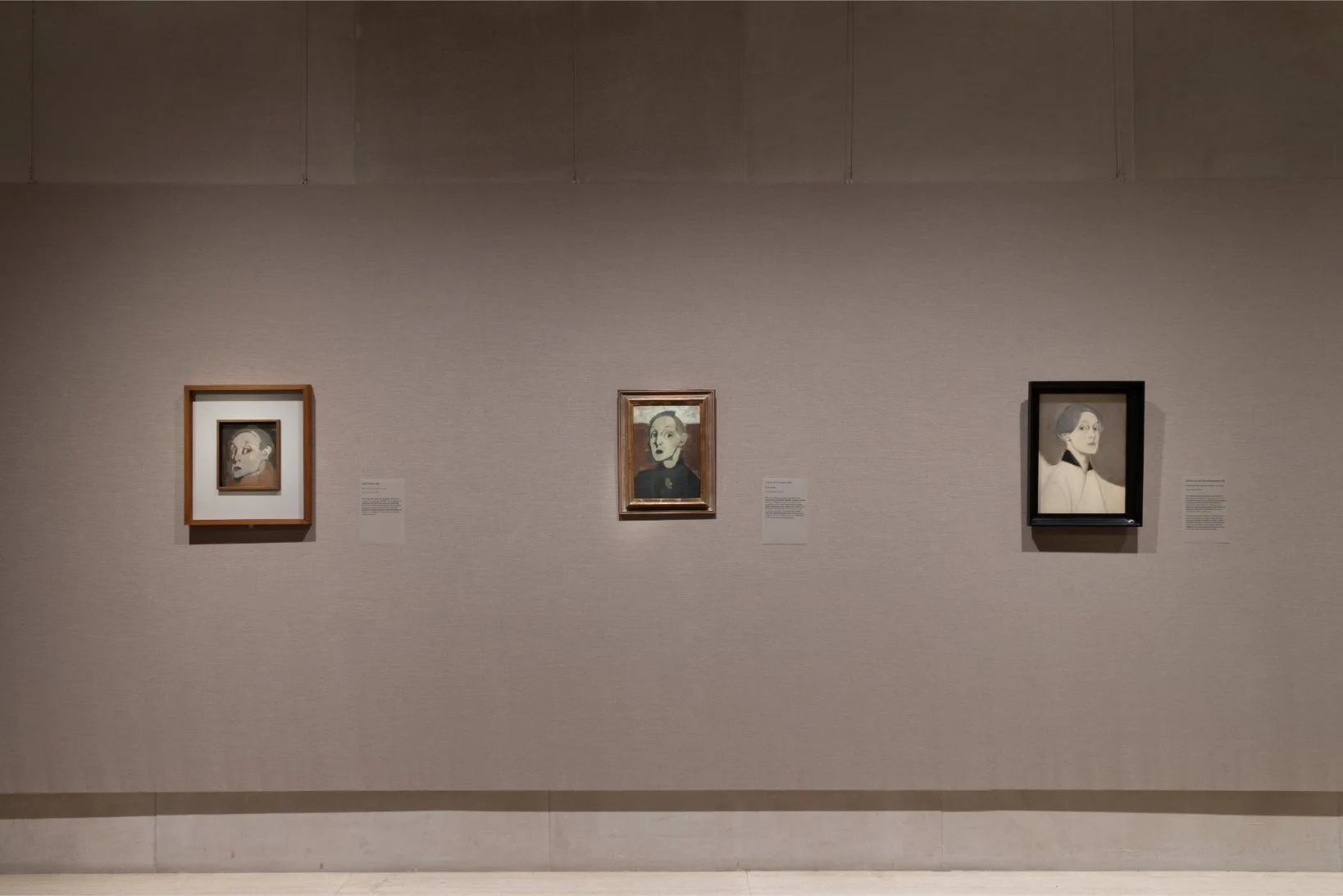
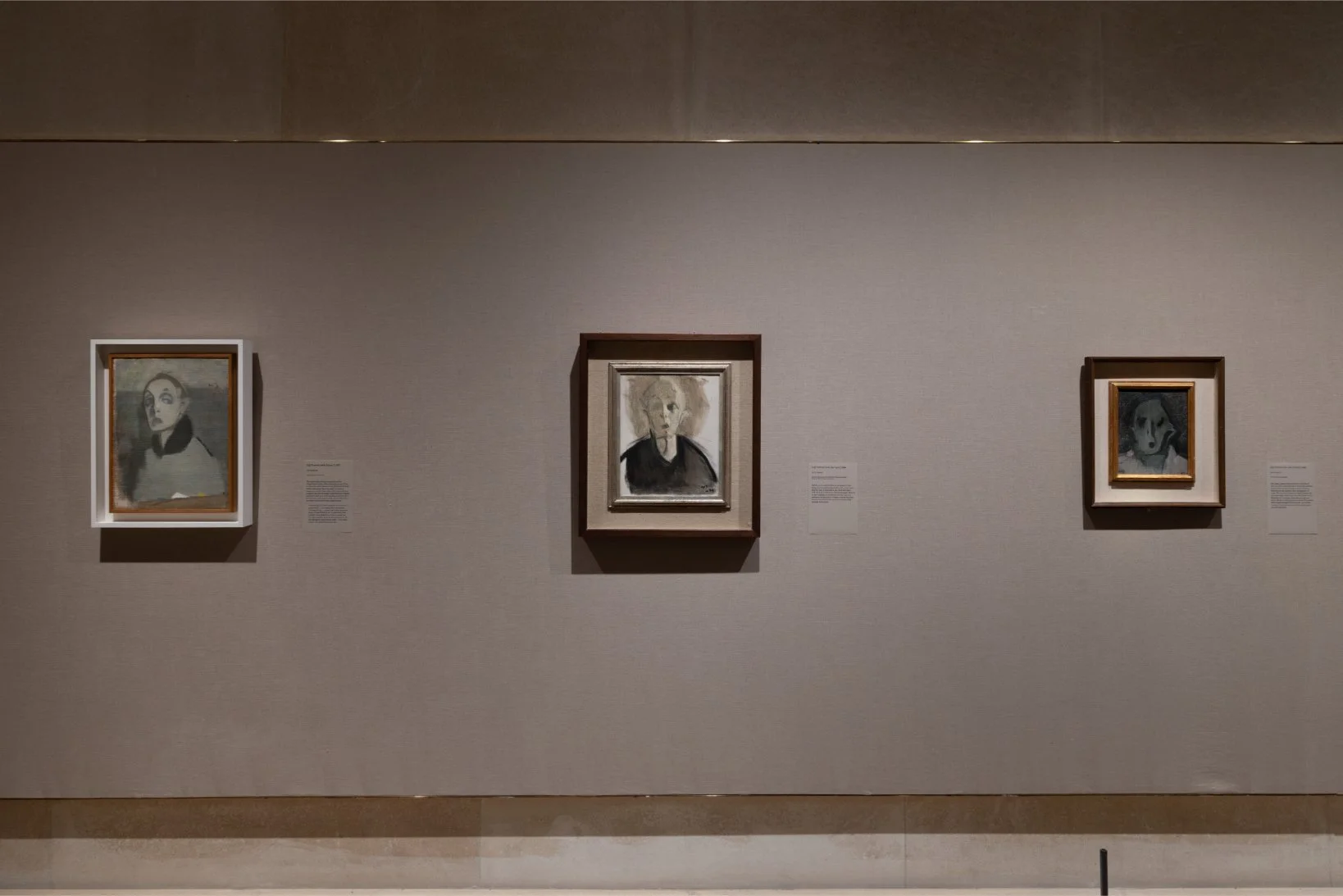
The exhibit seems to invite viewers to read these works as windows into Schjerfbeck’s self-perception and relationship with mortality, which is undeniably an instinctive and compelling way to approach them. Yet framed primarily as psychological documents, one might miss the ways in which these works present a culmination of Schjerfbeck’s lifelong investigation into form. In this final gallery, her face becomes just another object of fascination for her artistic endeavor. What if these self-portraits aren’t simply treated as autobiographical confessions, but are also viewed as the logical endpoint for Schjerfbeck’s perpetual formal exploration of the medium?
In this sense, her face is an equally privileged subject as the rotting apples in Still Life with Blackening Apples (1944) or the figure reading in Maria. The mirror is another surface upon which she can continue her inquiry into form. These late self-portraits aren’t only universal meditations on aging and death, but they are the conclusions to a brilliant, life-long investigation of reduction, and here they meet their most radical—and terminal—point.
Seeing Silence is on view through April 5 at The Met, New York.