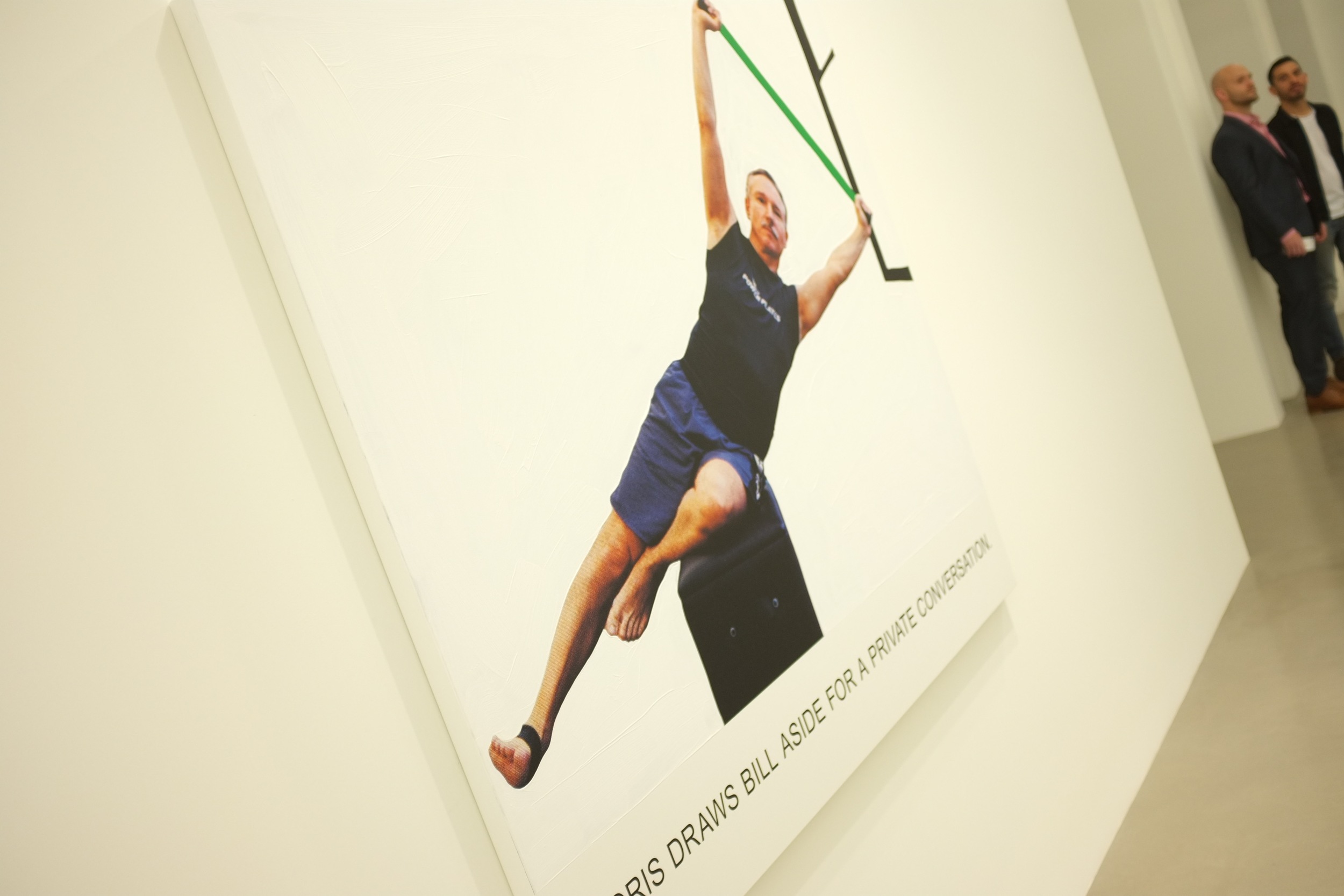
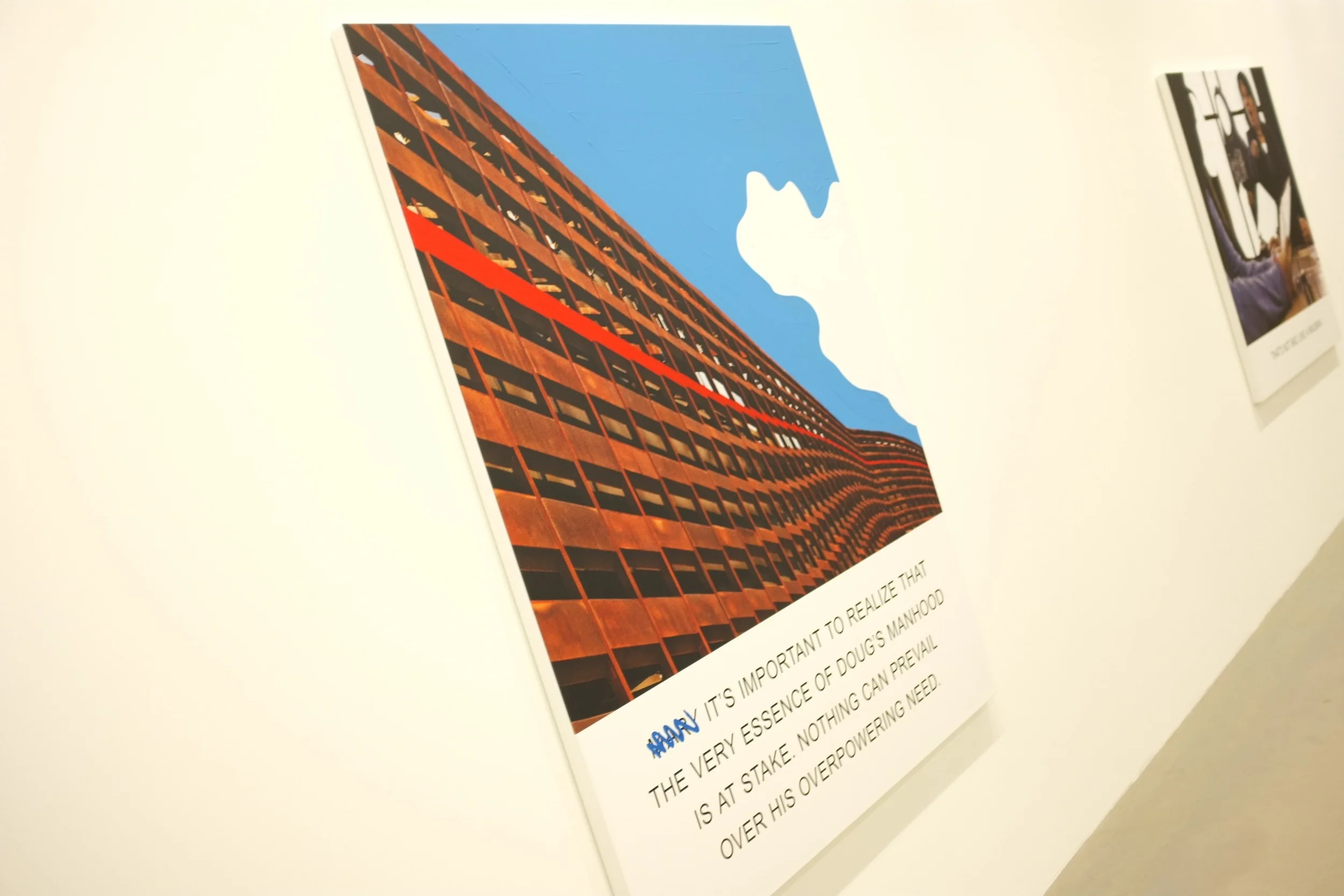
Read A Conversation Between Andreas Schulze & Monika Sprüth on Their 40-Year Working Relationship

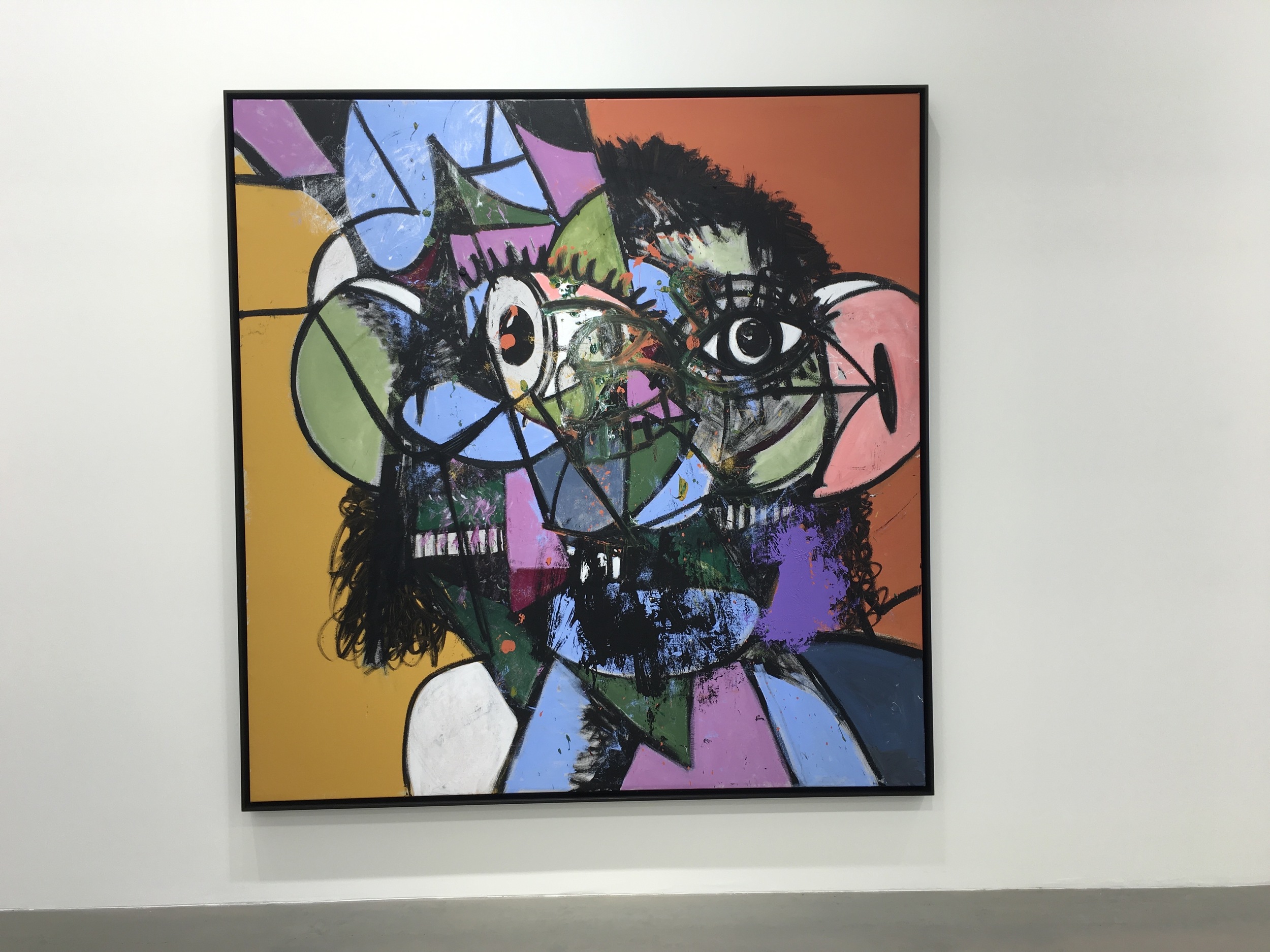
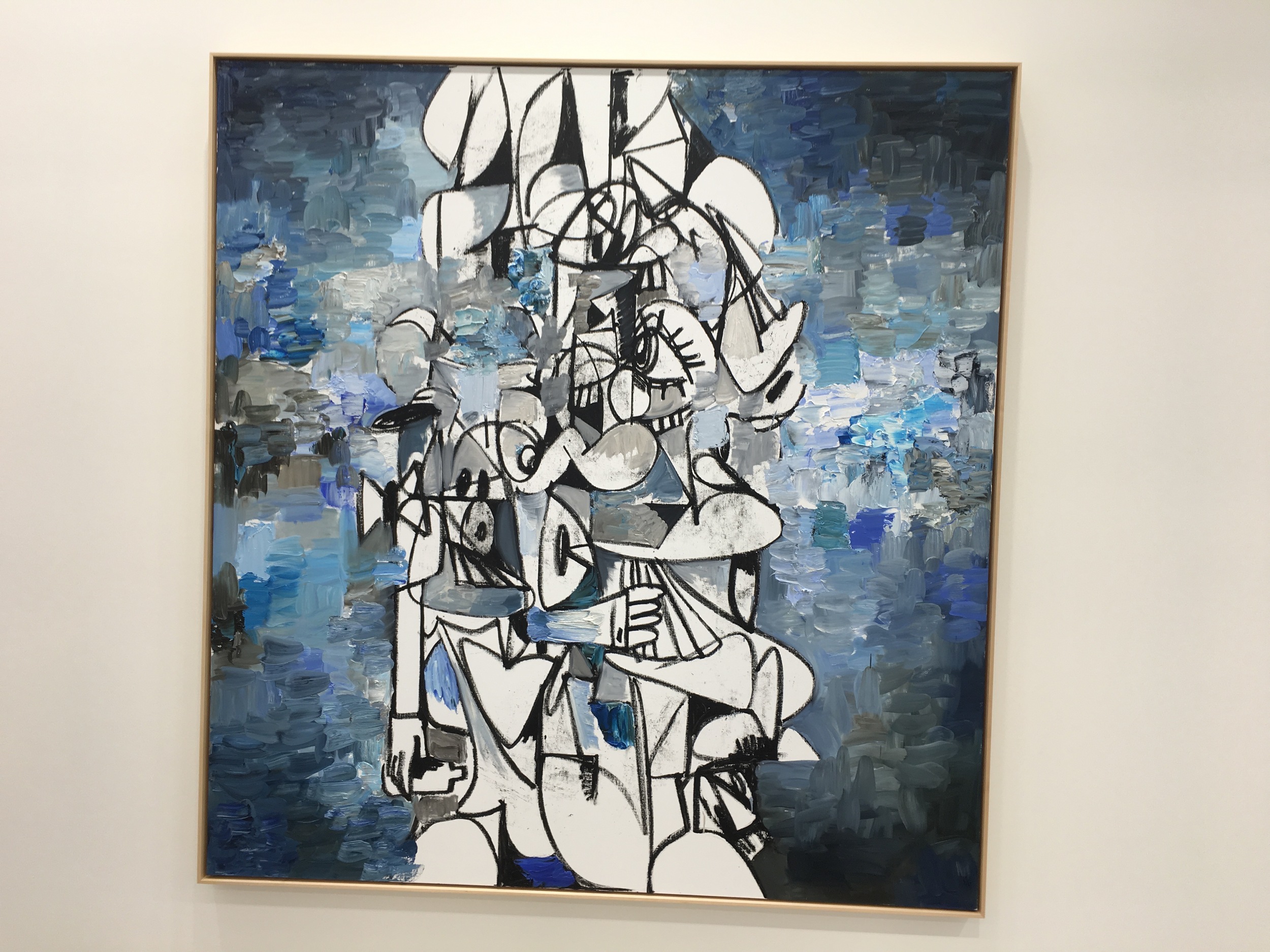
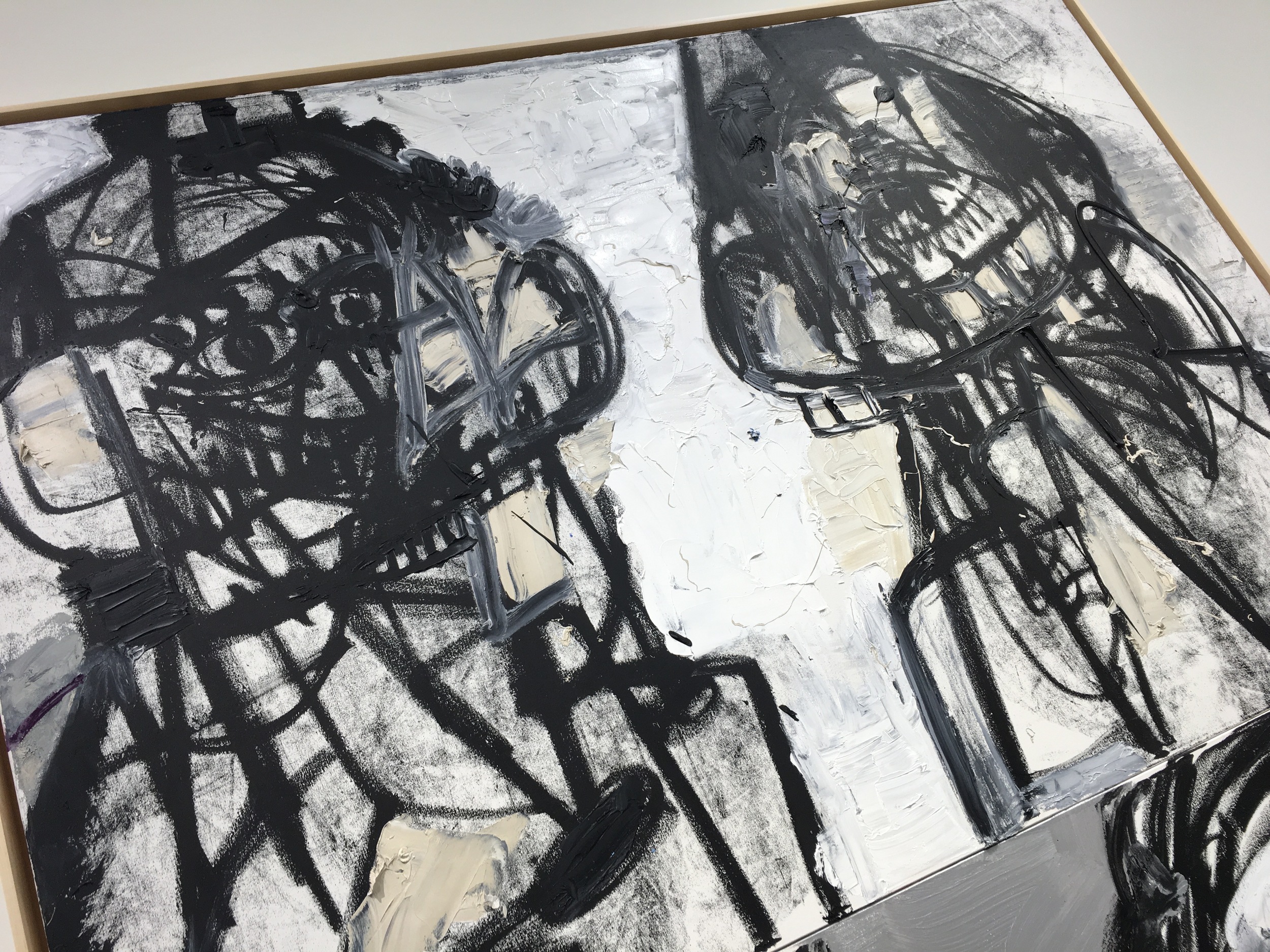
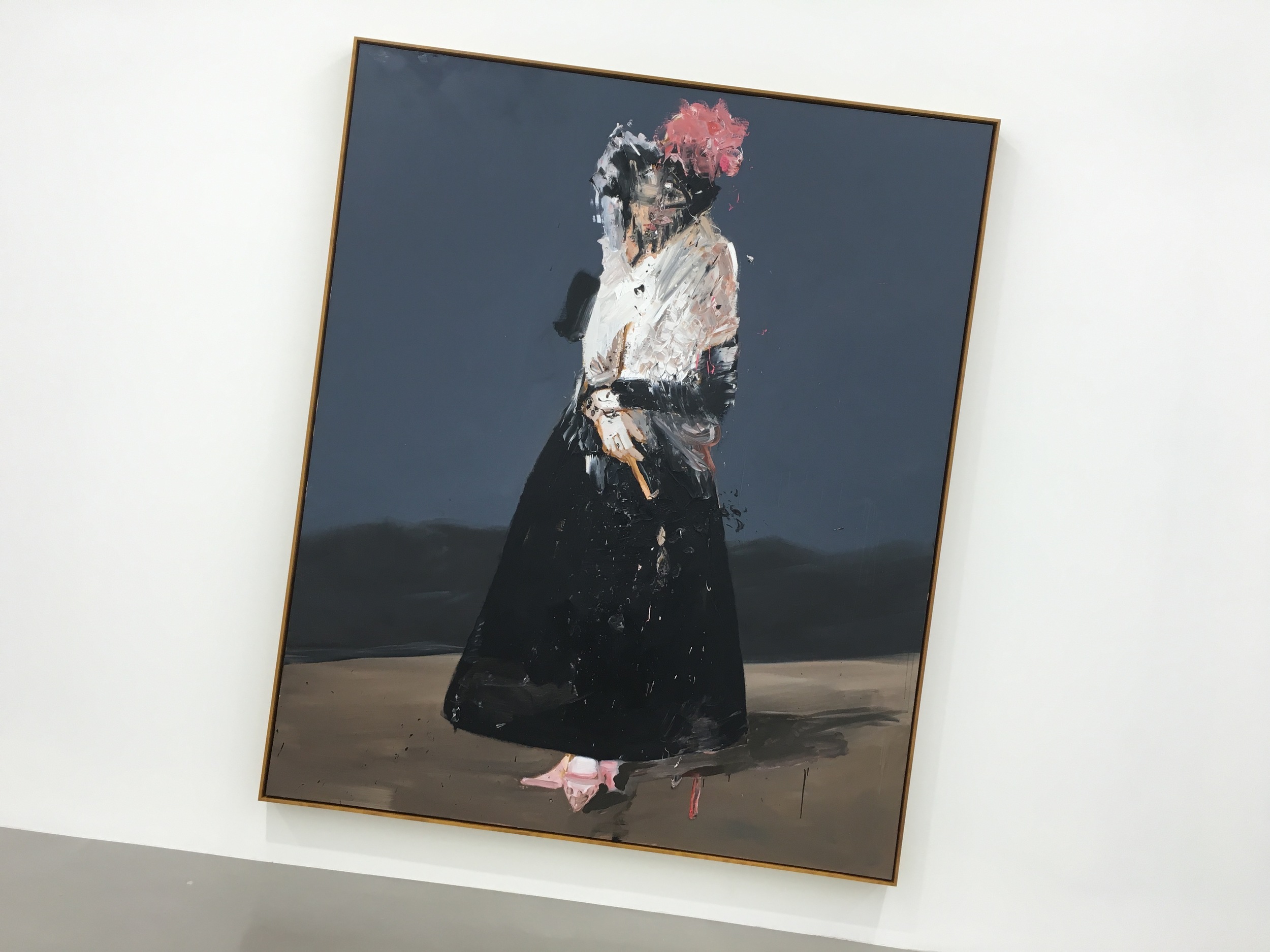
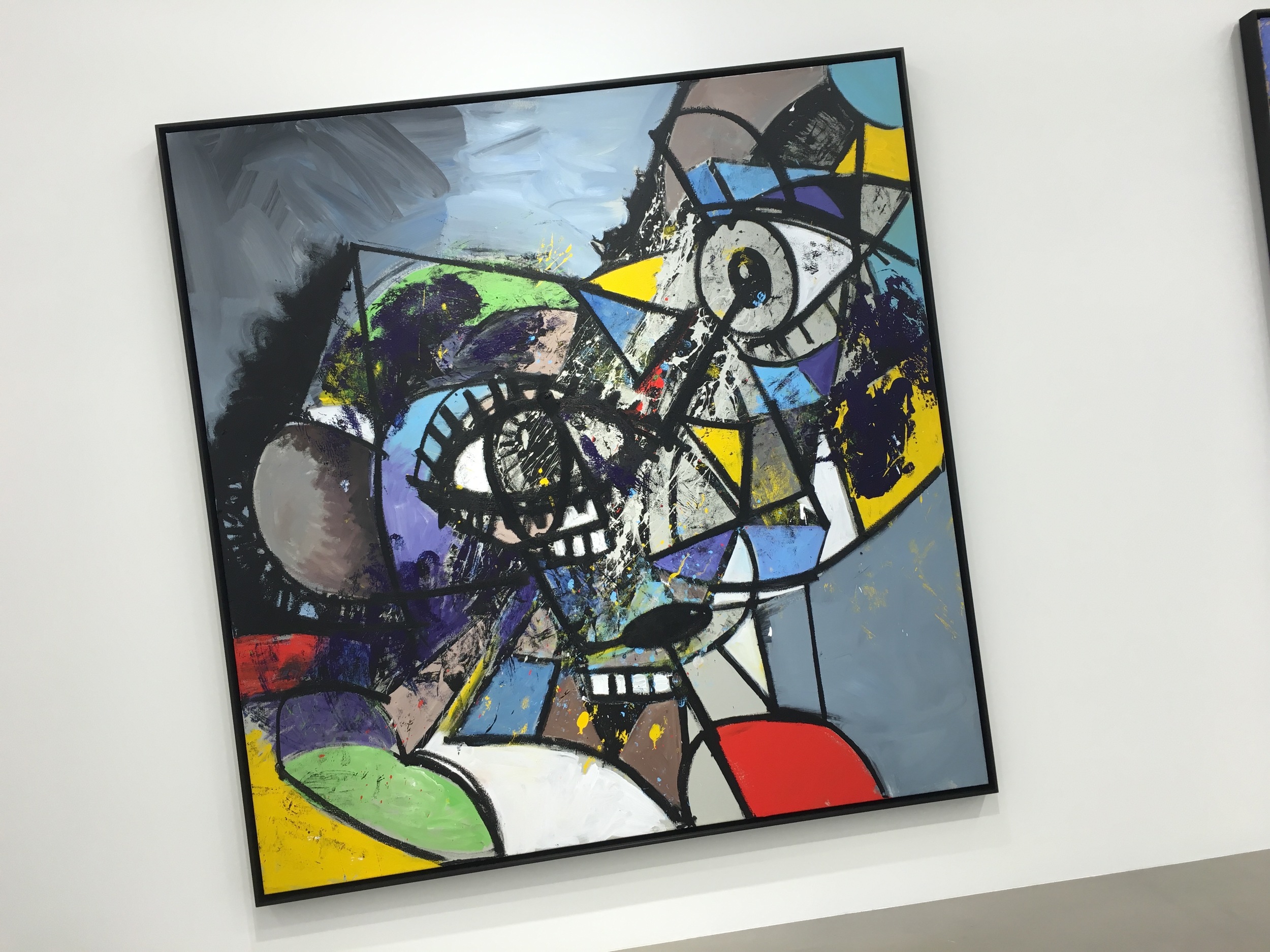
Few figures have shaped the contemporary art world as quietly yet decisively as Monika Sprüth. Since opening her gallery in Cologne in 1983, she has built one of the most influential international programs in contemporary art, championing artists including Cindy Sherman, Barbara Kruger, Jenny Holzer, Rosemarie Trockel, Andreas Gursky, George Condo, Thomas Ruff, Sterling Ruby, and many others. What began as an attempt to create greater visibility for women artists developed into a gallery that has consistently introduced artists whose work expanded the language of contemporary art while maintaining an unusually long-term commitment to their careers.

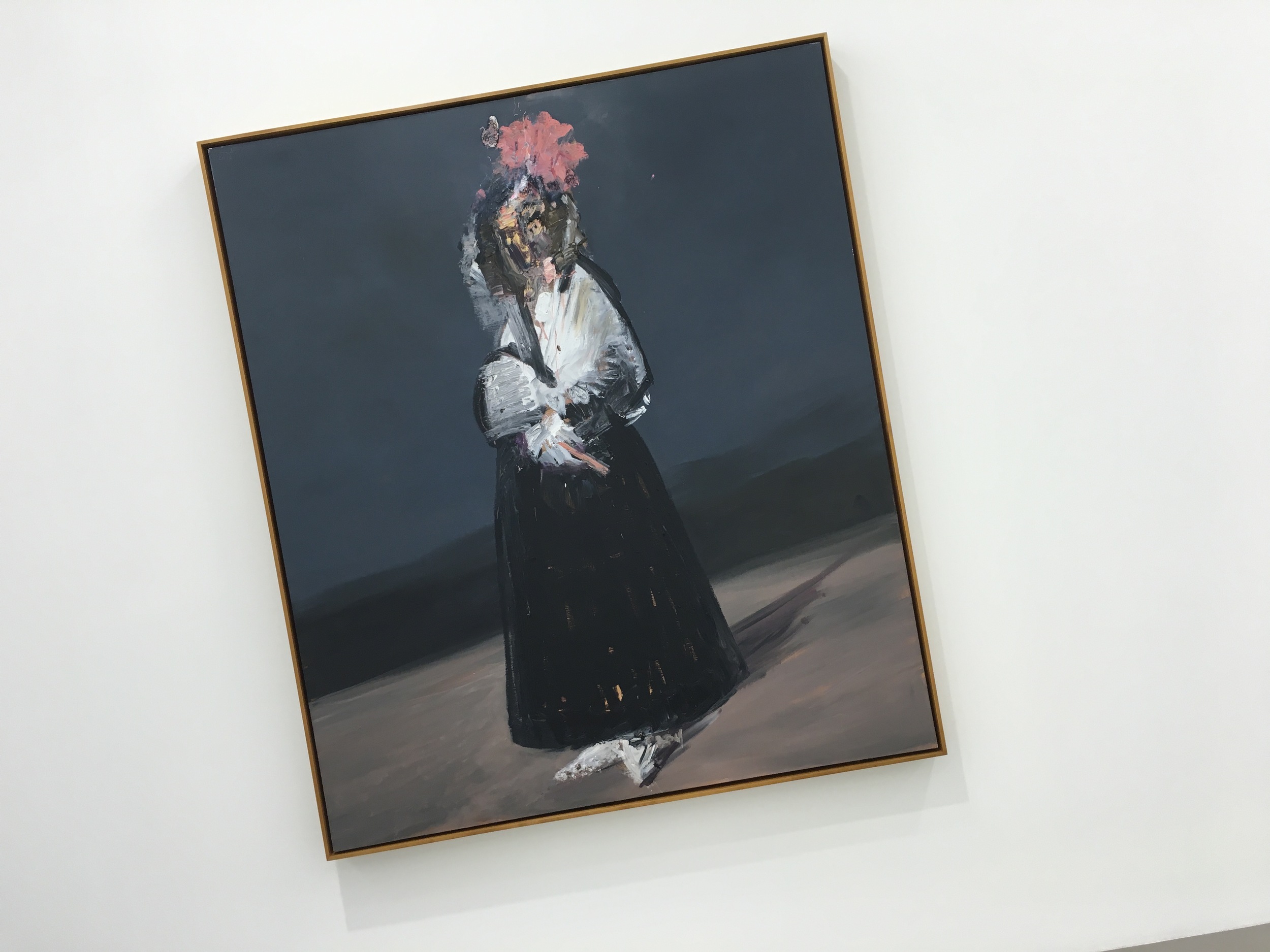
The very first artist Sprüth chose to represent was Andreas Schulze. His inaugural exhibition at Galerie Monika Sprüth in 1983 marked the beginning of a collaboration that has lasted more than four decades. Throughout that time, Schulze has developed a singular body of work populated by distorted furniture, domestic interiors, cakes, household objects, and improbable architectures. His paintings occupy an unusual position within postwar German art, drawing from everyday life while resisting easy categorization through their flattened perspective, humor, and formal precision.

Their relationship also traces the transformation of Cologne from one of the most vital centers of the international art world during the 1980s into an important chapter in recent art history. As painting reemerged after the conceptual and minimalist movements of the previous decade, Cologne became a meeting point for artists, dealers, collectors, and curators from Europe and the United States.

Autre brings together artist and gallerist to reflect on the circumstances that brought them together in the early 1980s, the evolution of their partnership, the changing structure of the art market, and what it means to sustain an durational artistic dialogue. Read more.
Sterling Ruby’s Atropa Explores the Duality of Life @ Sprüth Magers New York

Atropa by Sterling Ruby, Sprüth Magers New York, 2026. Photo: Isabella Bernabeo.

text and photographs by Isabella Bernabeo

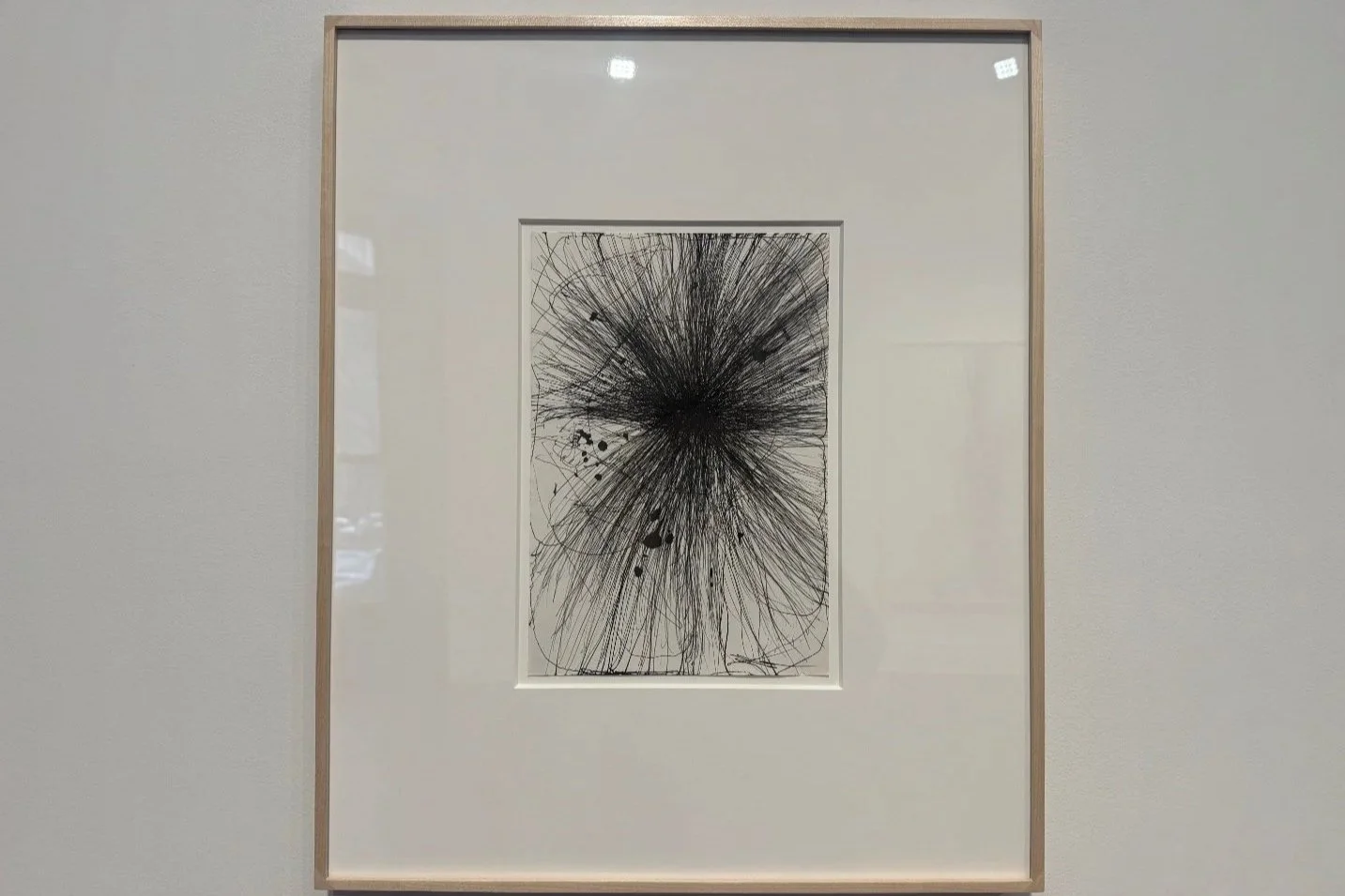
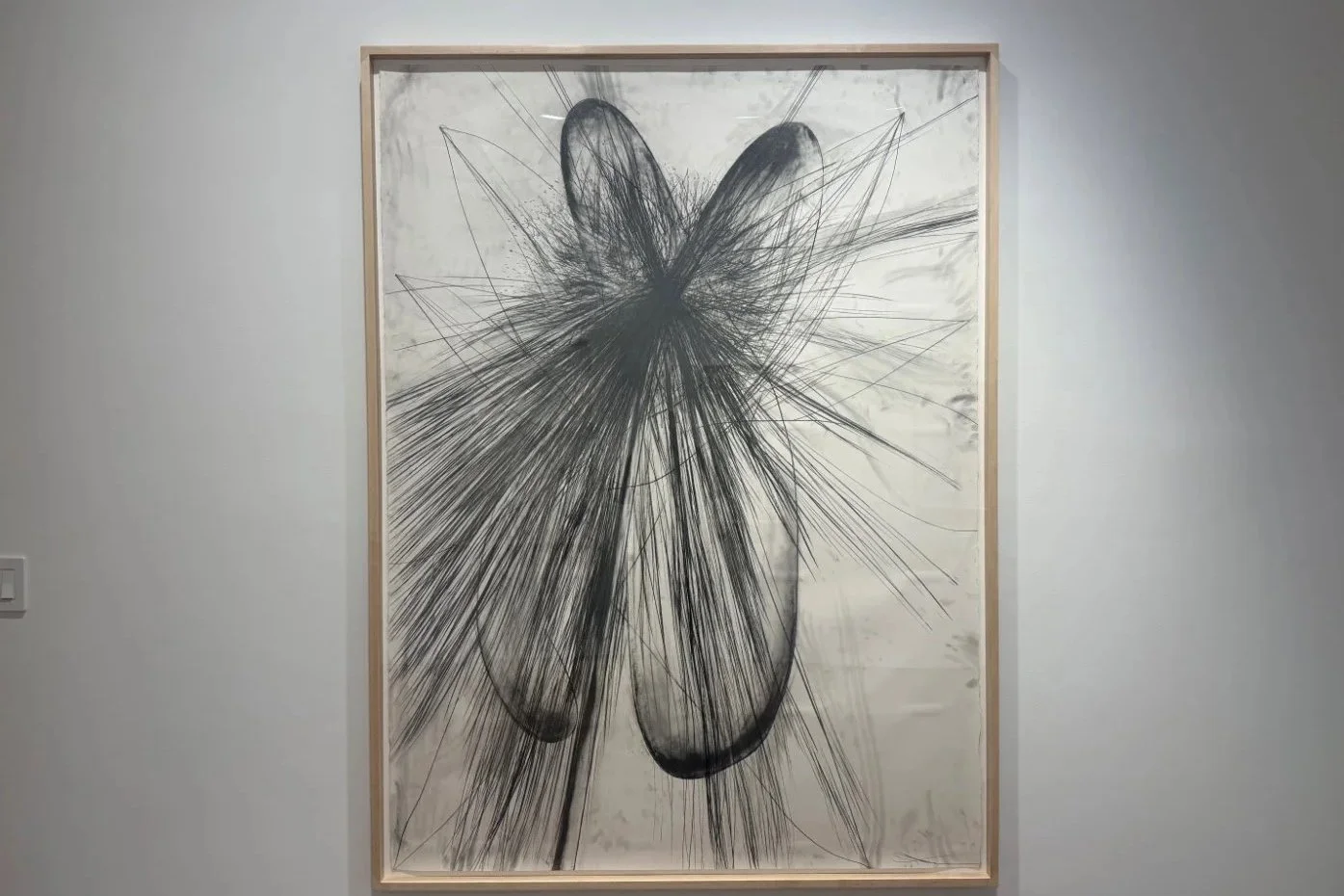
Hidden away on the second floor of an old Upper East Side building, Sterling Ruby’s Atropa explores the duality of life through unconventional artistic methods. Named after the nightshade genus, more commonly known as deadly nightshade, Atropa also references Atropos, a Greek Fate and the eldest daughter of Zeus and Themis. She is the goddess who cuts the thread of life, allowing her to decide the time and manner of a mortal’s death.

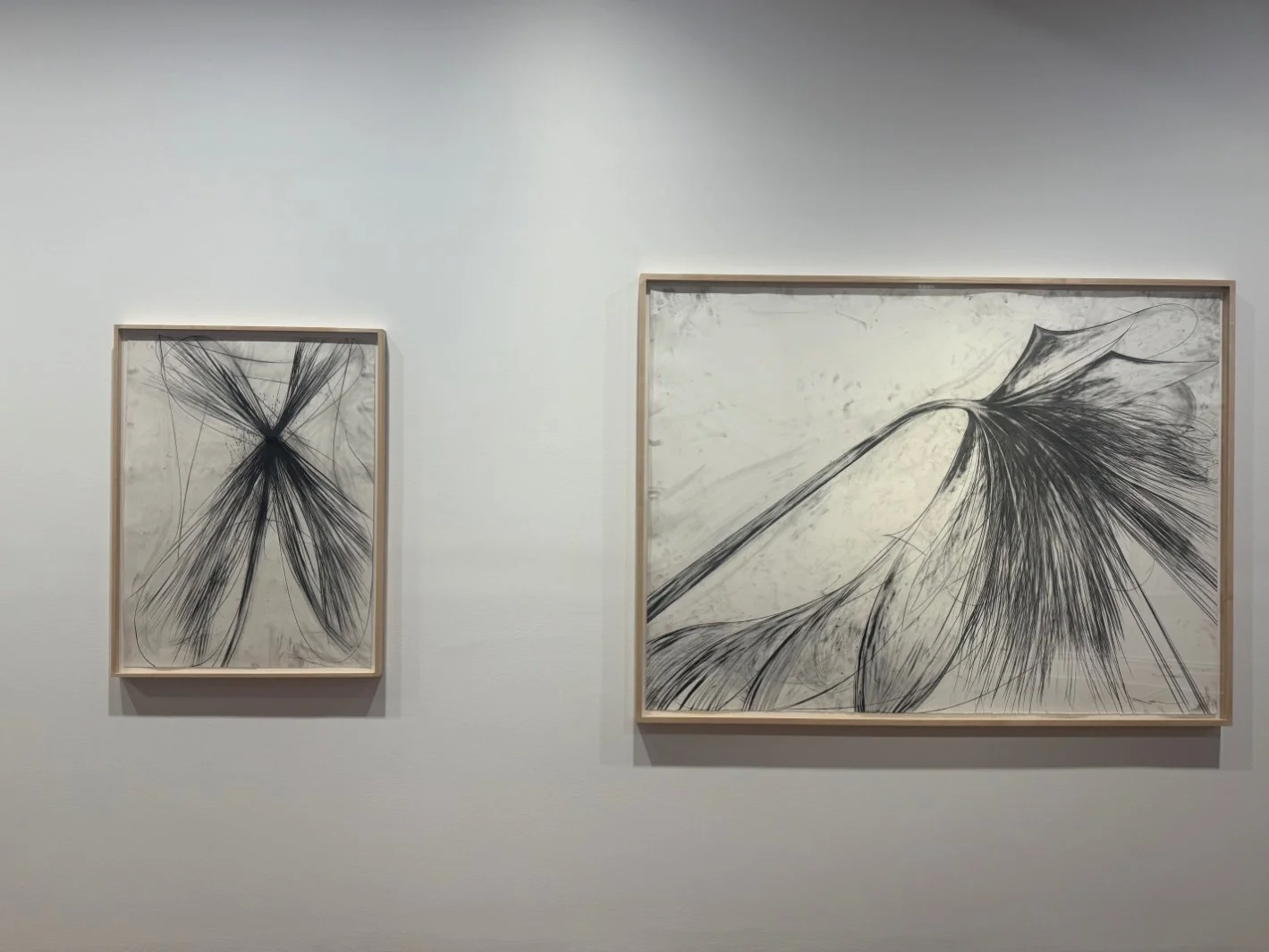
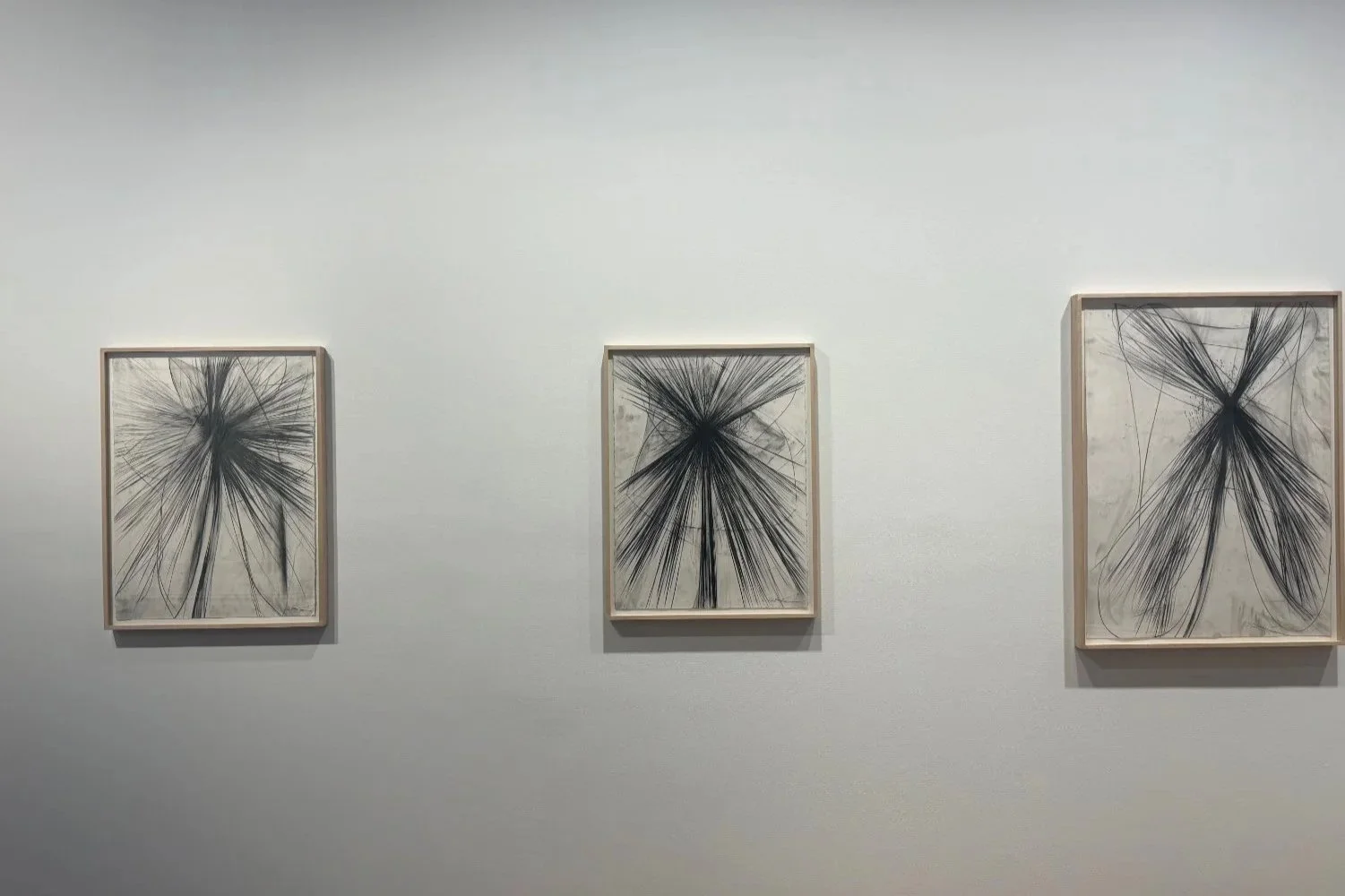
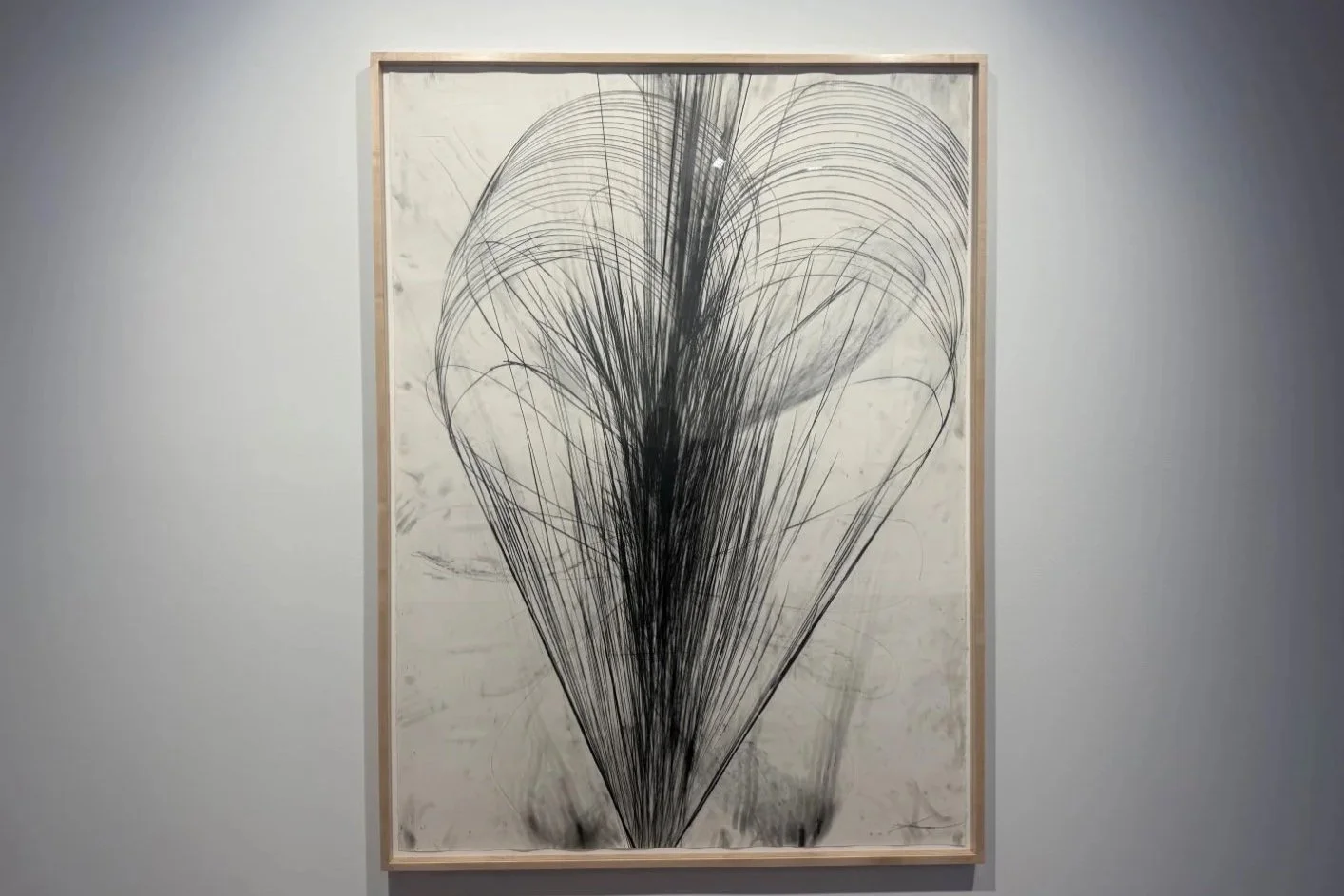
After climbing up an old, rickety staircase, we enter what appears to be an empty apartment flat. The sleek white walls and dark brown hardwood floors dominate the space until they are met by tiny, intricate black lines within pale wood frames, arranged along the walls. 

Atropa by Sterling Ruby, Sprüth Magers New York, 2026. Photo: Isabella Bernabeo.

These graphite and pen-on-paper drawings seem to shift and move, their lines twisting fluidly like a worm wiggling to life. Though they were made just last year, these pieces trace back to a series that Ruby began working on thirty years ago. Each of them is drawn with instinctive human gestures rather than the controlled mark-making characteristic of a traditional representational practice. 

All eight drawings are also named after a flower – from Henbane in the nightshade family to Bleeding Hearts in the poppy family to Morning Glory in the convolvulaceae family – many of which are highly poisonous plants. 

The artworks, each with a dark void near the center of the penwork, seem to represent the endless dangers that accompany the natural world, yet the black, scrawled lines from the void seem to reach beyond the page, yearning to reconnect with the land of the living. The pieces showcase the true paradox nature embodies: the destructive venoms of a flower alongside its medicinal properties, the beauty humans create alongside the destructive instincts that surface daily. 

Atropa by Sterling Ruby, Sprüth Magers New York, 2026. Photo: Isabella Bernabeo.

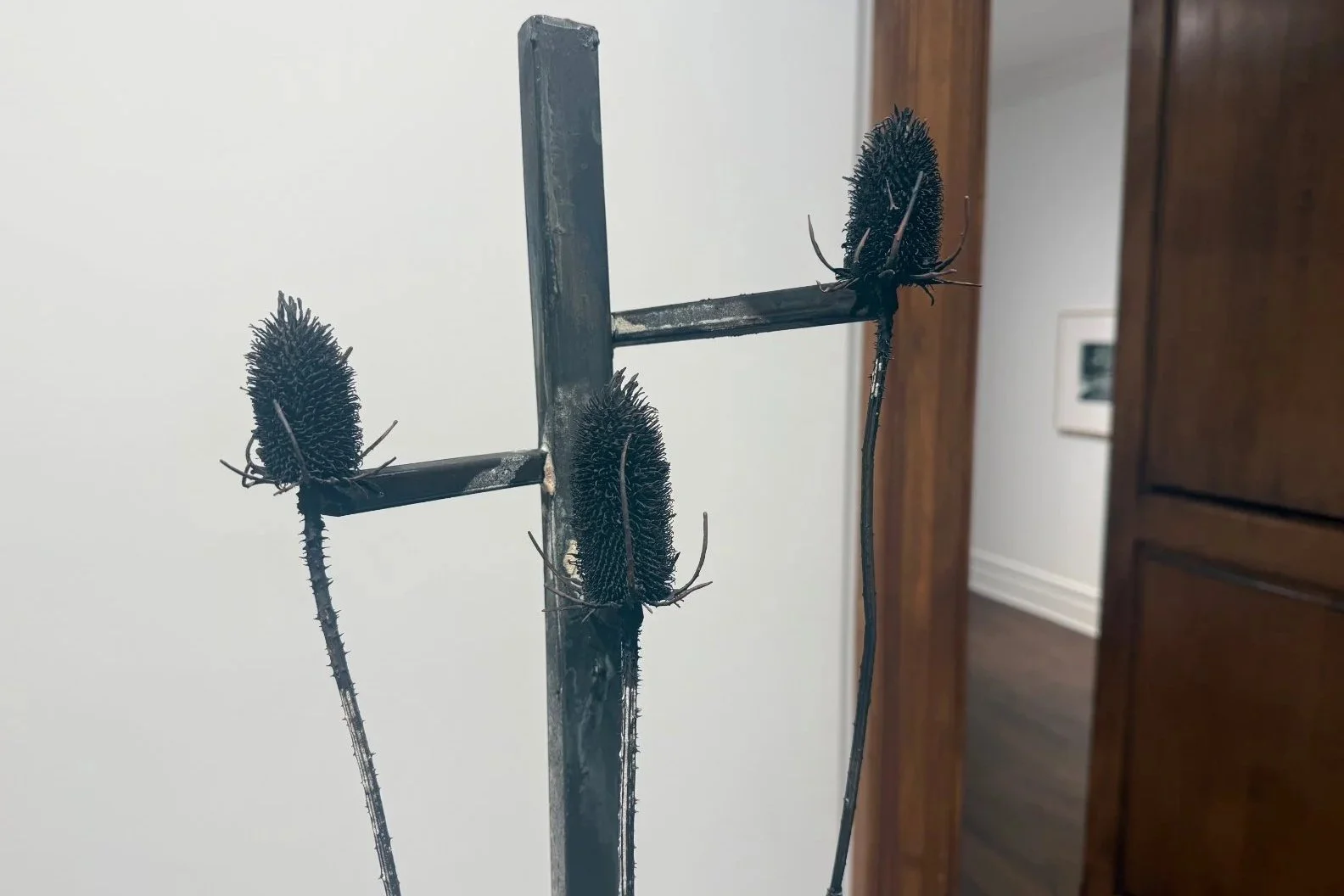
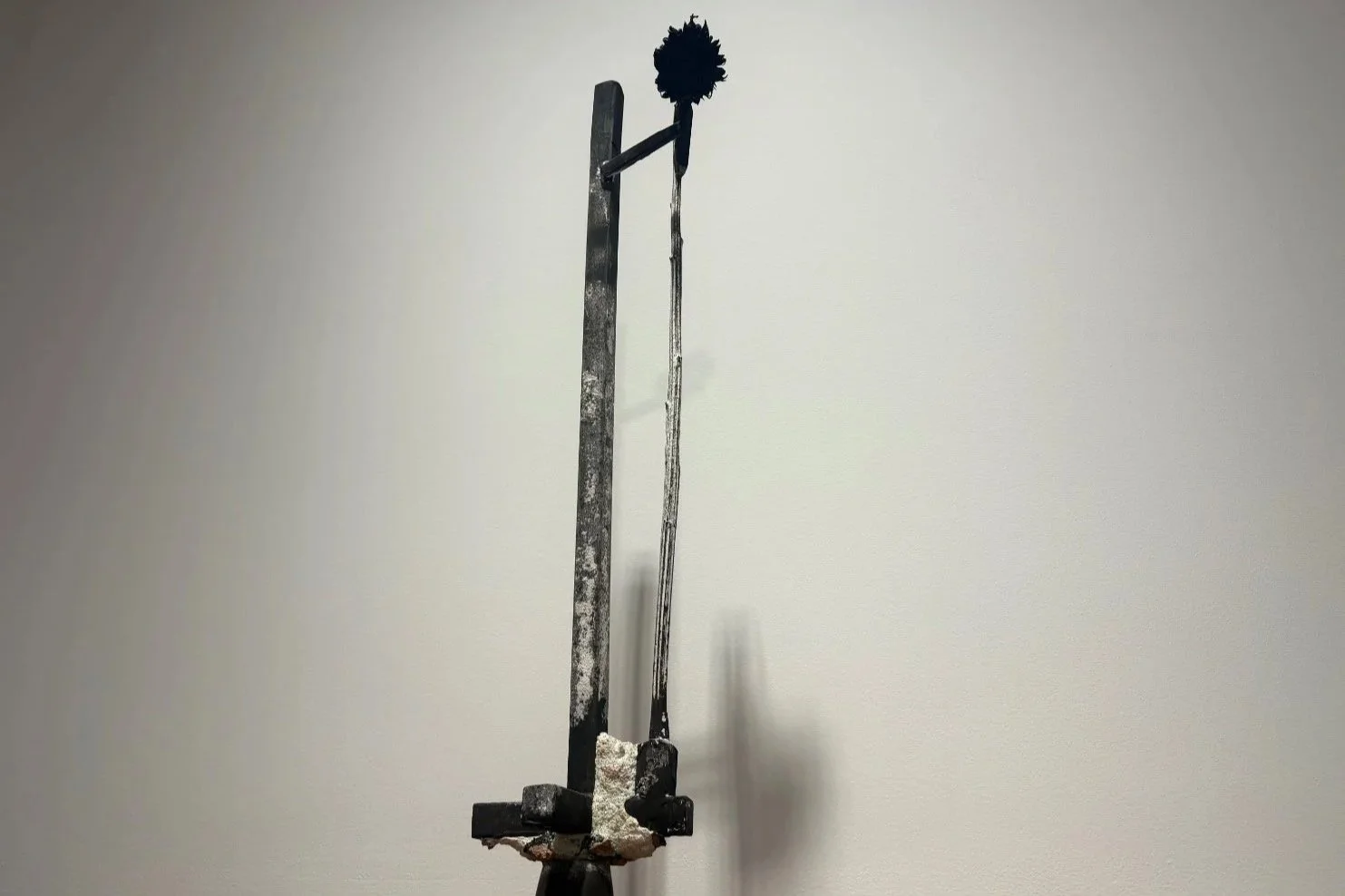
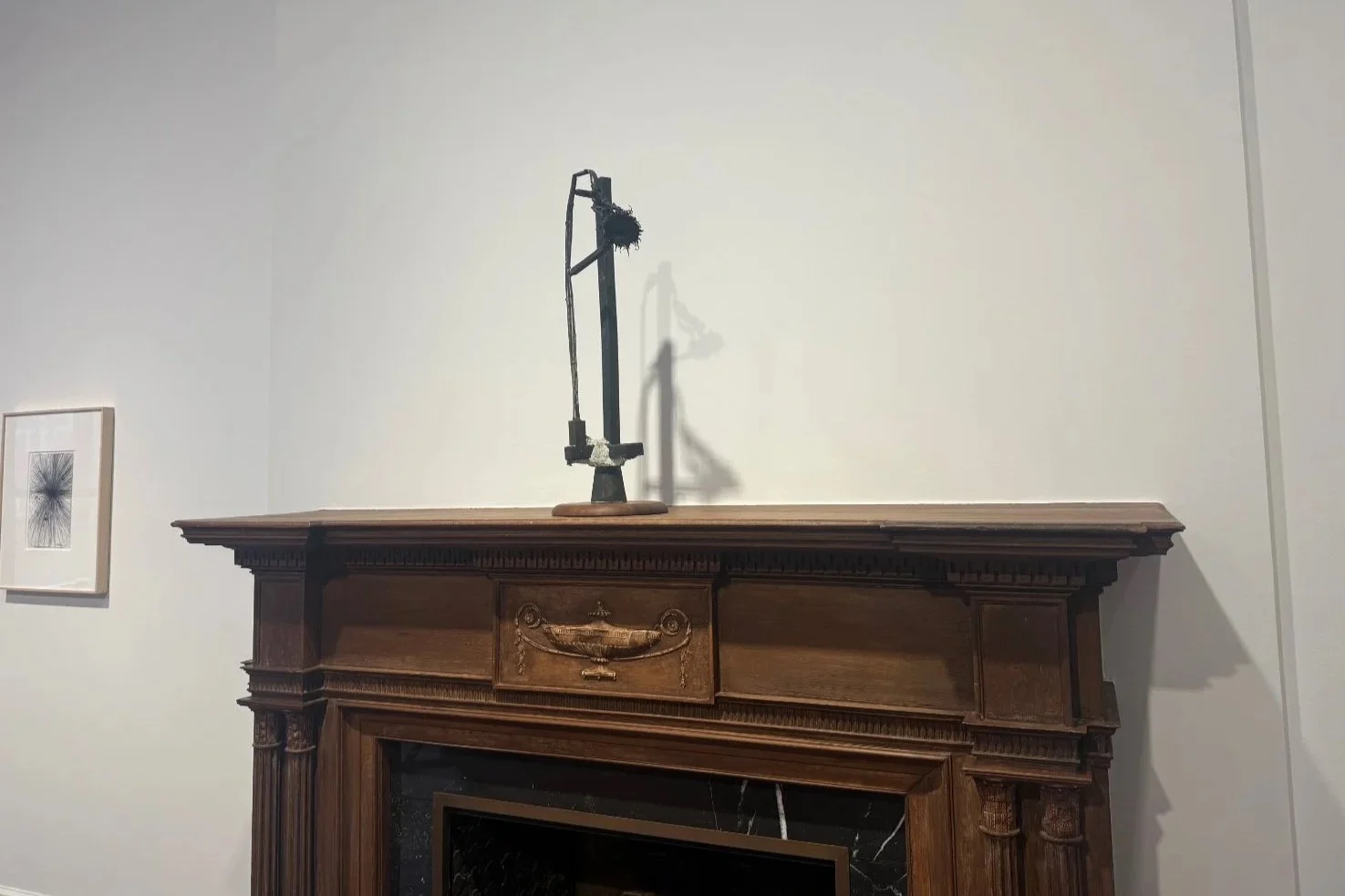
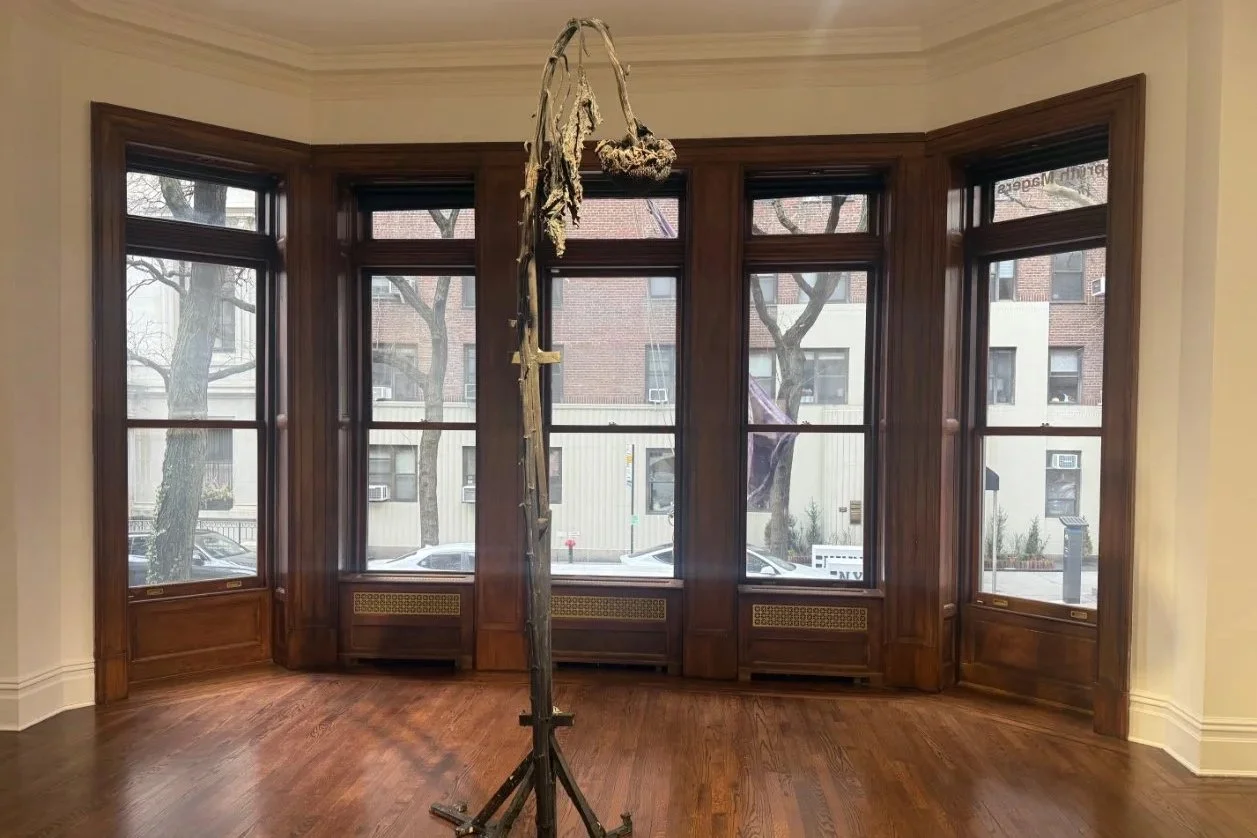
Settled between the drawings are six bronzed flowers, some resting upon dark brown mantels, others stationed on white podiums, and one even large enough to stand on its own: a lone slouched sunflower waiting for the sun to rise. 

All of these flowers, which are the exhibition’s sole sculptural component, are made in Ruby’s studio after being cut, dried, and cast. The burnout process fully incinerates the flower, leaving behind only a bronze mold of what it once was. These sculptures each reveal the flowers in various states of blooming and decay, underscoring once again the bewitching parallels of life. 

It’s only then that you turn around and spot a small square opening leading into a second room, just now realizing that Ruby’s exhibit is separated into two parts. The second section clearly contrasts with the first space; the endless whites, blacks, and browns are now replaced with vibrant splashes of blue, purple, and green. 

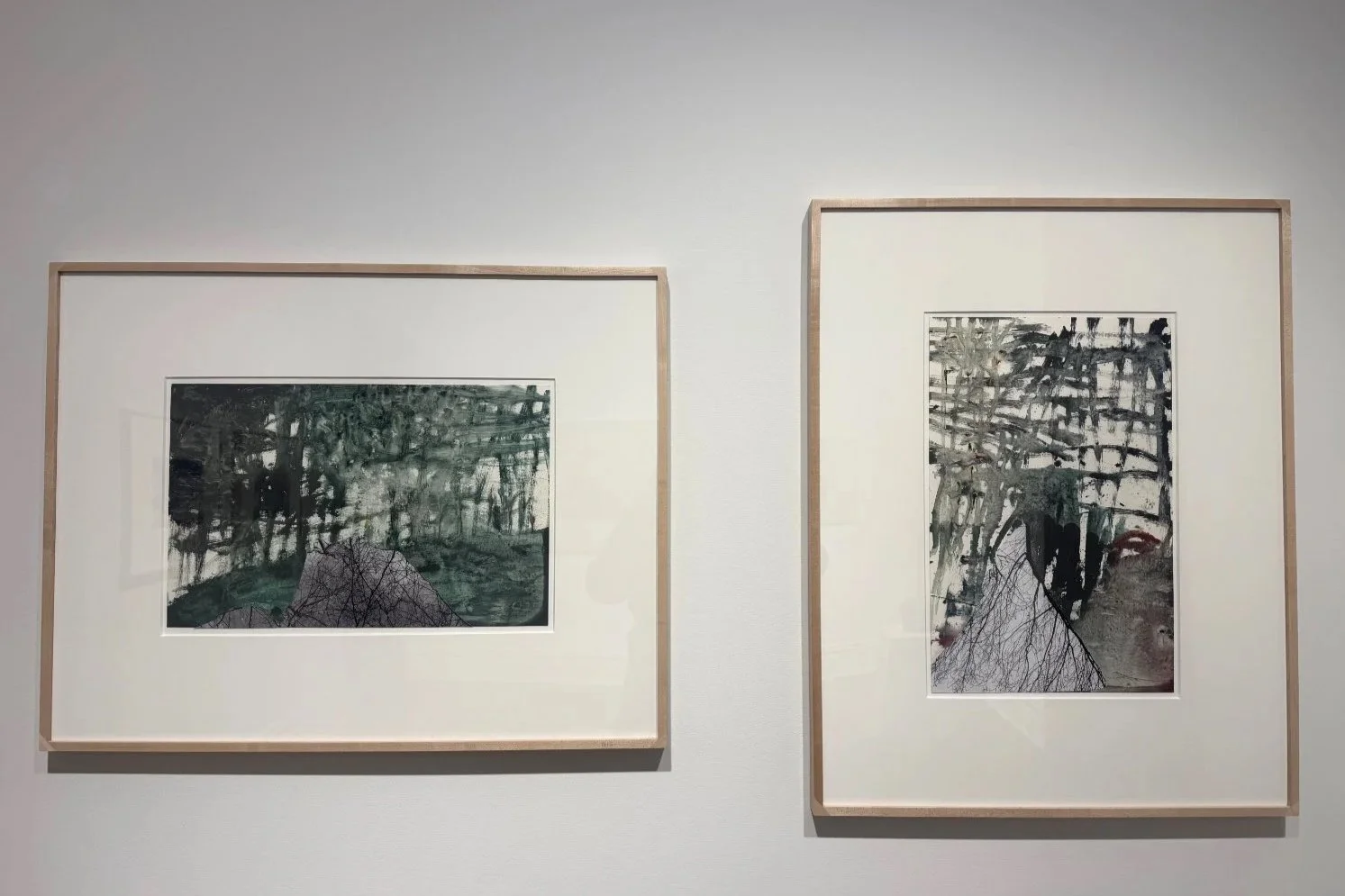
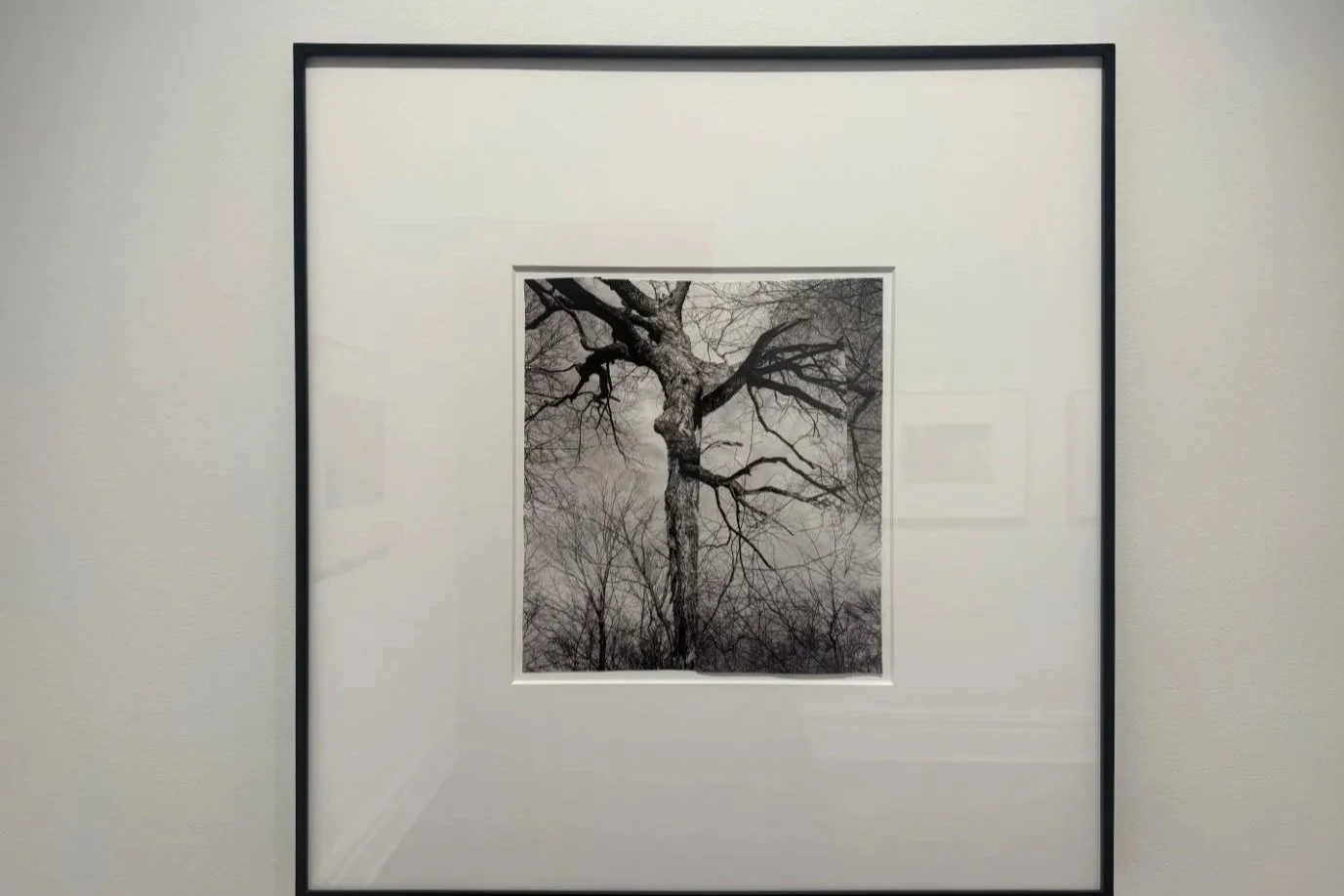
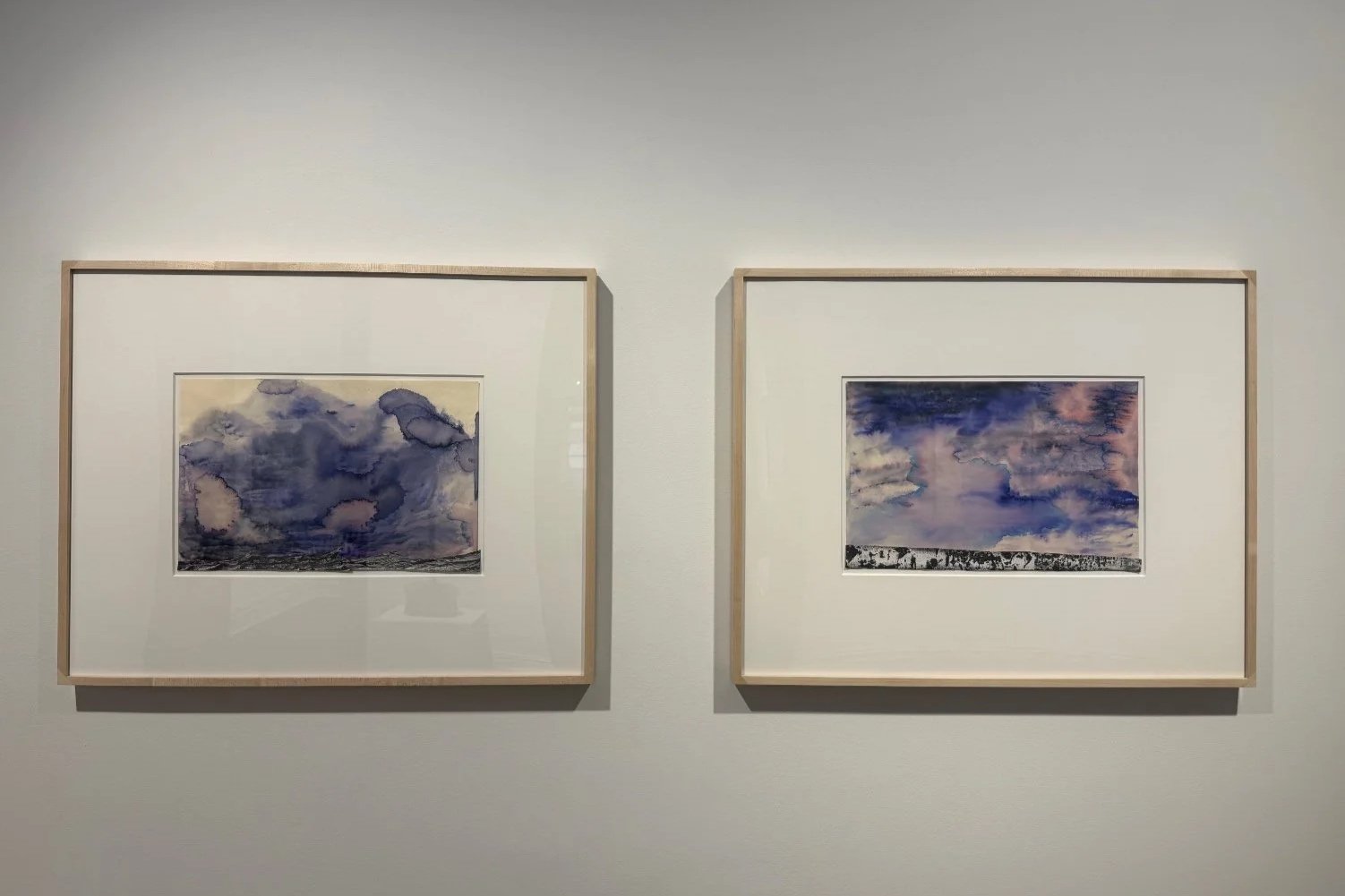
This compact rectangular room is filled with watercolor collages. Hanging on the wall to the right are three black-and-white photographs of overgrown trees whose branches split off in every direction. One of the images, SPLITTING, remains as simple as that, whereas the two others are engulfed in a spray of green lines that design a checkered pattern. On the adjacent wall hang two very similar works, yet instead of black-and-white photographs of trees, it’s a flat landscape. Painted above the curvy hills are clouds of purples, pinks, and blues, creating a stunning winter sunset. 

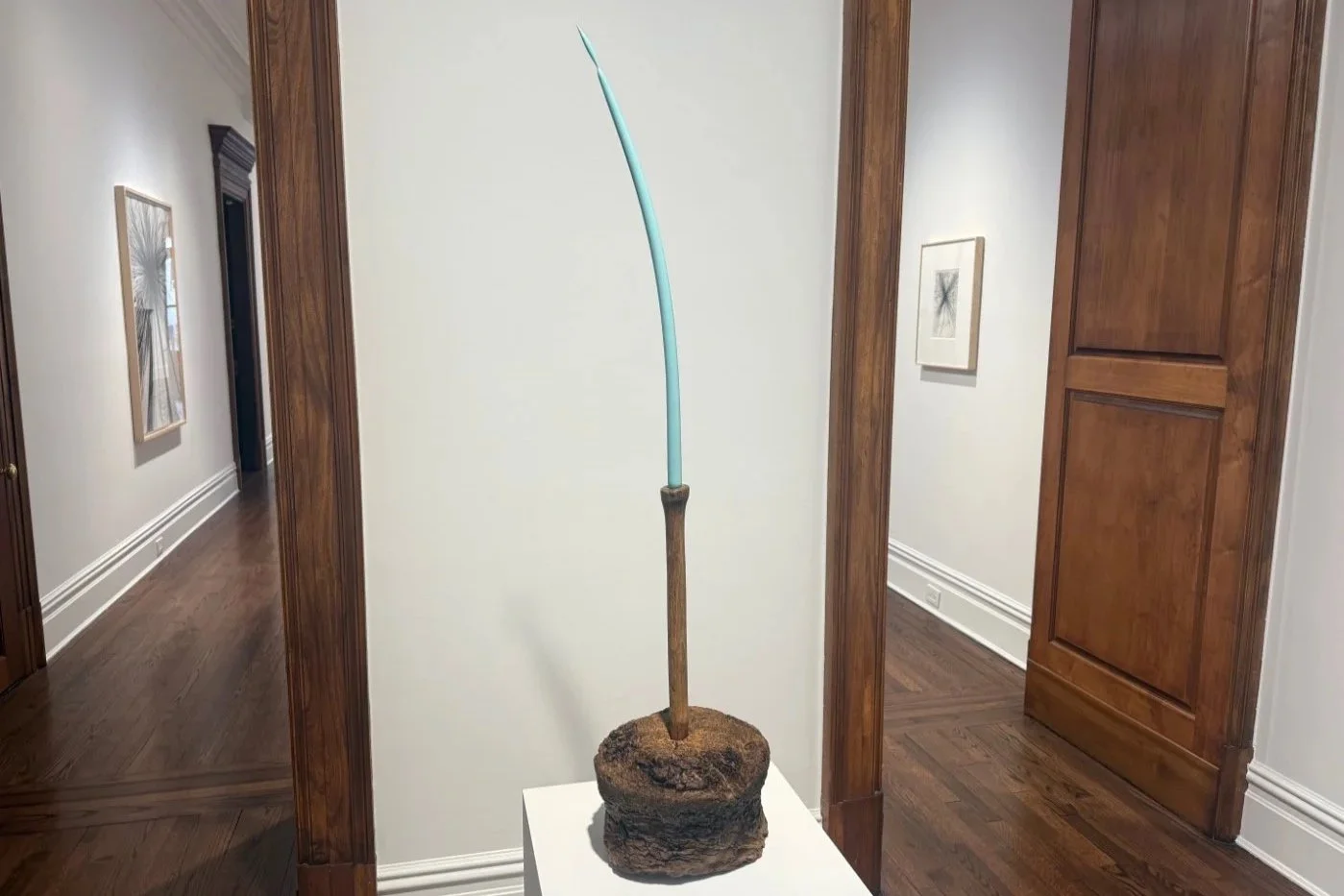
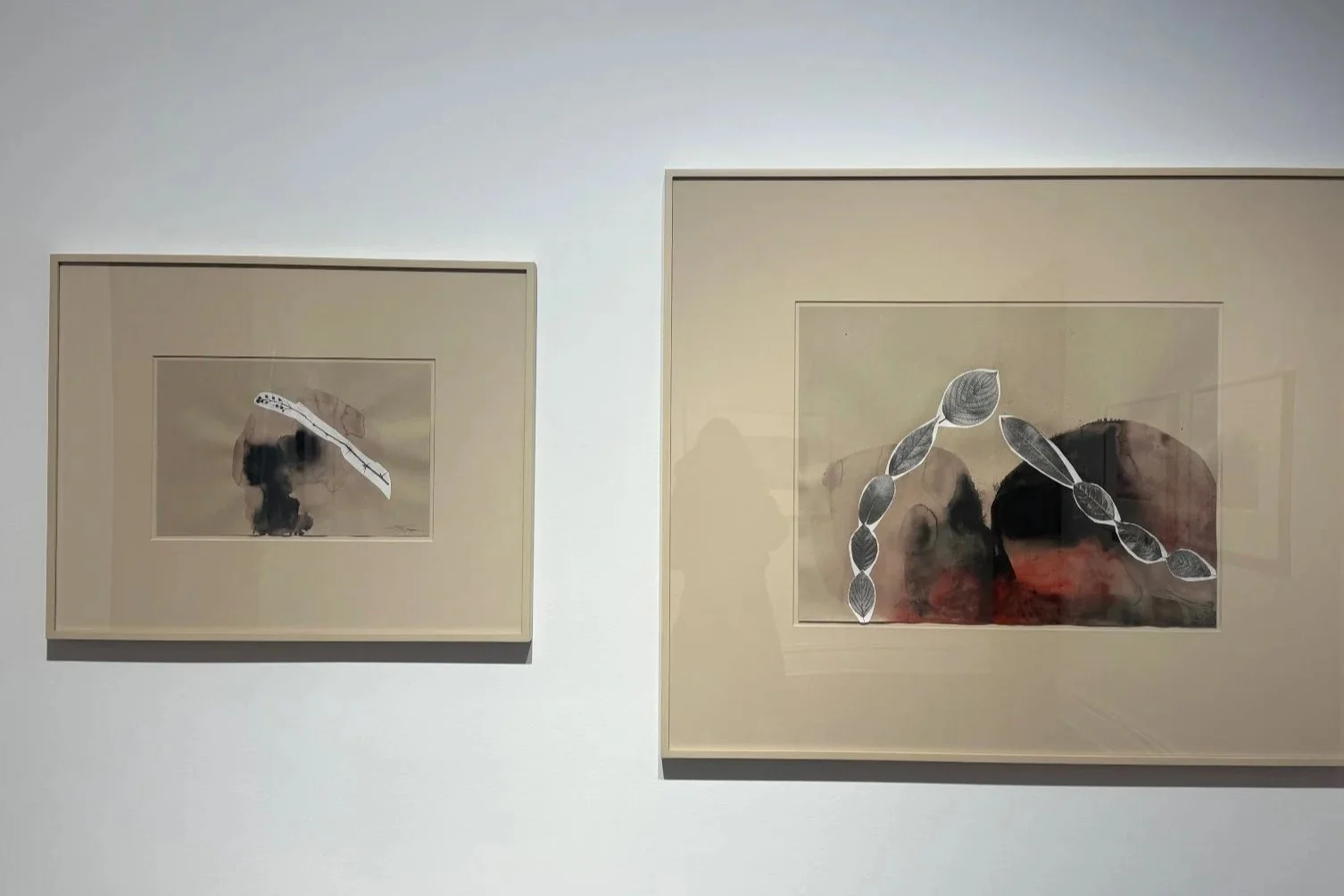
Across from this scene, beige and aqua take over, as two final collages hang next to a wood and bronze sculpture. The sculpture, Vestige, appears to be a curved sword or feather thrust into a stone. The handle, a light burl wood, slowly morphs into an aqua blade. The collages, Hippies and Kissing Hippies, apply large black watercolor stains on a beige background to create human faces, both crowned with wreaths of leaves and flowers. 
Whereas Ruby’s first room encapsulates the natural decay of an environment, this room embodies an exuberance of life. Atropa collocates mortality within two separate encounters, balancing the pleasant beauties and agonizing inevitables that life has to offer.

Atropa is on view through March 28 @ Sprüth Magers 22 E 80 Street, New York

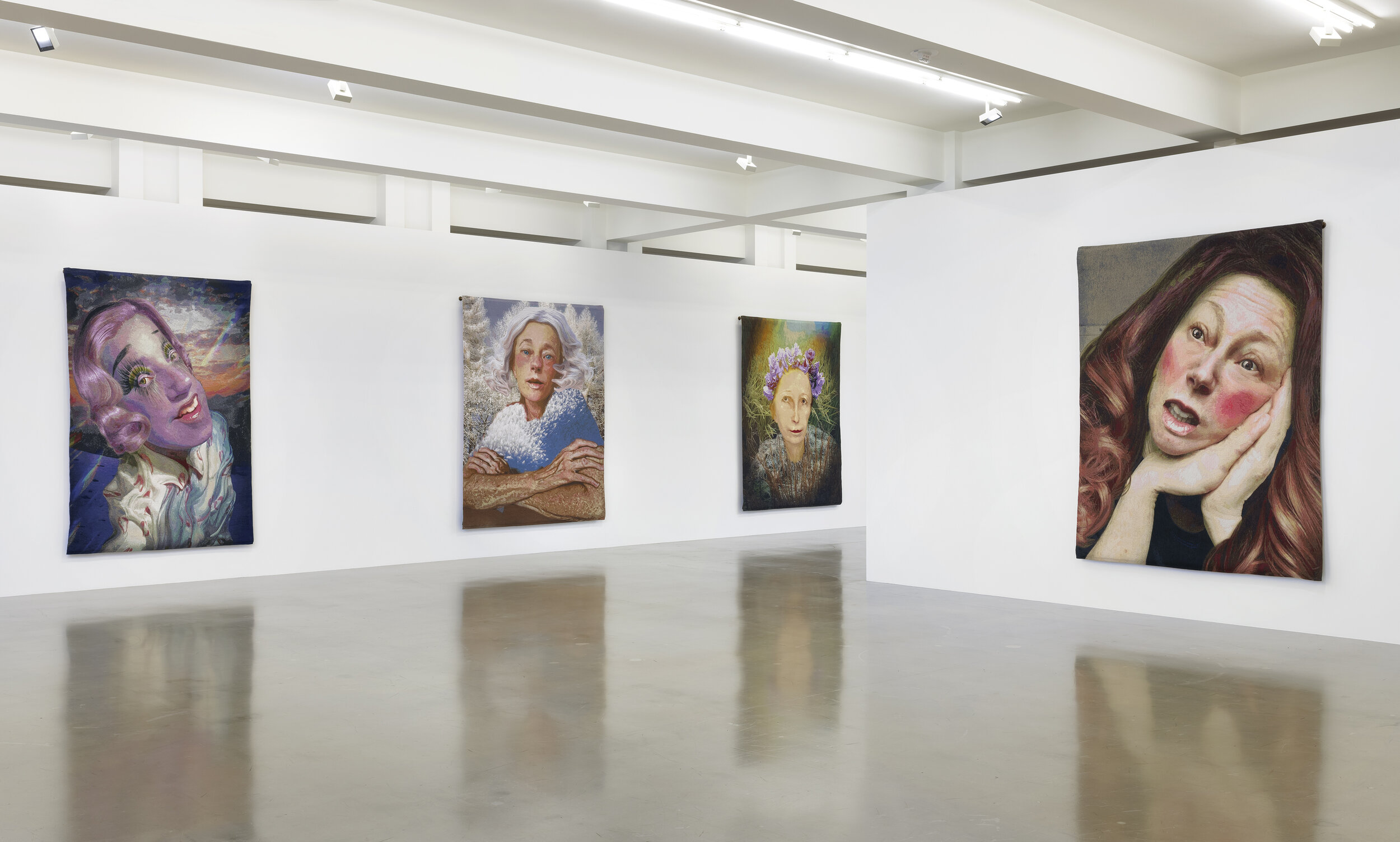
Cindy Sherman Presents Tapestries @ Sprueth Magers In Los Angeles


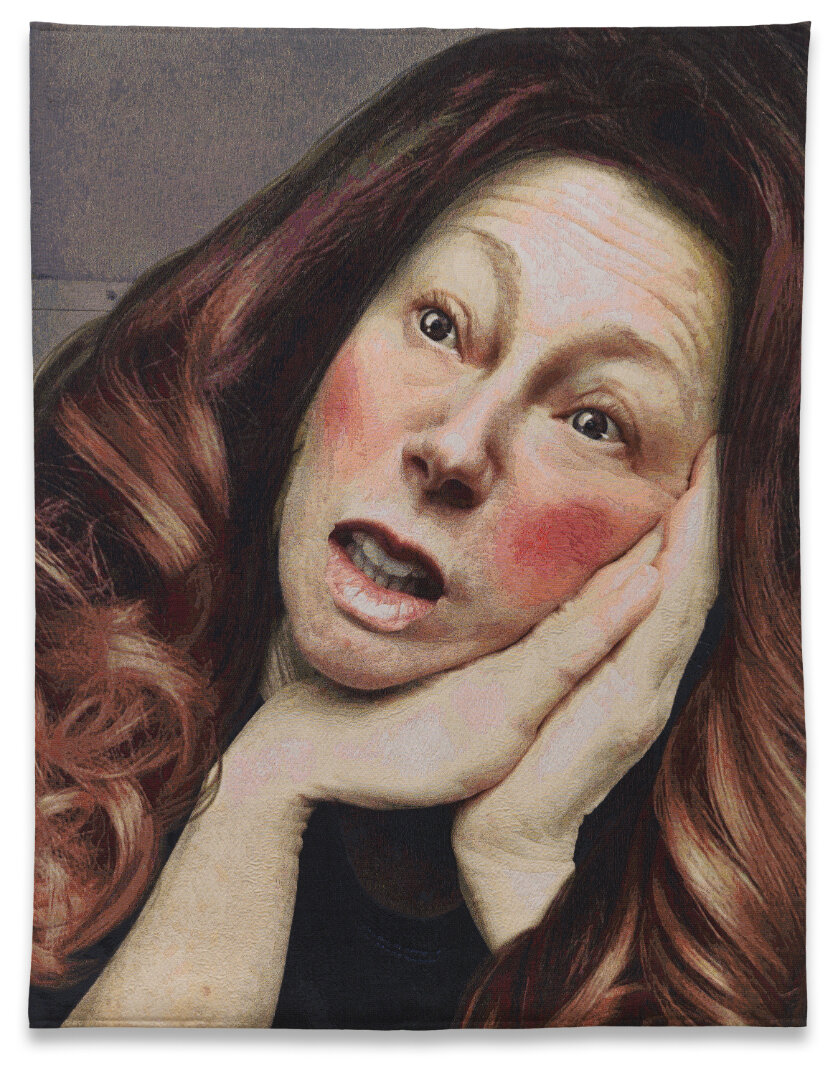
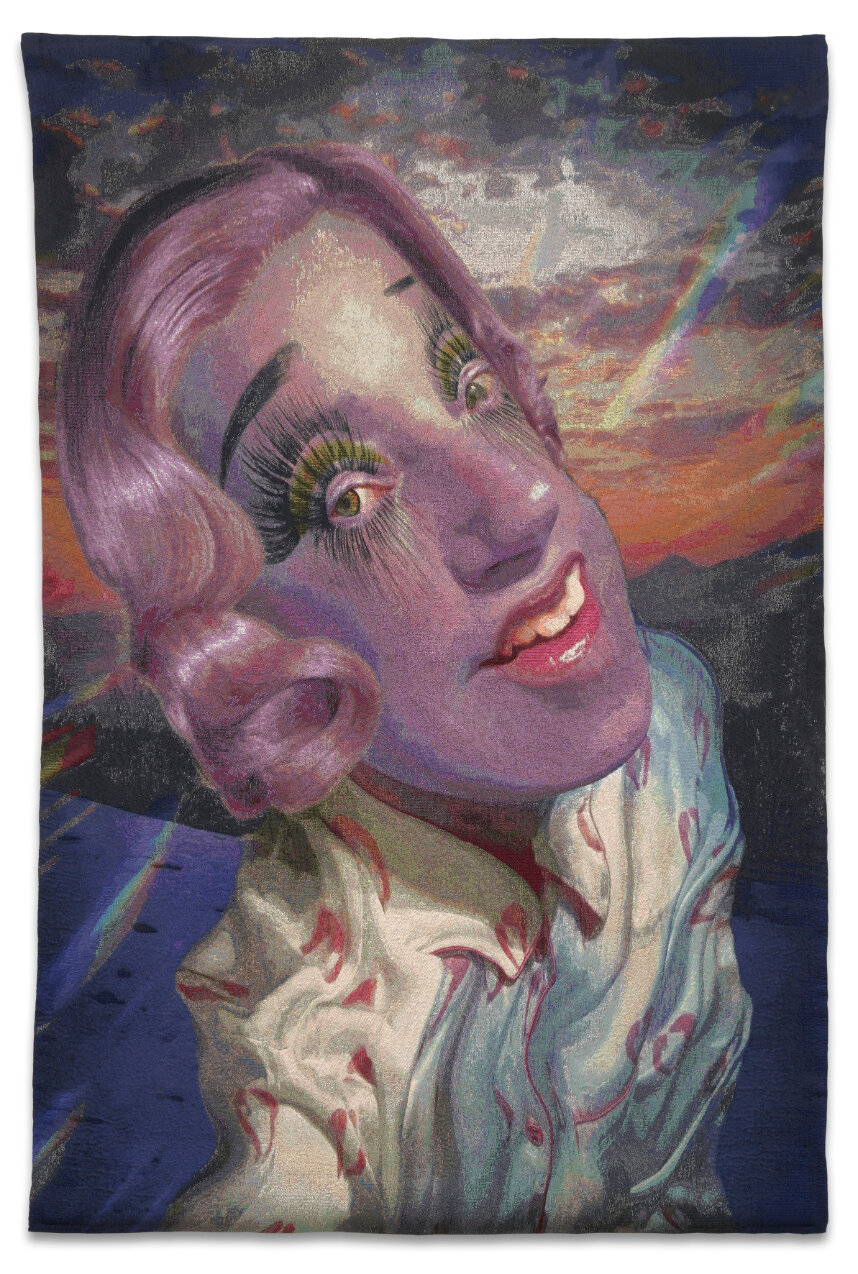
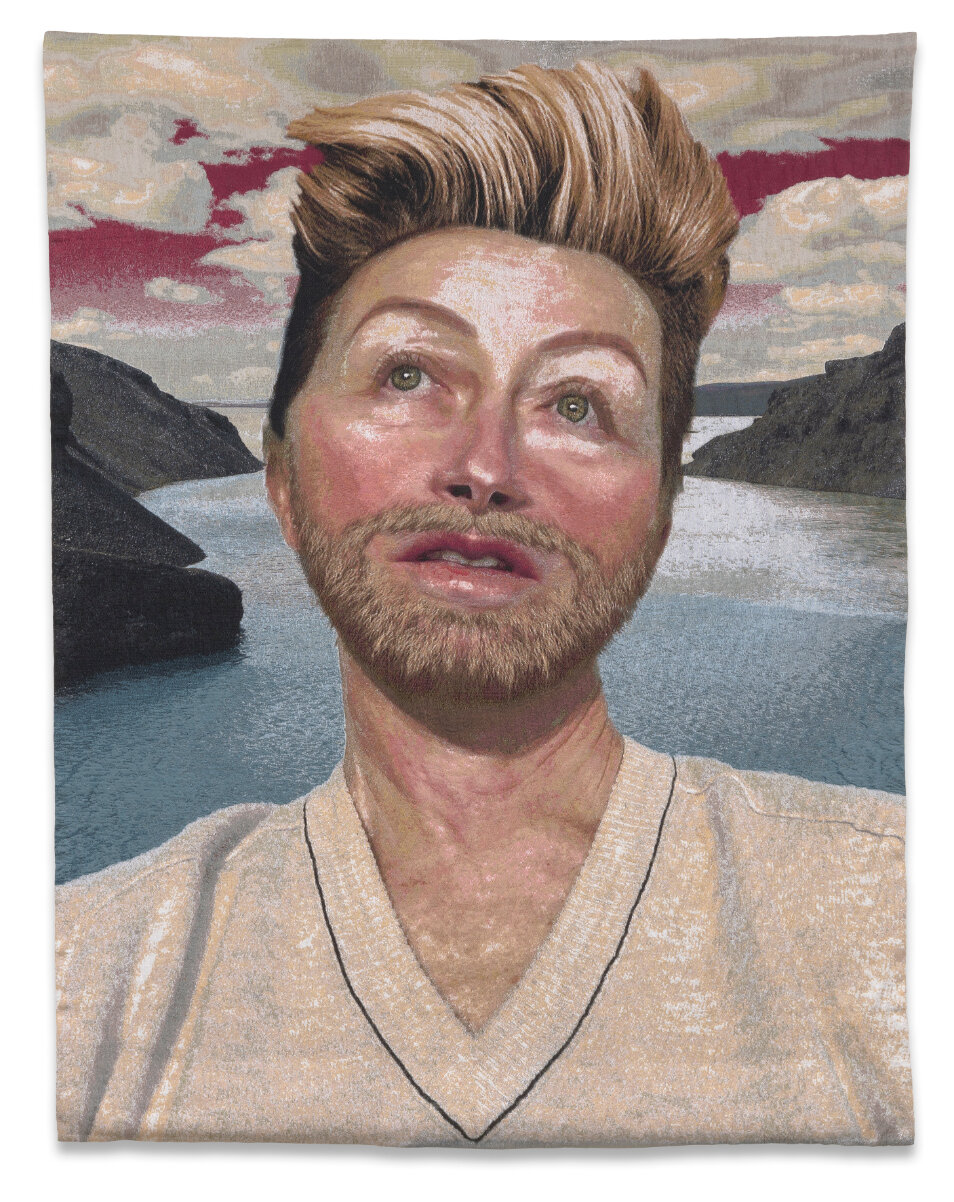
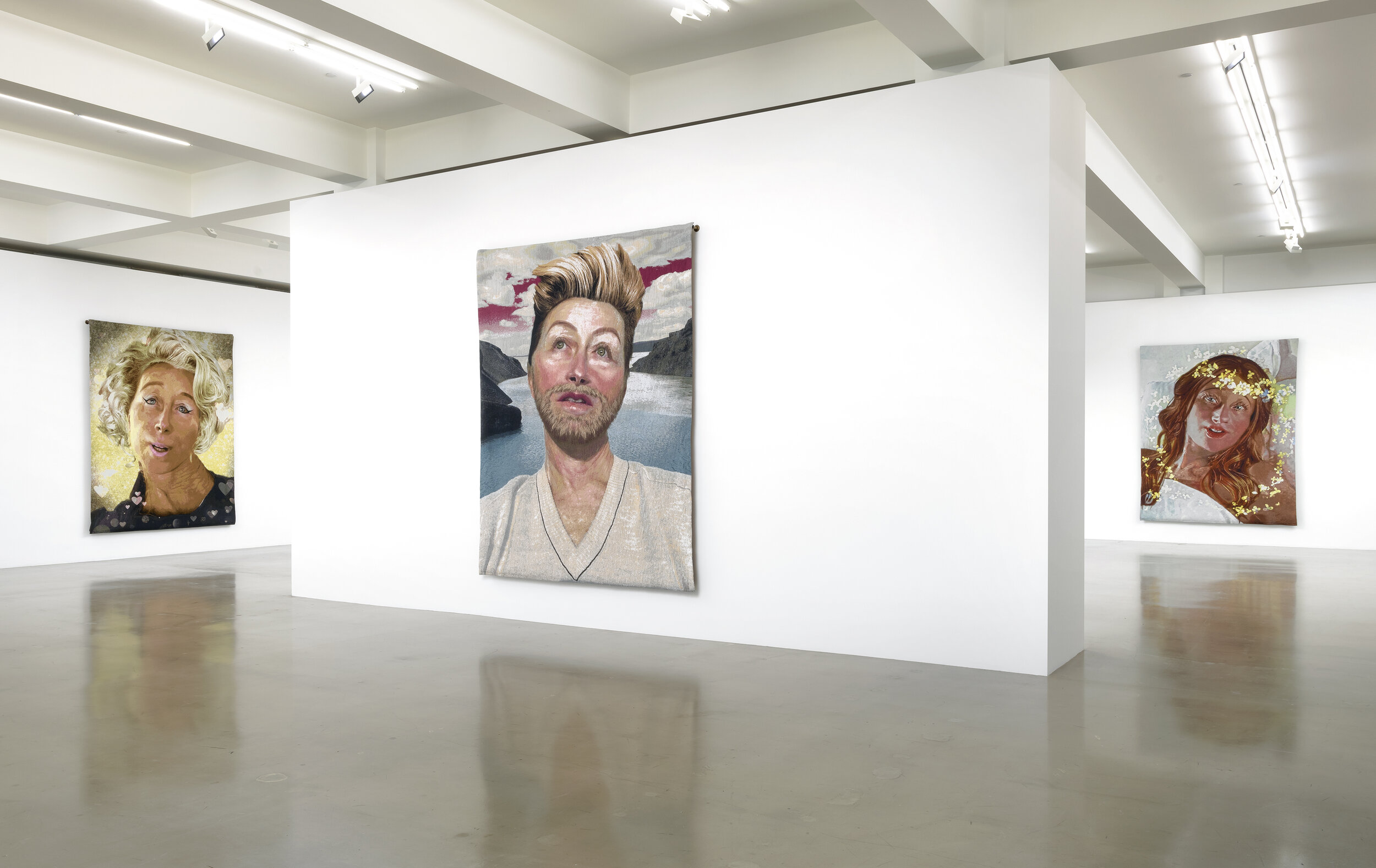
In her latest series on view, Cindy Sherman explores her first non-photographic medium in a career spanning over 40 years: tapestry. Featuring a dozen examples of her new and recent tapestries, the exhibition marks the début of these works as a coherent body of work. In line with Sherman’s long-term photographic investigation into the construction of identity and the nature of representation, the images are based on pictures posted on the artist’s personal Instagram account, which she creates using widely available filters and face-altering apps. Impossible to print in large scale due to the low-resolution nature of the original Instagram images, they are transposed into woven textiles, which in turn resonate with the pixelation of the source material: Pixels, here, translate to the warp and weft of thread.

Tapestries is on view through May 1 @ Sprueth Magers 5900 Wilshire Boulevard Los Angeles

Frank Stella Presents Recent Work @ Sprüth Magers In Los Angeles

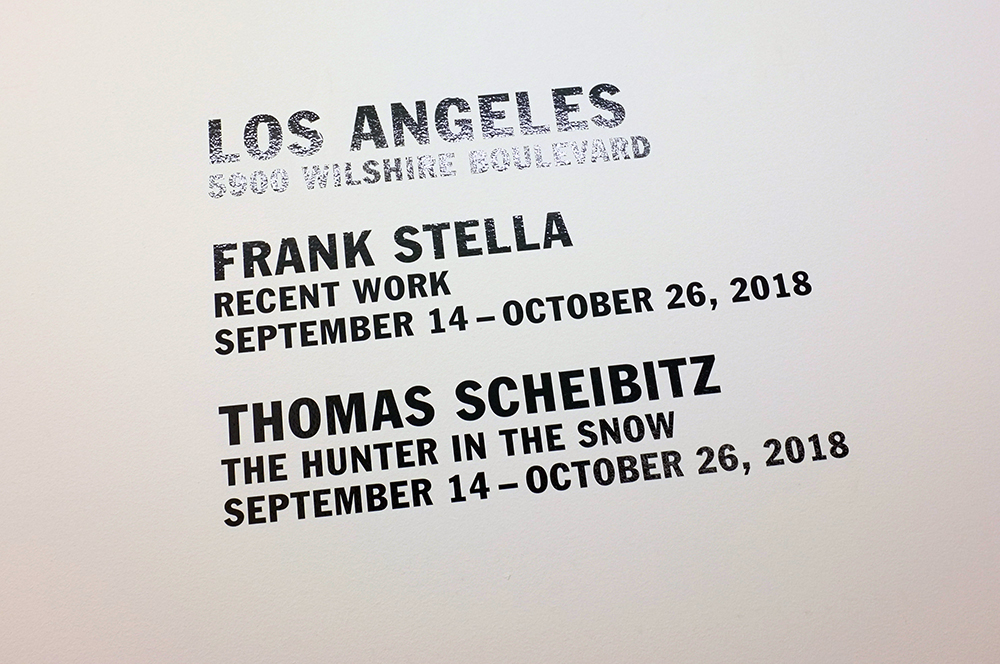
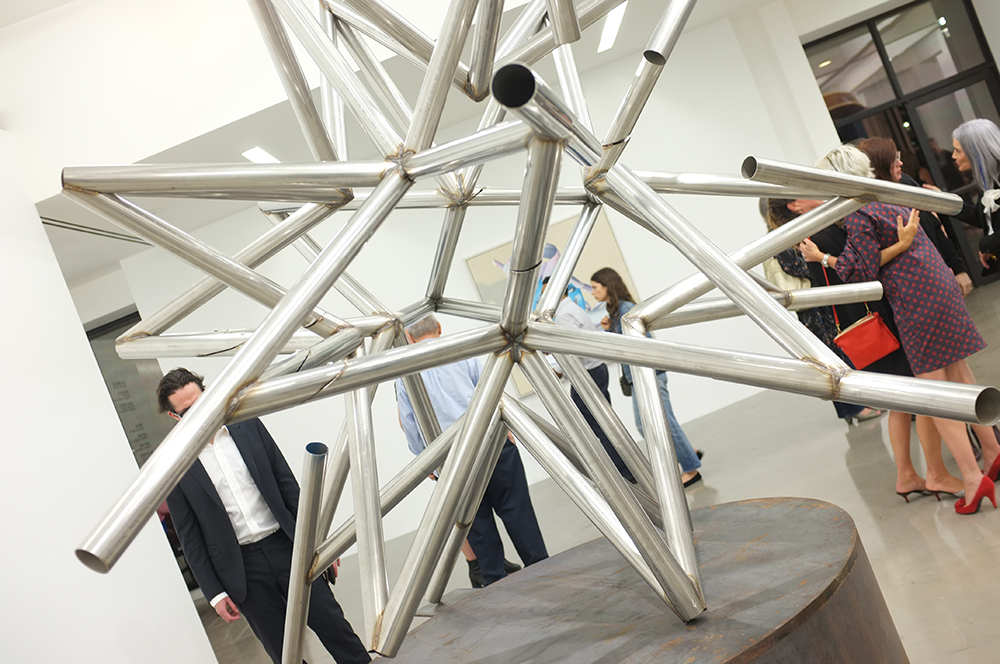
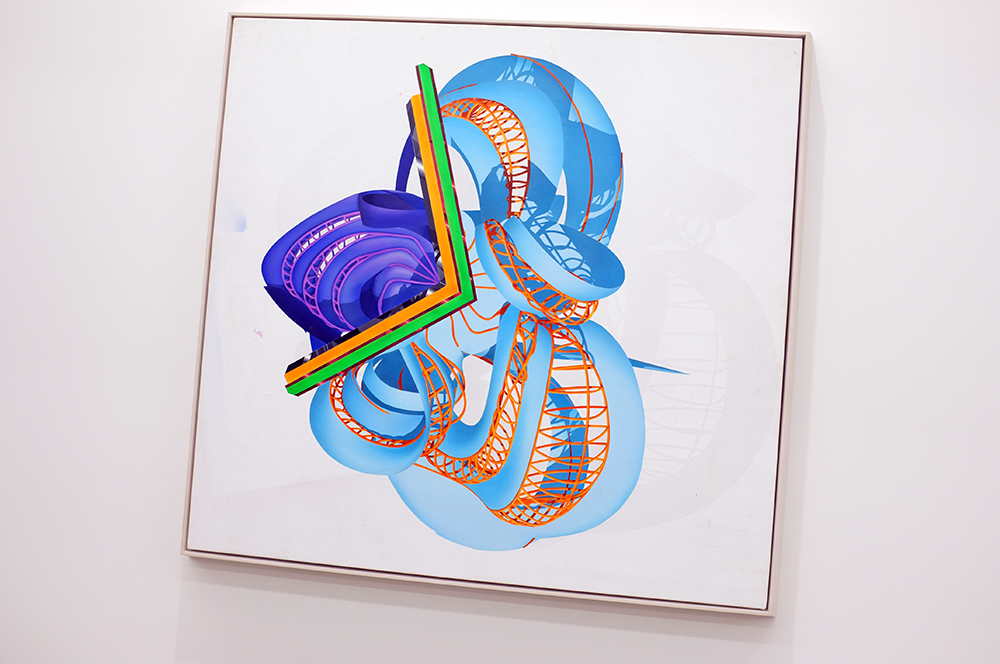
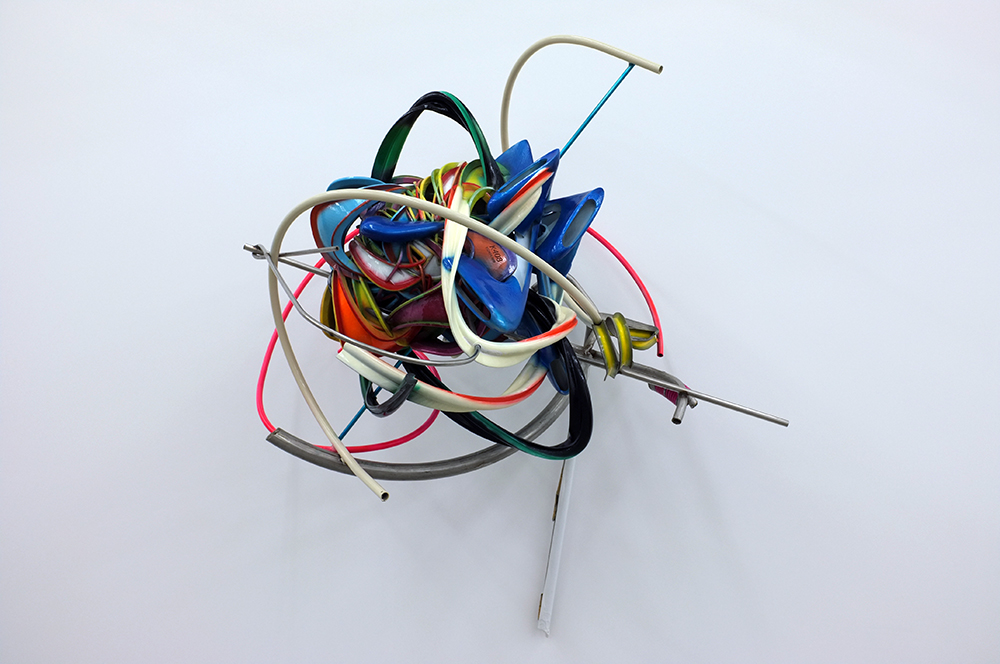
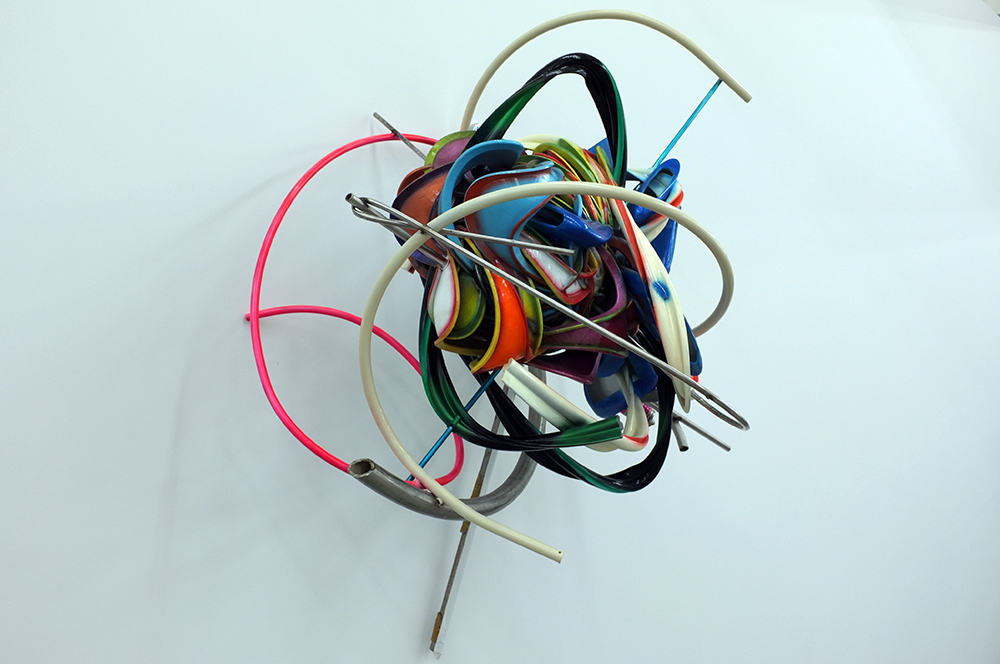
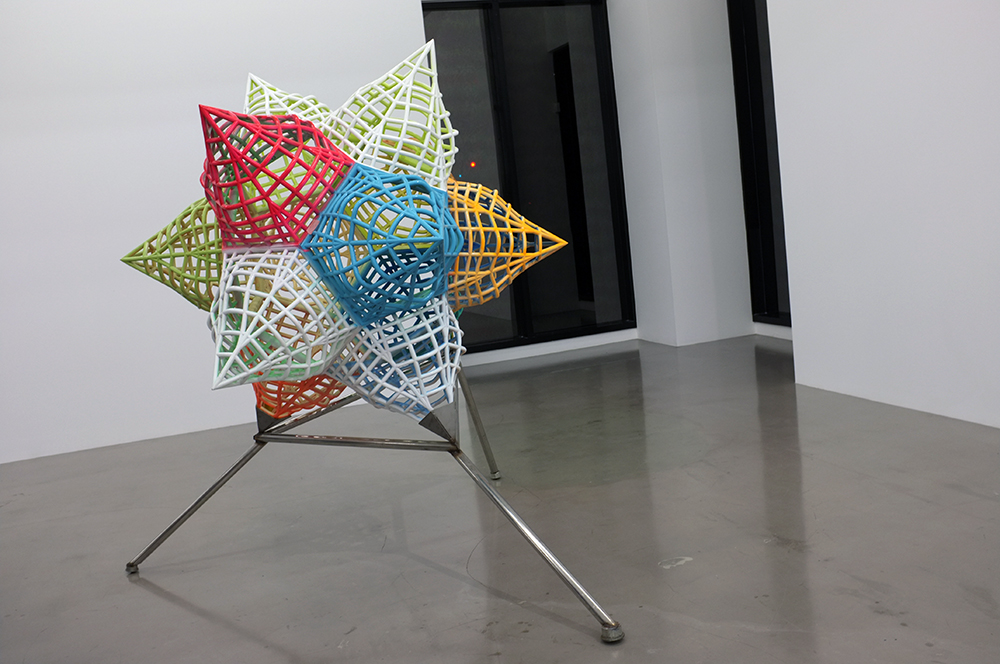
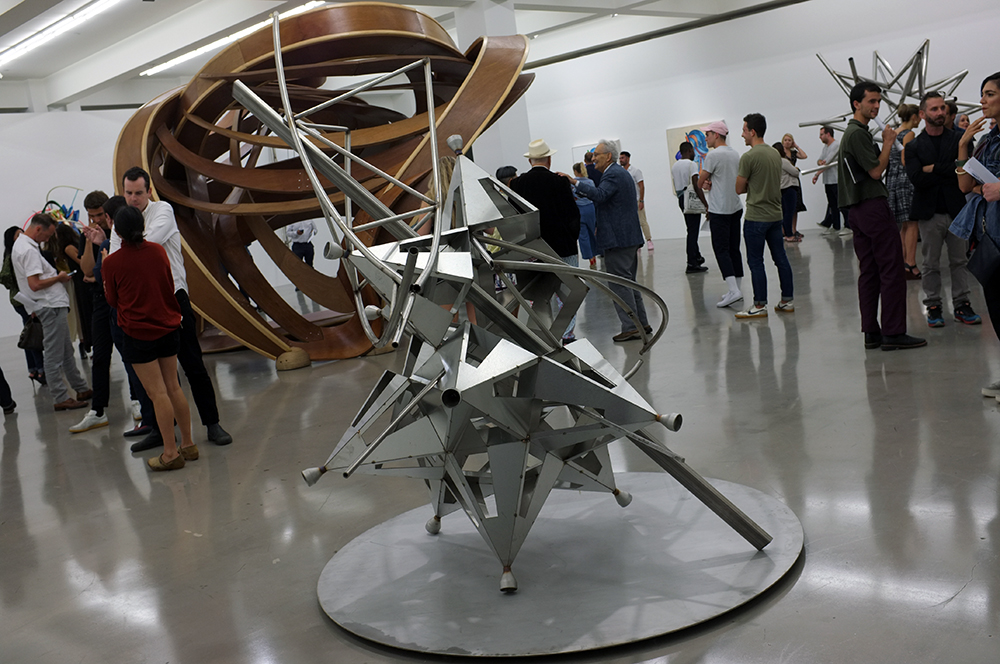
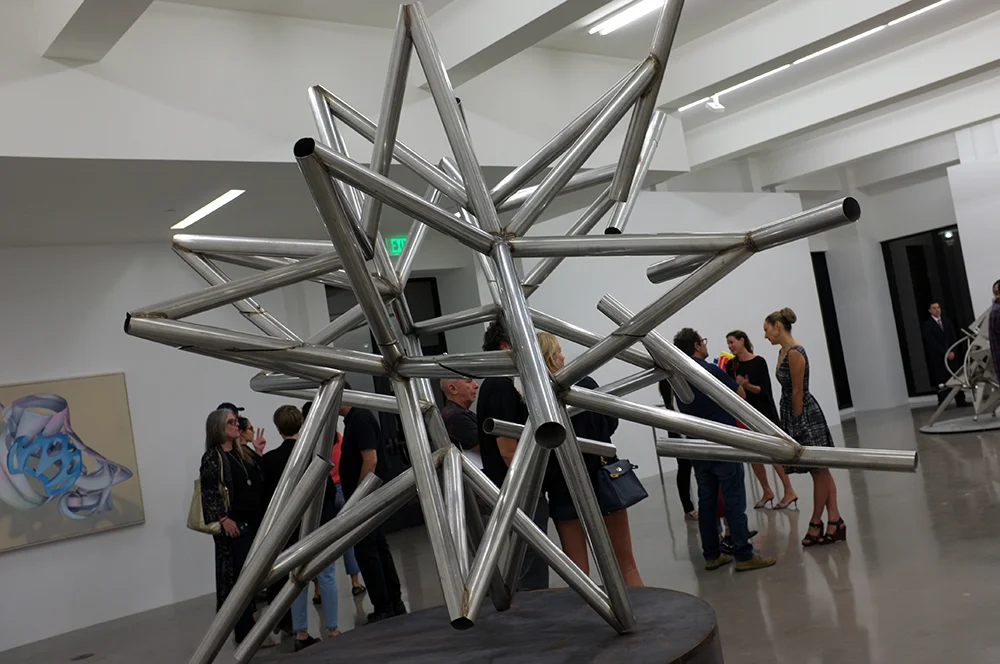
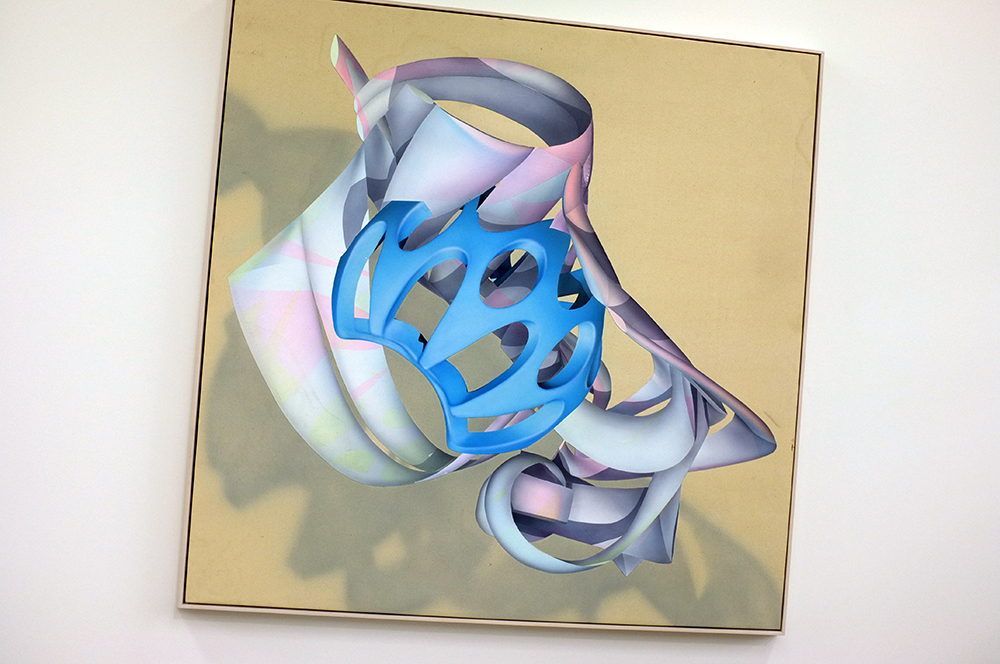
Few artists are as synonymous with the history of 20th and 21st-century American art as Frank Stella. His work across media, from painting to sculpture to printmaking, has continuously broken ground at each stage of his decades-long career, remaining influential and relevant to subsequent generations of contemporary artists. The selection of recent works presented at Sprüth Magers highlight the artist’s ongoing experimentation with spatial representation and includes the début of a new painting series. This is the first solo exhibition of Frank Stella’s painting and sculpture in Los Angeles since 1995. The exhibition is on view through October 26 at Sprüth Magers 5900 Wilshire Blvd, Los Angeles, CA 90036.