Hunted

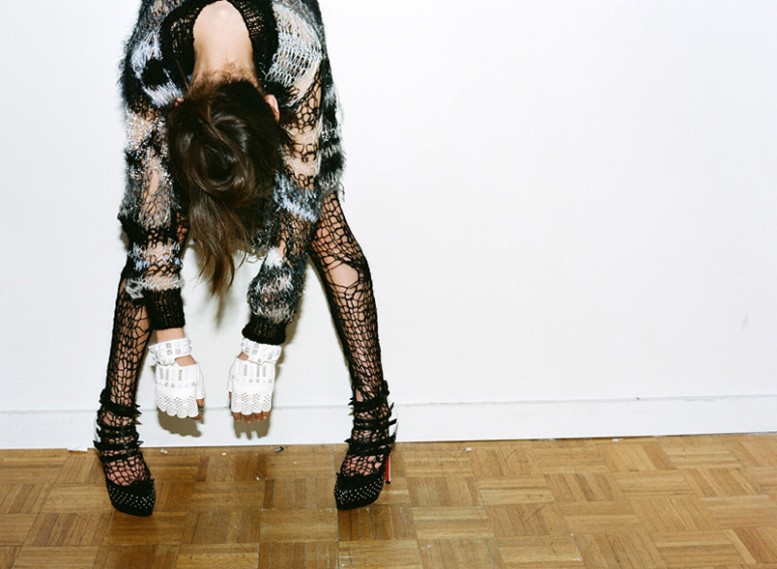
Tucked away in a literal sliver of a store front on Divisadero Street, in San Francisco, is a mysteriously intriguing new accessories shop called Hunted. Apparently they'd been open for only a few days when I paid a visit. I walked inside where a single shelf on the right side of the boutique was draped with hypnotizing antique jewelry, pocket books, hand bags, and other collected ephemera. Hunted is a brilliantly simple one stop outpost of elegant jewelry absolutely well worth a visit. 843 Divisadero Street, San Francisco, CA 94117  www.huntedsf.com

Carving, Cutting, Breaking

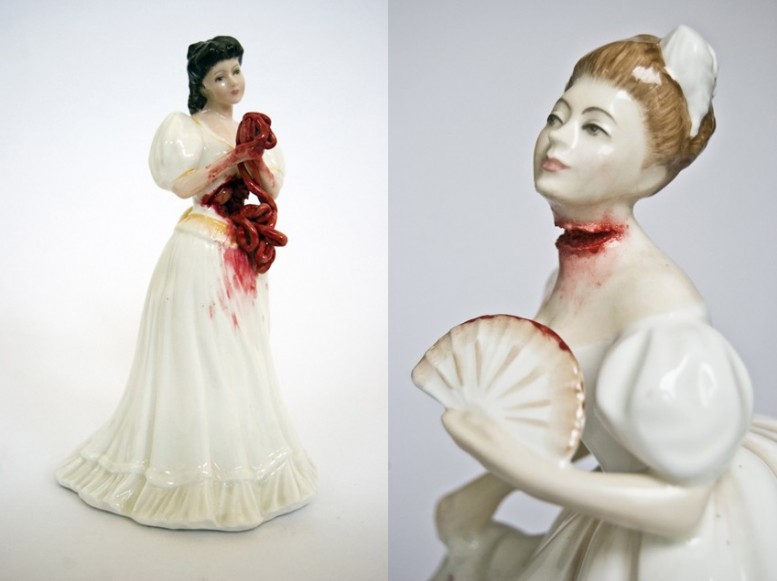
"The things I make are a complex description of simultaneous unmaking and making, deconstructing an object or a body before putting it back together again – this could be interpreted as a violent process, but is often a very delicate and fragile one, a process of transplantation rather than dislocation. The works are an attempt to change the relationship of the object to the body, making visible the invisible, opening up something normally closed, softening a usually hard surface." - Jessica Harrison

Rip it Up and START again

In six tumultuous years, Orange Juice, led by Edwyn Collins, blazed a trail of self-reliance with the legendary Postcard label, ran in conjunction with then-manager Alan Horne, and greatly expanded the palette of independent music at the start of the ‘80s with their brand of literate pop songwriting that both pre-saged the coming of The Smiths and kickstarted a renaissance in Scottish pop music that continues to this day.  After an embryonic start as the punk-influenced Nu-Sonics, Orange Juice came into being in 1979 as unfashionable pre-Year Zero punk influences such as The Byrds, Chic, Motown and The Velvet Underground began to make their presence known in the band’s developing sound. Over the next year, the group recorded four landmark 7” singles on Postcard (as well as putting out early releases from Aztec Camera, The Go-Betweens and Josef K). Though each single proved more successful than its predecessor, greater commercial aspirations led the band to sign to Polydor in the midst of making their first album in a prescient deal in which the band retained ownership of their material.  The original lineup abruptly fell apart shortly after the release of the debut album, You Can’t Hide Your Love Forever, and, as quickly, the band’s future was decidedly unassured. However, with the addition of Malcolm Ross, formerly of Postcard labelmates Josef K, and Zimbabwe-by-way-of-Glasgow drummer Zeke Manyika, the group proceeded to make their commercial mark with the timeless funk and soul-inflected Rip It Up, whose title track was to be the group’s biggest UK hit, peaking at #8 in February of 1983. During the recording of a follow-up, the group had decided to head in a more rock direction, but creative tensions arose again and the group fell apart during the recording sessions from which theTexas Fever mini-LP was culled. With Polydor’s support of the group withdrawing, Collins, joined in the studio by Manyika, persevered to make the bittersweet swan song album, The Orange Juice, a collection that telegraphed the group’s impending demise amidst some of their finest recordings. Collins made it official in March of 1985 announcing mid-performance at a miner’s benefit at the Brixton Academy that it would be Orange Juice’s last performance.  Last November Domino Records released an incredible seven disc anthology entitled Coals to Castles.  www.dominorecords.co.us

The World Through Linda's Lens

A retrospective of Linda McCartney's life and photography....In 1966, during a brief stint as a receptionist for Town and Country magazine, Linda Eastman snagged a press pass to a very exclusive promotional event for the Rolling Stones aboard a yacht on the Hudson River; her fresh, candid photographs of the band were far superior to the formal shots made by the band’s official photographer, and she was instantly on the way to making a name for herself as a top rock ’n’ roll photographer. In May 1968, with her portrait of Eric Clapton, she entered the record books as the first female photographer to have her work featured on the cover of Rolling Stone. During her tenure as the leading photographer of the late 1960s’ musical scene, she captured many of rock’s most important musicians on film, including Aretha Franklin, Jimi Hendrix, Bob Dylan, Janis Joplin, Simon & Garfunkel, The Who, The Doors, and the Grateful Dead. In 1967, Linda went to London to document the "Swinging Sixties," where she met Paul McCartney at the Bag ’O Nails club and subsequently photographed The Beatles during a launch event for the Sgt. Pepper’s Lonely Hearts Club Band album. Paul and Linda fell in love, and were married on March 12, 1969. For the next three decades, until her untimely death, she devoted herself to her family, vegetarianism, animal rights, and photography. From her early rock ’n’ roll portraits, through the final years of The Beatles, via touring with Wings to raising four children with Paul, Linda captured her whole world on film. Her shots range from spontaneous family pictures to studio sessions with Stevie Wonder and Michael Jackson, as well as artists Willem de Kooning and Gilbert and George. Always unassuming and fresh, her work displays a warmth and a feeling for the precise moment that captures the essence of any subject. Whether photographing her children, celebrities, animals, or a fleeting moment of everyday life, she did so without pretension or artifice.  A retrospective volume by Taschen—selected from her archive of over 200,000 images—is produced in close collaboration with Paul McCartney and their children. As such, it is a moving personal journal and a lasting testament to Linda’s talent. Collector's Edition limited to 750 copies, numbered and signed by Sir Paul McCartney.  Also available in two Art Editions of 125 copies each with a photographic print.  A release is set for this May. www.taschen.com

Reissued: Harald Grosskopf's 'Synthesist'

Imagine being holed up, alone in your friend's house in the West German country side....it's 1979....you are heartbroken after a recent break up with a girlfriend....your friend happens to have a home studio with a Revox reel-to-reel 8-track recorder and a primitive, temperamental Minimoog.....its Summer and you have a lot of time on your hands....inventing new, strange sounds. When Harald Grosskopf emerged from his heartbroken solitude he had inadvertently produced one of the first examples of synth-pop. Harald Grosskopf's album 'Synthesist,' originally released on Sky Records in 1980, RVNG Intl. celebrates the 30th year anniversary with this a mastered and packaged reissue. www.igetrvng.com

Synthesist
Harald Grosskopf

Retrofit: Ferragamo Creations

The house of Salvatore Ferragamo, famous for their shoes, is bringing back some of their amazing past creations, including the above rainbow and gold sandals, designed for Judy Garland in 1938. “Ferragamo’s Creations” is an exclusive collection of limited, numbered pieces from the Ferragamo Museum’s historic shoes and the brand’s iconic bags. You can buy the above shoe here.

Collective Unconscious: Surrealism Exhibit in Moscow

Giorgio de Chirico - Cavalli_in_riva_al_mare_1928

Giorgio de Chirico - Cavalli in riva al mare, 1928

InArtis project in collaboration with Moscow's State Historical Museum and with support of a concierge club presents the exhibition "The Collective Unconscious: Graphical Surrealism from De Chirico to Magritte". The exhibition starts on the 1st of May.

ANDRÉ KERTÉSZ Retrospective

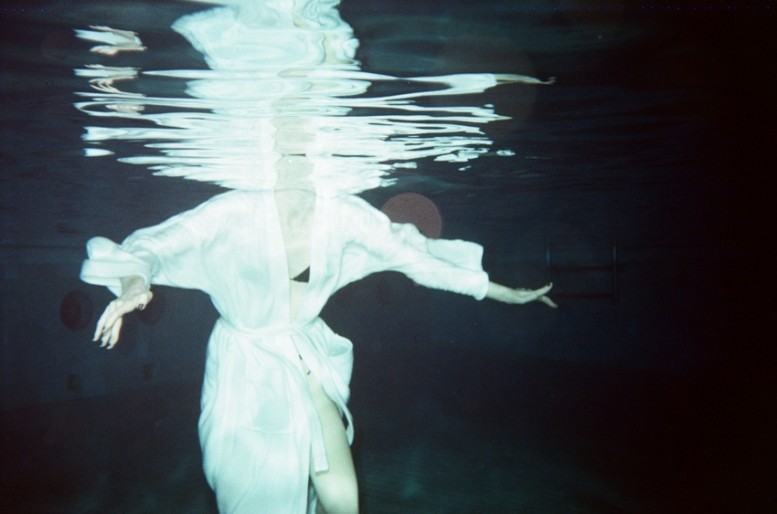
Underwater Swimmer Esztergom,1917, André Kertész

"After I was wounded [in WWI] I was in the hospital for almost nine months. We went swimming in the pool every day, and I realized the distortions in the water. When I photographed them my comrades said, ‘You are crazy. Why did you photograph this?’ I answered: ‘Why only girl friends? This also exists.’ So I photographed my first distortion in 1917 – others followed later, especially the nudes in 1933." -André Kertész, Kertész on Kertész

With around 250 photographs and countless magazine contributions, a retrospective of photographer André Kertész is on display at the Fotomuseum Winterthur on view until May 15, 2011.  www.fotomuseum.ch


I've Got a Bad Bad Love...for Alexander Ebert

Alexander Ebert photographed by Adarsha Benjamin © 2010

Alexander Ebert can't stop reinventing himself.  This time Ebert has reinvented himself....as himself. Thank god.  Ebert's new album has some incredible songs. I've always loved Ebert's songwriting and musical delivery; akin to the virtuosity of  David Byrne, with the work ethic of Arthur Russel. After a stint as the lead singer and founder of the hippie-big-band-orchestra Edward Sharpe & the Magnetic Zeroes, who enjoyed a seemingly flash point meteoric rise, Alexander Ebert has gotten back together with himself.  His album, titled Alexander, is more self exploratory, somewhat somber, and purely honest.

Text by Oliver Maxwell Kupper for Pas Un Autre

Alexander Ebert - Bad Bad Love

[audio:http://www.pasunautre.com/wordpress/wp-content/uploads/2011/03/alexanderbadbadlove.mp3|titles=alexanderbadbadlove]

Alexander Ebert - Glimpses

[audio:http://www.solidgoldrags.com/music/09-Glimpses.mp3|titles=alexanderglimpses]

Modigliani: A Life

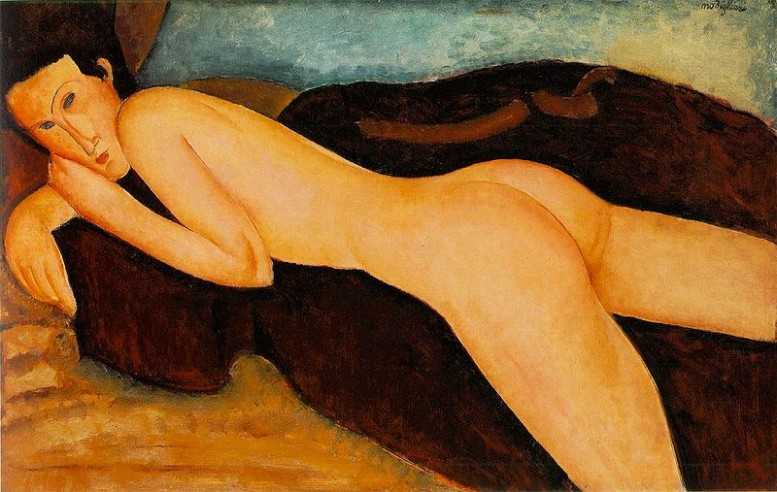
Amedeo (“Beloved of God”) Modigliani was considered to be the quintessential bohemian artist, his legend almost as infamous as Van Gogh’s. In Modigliani’s time, his work was seen as an oddity: contemporary with the Cubists but not part of their movement. His work was a link between such portraitists as Whistler, Sargent, and Toulouse-Lautrec and that of the Art Deco painters of the 1920s as well as the nerandw approaches of Gauguin, Cézanne, and Picasso. Jean Cocteau called Modigliani “our aristocrat” and said, “There was something like a curse on this very noble boy. He was beautiful. Alcohol and misfortune took their toll on him.” In [a] major new biography, Meryle Secrest...gives us a fully realized portrait of one of the twentieth century’s master painters and sculptors: his upbringing, a Sephardic Jew from an impoverished but genteel Italian family; his going to Paris to make his fortune; his striking good looks (“How beautiful he was, my god how beautiful,” said one of his models) . . . his training as an artist . . .and his influences, including the Italian Renaissance, particularly the art of Botticelli; Nietzsche’s theories of the artist as Übermensch, divinely endowed, divinely inspired; the monochromatic backgrounds of Van Gogh and Cézanne; the work of the Romanian sculptor Brancusi; and the primitive sculptures of Africa and Oceania with their simplified, masklike triangular faces, elongated silhouettes, puckered lips, low foreheads, and heads on exaggeratedly long necks. We see the ways in which Modigliani’s long-kept-secret illness from tuberculosis (it almost killed him as a young man) affected his work and his attitude toward life ; how consumption caused him to embrace fatalism and idealism, creativity and death; and how he used alcohol and opium with laudanum as an antispasmodic to hide the symptoms of the disease and how, because of it, he came to be seen as a dissolute alcoholic.  Modigliani: A Life comes out today, March 1, on Knopf.  www.randomhouse.com


Luxury: Year of the Rabbit Tee

"Nestled in San Francisco's historic Jackson Square neighborhood, Carrots occupies the storied former space of Ernie's restaurant, a San Francisco landmark featured in Alfred Hitchcock's Vertigo, which closed its doors in 1999. The 4,000 square foot luxury emporium is home to a carefully-curated selection of women's ready-to-wear, shoes and accesories....The stores name, 'Carrots,' is a wink and a nod to Grimmway Farms, the Grimm family business, which is the worlds largest grower...and shipper of carrots." Now in their third year, officially the Year of the Rabbit, Carrots' presents this  kitschy-cool exclusive t-shirt designed by Oliver Maxwell Kupper.  Only 15 tees are available.  www.sfcarrots.com

All That is Unseen

Matthew Stone, boy wonder art star of London's underground, is one of the founders of the !WOWOW! art collective.  Stone is a photographer, sculptor, performance artist, curator, writer, optimist and cultural provocateur. One of Stone's performances at the Tate Britain in 2008 attracted over 4000 visitors. According to his website, Stone "is an artist and shaman." And there happens to be a sort of orgiastic, ritualistic shamanism in his photographs, what with the allusions to ceremonial dance, plumes of  thick white smoke and naked abandon.  In fact, Stone is most well known for his nude photographs - the three images above are part of a series called Ritual.  Matthew Stone will be participating in a group show entitled All That Is Unseen at the Nederpelt Gallery in Brooklyn - on view until March 14.  www.alannederpelt.com or visit the artist's website www.matthewstone.co.uk