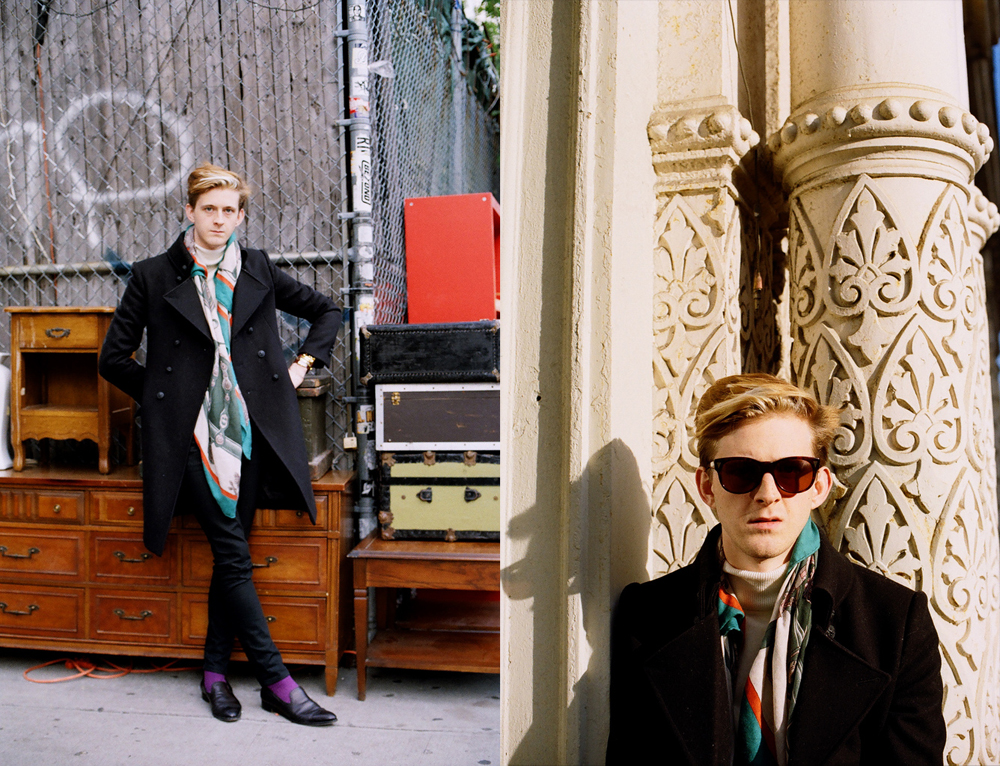
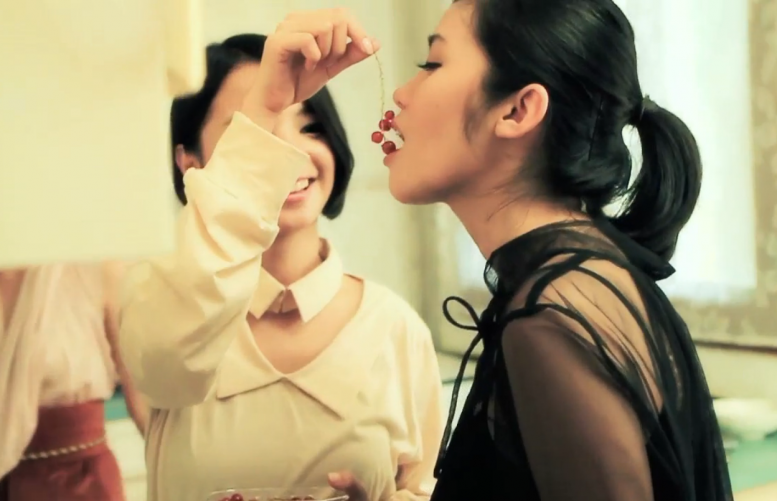
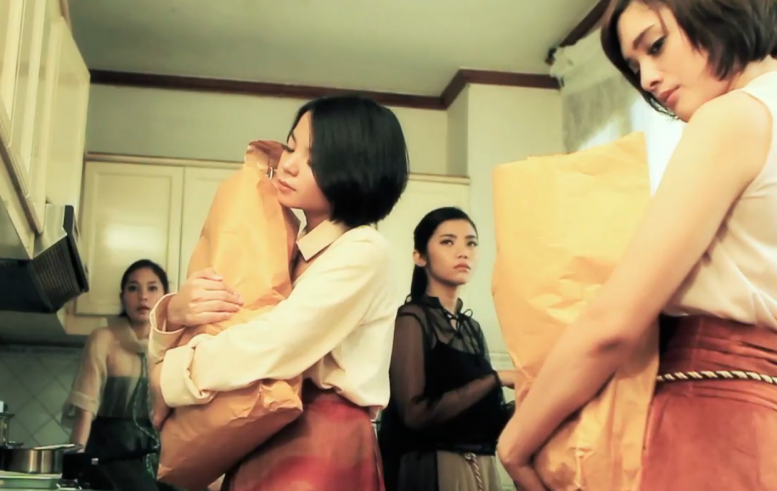
Music Fucks with Fashion: An Interview with Cozette McCreery

photograph by Nick Dorey 

I first met Cozette McCreery when I was trying on a flower and knit embellished coat and did a few twirls of delight. Her head nod of acknowledgment anointed me with a sense of cool that shook me up a little. After hours of online research I couldn’t get enough and I started to run off on tangents of whether or not to question her on her time as Lucian Freud’s muse or her stint in Israel as a shepherd in training. As one third of the design collective Sibling along with Joe Bates and Sid Bryan, Cozette is part of a special order of epic ladies whose stories from clubland can keep you wide awake and high… like a good Netflix binge. When I finally grabbed a moment with her during her preparation for the AW 2015 women’s Sibling show in London, I decided to ask her the hard hitting questions on the designer clothes, raves, and 80’s era Madge that fueled her. 

BJ Panda Bear: What was your most epic outfit of that rave era?

CM: Thankfully no one brought cameras or had smart phones as I probably looked like a sweaty mess! Not sure if it was ‘epic’ as frankly it was pre-raves when all of us club kids really dressed up (I’d wear Alaia, Gaultier, vintage YSL, full red Jasper Conran suits, Alastair Blair, Rifat Ozbek and Patrick Kelly to clubs. Trying to either be very Robert Palmer video or a Roxy Music groupie) and raves were just not the place for full catwalk looks. I’d be in a Shoom T shirt, Alaia leggings and Travel Fox. Or a full Conran multi-strap dance all in one, leather wrap mini (it was like a belt - to quote my Father) and Nikes. Raving was all about the music and dancing and getting really really sweaty, less about the venue and wether your lipstick had smudged. I was also listening to a lot of Hip Hop at the time so that influenced how I dressed too.

I didn’t get back in to dressing up for a club night until Richard Mortimer asked me to take over the door at Boombox. Every Sunday I had the chance to wear my new designer frocks (Gareth Pugh, Jonathan Saunders, Raf at Jil Sander, Giles) and heels. 

BJ: Last seasons epic homage to Madonna circa “borderline” tugged on all my happy strings. What music have you been listening lately to as inspiration for the new collection and life in general? 

CM: I was always a massive fan of Madonna, still am, but that period was the one I love the most and the one I tried desperately (seeking - haha) hard to imitate in my dress. I listen to music all the time and usually instigate the choices for both the men’s and women’s shows. For men’s AW15 I wanted something that sounded like it could come from a young guy’s music collection, played loud in his bedroom. As it was an evening show (and all pink!) I also wanted it to be a bit sexier especially as Matthew Josephs had cast these buff guys. Women’s AW15 is still to be decided as I keep listening to stuff and thinking yeah this is great then walk to it and think nope not going to work. That’s why it’s brilliant to work with Nathan Gregory Wilkins as he’ll offer ideas and we can bat things off one another and Phoebe Arnold our womenswear stylist has good suggestions too. 

As for my day to day listening well, it’s a bit random. I don’t tend to stick to one genre and try not to be a music snob so if I like the latest Ke$ha I’ll buy it. If iPod shuffle kicks out Rage Against The Machine, Odd Future, Prince and then One Direction and Selena Gomez I’m really happy.

Sibling S/S 2015 photograph by Lorenzo Cisi

BJ: How did you get into DJing?...Name your top 5 - 10 songs you love to spin? 

CM: My ex boyfriend Adam put me forward to this all girl DJ group called Hey Ladies. Funnily enough DJ Fat Tony tried to get me to DJ when I was in my late teens but I couldn’t see why I would give up working in fashion to do it. Probably not one of my best decisions ever as he has joked that I could have been massive by now! Anyhow, Hey Ladies started it and we’d DJ at these great parties and record launches. When the group disbanded I just kept going as I still had people booking me and I really enjoy it. I’m good at parties because I never have a set-list. The last one I did was a really mixed crowd: teenage boys to middle aged aristos and 90’s pop stars but I had them dancing at 4am to The Rolling Stones and Blur so I must have been doing something right especially as they then kept me (hardly forced to be honest as I was having fun) there for another hour. 

photograph by Terry Richardson

BJ: A lot of Sibling reminds me of all the great Kansai Yamamoto, famous for his work with David Bowie, with his knits, textures and color. You both have dressed iconic musicians, the Mariah moment is pretty supreme, who do you want to see wear Sibling next? 

CM: Why thank you. Kansai is quite incredible. Am really glad that he’s getting recognized himself beyond Bowie. Ha ha yes Mariah! Matthew Josephs our menswear stylist was with her in NY and was frantically texting me that she wanted to wear the dress to her album listening but I was drinking cocktails with friends and not looking at my phone. By the time I got back to Matthew she was in it and on Vine singing. AMAZING! And we’ve had similar with Pharrell and Harry Styles. Who would we like to see in Sibling next? EVERYONE! Maybe the person reading this. 

BJ: What new musicians do you see really being the center of the fashion scene right now? 

CM: I’m a big fan of Sky Ferreira, Alison Mosshart you know all the slightly tomboy rocking girls. Are they new? (Laughs) And Pharrell of course. And Bieber in his Calvins. Badgirl Riri covered in Nasir Mazhar. Joni Mitchell and Courtney Love in the Saint Laurent Music Project adverts. Patti Smith in Made By You Converse (of which I am also a contributor, gotta love us erm old birds! Little old me and Patti Smith, still can’t get over that) music and fashion are always a very good pairing. Whatever style and age.  

Visit the Sibling London website to explore stockists. Text and interview by BJ Panda Bear, who is a blogger, curator, DJ, fashion obessor, fixture of LA nightlife, and much more. Follow Autre on Instagram to stay up to date: @AUTREMAGAZINE 

Pharrell in GQ shot by Terry Richardson
THE THINGS HE CARRIED: MAXIMUM HENRY COHEN

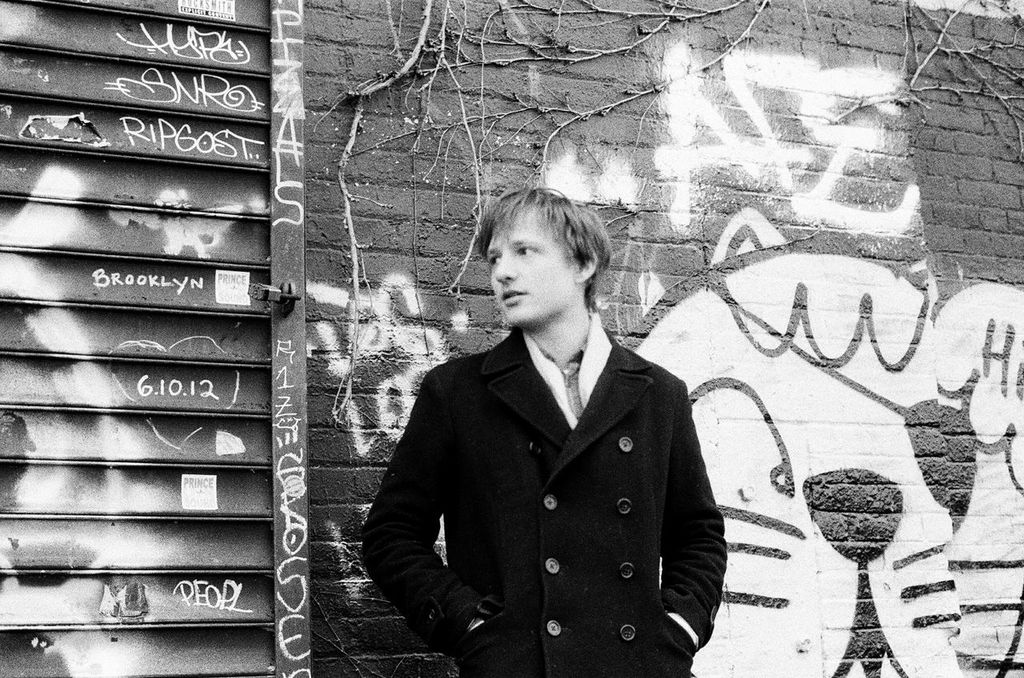
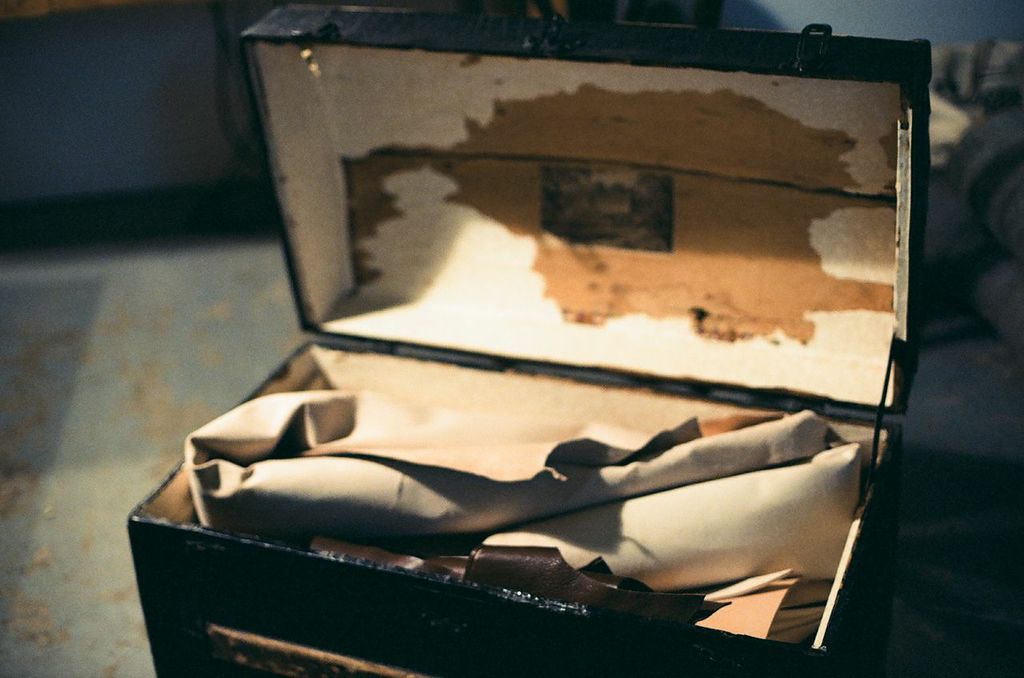
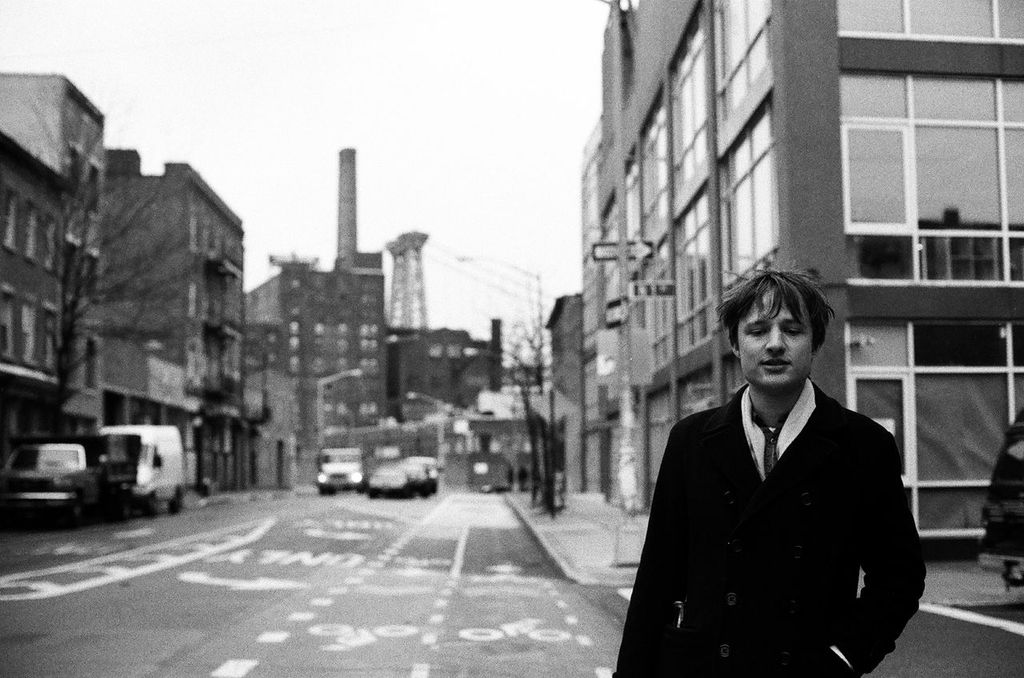
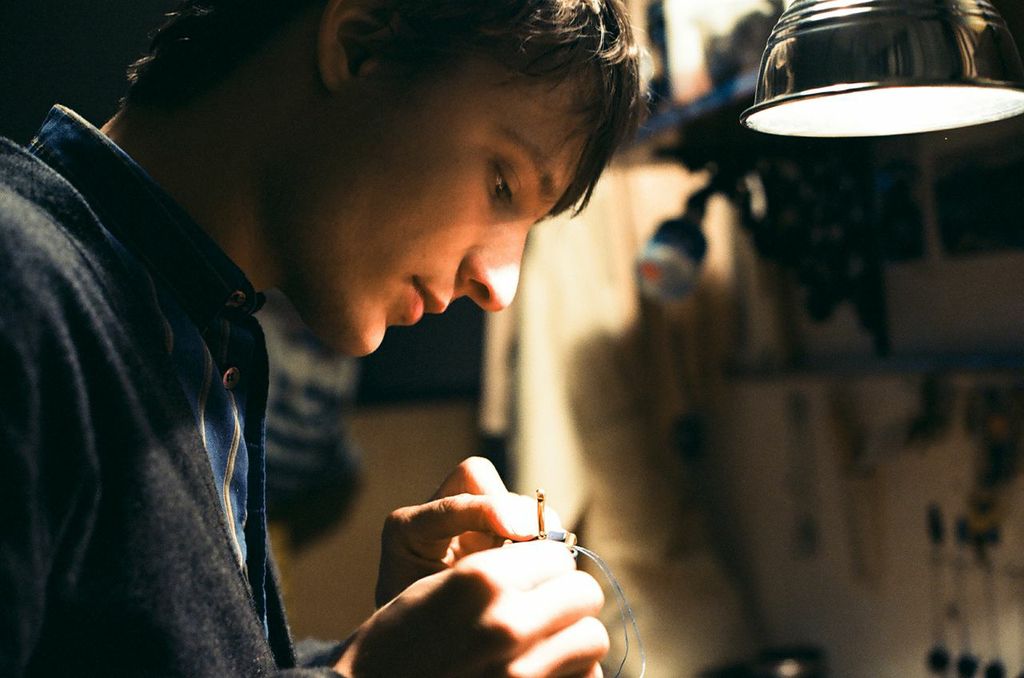
“Living in New York City… has taught me to be extremely compact and intentional about the things I carry with me,” says Maximum Henry Cohen, the slight, unassuming 22-year-old mastermind behind Brooklyn-based leather goods brand Maximum Henry. “There’s a lot of baggage that we carry around with us out of habit.” Cohen is sipping Coca-Cola from a glass bottle, sitting in one of the sweeping factory windows of his Williamsburg waterfront studio, a loft space shared by a few other artisans and draftsmen. In the background, the dull hum of various machines cutting wood and shaping metal creates a strangely comforting white noise. Outside, a tranquil snow of the early-March variety falls on red brick scrawled with graffiti. One of Cohen’s goals in creating his own artisan leather goods brand was to downsize, to eliminate that unnecessary extra baggage, “to make something... that someone could carry and really consider their own.” Everything about Cohen—from his humble, down-to-earth personality to his streamlined workspace to his pared-down website to his handmade business cards— suggests an understated elegance. He pays the utmost attention to detail in the creation of his rustic yet sleek (and amazingly affordable) wallets and belts. “I was… that kid who would make duct tape wallets in the seventh grade and sell them to his friends,” Cohen remembers. Eventually, he set out to make the perfect leather wallet; a wallet that was just big enough to fit everything he needed but nothing more. Beginning in his bedroom with some scissors and a pair of discarded leather shorts that he rescued from their bleak thrift-store fate, he eventually moved into his living room and finally to his own studio, a modest space carefully curated in accordance with his taste for the basic and pure. A weathered steel architect’s lamp casts warm light over the dye-stained wood of his leatherworking table, over which a Singer sewing machine, a relic of vintage Americana, presides. Various tools are arranged neatly above the table, held upright by a homemade leather strap. He keeps his sheets of leather in a beautiful old footlocker and his finished belts, hung from hooks high above his drafting table, cast long shadows on the white walls of the studio. The objects Cohen crafts are simple, functional, full of charm and integrity—the kind of objects one wears or carries for years on end until those objects almost become a part of them. “I get the most inspired when I see something that’s been carried for more than half of someone’s life,” he says thoughtfully, “Once you carry something for a little while, you establish a connection to it.”

ANNABEL GRAHAM: Can you tell me about how you started making your own leather goods?

MAXIMUM HENRY COHEN: I’ve been making leather goods for... let’s see, five years now. It started when I would make duct tape wallets in the seventh grade and sell them to friends, but I don’t really count that.

GRAHAM: I remember those!

COHEN: I was the kid who would sell them to his friends, I made a lot of them. I stopped when I got a little more interested in film, stop-motion animation, and claymation, and skateboarding and things like that... until I started high school, which was actually a reform school in Montana for two years. I learned how to sew there, I made some pants and things like that, but I also made teddy bears and things to send home to my family. That’s where I really started to feel a little more comfortable with a sewing machine, creating things and turning flat fabrics into objects that had character and life and substance. My first leather wallet was in the summer of 2008. A friend of mine’s girlfriend was planning on donating a pair of leather shorts to Beacon’s Closet but she gave them to me instead, I just cut them up to keep the leather. I couldn’t find a wallet that was simple enough and didn’t have an obtrusive logo in it and I was going through a phase of just not wanting to wear or carry anything with anyone else’s logo because I didn’t feel like it reflected my own character. The only wallets that I could find that didn’t have a logo on them were really high-end, and it felt a little silly to me that the cheaper wallets were the ones that were overdesigned and too big… They were also covered in logos, while the really expensive ones were very simple. That was the premise, kind of my mission statement for my first wallet, to make something that someone could carry that had room to be really broken in and age well.

GRAHAM: Did you make your first wallet for yourself or for someone else?

COHEN: I didn’t even know who it was for while I was making it, or what I was doing for that matter. I ended up giving away my first fifteen or so prototypes. I would carry it for a few days and if I liked it I would give it to a friend, then make myself a new one. I would do that with all different styles for a while. Sometimes I would make one and it would feel too big and clunky, or I would make one that would be too small, and couldn’t even fit money or a Metro card, so it would be pretty useless. Once I established the pattern that I still use today, I started taking it a little more seriously. The internal stitch was a big breakthrough for me. I realized that you could sew something inside out and then turn it outside in and the stitching would be on the inside, that way it won’t tear when you carry it through the years, because the stitches aren’t exposed. That was also exciting for me because I was still learning how to sew leather and I had to work around the fact that I couldn’t sew straight, the internal stitch hid my messy stitching until I learned how to control my sewing machine.

GRAHAM: When you started out, were you just making the wallets out of your home?

COHEN: Yeah, I was making them in my bedroom, with desk scissors, a box cutter and a ruler. There were leather scraps all over my rug, all over my desk, in my trash can, just everywhere, and it was really messy, but really fun and kind of... it felt really natural and homemade, because it was, entirely. In the beginning it was literally with things I found around the house, and I just figured things out as I went along. Then I moved into my living room and I had this little table, this really low table, and I was just hunched over it for what felt like five hours a day, just making all sorts of little things, little tobacco pouches, iPad cases, wallets, all sorts of stuff.

GRAHAM: So you’re from New York.

COHEN: Yeah. I was born on the Upper West Side, and then when I was nine my little brother was born and we moved up to Westchester County. I remember I had never really walked in grass without shoes on before, because I was a city kid, and the whole suburban thing was a big transition. It didn’t really fit that well, I didn’t really enjoy it very much and I missed the city a lot. I moved back at my first opportunity after graduating high school early. I was able to live in Harlem and to work for my dad’s company for a few months, then I started college, and I’ve been back ever since.

GRAHAM: Is there anything in particular that inspires you in your work?

COHEN: I get the most inspired when I see something that’s been carried for more than half of someone’s life. My grandpa’s possessions really amaze me, as well as a few pieces I’ve found at flea markets and garage sales, things that have stood the test of time. Not just because they haven’t fallen apart, but because they haven’t been thrown away. Once you carry something for a while, you establish a connection to it. I’ve always been intrigued by people’s wallets, I found it was an interesting way to connect to people, because most people have a very intimate connection with their wallets. Sometimes there’s kind of a strange story behind how they got it, or a happenstance kind of thing, like, “Oh, I got this because it was seven dollars at a garage sale in Missouri,” or something like that. And then they end up carrying that for fifteen or twenty years, and it transforms into a totally different object with different meanings. I found that a lot of people were just looking for something that was really simple, and there were so many brands that were over designing that I just wanted to make something that is simple and functional.

GRAHAM: It’s interesting, you carry a wallet every day, it’s just this one thing that’s always with you, it almost becomes a part of you.

COHEN: Yeah, and it wears in in different spots, depending on how many cards you have in it, or how much cash you carry, or if you hold on to receipts. It wears differently if you keep it in your front pocket or your back pocket, it’s very personal.

GRAHAM: How did you start making belts?

COHEN: It started with the first apprenticeship I did in the fall of 2010. I was working for a guy named Ryan Matthews, who is an oddities collector and leather smith. He collects taxidermy, old medical artifacts and some really beautiful antique lamps. He’s got the most incredible collection of weird stuff I’ve ever seen in my life. He used to do leatherwork for Polo and he would design belts for Double RL and Ralph Lauren vintage collection. He would make these Navajo recreation belts that would sell for something like fifteen thousand dollars at the Ralph Lauren store. He taught me how to dye and edge leather, how to attach buckles and to distress the leather to make belts that looked really old. My next apprenticeship was with this woman named Barbara Shaum, who is, I believe, 87 years old. She has a leather shop on East 4th street between 2nd and 3rd where she makes sandals and belts. It’s a really old-school business, and everything that’s made is made right there, either by her or by someone who works with her. There would be all these guys who would come in saying, “Hey Barbara, it’s time for me to get a new belt, it’s been forty years on this one,” and they would take off this decrepit, old, worn till the very end, belt… something that she had made in the 70s that had lasted 40 years. She taught me how to cut leather from the hide, how to mix dyes to get all different shades, how to attach buckles in a way that they’ll never fall off, and a bunch of other little tricks.

GRAHAM: You’re also interested in film, right?

COHEN: A little bit. My dad works in television and did throughout my entire upbringing, so I grew up visiting his production office on the upper west side all the time, and visiting his friends on sets in LA too. Most of my best friends now are people I met through the SVA film program. I’ve drifted in such a different direction from what they’re doing now, but because we have such different backgrounds, and we spend all day thinking about our specific crafts, we’re able to offer each other advice and insight from different standpoints. My friend Tom just started a production company called Yellow House Pictures, and they’re working on a lot of really cool, exciting projects. I feel like I’m been more in love with written stories than films specifically, just as a form of storytelling. I love reading and I love short stories... historical fiction is my favorite genre. If I were to get back into film I think it’d probably be from a writing standpoint. I dropped out of SVA after one year. I was really turned off because there were all these teenagers who had grown up in the suburbs and were so self-righteous and overly confident, myself included. [LAUGHS] I didn’t feel as though had enough life experience to be a story teller just yet, I was disgusted by how much money I was spending to not be taking school very seriously. I dropped out and started barbacking at a bar in Williamsburg called Hotel Delmano. I was working really hard mentally and physically, I would go home at the end of the day with some money in my pocket, feeling tired and good. It was really fun because while I was working I was also training to become a cocktail bartender. I was promoted to a bartender just after my 20th birthday. I’ve met more people through the bar industry in New York City than through any other social experience of my life. I was fortunate enough to work in three of the best bars in New York over a period of 4 years; Hotel Delmano (in Williamsburg), Elsa and Black Market (both in the East Village).

GRAHAM: All of those bars have a really cool worn-in, vintage-looking aesthetic that sort of matches yours.

COHEN: That’s not by accident. “Objects with character” is sort of a consistent theme... They were all built acknowledging things that have withstood the test of time. A few of the owners of Hotel Delmano are metal workers and furniture designers that make the most beautiful things. They have been and continue to be huge role models for me. I would constantly notice new details about the bar that I had never seen before, like, “Oh my god, I didn’t even see that little chandelier that’s hanging in that corner, or the way that they painted that pipe, how it’s a slightly different color than the wall, or how they distressed the whole room to simulate aging and water damage.” It takes you to a different place. Seeing the way those people have turned making beautiful things into their full-time living is so inspirational, because that’s really all I want to do, is make things that people admire and feel good about.

GRAHAM: You live in Williamsburg now. Having grown up in Manhattan, what’s your feeling about Brooklyn?

COHEN: I’m so happy to be here. It feels like home to me. I’ve made friends with so many people around the neighborhood, from the guy who makes my sandwiches at the deli to the shopkeepers at all of the cool little boutiques around here. I know the buildings so well, and walking down the street I almost always run into someone I know. It has a neighborhood feel that makes me really comfortable. There are so many inspirational small businesses. Sometimes on Sundays I set up a table and sell wallets on the street, which has helped me a lot to see absolute strangers’ gut reactions to what I’ve been working on. After you spend X amount of hours on something, you grow attached to it, almost the way a parent feels about a newborn baby. It takes you out of your bubble. It really helps me to see how differently people react. My products’ quality is a reflection of my level of craftsmanship, even looking at things that I made six months ago makes me shudder sometimes, because my work is constantly evolving.

GRAHAM: Going back to literature and writing, who are some of your favorite authors?

COHEN: I love George Saunders, Denis Johnson. I would say E.L. Doctorow is my favorite author, and Ragtime is my favorite book. It’s set at the turn of the century, and it covers both fictionally and non-fictionally what was going on during that time period, which is my favorite type of book. Before that, I read The Cider House Rules, which I really enjoyed, but my friends would make fun of me for it, ‘cause I guess it’s kind of a girly story. [LAUGHS] I also like some more spiritual pieces, Siddhartha is really beautiful and influential, about how one can live with absolutely nothing. The Prophet, by Kahlil Gibran, has been a staple in my life. I wouldn’t consider myself religious in any way, shape or form, but I do try to stay in tune with my own integrity and karma, and that was a guiding light for me in my late teens. My ideal day would be cooking my own breakfast, riding my bicycle to the studio, working and making things all day, hopefully meeting with some clients who are really excited about the products I’m making, eating a delicious dinner at one of the amazing places in the neighborhood then going to bed to do it all over again the next day. That’s pretty much it.

GRAHAM: The books you named and even your ideal day all seem to go along with this theme of almost simple, Spartan existence—making things yourself and existing without all the “noise.”

COHEN: We’re living in the information era and there’s just so much everywhere, and it can be really overwhelming. To take a step outside of what’s going on and to look at what you connect with and why you connect with it... I don’t think you connect with things for the reasons you think you do right off the bat, there’s usually something underneath it. That’s what I strive for in my work, to make things that look upon first glance like something that’s almost normal, but then once you wear it and once it becomes a part of you, you fall in love with it. It has a much longer life span then something that is flashy and will end up falling apart one day.

GRAHAM: And the more you study one of your wallets, the more little details you notice.

COHEN: I tried to design them to be as simple as possible. I try to leave room for character to be developed, to just lay the foundation and then the rest is up to whoever wants to carry it. I have friends who have drawn on the insides of their wallets with Sharpies and things like that, and it’s the coolest thing because they’re taking something that I made and just transforming it into something that is theirs. I did start putting my brand on the on the inside of the wallets, but they are also available without them. I don’t want to throw my image in anyone’s face, you know, if they want it, they can have it and adapt it to their own style. The original concept for things without logos came from Hotel Delmano, which is really inspiring. They don’t even have a sign outside, they don’t have a business card, they don’t have coffee to go with their logo on the cup. There is no logo for Hotel Delmano. You can seek it out and go there, but you can’t take any of it out with you. That’s why people keep coming back, it’s because their product and experience stands on its own, not a commercial piece of branding. My favorite client is someone who has been referred by someone else who already has a piece and really appreciates it. I’d rather have those people tell their friends, or get them for their friends, instead of having advertising to bring in customers.

GRAHAM: So you don’t want your face on a park bench anytime soon? [LAUGHS]

COHEN: [LAUGHS] No, definitely not. That’s kind of the wrong idea... At least for right now.

GRAHAM: What’s your goal for the future?

COHEN: I’ve been in a developmental stage for a really long time, making different prototypes and styles and colors, and I would really like to go into production mode and be able to make ten times what I’ve been making in the past, and expand to make new products... eventually even a clothing line. For the time being, I’m just focusing on nailing down my craft and making some things that feel like they can be taken through anything. I’ve been working on some guitar straps and some small bags. I’m also looking for retail stores outside of New York to carry my pieces. I’d really like to see the wallets around the world, in France and London and Italy and Australia. It feels really local right now. I’ve already gotten them in pretty much all of my friend’s pockets, so I’d like to start moving on to other likeminded people that I don’t know just yet. I’m also really excited about a couple projects I’m working on with my friends that are using their skill sets and combining them with the things I’ve been working on. I just shot a look book with my friend Dave, and my friend Alex is putting it together in a little printed book that I can pass around to friends and shops around the world. Basically, this craft is so exciting for me because it’s given me the excuse to base a profession around the things that I like doing and the people I like interacting with. And to me, that’s what it’s all about—work that doesn’t feel like work. I look forward to coming to my studio in the morning, which is a sign of moving in the right direction.

GRAHAM: If you could be anywhere in the world right now other than New York, where would you be?

COHEN: There’s this lagoon in Jamaica called the Blue Lagoon, which is fresh water that comes from the center of the earth, so they say, and it tastes amazing. Swimming there is one of my ideas of paradise. It’s pretty easy to think about being other places when it’s wintertime in New York. [LAUGHS] But whenever I leave New York, I find myself missing it after just a few days. I guess it’s another implication that I’m going in the right direction, missing my home when I’m on vacation.

GRAHAM: Is there a way in which living in New York City and growing up here has inspired or affected your aesthetic?

COHEN: Most people that live in other parts of the world travel everywhere they go in a car that allows them to just throw things everywhere, and they have more space than they know what to do with. Living in New York City on a budget has taught me to be extremely compact and intentional about the things I carry with me, the things I keep in my home. A lot of people’s wallets are bigger than they need to be, because they’re carrying things that they don’t even remember they have in there. It’s essentially baggage from the past that’s unnecessary and weighs you down. Because my wallet design is smaller than the standard one, it almost forces people to downsize, to simplify their lives. There’s a lot of baggage that we just carry around with us out of habit. It’s pretty important to have a streamlined existence [in New York], because extra things just drag here, and that’s why I like the “no frills” design policy.

Text and photography by Annabel Graham for Pas Un Autre. Visit the Maximum Henry website to view more. 

Something Season-Less: An Interview with Fanny and Jessy

fanny_and_jessy
fanny_and_jessy

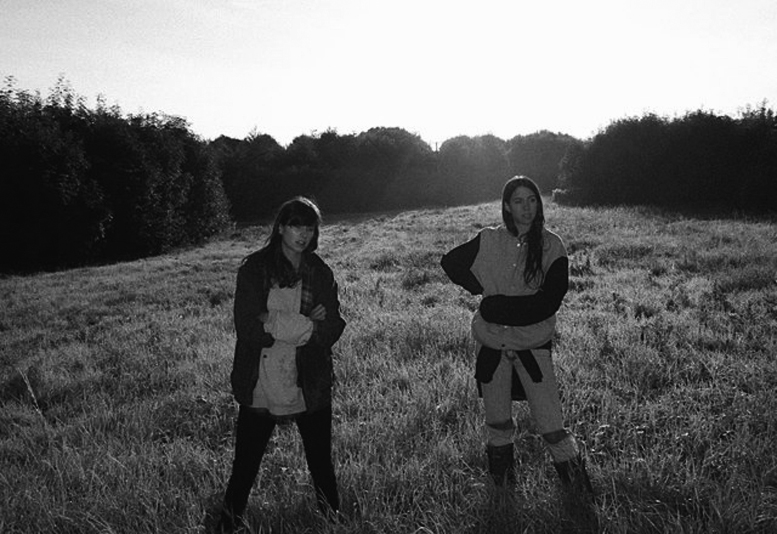
Fanny & Jessy met in their first class at the London College of Fashion. For the past few years they have been making a name for themselves on the London indie fashion circuit with their incredibly unique label that mixes luxury sportswear with a fine twist of tomboy attitude. With collections entitled I Hope You Die Soon and Sea Foam In Your Eyes Fanny and Jessy embrace the ethos of rebelliousness and almost seem blasé about all the hullabaloo that is the business of fashion. I recently got a mass email invite to a party celebrating the launch of their new online store that started off with, “Dear...Blah blah blah….” You’d think they were being cheeky if Fanny & Jessy weren’t more concerned with making great, wearable clothes that hold a distinct element of individualism that stays true to the boundary breaking aesthetics of the designers themselves. Always forward thinking, Fanny & Jessy are expanding with their brand online with the recent introduction of an e-shop and they just released a string of short videos, one for each day of London Fashion Week, directed by filmmaker Danny Sangra for their new 2013 “something season-less” collection entitled Welcome to Uscopia. We recently caught up with Fanny & Jessy to discuss their new collection and what kind of plans they have in store for the future. Read interview and see more photos fromt their current collection after the jump. 

polly_brown_rory_dcs_london_fanny_and_jessy_welcome_to_uscopia

PAS UN AUTRE: Who is Fanny & Jessy?

FANNY & JESSY: Two girls from Somerset that met at London College of Fashion and started a fashion label.

AUTRE: How would you describe the aesthetic of Fanny & Jessy?

FANNY & JESSY: Sexed up tomboy-ish luxury sportswear.

AUTRE: What are some of your major inspirations?

FANNY & JESSY: Our inspiration changes each season along with our own tastes and interests but we are always hugely influenced by the idea of escapism and with the natural world.

polly_brown_rory_dcs_london_fanny_and_jessy_welcome_to_uscopia_georgia_frost

AUTRE: Can you talk a little bit about the new collection?

FANNY & JESSY: It's a very natural progression from AW12, which we felt was the collection that best reflected us most as a brand. For SS13 we added in a few more feminine pieces; dresses and skirts, but still sticking to our original tomboy aesthetic. The inspiration was derived from magnifying earth scopes and unusual terrain, and the print was manipulated by our psychedelic print master friend Leif Podhajsky.

AUTRE: What is the best part about fashion?

FANNY AND JESSY: Fashion gives everyone a way to express the way they would like to portray themselves to the rest of society. You can read a lot about someone by what they wear, it is one of of our best communication tools we have so it's exciting to be able to contribute to that. For us having a fashion label also gives us a great sense of independence as designers, we get to work for ourselves and have the freedom to explore creatively.

AUTRE: Who is the one person you've always wanted to spot wearing Fanny and Jessy?

FANNY & JESSY: We would love to see the 1960's Jane Birkin in Fanny and Jessy but we would be happy to settle with her daughter Lou Doillon or model's Freja Beha Erichsen or Abbey Lee Kershaw. They are all women with natural, effortless style that we adhere to.

AUTRE: Whats next?

FANNY & JESSY: We had a party last week which was the launch of our E-Commerce Store - so we are very excited about embracing the digital side of Fashion, we want to get closer to our customers and the Fanny & Jessy audience and there are so many ways now which allow you to connect more widely online. To start us off we released 5 film stings with film-maker Danny Sangra for each day of London Fashion Week - this is the beginning of many projects that we have lined up to support our new direction! Keep your eyes peeled.

You can visit Fanny & Jessy's online shop or website to see more. Text by Oliver Maxwell Kupper for Pas Un Autre. 

polly_brown_rory_dcs_london_fanny_and_jessy_welcome_to_uscopia_3_georgia_frost

Lucia Cuba on Gender, Strength and Politics

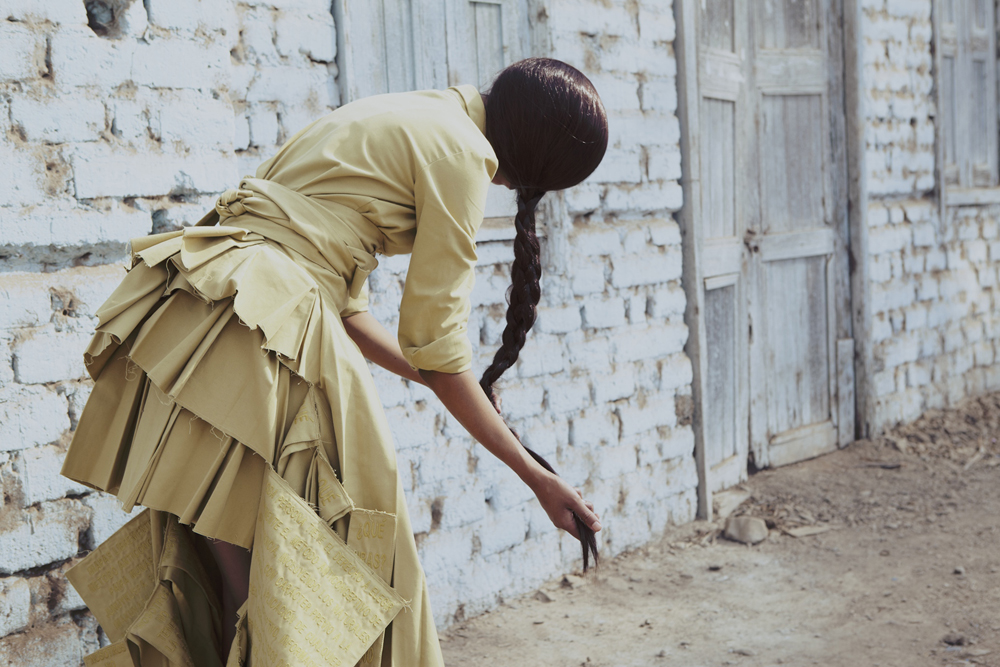
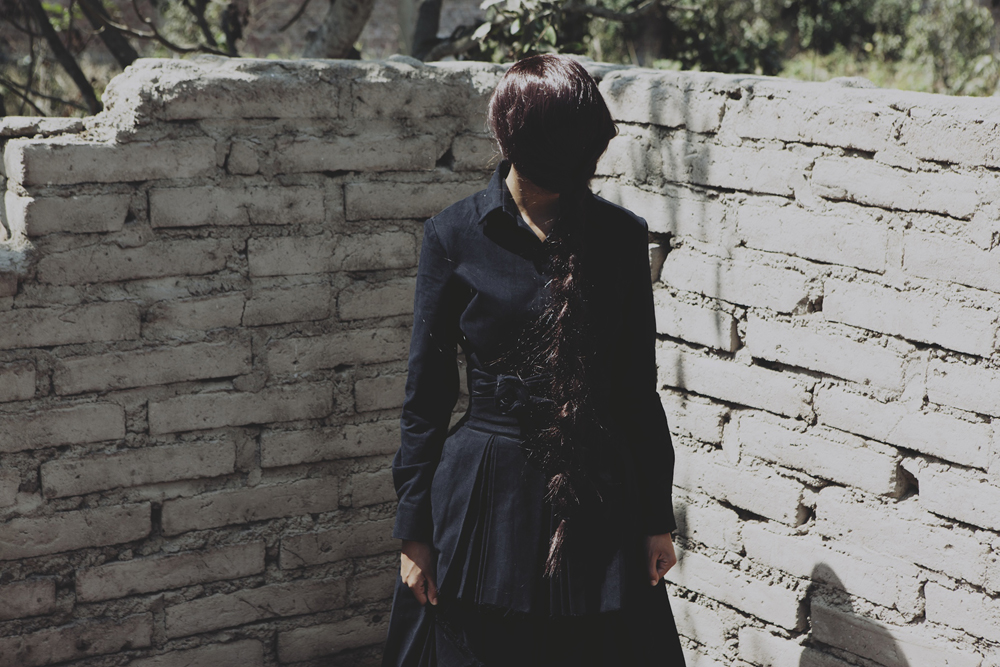
Can fashion be used as a medium for social change? If fashion is an artform and one of art's inherent powers is to change people minds then the answer is yes.  From 1990 to late 2000 the former president of Peru Alberto Fujimori was engaged in an alarming series of human rights abuses including the forced sterilizations of men and women as part of a family planning campaign called Contraceptive Voluntary Surgery.  As a result nearly 300,000, mostly indigenous, women were coercively or forcefully sterilized during these years. Medical procedures where executed without consent, using fake signatures and untranslated "agreements", and under unsanitary conditions. In most cases no post-operatory information and treatments were provided. This caused secondary effects related to the surgery, terrible complications that in some cases lead to the death of patients. Fujimori is currently serving a 25 year prison term for his involvement in the kidnappings and mass killings carried out by an established paramilitary group called the Grupo Colina death squad which was supported by Fujimori and former head of Peru's intelligence service Vladimiro Montesinos. But will justice be served for the victims of the forced sterilizations? In 2001, a brave group of 12 women from the town of Anta, in Cusco, Peru denounced the violation of their rights and after 15 years of protest the public prosecutor's office has reopened the case, but there is a risk it may be dismissed.  Peruvian social activist and designer Lucia Cuba, who recently graduated from Parson's in New York, has started Articulo 6, named after the statute in Peru's general health law that all persons should have the right to choose their own contraceptive method, as a way to give greater visibility to the case and to open a dialogue about issues of human rights, gender and justice. I got in touch with Cuba to learn more about the Articulo 6 and how she is using fashion design to broaden awareness.  

PAS UN AUTRE: You are both a social scientist and a fashion designer – what brought you to these two seemingly disparate paths?

LUCIA CUBA: I was brought up in a household that is very concerned with social issues, and highly motivated by the arts and sciences. As a child, this environment nurtured all sorts of creative impulses, and I remember making some of my own clothes from an early age. While in college I became interested in the social sciences and decided to study psychology. To my surprise in 2004 a group of people who knew I sometimes created clothes invited me to participate in an experimental runway show. At this time, I was beginning to focus on my practice as a social psychologist in human development and public health, however this re-encounter with design opened a parallel world I finally decided to fully explore. During this time, independent fashion and design in Peru were growing exponentially and the context was also very stimulating.

In 2005 I created an independent brand called LUCCO, while I kept on working as a consultant and coordinator in different projects related to the social sciences. I had the need to explore how both practices could connect, and how they could grow together, as one; I started to realize that if I could not find clear connections between them, I needed to develop my own. Everything that came after, took place in a very natural way.

Today I feel that both “sides” of my work have merged in a symbiotic, dialectical and very productive relationship. I can’t think of another way of approaching my practice, but from the understanding of social sciences as a foundation for fashion and design.

AUTRE: You just graduated from Parsons for fashion design – what are some of the differences between the world of fashion in the US versus Peru?

CUBA: Aside from the fact that fashion systems in the US are more internationally established and recognized, I would dare to say both worlds behave in similar ways: They are both fundamentally powered by the idea of fashion as a commercial project, object and experience, one that basically responds to in-depth research on consumer trends. Their foundation does not grow through critical thinking and social analysis, for example. They both urgently need a strong educational reform in the field so as to develop local understandings of fashion, advance theoretical research, and broaden the way we understand and accept different fashion systems.

AUTRE: You had an internship at Kenzo in Paris - can you talk a little bit about what kind of impact that made?

CUBA: My experience in Paris came right after I won a local “young designers” contest and when I had just started a PhD in Public Health. Until that point I was totally attracted to my new practice as a designer, but I was also very involved in my practice as a social scientist. With the award came Paris, and with Paris came experiencing the reality of something that had been, until then, an ideal of what I had heard fashion “was supposed to be”. This experience included a short stage at Kenzo and classes in a local fashion school. This was my first experience in a “formal” environment of the fashion industry. Until then I had been working as an emerging independent fashion designer in Peru.

Two special things happened to me during this time. I started my practice as an active speaker and researcher on fashion—analyzing emergent fashion systems in Peru—and I confirmed that, whatever I was looking for as a designer, I wasn’t going to find it in a formal, traditional or conventional fashion environment.

AUTRE: It seems like the first big socio-political project that bridged the world of art and design was Project Gamarra - what was the project about and what is the Gamarra Commercial Emporium?

CUBA: The Gamarra Commercial Emporium is one of the main clusters of micro and small firms in the country, a key regional actor in trade, production and development of the Latin American textile and garment industry. Gamarra is located in the district of La Victoria, in Lima, and is also a conglomerate of histories of entrepreneurship marked by important migratory processes that began in the 1960s, due to increasing economic and social crises that forced people to migrate to the capital city. Today, over 20,000 firms are located in Gamarra, spreading through 34 city blocks and employing 70,000 people. It receives over 60,000 daily visitors and reaches 800 million dollars in annual sales.

Project Gamarrais an activist-design project that aims to raise awareness about the importance of understanding the Gamarra Commercial Emporium not only as an industrial cluster, but also as an urban ecology—a site of creativity and a space of confluence of diverse peoples and cultural identities. This project also aims to promote open dialogues among designers, students, business owners, neighbors, politicians and consumers in an attempt to promote self-reflection, the strengthening of social cohesion and sustainable practices in this urban context. The idea is to re-think of Gamarra as a creative and sustainable space.

The project creates a number of small but highly visible projects created by designers, photographers, filmmakers, artists, etc., in conjunction with local firms and exhibited in public spaces inside and outside Gamarra, aiming to give these preoccupations great visibility among consumers, decision-makers and the local media. It’s main objective is to promote the commitment of local firms and authorities towards the advancement of creativity, cultural diversity and sustainable practices within Gamarra.

AUTRE: I'd like to discuss the Articulo 6 project - how did you first hear about the forced sterilizations and what was your initial reaction?

CUBA: The first time I heard about the case was in 2002. I remember reading about it on the newspapers, but also reading about other cases of human rights abuses that took place during Alberto Fujimori’s first and second term as President of Peru.

The second time I connected to the case was almost six years later, during my PhD studies in Public Health, and while having group discussions about the “social determinants of health”. My classmates and I decided to follow the case closely and chose it as a case study for the course. During this time I got to interview former congresswoman Hilaria Supa, and Maria Esther Mogollón, a journalist and activist on gender rights. They have both supported the victims of this case for more than 14 years, empowering them and helping them to pursue justice and reparation.

However, It wasn’t until the past presidential campaign in Peru in 2011 that the case returned to the public eye. The case acquired a lot of visibility and was strategically used as a key issue against Alberto Fujimori’s daughter, who was – ironically – running for president. I became convinced that I could take action, and use my work to give this case and the issue it brings forth, greater visibility. While I was geographically far away, I felt emotionally committed and connected to a case that exemplifies the situation indigenous women face in contemporary Peru.

I started to draft the project while processing the incredible amount of information that exists on the case, and connecting with people involved in documenting, researching and actively promoting justice for women and men affected by the sterilizations. I traveled back to Lima and Cusco that year to conduct research, and I had the opportunity to interview two very inspiring women engaged in a permanent search for justice. They shared with me very personal and horrifying accounts of their experiences. These and other testimonies have been essential materials for my work.

The name of the project Articulo 6 is chosen in ironic reaction to the General Health Law of Peru which sustains in its Sixth Article that “all persons have the right to choose freely the contraceptive method they prefer, prior to the prescription or administration of any contraceptive method, appropriate information on the methods available, their risks, contraindications, precautions, warnings, and the physical, physiological, or psychological effects that might be caused by their use”, and that “the application of any contraceptive method shall require the prior consent of the patient”. These are regulations that were completely ignored when the massive sterilization campaigns took place.

AUTRE: After 15 years, why did the prosecutor finally open the case? What is the status of the case currently?

CUBA: The case was conveniently “archived” in two different occasions, and attracted renewed attention in 2011 when it became a key issue during the electoral debates. Even though Ollanta Humala, Peru’s current president stood up for the victims during his campaign and even though he spoke loudly and clearly about the need for justice, the case has not being solved yet.

On March of 2012 the case was re-opened for a third time. The Association of Forcefully Sterilized Women (AMAEF) from Anta (Cusco), accompanied by activists, intellectuals, journalists and politicians approached the Attorney General, to yet again present over 2,000 testimonies and other pieces of evidence that have existed for years. However, all this evidence appears to be “invisible” in terms of the legal aspect of the case. At this point in time, the case appears to have lost its political importance, and we are afraid that it will be archived yet again.

AUTRE: Will the women who had to undergo these sterilizations finally have justice - in what form?

CUBA: As abstract as it may sound, I believe that justice is the least they deserve; yet perhaps the last thing they will receive, if things continue to move as they have in the past.

They know that the sterilizations are permanent, that they where subjected to harmful and inhuman conditions. They were disrespected and hurt. They have mourned and, as one of the women I interviewed told me, they have cried so much that even their tears are now gone. Another women told me that “they just want to be untied”, liberated from a kind of binding condition of injustice. It makes you rethink in what form should justice come. There is no amount of money that can compensate for their loss. Can one put a price on fertility? However, they do demand medical and psychological attention, but more importantly they are demanding to be treated with respect by health and government officials, to have the State officially recognize their loss and the violence they were subjected to. If this does happen, I believe a very symbolic and crucial healing process may begin to take place.

I strongly believe that justice should also come from all of us. All Peruvian citizens need to know that this happened, and they also need to remember it. We need to finally accept that this happened to all of us, and that the responsible one is not a single person, but a complex logic of vertical power and racist ideologies that unfortunately do not only stem from the State. Peru is a country defined by inequality and discrimination. We need to feel responsible, related, and act upon this.

AUTRE:Articulo 6 has a very important message – how will a fashion collection get the message out - could you produce this collection for stores or boutiques across the world?

CUBA: As a fashion designer and social researcher I will always struggle, trying not to let one of my sides win over the other. In this project I am very aware of the highly social and political issues I am raising in the form of garments, and that garments—as I conceive of them—can transform into bodies that advance and open debates as well as new understandings. One of the foundations of the project is to use fashion platforms to talk about the case, but also to discuss the narratives that can be touched upon while presenting it: issues of gender, strength and politics.

I understand garments to have agency, and that when they interact with people and things while performing themselves (in a runway, a photo shoot, a video, a conference, etc.) they may generate emotions, raise questions, foster divergent thought, and challenge established memories. If I know that the garments I created can make at least one person more familiar with the case, if I can move them towards it and prompt a reaction, a feeling and perhaps even an action, I will be satisfied. I strongly believe that we are all capable of letting people know more about this case, and to explore the ways in which we can all take part and change things.

The next part of the project does actually include the development of new pieces inspired in the initial garments and their trajectories as migrate and transform into more “public and commercial garments” that spread the message of the piece in numerous ways. I am aware that this project won’t solve the case. But it can definitely give it greater visibility. It can also let people know that we are all capable of talking out loud not only about ourselves.

AUTRE: Do you think fashion should be more of a medium for social change?

CUBA: I believe that it already is. However, it appears to suffer some sort of blindness towards its own powerful agency and the potential impact it could have if conceived as a device and a medium to transform and change things. In order to so we need to see fashion less in terms of material objects for consumption. We need more fashion that acts, critiques and reacts. We need design and actions for transformation, stronger activism and less narcissism.

AUTRE: Whats next?

CUBA: I am preparing to present Articulo 6 in Peru in August (in Lima and in Anta, Cusco). The idea is to engage in an open discussion about the case and its current situation, and not only about the project. In September I will be presenting the first collection of Articulo 6 in the New York Fashion Week. This experience in itself will constitute another “action” of the project. Later on I will develop at least 10 more actions that stem this work, and I am currently looking for funds to develop them. A total of 12 actions will be performed as part of Articulo 6. I want them to represent the 12 of Anta: the group of brave women that made the first formal accusations and that became a symbol for the case.

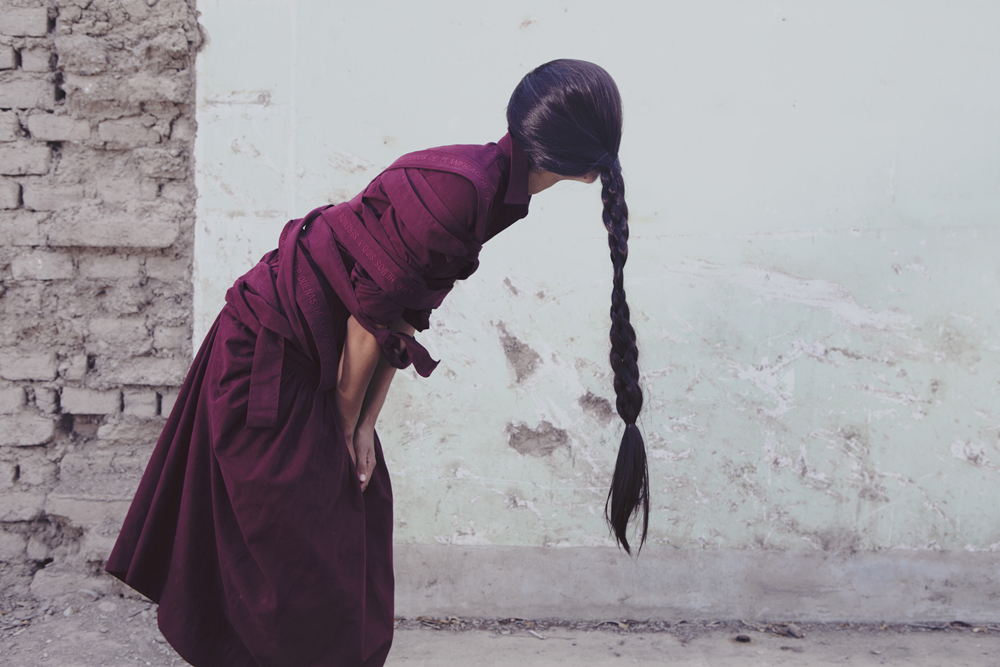
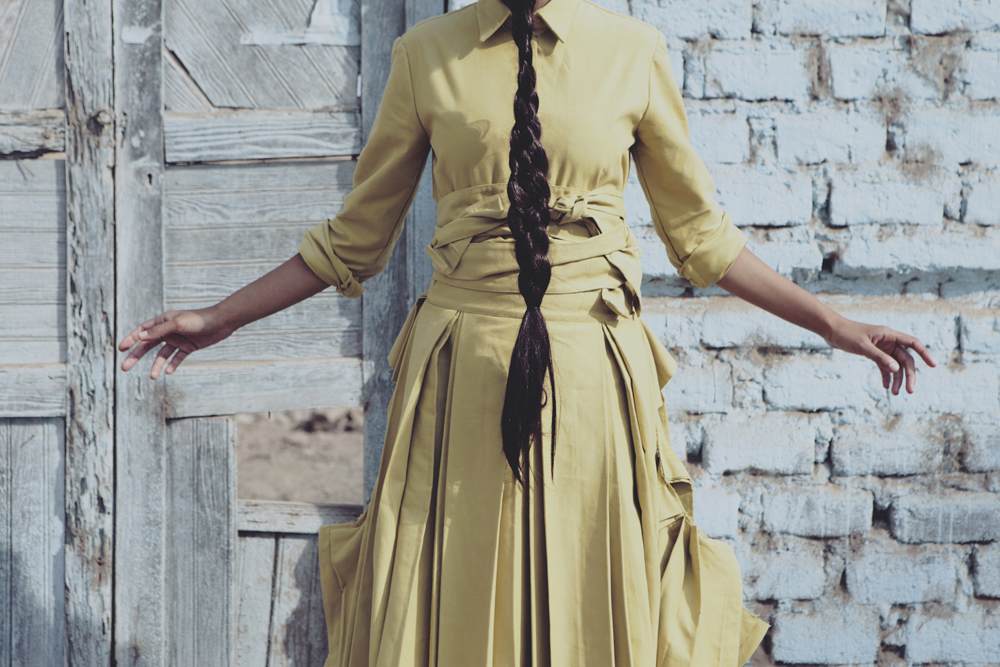
To find more about the project, its actions, and the case, and to pledge your support visit the Articulo 6 website. Photography by  Erasmo Wong Seoane, Model  Carla Rincón for IceBerg, styling by  Lucia Cuba & Yasmin Dajes, assistant production Joy Rosenbrum, hair by Olga Sonco. Text for this article by Oliver Maxwell Kupper for Pas Un Autre. 

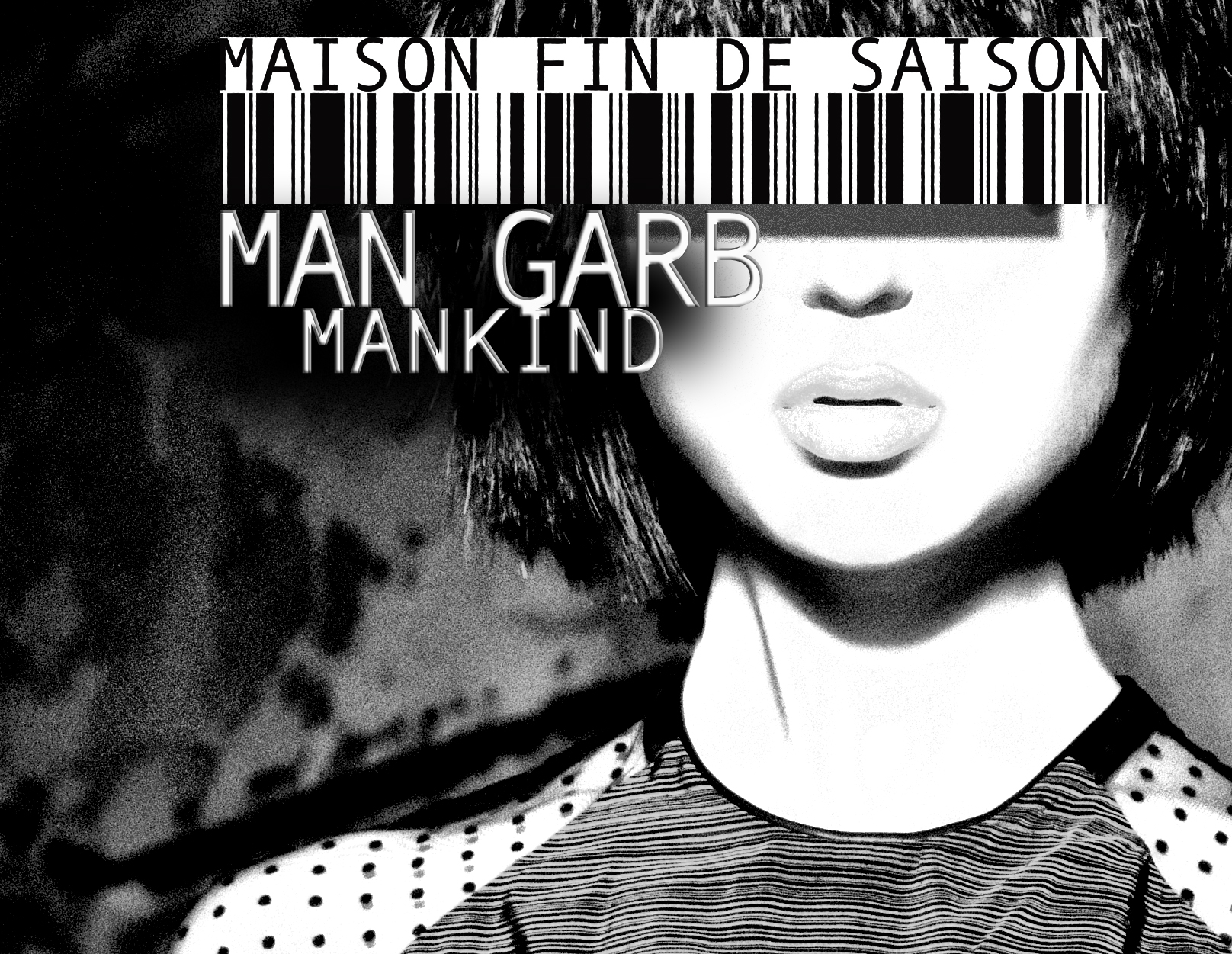
The Revolution Will Be Sewn: An Interview with Maison Fin de Saison

Meet the new avant-garde revolutionaries of the high fashion set. There are not many designers that come around that cite 18th century philosophers as their main source of inspiration, but the duo behind the London based fashion house Maison Fin de Saison are not your typical designers. Calling them simply provocative or edgy might be a cop out and certainly an understatement. There is a definitive sense that the designers behind Maison Fin de Saison, which translates roughly to House, End of the Season, use their fashion house as a collective voice to experiment creatively with their deeply fascinating, beautifully contradictory beliefs and philosophies with roots in French 18th century romanticism and Eastern transcendentalism. Maison Fin de Saison in that regard is a hypothetically unsolvable Rubik’s cube of unending dualities that translate right down to the beautiful pieces they design. With applications of uncommon fabric pairings, unusual cuts, and studies in androgyny you could say that contrast is a part of the dogma of Maison Fin de Saison. What is that dogma exactly? Each new collection is presented with a black and white fashion film (see film after the jump) and even the brand itself is presented on a platform of black and white because, as the designers point out, a monochrome palette is essential in communicating their complex ideas. Their Fall/Winter 2012 collection, with pieces typically masculine in nature cut with feminine fabric, dip dyed ostrich feather trims, leather edges, and revealed shoulder pads, it looks like the uniform for some kind of ultra post-modern fashion army from the future sent to the present time to start an all out riot.

Maison Fin de Saison is turning heads in the fashion world. This month alone the fashion house will see the debut of their Fall/Winter 2012 collection, entitled MAN GARB, at two covetable events in London and Paris. The first of which, in mid-February, is an intimate invite only exhibition and presentation in collaboration with French Radio London during London Fashion Week, called ON AIR/OFF AIR–VISION MEETS SOUND, which promises to be an all out sensory orgy of stimuli – uniquely mixing a multitude of mediums including fashion and sound. The second of which will be Maison Fin de Saison’s debut at Paris Fashion Week presented by the venerable fashion showcase ON | OFF with an exhibition and a couple runway shows. I was curious to learn more about Maison Fin de Saison so I reached to Gigi, who is the creative half of the fashion house, who was gracious enough to take time out of their chaotic schedule to chat with Pas Un Autre.

PAS UN AUTRE: So, you are a brother and sister design duo with a background in design and law. Who has the design background and who has the law background? Can you please introduce yourselves?

GIGI - MAISON FIN DE SAISON: Yes, we have been educated in design and law, although opposites in relation to the type of 'human institutional' occupations, yet still sparsely co-related through societal philosophies. I am the creative half of Maison Fin De Saison with acquired interests in the arts and the fashions, my brother in law. We prefer to remain behind the Maison Fin De Saison persona and speak through its voice. I am Gigi and my brother is Jas Karan.

AUTRE: What brought you two together to create Maison Fin De Saison?

GIGI: Well, our common ground, our opinions on philosophies and the transcendental, this is something that has surrounded us from a very early age through our family background - North India. Maison Fin De Saison, was created as a propaganda of two individuals' obsessions on philosophies and our reactions to the notion of mankind. We see the body as a stage and it is a constant stage of opinions, judgements, assertions, choices and awareness or lack of. Interestingly these obsessions that we have are brought forward as artisanal but wearable 'garb' - dressing the walking stage. Mankind. Some how our opposing interests yet common perceptions bring together visions which come forward each season as thematic garb. Fashion was just a general interest, specifically in cultural context and this is how Maison Fin De Saison seasons come forth, the season is about the idea.

AUTRE: Is there a particular cultural connotation to Maison Fin De Saison that is lost in translation - can you explain the name?

GIGI: Maison Fin De Saison - the name was a vision in itself, translated into English 'House' End of Season. Our language is quite dense and the inspirations behind the seasons are executed in black and white film and capsule collections. You could call them abstract visions until they are solidified into reality, when this process takes place, yes, sometimes it can get lost in translation. Furthermore diluted when perceived through the other eye - the audience. Cultural connotation....Maison Fin De Saison is a proclamation to the condition of mankind as we see it - in the essence of now. Its a voice, its almost poetic, its about mankind and the avante garde relation.

AUTRE: The label has a lot of diametrically opposing ideas, philosophies, and even fabrics which is actually quite radical for fashion and I couldn't help but notice there were even a few pieces named after the French philosopher Jean-Jacques Rousseau - what kind of role does philosophy play and how important is philosophical thought to Maison?

GIGI: Everything Maison Fin De Saison creates and brings forward is an extension of philosophical 'obsessions' and our interpretation of these are, what brings hopefully the aura of authenticity and depth to our work. To answer your question - its invaluable.

AUTRE: If Rousseau were alive today what do you think he would think of todays culture - especially fashion and art?

GIGI: I see art as an extension of human emotion, the word 'fashion' falls under this world, unfortunately mass societal habit has a tendency towards being fed faceless attributes. I believe we are in an era that requires revolutions, however revolutions should start from within the sentient soul or else it would fail the cause of beginning. The revolution.... the condition of mankind, in order to begin a relationship with its body, we must either perceive it through the eyes of others in form of art, fashion, film or voice, else we may cease to exist in a stagnant culture - overly fed and hungry souls. In light of Rousseau, the word I will use is 'aloof'.

".....we are in an era that

requires revolutions...."

AUTRE: Why black and white films - why is black and white important - can you talk a little bit about the concept behind the new Maison fashion film?

GIGI: Maison Fin De Saison executes all seasonal film in black and white, which allows for dramatic contrasts, visually it focuses on the subject or the matter without interference. Because our inspirations can be quite thick, black and white allows the idea to live in a more liberated character and not to mention a more sombre approach to the inspiration. The film for this season titled: Mankind, was our reaction to a feeling through firstly the garb, conditions, movement, the human senses but in a dark and almost romantic motion. The film houses man, woman and the idea of maddened conditions through gestures and settings.

AUTRE: The new collection is called MAN GARB - can you talk a little bit about the new collection?

GIGI: In view of the season and its title, the collection has a a minimalist approach to silhouette, voluminous fabric layers, exposed layers and a combination of menswear suiting fabric such as Italian wool paired with feminine french tulle's. The collection is dark and has some very subtle trimmings such as - feather, nappa leather and french lace. You will also find the exposition of flesh in this collection. Although a womenswear collection, we titled the collection 'MAN GARB' in relation to the idea of - MANKIND which entails men and women. The collection is an extension of a feeling and I guess this is why you will see some bizarre use of interpretation and execution. Some of the current collection has been worn by presenters and editor's, we have also been asked if we have a menswear conceptual collection. This is something we are considering.

AUTRE: You are first presenting the new collection in London this month - can you talk a little bit about your collab with French Radio London and can you explain what the underground mantra is all about? Sounds fascinating….

GIGI: Well, from the start of Maison Fin De Saison, we had decided that any associations we have in regards to 'our philosophy' must be complimentary to the idea, including execution of work. The current season 'MAN GARB' is based on human pre-occupations, conscious sub-conscious awareness and conditions and radio is a fascinating means of communication - speech. French Radio programming is of an eclectic mix of music and houses some exceptional sounds. The collaboration is called ON AIR OFF AIR- VISION MEETS SOUND, its an intimate exhibit and is during London Fashion Week, it will consist of Maison Fin De Saison speech in interview, dialogue, static installation, live models and to take it a step further within their studio's. We are expecting quite an interesting guest list. Its the idea of authentic and revolutionary concept that suggests the 'underground mantra' and the coming together of two very unlikely mediums.

AUTRE: After London you are showing the new Maison collection during Paris Fashion Week with On/Off - thats kind of big deal - what can we expect during fashion week?

GIGI: On Off, have a very reputable name in the industry, this is Maison Fin De Saison's debut at Paris Fashion Week, we will be showing alongside other designers in exhibition and there will also be a few catwalk shows. The exhibition will be held at : Espace Commines, 17 Rue Commines Paris 75003 and will be through 29th February until 3rd March 2012; from 10.00-19.00. It's open to everyone and for more information you can also find us on www.onoff.tv.

AUTRE: Whats next?

GIGI: The next season capsule collection, the film and New York. SS13 will be even more 'concentrated' in essence of Maison Fin De Saison and even more deeper in relation to ideas.

London Fashion Week: ON AIR OFF AIR- VISION MEETS SOUND (strict guest list) will be held February 15, 2012  atFRENCH RADIO LONDON. Paris Fashion Week: ON | OFF – Espace Commines, 17 Rue Commines Paris 75003 and will be through 29th February 29 until March 3rd, 2012. Visit WWW.MAISONFINDESAISON.COMfor more info.  

Text by Oliver Maxwell Kupper for Pas Un Autre

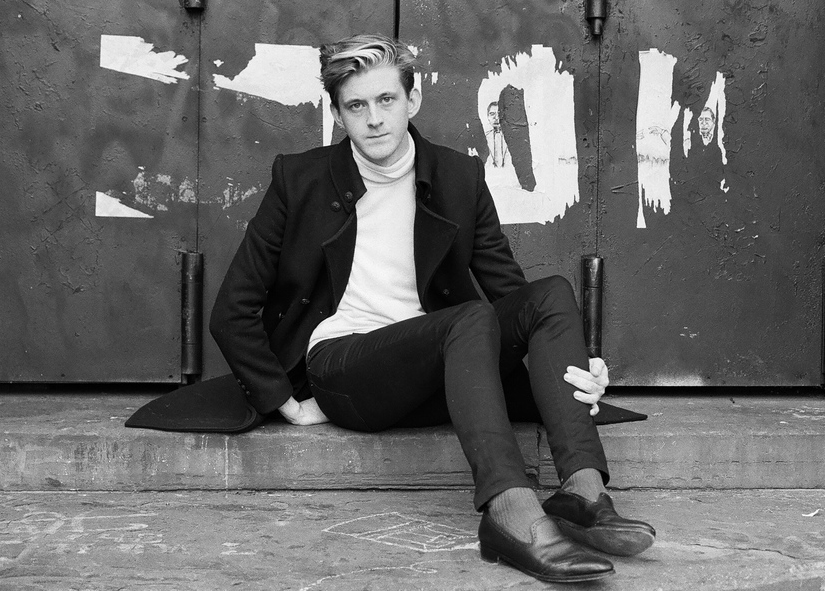
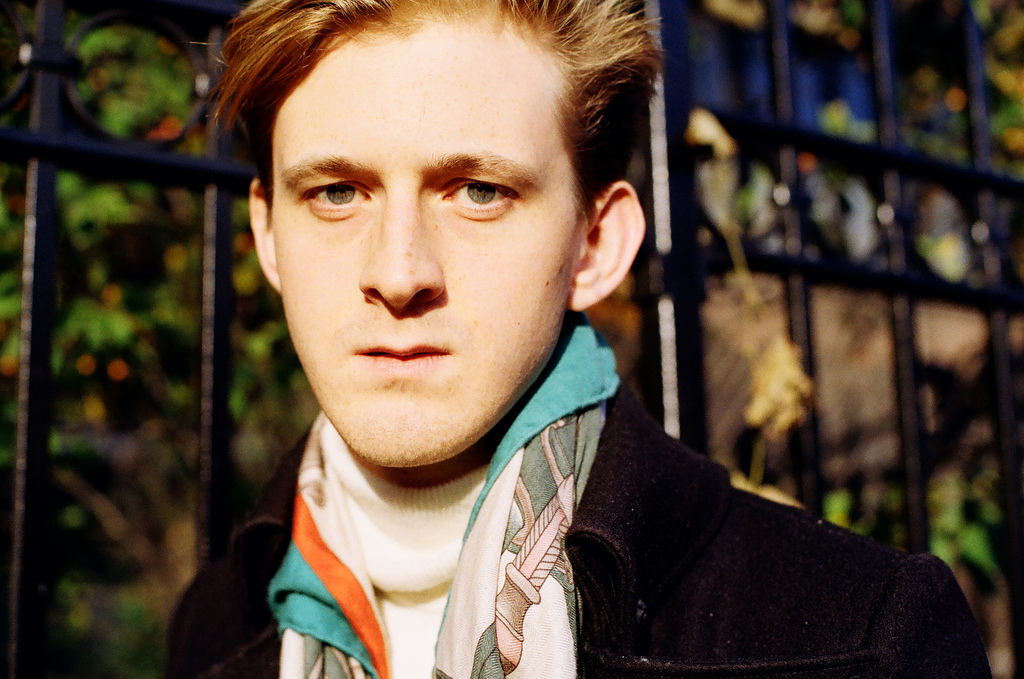
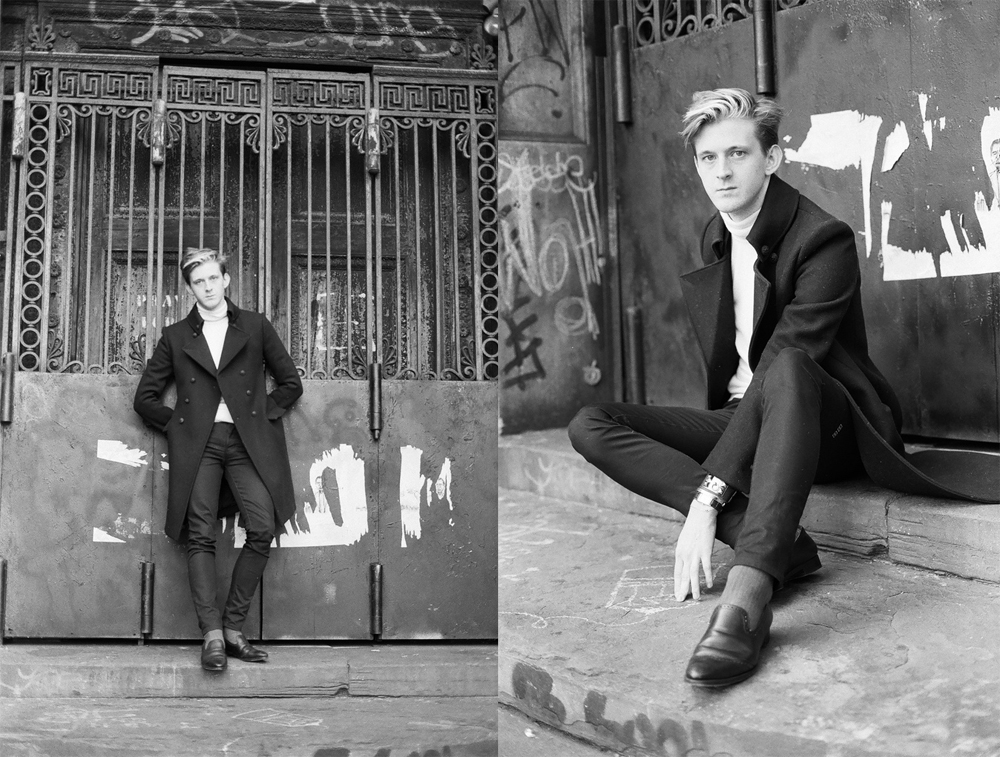
MODERN-DAY DANDY: AN INTERVIEW WITH CASSIUS MARCELLUS CORNELIUS CLAY

In the summer of 2010, a particularly dapper Yale sophomore, wearing a pair of distinctive, gold-crested Stubbs and Wootton slippers, encountered Kanye West while shopping at Barney’s in New York. As the story goes, West complimented Cassius Clay (no relation to Muhammad Ali—but Clay is, in fact, a descendent of the renowned abolitionist Cassius Marcellus Clay) on said slippers, introductions were made, a conversation ensued and email addresses were exchanged. One thing lead to another, and by the end of the summer Clay had taken a leave of absence from Yale at West’s request and moved to New York to become the rapper’s personal full-time confidant and right-hand man (he eschews the term “stylist” for its unsavory connotations; a more detailed explanation can be found in the interview below). Once the news got out, some were dumbfounded by what they perceived as an abrupt trajectory from diehard academic to celebrity stylist— envy, resentment and incredulity arose with fervor (one has only to peruse the anonymous commentary under any online article published in late 2010 about the Cassius/Kanye partnership to surmise this), yet the always-resourceful young aesthete seized the opportunity to help shape the rapper’s professional and sartorial choices, bringing his unique, quirky perspective to the table and turning the coveted job into an artistic and intellectual experience that furthered his education just as much as his missed year at Yale would have (though in a very different way!). If that’s not enough to convince the aforementioned internet haters of his academic seriousness, Cassius is now back at Yale and currently in the process of completing a simultaneous bachelor’s and master’s degree, both in Art History—a hefty task for any college student, especially one with the unspoken responsibility of remaining impeccably dressed! I hadn’t seen Cassius since we attended Phillips Academy Andover together (I remember quite clearly the feather bowties, pocket watches and other striking accoutrements he sported—I don’t think I spotted him wearing sweatpants once during those three years, not even during finals week—as well as the memorization skills and admirable command of the English language he showcased during the art history class we shared). I spent a beautiful October afternoon walking around New York’s Nolita and Lower East Side with the poised, and drily witty Cassius as he shed some light on “the whole Kanye thing,” his plans for the future, his sources of aesthetic inspiration and his illustrious taste. 

ANNABEL GRAHAM: Tell us the story of how you initially met Kanye West and ended up becoming his personal stylist; what was the whole experience like, what kind of responsibilities did you have, what did you find most interesting/take away from it and how did it end?

CASSIUS CLAY: I met Kanye on several occasions during a summer I spent working at Christie’s in New York. We got along very well talking about fashion, art, film and the relationships between each of them. I was already great fan of his music, of course, but was most impressed by his ambition and the assiduousness with which he pursues those objectives. Those qualities alone convinced me I could learn a lot from working with him. He wrote to me that fall, when I had just started my second year at Yale, offering me a position to work with him on a series of projects related to the release of the My Beautiful Dark Twisted Fantasy album. I’m uncomfortable with the word “stylist.” The word risks either oversimplifying fashion’s broader significance to identity and aesthetics, or somehow glorifying dressing-up as some glamorous veneer du jour. I admire Kanye in that he collaborates with many people in realizing a vision, whether it’s a particular outfit, music video, apartment redecoration, or concert performance. I was a creative consultant responsible for working on many of those projects simultaneously, so seeing and developing the connections between those different endeavors was immensely rewarding.

GRAHAM: I’m sure you learned a lot about both the fashion world and the music business while working with Kanye West—can you talk a bit about that? Did it further or change your interest in either of those realms?

CLAY: In fashion-related projects I enjoyed applying academic approaches – research, analysis, criticism – to the generative processes of creative work. I think works that synthesize those modes are always the most successful. Though I’m a great fan of Kanye’s work and convinced of music’s power to induce and communicate a feeling, I must confess that I’m musically inept. My childhood attempts in learning to play an instrument were abortive, and I sidestepped the music requirement at my high school by taking music history rather than music theory. I found the different ways in which the fashion and music industries treat products or talent particularly interesting. The power figures in fashion are often on the critical or receptive end of production: editors, department store buyers, celebrity style icons, etc. In music, the creative side of star singers and major producers have more direct control on the popular outcome of an album or single. That is, I think that Vogue can have a greater impact on a fashion brand than Rolling Stone could have on a musician.

GRAHAM: As you told me during the shoot, you are in the process of finishing a simultaneous bachelor’s and master’s degree (both in art history) at Yale. What intrigues you about art history in particular, and do you plan to do anything specific with those degrees?

CLAY: Many animals have means of communicating with each other – but creative representation is unique to humans, which makes art history very important. I like the idea of art being one of the only pure and universal forms of expression, mathematics being the other one. Artistic production continues to have meaning across centuries and cultures, irrespective of how unfamiliar its context of production is to the time or people that examine it.At the same time, art history is an instrument of social and political history by manifesting the questions, achievements, and fears of a culture. In that sense I think art history has plenty of applications to fields that are not strictly academic, advertising being just one example.

GRAHAM: What intrigues you about fashion? How would you describe your own personal style? Who are your favorite designers, and why?

CLAY:I’m curious about the way that fashion has evolved from something purely functional – Neanderthal necessity for warmth – to its more sophisticated uses today. It can indicate mood and personality, sexuality and sexual availability, wealth, class, or social alignment. Fashion condenses a lot of human civilization into a few bolts of cloth. I respect formality because it requires some effort, but also demand because that requires some thought. Collections by Antonio Azzuolo, Lanvin, Bottega Veneta, Burberry Prorsum, and Alexander McQueen usually achieve that balance. I’m not terribly interested in trends, and I don’t care much about comfort. I’ll be very disappointed if I don’t still wear most of the clothes I have now in ten or twenty years.

GRAHAM: We talked briefly during the shoot about your Halloween costume… I believe you said you were thinking about dressing as the Greek mythological character of Daedalus… did that end up working out? Explain…

CLAY: I ended up using things I already had in my closet, which probably suggests an unsettlingly close relationship between costume and daily wear. I went for pathetic and conscientious this Halloween: a bird in an oil spill. I wore black jeans, black button down, a crinkled Jil Sander blazer with a metallic petrol sheen, an inky coq feather Martin Margiela cape, gold leaf on my nose for a beak and drips of black face paint for the oil.

GRAHAM: Do you have any plans yet for what you’d like to pursue in the future? Or rather, what field intrigues you?

CLAY: Broadly speaking, my decision to do undergraduate work at Yale rather than Oxford was driven by a desire to study both the visual arts while taking courses in departments that are more explicitly political, like history and political science. I have competing interests in aesthetics, analysis, and ethics, I suppose. Still, I’d like to be able to reconcile all of them in some complementary capacity. I’m very keen on the economics of fashion and the art market – particularly in moments of downturn and recession. I’m interested in the dual nature of curation: literally “caring for” by definition, but also meaning critical assessment in practice. I’m sure I’ll be considering applications to law schools.

GRAHAM: What do you find most inspiring?

CLAY: I’m constantly assessing, planning, and thinking of contingencies, so surprises – rain, kindness, a mixed-up seating arrangement – are the most inspiring in that they force you to generate new ideas, reactions, and solutions. Travel involves all of these surprises.

GRAHAM: Do you have a favorite artist or work of art at the moment?

CLAY:My favorite young artist is Winston Chmielinski, based in New York, for his incisive use of color and ability to define and obscure forms in portraiture. The academic art of the 19th century and kitsch art of Soviet Socialist Realism in the 20th century need to be reassessed in most museums. I want to collect Albrecht Durer prints and drawings, sculptures by Lorenzo Bartolini, and paintings by John Everett Millais; I would have wanted Giovanni Boldini to have painted my portrait and William Morris to decorate my house.

Text and photography by Annabel Graham for Pas Un Autre

(Annabel Graham is a photographer and writer who travels regularly between Los Angeles, New York, and Paris – she has worked for Interview Magazine as well as the Paris Review, and she is a regular contributor to Pas Un Autre and Autre Quarterly. Read all here articles for Pas Un Autre here)

[INTERVIEW] I Know You Know

I.K.Y.K., which stands for I Know You Know, is a fashion label based in Jakarta, Indonesia.  With their newest Fall/Winter 2011 collection, entitled Romantic Postiche, I.K.Y.K. expores the charade inherent in our human sociology – the fake smiles, the feigned happiness in our voice, etcetera.  I was intrigued by I.K.Y.K. after watching their newest short fashion film which is endearingly eccentric, but explores the theme of the current in a brilliant and cinematic way.  I reached out to I.K.Y.K and the designer Anandia Putri who responded with elucidating enthusiasm, albeit with broken English, but that didn't stop the point from getting across. Read the interview and view film after the jump.

Who is behind I.K.Y.K. and what does I.K.Y.K. stand for? IKYK is a brand that comes from my passion in fashion, I wanted to create something that resembles our creative thinking – about how to look good effortlessly, keep it stylish with a little touch that brings others to stop their eyes for a while. There are some special people behind IKYK, the creative team is a woman named Anandia Putri and a man named Addri Basuki. Each individual has its great potential, passion and desire, and very strong grasp of the world [laughs]. Our great friends and parents. And of course any other crew who helps us. The name it self IKYK means I Know You Know, so then I was trying to see what the trends were and combine it with our own interpretation. Much like telepathy, at any time if someone knows something without a lot of talking and acting, its all about the same understanding between us and the people around us. A brand that truly understands not only the trend but the people as well. So we have come to I KNOW YOU KNOW – PERFECT, IT GOES WITHOUT SAYING.

How long has the label been around? IKYK established itself formally in 2010 of December last year, and the grand launch in January of this year 2011. Therefore, our first campaign, we called it "The Secret Revealed" – we have a teaser, video and print. The Secret Revealed was about a debut that want to display by IKYK.

What is the inspiration behind the new collection? Our true inspiration in every collection comes  from anywhere, from the surrounding environment, from everyday conversation, anywhere... but this time the greatest inspiration of emotion is ourselves, so this collection is attached and gives special emotion in us.

Can you tell me a little about whats behind the new video? Hmm.....first of all, this time we are very lucky to be working with a young director who has a remarkable talent, he really played a big role to help us out in the current process of this video so it can become viral, Heru Admadja. Well.....so here's the story....every collection of IKYK contains strong emotion. We see the reality of our everyday circumstances. For the theme of this campaign, we picked the theme of "Romantic Postiche" – it's like the unfathomable in the perpetual charade of human emotion. Whereas society grew weary, yet continuously feels the need to show fictitious display of affection towards others. It's a wonderful romantic relationship but still peppered by the intrigues of life, such as falsehood, hatred and depression. Presenting IKYK’s Fall Winter 2011 collection, inspired from the inestimable conflict where romance is not always quixotic. Love to hate. Hate to love. A Romantic Postiche. You know like what always happens, life!

You are based in Jakarta, correct? Is there a big fashion scene there? Yes, Jakarta, and yes you should come to Jakarta! Jakarta has a lot of flare and proliferation of many local brands, we compete equally stringent for advancing the fashion of our country, Indonesia. Every person in South-Jakarta, Jakarta in particular may have very creative ways to explore what in them thats the best.

What are some of your artistic inspirations or influences? Our beloved city Jakarta. Love to hate, many wonderful stories and not inside it. We love our muse, Ayla Dimitri [a fashion stylist] and people in Jakarta, those people who can inspire people around them. But in the end, our parents, are our biggest inspirations.

Where you can you buy I.K.Y.K.? Can be purchased on our web ikyk.tumblr.com or email us ikykinfo@gmail.com or on wesbstore www.resvogue.com and our collection can be purchase directly at the department store at Plaza Indonesia Jakarta.

Whats next? We hope and we should continue what we create with developing wings wide open, maybe a line for men? Or to expand toward the expanded internationally because IKYK always about learning, and for us stop learning is the barrier of being success. We're happy dreamers, that's our key!

Text by Oliver Maxwell Kupper

Sinister Sights: An Interview with Gabriella Marina Gonzalez

Gabriella Marina Gonzalez's accessory collections are exuberantly sadomasochistic and by turns contradictorily flocculent on account of her cosmic balance of mixing knit and leather. Gonzalez, who is based in London, is onto her fourth collection, entitled Sinister Sights in Synthetic Moonlight, for her eponymous, made to order label.  Pas Un Autre asked Gabriella Marina Gonzalez a few questions about her new collection and whether we should be prepared for some kind of apocalypse.

Can you tell me a little bit about your new collection Sinister Sights in Synthetic Moonlight?

A/W11 'Sinister Sight in Synthetic Moonlight' was inspired by what I imagined the hallucinatory aspect of having sound provoked synesthesia could be like and the video accompanying it  by Sean Wild on my website was meant to  give a visual  experience of it. * Editors note: sound provoked synesthesia is a neurological phenomenon in which certain sounds trigger color and simple shapes that arise, move around, and then fade when the sound stimulus ends.

Your leather harnesses and masks almost look like armor, is there something we should be worried about?

I don't think I'm the only person who can feel a battle approaching. I think there are thousands of people out there just like me who are preparing for a universal change.

Theres a quote in your bio that says you are trying to "set an example against wasteful mass production and relieve.....'the identity fraud that high street brands convince the insecure to consume." Can you elaborate on that?

Yes, I think there is an element of consumerism that is based on wanting 'things' to bring worldly comforts and ease an insecurity about a lack of identity and a need to fit in to something to feel safe. Its a form of brain wash and I think is very dangerous. As a designer I am ultimately creating an item to be consumed so it is very tricky but I'm not pro missing anyone any untruth. I only want people who feel drawn to the work for untarnished reasons to be interested in it. Not because of celebrity endorsement and things of the like. This is why I make everything by hand because It makes me feel useful, like I am providing an art form to people.

Whats one thing you've never told anyone before?

I have no filter. I tell anyone anything I am feeling even if it couldn't possibly wash with them or they think I have a screw loose because there is nothing more pure than true honesty.

Where do you draw inspiration?

On a sheet of paper.

Do you have a favorite quote, motto?

Yes I think one has to trust their instinct–not push it aside.

In what kind of world or landscape would everyone be walking around in your designs?

I don't consider my work a fantasy, I think its very much a reality as it is based upon my truth. Everyone is walking around in my designs because everything is everything and we are all one energy and consciousness. We are just a little out of touch right now.

Whats next for Gabriella Marina Gonzalez?

I guess we have to have patience till the next chapter of the story.

Visit Gabriella Marina Gonzalez's website to see more of the collection and more.....www.gabriellamarinagonzalez.com

Text by Oliver Maxwell Kupper for Pas Un Autre

Not Taking the Piss: An Interview with The Rodnik Band

Lets tap into the strange and brilliant mind of Philip Colbert–designer and founder of The Rodnik Band. Marketed as an "ironic pop band," Colbert has built a bridge between art and fashion, à la Yves Saint Laurent's Mondrian dress or Peggy Guggenheim's Calder earrings. The Rodnik's Band's latest collection, "Venus in Sequins," which saw its debut at London Fashion week, is a tongue in cheek, satirical exploration of some of the most iconic works of art  sartorially adapted into incredibly intricate wearable sculptures. At face value, Colbert's designs are comical and verge on the absurd, but on a deeper, subatomic level they are definitive statements that respond to the basic foundations of the business of making art and fashion. And as if to validate, or maybe offer whiffs of irony, Colbert's wearable art has been getting the approving nod from industry giants such Ana Wintour to Karl Lagerfeld.  Ironic because Colbert is seemingly lampooning the lavish ridiculousness of fashion, especially couture, that designers like Lagerfeld have helped define.  

After studying philosophy and art history from St. Andrews University, Colbert went into the business of selling Russian scarves and in 2005 founded the Rodnik Band with no formal fashion training.  After six years of chopping his axe as a designer in the cut throat arena of mainstream fashion, with his collections showing around the world and carried by the best retailers, Colbert was seeking more meaning–in essence "....to create a more meaningful approach to fashion. [And] was less interested in the trend of fashion for fashion sake, the smoke and mirrors style of trend based fashion, which is repetitive, cyclical, and often devoid of meaning."  As we were still curious, Pas Un Autre asked Philip a few questions about art, pop culture, fashion, and The Rodnik Band.

The Rodnik Band is not presented as a traditional fashion label, but as a band. Why is that?

I present the label as a Band, because I was inspired to break the mould and present fashion in a new way. I was inspired by the cross over between fashion and music, and wanted to create a new cross over concept.

Can you tell me a little about your current collection, Venus in Sequins?

I wanted my artwork dresses to sparkle so they are made using intense sequin embroidery, which takes over three weeks of hand work per dress. I wanted to created wearable POP art with requisite hand crafted detail. They are a hybrid product, they stand in no mans land between the two established genres of art and fashion. I see them as a step in establishing a new conception of clothing as wearable art. I was inspired to create clothing with clear artistic expression. I found good past examples of this concept in the Ballet Rus, where Picasso and De Chirico designed costumes which are unquestionably great artworks, and take their painting styles into a different and exciting dimension. The graphical style of the dresses are unique as I create my own artwork interpretations of each inspiration (such as the soup can) and create lino block print to simplify and recreate the image by my own hand, allowing mistakes and giving the work my visual identity. The Naive black lines create a more satirical rendition on the idea and add a sense of humor. Sequin work is then added on top of the print artwork to make it sparkle. I use mostly silk, such as Duchess Satins and Georgette's, and Cashmere as a base. Then hand sew the sequin work on top.

On your website you say that you are inspired by Marcel Duchamp and Pop Art. Andy Warhol said in an interview once that "Pop art is about liking things." Its fairly vague, but what do you think he meant by that?

I was interested in the way POP art communicates, unlike many art forms it it relevant and accessible to people from all walks of life, it draws inspiration from the culture we live in, and is a very strong form of visual communication, it is essentially very democratic and connected with peoples lives. Similarly I think Warhols quote may have meant that it is a positive form of artistic expression.

"I feel the industry takes itself to seriously

and is in danger of missing the creative spirit

that makes it a higher art form

with expression."

If Marcel Duchamp were alive today what would he think of art in the 21st century?

If Duchamp were alive today, he would probably start painting like like the old masters, I remember a quote, which goes something like, "those that created Religion would be the same people who tear it down".

Pop Art is a reaction to current popular culture or the zeitgeist.  The Rodnik Band borrows from a lot of zeitgeists of yesteryear.  Is The Rodnik band a response or a statement? Or both?

The Rodnik Band is both a response and a statement. I feel the industry takes itself to seriously and is in danger of missing the creative spirit that makes it a higher art form with expression. I like the idea of breaking the conventional mould.

How does one stand out in a world where every one is trying to stand out? Is too much individuality bad for art?

To much of anything can be bad, I don't think we have to worry about to much individuality for art, the majority of people will always follow the crowd.

You studied philosophy originally.  What brought you to fashion?

I came into fashion in the spirit of unexpected adventure, and i always was inspired by that, it was never something i would have expected myself to work in. I have tried to create a direction and way of working that inspires me. I like the quote from Oscar Wilde, "We Should all be either a work of Art, or wear a work of art".

Whats next for The Rodnik Band?

New wearable artwork collection which is aimed at further developing the concept, a diffusion line to take Rodnik to spirit to more people, and more songs of course .

You can find pieces from the Venus in Sequins collection for sale here or visit www.therodnikband.com

Text by Oliver Maxwell Kupper for Pas Un Autre

Colorless Murder: An Interview with Aoi Kotsuhiroi

Aoi Kotsuhiroi, who has released the new chapter of her Exotic Regrets collection, entitled Colorless Murder & Silent Wolf -  Aoi sends Pas Un Autre a message each time a new collection or chapter is release - is nothing short of stunningly beautiful.  Her collections indeed recall a mystic, other worldly plane.  Infused with breaths of haikus, lyricism, poetry - oft times human hair, bone, and leather - her pieces are certainly beyond simple accessories - body accessories could explain it better, but it is much more. And because Aoi Kotsuhiroi is mysterious herself, a name or a categorization is even harder to attain. Aoi Kotsuhiroi was kind of enough to answer a few of Autre's question regarding the new chapter.

You just released a new chapter of your new collection entitled Colorless Murder and Silent Wolf. Can you tell me about the new collection?

The chapter Two of Exotic Regrets continues this 'relationship' that has begun in the chapter one... A number of characters find their place in the chapter two. Signs indicate that something happened or is going to happen... The images write a waiting, an in-between, in the middle of somewhere...

Each one of your collections, it seems, tells a story and you release each collection by chapters - the first chapter of the new collection Exotic Regrets was released a few months ago - just recently you released a new chapter. What is the concept behind releasing the collections like that? Is it for the anticipation?

There is no 'concept', no 'calculation'... Just affect and subject. I'm in the moment.

I also see a lot of poetry infused in the identity of the collections - are you a poet?

Yes, it's like breathing.

Can you tell me your poetic influences, inspirations and who is your favorite poet? Do have a favorite stanza?

I do not want to do any 'list', I find it boring and a bit simplistic perhaps...I like that has no "name", lost, which belongs to nobody, that we can not lock up or put in a category or a style. I have a short native american song in my mind:

"I walk in the sky I go with a bird "

And then:

"The clouds change"

You use some way out there materials; namely, human hair, horn (for the heels), and bone. There is actually something quite tribal about it. How did you get into those materials?

The materials are a language, they are a story...With them, in silence, and dialogue, a relationship is going and take shape...

In terms of fashion, who or what are come of your fashion influences?

I do not watch fashion, it bores me ... The influences are 'crutches', I walk alone by doing my own mistakes which are mine ...

Whats next for Aoi Kotsuhiroi?

The chapter three is on the road...


See Aoi Kotsuhiroi's designs here. Text by Oliver Maxwell Kupper.