André Masson
Massaker “Massacre,” 1931
Oil on canvas
120 x 160 cm
Courtesy of Ulla and Heiner Pietzsch
text by Arlo Kremen
Tucked behind the cafe and gift shop of the Neue Nationalgalerie sits a modest L-shaped gallery space. Enough room to fit a medium-sized show, one would not expect it to be used to host the Surrealists’ international cohort, who could very well fill the entire museum with their verbose oeuvre. As such, Max Ernst to Dorothea Tanning: Networks of Surrealism has a specific aim, a narrowing agent succinct enough as to make the gallery space feel appropriately expansive to cover the community of artists with twenty-six works. The show homes in on provenance, tracking each displayed painting sourced from the Ulla and Heiner Pietzsch Collection.
In 2023, around 100 artworks from the Pietzsch Collection received careful attention from researchers seeking to uncover each work’s origin and the succession of owners. The goal was to ascertain whether Nazi persecution played a factor in the shifting of ownership. During the Nazi occupation in France, the Surrealists and their interlocutors had to make a decision: flee into exile, remain as a part of the resistance, or go into hiding. This collection began in the 1970s and ended in the 2000s, acquiring works from galleries, dealers, and auction houses globally. The couple’s 2010 donation to the State of Berlin made this show and its research possible.
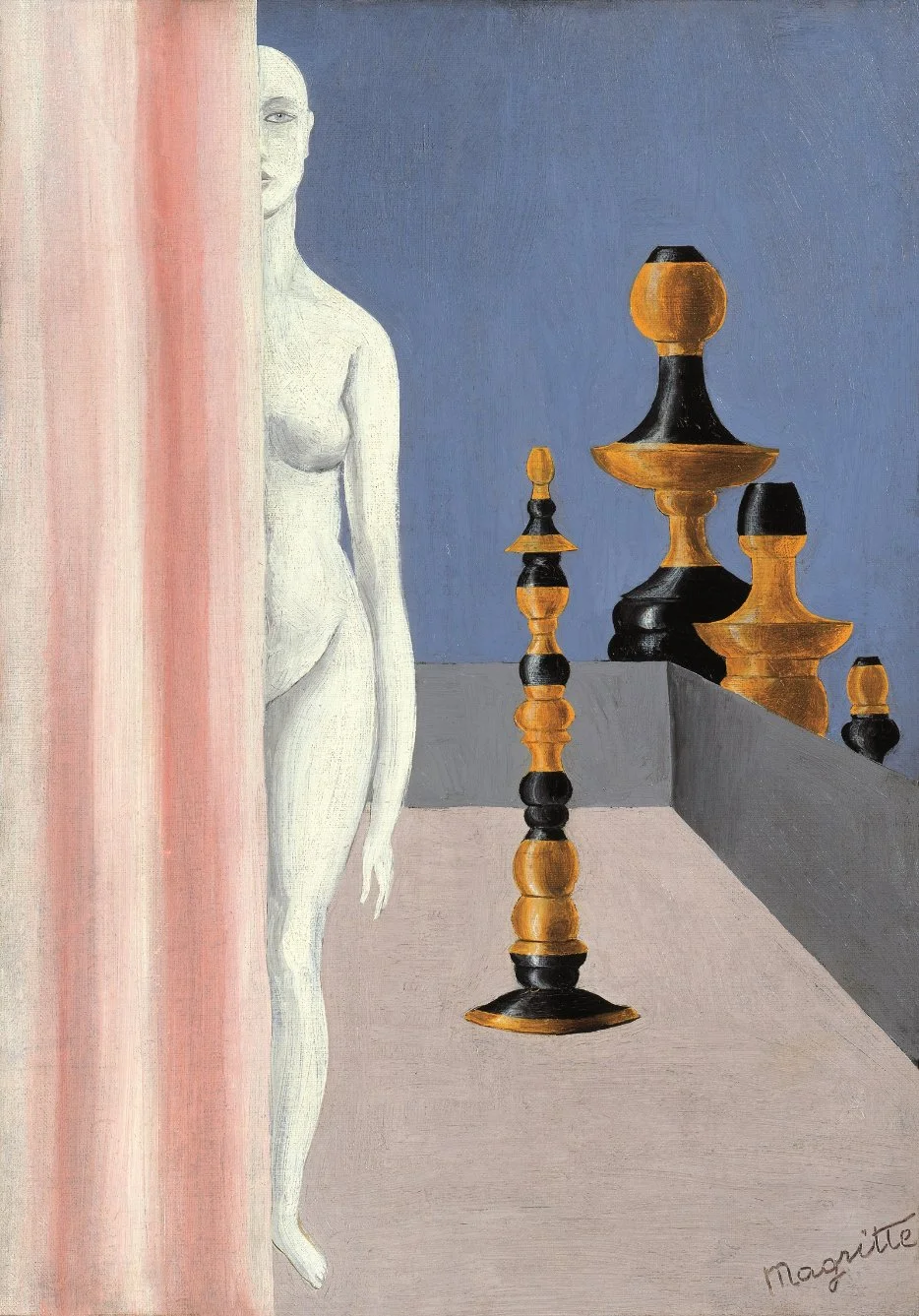
The show maps the provenance timeline of each displayed work, bringing historical narratives into the foreground. Biographical exhibitions can be a challenge. In a slightly different educational gesture than the anti-intellectualism plaguing museum plaques, where artists’ personal details take priority over the work itself, the work of art here still takes a secondary position to information. Art represents a story and thus loses its autonomy. The work is no longer important because it is art; the work is important for the history it represents. This approach attempts to give the gallery-goer a painless point of entry into art and meaning-making at large, but it never fails to come across as patronizing and distrustful of the audience’s intellect, assigning identity and history as prime tools for interpretation rather than the age-old skill of looking.
Many works benefited from the exhibition’s pursuit of historical narrative, unveiling colorful details of the Circle’s interpersonal affairs. The first painting of the show, Miró’s “The Arrow Piercing Smoke,” had originally been owned by the man it was dedicated to, Serge Lifar. The Ukrainian-French dancer and choreographer was a member of the notorious “Ballets Russes” and had worked closely with Max Ernst in costume and stage design. Appointed a year before and holding on to his directorship of the Ballet wing of the Paris Opera during Nazi Occupation, he was removed briefly for Nazi collaboration once the German occupying force retreated from France. “The Arrow Piercing Smoke” was held by Lifar for about thirty-six years before the painting’s acquisition by Paul Pétridès, where, at some point in the mid-1960s, it made the same leap across the Atlantic that Miró made to New York City nearly twenty years prior, eventually settling into the home of Alexander and Louisa Calder. While not necessarily about the art, the information supplementing the work poses it more as an object used to better understand the inner workings, members, associates, and the political landscape of the Surrealist diaspora.
Joan Miró
The Arrow Piercing Smoke, 1926
Oil on canvas
40 x 56 cm
Courtesy of Ulla and Heiner Pietzsch
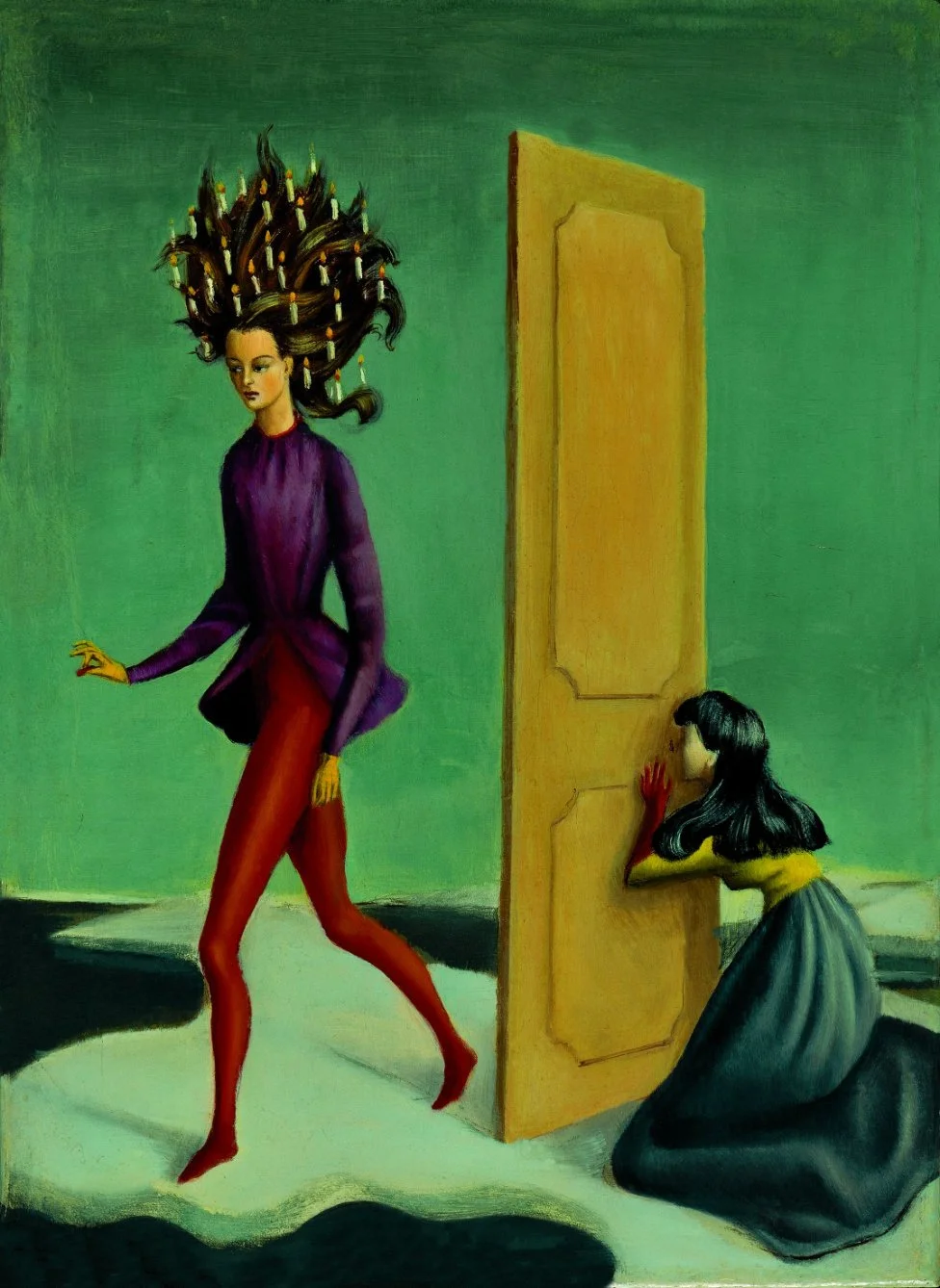
The show has quite a few Ernst paintings given its relatively small size. And this is by no means a critique—he was not only one of the most central figures of the movement but also was interned at Les Milles, the concentration camp that would inspire his escape to the US with Peggy Guggenheim during his second arrest. His life is tinged with the effects of Nazi occupation, the driving narratological force of the show, but this fact led to a reliance on indirect ties to Nazism on the part of his displayed work. Kurt Siegelmann had many works alongside Ernst at the Exposition internationale du Surréalisme. He also held on to Ernst’s Garden Airplane Trap. Due to Siegelmann’s Judaism, he brought the painting with him to the US to avoid Nazi persecution. Another exhibited Ernst painting belonged to a different Jewish artist, Tristan Tzara, to whom Ernst gifted his painting Two Nude Girls, which remained in Tzara’s possession until his death in 1963, following his move to Marseille and his involvement in the French Resistance. Another displayed Ernst painting, Gala, Max and Paul, is a far cry from Garden Airplane Trap and Two Nude Girls, whose provenance is inseparable from Nazi persecution. Gala, Max, and Paul tells the story of Ernst’s ménage à trois with Paul and Gala Éluard. Despite being wonderfully scandalous biographical details, its inclusion in this show feels askew. A dramatic tone shift towards the playful fits poorly among so many artistic artifacts whose histories speak to evading Nazi destruction. Such an inclusion possibly hints, if read ungenerously, as wall filler or, more likely, an incomplete concept.
To exhibit a show where wall texts are more important than the paintings themselves is undoubtedly bizarre, a strangeness that permeated the gallery. Walking through the show, it felt out of place in an art museum like the Neue Nationalgalerie—possibly resonating more with a public archive or history museum than with an art institution. To study color and form felt antithetical to the curators’ mission, and yet, the format of an art show prevents combing through extensive texts, as the form necessitates the primacy of artworks. Networks of Surrealism was between an art exhibition and a historical exhibition, and in an attempt to straddle both, was left with two feet in the air.
Max Ernst to Dorothea Tanning: Networks of Surrealism is on view through March 1 @ Neue Nationalgalerie, Potsdamer Straße 50, Berlin