Arthur Jafa Assembles an Immersive New World

Arthur Jafa: I Am Tony, 2026. Exhibition view: New Museum, New York. Courtesy New Museum. Photo: Dario Lasagni

text by Hank Manning

From a young age, Arthur Jafa recognized the power of context and organization. He cut out and rearranged images from magazines and catalogs, now collected in binders. Clearly, their previous presentation was not the only one possible. This remains a core habit throughout his career, which he began as a cinematographer before gaining recognition as an editor. He moves from photography to sculpture to video to readymades: re-sorting items and images, many of them highly familiar, in a new and critical order. These rearrangements provoke changes in our patterns of thought. Uncanny at first, we then wonder: is Facebook or Google or any other giant conglomerate any more deserving of determining what we see than Arthur Jafa? In I Am Tony, the artist has put this to the test across two floors of the New Museum, curating a parallel universe encompassing the full breadth of his practice, and suggesting a cultural zeitgeist that could emerge from it. 

Arthur Jafa: I Am Tony, 2026. Exhibition view: New Museum, New York. Courtesy New Museum. Photo: Dario Lasagni

Throughout, there is an assertive, unsubtle portrayal of an American racial dichotomy. Each wall is painted either entirely white or black, just as scenes of white and Black faces seem to exist in entirely separate planes of reality. Jafa describes his art as “super Black,” but notes that his idea of Blackness is expansive. This view is strongly supported through the exhibition, which centers the building of Black identities through music, sports, and popular culture, as well as the deeper influence of African traditions. Uplifting scenes blend with comic relief, but also an ever-present specter of violence, leading to a sense of unease. 

Specific resolutions from his work—what to think or what to do—remain elusive. Many rooms are so dark that explanatory texts are difficult to read, as if to intentionally limit our ability to understand. Thus, in the mazelike floorplan, we have to find our own way, balancing consumption of the works with attempts to make sense of them. Again, this reflects the real world, where influences—sometimes at the periphery, others in focus—compete and may overwhelm us.

Through his ten films on display, extreme strategies attempt to capture ever-dwindling attention spans. The White Noise, a 30-minute collage of memetic videos from the past twenty years, a perfect match for an audience accustomed to rapid-fire scrolling, never sits too long on a single clip, shifting between race-based rants, menacing displays of weaponry, and jubilant dance. Others test our patience a bit. BEN GAZARRA, for which Jafa re-edited the final scene of Martin Scorsese’s Taxi Driver, replaces characters at a brothel with Black actors, as the screenplay—and common stereotypes—originally demanded. The sequence repeats a dozen times, presenting different ways the finale could have centered and reframed these characters. Another hour-long film, AGHDRA, features repetitive dark rolling waves and slowed-down soul music that could supplement meditation.

Arthur Jafa: I Am Tony, 2026. Exhibition view: New Museum, New York. Courtesy New Museum. Photo: Dario Lasagni

The pieces directly impact and complement one another. Although each film has its own room, their sounds echo far and wide. The faces of Black musicians dominate the exhibition. (Its name derives from Tony Williams, drummer for Miles Davis.) Robert Johnson, Jimi Hendrix, and Michael Jackson appear throughout. They are a reminder that redefining popular culture does not require any additions; it can result from a shifted perspective alone. Just as well, they reveal how one type of art, or even one facet of society, impacts another. Jafa notes with pride the diverse range of music his heroes developed: gospel, jazz, blues, reggae, hip hop; and his goal of bridging such diversity to the visual arts. 

With Travis Bickle’s status as an iconic anti-hero, and even inspiring the attempted assassination of a US President, we consider the butterfly effect that depictions of race in the arts have on broader events. If Bickle’s racism had been that much more obvious, as originally intended, would discussions around the film have changed, would societal conversations have adapted? This is just a single work of art, while Jafa rethinks our entire collective memories, although generally with the same ingredients. At first, this feels confusing. We are often left, metaphorically and physically, in the dark. But we can’t help but consider just how arbitrary our ordinary sense of comfort is: just outside the exhibition, other forces have determined our normal. 

Arthur Jafa, APEX, 2013.
Video, color, sound; 8:12 min. © Arthur Jafa.
Courtesy the artist and Gladstone.
Image: NASA, ESA, L. Calçada, Solar Dynamics Observatory

By making himself our authority on the presentation of so many common sights, and in the process disorienting us, we necessarily scrutinize the authorities outside the museum. Thus, Jafa has delivered a powerful anti-authoritarian message. His manifesto assembles piecemeal throughout the exhibition: “America is a Satanic cult,” “Jafa is the death wish of white supremacy.” At least he’s honest and consistent in his goals. We can’t say the same for the real-world corporate mantra, “Don’t be evil.”

Arthur Jafa: I Am Tony is on view through January 3 at the New Museum, 235 Bowery, New York

Read Our Interview of Paris-Based Artist Ladji Diaby →


April 11th marked the opening of Preservation, a group show curated by Paige Silveria and Paul Hameline at CØR Studio in Paris. The exhibition brings together a disparate group of artists (including Ladji Diaby, Alyssa Kazew, Mark Flood, Gogo Graham, Jordan Pallagès, Anthony Fornasari, Bill Taylor, Caos Mote, Ron Baker, Cecile Di Giovanni, Simon Dupety, Gaspar Willmann, Wolfgang Laubersheimer, and the late, great Gaetano Pesce) whose work ranges from photography, collage, video, design, sculpture, and more. These works explore the original purpose of our human intellect before it became aware of itself and started to ask the unknowable. They reflect on a time when the self wasn’t yet conscious and only concerned itself with preservation in the most existential sense of the word. On the occasion of the opening, Paige Silveria spoke with artist Ladji Diaby to learn more about his roots in Mali, his creative process, and his relationship to the art scene in Paris. Read more.

Read Our Interview of Puppies Puppies on the Occasion of Her Solo Exhibition @ The New Museum →

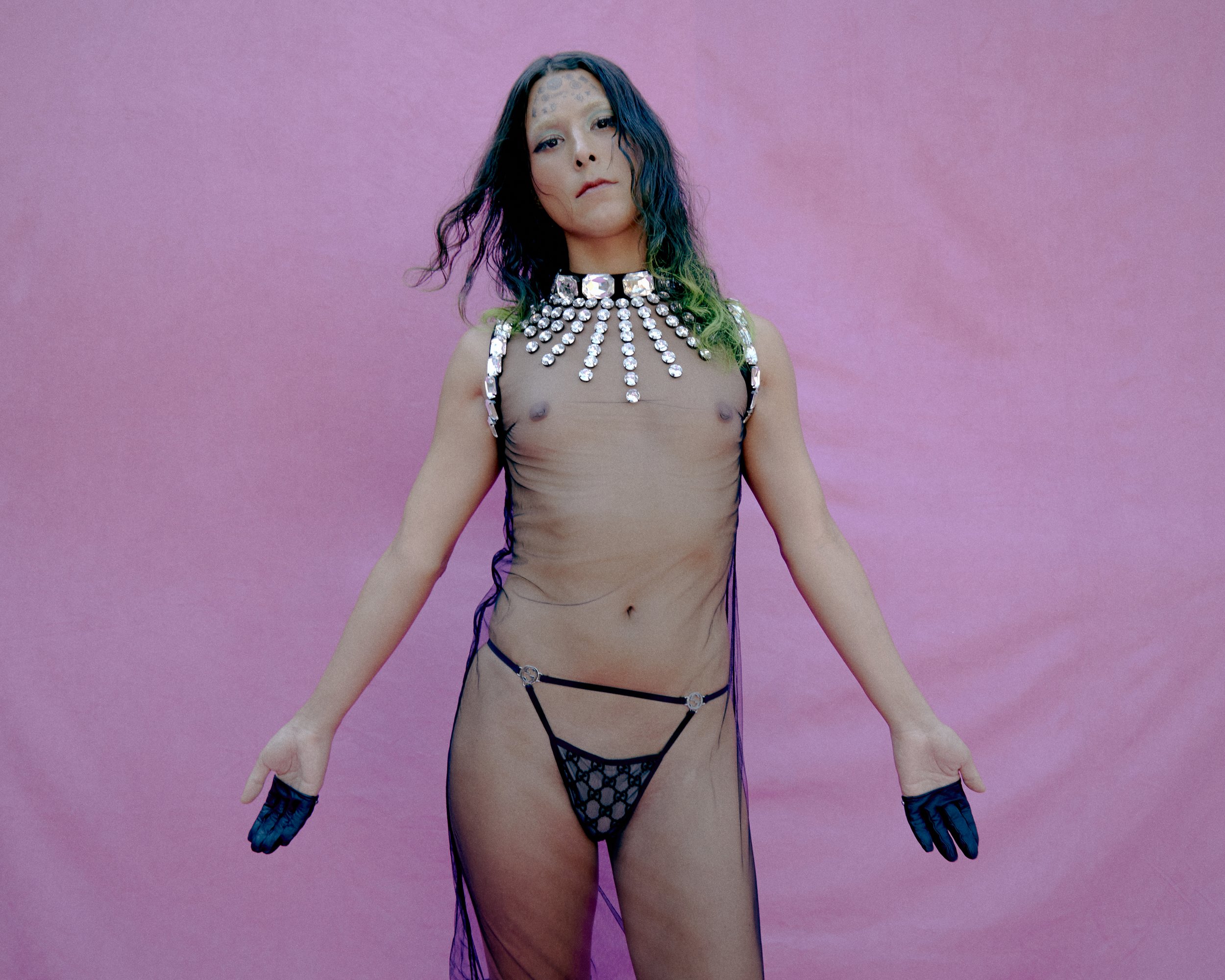
Puppies Puppies stands against a pu

Jade Guanaro Kuriki-Olivo, known by the pseudonym Puppies Puppies, is revolutionizing trans and Indigenous visibility through her critically-acclaimed conceptual works of sculpture and performance art. Despite a very genuine and personal embodiment within the work, an air of mystery once shrouded her identity as she initially insisted on a level of anonymity rarely exhibited by artists, particularly of her generation. In late 2017, however, this shifted with the very first reference to the artist’s gender transition taking place in her Green (Ghosts) installation at Overduin & Co. in Los Angeles. Kuriki-Olivo and her then-boyfriend lived in the gallery during the hours it was closed, leaving only traces of their existence during the hours it was open. Here, she taped two estrogen pills to the wall, pointing toward her gender-affirming course of hormone therapy—a subtle gesture that gently opened the door of visibility. Employing the mundane, everyday objects that surround her life is a hallmark of Puppies Puppies’ practice and readymades are one of her favorite ways to reference the art historical canon. An initial easter egg of visibility has since swung the door open to a state of consensual voyeurism in Nothing New, her current solo exhibition at the New Museum where the artist is occupying the Lobby Gallery with nearly constant access to her comings and goings via video surveillance, live stream access, and glass walls overlooking a recreation of her bedroom. Puppies Puppies also points to elements of her multi-ethnic indigeneity—Taíno on her father’s side and Japanese on her mother’s—with the inclusion of objects and spiritual practices that connect her disparate lineages in a form of what the exhibition’s curator, Vivian Crockett, refers to as a memoryscape. Crockett got cozy in bed for her interview of Puppies Puppies on the eve of the exhibition’s inauguration to discuss their creative collaboration. Read more.

Ai Weiwei Breeds High Culture With Lego to Rebirth Readymades @ neugerriemschneider in Berlin

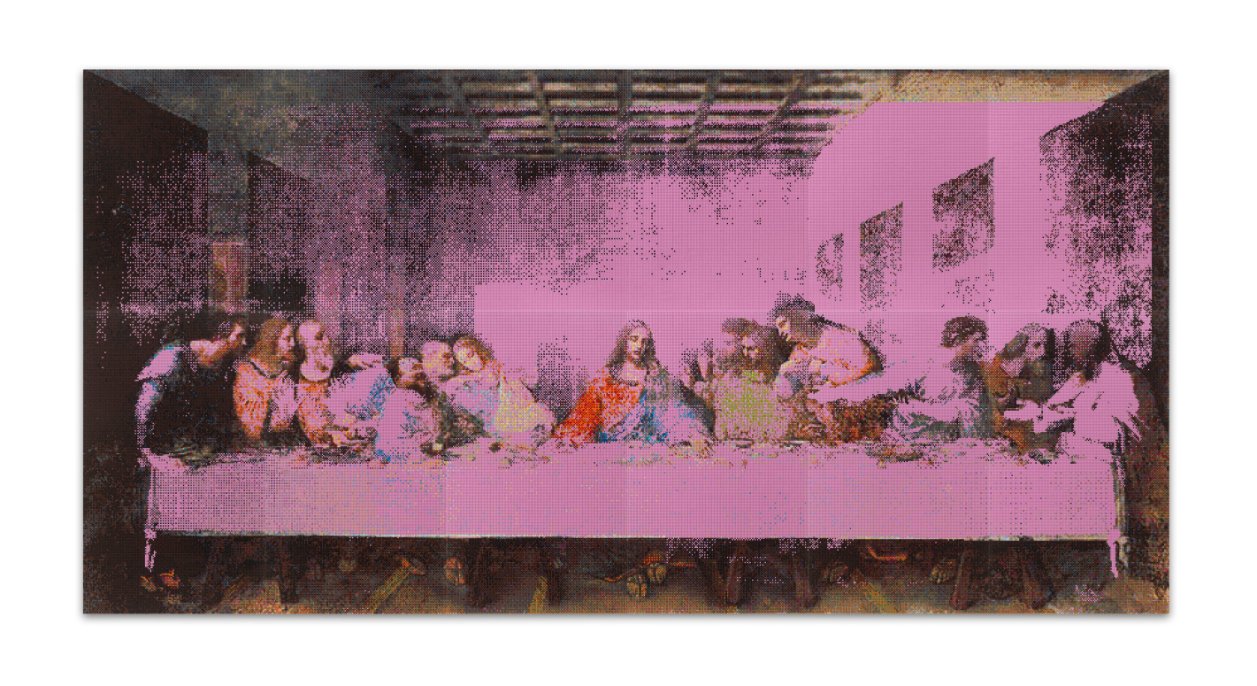
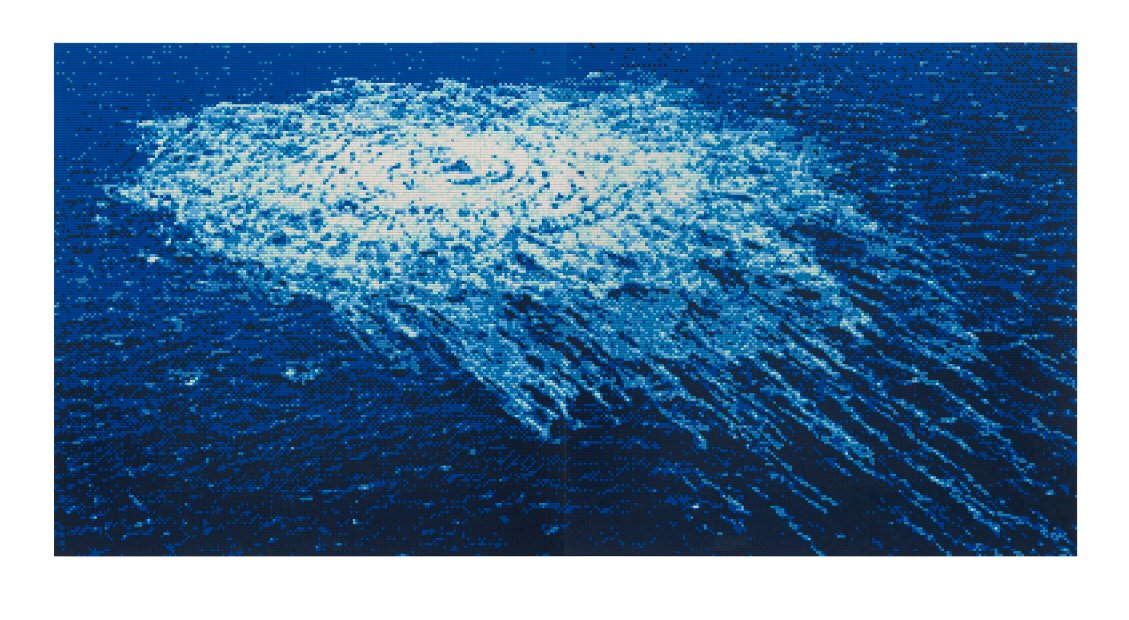
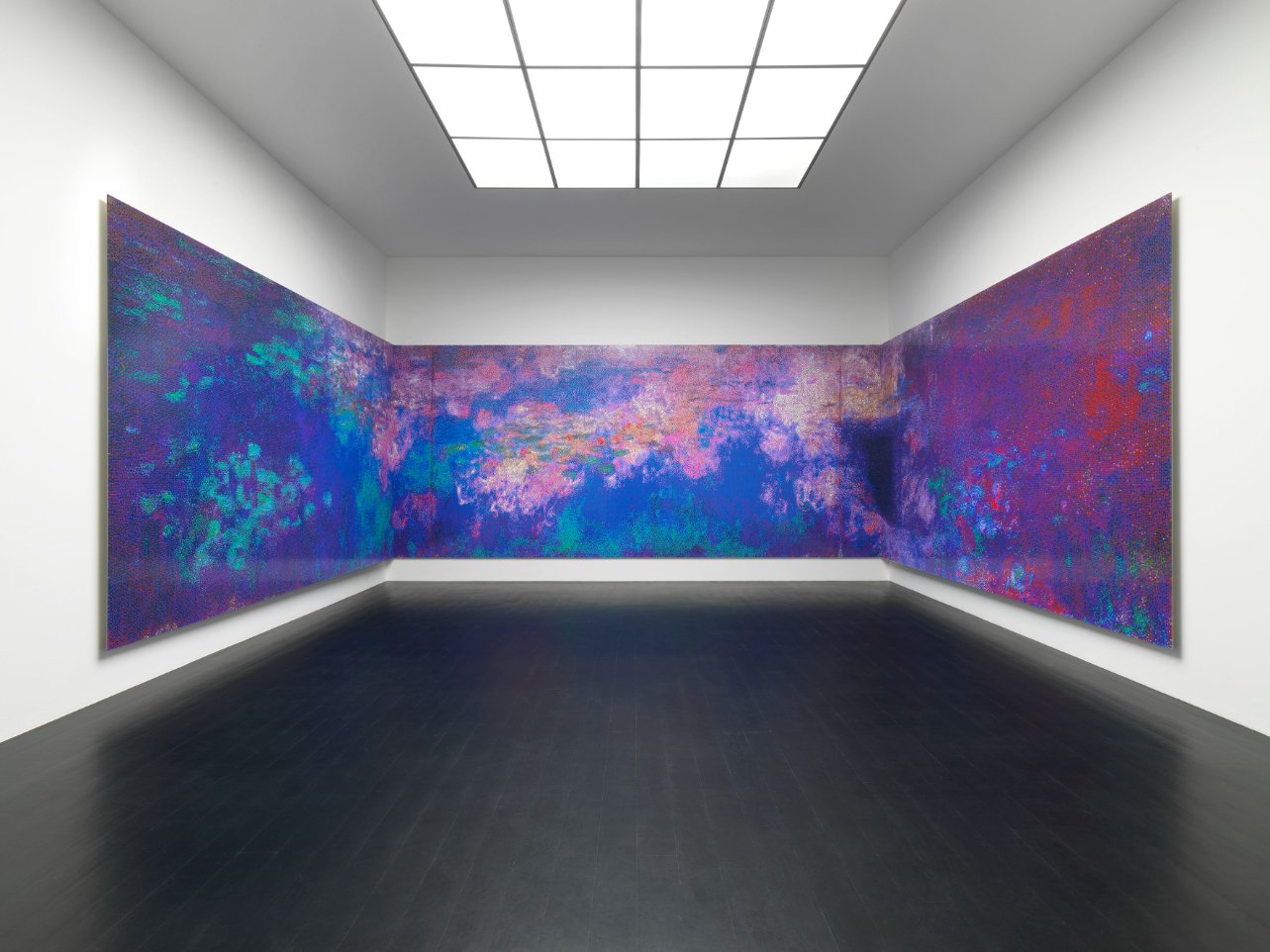
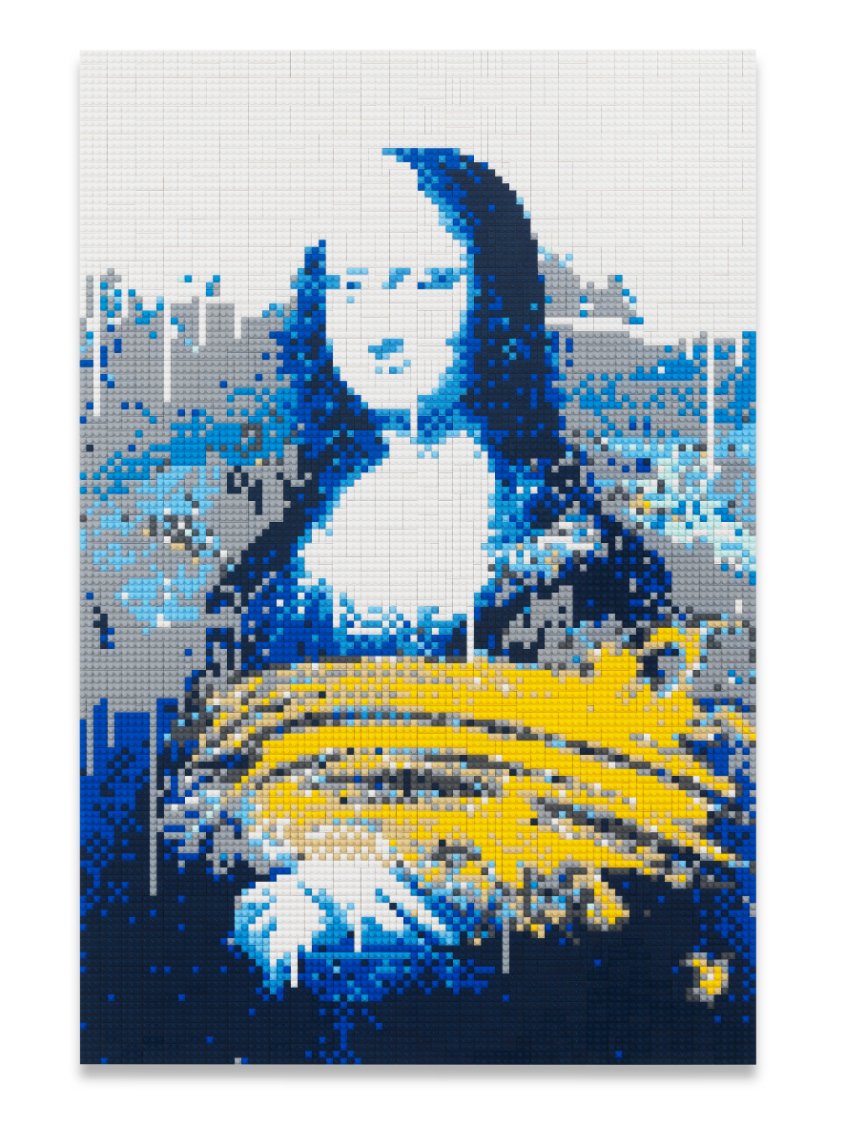
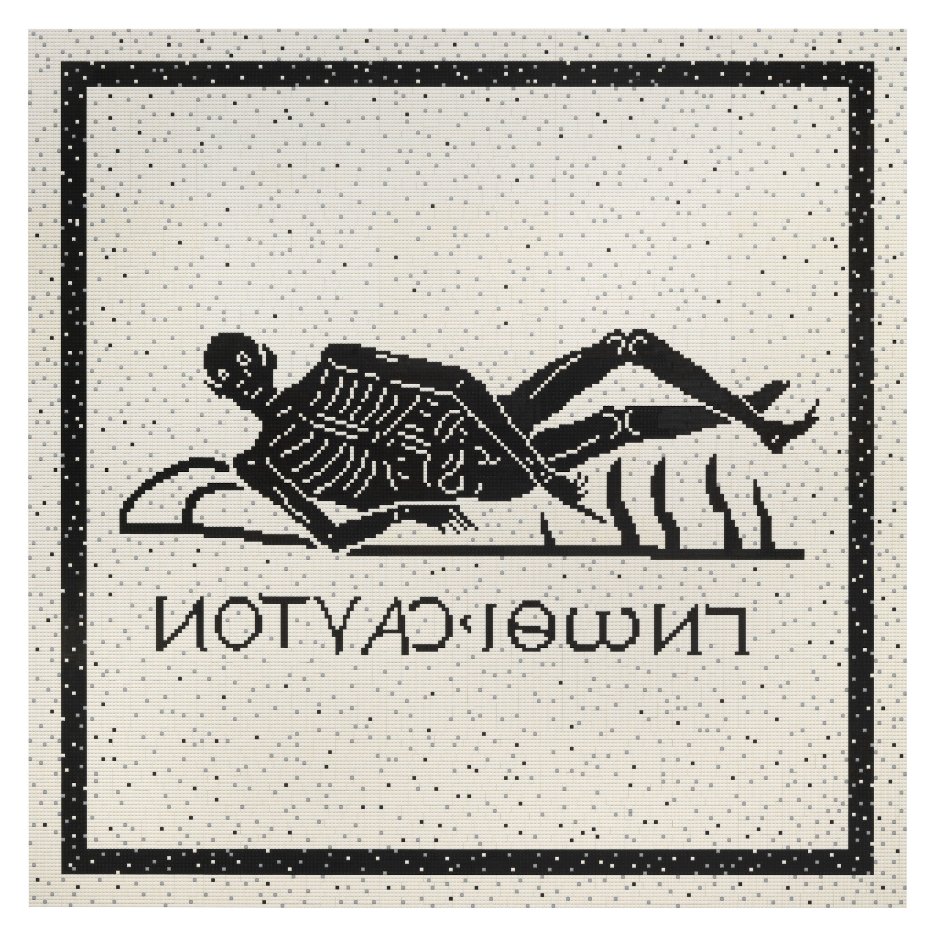
know thyself, Ai Weiwei’s fifth solo exhibition with nerugerriemschneider, continues his extended engagement with imagery created from Lego bricks to reassess, de- and reconstruct or contextualize anew works from throughout art history and the contemporary media landscape. Using a traditionally playful, immediate, generationally and geographically ubiquitous medium to analytical, critical extents, Ai shapes a veritable survey of both the Western cultural canon and of his own artistic trajectory.

Throughout his body of work Ai has returned to Lego bricks time and again, laboriously harnessing pieces by the hundreds of thousands to interrogate the parameters of imagemaking and production, honing his use of the material and expanding its representational and theoretical capacities to shape facsimiles of well-known works of art and other popular media. Honoring Marcel Duchamp and his legacy of the readymade, Ai deploys the mass-produced objects for adaptations of preexisting motifs, translating and often modifying them within his own social and political contexts, the angular components mimicking the pixels that coalesce to become today’s digital, widely and infinitely distributed imagery.


know thyself is on view through March 30th, 2024, at neugerriemschneider, Christinenstrasse 18-19, 10119 Berlin.

Andy Warhol: From A To B And Back Again @ Whitney Museum Of American Art In New York

Andy Warhol: From A to B and Back Again positions Warhol's career as a continuum, demonstrating that he didn't slow down after surviving the assassination attempt that nearly took his life in 1968, but entered into a period of intense experimentation. The show illuminates the breadth, depth, and interconnectedness of the artist’s production: from his beginnings as a commercial illustrator in the 1950s, to his iconic Pop masterpieces of the early 1960s, to the experimental work in film and other mediums from the 1960s and 70s, to his innovative use of readymade abstraction and the painterly sublime in the 1980s. His repetitions, distortions, camouflaging, incongruous color, and recycling of his own imagery challenge our faith in images and the value of cultural icons, anticipating the profound effects and issues of the current digital age. From A To B And Back Again is on view through March 31, 2019 at Whitney Museum Of American Art 99 Gansevoort Street New York. photographs courtesy of Whitney Museum Of American Art