
 Shot by Terry Richardson
Totally Bananas: The Footwear Creations of Kobi Levi
XXX+1

SlingShot3_Kobi_Levi
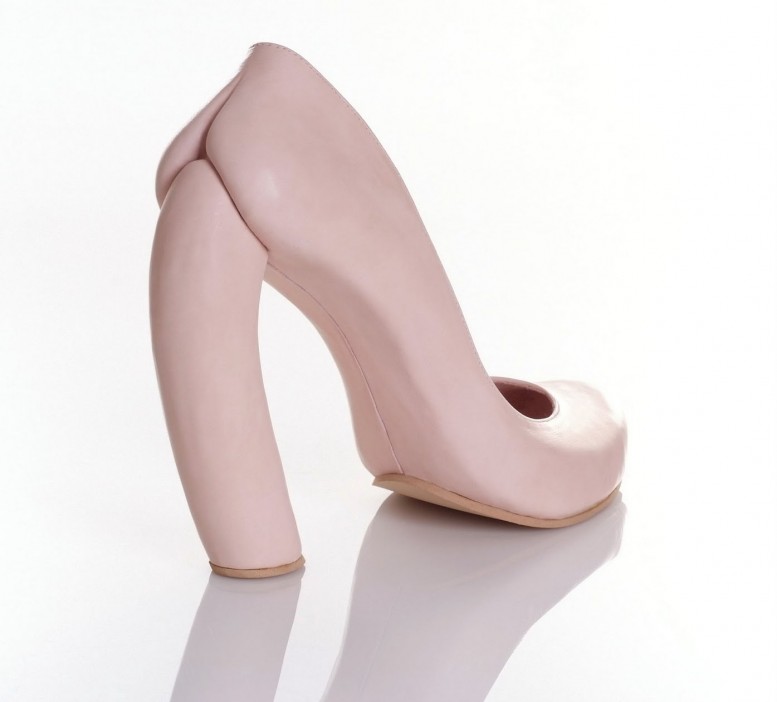
Kobi Levi's heels are "wearable sculptures" that verge on fetishistic with an ironic, seemingly dadaist, wit. If Roger Vivier, 20th century French fashion designer credited with revolutionizing the stiletto heel, is considered the "Fragonard of the shoe," than you might call Kobi Levi the the "R. Mutt of the shoe." R. Mutt is of course the name signed on Dada artist Marcel Duchamp's iconic and ridiculous 1917 ready-made sculpture entitled "the fountain" - which was simply a found urinal. Is it genius or asinine? Levi, like Duchamp, is certainly making a statement. Levi's pieces are "...humoristic with a unique point of view about footwear." Throughout the history of civilization, women's fashion has taken turns as bondage and liberation. Levi's constructions might be both, or the handiwork work of a batty sculptor with a foot fetish. From semi-blatant sexual innuendo to slingshots to banana peels, Levi's shoes are cartoonish, bombastic, and in their magical kitschyness there is a beautiful complex brilliance which makes them insanely cool. www.kobilevidesign.blogspot.com
Vija Celmins: Television and Disaster
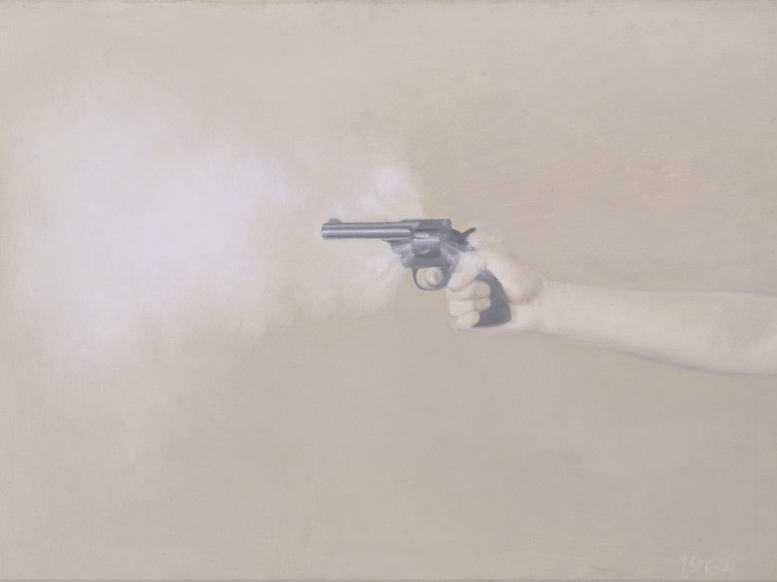 Vija Celmins - Man With Gun
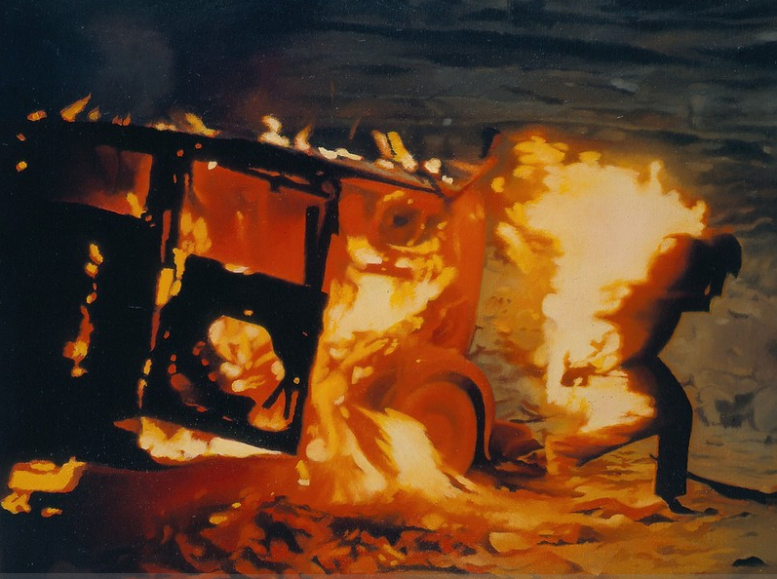 Vija Celmins - Burning Man
Painter Vija Celmins, born in 1938 in Riga, Latvia, has lived and worked primarily in New York since 1981. She immigrated to the United States at the age of ten with her family, settling in Indiana. After attending the John Herron Art Institute in Indianapolis, Celmins completed her MFA at the UCLA in 1965.
With a palette focused on the gradations between black and gray, Celmins has been known as a painter of refined representational images of night skies, ocean waves and spider webs. But her first subjects were war planes, smoking guns, and other images of death and disaster. In all of her work, the precisely rendered paintings suggest the importance of patience – the artist’s, in making a precisely rendered painting, and ours, in viewing it.
Organized by the Menil Collection and consisting of approximately 20 paintings and two small sculptures, Vija Celmins: Television and Disaster will be the first exhibition to concentrate on a specific time (1964-1966) and subject matter – including violence in America, U.S. involvement in the Vietnam War, and the news media. While several early images derive from the artist’s own interest in common objects from the studio, such as a television set or a lamp, this exhibition also concentrates on images of war – and televised images of conflict. Celmins’s work from this pivotal time reflects on the moment when the printed image began to give way to the television screen.
This exhibition will travel to the Los Angeles County Museum of Art March 13–June 5, 2011. www.menil.com
Loves Poems: I've Dreamed of You So Much
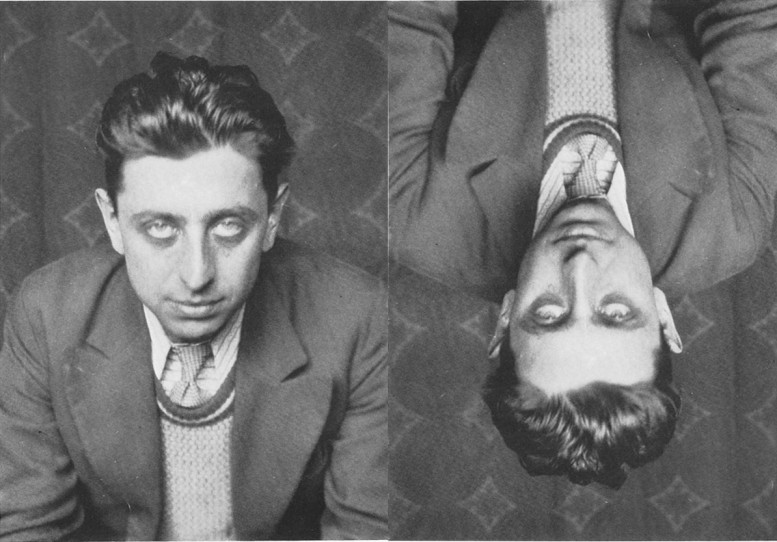 I’ve dreamed of you so much you’re losing your reality.
Is there still time to reach that living body and kiss
on that mouth the birth of the voice that’s dear to me?
I’ve dreamed of you so much that my arms, used to crossing on my chest
as I hug your shadow, couldn’t fold themselves around the shape of your body, maybe.
And faced with the actual appearance of what’s haunted me and ruled me for days and years,
I would probably turn into a shadow.
O what a sentimental pair of scales.
I’ve dreamed of you so much there’s probably no more time for me to wake up.
I sleep standing up, my body exposed to all the appearances of life and love and you,
the only thing that counts for me today. I’d probably reach for the first lips and face that came along,
than your face and your lips.
I’ve dreamed of you so much, walked so much, talked, slept with your phantom
that maybe there’s nothing left for me to do but be a phantom among the phantoms
and a hundred times more shadow than the shadow
that strolls and will go on strolling cheerfully over the sundial of your life.
I’ve dreamed of you so much you’re losing your reality.
Is there still time to reach that living body and kiss
on that mouth the birth of the voice that’s dear to me?
I’ve dreamed of you so much that my arms, used to crossing on my chest
as I hug your shadow, couldn’t fold themselves around the shape of your body, maybe.
And faced with the actual appearance of what’s haunted me and ruled me for days and years,
I would probably turn into a shadow.
O what a sentimental pair of scales.
I’ve dreamed of you so much there’s probably no more time for me to wake up.
I sleep standing up, my body exposed to all the appearances of life and love and you,
the only thing that counts for me today. I’d probably reach for the first lips and face that came along,
than your face and your lips.
I’ve dreamed of you so much, walked so much, talked, slept with your phantom
that maybe there’s nothing left for me to do but be a phantom among the phantoms
and a hundred times more shadow than the shadow
that strolls and will go on strolling cheerfully over the sundial of your life.
~ Robert Desnos
Inspiration: Tattoos for Valentine's Day Eve
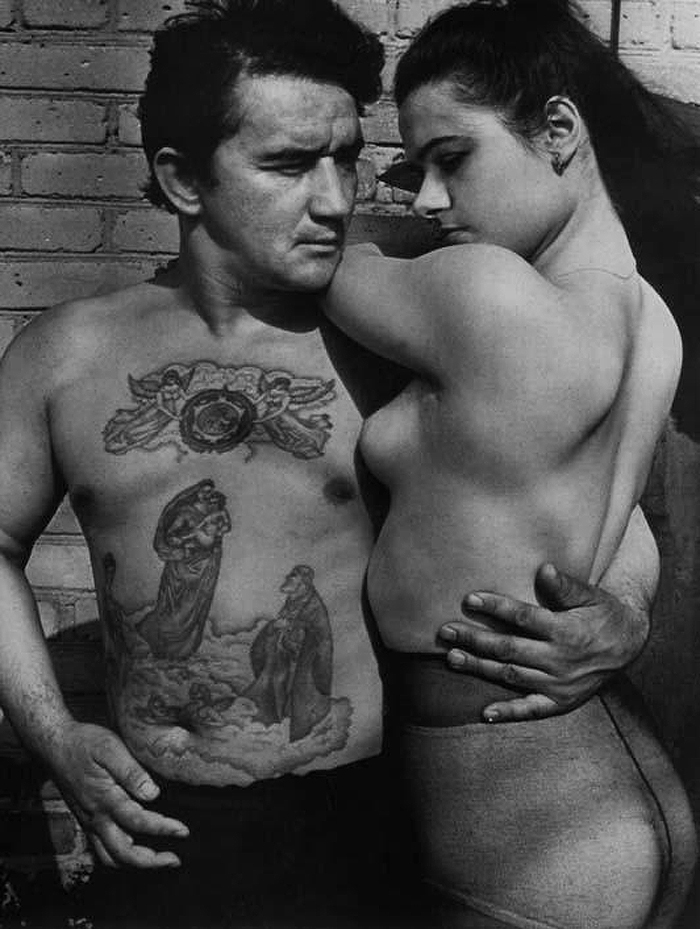
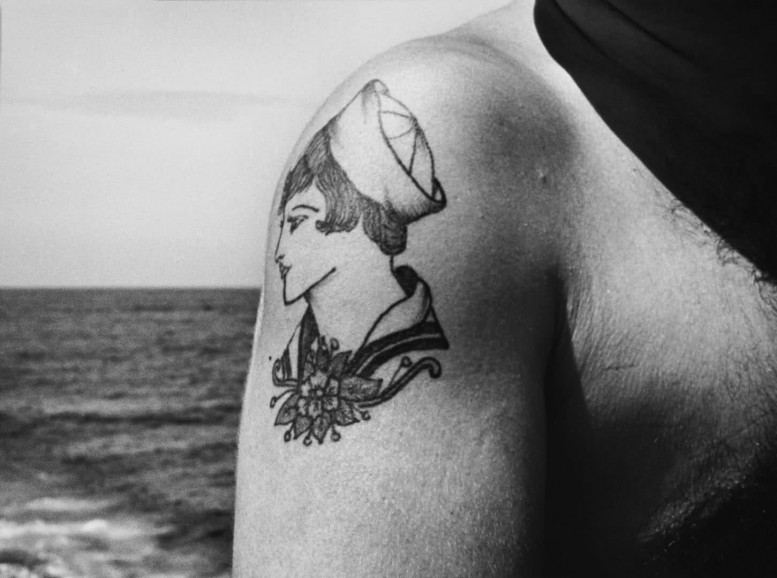
Self Portrait at My Desk
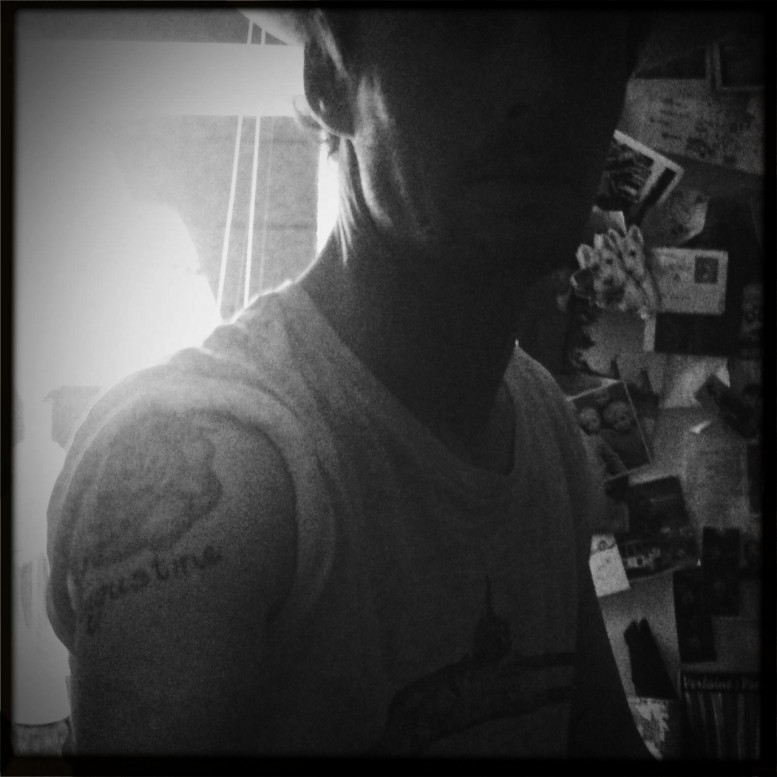 “A desk is a dangerous place from which to watch the world.”
Kawa = Flow: The Images of YAMAMOTO MASAO

#1591 160x243m/m

#1554 143x218m/m
Artist Yamamoto Masao describes is work, albeit obscurely and poeticly, with these words: "Kawa = Flow is about the world where we are and the world where we go in the future. Although we seem to be connected continually there is a rupture between us in the present and those that went before us or that come next." "Kawa" means river or more precisely flow. Masao's photographs are like microscopic imagery of the cellular structure of enlightenment; tiny snapshots of those beautiful moments where everything rushes too close and spills over the edge of the mind into pure ecstasy - and everything is crystal clear, if only for a tenth of a millisecond. Oblivion = Eternity. You can see some of Masao's work at the Maerz Gallery in Leipzig February 26th. www.maerzgallerie.com + www.yamamotomasao.com
Jewelry: Claudia Arbex


Claudia Arbex is a jewelry designer based in Brazil.
A Prospect of the Sea
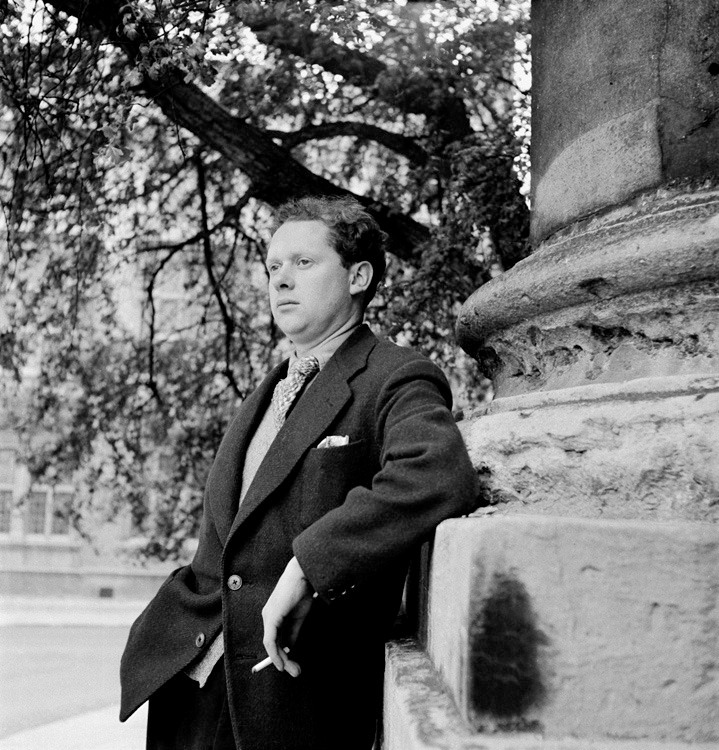 Dylan Thomas, outside the Ashmolean, Oxford c.1946 © Francis Reiss
'Wake up,' she said into his ear; the iron characters were broken in her smile, and Eden sank into the seventh shade. She told him to look into her eyes. He had thought that her eyes were brown or green, but they were sea-blue with black lashes, and her thick hair was black. She rumpled his hair, and put his hand deep in her breast so that he knew the nipple of heart was red. He looked in her eyes, but they made a round glass of the sun, and as he moved sharply away he saw through the transparent trees; she could make a long crystal of each tree, and turn the house wood into gauze. She told him her age, and it was a new number. 'Look in my eyes,' she said. It was only an hour to the proper night, the stars were coming out and the moon was ready. She took his hand and led him racing between trees over the ridge of the dewy hill, over the flowering nettles and the shut grass-flowers, over the silence into sunlight and the noise of a sea breaking on sand and stone." (Dylan Thomas, from "A Prospect of the Sea.")
Jeanloup Sieff’s Photographic Formations

"The French photographer Jeanloup Sieff (1933–2000) began photographing in the 1950s. He worked in the tradition of French humanist photography and photographers such as Edouard Boubat, Henri Cartier-Bresson and Robert Doisneau. His early reportages have a romantic, nostalgic air, with lovers, cafes, smoke-filled jazz clubs and other familiar Paris milieus. He was commissioned by the fashion magazine Elle for portraits and short articles, and in 1958 joined the prestigious Magnum photo agency, before going back to freelance work the following year. One of his favorite subjects was portraits of French cinema and “la nouvelle vague” personalities, including Jean-Claude Brialy, François Truffaut and Jean Seberg." A new exhibit exploring his Sieff's work entitled Jeanloup Sieff's Photographic Formations will be opening on Feb. 19 at the Moderna Museet in Stockholm. The exhibit is on view until May 22, 2011. www.modernamuseet.se.en
Hide/Seek: Difference and Desire in American Portraiture

romaine_brooks-natalie_barney_1920_
Romaine Brookes "Natalie Barney" 1920
This is the first major museum exhibition to focus on sexual difference in the making of modern American portraiture. “Hide/Seek” considers such themes as the role of sexual difference in depicting modern America; how artists explored the fluidity of sexuality and gender; how major themes in modern art—especially abstraction—were influenced by social marginalization; and how art reflected society’s evolving and changing attitudes toward sexuality, desire, and romantic attachment. This is the last weekend to view Hide/Seek: Difference and Desire in American Portraiture at the National Portrait Museum in Washinton D.C. www.npg.si.edu
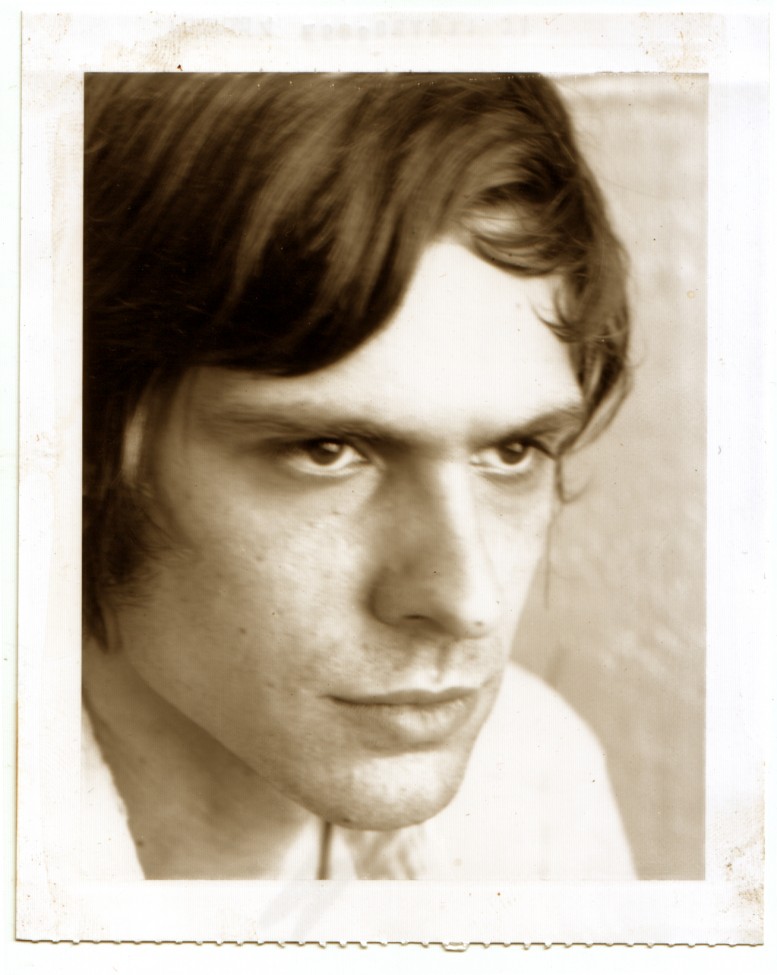
Lo-Fi: John Maus
The Truth is Not in the Mirror
 Michael Corridore, Untitled 13, from the Angry Black Snake series, Courtesy of a New York Collector
Photography as a medium has always been actively concerned with describing identity. While a portrait is typically an artistic representation of a person where verisimilitude is the goal, here the inquiry is questioned and expanded. Rather than employing a camera to create an objective document, the artists in this exhibition are often involved in constructing narrative sequences that pose questions with open-ended outcomes. As the title, The Truth is Not in the Mirror... suggests, photography has the power to imply, construct, and/or deny a narrative. Many of the photographers are contemporary storytellers and, in this sense, their work reflects facets of our ever-changing precepts about family, identity, truth and fiction. Artists include, in summary, Michael Corridore, Philip-Lorca diCorcia, Andy Freeberg, Lee Friedlander, David Hockney, Graham Miller, Martin Parr, The Sartorialist, Larry Sultan and Mickalene Thomas. The Truth is Not in the Mirror, Photography and a Constructed Identity is on view at the Haggerty Museum in Milwaukee, Wisconsin until May 22, 2011. www.marquette.edu/haggerty
Spring: Boy by Band Of Outsiders
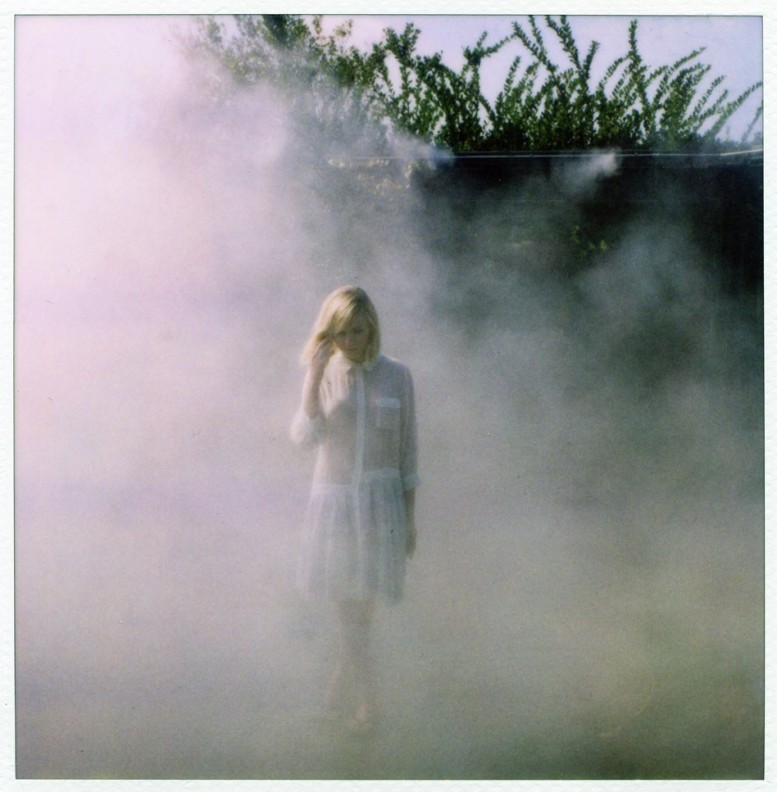
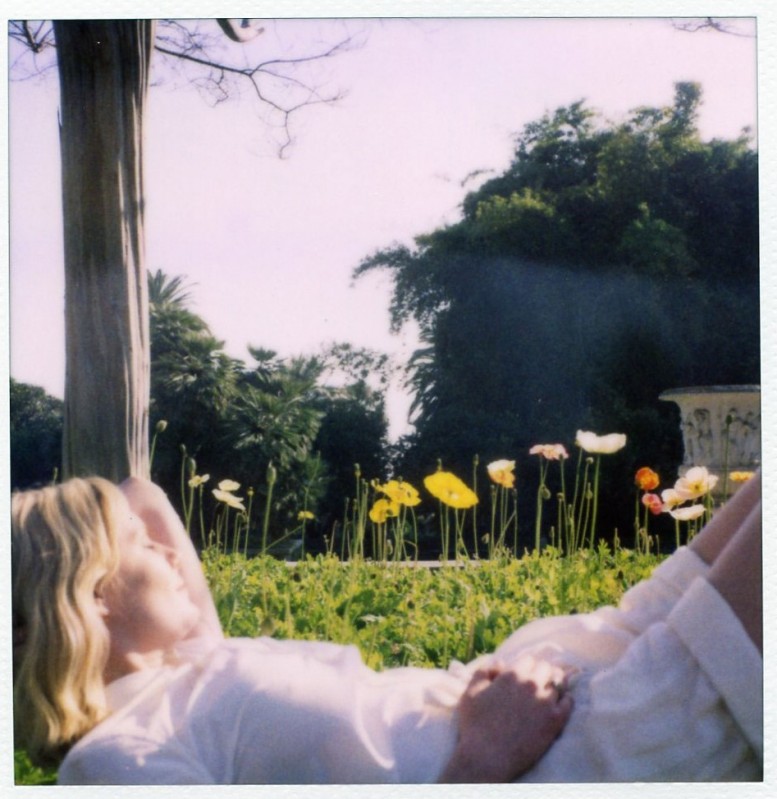
Kirsten Dunst in Band of Outsiders. Shot at the Huntington Botanical Gardens in Pasadena, CA. Feburary 1st, 2011 boy.bandofoutsiders.com
MATER SUSPIRIA VISION
Mater Suspiria Vision's psychedelic mash-up music video for their song Crackbusting Angeles (2011). mater-suspiria-vision.blogspot.com
The Photographic Work by F.C Gundlach
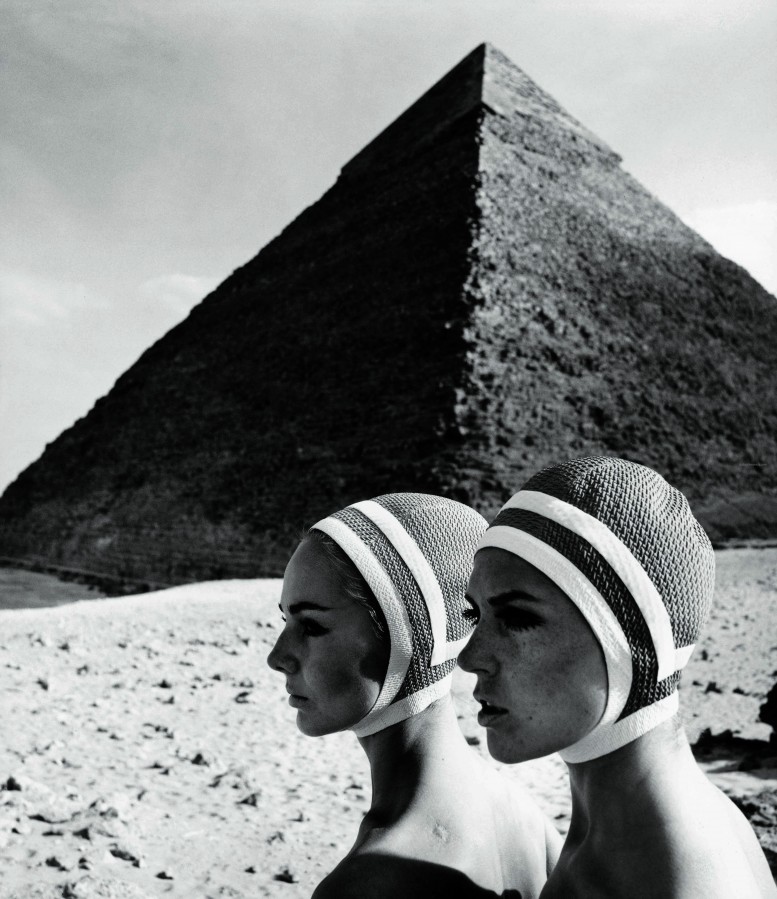 "Op Art-Fashion“, Gizeh/Ägypten 1966 In: Brigitte 10/1966 © F.C. Gundlach
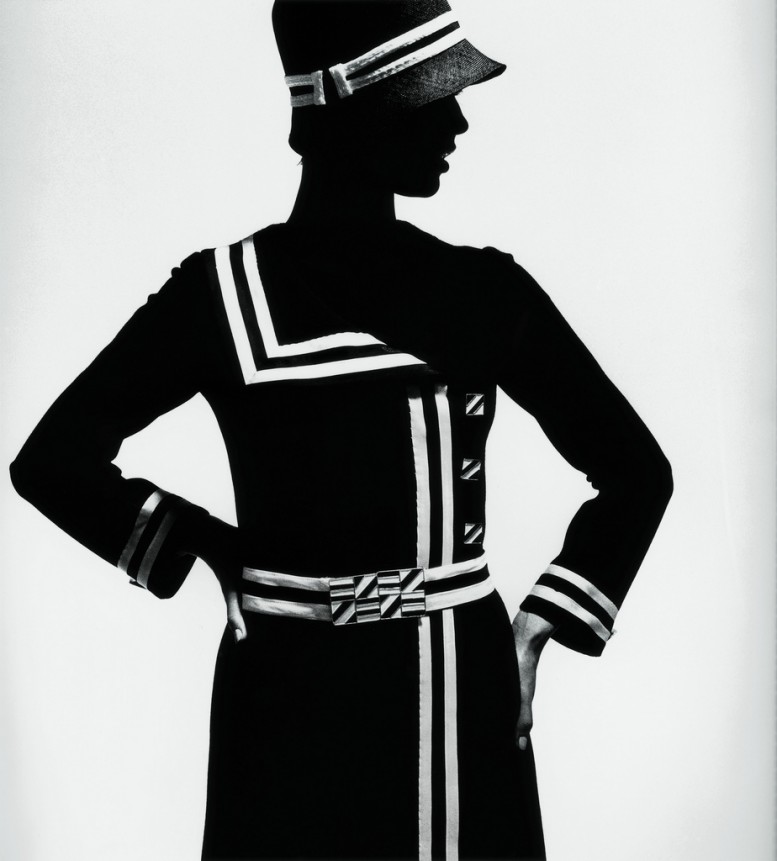 "Op Art-Silhouette“, Jerseymantel von Lend, Paris 1966 In: Brigitte 4/1966 © F.C. Gundlach
An extensive monograph of F.C. Gundlach's photography will be released this summer. "This definitive monograph brings F.C. Gundlach’s fashion work together for the first time in an extended way and establishes him as one of the most distinguished German fashion photographers of the post-war era. F.C. Gundlach placed fashion in the focus of his work for more than 40 years. His work presents not only the history of fashion, but also the poses, gestures, locations and atmosphere, which defined the changing ideals of beauty over decades. Alongside this work, Gundlach also created empathetic portraits, reportages and traveled intensively around the world. On his assignments he always worked closely together with the editors and art directors. His photographs for high-circulation magazines shaped the public’s perception of the permanent changing fashion. Yet his black-and-white and color photography also captured the spirit of its time, embodying the optimism of the meager days after the war, from the New Look to the swinging sixties, the op and pop art through to the highly staged photographs of the eighties." www.steidlville.com
For Los Angeles...
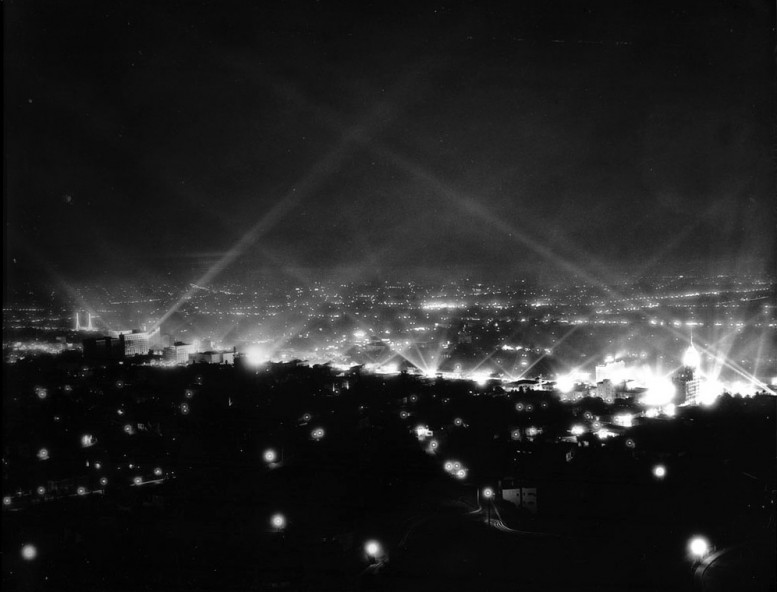 Hollywood, 1946
Scent of cedar on this Los Angeles evening scent of the new born day arrives at half past magic the glory of the morning sun rising on our broken hearts as they beat three beats in unison The sounds of waves with a triple z cascade below the mountain top down the coast we descend The toke of two pipes made of apples Cherry pies in between virgin thighs with a glance of nostalgia the memory of Remains.... (excerpt of an Untitled Poem by Adarsha Benjamin)
Givenchy Couture 2011
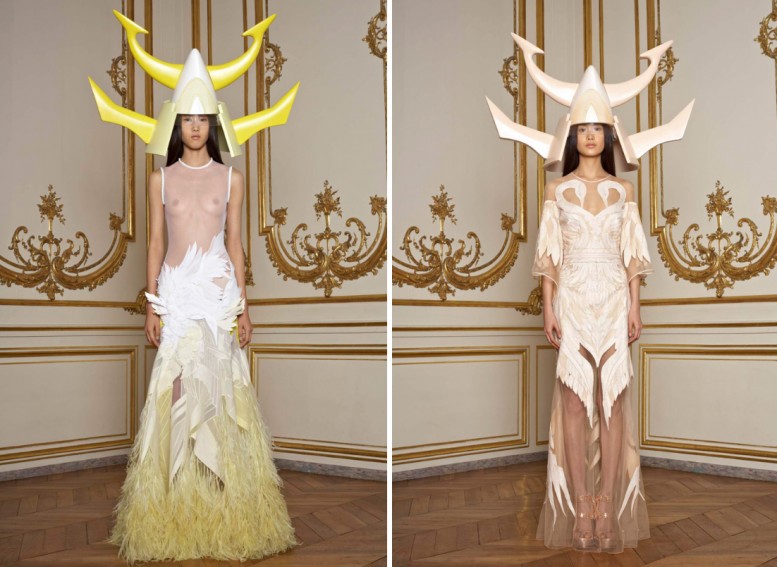
Givenchy Couture 2011 collection is inspired by the late, great Butoh dancer Kazuo Ohno.
Journey Into the Past
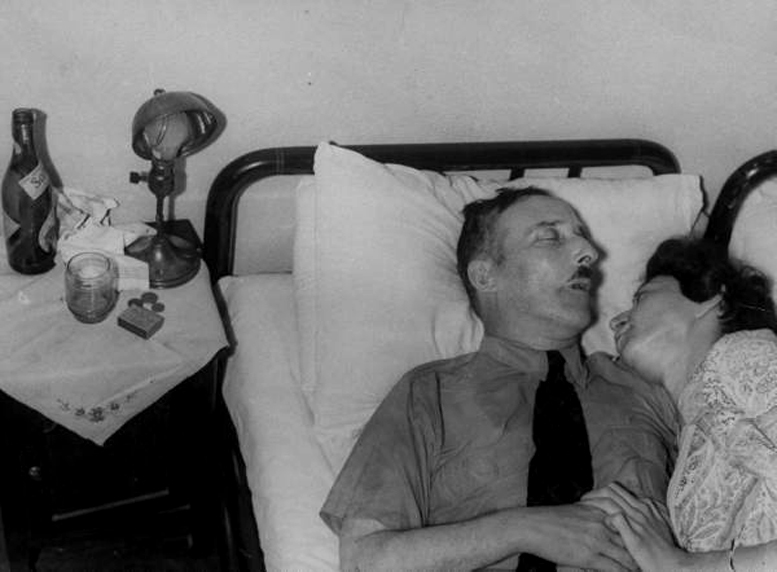 Poison on the Night Stand: Bodies of exiled Austrian author Stefan Zweig & his wife lying on bed, still holding hands, after they committed suicide together - Rio De Janeiro, Brazil - 1942
"A deep study of the uneasy heart by one of the masters of the psychological novel, Journey into the Past, published here for the first time in America, is a novella that was found among Stefan Zweig’s papers after his death. Investigating the strange ways in which love, in spite of everything—time, war, betrayal—can last, Zweig tells the story of Ludwig, an ambitious young man from a modest background who falls in love with the wife of his rich employer. His love is returned, and the couple vow to live together, but then Ludwig is dispatched on business to Mexico, and while he is there the First World War breaks out. With travel and even communication across the Atlantic shut down, Ludwig makes a new life in the New World. Years later, however, he returns to Germany to find his beloved a widow and their mutual attraction as strong as ever. But is it possible for love to survive precisely as the impossible?...During the 1930s, Zweig was one of the best-selling writers in Europe, and was among the most translated German-language writers before the Second World War. With the rise of Nazism, he moved from Salzburg to London (taking British citizenship), to New York, and finally to Brazil, where he committed suicide with his wife [in 1942]." You can find the newly translated Journey into the Past here.
Art and Prostitution: Mark Morrisroe
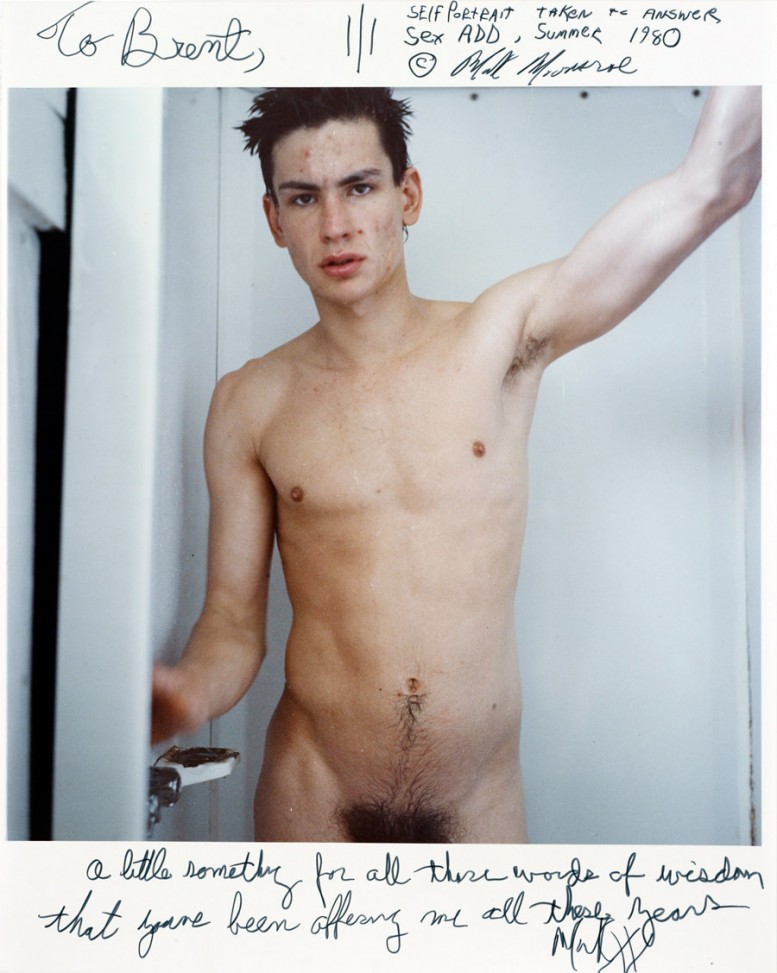
Art is oft born from tragic circumstances. Mark Morrisroe was born in Boston to a drug-addicted mother and left home at age 15. Morrisroe would turn to prostitution to support himself. When he was 17 years old, an unsatisfied John shot him in the back, leaving him with a bullet lodged next to his spine for the rest of his life. The experience had a profound influence on Morrisroe's art, which often incorporated images of young prostitutes and X-rays of his injured chest. Grappling with his identity as a homosexual through photography and performance art, Morrisroe become a seminal figure in the punk scene of Boston during the 1970s and 80s. Mark Morrisroe died in 1980 from complications from AIDS - he was 30 years old. More than twenty years after Mark Morrisroe’s early death, Fotomuseum Winterthur is presenting the first comprehensive survey exhibition on his work. Mark Morrisroe is on view until Feb. 13. www.fotomuseum.ch