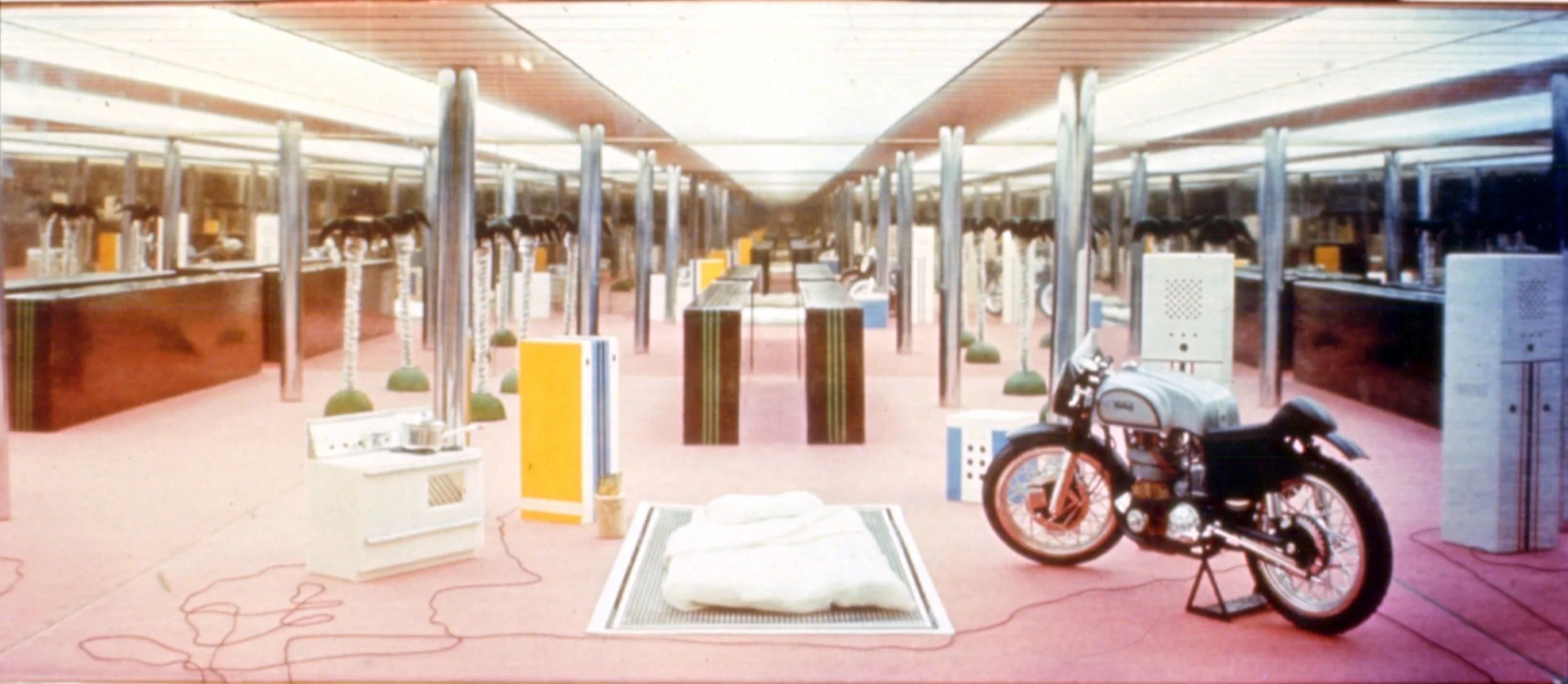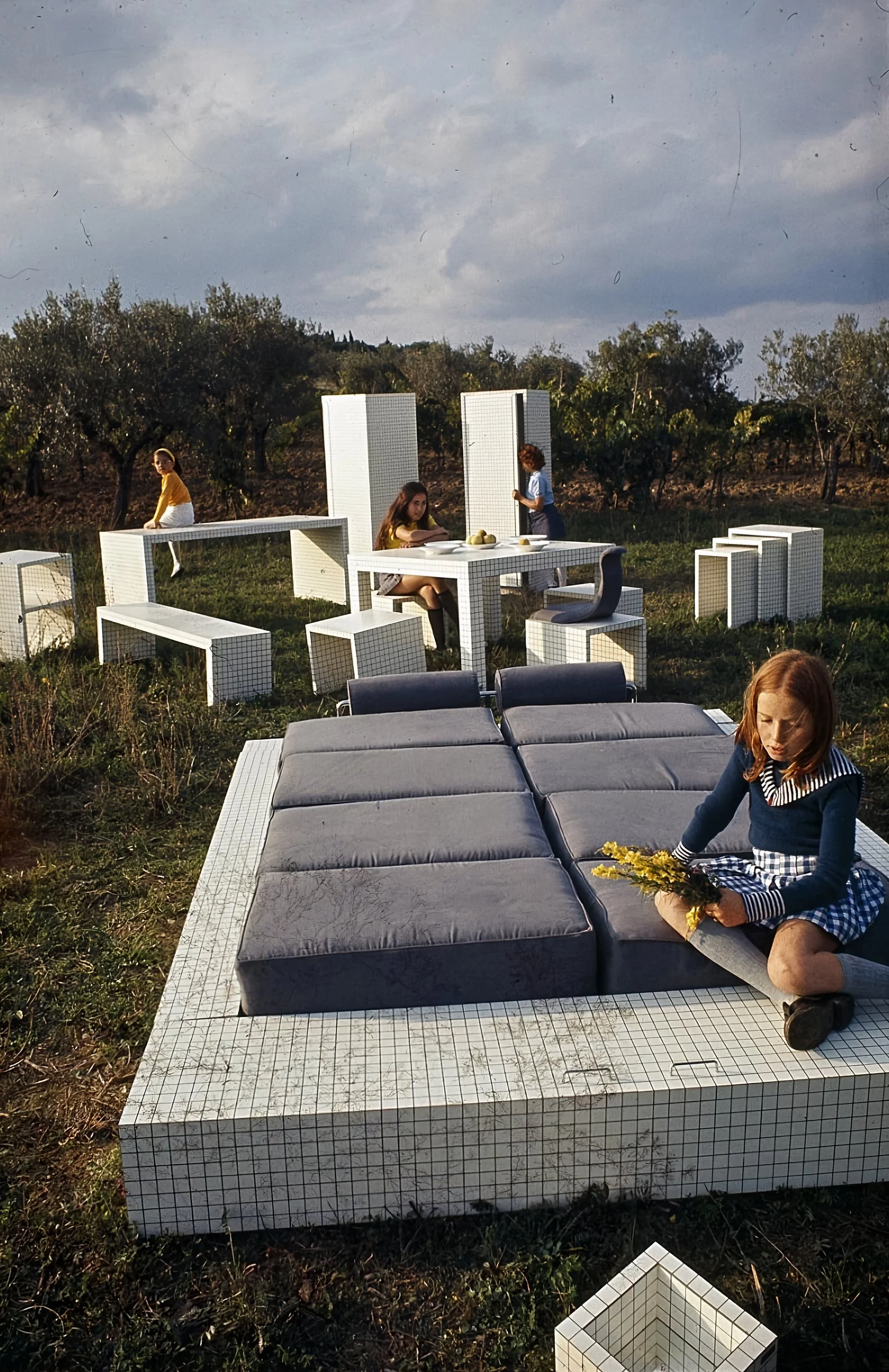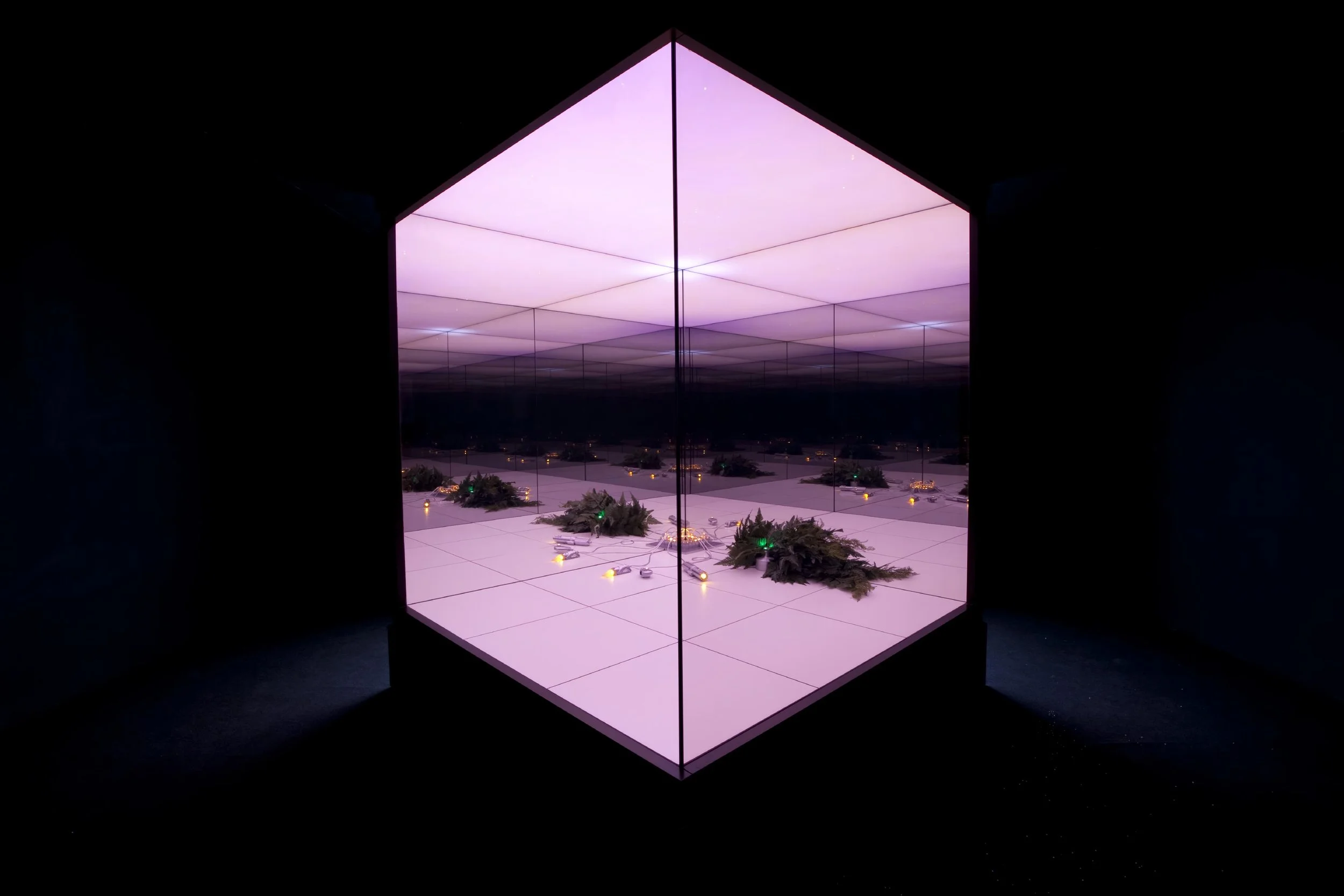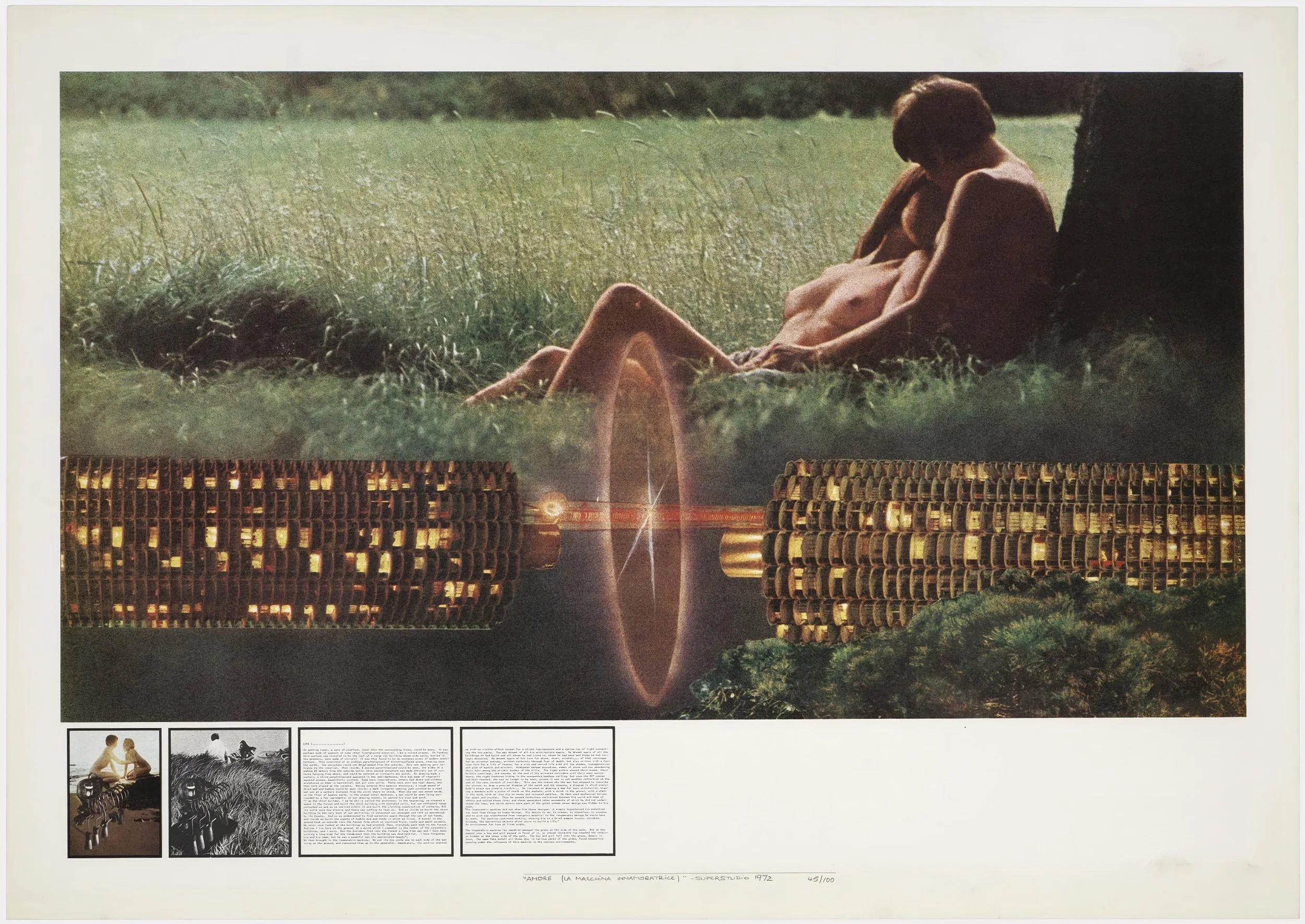
Entering A World of Concerns: Survival Structures for Humanity

The point is not of planning utopias; the point is about practicing them. And I think this is not a question of “should we do it or should we persist in the existing order? It’s a much more radical question, a matter of survival: the future will be utopian or there will be none.
Slavoj Žižek

text by Abbey Meaker

Utopia is not a place; it’s a shooting star: it appears suddenly, in the eye of the mind, bright and mesmerizing, mysterious. It demands our full attention before vanishing. Utopia is not a place; it’s a moment in time, a note in tune. Utopia is a transgression. It is a question, a confrontation. It can only exist outside of our imaginations in small gestures. We can’t go there; we can’t live there, and the moment we try, the dream collapses. Utopia is not perfection; it’s freedom. In the tide of our experience on Earth, moments of utopia find us in the awareness of our interconnectedness, of acknowledging our finitude without being silenced by it. For a moment, it liberates us, and with the wind it goes. 

There have been periods throughout history when the notion of utopia becomes part of the cultural zeitgeist, contemplated by artists, philosophers, and writers in the realm of an imagined paradise. Marie-Hélène Brousse opened her 2017 lecture entitled “Identities as Politics, Identification as Process, and Identity as Symptom” by arguing the fact that the dominant conception of identity is an ideal identity, whole and stable, unified and intentional (utopia). Contrary to such a view, Lacanian psychoanalysis posits that life is something which goes “à la dérive” (adrift). In other words, the idea of a unified identity is a lie, as the structure of the unconscious goes against the possibility of such a unity. The real utopia—cultivation of identity to oneself and the world around them—is one of quotidian practices. It is not an existence free of antagonisms. Our murky origins and inner workings have depth. From this dusky bloom we come with questions, compelled by curiosity and a need for connection. We follow that drive to dark places, and there we find a lighthouse, the artist. Artists are stewards of meaning, and as I consider experiential notions of utopia, I continually return to the work of Agnes Denes. 

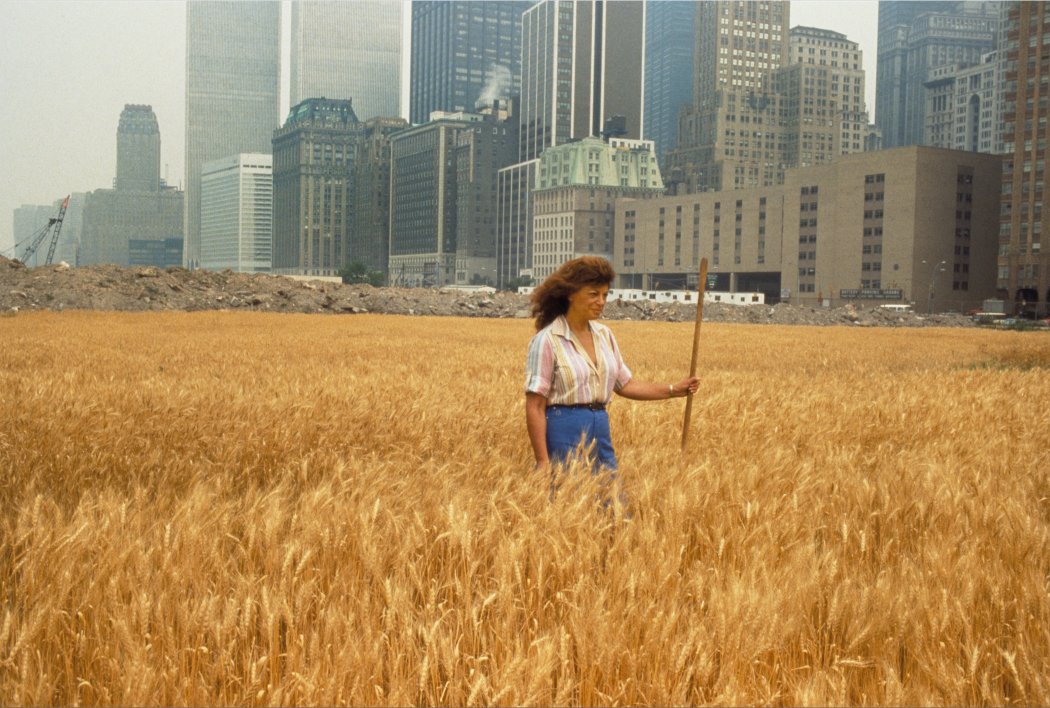
Utopia is an offering made by the hands of an artist. It is an act of creation. It is planting a wheat field on two acres in lower Manhattan as the artist Agnes Denes did in 1982. Wheatfield — A Confrontation, was sited on a landfill created when the World Trade Center was constructed in the late 1960s-early 1970s. This artwork was intentionally and aptly placed in the shadow of the towers, a stone’s throw from Wall Street with the Statue of Liberty in view. It yielded over one thousand pounds of healthy amber wheat, and in the months the wheat was maintained—on this property worth billions, representing some of the world’s greatest wealth—a compelling paradox was unearthed, a profound statement on the implications of global commerce, wealth disparity, and misplaced priorities on the culture and condition of the earth itself. Forty years later, this prescient work echoes with overwhelming urgency. 

Agnes Denes, whose work has never been easy to categorize, is an artist who has continually engaged with the notion of utopia in tangible ways. Her practice, which investigates philosophy, science, linguistics, and history, is grounded in socio-political concepts and ecological concerns. Her work is motivated by a curiosity of the human mind, how we think, how we evolve, how time changes us, how previous generations inform current and future generations. Denes describes her entry into visual expression as an exit from the ivory tower of her studio into a world of concerns. For more than fifty years, Denes has used her work to call attention to and protest damaging systems of power, deteriorating values, and the ways in which our interests, choices, and problems interfere with and harm the whole of Earth’s ecosystems. 

Her poetic eco-philosophical work Rice/Tree/Burial, first realized in 1968, began with a private ritual, a symbolic event and declaration of her commitment to the environment and human concerns, namely the ways in which one informs the other. Like chapters in a story, Denes began by planting rice. In the 1977 iteration of this work, the ritual was re-enacted and realized at full scale in Lewiston, New York. She planted a half-acre of rice in a field 150 feet above the Niagara Gorge. The site marked the birthplace of Niagara Falls between Canada and the US, twelve thousand years ago. Rice represented universal substance, that which brings forth and sustains life. 

She chained together a series of trees in a sacred Native American forest. The chains symbolized connection, linkage in time and material, and our interference with natural processes. Reorienting these trees created, in a sense, a new ecosystem. Introducing new elements and materials, like a dam in a river, sets a cascading change into motion. The echo of interconnectedness sound. 

The final chapter included the burial of a time capsule to be opened in one thousand years. It contained only the filmed responses to a series of philosophical questions that had traveled around the world, and a long letter the artist addressed "Dear Homo Futurus." The contents of the time capsule symbolized human intellect and evolution, clues as to the values of previous Earth generations. 

Though conceptually rigorous, the acts involved in the rituals are everyday practices: hands in the soil, sowing seeds, burying the sacred, the symbolic, total absorption in the mundane. This work reminds us that ideas in the context of art can be more than flimsy imaginative notions, they can be used in the deconstructive remaking of the world. These gestures, the enactment of utopias, will bleed out, soaking our tightly interwoven fabric with new color and texture. 

In my exchange with Agnes, she told me, and asked that I share with you, that we must turn around inside ourselves and look through a different window. To make sure we ask the right questions, questions that open the soul. The artist said she wanted to sit down with everyone reading this and start a conversation they would walk away from with a full heart, an open mind, and enough curiosity to kill a cat. I propose that we speak with Agnes, ourselves, each other, the past, the future, through a series of existential questions she buried in 1977: 

1. What governs your actions? Do you think there is a force influencing what happens? 
2. How do you feel about death? 
3. What would you say the human purpose is? 
4. What do you think will ultimately prove more important to humanity, science or love?
5. What is love? 
6. What would perfect existence consist of? 

An Interview of Nikki Maloof


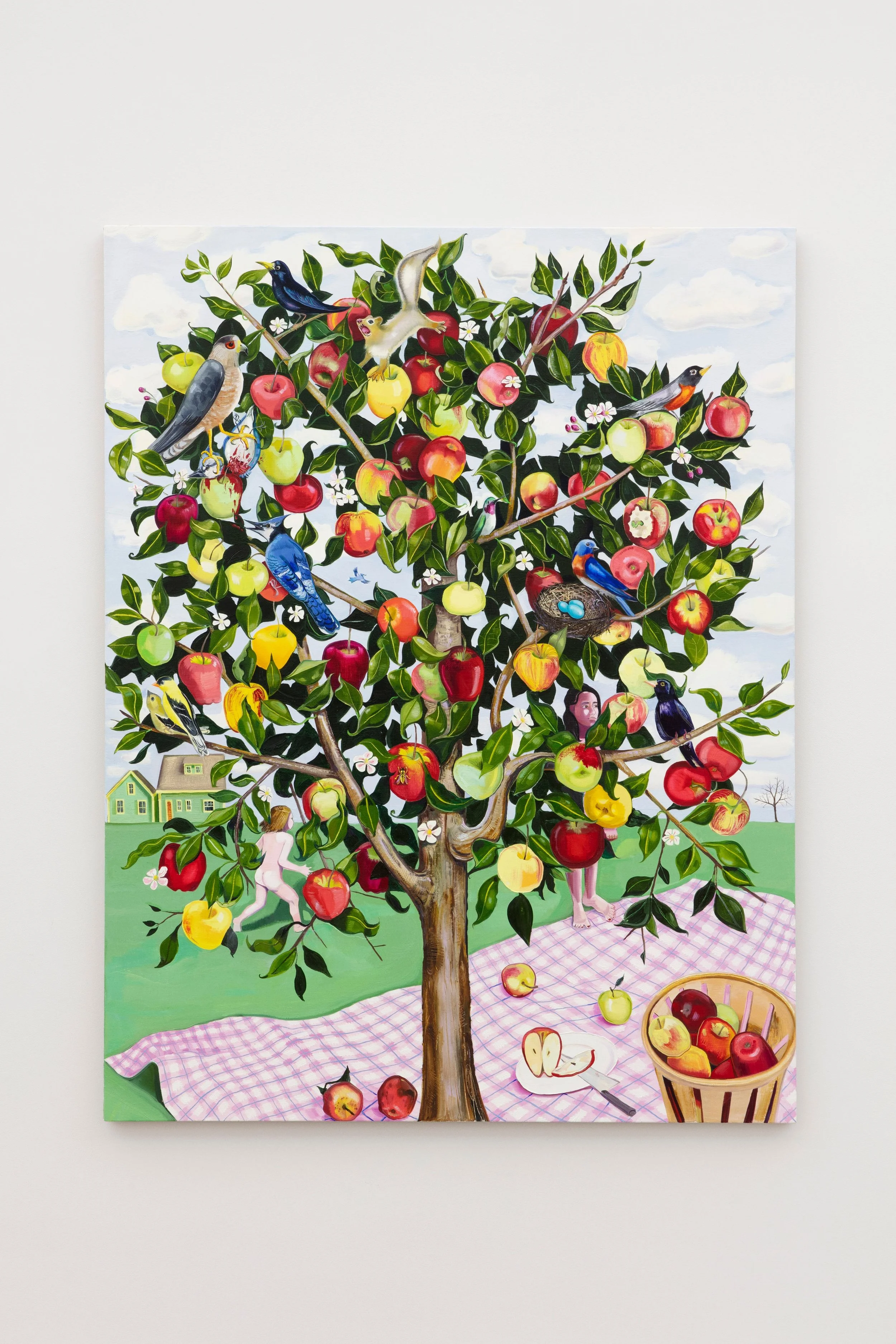
Nikki Maloof, The Apple Tree, 2022. 
Oil on Linen. 70 x 54 inch.
Photographer: Guillaume Ziccarelli.
Courtesy of the artist and Perrotin.


Interview by Oliver Kupper

Nikki Maloof’s domestic tableaux are startling and at the same time humorous reminders of our own existence. Bright, prismatic, dreamlike, her paintings grapple with unexpectedness—freeze-frames before the tragicomedy unfolds. Fragments of a scream before a murder. A foot descending a staircase, a hawk’s talons moments from clutching a dove, a hand behind a curtain. The uncanniness is haunting and visceral. Maloof’s exhibition, Skunk Hour, which was on view at Perrotin gallery in New York, explored a new suite of paintings, many of which feature culinary activity in the home. The title is borrowed from a Robert Lowell poem of the same name. “I myself am hell;” he writes, “nobody’s here— / only skunks, that search / in the moonlight for a bite to eat.” Living and painting in South Hadley, Massachusetts, Maloof’s rural surroundings invite a poetic interiority that if rife with symbolism akin to Dutch Still Life—the bones of fish on a plate, a dog’s hungry eyes, the artist’s own reflection in a knife blade, her paintings invite us into another, stranger world.   

OLIVER KUPPER: Where are you based these days?

NIKKI MALOOF: I live in Western Mass[achusetts]. My husband is from this area originally, and we would visit a lot when we were still living in the city. About six years ago, we decided to move. So, this is where we live. 

KUPPER: I love that area. It has a weird, mystical quality.

MALOOF: Very hippie-dominated, kind of arty. But also, the colleges bring a lot of young people, so it's a cool place.

KUPPER: I want to start with your chosen medium, which is still life. I'm curious what first attracted you to the medium? 

MALOOF: Well, I went to Indiana University, and it's a very traditional painting school. So, I really learned how to paint from painting still lifes. When you paint something from life, you turn off your brain and you're just doing it. It’s something I would pepper in with other things that I was doing in the past that had more to do with my imagination, and it's just always been there. But, when it came to this body of work, I retreated more into the home as a setting. I started wanting to treat the spaces in a home like a character and not necessarily paint the people that inhabit them. That lended itself to looking to the objects that we surround ourselves with for ways of conveying meaning. I'm very attracted to houses and the things that we compile. I'm always following a little trail of crumbs and one painting will lead to the next. It started off with animals, but then it slowly became about our interaction with the domestic space. 

KUPPER: I think of the Dutch still life painters and how portraiture completely started dropping out of those paintings in this really surreal way. 

MALOOF: For a long time, that kind of painting would not have been the thing that I related to as a more developed painter. As a young painter, I would always walk past those paintings, and it's been an interesting challenge to try and make a still life catch your attention or convey emotion because they're sort of inert.

KUPPER: Even though those paintings are about objects, each object has this deeply spiritual quality. 

MALOOF: When I started to look deeper at those works, I became aware of a whole language that is lost at first when you just think, oh, like fruit, whatever. I find that really intriguing—that there’s little messages all the time.

KUPPER: Seafood became part of those Dutch still lifes because of their connection to water. In your work, there are also some symbolic notions of seafood. Can you talk a little bit about the symbolism in your work and about some of the different objects that reoccur?

MALOOF: Painting things like seafood began years ago when I was painting a lot of domestic animals—trying to make stand-ins for us. I was thinking about the way that we interact with animals on an everyday basis. One of the biggest ways we interact with animals is by eating them. It's this relationship where we tend to look away really quickly because it can be a weird reckoning, especially when you look at the industry of it. So, I was thinking I should enter the kitchen because that's where we actually interact with animals. I thought it might be a challenge to make a fish seem emotive, and I wanted to borrow from the realm of the Dutch fish paintings, but make it my own by breathing some weird life into them. Fish are strange because we feel almost nothing for them, but then they look so alive compared to any other thing that we come in contact with. There's a dark humor there—something that’s kind of ridiculous about it all. Also, painting fish and food is extremely delightful, and I think if something seems weirdly fun, there’s usually some reason that you need to go there. If the desire is there, I usually follow it, and then see if it has any repercussions.

KUPPER: There's also this humorous, dark side to a lot of the work. During the pandemic, and also during the Plague, painting started to become very dark and strange, and people started dealing with their emotions in different ways.

MALOOF: Yeah, I'm really attracted to anything that is on the line. All artforms that are one foot in lightness, one foot in darkness are really intriguing. I feel like that's what it is to be alive. Ideally, you want to be on the light side, but that's an almost impossible place to remain. Being a human, there’s too many factors to grapple with. So, that tone really makes sense to me.

KUPPER: The title of your new show, Skunk Hour, was inspired by a Robert Lowell poem. It’s interesting to hear about an artist’s inspirations outside of painting.

MALOOF: I've been really interested in poetry since grad school. I look to it for answers in a way that I can't with painting. A poem conveys meaning without telling you exactly what the answer is and I found it very freeing when I realized that you don't have to explain everything—that the artwork takes on a life of its own. I like that Robert Lowell poem because you're basically following him as he drives around his town and notices things. He's describing it and slowly coming to terms with his own mind. It goes from being somewhat light to this intense, dark place. And when you're in a space that's so familiar to you, like your home or your neighborhood, those things do occasionally hit you. That’s the whole point of the show: the realization that there's moments in our everyday lives that are so intense, and we notice them, but they’re always in the background, and then we have to move on. Skunk Hour is like nighttime, when we're alone with our thoughts. It’s about the way that we deal with existential experiences in everyday life.

KUPPER: There's this interesting sensorial notion of being reminded of your own mortality.

MALOOF: Yeah! When I moved out here, I realized that when you're a little bit closer to nature, it hits you all the time. You could be walking, and then see a hawk dismembering something, and it makes you think of so many things, but then you just carry on with your day. I wanted to paint those experiences and feelings. As far as other inspirations, I like the more confessional poets, like Sylvia Plath. She is definitely a figure that looms large in my mind. Stylistically I get a lot from her work. She would often take instances from everyday life and electrify them into a kind of psychodrama or operatic grandeur full of darkness and pathos.

KUPPER: And you're sort of in Sylvia Plath territory now. 

MALOOF: I am. She is a figure who created under intense pressure … pressure to be a good mother and the pressure of her intense ambition. I relate to those struggles a lot. Under all of that stress her work took shape almost like how a diamond is formed. The facts of her death aside, her art can be a reminder that sometimes the difficult aspects of life can also be the fuel to a fire that’s within us. I guess that’s a utopian view of art making for sure. 

KUPPER: I read about the epiphany you had with this exhibition: seeing a newborn deer in the morning and then a dead neighbor being wheeled out of their house.

MALOOF: That was the craziest day. It was this perfect spring day and so strangely bookended like that. I basically woke up, was having coffee, and then I saw these little ears poking out of an iris bed in my neighbor's yard. When I went over, it was a brand new, baby fawn. And then, at the end of the day, we had a neighbor of ours who had been ill for a while, and it was just so surreal to see the car drive up and take him away. But homes are where everything happens. They’re full of humdrum experiences—chopping onions, folding laundry—and then they’re peppered in with these very dramatic moments as well.

KUPPER: Would you say there's a sense of psychological self-portraiture, even in the still lifes? 

MALOOF: That's really what the goal is—to convey what it's like to feel like laughing and crying in the same day; to exist in that. I grew up playing with dollhouses, and imagined worlds were a big part of my being a child. That has to inform some part of it. 

KUPPER: There's also a societal aspect of it where the woman's place is in the home.

MALOOF: There's a residue of that, for sure. I'm from the Midwest and was raised by people who were very patriarchal. We went to school, but while it was clear that you were to get married, there was such an emphasis on becoming a successful person.

 KUPPER: The heteronormative American dream.

MALOOF: Yeah, there's tension there with having this type of career and having kids. I'm watching their experience of the world from a different vantage point. I garden a lot, which has made me acutely aware of how we’re not that different from that fawn or any of the creatures we come across. That's another thing that I think about in the work: how do we fit into it all?

KUPPER: Would you say that your work is utopic in any way? 

MALOOF: I don’t think of my paintings as utopias, but I definitely think of the act of painting as the closest thing to a utopia I can imagine. It’s not unlike the way I would arrange a dollhouse as a kid. It’s where I can have everything the way I want it and play with ideas freely.

KUPPER: In your work, it feels like the reality comes from the sense of paradise lost. The apple tree has a very Edenic quality to it. Can you talk about that painting specifically?

MALOOF: Well, I try to grow food all the time here, and I fail at it most of the time, but the orchard attracted me because of how it would work, paint-wise. In a tree, of course, there's birds and bird nests, and I immediately was like, oh, bird nest and then a hawk devouring a bird right next to it. I was thinking about the way that you move a person's eye around a painting, almost like the way that a child would draw a life cycle. This was also the first time I put myself in a painting in probably a decade. Mostly because I was thinking about the way that scale changes meaning in a painting. I made myself almost the same size as an apple to address the way we’re not as important as we think. I feel like that painting hit every note that I was trying for.

KUPPER: There's a strong sense of time in it. It's like a clock.

MALOOF: Time is definitely a thing I don't talk about enough in the work. When you have kids, you suddenly feel like everything is a clock. You're really aware of it ticking, and it's deafening sometimes. I did it in one other painting called Life Cycles. It's a dinner scene where you follow the fish from an egg to the bones.

KUPPER: There's a sense that you're watching a time bomb of our mortality. 

MALOOF: It's something I think about all the time. Does it seem very morbid to you? (laughs)

KUPPER: No, you deal with the morbid aspect of it with a lot of humor. 

MALOOF: Humor is definitely the thing that I use to offset all of these intense thoughts—to try and lessen the blow or something. That's where color and paint comes in. The meaning comes from finding a way to manipulate this weird material that just is so deeply fun and pleasurable. I want you to experience that as much as all the darker things. There's a lot of levity with paint.

KUPPER: Art can be fun, and it should be fun. That's where the utopian idealism comes from. 

MALOOF: Maybe they're utopias and I didn't know it. Do you think they're utopic? 

KUPPER: I do. I think they're your own invented utopias.

MALOOF: Maybe they are a place where I can have everything I want, and arrange it just so, and live in it for a while. I never thought of it that way because I don't think our reality lends itself to utopia. Our everyday life is far from it. It's not the first thing I think about, but I guess it is the place that I go to make sense of it all. So sure, it can be a utopic place.

KUPPER: I think that if you can invent your reality in a painting, and even if they're based in realism, there's still a utopic urge in that creation of a world. There's also this clash—psychologically and philosophically—between your Judeo-Christian upbringing with its heteronormative ideas about one’s place in society and the realization of our own mortality.

MALOOF: There's definitely a theatrical element to it all. The worlds that I create are far from my actual reality. The Judeo-Christian thing isn’t such a big part of it, but there’s always a residue in how you approach things that is based on your your early conceptions from childhood.

KUPPER: Where do you think that humor you employ originated from? 

MALOOF: I have four sisters, and I'm the middle, so I was probably the one who was trying to make people laugh most of my life. But I've always gravitated towards things that have humor embedded in some way. I think about musicians that do it and I’m always trying to strike a balance with each painting. You're balancing the color, the composition, and the tone so that the song works. Humor is one aspect of that orchestration. It’s putting together all these harmonies and trying to make them work.